

High sensitivity and interindividual variability in the response of the human circadian system to evening light
Open accessThe DOI matches its Crossref record; 50 of the 50 references it cites were found in a registry or an index.
Abstract
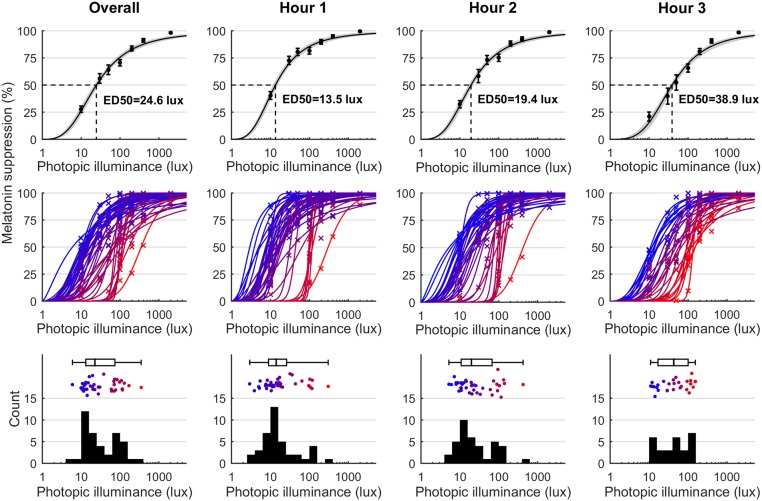
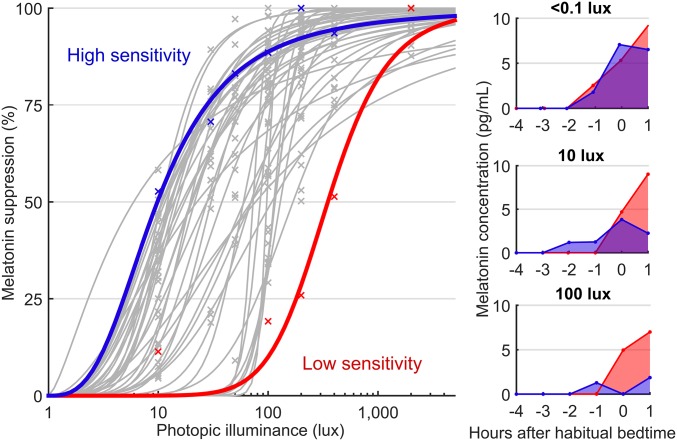
Significance: Electric lighting has fundamentally altered how the human circadian clock synchronizes to the day/night cycle. Exposure to light after dusk is pervasive in the modern world. We examined group-level sensitivity of the circadian system to evening light and the degree to which sensitivity varies between individuals. We found that, on average, humans are highly sensitive to evening light. Specifically, 50% suppression of melatonin occurred at <30 lux, which is comparable to or lower than typical indoor lighting used at night, as well as light produced by electronic devices. Significantly, there was a >50-fold difference in sensitivity to evening light across individuals. Interindividual differences in light sensitivity may explain differential vulnerability to circadian disruption and subsequent impact on human health.
Overview
The claims and statistics of this paper haven’t been checked yet.
Free: it reads the open-access text and checks the first 5 claims that cite a source we can check. Create a free account to check every claim.
Integrity signals
Registry
Cites
Statistics
Figures
Verification
Claims the paper makes
The claims and statistics of this paper haven’t been checked yet.
Free: it reads the open-access text and checks the first 5 claims that cite a source we can check. Create a free account to check every claim.
Claims other papers make about this one
Each is checked against this paper’s own text: does it say what the citing paper says it does?
The source backs part of the claim, not all of it — or backs it for a different population, condition or comparison.
In the citing paper
“There is, in fact, growing evidence showing that humans are, on average, highly sensitive to lower illuminance levels than previously thought (dependent on their prior light exposure history, and individually variable) and that a 50% suppression of melatonin can occur even at <30 lux. 16”
From Sustained remission from perinatal depression after bright light therapy: A pilot randomised, placebo‐controlled trial (2022) · cites this paper as [16]
Experimental — accuracy not yet measured
Self-check
Percentages, sums and reported differences re-computed from the paper’s own numbers.
The self-check needs the paper’s full text.
Citations
Cites
Stability, precision, and near-24-hour period of the human circadian pacemaker
Czeisler, C. A., Duffy, J. F., Shanahan, T. L., Brown, E. N., Mitchell, J. F., Rimmer, D. W., Ronda, J. M., Silva, E. J., Allan, J. S., Emens, J. S., et al. (1999) · Science · doi:10.1126/science.284.5423.2177 · Cited by 1,705 · cited 1×
“6% (4), showing that the human circadian period distribution was in fact similar to that seen in nonhuman animals studied in dark conditions.”
BackgroundChang, A.-M., Aeschbach, D., Duffy, J. F., & Czeisler, C. A. (2015) · Proceedings of the National Academy of Sciences · doi:10.1073/pnas.1418490112 · Cited by 1,430 · cited 1×
“Exposure to electric light after sunset in this range is extremely common in industrialized countries (9, 12–14), and the increasing use of light-emitting devices is a further source of evening light that is potentially disruptive to the circadian system (15, 16).”
BackgroundMeasuring and using light in the melanopsin age
Lucas, R. J., Peirson, S. N., Berson, D. M., Brown, T. M., Cooper, H. M., Czeisler, C. A., Figueiro, M. G., Gamlin, P. D., Lockley, S. W., O’Hagan, J. B., et al. (2014) · Trends in Neurosciences · doi:10.1016/j.tins.2013.10.004 · Cited by 1,278 · cited 1×
“blue light) on the circadian pacemaker (47).”
Self-citationHattar, S., Lucas, R. J., Mrosovsky, N., Thompson, S., Douglas, R. H., Hankins, M. W., Lem, J., Biel, M., Hofmann, F., Foster, R. G., et al. (2003) · Nature · doi:10.1038/nature01761 · Cited by 1,245 · cited 1×
“(5), it is important to note that the circadian system receives light via a complex pathway involving contributions frommultiple photoreceptors (45, 46).”
BackgroundZeitzer, J. M., Dijk, D., Kronauer, R. E., Brown, E. N., & Czeisler, C. A. (2000) · The Journal of Physiology · doi:10.1111/j.1469-7793.2000.00695.x · Cited by 1,175
Entrainment of the Human Circadian Clock to the Natural Light-Dark Cycle
Wright, K. P., McHill, A. W., Birks, B. R., Griffin, B. R., Rusterholz, T., & Chinoy, E. D. (2013) · Current Biology · doi:10.1016/j.cub.2013.06.039 · Cited by 783 · cited 1×
“The interindividual differences we observed in light sensitivity may underlie interindividual differences in sleep and circadian timing that are known to arise with access to electric light (8, 25, 26), in addition to previously identified physiological factors, including intrinsic period of the circadian clock and sl…”
BackgroundCajochen, C., Frey, S., Anders, D., Späti, J., Bues, M., Pross, A., Mager, R., Wirz-Justice, A., & Stefani, O. (2011) · Journal of Applied Physiology · doi:10.1152/japplphysiol.00165.2011 · Cited by 730 · cited 1×
“Exposure to electric light after sunset in this range is extremely common in industrialized countries (9, 12–14), and the increasing use of light-emitting devices is a further source of evening light that is potentially disruptive to the circadian system (15, 16).”
BackgroundMolecular Dissection of Two Distinct Actions of Melatonin on the Suprachiasmatic Circadian Clock
Liu, C., Weaver, D. R., Jin, X., Shearman, L. P., Pieschl, R. L., Gribkoff, V. K., & Reppert, S. M. (1997) · Neuron · doi:10.1016/s0896-6273(00)80350-5 · Cited by 723 · cited 1×
“These findings indicate that the rise of melatonin, an important signal for the initiation of sleep that inhibits electrical activity of SCN neurons (44), is extremely sensitive to suppression by eveninglight exposure.”
BackgroundCajochen, C., Zeitzer, J. M., Czeisler, C. A., & Dijk, D.-J. (2000) · Behavioural Brain Research · doi:10.1016/s0166-4328(00)00236-9 · Cited by 653 · cited 1×
“A related avenue of future work would be to examine whether individual differences in melatonin suppression predict individual differences in other outcomes that are known to follow similar dose–response curves at the group-average level, such as the effect of light on alertness (48).”
BackgroundWever, R. A. (1979) · Topics in Environmental Physiology and Medicine · doi:10.1007/978-1-4612-6142-1 · Cited by 608
Cited by
Brown, T. M., Brainard, G. C., Cajochen, C., Czeisler, C. A., Hanifin, J. P., Lockley, S. W., Lucas, R. J., Münch, M., O’Hagan, J. B., Peirson, S. N., et al. (2022) · PLOS Biology · doi:10.1371/journal.pbio.3001571 · Cited by 659
“Data are derived from laboratory studies (in humans without the use of pupil dilators) investigating the impact of long exposures (>2 hours) to primarily broadband light sources on melatonin suppression [69,88,95,143,144] (A), circadian phase resetting [83,89,143,144] (B), and subjective alerting responses [86] (C), a…”
BackgroundInfluentialSelf-citationCircadian rhythms and disorders of the timing of sleep
Meyer, N., Harvey, A. G., Lockley, S. W., & Dijk, D.-J. (2022) · The Lancet · doi:10.1016/s0140-6736(22)00877-7 · Cited by 346
Self-citationSmartphone addiction and depression, anxiety: The role of bedtime procrastination and self-control
Geng, Y., Gu, J., Wang, J., & Zhang, R. (2021) · Journal of Affective Disorders · doi:10.1016/j.jad.2021.06.062 · Cited by 309
Crouse, J. J., Carpenter, J. S., Song, Y. J. C., Hockey, S. J., Naismith, S. L., Grunstein, R. R., Scott, E. M., Merikangas, K. R., Scott, J., & Hickie, I. B. (2021) · The Lancet Psychiatry · doi:10.1016/s2215-0366(21)00034-1 · Cited by 255
Brown, T. M. (2020) · Journal of Pineal Research · doi:10.1111/jpi.12655 · Cited by 239
Light Pollution, Circadian Photoreception, and Melatonin in Vertebrates
Grubisic, M., Haim, A., Bhusal, P., Dominoni, D. M., Gabriel, K. M. A., Jechow, A., Kupprat, F., Lerner, A., Marchant, P., Riley, W., et al. (2019) · Sustainability · doi:10.3390/su11226400 · Cited by 220
“In mammals, the entrainment pathway involves ipRGCs that form the retinohypothalamic tract (RHT), which conveys light information to SCN and the pineal organ.”
BackgroundMethodResultInfluentialVetter, C., Pattison, P. M., Houser, K., Herf, M., Phillips, A. J. K., Wright, K. P., Skene, D. J., Brainard, G. C., Boivin, D. B., & Glickman, G. (2022) · LEUKOS · doi:10.1080/15502724.2021.1872383 · Cited by 222
“It is also likely that specific subgroups may respond to light in unique ways (see Phillips et al. 2019 for a recent example).”
BackgroundSelf-citationThe translational neuroscience of sleep: A contextual framework
Grandner, M. A., & Fernandez, F.-X. (2021) · Science · doi:10.1126/science.abj8188 · Cited by 196
The sleep–circadian interface: A window into mental disorders
Meyer, N., Lok, R., Schmidt, C., Kyle, S. D., McClung, C. A., Cajochen, C., Scheer, F. A. J. L., Jones, M. W., & Chellappa, S. L. (2024) · Proceedings of the National Academy of Sciences · doi:10.1073/pnas.2214756121 · Cited by 214
Human-Centric Lighting: Foundational Considerations and a Five-Step Design Process
Houser, K. W., & Esposito, T. (2021) · Frontiers in Neurology · doi:10.3389/fneur.2021.630553 · Cited by 158
“The human circadian system adapts to prior light exposure (71), light exposure earlier in the day affects the biological potency of light later in the day (72– 75), extended periods under dim light may negatively impact subsequent sleep (76), and there is considerable interindividual variability in the response to eve…”
BackgroundReducing nighttime light exposure in the urban environment to benefit human health and society
Zielińska-Dąbkowska, K. M., Schernhammer, E. S., Hanifin, J. P., & Brainard, G. C. (2023) · Science · doi:10.1126/science.adg5277 · Cited by 184
The Role of Daylight for Humans: Gaps in Current Knowledge
Münch, M., Wirz-Justice, A., Brown, S. A., Kantermann, T., Martiny, K., Stefani, O., Vetter, C., Wright, K. P., Wulff, K., & Skene, D. J. (2020) · Clocks & Sleep · doi:10.3390/clockssleep2010008 · Cited by 158
The Lighting Environment, Its Metrology, and Non-visual Responses
Schlangen, L. J. M., & Price, L. (2021) · Frontiers in Neurology · doi:10.3389/fneur.2021.624861 · Cited by 169
“Moreover, the effects of light in field settings are often confounded by various uncertainties which may be due to nonphotic effects, interindividual variations in sensitivity to light (25), differences in the populations studied and the reduced environmental and behavioral control in real-life environments.”
BackgroundIndividual differences in light sensitivity affect sleep and circadian rhythms
Chellappa, S. L. (2021) · Sleep · doi:10.1093/sleep/zsaa214 · Cited by 163
“individual differences in circadian photosensitivity [11].”
BackgroundInfluentialHuman-centric lighting: Myth, magic or metaphor?
Houser, K., Boyce, P., Zeitzer, J., & Herf, M. (2021) · Lighting Research & Technology · doi:10.1177/1477153520958448 · Cited by 143
Light exposure during sleep impairs cardiometabolic function
Mason, I. C., Grimaldi, D., Reid, K. J., Warlick, C., Malkani, R. G., Abbott, S. M., & Zee, P. C. (2022) · Proceedings of the National Academy of Sciences · doi:10.1073/pnas.2113290119 · Cited by 166
“In addition, the known interindividual variability in melatonin suppression to light exposure might account for the negative findings in this study (57).”
BackgroundIntrinsically photosensitive retinal ganglion cells of the human retina
Mure, L. S. (2021) · Frontiers in Neurology · doi:10.3389/fneur.2021.636330 · Cited by 151
“Recently, light-induced melatonin suppression in the evening, a process under ipRGCs control, has been shown to vary up to 50 times between subjects (72).”
BackgroundGentry, N. W., Ashbrook, L. H., Fu, Y., & Ptáček, L. J. (2021) · Journal of Clinical Investigation · doi:10.1172/jci148282 · Cited by 156
“The extremes of this normal variation appear to be strongly driven by genetics, along with other features of circadian periodicity in humans; even sensitivity to zeitgebers has been shown to be genetically variable (20).”
BackgroundNovel Approaches for Assessing Circadian Rhythmicity in Humans: A Review
Dijk, D.-J., & Duffy, J. F. (2020) · Journal of Biological Rhythms · doi:10.1177/0748730420940483 · Cited by 138
“While initially it was thought that only bright light could do so, it is now recognized that light intensities as low as 6 lux can acutely suppress melatonin by 50% in some participants, thereby “masking” the endogenous SCN phase and amplitude (Phillips et al., 2019; Zeitzer et al., 2000; Fig.”
BackgroundHui, K. Y., & Ripperger, J. A. (2019) · Springer eBooks · doi:10.1007/978-3-319-69892-2_1100-1 · Cited by 139
Evening home lighting adversely impacts the circadian system and sleep
Cain, S. W., McGlashan, E. M., Vidafar, P., Mustafovska, J., Curran, S. P. N., Wang, X., Mohamed, A., Kalavally, V., & Phillips, A. J. K. (2020) · Scientific Reports · doi:10.1038/s41598-020-75622-4 · Cited by 117
Self-citationLight, lighting and human health
Boyce, P. (2022) · Lighting Research & Technology · doi:10.1177/14771535211010267 · Cited by 112
Measuring melatonin by immunoassay
Kennaway, D. J. (2020) · Journal of Pineal Research · doi:10.1111/jpi.12657 · Cited by 122
Hong, F., Pan, S., Xu, P., Xue, T., Wang, J., Guo, Y., Li, J., Qiao, X., Li, L., & Zhai, Y. (2020) · Cells · doi:10.3390/cells9020489 · Cited by 112
“It was suppressed by 50% in plasma when evening light just at <30 lux [32].”
BackgroundCircadian misalignment increases mood vulnerability in simulated shift work
Chellappa, S. L., Morris, C. J., & Scheer, F. A. J. L. (2020) · Scientific Reports · doi:10.1038/s41598-020-75245-9 · Cited by 96
Seasonality of brain function: role in psychiatric disorders
Zhang, R., & Volkow, N. D. (2023) · Translational Psychiatry · doi:10.1038/s41398-023-02365-x · Cited by 113
“In healthy adults, there are large inter-individual differences in light sensitivity of circadian rhythm such that there was an over 50-fold difference between the least and the most sensitive individuals [169].”
BackgroundWong, N. A., & Bahmani, H. (2022) · Heliyon · doi:10.1016/j.heliyon.2022.e10282 · Cited by 115
“This has had a measurable effect on our circadian system [8] and concerns about the effects of artificial light on”
BackgroundKeeping an eye on circadian time in clinical research and medicine
Klerman, E. B., Brager, A. J., Carskadon, M. A., Depner, C. M., Foster, F., Goel, N., Harrington, M. E., Holloway, P. M., Knauert, M. P., LeBourgeois, M. K., et al. (2022) · Clinical and Translational Medicine · doi:10.1002/ctm2.1131 · Cited by 110
Association between night-shift work and level of melatonin: systematic review and meta-analysis
Wei, T., Li, C., Heng, Y., Gao, X., Zhang, G., Wang, H., Zhao, X., Meng, Z., Zhang, Y., & Hou, H. (2020) · Sleep Medicine · doi:10.1016/j.sleep.2020.09.018 · Cited by 106
Sleep in Normal Aging, Homeostatic and Circadian Regulation and Vulnerability to Sleep Deprivation
Taillard, J., Gronfier, C., Bioulac, S., Philip, P., & Sagaspe, P. (2021) · Brain Sciences · doi:10.3390/brainsci11081003 · Cited by 104
“Other explanations of the conflicting results found in the literature may relate to the large differences in light sensitivity across non-visual responses recently described [110], or to the high interindividual variability within single responses [102].”
ResultCheng, P., Walch, O., Huang, Y., Mayer, C., Sagong, C., Cuamatzi Castelan, A., Burgess, H. J., Roth, T., Forger, D. B., & Drake, C. L. (2021) · Sleep · doi:10.1093/sleep/zsaa180 · Cited by 88
“For example, a recent article found remarkable individual variation in sensitivity to evening light as indexed by melatonin suppression [42].”
Modeling Circadian Phototransduction: Quantitative Predictions of Psychophysical Data
Rea, M. S., Nagare, R., & Figueiro, M. G. (2021) · Frontiers in Neuroscience · doi:10.3389/fnins.2021.615322 · Cited by 92
Didikoğlu, A., Mohammadian, N., Johnson, S. J., van Tongeren, M., Wright, P., Casson, A. J., Brown, T. M., & Lucas, R. J. (2023) · Proceedings of the National Academy of Sciences · doi:10.1073/pnas.2301608120 · Cited by 97
“Recent evidence shows large interindividual variation in light sensitivity (34, 52).”
Huang, Y., Mayer, C., Cheng, P., Siddula, A., Burgess, H. J., Drake, C., Goldstein, C., Walch, O., & Forger, D. B. (2021) · Sleep · doi:10.1093/sleep/zsab126 · Cited by 81
“However, the effects of the timing and length of the data loss on circadian predictions need to be further investigated, since the sensitivity of the circadian pacemaker differs throughout the day [46].”
Background(2021) · Handbook of Clinical Neurology · doi:10.1016/b978-0-12-819975-6.00023-6 · Cited by 66
Windred, D. P., Burns, A. C., Lane, J. M., Olivier, P. L., Rutter, M. K., Saxena, R., Phillips, A. J. K., & Cain, S. W. (2024) · Proceedings of the National Academy of Sciences · doi:10.1073/pnas.2405924121 · Cited by 85
“…using studies of healthy younger adults ( 5 , 60 ), and does not account for individual differences in physiology, including differences in light sensitivity ( 61 ), or possible age - related changes is sleep and circadian rhythms, such as advanced sleep timing relative to circadian phase ( 62 ).”
BackgroundSelf-citationWindred, D. P., Burns, A. C., Rutter, M. K., Yeung, C. H. C., Lane, J. M., Xiao, Q., Saxena, R., Cain, S. W., & Phillips, A. J. K. (2024) · The Lancet Regional Health - Europe · doi:10.1016/j.lanepe.2024.100943 · Cited by 91
Self-citationWearables in Chronomedicine and Interpretation of Circadian Health
Gubin, D. G., Weinert, D., Stefani, O., Otsuka, K., Borisenkov, M. F., & Cornélissen, G. (2025) · Diagnostics · doi:10.3390/diagnostics15030327 · Cited by 83
“Furthermore, in view of substantial individual differences in light sensitivity [124], predictions can vary widely among individuals, influenced not only by genetic factors but also by other co-factors, such as a history of COVID-19.”
Vethe, D., Scott, J. L., Engstrøm, M., Salvesen, Ø. O., Sand, T., Olsen, A., Morken, G., Heglum, H. S. A., Kjørstad, K., Faaland, P. M., et al. (2020) · SLEEP · doi:10.1093/sleep/zsaa194 · Cited by 82
“Recent research has also shown that large differences exist between individuals with regard to the response of the circadian system to light [48].”
BackgroundReviewing the Role of Outdoor Lighting in Achieving Sustainable Development Goals
Tavares, P. L., Ingi, D., Araújo, L., Pinho, P., & Bhusal, P. (2021) · Sustainability · doi:10.3390/su132212657 · Cited by 82
“Experiments performed with different photopic illuminances and duration of exposure showed considerable shifts on natural melatonin production cycle up to 109 min of DLMO [93].”
BackgroundMethodte Kulve, M., Schlangen, L. J. M., & van Marken Lichtenbelt, W. D. (2019) · Scientific Reports · doi:10.1038/s41598-019-52352-w · Cited by 71
Giménez, M. C., Stefani, O., Cajochen, C., Lang, D., Deuring, G., & Schlangen, L. J. M. (2022) · Journal of Pineal Research · doi:10.1111/jpi.12786 · Cited by 76
The Complex Effects of Light on Metabolism in Humans
Ishihara, A., Courville, A. B., & Chen, K. Y. (2023) · Nutrients · doi:10.3390/nu15061391 · Cited by 74
“Additionally, interindividual variability in response to evening light needs to be considered further to understand the impact of light intensity on metabolism [43].”
BackgroundShechter, A., Quispe, K. A., Mizhquiri Barbecho, J. S., Slater, C., & Falzon, L. (2020) · Sleep Advances · doi:10.1093/sleepadvances/zpaa002 · Cited by 55
“Recent work suggests that the human circadian system can show high sensitivity to even relatively dim (<30 lux) evening light levels, and importantly, that sensitivity to evening light differs widely across individuals [42].”
BackgroundHigh sensitivity of melatonin suppression response to evening light in preschool‐aged children
Hartstein, L. E., Behn, C. D., Akacem, L. D., Stack, N., Wright, K. P., & LeBourgeois, M. K. (2022) · Journal of Pineal Research · doi:10.1111/jpi.12780 · Cited by 72
A method for characterizing daily physiology from widely used wearables
Bowman, C., Huang, Y., Walch, O., Fang, Y., Frank, E., Tyler, J., Mayer, C., Stockbridge, C., Goldstein, C. A., Sen, S., et al. (2021) · Cell Reports Methods · doi:10.1016/j.crmeth.2021.100058 · Cited by 72
“Even melatonin onset and offset show different dynamics (Liu and Borjigin, 2005), raising questions about which parts of the melatonin profile are most appropriate to compare against (Phillips et al., 2019).”
Ricketts, E. J., Joyce, D. S., Rissman, A. J., Burgess, H. J., Colwell, C. S., Lack, L. C., & Gradisar, M. (2022) · Sleep Medicine Reviews · doi:10.1016/j.smrv.2022.101667 · Cited by 72
“Additionally, there are significant inter-individual differences in non-image forming light sensitivities (128) and these differences may eclipse the relatively minor modulations to the physical properties of light that have been studied (30).”
BackgroundStone, J., Aubert, X. L., Maass, H., Phillips, A. J. K., Magee, M., Howard, M. E., Lockley, S. W., Rajaratnam, S. M. W., & Sletten, T. L. (2019) · Scientific Reports · doi:10.1038/s41598-019-47290-6 · Cited by 68
Self-citationImpacts of home lighting on human health
Ticleanu, C. (2021) · Lighting Research & Technology · doi:10.1177/14771535211021064 · Cited by 69
Timing is everything: Circadian rhythms and their role in the control of sleep
Pandi-Perumal, S. R., Cardinali, D. P., Zaki, N. F. W., Ramanujam, K., Spence, D. W., Reiter, R. J., & Brown, G. M. (2022) · Frontiers in Neuroendocrinology · doi:10.1016/j.yfrne.2022.100978 · Cited by 70
Hand, A. J., Stone, J. E., Shen, L., Vetter, C., Cain, S. W., Bei, B., & Phillips, A. J. K. (2023) · SLEEP · doi:10.1093/sleep/zsad001 · Cited by 66
“We note the importance of including relatively low thresholds, given there is evidence for sensitivity of the human circadian system to light levels <30 lux [33], and that adolescents may be especially sensitive to light [34].”
BackgroundSelf-citationSpitschan, M., Kervezee, L., Lok, R., McGlashan, E., Najjar, R. P., Allen, A. E., Andersen, M., Bará, S., Blattner, P., Blume, C., et al. (2023) · eBioMedicine · doi:10.1016/j.ebiom.2023.104889 · Cited by 60
Self-citationArns, M., Kooij, J. J. S., & Coogan, A. N. (2021) · Journal of the American Academy of Child & Adolescent Psychiatry · doi:10.1016/j.jaac.2020.12.035 · Cited by 61
New determinants of mental health: the role of noise pollution. A narrative review
Tortorella, A. A. V., Menculini, G., Moretti, P., Attademo, L., Balducci, P. M., Bernardini, F., Cirimbilli, F., Chieppa, A. G., Ghiandai, N., & Erfurth, A. (2022) · International Review of Psychiatry · doi:10.1080/09540261.2022.2095200 · Cited by 60
“In this crucial period, environmental factors can affect circadian rhythms and the secretion of melatonin (Carskadon et al., 2004; Crowley et al., 2006; Paksarian et al., 2020; Phillips et al., 2019).”
BackgroundRu, T., Kompier, M. E., Chen, Q., Zhou, G., & Smolders, K. C. H. J. (2022) · Building and Environment · doi:10.1016/j.buildenv.2022.109842 · Cited by 61
“Secondly, the employed sample size and the limited number of observations for the contrasts at assessment level has resulted in a low statistical power for small effects and inhibited the possibility to inspect random slopes although inter-individual differences are to be expected [56,66,95,96].”
BackgroundTowards a framework for light-dosimetry studies: Methodological considerations
Hartmeyer, S. L., Webler, F. S., & Andersen, M. (2022) · Lighting Research & Technology · doi:10.1177/14771535221103258 · Cited by 57
Circadian rhythms and the HPA axis: A systems view
Androulakis, I. P. (2021) · WIREs Mechanisms of Disease · doi:10.1002/wsbm.1518 · Cited by 55
Stone, J. E., McGlashan, E. M., Quin, N., Skinner, K., Stephenson, J. J., Cain, S. W., & Phillips, A. J. K. (2020) · Journal of Biological Rhythms · doi:10.1177/0748730420962598 · Cited by 58
“In addition, interindividual variation in sensitivity to light has been reported across a range of populations (Brainard et al., 1988; Laakso et al., 1991; Higuchi et al., 2008; Gooley et al., 2011; McGlashan et al., 2018c; Watson et al., 2018; Phillips et al., 2019).”
BackgroundResultSelf-citationGubin, D. G., Danilenko, K. V., Stefani, O., Kolomeichuk, S. N., Markov, A., Petrov, I. M., Voronin, K., Mezhakova, M. S., Borisenkov, M. F., Shigabaeva, A., et al. (2023) · Biology · doi:10.3390/biology13010022 · Cited by 59
“Some individuals are sensitive to very dim blue light [83,84], suggesting that even low blue light irradiance may have consequences for the circadian system and health.”
BackgroundNie, J., Zhou, T., Chen, Z., Dang, W., Jiao, F., Zhan, J., Chen, Y., Chen, Y., Pan, Z., Kang, X., et al. (2020) · The Science of The Total Environment · doi:10.1016/j.scitotenv.2020.139334 · Cited by 57
Kompier, M. E., Smolders, K. C. H. J., & de Kort, Y. A. W. (2021) · PLoS ONE · doi:10.1371/journal.pone.0243259 · Cited by 55
Nie, J., Zhou, T., Chen, Z., Dang, W., Jiao, F., Zhan, J., Chen, Y., Chen, Y., Pan, Z., Kang, X., et al. (2021) · Scientific Reports · doi:10.1038/s41598-021-92438-y · Cited by 56
A population-based gene expression signature of molecular clock phase from a single epidermal sample
Wu, G., Ruben, M. D., Francey, L. J., Smith, D. F., Sherrill, J. D., Oblong, J. E., Mills, K. J., & Hogenesch, J. B. (2020) · Genome Medicine · doi:10.1186/s13073-020-00768-9 · Cited by 53
Höhn, C., Hahn, M. A., Gruber, G., Pletzer, B. A., Cajochen, C., & Hoedlmoser, K. (2024) · Brain Communications · doi:10.1093/braincomms/fcae173 · Cited by 61
Individual differences and diversity in human physiological responses to light
Spitschan, M., & Santhi, N. (2022) · eBioMedicine · doi:10.1016/j.ebiom.2021.103640 · Cited by 46
Gubin, D. G., Danilenko, K. V., Stefani, O., Kolomeichuk, S. N., Markov, A., Petrov, I. M., Voronin, K., Mezhakova, M. S., Borisenkov, M. F., Shigabaeva, A., et al. (2024) · Journal of Pineal Research · doi:10.1111/jpi.70023 · Cited by 47
S‐cone contribution to the acute melatonin suppression response in humans
Brown, T. M., Thapan, K., Arendt, J., Revell, V. L., & Skene, D. J. (2021) · Journal of Pineal Research · doi:10.1111/jpi.12719 · Cited by 48
A Case for a New Satellite Mission for Remote Sensing of Night Lights
Barentine, J. C., Walczak, K. J., Gyuk, G., Tarr, C., & Longcore, T. (2021) · Remote Sensing · doi:10.3390/rs13122294 · Cited by 50
“Melatonin is suppressed at very low light intensities, as little as 6 lux in sensitive humans [12], although a large range in human sensitivity to this effect has been observed [93].”
BackgroundCorrelated color temperature is not a suitable proxy for the biological potency of light
Esposito, T., & Houser, K. W. (2022) · Scientific Reports · doi:10.1038/s41598-022-21755-7 · Cited by 49
Yaw, A. M., McLane-Svoboda, A. K., & Hoffmann, H. M. (2020) · International Journal of Molecular Sciences · doi:10.3390/ijms22010324 · Cited by 48
“Although nocturnal melatonin release is systematically repressed by white (as well as green and blue) light, a large variation in sensitivity to the suppressive effect of light on melatonin exists in humans [65], providing one mechanism explaining the great variation in physiological responses to light at night and sh…”
BackgroundWang, T., Li, J., Wang, Y., Dai, S., Shao, R., & Hao, L. (2022) · Building and Environment · doi:10.1016/j.buildenv.2022.109766 · Cited by 48
Computational approaches for individual circadian phase prediction in field settings
Stone, J. E., Postnova, S., Sletten, T. L., Rajaratnam, S. M. W., & Phillips, A. J. K. (2020) · Current Opinion in Systems Biology · doi:10.1016/j.coisb.2020.07.011 · Cited by 47
Self-citationThe Future of Shift Work: Circadian Biology Meets Personalised Medicine and Behavioural Science
Potter, G. D., & Wood, T. R. (2020) · Frontiers in Nutrition · doi:10.3389/fnut.2020.00116 · Cited by 50
“While not all studies that have used interventions to modify exposure to light in shift workers have proven beneficial, this inconsistency likely reflects marked heterogeneity in the methods used by researchers (30), as well as large variation between people in how they respond to light (31).”
BackgroundBehavioural determinants of physiologically-relevant light exposure
Biller, A. M., Balakrishnan, P., & Spitschan, M. (2024) · Communications Psychology · doi:10.1038/s44271-024-00159-5 · Cited by 48
“This includes assessing individual light sensitivity 18,46,98,99 or chronotype 5,15 to understand biological”
Shochat, T., Santhi, N., Herer, P., Flavell, S. A., Skeldon, A. C., & Dijk, D. (2019) · Frontiers in Neuroscience · doi:10.3389/fnins.2019.00882 · Cited by 45
“Less light during the day will increase the relative importance of light during the evening, and we have not sought to take account of the high degree of individual variability in the sensitivity of the circadian system to the effects of evening light (Phillips et al., 2019).”
BackgroundFlanagan, S. C., Cobice, D., Richardson, P., Sittlington, J., & Saunders, K. J. (2020) · Investigative Ophthalmology & Visual Science · doi:10.1167/iovs.61.8.45 · Cited by 47
Eto, T., Ohashi, M., Nagata, K., Shin, N., Motomura, Y., & Higuchi, S. (2021) · Ophthalmic and Physiological Optics · doi:10.1111/opo.12809 · Cited by 47
“Recent studies have shown large individual variability in melatonin suppression among young adults, 45 and greater melatonin suppression in pre-to mid-pubertal children than late to postpubertal children, 13 even though there might be no large differences in pupil size or lens transmittance among…”
Papatsimpa, C., Schlangen, L. J. M., Smolders, K. C. H. J., Linnartz, J. M. G., & de Kort, Y. A. W. (2021) · Scientific Reports · doi:10.1038/s41598-021-92863-z · Cited by 48
Li, Y., & Androulakis, I. P. (2021) · Scientific Reports · doi:10.1038/s41598-021-97019-7 · Cited by 51
Reynolds, A. C., Sweetman, A., Crowther, M. E., Paterson, J. L., Scott, H., Lechat, B., Wanstall, S. E., Brown, B. W., Lovato, N., Adams, R. J., et al. (2023) · Sleep Medicine Reviews · doi:10.1016/j.smrv.2022.101716 · Cited by 43
da Silva, A. C. R., Simón, D., Pannunzio, B., Casaravilla, C., Díaz, Á., & Tassino, B. (2019) · Clocks & Sleep · doi:10.3390/clockssleep1030029 · Cited by 50
“This chronotype-dependent reversion in DLMO shift may be explained if early participants were significantly more exposed to light than late participants during the evening phase-delay time window or if there was an inter-individual difference in the sensitivity to evening light [94,95].”
BackgroundCajochen, C., Stefani, O., Schöllhorn, I., Lang, D., & Chellappa, S. L. (2022) · Lighting Research & Technology · doi:10.1177/14771535221078765 · Cited by 47
Yang, Y., Liu, Q., Pan, C., Chen, J., Xu, B., Liu, K., Pan, J., Lagisz, M., & Nakagawa, S. (2024) · Ecology Letters · doi:10.1111/ele.14387 · Cited by 45
“Similar findings have been observed in human studies (Mclntyre et al., 1989; Santhi et al., 2012; Spitschan & Santhi, 2022), where a > 50-fold difference in light sensitivity has been found across individual humans (Phillips et al., 2019).”
BackgroundResultTekieh, T., Lockley, S. W., Robinson, P. A., McCloskey, S., Zobaer, M. S., & Postnova, S. (2020) · Journal of Pineal Research · doi:10.1111/jpi.12681 · Cited by 43
Self-citationDelayed sleep-wake phase disorder and its related sleep behaviors in the young generation.
Futenma, K., Takaesu, Y., Komada, Y., Shimura, A., Okajima, I., Matsui, K., Tanioka, K., & Inoue, Y. (2023) · Frontiers in Psychiatry · doi:10.3389/fpsyt.2023.1174719 · Cited by 42
“As mentioned in the introduction, light stimulation is the most important zeitgeber; however, individual sensitivity to light varies 50-fold on a logarithmic scale (57).”
BackgroundExogenous melatonin decreases circadian misalignment and body weight among early types
Marqueze, E. C., Nogueira, L. F. R., Vetter, C., Skene, D. J., Cipolla‐Neto, J., & Moreno, C. R. C. (2021) · Journal of Pineal Research · doi:10.1111/jpi.12750 · Cited by 42
de Toledo, L. H. S., Moraes, M. N., Poletini, M. O., Cipolla‐Neto, J., Baron, J., & Mota, T. (2023) · Journal of Photochemistry and Photobiology · doi:10.1016/j.jpap.2023.100199 · Cited by 47
Dunster, G. P., Hua, I., Grahe, A., Fleischer, J., Panda, S., Wright, K. P., Vetter, C., Doherty, J. H., & de la Iglesia, H. O. (2022) · Journal of Pineal Research · doi:10.1111/jpi.12843 · Cited by 42
Greater sensitivity of the circadian system of women to bright light, but not dim‐to‐moderate light
Vidafar, P., McGlashan, E. M., Burns, A. C., Anderson, C., Shechter, A., Lockley, S. W., Phillips, A. J. K., & Cain, S. W. (2024) · Journal of Pineal Research · doi:10.1111/jpi.12936 · Cited by 42
Self-citationSeasonal effects on bipolar disorder: A closer look
Rosenthal, S. J., Josephs, T., Kovtun, O., & McCarty, R. C. (2020) · Neuroscience & Biobehavioral Reviews · doi:10.1016/j.neubiorev.2020.05.017 · Cited by 41
Walbeek, T. J., Harrison, E. M., Gorman, M. R., & Glickman, G. L. (2021) · Frontiers in Neurology · doi:10.3389/fneur.2021.625334 · Cited by 40
“– bright enough for phase shifting (15), entrainment (16), or melatonin suppression (17) in humans.”
BackgroundA Protocol to Determine Circadian Phase by At‐Home Salivary Dim Light Melatonin Onset Assessment
Murray, J. M., Stone, J. E., Abbott, S. M., Bjorvatn, B., Burgess, H. J., Cajochen, C., Dekker, J. J., Duffy, J. F., Epstein, L. J., Garbazza, C., et al. (2024) · Journal of Pineal Research · doi:10.1111/jpi.12994 · Cited by 43
“Phillips et al. [45] recently described a 50 ‐ fold difference in light sensitivity on suppression of melatonin across individuals.”
Self-citationCircadian Biomarkers in Humans: Methodological Insights into the Detection of Melatonin and Cortisol
Skubic, C., Zevnik, U., Nahtigal, K., Dolenc‐Grošelj, L., & Rozman, D. (2025) · Biomolecules · doi:10.3390/biom15071006 · Cited by 42
“Light intensities as low as 6 lux can suppress melatonin levels by up to 50% in highly light-sensitive individuals, highlighting the need to conduct assessments under dim light conditions, typically below 30 lux [76].”
The Influence of Light Wavelength on Human HPA Axis Rhythms: A Systematic Review
Robertson-Dixon, I., Murphy, M., Crewther, S. G., & Riddell, N. (2023) · Life · doi:10.3390/life13101968 · Cited by 47
Pioneering new frontiers in circadian medicine chronotherapies for cardiovascular health
Festus, I. D., Spilberg, J., Young, M. E., Cain, S. W., Khoshnevis, S., Smolensky, M. H., Zaheer, F., Descalzi, G., & Martino, T. A. (2024) · Trends in Endocrinology and Metabolism · doi:10.1016/j.tem.2024.02.011 · Cited by 41
Self-citationAfraid of the dark: Light acutely suppresses activity in the human amygdala
McGlashan, E. M., Poudel, G. R., Jamadar, S. D., Phillips, A. J. K., & Cain, S. W. (2021) · PLoS ONE · doi:10.1371/journal.pone.0252350 · Cited by 39
“Behavioral and physiological data in humans indicate that non-visual light responses can occur very rapidly, and with very dim light [35, 36].”
BackgroundSelf-citationDisturbances of Hormonal Circadian Rhythms by Light Pollution
Zeman, M., Okuliarová, M., & Rumanova, V. S. (2023) · International Journal of Molecular Sciences · doi:10.3390/ijms24087255 · Cited by 39
“MEL response to ALAN was recently documented in healthy humans [71].”
BackgroundPierson, C., Aarts, M. M., & Andersen, M. (2022) · Journal of Building Performance Simulation · doi:10.1080/19401493.2022.2125582 · Cited by 40
“…get daily (if such optimal light exposure even exists, as there are large interindividual differences in the sensitivity to light of our non-visual system (Phillips et al. 2019)), recommendations for lighting design in relation to IIL responses have started to sprout (Stefani and Cajochen 2021).”
BackgroundThe effect of evening light on circadian-related outcomes: A systematic review
Cyr, M., Artenie, D. Z., Bikaii, A. A., Borsook, D., & Olson, J. A. (2022) · Sleep Medicine Reviews · doi:10.1016/j.smrv.2022.101660 · Cited by 40
Knock, S. A., Magee, M., Stone, J. E., Ganesan, S., Mulhall, M. D., Lockley, S. W., Howard, M. E., Rajaratnam, S. M. W., Sletten, T. L., & Postnova, S. (2021) · SLEEP · doi:10.1093/sleep/zsab146 · Cited by 36
Self-citation
Metadata
- Authors
- Phillips, A. J. K., Vidafar, P., Burns, A. C., McGlashan, E. M., Anderson, C., Rajaratnam, S. M. W., Lockley, S. W., & Cain, S. W.
- Affiliations
- Monash University (AU)
- Corresponding author
- Cain, Sean W.
- ORCID
- Venue
- Proceedings of the National Academy of Sciences
- Publisher
- National Academy of Sciences
- Published
- 2019-05-28
- Volume
- 116
- Issue
- 24
- Pages
- 12019-12024
- ISSN
- 0027-8424 (ISSN-L)
- 1091-6490
- PMC
- PMC6575863
- OpenAlex
- W2946852268
- Cited by
- 430
- References
- 50
- Citations by year
- 2026: 53 · 2025: 54 · 2024: 60 · 2023: 54 · 2022: 76 · 2021: 64 · 2020: 51 · 2019: 17
- FWCI
- 28.72
- Type
- journal article
- Language
- en
- Open access
- hybrid
- doi.org
- Licence
- Locations
- Proceedings of the National Academy of Sciences (publishedVersion, cc-by-nc-nd)
- Europe PMC (PubMed Central) (publishedVersion, cc-by-nc-nd)
- PubMed Central (publishedVersion, cc-by-nc-nd)
- PubMed (publishedVersion)
- Monash University Research Portal (Monash University) (submittedVersion, other-oa)
- Surrey Research Insight Open Access (The University of Surrey) (submittedVersion)
- Funders
- Department of Health | National Health and Medical Research Council (1064231)
- Topics
- Life Sciences › Neuroscience › Endocrine and Autonomic Systems › Circadian rhythm and melatonin
- Physical Sciences › Environmental Science › Global and Planetary Change › Impact of Light on Environment and Health
- Social Sciences › Psychology › Experimental and Cognitive Psychology › Sleep and Work-Related Fatigue
- Keywords
- circadian system, evening light, melatonin suppression, interindividual variability, photosensitivity, circadian rhythm disruption, electric lighting, indoor lighting
- MeSH terms
- Adult, Circadian Rhythm, Female, Humans, Individuality, Light, Lighting, Male, Melatonin, Young Adult, Circadian Clocks
About these checks
Registry, retraction, Cites and statistics results are computed, not judged, with one exception: a printed reference that no index lists is read once by a model before it counts as a citation error. Claims are extracted by a model and kept only when their quote appears verbatim in the text; each cited source is then checked, with a model’s help, for whether it says what the claim relies on. Those verdicts can be wrong — read the claim’s quote and the cited source before relying on one.
Statistics and arithmetic are recomputed, not judged.
Confidence bands are shown only for fields calibrated on our annotated test set. None is calibrated yet, so no band is shown.
What counts as a claim ›How we measure confidence ›How we check this ›
Are you an author, or do you see a problem with this page? Request a review
Data sources
Bibliographic data: Semantic Scholar, OpenAlex, Crossref.
Contains information from the Semantic Scholar Academic Graph Datasets, made available under the ODC Attribution License (ODC-BY 1.0).
Semantic Scholar’s data is described in: Kinney, R., et al. (2023). The Semantic Scholar Open Data Platform. arXiv:2301.10140.
