

High sensitivity and interindividual variability in the response of the human circadian system to evening light
Open accessThe DOI matches its Crossref record; 50 of the 50 references it cites were found in a registry or an index.
Abstract
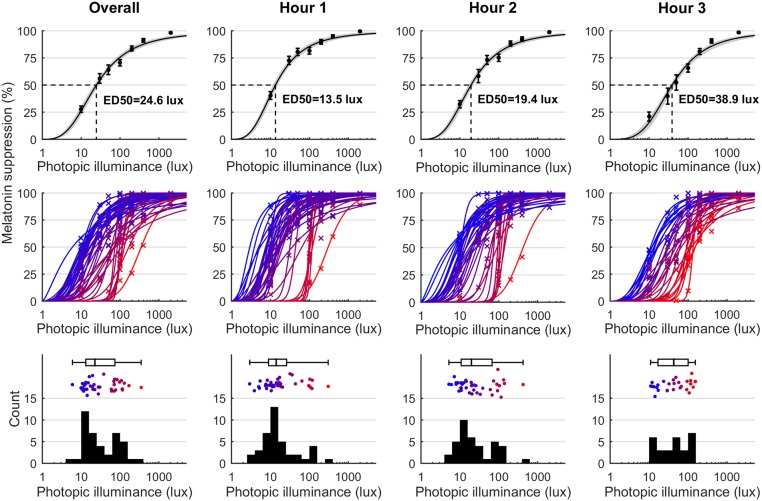
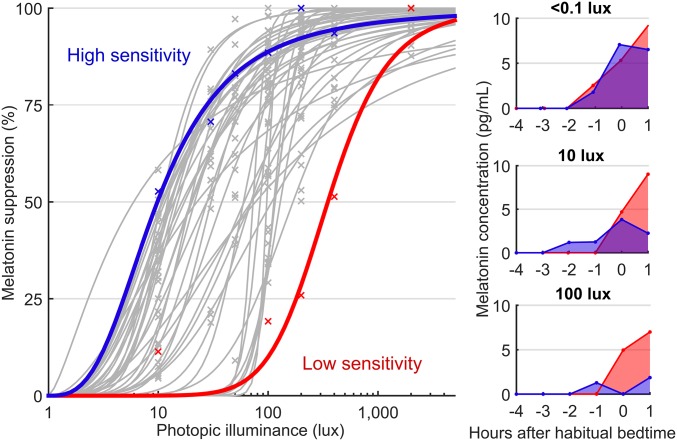
Significance: Electric lighting has fundamentally altered how the human circadian clock synchronizes to the day/night cycle. Exposure to light after dusk is pervasive in the modern world. We examined group-level sensitivity of the circadian system to evening light and the degree to which sensitivity varies between individuals. We found that, on average, humans are highly sensitive to evening light. Specifically, 50% suppression of melatonin occurred at <30 lux, which is comparable to or lower than typical indoor lighting used at night, as well as light produced by electronic devices. Significantly, there was a >50-fold difference in sensitivity to evening light across individuals. Interindividual differences in light sensitivity may explain differential vulnerability to circadian disruption and subsequent impact on human health.
Overview
The claims and statistics of this paper haven’t been checked yet.
Free: it reads the open-access text and checks the first 5 claims that cite a source we can check. Create a free account to check every claim.
Integrity signals
Registry
Cites
Statistics
Figures
Verification
Claims the paper makes
The claims and statistics of this paper haven’t been checked yet.
Free: it reads the open-access text and checks the first 5 claims that cite a source we can check. Create a free account to check every claim.
Claims other papers make about this one
Each is checked against this paper’s own text: does it say what the citing paper says it does?
The source backs part of the claim, not all of it — or backs it for a different population, condition or comparison.
In the citing paper
“There is, in fact, growing evidence showing that humans are, on average, highly sensitive to lower illuminance levels than previously thought (dependent on their prior light exposure history, and individually variable) and that a 50% suppression of melatonin can occur even at <30 lux. 16”
From Sustained remission from perinatal depression after bright light therapy: A pilot randomised, placebo‐controlled trial (2022) · cites this paper as [16]
Experimental — accuracy not yet measured
Self-check
Percentages, sums and reported differences re-computed from the paper’s own numbers.
The self-check needs the paper’s full text.
Citations
Cites
Stability, precision, and near-24-hour period of the human circadian pacemaker
Czeisler, C. A., Duffy, J. F., Shanahan, T. L., Brown, E. N., Mitchell, J. F., Rimmer, D. W., Ronda, J. M., Silva, E. J., Allan, J. S., Emens, J. S., et al. (1999) · Science · doi:10.1126/science.284.5423.2177 · Cited by 1,705 · cited 1×
“6% (4), showing that the human circadian period distribution was in fact similar to that seen in nonhuman animals studied in dark conditions.”
BackgroundChang, A.-M., Aeschbach, D., Duffy, J. F., & Czeisler, C. A. (2015) · Proceedings of the National Academy of Sciences · doi:10.1073/pnas.1418490112 · Cited by 1,430 · cited 1×
“Exposure to electric light after sunset in this range is extremely common in industrialized countries (9, 12–14), and the increasing use of light-emitting devices is a further source of evening light that is potentially disruptive to the circadian system (15, 16).”
BackgroundMeasuring and using light in the melanopsin age
Lucas, R. J., Peirson, S. N., Berson, D. M., Brown, T. M., Cooper, H. M., Czeisler, C. A., Figueiro, M. G., Gamlin, P. D., Lockley, S. W., O’Hagan, J. B., et al. (2014) · Trends in Neurosciences · doi:10.1016/j.tins.2013.10.004 · Cited by 1,278 · cited 1×
“blue light) on the circadian pacemaker (47).”
Self-citationHattar, S., Lucas, R. J., Mrosovsky, N., Thompson, S., Douglas, R. H., Hankins, M. W., Lem, J., Biel, M., Hofmann, F., Foster, R. G., et al. (2003) · Nature · doi:10.1038/nature01761 · Cited by 1,245 · cited 1×
“(5), it is important to note that the circadian system receives light via a complex pathway involving contributions frommultiple photoreceptors (45, 46).”
BackgroundZeitzer, J. M., Dijk, D., Kronauer, R. E., Brown, E. N., & Czeisler, C. A. (2000) · The Journal of Physiology · doi:10.1111/j.1469-7793.2000.00695.x · Cited by 1,175
Entrainment of the Human Circadian Clock to the Natural Light-Dark Cycle
Wright, K. P., McHill, A. W., Birks, B. R., Griffin, B. R., Rusterholz, T., & Chinoy, E. D. (2013) · Current Biology · doi:10.1016/j.cub.2013.06.039 · Cited by 783 · cited 1×
“The interindividual differences we observed in light sensitivity may underlie interindividual differences in sleep and circadian timing that are known to arise with access to electric light (8, 25, 26), in addition to previously identified physiological factors, including intrinsic period of the circadian clock and sl…”
BackgroundCajochen, C., Frey, S., Anders, D., Späti, J., Bues, M., Pross, A., Mager, R., Wirz-Justice, A., & Stefani, O. (2011) · Journal of Applied Physiology · doi:10.1152/japplphysiol.00165.2011 · Cited by 730 · cited 1×
“Exposure to electric light after sunset in this range is extremely common in industrialized countries (9, 12–14), and the increasing use of light-emitting devices is a further source of evening light that is potentially disruptive to the circadian system (15, 16).”
BackgroundMolecular Dissection of Two Distinct Actions of Melatonin on the Suprachiasmatic Circadian Clock
Liu, C., Weaver, D. R., Jin, X., Shearman, L. P., Pieschl, R. L., Gribkoff, V. K., & Reppert, S. M. (1997) · Neuron · doi:10.1016/s0896-6273(00)80350-5 · Cited by 723 · cited 1×
“These findings indicate that the rise of melatonin, an important signal for the initiation of sleep that inhibits electrical activity of SCN neurons (44), is extremely sensitive to suppression by eveninglight exposure.”
BackgroundCajochen, C., Zeitzer, J. M., Czeisler, C. A., & Dijk, D.-J. (2000) · Behavioural Brain Research · doi:10.1016/s0166-4328(00)00236-9 · Cited by 653 · cited 1×
“A related avenue of future work would be to examine whether individual differences in melatonin suppression predict individual differences in other outcomes that are known to follow similar dose–response curves at the group-average level, such as the effect of light on alertness (48).”
BackgroundWever, R. A. (1979) · Topics in Environmental Physiology and Medicine · doi:10.1007/978-1-4612-6142-1 · Cited by 608
Cited by
Items 101–200 of 450
Towards a framework for light-dosimetry studies: Quantification metrics
Hartmeyer, S. L., & Andersen, M. (2023) · Lighting Research & Technology · doi:10.1177/14771535231170500 · Cited by 41
“49,53,54 Similarly, studies that measured personal light exposure in a context unrelated to the non-visual system (e.g. 57 In total, 104 studies were deemed eligible and formed the set of dosimetry field studies reviewed here from which the list of metrics to discuss could be identified,…”
BackgroundGarbazza, C., Cirignotta, F., D'Agostino, A., Cicolin, A., Hackethal, S., Wirz‐Justice, A., Cajochen, C., Manconi, M., & the “Life‐ON” study group (2022) · Acta Psychiatrica Scandinavica · doi:10.1111/acps.13482 · Cited by 34
“There is, in fact, growing evidence showing that humans are, on average, highly sensitive to lower illuminance levels than previously thought (dependent on their prior light exposure history, and individually variable) and that a 50% suppression of melatonin can occur even at <30 lux.(16) Therefore, although it is sti…”
BackgroundDecreased sensitivity of the circadian system to light in current, but not remitted depression
McGlashan, E. M., Coleman, M. Y., Vidafar, P., Phillips, A. J. K., & Cain, S. W. (2019) · Journal of Affective Disorders · doi:10.1016/j.jad.2019.05.076 · Cited by 33
Self-citationEsaki, Y., Obayashi, K., Saeki, K., Fujita, K., Iwata, N., & Kitajima, T. (2020) · Physiology & Behavior · doi:10.1016/j.physbeh.2020.113281 · Cited by 33
Considerations on how to light the night-shift
Löwden, A., & Kecklund, G. (2021) · Lighting Research & Technology · doi:10.1177/14771535211012251 · Cited by 34
Barger, L. K., Sullivan, J. P., Lockley, S. W., & Czeisler, C. A. (2020) · Journal of Occupational and Environmental Medicine · doi:10.1097/jom.0000000000002054 · Cited by 33
“Moreover, we cannot rule out that the control lighting also improved alertness (as compared to darkness) especially given the large inter-individual variation and high sensitivity to light at night.(29,35,36) We were able to show, however, that the blueenriched light and exercise was able to improve alertness and perf…”
BackgroundSelf-citationBauer, M., Glenn, T., Achtyes, E. D., Alda, M., Ağaoğlu, E., Altınbaş, K., Andreassen, O. A., Angelopoulos, E. K., Ardau, R., Vares, E. A., et al. (2021) · International Journal of Bipolar Disorders · doi:10.1186/s40345-021-00231-7 · Cited by 35
Swope, C. B., Rong, S., Campanella, C., Vaicekonyte, R., Phillips, A. J. K., Cain, S. W., & McGlashan, E. M. (2023) · Chronobiology International · doi:10.1080/07420528.2023.2188091 · Cited by 33
“These interindividual differences in light sensitivity may partially explain differential vulnerability to circadian disruption and subsequent impacts on health (Phillips et al. 2019).”
BackgroundInfluentialSelf-citationArtificial Light at Night and Type 2 Diabetes Mellitus
Baek, J. H., Zhu, Y., Jackson, C. L., & Park, Y. (2024) · Diabetes & Metabolism Journal · doi:10.4093/dmj.2024.0237 · Cited by 35
“Furthermore Furthermore, there is considerable variability in the average mela-noptic illuminance across different lighting sources, with a range spanning 20-fold [75].”
BackgroundConnolly, L. J., Rajaratnam, S. M. W., Murray, J. M., Spitz, G., Lockley, S. W., & Ponsford, J. L. (2021) · BMC Neurology · doi:10.1186/s12883-021-02292-8 · Cited by 32
“In addition, inter-individual variability in treatment response may have been associated with individual differences in light sensitivity, which requires investigation [61].”
BackgroundSelf-citationXu, Y.-X., Yu, Y., Huang, Y., Wan, Y., Su, P., Tao, F., & Sun, Y. (2021) · Environmental Pollution · doi:10.1016/j.envpol.2021.118628 · Cited by 35
Trivedi, R., Man, H., Madut, A., Mather, M., Elder, E., Dhillon, H. M., Brand, A. H., Howle, J. R., Mann, G. J., DeFazio, A., et al. (2021) · Frontiers in Neuroscience · doi:10.3389/fnins.2021.700923 · Cited by 31
“…have reported that, compared with the standard actigraphy metrics of sleep duration and sleep efficiency, SRI has a stronger association with increased cardiometabolic risk (Lunsford-Avery et al., 2018), poorer mood (Pye et al., 2021), and poorer academic performance (Phillips et al., 2017).”
BackgroundResultSelf-citationBlume, C., Niedernhuber, M., Spitschan, M., Slawik, H. C., Meyer, M., Bekinschtein, T. A., & Cajochen, C. (2022) · SLEEP · doi:10.1093/sleep/zsac199 · Cited by 34
Grandner, M. A., Valencia, D. Y., Seixas, A. A., Oliviér, K., Gallagher, R., Killgore, W. D. S., Hale, L. E., Branas, C. C., & Alfonso‐Miller, P. (2022) · International Journal of Environmental Research and Public Health · doi:10.3390/ijerph192013599 · Cited by 31
“For example, there is extensive research on environmental light at night as an impediment to sleep health [43,44].”
BackgroundThe real-world association between digital markers of circadian disruption and mental health risks
Lee, M. P., Kim, D. W., Fang, Y., Kim, R., Bohnert, A. S. B., Sen, S., & Forger, D. B. (2024) · npj Digital Medicine · doi:10.1038/s41746-024-01348-6 · Cited by 29
Chakraborty, R., Seby, C., Scott, H., Tang, V., Kemps, E., Anstice, N. S., Juers, E., Lovato, N., Taranath, D. A., Mills, R. A., et al. (2023) · SLEEP · doi:10.1093/sleep/zsad265 · Cited by 30
Accuracy of the GENEActiv Device for Measuring Light Exposure in Sleep and Circadian Research
Stone, J. E., McGlashan, E. M., Facer‐Childs, E. R., Cain, S. W., & Phillips, A. J. K. (2020) · Clocks & Sleep · doi:10.3390/clockssleep2020012 · Cited by 29
“A broad range of illuminations below 100 lux were tested due to the high sensitivity of the human circadian system to light, even in low indoor light conditions [2,3].”
BackgroundSelf-citationSunde, E., Pedersen, T., Mrdalj, J., Thun, E., Grønli, J., Harris, A., Bjorvatn, B., Waage, S., Skene, D. J., & Pallesen, S. (2020) · Clocks & Sleep · doi:10.3390/clockssleep2040037 · Cited by 30
“However, the individual differences in circadian responses indicate that factors other than the light are also at play, such as differences in sensitivity to light [56].”
BackgroundMethodXu, S., Zong, Z., Zhu, Y., Zhang, X., Zhang, Y., Wang, X., Tao, S., Wu, X., & Tao, F. (2023) · BMC Ophthalmology · doi:10.1186/s12886-023-02874-9 · Cited by 30
“In addition, an experimental study revealed that exposure to room light in the late evening suppresses the start of melatonin synthesis and shortens the duration of melatonin production [40].”
BackgroundTang, S., Liang, A., Liu, M., Wang, W., Zhang, F., & Luo, A. (2023) · Carbon letters · doi:10.1007/s42823-023-00556-6 · Cited by 28
Fernandez, F. (2022) · Nature and Science of Sleep · doi:10.2147/nss.s251712 · Cited by 30
“to exhibit circadian sensitivity to light levels approximating candlelight (< 4 lux, melanopic illuminance).(8,9) An individual’s photic history may play a role in creating this heightened sensitivity.”
BackgroundStebelová, K., Roška, J., & Zeman, M. (2020) · International Journal of Molecular Sciences · doi:10.3390/ijms21207736 · Cited by 30
“0 lux can result in 50% melatonin suppression in sensitive individuals [17].”
BackgroundResultInfluentialBurns, A. C., Phillips, A. J. K., Rutter, M. K., Saxena, R., Cain, S. W., & Lane, J. M. (2022) · SLEEP · doi:10.1093/sleep/zsac287 · Cited by 28
Self-citationHuman-Centric Lighting Research and Policy in the Melanopsin Age
Spitschan, M., & Joyce, D. S. (2023) · Policy Insights from the Behavioral and Brain Sciences · doi:10.1177/23727322231196896 · Cited by 33
“One recent study examining the dose – response curve for melatonin suppression found that the most sensitive individual in their study was about 30 × more sensitive than the least sensitive individual (Phillips et al., 2019).”
BackgroundGenomic perspectives on the circadian clock hypothesis of psychiatric disorders
von Schantz, M., Leocádio-Miguel, M. A., McCarthy, M. J., Papiol, S., & Landgraf, D. (2020) · Advances in genetics · doi:10.1016/bs.adgen.2020.11.005 · Cited by 30
Evaluating circadian light hygiene: Methodology and health implications
Gubin, D. G., Borisenkov, M. F., Kolomeichuk, S., Markov, A. G., Weinert, D., Cornélissen, G., & Stefani, O. (2024) · Russian Open Medical Journal · doi:10.15275/rusomj.2024.0415 · Cited by 26
Yin, J., Tang, X., Liu, Z., Gong, Y., Yang, H., & Zhang, Y. (2025) · JMIR Mental Health · doi:10.2196/77796 · Cited by 34
“Phillips et al [21] demonstrated that evening exposure to light at intensities below 30 lux, which is comparable to that emitted by smartphones, suppressed melatonin by 50%.”
Vieira, R. P. O., Nehme, P., Marqueze, E. C., do Amaral, F. G., Cipolla‐Neto, J., & Moreno, C. R. D. C. (2021) · Chronobiology International · doi:10.1080/07420528.2021.1912072 · Cited by 29
“It is known that exposure to artificial light at night during night work alters the production of melatonin (Daugaard et al. 2017; Lewy et al. 1980; Phillips et al. 2019; Touitou et al. 2017).”
BackgroundHiguchi, S., Lin, Y., Qiu, J., Zhang, Y., Ohashi, M., Lee, S., Kitamura, S., & Yasukouchi, A. (2021) · Journal of PHYSIOLOGICAL ANTHROPOLOGY · doi:10.1186/s40101-021-00257-x · Cited by 27
Nakamoto, I., Uiji, S., Okata, R., Endo, H., Tohyama, S., Nitta, R., Hashimoto, S., Matsushima, Y., Wakimoto, J., Hashimoto, S., et al. (2021) · Scientific Reports · doi:10.1038/s41598-021-92595-0 · Cited by 26
Rea, M. S., Nagare, R., & Figueiro, M. G. (2020) · Scientific Reports · doi:10.1038/s41598-020-70619-5 · Cited by 25
Sunde, E., Mrdalj, J., Pedersen, T., Thun, E., Bjorvatn, B., Grønli, J., Harris, A., Waage, S., & Pallesen, S. (2020) · Occupational and Environmental Medicine · doi:10.1136/oemed-2019-106049 · Cited by 26
Sunde, E., Pedersen, T., Mrdalj, J., Thun, E., Grønli, J., Harris, A., Bjorvatn, B., Waage, S., Skene, D. J., & Pallesen, S. (2020) · Frontiers in Psychology · doi:10.3389/fpsyg.2020.02172 · Cited by 27
Nie, J., Chen, Z., Jiao, F., Zhan, J., Chen, Y., Chen, Y., Pan, Z., Kang, X., Wang, Y., Wang, Q., et al. (2020) · Optics & Laser Technology · doi:10.1016/j.optlastec.2020.106709 · Cited by 24
Chronotypes in the US: Influence of longitude position in a time zone
Fischer, D. R., & Lombardi, D. A. (2021) · Chronobiology International · doi:10.1080/07420528.2021.2002889 · Cited by 23
“…profiles include exposure to both natural daylight and artificial light, typically characterized by reduced zeitgeber strength, i.e., the difference between day and night is blurred by low indoor light intensities during the daytime and increased exposure to evening light (Phillips et al. 2019).”
BackgroundSleep and circadian rhythm profiles in seasonal depression
Wescott, D. L., Wallace, M. L., Hasler, B. P., Klevens, A. M., Franzen, P. L., Hall, M. H., & Roecklein, K. A. (2022) · Journal of Psychiatric Research · doi:10.1016/j.jpsychires.2022.10.019 · Cited by 23
Influence of the Human Field of View on Visual and Non-Visual Quantities in Indoor Environments
Zauner, J., Broszio, K., & Bieske, K. (2023) · Clocks & Sleep · doi:10.3390/clockssleep5030032 · Cited by 23
“…Wall mounted Lights Hanifin et al. 2019 [30] Central, 63 ◦ visual angle Nagare et al. 2019 [31] Central, 40 ◦ viewing angle Phillips et al. 2019 [32] Ceiling mounted Lights As the field of NIF research advances, transitioning from controlled artificial setups (Table 1) to more realistic…”
Bjerrum, L. B., Nordhus, I. H., Sørensen, L., Wulff, K., Bjorvatn, B., Flo, E., & Visted, E. (2024) · Biological Psychology · doi:10.1016/j.biopsycho.2024.108845 · Cited by 26
Ratwani, M., Bisht, S., & Prakash, S. (2025) · Biochemical and Biophysical Research Communications · doi:10.1016/j.bbrc.2025.151978 · Cited by 23
McMahon, W. R., Ftouni, S., Phillips, A. J. K., Beatty, C., Lockley, S. W., Rajaratnam, S. M. W., Maruff, P. T., Drummond, S. P. A., & Anderson, C. (2020) · PLoS ONE · doi:10.1371/journal.pone.0236566 · Cited by 24
“For instance, our previous work reported that DLMOs measured under 10 lux are, on average, 22min later than in <1 lux light for the same participants, with some individuals showing evidence of melatonin suppression in light illuminance as low as 6 lux [42].”
MethodSelf-citationMeasuring Dim Light Melatonin Onset in Humans
Hilaire, M. A. S., & Lockley, S. W. (2022) · Methods in molecular biology · doi:10.1007/978-1-0716-2593-4_3 · Cited by 23
Self-citationAssociations between systemic melatonin and human myopia: A systematic review
Hussain, A., Gopalakrishnan, A., Scott, H., Seby, C., Tang, V., Ostrin, L. A., & Chakraborty, R. (2023) · Ophthalmic and Physiological Optics · doi:10.1111/opo.13214 · Cited by 23
“59 On the other hand, in the latter study, saliva samples were collected every half hour for 7 h, beginning 5 h before and ending 2 h after each participant's average sleep onset.”
BackgroundGoodman, M. O., Dashti, H. S., Lane, J. M., Windred, D. P., Burns, A. C., Jones, S. E., Sofer, T., Purcell, S., Zhu, X., Ollila, H. M., et al. (2023) · Journal of the American Heart Association · doi:10.1161/jaha.122.030568 · Cited by 24
“39,40 Furthermore, long-sleep EDS may be indicative of greater time in bed without increased objective night-time sleep (as reflected in accelerometry data; Table 5), potentially due to a role in increased sleep latency, or increased fragmentation, resulting from circadian mis-alignment.”
Self-citationWallace, D. A., Qiu, X., Schwartz, J. D., Huang, T., Scheer, F. A. J. L., Redline, S. S., & Sofer, T. (2023) · Environmental Pollution · doi:10.1016/j.envpol.2023.123258 · Cited by 23
Perceptions of Light Pollution and its Impacts: Results of an Irish Citizen Science Survey
Coogan, A. N., Cleary-Gaffney, M., Finnegan, M., MacMillan, G., González, A., & Espey, B. R. (2020) · International Journal of Environmental Research and Public Health · doi:10.3390/ijerph17155628 · Cited by 26
“show very high inter-individual variability, with some people responsive to very low illuminance levels [8].”
BackgroundKudo, N., Shinohara, H., Kagabu, S., & Kodama, H. (2021) · Chronobiology International · doi:10.1080/07420528.2021.1930028 · Cited by 23
“Phillips et al. (2019) compared melatonin suppression profiles when the participants were exposed to a dim control (<1 lux) and various levels of experimental light levels (10–2,000 lux for 5 h) in the evening.”
BackgroundEvening light environments can be designed to consolidate and increase the duration of REM-sleep
Vethe, D., Drews, H. J., Scott, J. L., Engstrøm, M., Heglum, H. S. A., Grønli, J., Wisor, J. P., Sand, T., Lydersen, S., Kjørstad, K., et al. (2022) · Scientific Reports · doi:10.1038/s41598-022-12408-w · Cited by 22
Zhang, C., Zhu, Z., Zhao, J., Li, Y., Zhang, Z., & Zheng, Y. (2022) · The Science of The Total Environment · doi:10.1016/j.scitotenv.2022.160809 · Cited by 27
Livieratos, A., Lockley, S. W., & Tsiodras, S. (2025) · EClinicalMedicine · doi:10.1016/j.eclinm.2025.103073 · Cited by 21
Self-citationHasan, S., Tam, S. K. E., Foster, F., Vyazovskiy, V. V., Bannerman, D. M., & Peirson, S. N. (2021) · Biochemical Pharmacology · doi:10.1016/j.bcp.2020.114404 · Cited by 22
Light-based methods for predicting circadian phase in delayed sleep–wake phase disorder
Murray, J. M., Magee, M., Sletten, T. L., Gordon, C. J., Lovato, N., Ambani, K., Bartlett, D. J., Kennaway, D. J., Lack, L. C., Grunstein, R. R., et al. (2021) · Scientific Reports · doi:10.1038/s41598-021-89924-8 · Cited by 22
Self-citationQian, J., Morris, C. J., Phillips, A. J. K., Li, P., Rahman, S. A., Wang, W., Hu, K., Arendt, J., Czeisler, C. A., & Scheer, F. A. J. L. (2022) · Journal of Pineal Research · doi:10.1111/jpi.12791 · Cited by 22
Self-citationSchöllhorn, I., Stefani, O., Blume, C., & Cajochen, C. (2023) · Clocks & Sleep · doi:10.3390/clockssleep5040044 · Cited by 22
Guyett, A., Lovato, N., Manners, J., Stuart, N., Toson, B., Lechat, B., Lack, L. C., Micic, G., Banks, S., Dorrian, J., et al. (2024) · SLEEP · doi:10.1093/sleep/zsae146 · Cited by 21
“…is potentially also more practical and effective than briefer but more intense device-delivered lighting protocols [18], although interindividual differences in Tmin timing and light sensitivity appear likely to further influence the circadian adjustment efficacy of any lighting manipulation [33].”
BackgroundLight and Life at Night as Circadian Rhythm Disruptors
Lee, E., & Kim, M. (2019) · Chronobiology in Medicine · doi:10.33069/cim.2019.0016 · Cited by 23
“There is a large inter-individual variation in response to light intensity with highly sensitive individuals even responding to 30 lux exposure [112].”
BackgroundSleep and circadian differences between light and heavy adult alcohol drinkers
Burgess, H. J., Rizvydeen, M., Kikyo, F., Kebbeh, N., Tan, M., Roecklein, K. A., Hasler, B. P., King, A. C., & Cao, D. (2022) · Alcoholism Clinical and Experimental Research · doi:10.1111/acer.14872 · Cited by 22
“The possibility that a history of heavy alcohol use modulates circadian photoreceptor responsivity to light should be further explored with other methods, such as melatonin suppression to light (Phillips et al., 2019).”
BackgroundCleary-Gaffney, M., Espey, B. R., & Coogan, A. N. (2022) · Heliyon · doi:10.1016/j.heliyon.2022.e11284 · Cited by 22
Liao, J., Yu, C., Cai, J., Tian, R., Li, X., Wang, H., Li, L., Song, G., Fu, L., Li, X., et al. (2024) · The Science of The Total Environment · doi:10.1016/j.scitotenv.2024.170849 · Cited by 21
Ritter, P. S., Soltmann, B., Sauer, C., Yakac, A., Boekstaegers, L., Reichard, M., Koenitz, K., Bauer, M., Güldner, H., Neumann, S., et al. (2021) · Biological Psychiatry Global Open Science · doi:10.1016/j.bpsgos.2021.06.004 · Cited by 22
“This may in part be due to inherent interindividual differences in the responsiveness to phase shifting by light (61).”
BackgroundOkechukwu, C. E. (2022) · The Egyptian Journal of Neurology Psychiatry and Neurosurgery · doi:10.1186/s41983-022-00468-8 · Cited by 29
“Changes in sensitivity contribute to the vulnerability of developing CRSWD [81].”
BackgroundRhythms in barriers and fluids: Circadian clock regulation in the aging neurovascular unit
Skapetze, L., Owino, S., Lo, E. H., Arai, K., Merrow, M. W., & Harrington, M. E. (2023) · Neurobiology of Disease · doi:10.1016/j.nbd.2023.106120 · Cited by 20
“Across all ages, effects of light on circadian clocks can be increased using light intensity and duration, although there is significant inter-individual variability (Phillips et al., 2019; Stone et al., 2020).”
BackgroundMove the night way: how can physical activity facilitate adaptation to shift work?
Easton, D. F., Gupta, C. C., Vincent, G. E., & Ferguson, S. A. (2024) · Communications Biology · doi:10.1038/s42003-024-05962-8 · Cited by 25
“Studies demonstrate that high interindividual variability exists in the timing of circadian rhythms 136 and the sensitivity of ocular photoreceptors 101 , two variables that in fl uence the adaptation of the circadian system.”
Dashti, H. S., Vetter, C., Lane, J. M., Smith, M. C., Wood, A. R., Weedon, M. N., Rutter, M. K., Garaulet, M., Scheer, F. A. J. L., & Saxena, R. (2019) · Diabetes · doi:10.2337/db19-0606 · Cited by 21
“Furthermore, we have no information about light exposure, which is known to be a potent suppressor of melatonin secretion (35).”
BackgroundCircadian regulation of pulmonary disease: the importance of timing
Cunningham, P. S., Jackson, C., Chakraborty, A., Cain, J., Durrington, H. J., & Blaikley, J. (2023) · Clinical Science · doi:10.1042/cs20220061 · Cited by 22
Sex and Seasonal Variations in Melatonin Suppression and Alerting Response to Light
Fazlali, F., Lazar, R., Yahya, F., Stefani, O., Spitschan, M., & Cajochen, C. (2025) · Journal of the Endocrine Society · doi:10.1210/jendso/bvaf155 · Cited by 18
“Emerging evidence suggests that these NIF effects depend on individual differences in light sensitivity 19–21 , sex 22 and season 23 .”
BackgroundJoyce, D. S., Houser, K. W., Peirson, S. N., Zeitzer, J. M., & Zele, A. J. (2022) · Cambridge University Press eBooks · doi:10.1017/9781009029865 · Cited by 30
Wang, T., Shao, R., & Hao, L. (2023) · Buildings · doi:10.3390/buildings13082112 · Cited by 20
Melanopic Limits of Metamer Spectral Optimisation in Multi-Channel Smart Lighting Systems
Zandi, B., Eissfeldt, A., Herzog, A., & Khanh, T. Q. (2021) · Energies · doi:10.3390/en14030527 · Cited by 19
“An essential perspective in this context is that the visual preferences in indoor lighting and the circadian light sensitivity can differ between individuals [3,74,75,78].”
BackgroundWilson, M. K., Strickland, L. J. G., Ballard, T., & Griffin, M. A. (2022) · Theoretical Issues in Ergonomics Science · doi:10.1080/1463922x.2022.2144962 · Cited by 20
“For instance, recent circadian modelling research has indicated that lighting conditions bear strong predictive influence over circadian entrainment and sleep timing (Papatsimpa et al. 2021; Phillips et al. 2019).”
BackgroundEvidence for Internal Misalignment of Circadian Rhythms in Youth With Emerging Mood Disorders
Carpenter, J. S., Crouse, J. J., Shin, M., Tonini, E., Hindmarsh, G., de Haan, Z., Iorfino, F., Robillard, R., Naismith, S. L., Scott, E. M., et al. (2025) · Journal of Biological Rhythms · doi:10.1177/07487304251349408 · Cited by 18
“Third, they may be highly sensitive to light: light sensitivity has been reported to vary considerably between individuals (Phillips et al., 2019), and thus the laboratory conditions of this protocol ( < 30 lux) may have been insufficiently dim to prevent suppression of melatonin; our study was…”
What time is it? A tale of three clocks, with implications for personalized medicine
Klerman, E. B., Rahman, S. A., & Hilaire, M. A. S. (2020) · Journal of Pineal Research · doi:10.1111/jpi.12646 · Cited by 17
Kim, J. H., Lyu, Y. S., & Kim, S. Y. (2020) · International Journal of Environmental Research and Public Health · doi:10.3390/ijerph17124383 · Cited by 18
“reported the interindividual variability of the response of the human circadian system to evening light [25].”
BackgroundThe Effect of Exogenous Melatonin on Eating Habits of Female Night Workers with Excessive Weight
Nogueira, L. F. R., Crispim, C. A., Cipolla‐Neto, J., Moreno, C. R. D. C., & Marqueze, E. C. (2022) · Nutrients · doi:10.3390/nu14163420 · Cited by 20
“The response to artificial light exposure at night also varies, leading to lower or higher melatonin suppression according to individual sensitivity and light intensity [53].”
BackgroundVidafar, P., & Spitschan, M. (2022) · Journal of Biological Rhythms · doi:10.1177/07487304221126785 · Cited by 17
“A recent study evaluated the melatonin-suppressive response to broad spectrum overhead white light ranging from 10 to 2000 lux (5.66-1178.77 m-EDI) in 56 young, healthy males and females of Caucasian descent (Phillips et al., 2019).”
BackgroundInfluentialSelf-citationLi, Y., Fang, W., Qiu, H., Dong, W., Wang, J., & Bao, H. (2023) · LEUKOS The Journal of the Illuminating Engineering Society of North America · doi:10.1080/15502724.2023.2279946 · Cited by 17
“Furthermore, even the same lighting conditions can have very different NIF effects on different individuals depending on individual differences (Boyce 2022; Phillips et al. 2019).”
BackgroundBonmatí‐Carrión, M., Santhi, N., Atzori, G., Mendis, J. R., Kaduk, S. I., Dijk, D., & Archer, S. N. (2024) · npj Microgravity · doi:10.1038/s41526-024-00387-3 · Cited by 17
“Although we cannot discard the presenceof participantshighly sensitiveto light, according topublished data, these light intensities are unlikely to have produced relevant melatonin suppressions 50,51 .”
InfluentialTelemonitored Human Circadian Temperature Dynamics During Daily Routine
Huang, Q., Komarzynski, S., Bolborea, M., Finkenstädt, B., & Lévi, F. (2021) · Frontiers in Physiology · doi:10.3389/fphys.2021.659973 · Cited by 18
“Constant routine or forced desynchronization protocols allow for an apparent removal of masking environmental and lifestyle biases that enable the computation of the endogenous period, amplitude and bathyphase of the circadian rhythm in Coretemp, and that of melatonin secretion (Duffy et al., 2011; Phillips et al., 20…”
BackgroundMoreno, J. P., Hannay, K. M., Walch, O., Dadabhoy, H., Christian, J., Puyau, M. R., El‐Mubasher, A., Bacha, F. F., Grant, S. R., Park, R. J., et al. (2022) · SLEEP · doi:10.1093/sleep/zsac061 · Cited by 16
Aries, M. M., Fischl, G., Löwden, A., & Beute, F. (2022) · Lighting Research & Technology · doi:10.1177/14771535221136096 · Cited by 17
“12,13 14–16 Especially in a Scandinavian setting, lighting at home usually has lower correlated colour temperatures than lighting used in commercial buildings.”
BackgroundAdvanced melatonin onset relative to sleep in women with unmedicated major depressive disorder
Coleman, M. Y., McGlashan, E. M., Vidafar, P., Phillips, A. J. K., & Cain, S. W. (2019) · Chronobiology International · doi:10.1080/07420528.2019.1644652 · Cited by 17
“In addition to this, light levels as low as 15 lux (Crowley et al. 2015) and even 10 lux (Phillips et al. 2019) have been shown to suppress melatonin, with even very dim light (less than 3 lux) influencing timing of the circadian clock (Wright et al. 2001).”
BackgroundSelf-citationIntegrating wearable data into circadian models
Hannay, K. M., & Moreno, J. P. (2020) · Current Opinion in Systems Biology · doi:10.1016/j.coisb.2020.08.001 · Cited by 16
“A striking example of this is provided by a recent study, which found that evening light intensities varying from dim reading light (10 lux) to bright indoor light (400 lux) caused equivalent suppression of melatonin rhythms in healthy young adults [57].”
BackgroundA wearable EEG system for closed-loop neuromodulation of sleep-related oscillations
Bressler, S., Neely, R., Yost, R. M., Wang, D., & Read, H. L. (2023) · Journal of Neural Engineering · doi:10.1088/1741-2552/acfb3b · Cited by 15
“, 2019); visual stimulation may not be optimal for sleep health (Phillips et al., 2019).”
BackgroundShi, X., Wu, Y., Cao, F., Wang, X., Du, K., & Zang, S. (2024) · BMC Nursing · doi:10.1186/s12912-024-02321-0 · Cited by 17
Chilakapati, N., Timple, L., Pizzi, S., Fine, J. M., Makhija, H., Bruce, L. K., Owens, R. L., Alden, D., Malhotra, A., Martin, J. L., et al. (2025) · Chronobiology International · doi:10.1080/07420528.2025.2469885 · Cited by 16
“Circadian melatonin secretion, an indicator of sleep-wake synchronization, can be suppressed by light levels as low as 10 lx up to 400 lx depending on an individual’s sensitivity to light and the timing of the light exposure (Phillips et al. 2019).”
Fang, L., Xu, X., Lin, X., Chen, Y., Zheng, F., Bei, Y., Zhang, L., & Zhang, B. (2019) · Europe PMC (PubMed Central) · doi:10.12122/j.issn.1673-4254.2019.12.16 · Cited by 19
Price, L., Khazova, M., & Udovičić, L. (2021) · Annals of Work Exposures and Health · doi:10.1093/annweh/wxab092 · Cited by 16
“A related laboratory protocol was used to link these domestic measurements to biological factors and had shown that individual differences might frustrate one-size-fits-all recommendations (Phillips et al., 2019), so understanding the causes of this variability would be useful.”
MethodNocturnal Lifestyle Behaviours and Risk of Poor Sleep during Pregnancy
Ku, C. W., Loo, R. S. X., Tiong, M. M. Y., Eng, S. Y. C., Cheung, Y. B., Ong, L. S., Tan, K. H., Chong, S. C., Chan, J. K. Y., Yap, F. K. P., et al. (2022) · Nutrients · doi:10.3390/nu14112348 · Cited by 15
Huang, Y., Mayer, C., Walch, O., Bowman, C., Sen, S., Goldstein, C. A., Tyler, J., & Forger, D. B. (2021) · Frontiers in Digital Health · doi:10.3389/fdgth.2021.727504 · Cited by 16
Joyce, D. S., Spitschan, M., & Zeitzer, J. M. (2022) · Proceedings of the Royal Society B Biological Sciences · doi:10.1098/rspb.2021.1943 · Cited by 16
Association between polarity of first episode and solar insolation in bipolar I disorder
Bauer, M., Glenn, T., Achtyes, E. D., Alda, M., Agaoglu, E., Altınbaş, K., Andreassen, O. A., Angelopoulos, E., Ardau, R., Aydin, M., et al. (2022) · Journal of Psychosomatic Research · doi:10.1016/j.jpsychores.2022.110982 · Cited by 14
The role of sunlight in sleep regulation: analysis of morning, evening and late exposure
de Menezes-Júnior, L. A. A., Sabião, T. D. S., Carraro, J. C. C., Machado-Coelho, G. L. L., & Meireles, A. L. (2025) · BMC Public Health · doi:10.1186/s12889-025-24618-8 · Cited by 16
“The SCN responds to light signals received by the retina, influencing the production of melatonin and other neurochemi-cals associated with alertness and sleep [3].”
Molecular Pathways Regulating Circadian Rhythm and Associated Diseases
Ding, M., Zhou, H., Li, Y., & Zheng, Y. (2024) · Frontiers in Bioscience-Landmark · doi:10.31083/j.fbl2906206 · Cited by 14
Wallace, D. A., Evenson, K. R., Isasi, C. R., Patel, S. R., Sotres‐Alvarez, D., Zee, P. C., Redline, S. S., Scheer, F. A. J. L., & Sofer, T. (2025) · The Science of The Total Environment · doi:10.1016/j.scitotenv.2025.178839 · Cited by 15
Sánchez-Cano, A. I., Bartolomé, M. J. L., Solanas, E., & Orduna, E. (2025) · Life · doi:10.3390/life15050715 · Cited by 17
Recent advances in modeling sleep: from the clinic to society and disease
Abel, J. H., Lecamwasam, K. H., Hilaire, M. A. S., & Klerman, E. B. (2019) · Current Opinion in Physiology · doi:10.1016/j.cophys.2019.12.001 · Cited by 17
“These modeling efforts are supported by a recent report of large inter-individual differences in physiological response to light [47] and by reports that, like circadian chronotype, interpersonal variability in sleep is significant, genetic, and heritable [48,49].”
BackgroundTwo-Community Noisy Kuramoto Model Suggests Mechanism for Splitting in the Suprachiasmatic Nucleus
Rohling, J. H. T., & Meylahn, J. M. (2020) · Journal of Biological Rhythms · doi:10.1177/0748730419898314 · Cited by 14
Attitudes Towards Sleep as a Time Commitment are Associated with Sleep Regularity
Windred, D. P., Stone, J., McGlashan, E. M., Cain, S. W., & Phillips, A. J. K. (2021) · Behavioral Sleep Medicine · doi:10.1080/15402002.2020.1860989 · Cited by 14
“Given the right motivation, convincing individuals to maintain regular sleep patterns is possible, as shown in a recent study where near-perfect regularity was maintained (an average SRI score of 94.6) for seven weeks, motivated by a large financial reward (Phillips et al., 2019).”
BackgroundSelf-citationCoirolo, N., Casaravilla, C., Tassino, B., & da Silva, A. C. R. (2022) · iScience · doi:10.1016/j.isci.2022.104676 · Cited by 18
“Therefore, these sensitive time windows, traditionally described in the phase response curve of melatonin to light (Lewy et al., 1998), must be individually adapted to adjust the day to schedules based on DLMO and not on clock or solar time (Phillips et al., 2019; Thomas et al., 2020).”
BackgroundUsability and Acceptability of a Corneal-Plane α-Opic Light Logger in a 24-h Field Trial
Balajadia, E., Garcia, S., Stampfli, J., Schrader, B., Guidolin, C., & Spitschan, M. (2023) · Digital Biomarkers · doi:10.1159/000531404 · Cited by 15
Changes in smartphone dependence and depressive and anxiety symptoms among Chinese adolescents
Li, Y., Lin, Y., Wu, H., Yang, L., Zhu, L., Sun, X., Dong, S., Guo, L., Yang, L., Yan, B., et al. (2025) · BMC Medicine · doi:10.1186/s12916-025-04372-9 · Cited by 15
“According to Phillips et al., 50% suppression of melatonin occurred at 30 lx, which is comparable to light produced by smartphones [38].”
Metadata
- Authors
- Phillips, A. J. K., Vidafar, P., Burns, A. C., McGlashan, E. M., Anderson, C., Rajaratnam, S. M. W., Lockley, S. W., & Cain, S. W.
- Affiliations
- Monash University (AU)
- Corresponding author
- Cain, Sean W.
- ORCID
- Venue
- Proceedings of the National Academy of Sciences
- Publisher
- National Academy of Sciences
- Published
- 2019-05-28
- Volume
- 116
- Issue
- 24
- Pages
- 12019-12024
- ISSN
- 0027-8424 (ISSN-L)
- 1091-6490
- PMC
- PMC6575863
- OpenAlex
- W2946852268
- Cited by
- 430
- References
- 50
- Citations by year
- 2026: 53 · 2025: 54 · 2024: 60 · 2023: 54 · 2022: 76 · 2021: 64 · 2020: 51 · 2019: 17
- FWCI
- 28.72
- Type
- journal article
- Language
- en
- Open access
- hybrid
- doi.org
- Licence
- Locations
- Proceedings of the National Academy of Sciences (publishedVersion, cc-by-nc-nd)
- Europe PMC (PubMed Central) (publishedVersion, cc-by-nc-nd)
- PubMed Central (publishedVersion, cc-by-nc-nd)
- PubMed (publishedVersion)
- Monash University Research Portal (Monash University) (submittedVersion, other-oa)
- Surrey Research Insight Open Access (The University of Surrey) (submittedVersion)
- Funders
- Department of Health | National Health and Medical Research Council (1064231)
- Topics
- Life Sciences › Neuroscience › Endocrine and Autonomic Systems › Circadian rhythm and melatonin
- Physical Sciences › Environmental Science › Global and Planetary Change › Impact of Light on Environment and Health
- Social Sciences › Psychology › Experimental and Cognitive Psychology › Sleep and Work-Related Fatigue
- Keywords
- circadian system, evening light, melatonin suppression, interindividual variability, photosensitivity, circadian rhythm disruption, electric lighting, indoor lighting
- MeSH terms
- Adult, Circadian Rhythm, Female, Humans, Individuality, Light, Lighting, Male, Melatonin, Young Adult, Circadian Clocks
About these checks
Registry, retraction, Cites and statistics results are computed, not judged, with one exception: a printed reference that no index lists is read once by a model before it counts as a citation error. Claims are extracted by a model and kept only when their quote appears verbatim in the text; each cited source is then checked, with a model’s help, for whether it says what the claim relies on. Those verdicts can be wrong — read the claim’s quote and the cited source before relying on one.
Statistics and arithmetic are recomputed, not judged.
Confidence bands are shown only for fields calibrated on our annotated test set. None is calibrated yet, so no band is shown.
What counts as a claim ›How we measure confidence ›How we check this ›
Are you an author, or do you see a problem with this page? Request a review
Data sources
Bibliographic data: Semantic Scholar, OpenAlex, Crossref.
Contains information from the Semantic Scholar Academic Graph Datasets, made available under the ODC Attribution License (ODC-BY 1.0).
Semantic Scholar’s data is described in: Kinney, R., et al. (2023). The Semantic Scholar Open Data Platform. arXiv:2301.10140.
