

The DOI matches its Crossref record; 51 of the 51 references it cites were found in a registry or an index.
Single-cell transcriptomics reveals expansion of cytotoxic CD4 T cells in supercentenarians
Open accessPublished version of a preprint
Abstract
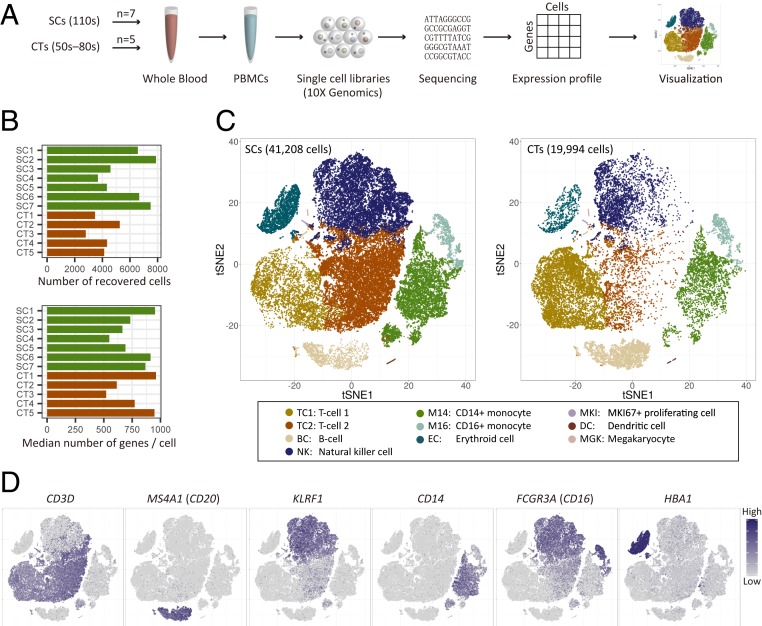
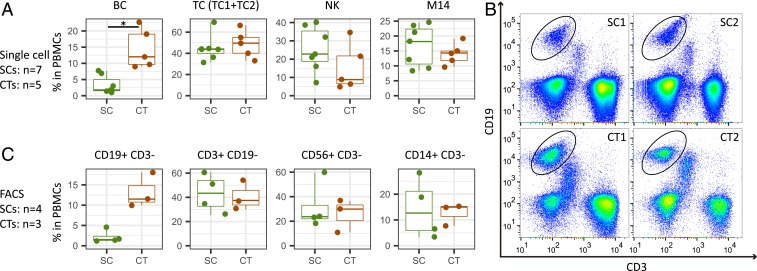
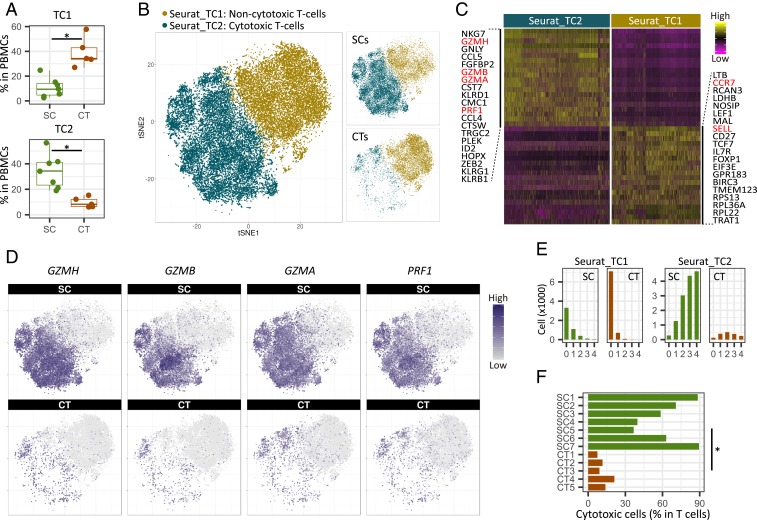
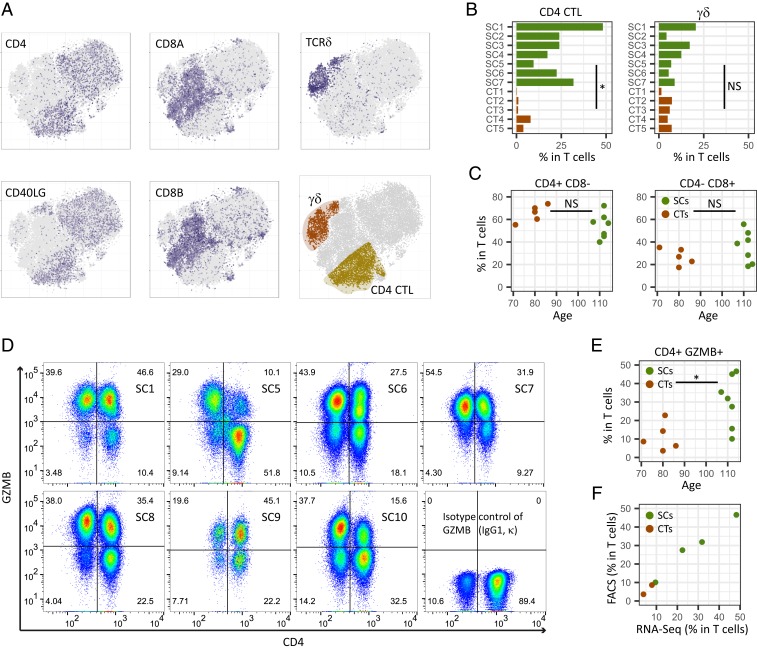
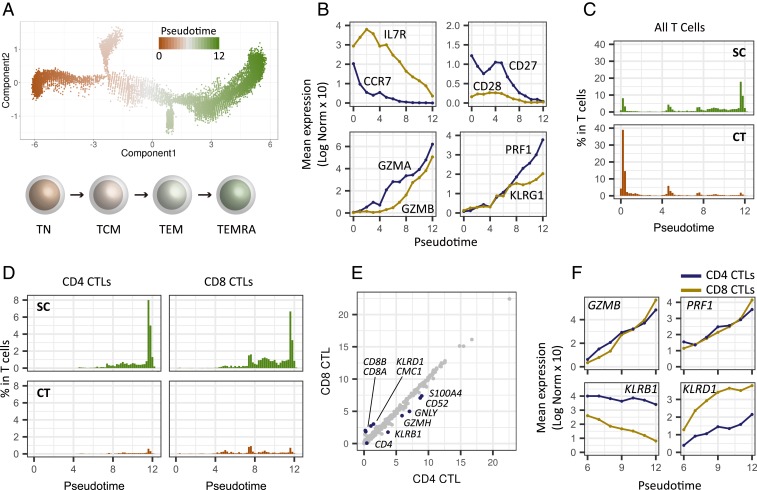
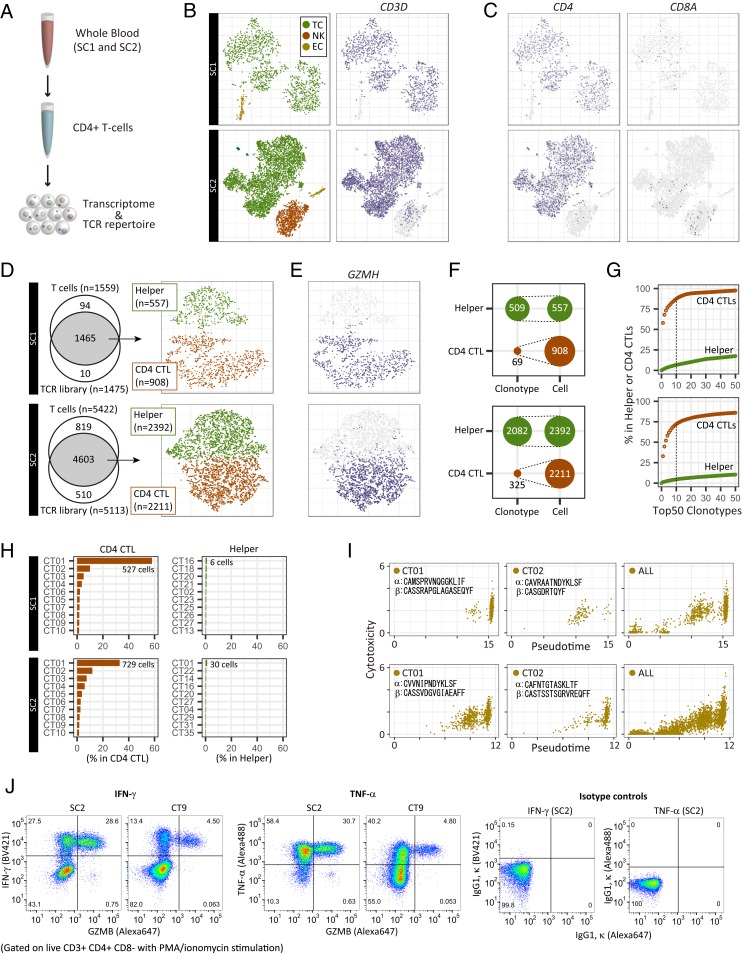
Supercentenarians, people who have reached 110 y of age, are a great model of healthy aging. Their characteristics of delayed onset of age-related diseases and compression of morbidity imply that their immune system remains functional. Here we performed single-cell transcriptome analysis of 61,202 peripheral blood mononuclear cells (PBMCs), derived from 7 supercentenarians and 5 younger controls. We identified a marked increase of cytotoxic CD4 T cells (CD4 cytotoxic T lymphocytes [CTLs]) as a signature of supercentenarians. Furthermore, single-cell T cell receptor sequencing of 2 supercentenarians revealed that CD4 CTLs had accumulated through massive clonal expansion, with the most frequent clonotypes accounting for 15 to 35% of the entire CD4 T cell population. The CD4 CTLs exhibited substantial heterogeneity in their degree of cytotoxicity as well as a nearly identical transcriptome to that of CD8 CTLs. This indicates that CD4 CTLs utilize the transcriptional program of the CD8 lineage while retaining CD4 expression. Indeed, CD4 CTLs extracted from supercentenarians produced IFN-γ and TNF-α upon ex vivo stimulation. Our study reveals that supercentenarians have unique characteristics in their circulating lymphocytes, which may represent an essential adaptation to achieve exceptional longevity by sustaining immune responses to infections and diseases.
Overview
The claims and statistics of this paper haven’t been checked yet.
Run the check — free, no account needed. It reads the open-access text and checks the sources it cites.
Integrity signals
Registry
Cites
Statistics
Figures
Verification
Claims the paper makes
The claims and statistics of this paper haven’t been checked yet.
Run the check — free, no account needed. It reads the open-access text and checks the sources it cites.
Claims other papers make about this one
Each is checked against this paper’s own text: does it say what the citing paper says it does?
The cited source says what the claim attributes to it.
In the citing paper
“Studies have shown lower levels of B cells, similar numbers of T cells, and a higher percentage of cytotoxic T cells in the peripheral blood of supercentenarians.318”
From Inflammation and aging: signaling pathways and intervention therapies (2023) · cites this paper as [318]
In the citing paper
“CD8+ cytotoxic T cells directly eradicate target cells using cytotoxic molecules via recognizing MHC I molecules within nearly all cells [127].”
From Immune Clearance of Senescent Cells to Combat Ageing and Chronic Diseases (2020) · cites this paper as [127]
Self-check
Percentages, sums and reported differences re-computed from the paper’s own numbers.
The self-check needs the paper’s full text.
Citations
Cites
STAR: ultrafast universal RNA-seq aligner
Dobin, A., Davis, C. A., Schlesinger, F., Drenkow, J., Zaleski, C., Jha, S., Batut, P., Chaisson, M., & Gingeras, T. R. (2013) · Bioinformatics · doi:10.1093/bioinformatics/bts635 · Cited by 51,709
Integrating single-cell transcriptomic data across different conditions, technologies, and species
Butler, A., Hoffman, P., Smibert, P., Papalexi, E., & Satija, R. (2018) · Nature Biotechnology · doi:10.1038/nbt.4096 · Cited by 13,174
Massively parallel digital transcriptional profiling of single cells
Zheng, G. X. Y., Terry, J. M., Belgrader, P., Ryvkin, P., Bent, Z. W., Wilson, R., Ziraldo, S. B., Wheeler, T. D., McDermott, G. P., Zhu, J., et al. (2017) · Nature Communications · doi:10.1038/ncomms14049 · Cited by 7,353
Landscape of Infiltrating T Cells in Liver Cancer Revealed by Single-Cell Sequencing
Zheng, C., Zheng, L., Yoo, J.-K., Guo, H., Zhang, Y., Guo, X., Kang, B., Hu, R., Huang, J. Y., Zhang, Q., et al. (2017) · Cell · doi:10.1016/j.cell.2017.05.035 · Cited by 2,152
Single-cell mRNA quantification and differential analysis with Census
Qiu, X., Hill, A. J., Packer, J. S., Lin, D., Ma, Y.-A., & Trapnell, C. (2017) · Nature Methods · doi:10.1038/nmeth.4150 · Cited by 1,904
Single-cell RNA sequencing to explore immune cell heterogeneity
Papalexi, E., & Satija, R. (2018) · Nature Reviews Immunology · doi:10.1038/nri.2017.76 · Cited by 1,806
HIV Infection, Inflammation, Immunosenescence, and Aging
Deeks, S. G. (2011) · Annual Review of Medicine · doi:10.1146/annurev-med-042909-093756 · Cited by 1,349
Cell intrinsic alterations underlie hematopoietic stem cell aging
Rossi, D. J., Bryder, D., Zahn, J. M., Ahlenius, H., Sonu, R., Wagers, A. J., & Weissman, I. L. (2005) · Proceedings of the National Academy of Sciences · doi:10.1073/pnas.0503280102 · Cited by 1,152 · cited 1×
“5 stem cells in bone marrow exhibit a myeloid-biased differentiation potential (12, 13), which 70 causes changes in the cell population of peripheral blood.”
BackgroundSingle-cell RNA-seq enables comprehensive tumour and immune cell profiling in primary breast cancer
Chung, W., Eum, H. H., Lee, H.-O., Lee, K.-M., Lee, H.-B., Kim, K.-T., Ryu, H. S., Kim, S., Lee, J. E., Park, Y. H., et al. (2017) · Nature Communications · doi:10.1038/ncomms15081 · Cited by 992 · cited 1×
“These methods have been applied to various subjects such as finding signatures of aging in the human pancreas (22), observing infiltrating T cells in tumors (23, 24), and characterizing diversity of cell types during brain development (25).”
MethodHuman bone marrow hematopoietic stem cells are increased in frequency and myeloid-biased with age
Pang, W. W., Price, E. A., Sahoo, D., Beerman, I., Maloney, W. J., Rossi, D. J., Schrier, S. L., & Weissman, I. L. (2011) · Proceedings of the National Academy of Sciences · doi:10.1073/pnas.1116110108 · Cited by 991
Quezada, S. A., Simpson, T. R., Peggs, K. S., Merghoub, T., Vider, J., Fan, X., Blasberg, R., Yagita, H., Muranski, P., Antony, P. A., et al. (2010) · Journal of Experimental Medicine · doi:10.1084/jem.20091918 · Cited by 898
Immunosenescence: emerging challenges for an ageing population
Aw, D., Silva, A. B., & Palmer, D. B. (2007) · Immunology · doi:10.1111/j.1365-2567.2007.02555.x · Cited by 880
Molecular diversity of midbrain development in mouse, human, and stem cells
La Manno, G., Gyllborg, D., Codeluppi, S., Nishimura, K., Salto, C., Zeisel, A., Borm, L. E., Stott, S. R. W., Toledo, E. M., Villaescusa, J. C., et al. (2016) · Cell · doi:10.1016/j.cell.2016.09.027 · Cited by 835
The who's who of T ‐cell differentiation: Human memory T ‐cell subsets
Mahnke, Y. D., Brodie, T. M., Sallusto, F., Roederer, M., & Lugli, E. (2013) · European Journal of Immunology · doi:10.1002/eji.201343751 · Cited by 817
The transcriptional landscape of age in human peripheral blood
Peters, M. J., Joehanes, R., Pilling, L. C., Schurmann, C., Conneely, K. N., Powell, J., Reinmaa, E., Sutphin, G. L., Zhernakova, A., Schramm, K., et al. (2015) · Nature Communications · doi:10.1038/ncomms9570 · Cited by 725
VDJdb: a curated database of T-cell receptor sequences with known antigen specificity
Shugay, M., Bagaev, D. V., Zvyagin, I. V., Vroomans, R. M. A., Crawford, J. C., Dolton, G. M., Komech, E. A., Sycheva, A. L., Koneva, A. E., Egorov, E. S., et al. (2017) · Nucleic Acids Research · doi:10.1093/nar/gkx760 · Cited by 626
Single-cell transcriptomics to explore the immune system in health and disease
Stubbington, M. J. T., Rozenblatt–Rosen, O., Regev, A., & Teichmann, S. A. (2017) · Science · doi:10.1126/science.aan6828 · Cited by 586
Enge, M., Arda, H. E., Mignardi, M., Beausang, J., Bottino, R., Kim, S. K., & Quake, S. R. (2017) · Cell · doi:10.1016/j.cell.2017.09.004 · Cited by 568
McPAS‐TCR: a manually curated catalogue of pathology‐associated T cell receptor sequences
Tickotsky, N., Sagiv, T., Prilusky, J., Shifrut, E., & Friedman, N. (2017) · Bioinform. · doi:10.1093/bioinformatics/btx286 · Cited by 547
Characterization of CD4+ CTLs Ex Vivo
Appay, V., Zaunders, J. J., Papagno, L., Sutton, J., Jaramillo, A., Waters, A., Easterbrook, P., Grey, P., Smith, D. E., McMichael, A. J., et al. (2002) · The Journal of Immunology · doi:10.4049/jimmunol.168.11.5954 · Cited by 545
Morbidity Profiles of Centenarians: Survivors, Delayers, and Escapers
Evert, J., Lawler, E. V., Bogan, H., & Perls, T. T. (2003) · The Journals of Gerontology Series A · doi:10.1093/gerona/58.3.m232 · Cited by 517
Shortage of circulating naive CD8+ T cells provides new insights on immunodeficiency in aging
Fagnoni, F. F., Vescovini, R., Passeri, G., Bologna, G., Pedrazzoni, M., Lavagetto, G., Casti, A., Franceschi, C., Passeri, M., & Sansoni, P. (2000) · Blood · doi:10.1182/blood.v95.9.2860.009k35_2860_2868 · Cited by 515
Naive tumor-specific CD4+ T cells differentiated in vivo eradicate established melanoma
Xie, Y., Akpınarlı, A., Maris, C. H., Hipkiss, E. L., Lane, M. V., Kwon, E. M., Muranski, P. J., Restifo, N. P., & Antony, P. A. (2010) · The Journal of Experimental Medicine · doi:10.1084/jem.20091921 · Cited by 473
Sansoni, P., Cossarizza, A., Brianti, V., Fagnoni, F. F., Snelli, G., Monti, D., Marcato, A., Passeri, G., Ortolani, C., & Forti, E. (1993) · Blood · doi:10.1182/blood.v82.9.2767.2767 · Cited by 457
Reference values for B cell subpopulations from infancy to adulthood
Morbach, H., Eichhorn, E.-M., Liese, J. G., & Girschick, H. J. (2010) · Clinical & Experimental Immunology · doi:10.1111/j.1365-2249.2010.04206.x · Cited by 399
Single-cell RNA sequencing identifies celltype-specific cis-eQTLs and co-expression QTLs
Study, L. C., van der Wijst, M. G. P., BIOS Consortium, Brugge, H., de Vries, D. H., Deelen, P., Swertz, M. A., & Franke, L. (2018) · Nature Genetics · doi:10.1038/s41588-018-0089-9 · Cited by 399
Mucida, D., Husain, M. M., Muroi, S., van Wijk, F., Shinnakasu, R., Naoe, Y., Reis, B. S., Huang, Y., Lambolez, F., Docherty, M., et al. (2013) · Nature Immunology · doi:10.1038/ni.2523 · Cited by 376
Self-citationvan Leeuwen, E. M. M., Remmerswaal, E. B. M., Vossen, M. T. M., Rowshani, A. T., Dillen, P. M. E. W., van Lier, R. A. W., & ten Berge, I. J. M. (2004) · The Journal of Immunology · doi:10.4049/jimmunol.173.3.1834 · Cited by 369
Wertheimer, A. M., Bennett, M. S., Park, B., Uhrlaub, J. L., Martinez, C., Pulko, V., Currier, N. L., Nikolich-Žugich, D., Kaye, J., & Nikolich-Žugich, J. (2014) · The Journal of Immunology · doi:10.4049/jimmunol.1301721 · Cited by 352
Arai, Y., Martin-Ruiz, C. M., Takayama, M., Abe, Y., Takebayashi, T., Koyasu, S., Suematsu, M., Hirose, N., & von Zglinicki, T. (2015) · EBioMedicine · doi:10.1016/j.ebiom.2015.07.029 · Cited by 333
Self-citationAndersen, S. L., Sebastiani, P., Dworkis, D. A., Feldman, L., & Perls, T. T. (2012) · The Journals of Gerontology Series A: Biological Sciences and Medical Sciences · doi:10.1093/gerona/glr223 · Cited by 331
Weiskopf, D., Bangs, D. J., Sidney, J., Kolla, R. V., Silva, A. D. D., de Silva, A. M., Crotty, S., Peters, B., & Sette, A. (2015) · Proceedings of the National Academy of Sciences · doi:10.1073/pnas.1505956112 · Cited by 312
Unique phenotypes and clonal expansions of human CD4 effector memory T cells re-expressing CD45RA
Tian, Y., Babor, M., Lane, J., Schulten, V. M. J., Patil, V. S., Seumois, G., Rosales, S. L., Fu, Z., Picarda, G. G. A., Burel, J. G., et al. (2017) · Nature Communications · doi:10.1038/s41467-017-01728-5 · Cited by 284
Changes in primary lymphoid organs with aging
Chinn, I. K., Blackburn, C. C., Manley, N. R., & Sempowski, G. D. (2012) · Seminars in Immunology · doi:10.1016/j.smim.2012.04.005 · Cited by 282
Precursors of human CD4 + cytotoxic T lymphocytes identified by single-cell transcriptome analysis
Patil, V. S., Madrigal, A., Schmiedel, B. J., Clarke, J., O’Rourke, P., de Silva, A. D., Harris, E., Peters, B., Seumois, G., Weiskopf, D., et al. (2018) · Science Immunology · doi:10.1126/sciimmunol.aan8664 · Cited by 262
Brown, D. M., Lee, S., García-Hernández, M. D. L. L., & Swain, S. L. (2012) · Journal of Virology · doi:10.1128/jvi.07172-11 · Cited by 245
CRTAM determines the CD4+ cytotoxic T lymphocyte lineage
Takeuchi, A., Badr, M. E. S. G., Miyauchi, K., Ishihara, C., Onishi, R. M., Guo, Z., Sasaki, Y., Ike, H., Takumi, A., Tsuji, N. M., et al. (2015) · The Journal of Experimental Medicine · doi:10.1084/jem.20150519 · Cited by 220
Haabeth, O. A. W., Tveita, A. A., Fauskanger, M., Schjesvold, F. H., Lorvik, K. B., Hofgaard, P. O., Omholt, H., Munthe, L. A., Dembić, Z., Corthay, A., et al. (2014) · Frontiers in Immunology · doi:10.3389/fimmu.2014.00174 · Cited by 208
Cytotoxic CD4 T Cells—Friend or Foe during Viral Infection?
Juno, J. A., van Bockel, D., Kent, S. J., Kelleher, A. D., Zaunders, J. J., & Munier, C. M. L. (2017) · Frontiers in Immunology · doi:10.3389/fimmu.2017.00019 · Cited by 195
Zaunders, J. J. (2003) · Blood · doi:10.1182/blood-2003-08-2765 · Cited by 187
Cytotoxic CD4 + T cells in viral hepatitis
Aslan, N., Yurdaydın, C., Wiegand, J., Greten, T. F., Ciner, A., Meyer, M., Heiken, H., Kuhlmann, B., Kaiser, T., Bozkaya, H., et al. (2006) · Journal of Viral Hepatitis · doi:10.1111/j.1365-2893.2006.00723.x · Cited by 153
Cutting Edge: MHC Class II-Restricted Killing In Vivo during Viral Infection
Jellison, E. R., Kim, S.-K., & Welsh, R. M. (2005) · The Journal of Immunology · doi:10.4049/jimmunol.174.2.614 · Cited by 152
The ageing B cell population: Composition and function
Ademokun, A., Wu, Y.-C. B., & Dunn‐Walters, D. K. (2009) · Biogerontology · doi:10.1007/s10522-009-9256-9 · Cited by 146
Cancer prevalence and mortality in centenarians: a systematic review
Pavlidis, N., Stanta, G., & Audisio, R. A. (2012) · Critical Reviews in Oncology/Hematology · doi:10.1016/j.critrevonc.2011.09.007 · Cited by 115
Dunn‐Walters, D. K., & Ademokun, A. (2010) · Current Opinion in Immunology · doi:10.1016/j.coi.2010.04.009 · Cited by 103
Life at the Extreme Limit: Phenotypic Characteristics of Supercentenarians in Okinawa
Willcox, D. C., Willcox, B. J., Wang, N.-C., He, Q., Rosenbaum, M. W., & Suzuki, M. (2008) · The Journals of Gerontology Series A · doi:10.1093/gerona/63.11.1201 · Cited by 101
Arai, Y., Inagaki, H., Takayama, M., Abe, Y., Saito, Y., Takebayashi, T., Gondo, Y., & Hirose, N. (2013) · The Journals of Gerontology Series A · doi:10.1093/gerona/glt146 · Cited by 80
Self-citationCharacteristics of 32 Supercentenarians
Sharp, E. S., Wyszynski, D. F., Andersen, S. L., Pennington, J. Y., Young, R., Terry, D. F., & Perls, T. T. (2006) · Journal of the American Geriatrics Society · doi:10.1111/j.1532-5415.2006.00826.x · Cited by 75
Transcriptional and Epigenetic Regulation of CD4/CD8 Lineage Choice
Taniuchi, I., & Ellmeier, W. (2011) · Advances in immunology · doi:10.1016/b978-0-12-387663-8.00003-x · Cited by 48
Self-citationValidated Worldwide Supercentenarians, Living and Recently Deceased: February 2015
Young, R., Muir, M. E., & Adams, J. M. (2015) · Rejuvenation Research · doi:10.1089/rej.2015.1678 · Cited by 10
Validated Living Worldwide Supercentenarians, Living and Recently Deceased: February 2018
Young, R. D. (2018) · Rejuvenation Research · doi:10.1089/rej.2018.2057 · Cited by 5
Cited by
Sorted by citations
Cells of the adult human heart
Litviňuková, M., Talavera-López, C., Maatz, H., Reichart, D., Worth, C. L., Lindberg, E. L., Kanda, M., Polanski, K., Heinig, M., Lee, M., et al. (2020) · Nature · doi:10.1038/s41586-020-2797-4 · Cited by 1,729
Inflammation and aging: signaling pathways and intervention therapies
Li, X., Li, C., Zhang, W., Wang, Y., Qian, P., & Huang, H. (2023) · Signal Transduction and Targeted Therapy · doi:10.1038/s41392-023-01502-8 · Cited by 1,443
“Studies have shown lower levels of B cells, similar numbers of T cells, and a higher percentage of cytotoxic T cells in the peripheral blood of supercentenarians.(318) Compared with animal models, the centenarian model can more realistically reflect the changes in human organs as well as peripheral blood components an…”
ResultWhy does COVID-19 disproportionately affect older people?
Mueller, A. L., McNamara, M. S., & Sinclair, D. A. (2020) · Aging · doi:10.18632/aging.103344 · Cited by 1,128
Sun, L., Su, Y., Jiao, A., Wang, X., & Zhang, B. (2023) · Signal Transduction and Targeted Therapy · doi:10.1038/s41392-023-01471-y · Cited by 1,153
Confronting false discoveries in single-cell differential expression
Squair, J. W., Gautier, M., Kathe, C., Anderson, M. A., James, N. D., Hutson, T. H., Hudelle, R., Qaiser, T., Matson, K. J. E., Barraud, Q., et al. (2021) · doi:10.1101/2021.03.12.435024 · Cited by 1,086
Metadata
- Authors
- Hashimoto, K., Kouno, T., Ikawa, T., Hayatsu, N., Miyajima, Y., Yabukami, H., Terooatea, T., Sasaki, T., Suzuki, T., Valentine, M., Pascarella, G., Okazaki, Y., Suzuki, H., Shin, J. W., Minoda, A., Taniuchi, I., Okano, H., Arai, Y., Hirose, N., & Carninci, P.
- Affiliations
- RIKEN Center for Integrative Medical Sciences (JP)
- Keio University (JP)
- Corresponding author
- Hirose, Nobuyoshi
- Carninci, Piero
- ORCID
- Venue
- Proceedings of the National Academy of Sciences
- Publisher
- National Academy of Sciences
- Published
- 2019-11-12
- Volume
- 116
- Issue
- 48
- Pages
- 24242-24251
- ISSN
- 0027-8424 (ISSN-L)
- 1091-6490
- PMC
- PMC6883788
- OpenAlex
- W2983248500
- Cited by
- 343
- References
- 51
- Citations by year
- 2026: 45 · 2025: 49 · 2024: 56 · 2023: 59 · 2022: 51 · 2021: 52 · 2020: 28 · 2019: 3
- FWCI
- 13.36
- Type
- journal article
- Language
- en
- Open access
- hybrid
- doi.org
- Licence
- Locations
- Proceedings of the National Academy of Sciences (publishedVersion, cc-by)
- bioRxiv (Cold Spring Harbor Laboratory) (acceptedVersion)
- PubMed Central (publishedVersion, cc-by)
- PubMed (publishedVersion)
- Funders
- Keio University
- Ministry of Education, Culture, Sports, Science and Technology
- Japan Society for the Promotion of Science (17H04214, 19KK0222, 17H04090, 19H05747, 19H04820, 18K19569)
- RIKEN
- Topics
- Life Sciences › Immunology and Microbiology › Immunology › T-cell and B-cell Immunology
- Life Sciences › Biochemistry, Genetics and Molecular Biology › Molecular Biology › Single-cell and spatial transcriptomics
- Life Sciences › Biochemistry, Genetics and Molecular Biology › Aging › Genetics, Aging, and Longevity in Model Organisms
- Keywords
- supercentenarians, healthy aging, cytotoxic CD4+ T cells, clonal expansion, T cell receptor repertoire, peripheral blood mononuclear cells, immunosenescence, longevity, interferon-gamma, TNF-α
- MeSH terms
- Adult, Aged, Aged, 80 and over, B-Lymphocytes, Cell Differentiation, Cells, Cultured, Humans, Interferon-gamma, Leukocytes, Mononuclear, Middle Aged, Tumor Necrosis Factor-alpha, CD4-Positive T-Lymphocytes, Case-Control Studies, Gene Expression Profiling, Single-Cell Analysis, Clonal Evolution
About these checks
Registry, retraction, Cites and statistics results are computed, not judged, with one exception: a printed reference that no index lists is read once by a model before it counts as a citation error. Claims are extracted by a model and kept only when their quote appears verbatim in the text; each cited source is then checked, with a model’s help, for whether it says what the claim relies on. Those verdicts can be wrong — read the claim’s quote and the cited source before relying on one.
Statistics and arithmetic are recomputed, not judged.
Confidence bands are shown only for fields calibrated on our annotated test set. None is calibrated yet, so no band is shown.
What counts as a claim ›How we measure confidence ›How we check this ›
Are you an author, or do you see a problem with this page? Request a review
