

Gender imbalance in medical imaging datasets produces biased classifiers for computer-aided diagnosis
Open accessThe DOI matches its Crossref record; 36 of the 36 references it cites were found in a registry or an index.
Abstract
Artificial intelligence (AI) systems for computer-aided diagnosis and image-based screening are being adopted worldwide by medical institutions. In such a context, generating fair and unbiased classifiers becomes of paramount importance. The research community of medical image computing is making great efforts in developing more accurate algorithms to assist medical doctors in the difficult task of disease diagnosis. However, little attention is paid to the way databases are collected and how this may influence the performance of AI systems. Our study sheds light on the importance of gender balance in medical imaging datasets used to train AI systems for computer-assisted diagnosis. We provide empirical evidence supported by a large-scale study, based on three deep neural network architectures and two well-known publicly available X-ray image datasets used to diagnose various thoracic diseases under different gender imbalance conditions. We found a consistent decrease in performance for underrepresented genders when a minimum balance is not fulfilled. This raises the alarm for national agencies in charge of regulating and approving computer-assisted diagnosis systems, which should include explicit gender balance and diversity recommendations. We also establish an open problem for the academic medical image computing community which needs to be addressed by novel algorithms endowed with robustness to gender imbalance.
Overview
The claims and statistics of this paper haven’t been checked yet.
Free: it reads the open-access text and checks the first 5 claims that cite a source we can check. Create a free account to check every claim.
Integrity signals
Registry
Cites
Statistics
Figures
Verification
Claims the paper makes
The claims and statistics of this paper haven’t been checked yet.
Free: it reads the open-access text and checks the first 5 claims that cite a source we can check. Create a free account to check every claim.
Claims other papers make about this one
Each is checked against this paper’s own text: does it say what the citing paper says it does?
The source backs part of the claim, not all of it — or backs it for a different population, condition or comparison.
In the citing paper
“The choice of these subgroups is motivated by the clear history, in both traditional medicine and AI algorithms, of bias for subgroups on these axes 6,8,10,11 .”
From Underdiagnosis bias of artificial intelligence algorithms applied to chest radiographs in under-served patient populations (2021) · cites this paper as [6]
Experimental — accuracy not yet measuredThe source backs part of the claim, not all of it — or backs it for a different population, condition or comparison.
In the citing paper
“For example, if a dataset predominantly consists of images from a particular racial or ethnic group, the AI model trained on this dataset may exhibit reduced accuracy when applied to individuals from other groups.”
From Bias in artificial intelligence for medical imaging: fundamentals, detection, avoidance, mitigation, challenges, ethics, and prospects (2024) · cites this paper as [24]
Experimental — accuracy not yet measuredIn the citing paper
“Similar issues arise with gender, age, and socio-economic status, where AI systems may perform better for the demographic groups that are overrepresented in the training data (Figure 4).24”
From Bias in artificial intelligence for medical imaging: fundamentals, detection, avoidance, mitigation, challenges, ethics, and prospects (2024) · cites this paper as [24]
Self-check
Percentages, sums and reported differences re-computed from the paper’s own numbers.
The self-check needs the paper’s full text.
Citations
Cites
Deep Residual Learning for Image Recognition
He, K., Zhang, X., Ren, S., & Sun, J. (2016) · 2016 IEEE Conference on Computer Vision and Pattern Recognition (CVPR) · doi:10.1109/cvpr.2016.90 · Cited by 235,474 · cited 2×
“Additionally, we evaluated two other CNN architectures, the ResNet (33) and the Inception-v3 (34), confirming that our observations generalize for different neural models.”
MethodLeCun, Y., Bengio, Y., & Hinton, G. (2015) · Nature · doi:10.1038/nature14539 · Cited by 84,126
ImageNet: A large-scale hierarchical image database
Deng, J., Dong, W., Socher, R., Li, L.-J., Li, K., & Fei-Fei, L. (2009) · 2009 IEEE Conference on Computer Vision and Pattern Recognition · doi:10.1109/cvpr.2009.5206848 · Cited by 65,333 · cited 1×
“A model pretrained on ImageNet (32) was used to initialize the network weights.”
MethodDensely Connected Convolutional Networks
Huang, G., Liu, Z., Van Der Maaten, L., & Weinberger, K. Q. (2017) · 2017 IEEE Conference on Computer Vision and Pattern Recognition (CVPR) · doi:10.1109/cvpr.2017.243 · Cited by 48,566
Rethinking the Inception Architecture for Computer Vision
Szegedy, C., Vanhoucke, V., Ioffe, S., Shlens, J., & Wojna, Z. (2016) · 2016 IEEE Conference on Computer Vision and Pattern Recognition (CVPR) · doi:10.1109/cvpr.2016.308 · Cited by 32,138
An introduction to ROC analysis
Fawcett, T. (2006) · Pattern Recognition Letters · doi:10.1016/j.patrec.2005.10.010 · Cited by 21,879 · cited 4×
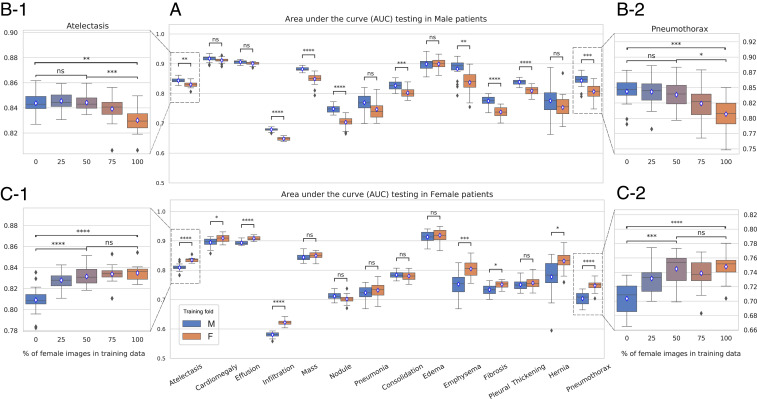
“( B and C ) AUC achieved for two exemplar diseases under a gradient of gender imbalance ratios, from 0% of female images in training data to 100%, with increments of 25%.”
MethodInfluentialProceedings of IEEE Conference on Computer Vision and Pattern Recognition
(1993) · doi:10.1109/cvpr.1993 · Cited by 17,667
A survey on deep learning in medical image analysis
Litjens, G., Kooi, T., Bejnordi, B. E., Setio, A. A. A., Ciompi, F., Ghafoorian, M., van der Laak, J. A. W. M., van Ginneken, B., & Sánchez, C. I. (2017) · Medical Image Analysis · doi:10.1016/j.media.2017.07.005 · Cited by 15,332 · cited 1×
“AI systems cannot only augment the information provided by such images with useful annotations (1, 2), but they are also starting to take autonomous decisions by performing computer-aided diagnosis (CAD) (3, 4).”
BackgroundDermatologist-level classification of skin cancer with deep neural networks
Esteva, A., Kuprel, B., Novoa, R. A., Ko, J., Swetter, S. M., Blau, H. M., & Thrun, S. (2017) · Nature · doi:10.1038/nature21056 · Cited by 14,362 · cited 9×
“Given a frontal X-ray image, the CAD system predicts the presence or absence of the 14 thoracic diseases.”
BackgroundInfluentialWang, X., Peng, Y., Lu, L., Lu, Z., Bagheri, M., & Summers, R. M. (2017) · 2017 IEEE Conference on Computer Vision and Pattern Recognition (CVPR) · doi:10.1109/cvpr.2017.369 · Cited by 4,616 · cited 4×
“We use the NIH Chest-XRay14 dataset (16, 19), which includes 112,120 chest X-ray images from 30,805 patients, labeled with 14 common thorax diseases (including hernia, pneumonia, fibrosis, emphysema, edema, cardiomegaly, pleural thickening, consolidation, mass, pneumothorax, nodule, atelectasis, effusion, and infiltra…”
MethodInfluential
Cited by
Items 301–400 of 898
Underrepresentation of women in cardiac imaging trials: A review
Brown, R.-M., Weinberg, C. R., Ong, C., & Mieres, J. H. (2022) · American Heart Journal Plus Cardiology Research and Practice · doi:10.1016/j.ahjo.2022.100102 · Cited by 13
“Based on these findings, the authors called for explicit sex balance and diversity recommendations from national regulatory agencies for the academic medical imaging community [36].”
Background(Predictable) performance bias in unsupervised anomaly detection
Meissen, F., Breuer, S., Knolle, M. A., Buyx, A., Müller, R., Kaissis, G. A., Wiestler, B., & Rueckert, D. (2024) · EBioMedicine · doi:10.1016/j.ebiom.2024.105002 · Cited by 13
“…UAD more predictable and can help to guide data collection towards more fair models. models for clinical application has been increasingly studied, 4,7,9 and the problem has been occasionally discussed in the UAD literature, 10,11 a thorough empirical investigation of the matter for UAD models…”
BackgroundDebiased Noise Editing on Foundation Models for Fair Medical Image Classification
Jin, R., Deng, W., Chen, M., & Li, X. (2024) · Lecture notes in computer science · doi:10.1007/978-3-031-72117-5_16 · Cited by 13
“However, the pretrained FM API services offer users very limited control over the model parameters [10, 11].”
BackgroundMuyskens, K., Ballantyne, A., Savulescu, J., Nasir, H., & Muralidharan, A. (2024) · Asian Bioethics Review · doi:10.1007/s41649-024-00315-3 · Cited by 14
“To minimise statistical bias, AI algorithms should be trained with large datasets of diverse and balanced information (Agostina et al. 2020).”
A Joint Fairness Model with Applications to Risk Predictions for Underrepresented Populations
Do, H., Nandi, S., Putzel, P., Smyth, P., & Zhong, J. (2022) · Biometrics · doi:10.1111/biom.13632 · Cited by 14
“…such biases in data often leads to unfair performance from predictive models in healthcare for certain groups (Char et al., 2018), such as women (Larrazabal et al., 2020), ethnic and racial minorities (Seyyed-Kalantari et al., 2021; Chen et al., 2021), and individuals with public insurance…”
Better Together? A Field Experiment on Human-Algorithm Interaction in Child ProtectionPreprint
Grimon, M., & Mills, C. (2025) · RePEc: Research Papers in Economics · doi:10.48550/arxiv.2502.08501 · Cited by 13
Fair Machine Learning in Healthcare: A Survey
Feng, Q., Du, M., Zou, N., & Hu, X. (2025) · IEEE Transactions on Artificial Intelligence · doi:10.1109/tai.2024.3361836 · Cited by 12
Disparities in the Demographic Composition of The Cancer Imaging Archive
Dulaney, A., & Virostko, J. M. (2024) · Radiology Imaging Cancer · doi:10.1148/rycan.230100 · Cited by 12
“Sex imbalance in medical images has introduced bias in classifiers used for computer-aided diagnosis of thoracic diseases (19).”
BackgroundNguyen, Q.-T., Le, L., Tran, X.-T., Do, T., & Lin, C. (2024) · ACM International Joint Conference on Pervasive and Ubiquitous Computing (UbiComp) · doi:10.1145/3675094.3678998 · Cited by 12
“These example subsets of 𝐺 are selected as prior research in fairness literature has identified bias related to these characteristics [27, 28].”
Bai, N., Yu, Y., Chun-yan, L., Zhou, S. C., Wang, Q., Zou, H., Liu, Q., Fu, G., Zhai, W., Zhao, Q. Y., et al. (2025) · Journal of Medical Internet Research · doi:10.2196/78132 · Cited by 12
“For example, prior work has established lower diagnostic accuracy on chest X-rays for minority populations [44,45].”
Clinical AI in Radiology: Foundations, Trends, Applications, and Emerging Directions
Hartsock, I., Koutsoubis, N., Ahmed, S., Parker, N. H., Schabath, M. B., Araujo, C. R., Qayyum, A., Lam, C. A., Gatenby, R. A., & Rasool, G. (2026) · Cancers · doi:10.3390/cancers18060942 · Cited by 12
Lee, Y., Lin, C., Fang, W., Lee, C., Ho, C., Wang, C., Tsai, D., & Lin, C. S. (2022) · Frontiers in Cardiovascular Medicine · doi:10.3389/fcvm.2022.895201 · Cited by 12
“A previous study found that gender imbalance led to a decrease in the performance of the model (34).”
Baxter, J. S. H., & Jannin, P. (2023) · Intelligence-Based Medicine · doi:10.1016/j.ibmed.2023.100090 · Cited by 12
The Emerging Role of Artificial Intelligence in Valvular Heart Disease
Canning, C., Guo, J., Narang, A., Thomas, J. D., & Ahmad, F. S. (2023) · Heart Failure Clinics · doi:10.1016/j.hfc.2023.03.001 · Cited by 13
Kurbatskaya, A., Jaramillo-Jiménez, A., Ochoa-Gómez, J. F., Brønnick, K., & Fernández-Quilez, Á. (2023) · European Signal Processing Conference (EUSIPCO) · doi:10.23919/eusipco58844.2023.10289837 · Cited by 12
“Moreover, a significant decrease in diagnosis performance was reported for different genders using chest X-ray images [17].”
BackgroundFairTL: A Transfer Learning Approach for Bias Mitigation in Deep Generative Models
Teo, C. T. H., Abdollahzadeh, M., & Cheung, N. M. (2024) · IEEE Journal of Selected Topics in Signal Processing · doi:10.1109/jstsp.2024.3363419 · Cited by 12
Reward Systems for Trustworthy Medical Federated Learning
Pandl, K. D., Leiser, F., Thiebes, S., & Sunyaev, A. (2025) · ACM Transactions on Computing for Healthcare · doi:10.1145/3761821 · Cited by 12
“To obtain labels for our learning task, we follow prior research and transformed all non-1 labels to 0 [18, 19, 30].”
BackgroundMethodInfluentialLi, M., Chang, K., Mei, X., Bernheim, A., Chung, M., Steinberger, S., Kalpathy–Cramer, J., & Little, B. P. (2021) · American Journal of Roentgenology · doi:10.2214/ajr.21.26717 · Cited by 13
Sequestration of imaging studies in MIDRC: a multi-institutional data commons
Baughan, N. M., Whitney, H., Drukker, K., Sahiner, B., Hu, T., Hyun, K. J. G., McNitt‐Gray, M. F., Myers, K. J., & Giger, M. L. (2022) · SPIE Medical Imaging: Image Perception, Observer Performance, and Technology Assessment · doi:10.1117/12.2610239 · Cited by 12
“1,2 Balancing a large number of variables between subgroups is a topic widely studied in the field of clinical trial development.”
BackgroundSociodemographic Variables Reporting in Human Radiology Artificial Intelligence Research
Driessen, R., Bhatia, N. K., Gichoya, J. W., Safdar, N. M., & Balthazar, P. (2023) · Journal of the American College of Radiology · doi:10.1016/j.jacr.2023.03.014 · Cited by 12
Are Generative Models Fair? A Study of Racial Bias in Dermatological Image Generation
López-Pérez, M., Hauberg, S., & Feragen, A. (2025) · Lecture notes in computer science · doi:10.1007/978-3-031-95918-9_27 · Cited by 11
Artificial Intelligence in Pathology: Advancing Large Models for Scalable Applications
Xiao, Z., Feng, B., Yang, J., Sun, G., Shen, Y., Xu, S., Yang, L., Xu, H., Zhang, M., & Wang, S. (2025) · Annual Review of Biomedical Data Science · doi:10.1146/annurev-biodatasci-103123-095814 · Cited by 11
Pinto, A. D., Birdi, S., Durant, S., Rabet, R., Parekh, R., Ali, S., Buckeridge, D. L., Ghassemi, M., Gibson, J., John‐Baptiste, A., et al. (2025) · JMIR Public Health and Surveillance · doi:10.2196/68952 · Cited by 13
“Similarly, ML models used in population health often encounter missing or nonrepresentative data when relying on electronic medical records or public health data, which may not fully capture the diversity of the communities they aim to serve [28,29].”
Socioeconomic bias in applying artificial intelligence models to health care
Juhn, Y. J., Malik, M. M., Ryu, E., Wi, C., & Halamka, J. D. (2023) · Elsevier eBooks · doi:10.1016/b978-0-443-15688-5.00044-9 · Cited by 11
DataDoc Analyzer: A Tool for Analyzing the Documentation of Scientific Datasets
Giner-Miguelez, J., Gómez, A., & Cabot, J. (2023) · ACM International Conference on Information and Knowledge Management (CIKM) · doi:10.1145/3583780.3614737 · Cited by 11
The ménage à trois of healthcare: the actors in after-AI era under patient consent
Saccà, R., Turrini, R., Ausania, F., Turrina, S., & Leo, D. D. (2024) · Frontiers in Medicine · doi:10.3389/fmed.2023.1329087 · Cited by 11
Critical cognitive science: A systematic review towards a critical science
Carbajal, I., Moore, E., Martinez, L. C., & Hunt, K. (2024) · Journal of Social Issues · doi:10.1111/josi.12597 · Cited by 11
Augmenting Chest X-ray Datasets with Non-Expert Annotations
Cheplygina, V., Damgaard, C., Eriksen, T. N., Juodelyte, D., & Jiménez-Sánchez, A. (2025) · Lecture notes in computer science · doi:10.1007/978-3-031-98688-8_10 · Cited by 11
“However, CheXpert and NIH-CXR14 datasets have been shown to suffer from bias [8, 15, 26] or shortcuts [13, 21].”
BackgroundBridging the Digital Divide: AI Solutions for Health Literacy in Underserved Populations
Marzo, R. R. (2024) · Advances in business strategy and competitive advantage book series · doi:10.4018/979-8-3693-6720-9.ch006 · Cited by 10
Airlangga, G. (2024) · Journal of Computer System and Informatics (JoSYC) · doi:10.47065/josyc.v5i4.5848 · Cited by 10
Enhancing Answer Reliability Through Inter-Model Consensus of Large Language Models
Amiri-Margavi, A., Jebellat, I., Jebellat, E., & Davoudi, S. P. M. (2025) · IFIP advances in information and communication technology · doi:10.1007/978-3-031-96235-6_22 · Cited by 10
Gao, Y., Hao, J., & Zhou, B. (2025) · Medical Image Analysis · doi:10.1016/j.media.2025.103858 · Cited by 10
Rafferty, A., & Rajan, A. (2026) · Philosophical Transactions of the Royal Society A Mathematical Physical and Engineering Sciences · doi:10.1098/rsta.2025.0129 · Cited by 11
Bias in Unsupervised Anomaly Detection in Brain MRI
Bercea, C. I., Anton, E. P., Wiestler, B., Rueckert, D., Schnabel, J. A., & King, A. P. (2023) · Lecture notes in computer science · doi:10.1007/978-3-031-45249-9_12 · Cited by 10
Lessons from Clinical Communications for Explainable AI
Menon, A. V., Omar, Z. A., Nahar, N., Papademetris, X., Fiellin, L. E., & Kästner, C. (2024) · Proceedings of the AAAI/ACM Conference on AI Ethics and Society · doi:10.1609/aies.v7i1.31695 · Cited by 10
Resampling Imbalanced Healthcare Data for Predictive Modelling
Mamilla, M. Y., Al-Haddad, R., & Chowdhury, S. (2025) · International Journal of Advanced Computer Science and Applications · doi:10.14569/ijacsa.2025.0160204 · Cited by 11
“This bias reduces the accuracy of minority-class predictions [4].”
Fairness-Aware Data Augmentation for Cardiac MRI Using Text-Conditioned Diffusion Models
Skorupko, G., Osuala, R. O., Szafranowska, Z., Kushibar, K., Dang, V. N., Aung, N., Petersen, S. E., Lekadir, K., & Gkontra, P. (2025) · Lecture notes in computer science · doi:10.1007/978-3-032-05870-6_7 · Cited by 10
“Such biases can significantly influence the decision-making process of clas-sification models and were widely studied and addressed in various medical domains [9,14,23,20,10].”
Jaiswal, A. K., Chen, T., Rousseau, J. F., Peng, Y., Ding, Y., & Wang, Z. (2023) · IEEE Winter Conference on Applications of Computer Vision · doi:10.1109/wacv56688.2023.00496 · Cited by 10
“Since HTLs are label-agnostic and completely rely on DNN’s memorization ability and learning patterns, it is applicable to various more complicated forms of imbalance in real data, such as complex attribute imbalances [35] and demographic imbalances [37, 24].”
BackgroundStanley, E. A. M., Wilms, M., & Forkert, N. D. (2023) · Lecture notes in computer science · doi:10.1007/978-3-031-43895-0_46 · Cited by 10
Mitigating health disparities in EHR via deconfounder
Liu, Z., Li, X., & Yu, P. S. (2022) · ACM International Conference on Bioinformatics, Computational Biology, and Health Informatics (ACM-BCB) · doi:10.1145/3535508.3545516 · Cited by 10
“According to the recent analysis, this disparity can result from the inequity in care access and delivery history [3, 13], the existence of underrepresented groups in clinical datasets [28], the misuse of biased features during model development [18, 21], and difference of distribution between training and teat sets […”
BackgroundEvaluating subgroup disparity using epistemic uncertainty in mammographyPreprint
Lu, C., Lemay, A., Hoebel, K., & Kalpathy–Cramer, J. (2021) · arXiv (Cornell University) · doi:10.48550/arxiv.2107.02716 · Cited by 10
“Previous works demonstrates how proxy variables and black box models can exacerbate biases in several different healthcare applications (Buolamwini & Gebru, 2018; Chen et al., 2019; Obermeyer et al., 2019; Larrazabal et al., 2020; Seyyed-Kalantari et al., 2020).”
BackgroundExplaining medical AI performance disparities across sites with confounder Shapley value analysisPreprint
Wu, E., Wu, K., & Zou, J. (2021) · arXiv (Cornell University) · doi:10.48550/arxiv.2111.08168 · Cited by 11
Wang, R., Erus, G., Chaudhari, P., & Davatzikos, C. A. (2023) · PubMed Central · doi:10.48550/arxiv.2308.03175 · Cited by 10
Making the invisible visible: what can we do about biased AI in medical devices?
Whitehead, M. M., Carrol, E. D., Kee, F., & Holmes, C. C. (2023) · BMJ · doi:10.1136/bmj.p1893 · Cited by 10
Detecting algorithmic bias in medical-AI models using treesPreprint
Smith, J., Holder, A. L., Kamaleswaran, R., & Xie, Y. (2023) · arXiv (Cornell University) · doi:10.48550/arxiv.2312.02959 · Cited by 10
“The well documented exacerbation of existing disparities in healthcare data [30, 32, 26, 25, 16], underscores the urgency of identifying these biases to ensure fair and equitable ML applications in this domain, especially for diverse and often underrepresented patient sub-populations.”
BackgroundBiasPruner: Mitigating bias transfer in continual learning for fair medical image analysis
Bayasi, N., Fayyad, J., Bissoto, A. E., Hamarneh, G., & Garbi, R. (2025) · Medical Image Analysis · doi:10.1016/j.media.2025.103764 · Cited by 9
Ma, D., Pang, J., Velan, S. S., Gotway, M. B., & Liang, J. (2025) · Medical Image Analysis · doi:10.1016/j.media.2025.103828 · Cited by 9
Ye, J. (2026) · Artificial Intelligence Review · doi:10.1007/s10462-025-11487-1 · Cited by 11
“Demographic bias assessment requires performance evaluation across age, gender, and ethnicity groups, with diverse training datasets and algorithmic debiasing techniques serving as mitigation strategies [ 80].”
Mersal, F. A., Mersal, N. A., Ibrahim, N. M., Elgazzar, S. E., Alanazi, A. M., Alzughaibi, S., Alanazi, E. M., & Elsayed, E. A. H. (2026) · Digital Health · doi:10.1177/20552076261429671 · Cited by 9
“9,21 Nursing curricula increasingly integrate social justice and health equity principles; applying these lenses, students may perceive AI as vulnerable to perpetuating disparities through biased training data and opaque decision-making.”
Cao, R., Liu, Y., Wen, X., Liao, C., Wang, X., Gao, Y., & Tan, T. (2024) · iScience · doi:10.1016/j.isci.2024.109712 · Cited by 9
Good machine learning practices: Learnings from the modern pharmaceutical discovery enterprise
Makarov, V. A., Chabbert, C. D., Koletou, E., Psomopoulos, F. E., Kurbatova, N., Ramirez, S. A., Nelson, C., Natarajan, P., & Neupane, B. (2024) · Computers in Biology and Medicine · doi:10.1016/j.compbiomed.2024.108632 · Cited by 9
Agarwal, R., & Gao, G. G. (2024) · North Carolina Medical Journal · doi:10.18043/001c.120565 · Cited by 9
“…analysis of chest radiography images [15], the presence of gender imbalance in image data-sets used for automated diagnosis of thoracic diseases [16], limitations of publicly available datasets used for the diagnosis of skin cancer where dark-skinned patients are under-represented, and lower…”
Quantifying the Impact of Population Shift Across Age and Sex for Abdominal Organ Segmentation
Čevora, K., Glocker, B., & Bai, W. (2024) · Lecture notes in computer science · doi:10.1007/978-3-031-72787-0_9 · Cited by 9
Interpretability of AI race detection model in medical imaging with saliency methods
Konate, S., Lebrat, L., Cruz, R. S., Gichoya, J. W., Price, B., Seyyed-Kalantari, L., Fookes, C., Bradley, A. P., & Salvado, O. (2025) · Computational and Structural Biotechnology Journal · doi:10.1016/j.csbj.2025.01.007 · Cited by 9
Mitigating medical dataset bias by learning adaptive agreement from a biased council
Luo, L., Huang, X., Wang, M., Wan, Z., Ma, W., & Chen, H. (2025) · Medical Image Analysis · doi:10.1016/j.media.2025.103629 · Cited by 9
Three Applications of Conformal Prediction for Rating Breast Density in MammographyPreprint
Lu, C., Chang, K., Singh, P., & Kalpathy–Cramer, J. (2022) · arXiv (Cornell University) · doi:10.48550/arxiv.2206.12008 · Cited by 9
“In light of various studies showing that medical DL algorithms can be biased across different patient subgroups (Seyyed-Kalantari et al., 2021; Larrazabal et al., 2020), it is crucial to investigate uncertainty in the lens of fairness as well.”
BackgroundFlexible Group Fairness Metrics for Survival AnalysisPreprint
Sonabend, R., Pfisterer, F., Mishler, A., Schauer, M., Burk, L., Mukherjee, S., & Vollmer, S. J. (2022) · Research Square · doi:10.21203/rs.3.rs-2364327/v1 · Cited by 9
Fair Distillation: Teaching Fairness from Biased Teachers in Medical ImagingPreprint
Masroor, M., Hassan, T., Tian, Y. P., Wells, K. E., Rosewarne, D., Do, T.-T., & Carneiro, G. (2024) · arXiv (Cornell University) · doi:10.48550/arxiv.2411.11939 · Cited by 9
Explainable Surgical Procedures Recommender System Leveraging Large Language Models
Solomon, A., Glebov, M., & Lazebnik, T. (2026) · ACM Transactions on Recommender Systems · doi:10.1145/3767326 · Cited by 8
“It is important to emphasize that, within our dataset and hospital protocol, surgical procedures are only carried out following a full agreement by the attending surgical team, a process specifically designed to minimize incorrect decisions (see Section 5.1).”
InfluentialAI Triage in Primary Care: Building Safer and More Equitable Real-World Evidence
Alamoudi, A. K., Kontopantelis, E., Zghebi, S. S., & Brown, B. C. (2026) · Journal of Medical Internet Research · doi:10.2196/88396 · Cited by 9
“Moreover, model performance (eg, sensitivity, specificity, calibration, and error rates) may vary by age, ethnicity, language, or limited digital access, unless these dimensions are intentionally tested and monitored [18-22].”
Baydargil, H. B., Park, J., & İnce, İ. F. (2024) · ETRI Journal · doi:10.4218/etrij.2023-0123 · Cited by 8
“Moreover, class imbalance, in which certain classes have substantially more instances than others, can bias the predictions and thus compromise clinical applicability [6].”
BackgroundExploring Aesthetic Qualities of Deep Generative Models through Technological (Art) Mediation
Sivertsen, C., & Løvlie, A. S. (2024) · Designing Interactive Systems Conference · doi:10.1145/3643834.3661498 · Cited by 8
“Another signifcant question regards the risk of propagating gender, racial and other stereotypes [7, 13, 20, 23, 43, 67].”
BackgroundAnalysis of public perceptions on the use of artificial intelligence in genomic medicine
Harrison, J. E., Lynch, F., Stark, Z., & Vears, D. F. (2024) · Human Genomics · doi:10.1186/s40246-024-00686-6 · Cited by 8
Pseudo Artificial Intelligence Bias
Zhaı, X., & Krajcik, J. S. (2024) · Oxford University Press eBooks · doi:10.1093/oso/9780198882077.003.0025 · Cited by 8
Oda, J., & Takemoto, K. (2025) · Scientific Reports · doi:10.1038/s41598-025-03546-y · Cited by 8
“Future studies should examine various environmental factors (lighting, camera angles) and patient demographics 88–90 to fully assess vulnerabilities in clinical settings.”
AI for Personalized Learning in Medical Education
Niazai, H., & Monib, W. K. (2025) · IGI Global eBooks · doi:10.4018/979-8-3373-1519-5.ch004 · Cited by 8
Zare, S., & Nguyen, H. V. (2023) · IEEE Access · doi:10.1109/access.2023.3339775 · Cited by 8
“It has been shown that gender can confound deep learning models [58], [59]; given that some anatomical attributes (e.g., breast regions) are highly visible in X-ray images, gender can bias the extracted features.”
BackgroundLanzolla, G., Santoni, S., & Tucci, C. L. (2021) · Edward Elgar Publishing eBooks · doi:10.4337/9781839104398.00014 · Cited by 8
García-Micó, T. G., & Laukyte, M. (2023) · Philosophical studies series · doi:10.1007/978-3-031-21147-8_16 · Cited by 8
Biondetti, G. P., Gauriau, R., Bridge, C. P., Lu, C., & Andriole, K. P. (2020) · arXiv (Cornell University) · doi:10.48550/arxiv.2008.08525 · Cited by 8
“…are being developed (like federated learning [14][15][16] and generation of synthetic data with GANs [17][18]) and data homogenization techniques are being explored [19][20][21], it is important to recognize that certain biases will exist in every data cohort (like age and gender [22][23]).”
BackgroundDeploying clinical machine learning? Consider the following...Preprint
Lu, C., Chang, K., Singh, P., Pomerantz, S. R., Doyle, S., Kakarmath, S. S., Bridge, C. P., & Kalpathy–Cramer, J. (2021) · arXiv (Cornell University) · doi:10.48550/arxiv.2109.06919 · Cited by 9
“Other studies have shown that algorithms can have differential performance across subgroups, raising concerns surrounding equity and fairness (Larrazabal et al. 2020; Pierson et al. 2021; Lu et al. 2021b, 2022c).”
BackgroundTowards responsible research in digital technology for health carePreprint
Jannin, P. (2021) · arXiv (Cornell University) · doi:10.48550/arxiv.2110.09255 · Cited by 8
An explainability framework for cortical surface-based deep learningPreprint
Ribeiro, F. L., Bollmann, S., Cunnington, R., & Puckett, A. M. (2022) · arXiv (Cornell University) · doi:10.48550/arxiv.2203.08312 · Cited by 8
Heming, C. A. M., Abdalla, M., Mohanna, S., Ahluwalia, M., Zhang, L., Trivedi, H., Woo, M., Fine, B., Gichoya, J. W., Celi, L. A., et al. (2023) · arXiv (Cornell University) · doi:10.48550/arxiv.2311.12560 · Cited by 9
“…socio-demographic fairness factors where the main focus of literature in bias and fairness analysis has been on races and sexes [4, 7, 8, 12, 44-46], with less attention to other important factors that cause disparity, such as spoken language [14], education [13], income level [13], age [3,…”
BackgroundThe gendered algorithm: navigating financial inclusion & equity in access to credit
Smith, G. (2025) · Oxford University Research Archive (ORA) (University of Oxford) · doi:10.5287/ora-v0zqn04ap · Cited by 8
Gulamali, F. F., Sawant, A. S., Liharska, L. E., Horowitz, C. R., Chan, L., Hofer, I. S., Singh, K., Richardson, L. D., Mensah, E., Charney, A. W., et al. (2025) · Journal of Medical Internet Research · doi:10.2196/71757 · Cited by 7
“Larrazabal et al [16] previously demonstrated that group balancing is the optimal approach to mitigate gender biases in this setting.”
Shortcut learning leads to sex bias in deep learning models for photoacoustic tomography
Knopp, M., Bender, C. J., Holzwarth, N., Li, Y., Kempf, J., Caranovic, M., Knieling, F., Lang, W., Rother, U., Seitel, A., et al. (2025) · International Journal of Computer Assisted Radiology and Surgery · doi:10.1007/s11548-025-03370-9 · Cited by 7
Yao, Z.-Y., Yan, Y., Liu, Z., Chen, T.-H., Ling, C., Leung, Y.-W., Lu, T.-C., Niu, W., Qiu, Z., Wang, Y.-C., et al. (2025) · Bioengineering · doi:10.3390/bioengineering12101030 · Cited by 4
“Additionally, the dataset lacks comprehensive demographic metadata including age, gender, skin type, and anatomical location distributions, preventing a thorough analysis of potential demographic biases that could affect model generalization across diverse patient populations [47].”
Cardiovascular risk assessment enhanced by automated machine learning in a multi-phase study
Bibi, I., Schaffert, D., Blanke, P., Illian, L., Lenzing, F., Martin, N., Leipe, J., März, W., Stach, K., & Olsavszky, V. (2025) · Scientific Reports · doi:10.1038/s41598-025-24189-z · Cited by 7
Shan, K., Patel, M. A., McCreary, M., Punnen, T. G., Villalobos, F., Tardo, L. M., Horton, L. A., Sguigna, P. V., Blackburn, K. M., Munoz, S. B., et al. (2024) · Journal of the Neurological Sciences · doi:10.1016/j.jns.2024.123360 · Cited by 7
Open challenges on fairness of artificial intelligence in medical imaging applications
Ferrante, E., & Echeveste, R. (2025) · Elsevier eBooks · doi:10.1016/b978-0-44-323761-4.00023-7 · Cited by 7
Self-citationOn the Interplay of Human-AI Alignment, Fairness, and Performance Trade-Offs in Medical Imaging
Luo, H., Zhou, Z., Shu, S. Z., de Mortanges, A. P., Berke, R., & Reyes, M. (2025) · Lecture notes in computer science · doi:10.1007/978-3-032-05185-1_41 · Cited by 8
Cherezov, D., Fu, P., & Madabhushi, A. (2025) · Computers in Biology and Medicine · doi:10.1016/j.compbiomed.2025.111147 · Cited by 7
Weissman, G. E., Teeple, S., Eneanya, N. D., Hubbard, R. A., & Kangovi, S. (2021) · Journal of Cardiac Failure · doi:10.1016/j.cardfail.2021.04.021 · Cited by 7
Machine-Learning Applications in Thrombosis and Hemostasis
Nilius, H., & Nagler, M. (2024) · Hämostaseologie · doi:10.1055/a-2407-7994 · Cited by 7
Chong, Q. Z., Knottenbelt, W. J., & Bhatia, K. K. (2021) · Lecture notes in computer science · doi:10.1007/978-3-030-88210-5_23 · Cited by 7
Sex Imbalance Produces Biased Deep Learning Models for Knee Osteoarthritis Detection
Li, D., Bharti, B., Wei, J., Sulam, J., & Yi, P. H. (2022) · Canadian Association of Radiologists Journal · doi:10.1177/08465371221120539 · Cited by 7
Medical imaging: Challenges and future directions in AI-Based systems
Kumar, R., Anil, M., Panda, S., & Raj, A. (2023) · AIP conference proceedings · doi:10.1063/5.0154355 · Cited by 7
(Un)fairness in Post-operative Complication Prediction ModelsPreprint
Tripathi, S., Fritz, B. A., Abdelhack, M., Avidan, M. S., Chen, Y., & King, C. R. (2020) · arXiv (Cornell University) · doi:10.48550/arxiv.2011.02036 · Cited by 7
“Empirical studies have demonstrated these issues in actual application: gender imbalance leading to biased classifiers [31], in general medicine and mental health care [9], in renal failure prediction models [48], classifying chest x-rays [43], and in clinical contextual word embeddings [51].”
BackgroundBias in context: What to do when complete bias removal is not an option
Holm, S., Petersen, E., Ganz, M., & Feragen, A. (2023) · Proceedings of the National Academy of Sciences · doi:10.1073/pnas.2304710120 · Cited by 7
“In particular, bias caused by differences in data representation or quality (3, 4) is unlikely to disappear due to better training.”
BackgroundBias in Text Embedding ModelsPreprint
Rakivnenko, V., Maslej, N., Cervi, J., & Zhukov, V. (2024) · arXiv (Cornell University) · doi:10.48550/arxiv.2406.12138 · Cited by 7
“There have also been documented instances of medical image classification systems, which were predominantly trained on images of white adult males, degrading in performance when asked to classify the images of non-white population groups [6, 14, 15].”
BackgroundFrom 2D to 3D, Deep Learning-based Shape Reconstruction in Magnetic Resonance Imaging: A ReviewPreprint
McMillian, E., Banerjee, A., & Bueno‐Orovio, A. (2025) · arXiv (Cornell University) · doi:10.48550/arxiv.2510.01296 · Cited by 7
“Many datasets are biased toward healthy or mildly abnormal cases, leading models to overfit to normal anatomical priors (Larrazabal et al., 2020; Puyol-Antón et al., 2021).”
CNNs trained with adult data are useful in pediatrics. A pneumonia classification example
Rollán‐Martínez‐Herrera, M., Díaz, A. A., Estépar, R. S. J., Vegas‐Sánchez‐Ferrero, G., Ross, J. C., Estépar, R. S. J., & Nardelli, P. (2024) · PLoS ONE · doi:10.1371/journal.pone.0306703 · Cited by 6
Bias Amplification to Facilitate the Systematic Evaluation of Bias Mitigation Methods
Burgon, A., Zhang, Y., Petrick, N., Sahiner, B., Kenny, H., & Samala, R. K. (2024) · IEEE Journal of Biomedical and Health Informatics · doi:10.1109/jbhi.2024.3491946 · Cited by 6
Lay, F. L., Barzilay, O., Cerasuolo, D., Roger, H., Abergel, R., Jouandet, M., Carvalho-Lallement, P., Dompmartin, A., & L'Orphelin, J. ‐. (2024) · European Journal of Dermatology · doi:10.1684/ejd.2024.4804 · Cited by 6
Talwar, A., Turner, S., Maw, C., Quayle, G., Watt, T. N., Gohil, S., Duckworth, E., & Ciurtin, C. (2025) · BMJ Open · doi:10.1136/bmjopen-2024-086117 · Cited by 6
“18 19 While the impact of this under-representation is complex and context-dependent, influenced also by group differences and model training methods, it may result in poorer performance for these groups.”
Stanley, E. A. M., Forkert, N. D., & Wilms, M. (2025) · SPIE Medical Imaging: Imaging Informatics for Healthcare, Research, and Applications · doi:10.1117/12.3046811 · Cited by 6
“…learning 4 then may result in biased models that are not only generally less accurate when applied to unseen data, but which may also act unfairly by leading to systematic performance disparities between demographic subpopulations, 3 resulting in ethical challenges when clinically deployed.”
Contreras, K., Gutierrez-Rengifo, J., Casanova-Carvajal, Ó., Álvarez, A. L., Vélez-Varela, P. E., & Bojorge, A. L. U. (2025) · Applied Sciences · doi:10.3390/app15116274 · Cited by 6
Wong, J. K. L., Thomas, C., Gravett, H., Thobhani, K., Mekhaimar, A., Wong, J. M., & Wan, Y. I. (2025) · BJA Open · doi:10.1016/j.bjao.2025.100425 · Cited by 7
The Expanding Frontier: The Role of Artificial Intelligence in Pediatric Neuroradiology
Guarnera, A., Napolitano, A., Liporace, F., Marconi, F., Rossi‐Espagnet, M. C., Gandolfo, C., Romano, A., Bozzao, A., & Longo, D. (2025) · Children · doi:10.3390/children12091127 · Cited by 6
“In pediatric neuroradiology, where diseases may manifest differently than in adults, transfer learning can lead to inaccurate or missed diagnoses due to the different MRI characteristics of pediatric and adult populations [141,142].”
Metadata
- Authors
- Larrazabal, A. J., Nieto, N., Peterson, V., Milone, D. H., & Ferrante, E.
- Affiliations
- Consejo Nacional de Investigaciones Científicas y Técnicas (AR)
- Corresponding author
- Ferrante, Enzo
- Venue
- Proceedings of the National Academy of Sciences
- Publisher
- National Academy of Sciences
- Published
- 2020-05-26
- Volume
- 117
- Issue
- 23
- Pages
- 12592-12594
- ISSN
- 0027-8424 (ISSN-L)
- 1091-6490
- PMC
- PMC7293650
- OpenAlex
- W3030030520
- Cited by
- 685
- References
- 36
- Citations by year
- 2026: 117 · 2025: 149 · 2024: 125 · 2023: 110 · 2022: 101 · 2021: 71 · 2020: 10
- FWCI
- 21.48
- Type
- journal article
- Language
- en
- Open access
- hybrid
- doi.org
- Licence
- Locations
- Proceedings of the National Academy of Sciences (publishedVersion, cc-by)
- PubMed Central (publishedVersion, cc-by)
- PubMed (publishedVersion)
- LA Referencia (Red Federada de Repositorios Institucionales de Publicaciones Científicas) (submittedVersion, cc-by-nc-sa)
- Funders
- AXA Research Fund (2017-AXA-PDOC1-097)
- MINCyT | Agencia Nacional de Promoción Científica y Tecnológica (PICT 2017-4596, PICT-2018-03907, PICT 2014-2627, PICT-2018-3384)
- Universidad Nacional del Litoral (CAID-PIC-50220140100084L, 2016-082)
- Topics
- Health Sciences › Medicine › Health Informatics › Artificial Intelligence in Healthcare and Education
- Physical Sciences › Computer Science › Artificial Intelligence › Ethics and Social Impacts of AI
- Health Sciences › Medicine › Public Health, Environmental and Occupational Health › Sex and Gender in Healthcare
- Keywords
- gender imbalance, medical imaging datasets, algorithmic fairness, computer-aided diagnosis, X-ray images, thoracic disease diagnosis, deep neural network, underrepresented groups, dataset collection
- MeSH terms
- Deep Learning, Female, Humans, Male, Radiographic Image Interpretation, Computer-Assisted, Reference Standards, Sex Factors, Radiography, Thoracic, Bias, Datasets as Topic
About these checks
Registry, retraction, Cites and statistics results are computed, not judged, with one exception: a printed reference that no index lists is read once by a model before it counts as a citation error. Claims are extracted by a model and kept only when their quote appears verbatim in the text; each cited source is then checked, with a model’s help, for whether it says what the claim relies on. Those verdicts can be wrong — read the claim’s quote and the cited source before relying on one.
Statistics and arithmetic are recomputed, not judged.
Confidence bands are shown only for fields calibrated on our annotated test set. None is calibrated yet, so no band is shown.
What counts as a claim ›How we measure confidence ›How we check this ›
Are you an author, or do you see a problem with this page? Request a review
Data sources
Bibliographic data: Semantic Scholar, OpenAlex, Crossref.
Contains information from the Semantic Scholar Academic Graph Datasets, made available under the ODC Attribution License (ODC-BY 1.0).
Semantic Scholar’s data is described in: Kinney, R., et al. (2023). The Semantic Scholar Open Data Platform. arXiv:2301.10140.
