

Gender imbalance in medical imaging datasets produces biased classifiers for computer-aided diagnosis
Open accessThe DOI matches its Crossref record; 36 of the 36 references it cites were found in a registry or an index.
Abstract
Artificial intelligence (AI) systems for computer-aided diagnosis and image-based screening are being adopted worldwide by medical institutions. In such a context, generating fair and unbiased classifiers becomes of paramount importance. The research community of medical image computing is making great efforts in developing more accurate algorithms to assist medical doctors in the difficult task of disease diagnosis. However, little attention is paid to the way databases are collected and how this may influence the performance of AI systems. Our study sheds light on the importance of gender balance in medical imaging datasets used to train AI systems for computer-assisted diagnosis. We provide empirical evidence supported by a large-scale study, based on three deep neural network architectures and two well-known publicly available X-ray image datasets used to diagnose various thoracic diseases under different gender imbalance conditions. We found a consistent decrease in performance for underrepresented genders when a minimum balance is not fulfilled. This raises the alarm for national agencies in charge of regulating and approving computer-assisted diagnosis systems, which should include explicit gender balance and diversity recommendations. We also establish an open problem for the academic medical image computing community which needs to be addressed by novel algorithms endowed with robustness to gender imbalance.
Overview
The claims and statistics of this paper haven’t been checked yet.
Free: it reads the open-access text and checks the first 5 claims that cite a source we can check. Create a free account to check every claim.
Integrity signals
Registry
Cites
Statistics
Figures
Verification
Claims the paper makes
The claims and statistics of this paper haven’t been checked yet.
Free: it reads the open-access text and checks the first 5 claims that cite a source we can check. Create a free account to check every claim.
Claims other papers make about this one
Each is checked against this paper’s own text: does it say what the citing paper says it does?
The source backs part of the claim, not all of it — or backs it for a different population, condition or comparison.
In the citing paper
“The choice of these subgroups is motivated by the clear history, in both traditional medicine and AI algorithms, of bias for subgroups on these axes 6,8,10,11 .”
From Underdiagnosis bias of artificial intelligence algorithms applied to chest radiographs in under-served patient populations (2021) · cites this paper as [6]
Experimental — accuracy not yet measuredThe source backs part of the claim, not all of it — or backs it for a different population, condition or comparison.
In the citing paper
“For example, if a dataset predominantly consists of images from a particular racial or ethnic group, the AI model trained on this dataset may exhibit reduced accuracy when applied to individuals from other groups.”
From Bias in artificial intelligence for medical imaging: fundamentals, detection, avoidance, mitigation, challenges, ethics, and prospects (2024) · cites this paper as [24]
Experimental — accuracy not yet measuredIn the citing paper
“Similar issues arise with gender, age, and socio-economic status, where AI systems may perform better for the demographic groups that are overrepresented in the training data (Figure 4).24”
From Bias in artificial intelligence for medical imaging: fundamentals, detection, avoidance, mitigation, challenges, ethics, and prospects (2024) · cites this paper as [24]
Self-check
Percentages, sums and reported differences re-computed from the paper’s own numbers.
The self-check needs the paper’s full text.
Citations
Cites
Deep Residual Learning for Image Recognition
He, K., Zhang, X., Ren, S., & Sun, J. (2016) · 2016 IEEE Conference on Computer Vision and Pattern Recognition (CVPR) · doi:10.1109/cvpr.2016.90 · Cited by 235,474 · cited 2×
“Additionally, we evaluated two other CNN architectures, the ResNet (33) and the Inception-v3 (34), confirming that our observations generalize for different neural models.”
MethodLeCun, Y., Bengio, Y., & Hinton, G. (2015) · Nature · doi:10.1038/nature14539 · Cited by 84,126
ImageNet: A large-scale hierarchical image database
Deng, J., Dong, W., Socher, R., Li, L.-J., Li, K., & Fei-Fei, L. (2009) · 2009 IEEE Conference on Computer Vision and Pattern Recognition · doi:10.1109/cvpr.2009.5206848 · Cited by 65,333 · cited 1×
“A model pretrained on ImageNet (32) was used to initialize the network weights.”
MethodDensely Connected Convolutional Networks
Huang, G., Liu, Z., Van Der Maaten, L., & Weinberger, K. Q. (2017) · 2017 IEEE Conference on Computer Vision and Pattern Recognition (CVPR) · doi:10.1109/cvpr.2017.243 · Cited by 48,566
Rethinking the Inception Architecture for Computer Vision
Szegedy, C., Vanhoucke, V., Ioffe, S., Shlens, J., & Wojna, Z. (2016) · 2016 IEEE Conference on Computer Vision and Pattern Recognition (CVPR) · doi:10.1109/cvpr.2016.308 · Cited by 32,138
An introduction to ROC analysis
Fawcett, T. (2006) · Pattern Recognition Letters · doi:10.1016/j.patrec.2005.10.010 · Cited by 21,879 · cited 4×
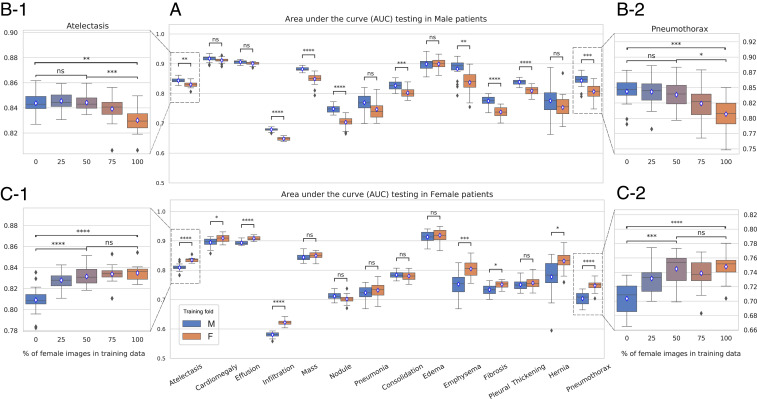
“( B and C ) AUC achieved for two exemplar diseases under a gradient of gender imbalance ratios, from 0% of female images in training data to 100%, with increments of 25%.”
MethodInfluentialProceedings of IEEE Conference on Computer Vision and Pattern Recognition
(1993) · doi:10.1109/cvpr.1993 · Cited by 17,667
A survey on deep learning in medical image analysis
Litjens, G., Kooi, T., Bejnordi, B. E., Setio, A. A. A., Ciompi, F., Ghafoorian, M., van der Laak, J. A. W. M., van Ginneken, B., & Sánchez, C. I. (2017) · Medical Image Analysis · doi:10.1016/j.media.2017.07.005 · Cited by 15,332 · cited 1×
“AI systems cannot only augment the information provided by such images with useful annotations (1, 2), but they are also starting to take autonomous decisions by performing computer-aided diagnosis (CAD) (3, 4).”
BackgroundDermatologist-level classification of skin cancer with deep neural networks
Esteva, A., Kuprel, B., Novoa, R. A., Ko, J., Swetter, S. M., Blau, H. M., & Thrun, S. (2017) · Nature · doi:10.1038/nature21056 · Cited by 14,362 · cited 9×
“Given a frontal X-ray image, the CAD system predicts the presence or absence of the 14 thoracic diseases.”
BackgroundInfluentialWang, X., Peng, Y., Lu, L., Lu, Z., Bagheri, M., & Summers, R. M. (2017) · 2017 IEEE Conference on Computer Vision and Pattern Recognition (CVPR) · doi:10.1109/cvpr.2017.369 · Cited by 4,616 · cited 4×
“We use the NIH Chest-XRay14 dataset (16, 19), which includes 112,120 chest X-ray images from 30,805 patients, labeled with 14 common thorax diseases (including hernia, pneumonia, fibrosis, emphysema, edema, cardiomegaly, pleural thickening, consolidation, mass, pneumothorax, nodule, atelectasis, effusion, and infiltra…”
MethodInfluential
Cited by
Items 701–800 of 898
(2025) · Zeitschrift für Gemeinwirtschaft und Gemeinwohl · doi:10.5771/2701-4193-2025-2-105
Evaluating the Influence of Demographic Identity in the Medical Use of Large Language ModelsPreprint
Lee, S., Cho, W. I., Park, C., Lee, Y., Park, C., & Ko, T. (2025) · medRxiv · doi:10.1101/2025.07.09.25331072
“A lack of data of a particular gender in training data can lead to poor diagnostic accuracy of AI systems for that gender, showing that AI can learn and amplify human biases (Larrazabal et al., 2020).”
Autonomous Artificial Intelligence Safety and Trust
Abràmoff, M. D. (2025) · Springer eBooks · doi:10.1007/978-3-031-83756-2_4
Toward Healthcare (Social) Justice: On the Value of Biases in Healthcare AI
Tiribelli, S. (2025) · The International Library of Bioethics · doi:10.1007/978-3-031-94690-5_3
A Survey of Next-Generation AI and Its Evolving LandscapePreprint
Khan, A., Amjad, H., Hameed, R., Amjad, H., Hameed, R., Bilal, M. A., Fazal, D. S., Rehman, A., Chohan, S. N., & Munib, S. (2025) · doi:10.36227/techrxiv.175329122.29020847/v1
Fairness of an AI System in the Case of a Biobank of Images and Imaging Biomarkers
Colcelli, V. (2025) · Routledge eBooks · doi:10.4324/9781032634487-10
Artificial Intelligence, Sex, and Gender
Akyüz, K., Abadía, M. C., & Goisauf, M. (2025) · Routledge eBooks · doi:10.4324/9781032634487-8
EU Guideline on AI Trustworthy and ‘Not Intuitive’ Application of the Principle of Fairness
Colcelli, V. (2025) · Springer eBooks · doi:10.1007/978-3-031-76349-6_11
Bertolini, L., Comte, V., Ruiz-Serra, V., Orfei, L., & Ceresa, M. (2025) · Workshop on Gender Bias in Natural Language Processing (GeBNLP) · doi:10.18653/v1/2025.gebnlp-1.12
“…were found by multiple studies, which show how different types of machine learning models used in the medical field tend to encode and produce harmful biased predictions against underrepresented demographic groups (Larrazabal et al., 2020; Seyyed-Kalantari et al., 2021; Yang et al., 2024b).”
Responsible Artificial Intelligence for Healthcare: Trends, Challenges, and Opportunities
Baker, S., & Ahn, E. (2025) · Springer eBooks · doi:10.1007/978-3-031-88024-7_1
Tamasiga, P., Molala, M., Onyeaka, H. N., & Siyanbola, K. F. (2025) · Elsevier eBooks · doi:10.1016/b978-0-443-24040-9.00013-6
Left Hand Radiograph Bone Age Estimation Using Deep Learning Methods
Jaafar, M. A., Meng, B. C. C., Damanhuri, N. S., Othman, N. A., Jamali, A. A. B. M., & Ismail, A. J. (2025) · IEEE Symposium on Industrial Electronics & Applications (ISIEA) · doi:10.1109/isiea65768.2025.11138433
“Previous studies [20] emphasized that demographic imbalance or unmodeled biological variability in datasets can result in biased model predictions.”
Identifying Gender-Specific Visual Bias Signals in Skin Lesion Classification
Lee, H. J., Yang, S., Chu, Y., & Oh, B. H. (2025) · Lecture notes in computer science · doi:10.1007/978-3-032-05870-6_6
An AI-based Skin Cancer Detection Using Raspberry Pi
Juarizo, C. G., Quinlog, J. B., Romero, O. E. J., Viray, M. K. B., Quiroz, L. L. P., & Garcia, E. A. (2025) · International Conference on Artificial Intelligence, Computer, Data Sciences and Applications (ACDSA) · doi:10.1109/acdsa65407.2025.11166543
“However, existing AI models often struggle with accuracy, bias, and generalization across diverse skin tones and conditions, limiting their effectiveness [6], [7], [8].”
Effects of Biases in Geometric and Physics-Based Imaging Attributes on Classification Performance
Rouhani, B., & Tsotsos, J. K. (2025) · Journal of Imaging · doi:10.3390/jimaging11100333
“Medical imaging may have the most studies of dataset bias, as shown by Zong et al. [36], Larrazabal et al. [37], Drenkow et al. [38], Chen et al. [39], and Seyyed-Kalantari et al. [40].”
Unmasking AI Bias in Traditional Prognosis Models
Hasan, M. R., Setu, S. A., Himi, S. T., Sultana, S., Afrin, A., Khan, M. S. A., Paul, S., & Monalisa, N. T. (2025) · IEEE International Conference on Quantum Photonics, Artificial Intelligence & Networking (QPAIN) · doi:10.1109/qpain66474.2025.11171992
“In medical imaging, Larrazabal et al. [10] discuss gender imbalance in diagnostic datasets and demonstrate that CNNs trained on imbalanced samples are less accurate for underrepresented classes.”
Lefort‐Besnard, J., Pron, A., Clement, P., Barker, G. J., Erez, Y., Fernández‐Seara, M. A., Feyzioğlu, S. B., Hartman, S., Iglesias‐Rey, R., Keil, V. C., et al. (2025) · Ghent University Academic Bibliography (Ghent University)
Qin, Q., & Merlo, E. (2025) · Information and Software Technology · doi:10.1016/j.infsof.2025.107906
Can Improved Data Representation Support AI for Health Equity? A Visual Approach
Vethman, S., Bouwman, J., & Veenman, C. J. (2025) · Proceedings of the AAAI/ACM Conference on AI Ethics and Society · doi:10.1609/aies.v8i3.36740
Balunov, I. O. (2025) · Russian Journal of Cardiology · doi:10.15829/1560-4071-2025-6357
Women’s Representation in Current Areas of Healthtech: Artificial Intelligence
Adams, L. C. (2025) · Springer eBooks · doi:10.1007/978-3-032-05705-1_5
Garbage Out: What is the Future of Machine Learning in Medicine?
Varachhia, A. (2025) · Qapsule Queen s Undergraduate Health Sciences Journal · doi:10.24908/qap.v1i3.18740
Ethical Design Principles for AI Applications in Healthcare
Ramachandran, M. (2025) · Springer eBooks · doi:10.1007/978-981-95-2909-4_8
FairCareNLP: An AI-driven patient review analyzer for healthcare
Esfahani, S. M. P. M., Seeman, D., Dharma, C., Noaeen, M., Guha, S., & Abad, Z. S. H. (2026) · PLoS ONE · doi:10.1371/journal.pone.0337676
Punnen, T. G., Shan, K., Patel, M. A., McCreary, M., Tran, D. H., Santoyo, J. R., Burgess, K. W., Moog, T. M., Smith, A. D., & Okuda, D. T. (2025) · Intelligence-Based Medicine · doi:10.1016/j.ibmed.2025.100314
VOH-Net: vision-optimized hybrid network for deep learning-based phase unwrapping
Djeddi, S., Bentahar, T., Saidi, R., & Belhocine, Y. (2025) · Advances in Space Research · doi:10.1016/j.asr.2025.11.077
Innovative Diagnostic Imaging Techniques and Protocols
Lamba, K., Rani, S., Dogra, A., & Sharma, A. (2025) · Wiley eBooks · doi:10.1002/9781394348084.ch7
C2BM: Causal Concept Disentanglement for Fair Multimodal COVID-19 Detection
Qingge, L., Yimer, H. L., Sam, M., Annan, R., Newman, R. H., & Qin, H. H. (2025) · Proceedings of the AAAI Symposium Series · doi:10.1609/aaaiss.v7i1.36934
“The rapid deployment of AI systems for COVID-19 detection has revealed concerning patterns of demographic bias that can exacerbate existing healthcare disparities (Ober-meyer et al. 2019; Larrazabal et al. 2020).”
EQPO: Equitable Group Relative Policy Optimization for Clinical ReasoningPreprint
Dai, S., Dai, W., Cheong, J., & Liang, P. P. (2025) · arXiv (Cornell University) · doi:10.48550/arxiv.2510.19893
“…revealed that clinical datasets are overwhelmingly skewed toward majority groups, whether defined by race, gender, age, or socioeconomic status [28, 35, 29, 54], leading state-of-the-art classifiers to demonstrate significant true positive rate disparities across clinical tasks and demographic…”
Subgroup Validity in Machine Learning for Echocardiogram DataPreprint
Feeney, C., Williams, S., Wessler, B. S., & Hughes, M. C. (2025) · arXiv (Cornell University) · doi:10.48550/arxiv.2512.00976
“Such a result would be unintuitive because models typically perform better on subgroups with more data than on subgroups with less data (Buolamwini and Gebru, 2018; Larrazabal et al., 2020) and Table 2 shows little difference in disease prevalence.”
Yayan, J., Rasche, K., Krüger, M., & Biancosino, C. (2025) · Scientific Reports · doi:10.1038/s41598-025-31885-3
“Prior work has highlighted sex-based differences in triage and provider response 14,15 as well as algorithmic bias in chest radiograph AI applications 16–19 , which may contribute to the observed patterns.”
Bhatt, K. K., & Sehgal, P. (2025) · International Journal of Apllied Mathematics · doi:10.12732/ijam.v38i12s.1477
FOUNDATIONS OF TRUSTWORTHY DEEP LEARNING: FAIRNESS, ROBUSTNESS, AND EXPLAINABILITY
Nanda, V. (2024) · University Libraries (University of Maryland) · doi:10.13016/twct-cnxl
Álvarez‐Rodríguez, L., Moura, J. D., Novo, J., & Ortega, M. (2022) · Figshare · doi:10.6084/m9.figshare.19682008
Intelligence Artificielle en Imagerie Neurovasculaire
Hofmeister, J. (2023) · Archive ouverte UNIGE (University of Geneva) · doi:10.13097/archive-ouverte/unige:169761
Research Group Critical Information Infrastructures (Cii), Sunyaev, A., Renner, M., Toussaint, P. A., Thiebes, S., & Lins, S. (2022) · Repository KITopen (Karlsruhe Institute of Technology) · doi:10.5445/ir/1000150078
Zhang, Y., Yan, H., & Qi, J. (2025) · AIS Electronic Library (AISeL)
Incorporating minority groups for the improvement of AI performance in majority groups
Athreya, S. S. (2023) · eScholarship (California Digital Library)
From peak to meta-analysis map : cumulating knowledge across neuroimaging studies
Acar, F. (2024) · Ghent University Academic Bibliography (Ghent University)
Claucich, E., Ferrante, E., & Echeveste, R. (2022) · JAIIO, Jornadas Argentinas de Informática
Self-citationLiu, J. (2025) · KTH Publication Database DiVA (KTH Royal Institute of Technology)
San José Sánchez, S. (. (2024) · Research Repository (Delft University of Technology)
Analysis of biases in classification algorithms of pulse oximetry for detection of sleep disorders
Perero, J. M., Ferrante, E., Larrateguy, L. D., Persia, L. D., & Rufiner, H. L. (2023) · El Servicio de Difusión de la Creación Intelectual (National University of La Plata)
Self-citationOn the validity of denial constraints for data quality
Martín Garcia, A. (2024) · UPCommons institutional repository (Universitat Politècnica de Catalunya)
Szeto, J. (2025) · eScholarship@McGill (McGill) · doi:10.82308/9850
AI, Bias, and Fairness in Medical Diagnosis
Wongsiridech, N., Tangwaragorn, P., & Khern-am-nuai, W. (2025) · AIS Electronic Library (AISeL)
AK-means geometric smote with data complexity analysis for imbalanced dataset
Nur Athirah, A. (2023) · UUM Electronic Theses and Dissertation [eTheses] (Northern University of Malaysia)
The role of artificial intelligence in analyzing neural images
Majeed, H. A. (2024) · Online library Sukhoi State Technical University of Gome (Sukhoi State Technical University of Gomel)
Learning from limited representation
Boland, C. T., Goatman, K. A., Tsaftaris, S. A., & Dahdouh, S. (2025) · Elsevier eBooks · doi:10.1016/b978-0-32-395674-1.00019-6
Johnson-Eversoll, I. E. (2025) · Iowa Research Online (The University of Iowa) · doi:10.25820/etd.008082
Who Does Your Algorithm Fail? Investigating Age and Ethnic Bias in the MAMA-MIA DatasetPreprint
Parikh, A., Das, S., & Feragen, A. (2025) · arXiv (Cornell University) · doi:10.13140/rg.2.2.18160.52481
Embedding vs Image-Based AI: A Comparative Fairness Study in Chest X-ray Analysis
Bahre, G. H., Hamidi, H., Sellergren, A. B., Celi, L. A., Calimeri, F., & Seyyed-Kalantari, L. (2025) · Proceedings of the AAAI Symposium Series · doi:10.1609/aaaiss.v7i1.36920
“Fairness issues arise when AI models systematically generate unequal results for under-represented or vulnerable subpopulations (Seyyed-Kalantari et al. 2021a; Yang et al. 2024; Larrazabal et al. 2020; Zhang et al. 2022; Marcinkevics, Ozkan, and Vogt 2022; Salvado et al. 2024).”
Sistema de detección de cáncer de piel con aprendizaje de máquina para dispositivo de bajo consumo
Niño Rondón, C. V. (2024) · Vitela (Pontificia Universidad Javeriana Cali) · doi:10.71618/ax81-m411
Disentanglement and Assessment of Shortcuts on Ophthalmological Retinal Imaging Exams
Fernandes, L. J. D. S. (2025) · Portuguese National Funding Agency for Science, Research and Technology (RCAAP Project by FCT)
Framework para avaliação de fairness em modelos de classificação aplicados à saúde
da Silva, L. L. M., do Carmo, D. S., & Rittner, L. (2025) · SIBGRAPI Conference on Graphics, Patterns and Images (SIBGRAPI) · doi:10.5753/sibgrapi.est.2025.38308
Burns, J. (2022) · Oxford University Research Archive (ORA) (University of Oxford) · doi:10.5287/ora-5zjkmr5je
Sannathimmappa, M. B. (2025) · International Journal of Scientific Reports · doi:10.18203/issn.2454-2156.intjscirep20254113
Artificial Intelligence and Its Application in the Oral Health Care for People with Disabilities
Robbins, M. R., & Walther, C. C. (2025) · Dental Clinics of North America · doi:10.1016/j.cden.2025.11.008
AI in Medical Image Analysis: Societal Impact and Inclusivity
Sruthi, R., Sujithra, M., & Senthilkumar, B. (2025) · Springer eBooks · doi:10.1007/978-3-032-02963-8_11
Overview of AI and Machine Learning Algorithms in Health Monitoring
Hussain, A. A., & Chafle, R. R. (2026) · Wiley eBooks · doi:10.1002/9781394389131.ch25
A Dataless Approach to Latent Evolutionary Images
Trigueiro, C. S., Buzelin, A., Bento, P., Aquino, Y., Estanislau, V., Malaquias, S., Meira, W., & Pappa, G. L. (2025) · Congresso Brasileiro de Inteligência Computacional (CBIC) · doi:10.21528/cbic2025-1191894
Hüppi, R. M., Langer, N., Vieira, B. H., & Initiative, T. F. L. D. N. (2026) · medRxiv · doi:10.64898/2026.01.13.26343927
Миронов, А. И., Соколов, Н. А., & Серебрякова, А. А. (2025) · International Conference on Computer Graphics and Vision (GraphiCon) · doi:10.25686/978-5-8158-2474-4-2025-828-834
Kaur, D., Shad, R., Kumar, A., Mathur, M., Cho, J., Fong, R., Zakka, C., Phillips, C. M., & Hiesinger, W. (2026) · npj Digital Medicine · doi:10.1038/s41746-025-02330-6
Ethical and Social Implications of AI in Healthcare for Vulnerable Populations
Ayedun, T. O., Afolalu, S. A., Ojo, E. F., Akpor, O. A., & Odusina, L. A. O. (2025) · NIPES Journal of Science and Technology Research · doi:10.37933/nipes/7.4.2025.si343
Lee, R. S. M., LaBella, D., Zhang, J., Magudia, K. A., & Calabrese, E. (2026) · American Journal of Neuroradiology · doi:10.3174/ajnr.a9217
The Role of AI-Driven Medical Devices in Digital Transformation of Healthcare Systems
DAMIAN, T.-G. (2025) · International Conference of Management and Industrial Engineering · doi:10.56177/12icmie2025.199
Ma, J., Tan, T., Jia, D., & Sun, Y. (2026) · Medical Physics · doi:10.1002/mp.70322
Trust in Artificial Intelligence Technologies
Кобринский, Б. А. (2025) · Scientific and Technical Information Processing · doi:10.3103/s0147688225700455 · Cited by 1
“This trend was confirmed when evaluating three different deep learning architectures [27].”
Colacci, M. (2025) · TSpace (University of Toronto)
The Evolution of Deep Learning in Lung Cancer Prediction: a Review
Sharma, A. G., Kandoi, N. M., & Deshmukh, P. V. D. (2026) · International Conference on Mobile Computing and Sustainable Informatics (ICMCSI) · doi:10.1109/icmcsi67283.2026.11412647
“Initial systems fully relied upon manual feature engineering (i.e. radiomic features like texture GLCM [13], LBP, shape, and intensity statistics) were manually computed on CT nodules and entered into conventional classifiers, such as Support Vector Machines [10]) and Random Forests.”
Balaji, T., & Veeranan, V. A. G. (2026) · International Journal of Integrative Studies (IJIS) · doi:10.63856/wd8eqk05
“For example, AI algorithms trained predominantly on data from one ethnic group or geographic region may perform poorly on others, leading to disparities in diagnosis or treatment outcomes [42].”
AI in cancer drug development and immunotherapy
Jana, M. K., Mukherjee, P., Swarup, V., Ray, D., Biswas, D., Howlader, B., Baidya, A., DAS, S. K., Chiang, M., Jagadeb, M., et al. (2026) · Elsevier eBooks · doi:10.1016/b978-0-443-44430-2.00013-x
Ahmad, W., Zia, A., & Zakarya, M. (2026) · Research Square · doi:10.21203/rs.3.rs-9083363/v1
Malamateniou, C., Barnes, A., Tw, A., Jones, C. M., & McGinty, G. B. (2026) · British Journal of Radiology · doi:10.1093/bjr/tqag055
Evolving and novel applications of artificial intelligence in interventional oncology
Almashni, S. Y., Fayek, F. B., Javens, D. C., Boulis, M. T., & Makary, M. S. (2026) · World Journal of Clinical Oncology · doi:10.5306/wjco.v17.i3.113226
Uzochukwu, B. S. C., Cherima, Y. J., Enebeli, U. U., Hassan, B. O., Okeke, C. C., Uzochukwu, A. C., Omoha, A. R., Uzochukwu, K. A., Eziyi Iche, K. A. L. U., Victor, D., et al. (2026) · medRxiv · doi:10.64898/2026.03.21.26348981
Data Representativeness with Hyperdimensional Computing
Burgon, A., Petrick, N., Krainak, D. M., Khan, A., & Samala, R. K. (2026) · Journal of Imaging Informatics in Medicine · doi:10.1007/s10278-026-01917-z
Khadse, S., Sajitha, A., V, & Joshi, N. (2026) · International Journal of Integrative Studies (IJIS) · doi:10.63856/sk3jd948
Dratsch, T. (2023) · Kölner Universitäts PublikationsServer (Universität zu Köln)
Exploring Sex-Related Biases in Deep Learning Models for Motor Imagery Brain-Computer Interfaces
Zorzet, B. J., Peterson, V., Milone, D. H., & Echeveste, R. (2026) · International Journal of Human-Computer Interaction · doi:10.1080/10447318.2026.2638551
Self-citationAgngarayngay, C. D., Latifi, S. I., Marco, F. J. P., Tan, C. C., & Villamor-Evangelista, M. G. (2026) · International Journal of Business and Social Science Research · doi:10.47742/ijbssr.v7n3p2
Cancer Detection in Full Field Optical Coherence Tomography Images
Mandache, D. (2022) · theses.fr (ABES) · doi:10.70675/a8e12287zf665z4a1fz822fze7174f880867
La construction du droit de la santé numérique
Bastian, M. (2022) · theses.fr (ABES) · doi:10.70675/42887e92z8cc8z4dbez9e01z8d059f647b88
Continual Learning for Computer Vision
Douillard, A. (2022) · theses.fr (ABES) · doi:10.70675/df29f1e7z8f26z482bz8a5ezd3b4fce5fe4c
Toilybayeva, A., Ideguchi, R., & Kudo, T. (2026) · Cureus · doi:10.7759/cureus.106562
“Larrazabal et al. reported that datasets biased towards male patients reduced the effectiveness of CAD software for diagnosing women, emphasizing the importance of ensuring sex diversity in the medical data used to train these softwares [10].”
Data-based anesthesia process modelling for online monitoring and prediction
Aubouin–Pairault, B. (2024) · theses.fr (ABES) · doi:10.70675/87936e88zaeb5z49f8za404zf9030051a3f0
Diverse and efficient ensembling of deep networks
Ramé, A. (2023) · theses.fr (ABES) · doi:10.70675/fa295dcfz969ez4448z9a30z7c7bbfabb740
Artificial intelligence bias and fairness in clinical applications
Kumar, D., Rastogi, R., & Sah, N. (2026) · Elsevier eBooks · doi:10.1016/b978-0-443-44111-0.00014-7
Estimating and Explaining Predictive Uncertainty in Machine Learning
Bonnier, T. (2025) · theses.fr (ABES) · doi:10.70675/8b3fab19z609cz4af6za1e4z77f2717aabb4
Radiology and artificial intelligence: the radiologist as a leader in the era of medical informatics
Riascos, R. (2026) · Journal of the Mexican Federation of Radiology and Imaging · doi:10.24875/jmexfri.25000035
Beyond the algorithm: embedding ethics for trustworthy AI in radiology and oncology
Abadía, M. C., & Goisauf, M. (2026) · Frontiers in Digital Health · doi:10.3389/fdgth.2026.1756256
“The results of our research indicate that it is important to pay close attention to potential biases in the training and validation data of AI to produce fair algorithms, in particular to sex and gender dimensions in datasets, rather than ignoring them (75).”
Ahn, S., Kim, S., & Valdes, J. (2026) · Springer international handbooks of education · doi:10.1007/978-3-031-88898-4_24-1
Advancing Precision Medicine and Ophthalmology Through Artificial Intelligence
Espaillat, A. (2026) · Springer eBooks · doi:10.1007/978-3-032-19336-0_14
A systematic review and thematic analysis of gender bias in AIPreprint
Liu, J. (2026) · Research Square · doi:10.21203/rs.3.rs-9240627/v1
Metadata
- Authors
- Larrazabal, A. J., Nieto, N., Peterson, V., Milone, D. H., & Ferrante, E.
- Affiliations
- Consejo Nacional de Investigaciones Científicas y Técnicas (AR)
- Corresponding author
- Ferrante, Enzo
- Venue
- Proceedings of the National Academy of Sciences
- Publisher
- National Academy of Sciences
- Published
- 2020-05-26
- Volume
- 117
- Issue
- 23
- Pages
- 12592-12594
- ISSN
- 0027-8424 (ISSN-L)
- 1091-6490
- PMC
- PMC7293650
- OpenAlex
- W3030030520
- Cited by
- 685
- References
- 36
- Citations by year
- 2026: 117 · 2025: 149 · 2024: 125 · 2023: 110 · 2022: 101 · 2021: 71 · 2020: 10
- FWCI
- 21.48
- Type
- journal article
- Language
- en
- Open access
- hybrid
- doi.org
- Licence
- Locations
- Proceedings of the National Academy of Sciences (publishedVersion, cc-by)
- PubMed Central (publishedVersion, cc-by)
- PubMed (publishedVersion)
- LA Referencia (Red Federada de Repositorios Institucionales de Publicaciones Científicas) (submittedVersion, cc-by-nc-sa)
- Funders
- AXA Research Fund (2017-AXA-PDOC1-097)
- MINCyT | Agencia Nacional de Promoción Científica y Tecnológica (PICT 2017-4596, PICT-2018-03907, PICT 2014-2627, PICT-2018-3384)
- Universidad Nacional del Litoral (CAID-PIC-50220140100084L, 2016-082)
- Topics
- Health Sciences › Medicine › Health Informatics › Artificial Intelligence in Healthcare and Education
- Physical Sciences › Computer Science › Artificial Intelligence › Ethics and Social Impacts of AI
- Health Sciences › Medicine › Public Health, Environmental and Occupational Health › Sex and Gender in Healthcare
- Keywords
- gender imbalance, medical imaging datasets, algorithmic fairness, computer-aided diagnosis, X-ray images, thoracic disease diagnosis, deep neural network, underrepresented groups, dataset collection
- MeSH terms
- Deep Learning, Female, Humans, Male, Radiographic Image Interpretation, Computer-Assisted, Reference Standards, Sex Factors, Radiography, Thoracic, Bias, Datasets as Topic
About these checks
Registry, retraction, Cites and statistics results are computed, not judged, with one exception: a printed reference that no index lists is read once by a model before it counts as a citation error. Claims are extracted by a model and kept only when their quote appears verbatim in the text; each cited source is then checked, with a model’s help, for whether it says what the claim relies on. Those verdicts can be wrong — read the claim’s quote and the cited source before relying on one.
Statistics and arithmetic are recomputed, not judged.
Confidence bands are shown only for fields calibrated on our annotated test set. None is calibrated yet, so no band is shown.
What counts as a claim ›How we measure confidence ›How we check this ›
Are you an author, or do you see a problem with this page? Request a review
Data sources
Bibliographic data: Semantic Scholar, OpenAlex, Crossref.
Contains information from the Semantic Scholar Academic Graph Datasets, made available under the ODC Attribution License (ODC-BY 1.0).
Semantic Scholar’s data is described in: Kinney, R., et al. (2023). The Semantic Scholar Open Data Platform. arXiv:2301.10140.
