

Gender imbalance in medical imaging datasets produces biased classifiers for computer-aided diagnosis
Open accessThe DOI matches its Crossref record; 36 of the 36 references it cites were found in a registry or an index.
Abstract
Artificial intelligence (AI) systems for computer-aided diagnosis and image-based screening are being adopted worldwide by medical institutions. In such a context, generating fair and unbiased classifiers becomes of paramount importance. The research community of medical image computing is making great efforts in developing more accurate algorithms to assist medical doctors in the difficult task of disease diagnosis. However, little attention is paid to the way databases are collected and how this may influence the performance of AI systems. Our study sheds light on the importance of gender balance in medical imaging datasets used to train AI systems for computer-assisted diagnosis. We provide empirical evidence supported by a large-scale study, based on three deep neural network architectures and two well-known publicly available X-ray image datasets used to diagnose various thoracic diseases under different gender imbalance conditions. We found a consistent decrease in performance for underrepresented genders when a minimum balance is not fulfilled. This raises the alarm for national agencies in charge of regulating and approving computer-assisted diagnosis systems, which should include explicit gender balance and diversity recommendations. We also establish an open problem for the academic medical image computing community which needs to be addressed by novel algorithms endowed with robustness to gender imbalance.
Overview
The claims and statistics of this paper haven’t been checked yet.
Free: it reads the open-access text and checks the first 5 claims that cite a source we can check. Create a free account to check every claim.
Integrity signals
Registry
Cites
Statistics
Figures
Verification
Claims the paper makes
The claims and statistics of this paper haven’t been checked yet.
Free: it reads the open-access text and checks the first 5 claims that cite a source we can check. Create a free account to check every claim.
Claims other papers make about this one
Each is checked against this paper’s own text: does it say what the citing paper says it does?
The source backs part of the claim, not all of it — or backs it for a different population, condition or comparison.
In the citing paper
“The choice of these subgroups is motivated by the clear history, in both traditional medicine and AI algorithms, of bias for subgroups on these axes 6,8,10,11 .”
From Underdiagnosis bias of artificial intelligence algorithms applied to chest radiographs in under-served patient populations (2021) · cites this paper as [6]
Experimental — accuracy not yet measuredThe source backs part of the claim, not all of it — or backs it for a different population, condition or comparison.
In the citing paper
“For example, if a dataset predominantly consists of images from a particular racial or ethnic group, the AI model trained on this dataset may exhibit reduced accuracy when applied to individuals from other groups.”
From Bias in artificial intelligence for medical imaging: fundamentals, detection, avoidance, mitigation, challenges, ethics, and prospects (2024) · cites this paper as [24]
Experimental — accuracy not yet measuredIn the citing paper
“Similar issues arise with gender, age, and socio-economic status, where AI systems may perform better for the demographic groups that are overrepresented in the training data (Figure 4).24”
From Bias in artificial intelligence for medical imaging: fundamentals, detection, avoidance, mitigation, challenges, ethics, and prospects (2024) · cites this paper as [24]
Self-check
Percentages, sums and reported differences re-computed from the paper’s own numbers.
The self-check needs the paper’s full text.
Citations
Cites
Deep Residual Learning for Image Recognition
He, K., Zhang, X., Ren, S., & Sun, J. (2016) · 2016 IEEE Conference on Computer Vision and Pattern Recognition (CVPR) · doi:10.1109/cvpr.2016.90 · Cited by 235,474 · cited 2×
“Additionally, we evaluated two other CNN architectures, the ResNet (33) and the Inception-v3 (34), confirming that our observations generalize for different neural models.”
MethodLeCun, Y., Bengio, Y., & Hinton, G. (2015) · Nature · doi:10.1038/nature14539 · Cited by 84,126
ImageNet: A large-scale hierarchical image database
Deng, J., Dong, W., Socher, R., Li, L.-J., Li, K., & Fei-Fei, L. (2009) · 2009 IEEE Conference on Computer Vision and Pattern Recognition · doi:10.1109/cvpr.2009.5206848 · Cited by 65,333 · cited 1×
“A model pretrained on ImageNet (32) was used to initialize the network weights.”
MethodDensely Connected Convolutional Networks
Huang, G., Liu, Z., Van Der Maaten, L., & Weinberger, K. Q. (2017) · 2017 IEEE Conference on Computer Vision and Pattern Recognition (CVPR) · doi:10.1109/cvpr.2017.243 · Cited by 48,566
Rethinking the Inception Architecture for Computer Vision
Szegedy, C., Vanhoucke, V., Ioffe, S., Shlens, J., & Wojna, Z. (2016) · 2016 IEEE Conference on Computer Vision and Pattern Recognition (CVPR) · doi:10.1109/cvpr.2016.308 · Cited by 32,138
An introduction to ROC analysis
Fawcett, T. (2006) · Pattern Recognition Letters · doi:10.1016/j.patrec.2005.10.010 · Cited by 21,879 · cited 4×
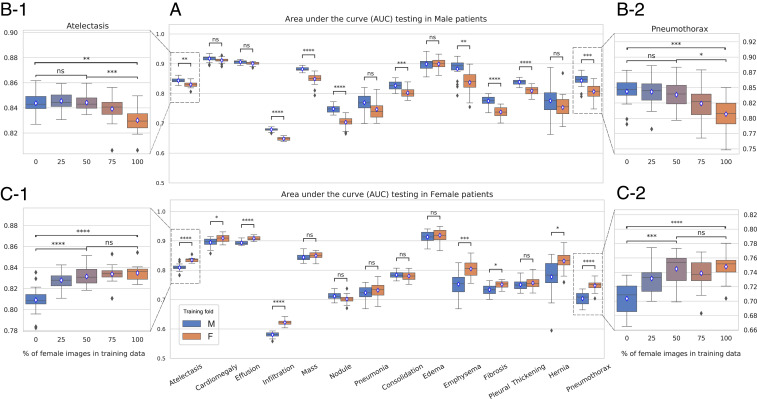
“( B and C ) AUC achieved for two exemplar diseases under a gradient of gender imbalance ratios, from 0% of female images in training data to 100%, with increments of 25%.”
MethodInfluentialProceedings of IEEE Conference on Computer Vision and Pattern Recognition
(1993) · doi:10.1109/cvpr.1993 · Cited by 17,667
A survey on deep learning in medical image analysis
Litjens, G., Kooi, T., Bejnordi, B. E., Setio, A. A. A., Ciompi, F., Ghafoorian, M., van der Laak, J. A. W. M., van Ginneken, B., & Sánchez, C. I. (2017) · Medical Image Analysis · doi:10.1016/j.media.2017.07.005 · Cited by 15,332 · cited 1×
“AI systems cannot only augment the information provided by such images with useful annotations (1, 2), but they are also starting to take autonomous decisions by performing computer-aided diagnosis (CAD) (3, 4).”
BackgroundDermatologist-level classification of skin cancer with deep neural networks
Esteva, A., Kuprel, B., Novoa, R. A., Ko, J., Swetter, S. M., Blau, H. M., & Thrun, S. (2017) · Nature · doi:10.1038/nature21056 · Cited by 14,362 · cited 9×
“Given a frontal X-ray image, the CAD system predicts the presence or absence of the 14 thoracic diseases.”
BackgroundInfluentialWang, X., Peng, Y., Lu, L., Lu, Z., Bagheri, M., & Summers, R. M. (2017) · 2017 IEEE Conference on Computer Vision and Pattern Recognition (CVPR) · doi:10.1109/cvpr.2017.369 · Cited by 4,616 · cited 4×
“We use the NIH Chest-XRay14 dataset (16, 19), which includes 112,120 chest X-ray images from 30,805 patients, labeled with 14 common thorax diseases (including hernia, pneumonia, fibrosis, emphysema, edema, cardiomegaly, pleural thickening, consolidation, mass, pneumothorax, nodule, atelectasis, effusion, and infiltra…”
MethodInfluential
Cited by
Rajpurkar, P., Chen, E., Banerjee, O., & Topol, E. J. (2022) · Nature Medicine · doi:10.1038/s41591-021-01614-0 · Cited by 3,212
“AI can make healthcare more accessible to under-served groups, but it also risks reinforcing existing inequities, because AI models can perpetuate biases lurking in the data 112 .”
BackgroundSeyyed-Kalantari, L., Zhang, H., McDermott, M. B. A., Chen, I. Y., & Ghassemi, M. (2021) · Nature Medicine · doi:10.1038/s41591-021-01595-0 · Cited by 928
Machine learning for medical imaging: methodological failures and recommendations for the future
Varoquaux, G., & Cheplygina, V. (2022) · npj Digital Medicine · doi:10.1038/s41746-022-00592-y · Cited by 656
Ethical Machine Learning in Healthcare
Chen, I. Y., Pierson, E., Rose, S., Joshi, S., Ferryman, K., & Ghassemi, M. (2021) · Annual Review of Biomedical Data Science · doi:10.1146/annurev-biodatasci-092820-114757 · Cited by 645
Self-supervised learning in medicine and healthcare
Krishnan, R., Rajpurkar, P., & Topol, E. J. (2022) · Nature Biomedical Engineering · doi:10.1038/s41551-022-00914-1 · Cited by 605
“In addition, gender-biased datasets yield models that perform better on the majority class 59 .”
BackgroundDisparities in Health Care and the Digital Divide
Saeed, S. A., & Masters, R. M. (2021) · Current Psychiatry Reports · doi:10.1007/s11920-021-01274-4 · Cited by 578
“Agostina and colleagues make the case that databases that are skewed toward one gender significantly over another are worse at diagnosing disease in the under represented population [22 (cid:129) ].”
BackgroundWILDS: A Benchmark of in-the-Wild Distribution Shifts
Koh, P. W., Sagawa, S., Marklund, H., Xie, S. M., Zhang, M., Balsubramani, A., Hu, W., Yasunaga, M., Phillips, R. L., Gao, I., et al. (2020) · arXiv · doi:10.48550/arxiv.2012.07421 · Cited by 518
“Several previous investigations have found relatively small disparities in algorithmic performance across demographic groups (Chen et al., 2019; Larrazabal et al., 2020); Seyyed-Kalantari et al. (2020) finds larger disparities in true positive rates across demographic groups, and future work should…”
Surgical data science – from concepts toward clinical translation
Maier‐Hein, L., Eisenmann, M., Sarıkaya, D., März, K., Collins, T., Malpani, A., Fallert, J., Feußner, H., Giannarou, S., Mascagni, P., et al. (2021) · Medical Image Analysis · doi:10.1016/j.media.2021.102306 · Cited by 512
“A recent study published in the context of radiological data science (Larrazabal et al., 2020), for example, showed that the performance of AI algorithms for a specific sex (e.”
BackgroundArtificial intelligence and machine learning for medical imaging: A technology review
Barragán-Montero, A., Javaid, U., Valdés, G., Nguyen, D., Desbordes, P., Macq, B., Willems, S., Vandewinckele, L., Holmström, M., Löfman, F., et al. (2021) · Physica Medica · doi:10.1016/j.ejmp.2021.04.016 · Cited by 450
“Some examples of these issues include gender imbalance [229], racial bias [230], or data heterogeneity due to changes in treat-ment protocols over time [225].”
Artificial intelligence in histopathology: enhancing cancer research and clinical oncology
Shmatko, A., Ghaffari Laleh, N., Gerstung, M., & Kather, J. N. (2022) · Nature Cancer · doi:10.1038/s43018-022-00436-4 · Cited by 446
“This is problematic because it can propagate sexism, racism and other types of discrimination inherent in many medical datasets 131,132 .”
BackgroundThe current and future state of AI interpretation of medical images
Rajpurkar, P., & Lungren, M. P. (2023) · New England Journal of Medicine · doi:10.1056/nejmra2301725 · Cited by 443
Bekbolatova, M., Mayer, J., Ong, C. W., & Toma, M. (2024) · Healthcare · doi:10.3390/healthcare12020125 · Cited by 404
“For instance, a study by Larrazabal et al. revealed that an imbalanced dataset with unequal representation of males and females led to significantly lower performance averages across all diseases within the minority group, suggesting the presence of gender bias [131].”
BackgroundOpenFL: the open federated learning library
Foley, P., Sheller, M. J., Edwards, B., Pati, S., Riviera, W., Sharma, M., Narayana Moorthy, P., Wang, S.-H., Martin, J., Mirhaji, P., et al. (2022) · Physics in Medicine & Biology · doi:10.1088/1361-6560/ac97d9 · Cited by 132
“For example, Larrazabal et al. demonstrated that introducing a gender imbalance while training convolutional neural network model to detect disease from chest X-rays resulted in poor performance on the underrepresented gender [22].”
BackgroundKhan, S. M., Liu, X., Nath, S., Korot, E., Faes, L., Wagner, S. K., Keane, P. A., Sebire, N. J., Burton, M. J., & Denniston, A. K. (2021) · The Lancet Digital Health · doi:10.1016/s2589-7500(20)30240-5 · Cited by 334
The limits of fair medical imaging AI in real-world generalization
Yang, Y., Zhang, H., Gichoya, J. W., Katabi, D., & Ghassemi, M. (2024) · Nature Medicine · doi:10.1038/s41591-024-03113-4 · Cited by 285
“We focused on four binary classification tasks that have been shown to have disparate performance between protected groups 7,27 : ‘No Finding’, ‘Effusion’, ‘Pneumothorax’ and ‘Cardiomegaly’.”
Data drift in medical machine learning: implications and potential remedies
Sahiner, B., Chen, W., Samala, R. K., & Petrick, N. (2023) · The British Journal of Radiology · doi:10.1259/bjr.20220878 · Cited by 279
AI pitfalls and what not to do: mitigating bias in AI
Gichoya, J. W., Thomas, K., Celi, L. A., Safdar, N., Banerjee, I., Banja, J. D., Seyyed-Kalantari, L., Trivedi, H., & Purkayastha, S. (2023) · The British Journal of Radiology · doi:10.1259/bjr.20230023 · Cited by 277
“53 54 The assumption that inclusion of more minority groups in the training data set is sufficient to fix bias is incorrect for the reasons above and since patients exist at the intersection of multiple group representation e.g. Black, Black Males/Females, Black Males/Females (young or old), Old…”
CheXclusion: Fairness gaps in deep chest X-ray classifiers
Seyyed-Kalantari, L., Liu, G., McDermott, M., Chen, I. Y., & Ghassemi, M. (2020) · Biocomputing 2021 · doi:10.1142/9789811232701_0022 · Cited by 275
Innovation and challenges of artificial intelligence technology in personalized healthcare
Li, Y.-H., Li, Y.-L., Wei, M.-Y., & Li, G.-Y. (2024) · Scientific Reports · doi:10.1038/s41598-024-70073-7 · Cited by 275
“Failing to achieve this balance leads to a persistent decline in diagnostic performance for underrepresented genders 46 .”
BackgroundNavigating the pitfalls of applying machine learning in genomics
Whalen, S., Schreiber, J., Noble, W. S., & Pollard, K. S. (2022) · Nature Reviews Genetics · doi:10.1038/s41576-021-00434-9 · Cited by 271
Robust Compressed Sensing MRI with Deep Generative PriorsPreprint
Jalal, A., Arvinte, M., Daras, G., Price, E., Dimakis, A. G., & Tamir, J. I. (2021) · arXiv (Cornell University) · doi:10.48550/arxiv.2108.01368 · Cited by 260
Using machine learning for healthcare challenges and opportunities
Alanazi, A. (2022) · Informatics in Medicine Unlocked · doi:10.1016/j.imu.2022.100924 · Cited by 256
A Guide to Cross-Validation for Artificial Intelligence in Medical Imaging
Bradshaw, T. J., Huemann, Z., Hu, J., & Rahmim, A. (2023) · Radiology: Artificial Intelligence · doi:10.1148/ryai.220232 · Cited by 250
Safe Latent Diffusion: Mitigating Inappropriate Degeneration in Diffusion Models
Schramowski, P., Brack, M., Deiseroth, B., & Kersting, K. (2023) · 2023 IEEE/CVF Conference on Computer Vision and Pattern Recognition (CVPR) · doi:10.1109/cvpr52729.2023.02157 · Cited by 219
Schramowski, P., Tauchmann, C., & Kersting, K. (2022) · 2022 ACM Conference on Fairness Accountability and Transparency · doi:10.1145/3531146.3533192 · Cited by 63
“…for language models, for instance, models producing stereotypical and derogatory content [Bender et al. 2021], and for vision model respectively CV datasets highlighting, e.g., gender and racial biases [Denton et al. 2021; Larrazabal et al. 2020; Steed and Caliskan 2021; Wang et al. 2020].”
BackgroundAddressing fairness in artificial intelligence for medical imaging
Ricci Lara, M. A., Echeveste, R., & Ferrante, E. (2022) · Nature Communications · doi:10.1038/s41467-022-32186-3 · Cited by 204
“Indeed, when it comes to biases in ML systems that can bene fi t certain sub-populations in detriment of others, the fi eld of medical imaging is not theexception 8,9 .”
BackgroundInfluentialSelf-citation“Shortcuts” Causing Bias in Radiology Artificial Intelligence: Causes, Evaluation, and Mitigation
Banerjee, I., Bhattacharjee, K., Burns, J. L., Trivedi, H., Purkayastha, S., Seyyed-Kalantari, L., Patel, B. N., Shiradkar, R., & Gichoya, J. (2023) · Journal of the American College of Radiology · doi:10.1016/j.jacr.2023.06.025 · Cited by 122
The diagnostic and triage accuracy of digital and online symptom checker tools: a systematic review
Wallace, W., Chan, C., Chidambaram, S., Hanna, L., Iqbal, F. M., Acharya, A., Normahani, P., Ashrafian, H., Markar, S. R., Sounderajah, V., et al. (2022) · npj Digital Medicine · doi:10.1038/s41746-022-00667-w · Cited by 186
“[28] Secondly, included retrospective designs introduce bias, reliant on the quality of documentation and knowledge of subsequent outcomes.”
BackgroundDiaz, O., Kushibar, K., Osuala, R., Linardos, A., Garrucho, L., Igual, L., Radeva, P., Prior, F., Gkontra, P., & Lekadir, K. (2021) · Physica Medica · doi:10.1016/j.ejmp.2021.02.007 · Cited by 152
“Routine clinical data collected by clinical sites can be deficient, biased (e.g. gender imbalance [111]), or prone to noise (e.g. presence of image artefacts [112]).”
BackgroundAbdelwanis, M., Alarafati, H. K., Tammam, M. M. S., & Simsekler, M. C. E. (2024) · Journal of Safety Science and Resilience · doi:10.1016/j.jnlssr.2024.06.001 · Cited by 177
Li, D.-W., Hansen, A. L., Yuan, C., Bruschweiler-Li, L., & Brüschweiler, R. (2021) · Nature Communications · doi:10.1038/s41467-021-25496-5 · Cited by 177
Demographic bias in misdiagnosis by computational pathology models
Vaidya, A. J., Chen, R. J., Williamson, D. F. K., Song, A. H., Jaume, G., Yang, Y., Hartvigsen, T., Dyer, E. C., Lu, M. Y., Lipková, J., et al. (2024) · Nature Medicine · doi:10.1038/s41591-024-02885-z · Cited by 178
Medical artificial intelligence ethics: A systematic review of empirical studies
Tang, L., Li, J., & Fantus, S. (2023) · DIGITAL HEALTH · doi:10.1177/20552076231186064 · Cited by 176
Wang, A., Ramaswamy, V. V., & Russakovsky, O. (2022) · 2022 ACM Conference on Fairness Accountability and Transparency · doi:10.1145/3531146.3533101 · Cited by 87
“1 aimed to address is that underrepresentation can be a problem if the minority group is differently predictive from the majority group [85], but does not contain sufficient samples to train a robust model on.”
BackgroundAlderman, J. E., Palmer, J., Laws, E., McCradden, M. D., Ordish, J., Ghassemi, M., Pfohl, S. R., Rostamzadeh, N., Cole-Lewis, H., Glocker, B., et al. (2025) · The Lancet Digital Health · doi:10.1016/s2589-7500(24)00224-3 · Cited by 170
Koçak, B., Ponsiglione, A., Stanzione, A., Bluethgen, C., Santinha, J., Ugga, L., Huisman, M., Klontzas, M. E., Cannella, R., & Cuocolo, R. (2024) · Diagnostic and Interventional Radiology · doi:10.4274/dir.2024.242854 · Cited by 168
Generative models improve fairness of medical classifiers under distribution shifts
Ktena, I., Wiles, O., Albuquerque, I., Rebuffi, S.-A., Tanno, R., Roy, A. G., Azizi, S., Belgrave, D., Kohli, P., Cemgil, T., et al. (2024) · Nature Medicine · doi:10.1038/s41591-024-02838-6 · Cited by 165
“One of the first studies to dive into the effect of training data composition on model performance across the sexes when using chest X-rays to diagnose thoracic diseases was the one led by Larrazabal et al. 12 .”
Generative models improve fairness of medical classifiers under distribution shifts
Wiles, O., Albuquerque, I., Rebuffi, S.-A., Tanno, R., Roy, A. G., Azizi, S., Belgrave, D., Kohli, P., Cemgil, T., Karthikesalingam, A., et al. (2023) · doi:10.21203/rs.3.rs-2976332/v1 · Cited by 165
An empirical characterization of fair machine learning for clinical risk prediction
Pfohl, S. R., Foryciarz, A., & Shah, N. H. (2021) · Journal of Biomedical Informatics · doi:10.1016/j.jbi.2020.103621 · Cited by 164
“This effect can derive from inequity in historical and current patterns of care access and delivery [1, 7–11], underrepresentation in clinical datasets [12], the use of biased or mis-specified proxy outcomes during model development [3, 13, 14], and differences in the accessibility, usability, and effectiveness of pre…”
BackgroundMultimodal datasets: misogyny, pornography, and malignant stereotypes
Birhane, A., Prabhu, V. U., & Kahembwe, E. (2021) · arXiv · doi:10.48550/arxiv.2110.01963 · Cited by 160
Humans inherit artificial intelligence biases
Vicente, L., & Matute, H. (2023) · Scientific Reports · doi:10.1038/s41598-023-42384-8 · Cited by 158
Artificial intelligence, machine learning, and deep learning for clinical outcome prediction
Pettit, R. W., Fullem, R., Cheng, C., & Amos, C. I. (2021) · Emerging Topics in Life Sciences · doi:10.1042/etls20210246 · Cited by 120
Ethics of AI in Radiology: A Review of Ethical and Societal Implications
Goisauf, M., & Cano Abadía, M. (2022) · Frontiers in Big Data · doi:10.3389/fdata.2022.850383 · Cited by 108
“Using sex- and genderimbalanced datasets to train deep-learning-based systems may affect the performance of pathology classification with minority groups (Larrazabal et al., 2020).”
BackgroundExplaining the Black-box Smoothly- A Counterfactual Approach
Singla, S., Eslami, M., Pollack, B., Wallace, S., & Batmanghelich, K. N. (2021) · Medical Image Analysis · doi:10.1016/j.media.2022.102721 · Cited by 153
A causal perspective on dataset bias in machine learning for medical imaging
Jones, C., Castro, D. C., Ribeiro, F. D. S., Oktay, O., McCradden, M. D., & Glocker, B. (2024) · Nature Machine Intelligence · doi:10.1038/s42256-024-00797-8 · Cited by 151
“While machine learning methods have potential to improve outcomes by improving diagnostic accuracy and throughput, they often generalize poorly across clinical environments 5 and may exhibit algorithmic bias, leading to worse performance in under-represented populations 6–11 .”
Fair Conformal Predictors for Applications in Medical Imaging
Lu, C., Lemay, A., Chang, K., Hoebel, K., & Kalpathy–Cramer, J. (2022) · Proceedings of the AAAI Conference on Artificial Intelligence · doi:10.1609/aaai.v36i11.21459 · Cited by 150
A survey of recent methods for addressing AI fairness and bias in biomedicine
Yang, Y., Lin, M., Zhao, H., Peng, Y., Huang, F., & Lu, Z. (2024) · Journal of Biomedical Informatics · doi:10.1016/j.jbi.2024.104646 · Cited by 146
“Considering that the data collected is always biased towards the population that can afford healthcare, the representation bias in biomedicine AI is also related to the historic bias 2,21,29–32 .”
BackgroundRisk of Bias in Chest Radiography Deep Learning Foundation Models
Glocker, B., Jones, C., Roschewitz, M., & Winzeck, S. (2023) · Radiology Artificial Intelligence · doi:10.1148/ryai.230060 · Cited by 142
“We inspect the generated features of this proprietary model for the presence of biases that could potentially lead to disparate performance across patient subgroups (15,16).”
MethodUnderstanding and Mitigating Bias in Imaging Artificial Intelligence
Tejani, A. S., Ng, Y. S., Xi, Y., & Rayan, J. C. (2024) · RadioGraphics · doi:10.1148/rg.230067 · Cited by 138
Explainable, Domain-Adaptive, and Federated Artificial Intelligence in Medicine
Chaddad, A., Lu, Q., Li, J., Katib, Y., Kateb, R., Tanougast, C., Bouridane, A., & Abdulkadir, A. (2023) · IEEE/CAA Journal of Automatica Sinica · doi:10.1109/jas.2023.123123 · Cited by 139
“In addition, bidirectional cross-modality DA between MRI and CT images has been applied using the synergistic image and feature alignment framework (SIFA) [41].”
MethodApplications of generative adversarial networks in neuroimaging and clinical neuroscience
Wang, R., Bashyam, V., Yang, Z., Yu, F., Tassopoulou, V., Chintapalli, S. S., Skampardoni, I., Sreepada, L. P., Sahoo, D., Nikita, K. S., et al. (2023) · NeuroImage · doi:10.1016/j.neuroimage.2023.119898 · Cited by 134
“These models can amplify the bias in data and lead to undesirable performances towards underrepresented groups, such as females and African Americans ( Larrazabal et al., 2020 ; Seyyed-Kalantari et al., 2021 ; Wang et al., 2022 b).”
Addressing racial and phenotypic bias in human neuroscience methods
Webb, E. K., Etter, J. A., & Kwasa, J. A. C. (2022) · Nature Neuroscience · doi:10.1038/s41593-022-01046-0 · Cited by 131
Integrating artificial intelligence in healthcare: applications, challenges, and future directions
Chong, P. L., Vaigeshwari, V., Reyasudin, B. K. M., Hidayah, B. R. A. N., Purnshatman, T., Yeow, J. A., & Kong, F. Y. (2025) · Future Science OA · doi:10.1080/20565623.2025.2527505 · Cited by 130
“Diagnostic accuracy may be impacted by biased Ai classifiers resulting from gender imbalance in medical imaging datasets [76]. the necessity to address psychological issues in adoption in Ai is highlighted by the possibility that consumer resistance to Ai suggestions in medical contexts is due to…”
Algorithmic encoding of protected characteristics in chest X-ray disease detection models
Glocker, B., Jones, C., Bernhardt, M., & Winzeck, S. (2023) · eBioMedicine · doi:10.1016/j.ebiom.2023.104467 · Cited by 77
Addressing fairness issues in deep learning-based medical image analysis: a systematic review
Xu, Z., Li, J., Yao, Q., Li, H., Zhao, M., & Zhou, S. K. (2024) · npj Digital Medicine · doi:10.1038/s41746-024-01276-5 · Cited by 129
Ensuring that biomedical AI benefits diverse populations
Zou, J., & Schiebinger, L. (2021) · EBioMedicine · doi:10.1016/j.ebiom.2021.103358 · Cited by 124
“The speci fi c guidelines to certify medical computer-aided systems, however, do not mention sex, gender, or other axes of health disparities in data collection [47].”
BackgroundMosquera, C., Ferrer, L., Milone, D. H., Luna, D. R., & Ferrante, E. (2024) · European Radiology · doi:10.1007/s00330-024-10834-0 · Cited by 127
Self-citationPreventing dataset shift from breaking machine-learning biomarkers
Dockès, J., Varoquaux, G., & Poline, J.-B. (2021) · GigaScience · doi:10.1093/gigascience/giab055 · Cited by 86
“More generally, machine-learning systems may fail on data from different imaging devices, hospitals, populations with a different age distribution, and so forth.”
Community-developed checklists for publishing images and image analyses
Schmied, C., Nelson, M. S., Avilov, S., Bakker, G., Bertocchi, C., Bischof, J., Boehm, U., Brocher, J., Carvalho, M. T., Chiritescu, C., et al. (2023) · Nature Methods · doi:10.1038/s41592-023-01987-9 · Cited by 120
Advances of AI in image-based computer-aided diagnosis: A review
Yeasmin, M. N., Amin, M. A., Joti, T. J., Aung, Z., & Azim, M. A. (2024) · Array · doi:10.1016/j.array.2024.100357 · Cited by 119
Tasci, E., Zhuge, Y., Camphausen, K., & Krauze, A. V. (2022) · Cancers · doi:10.3390/cancers14122897 · Cited by 117
“…most significant issue inhibiting the harnessing of data for meaningful and reproducible limits data , privacy in significant image class machine minority artificial whose predicted class probabilities are geared toward the majority class ignoring the significance of minority classes [12,13].”
Data synthesis and adversarial networks: A review and meta-analysis in cancer imaging
Osuala, R. O., Kushibar, K., Garrucho, L., Linardos, A., Szafranowska, Z., Klein, S., Glocker, B., Díaz, O., & Lekadir, K. (2022) · Medical Image Analysis · doi:10.1016/j.media.2022.102704 · Cited by 118
“or gender (Larrazabal et al., 2020) of patients are easily omitted in”
BackgroundMitigating Bias in Radiology Machine Learning: 3. Performance Metrics
Faghani, S., Khosravi, B., Zhang, K., Moassefi, M., Jagtap, J. M., Nugen, F., Vahdati, S., Kuanar, S. P., Rassoulinejad-Mousavi, S. M., Singh, Y., et al. (2022) · Radiology: Artificial Intelligence · doi:10.1148/ryai.220061 · Cited by 94
“Larrazabal et al (22) showed that the performance of classifier models trained on the National Institutes of Health ChestX-Ray14 dataset differs significantly if applied to chest radiograph data from other sources.”
MethodPetersen, E., Potdevin, Y., Mohammadi, E., Zidowitz, S., Breyer, S., Nowotka, D., Henn, S., Pechmann, L., Leucker, M., Rostalski, P., et al. (2022) · IEEE Access · doi:10.1109/access.2022.3178382 · Cited by 112
“In a study of chest x-ray disease classifiers trained on datasets with varying male–female ratios, Larrazabal et al. [115] found that clas-sifiers generally performed worse for the underrepresented group.”
BackgroundWang, R., Chaudhari, P., & Davatzikos, C. (2023) · Proceedings of the National Academy of Sciences · doi:10.1073/pnas.2211613120 · Cited by 78
Jayakumar, S., Sounderajah, V., Normahani, P., Harling, L., Markar, S. R., Ashrafian, H., & Darzi, A. (2022) · npj Digital Medicine · doi:10.1038/s41746-021-00544-y · Cited by 110
A fully open AI foundation model applied to chest radiography
Ma, D., Pang, J., Gotway, M. B., & Liang, J. (2025) · Nature · doi:10.1038/s41586-025-09079-8 · Cited by 112
Systematic Review of Deep Learning Image Analyses for the Diagnosis and Monitoring of Skin Disease
Choy, S. P., Kim, B. J., Paolino, A., Tan, W. R., Lim, S. M. L., Seo, J., Tan, S. P., Francis, L., Tsakok, T., Simpson, M., et al. (2023) · npj Digital Medicine · doi:10.1038/s41746-023-00914-8 · Cited by 105
Cardiovascular Disease Screening in Women: Leveraging Artificial Intelligence and Digital Tools
Adedinsewo, D. A., Pollak, A. W., Phillips, S. D., Smith, T. L., Svatikova, A., Hayes, S. N., Mulvagh, S. L., Norris, C., Roger, V. L., Noseworthy, P. A., et al. (2022) · Circulation Research · doi:10.1161/circresaha.121.319876 · Cited by 85
A graph neural network-based node classification model on class-imbalanced graph data
Huang, Z., Tang, Y., & Chen, Y. (2022) · Knowledge-Based Systems · doi:10.1016/j.knosys.2022.108538 · Cited by 106
Barragán-Montero, A., Bibal, A., Dastarac, M. H., Draguet, C., Valdés, G., Nguyen, D., Willems, S., Vandewinckele, L., Holmström, M., Löfman, F., et al. (2022) · Physics in Medicine & Biology · doi:10.1088/1361-6560/ac678a · Cited by 84
“For instance, a recent study analyzed the effect of gender imbalance when training ML models to diagnose various thoracic diseases ( Larrazabal et al 2020 ) .”
BackgroundIntroduction to Artificial Intelligence and Machine Learning for Pathology
Harrison, J. H., Gilbertson, J. R., Hanna, M. G., Olson, N. H., Seheult, J. N., Sorace, J. M., & Stram, M. N. (2021) · Archives of Pathology & Laboratory Medicine · doi:10.5858/arpa.2020-0541-cp · Cited by 82
“Sex imbalances in training data may also produce inaccurate models.(135) Avoiding these problems requires careful consideration of training data collection methods, verification that the training data are appropriately representative of the deployment context, and verification of expected model performance at the depl…”
BackgroundImproving the Fairness of Chest X-ray ClassifiersPreprint
Zhang, H., Dullerud, N., Roth, K., Oakden‐Rayner, L., Pfohl, S. R., & Ghassemi, M. (2022) · arXiv (Cornell University) · doi:10.48550/arxiv.2203.12609 · Cited by 99
“…we do note that there are instances where Balanced ERM outperforms ERM and Stratified ERM , especially in AUROC, which may be connected with prior work showing that increasing number of samples for a protected group increases its performance in the chest x-ray setting (Larrazabal et al., 2020).”
MethodResultMoazemi, S., Vahdati, S., Li, J., Kalkhoff, S., Castano, L. J. V., Dewitz, B., Bibo, R., Sabouniaghdam, P., Tootooni, M. S., Bundschuh, R. A., et al. (2023) · Frontiers in Medicine · doi:10.3389/fmed.2023.1109411 · Cited by 97
“In particular, in intensive patient monitoring, AI methods have been used for different purposes such as prediction of readmission (3, 14–16) and sepsis (17–19) and mortality risk assessment (20, 21).”
MethodGaggion, N., Mansilla, L., Mosquera, C., Milone, D. H., & Ferrante, E. (2022) · IEEE Transactions on Medical Imaging · doi:10.1109/tmi.2022.3224660 · Cited by 97
“Moreover, recent studies on fairness in machine learning have shown that under-representation of certain demographic groups in the training data (e.g. in terms of gender [54] or ethnicity [55]) may result in biased models which present unequal performance in minority groups.”
BackgroundSelf-citationHuman-Centric Multimodal Machine Learning: Recent Advances and Testbed on AI-Based Recruitment
Peña, A., Serna, I., Morales, A., Fiérrez, J., Ortega, A., Sánchez, A. H., Saéz, M. A., & Ortega-García, J. (2023) · SN Computer Science · doi:10.1007/s42979-023-01733-0 · Cited by 98
“We can find examples of such unfair treatment in various fields, such as healthcare [10, 29], ad delivery systems [7, 8, 30], hiring [16, 18], and both facial analysis [5, 12, 13] and NLP technologies [31, 32].”
BackgroundCo-Design of a Trustworthy AI System in Healthcare: Deep Learning Based Skin Lesion Classifier
Zicari, R. V., Ahmed, S., Amann, J., Braun, S. A., Brodersen, J., Bruneault, F., Brusseau, J., Campano, E., Coffee, M., Dengel, A., et al. (2021) · Frontiers in Human Dynamics · doi:10.3389/fhumd.2021.688152 · Cited by 71
“While the notions of bias and fairness are mentioned as issues relating to epistemological risk in section (2.1), there is also a genuine ethical concern about bias, fairness, and equality with respect to the development and use of ML in healthcare (Larrazabal et al., 2020).”
BackgroundInfluentialFairPrune: Achieving Fairness Through Pruning for Dermatological Disease Diagnosis
Wu, Y., Zeng, D., Xu, X., Shi, Y., & Hu, J. (2022) · Lecture notes in computer science · doi:10.1007/978-3-031-16431-6_70 · Cited by 94
Radiomic Analysis: Study Design, Statistical Analysis, and Other Bias Mitigation Strategies
Moskowitz, C. S., Welch, M. L., Jacobs, M. A., Kurland, B. F., & Simpson, A. L. (2022) · Radiology · doi:10.1148/radiol.211597 · Cited by 89
A Review of Bias and Fairness in Artificial Intelligence.
González-Sendino, R., Serrano, E., Bajo, J., & Nováis, P. (2024) · International Journal of Interactive Multimedia and Artificial Intelligence · doi:10.9781/ijimai.2023.11.001 · Cited by 89
“Other traditional metrics used to calculate fairness are standard deviation and skewed error ratio [65].”
InfluentialMEDFAIR: Benchmarking Fairness for Medical ImagingPreprint
Zong, Y., Yang, Y., & Hospedales, T. M. (2022) · arXiv (Cornell University) · doi:10.48550/arxiv.2210.01725 · Cited by 87
“However, machine learning (ML) models have been found to demonstrate a systematic bias toward certain groups of people defined by race, gender, age, and even the health insurance type with worse performance (Obermeyer et al., 2019; Larrazabal et al., 2020; Spencer et al., 2013; Seyyed-Kalantari et al., 2021).”
BackgroundInfluentialPuyol-Antón, E., Ruijsink, B., Mariscal Harana, J., Piechnik, S. K., Neubauer, S., Petersen, S. E., Razavi, R., Chowienczyk, P., & King, A. P. (2022) · Frontiers in Cardiovascular Medicine · doi:10.3389/fcvm.2022.859310 · Cited by 85
“This phenomenon has been observed before in applications in computer vision (25) and medical imaging (26, 27), but never before reported in CMR image analysis.”
BackgroundOn the Trustworthiness of Generative Foundation Models: Guideline, Assessment, and PerspectivePreprint
Huang, Y., Gao, C., Wu, S., Wang, H., Wang, X., Zhou, Y., Wang, Y., Ye, J., Shi, J., Zhang, Q., et al. (2025) · arXiv (Cornell University) · doi:10.48550/arxiv.2502.14296 · Cited by 87
AI in radiology: From promise to practice − A guide to effective integration
Katal, S., York, B. R., & Gholamrezanezhad, A. (2024) · European Journal of Radiology · doi:10.1016/j.ejrad.2024.111798 · Cited by 83
Deep Learning in Large and Multi-Site Structural Brain MR Imaging Datasets
Bento, M., Fantini, I., Park, J., Rittner, L., & Frayne, R. (2022) · Frontiers in Neuroinformatics · doi:10.3389/fninf.2021.805669 · Cited by 81
“Such data are obtained from presumed healthy, normal, or control participants and are frequently limited in number and diversity, typically because of either the cost of conducting an MR imaging procedure or challenges in accessing an MR scanner by non-patients (Larrazabal et al., 2020).”
BackgroundTowards Measuring Fairness in AI: The Casual Conversations Dataset
Hazirbas, C., Bitton, J., Dolhansky, B., Pan, J., Gordo, A., & Ferrer, C. C. (2022) · IEEE Transactions on Biometrics, Behavior, and Identity Science · doi:10.1109/tbiom.2021.3132237 · Cited by 79
Zicari, R. V., Brusseau, J., Blomberg, S. N. F., Christensen, H. C., Coffee, M. P., Ganapini, M. B., Gerke, S., Gilbert, T. K., Hickman, E., Hildt, E., et al. (2021) · Frontiers in Human Dynamics · doi:10.3389/fhumd.2021.673104 · Cited by 79
“Warning examples have shown that if ethical and social implications are disregarded, AI can in fl ict signi fi cant harm on the people it is intended to bene fi t (Obermeyer et al., 2019; Wiens et al., 2019; Gerke et al., 2020a; Gerke et al., 2020b; Grote and Berens, 2020; Larrazabal et al., 2020).”
BackgroundDeep Learning for Cardiovascular Imaging: A Review
Wehbe, R. M., Katsaggelos, A. K., Hammond, K. J., Hong, H., Ahmad, F. S., Ouyang, D., Shah, S. J., McCarthy, P. M., & Thomas, J. D. (2023) · JAMA Cardiology · doi:10.1001/jamacardio.2023.3142 · Cited by 79
Cheng, V., Suriyakumar, V. M., Dullerud, N., Joshi, S. D., & Ghassemi, M. (2021) · ACM Conference on Fairness, Accountability, and Transparency (FAccT) · doi:10.1145/3442188.3445879 · Cited by 78
“We take M ��� /F ����� to be our protected attribute based on prior work demonstrating disparities in chest x-ray classi � er performance for this label [45, 66].”
Image Analysis in Histopathology and Cytopathology: From Early Days to Current Perspectives
Mezei, T., Kolcsár, M., Joó, A., & Gurzu, S. (2024) · Journal of Imaging · doi:10.3390/jimaging10100252 · Cited by 77
“For instance, algorithms trained predominantly on images from one ethnic group may not generalize well to images from other ethnic groups, potentially leading to misdiagnosis or suboptimal care [120–123].”
BackgroundLondon, A. J. (2022) · Cell Reports Medicine · doi:10.1016/j.xcrm.2022.100622 · Cited by 76
“8,9 Under-representation of this kind can lead to the development of AI systems whose utility deteriorates when applied to groups already under-served in current health systems—thereby widening pre-existing disparities in quality of care and health outcomes.”
The Sociodemographic Biases in Machine Learning Algorithms: A Biomedical Informatics Perspective
Franklin, G., Stephens, R., Piracha, M., Tiosano, S., Lehouillier, F., Koppel, R., & Elkin, P. (2024) · Life · doi:10.3390/life14060652 · Cited by 76
“The fact is that MLAGs born of AIMs may not perform as well on women as on men when they are under-represented in the training data [16,74].”
BackgroundDeep Learning for the Diagnosis of Stage in Retinopathy of Prematurity
Chen, J., Coyner, A. S., Ostmo, S. R., Sönmez, K., Bajimaya, S., Pradhan, E., Valikodath, N. G., Cole, E. D., Al-Khaled, T., Chan, R. V. P., et al. (2021) · Ophthalmology Retina · doi:10.1016/j.oret.2020.12.013 · Cited by 77
Pombo, G., Gray, R., Cardoso, M. J., Ourselin, S., Rees, G. E., Ashburner, J., & Nachev, P. (2022) · Medical Image Analysis · doi:10.1016/j.media.2022.102723 · Cited by 76
Understanding Biases and Disparities in Radiology AI Datasets: A Review
Tripathi, S., Gabriel, K., Dheer, S., Parajuli, A., Augustin, A. I., Elahi, A., Awan, O., & Dako, F. (2023) · Journal of the American College of Radiology · doi:10.1016/j.jacr.2023.06.015 · Cited by 75
Wardlaw, J. M., Mair, G., von Kummer, R., Williams, M. C., Li, W., Storkey, A., Trucco, E., Liebeskind, D. S., Farrall, A., Bath, P. M., et al. (2022) · Stroke · doi:10.1161/strokeaha.121.036204 · Cited by 75
“Numerous examples of biases have emerged, including those related to sex, 58 race, 59 and geography, 60 which could inadvertently exacerbate underlying healthcare inequalities.”
BackgroundInherent Bias in Electronic Health Records: A Scoping Review of Sources of Bias
Perets, O., Stagno, E., Yehuda, E. B., McNichol, M. C., Celi, L. A., Rappoport, N., & Dorotić, M. (2026) · ACM Transactions on Intelligent Systems and Technology · doi:10.1145/3757924 · Cited by 75
Achieving fairness in medical devices
Kadambi, A. (2021) · Science · doi:10.1126/science.abe9195 · Cited by 49
Colacci, M., Huang, Y. Q., Postill, G., Zhelnov, P., Fennelly, O., Verma, A. A., Straus, S. E., & Tricco, A. C. (2024) · Journal of Clinical Epidemiology · doi:10.1016/j.jclinepi.2024.111606 · Cited by 72
Secure federated learning for Alzheimer's disease detection
Mitrovska, A., Safari, P., Ritter, K., Shariati, B., & Fischer, J. (2024) · Frontiers in Aging Neuroscience · doi:10.3389/fnagi.2024.1324032 · Cited by 72
Metadata
- Authors
- Larrazabal, A. J., Nieto, N., Peterson, V., Milone, D. H., & Ferrante, E.
- Affiliations
- Consejo Nacional de Investigaciones Científicas y Técnicas (AR)
- Corresponding author
- Ferrante, Enzo
- Venue
- Proceedings of the National Academy of Sciences
- Publisher
- National Academy of Sciences
- Published
- 2020-05-26
- Volume
- 117
- Issue
- 23
- Pages
- 12592-12594
- ISSN
- 0027-8424 (ISSN-L)
- 1091-6490
- PMC
- PMC7293650
- OpenAlex
- W3030030520
- Cited by
- 685
- References
- 36
- Citations by year
- 2026: 117 · 2025: 149 · 2024: 125 · 2023: 110 · 2022: 101 · 2021: 71 · 2020: 10
- FWCI
- 21.48
- Type
- journal article
- Language
- en
- Open access
- hybrid
- doi.org
- Licence
- Locations
- Proceedings of the National Academy of Sciences (publishedVersion, cc-by)
- PubMed Central (publishedVersion, cc-by)
- PubMed (publishedVersion)
- LA Referencia (Red Federada de Repositorios Institucionales de Publicaciones Científicas) (submittedVersion, cc-by-nc-sa)
- Funders
- AXA Research Fund (2017-AXA-PDOC1-097)
- MINCyT | Agencia Nacional de Promoción Científica y Tecnológica (PICT 2017-4596, PICT-2018-03907, PICT 2014-2627, PICT-2018-3384)
- Universidad Nacional del Litoral (CAID-PIC-50220140100084L, 2016-082)
- Topics
- Health Sciences › Medicine › Health Informatics › Artificial Intelligence in Healthcare and Education
- Physical Sciences › Computer Science › Artificial Intelligence › Ethics and Social Impacts of AI
- Health Sciences › Medicine › Public Health, Environmental and Occupational Health › Sex and Gender in Healthcare
- Keywords
- gender imbalance, medical imaging datasets, algorithmic fairness, computer-aided diagnosis, X-ray images, thoracic disease diagnosis, deep neural network, underrepresented groups, dataset collection
- MeSH terms
- Deep Learning, Female, Humans, Male, Radiographic Image Interpretation, Computer-Assisted, Reference Standards, Sex Factors, Radiography, Thoracic, Bias, Datasets as Topic
About these checks
Registry, retraction, Cites and statistics results are computed, not judged, with one exception: a printed reference that no index lists is read once by a model before it counts as a citation error. Claims are extracted by a model and kept only when their quote appears verbatim in the text; each cited source is then checked, with a model’s help, for whether it says what the claim relies on. Those verdicts can be wrong — read the claim’s quote and the cited source before relying on one.
Statistics and arithmetic are recomputed, not judged.
Confidence bands are shown only for fields calibrated on our annotated test set. None is calibrated yet, so no band is shown.
What counts as a claim ›How we measure confidence ›How we check this ›
Are you an author, or do you see a problem with this page? Request a review
Data sources
Bibliographic data: Semantic Scholar, OpenAlex, Crossref.
Contains information from the Semantic Scholar Academic Graph Datasets, made available under the ODC Attribution License (ODC-BY 1.0).
Semantic Scholar’s data is described in: Kinney, R., et al. (2023). The Semantic Scholar Open Data Platform. arXiv:2301.10140.
