

Gender imbalance in medical imaging datasets produces biased classifiers for computer-aided diagnosis
Open accessThe DOI matches its Crossref record; 36 of the 36 references it cites were found in a registry or an index.
Abstract
Artificial intelligence (AI) systems for computer-aided diagnosis and image-based screening are being adopted worldwide by medical institutions. In such a context, generating fair and unbiased classifiers becomes of paramount importance. The research community of medical image computing is making great efforts in developing more accurate algorithms to assist medical doctors in the difficult task of disease diagnosis. However, little attention is paid to the way databases are collected and how this may influence the performance of AI systems. Our study sheds light on the importance of gender balance in medical imaging datasets used to train AI systems for computer-assisted diagnosis. We provide empirical evidence supported by a large-scale study, based on three deep neural network architectures and two well-known publicly available X-ray image datasets used to diagnose various thoracic diseases under different gender imbalance conditions. We found a consistent decrease in performance for underrepresented genders when a minimum balance is not fulfilled. This raises the alarm for national agencies in charge of regulating and approving computer-assisted diagnosis systems, which should include explicit gender balance and diversity recommendations. We also establish an open problem for the academic medical image computing community which needs to be addressed by novel algorithms endowed with robustness to gender imbalance.
Overview
The claims and statistics of this paper haven’t been checked yet.
Free: it reads the open-access text and checks the first 5 claims that cite a source we can check. Create a free account to check every claim.
Integrity signals
Registry
Cites
Statistics
Figures
Verification
Claims the paper makes
The claims and statistics of this paper haven’t been checked yet.
Free: it reads the open-access text and checks the first 5 claims that cite a source we can check. Create a free account to check every claim.
Claims other papers make about this one
Each is checked against this paper’s own text: does it say what the citing paper says it does?
The source backs part of the claim, not all of it — or backs it for a different population, condition or comparison.
In the citing paper
“The choice of these subgroups is motivated by the clear history, in both traditional medicine and AI algorithms, of bias for subgroups on these axes 6,8,10,11 .”
From Underdiagnosis bias of artificial intelligence algorithms applied to chest radiographs in under-served patient populations (2021) · cites this paper as [6]
Experimental — accuracy not yet measuredThe source backs part of the claim, not all of it — or backs it for a different population, condition or comparison.
In the citing paper
“For example, if a dataset predominantly consists of images from a particular racial or ethnic group, the AI model trained on this dataset may exhibit reduced accuracy when applied to individuals from other groups.”
From Bias in artificial intelligence for medical imaging: fundamentals, detection, avoidance, mitigation, challenges, ethics, and prospects (2024) · cites this paper as [24]
Experimental — accuracy not yet measuredIn the citing paper
“Similar issues arise with gender, age, and socio-economic status, where AI systems may perform better for the demographic groups that are overrepresented in the training data (Figure 4).24”
From Bias in artificial intelligence for medical imaging: fundamentals, detection, avoidance, mitigation, challenges, ethics, and prospects (2024) · cites this paper as [24]
Self-check
Percentages, sums and reported differences re-computed from the paper’s own numbers.
The self-check needs the paper’s full text.
Citations
Cites
Deep Residual Learning for Image Recognition
He, K., Zhang, X., Ren, S., & Sun, J. (2016) · 2016 IEEE Conference on Computer Vision and Pattern Recognition (CVPR) · doi:10.1109/cvpr.2016.90 · Cited by 235,474 · cited 2×
“Additionally, we evaluated two other CNN architectures, the ResNet (33) and the Inception-v3 (34), confirming that our observations generalize for different neural models.”
MethodLeCun, Y., Bengio, Y., & Hinton, G. (2015) · Nature · doi:10.1038/nature14539 · Cited by 84,126
ImageNet: A large-scale hierarchical image database
Deng, J., Dong, W., Socher, R., Li, L.-J., Li, K., & Fei-Fei, L. (2009) · 2009 IEEE Conference on Computer Vision and Pattern Recognition · doi:10.1109/cvpr.2009.5206848 · Cited by 65,333 · cited 1×
“A model pretrained on ImageNet (32) was used to initialize the network weights.”
MethodDensely Connected Convolutional Networks
Huang, G., Liu, Z., Van Der Maaten, L., & Weinberger, K. Q. (2017) · 2017 IEEE Conference on Computer Vision and Pattern Recognition (CVPR) · doi:10.1109/cvpr.2017.243 · Cited by 48,566
Rethinking the Inception Architecture for Computer Vision
Szegedy, C., Vanhoucke, V., Ioffe, S., Shlens, J., & Wojna, Z. (2016) · 2016 IEEE Conference on Computer Vision and Pattern Recognition (CVPR) · doi:10.1109/cvpr.2016.308 · Cited by 32,138
An introduction to ROC analysis
Fawcett, T. (2006) · Pattern Recognition Letters · doi:10.1016/j.patrec.2005.10.010 · Cited by 21,879 · cited 4×
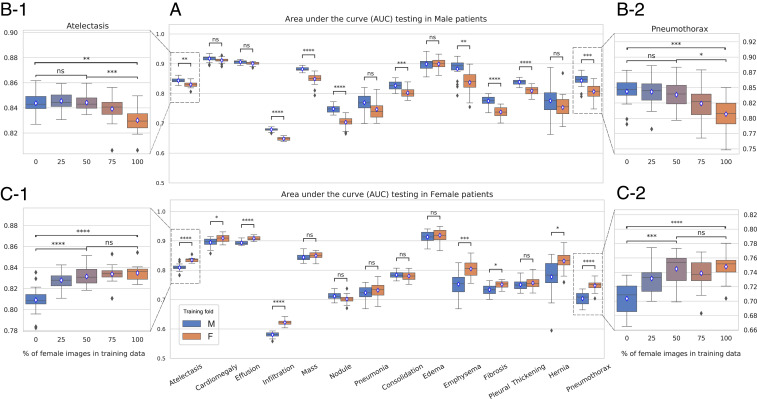
“( B and C ) AUC achieved for two exemplar diseases under a gradient of gender imbalance ratios, from 0% of female images in training data to 100%, with increments of 25%.”
MethodInfluentialProceedings of IEEE Conference on Computer Vision and Pattern Recognition
(1993) · doi:10.1109/cvpr.1993 · Cited by 17,667
A survey on deep learning in medical image analysis
Litjens, G., Kooi, T., Bejnordi, B. E., Setio, A. A. A., Ciompi, F., Ghafoorian, M., van der Laak, J. A. W. M., van Ginneken, B., & Sánchez, C. I. (2017) · Medical Image Analysis · doi:10.1016/j.media.2017.07.005 · Cited by 15,332 · cited 1×
“AI systems cannot only augment the information provided by such images with useful annotations (1, 2), but they are also starting to take autonomous decisions by performing computer-aided diagnosis (CAD) (3, 4).”
BackgroundDermatologist-level classification of skin cancer with deep neural networks
Esteva, A., Kuprel, B., Novoa, R. A., Ko, J., Swetter, S. M., Blau, H. M., & Thrun, S. (2017) · Nature · doi:10.1038/nature21056 · Cited by 14,362 · cited 9×
“Given a frontal X-ray image, the CAD system predicts the presence or absence of the 14 thoracic diseases.”
BackgroundInfluentialWang, X., Peng, Y., Lu, L., Lu, Z., Bagheri, M., & Summers, R. M. (2017) · 2017 IEEE Conference on Computer Vision and Pattern Recognition (CVPR) · doi:10.1109/cvpr.2017.369 · Cited by 4,616 · cited 4×
“We use the NIH Chest-XRay14 dataset (16, 19), which includes 112,120 chest X-ray images from 30,805 patients, labeled with 14 common thorax diseases (including hernia, pneumonia, fibrosis, emphysema, edema, cardiomegaly, pleural thickening, consolidation, mass, pneumothorax, nodule, atelectasis, effusion, and infiltra…”
MethodInfluential
Cited by
Items 101–200 of 898
Risk of Training Diagnostic Algorithms on Data with Demographic Bias
Abbasi-Sureshjani, S., Raumanns, R., Michels, B. E. J., Schouten, G., & Cheplygina, V. (2020) · Lecture notes in computer science · doi:10.1007/978-3-030-61166-8_20 · Cited by 71
Heiss, R. U., Nagel, A. M., Laun, F. B., Uder, M., & Bickelhaupt, S. (2021) · Investigative Radiology · doi:10.1097/rli.0000000000000805 · Cited by 69
“31,32 We are convinced that there is not only 1 optimal field for all diagnostic imaging applications.”
BackgroundAccounting for diversity in AI for medicine
Fosch-Villaronga, E., Drukarch, H., Khanna, P., Verhoef, T., & Custers, B. (2022) · Computer Law & Security Review · doi:10.1016/j.clsr.2022.105735 · Cited by 50
Markus, A., Carolus, A., & Wienrich, C. (2025) · Computers and Education: Artificial Intelligence · doi:10.1016/j.caeai.2025.100485 · Cited by 30
“…workplace, AI is optimizing processes in healthcare, such as diagnostics, medical imaging, and surgery (Benzakour et al., 2023; Kumar et al., 2023; Larrazabal et al., 2020), and in education, where it is improving performance assessments and enabling personalized learning (Chiu & Silva, 2024;…”
Towards gender equity in artificial intelligence and machine learning applications in dermatology
Lee, M. S., Guo, L. N., & Nambudiri, V. E. (2021) · Journal of the American Medical Informatics Association · doi:10.1093/jamia/ocab113 · Cited by 67
Fernandez-Quilez, A. (2023) · AI and Ethics · doi:10.1007/s43681-022-00161-9 · Cited by 66
“Even though DL algorithms have been shown to potentially reduce bias and improve healthcare practices or workflows [24], application of DL algorithms has also been shown to systemize or amplify biases [11, 25].”
BackgroundCheXmask: a large-scale dataset of anatomical segmentation masks for multi-center chest x-ray images
Gaggion, N., Mosquera, C., Mansilla, L., Saidman, J. M., Aineseder, M., Milone, D. H., & Ferrante, E. (2024) · Scientific Data · doi:10.1038/s41597-024-03358-1 · Cited by 46
Self-citationArtificial intelligence bias in medical system designs: a systematic review
Kumar, A., Aelgani, V., Vohra, R., Gupta, S. K., Bhagawati, M., Paul, S., Saba, L., Suri, N., Khanna, N. N., Laird, J. R., et al. (2023) · Multimedia Tools and Applications · doi:10.1007/s11042-023-16029-x · Cited by 65
Expectations for Artificial Intelligence (AI) in Psychiatry
Monteith, S., Glenn, T., Geddes, J., Whybrow, P. C., Achtyes, E., & Bauer, M. (2022) · Current Psychiatry Reports · doi:10.1007/s11920-022-01378-5 · Cited by 55
“For example, gender imbalance in training datasets led to decreased performance for diagnosis of thoracic diseases from X-ray images for the underrepresented gender [105].”
BackgroundUpshaw, T. L., Craig-Neil, A., Macklin, J. A., Gray, C. S., Chan, T. C. Y., Gibson, J., & Pinto, A. D. (2023) · The Journal of the American Board of Family Medicine · doi:10.3122/jabfm.2022.220171r1 · Cited by 66
The pitfalls of negative data bias for the T-cell epitope specificity challenge
Dens, C., Laukens, K., Bittremieux, W., & Meysman, P. (2023) · Nature Machine Intelligence · doi:10.1038/s42256-023-00727-0 · Cited by 65
The ethical challenges of artificial intelligence‐driven digital pathology
McKay, F., Williams, B. J., Prestwich, G., Bansal, D., Hallowell, N., & Treanor, D. (2022) · The Journal of Pathology: Clinical Research · doi:10.1002/cjp2.263 · Cited by 63
“Although algorithmic bias has primarily been observed outside of healthcare contexts, it has recently been shown to have implications for patient communities as well [29 – 31].”
BackgroundBeheshtian, E., Putman, K., Santomartino, S. M., Parekh, V. S., & Yi, P. H. (2022) · Radiology · doi:10.1148/radiol.220505 · Cited by 63
Kim, J., Lee, J., Jang, K. M., & Lourentzou, I. (2023) · Telematics and Informatics · doi:10.1016/j.tele.2023.102085 · Cited by 63
Artificial intelligence in pharmacovigilance – Opportunities and challenges
Desai, M. K. (2024) · Perspectives in Clinical Research · doi:10.4103/picr.picr_290_23 · Cited by 63
“[18,19] Unless the data are comprehensive, covering the public and private health-care sector, representing all diseases and therapeutic areas, including all patient populations and ethnic groups in sufficient numbers, the prediction by AI tool might be misleading and inaccurate.”
BackgroundTwelve key challenges in medical machine learning and solutions
Ellis, R. J., Sander, R. M., & Limon, A. (2022) · Intelligence-Based Medicine · doi:10.1016/j.ibmed.2022.100068 · Cited by 61
Generalizability of an acute kidney injury prediction model across health systems
Cao, J., Zhang, X., Shahinian, V. B., Yin, H., Steffick, D., Saran, R., Crowley, S. T., Mathis, M. R., Nadkarni, G. N., Heung, M., et al. (2022) · Nature Machine Intelligence · doi:10.1038/s42256-022-00563-8 · Cited by 61
Making decisions: Bias in artificial intelligence and data‑driven diagnostic tools
Aquino, Y. S. J. (2023) · Australian Journal of General Practice · doi:10.31128/ajgp-12-22-6630 · Cited by 58
Lekadir, K., Osuala, R., Gallin, C., Lazrak, N., Kushibar, K., Tsakou, G., Aussó, S., Alberich, L. C., Marias, K., Tsiknakis, M., et al. (2021) · arXiv · doi:10.48550/arxiv.2109.09658 · Cited by 58
Estimating and Improving Fairness with Adversarial LearningPreprint
Li, X., Cui, Z., Wu, Y., Gu, L., & Harada, T. (2021) · arXiv (Cornell University) · doi:10.48550/arxiv.2103.04243 · Cited by 57
“For example, a recent study revealed statistically significant differences in performance on medical imaging-based diagnoses using gender imbalanced datasets [17].”
BackgroundStanley, E. A. M., Wilms, M., Mouchès, P., & Forkert, N. D. (2022) · Journal of medical imaging · doi:10.1117/1.jmi.9.6.061102 · Cited by 56
“9,10 However, it is difficult to determine the reasons for unfairness in deep learning models due to different types of biases that could result in unfair models.”
BackgroundArtificial Intelligence and liver: Opportunities and barriers
Balsano, C., Burra, P., Duvoux, C., Alisi, A., Piscaglia, F., Gerussi, A., Brunetto, M. R., Bonino, F., Montalti, R., Campanile, S., et al. (2023) · Digestive and Liver Disease · doi:10.1016/j.dld.2023.08.048 · Cited by 55
Automating Ambiguity: Challenges and Pitfalls of Artificial IntelligencePreprint
Birhane, A. (2022) · arXiv (Cornell University) · doi:10.48550/arxiv.2206.04179 · Cited by 57
How to mitigate the risks of deployment of artificial intelligence in medicine?
İlikhan, S. U., Özer, M., Tanberkan, H., & Bozkurt, V. (2024) · TURKISH JOURNAL OF MEDICAL SCIENCES · doi:10.55730/1300-0144.5814 · Cited by 55
“If the training set in the healthcare domain is predominantly specific to one sex, significant performance drops are observed when the other sex is used during the testing phase [52].”
MethodTwala, B. (2025) · Frontiers in Aging Neuroscience · doi:10.3389/fnagi.2025.1638340 · Cited by 55
Ethical Challenges in the Integration of Artificial Intelligence in Palliative Care
Adegbesan, A., Akingbola, A., Ojo, O., Jessica, O. U., Alao, U. H., Shagaya, U. N., Adewole, O. A., & Abdullahi, O. (2024) · Journal of Medicine Surgery and Public Health · doi:10.1016/j.glmedi.2024.100158 · Cited by 50
RadEdit: Stress-Testing Biomedical Vision Models via Diffusion Image Editing
Pérez‐García, F., Bond-Taylor, S., Sanchez, P. P., van Breugel, B., Castro, D. C., Sharma, H., Salvatelli, V., Wetscherek, M. T., Richardson, H., Lungren, M. P., et al. (2024) · Lecture notes in computer science · doi:10.1007/978-3-031-73254-6_21 · Cited by 51
“This leads to biased training datasets that affect the performance of trained models and generalisation to real-world scenarios [43, 64].”
BackgroundMusthafa, N., Memon, Q. A., & Masud, M. M. (2025) · Eng—Advances in Engineering · doi:10.3390/eng6050082 · Cited by 51
Applications of Artificial Intelligence to Office Laryngoscopy: A Scoping Review
Yao, P., Usman, M., Chen, Y. H., German, A., Andreadis, K., Mages, K., & Rameau, A. (2022) · The Laryngoscope · doi:10.1002/lary.29886 · Cited by 46
Algorithmic fairness of machine learning models for Alzheimer disease progression
Yuan, C., Linn, K. A., & Hubbard, R. A. (2023) · JAMA Network Open · doi:10.1001/jamanetworkopen.2023.42203 · Cited by 49
Leveraging physiology and artificial intelligence to deliver advancements in health care
Zhang, A., Wu, Z., Wu, E., Wu, M. A., Snyder, M. P., Zou, J., & Wu, J. C. (2023) · Physiological Reviews · doi:10.1152/physrev.00033.2022 · Cited by 51
Exploring a decade of deep learning in dentistry: A comprehensive mapping review
Sohrabniya, F., Hassanzadeh-Samani, S., Ourang, S. A., Jafari, B., Farzinnia, G., Gorjinejad, F., Ghalyanchi‐Langeroudi, A., Mohammad‐Rahimi, H., Tichý, A., Motamedian, S. R., et al. (2025) · Clinical Oral Investigations · doi:10.1007/s00784-025-06216-5 · Cited by 50
“[107, 108].”
Petersen, E., Feragen, A., Zemsch, M. L. D. C., Henriksen, A., Christensen, O. E. W., Ganz, M., & Initiative, A. D. N. (2022) · Lecture notes in computer science · doi:10.1007/978-3-031-16431-6_9 · Cited by 50
Towards objective and systematic evaluation of bias in artificial intelligence for medical imaging
Stanley, E. A. M., Souza, R., Winder, A. J., Gulve, V., Amador, K., Wilms, M., & Forkert, N. D. (2024) · Journal of the American Medical Informatics Association · doi:10.1093/jamia/ocae165 · Cited by 48
A proposal for developing a platform that evaluates algorithmic equity and accuracy
Cerrato, P., Halamka, J., & Pencina, M. (2022) · BMJ Health & Care Informatics · doi:10.1136/bmjhci-2021-100423 · Cited by 42
“Larrazabal et al 5 studied the performance of deep neural networks used to diagnose 14 thoracic diseases using X-rays.”
BackgroundDetecting Shortcuts in Medical Images - A Case Study in Chest X-Rays
Jiménez-Sánchez, A., Juodelyte, D., Chamberlain, B., & Cheplygina, V. (2023) · IEEE International Symposium on Biomedical Imaging (ISBI) · doi:10.1109/isbi53787.2023.10230572 · Cited by 47
“We report the overall AUC-ROC, and also for subgroups based on sex, following recent work on bias and fairness [5, 10, 23].”
Ahmad, F., & Muhmood, T. (2024) · Colloids and Surfaces B Biointerfaces · doi:10.1016/j.colsurfb.2024.114041 · Cited by 49
Artificial intelligence in oncology: From bench to clinic
Elkhader, J. A., & Elemento, O. (2021) · Seminars in Cancer Biology · doi:10.1016/j.semcancer.2021.04.013 · Cited by 47
Improving model fairness in image-based computer-aided diagnosis
Lin, M., Li, T., Yang, Y., Holste, G., Ding, Y., Tassel, S. H. V., Kovacs, K. D., Shih, G., Wang, Z., Lu, Z., et al. (2023) · Nature Communications · doi:10.1038/s41467-023-41974-4 · Cited by 45
Considering the Safety and Quality of Artificial Intelligence in Health Care
Ross, P., & Spates, K. (2020) · The Joint Commission Journal on Quality and Patient Safety · doi:10.1016/j.jcjq.2020.08.002 · Cited by 33
From Artificial Intelligence Bias to Inequality in the Time of COVID-19
Luengo-Oroz, M. A., Aylett-Bullock, J., Pham, K. H., Lam, C. S. N., & Luccioni, A. S. (2021) · IEEE Technology and Society Magazine · doi:10.1109/mts.2021.3056282 · Cited by 45
“Prior research has shown that when training data sets are imbalanced on gender, the performance of deep learning models in radiology decreases, in particular, in the case of X-ray image data sets used to diagnose thoracic diseases [23].”
BackgroundEmerging Ethical Considerations for the Use of Artificial Intelligence in Ophthalmology
Evans, N. G., Wenner, D. M., Cohen, I. G., Purves, D., Chiang, M. F., Ting, D. S. W., & Lee, A. (2022) · Ophthalmology Science · doi:10.1016/j.xops.2022.100141 · Cited by 45
Clinician's guide to trustworthy and responsible artificial intelligence in cardiovascular imaging
Szabo, L., Raisi-Estabragh, Z., Salih, A., McCracken, C., Ruiz Pujadas, E., Gkontra, P., Kiss, M., Maurovich-Horvath, P., Vago, H., Merkely, B., et al. (2022) · Frontiers in Cardiovascular Medicine · doi:10.3389/fcvm.2022.1016032 · Cited by 36
“Overrepresentation of a certain group leads to data collection bias (18), as exemplified by Larrazabal et al. (91).”
BackgroundAnatomy's missing faces: An assessment of representation gaps in atlas and textbook imagery
Beresheim, A. C., Zepeda, D., Pharel, M., Soy, T., Wilson, A. B., & Ferrigno, C. (2024) · Anatomical Sciences Education · doi:10.1002/ase.2432 · Cited by 44
“96,97 The medical community has a long history of biol-ogizing race and legitimizing claims of racial differences.”
BackgroundFairVision: Equitable Deep Learning for Eye Disease Screening via Fair Identity ScalingPreprint
Luo, Y., Khan, M. O., Tian, Y., Shi, M., Dou, Z., Elze, T., Fang, Y., & Wang, M. (2023) · arXiv (Cornell University) · doi:10.48550/arxiv.2310.02492 · Cited by 45
“With medical imaging being arguably the most important application of AI in healthcare, recent works [4], [5], [6], [7], [8], [9], [10] have explored the fairness of various medical imaging models.”
BackgroundAI-deploying organizations are key to addressing ‘perfect storm’ of AI risks
Curtis, C., Gillespie, N., & Lockey, S. (2023) · AI and Ethics · doi:10.1007/s43681-022-00163-7 · Cited by 43
“Biased outcomes of opaque AI systems [11] have resulted in discrimination [12] and harm, highlighting the risk that AI systems can unintentionally codify, compound, and promulgate existing societal biases evident within datasets [13], through ‘data cascades’ [14] and runaway feedback loops [15].”
BackgroundMachine Learning and Health Science Research: Tutorial
Cho, H., She, J., de Marchi, D., El-Zaatari, H., Barnes, E. L., Kahkoska, A. R., Kosorok, M. R., & Virkud, A. (2024) · Journal of Medical Internet Research · doi:10.2196/50890 · Cited by 43
“As an example, unbalanced gender data in the medical imaging field has led to algorithmic underperformance [98].”
Artificial intelligence and its application in clinical microbiology
Mairi, A., Hamza, L., & Touati, A. (2025) · Expert Review of Anti-infective Therapy · doi:10.1080/14787210.2025.2484284 · Cited by 43
The path toward equal performance in medical machine learning
Petersen, E., Holm, S., Ganz, M., & Feragen, A. (2023) · Patterns · doi:10.1016/j.patter.2023.100790 · Cited by 45
“Thus, it would appear likely that the models considered by Larrazabal et al.(3) were capable of learning a mapping that is simultaneously optimal for women and men.”
BackgroundMethodResultInfluentialPark, S. (2024) · SSRN Electronic Journal · doi:10.2139/ssrn.4950781 · Cited by 44
Intersectional analysis for science and technology
Nielsen, M. W., Gissi, E., Heidari, S., Horton, R. C., Nadeau, K. C., Ngila, D., Noble, S., Paik, H. Y., Tadesse, G. A., Zeng, E. Y., et al. (2025) · Nature · doi:10.1038/s41586-025-08774-w · Cited by 43
“Although imputed data can be beneficial, such as for forensic evaluations during emergencies, it may also introduce bias into AI models, potentially affecting downstream analyses and ultimately, health outcomes 122,123 .”
Pitfalls and Best Practices in Evaluation of AI Algorithmic Biases in Radiology
Yi, P. H., Bachina, P., Bharti, B., Garin, S. P., Kanhere, A., Kulkarni, P., Li, D. K. B., Parekh, V. S., Santomartino, S. M., Moy, L. P., et al. (2025) · Radiology · doi:10.1148/radiol.241674 · Cited by 42
Intelligent systems in healthcare: A systematic survey of explainable user interfaces
Cálem, J., Moreira, C., & Jorge, J. A. (2024) · Computers in Biology and Medicine · doi:10.1016/j.compbiomed.2024.108908 · Cited by 41
Kulkarni, V., Gawali, M., & Kharat, A. T. (2021) · JMIR Medical Informatics · doi:10.2196/28776 · Cited by 41
“Unfortunately, many existing data sets [18,43] reflect the biases of the societies that they represent [116], and it is difficult to detect and remove bias inherent in the training data.”
BackgroundAI Gender Bias, Disparities, and Fairness: Does Training Data Matter?Preprint
Latif, E., Zhaı, X., & Liu, L. (2023) · arXiv (Cornell University) · doi:10.48550/arxiv.2312.10833 · Cited by 40
“Subsequently, we define bias for AI systematically like Larrazabal, Nieto, Peterson, Milone, and Ferrante (2020) since bias entails systematic rather than random error in which we study the calculated error in the scoring accuracy in the trained model of AI.”
Advancing human-centric AI for robust X-ray analysis through holistic self-supervised learning
Moutakanni, T., Bojanowski, P., Chassagnon, G., Hudelot, C., Joulin, A., LeCun, Y., Muckley, M. J., Oquab, M., Revel, M., & Vakalopoulou, M. (2026) · Nature Communications · doi:10.1038/s41467-026-76076-4 · Cited by 39
“First we evaluated sex-speci fi c bias by following Larrazabal et al. ’ s setting 35 .”
MLHOps: Machine Learning Health Operations
Khattak, F. K., Subasri, V., Krishnan, A., Pou-Prom, C., Koçak, S. A., Dolatabadi, E., Pandya, D., Seyyed-Kalantari, L., & Rudzicz, F. (2024) · IEEE Access · doi:10.1109/access.2024.3521279 · Cited by 39
“In recent years, the topic of fairness in AI models in healthcare has received a lot of attention [53], [152], [214], [267], [268], [307].”
CIRCLe: Color Invariant Representation Learning for Unbiased Classification of Skin Lesions
Pakzad, A., Abhishek, K., & Hamarneh, G. (2023) · Lecture notes in computer science · doi:10.1007/978-3-031-25069-9_14 · Cited by 39
In medicine, how do we machine learn anything real?
Ghassemi, M., & Nsoesie, E. O. (2022) · Patterns · doi:10.1016/j.patter.2021.100392 · Cited by 37
“Machine learning algorithms that use medical images (such as X-rays) and other clinical data on disease diagnosis are likely to create or worsen these existing inequalities when trained with gender or race/ethnic imbalanced datasets.(23) Finally, even the interactions between patients and health workers may be loaded…”
BackgroundYi, P. H., Kim, T. K., Siegel, E. L., & Yahyavi‐Firouz‐Abadi, N. (2022) · Journal of the American College of Radiology · doi:10.1016/j.jacr.2021.08.018 · Cited by 37
Inconsistent Partitioning and Unproductive Feature Associations Yield Idealized Radiomic Models
Gidwani, M., Chang, K., Patel, J., Hoebel, K., Ahmed, S. R., Singh, P., Fuller, C. D., & Kalpathy–Cramer, J. (2022) · Radiology · doi:10.1148/radiol.220715 · Cited by 38
Meaningfully Debugging Model Mistakes using Conceptual Counterfactual ExplanationsPreprint
Abid, A., Yüksekgönül, M., & Zou, J. (2021) · arXiv (Cornell University) · doi:10.48550/arxiv.2106.12723 · Cited by 38
“Cardiology - Pneumothorax Classification from Chest X-Ray Images Several studies have raised concerns about the biases learned by chest X-ray models and deployability in novel domains (Seyyed-Kalantari et al., 2020; Larrazabal et al., 2020; Wu et al., 2021).”
BackgroundCheXmask: a large-scale dataset of anatomical segmentation masks for multi-center chest x-ray images
Gaggion, N., Mosquera, C., Mansilla, L., Saidman, J. M., Aineseder, M., Milone, D. H., & Ferrante, E. (2023) · JAIIO, Jornadas Argentinas de Informática · doi:10.48550/arxiv.2307.03293 · Cited by 36
Self-citationEfficient adversarial debiasing with concept activation vector — Medical image case-studies
Correa, R., Pahwa, K., Patel, B. N., Vachon, C. M., Gichoya, J. W., & Banerjee, I. (2023) · Journal of Biomedical Informatics · doi:10.1016/j.jbi.2023.104548 · Cited by 36
Artificial Intelligence Bias and the Amplification of Inequalities in the Labor Market
Özer, M., Perc, M., & Eren, S. U. N. A. (2024) · Journal of Economy Culture and Society · doi:10.26650/jecs2023-1415085 · Cited by 36
“As previously noted in healthcare, if the learning set is primarily targeted at one gender, performance has been shown to decrease significantly when the other gender is used in the testing phase (Larrazabal et al., 2020).”
BackgroundIn the Picture: Medical Imaging Datasets, Artifacts, and their Living Review
Jiménez-Sánchez, A., Avlona, N.-R., de Boer, S., Campello, V. M., Feragen, A., Ferrante, E., Ganz, M., Gichoya, J. W., González, C., Groefsema, S., et al. (2025) · ACM Conference on Fairness, Accountability, and Transparency (FAccT) · doi:10.1145/3715275.3732035 · Cited by 36
“Patient-level confounders include demographic attributes (sex/gender [1, 96], age [1], and race/ethnicity [51]) and anatomical factors related to organs or conditions (BMI, tissue/breast/bone density).”
InfluentialSelf-citationSantus, E., Marino, N., Cirillo, D., Chersoni, E., Montagud, A., Chadha, A. S., Valencia, A., Hughes, K. S., & Lindvall, C. J. (2021) · Journal of Medical Internet Research · doi:10.2196/22453 · Cited by 36
“As of today, AI systems are, regrettably, rarely endowed with robustness to class imbalances, such as sex and gender groups [12].”
BackgroundRandomised controlled trials in medical AI: ethical considerations
Grote, T. (2021) · Journal of Medical Ethics · doi:10.1136/medethics-2020-107166 · Cited by 36
“9 50–52 Overcoming the threat of algorithmic discrimination in clinical medicine requires a concentrated effort of medical professionals and AI researchers.”
BackgroundOn (assessing) the fairness of risk score models
Petersen, E., Ganz, M., Holm, S., & Feragen, A. (2023) · ACM Conference on Fairness, Accountability, and Transparency (FAccT) · doi:10.1145/3593013.3594045 · Cited by 37
“Saving a more complete discussion of this question for elsewhere, we briefly remark that performance differences can result from a number of root causes, including group under-representation [56], algorithmic choices [27, 41], missing covariate information that is”
BackgroundLiefgreen, A., Weinstein, N., Wachter, S., & Mittelstadt, B. (2023) · AI & Society · doi:10.1007/s00146-023-01684-3 · Cited by 35
“Relat-edly, Larrazabal et al. (2020) recently provided empirical evidence supported by a large-scale study of a consistent decrease in algorithm performance for underrepresented genders when diagnosing various thoracic diseases under different gender imbalance conditions.”
ResultA Systematic Review of ‘Fair’ AI Model Development for Image Classification and Prediction
Correa, R., Shaan, M., Trivedi, H., Patel, B. N., Celi, L. A., Gichoya, J. W., & Banerjee, I. (2022) · Journal of Medical and Biological Engineering · doi:10.1007/s40846-022-00754-z · Cited by 34
The challenges of health inequities and AI
Moore, C. M. (2022) · Intelligence-Based Medicine · doi:10.1016/j.ibmed.2022.100067 · Cited by 34
Higher performance for women than men in MRI-based Alzheimer’s disease detection
Klingenberg, M., Stark, D., Eitel, F., Budding, C., Habes, M., Ritter, K., & Initiative, A. D. N. (2023) · Alzheimer s Research & Therapy · doi:10.1186/s13195-023-01225-6 · Cited by 34
“This can lead to a performance increase for underrepresented groups, while not necessarily negatively affecting performance for the overrepresented group [9, 11].”
BackgroundMethodFairTune: Optimizing Parameter Efficient Fine Tuning for Fairness in Medical Image Analysis
Dutt, R., Bohdal, O., Tsaftaris, S. A., & Hospedales, T. M. (2024) · International Conference on Learning Representations · doi:10.48550/arxiv.2310.05055 · Cited by 35
“However, AI models have repeatedly been shown to exhibit unwanted biases towards various demographic subgroups (Seyyed-Kalantari et al., 2021; Obermeyer et al., 2019; Larrazabal et al., 2020; Ricci Lara et al., 2022) – for example by providing substantially worse performance on disadvantaged subgroups defined by prote…”
BackgroundEquity in Stochastic Healthcare Facility Location
Shehadeh, K. S., & Snyder, L. (2023) · International series in management science/operations research/International series in operations research & management science · doi:10.1007/978-3-031-32338-6_12 · Cited by 33
A Study of Demographic Bias in CNN-Based Brain MR Segmentation
Ioannou, S., Chockler, H., Hammers, A., King, A. P., & Initiative, A. D. N. (2022) · Lecture notes in computer science · doi:10.1007/978-3-031-17899-3_2 · Cited by 31
Artificial intelligence in neuro-oncology
Nakhate, V., & Castro, L. N. G. (2023) · Frontiers in Neuroscience · doi:10.3389/fnins.2023.1217629 · Cited by 31
A Textbook Remedy for Domain Shifts: Knowledge Priors for Medical Image Analysis
Yang, Y., Gandhi, M., Wang, Y., Wu, Y., Yao, M. S., Callison-Burch, C., Gee, J. C., & Yatskar, M. (2024) · neural information processing systems · doi:10.52202/079017-2879 · Cited by 32
Debiasing Deep Chest X-Ray Classifiers using Intra- and Post-processing Methods
Marcinkevičs, R., Özkan, E., & Vogt, J. E. (2022) · Repository for Publications and Research Data (ETH Zurich) · doi:10.3929/ethz-b-000562558 · Cited by 31
Structured dataset documentation: a datasheet for CheXpertPreprint
Garbin, C., Rajpurkar, P., Irvin, J., Lungren, M. P., & Marques, O. (2021) · arXiv (Cornell University) · doi:10.48550/arxiv.2105.03020 · Cited by 31
“[11] [12] [13] There are indications in the literature that the sex and age of patients may affect the performance of models [14] [15].”
BackgroundFoundation Ark: Accruing and Reusing Knowledge for Superior and Robust Performance
Ma, D., Pang, J., Gotway, M. B., & Liang, J. (2023) · Lecture notes in computer science · doi:10.1007/978-3-031-43907-0_62 · Cited by 30
“CXPT using gender-exclusive training sets by following the setup in [8].”
MethodPower and reproducibility in the external validation of brain-phenotype predictions
Rosenblatt, M., Tejavibulya, L., Sun, H., Camp, C., Khaitova, M., Adkinson, B. D., Jiang, R., Westwater, M. L., Noble, S., & Scheinost, D. (2024) · Nature Human Behaviour · doi:10.1038/s41562-024-01931-7 · Cited by 31
“Never-theless, harmonization between datasets and similarity between participants should be heavily considered when powering external validation studies because models may perform differently in participants with different characteristics 19,41,58 .”
What Is Fair? Defining Fairness in Machine Learning for Health
Gao, J., Chou, B., McCaw, Z. R., Thurston, H., Varghese, P., Hong, C., & Gronsbell, J. L. (2025) · Statistics in Medicine · doi:10.1002/sim.70234 · Cited by 30
Artificial Intelligence in Cardiology: Applications and Obstacles
Danilov, A., & Aronow, W. S. (2023) · Current Problems in Cardiology · doi:10.1016/j.cpcardiol.2023.101750 · Cited by 30
Are Sex-Based Physiological Differences the Cause of Gender Bias for Chest X-Ray Diagnosis?
Weng, N., Bigdeli, S., Petersen, E., & Feragen, A. (2023) · Lecture notes in computer science · doi:10.1007/978-3-031-45249-9_14 · Cited by 31
Singh, S. (2024) · arXiv (Cornell University) · doi:10.48550/arxiv.2404.11843 · Cited by 30
“[42] studied gender imbalance in the chest X-ray datasets are reported that gender imbalance in medical imaging datasets may produce biased classifiers.”
BackgroundArtificial Intelligence in Radiology: Opportunities and Challenges
Flory, M. N., Napel, S., & Tsai, E. B. (2024) · Seminars in Ultrasound, CT and MRI · doi:10.1053/j.sult.2024.02.004 · Cited by 29
Applications of Digital Pathology in Cancer: A Comprehensive Review
Omar, M., Alexanderani, M. K., Valencia, I., Loda, M. F., & Marchionni, L. (2024) · Annual Review of Cancer Biology · doi:10.1146/annurev-cancerbio-062822-010523 · Cited by 29
Zhao, P., Yue, Z., Mi, N., & Zhang, H. (2025) · Biomedical Signal Processing and Control · doi:10.1016/j.bspc.2025.109312 · Cited by 29
Krag, C. H., Müller, F. C., Gandrup, K. L., Raaschou, H., Andersen, M. B., Brejnebøl, M. W., Sagar, M. V., Bojsen, J. A., Rasmussen, B. S., Graumann, O., et al. (2023) · European Journal of Radiology · doi:10.1016/j.ejrad.2023.111126 · Cited by 29
Unlocking Accuracy and Fairness in Differentially Private Image ClassificationPreprint
Berrada, L., De, S., Shen, J. H., Hayes, J., Stanforth, R., Stutz, D., Kohli, P., Smith, S. L., & Balle, B. (2023) · arXiv (Cornell University) · doi:10.48550/arxiv.2308.10888 · Cited by 30
“The role of data imbalance across sex was studied in [70], where it was found that there can be AUC disparities when a minimum balance of data is not achieved.”
BackgroundMethodUncovering ethical biases in publicly available fetal ultrasound datasets
Fiorentino, M. C., Moccia, S., Cosmo, M. D., Frontoni, E., Giovanola, B., & Tiribelli, S. (2025) · npj Digital Medicine · doi:10.1038/s41746-025-01739-3 · Cited by 28
Stanley, E. A. M., Wilms, M., & Forkert, N. D. (2022) · Lecture notes in computer science · doi:10.1007/978-3-031-23223-7_2 · Cited by 29
Kaushik, R., & Rapaka, R. (2025) · Dentistry Review · doi:10.1016/j.dentre.2025.100154 · Cited by 28
Technical Challenges for Training Fair Neural NetworksPreprint
Cherepanova, V., Nanda, V., Goldblum, M., Dickerson, J. P., & Goldstein, T. (2021) · arXiv (Cornell University) · doi:10.48550/arxiv.2102.06764 · Cited by 28
“Moreover, while both facial recognition and medical image classification have seen unprecedented performance gains due to advances in deep learning, there have been well documented cases of bias and unfairness in both of these domains (Patrick J. Grother, 2010; Buolamwini & Gebru, 2018; SeyyedKalantari et al., 2020; L…”
BackgroundInfluentialAssessing Artificial Intelligence–Generated Responses to Urology Patient In-Basket Messages
Scott, M., Muncey, W. W., Seranio, N., Belladelli, F., Giudice, F. D., Li, S., Ha, A., Glover, F. E., Zhang, C. A., & Eisenberg, M. L. (2024) · Urology Practice · doi:10.1097/upj.0000000000000637 · Cited by 27
“9,10 These fi ndings underscore the importance of ensuring that AI in health care is trained on large, diverse datasets.”
Performance of Machine Learning Suicide Risk Models in an American Indian Population
Haroz, E. E., Rebman, P., Goklish, N. A., Garcia, M., Suttle, R., Maggio, D., Clattenburg, E. J., Mega, J., & Adams, R. (2024) · JAMA Network Open · doi:10.1001/jamanetworkopen.2024.39269 · Cited by 27
Yuan, H., Xie, F., Ong, M. E. H., Ning, Y., Chee, M. L., Saffari, S. E., Abdullah, H. R., Goldstein, B. A., Chakraborty, B., & Liu, N. (2022) · Journal of Biomedical Informatics · doi:10.1016/j.jbi.2022.104072 · Cited by 27
Deep learning prediction of sex on chest radiographs: a potential contributor to biased algorithms
Li, D., Lin, C. T., Sulam, J., & Yi, P. H. (2022) · Emergency Radiology · doi:10.1007/s10140-022-02019-3 · Cited by 27
“females produced DCNNs that consistently underperformed for diagnosing disease on the underrepresented sex [3].”
BackgroundResultInfluentialAlabed, S., Maiter, A., Salehi, M., Mahmood, A., Daniel, S., Jenkins, S., Goodlad, M., Sharkey, M. J., Mamalakis, M., Rakocevic, V., et al. (2022) · Frontiers in Cardiovascular Medicine · doi:10.3389/fcvm.2022.956811 · Cited by 27
“For example, a previous analysis of AI-based segmentation in CMR using a large-scale database found systematic bias for both sex and race (12) and similar biases have been reported for AI in radiographic imaging (13).”
Method
Metadata
- Authors
- Larrazabal, A. J., Nieto, N., Peterson, V., Milone, D. H., & Ferrante, E.
- Affiliations
- Consejo Nacional de Investigaciones Científicas y Técnicas (AR)
- Corresponding author
- Ferrante, Enzo
- Venue
- Proceedings of the National Academy of Sciences
- Publisher
- National Academy of Sciences
- Published
- 2020-05-26
- Volume
- 117
- Issue
- 23
- Pages
- 12592-12594
- ISSN
- 0027-8424 (ISSN-L)
- 1091-6490
- PMC
- PMC7293650
- OpenAlex
- W3030030520
- Cited by
- 685
- References
- 36
- Citations by year
- 2026: 117 · 2025: 149 · 2024: 125 · 2023: 110 · 2022: 101 · 2021: 71 · 2020: 10
- FWCI
- 21.48
- Type
- journal article
- Language
- en
- Open access
- hybrid
- doi.org
- Licence
- Locations
- Proceedings of the National Academy of Sciences (publishedVersion, cc-by)
- PubMed Central (publishedVersion, cc-by)
- PubMed (publishedVersion)
- LA Referencia (Red Federada de Repositorios Institucionales de Publicaciones Científicas) (submittedVersion, cc-by-nc-sa)
- Funders
- AXA Research Fund (2017-AXA-PDOC1-097)
- MINCyT | Agencia Nacional de Promoción Científica y Tecnológica (PICT 2017-4596, PICT-2018-03907, PICT 2014-2627, PICT-2018-3384)
- Universidad Nacional del Litoral (CAID-PIC-50220140100084L, 2016-082)
- Topics
- Health Sciences › Medicine › Health Informatics › Artificial Intelligence in Healthcare and Education
- Physical Sciences › Computer Science › Artificial Intelligence › Ethics and Social Impacts of AI
- Health Sciences › Medicine › Public Health, Environmental and Occupational Health › Sex and Gender in Healthcare
- Keywords
- gender imbalance, medical imaging datasets, algorithmic fairness, computer-aided diagnosis, X-ray images, thoracic disease diagnosis, deep neural network, underrepresented groups, dataset collection
- MeSH terms
- Deep Learning, Female, Humans, Male, Radiographic Image Interpretation, Computer-Assisted, Reference Standards, Sex Factors, Radiography, Thoracic, Bias, Datasets as Topic
About these checks
Registry, retraction, Cites and statistics results are computed, not judged, with one exception: a printed reference that no index lists is read once by a model before it counts as a citation error. Claims are extracted by a model and kept only when their quote appears verbatim in the text; each cited source is then checked, with a model’s help, for whether it says what the claim relies on. Those verdicts can be wrong — read the claim’s quote and the cited source before relying on one.
Statistics and arithmetic are recomputed, not judged.
Confidence bands are shown only for fields calibrated on our annotated test set. None is calibrated yet, so no band is shown.
What counts as a claim ›How we measure confidence ›How we check this ›
Are you an author, or do you see a problem with this page? Request a review
Data sources
Bibliographic data: Semantic Scholar, OpenAlex, Crossref.
Contains information from the Semantic Scholar Academic Graph Datasets, made available under the ODC Attribution License (ODC-BY 1.0).
Semantic Scholar’s data is described in: Kinney, R., et al. (2023). The Semantic Scholar Open Data Platform. arXiv:2301.10140.
