

Gender imbalance in medical imaging datasets produces biased classifiers for computer-aided diagnosis
Open accessThe DOI matches its Crossref record; 36 of the 36 references it cites were found in a registry or an index.
Abstract
Artificial intelligence (AI) systems for computer-aided diagnosis and image-based screening are being adopted worldwide by medical institutions. In such a context, generating fair and unbiased classifiers becomes of paramount importance. The research community of medical image computing is making great efforts in developing more accurate algorithms to assist medical doctors in the difficult task of disease diagnosis. However, little attention is paid to the way databases are collected and how this may influence the performance of AI systems. Our study sheds light on the importance of gender balance in medical imaging datasets used to train AI systems for computer-assisted diagnosis. We provide empirical evidence supported by a large-scale study, based on three deep neural network architectures and two well-known publicly available X-ray image datasets used to diagnose various thoracic diseases under different gender imbalance conditions. We found a consistent decrease in performance for underrepresented genders when a minimum balance is not fulfilled. This raises the alarm for national agencies in charge of regulating and approving computer-assisted diagnosis systems, which should include explicit gender balance and diversity recommendations. We also establish an open problem for the academic medical image computing community which needs to be addressed by novel algorithms endowed with robustness to gender imbalance.
Overview
The claims and statistics of this paper haven’t been checked yet.
Free: it reads the open-access text and checks the first 5 claims that cite a source we can check. Create a free account to check every claim.
Integrity signals
Registry
Cites
Statistics
Figures
Verification
Claims the paper makes
The claims and statistics of this paper haven’t been checked yet.
Free: it reads the open-access text and checks the first 5 claims that cite a source we can check. Create a free account to check every claim.
Claims other papers make about this one
Each is checked against this paper’s own text: does it say what the citing paper says it does?
The source backs part of the claim, not all of it — or backs it for a different population, condition or comparison.
In the citing paper
“The choice of these subgroups is motivated by the clear history, in both traditional medicine and AI algorithms, of bias for subgroups on these axes 6,8,10,11 .”
From Underdiagnosis bias of artificial intelligence algorithms applied to chest radiographs in under-served patient populations (2021) · cites this paper as [6]
Experimental — accuracy not yet measuredThe source backs part of the claim, not all of it — or backs it for a different population, condition or comparison.
In the citing paper
“For example, if a dataset predominantly consists of images from a particular racial or ethnic group, the AI model trained on this dataset may exhibit reduced accuracy when applied to individuals from other groups.”
From Bias in artificial intelligence for medical imaging: fundamentals, detection, avoidance, mitigation, challenges, ethics, and prospects (2024) · cites this paper as [24]
Experimental — accuracy not yet measuredIn the citing paper
“Similar issues arise with gender, age, and socio-economic status, where AI systems may perform better for the demographic groups that are overrepresented in the training data (Figure 4).24”
From Bias in artificial intelligence for medical imaging: fundamentals, detection, avoidance, mitigation, challenges, ethics, and prospects (2024) · cites this paper as [24]
Self-check
Percentages, sums and reported differences re-computed from the paper’s own numbers.
The self-check needs the paper’s full text.
Citations
Cites
Deep Residual Learning for Image Recognition
He, K., Zhang, X., Ren, S., & Sun, J. (2016) · 2016 IEEE Conference on Computer Vision and Pattern Recognition (CVPR) · doi:10.1109/cvpr.2016.90 · Cited by 235,474 · cited 2×
“Additionally, we evaluated two other CNN architectures, the ResNet (33) and the Inception-v3 (34), confirming that our observations generalize for different neural models.”
MethodLeCun, Y., Bengio, Y., & Hinton, G. (2015) · Nature · doi:10.1038/nature14539 · Cited by 84,126
ImageNet: A large-scale hierarchical image database
Deng, J., Dong, W., Socher, R., Li, L.-J., Li, K., & Fei-Fei, L. (2009) · 2009 IEEE Conference on Computer Vision and Pattern Recognition · doi:10.1109/cvpr.2009.5206848 · Cited by 65,333 · cited 1×
“A model pretrained on ImageNet (32) was used to initialize the network weights.”
MethodDensely Connected Convolutional Networks
Huang, G., Liu, Z., Van Der Maaten, L., & Weinberger, K. Q. (2017) · 2017 IEEE Conference on Computer Vision and Pattern Recognition (CVPR) · doi:10.1109/cvpr.2017.243 · Cited by 48,566
Rethinking the Inception Architecture for Computer Vision
Szegedy, C., Vanhoucke, V., Ioffe, S., Shlens, J., & Wojna, Z. (2016) · 2016 IEEE Conference on Computer Vision and Pattern Recognition (CVPR) · doi:10.1109/cvpr.2016.308 · Cited by 32,138
An introduction to ROC analysis
Fawcett, T. (2006) · Pattern Recognition Letters · doi:10.1016/j.patrec.2005.10.010 · Cited by 21,879 · cited 4×
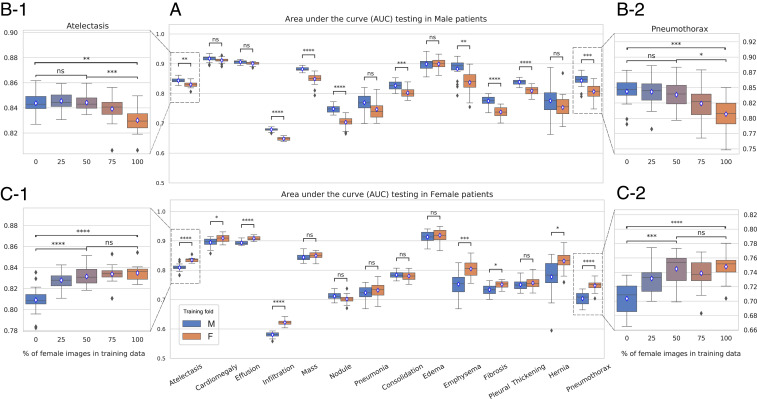
“( B and C ) AUC achieved for two exemplar diseases under a gradient of gender imbalance ratios, from 0% of female images in training data to 100%, with increments of 25%.”
MethodInfluentialProceedings of IEEE Conference on Computer Vision and Pattern Recognition
(1993) · doi:10.1109/cvpr.1993 · Cited by 17,667
A survey on deep learning in medical image analysis
Litjens, G., Kooi, T., Bejnordi, B. E., Setio, A. A. A., Ciompi, F., Ghafoorian, M., van der Laak, J. A. W. M., van Ginneken, B., & Sánchez, C. I. (2017) · Medical Image Analysis · doi:10.1016/j.media.2017.07.005 · Cited by 15,332 · cited 1×
“AI systems cannot only augment the information provided by such images with useful annotations (1, 2), but they are also starting to take autonomous decisions by performing computer-aided diagnosis (CAD) (3, 4).”
BackgroundDermatologist-level classification of skin cancer with deep neural networks
Esteva, A., Kuprel, B., Novoa, R. A., Ko, J., Swetter, S. M., Blau, H. M., & Thrun, S. (2017) · Nature · doi:10.1038/nature21056 · Cited by 14,362 · cited 9×
“Given a frontal X-ray image, the CAD system predicts the presence or absence of the 14 thoracic diseases.”
BackgroundInfluentialWang, X., Peng, Y., Lu, L., Lu, Z., Bagheri, M., & Summers, R. M. (2017) · 2017 IEEE Conference on Computer Vision and Pattern Recognition (CVPR) · doi:10.1109/cvpr.2017.369 · Cited by 4,616 · cited 4×
“We use the NIH Chest-XRay14 dataset (16, 19), which includes 112,120 chest X-ray images from 30,805 patients, labeled with 14 common thorax diseases (including hernia, pneumonia, fibrosis, emphysema, edema, cardiomegaly, pleural thickening, consolidation, mass, pneumothorax, nodule, atelectasis, effusion, and infiltra…”
MethodInfluential
Cited by
Items 801–898 of 898
Thavanesan, N. (2026) · ePrints Soton (University of Southampton) · doi:10.5258/soton/pg/t246
Autodidactic dense anatomical models
Taher, M. R. H., Gotway, M. B., & Liang, J. (2026) · Medical Image Analysis · doi:10.1016/j.media.2026.104117
Intersectional Disentangling of Temporal and Acquisition Bias in Fetal UltrasoundPreprint
Elgebaly, A., Fournel, J., Jurgensen, B. L. J., Mikolaj, K. W., Christensen, A., Tolsgaard, M. G., Ladefoged, C. N., & Feragen, A. (2026) · arXiv (Cornell University) · doi:10.48550/arxiv.2605.02942
“It is very common for fairness work in medical imaging to explain sub-group performance gaps through data representation : groups under-represented at training are predicted less accurately [13, 21, 20, 16, 17], and dataset balance is often highlighted as a mitigation strategy.”
Saad, F. F. A., & Bashara, D. M. (2026) · JOURNAL OF MEDICAL AND HEALTH SCIENCE · doi:10.21070/anamnetic.v4i1.1655
“AI is very useful in such an immunotherapy setup where it works to distinguish "Pseudo-progression" and the real disease progression, stopping timely withdrawal of life-saving drugs [55, 56].”
Generative AI for CSF multi-omics: Learning strategies for small-cohort classification
Wuyart, A., & Millot, J. (2026) · Neuroscience Informatics · doi:10.1016/j.neuri.2026.100278
Gender Perspective in Bioethics: Toward an Integral Reflection
Sánchez, J. H., & López, F. D. B. (2026) · New paradigms in healthcare · doi:10.1007/978-3-032-25294-4_1
Mota, A., Ramos, R. P., Almeida, B., Souza, I. D., Nicácio, J. M., Pereira, V., Carvalho, T., Maduro, P. A., Schwingel, P., Souza, C., et al. (2026) · Research Square · doi:10.21203/rs.3.rs-9815931/v1
Effect of Demographic Bias on Skin Lesion Classification
Raumanns, R., Schouten, G., Cheplygina, V., & Pluim, J. P. W. (2026) · The Journal of Machine Learning for Biomedical Imaging · doi:10.59275/j.melba.2026-4156
Hsieh, P. N., Agrawal, P., Alok, A., Kumar, S., Ramanathan, C., Murthy, V. L., Varma, N., Nagarajan, V., Ambrosy, A. P., Ramsis, M., et al. (2026) · European Heart Journal - Digital Health · doi:10.1093/ehjdh/ztag080
Vargas, E. T. P., & Alejandra, L. P. J. (2026) · Institutional Repository of the National University Open and Distance UNAD (Universidad Nacional Abierta y a Distancia)
Waghmare, S. R. (2025) · TRAP@NCI (National College of Ireland)
Navarro, I. D., Flores, G. J. A., Altamirano-Robles, L., Díaz-Hernández, R., & Martinez, S. Z. (2026) · Lecture notes in computer science · doi:10.1007/978-3-032-28393-1_13
Rollán‐Martínez‐Herrera, M. (2026) · Communities in ADDI (University of the Basque Country)
Chung, Y. (2026) · International Journal of Therapy and Rehabilitation · doi:10.12968/ijtr.2025.0131
Bincoletto, G., Caso, R., & Guarda, P. (2026) · E-LIS Repository (University of Naples Federico II) · doi:10.5281/zenodo.20918605
Encoding Versus Linear Use of Patient Characteristics in Chest X-Ray Foundation Models on MIMIC-CXR
Kim, Y. I., Kim, Y., Nam, Y., Kim, N., & Hong, P. (2026) · Diagnostics · doi:10.3390/diagnostics16132030
“The prevailing pipeline in medical-AI fairness research links encoding of a patient attribute to biased finding prediction to subgroup performance gaps, and motivates debias-ing interventions at the encoding stage [1–3, 7, 29, 30 ].”
Sex Differences in the Detection of Parkinson’s Disease from Speech
Akhaddar, H. (2025) · Spectrum Research Repository (Concordia University)
Hermanto (2026) · Ultimatics Jurnal Teknik Informatika · doi:10.31937/ti.v18i1.4469
Fairness in federated medical imaging: a systematic review through the dual fairness lens
Yu, P., Dong, Z., Dhelim, S., Feng, C.-M., & Kechadi, T. (2026) · Artificial Intelligence Review · doi:10.1007/s10462-026-11632-4
CIPHER: Causal Intervention Pathways for Healthcare Equity and Robustness
Jia, X., Guo, W., Zhao, W., Guo, Y., Li, Z., & Wang, Y. (2026) · Lecture notes in computer science · doi:10.1007/978-3-032-38079-1_8
Haupt, M., Bischoff, A., Atoubi, M., Thomas, R. P., & Maurer, M. H. (2026) · Diagnostics · doi:10.3390/diagnostics16132131
“These findings suggest that subgroup disparities may manifest selectively in threshold-dependent behavior rather than uniformly across all performance measures [15,16].”
Pitfalls of Administrative Censoring in Survival Models with Time-Indexed InputsPreprint
Xu, Y., Dai, H., Fernandez‐Granda, C., Geras, K. J., & Shen, Y. (2026) · arXiv (Cornell University) · doi:10.48550/arxiv.2607.10466
“In medical imaging, such shortcuts have been linked to institution-and acquisition-specific artifacts, demographic imbalance, and patient or healthcare-process variables embedded in the image data [32, 2, 13, 5, 20, 10].”
Test-fairness deep learning with influence score
Wu, J. C., Shih, C.-Y., Wu, N.-C., Chen, W.-W., Lu, H. H., & Lo, S. (2026) · PLOS Digital Health · doi:10.1371/journal.pdig.0001513
“In medical imaging, dataset imbalance and subgroup under-representation have been repeatedly shown to yield biased predictive behavior, motivating data-centric balancing strategies as a practical mitigation option [7].”
InfluentialIazzetta, F. (2026) · IGI Global eBooks · doi:10.4018/979-8-2600-3043-1.ch003
Cardona, S. S. C. (2026) · Institutional Repository of the National University Open and Distance UNAD (Universidad Nacional Abierta y a Distancia)
Erbay, H., & Baysal, Z. (2026) · Journal of Bioethical Inquiry · doi:10.1007/s11673-026-10593-1
Wei, J. (2026) · Scientific Journal of Technology · doi:10.54691/85dt0r63
Medical foundation models converge less under label supervisionPreprint
Arasteh, S. T., Ziegelmayer, S., Lotfinia, M., Adams, L. C., Nebelung, S., Kather, J. N., & Truhn, D. (2026) · arXiv (Cornell University) · doi:10.48550/arxiv.2607.20274
Assessing Utility-Leakage Trade-offs in Coreset Selection for Chest X-Ray Embeddings
Marzullo, A., Cajas, S. A., Celi, L. A., & Momi, E. D. (2026) · ACM International Conference on Bioinformatics, Computational Biology, and Health Informatics (ACM-BCB) · doi:10.1145/3807503.3819381
“Prior work has documented demographic leakage in biomedical AI [7, 14, 23], but systematic evidence on how coreset selection shapes clinical utility, sensitive attribute predictability, and formal fairness remains limited for fixed foundation-model embeddings.”
Learning Normative Anatomy under Limited Supervision
Müller, J. P. (2026) · doi:10.25593/open-fau-3304
Farias, L. G. M., Siqueira, A. C. C., Santos, K. F. A. D., Cássio, Z. I. N. I., & Linder, T. E. (2026) · BioSCIENCE · doi:10.55684/2026.84.en.e00019
Understanding the Ethics of Generative AI: A Developer’s Guide
Gaur, L. (2026) · Chapman & Hall/CRC eBooks · doi:10.1201/9781003679974
Ojukwu, G., Mamah, C. J., Okwu, S., Oladimeji, A. O., Balogun, I. O., & Odok, O. M. (2026) · Cureus · doi:10.7759/cureus.114001
“For example, Larrazabal AJ et al. [17], Duffy G et al. [8], and Banerjee I et al. [14] indicated that AI systems can learn spurious associations involving demographic characteristics, including race and ethnicity, when imaging datasets are imbalanced or contain unrecognized confounders.”
Perspectives of Healthcare Professionals on Using AI and Algorithmic Bias
Xu, J., & Babaian, T. (2026) · Communications in computer and information science · doi:10.1007/978-3-032-34459-5_1
Quantifying generalization error in machine learning prediction of cognitive decline
Hüppi, R. M., Langer, N., & Vieira, B. H. (2026) · The Journal of Prevention of Alzheimer s Disease · doi:10.1016/j.tjpad.2026.100646
Mudrik, A., Dodge, A., Galindo, A. M., Nadkarni, G. N., Soffer, S., & Klang, E. (2026) · Journal of Imaging Informatics in Medicine · doi:10.1007/s10278-026-02173-x
Liu, Y., Liu, Y., Zhao, Y., Luo, Y., & Hao, X. (2026) · Frontiers in Endocrinology · doi:10.3389/fendo.2026.1893963
The Gender Data Gap in Medical AI: Causes, Consequences, and Building Inclusive Solutions
Taleghani, S., & Dolatabadi, E. (2026) · Springer eBooks · doi:10.1007/978-3-032-22368-5_4
Patil, H. V. (2025) · NORMA
Let Me Check on You: Worker Well-Being Under AI and Human Health and Safety Monitoring
Nikolova, M. (2026) · Journal of Wellbeing Economics · doi:10.1177/29782244261475886
Applied Machine Learning in Epidemiology: Feature Selection, Benchmarks, and Software
Burk, L. (2026) · Media (https://www.suub.uni-bremen.de/) · doi:10.26092/elib/6360
Djoumessi, K., & Berens, P. (2026) · arXiv (Cornell University) · doi:10.48550/arxiv.2608.18759
“Existing fairness studies primarily evaluate sub-group disparities using predictive metrics such as sensitivity, specificity, and area under the receiver operating characteristic curve (AUC) [15,17].”
Prity, J. A. (2026) · Research Square · doi:10.21203/rs.3.rs-10787425/v1
Ng'ang'a, E., Koech, A. C., Waga, E., Kanini, L., Oregeh, E., Wanyonyi, S., Temmerman, M., Lekadir, K., & Maixenchs, M. (2026) · Research Square · doi:10.21203/rs.3.rs-10801082/v1
Metadata-Aware Adaptation of a Generative Foundation Model for Conditional CMR SynthesisPreprint
Rodríguez, M., Skorupko, G., Aung, N., Petersen, S. E., Lekadir, K., & Gkontra, P. (2026) · arXiv (Cornell University) · doi:10.48550/arxiv.2608.24342
“Nonethe-less, privacy restrictions, the high cost of expert annotation, and the inherent scarcity of certain patient populations and disease phenotypes result in limited and imbalanced datasets [5], [6], [7].”
Singh, D. B., Dangi, Y., & Pokharel, B. P. (2026) · Health Science Reports · doi:10.1002/hsr2.73117
“A machine learning model trained predominantly on male patients may introduce bias against female patients [35].”
FRAME: Separating sampling variation from performance disparities in medical image analysisPreprint
Lotfinia, M., Truhn, D., Maier, A., & Arasteh, S. T. (2026) · arXiv (Cornell University) · doi:10.48550/arxiv.2608.25981
“Training on a sex-imbalanced dataset lowered performance for the underrepresented sex [4].”
Auditable CT Phenotyping Through Report-derived Radiological ObservationsPreprint
Wu, R., Witschey, W. R., Li, Y., Ordonez, F. B., Bressem, K. K., Adams, L. C., Weissman, G. E., Shen, L., Davatzikos, C. A., Barbosa, E., et al. (2026) · arXiv (Cornell University) · doi:10.48550/arxiv.2608.25948 · Cited by 2
Jahan, I., Ahmed, T., Antor, M. S. U. M., Hridoy, H. R., Podder, N. K., & Khan, I. (2026) · International Conference on Power, Electronics, Communications, Computing, and Intelligent Infrastructure (PECCII) · doi:10.1109/peccii70991.2026.11661962
“Representation imbalance, confounding, or incidental shortcuts acquired in training may cause performance differences between genders or age groups [4].”
Systematic assessment of data-level bias and its impact on machine learning classifiers
Rodrigues, D. D. (2026) · Lume (Universidade Federal do Rio Grande do Sul)
Khan, I. I., Shah, S. A. H., Tsipourakis, A., Malavolta, M., Aleesha, A., Shah, S. B. H., Hajiani, M., Buccoliero, A., Panagiotopoulos, K., Shah, S. T. H., et al. (2026) · Frontiers in Imaging · doi:10.3389/fimag.2026.1910013
Peiyu, D., Wang, Y., Chenxi, B., Rui, Z., & Ke, L. (2026) · Journal of Image and Graphics · doi:10.11834/jig.260326
Mahbub, M. M., Mydin, R. B. S. M. N., & Saravanan, C. (2026) · Integrative Biomedical Research · doi:10.25163/biomedical.10110898
State-of-the-art artificial intelligence frameworks and models for diagnostic veterinary anatomy
Sahu, S. K., & Mishra, U. K. (2026) · Annals of Anatomy - Anatomischer Anzeiger · doi:10.1016/j.aanat.2026.153377
Intra-class interaction-based co-correcting dual-branch framework for fair skin lesion analysis
Pundhir, A., Raman, B., & Singh, P. P. (2026) · Neurocomputing · doi:10.1016/j.neucom.2026.135116
Purkayastha, S., Naliyatthaliyazchayil, P., & Gichoya, J. W. (2026) · Research Square · doi:10.21203/rs.3.rs-10919324/v1
Artificial Intelligence: Promises, Pitfalls, and Ethical Considerations
Aung, N., Roney, C. H., Leslie, D., Slabaugh, G., & Petersen, S. E. (2026) · Elsevier eBooks · doi:10.1016/b978-0-443-12497-6.00009-9
Szlachta-Gubernat, M., Baran, N., Bajkowska-Piterak, M., Buż, A., Piterak, P., Danilczuk, D., Adamiec, W., Buszko, J., & Dyś, M. (2026) · International Journal of Innovative Technologies in Social Science · doi:10.31435/ijitss.3(51).2026.6149
Physician involvement and research quality in chest X-ray foundation models
Latheef, A. A. P., Phillips, V. J., Kulkarni, A., Park, C., Mukherjee, P., & Yi, P. H. (2026) · npj Digital Medicine · doi:10.1038/s41746-026-03205-0
Aldelemy, A., Al-Dulaimi, A., Siaw, P. O., Adjei, E., Ali, N. T., Walukiewicz, I., Twigg, P. C., & Abd‐Alhameed, R. A. (2026) · IEEE Access · doi:10.1109/access.2026.3736642
“Medical AI can encode demographic shortcuts and produce subgroup-dependent errors even when aggregate performance is strong [36], [37], [38].”
A Data-Interventional Framework for Auditing Privacy and Fairness in Generative Medical Imaging
Dombrowski, M., & Kainz, B. (2026) · The Journal of Machine Learning for Biomedical Imaging · doi:10.59275/j.melba.2026-92a6
AEGIS: Anatomy-Embedded Group-Invariant Segmentation for Fair Medical Foundation Models
Wang, S., Zhan, Z., Xing, Z., Zhang, M., Jiang, C. M., Wang, Z., Zhang, R., Duan, X., & Zhao, W. (2026) · Lecture notes in computer science · doi:10.1007/978-3-032-38062-3_3
Barman, J., Singh, V. K., Yusuf, M., Gandhi, T. K., Jayadeva, & Kumar, S. (2026) · Lecture notes in computer science · doi:10.1007/978-3-032-38069-2_16
Laurent, S., Dubois, P., Lefevre, M. A., & Moreau, C. (2026) · Journal of Health Informatics and Digital Systems · doi:10.68159/g088779265
Nakayama, L. F., Ribeiro, L. Z., Ferraz, D., & Regatieri, C. S. (2026) · Springer eBooks · doi:10.1007/978-3-032-23052-2_16
Explainable Student Depression Prediction: Gender-Stratified SHAP and Counterfactual Interventions
Windasari, I. P., & Eridani, D. (2026) · IEEE Region 10 Symposium (TENSYMP) · doi:10.1109/tensymp68909.2026.11704018
“…shown that subgroup-specific model performance and explanation reliability deteriorate systematically when subgroup sizes are small or imbalanced [21], [22], and with only 43 female observations in the test set, the gender-stratified SHAP results reported here should be treated as exploratory…”
Tian, T., Zhang, S., Yang, X., & Shi, R. (2026) · Frontiers in Medicine · doi:10.3389/fmed.2026.1947584
Artificial Intelligence in Neuroradiology: Transforming Diagnosis, Prognostication, and Workflow
Ghosh, T. (2026) · Indian journal of radiology and imaging - new series/Indian journal of radiology and imaging/Indian Journal of Radiology & Imaging · doi:10.1055/s-0046-1829088
Unlocking Neonatal Care: Innovative Technology’s Promise in Low-to-Middle Income Countries
Yujie, D. Y. (2025) · Trinity Student Medical Journal
Multi-Task Learning for Alzheimer's Disease Progression: Biomarker Assessment and Temporal Modelling
Wang, X. (2026) · White Rose eTheses Online (University of Leeds, The University of Sheffield, University of York)
Role of artificial intelligence in pharmacovigillance
Talluri, P. (2025) · Journal of Integral Sciences
Alharthi, M. J. A. (2024) · Review of Contemporary Philosophy
Chaisiwamongkol, R., Tewattanarat, N., Thawande, W., Chaisiwamongkol, W., Poonpol, C., Pansukrada, C., Paisarnsrisomsuk, S., Hanpinitsak, P., Tangprasert, K., & Wiratchotisatian, P. (2026) · Thammasat University Hospital Journal Online
Patel, K., Beedala, P., Vora, D., & Mehta, H. (2026) · medRxiv · doi:10.64898/2026.10.03.26364646
Sex-based diagnostic bias in AI symptom checkers: a structured, exploratory audit of three platforms
Khan, S., & Paasche‐Orlow, M. K. (2026) · Frontiers in Digital Health · doi:10.3389/fdgth.2026.1950777
Assessing the Reliability of Image Quality Metrics and Mitigating Quality Bias in Generative Models
Jung, H., Lu, S., De, W., & Wang, X. (2026) · 2026 IEEE/CVF Conference on Computer Vision and Pattern Recognition- FINDINGS Track (CVPRF) · doi:10.1109/cvprf71909.2026.00764
“We empirically demonstrate that discrepancies in image generation quality can adversely affect real-world applications, e.g. medical imaging [24], particularly in classification performance and fairness [42] in Appendix E.3.”
Critically Examining Emerging Issues in Community-Based Research: Challenges and Opportunities
Harsono, I., Azizah, A., & Aziz, N. H. (2024) · Journal Ligundi of Community Service
Rigal, L., REVOL, C., BACQUEYRISSES, T., Panjo, H., ASHRAF, U., & Perney, J.-B. (2026) · Research Square · doi:10.21203/rs.3.rs-10849632/v1
Mitigating Domain Shift and Dataset Bias in Deep Learning Models for Cancer Diagnostics
Ameyaw, S. A., & Ameyaw, J. A. (2026) · Journal of Imaging Informatics in Medicine · doi:10.1007/s10278-026-02353-9
Ashraf, S., TEHSEEN, R., & ASHRAF, H. (2026) · Applied Medical Informatics (University of Medicine and Pharmacy Cluj-Napoca)
Which Infrastructure Can I Use To Share Human Neuroimaging DataPreprint
Lefort‐Besnard, J., Pron, A., Clement, P., Barker, G. J., Erez, Y., Fernández‐Seara, M. A., Feyzioğlu, S. B., Hartman, S., Iglesias‐Rey, R., Keil, V., et al. (2025) · Repository@Nottingham (University of Nottingham)
Karlsson, J. (2026) · Lund University Publications (Lund University)
Kalousios, C., Kobayashi, K., Ghiara, V., & Inakoshi, H. (2026) · International Joint Conference on Neural Networks (IJCNN) · doi:10.1109/ijcnn69854.2026.11729986
“Reducing the risk of bias by making the datasets more gender-balanced not only improves fairness, but also allows the algorithms to perform better for both males and females [9].”
Humanity in the loop: Reframing artificial intelligence and the global medical imaging divide
Currie, J. J., Nelson, T., Mousa, D. A., Nabasenja, C., Hewis, J., Al-Hayek, Y., & Currie, G. M. (2026) · Radiography · doi:10.1016/j.radi.2026.103604
Revealing Hidden Failure Modes in Chest X-ray Classification via Spectral Domain AnalysisPreprint
Halimi, S., Themyr, L., & Abreu, A. (2026) · arXiv (Cornell University) · doi:10.48550/arxiv.2610.29830 · Cited by 2
“To identify systematic failures, the standard approach for medical applications consists in slicing validation data by categorical attributes (Seyyed-Kalantari et al., 2020; Larrazabal et al., 2020; Ahluwalia et al., 2023).”
Noriko, M. A. E., Mine, Y., Ito, S., Yoshimi, Y., Tokinaga, R., OKAZAKI, S., Ogawa, S., TAKEDA, S., Peng, T., Kakimoto, N., et al. (2026) · Dental Materials Journal · doi:10.4012/dmj.2026-078
Bridging the Data Gap: Source-Informed Task-Space Transport for Few-Shot DiffusionPreprint
Jiang, J., Peng, J., Deen, R., Cao, Y., Liu, Z., Haleem, M. S., & Mguni, D. (2026) · arXiv (Cornell University) · doi:10.48550/arxiv.2610.31323
“Uneven population and institutional coverage can induce subgroup degradation in medical imaging (Larrazabal et al., 2020; Seyyed-Kalantari et al., 2021; Daneshjou et al., 2022), while dataset audits document substantial gaps in demographic coverage and reporting (Daneshjou et al., 2021; Wen et al.,…”
Haider, A., Ullah, I., Hakeem, S., & Ali, K. (2026) · Pakistan Journal of Medical & Cardiological Review · doi:10.66021/pakmcr1834
Detection and Validation of Hidden Subgroup Disparities in Clinical AIPreprint
Bissoto, A. E., Hoang, T.-D., Flühmann, T., Weng, N., Sun, S., Baumgartner, C. F., & Koch, L. M. (2026) · arXiv (Cornell University) · doi:10.48550/arxiv.2610.32362
“Chest X-rays model’s performances, for example, were shown to depend on biological sex [8, 9], support devices such as tracheotomy tubes and chest drains [10, 11], artifacts (e.g., laterality markers, high-light arrows) [12], and projection views [12] (anterior-posterior (AP) and posterior-anterior…”
A[I] see. A[I] reason. A[I] act. What is left for the physiotherapist?
Liew, B. X. W., Black, C. R. M., & Falla, D. (2026) · Musculoskeletal Science and Practice · doi:10.1016/j.msksp.2026.103677
Franco, G. S., Mahlow, F. R. P., Cardoso, E. F., Bittencourt, J. A. S., & Fanchini, F. F. (2026) · arXiv (Cornell University) · doi:10.48550/arxiv.2610.37819
“…medical AI systems may exhibit unequal behaviour across demographic and clinically relevant subgroups, including differences associated with age, sex, ethnicity, and skin tone [4, 5], mirroring broader evidence that AI systems can reproduce and amplify gender and ethnic stereotypes [6].”
Ullah, M. S., Akter, S., & Khan, S. S. (2026) · Research Square · doi:10.21203/rs.3.rs-11445762/v1
Kumar, I. E., & Rose, S. (2026) · arXiv (Cornell University) · doi:10.48550/arxiv.2611.15618
Lee, Y.-T., Lin, C.-S., Fang, W.-H., Lee, C.-C., Ho, C.-L., Wang, C.-H., Tsai, D.-J., & Lin, C. (2022) · doi:10.3389/fcvm.2022.895201.s001
Klein, A., Puldon, K., Dilchert, S., Hartogensis, W., Chowdhary, A., Anglo, C., Pandya, L. S., Hecht, F. M., Mason, A. E., & Smarr, B. L. (2022) · doi:10.3389/fdata.2022.1043704.s001
Supporting information 2 of Ethics of AI in Radiology: A Review of Ethical and Societal Implications
Goisauf, M., & Abadía, M. C. (2022) · doi:10.3389/fdata.2022.850383.s002
Puyol-Antón, E., Ruijsink, B., Harana, J. M., Piechnik, S. K., Neubauer, S., Petersen, S. E., Razavi, R., Chowienczyk, P., & King, A. P. (2022) · doi:10.3389/fcvm.2022.859310.s001
Metadata
- Authors
- Larrazabal, A. J., Nieto, N., Peterson, V., Milone, D. H., & Ferrante, E.
- Affiliations
- Consejo Nacional de Investigaciones Científicas y Técnicas (AR)
- Corresponding author
- Ferrante, Enzo
- Venue
- Proceedings of the National Academy of Sciences
- Publisher
- National Academy of Sciences
- Published
- 2020-05-26
- Volume
- 117
- Issue
- 23
- Pages
- 12592-12594
- ISSN
- 0027-8424 (ISSN-L)
- 1091-6490
- PMC
- PMC7293650
- OpenAlex
- W3030030520
- Cited by
- 685
- References
- 36
- Citations by year
- 2026: 117 · 2025: 149 · 2024: 125 · 2023: 110 · 2022: 101 · 2021: 71 · 2020: 10
- FWCI
- 21.48
- Type
- journal article
- Language
- en
- Open access
- hybrid
- doi.org
- Licence
- Locations
- Proceedings of the National Academy of Sciences (publishedVersion, cc-by)
- PubMed Central (publishedVersion, cc-by)
- PubMed (publishedVersion)
- LA Referencia (Red Federada de Repositorios Institucionales de Publicaciones Científicas) (submittedVersion, cc-by-nc-sa)
- Funders
- AXA Research Fund (2017-AXA-PDOC1-097)
- MINCyT | Agencia Nacional de Promoción Científica y Tecnológica (PICT 2017-4596, PICT-2018-03907, PICT 2014-2627, PICT-2018-3384)
- Universidad Nacional del Litoral (CAID-PIC-50220140100084L, 2016-082)
- Topics
- Health Sciences › Medicine › Health Informatics › Artificial Intelligence in Healthcare and Education
- Physical Sciences › Computer Science › Artificial Intelligence › Ethics and Social Impacts of AI
- Health Sciences › Medicine › Public Health, Environmental and Occupational Health › Sex and Gender in Healthcare
- Keywords
- gender imbalance, medical imaging datasets, algorithmic fairness, computer-aided diagnosis, X-ray images, thoracic disease diagnosis, deep neural network, underrepresented groups, dataset collection
- MeSH terms
- Deep Learning, Female, Humans, Male, Radiographic Image Interpretation, Computer-Assisted, Reference Standards, Sex Factors, Radiography, Thoracic, Bias, Datasets as Topic
About these checks
Registry, retraction, Cites and statistics results are computed, not judged, with one exception: a printed reference that no index lists is read once by a model before it counts as a citation error. Claims are extracted by a model and kept only when their quote appears verbatim in the text; each cited source is then checked, with a model’s help, for whether it says what the claim relies on. Those verdicts can be wrong — read the claim’s quote and the cited source before relying on one.
Statistics and arithmetic are recomputed, not judged.
Confidence bands are shown only for fields calibrated on our annotated test set. None is calibrated yet, so no band is shown.
What counts as a claim ›How we measure confidence ›How we check this ›
Are you an author, or do you see a problem with this page? Request a review
Data sources
Bibliographic data: Semantic Scholar, OpenAlex, Crossref.
Contains information from the Semantic Scholar Academic Graph Datasets, made available under the ODC Attribution License (ODC-BY 1.0).
Semantic Scholar’s data is described in: Kinney, R., et al. (2023). The Semantic Scholar Open Data Platform. arXiv:2301.10140.
