

Gender imbalance in medical imaging datasets produces biased classifiers for computer-aided diagnosis
Open accessThe DOI matches its Crossref record; 36 of the 36 references it cites were found in a registry or an index.
Abstract
Artificial intelligence (AI) systems for computer-aided diagnosis and image-based screening are being adopted worldwide by medical institutions. In such a context, generating fair and unbiased classifiers becomes of paramount importance. The research community of medical image computing is making great efforts in developing more accurate algorithms to assist medical doctors in the difficult task of disease diagnosis. However, little attention is paid to the way databases are collected and how this may influence the performance of AI systems. Our study sheds light on the importance of gender balance in medical imaging datasets used to train AI systems for computer-assisted diagnosis. We provide empirical evidence supported by a large-scale study, based on three deep neural network architectures and two well-known publicly available X-ray image datasets used to diagnose various thoracic diseases under different gender imbalance conditions. We found a consistent decrease in performance for underrepresented genders when a minimum balance is not fulfilled. This raises the alarm for national agencies in charge of regulating and approving computer-assisted diagnosis systems, which should include explicit gender balance and diversity recommendations. We also establish an open problem for the academic medical image computing community which needs to be addressed by novel algorithms endowed with robustness to gender imbalance.
Overview
The claims and statistics of this paper haven’t been checked yet.
Free: it reads the open-access text and checks the first 5 claims that cite a source we can check. Create a free account to check every claim.
Integrity signals
Registry
Cites
Statistics
Figures
Verification
Claims the paper makes
The claims and statistics of this paper haven’t been checked yet.
Free: it reads the open-access text and checks the first 5 claims that cite a source we can check. Create a free account to check every claim.
Claims other papers make about this one
Each is checked against this paper’s own text: does it say what the citing paper says it does?
The source backs part of the claim, not all of it — or backs it for a different population, condition or comparison.
In the citing paper
“The choice of these subgroups is motivated by the clear history, in both traditional medicine and AI algorithms, of bias for subgroups on these axes 6,8,10,11 .”
From Underdiagnosis bias of artificial intelligence algorithms applied to chest radiographs in under-served patient populations (2021) · cites this paper as [6]
Experimental — accuracy not yet measuredThe source backs part of the claim, not all of it — or backs it for a different population, condition or comparison.
In the citing paper
“For example, if a dataset predominantly consists of images from a particular racial or ethnic group, the AI model trained on this dataset may exhibit reduced accuracy when applied to individuals from other groups.”
From Bias in artificial intelligence for medical imaging: fundamentals, detection, avoidance, mitigation, challenges, ethics, and prospects (2024) · cites this paper as [24]
Experimental — accuracy not yet measuredIn the citing paper
“Similar issues arise with gender, age, and socio-economic status, where AI systems may perform better for the demographic groups that are overrepresented in the training data (Figure 4).24”
From Bias in artificial intelligence for medical imaging: fundamentals, detection, avoidance, mitigation, challenges, ethics, and prospects (2024) · cites this paper as [24]
Self-check
Percentages, sums and reported differences re-computed from the paper’s own numbers.
The self-check needs the paper’s full text.
Citations
Cites
Deep Residual Learning for Image Recognition
He, K., Zhang, X., Ren, S., & Sun, J. (2016) · 2016 IEEE Conference on Computer Vision and Pattern Recognition (CVPR) · doi:10.1109/cvpr.2016.90 · Cited by 235,474 · cited 2×
“Additionally, we evaluated two other CNN architectures, the ResNet (33) and the Inception-v3 (34), confirming that our observations generalize for different neural models.”
MethodLeCun, Y., Bengio, Y., & Hinton, G. (2015) · Nature · doi:10.1038/nature14539 · Cited by 84,126
ImageNet: A large-scale hierarchical image database
Deng, J., Dong, W., Socher, R., Li, L.-J., Li, K., & Fei-Fei, L. (2009) · 2009 IEEE Conference on Computer Vision and Pattern Recognition · doi:10.1109/cvpr.2009.5206848 · Cited by 65,333 · cited 1×
“A model pretrained on ImageNet (32) was used to initialize the network weights.”
MethodDensely Connected Convolutional Networks
Huang, G., Liu, Z., Van Der Maaten, L., & Weinberger, K. Q. (2017) · 2017 IEEE Conference on Computer Vision and Pattern Recognition (CVPR) · doi:10.1109/cvpr.2017.243 · Cited by 48,566
Rethinking the Inception Architecture for Computer Vision
Szegedy, C., Vanhoucke, V., Ioffe, S., Shlens, J., & Wojna, Z. (2016) · 2016 IEEE Conference on Computer Vision and Pattern Recognition (CVPR) · doi:10.1109/cvpr.2016.308 · Cited by 32,138
An introduction to ROC analysis
Fawcett, T. (2006) · Pattern Recognition Letters · doi:10.1016/j.patrec.2005.10.010 · Cited by 21,879 · cited 4×
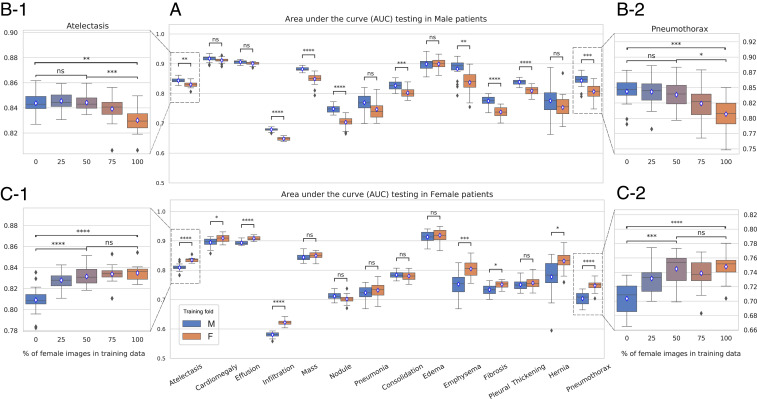
“( B and C ) AUC achieved for two exemplar diseases under a gradient of gender imbalance ratios, from 0% of female images in training data to 100%, with increments of 25%.”
MethodInfluentialProceedings of IEEE Conference on Computer Vision and Pattern Recognition
(1993) · doi:10.1109/cvpr.1993 · Cited by 17,667
A survey on deep learning in medical image analysis
Litjens, G., Kooi, T., Bejnordi, B. E., Setio, A. A. A., Ciompi, F., Ghafoorian, M., van der Laak, J. A. W. M., van Ginneken, B., & Sánchez, C. I. (2017) · Medical Image Analysis · doi:10.1016/j.media.2017.07.005 · Cited by 15,332 · cited 1×
“AI systems cannot only augment the information provided by such images with useful annotations (1, 2), but they are also starting to take autonomous decisions by performing computer-aided diagnosis (CAD) (3, 4).”
BackgroundDermatologist-level classification of skin cancer with deep neural networks
Esteva, A., Kuprel, B., Novoa, R. A., Ko, J., Swetter, S. M., Blau, H. M., & Thrun, S. (2017) · Nature · doi:10.1038/nature21056 · Cited by 14,362 · cited 9×
“Given a frontal X-ray image, the CAD system predicts the presence or absence of the 14 thoracic diseases.”
BackgroundInfluentialWang, X., Peng, Y., Lu, L., Lu, Z., Bagheri, M., & Summers, R. M. (2017) · 2017 IEEE Conference on Computer Vision and Pattern Recognition (CVPR) · doi:10.1109/cvpr.2017.369 · Cited by 4,616 · cited 4×
“We use the NIH Chest-XRay14 dataset (16, 19), which includes 112,120 chest X-ray images from 30,805 patients, labeled with 14 common thorax diseases (including hernia, pneumonia, fibrosis, emphysema, edema, cardiomegaly, pleural thickening, consolidation, mass, pneumothorax, nodule, atelectasis, effusion, and infiltra…”
MethodInfluential
Cited by
Items 401–500 of 898
From Lab to Clinic: Addressing Bias and Generalizability in AI Diagnostic Systems
Oyeniyi, J. G. (2025) · World Journal of Advanced Research and Reviews · doi:10.30574/wjarr.2025.28.3.4249 · Cited by 6
Labeling Copilot: A Deep Research Agent for Automated Data Curation in Computer Vision
Ganguly, D., Kumar, S., Balappanawar, I. B., Chen, W., Kambhatla, S., Iyengar, S., Kalyanaraman, S., Kumaraguru, P., & Chaudhary, V. (2025) · IEEE International Conference on Big Data (BigData) · doi:10.1109/bigdata66926.2025.11401579 · Cited by 6
“Sec-ondly, real-world applications demand robustness to rare events (e.g., adverse weather, unusual object poses) [15], [16], which are inherently absent or underrepresented in training sets—a problem especially acute in data-scarce domains like medical imaging [17] or industrial inspection [18].”
Algorithmic Status Inequality: An Integrative Perspective on AI‐Driven Social Stratification
Wu, J. (2026) · Journal of Management Studies · doi:10.1111/joms.70134 · Cited by 6
MIME: Minority Inclusion for Majority Group Enhancement of AI Performance
Chari, P., Ba, Y., Athreya, S., & Kadambi, A. (2022) · Lecture notes in computer science · doi:10.1007/978-3-031-19778-9_19 · Cited by 6
Garzon-Siatoya, W. T., Morales-Lara, A. C., & Adedinsewo, D. A. (2023) · Cardiovascular Innovations and Applications · doi:10.15212/cvia.2023.0024 · Cited by 6
Guan, Y., Ma, H., Liu, J., Xu, L., Zhang, Y., & Tian, L. (2023) · Brain Imaging and Behavior · doi:10.1007/s11682-023-00785-3 · Cited by 6
“Secondly, age, gender and race have each been reported to exert essential influence upon machine learning models (Greene et al., 2022; Larrazabal et al., 2020; Wang et al., 2023), while they were not considered in IQ predictions in this study.”
Pruski, M. (2024) · Journal of Medical Ethics · doi:10.1136/jme-2023-109675 · Cited by 6
Schweikhard, F. P., Kosanke, A., Lange, S., Kromrey, M., Mankertz, F., Gamain, J., Kirsch, M., Rosenberg, B., & Hosten, N. (2024) · Healthcare · doi:10.3390/healthcare12070706 · Cited by 6
Dataset Distribution Impacts Model Fairness: Single Vs. Multi-task Learning
Raumanns, R., Schouten, G., Pluim, J. P. W., & Cheplygina, V. (2024) · Lecture notes in computer science · doi:10.1007/978-3-031-72787-0_2 · Cited by 6
“Significance per Mann–Whitney U test (as used in [22]) is denoted by **** ( P ≤ 0 .”
BackgroundMethodAI bias in lung cancer radiotherapy
Ding, K., Forbes, S., Ma, F., Luo, G., Zhou, J., & Qi, Y. (2024) · Exploration of Digital Health Technologies · doi:10.37349/edht.2024.00030 · Cited by 6
Sex-Based Bias in Artificial Intelligence-Based Segmentation Models in Clinical Oncology
Doo, F. X., Naranjo, W. G., Kapouranis, T., Thor, M., Chao, M., Yang, X., & Marshall, D. C. (2025) · Clinical Oncology · doi:10.1016/j.clon.2025.103758 · Cited by 6
Liu, M., Pei, Y., Wu, M., & Wang, J. (2025) · Information · doi:10.3390/info16060444 · Cited by 7
Understanding Collections of Related Datasets Using Dependent MMD Coresets
Williamson, S. A., & Henderson, J. (2021) · Information · doi:10.3390/info12100392 · Cited by 8
“Sub-populations that are underrepresented in the training data are likely to be poorly served by the resulting algorithm, leading to unanticipated or unfair outcomes—something that has been observed in numerous scenarios including medical diagnoses [23, 7] and image classification [6, 35].”
BackgroundWang, X., Nie, L., Yin, X., Xing, L., & Zheng, Y. (2023) · Medical Physics · doi:10.1002/mp.16340 · Cited by 6
Mitigating Bias in MRI-Based Alzheimer’s Disease Classifiers Through Pruning of Deep Neural Networks
Huang, Y.-Y., Chiuwanara, V., Lin, C.-H., & Kuo, P. (2023) · Lecture notes in computer science · doi:10.1007/978-3-031-45249-9_16 · Cited by 6
A Counterfactual Fair Model for Longitudinal Electronic Health Records via Deconfounder
Liu, Z., Li, X., & Yu, P. S. (2023) · Proceedings · doi:10.1109/icdm58522.2023.00144 · Cited by 6
“Here, we multiply the difference of accuracy by 1000, as the original difference is too small to evaluate effectively.”
BackgroundCurrent imaging of PE and emerging techniques: is there a role for artificial intelligence?
Azour, L., Ko, J. P., Toussie, D., Gomez, G. V., & Moore, W. H. (2022) · Clinical Imaging · doi:10.1016/j.clinimag.2022.05.003 · Cited by 6
SGD with Hardness Weighted Sampling for Distributionally Robust Deep LearningPreprint
Fidon, L., Sebastien Ourselin, A., & Vercauteren, T. K. (2019) · arXiv (Cornell University) · Cited by 6
Towards Trustworthy Artificial Intelligence for Equitable Global HealthPreprint
Qin, H., Kong, J. D., Ding, W., Ahluwalia, R., Morr, C. E., Engin, Z., Effoduh, J. O., Hwa, R., Guo, S. J., Seyyed-Kalantari, L., et al. (2023) · arXiv (Cornell University) · doi:10.48550/arxiv.2309.05088 · Cited by 6
Moukheiber, D., Mahindre, S., Moukheiber, L., Moukheiber, M., & Gao, M. (2024) · arXiv (Cornell University) · doi:10.48550/arxiv.2403.18196 · Cited by 6
“Previous research on bias evaluation in chest X-ray imaging has primarily focused on examining protected attributes such as race, age, and gender as mutually exclusive categories with single dimensions [56, 31].”
BackgroundBilionis, I., Berrios, R. C., Fernández-Luque, L., & Castillo, C. (2024) · Europe PMC (PubMed Central) · doi:10.48550/arxiv.2412.19495 · Cited by 6
“For instance, in computer vision applications for medical imaging, biased data has been found to be a source of disparities in algorithmic outcomes [17, 18].”
Beyond algorithms: Ethical implications of AI in healthcare
Pathni, R. K. (2024) · Medical Journal Armed Forces India · doi:10.1016/j.mjafi.2024.10.014 · Cited by 5
Fihris, F., Alfianika, N., & Nasikhin, N. (2024) · eL-HIKMAH Jurnal Kajian dan Penelitian Pendidikan Islam · doi:10.20414/elhikmah.v18i1.10037 · Cited by 5
Ahmed, H. S. (2025) · Indian Journal of Medical Ethics · doi:10.20529/ijme.2024.089 · Cited by 5
“Studies indicate that some regions and demographics may have been left behind, hindering widespread realisation of the potential benefits of AI technologies [12, 13].”
AI ethics for the everyday intensivist
Tan, S. C., Modra, L. J., & Hensman, T. (2025) · Critical Care and Resuscitation · doi:10.1016/j.ccrj.2025.100115 · Cited by 5
Galanty, M., van der Ster, B. J. P., Vlaar, A. P. J., & Sánchez, C. I. (2025) · The Journal of Machine Learning for Biomedical Imaging · doi:10.59275/j.melba.2025-9fe7 · Cited by 5
Artificial Intelligence (AI) for Breast Cancer Detection: Trends, Challenges, and Future Directions
Mondal, J., Rahman, M. M., Ferdush, J., Parvez, M. M. H., Uddin, M. N., & Akter, L. (2026) · Springer eBooks · doi:10.1007/978-981-95-3682-5_19 · Cited by 5
Ali, M. B. G., & Smiti, A. (2026) · Multimedia Tools and Applications · doi:10.1007/s11042-026-21266-x · Cited by 5
Badolato, L., Decter-Frain, A., Irons, N. J., Miranda, M. L., Walk, E., Zhalieva, E., Alexander, M. J., Basellini, U., & Zagheni, E. (2026) · Demography · doi:10.1215/00703370-12464628 · Cited by 5
Khurana, D., Kaur, R., Roul, R. K., & Batra, S. (2026) · Expert Systems · doi:10.1111/exsy.70238 · Cited by 5
Leveraging artificial intelligence for equitable women’s health outcomes through imaging
Ndirangu, B., Newsome, J. M., Chavoshi, M., Trivedi, H., & Gichoya, J. W. (2026) · British Journal of Radiology · doi:10.1093/bjr/tqag035 · Cited by 5
Developing augmented reality filters to display visual cues on diverse skin tones
Stuart, J., Stephen, A., Aul, K., Bumbach, M. D., Huffman, S. L., Russo, B., & Lok, B. C. L. (2024) · Frontiers in Virtual Reality · doi:10.3389/frvir.2024.1363193 · Cited by 5
The Impact of Artificial Intelligence on Health Equity in Dermatology
Rinderknecht, F.-A. B., Nwandu, L., Daneshjou, R., & Lester, J. (2024) · Current Dermatology Reports · doi:10.1007/s13671-024-00436-w · Cited by 5
Huang, Z., Wang, S., Zhou, J., Chen, H., & Li, Y. (2025) · Thoracic Cancer · doi:10.1111/1759-7714.70042 · Cited by 5
“For example, confounding effects, such as those introduced during the preparation of sample slides, as well as imbalances in the training datasets, can introduce biases in AI-assisted decisions [92].”
Claucich, E., Hooker, S., Milone, D. H., Ferrante, E., & Echeveste, R. (2025) · ACM Conference on Fairness, Accountability, and Transparency (FAccT) · doi:10.1145/3715275.3732200 · Cited by 5
“Under-representation of protected sub-groups is a known cause for biases in ML models, whereby model performance tends to be lower for minorities or minoritized groups [5, 13, 19, 34].”
Self-citationRefusal as silence: Gendered disparities in Vision-Language Model responses
Luo, S., Kim, S. J., Duan, Z., & Chen, K. (2026) · New Media & Society · doi:10.1177/14614448261441886 · Cited by 5
“Although refusal behavior in text-only LLMs has drawn attention, it poses higher stakes in LVLMs, where visual gender classification errors or refusals can directly impact safety, healthcare, and public perception (Bai et al., 2025; Larrazabal et al., 2020).”
Considerations in the assessment of machine learning algorithm performance for medical imaging
Gossmann, A., Sahiner, B., Samala, R. K., Wen, S., Cha, K. H., & Petrick, N. (2024) · Elsevier eBooks · doi:10.1016/b978-0-32-385124-4.00029-5 · Cited by 5
Pang, J., Ma, D., Zhou, Z., Gotway, M. B., & Liang, J. (2025) · Medical Image Analysis · doi:10.1016/j.media.2025.103720 · Cited by 5
Pneumonia Detection Using Deep Transfer Learning in Gender Specific Chest X-ray Images
Sakib, S. N., Masud, R., Rubaiat, S. Y., Bepery, C., Sarker, M., & Hasan, M. K. (2021) · 2021 International Conference on Electronics, Communications and Information Technology (ICECIT) · doi:10.1109/icecit54077.2021.9641281 · Cited by 5
Unsupervised Bias Discovery in Medical Image Segmentation
Gaggion, N., Echeveste, R., Mansilla, L., Milone, D. H., & Ferrante, E. (2023) · Lecture notes in computer science · doi:10.1007/978-3-031-45249-9_26 · Cited by 5
Self-citationAuditing for Diversity Using Representative Examples
Keswani, V., & Celis, L. E. (2021) · ACM SIGKDD Conference on Knowledge Discovery and Data Mining (KDD) · doi:10.1145/3447548.3467433 · Cited by 5
Advances in Artificial Intelligence, Computation, and Data Science: For Medicine and Life Science
(2021) · Computational biology · doi:10.1007/978-3-030-69951-2 · Cited by 5
Nothing makes sense in deep learning, except in the light of evolutionPreprint
Kaznatcheev, A., & Kording, K. P. (2022) · arXiv (Cornell University) · doi:10.48550/arxiv.2205.10320 · Cited by 5
“We are already becoming increasingly aware of how training data can propagate or reinforce undesirable bias in our models (Barocas et al., 2017; Birhane & Prabhu, 2021; Larrazabal et al., 2020).”
Quantifying Sample Anonymity in Score-Based Generative Models with Adversarial FingerprintingPreprint
Dombrowski, M., & Kainz, B. (2023) · arXiv (Cornell University) · doi:10.48550/arxiv.2306.01363 · Cited by 5
Deep Learning for Medical Imaging From Diagnosis Prediction to its Counterfactual Explanation
Singla, S. (2022) · D-Scholarship@Pitt (University of Pittsburgh) · doi:10.48550/arxiv.2209.02929 · Cited by 5
Towards Trustworthy Artificial Intelligence in Privacy-Preserving Collaborative Machine Learning
ROSZEL, M. (2024) · Open Repository and Bibliography (University of Luxembourg) · Cited by 5
Sundararajan, P., Dharmaraj, S., & Gadiraju, P. (2025) · Network Modeling Analysis in Health Informatics and Bioinformatics · doi:10.1007/s13721-025-00635-w · Cited by 4
“Dataset bias Despite multi-source data collection, our data-set may not fully represent global imaging protocol diver - sity, scanner variations, and demographic heterogeneity (Larrazabal et al. 2020 ).”
Mendez, M., Jafarpisheh, N., DeMello, S., Lee, C., Dang, M., & Tyrrell, P. N. (2025) · PLoS ONE · doi:10.1371/journal.pone.0332716 · Cited by 4
An investigation of race bias in deep learning-based segmentation of prostate MRI images
Alqarni, M., Jones, E., Ribeiro, L., Verma, H., Cooper, S., Mullassery, V. M., Morris, S., Urbano, T. G., & King, A. P. (2025) · Scientific Reports · doi:10.1038/s41598-025-26189-5 · Cited by 4
“race or socioeconomic status can propagate bias into DL based classification models, which can in turn impact health outcomes for under-represented groups 17–20 .”
Auditing Significance, Metric Choice, and Demographic Fairness in Medical AI Challenges
Lubonja, A., Bassi, P. R. A. S., Li, W., Qiao, H., Burns, R. C., Yuille, A., & Zhou, Z. Z. (2026) · Lecture notes in computer science · doi:10.1007/978-3-032-09513-8_13 · Cited by 4
Conformal Prediction and Trustworthy AI
Bellotti, A. G., & Zhao, X. (2026) · Lecture notes in computer science · doi:10.1007/978-3-032-15120-9_10 · Cited by 4
SafeR-CLIP: Mitigating NSFW Content in Vision-Language Models While Preserving Pre-Trained Knowledge
Yousaf, A., Fioresi, J., Beetham, J., Bedi, A. S., & Shah, M. (2026) · Proceedings of the AAAI Conference on Artificial Intelligence · doi:10.1609/aaai.v40i42.40917 · Cited by 4
Dataset effects outweigh algorithmic effects in determining fairness of healthcare machine learning
Elgendi, M., Elkhalifa, A., Khandoker, A. H., Maruotti, A., Zhou, H., Menon, C., & Ward, R. (2026) · npj Digital Medicine · doi:10.1038/s41746-026-02723-1 · Cited by 6
“…exhibit performancedisparitiesbased onage, sex,andrace 11 , thatgenderimbalance in medical imaging datasets produces biased diagnostic classi fi ers 12 , that ECG classi fi cation models display sex-dependent accuracy differences 13 , and that deep learning architecture choices in fl uence sex and…”
Iong, M. T. (2026) · Bioethics · doi:10.1111/bioe.70137 · Cited by 4
“For example, an algorithm that has been trained mostly on one demographic may not perform well on others which may lead to misdiagnosis or inadequate treatment recommendations for under‐ represented groups [10, 11].”
Healthcare professionals show high AI enthusiasm but limited knowledge: A cross-sectional study
Abedin, N., Hahn, P., Zeuzem, S., & Dultz, G. (2026) · PLOS Digital Health · doi:10.1371/journal.pdig.0001433 · Cited by 4
“AI deployment without adequate user understanding can result in automation bias, overre-liance, and failure to detect system-errors [13,18,19], inappropriate clinical decisions, or false confidence in automated systems [18,20,21].”
Neuroscience and the insanity defense: Trying to put a round peg in a square hole
Vitacco, M. J., Nelson, R. J., Staats, M. L. P., & Coleman, S. (2024) · Forensic Science International Mind and Law · doi:10.1016/j.fsiml.2024.100131 · Cited by 4
Shrotriya, S., Banu, N., Kulkarni, A., & Aiyangar, S. (2025) · Journal of the Society for Clinical Data Management · doi:10.47912/jscdm.412 · Cited by 4
Blair, J. D., Khidas, K., & Marshall, K. E. (2025) · PLoS ONE · doi:10.1371/journal.pone.0329482 · Cited by 4
Detecting the Undetected: Machine Learning in Early Disease Diagnosis
Rathi, K., Sharma, S., & Barnwal, A. P. (2025) · Basic & Clinical Pharmacology & Toxicology · doi:10.1111/bcpt.70104 · Cited by 5
“Ensuring that models are generalizable and free from bias is essential for equitable healthcare delivery [101].”
Frustratingly Easy Environment Discovery for Invariant Learning
Zare, S., & Nguyen, H. V. (2024) · doi:10.3390/cmsf2024009002 · Cited by 4
“For CMNIST dataset, we considered the task from [3], where we had a binary classification of colored digit images of [ 0, 4 ] vs. [ 5, 9 ] .”
BackgroundMethodInfluentialLadwig, C., & Schwieger, D. (2024) · Information Systems Education Journal · doi:10.62273/ffdj1170 · Cited by 4
Enhancing Service Quality in Healthcare Systems Through Deep Learning
Nobakht, A., & Gholamhosseinzadeh, M. (2024) · CSI International Symposium on Artificial Intelligence and Signal Processing · doi:10.1109/aisp61396.2024.10475204 · Cited by 4
“Machine learning algorithms can help experts in automated analysis to some extent, but they may not have the ability to handle and achieve high accuracy when faced with such big data and complex problems [12].”
BackgroundKim, Y. E., Serpedin, A., Periyakoil, P. K., German, D. E., & Rameau, A. (2024) · European Archives of Oto-Rhino-Laryngology · doi:10.1007/s00405-024-08659-0 · Cited by 4
“Sex imbalance in datasets produces biased classifiers for computer-aided diagnosis in medical imaging, underscoring the importance of representative dataset for training and testing of ML models [7].”
Artificial Neural Networks: A New Frontier in Dental Tissue Regeneration
Nor, N. H. M., Mansor, N. I., & Hasim, N. A. (2024) · Tissue Engineering Part B Reviews · doi:10.1089/ten.teb.2024.0216 · Cited by 4
“66 This applies to ANNs in dental tissue regeneration as well.”
Saputra, D. C. E., Ratnaningsih, T., Futri, I., Muryadi, E. I., Phann, R., Tun, S. S. H., & Caibigan, R. N. (2024) · Buletin Ilmiah Sarjana Teknik Elektro · doi:10.12928/biste.v6i3.11306 · Cited by 4
Okunev, M., Handelman, D., & Handelman, A. (2025) · Scientific Reports · doi:10.1038/s41598-025-15268-2 · Cited by 4
“An imbalance in medical imaging datasets 20 can be considered as an error, which leads to a biased classification in medical diagnosis.”
Representation and Bias in Artificial Intelligence Models for Thyroid Cancer: A Systematic Review
Ramchandani, R., Guo, E., Biglou, S. G., Sabbah, S. G., Mostowy, M., Mahiny, D., Hurtubise, C., Anicho‐Okereke, G., Shorr, R., Caulley, L., et al. (2025) · Thyroid · doi:10.1177/10507256251372175 · Cited by 4
“39,40 Moreover, while we propose certain strategies, such as global data sharing, routine audits, and inclusive model training, we acknowledge that these approaches may require substantial technical, fi nancial, and regulatory resources.”
Nicolás-Sáenz, L., Guerrero‐Aspizua, S., Pascau, J., & Muñoz‐Barrutia, A. (2020) · Entropy · doi:10.3390/e22090946 · Cited by 4
Autonomous Artificial Intelligence Safety and Trust
Abràmoff, M. D. (2021) · Springer eBooks · doi:10.1007/978-3-030-78601-4_4 · Cited by 4
Addressing Inequities in Older Adults’ Health: A Role for Emerging Technologies
Bicket, M. C., Iyengar, V., & States, L. J. (2021) · JAMA Health Forum · doi:10.1001/jamahealthforum.2021.0680 · Cited by 4
approach to edge detection in medical imaging through histogram analysis and morphological gradient
Rondón, C. V. N., Carvajal, D. A. C., Casadiego, S. A. C., Delgado, B. M., & Ibarra, D. G. (2022) · Ingeniería y Competitividad · doi:10.25100/iyc.v24i2.11352 · Cited by 4
Fundamental Questions: Gender Dimensions in Max Planck Research Projects
Weber, U., & Verlagsgesellschaft, N. (2021) · Nomos Verlagsgesellschaft mbH & Co. KG eBooks · doi:10.5771/9783748924869 · Cited by 4
Klein, A., Puldon, K. Y., Dilchert, S., Hartogensis, W., Chowdhary, A., Anglo, C., Pandya, L. S., Hecht, F. M., Mason, A. E., & Smarr, B. L. (2022) · Frontiers in Big Data · doi:10.3389/fdata.2022.1043704 · Cited by 4
“There remains a sex imbalance in the development of screening tools, with women often disproportionately underrepresented (Dijkstra et al., 2008; Day et al., 2016; Larrazabal et al., 2020).”
BackgroundIntegration of AI for Clinical Decision Support
Visweswaran, S., King, A. J., & Cooper, G. F. (2022) · Cognitive informatics in biomedicine and healthcare · doi:10.1007/978-3-031-09108-7_10 · Cited by 4
Sarkar, M., Honkote, V., Das, D. K., & Ghose, D. (2023) · IEEE RO-MAN · doi:10.1109/ro-man57019.2023.10309423 · Cited by 4
“While self-attention-based transformer models [3] have set a new standard for language prediction and generation, the same cannot be said for video and image prediction models.”
BackgroundDigital health and human rights in an unequal world
Imalingat, T., & Mjwana, N. (2024) · Elsevier eBooks · doi:10.1016/b978-0-443-18529-8.00007-x · Cited by 4
CheXbreak: Misclassification Identification for Deep Learning Models Interpreting Chest X-raysPreprint
Chen, E., Kim, A. J., Krishnan, R., Long, J., Ng, A. Y., & Rajpurkar, P. (2021) · arXiv (Cornell University) · doi:10.48550/arxiv.2103.09957 · Cited by 4
“Other studies (Larrazabal et al. (2020); Feldman et al. (2019)) have reported a significant correlation between the sex balance of the training set with the performance of Convolutional Neural Networks on each sex.”
BackgroundOn the Fairness of Swarm Learning in Skin Lesion ClassificationPreprint
Fan, D., Wu, Y., & Li, X. (2021) · arXiv (Cornell University) · doi:10.48550/arxiv.2109.12176 · Cited by 4
“statistically significant disparities in performance on medical imaging-based diagnosis [11].”
BackgroundA pipeline to further enhance quality, integrity and reusability of the NCCID clinical data
Breger, A., Selby, I., Roberts, M., Babar, J. L., Gkrania‐Klotsas, E., Preller, J., Sánchez, L. E., Dittmer, S., Thorpe, M., Gilbey, J., et al. (2023) · Scientific Data · doi:10.1038/s41597-023-02340-7 · Cited by 4
“Amongst others, diagnostic COVID-19 models have been shown to under-diagnose the female and younger patients 8 when they are under-represented in the training data 9 .”
MethodBiasing & Debiasing based Approach Towards Fair Knowledge Transfer for Equitable Skin AnalysisPreprint
Pundhir, A., Raman, B., & Singh, P. P. (2024) · arXiv (Cornell University) · doi:10.48550/arxiv.2405.10256 · Cited by 4
Sublime, J. (2024) · arXiv (Cornell University) · doi:10.48550/arxiv.2411.18656 · Cited by 4
“Finally, several researchers, philosophers and policy makers argue that the issue of bias in AI systems could be mitigated by using only datasets that have carefully been curated to remove biases and imbalances [46, 57–60].”
A Post-Processing-Based Fair Federated Learning FrameworkPreprint
Zhou, Y., & Goel, N. (2025) · arXiv (Cornell University) · doi:10.48550/arxiv.2501.15318 · Cited by 4
Fairboard: a quantitative framework for equity assessment of healthcare modelsPreprint
Ruffle, J. K., Mohinta, S., Foulon, C., Zeina, M., Wang, Z., Brandner, S., Hyare, H., & Nachev, P. (2026) · arXiv (Cornell University) · doi:10.48550/arxiv.2604.09656 · Cited by 4
“Prior work has documented demographic biases in chest radiograph classification [24], cardiac MRI segmentation [33], and medical imaging classification [25], but these evaluations have largely relied on aggregate group comparisons.”
Algorithmic Bias from the Perspectives of Healthcare Professionals
Xu, J., & Babaian, T. (2025) · International Joint Conference on Biomedical Engineering Systems and Technologies (BIOSTEC) · doi:10.5220/0013076500003911 · Cited by 3
“For example, biased outcomes produced by an ML algorithm may be caused by human bias embedded in the training data (Gaonkar et al., 2020; Larrazabal et al., 2020).”
Maity, D., Satish, R., Dharmaraju, R., Chandru, V., Sundaresan, R., Singh, H., & Pal, D. (2025) · BMC Medical Informatics and Decision Making · doi:10.1186/s12911-025-03092-7 · Cited by 3
The Boundaries of Fair AI in Medical Image Prognosis: A Causal Perspective
Pham, T.-H., Chen, J., Lee, S., Wang, Y., Moroi, S. E., Zhang, X., & Zhang, P. (2025) · neural information processing systems · doi:10.52202/085713-4447 · Cited by 3
AI for screening in healthcare: promise and challenges
Saito, K., Walston, S. L., Takita, H., Mitsuyama, Y., Arita, Y., & Ueda, D. (2026) · Abdominal Radiology · doi:10.1007/s00261-025-05370-4 · Cited by 3
La salud en el entorno digital europeo
Villares, D. J., & Linera, M. Á. P. (2025) · Cuadernos Constitucionales · doi:10.7203/cc.6.31339 · Cited by 3
From Image Synthesis to Digital Twins: A Paradigm Shift in AI-Driven Medical Image Computing
Chen, X., Jing, C., Li, Z., Shen, Y., Huang, G., Liu, Y., Lei, B., Pun, C., & Wang, S. (2026) · IEEE Transactions on Consumer Electronics · doi:10.1109/tce.2026.3677813 · Cited by 3
“When datasets are imbalanced—for instance, lacking su ffi cient representation of rare diseases or demographic subgroups—the quality of generated images can vary significantly across di ff erent patient populations [133].”
Alignment Between Cardiologists and AI-Driven Diagnostic Systems: Mixed Methods Study
Mahdavi, M., White, S., Hothi, S. S., Flood, C., Panayotova, R., & Frings, D. (2026) · Journal of Medical Internet Research · doi:10.2196/83541 · Cited by 3
“…directly from our data, these differences are consistent with broader evidence that imbalances in training datasets, such as sex disparities or underrepresentation of certain clinical risk profiles, can lead to biased performance of AI models across demographic and clinical groups [39-41].”
Haupt, M., Jolkver, E., & Schwerk, A. M. K. (2026) · Scientific Reports · doi:10.1038/s41598-026-62761-3 · Cited by 4
“Prior work has shown that demographic imbalance and subgroup-dependent errors are common in medical imaging AI and can remain hidden under aggregate evaluation 15,16 .”
Germani, É., Zeineddine, F., Mourad, C. J., & Albarqouni, S. (2026) · Medical Image Analysis · doi:10.1016/j.media.2026.104258 · Cited by 3
Towards Safe Machine Learning Lifecycles with ESG Model Cards
Bonnier, T., & Bosch, B. (2023) · Lecture notes in computer science · doi:10.1007/978-3-031-40953-0_31 · Cited by 3
Importance of the Data in the Surgical Environment
Rivoir, D., Wagner, M., Bodenstedt, S., März, K., Kolbinger, F. R., Maier-Hein, L., Seidlitz, S., Brandenburg, J. M., Müller-Stich, B. P., Distler, M., et al. (2024) · Springer eBooks · doi:10.1007/978-3-031-68574-3_2 · Cited by 3
Yang, J., Subbotin, A., & Zhukova, N. A. (2025) · IEEE International Conference on Soft Computing and Measurements (SCM) · doi:10.1109/scm66446.2025.11060099 · Cited by 3
“Conversely, training models on isolated institutional datasets leads to limited generalizability and potential algorithmic biases, compromising performance when deployed in diverse clinical settings [3].”
Chaturvedi, R. R., Angrisani, M., Troxel, W., Jain, M., Gutsche, T., Ortega, E., Boch, A., Liang, C., Sima, S., Mezlini, A. M., et al. (2025) · PNAS Nexus · doi:10.1093/pnasnexus/pgaf295 · Cited by 3
“This lack of high-quality, inclusive PGHD, and transparent demographic reporting raises the risk that AI/ML applications may amplify existing disparities, causing underperformance in minority groups (26 – 28), patient harm (28, 29), and billions in societal costs (30).”
A course in medical device design & commercialization for medical students pursuing surgical fields
DeLay, T. K., Harris, J. B., Willis, J. G., Lallani, S. B., Obinwa, C., Berg, I. C., & Eberhardt, A. W. (2022) · The American Journal of Surgery · doi:10.1016/j.amjsurg.2022.11.018 · Cited by 3
A Survey of Bias in Healthcare: Pitfalls of Using Biased Datasets and Applications
Velichkovska, B., Denkovski, D., Gjoreski, H., Kalendar, M., & Osmani, V. (2023) · Lecture notes in networks and systems · doi:10.1007/978-3-031-35314-7_50 · Cited by 3
Robustness Analysis of Chest X-Ray Computer Tuberculosis Diagnosis
Pchelintsev, Y. A., Khvostikov, A. V., Buchatskaia, O., Nikiforova, N., Lp, S., Prokop’ev, E. S., Parolina, L., & Krylov, A. S. (2022) · Computational Mathematics and Modeling · doi:10.1007/s10598-023-09587-0 · Cited by 3
Colcelli, V. (2024) · CADERNOS IBERO-AMERICANOS DE DIREITO SANITÁRIO · doi:10.17566/ciads.v13i4.1288 · Cited by 3
Metadata
- Authors
- Larrazabal, A. J., Nieto, N., Peterson, V., Milone, D. H., & Ferrante, E.
- Affiliations
- Consejo Nacional de Investigaciones Científicas y Técnicas (AR)
- Corresponding author
- Ferrante, Enzo
- Venue
- Proceedings of the National Academy of Sciences
- Publisher
- National Academy of Sciences
- Published
- 2020-05-26
- Volume
- 117
- Issue
- 23
- Pages
- 12592-12594
- ISSN
- 0027-8424 (ISSN-L)
- 1091-6490
- PMC
- PMC7293650
- OpenAlex
- W3030030520
- Cited by
- 685
- References
- 36
- Citations by year
- 2026: 117 · 2025: 149 · 2024: 125 · 2023: 110 · 2022: 101 · 2021: 71 · 2020: 10
- FWCI
- 21.48
- Type
- journal article
- Language
- en
- Open access
- hybrid
- doi.org
- Licence
- Locations
- Proceedings of the National Academy of Sciences (publishedVersion, cc-by)
- PubMed Central (publishedVersion, cc-by)
- PubMed (publishedVersion)
- LA Referencia (Red Federada de Repositorios Institucionales de Publicaciones Científicas) (submittedVersion, cc-by-nc-sa)
- Funders
- AXA Research Fund (2017-AXA-PDOC1-097)
- MINCyT | Agencia Nacional de Promoción Científica y Tecnológica (PICT 2017-4596, PICT-2018-03907, PICT 2014-2627, PICT-2018-3384)
- Universidad Nacional del Litoral (CAID-PIC-50220140100084L, 2016-082)
- Topics
- Health Sciences › Medicine › Health Informatics › Artificial Intelligence in Healthcare and Education
- Physical Sciences › Computer Science › Artificial Intelligence › Ethics and Social Impacts of AI
- Health Sciences › Medicine › Public Health, Environmental and Occupational Health › Sex and Gender in Healthcare
- Keywords
- gender imbalance, medical imaging datasets, algorithmic fairness, computer-aided diagnosis, X-ray images, thoracic disease diagnosis, deep neural network, underrepresented groups, dataset collection
- MeSH terms
- Deep Learning, Female, Humans, Male, Radiographic Image Interpretation, Computer-Assisted, Reference Standards, Sex Factors, Radiography, Thoracic, Bias, Datasets as Topic
About these checks
Registry, retraction, Cites and statistics results are computed, not judged, with one exception: a printed reference that no index lists is read once by a model before it counts as a citation error. Claims are extracted by a model and kept only when their quote appears verbatim in the text; each cited source is then checked, with a model’s help, for whether it says what the claim relies on. Those verdicts can be wrong — read the claim’s quote and the cited source before relying on one.
Statistics and arithmetic are recomputed, not judged.
Confidence bands are shown only for fields calibrated on our annotated test set. None is calibrated yet, so no band is shown.
What counts as a claim ›How we measure confidence ›How we check this ›
Are you an author, or do you see a problem with this page? Request a review
Data sources
Bibliographic data: Semantic Scholar, OpenAlex, Crossref.
Contains information from the Semantic Scholar Academic Graph Datasets, made available under the ODC Attribution License (ODC-BY 1.0).
Semantic Scholar’s data is described in: Kinney, R., et al. (2023). The Semantic Scholar Open Data Platform. arXiv:2301.10140.
