

Gender imbalance in medical imaging datasets produces biased classifiers for computer-aided diagnosis
Open accessThe DOI matches its Crossref record; 36 of the 36 references it cites were found in a registry or an index.
Abstract
Artificial intelligence (AI) systems for computer-aided diagnosis and image-based screening are being adopted worldwide by medical institutions. In such a context, generating fair and unbiased classifiers becomes of paramount importance. The research community of medical image computing is making great efforts in developing more accurate algorithms to assist medical doctors in the difficult task of disease diagnosis. However, little attention is paid to the way databases are collected and how this may influence the performance of AI systems. Our study sheds light on the importance of gender balance in medical imaging datasets used to train AI systems for computer-assisted diagnosis. We provide empirical evidence supported by a large-scale study, based on three deep neural network architectures and two well-known publicly available X-ray image datasets used to diagnose various thoracic diseases under different gender imbalance conditions. We found a consistent decrease in performance for underrepresented genders when a minimum balance is not fulfilled. This raises the alarm for national agencies in charge of regulating and approving computer-assisted diagnosis systems, which should include explicit gender balance and diversity recommendations. We also establish an open problem for the academic medical image computing community which needs to be addressed by novel algorithms endowed with robustness to gender imbalance.
Overview
The claims and statistics of this paper haven’t been checked yet.
Free: it reads the open-access text and checks the first 5 claims that cite a source we can check. Create a free account to check every claim.
Integrity signals
Registry
Cites
Statistics
Figures
Verification
Claims the paper makes
The claims and statistics of this paper haven’t been checked yet.
Free: it reads the open-access text and checks the first 5 claims that cite a source we can check. Create a free account to check every claim.
Claims other papers make about this one
Each is checked against this paper’s own text: does it say what the citing paper says it does?
The source backs part of the claim, not all of it — or backs it for a different population, condition or comparison.
In the citing paper
“The choice of these subgroups is motivated by the clear history, in both traditional medicine and AI algorithms, of bias for subgroups on these axes 6,8,10,11 .”
From Underdiagnosis bias of artificial intelligence algorithms applied to chest radiographs in under-served patient populations (2021) · cites this paper as [6]
Experimental — accuracy not yet measuredThe source backs part of the claim, not all of it — or backs it for a different population, condition or comparison.
In the citing paper
“For example, if a dataset predominantly consists of images from a particular racial or ethnic group, the AI model trained on this dataset may exhibit reduced accuracy when applied to individuals from other groups.”
From Bias in artificial intelligence for medical imaging: fundamentals, detection, avoidance, mitigation, challenges, ethics, and prospects (2024) · cites this paper as [24]
Experimental — accuracy not yet measuredIn the citing paper
“Similar issues arise with gender, age, and socio-economic status, where AI systems may perform better for the demographic groups that are overrepresented in the training data (Figure 4).24”
From Bias in artificial intelligence for medical imaging: fundamentals, detection, avoidance, mitigation, challenges, ethics, and prospects (2024) · cites this paper as [24]
Self-check
Percentages, sums and reported differences re-computed from the paper’s own numbers.
The self-check needs the paper’s full text.
Citations
Cites
Deep Residual Learning for Image Recognition
He, K., Zhang, X., Ren, S., & Sun, J. (2016) · 2016 IEEE Conference on Computer Vision and Pattern Recognition (CVPR) · doi:10.1109/cvpr.2016.90 · Cited by 235,474 · cited 2×
“Additionally, we evaluated two other CNN architectures, the ResNet (33) and the Inception-v3 (34), confirming that our observations generalize for different neural models.”
MethodLeCun, Y., Bengio, Y., & Hinton, G. (2015) · Nature · doi:10.1038/nature14539 · Cited by 84,126
ImageNet: A large-scale hierarchical image database
Deng, J., Dong, W., Socher, R., Li, L.-J., Li, K., & Fei-Fei, L. (2009) · 2009 IEEE Conference on Computer Vision and Pattern Recognition · doi:10.1109/cvpr.2009.5206848 · Cited by 65,333 · cited 1×
“A model pretrained on ImageNet (32) was used to initialize the network weights.”
MethodDensely Connected Convolutional Networks
Huang, G., Liu, Z., Van Der Maaten, L., & Weinberger, K. Q. (2017) · 2017 IEEE Conference on Computer Vision and Pattern Recognition (CVPR) · doi:10.1109/cvpr.2017.243 · Cited by 48,566
Rethinking the Inception Architecture for Computer Vision
Szegedy, C., Vanhoucke, V., Ioffe, S., Shlens, J., & Wojna, Z. (2016) · 2016 IEEE Conference on Computer Vision and Pattern Recognition (CVPR) · doi:10.1109/cvpr.2016.308 · Cited by 32,138
An introduction to ROC analysis
Fawcett, T. (2006) · Pattern Recognition Letters · doi:10.1016/j.patrec.2005.10.010 · Cited by 21,879 · cited 4×
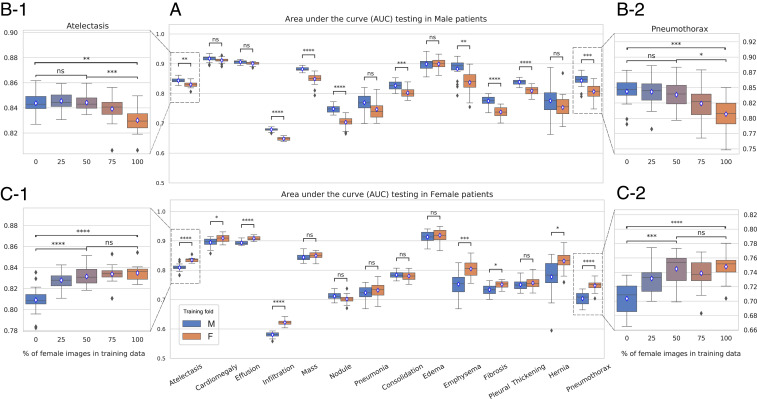
“( B and C ) AUC achieved for two exemplar diseases under a gradient of gender imbalance ratios, from 0% of female images in training data to 100%, with increments of 25%.”
MethodInfluentialProceedings of IEEE Conference on Computer Vision and Pattern Recognition
(1993) · doi:10.1109/cvpr.1993 · Cited by 17,667
A survey on deep learning in medical image analysis
Litjens, G., Kooi, T., Bejnordi, B. E., Setio, A. A. A., Ciompi, F., Ghafoorian, M., van der Laak, J. A. W. M., van Ginneken, B., & Sánchez, C. I. (2017) · Medical Image Analysis · doi:10.1016/j.media.2017.07.005 · Cited by 15,332 · cited 1×
“AI systems cannot only augment the information provided by such images with useful annotations (1, 2), but they are also starting to take autonomous decisions by performing computer-aided diagnosis (CAD) (3, 4).”
BackgroundDermatologist-level classification of skin cancer with deep neural networks
Esteva, A., Kuprel, B., Novoa, R. A., Ko, J., Swetter, S. M., Blau, H. M., & Thrun, S. (2017) · Nature · doi:10.1038/nature21056 · Cited by 14,362 · cited 9×
“Given a frontal X-ray image, the CAD system predicts the presence or absence of the 14 thoracic diseases.”
BackgroundInfluentialWang, X., Peng, Y., Lu, L., Lu, Z., Bagheri, M., & Summers, R. M. (2017) · 2017 IEEE Conference on Computer Vision and Pattern Recognition (CVPR) · doi:10.1109/cvpr.2017.369 · Cited by 4,616 · cited 4×
“We use the NIH Chest-XRay14 dataset (16, 19), which includes 112,120 chest X-ray images from 30,805 patients, labeled with 14 common thorax diseases (including hernia, pneumonia, fibrosis, emphysema, edema, cardiomegaly, pleural thickening, consolidation, mass, pneumothorax, nodule, atelectasis, effusion, and infiltra…”
MethodInfluential
Cited by
Items 201–300 of 898
Doo, F. X., & McGinty, G. B. (2023) · Journal of the American College of Radiology · doi:10.1016/j.jacr.2023.06.014 · Cited by 27
Lee, T., Anton, E. P., Ruijsink, B., Aitcheson, K., Shi, M., & King, A. P. (2023) · Lecture notes in computer science · doi:10.1007/978-3-031-45249-9_21 · Cited by 27
Martínez-Murcia, F. J., Arco, J. E., Jiménez-Mesa, C., Segovia, F., Illan, I. A., Ramírez, J., & Górriz, J. M. (2024) · International Journal of Neural Systems · doi:10.1142/s0129065724500436 · Cited by 27
Medical imaging data science competitions should report dataset demographics and evaluate for bias
Garin, S. P., Parekh, V. S., Sulam, J., & Yi, P. H. (2023) · Nature Medicine · doi:10.1038/s41591-023-02264-0 · Cited by 26
Pseudo Bias-Balanced Learning for Debiased Chest X-Ray Classification
Luo, L., Xu, D., Chen, H., Wong, T.-T., & Heng, P.-A. (2022) · Lecture Notes in Computer Science · doi:10.1007/978-3-031-16452-1_59 · Cited by 26
Online deep learning’s role in conquering the challenges of streaming data: a survey
Sulaiman, M. A., Farmanbar, M., Kagami, S., Belbachir, A. N., & Rong, C. (2025) · Knowledge and Information Systems · doi:10.1007/s10115-025-02351-3 · Cited by 26
Fair Generalized Linear Models with a Convex Penalty
Do, H., Putzel, P., Martin, A. S., Smyth, P., & Zhong, J. (2022) · PubMed · doi:10.48550/arxiv.2206.09076 · Cited by 26
“…to gender (Lahoti et al., 2018), face recognition relative to both race and gender (Ryu et al., 2018; Buolamwini & Gebru, 2018), and in multiple healthcare applications relative to gender, race, and insurance status (Char et al., 2018; Larrazabal et al., 2020; Seyyed-Kalantari et al., 2020).”
A Systematic Study of Race and Sex Bias in CNN-Based Cardiac MR Segmentation
Lee, T., Anton, E. P., Ruijsink, B., Shi, M., & King, A. P. (2022) · Lecture notes in computer science · doi:10.1007/978-3-031-23443-9_22 · Cited by 26
Artificial Intelligence in Breast Imaging: Challenges of Integration Into Clinical Practice
Ozcan, B. B., Patel, B., Banerjee, I., & Doğan, B. E. (2023) · Journal of Breast Imaging · doi:10.1093/jbi/wbad007 · Cited by 26
Transdisciplinary AI Observatory—Retrospective Analyses and Future-Oriented Contradistinctions
Aliman, N.-M., Kester, L. J. H. M., & Yampolskiy, R. V. (2021) · Philosophies · doi:10.3390/philosophies6010006 · Cited by 26
Enhancing fairness in AI-enabled medical systems with the attribute neutral framework
Hu, L., Li, D., Liu, H., Chen, X., Gao, Y., Huang, S., Peng, X., Zhang, X., Bai, X., Yang, H., et al. (2024) · Nature Communications · doi:10.1038/s41467-024-52930-1 · Cited by 25
Best Practices for the Safe Use of Large Language Models and Other Generative AI in Radiology
Yi, P. H., Haver, H. L., Jeudy, J. J., Kim, W., Kitamura, F., Oluyemi, E. T., Smith, A. D., Moy, L. P., & Parekh, V. S. (2025) · Radiology · doi:10.1148/radiol.241516 · Cited by 25
Welch, M. L., Grant, B., Deutschman, C., McElcheran, C., Badzynski, A., Bell, J. A. H., Hope, A. J., Grant, R. C., Truong, T., Lane, K., et al. (2026) · The Lancet Digital Health · doi:10.1016/j.landig.2025.100957 · Cited by 28
Uncovering Bias in Personal Informatics
Yfantidou, S., Sermpezis, P., Vakali, A. I., & Baeza-Yates, R. A. (2023) · Proceedings of the ACM on Interactive Mobile Wearable and Ubiquitous Technologies · doi:10.1145/3610914 · Cited by 25
“[64] utilize two commonly used X-ray image datasets to diagnose various chest diseases under different gender imbalance conditions and showcase that the minority gender group systematically performs worse than the majority gender group.”
MethodTowards Unraveling Calibration Biases in Medical Image Analysis
Lara, M. A. R., Mosquera, C., Ferrante, E., & Echeveste, R. (2023) · Lecture notes in computer science · doi:10.1007/978-3-031-45249-9_13 · Cited by 25
Self-citationOn the Fairness of Swarm Learning in Skin Lesion Classification
Fan, D., Wu, Y., & Li, X. (2021) · Lecture notes in computer science · doi:10.1007/978-3-030-90874-4_12 · Cited by 25
A Standardized Machine-readable Dataset Documentation Format for Responsible AIPreprint
Jain, N., Akhtar, M., Giner-Miguelez, J., Shinde, R. C., Vanschoren, J., Vogler, S., Goswami, S., Rao, Y. D., Santos, T., Oala, L., et al. (2024) · TU/e Research Portal · doi:10.48550/arxiv.2407.16883 · Cited by 25
“All rights reserved. computer-aided diagnosis as a direct result of imbalances in training data (Larrazabal et al. 2020), and issues during data collection that can cause AI applications, which are designed to detect pneumonia, to fail when deployed to different hospitals (Zech et al. 2018).”
BackgroundEvaluating and mitigating bias in AI-based medical text generation
Chen, X., Wang, T., Zhou, J., Song, Z., Gao, X., & Zhang, X. (2025) · Nature Computational Science · doi:10.1038/s43588-025-00789-7 · Cited by 25
“However, the issue of fairness has arisen in medical image classification tasks, with biases observed in deep learning models related to race [7], [8], [9], sex [10], [11], and age [10].”
Style Transfer with Bio-realistic Appearance Manipulation for Skin-tone Inclusive rPPG
Ba, Y., Wang, Z., Karinca, D., Bozkurt, O. D., & Kadambi, A. (2022) · IEEE International Conference on Computational Photography (ICCP) · doi:10.1109/iccp54855.2022.9887649 · Cited by 24
“This finding is consistent with the recent research [57] that demonstrates a balanced dataset can lead to optimal performance for all the groups.”
ResultTopal, A. D., Gökçe, A. T., Eren, C. D., & Geçer, A. K. (2024) · Journal of Learning and Teaching in Digital Age · doi:10.53850/joltida.1440845 · Cited by 23
Sensitivity of neural networks to corruption of image classification
Kaplan, S., Handelman, D., & Handelman, A. (2021) · AI and Ethics · doi:10.1007/s43681-021-00049-0 · Cited by 23
Artificial intelligence in neuroradiology: a scoping review of some ethical challenges
Khosravi, P., & Schweitzer, M. (2023) · Frontiers in Radiology · doi:10.3389/fradi.2023.1149461 · Cited by 23
“(58) highlighted the importance of gender balance in medical imaging datasets for training AI systems in computational diagnosis.”
BackgroundHuti, M., Lee, T., Sawyer, E. J., & King, A. P. (2023) · Lecture notes in computer science · doi:10.1007/978-3-031-45249-9_22 · Cited by 23
“For example, biased performance has been reported in AI models for diagnostic tasks from chest X-rays [9,21], cardiac magnetic resonance (MR) image segmentation [10, 18,19], brain MR image analysis [7,16,22,24] and dermatology image analysis [1,6].”
BackgroundIsaksson, A. (2024) · AI & Society · doi:10.1007/s00146-024-02067-y · Cited by 24
“This poses particular risks in sectors like healthcare (Larrazabal et al. 2020).”
InfluentialDubois, C., Eigen, D., Delmas, E., Einfalt, M., Lemaçon, C., Berteloot, L., Bossuyt, P. M., Drummond, D., Scherdel, P., Simon, F., et al. (2024) · BMJ · doi:10.1136/bmj-2023-076703 · Cited by 23
“69 Clinical factors such as anatomical proportions, disease presentations, and distribution of differential diagnosis might also affect the performance and generalisability of DL models.”
Habibi, F., Ghaderkhani, S., Shokoohi, M., Banari, T., Morsali, M., Abadi, R. N. S., & Kiamehr, H. (2025) · AI and Ethics · doi:10.1007/s43681-025-00673-0 · Cited by 23
“For instance, biases in training data can result in AI models that perform poorly across diverse populations, further complicating their clinical adoption [52].”
Copycats: the many lives of a publicly available medical imaging dataset
Jiménez-Sánchez, A., Avlona, N.-R., Juodelyte, D., Sourget, T., Vang-Larsen, C., Rogers, A., Zając, H. D., & Cheplygina, V. (2024) · neural information processing systems · doi:10.52202/079017-3602 · Cited by 24
“Lastly, rich documentation is essential to avoiding over-optimistic and biased results [10, 27, 59, 72, 109], attributed to a lack of meta-data in MI datasets, such as information linking images to specific patients and their demographics.”
BackgroundResultCollaborative, I. (2022) · World Journal of Surgery · doi:10.1007/s00268-022-06440-0 · Cited by 23
“Teaching without assessment will generally be viewed as non-compulsory, particularly by busy medical students [36].”
BackgroundMushcab, H., Ramis, M. A., Alrujaib, A., Eskandarani, R., Sunbul, T., Alotaibi, A., Obaidan, M., Alharbi, R., & Aljabri, D. (2025) · JMIR Cancer · doi:10.2196/63964 · Cited by 22
“Another inadequacy of AI applications in health care is the systematic biases affecting patient demo-graphics, such as gender imbalance [38].”
Colorectal Polyp Segmentation Based on Deep Learning Methods: A Systematic Review
Liu, X., Isa, N. A. M., Chen, C., & Lv, F. (2025) · Journal of Imaging · doi:10.3390/jimaging11090293 · Cited by 22
Mosquera, C., Díaz, F. N., Binder, F., Rabellino, J. M., Benítez, S., Beresñak, A. D., Seehaus, A., Ducrey, G., Ocantos, J., & Luna, D. R. (2021) · Computer Methods and Programs in Biomedicine · doi:10.1016/j.cmpb.2021.106130 · Cited by 22
Artificial intelligence in functional imaging of the lung
Estépar, R. S. J. (2021) · British Journal of Radiology · doi:10.1259/bjr.20210527 · Cited by 22
“99 Understanding the specific performance characteristics of each model is crucial to move beyond the preclinical scenario and successfully introduce it into clinical practice.”
BackgroundDebiasing Counterfactuals in the Presence of Spurious Correlations
Kumar, A., Fathi, N., Mehta, R., Nichyporuk, B., Falet, J.-P. R., Tsaftaris, S. A., & Arbel, T. (2023) · Lecture notes in computer science · doi:10.1007/978-3-031-45249-9_27 · Cited by 22
Olesen, V., Weng, N., Feragen, A., & Petersen, E. (2024) · Lecture notes in computer science · doi:10.1007/978-3-031-72787-0_1 · Cited by 22
“Consistent with the observations made by Weng et al. [28], our findings challenge the notion that biological differences are the primary driver of the previously observed [14] but unexplained male–female performance gaps in chest x-ray-based disease classification.”
InfluentialUnderstanding pre-training data effects in retinal foundation models using two large fundus cohorts
Zhou, Y., Wang, Z., Wu, Y., Ong, A. Y., Wagner, S. K., Ruffell, E., Chia, M. A., Guan, Z., Ju, L., Engelmann, J., et al. (2026) · Nature Communications · doi:10.1038/s41467-026-70077-z · Cited by 22
“Additionally, imbalanced training data often leads to poor performance in underrepresented subgroups in terms of age, sex, and ethnicity, raising concerns about model fairness and generalisability 27,29 .”
Bias and fairness in machine learning and artificial intelligence
Cirillo, D., & Rementeria, M. J. (2022) · Elsevier eBooks · doi:10.1016/b978-0-12-821392-6.00006-6 · Cited by 22
Artificial intelligence in cardiac magnetic resonance fingerprinting
Velasco, C., Fletcher, T. J., Botnar, R. M., & Prieto, C. (2022) · Frontiers in Cardiovascular Medicine · doi:10.3389/fcvm.2022.1009131 · Cited by 21
“Recent studies have shown that the existence of imbalanced data may lead to inaccuracies and underperformance over different population groups, such as gender or race (116).”
BackgroundBaughan, N. M., Whitney, H. M., Drukker, K., Sahiner, B., Hu, T., Kim, G. H. J., McNitt‐Gray, M. F., Myers, K. J., & Giger, M. L. (2023) · Journal of medical imaging · doi:10.1117/1.jmi.10.6.064501 · Cited by 21
Artificial Intelligence in COPD: New Venues to Study a Complex Disease
Estépar, R. S. J. (2026) · Barcelona Respiratory Network · doi:10.23866/brnrev:2019-0014 · Cited by 21
“Another important issue related to the application of AI in COPD is the potential for biases and their implications in terms of equity use of AI 80,81 .”
Epistemic Uncertainty-Weighted Loss for Visual Bias Mitigation
Stone, R. S., Ravikumar, N., Bulpitt, A. J., & Hogg, D. (2022) · IEEE/CVF Conference on Computer Vision and Pattern Recognition Workshops (CVPRW) · doi:10.1109/cvprw56347.2022.00327 · Cited by 22
“Practitioners within the artificial intelligence community are becoming increasingly aware of gender and racial biases learned and amplified by models [10, 21, 16, 4, 23].”
BackgroundThe state of the art in artificial intelligence and digital pathology in prostate cancer
Ni, H. M., Kouzy, R., Sabbagh, A., Rooney, M. K., Feng, J., Castillo, S. P., Gadoue, S. M., Kouzi, Z. E., Hoffman, K. E., Yuan, Y., et al. (2025) · Nature Reviews Urology · doi:10.1038/s41585-025-01070-2 · Cited by 23
Multiple Instance Neuroimage Transformer
Singla, A., Zhao, Q., Daniel, K., Zhou, Y., Pohl, K. M., & Adeli, E. (2022) · Lecture notes in computer science · doi:10.1007/978-3-031-16919-9_4 · Cited by 20
Evaluating artificial intelligence for medical imaging: a primer for clinicians
Keni, S. (2024) · British Journal of Hospital Medicine · doi:10.12968/hmed.2024.0312 · Cited by 21
Fu, M., Fang, M. X., Khan, R. A., Liao, B., Hu, Z., & Wu, F. (2024) · Artificial Intelligence in Medicine · doi:10.1016/j.artmed.2024.102972 · Cited by 20
"Fairness in AI and Its Long-Term Implications on Society"
Bohdal, O., Hospedales, T. M., Torr, P. H. S., & Barez, F. (2023) · Oxford University Research Archive (ORA) (University of Oxford) · doi:10.25740/pj287ht2654 · Cited by 19
Fay, L., Cobos, E., Yang, B., Gatidis, S., & Küstner, T. (2023) · IEEE Access · doi:10.1109/access.2023.3289397 · Cited by 19
“While these confounded networks may perform reasonably well within the same data distribution (as training), out-of-distributional generalization and objective image analysis are impaired [32], [33].”
Faa, G., Castagnola, M., Didaci, L., Coghe, F., Scartozzi, M., Saba, L., & Fraschini, M. (2024) · Algorithms · doi:10.3390/a17060254 · Cited by 19
“A typical example is when a demographic group is overrepresented in the training dataset, causing unequal performance across different demographic groups and further contributing to healthcare disparities [69,70].”
Selective, Interpretable and Motion Consistent Privacy Attribute Obfuscation for Action Recognition
Ilic, F., Zhao, H., Pock, T., & Wildes, R. P. (2024) · IEEE Computer Society Conference on Computer Vision and Pattern Recognition/Proceedings - IEEE Computer Society Conference on Computer Vision and Pattern Recognition/Proceedings · doi:10.1109/cvpr52733.2024.01772 · Cited by 20
“Accompanying these initiatives, concerns arise for the privacy of individuals that are captured in acquired imagery [11, 19, 35, 46].”
BackgroundAlderman, J. E., Palmer, J., Laws, E., McCradden, M. D., Ordish, J., Ghassemi, M., Pfohl, S. R., Rostamzadeh, N., Cole-Lewis, H. J., Glocker, B., et al. (2024) · NEJM AI · doi:10.1056/aip2401088 · Cited by 19
A Comparative Study of Fairness in Medical Machine Learning
Oguguo, T., Zamzmi, G., Rajaraman, S., Yang, F., Xue, Z., & Antani, S. (2023) · IEEE International Symposium on Biomedical Imaging (ISBI) · doi:10.1109/isbi53787.2023.10230368 · Cited by 18
“While some methods have been proposed to address fairness in automated predictions using electronic health record data [10] and medical visual data [11, 12, 6], there are numerous medical ML models that are trained based on fairness through unawareness approach.”
MethodDe-identification and Obfuscation of Gender Attributes from Retinal Scans
Wu, C., Yang, X., Gilkes, E. G., Cui, H., Choi, J., Sun, N., Liao, Z., Fan, B., Santillana, M., Celi, L. A., et al. (2023) · Lecture notes in computer science · doi:10.1007/978-3-031-45249-9_9 · Cited by 18
Russell, B. L., Oswald, D. L., & Cotter, M. (2024) · Analyses of Social Issues and Public Policy · doi:10.1111/asap.12383 · Cited by 18
Achieving Reliable and Fair Skin Lesion Diagnosis via Unsupervised Domain Adaptation
Wang, J., Zhang, Y., Ding, Z., & Hamm, J. (2024) · IEEE/CVF Conference on Computer Vision and Pattern Recognition Workshops (CVPRW) · doi:10.1109/cvprw63382.2024.00523 · Cited by 18
“Recent studies have revealed bias in AI-based diagnosis systems against underrepresented sub-populations [18, 27].”
ResultLee, T., Anton, E. P., Ruijsink, B., Roujol, S., Barfoot, T., Ogbomo-Harmitt, S., Shi, M., & King, A. P. (2025) · European Heart Journal - Digital Health · doi:10.1093/ehjdh/ztaf008 · Cited by 18
“6,8 This can lead to underrepresented groups having lower performance, for example, poorer quality AI-produced segmentations.”
The Impact of Learning About AI Advancements on Trust
Nikolova, M., & Angrisani, M. (2025) · Technology in Society · doi:10.1016/j.techsoc.2025.102958 · Cited by 18
Addressing racial disparities in surgical care with machine learning
Halamka, J. D., Bydon, M., Cerrato, P. L., & Bhagra, A. (2022) · npj Digital Medicine · doi:10.1038/s41746-022-00695-6 · Cited by 18
Artificial Intelligence in Radiology: Augmentation, Not Replacement
Nk, R. K., Anupama, R. S., & Shivaraj, K. (2025) · Cureus · doi:10.7759/cureus.86247 · Cited by 18
“Most models are trained on datasets that may lack diversity in race, gender, or age, leading to reduced accuracy in underrepresented groups [7].”
Ethics of AI and Health Care: Towards a Substantive Human Rights Framework
Liao, S. M. (2023) · Topoi · doi:10.1007/s11245-023-09911-8 · Cited by 17
Li, S., Wu, Q., Zhou, D., Li, X., Miao, D., Hong, C., Gu, W., Shang, Y., Okada, Y., Chen, M. H., et al. (2025) · npj Health Systems · doi:10.1038/s44401-025-00035-2 · Cited by 17
Ghosh, S., Sindhujaa, P., Kesavan, D. K., Gulyás, B. Z., & Máthé, D. (2025) · Surgeries · doi:10.3390/surgeries6030050 · Cited by 17
“Dataset limitations in neurosurgery (small sample sizes, single-center data) can lead to overfitting [178]; thus, initiatives like international challenges (e.g., BraTS for tumors) and federated learning collaborations are key to pooling data and improving robustness.”
Wang, T., Emami, E., Jafarpour, D., Tolentino, R., Gore, G. C., & Rahimi, S. A. (2025) · PLOS Digital Health · doi:10.1371/journal.pdig.0000941 · Cited by 17
“…the studies used the public domain Kaggle EyePACS dataset [29], one used National Cancer Database [30], two studied the NIH Chest-XRay14 dataset [14,31], one used cancer omics data, one used Interagency Registry for Mechanically Assisted Circulatory Support [32], and the rest of the studies used…”
Distributionally Robust Deep Learning using Hardness Weighted Sampling
Fidon, L., Aertsen, M., Deprest, T., Emam, D., Guffens, F., Mufti, N., Elslander, E. V., Schwartz, E., Ebner, M., Prayer, D., et al. (2022) · The Journal of Machine Learning for Biomedical Imaging · doi:10.59275/j.melba.2022-8b6a · Cited by 17
“This may lead to unfair AI systems (Larrazabal et al., 2020; Puyol-Antón et al., 2021).”
BackgroundBasic Artificial Intelligence Techniques
Kalpathy–Cramer, J., Patel, J., Bridge, C. P., & Chang, K. (2021) · Radiologic Clinics of North America · doi:10.1016/j.rcl.2021.06.005 · Cited by 18
Perception Poisoning Attacks in Federated Learning
Chow, K.-H., & Liu, L. (2021) · IEEE International Conference on Trust, Privacy and Security in Intelligent Systems and Applications (TPS-ISA) · doi:10.1109/tpsisa52974.2021.00017 · Cited by 17
Imputation Strategies Under Clinical Presence: Impact on Algorithmic FairnessPreprint
Jeanselme, V., De‐Arteaga, M., Zhang, Z., Tom, B. D. M., & Barrett, J. (2023) · SSRN Electronic Journal · doi:10.2139/ssrn.4496874 · Cited by 17
McKay, F., Williams, B. J., Prestwich, G., Treanor, D., & Hallowell, N. (2022) · Research Involvement and Engagement · doi:10.1186/s40900-022-00357-7 · Cited by 16
“As the political theorist Albert Dzur [19] describes, citizen forums exist in a kind of “civic limbo” (p. 43 ).”
BackgroundBisen, J. B., Sikora, H., Aneja, A., Shah, S. J., & Mirza, R. G. (2025) · Journal of Cardiovascular Development and Disease · doi:10.3390/jcdd12060230 · Cited by 16
Collective Reasoning Among LLMs: A Framework for Answer Validation Without Ground Truth
Davoudi, S. P. M., Davodi, A. G., Amiri-Margavi, A., & Jafari, M. (2025) · International Conference on Foundation and Large Language Models (FLLM) · doi:10.1109/fllm67465.2025.11391148 · Cited by 16
“In medical imaging, Larrazabal et al. [39] examine how collaborative systems raise privacy concerns and the need for transparent decision-making to protect patient interests.”
Review Paper: Reporting Practices for Task fMRI Studies
Acar, F., Maumet, C., Heuten, T., Vervoort, M., Bossier, H., Seurinck, R., & Moerkerke, B. (2022) · Neuroinformatics · doi:10.1007/s12021-022-09606-2 · Cited by 16
“One possible cause of bias is a gender imbalance between the participants of the study (Larrazabal, 2020).”
BackgroundAnalysis: Flawed Datasets of Monkeypox Skin Images
Vega, C., Schneider, R., & Satagopam, V. (2023) · Journal of Medical Systems · doi:10.1007/s10916-023-01928-1 · Cited by 16
“Nobody questions the huge opportunities that Artificial Intelligence (AI) and ML bring to bioinformatics and computer-aided diagnosis [43], but these opportunities come with challenges [44–47].”
BackgroundCost-effective Models for Detecting Depression from Speech
Tasnim, M., & Novikova, J. (2022) · International Conference on Machine Learning and Applications · doi:10.1109/icmla55696.2022.00259 · Cited by 16
“The skewness in the dataset causes bias in model prediction, as described in [52].”
MethodOvercoming Difficulty in Obtaining Dark-skinned Subjects for Remote-PPG by Synthetic AugmentationPreprint
Ba, Y., Wang, Z., Karinca, D., Bozkurt, O. D., & Kadambi, A. (2021) · arXiv (Cornell University) · doi:10.48550/arxiv.2106.06007 · Cited by 16
“This finding is consistent with the recent research [31] that demonstrates a balanced dataset can lead to optimal performance for all the groups.”
ResultTwo-step adversarial debiasing with partial learning -- medical image case-studiesPreprint
Correa, R., Jeong, J., Patel, B. N., Trivedi, H., Gichoya, J. W., & Banerjee, I. (2021) · arXiv (Cornell University) · doi:10.48550/arxiv.2111.08711 · Cited by 16
“The layers used for finetuning are identified via an ablation study which measures the performance difference of the targeted and protected variable prediction after dropping 10% of the top similar filters relative to the total number of filters from the targeted convolution layers (Meyes et al. 2019).”
MethodUsing Large Language Models to Enrich the Documentation of Datasets for Machine LearningPreprint
Giner-Miguelez, J., Gómez, A., & Cabot, J. (2024) · arXiv (Cornell University) · doi:10.48550/arxiv.2404.15320 · Cited by 16
“For instance, medical datasets imbalanced in terms of gender produce biased classifiers for computer-aided diagnosis (Larrazabal et al., 2020), language datasets gathered from Australian speakers could drop the accuracy of models trained to support users in the United States because of the…”
BackgroundCasual Conversations: A dataset for measuring fairness in AI
Hazirbas, C., Bitton, J., Dolhansky, B., Pan, J., Gordo, A., & Ferrer, C. C. (2021) · 2021 IEEE/CVF Conference on Computer Vision and Pattern Recognition Workshops (CVPRW) · doi:10.1109/cvprw53098.2021.00258 · Cited by 15
“Research has clearly shown that deep networks that achieve a high performance on certain datasets are likely to favor only sub-groups of people due to the imbalanced distribution of the categories in the data [10].”
BackgroundSoe, N. N., Kusnandar, I. I., Latt, P. M., Fairley, C. K., Chow, E. P. F., Maatouk, I., Johnson, C., Shah, P., Peters, R. P. H., Subissi, L., et al. (2025) · JAMA Network Open · doi:10.1001/jamanetworkopen.2025.33512 · Cited by 15
Patel, D., Kantamneni, R., John, J. D., Patel, T., Shukla, A., Salma, A., & Anand, N. (2025) · Annals of Medicine and Surgery · doi:10.1097/ms9.0000000000004607 · Cited by 15
“For example, studies have demonstrated that some AI algorithms perform less accurately in predicting heart failure or arrhythmias in women and ethnic minorities due to their under-representation in training datasets [ 34 ] .”
Lin, M., Xiao, Y., Hou, B., Wanyan, T., Sharma, M. M., Wang, Z., Wang, F., Tassel, S. H. V., & Peng, Y. (2023) · PubMed Central · Cited by 15
Jansky, B., Hendl, T., & Nocanda, A. Z. (2023) · Bioethics · doi:10.1111/bioe.13205 · Cited by 15
Santomartino, S. M., Zech, J. R., Hall, K., Jeudy, J. J., Parekh, V. S., & Yi, P. H. (2024) · Radiology · doi:10.1148/radiol.232746 · Cited by 17
Ethical and Legal Governance of Generative AI in Chinese Healthcare
Jia, J., & Zhao, S. (2025) · Journal of Multidisciplinary Healthcare · doi:10.2147/jmdh.s541271 · Cited by 15
Guntupalli, R., Verma, S., & Dhingra, K. (2024) · American Scientific Research Journal for Engineering, Technology, and Sciences · Cited by 16
Automatic Diagnosis of Pneumothorax From Chest Radiographs: A Systematic Literature Review
Iqbal, T., Shaukat, A., Akram, U., Mustansar, Z., & Khan, A. (2021) · IEEE Access · doi:10.1109/access.2021.3122998 · Cited by 17
“as it does not provide the supplementary metafiles [39].”
BackgroundBias in medical artificial intelligence
AlHasan, A. (2021) · Bulletin of The Royal College of Surgeons of England · doi:10.1308/rcsbull.2021.111 · Cited by 15
Removal of Confounders via Invariant Risk Minimization for Medical Diagnosis
Zare, S., & Nguyen, H. V. (2022) · Lecture notes in computer science · doi:10.1007/978-3-031-16452-1_55 · Cited by 16
Shui, C., Szeto, J., Mehta, R., Arnold, D. L., & Arbel, T. (2023) · Lecture notes in computer science · doi:10.1007/978-3-031-43898-1_19 · Cited by 15
A Review of Generative Adversarial Networks in Cancer Imaging: New Applications, New Solutions.Preprint
Osuala, R. O., Kushibar, K., Garrucho, L., Linardos, A., Szafranowska, Z., Klein, S., Glocker, B., Díaz, O., & Lekadir, K. (2021) · arXiv (Cornell University) · Cited by 15
Pseudo AI BiasPreprint
Zhaı, X., & Krajcik, J. S. (2022) · arXiv (Cornell University) · doi:10.48550/arxiv.2210.08141 · Cited by 15
Owolabi, O. O., Adewusi, O. B., Ajayi, F. A., Asunmonu, A. A., Ozoemezim, C., Ederhion, J., & Ayeni, O. M. (2025) · South Asian Research Journal of Engineering and Technology · doi:10.36346/sarjet.2025.v07i01.004 · Cited by 14
Trașcă, D.-M., Pluta, I. D., Carmen, S., Văruţ, R.-M., Singer, C. E., Radivojević, K., & Stoica, G. A. (2025) · Pharmaceutics · doi:10.3390/pharmaceutics17121564 · Cited by 14
“Insufficient representation across age groups, ethnic backgrounds, and disease phenotypes raises concerns about fairness, reliability, and clinical applicability in real-world diagnostic contexts [133,134].”
Review of Artificial Intelligence Training Tools and Courses for Radiologists
Richardson, M. L., Adams, S., Agarwal, A. K., Auffermann, W. F., Bhattacharya, A. K., Consul, N., Fotos, J. S., Kelahan, L. C., Lin, C. S., Lo, H. S., et al. (2021) · Academic Radiology · doi:10.1016/j.acra.2020.12.026 · Cited by 15
Álvarez‐Rodríguez, L., de Moura, J., Novo, J., & Ortega, M. (2022) · BMC Medical Research Methodology · doi:10.1186/s12874-022-01578-w · Cited by 14
“Sex-related imbalance analysis One of the main characteristics of a patient that can influence a diagnostic system is sex [22, 23].”
BackgroundRethinking Machine Learning Model Evaluation in PathologyPreprint
Javed, S. A., Juyal, D., Shanis, Z., Chakraborty, S., Pokkalla, H., & Prakash, A. (2022) · arXiv (Cornell University) · doi:10.48550/arxiv.2204.05205 · Cited by 14
“The fact that these confounders can also be partial, non-biological and specific to the dataset, further complicates matters (Badgeley et al., 2019; Larrazabal et al., 2020; Zech et al., 2018).”
BackgroundOn the Readiness of Scientific Data Papers for a Fair and Transparent Use in Machine Learning
Giner-Miguelez, J., Gómez, A., & Cabot, J. (2025) · Scientific Data · doi:10.1038/s41597-025-04402-4 · Cited by 16
Kahouadji, N. (2024) · Information · doi:10.3390/info15050252 · Cited by 13
Almeida, S. D., Norajitra, T., Lüth, C. T., Wald, T., Weru, V., Nolden, M., Jäger, P. F., von Stackelberg, O., Heußel, C. P., Weinheimer, O., et al. (2024) · Insights into Imaging · doi:10.1186/s13244-024-01781-x · Cited by 13
“The vast majority of fairness studies conducted to date have focused on pathology classi fi cation tasks within medical imaging [25, 35 – 40], with no attention paid to COPD diagnosis in minority classes.”
BackgroundKurjak, A., Stanojević, M., Dewantiningrum, J., Andonotopo, W., Bachnas, M. A., & Pramono, M. B. A. (2025) · Donald School Journal of Ultrasound in Obstetrics & Gynecology · doi:10.5005/jp-journals-10009-2061 · Cited by 13
“43,44 To address bias in AI-based fetal ultrasound, it is essential to explore how demographic and geographic disparities in imaging datasets impact model performance.”
Guarnera, A., Ius, T., Romano, A., Bagatto, D., Denaro, L., Aiudi, D., Iacoangeli, M., Palmieri, M., Frati, A., Santoro, A., et al. (2025) · Medicina · doi:10.3390/medicina61081453 · Cited by 13
“If AI training datasets are not sufficiently representative of the diverse patient populations, such as lacking data from certain demographic groups or with specific socioeconomic backgrounds, the AI models can exacerbate existing health inequalities [117].”
Queer-Responsive Regulation for Artificial Intelligence in Healthcare: A Comparative Study
Sulmicelli, S. (2025) · University of New South Wales law journal · doi:10.53637/wzju2633 · Cited by 13
A primer on applying AI synergistically with domain expertise to oncology
Kim, J., Kusko, R. L., Zeskind, B. J., Zhang, J., & Escalante-Chong, R. (2021) · Biochimica et Biophysica Acta (BBA) - Reviews on Cancer · doi:10.1016/j.bbcan.2021.188548 · Cited by 13
Metadata
- Authors
- Larrazabal, A. J., Nieto, N., Peterson, V., Milone, D. H., & Ferrante, E.
- Affiliations
- Consejo Nacional de Investigaciones Científicas y Técnicas (AR)
- Corresponding author
- Ferrante, Enzo
- Venue
- Proceedings of the National Academy of Sciences
- Publisher
- National Academy of Sciences
- Published
- 2020-05-26
- Volume
- 117
- Issue
- 23
- Pages
- 12592-12594
- ISSN
- 0027-8424 (ISSN-L)
- 1091-6490
- PMC
- PMC7293650
- OpenAlex
- W3030030520
- Cited by
- 685
- References
- 36
- Citations by year
- 2026: 117 · 2025: 149 · 2024: 125 · 2023: 110 · 2022: 101 · 2021: 71 · 2020: 10
- FWCI
- 21.48
- Type
- journal article
- Language
- en
- Open access
- hybrid
- doi.org
- Licence
- Locations
- Proceedings of the National Academy of Sciences (publishedVersion, cc-by)
- PubMed Central (publishedVersion, cc-by)
- PubMed (publishedVersion)
- LA Referencia (Red Federada de Repositorios Institucionales de Publicaciones Científicas) (submittedVersion, cc-by-nc-sa)
- Funders
- AXA Research Fund (2017-AXA-PDOC1-097)
- MINCyT | Agencia Nacional de Promoción Científica y Tecnológica (PICT 2017-4596, PICT-2018-03907, PICT 2014-2627, PICT-2018-3384)
- Universidad Nacional del Litoral (CAID-PIC-50220140100084L, 2016-082)
- Topics
- Health Sciences › Medicine › Health Informatics › Artificial Intelligence in Healthcare and Education
- Physical Sciences › Computer Science › Artificial Intelligence › Ethics and Social Impacts of AI
- Health Sciences › Medicine › Public Health, Environmental and Occupational Health › Sex and Gender in Healthcare
- Keywords
- gender imbalance, medical imaging datasets, algorithmic fairness, computer-aided diagnosis, X-ray images, thoracic disease diagnosis, deep neural network, underrepresented groups, dataset collection
- MeSH terms
- Deep Learning, Female, Humans, Male, Radiographic Image Interpretation, Computer-Assisted, Reference Standards, Sex Factors, Radiography, Thoracic, Bias, Datasets as Topic
About these checks
Registry, retraction, Cites and statistics results are computed, not judged, with one exception: a printed reference that no index lists is read once by a model before it counts as a citation error. Claims are extracted by a model and kept only when their quote appears verbatim in the text; each cited source is then checked, with a model’s help, for whether it says what the claim relies on. Those verdicts can be wrong — read the claim’s quote and the cited source before relying on one.
Statistics and arithmetic are recomputed, not judged.
Confidence bands are shown only for fields calibrated on our annotated test set. None is calibrated yet, so no band is shown.
What counts as a claim ›How we measure confidence ›How we check this ›
Are you an author, or do you see a problem with this page? Request a review
Data sources
Bibliographic data: Semantic Scholar, OpenAlex, Crossref.
Contains information from the Semantic Scholar Academic Graph Datasets, made available under the ODC Attribution License (ODC-BY 1.0).
Semantic Scholar’s data is described in: Kinney, R., et al. (2023). The Semantic Scholar Open Data Platform. arXiv:2301.10140.
