

Gender imbalance in medical imaging datasets produces biased classifiers for computer-aided diagnosis
Open accessThe DOI matches its Crossref record; 36 of the 36 references it cites were found in a registry or an index.
Abstract
Artificial intelligence (AI) systems for computer-aided diagnosis and image-based screening are being adopted worldwide by medical institutions. In such a context, generating fair and unbiased classifiers becomes of paramount importance. The research community of medical image computing is making great efforts in developing more accurate algorithms to assist medical doctors in the difficult task of disease diagnosis. However, little attention is paid to the way databases are collected and how this may influence the performance of AI systems. Our study sheds light on the importance of gender balance in medical imaging datasets used to train AI systems for computer-assisted diagnosis. We provide empirical evidence supported by a large-scale study, based on three deep neural network architectures and two well-known publicly available X-ray image datasets used to diagnose various thoracic diseases under different gender imbalance conditions. We found a consistent decrease in performance for underrepresented genders when a minimum balance is not fulfilled. This raises the alarm for national agencies in charge of regulating and approving computer-assisted diagnosis systems, which should include explicit gender balance and diversity recommendations. We also establish an open problem for the academic medical image computing community which needs to be addressed by novel algorithms endowed with robustness to gender imbalance.
Overview
The claims and statistics of this paper haven’t been checked yet.
Free: it reads the open-access text and checks the first 5 claims that cite a source we can check. Create a free account to check every claim.
Integrity signals
Registry
Cites
Statistics
Figures
Verification
Claims the paper makes
The claims and statistics of this paper haven’t been checked yet.
Free: it reads the open-access text and checks the first 5 claims that cite a source we can check. Create a free account to check every claim.
Claims other papers make about this one
Each is checked against this paper’s own text: does it say what the citing paper says it does?
The source backs part of the claim, not all of it — or backs it for a different population, condition or comparison.
In the citing paper
“The choice of these subgroups is motivated by the clear history, in both traditional medicine and AI algorithms, of bias for subgroups on these axes 6,8,10,11 .”
From Underdiagnosis bias of artificial intelligence algorithms applied to chest radiographs in under-served patient populations (2021) · cites this paper as [6]
Experimental — accuracy not yet measuredThe source backs part of the claim, not all of it — or backs it for a different population, condition or comparison.
In the citing paper
“For example, if a dataset predominantly consists of images from a particular racial or ethnic group, the AI model trained on this dataset may exhibit reduced accuracy when applied to individuals from other groups.”
From Bias in artificial intelligence for medical imaging: fundamentals, detection, avoidance, mitigation, challenges, ethics, and prospects (2024) · cites this paper as [24]
Experimental — accuracy not yet measuredIn the citing paper
“Similar issues arise with gender, age, and socio-economic status, where AI systems may perform better for the demographic groups that are overrepresented in the training data (Figure 4).24”
From Bias in artificial intelligence for medical imaging: fundamentals, detection, avoidance, mitigation, challenges, ethics, and prospects (2024) · cites this paper as [24]
Self-check
Percentages, sums and reported differences re-computed from the paper’s own numbers.
The self-check needs the paper’s full text.
Citations
Cites
Deep Residual Learning for Image Recognition
He, K., Zhang, X., Ren, S., & Sun, J. (2016) · 2016 IEEE Conference on Computer Vision and Pattern Recognition (CVPR) · doi:10.1109/cvpr.2016.90 · Cited by 235,474 · cited 2×
“Additionally, we evaluated two other CNN architectures, the ResNet (33) and the Inception-v3 (34), confirming that our observations generalize for different neural models.”
MethodLeCun, Y., Bengio, Y., & Hinton, G. (2015) · Nature · doi:10.1038/nature14539 · Cited by 84,126
ImageNet: A large-scale hierarchical image database
Deng, J., Dong, W., Socher, R., Li, L.-J., Li, K., & Fei-Fei, L. (2009) · 2009 IEEE Conference on Computer Vision and Pattern Recognition · doi:10.1109/cvpr.2009.5206848 · Cited by 65,333 · cited 1×
“A model pretrained on ImageNet (32) was used to initialize the network weights.”
MethodDensely Connected Convolutional Networks
Huang, G., Liu, Z., Van Der Maaten, L., & Weinberger, K. Q. (2017) · 2017 IEEE Conference on Computer Vision and Pattern Recognition (CVPR) · doi:10.1109/cvpr.2017.243 · Cited by 48,566
Rethinking the Inception Architecture for Computer Vision
Szegedy, C., Vanhoucke, V., Ioffe, S., Shlens, J., & Wojna, Z. (2016) · 2016 IEEE Conference on Computer Vision and Pattern Recognition (CVPR) · doi:10.1109/cvpr.2016.308 · Cited by 32,138
An introduction to ROC analysis
Fawcett, T. (2006) · Pattern Recognition Letters · doi:10.1016/j.patrec.2005.10.010 · Cited by 21,879 · cited 4×
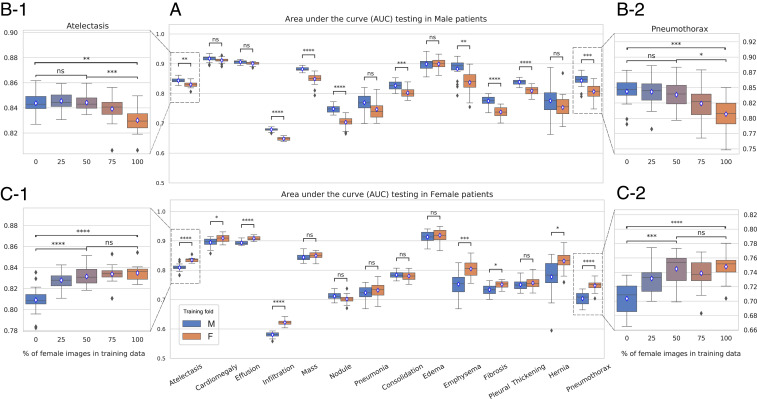
“( B and C ) AUC achieved for two exemplar diseases under a gradient of gender imbalance ratios, from 0% of female images in training data to 100%, with increments of 25%.”
MethodInfluentialProceedings of IEEE Conference on Computer Vision and Pattern Recognition
(1993) · doi:10.1109/cvpr.1993 · Cited by 17,667
A survey on deep learning in medical image analysis
Litjens, G., Kooi, T., Bejnordi, B. E., Setio, A. A. A., Ciompi, F., Ghafoorian, M., van der Laak, J. A. W. M., van Ginneken, B., & Sánchez, C. I. (2017) · Medical Image Analysis · doi:10.1016/j.media.2017.07.005 · Cited by 15,332 · cited 1×
“AI systems cannot only augment the information provided by such images with useful annotations (1, 2), but they are also starting to take autonomous decisions by performing computer-aided diagnosis (CAD) (3, 4).”
BackgroundDermatologist-level classification of skin cancer with deep neural networks
Esteva, A., Kuprel, B., Novoa, R. A., Ko, J., Swetter, S. M., Blau, H. M., & Thrun, S. (2017) · Nature · doi:10.1038/nature21056 · Cited by 14,362 · cited 9×
“Given a frontal X-ray image, the CAD system predicts the presence or absence of the 14 thoracic diseases.”
BackgroundInfluentialWang, X., Peng, Y., Lu, L., Lu, Z., Bagheri, M., & Summers, R. M. (2017) · 2017 IEEE Conference on Computer Vision and Pattern Recognition (CVPR) · doi:10.1109/cvpr.2017.369 · Cited by 4,616 · cited 4×
“We use the NIH Chest-XRay14 dataset (16, 19), which includes 112,120 chest X-ray images from 30,805 patients, labeled with 14 common thorax diseases (including hernia, pneumonia, fibrosis, emphysema, edema, cardiomegaly, pleural thickening, consolidation, mass, pneumothorax, nodule, atelectasis, effusion, and infiltra…”
MethodInfluential
Cited by
Items 501–600 of 898
Mastrodicasa, D., & van Assen, M. (2024) · BJR|Open · doi:10.1093/bjro/tzaf015 · Cited by 3
Ensembling mitigates scanner effects in deep learning medical image segmentation with deep-U-Nets
Ratnaparkhi, A., Gaonkar, B., Zarrin, D., Li, I., Cook, K., Laiwalla, A. N., Wilson, B. R., Attiah, M. A., Ahn, C., Villaroman, D., et al. (2022) · SPIE Medical Imaging: Computer-Aided Diagnosis · doi:10.1117/12.2611609 · Cited by 3
“For instance, it has been shown that gender imbalance in training sets produces biased classifiers, resulting in significantly lower performance in underrepresented groups 1 .”
BackgroundAI in Healthcare: Malignant or Benign?
Lloyd, N., & Khuman, A. S. (2022) · Brain informatics and health · doi:10.1007/978-981-19-5272-2_1 · Cited by 3
Zhang, Z., Jie, B., Wang, Z., Zhou, J., & Yang, Y. (2022) · Lecture notes in computer science · doi:10.1007/978-3-031-20500-2_51 · Cited by 3
Cherezov, D., Viswanathan, V. S., Gupta, A. B., & Madabhushi, A. (2023) · SPIE Medical Imaging: Image Processing · doi:10.1117/12.2655271 · Cited by 3
“Larrazabal et al. [14] found that a training set not balanced for patient gender resulted in poor performance of the CNN. Finally, Considering the impact of technical as well as biological factors on CNN’s performance and the still unresolved explanations of the impact of these factors on chest…”
BackgroundStudying the Effects of Sex-Related Differences on Brain Age Prediction Using Brain MR Imaging
Dibaji, M., Gianchandani, N., Nair, A., Singhal, M., de Souza, R. M., & Bento, M. (2023) · Lecture notes in computer science · doi:10.1007/978-3-031-45249-9_20 · Cited by 3
“Our experimental design followed a similar approach presented in [10].”
MethodRich, K., Tosefsky, K. N., Martin, K. C., Bashashati, A., & Yip, S. S. F. (2024) · Cancers · doi:10.3390/cancers16111976 · Cited by 3
“Another important priority is the use of demographically inclusive datasets across key variables such as age, sex, gender, and ethnicity during model training, as imbalanced medical imaging training datasets have been shown to lead to models that perform worse in underrepresented groups [64,65].”
BackgroundEnhancing Fairness of Visual Attribute Predictors
Hänel, T., Kumar, N., V, Schlesinger, D., Li, M., Ünal, E., Eslami, A., & Gumhold, S. (2023) · Lecture notes in computer science · doi:10.1007/978-3-031-26351-4_10 · Cited by 3
Nakayama, L. F., Ribeiro, L. Z., Ferraz, D., & Regatieri, C. V. (2024) · Springer eBooks · doi:10.1007/978-3-031-29358-0_16-1 · Cited by 3
Will Artificial Intelligence Transform Translational Medicine
Mann, D. L. (2021) · JACC Basic to Translational Science · doi:10.1016/j.jacbts.2021.03.005 · Cited by 3
“As 1 example, AI algorithms for interpreting chest x-rays that were trained on sex-imbalanced datasets have significantly lower performance when interpreting chest x-rays for the underrepresented sex (4).”
Integrating Sex, Gender, and Intersectional Analysis into Bioengineering
Schiebinger, L. L. (2022) · Current Opinion in Biomedical Engineering · doi:10.1016/j.cobme.2022.100388 · Cited by 3
Imputation Strategies Under Clinical Presence: Impact on Algorithmic FairnessPreprint
Jeanselme, V., De‐Arteaga, M., Zhang, Z., Barrett, J., & Tom, B. D. M. (2022) · arXiv (Cornell University) · doi:10.17863/cam.92891 · Cited by 3
Trustworthy Deep Learning for Medical Image SegmentationPreprint
Fidon, L. (2023) · arXiv (Cornell University) · doi:10.48550/arxiv.2305.17456 · Cited by 3
An AI-Guided Data Centric Strategy to Detect and Mitigate Biases in Healthcare DatasetsPreprint
Gulamali, F. F., Sawant, A. S., Liharska, L. E., Horowitz, C. R., Chan, L., Kovatch, P., Hofer, I. S., Singh, K., Richardson, L. D., Mensah, E., et al. (2023) · arXiv (Cornell University) · doi:10.48550/arxiv.2311.03425 · Cited by 3
Denoising diffusion model for increased performance of detecting structural heart diseasePreprint
Streiffer, C., Levin, M. G., Witschey, W. R. T., & Anyanwu, E. C. (2024) · medRxiv · doi:10.1101/2024.11.21.24317662 · Cited by 3
EYE and EYE-WD: Clinically Validated, Interpretable Ensemble Learning for Women's DiabetesPreprint
Alghamdi, S., Mehmood, R., Alqurashi, F. A., Alghamdi, T., AlAhmadi, A., & Ghazali, S. M. (2025) · SSRN Electronic Journal · doi:10.2139/ssrn.5386582 · Cited by 3
An autonomous agent for auditing and improving the reliability of clinical AI modelsPreprint
Kuhn, L. D., & Buettner, F. (2025) · arXiv (Cornell University) · doi:10.48550/arxiv.2507.05755 · Cited by 3
“Chest radiograph datasets differ markedly in disease prevalence, acquisition protocol and scanner vendor [26, 27].”
Fairness and Robustness of CLIP-Based Models for Chest X-raysPreprint
Sourget, T., Restrepo, D. S., Hudelot, C., Ferrante, E., Christodoulidis, S., & Vakalopoulou, M. (2025) · arXiv (Cornell University) · doi:10.48550/arxiv.2507.21291 · Cited by 3
“For example, studies like [9,14] show how the performance of convolutional neural networks (CNN) can vary based on demographic attributes such as age, sex, or race, particularly for X-rays.”
Self-citationBeyond the Training Distribution: Evaluating Predictions Under Distribution Shift and Selection BiasPreprint
Ulichney, A., & Coston, A. (2026) · arXiv (Cornell University) · doi:10.48550/arxiv.2606.14506 · Cited by 3
“…across high-stakes settings: medical imaging models underdiagnose underrepresented demographic groups [Seyyed-Kalantari et al., 2021a,b, Larrazabal et al., 2020, Vaidya et al., 2024, Pham et al., 2025], clinical risk scores exhibit performance drops across hospitals and demographic…”
Fairness in artificial intelligence‐driven multi‐organ image segmentation
Li, Q., Zhang, Y., Sun, L., Sun, M., Liu, M., Wang, Z., Wang, Q., Wang, S., & Wang, C. (2024) · iRadiology · doi:10.1002/ird3.101 · Cited by 2
Shih, Y.-C., Ko, C., Wang, S.-Y., Chang, C.-Y., Lin, S.-S., Huang, C.-W., Cheng, M., Chen, C., & Wu, Y. (2025) · European Journal of Nuclear Medicine and Molecular Imaging · doi:10.1007/s00259-025-07243-w · Cited by 2
GGAT: Gravitation-Based Graph Attention Networks
Wei, S., Tang, H., Jiao, P., & Wu, H. (2025) · IEEE Transactions on Signal and Information Processing over Networks · doi:10.1109/tsipn.2025.3583355 · Cited by 2
AbdulQawy, A., Sallam, E. A., & Elkholy, A. (2025) · Egyptian Informatics Journal · doi:10.1016/j.eij.2025.100739 · Cited by 2
Qin, Q., Djian, B., Merlo, E., Li, H., & Gambs, S. (2025) · Information and Software Technology · doi:10.1016/j.infsof.2025.107876 · Cited by 2
Fairness and Robustness of CLIP-Based Models for Chest X-Rays
Sourget, T., Restrepo, D. S., Hudelot, C., Ferrante, E., Christodoulidis, S., & Vakalopoulou, M. (2025) · Lecture notes in computer science · doi:10.1007/978-3-032-05870-6_2 · Cited by 2
Self-citationDivergence-Aware Training with Automatic Subgroup Mitigation for Breast Tumor Segmentation
Poeta, E., Vargas, L. E. S., Falcetta, D., Marciano’, V., Pastor, E., Cerquitelli, T., Baralis, E., & Zuluaga, M. A. (2025) · Lecture notes in computer science · doi:10.1007/978-3-032-05559-0_6 · Cited by 2
“Strategies include dataset rebalancing [11], generative data augmentation [18], and harmonization techniques to eliminate confounding variables [21].”
Danaei, S., Dehghanian, Z., Meftah, E., Naderi, N., Safavi‐Naini, S. A. A., Khorasanizade, F., & Rabiee, H. R. (2026) · PLOS Digital Health · doi:10.1371/journal.pdig.0001567 · Cited by 2
“By systematically analyzing annotation quality, demographic representation, and imaging characteristics, we aim to highlight gaps and opportunities for future dataset improvements.”
Lefort‐Besnard, J., Pron, A., Clement, P., Barker, G. J., Erez, Y., Fernández‐Seara, M. A., Feyzioğlu, S. B., Hartman, S., Iglesias‐Rey, R., Keil, V. C., et al. (2025) · Aperture Neuro · doi:10.52294/001c.144839 · Cited by 2
“An ample literature (see for example 14 in brain imaging or 15 and 16 from preclinical research) has demonstrated how diversity in research data is a requirement to avoid biased classifiers.”
The human pathome shows sex and tissue specific aging patterns
Ezra, M. B., Garbrecht, J. B., Rasmussen, N., Mediavilla, M. C., Heckenbach, I., Petr, M. A., Bakula, D., Mortensen, L. H., & Scheibye‐Knudsen, M. (2026) · npj Aging · doi:10.1038/s41514-025-00307-z · Cited by 3
Clinical Applications of Artificial Intelligence in Cardiovascular Imaging: Where Do We Stand?
Singhal, A., Bowyer-Howell, T., Sabharwal, N. K., Lewis, A. C. W., Mitchell, A. R. J., Rider, O. J., & Henry, J. (2026) · Life · doi:10.3390/life16030507 · Cited by 2
AI ‐Based Methods in Neuropathology for Diagnosis and Treatment of Brain Tumors
Roetzer-Pejrimovsky, T., Amberg, N., Widhalm, G., & Höftberger, R. (2026) · European Journal of Neurology · doi:10.1111/ene.70577 · Cited by 2
Mukhacheva Anna, V., Kadyrov Farit, N., & Subkhangulova Kseniya, A. (2026) · ЗДОРОВЬЕ НАСЕЛЕНИЯ И СРЕДА ОБИТАНИЯ - ЗНиСО / PUBLIC HEALTH AND LIFE ENVIRONMENT · doi:10.35627/2219-5238/2026-34-1-7-18 · Cited by 2
Malik, U., Ahmad, L. I., Hassan, A., Shafique, I., Mohsin, E., Ali, A., Alizai, M. H., & Qazi, I. A. (2026) · CHI Conference on Human Factors in Computing Systems · doi:10.1145/3772318.3791761 · Cited by 2
“Data bias exacerbates this when models trained on non-representative data underperform across populations [42, 49].”
Ren, Y., Su, W., Wu, Y., Dong, S., Liang, S., & Yang, X. (2026) · Advances in Medical Education and Practice · doi:10.2147/amep.s621485 · Cited by 2
Delgado, C. F., Ferretti, M. T., & Carnevale, A. (2024) · Elsevier eBooks · doi:10.1016/b978-0-443-13681-8.00012-6 · Cited by 2
Nakayama, L. F., Ribeiro, L. Z., Ferraz, D., & Regatieri, C. V. (2025) · Springer eBooks · doi:10.1007/978-3-031-29358-0_16-2 · Cited by 2
The Application of AI in Oncology Research in Türkiye: Impact and Future Directions
Osman, R., & Arslan, H. (2025) · Gazi University Journal of Science Part A Engineering and Innovation · doi:10.54287/gujsa.1768020 · Cited by 2
Mansilla, L., Claucich, E., Echeveste, R., Milone, D. H., & Ferrante, E. (2024) · Conicet · Cited by 2
Self-citationMachine learning in connectomics: from representation learning to model fitting
Ktena, S. I., Sotiras, A., & Ferrante, E. (2023) · Elsevier eBooks · doi:10.1016/b978-0-323-85280-7.00005-1 · Cited by 2
Self-citationThe hard problem of the androcentric context of AI: challenges for EU policy agendas
González-Martín, J. A. (2024) · Elsevier eBooks · doi:10.1016/b978-0-443-18851-0.00013-5 · Cited by 2
Schöpke-Gonzalez, A., Wyss-Gallifent, J., Brissey, C., Jordan, S. B., & Hemphill, L. (2024) · ACM Conference on Computer Supported Cooperative Work (CSCW) · doi:10.1145/3678884.3687140 · Cited by 2
“Some scholarship has emphasized the responsibility of datasets used to train algorithms [6, 19, 36].”
Application of Machine Learning in Lung Disease Detection: A Review
Chen, T. Y. (2025) · Theoretical and Natural Science · doi:10.54254/2753-8818/2025.21453 · Cited by 2
Achararit, P., Bongkaew, H., Chobpenthai, T., & Nonthasaen, P. (2025) · Legal Medicine · doi:10.1016/j.legalmed.2025.102612 · Cited by 2
Ethical, Regulatory, and Practical Challenges in Artificial Intelligence-Driven Chest Imaging
de Lima, J. B. C., Griffin, I., Gemmell, J. S., Davis, K., Amanamba, U., Zanjani, N. A., Siyanaki, M. R. H., Mohammed, T.-L. H., Benos, T., Rodrigues, R. S., et al. (2025) · Seminars in Roentgenology · doi:10.1053/j.ro.2025.06.003 · Cited by 2
Zsido, R. G., & Sacher, J. (2021) · Nomos Verlagsgesellschaft mbH & Co. KG eBooks · doi:10.5771/9783748924869-27 · Cited by 2
Analysis of Potential Biases on Mammography Datasets for Deep Learning Model Development
Gerbolés, B. Z., López‐Linares, K., García, M. J., Rebescher, K. M., Lalaguna, I., Marco, E. A., Álvarez, M. B. C., Garcia, J., Ledesma‐Carbayo, M. J., & Macía, I. (2022) · Lecture notes in computer science · doi:10.1007/978-3-031-17721-7_7 · Cited by 2
Kwak, H., An, J., & Park, K. (2022) · Proceedings of the International AAAI Conference on Web and Social Media · doi:10.1609/icwsm.v16i1.19397 · Cited by 2
Comparative analysis and application of deep learning polyp detection in colonoscopy
Sun, B., Zhang, W., & Xie, X. (2022) · China Automation Congress (CAC) · doi:10.1109/cac57257.2022.10055481 · Cited by 2
“With the development of computer software and hardware, electronic engineering, mathematics, statistics and other related contents, computer-aided diagnosis technology has also been promoted to a large extent, especially in the field of medical imaging [4-5].”
Trustworthy Computing for Biomedical Challenges
Wang, H. (2023) · IEEE International Conference on Healthcare Informatics (ICHI) · doi:10.1109/ichi57859.2023.00096 · Cited by 2
Guest editorial: Deep learning for medical image analysis
Li, H., Zhang, S., & Metaxas, D. (2021) · Neurocomputing · doi:10.1016/j.neucom.2021.01.065 · Cited by 2
Meaningfully Explaining Model Mistakes Using Conceptual Counterfactuals.Preprint
Abid, A., Yüksekgönül, M., & Zou, J. (2021) · arXiv (Cornell University) · Cited by 2
Sex-based differences in nuclear medicine imaging and therapy
Slart, R. H. J. A., de Geus‐Oei, L., Stevens, J., Elsinga, P., Ivashchenko, O., & Erba, P. A. (2023) · European Journal of Nuclear Medicine and Molecular Imaging · doi:10.1007/s00259-023-06113-7 · Cited by 2
“Multiple studies [17, 18] have clearly shown that training deep learning or machine learning models based on sex- or race-unbalanced datasets often leads to unintentional, but even greater, discrepancies between these groups.”
BackgroundHuman Retinotopic Mapping: from Empirical to Computational Models of RetinotopyPreprint
Ribeiro, F. L., Benson, N. C., & Puckett, A. M. (2024) · PsyArXiv (OSF Preprints) · doi:10.31234/osf.io/7eu9m · Cited by 2
Persistence landscapes: Charting a path to unbiased radiological interpretation
Singh, Y., Farrelly, C., Hathaway, Q. A., & Carlsson, G. (2024) · Oncotarget · doi:10.18632/oncotarget.28671 · Cited by 2
Toward fair AI-driven medical text generation
Zhang, Y., & Song, J. (2025) · Nature Computational Science · doi:10.1038/s43588-025-00807-8 · Cited by 2
SafeR-CLIP: Mitigating NSFW Content in Vision-Language Models While Preserving Pre-Trained KnowledgePreprint
Yousaf, A., Fioresi, J., Beetham, J., Bedi, A. S., & Shah, M. A. (2025) · AAAI Publications (The Association for the Advancement of Artificial Intelligence (AAAI)) · doi:10.48550/arxiv.2511.16743 · Cited by 2
“The removal of harmful content from AI models has become an increasing focus of research (Wang et al. 2022; Steed and Caliskan 2021; Larrazabal et al. 2020; Denton et al. 2021; Raza et al. 2025), particularly in vision-language systems trained on large-scale, web-crawled datasets such as LAION-5B…”
Transforming Patient Feedback into Action: An AI-Powered Intelligent Hospital System
Esfahani, S. M. P. M. (2024) · TSpace (University of Toronto) · Cited by 2
People-Centred Medical Image Analysis via Fairness-Aware Human-AI CooperationPreprint
Zhang, Z., Masroor, M., Nguyen, C., Hassan, T., Chen, Y., Rosewarne, D., Wells, K. D., Do, T.-T., & Carneiro, G. (2026) · arXiv (Cornell University) · doi:10.48550/arxiv.2604.26991 · Cited by 2
“Ensuring fair performance across diverse populations is recognised as an ethical and regulatory imperative given that algorithmic biases can undermine trust in AI systems [27] and exacerbate health disparities, particularly for under-represented populations [28, 29].”
Artificial intelligence and cardiovascular disease in women
Campos, B. A. F., Adedinsewo, D. A., Tsang, W., & Silversides, C. K. (2023) · Elsevier eBooks · doi:10.1016/b978-0-323-90534-3.00027-5 · Cited by 1
The Ethics of AI and Robotics in Public Health: An East Asian Perspective
Wheeler, B. (2023) · Springer eBooks · doi:10.1007/978-3-031-25110-8_35 · Cited by 1
Sneha, Mohanta, A., Chatterjee, S., & Rout, P. C. (2024) · Advances in finance, accounting, and economics book series · doi:10.4018/979-8-3693-7580-8.ch017 · Cited by 1
SPARC: Scalable Path-Specific Counterfactual Fairness via Causal Conditional Independence
Tian, B., He, Y., Wang, Z., Liu, M., Wu, Y., & Li, A. (2026) · Lecture notes in computer science · doi:10.1007/978-3-032-37718-0_18 · Cited by 1
Erenstein, H., Krijnen, W. P., van der Heij-Meijer, A., & van Ooijen, P. M. A. (2025) · Journal of Imaging · doi:10.3390/jimaging11030090 · Cited by 1
“The CNN performance encountered, with an average AUROC of 0.812 ± 0.066, for all LR and ULR models in this study is comparable to those described in other publications [24,33,38,48].”
InfluentialVallverdú, J. (2025) · Philosophies · doi:10.3390/philosophies10030051 · Cited by 1
“However, data-driven methods risk algorithmic bias if training sets are limited or skewed [24].”
CNN in Medical Imaging: Advantages, Challenges, and Future Scope
Shaikh, A., & Kothuru, R. T. (2025) · Advances in computational intelligence and robotics book series · doi:10.4018/979-8-3373-0735-0.ch006 · Cited by 1
Societal, Legal, and Ethical Aspects of Trustworthy AI
Abadía, M. C., Goisauf, M., Hesso, I., Kayyali, R., Kogut-Czarkowska, M., Martínez, R. M., & Jiménez, P. N. (2025) · Springer eBooks · doi:10.1007/978-3-031-89963-8_1 · Cited by 2
Waldock, W. J., Tekkis, N. P., Zhang, J., & Ashrafian, H. (2025) · Frontiers in Endocrinology · doi:10.3389/fendo.2025.1527092 · Cited by 1
“Evidence from real-world cases (99) needs to be compiled to ensure quality training optimises diagnostic and triage accuracy (100).”
Applications of Artificial Intelligence in Plastic and Reconstructive Surgery
Reese, V. C., Moawad, R., Mandalapu, S. A., Krapp, M., Sanders, C., & Albano, N. J. (2025) · Artificial intelligence · doi:10.5772/intechopen.1011825 · Cited by 1
Using Artificial Intelligence to Advance Renal Cancer Diagnosis, Treatment, and Precision Medicine
Walsh, D., & Hayes, C. (2025) · annals of urologic oncology · doi:10.32948/auo.2025.08.20 · Cited by 1
Machine Learning in Medicine: A New Paradigm for Diagnosis and Treatment
Posunko, A., Chavarha, M., Bashkirova, L., Vasylyuk-Zaitseva, S., & Abramchuk, O. (2025) · Futurity Medicine. · doi:10.57125/fem.2025.09.30.01 · Cited by 1
“Racial and gender bias in medical algorithms is particularly problematic, as it can result in systematic diagnostic errors or suboptimal treatment decisions for certain ethnic groups [72].”
Robustness and Sex Differences in Skin Cancer Detection: Logistic Regression vs CNNs
Pedersen, N., Sydendal, R., Wulff, A., Raumanns, R., Petersen, E., & Cheplygina, V. (2025) · Lecture notes in computer science · doi:10.1007/978-3-032-05870-6_12 · Cited by 1
“However, such models have also been shown to suffer from spurious correlations or shortcut learning [27,4,14] as well as biases across patient sex [2,17] or skin types [10].”
Does a Rising Tide Lift All Boats? Bias Mitigation for AI-Based CMR Segmentation
Lee, T., Anton, E. P., Ruijsink, B., Shi, M., & King, A. P. (2025) · Lecture notes in computer science · doi:10.1007/978-3-032-05870-6_9 · Cited by 1
Won, J. B., Neve, W. D., Vankerschaver, J., & Özbulak, U. (2025) · Lecture notes in computer science · doi:10.1007/978-3-032-05325-1_53 · Cited by 1
“Furthermore, the presence of domain-specific biases and imbalanced data distributions exacerbates the problem, as certain demographic groups or disease types may be overrepresented, making it challenging to disentangle spurious associations from meaningful clinical features [16,26].”
An auxiliary diagnostic model based on joint learning of brain and lung data
Ye, L. P., Li, L., Hua, F., & Yang, Y. (2025) · Frontiers in Medicine · doi:10.3389/fmed.2025.1593074 · Cited by 1
Parkar, A. P., Offiah, A. C., Ene, M.-A., Gheonea, I.-A., & European Society of Radiology (ESR) (2025) · Insights into Imaging · doi:10.1186/s13244-025-02144-w · Cited by 1
Jakubowski, S., Maj, A., Romaszewski, A., & Duplaga, M. (2025) · Zdrowie Publiczne i Zarządzanie · doi:10.4467/20842627oz.25.003.22048 · Cited by 1
Coded Discrimination: Gender Blindspots in Artificial Intelligence
Joseph, V., & Mandla, V. R. (2025) · Journal of Rural Development · doi:10.25175/jrd/2024/v43/i4/173424 · Cited by 1
Heriawan, R., Cahyadi, N. V., & Kartawiguna, D. (2025) · International Conference on Information Management and Technology (ICIMTech) · doi:10.1109/icimtech67074.2025.11265576 · Cited by 1
“Current studies reveal that deep learning models often inherit data biases, leading to diagnostic disparities across demographic groups [4].”
Predicting biological sex in pediatric skeleton X-rays using artificial intelligence
Janisch, M., Scherkl, M., Stranger, N., Elsayed, H., Singer, G., Till, H., Zellner, M., Hržić, F., & Tschauner, S. (2025) · Scientific Reports · doi:10.1038/s41598-025-28197-x · Cited by 1
The cause and effect of an MR image: Robustness and generalizability
Feragen, A., Petersen, E., & Ganz, M. (2025) · Advances in magnetic resonance technology and applications · doi:10.1016/b978-0-443-14109-6.00016-x · Cited by 1
Artificial Intelligence-Enabled Electrocardiography Identifies Osteoporosis and has Prognostic Value
Hsing, S.-C., Tsai, D., Lin, C., Lin, C.-S., Lee, C., Wang, C. H., & Fang, W. (2025) · Journal of Medical Systems · doi:10.1007/s10916-025-02333-6 · Cited by 1
“[35].”
Factors Impacting the Performance of Deep Learning Detection of Pulmonary Emboli
Sorin, V., Korfiatis, P. D., Langer, S. G., Hahn, L. D., Bratt, A. K., Cook, C. J., Sobek, J. D., Butler, C. S., Wald, C., Erickson, B. J., et al. (2025) · Journal of the American College of Radiology · doi:10.1016/j.jacr.2025.12.028 · Cited by 1
Imanov, O. Y. L., & Gunalp, O. (2026) · arXiv (Cornell University) · doi:10.48550/arxiv.2601.00990 · Cited by 2
The 42% Accuracy Drop: When Vision Transformers Fail Across Medical Imaging Datasets
Jahangeer, J. S., & Shanmugavadivu, P. (2025) · IEEE International Conference on ICT in Business Industry & Government (ICTBIG) · doi:10.1109/ictbig68706.2025.11323789 · Cited by 1
Alghareeb, N. M., Al-Nasser, M. Y., Alzahrani, J. H., Alghamdi, S. A., Alzahrani, E. G., Alghamdi, L. S. A., Alnassri, S. A., Alzahrani, S. A., & Morfeq, H. A. (2026) · Journal of Advanced Trends in Medical Research · doi:10.4103/atmr.atmr_136_25 · Cited by 1
Fairness-Aware Medical Image Analysis for Consumer Electronics Under Imbalanced Data
Yu, Y., Liu, C., Chakraborty, C., Guduri, M., & Ding, F. (2026) · IEEE Transactions on Consumer Electronics · doi:10.1109/tce.2026.3654674 · Cited by 1
“Studies have shown that models trained on imbalanced datasets often underperform on specific user or device subgroups, leading to disparate service outcomes [5], [29].”
Understanding-informed Bias Mitigation for Fair CMR Segmentation
Lee, T., Anton, E. P., Ruijsink, B., Masci, P. G., Keehn, L., Chowienczyk, P., Haseler, E., Shi, M., & King, A. (2025) · The Journal of Machine Learning for Biomedical Imaging · doi:10.59275/j.melba.2025-6747 · Cited by 1
A Comprehensive Review on Dataset Pruning for Medical Imaging
Sedda, A., Gaceb, D., Touazi, F., & Benzenati, T. (2025) · International Conference on Artificial Intelligence and Innovative Applications (AIIA) · doi:10.1109/aiia68273.2025.11383583 · Cited by 1
“Quality assessment techniques have been developed for automated detection of corrupted medical images across multiple modalities [14].”
Bridging the Gap: AI-Driven Fusion of Skin Tones in Skin Cancer Datasets
Sathya, D., & Arya, K. V. (2026) · International Conference on Intelligent and Innovative Technologies in Computing, Electrical and Electronics (IITCEE) · doi:10.1109/iitcee67948.2026.11394440 · Cited by 1
“This approach helps diversify appearances while preserving lesion features, though artifacts and unnatural transitions remain a concern [10].”
DUCX: Decomposing Unfairness in Tool-Using Chest X-Ray Agents
Xu, Z., Jin, R., & Li, X. (2026) · Lecture notes in computer science · doi:10.1007/978-3-032-38079-1_22 · Cited by 1
Generative Artificial Intelligence to Tackle Visual Data Accessibility Challenges
Goetschalckx, L., Wang, K., Willems, S., & Schepper, T. D. (2026) · Springer eBooks · doi:10.1007/978-3-032-10561-5_6 · Cited by 1
Pujadas, E. R., Hernández-González, J., Dang, V. N., Camacho, M., Lekadir, K., & Starmans, M. P. A. (2026) · International Journal of Imaging Systems and Technology · doi:10.1002/ima.70329 · Cited by 1
Task-Based Sampling of Patient Data for Rigorous Machine Learning/AI Performance Assessment
Baughan, N. M., Whitney, H. M., Drukker, K., Sahiner, B., Hu, T., KIM, G. H., McNitt-Gray, M. F., Myers, K. J., & Giger, M. L. (2026) · Journal of Imaging Informatics in Medicine · doi:10.1007/s10278-026-01894-3 · Cited by 1
Ethics, Bias Mitigation, and Model Risk Management
Parween, S., Dubey, N., Bharadwaj, R., Reddy, B. A., Sanghavi, H., Prasan, U. D., & Bhoopathy, V. (2026) · Advances in computational intelligence and robotics book series · doi:10.4018/979-8-3373-6851-1.ch006 · Cited by 1
Casasola-Greiner, R. (2026) · Springer eBooks · doi:10.1007/978-3-658-50335-2_5 · Cited by 1
Trustworthy AI for radar vital signs: detecting and mitigating gender bias in healthcare
Ghadban, N., Cooper, J. M., & Kernec, J. L. (2026) · Complex & Intelligent Systems · doi:10.1007/s40747-026-02296-2 · Cited by 1
“…female symptom reports because male subjects dominated the training set [11], and convolutional networks trained on gender-imbalanced chest-radiograph datasets performed worse on the minority gender, prompting calls for regulatory guidelines to mandate diversity in medical imaging datasets [12].”
Fairness at Risk: Where Bias Emerges in Machine Learning
Albuquerque, O. D. P., Fantinato, M., & Peres, S. M. (2026) · Expert Systems · doi:10.1111/exsy.70265 · Cited by 1
Xiang, L., Fang, Y., & Zhanzhan (2026) · BMC Medical Informatics and Decision Making · doi:10.1186/s12911-026-03548-4 · Cited by 1
“The majority of AI models are developed and validated on retrospective, single-center cohorts predominantly from high-income countries, often lacking adequate representation of elderly populations, diverse ethnicities, and varied healthcare settings [18, 19].”
Artificial Intelligence Across the Radiology Workflow: A Nine-Stage Narrative Review
Rai, M. C. E., Far, A. B., Darweesh, M., Dhou, S., Aburaed, N., El, S., Elkhazendar, M., & Ellahham, S. (2026) · Diagnostics · doi:10.3390/diagnostics16101485 · Cited by 1
“…experts cannot [188], and that gender imbalance in training datasets consistently degrades classifier performance for underrepresented groups [124], underscores that bias in medical imaging AI represents a systemic challenge requiring proactive detection and mitigation across the full model…”
Explainable and Bias-Aware AI Models for Clinical Decision Support in U.S.Healthcare Systems
Sharma, S., Giami, K. L., & Chukwuemeka, U. (2026) · International Journal of Public Health and Nursing · doi:10.54536/ijphn.v2i1.6988 · Cited by 1
Metadata
- Authors
- Larrazabal, A. J., Nieto, N., Peterson, V., Milone, D. H., & Ferrante, E.
- Affiliations
- Consejo Nacional de Investigaciones Científicas y Técnicas (AR)
- Corresponding author
- Ferrante, Enzo
- Venue
- Proceedings of the National Academy of Sciences
- Publisher
- National Academy of Sciences
- Published
- 2020-05-26
- Volume
- 117
- Issue
- 23
- Pages
- 12592-12594
- ISSN
- 0027-8424 (ISSN-L)
- 1091-6490
- PMC
- PMC7293650
- OpenAlex
- W3030030520
- Cited by
- 685
- References
- 36
- Citations by year
- 2026: 117 · 2025: 149 · 2024: 125 · 2023: 110 · 2022: 101 · 2021: 71 · 2020: 10
- FWCI
- 21.48
- Type
- journal article
- Language
- en
- Open access
- hybrid
- doi.org
- Licence
- Locations
- Proceedings of the National Academy of Sciences (publishedVersion, cc-by)
- PubMed Central (publishedVersion, cc-by)
- PubMed (publishedVersion)
- LA Referencia (Red Federada de Repositorios Institucionales de Publicaciones Científicas) (submittedVersion, cc-by-nc-sa)
- Funders
- AXA Research Fund (2017-AXA-PDOC1-097)
- MINCyT | Agencia Nacional de Promoción Científica y Tecnológica (PICT 2017-4596, PICT-2018-03907, PICT 2014-2627, PICT-2018-3384)
- Universidad Nacional del Litoral (CAID-PIC-50220140100084L, 2016-082)
- Topics
- Health Sciences › Medicine › Health Informatics › Artificial Intelligence in Healthcare and Education
- Physical Sciences › Computer Science › Artificial Intelligence › Ethics and Social Impacts of AI
- Health Sciences › Medicine › Public Health, Environmental and Occupational Health › Sex and Gender in Healthcare
- Keywords
- gender imbalance, medical imaging datasets, algorithmic fairness, computer-aided diagnosis, X-ray images, thoracic disease diagnosis, deep neural network, underrepresented groups, dataset collection
- MeSH terms
- Deep Learning, Female, Humans, Male, Radiographic Image Interpretation, Computer-Assisted, Reference Standards, Sex Factors, Radiography, Thoracic, Bias, Datasets as Topic
About these checks
Registry, retraction, Cites and statistics results are computed, not judged, with one exception: a printed reference that no index lists is read once by a model before it counts as a citation error. Claims are extracted by a model and kept only when their quote appears verbatim in the text; each cited source is then checked, with a model’s help, for whether it says what the claim relies on. Those verdicts can be wrong — read the claim’s quote and the cited source before relying on one.
Statistics and arithmetic are recomputed, not judged.
Confidence bands are shown only for fields calibrated on our annotated test set. None is calibrated yet, so no band is shown.
What counts as a claim ›How we measure confidence ›How we check this ›
Are you an author, or do you see a problem with this page? Request a review
Data sources
Bibliographic data: Semantic Scholar, OpenAlex, Crossref.
Contains information from the Semantic Scholar Academic Graph Datasets, made available under the ODC Attribution License (ODC-BY 1.0).
Semantic Scholar’s data is described in: Kinney, R., et al. (2023). The Semantic Scholar Open Data Platform. arXiv:2301.10140.
