

The DOI matches its Crossref record; 35 of the 36 references it cites were found in a registry or an index, and 1 are not checked yet.
Scaling up behavioral science interventions in online education
Open accessAbstract
Significance: Low persistence in educational programs is a major obstacle to social mobility. Scientists have proposed many scalable interventions to support students learning online. In one of the largest international field experiments in education, we iteratively tested established behavioral science interventions and found small benefits depending on individual and contextual characteristics. Forecasting intervention efficacy using state-of-the-art methods yields limited improvements. Online education provides unprecedented access to learning opportunities, as evidenced by its role during the 2020 coronavirus pandemic, but adequately supporting diverse students will require more than a light-touch intervention. Our findings encourage funding agencies and researchers conducting large-scale field trials to consider dynamic investigations to uncover and design for contextual heterogeneity to complement static investigations of overall effects.
Overview
The claims and statistics of this paper haven’t been checked yet.
Run the check — free, no account needed. It reads the open-access text and checks the sources it cites.
Integrity signals
Registry
Cites
Statistics
Figures
Verification
Claims the paper makes
The claims and statistics of this paper haven’t been checked yet.
Run the check — free, no account needed. It reads the open-access text and checks the sources it cites.
Claims other papers make about this one
Each is checked against this paper’s own text: does it say what the citing paper says it does?
The source backs part of the claim, not all of it — or backs it for a different population, condition or comparison.
In the citing paper
“However, asynchronous courses often rely heavily on self- regulation and intrinsic motivation, which may raise challenges for learners, such as low engagement, high dropout rates, and a lack of immediate feedback (Kizilcec etal.2020).”
From Game‐Based Learning for Asynchronous AI Literacy Course: Approach to Improve Students' Cognitive, Behavioural, Affective, and Ethical Learning of AI (2026) · cites this paper as Kizilcec et al. 2020
Experimental — accuracy not yet measuredThe source backs part of the claim, not all of it — or backs it for a different population, condition or comparison.
In the citing paper
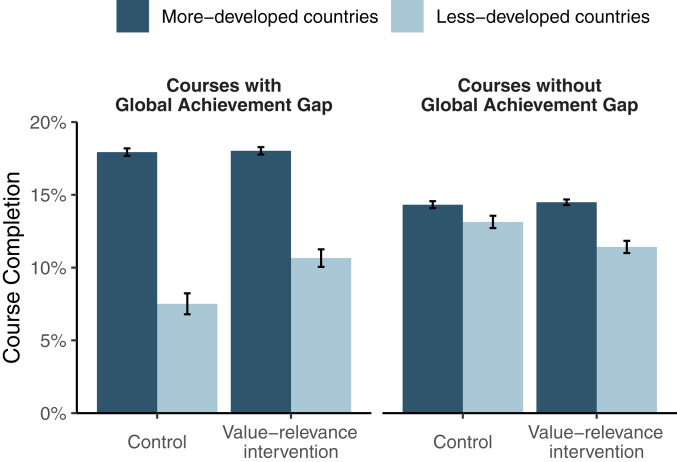
“This intervention increased completion rates only for students in individual countries.”
From Using personalized support & school-based study groups to increase teachers’ participation in MOOCs: Findings from two European pilot projects (2021) · cites this paper as Kizilcec et al., 2020
Experimental — accuracy not yet measuredThe source backs part of the claim, not all of it — or backs it for a different population, condition or comparison.
In the citing paper
“This second intervention was found to increase completion rates only in a subset of courses carried out in developing countries.”
From Using personalized support & school-based study groups to increase teachers’ participation in MOOCs: Findings from two European pilot projects (2021) · cites this paper as Kizilcec et al., 2020
Experimental — accuracy not yet measuredThe cited source says what the claim attributes to it.
In the citing paper
“Overall, the authors conclude that the impacts of such interventions could be highly heterogeneous across contexts, type of participants and that support interventions should be targeted and take those factors in due account.”
From Using personalized support & school-based study groups to increase teachers’ participation in MOOCs: Findings from two European pilot projects (2021) · cites this paper as Kizilcec et al., 2020
The cited source says what the claim attributes to it.
In the citing paper
“While this intervention increased shortterm persistence, it did not increase course completion, which was previously found (Yeomans and Reich, 2017).”
From Using personalized support & school-based study groups to increase teachers’ participation in MOOCs: Findings from two European pilot projects (2021) · cites this paper as Kizilcec et al., 2020
The cited source says what the claim attributes to it.
In the citing paper
“However, robust evidence on what works is limited and is not specifically focused on teachers (Kizilcec et al., 2020).”
From Using personalized support & school-based study groups to increase teachers’ participation in MOOCs: Findings from two European pilot projects (2021) · cites this paper as Kizilcec et al., 2020
Self-check
Percentages, sums and reported differences re-computed from the paper’s own numbers.
The self-check needs the paper’s full text.
Citations
Cites
Implementation intentions and goal achievement: a meta-analysis of effects and processes
Gollwitzer, P. M., & Sheeran, P. (2006) · Advances in Experimental Social Psychology · doi:10.1016/s0065-2601(06)38002-1 · Cited by 3,236 · cited 2×
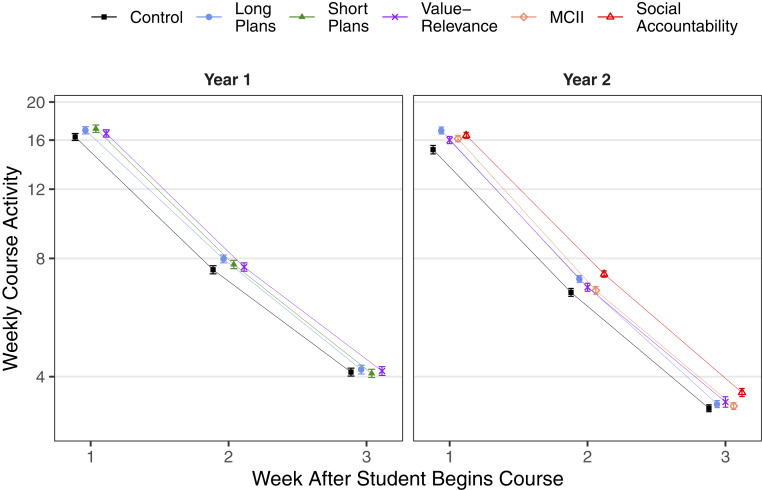
“The “mental contrasting with implementation intentions” (MCII) intervention prompts students to reflect on the benefits and barriers to achieving their goal (20) and then plan ahead for how to overcome obstacles (15).”
BackgroundSurrogate endpoints in clinical trials: Definition and operational criteria
Prentice, R. L. (1989) · Statistics in Medicine · doi:10.1002/sim.4780080407 · Cited by 2,057
A national experiment reveals where a growth mindset improves achievement
Yeager, D. S., Hanselman, P., Walton, G. M., Murray, J. S., Crosnoe, R., Muller, C., Tipton, E., Schneider, B., Hulleman, C. S., Hinojosa, C. P., et al. (2019) · Nature · doi:10.1038/s41586-019-1466-y · Cited by 1,513
Promoting Interest and Performance in High School Science Classes
Hulleman, C. S., & Harackiewicz, J. M. (2009) · Science · doi:10.1126/science.1177067 · Cited by 1,220
Reducing the racial achievement gap: A social-psychological intervention
Cohen, G. L., Garcia, J., Apfel, N., & Master, A. (2006) · Science · doi:10.1126/science.1128317 · Cited by 1,073
Wise interventions: Psychological remedies for social and personal problems.
Walton, G. M., & Wilson, T. D. (2018) · Psychological Review · doi:10.1037/rev0000115 · Cited by 617
Future thought and behaviour change
Oettingen, G. (2012) · European Review of Social Psychology · doi:10.1080/10463283.2011.643698 · Cited by 504
Site Selection Bias in Program Evaluation *
Allcott, H. (2015) · The Quarterly Journal of Economics · doi:10.1093/qje/qjv015 · Cited by 426
Hall, A. T., Frink, D. D., & Buckley, M. R. (2017) · Journal of Organizational Behavior · doi:10.1002/job.2052 · Cited by 335
Attrition and Achievement Gaps in Online Learning
Kizilcec, R. F., & Halawa, S. (2015) · Proceedings of the Second (2015) ACM Conference on Learning @ Scale · doi:10.1145/2724660.2724680 · Cited by 307
Self-citation
Research works printed but not linked: 3
- C. R. Sunstein, R. H. Thaler, Nudge: Improving Deisions About Health, Wealth, and Happiness, (Yale Univeresity Press, New Haven, 2008).
- C. Zhenghao ., Who’s benefiting from MOOCs, and why. Harv. Bus. Rev. 25, 2–8 (2015).
- 10.1353/bsp.2015.0011 · DOI
Cited by
Sorted by citations
Algorithmic fairness in education
Kizilcec, R. F., & Lee, H. (2022) · Routledge eBooks · doi:10.4324/9780429329067-10 · Cited by 339
Self-citationLiu, S., Liu, S., Liu, Z., Peng, X., & Yang, Z. (2022) · Computers & Education · doi:10.1016/j.compedu.2022.104461 · Cited by 269
Kuo, T. M., Tsai, C., & Wang, J. (2021) · The Internet and Higher Education · doi:10.1016/j.iheduc.2021.100819 · Cited by 210
(2021) · DOAJ (DOAJ: Directory of Open Access Journals) · Cited by 163
Ionescu, C. A., Paschia, L., Nicolau, N. L. G., Stănescu, S. G., Stancescu, V. M. N., Coman, M. D., & Uzlău, M. C. (2020) · Sustainability · doi:10.3390/su12219030 · Cited by 152
Jovanović, J., Saqr, M., Joksimovíc, S., & Gašević, D. (2021) · Computers & Education · doi:10.1016/j.compedu.2021.104251 · Cited by 152
Noor, U., Younas, M. S., Aldayel, H. S., Menhas, R., & Qingyu, X. (2022) · Frontiers in Psychology · doi:10.3389/fpsyg.2022.933974 · Cited by 161
Facilitating goal setting and planning to enhance online self-regulation of learning
Wong, J., Baars, M., He, M., de Koning, B. B., & PAAS, F. G. W. C. (2021) · Computers in Human Behavior · doi:10.1016/j.chb.2021.106913 · Cited by 119
"I was afraid, but now I enjoy being a streamer!"
Chen, X., Chen, S., Wang, X., & Huang, Y. (2021) · Proceedings of the ACM on Human-Computer Interaction · doi:10.1145/3432936 · Cited by 85
Lambert, B., Caza, B. B., Trinh, E. N., & Ashford, S. J. (2022) · Academy of Management Annals · doi:10.5465/annals.2020.0351 · Cited by 73
Kulikowski, K., Przytuła, S., & Sułkowski, Ł. (2021) · Sustainability · doi:10.3390/su13052752 · Cited by 84
Growth and Collaboration in Massive Open Online Courses: A Bibliometric Analysis
Wahid, R., Ahmi, A., & Alam, A. S. A. F. (2020) · The International Review of Research in Open and Distributed Learning · doi:10.19173/irrodl.v21i4.4693 · Cited by 77
A Dynamical Reconceptualization of Executive-Function Development
Perone, S., Simmering, V. R., & Buss, A. T. (2021) · Perspectives on Psychological Science · doi:10.1177/1745691620966792 · Cited by 81
Methodological and Technological Advancements in E-Learning
Dritsas, E., & Τρίγκα, Μ. (2025) · Information · doi:10.3390/info16010056 · Cited by 93
A concrete example of construct construction in natural language
Yeomans, M. (2020) · Organizational Behavior and Human Decision Processes · doi:10.1016/j.obhdp.2020.10.008 · Cited by 61
Self-citationLearning engagement in massive open online courses: A systematic review
Wang, R., Cao, J., Xu, Y., & Li, Y. (2022) · Frontiers in Education · doi:10.3389/feduc.2022.1074435 · Cited by 59
Positive Artificial Intelligence in Education (P-AIED): A Roadmap
Bittencourt, I. I., Challco, G. C., Santos, J., Fernandes, S. C. S., Silva, J., Batista, N., Hutz, C. S., & Isotani, S. (2023) · International Journal of Artificial Intelligence in Education · doi:10.1007/s40593-023-00357-y · Cited by 63
Shah, V. G., Murthy, S., Warriem, J. M., Sahasrabudhe, S. S., Banerjee, G., & Iyer, S. R. (2022) · Educational Technology Research and Development · doi:10.1007/s11423-022-10081-4 · Cited by 42
Floss, M., Ilgenfritz, C. A. V., Rodrigues, Y. E., Dilda, A. C., Corrêa, A. P. B., de Melo, D. A. C., Barros, E., Guzmán, C. A. F., Devlin, E., Saldiva, P. H. N., et al. (2021) · Frontiers in Public Health · doi:10.3389/fpubh.2021.663783 · Cited by 35
IoT Based Virtual E-Learning System for Sustainable Development of Smart Cities
Setiawan, R., Devadass, M. M. V., Rajan, R., Sharma, D. K., Singh, N. P., Amarendra, K., Ganga, R. K. R., Manoharan, R. R., Subramaniyaswamy, V., & Sengan, S. (2022) · Journal of Grid Computing · doi:10.1007/s10723-022-09616-z · Cited by 35
Using causal models to bridge the divide between big data and educational theory
Kitto, K., Hicks, B., & Shum, S. B. (2023) · British Journal of Educational Technology · doi:10.1111/bjet.13321 · Cited by 41
Zhang, K. W., Janson, L., & Murphy, S. A. (2020) · PubMed · doi:10.48550/arxiv.2002.03217 · Cited by 46
Alon, L., Sung, S., Cho, J., & Kizilcec, R. F. (2023) · Computers & Education · doi:10.1016/j.compedu.2023.104870 · Cited by 39
Self-citationPreregistration and registered reports
Reich, J. (2021) · Educational Psychologist · doi:10.1080/00461520.2021.1900851 · Cited by 33
Self-citationAl-Shamali, S., Al-Shamali, A., Alsaber, A., Alkandari, A. M., AlMutairi, S., & Alaya, A. (2022) · Sustainability · doi:10.3390/su142315824 · Cited by 32
Saqr, M., Jovanović, J., Viberg, O., & Gašević, D. (2022) · Studies in Higher Education · doi:10.1080/03075079.2022.2061450 · Cited by 36
Pogorskiy, E., & Beckmann, J. F. (2022) · Computers and Education Artificial Intelligence · doi:10.1016/j.caeai.2022.100111 · Cited by 38
Ryan, A., Prieto, E., Miller, A., & Gore, J. M. (2024) · Educational Research Review · doi:10.1016/j.edurev.2024.100620 · Cited by 46
Modelling within‐person idiographic variance could help explain and individualize learning
Saqr, M. (2023) · British Journal of Educational Technology · doi:10.1111/bjet.13309 · Cited by 30
Gal, D., & Simonson, I. (2020) · Consumer Psychology Review · doi:10.1002/arcp.1068 · Cited by 25
Effects of inductive learning and gamification on news veracity discernment.
Modirrousta-Galian, A., Higham, P. A., & Seabrooke, T. (2023) · Journal of Experimental Psychology Applied · doi:10.1037/xap0000458 · Cited by 36
The Promises and Pitfalls of Self-regulated Learning Interventions in MOOCs
Вилкова, К. (2021) · Technology Knowledge and Learning · doi:10.1007/s10758-021-09580-9 · Cited by 29
A Macro-Scale MOOC Analysis of the Socioeconomic Status of Learners and Their Learning Outcomes
Ruipérez‐Valiente, J. A. (2022) · Advances in mobile and distance learning book series · doi:10.4018/978-1-6684-4364-4.ch001 · Cited by 23
New era of medical education: asynchronous and synchronous online teaching during and after COVID-19
Mao, S., Guo, L., Li, P., Shen, K., Jiang, M., & Liu, Y. (2023) · AJP Advances in Physiology Education · doi:10.1152/advan.00144.2021 · Cited by 23
Utamachant, P., Anutariya, C., & Pongnumkul, S. (2023) · Smart Learning Environments · doi:10.1186/s40561-023-00257-7 · Cited by 23
Zerkouk, M., Mihoubi, M., Chikhaoui, B., & Wang, S. (2025) · International Journal of Artificial Intelligence in Education · doi:10.1007/s40593-025-00472-y · Cited by 28
Pandemic response policies’ democratizing effects on online learning
Kizilcec, R. F., Makridis, C. A., & Sadowski, K. (2021) · Proceedings of the National Academy of Sciences · doi:10.1073/pnas.2026725118 · Cited by 27
Self-citationStudent Engagement in Mobile Learning via Text Message
Kizilcec, R. F., & Chen, M. (2020) · ACM Conference on Learning @ Scale (L@S) · doi:10.1145/3386527.3405921 · Cited by 22
Self-citationAIED: From Cognitive Simulations to Learning Engineering, with Humans in the Middle
McNamara, D. S. (2023) · International Journal of Artificial Intelligence in Education · doi:10.1007/s40593-023-00349-y · Cited by 18
Driesnack, S., Rücker, F., Dietze, N., Bondarenko, A., Pletz, M. W., & Viehweger, A. (2024) · JAC-Antimicrobial Resistance · doi:10.1093/jacamr/dlae099 · Cited by 17
Araya, R., & Collanqui, P. (2021) · Sustainability · doi:10.3390/su13031584 · Cited by 16
Goyal, H., Garg, G., Mordia, P., Ramachandran, V., Kumar, D., & Challa, J. S. (2025) · Scientific Reports · doi:10.1038/s41598-025-18047-1 · Cited by 31
Du, J., Hew, K. F., & Li, L. (2023) · Education Sciences · doi:10.3390/educsci13040400 · Cited by 16
Statistical modelling of the impact of online courses in higher education on sustainable development
Arango-Uribe, M. L., Barrera-Causil, C., Pallares, V., Rojas-Mora, J. M., Díaz, L. R. M., Marrone, R. L., & Marmolejo‐Ramos, F. (2022) · International Journal of Sustainability in Higher Education · doi:10.1108/ijshe-12-2021-0495 · Cited by 15
Lynn, T., Rosati, P., Conway, E., & van der Werff, L. (2023) · Palgrave studies in digital business & enabling technologies · doi:10.1007/978-3-031-31494-0 · Cited by 26
Yacobson, E., Toda, A. M., Cristea, A. I., & Alexandron, G. (2023) · Computers & Education · doi:10.1016/j.compedu.2023.104960 · Cited by 15
Saqr, M., Schreuder, M. J., & López‐Pernas, S. (2024) · Springer eBooks · doi:10.1007/978-3-031-54464-4_22 · Cited by 15
Chen, P., Teo, D. W. H., Foo, D. X. Y., Derry, H. A., Hayward, B., Schulz, K. W., Hayward, C., McKay, T. A., & Ong, D. C. (2022) · npj Science of Learning · doi:10.1038/s41539-022-00135-w · Cited by 15
Algorithmic Rights and Protections for Children
Ito, M., Cross, R., Dinakar, K., & Odgers, C. (2023) · The MIT Press eBooks · doi:10.7551/mitpress/13654.001.0001 · Cited by 15
Ozernov‐Palchik, O., Olson, H. A., Arechiga, X. M., Kentala, H., Solorio-Fielder, J. L., Wang, K. L., Torres, Y. C., Gardino, N. D., Dieffenbach, J. R., & Gabrieli, J. D. E. (2022) · Frontiers in Psychology · doi:10.3389/fpsyg.2021.734375 · Cited by 16
Assessing Open Science practices in physical activity behaviour change intervention evaluations
Norris, E., Sulevani, I., Finnerty, A. N., & Castro, O. (2022) · BMJ Open Sport & Exercise Medicine · doi:10.1136/bmjsem-2021-001282 · Cited by 14
Xu, N., & Zhao, Y. (2021) · Wireless Communications and Mobile Computing · doi:10.1155/2021/5999152 · Cited by 11
Pant, H. V., Lohani, M. C., & Pande, J. (2021) · Advances in human and social aspects of technology book series · doi:10.4018/978-1-7998-7844-5.ch004 · Cited by 11
Kolomytseva, O. N., Статівка, А., Shuqin, D., & Стативка, В. (2021) · Science for Education Today · doi:10.15293/2658-6762.2102.05 · Cited by 11
Huang, K., & Lee, A. (2025) · The Internet and Higher Education · doi:10.1016/j.iheduc.2025.101033 · Cited by 18
Dagenais, C., Hot, A., Bekelynck, A., Villemin, R., Sween-Cadieux, E. M., & Ridde, V. (2024) · PLoS ONE · doi:10.1371/journal.pone.0297781 · Cited by 10
Du, J., Liu, L., & Shikui, Z. (2025) · Behavioral Sciences · doi:10.3390/bs15081041 · Cited by 10
Tang, H., & Xing, W. (2021) · Australasian Journal of Educational Technology · doi:10.14742/ajet.5768 · Cited by 10
Hillaire, G., Waldron, R., Littenberg‐Tobias, J., Thompson, M., O'Brien, S., Marvez, G. R., & Reich, J. (2022) · ACM Conference on Learning @ Scale (L@S) · doi:10.1145/3491140.3528276 · Cited by 12
Self-citationLangseth, I. D., Jacobsen, D. Y., & Haugsbakken, H. (2023) · Technology Knowledge and Learning · doi:10.1007/s10758-023-09647-9 · Cited by 13
Pérez‐Sanagustín, M., Álvarez, R. A. P., Maldonado‐Mahauad, J., Villalobos, E., Hilliger, I., Hernández, J., Sapunar‐Opazo, D., Moreno-Marcos, P. M., Muñoz‐Merino, P. J., Kloos, C. D., et al. (2021) · ACM Conference on Learning @ Scale (L@S) · doi:10.1145/3430895.3460991 · Cited by 10
Asanov, I., Noha, A.-M. A., Åstebro, T. B., Buenstorf, G., Crépon, B., McKenzie, D. J., Francisco Pablo Flores, T., Mensmann, M., & Schulte, M. (2023) · Proceedings of the National Academy of Sciences · doi:10.1073/pnas.2216686120 · Cited by 8
Guo, J., King, R. B., Ding, Q., & Fan, M. (2022) · Education Sciences · doi:10.3390/educsci12070465 · Cited by 14
Towards Systemic EdTech Testbeds: A Global Perspective
Vanbecelaere, S., Adam, T., Sieber, C., Clark‐Wilson, A., Adorno, K. B., Haßler, B., & Education, O. D. &. (2023) · doi:10.53832/opendeved.0285 · Cited by 9
Viewing tailored nudges is correlated with improved mastery‐based assessment scores
Matz, R. L., Mills, M., Derry, H. A., Hayward, B., & Hayward, C. (2024) · British Journal of Educational Technology · doi:10.1111/bjet.13451 · Cited by 8
A field experiment on ISP training designs for enhancing employee information security compliance
Nastjuk, I., Rampold, F., Trang, S. T.-N., & Benitez, J. (2024) · European Journal of Information Systems · doi:10.1080/0960085x.2024.2359460 · Cited by 12
Cho, J. Y., & Kizilcec, R. F. (2021) · ACM Conference on Learning @ Scale (L@S) · doi:10.1145/3430895.3460138 · Cited by 8
Self-citationHoliuk, O., Kruty, K., Деснова, І., Блашкова, О., & Korylchuk, N. (2022) · Journal of Curriculum and Teaching · doi:10.5430/jct.v11n4p108 · Cited by 8
Sundari, P. S., & Karthikeyan, J. (2022) · Lecture notes in networks and systems · doi:10.1007/978-981-16-5640-8_19 · Cited by 8
Azzolini, D., Marzadro, S., Rettore, E., Engelhardt, K., Hertz, B., & Wastiau, P. (2022) · Journal of Research on Educational Effectiveness · doi:10.1080/19345747.2022.2100850 · Cited by 10
Learning spaces: built, natural and digital considerations for learning and learners
Kraftl, P., McKenzie, M., Gulson, K. Ν., Accioly, I., Burke, C., Clarke, D. A. G., Bailón, R. O. F., Goodyear, P., Hartong, S., Howard, S. K., et al. (2022) · UNESCO MGIEP eBooks · doi:10.56383/kwaw2002 · Cited by 8
Tao, Z., Zhu, E., Sun, X., & Sun, J. (2024) · Heliyon · doi:10.1016/j.heliyon.2024.e28305 · Cited by 7
Xu, S.-L., Hu, D., Wang, R., & Zhang, X.-Y. (2025) · International Conference on Human Factors in Computing Systems · doi:10.1145/3706598.3713480 · Cited by 10
Amann, E., & Rzepka, S. (2022) · Economics of Education Review · doi:10.1016/j.econedurev.2022.102331 · Cited by 7
AI-Based IWrite Assisted English Writing Teaching
Xia, J., Liu, H., & Liu, W. (2021) · Lecture notes on data engineering and communications technologies · doi:10.1007/978-3-030-89511-2_19 · Cited by 7
Pushkarev, Y. V., & Pushkareva, E. A. (2022) · Science for Education Today · doi:10.15293/2658-6762.2204.05 · Cited by 7
Vanacore, K., Gurung, A., Mcreynolds, A. A., Liu, A. S., Shaw, S. T., & Heffernan, N. T. (2023) · International Conference on Learning Analytics and Knowledge (LAK) · doi:10.1145/3576050.3576073 · Cited by 8
Debates About EdTech in a Time of Pandemics Should Include Youth’s Voices
Hillman, V., Martins, J. P., & Ogu, E. C. (2021) · Postdigital Science and Education · doi:10.1007/s42438-021-00230-y · Cited by 7
Shariq, M., Lutfy, K., Alahdal, A., & Aldhali, F. I. A. (2022) · Sustainability · doi:10.3390/su14106063 · Cited by 7
A survey of federated learning approach for the Sustainable Development aspect: eLearning
Bentaleb, A., & Abouchabaka, J. (2024) · E3S Web of Conferences · doi:10.1051/e3sconf/202447700055 · Cited by 6
Liu, J., Zhu, X., Huang, C., Wang, Y., & Chang, L. (2022) · Innovations in Education and Teaching International · doi:10.1080/14703297.2022.2130394 · Cited by 6
Is My MOOC Learner-Centric? A Framework for Formative Evaluation of MOOC Pedagogy
Shah, V. G., Murthy, S., & Iyer, S. R. (2023) · The International Review of Research in Open and Distributed Learning · doi:10.19173/irrodl.v24i2.6898 · Cited by 8
Vanbecelaere, S., Schoors, R. V., Bhatt, S., Rajagopal, K., Debeer, D., & Depaepe, F. (2023) · Education and Information Technologies · doi:10.1007/s10639-023-11931-1 · Cited by 6
Cho, J., Li, Y., Kudryavtsev, A., Krasny, M. E., & Kizilcec, R. F. (2022) · PsyArXiv (OSF Preprints) · doi:10.31234/osf.io/v83cu · Cited by 6
Self-citationAndreadis, M., & Marshall, T. C. (2023) · Journal of American College Health · doi:10.1080/07448481.2023.2227723 · Cited by 9
Integrating actionable analytics into learning design for MOOCs: a design-based research
Yu, J. H. (2024) · Journal of Computing in Higher Education · doi:10.1007/s12528-024-09413-5 · Cited by 6
Nie, A., Chandak, Y., Suzara, M., Malik, A., Woodrow, J., Peng, M., Sahami, M., Brunskill, E., & Piech, C. (2024) · ACM Conference on Learning @ Scale · doi:10.1145/3698205.3733960 · Cited by 47
Self-citationDigital Learning: A Bright New Dawn for Learning and Development
Gubbins, C., Garavan, T. N., & Bennett, E. E. (2023) · Palgrave studies in digital business & enabling technologies · doi:10.1007/978-3-031-31494-0_9 · Cited by 5
Morra, C. N., Adkins-Jablonsky, S. J., & Raut, S. A. (2021) · Journal of Microbiology and Biology Education · doi:10.1128/jmbe.v22i1.2511 · Cited by 6
Applying UDL to Online Active Learning
Rogers, S., & Gronseth, S. (2021) · The Journal of Applied Instructional Design · doi:10.59668/223.3748 · Cited by 4
“This could be due to the importance of context regarding the scaling up of educational interventions in online learning (Kizilcec et al., 2020) and the lack of expertise in the science of online learning and skillful development of planned interactions.”
BackgroundBaker, R. S., Nasiar, N., Gong, W., & Porter, C. (2022) · International Journal of STEM Education · doi:10.1186/s40594-022-00330-6 · Cited by 7
Froehlich, L., & Weydner-Volkmann, S. (2024) · Journal of Learning Analytics · doi:10.18608/jla.2024.8301 · Cited by 4
Teacher’s professional image: reimagining the future
Борисовна, С. Н., Zharko, L., & Georgiadi, A. (2020) · SHS Web of Conferences · doi:10.1051/shsconf/20208700063 · Cited by 4
Wang, Q., & Rasmussen, A. (2020) · doi:10.22541/au.159526771.13374879 · Cited by 4
Binder, C. (2025) · National Bureau of Economic Research · doi:10.3386/w34002 · Cited by 4
Wilkie, D. S., Robinson, J. G., Bennett, E. L., & The WCS Wild meat Group (2025) · Conservation Science and Practice · doi:10.1111/csp2.70220 · Cited by 3
Djekourmane, D., Zhang, W., Aziku, M., Wu, D., & Zhang, Y. Z. (2026) · Frontiers in Psychology · doi:10.3389/fpsyg.2026.1840049 · Cited by 3
Closing the Gender Gap in STEM MOOCs Through Brief, Novel Interventions
Urban, A. D. (2023) · Lecture notes in networks and systems · doi:10.1007/978-3-031-41637-8_48 · Cited by 3
Prieto, L. P., Jovanović, J., Odriozola-González, P., Rodríguez‐Triana, M. J., Díaz-Chavarría, H. B., & Dimitriadis, Y. A. (2025) · Learning and Individual Differences · doi:10.1016/j.lindif.2025.102705 · Cited by 4
-, D. M. (2025) · Journal of Educational Technology Development and Exchange · doi:10.18785/jetde.1802.07 · Cited by 3
Metadata
- Authors
- Kizilcec, R. F., Reich, J., Yeomans, M., Dann, C., Brunskill, E., Lopez, G., Turkay, S., Williams, J. J., & Tingley, D.
- Affiliations
- Cornell University (US)
- Massachusetts Institute of Technology (US)
- Harvard University (US)
- Carnegie Mellon University (US)
- Stanford University (US)
- School of Computer Science, Queensland University of Technology, Brisbane City, QLD 4000, Australia;
- University of Toronto (CA)
- Corresponding author
- Kizilcec, René F.
- Reich, Justin
- Yeomans, Michael
- ORCID
- Venue
- Proceedings of the National Academy of Sciences
- Publisher
- National Academy of Sciences
- Published
- 2020-06-15
- Volume
- 117
- Issue
- 26
- Pages
- 14900-14905
- ISSN
- 0027-8424 (ISSN-L)
- 1091-6490
- PMC
- PMC7334459
- OpenAlex
- W3034223452
- Cited by
- 208
- References
- 35
- Citations by year
- 2026: 23 · 2025: 30 · 2024: 28 · 2023: 30 · 2022: 39 · 2021: 49 · 2020: 8
- FWCI
- 28.94
- Type
- journal article
- Language
- en
- Open access
- hybrid
- doi.org
- Licence
- Locations
- Proceedings of the National Academy of Sciences (publishedVersion, cc-by-nc-nd)
- PubMed Central (publishedVersion, cc-by-nc-nd)
- PubMed (publishedVersion)
- QUT ePrints (Queensland University of Technology) (submittedVersion, cc-by-nc-nd)
- DSpace@MIT (Massachusetts Institute of Technology) (submittedVersion)
- Spiral (Imperial College London) (submittedVersion, cc-by-nc-nd)
- Funders
- National Science Foundation (1646978)
- Stanford University (n/a)
- Microsoft (n/a)
- Topics
- Physical Sciences › Computer Science › Computer Science Applications › Online Learning and Analytics
- Social Sciences › Education › Online and Blended Learning
- Social Sciences › Education › Higher Education Research Studies
- Keywords
- online learning, student persistence, course completion, self-regulation interventions, scaling up interventions, preregistration, MOOCs
- MeSH terms
- Behavior, Behavioral Sciences, Goals, Humans, Research, Students, Education, Distance, Internet
About these checks
Registry, retraction, Cites and statistics results are computed, not judged, with one exception: a printed reference that no index lists is read once by a model before it counts as a citation error. Claims are extracted by a model and kept only when their quote appears verbatim in the text; each cited source is then checked, with a model’s help, for whether it says what the claim relies on. Those verdicts can be wrong — read the claim’s quote and the cited source before relying on one.
Statistics and arithmetic are recomputed, not judged.
Confidence bands are shown only for fields calibrated on our annotated test set. None is calibrated yet, so no band is shown.
What counts as a claim ›How we measure confidence ›How we check this ›
Are you an author, or do you see a problem with this page? Request a review
