

Country-level gender inequality is associated with structural differences in the brains of women and men
Open accessThe DOI matches its Crossref record; 35 of the 35 references it cites were found in a registry or an index.
Abstract
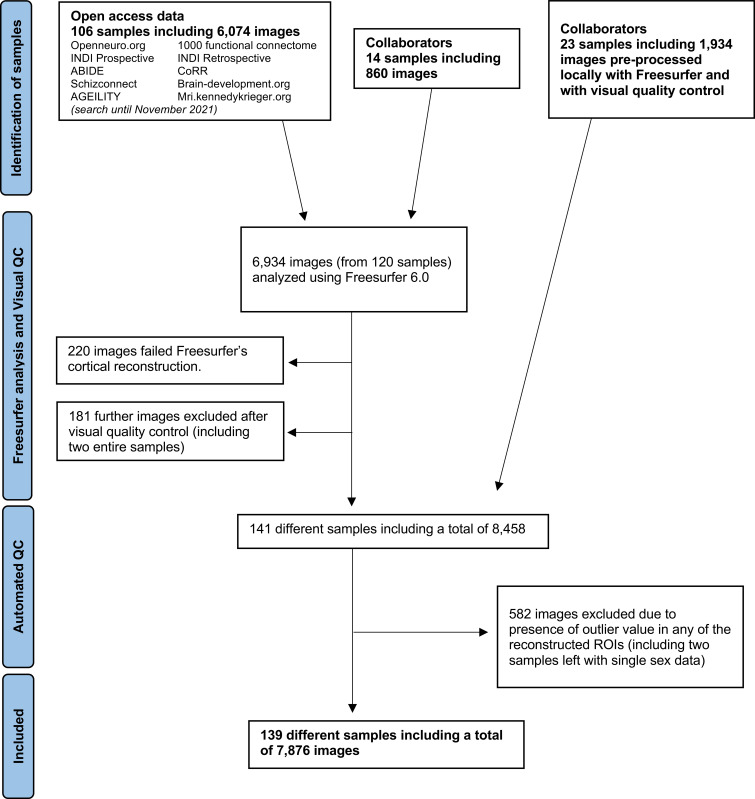
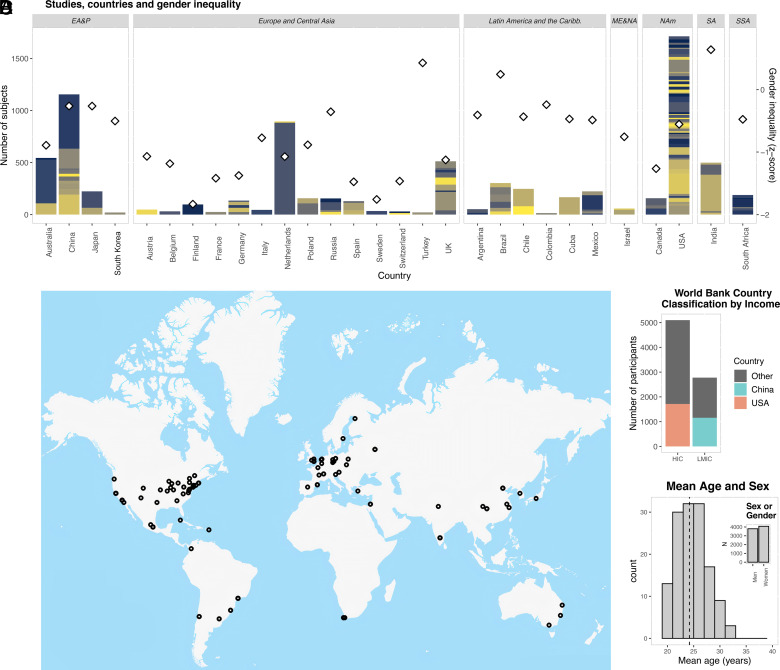
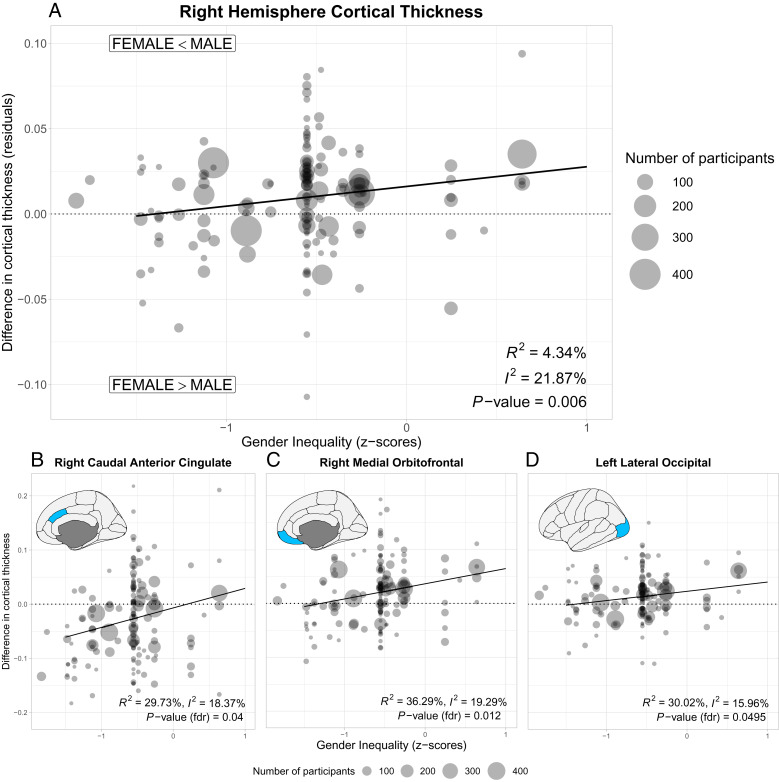
Gender inequality across the world has been associated with a higher risk to mental health problems and lower academic achievement in women compared to men. We also know that the brain is shaped by nurturing and adverse socio-environmental experiences. Therefore, unequal exposure to harsher conditions for women compared to men in gender-unequal countries might be reflected in differences in their brain structure, and this could be the neural mechanism partly explaining women’s worse outcomes in gender-unequal countries. We examined this through a random-effects meta-analysis on cortical thickness and surface area differences between adult healthy men and women, including a meta-regression in which country-level gender inequality acted as an explanatory variable for the observed differences. A total of 139 samples from 29 different countries, totaling 7,876 MRI scans, were included. Thickness of the right hemisphere, and particularly the right caudal anterior cingulate, right medial orbitofrontal, and left lateral occipital cortex, presented no differences or even thicker regional cortices in women compared to men in gender-equal countries, reversing to thinner cortices in countries with greater gender inequality. These results point to the potentially hazardous effect of gender inequality on women’s brains and provide initial evidence for neuroscience-informed policies for gender equality.
Overview
The claims and statistics of this paper haven’t been checked yet.
Free: it reads the open-access text and checks the first 5 claims that cite a source we can check. Create a free account to check every claim.
Integrity signals
Registry
Cites
Statistics
Figures
Verification
Claims the paper makes
The claims and statistics of this paper haven’t been checked yet.
Free: it reads the open-access text and checks the first 5 claims that cite a source we can check. Create a free account to check every claim.
Claims other papers make about this one
Each is checked against this paper’s own text: does it say what the citing paper says it does?
The source backs part of the claim, not all of it — or backs it for a different population, condition or comparison.
In the citing paper
“Classical exposomal factors, including physical(air pollution) and social factors (structural socioeconomic inequality20,26,34, gender inequalities27, and migration33) are known to impact brain health and aging, which we demonstrate to also be associated with accelerated aging.”
From The exposome of healthy and accelerated aging across 40 countries (2025) · cites this paper as [27]
Experimental — accuracy not yet measuredThe source backs part of the claim, not all of it — or backs it for a different population, condition or comparison.
In the citing paper
“Inequalities and multimodal exposomal factors were associated with accelerated aging, shedding light on prior individual reports of brain health2,26,27 and aging trajectories24,25.”
From The exposome of healthy and accelerated aging across 40 countries (2025) · cites this paper as [27]
Experimental — accuracy not yet measured
Self-check
Percentages, sums and reported differences re-computed from the paper’s own numbers.
The self-check needs the paper’s full text.
Citations
Cites
Effects of stress throughout the lifespan on the brain, behaviour and cognition
Lupien, S. J., McEwen, B. S., Gunnar, M. R., & Heim, C. (2009) · Nature Reviews Neuroscience · doi:10.1038/nrn2639 · Cited by 6,256
Hughes, K., Bellis, M. A., Hardcastle, K. A., Sethi, D., Butchart, A., Mikton, C., Jones, L., & Dunne, M. P. (2017) · The Lancet Public Health · doi:10.1016/s2468-2667(17)30118-4 · Cited by 5,255 · cited 1×
“Our study could not examine further which of these mechanisms were involved, since many types of adverse experiences coexist across societies (36).”
BackgroundSex and gender: modifiers of health, disease, and medicine
Mauvais-Jarvis, F., Bairey Merz, N., Barnes, P. J., Brinton, R. D., Carrero, J.-J., DeMeo, D. L., De Vries, G. J., Epperson, C. N., Govindan, R., Klein, S. L., et al. (2020) · The Lancet · doi:10.1016/s0140-6736(20)31561-0 · Cited by 2,001 · cited 1×
“Gender inequality as an aggregate of these adverse factors, if presenting associations with brain structure, would link an important social determinant of health to the brain, which in turn might help explain gender-related differences in psychopathology (20).”
BackgroundBrain charts for the human lifespan
Bethlehem, R. A. I., Seidlitz, J., White, S. R., Vogel, J. W., Anderson, K. M., Adamson, C., Adler, S., Alexopoulos, G. S., Anagnostou, E., Areces-Gonzalez, A., et al. (2022) · Nature · doi:10.1038/s41586-022-04554-y · Cited by 1,794 · cited 3×
“The observed associations could also relate to very early disturbances in development, particularly since cortical thickness peaks early in brain maturation (23).”
BackgroundSelf-citationEnriched environments, experience-dependent plasticity and disorders of the nervous system
Nithianantharajah, J., & Hannan, A. J. (2006) · Nature Reviews Neuroscience · doi:10.1038/nrn1970 · Cited by 1,771 · cited 2×
“Leading hypotheses link these associations to stress physiology (14), accelerated aging process (15, 16), levels (17), and nutrition and health care (18).”
BackgroundFamily income, parental education and brain structure in children and adolescents
Noble, K. G., Houston, S. M., Brito, N. H., Bartsch, H., Kan, E., Kuperman, J. M., Akshoomoff, N., Amaral, D. G., Bloss, C. S., Libiger, O., et al. (2015) · Nature Neuroscience · doi:10.1038/nn.3983 · Cited by 1,423 · cited 2×
“By focusing on the difference between the brains of women and men within each site included, our analyses were less likely to be biased by factors related to the MRI scanner and sequence used (37), or the ethnic and socioeconomic background of the population studied (13, 38).”
BackgroundMethodfor the ENIGMA-Major Depressive Disorder Working Group, Schmaal, L., Hibar, D. P., Sämann, P. G., Hall, G. B., Baune, B. T., Jahanshad, N., Cheung, J. W., van Erp, T. G. M., Bos, D., et al. (2017) · Molecular Psychiatry · doi:10.1038/mp.2016.60 · Cited by 1,330 · cited 2×
“Moreover, they relate in different ways to psychopathology across age groups and distinct forms of diagnosis (25, 26).”
BackgroundWinkler, A. M., Kochunov, P., Blangero, J., Almasy, L., Zilles, K., Fox, P. T., Duggirala, R., & Glahn, D. C. (2010) · NeuroImage · doi:10.1016/j.neuroimage.2009.12.028 · Cited by 1,172 · cited 1×
“They are genetically and developmentally distinct (23, 24), and arguably provide a cleaner metric than volume, which is a composite of the two.”
BackgroundSelf-citationThe Roots of Gender Inequality in Developing Countries
Jayachandran, S. (2015) · Annual Review of Economics · doi:10.1146/annurev-economics-080614-115404 · Cited by 1,028 · cited 1×
“National gender inequality indices are associated with economic development (27).”
BackgroundGuiso, L., Monte, F., Sapienza, P., & Zingales, L. (2008) · Science · doi:10.1126/science.1154094 · Cited by 1,018
The ENIGMA Consortium: large-scale collaborative analyses of neuroimaging and genetic data
the Alzheimer’s Disease Neuroimaging Initiative, E. C., Thompson, P. M., Stein, J. L., Medland, S. E., Hibar, D. P., Vasquez, A. A., Renteria, M. E., Toro, R., Jahanshad, N., Schumann, G., et al. (2014) · Brain Imaging and Behavior · doi:10.1007/s11682-013-9269-5 · Cited by 838 · cited 1×
“Cortical thickness and surface area have been widely used in previous multicenter studies (22).”
MethodSelf-citationEnvironmental influences on the pace of brain development
Tooley, U. A., Bassett, D. S., & Mackey, A. P. (2021) · Nature reviews. Neuroscience · doi:10.1038/s41583-021-00457-5 · Cited by 488 · cited 1×
“Leading hypotheses link these associations to stress physiology (14), accelerated aging process (15, 16), levels (17), and nutrition and health care (18).”
BackgroundYodanis, C. L. (2004) · Journal of Interpersonal Violence · doi:10.1177/0886260504263868 · Cited by 387 · cited 1×
“These adverse experiences include exposure to violence (19) as well as insufficient exposure to education and appropriate health care, both of which are considered indicators of gender inequality (2, 3).”
BackgroundGender differences in mental health.
Afifi, M. (2007) · PubMed · Cited by 382
Eliot, L., Ahmed, A., Khan, H., & Patel, J. (2021) · Neuroscience & Biobehavioral Reviews · doi:10.1016/j.neubiorev.2021.02.026 · Cited by 360
Stress, sex, and neural adaptation to a changing environment: mechanisms of neuronal remodeling
McEwen, B. S. (2010) · Annals of the New York Academy of Sciences · doi:10.1111/j.1749-6632.2010.05568.x · Cited by 335 · cited 1×
“Leading hypotheses link these associations to stress physiology (14), accelerated aging process (15, 16), levels (17), and nutrition and health care (18).”
BackgroundThe will to persevere Induced by electrical stimulation of the human cingulate gyrus
Parvizi, J., Rangarajan, V., Shirer, W. R., Desai, N., & Greicius, M. D. (2013) · Neuron · doi:10.1016/j.neuron.2013.10.057 · Cited by 254 · cited 1×
“These regions have been related to several aspects of emotional control, including resilience to adversity (28), responses to inequity (29), or negative social comparisons (30).”
BackgroundUncovering the hidden impacts of inequality on mental health: a global study
Yu, S. (2018) · Translational Psychiatry · doi:10.1038/s41398-018-0148-0 · Cited by 253 · cited 1×
“Such metrics have allowed to uncover country-level gender inequality associations with women’s worse mental health (4) and lower educational attainment (5).”
BackgroundBoedhoe, P. S. W., van Rooij, D., Hoogman, M., Twisk, J. W. R., Schmaal, L., Abe, Y., Alonso, P., Ameis, S. H., Anikin, A., Anticevic, A., et al. (2020) · American Journal of Psychiatry · doi:10.1176/appi.ajp.2020.19030331 · Cited by 201
Self-citationSocioeconomic status and the brain: prospects for neuroscience-informed policy
Farah, M. J. (2018) · Nature Reviews Neuroscience · doi:10.1038/s41583-018-0023-2 · Cited by 188 · cited 2×
“Future studies will need to examine the mechanisms involved, their moderating factors, and their timing, providing new opportunities for neuroscience-informed policies (21) to promote gender equality.”
BackgroundResultSex differences in the human brain
Paus, T. (2010) · Progress in brain research · doi:10.1016/b978-0-444-53630-3.00002-6 · Cited by 148 · cited 1×
“This would extend prior studies focused on endocrine or genetic contributions to gender differences in mental health problems (7, 8).”
BackgroundGao, X., Yu, H., Sáez, I., Blue, P. R., Zhu, L., Hsu, M., & Zhou, X. (2018) · Proceedings of the National Academy of Sciences · doi:10.1073/pnas.1802523115 · Cited by 133 · cited 1×
“These regions have been related to several aspects of emotional control, including resilience to adversity (28), responses to inequity (29), or negative social comparisons (30).”
BackgroundSmaller Hippocampal Volume Among Black and Latinx Youth Living in High-Stigma Contexts
Hatzenbuehler, M. L., Weissman, D. G., McKetta, S. C., Lattanner, M. R., Ford, J. V., Barch, D. M., & McLaughlin, K. A. (2021) · Journal of the American Academy of Child & Adolescent Psychiatry · doi:10.1016/j.jaac.2021.08.017 · Cited by 104
Salivary cortisol and prefrontal cortical thickness in middle-aged men: A twin study
Kremen, W. S., O'Brien, R. C., Panizzon, M. S., Prom-Wormley, E., Eaves, L. J., Eisen, S. A., Eyler, L. T., Hauger, R. L., Fennema-Notestine, C., Fischl, B., et al. (2010) · NeuroImage · doi:10.1016/j.neuroimage.2010.02.026 · Cited by 103 · cited 1×
“For example, stress in the adult brain seems to correlate most consistently with cortical thickness rather than cortical surface area (34, 35); similarly, hippocampal volume relates most consistently to early life stress (32).”
BackgroundCortical thickness reduction in combat exposed U.S. veterans with and without PTSD
Wrocklage, K. M., Averill, L. A., Cobb Scott, J., Averill, C. L., Schweinsburg, B., Trejo, M., Roy, A., Weisser, V., Kelly, C., Martini, B., et al. (2017) · European Neuropsychopharmacology · doi:10.1016/j.euroneuro.2017.02.010 · Cited by 94 · cited 1×
“For example, stress in the adult brain seems to correlate most consistently with cortical thickness rather than cortical surface area (34, 35); similarly, hippocampal volume relates most consistently to early life stress (32).”
BackgroundWang, X., Xie, H., Chen, T., Cotton, A. S., Salminen, L. E., Logue, M. W., Clarke-Rubright, E. K., Wall, J., Dennis, E. L., O’Leary, B. M., et al. (2021) · Molecular Psychiatry · doi:10.1038/s41380-020-00967-1 · Cited by 89 · cited 1×
“Changes in these regions have also been found in pathological conditions where stress is considered a central mechanism, including thinning in depression (25), or reduced volume in posttraumatic stress disorder (31).”
BackgroundSelf-citationMapping reliability in multicenter MRI: Voxel‐based morphometry and cortical thickness
Schnack, H. G., van Haren, N. E. M., Brouwer, R. M., van Baal, G. C. M., Picchioni, M., Weisbrod, M., Sauer, H., Cannon, T. D., Huttunen, M., Lepage, C., et al. (2010) · Human Brain Mapping · doi:10.1002/hbm.20991 · Cited by 82 · cited 1×
“By focusing on the difference between the brains of women and men within each site included, our analyses were less likely to be biased by factors related to the MRI scanner and sequence used (37), or the ethnic and socioeconomic background of the population studied (13, 38).”
MethodSelf-citationGehred, M. Z., Knodt, A. R., Ambler, A., Bourassa, K. J., Danese, A., Elliott, M. L., Hogan, S., Ireland, D., Poulton, R., Ramrakha, S., et al. (2021) · Biological Psychiatry · doi:10.1016/j.biopsych.2021.02.971 · Cited by 65 · cited 1×
“Similarly, adverse childhood experiences could influence cortical surface area, thickness, and hippocampal volumes (11).”
BackgroundX-chromosome influences on neuroanatomical variation in humans
Mallard, T. T., Liu, S., Seidlitz, J., Ma, Z., Moraczewski, D., Thomas, A. G., & Raznahan, A. (2021) · Nature Neuroscience · doi:10.1038/s41593-021-00890-w · Cited by 58 · cited 1×
“This would extend prior studies focused on endocrine or genetic contributions to gender differences in mental health problems (7, 8).”
BackgroundSelf-citationJoos, C. M., Wodzinski, A., Wadsworth, M. E., & Dorn, L. D. (2018) · Developmental Review · doi:10.1016/j.dr.2018.05.001 · Cited by 51 · cited 1×
“Leading hypotheses link these associations to stress physiology (14), accelerated aging process (15, 16), levels (17), and nutrition and health care (18).”
BackgroundEryilmaz, H., Dowling, K. F., Huntington, F. C., Rodriguez-Thompson, A., Soare, T. W., Beard, L. M., Lee, H., Blossom, J. C., Gollub, R. L., Susser, E., et al. (2018) · JAMA Psychiatry · doi:10.1001/jamapsychiatry.2018.1381 · Cited by 46 · cited 1×
“Leading hypotheses link these associations to stress physiology (14), accelerated aging process (15, 16), levels (17), and nutrition and health care (18).”
BackgroundNeural patterns underlying social comparisons of personal performance
Lindner, M., Rudorf, S., Birg, R., Falk, A., Weber, B., & Fließbach, K. (2014) · Social Cognitive and Affective Neuroscience · doi:10.1093/scan/nsu087 · Cited by 43 · cited 1×
“These regions have been related to several aspects of emotional control, including resilience to adversity (28), responses to inequity (29), or negative social comparisons (30).”
BackgroundA series of five population‐specific Indian brain templates and atlases spanning ages 6–60 years
Holla, B., Taylor, P. A., Glen, D., Lee, J. A., Vaidya, N., Mehta, U. M., Venkatasubramanian, G., Pal, P. K., Saini, J. S., Rao, N. P., et al. (2020) · Human Brain Mapping · doi:10.1002/hbm.25182 · Cited by 37
Self-citationThe role of gender inequalities in adolescent depression
Bone, J. K., Lewis, G., & Lewis, G. (2020) · The Lancet Psychiatry · doi:10.1016/s2215-0366(20)30081-x · Cited by 27 · cited 1×
“This resonates with evidence highlighting the role of gender inequality in the higher prevalence of depression in girls which appears in adolescence (33).”
BackgroundRandomized Manipulation of Early Cognitive Experience Impacts Adult Brain Structure
Farah, M. J., Sternberg, S., Nichols, T. A., Duda, J., Lohrenz, T. M., Luo, Y., Sonnier‐Netto, L., Ramey, S. L., Montague, P. R., & Ramey, C. T. (2021) · Journal of Cognitive Neuroscience · doi:10.1162/jocn_a_01709 · Cited by 23 · cited 1×
“For example, exposure to early stimulation might increase gray matter cortical volumes in ways that persist in adulthood (10).”
Background
Cited by
Moguilner, S., Baez, S., Hernandez, H., Migeot, J., Legaz, A., Gonzalez-Gomez, R., Farina, F. R., Prado, P., Cuadros, J., Tagliazucchi, E., et al. (2024) · Nature Medicine · doi:10.1038/s41591-024-03209-x · Cited by 128
“Sex and gender have been linked to poorer brain health outcomes 27,51 .”
BackgroundSelf-citationThe exposome of healthy and accelerated aging across 40 countries
Hernandez, H., Santamaria-Garcia, H., Moguilner, S., Farina, F. R., Legaz, A., Prado, P., Cuadros, J., Gonzalez, L., Gonzalez-Gomez, R., Migeot, J., et al. (2025) · Nature Medicine · doi:10.1038/s41591-025-03808-2 · Cited by 71
“Classical exposomal factors, including physical (air pollution) and social (structural socioeconomic inequality 20,26,34 , gender inequalities 27 and migration 33 ) factors are known to impact brain health and aging, which we show to also be associated with accelerated aging.”
InfluentialSelf-citationAddressing the gaps between socioeconomic disparities and biological models of dementia
Ibáñez, A., Legaz, A., & Ruiz-Adame, M. (2023) · Brain · doi:10.1093/brain/awad236 · Cited by 60
Abate, F., Adu-Amankwah, A., Ae-Ngibise, K. A., Agbokey, F., Agyemang, V., Agyemang, C., Akgun, C., Ametepe, J. M., Arichi, T., Asante, K. P., et al. (2024) · Developmental Cognitive Neuroscience · doi:10.1016/j.dcn.2024.101397 · Cited by 62
Errázuriz, A., Avello-Vega, D., Ramírez-Mahaluf, J. P., Torres, R., Crossley, N. A., Undurraga, E. A., & Jones, P. B. (2023) · The Lancet Regional Health - Americas · doi:10.1016/j.lana.2023.100587 · Cited by 71
“…factors, such as cultural norms and beliefs that stigmatize mental health reporting and symptoms, interpersonal violence and crime, 8,19,20,105 age, 11 – 15 and gender norms, 5,17,18 including gender inequalities and barriers to healthcare and mental health services, may also play a crucial role.”
BackgroundSelf-citation
Metadata
- Authors
- Zugman, A., Alliende, L. M., Medel, V., Bethlehem, R. A. I., Seidlitz, J., Ringlein, G., Arango, C., Arnatkevičiūtė, A., Asmal, L., Bellgrove, M., Benegal, V., Bernardo, M., Billeke, P., Bosch-Bayard, J., Bressan, R., Busatto, G. F., Castro, M. N., Chaim-Avancini, T., Compte, A., Costanzi, M., Czepielewski, L., Dazzan, P., de la Fuente-Sandoval, C., Di Forti, M., Díaz-Caneja, C. M., María Díaz-Zuluaga, A., Du Plessis, S., Duran, F. L. S., Fittipaldi, S., Fornito, A., Freimer, N. B., Gadelha, A., Gama, C. S., Garani, R., Garcia-Rizo, C., Gonzalez Campo, C., Gonzalez-Valderrama, A., Guinjoan, S., Holla, B., Ibañez, A., Ivanovic, D., Jackowski, A., Leon-Ortiz, P., Lochner, C., López-Jaramillo, C., Luckhoff, H., Massuda, R., McGuire, P., Miyata, J., Mizrahi, R., Murray, R., Ozerdem, A., Pan, P. M., Parellada, M., Phahladira, L., Ramirez-Mahaluf, J. P., Reckziegel, R., Reis Marques, T., Reyes-Madrigal, F., Roos, A., Rosa, P., Salum, G., Scheffler, F., Schumann, G., Serpa, M., Stein, D. J., Tepper, A., Tiego, J., Ueno, T., Undurraga, J., Undurraga, E. A., Valdes-Sosa, P., Valli, I., Villarreal, M., Winton-Brown, T. T., Yalin, N., Zamorano, F., Zanetti, M. V., cVEDA, Winkler, A. M., Pine, D. S., Evans-Lacko, S., Crossley, N. A., Murthy, P., Chakrabarti, A., Basu, D., Subodh, B. N., Singh, L., Singh, R., Kalyanram, K., Kartik, K., Kumaran, K., Krishnaveni, G., Kuriyan, R., Kurpad, S. S., Barker, G. J., Bharath, R. D., Desrivieres, S., Purushottam, M., Orfanos, D. P., Sharma, E., Hickman, M., Heron, J., Toledano, M. B., & Vaidya, N.
- Affiliations
- National Institutes of Health (US)
- Northwestern University (US)
- Adolfo Ibáñez University (CL)
- University of Cambridge (GB)
- Children's Hospital of Philadelphia (US)
- Universidad Complutense de Madrid (ES)
- Monash University (AU)
- Stellenbosch University (ZA)
- National Institute of Mental Health and Neurosciences (IN)
- Instituto de Salud Carlos III (ES)
- Universidad del Desarrollo (CL)
- McGill Centre for Integrative Neuroscience, Ludmer Centre for Neuroinformatics and Mental Health, Montreal Neurological Institute, Montreal, QC H3A 2B4, Canada
- Universidade Federal de São Paulo (BR)
- Hospital das Clínicas da Faculdade de Medicina da Universidade de São Paulo (BR)
- Consejo Nacional de Investigaciones Científicas y Técnicas (AR)
- Universidade de São Paulo (BR)
- Consorci Institut D'Investigacions Biomediques August Pi I Sunyer (ES)
- Hospital de Clínicas de Porto Alegre (BR)
- Laboratory of Molecular Psychiatry, Centro de Pesquisa Clínica, Hospital de Clínicas de Porto Alegre, Porto Alegre RS 90035-007, Brazil
- King's College London (GB)
- Laboratory of Experimental Psychiatry, Direction of Research, Instituto Nacional de Neurología y Neurocirugía, Mexico City 14269, Mexico
- Social, Genetic and Developmental Psychiatry Centre, Institute of Psychiatry, Psychology and Neuroscience, King’s College London, London SE5 8AF, United Kingdom
- Department of Child and Adolescent Psychiatry, Institute of Psychiatry and Mental Health, Hospital General Universitario Gregorio Marañón, Instituto de Investigación Sanitaria Gregorio Marañón (IISGM), Centro de Investigación Biomédica en Red Salud Mental (CIBERSAM), School of Medicine, Universidad Complutense, Madrid 28009, Spain
- Department of Psychiatry, Faculty of Medicine, University of Antioquia, Medellín 050011, Colombia
- Department of Psychiatry, Faculty of Medicine and Health Sciences, Stellenbosch University, Cape Town 7602, South Africa
- Laboratory of Psychiatric Neuroimaging (LIM-21), Departamento e Instituto de Psiquiatria, Hospital das Clinicas, Faculdade de Medicina Universidade de São Paulo (HCFMUSP), Faculdade de Medicina Universidade de São Paulo, São Paulo SP 05403-903, Brazil
- University of California, San Francisco (US)
- University of California, Los Angeles (US)
- Universidade Federal do Rio Grande do Sul (BR)
- Integrated Program in Neuroscience, McGill University, Montreal, Quebec H3A 1A12B4 Canada
- Barcelona Clinic Schizophrenia Unit, Hospital Clínic de Barcelona, Departament de Medicina, Institut de Neurociències (UBNeuro), Universitat de Barcelona (UB), Institut d’Investigacions Biomèdiques, August Pi i Sunyer (IDIBAPS), Centro de Investigación Biomédica en Red Salud Mental (CIBERSAM), Instituto de Salud Carlos III (ISCIII), Barcelona 08036, Spain
- Consejo Nacional de Investigaciones Científicas y Técnicas (CONICET), Ciudad Autónoma de Buenos Aires C1033AAJ, Argentina
- Early Intervention Program, Instituto Psiquiátrico Dr. J. Horwitz Barak, Santiago 8431621, Chile
- Latin American Brain Health Institute (BrainLat), Universidad Adolfo Ibáñez, Santiago 7941169, Chile
- Østfold University of Applied Sciences (NO)
- South African Medical Research Council (SA MRC) Unit on Risk and Resilience in Mental Disorders, Department of Psychiatry, Stellenbosch University, Stellenbosch 7505, South Africa
- Universidade Federal do Paraná (BR)
- National Health Service (GB)
- Kyoto University (JP)
- Douglas Mental Health University Institute (CA)
- Department of Psychiatry and Psychology, Mayo Clinic, Rochester, Minnesota MN 55905
- Department of Psychiatry, School of Medicine, Pontificia Universidad Católica de Chile, Santiago 8330077, Chile
- Department of Psychosis Studies, Institute of Psychiatry, Psychology and Neuroscience, King’s College London, London SE5 8AF, United Kingdom
- Instituto Nacional de Neurología y Neurocirugía (MX)
- South African Medical Research Council (ZA)
- Centre for Population Neuroscience and Stratified Medicine (PONS), Institute for Science and Technology for Brain-inspired Intelligence, Fudan University, Shanghai 200433, China
- Departamento e Instituto de Psiquiatria, Hospital das Clínicas da Faculdade de Medicina da Universidade de São Paulo, São Paulo 05403-903, Brazil
- Canadian Institute for Advanced Research (CA)
- University of Electronic Science and Technology of China (CN)
- Department of Neuroscience, Central Clinical School, Monash University, Melbourne, VIC 3004, Australia
- Centre for Affective Disorders, Department of Psychological Medicine, Institute of Psychiatry, Psychology and Neuroscience, King’s College London, London SE5 8AF, United Kingdom
- The University of Texas Rio Grande Valley (US)
- Pontificia Universidad Católica de Chile (CL)
- Corresponding author
- Crossley, Nicolas A.
- ORCID
- Zugman, André
- Alliende, Luz María
- Medel, Vicente
- Bethlehem, Richard A.I.
- Seidlitz, Jakob
- Ringlein, Grace
- Arango, Celso
- Arnatkevičiūtė, Aurina
- Asmal, Laila
- Bellgrove, Mark
- Benegal, Vivek
- Bernardo, Miquel
- Billeke, Pablo
- Bressan, Rodrigo
- Busatto, Geraldo F.
- Castro, Mariana N.
- Chaim-Avancini, Tiffany
- Compte, Albert
- Costanzi, Monise
- Czepielewski, Leticia
- Dazzan, Paola
- de la Fuente-Sandoval, Camilo
- Duran, Fabio L. S.
- Fittipaldi, Sol
- Fornito, Alex
- Freimer, Nelson B.
- Gadelha, Ary
- Gama, Clarissa S.
- Garani, Ranjini
- Guinjoan, Salvador
- Holla, Bharath
- Ibañez, Agustín
- Ivanovic, Daniza
- Jackowski, Andrea
- Lochner, Christine
- Luckhoff, Hilmar
- Massuda, Raffael
- McGuire, Philip
- Miyata, Jun
- Mizrahi, Romina
- Murray, Robin
- Pan, Pedro M.
- Parellada, Mara
- Ramirez-Mahaluf, Juan P.
- Reckziegel, Ramiro
- Reis Marques, Tiago
- Reyes-Madrigal, Francisco
- Roos, Annerine
- Salum, Giovanni
- Scheffler, Freda
- Stein, Dan J.
- Tepper, Angeles
- Tiego, Jeggan
- Undurraga, Juan
- Undurraga, Eduardo A.
- Valdes-Sosa, Pedro
- Valli, Isabel
- Villarreal, Mirta
- Zamorano, Francisco
- Zanetti, Marcus V.
- Winkler, Anderson M.
- Pine, Daniel S.
- Evans-Lacko, Sara
- Crossley, Nicolas A.
- Murthy, Pratima
- Chakrabarti, Amit
- Basu, Debasish
- Kalyanram, Kartik
- Kartik, Kamakshi
- Kumaran, Kalyanaraman
- Krishnaveni, Ghattu
- Kuriyan, Rebecca
- Kurpad, Sunita Simon
- Barker, Gareth J.
- Bharath, Rose D.
- Purushottam, Meera
- Orfanos, Dimitri P.
- Sharma, Eesha
- Hickman, Matthew
- Heron, Jon
- Toledano, Mireille B.
- Vaidya, Nilakshi
- Venue
- Proceedings of the National Academy of Sciences
- Publisher
- National Academy of Sciences
- Published
- 2023-05-08
- Volume
- 120
- Issue
- 20
- Pages
- e2218782120-e2218782120
- ISSN
- 0027-8424 (ISSN-L)
- 1091-6490
- PMC
- PMC10193926
- OpenAlex
- W4375954606
- Cited by
- 65
- References
- 35
- Citations by year
- 2026: 14 · 2025: 16 · 2024: 30 · 2023: 5
- FWCI
- 3.20
- Type
- journal article
- Language
- en
- Open access
- hybrid
- doi.org
- Licence
- Locations
- Proceedings of the National Academy of Sciences (publishedVersion, cc-by)
- PubMed Central (publishedVersion, cc-by)
- PubMed (publishedVersion)
- Institutional Repository University of Antioquia (University of Antioquia) (publishedVersion, cc-by)
- London School of Economics and Political Science Research Online (London School of Economics and Political Science) (submittedVersion, other-oa)
- Institutional Repositories DataBase (IRDB) (submittedVersion, cc-by)
- London School of Economics and Political Science Theses Online (London School of Economics and Political Science) (submittedVersion, other-oa)
- Lume (Universidade Federal do Rio Grande do Sul) (submittedVersion, cc-by-nc-sa)
- ScholarWorks @ UTRGV (The University of Texas Rio Grande Valley) (submittedVersion, cc-by)
- Dipòsit Digital de la Universitat de Barcelona (Universitat de Barcelona) (submittedVersion, cc-by)
- Research Portal (King's College London) (submittedVersion, cc-by)
- Kyoto University Research Information Repository (Kyoto University) (submittedVersion, cc-by)
- Greater South Information System
- Funders
- National Institute for Health and Care Research (NIHR205076)
- National Institutes of Health
- Medical Research Council (MR/S003444/1)
- Topics
- Health Sciences › Medicine › Public Health, Environmental and Occupational Health › Sex and Gender in Healthcare
- Social Sciences › Sociology and Political Science › Gender, Health, and Social Inequality
- Social Sciences › Gender Studies › Gender and Feminist Studies
- Keywords
- gender inequality, brain structure, cortical thickness, cortical surface area, sex differences, caudal anterior cingulate cortex, medial orbitofrontal cortex, lateral occipital cortex, right hemisphere, women's mental health, gender equality
- MeSH terms
- Gender Equity, Adult, Brain, Female, Humans, Male, Sex Factors
About these checks
Registry, retraction, Cites and statistics results are computed, not judged, with one exception: a printed reference that no index lists is read once by a model before it counts as a citation error. Claims are extracted by a model and kept only when their quote appears verbatim in the text; each cited source is then checked, with a model’s help, for whether it says what the claim relies on. Those verdicts can be wrong — read the claim’s quote and the cited source before relying on one.
Statistics and arithmetic are recomputed, not judged.
Confidence bands are shown only for fields calibrated on our annotated test set. None is calibrated yet, so no band is shown.
What counts as a claim ›How we measure confidence ›How we check this ›
Are you an author, or do you see a problem with this page? Request a review
Data sources
Bibliographic data: Semantic Scholar, OpenAlex, Crossref.
Contains information from the Semantic Scholar Academic Graph Datasets, made available under the ODC Attribution License (ODC-BY 1.0).
Semantic Scholar’s data is described in: Kinney, R., et al. (2023). The Semantic Scholar Open Data Platform. arXiv:2301.10140.
