

The DOI matches its Crossref record; 70 of the 70 references it cites were found in a registry or an index.
Importance of Shank3 Protein in Regulating Metabotropic Glutamate Receptor 5 (mGluR5) Expression and Signaling at Synapses
Open accessAbstract
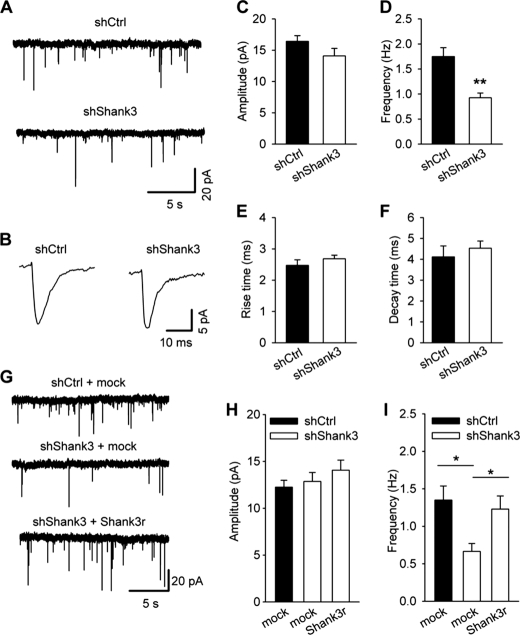
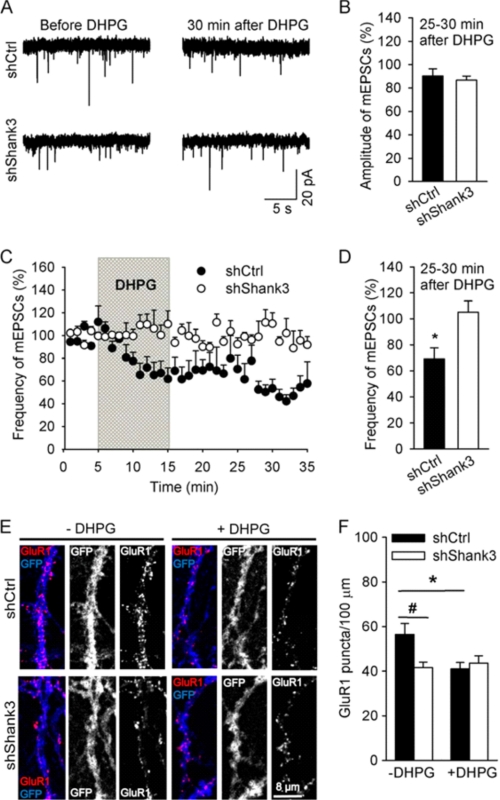
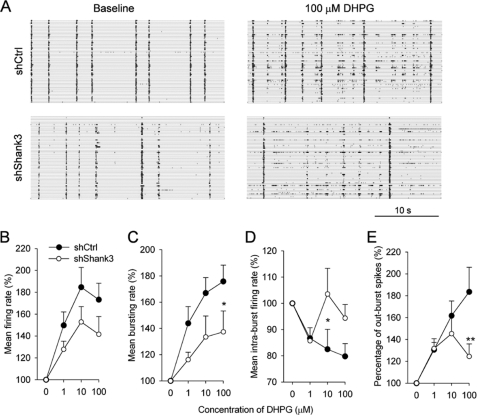
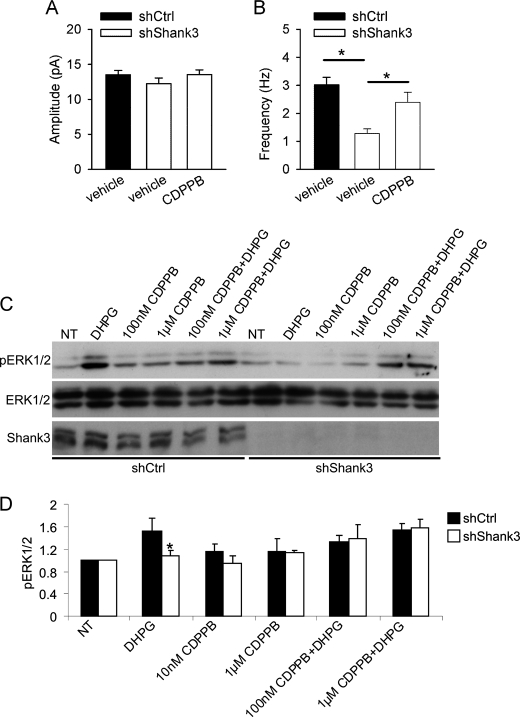
Shank3/PROSAP2 gene mutations are associated with cognitive impairment ranging from mental retardation to autism. Shank3 is a large scaffold postsynaptic density protein implicated in dendritic spines and synapse formation; however, its specific functions have not been clearly demonstrated. We have used RNAi to knockdown Shank3 expression in neuronal cultures and showed that this treatment specifically reduced the synaptic expression of the metabotropic glutamate receptor 5 (mGluR5), but did not affect the expression of other major synaptic proteins. The functional consequence of Shank3 RNAi knockdown was impaired signaling via mGluR5, as shown by reduction in ERK1/2 and CREB phosphorylation induced by stimulation with (S)-3,5-dihydroxyphenylglycine (DHPG) as the agonist of mGluR5 receptors, impaired mGluR5-dependent synaptic plasticity (DHPG-induced long-term depression), and impaired mGluR5-dependent modulation of neural network activity. We also found morphological abnormalities in the structure of synapses (spine number, width, and length) and impaired glutamatergic synaptic transmission, as shown by reduction in the frequency of miniature excitatory postsynaptic currents (mEPSC). Notably, pharmacological augmentation of mGluR5 activity using 3-cyano-N-(1,3-diphenyl-1H-pyrazol-5-yl)-benzamide as the positive allosteric modulator of these receptors restored mGluR5-dependent signaling (DHPG-induced phosphorylation of ERK1/2) and normalized the frequency of mEPSCs in Shank3-knocked down neurons. These data demonstrate that a deficit in mGluR5-mediated intracellular signaling in Shank3 knockdown neurons can be compensated by 3-cyano-N-(1,3-diphenyl-1H-pyrazol-5-yl)-benzamide; this raises the possibility that pharmacological augmentation of mGluR5 activity represents a possible new therapeutic approach for patients with Shank3 mutations.
Overview
The claims and statistics of this paper haven’t been checked yet.
Run the check — free, no account needed. It reads the open-access text and checks the sources it cites.
Integrity signals
Registry
Cites
Statistics
Figures
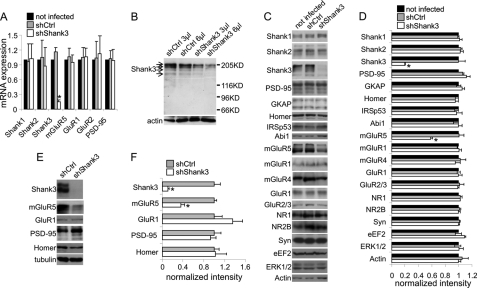
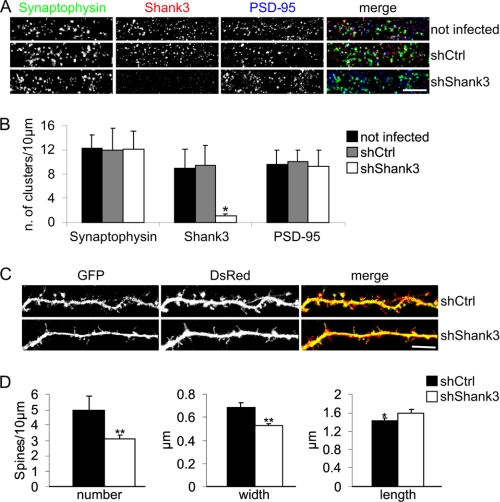
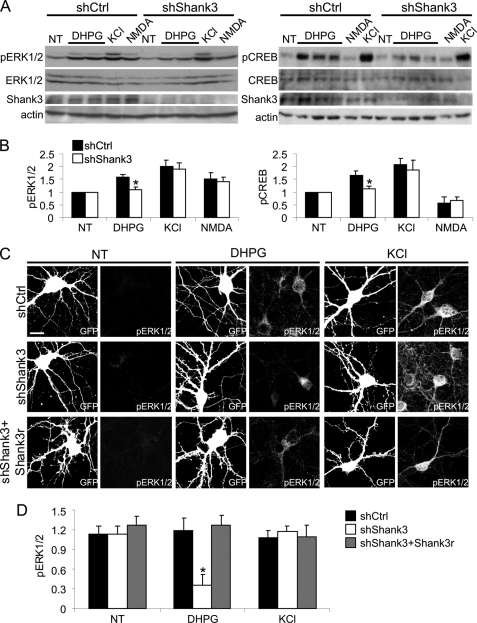
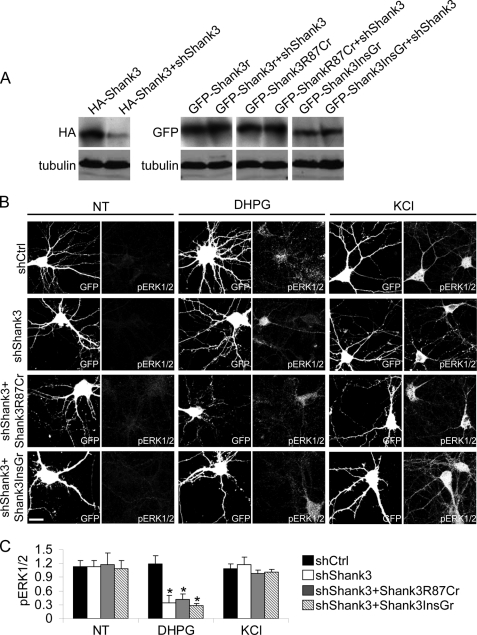
Verification
Claims the paper makes
The claims and statistics of this paper haven’t been checked yet.
Run the check — free, no account needed. It reads the open-access text and checks the sources it cites.
Claims other papers make about this one
Each is checked against this paper’s own text: does it say what the citing paper says it does?
In the citing paper
“In cultured rat neurons, knock-down of Shank3 selectively reduces synaptic mGluR5 receptor and impairs mGluR5-dependent signaling and plasticity (Verpelli et al., 2011).”
From Modeling Autism by SHANK Gene Mutations in Mice (2013) · cites this paper as Verpelli et al., 2011
In the citing paper
“Moreover, acute knockdown of Shank3 in cultured neurons decreases mGluR-dependent plasticity (Verpelli et al., 2011)”
From Modeling Autism by SHANK Gene Mutations in Mice (2013) · cites this paper as Verpelli et al., 2011
Self-check
Percentages, sums and reported differences re-computed from the paper’s own numbers.
The self-check needs the paper’s full text.
Citations
Cites
1 retracted
RETRACTED: Enhanced Polyubiquitination of Shank3 and NMDA Receptor in a Mouse Model of Autism
Bangash, M. A., Park, J. M., Melnikova, T., Wang, D., Jeon, S. K., Lee, D., Syeda, S. K., Kim, J., Kouser, M., Schwartz, J. L., et al. (2011) · Cell · doi:10.1016/j.cell.2011.03.052 · Cited by 116
RetractedConserved role of intragenic DNA methylation in regulating alternative promoters
Maunakea, A. K., Nagarajan, R. P., Bilenky, M., Ballinger, T. J., D’Souza, C., Fouse, S. D., Johnson, B. E., Hong, C., Nielsen, C., Zhao, Y., et al. (2010) · Nature · doi:10.1038/nature09165 · Cited by 1,743
Durand, C. M., Betancur, C., Boeckers, T. M., Bockmann, J., Chaste, P., Fauchereau, F., Nygren, G., Rastam, M., Gillberg, I. C., Anckarsäter, H., et al. (2007) · Nature Genetics · doi:10.1038/ng1933 · Cited by 1,602
Shank3 mutant mice display autistic-like behaviours and striatal dysfunction
Peça, J., Feliciano, C., Ting, J. T., Wang, W., Wells, M. F., Venkatraman, T. N., Lascola, C. D., Fu, Z., & Feng, G. (2011) · Nature · doi:10.1038/nature09965 · Cited by 1,570
Altered synaptic plasticity in a mouse model of fragile X mental retardation
Huber, K. M., Gallagher, S. M., Warren, S. T., & Bear, M. F. (2002) · Proceedings of the National Academy of Sciences · doi:10.1073/pnas.122205699 · Cited by 1,349
Coupling of mGluR/Homer and PSD-95 Complexes by the Shank Family of Postsynaptic Density Proteins
Tu, J. C., Xiao, B., Naisbitt, S. R., Yuan, J. P., Petralia, R. S., Brakeman, P., Doan, A., Aakalu, V. K., Lanahan, A. A., Sheng, M., et al. (1999) · Neuron · doi:10.1016/s0896-6273(00)80810-7 · Cited by 1,079
Fragile X Syndrome: Loss of Local mRNA Regulation Alters Synaptic Development and Function
Bassell, G. J., & Warren, S. T. (2008) · Neuron · doi:10.1016/j.neuron.2008.10.004 · Cited by 1,051
Naisbitt, S., Kim, E., Tu, J. C., Xiao, B., Sala, C., Valtschanoff, J., Weinberg, R. J., Worley, P. F., & Sheng, M. (1999) · Neuron · doi:10.1016/s0896-6273(00)80809-0 · Cited by 1,009
Self-citationLong-term depression in the CNS
Collingridge, G. L., Peineau, S., Howland, J. G., & Wang, Y. T. (2010) · Nature Reviews Neuroscience · doi:10.1038/nrn2867 · Cited by 926
Regulation of Dendritic Spine Morphology and Synaptic Function by Shank and Homer
Sala, C., Piëch, V., Wilson, N. R., Passafaro, M., Liu, G., & Sheng, M. (2001) · Neuron · doi:10.1016/s0896-6273(01)00339-7 · Cited by 716
Self-citationContribution of SHANK3 Mutations to Autism Spectrum Disorder
Moessner, R., Marshall, C. R., Sutcliffe, J. S., Skaug, J., Pinto, D., Vincent, J., Zwaigenbaum, L., Fernandez, B., Roberts, W., Szatmari, P., et al. (2007) · The American Journal of Human Genetics · doi:10.1086/522590 · Cited by 681
Lu, Y.-M., Jia, Z., Janus, C., Henderson, J. T., Gerlai, R., Wojtowicz, J. M., & Roder, J. C. (1997) · The Journal of Neuroscience · doi:10.1523/jneurosci.17-13-05196.1997 · Cited by 634
Lüscher, C., & Huber, K. M. (2010) · Neuron · doi:10.1016/j.neuron.2010.01.016 · Cited by 627
Advances in the Treatment of Fragile X Syndrome
Hagerman, R. J., Berry-Kravis, E., Kaufmann, W. E., Ono, M. Y., Tartaglia, N., Lachiewicz, A., Kronk, R., Delahunty, C., Hessl, D., Visootsak, J., et al. (2009) · Pediatrics · doi:10.1542/peds.2008-0317 · Cited by 596
Bozdagi, O., Sakurai, T., Papapetrou, D., Wang, X., Dickstein, D. L., Takahashi, N., Kajiwara, Y., Yang, M., Katz, A. M., Scattoni, M. L., et al. (2010) · Molecular Autism · doi:10.1186/2040-2392-1-15 · Cited by 584
The Shank family of scaffold proteins
Sheng, M., & Kim, E. (2000) · Journal of Cell Science · doi:10.1242/jcs.113.11.1851 · Cited by 578
Synaptic dysfunction and abnormal behaviors in mice lacking major isoforms of Shank3
Wang, X., McCoy, P. A., Rodriguiz, R. M., Pan, Y., Je, H. S., Roberts, A. C., Kim, C. J., Berrios, J., Colvin, J. S., Bousquet-Moore, D., et al. (2011) · Human Molecular Genetics · doi:10.1093/hmg/ddr212 · Cited by 537
Park, S., Park, J. M., Kim, S., Kim, J.-A., Shepherd, J. D., Smith-Hicks, C. L., Chowdhury, S., Kaufmann, W., Kuhl, D., Ryazanov, A. G., et al. (2008) · Neuron · doi:10.1016/j.neuron.2008.05.023 · Cited by 516
A pilot open label, single dose trial of fenobam in adults with fragile X syndrome
Berry-Kravis, E., Hessl, D., Coffey, S., Hervey, C., Schneider, A., Yuhas, J., Hutchison, J., Snape, M., Tranfaglia, M., Nguyen, D. V., et al. (2009) · Journal of Medical Genetics · doi:10.1136/jmg.2008.063701 · Cited by 411
Excitatory GABA Action Is Essential for Morphological Maturation of Cortical Neurons In Vivo
Cancedda, L., Fiumelli, H., Chen, K., & Poo, M.-M. (2007) · The Journal of Neuroscience · doi:10.1523/jneurosci.5169-06.2007 · Cited by 392
Huber, K. M., Roder, J., & Bear, M. F. (2001) · Journal of Neurophysiology · doi:10.1152/jn.2001.86.1.321 · Cited by 390
Wilson, H. L., Wong, A. C. C., Shaw, S. R., Tse, W.-Y., Stapleton, G. A., Phelan, M. C., Hu, S., Marshall, J., & McDermid, H. E. (2003) · Journal of Medical Genetics · doi:10.1136/jmg.40.8.575 · Cited by 377
The postsynaptic density proteins Homer and Shank form a polymeric network structure
Hayashi, M. K., Tang, C., Verpelli, C., Narayanan, R., Stearns, M. H., Xu, R.-M., Li, H., Sala, C., & Hayashi, Y. (2009) · Cell · doi:10.1016/j.cell.2009.01.050 · Cited by 356
Self-citationHung, A. Y., Futai, K., Sala, C., Valtschanoff, J. G., Ryu, J., Woodworth, M. A., Kidd, F. L., Sung, C. C., Miyakawa, T., Bear, M. F., et al. (2008) · The Journal of Neuroscience · doi:10.1523/jneurosci.3032-07.2008 · Cited by 350
Self-citationBoeckers, T. M., Bockmann, J., Kreutz, M. R., & Gundelfinger, E. D. (2002) · Journal of Neurochemistry · doi:10.1046/j.1471-4159.2002.00931.x · Cited by 349
Long-term depression: multiple forms and implications for brain function
Massey, P. V., & Bashir, Z. I. (2007) · Trends in Neurosciences · doi:10.1016/j.tins.2007.02.005 · Cited by 342
Novel de novo SHANK3 mutation in autistic patients
Gauthier, J., Spiegelman, D., Piton, A., Lafrenière, R. G., Laurent, S., St‐Onge, J., Lapointe, L., Hamdan, F. F., Cossette, P., Mottron, L., et al. (2009) · American Journal of Medical Genetics Part B: Neuropsychiatric Genetics · doi:10.1002/ajmg.b.30822 · Cited by 321
Durand, C. M., Perroy, J., Loll, F., Perrais, D., Fagni, L., Bourgeron, T., Montcouquiol, M., & Sans, N. (2012) · Molecular Psychiatry · doi:10.1038/mp.2011.57 · Cited by 316
Bonaglia, M. C., Giorda, R., Borgatti, R., Felisari, G., Gagliardi, C., Selicorni, A., & Zuffardi, O. (2001) · The American Journal of Human Genetics · doi:10.1086/321293 · Cited by 309
Kinney, G. G., O’Brien, J. A., Lemaire, W., Burno, M., Bickel, D. J., Clements, M. K., Chen, T., Wisnoski, D. D., Lindsley, C. W., Tiller, P. R., et al. (2005) · Journal of Pharmacology and Experimental Therapeutics · doi:10.1124/jpet.104.079244 · Cited by 298
The X-linked mental retardation protein oligophrenin-1 is required for dendritic spine morphogenesis
Govek, E.-E., Newey, S. E., Akerman, C. J., Cross, J. R., Van der Veken, L., & Van Aelst, L. (2004) · Nature Neuroscience · doi:10.1038/nn1210 · Cited by 293
Shank Expression Is Sufficient to Induce Functional Dendritic Spine Synapses in Aspiny Neurons
Roussignol, G., Ango, F., Romorini, S., Tu, J. C., Sala, C., Worley, P. F., Bockaert, J., & Fagni, L. (2005) · The Journal of Neuroscience · doi:10.1523/jneurosci.4354-04.2005 · Cited by 293
Self-citationAn Architectural Framework That May Lie at the Core of the Postsynaptic Density
Baron, M. K., Boeckers, T. M., Vaida, B., Faham, S., Gingery, M., Sawaya, M. R., Salyer, D., Gundelfinger, E. D., & Bowie, J. U. (2006) · Science · doi:10.1126/science.1118995 · Cited by 292
Sala, C., Futai, K., Yamamoto, K., Worley, P. F., Hayashi, Y., & Sheng, M. (2003) · The Journal of Neuroscience · doi:10.1523/jneurosci.23-15-06327.2003 · Cited by 288
Self-citationGallagher, S. M., Daly, C. A., Bear, M. F., & Huber, K. M. (2004) · Journal of Neuroscience · doi:10.1523/jneurosci.5407-03.2004 · Cited by 254
A novel algorithm for precise identification of spikes in extracellularly recorded neuronal signals
Maccione, A., Gandolfo, M., Massobrio, P., Novellino, A., Martinoia, S., & Chiappalone, M. (2008) · Journal of Neuroscience Methods · doi:10.1016/j.jneumeth.2008.09.026 · Cited by 235
Self-citationConcerted action of zinc and ProSAP/Shank in synaptogenesis and synapse maturation
Grabrucker, A. M., Knight, M. J., Proepper, C., Bockmann, J., Joubert, M., Rowan, M., Nienhaus, G. U., Garner, C. C., Bowie, J. U., Kreutz, M. R., et al. (2011) · The EMBO Journal · doi:10.1038/emboj.2010.336 · Cited by 228
Identification of a recurrent breakpoint within the SHANK3 gene in the 22q13.3 deletion syndrome
Bonaglia, M. C., Giorda, R., Mani, E., Aceti, G., Anderlid, B.-M., Baroncini, A., Pramparo, T., & Zuffardi, O. (2006) · Journal of Medical Genetics · doi:10.1136/jmg.2005.038604 · Cited by 211
Boeckers, T. M., Winter, C., Smalla, K.-H., Kreutz, M. R., Bockmann, J., Seidenbecher, C., Garner, C. C., & Gundelfinger, E. D. (1999) · Biochemical and Biophysical Research Communications · doi:10.1006/bbrc.1999.1489 · Cited by 200
Uslaner, J. M., Parmentier‐Batteur, S., Flick, R. B., Surles, N. O., Lam, J. S. H., McNaughton, C. H., Jacobson, M. A., & Hutson, P. H. (2009) · Neuropharmacology · doi:10.1016/j.neuropharm.2009.07.022 · Cited by 193
Dityatev, A. E., Dityatev, A. E., & Schachner, M. (2000) · Neuron · doi:10.1016/s0896-6273(00)81151-4 · Cited by 173
Self-citationMoult, P. R., Gladding, C. M., Sanderson, T. M., Fitzjohn, S. M., Bashir, Z. I., Molnar, E., & Collingridge, G. L. (2006) · The Journal of Neuroscience · doi:10.1523/jneurosci.4322-05.2006 · Cited by 172
Sala, C., Roussignol, G., Meldolesi, J., & Fagni, L. (2005) · Journal of Neuroscience · doi:10.1523/jneurosci.4822-04.2005 · Cited by 161
Self-citationNaie, K. (2003) · Cerebral Cortex · doi:10.1093/cercor/bhg118 · Cited by 160
Synaptic Activity Controls Dendritic Spine Morphology by Modulating eEF2-Dependent BDNF Synthesis
Verpelli, C., Piccoli, G., Zibetti, C., Zanchi, A., Gardoni, F., Huang, K., Brambilla, D., Luca, M. D., Battaglioli, E., & Sala, C. (2010) · Journal of Neuroscience · doi:10.1523/jneurosci.0119-10.2010 · Cited by 159
Self-citationVolk, L. J., Daly, C. A., & Huber, K. M. (2006) · Journal of Neurophysiology · doi:10.1152/jn.00383.2005 · Cited by 153
A self-adapting approach for the detection of bursts and network bursts in neuronal cultures
Pasquale, V., Martinoia, S., & Chiappalone, M. (2009) · Journal of Computational Neuroscience · doi:10.1007/s10827-009-0175-1 · Cited by 140
Self-citationManahan-Vaughan, D., & Braunewell, K.-H. (2005) · Cerebral Cortex · doi:10.1093/cercor/bhi047 · Cited by 138
Hough, C. D., Woods, D. F., Park, S., & Bryant, P. J. (1997) · Genes & Development · doi:10.1101/gad.11.23.3242 · Cited by 135
Qualmann, B., Boeckers, T. M., Jeromin, M., Gundelfinger, E. D., & Kessels, M. M. (2004) · The Journal of Neuroscience · doi:10.1523/jneurosci.5479-03.2004 · Cited by 134
Bockmann, J., Kreutz, M. R., Gundelfinger, E. D., & Böckers, T. M. (2002) · Journal of Neurochemistry · doi:10.1046/j.1471-4159.2002.01204.x · Cited by 128
Self-citationAbelson interacting protein 1 (Abi‐1) is essential for dendrite morphogenesis and synapse formation
Proepper, C., Johannsen, S., Liebau, S., Dahl, J., Vaida, B., Bockmann, J., Kreutz, M. R., Gundelfinger, E. D., & Boeckers, T. M. (2007) · The EMBO Journal · doi:10.1038/sj.emboj.7601569 · Cited by 124
Boeckers, T. M., Liedtke, T., Spilker, C., Dresbach, T., Bockmann, J., Kreutz, M. R., & Gundelfinger, E. D. (2005) · Journal of Neurochemistry · doi:10.1111/j.1471-4159.2004.02910.x · Cited by 113
Seeburg, D. P., & Sheng, M. (2008) · Journal of Neuroscience · doi:10.1523/jneurosci.1853-08.2008 · Cited by 111
Disruption of glutamate receptors at Shank-postsynaptic platform in Alzheimer's disease
Gong, Y., Lippa, C. F., Zhu, J., Lin, Q., & Rosso, A. L. (2009) · Brain Research · doi:10.1016/j.brainres.2009.07.056 · Cited by 102
Romorini, S., Piccoli, G., Jiang, M., Grossano, P., Tonna, N., Passafaro, M., Zhang, M., & Sala, C. (2004) · The Journal of Neuroscience · doi:10.1523/jneurosci.3314-04.2004 · Cited by 96
Self-citationQuitsch, A., Berhörster, K., Liew, C. W., Richter, D., & Kreienkamp, H.-J. (2005) · The Journal of Neuroscience · doi:10.1523/jneurosci.2699-04.2005 · Cited by 95
Moriyoshi, K., Iijima, K., Fujii, H., Ito, H., Cho, Y., & Nakanishi, S. (2004) · Proceedings of the National Academy of Sciences · doi:10.1073/pnas.0403042101 · Cited by 94
Wilson, H. L., Crolla, J. A., Walker, D., Artifoni, L., Dallapiccola, B., Takano, T., Vasudevan, P., Huang, S., Maloney, V., Yobb, T., et al. (2008) · European Journal of Human Genetics · doi:10.1038/ejhg.2008.107 · Cited by 85
Low-frequency stimulation enhances burst activity in cortical cultures during development
Bologna, L. L., Nieus, T. R., Tedesco, M., Chiappalone, M., Benfenati, F., & Sergio Martinoia, A. (2009) · Neuroscience · doi:10.1016/j.neuroscience.2009.11.018 · Cited by 79
Self-citationDNA methylation regulates tissue‐specific expression of Shank3
Beri, S., Tonna, N., Menozzi, G., Bonaglia, M. C., Sala, C., & Giorda, R. (2007) · Journal of Neurochemistry · doi:10.1111/j.1471-4159.2007.04539.x · Cited by 74
Self-citationShiraishi‐Yamaguchi, Y., Sato, Y., Sakai, R., Mizutani, A., Knöpfel, T., Mori, N., Mikoshiba, K., & Furuichi, T. (2009) · BMC Neuroscience · doi:10.1186/1471-2202-10-25 · Cited by 74
Metabotropic glutamate receptor subtype 5 antagonism in learning and memory
Simonyi, Á., Schachtman, T. R., & Christoffersen, G. R. J. (2010) · European Journal of Pharmacology · doi:10.1016/j.ejphar.2009.12.039 · Cited by 66
Delahaye‐Duriez, A., Toutain, A., Aboura, A., Dupont, C., Tabet, A., Benzacken, B., Élion, J., Verloès, A., Pipiras, E., & Drunat, S. (2009) · European Journal of Medical Genetics · doi:10.1016/j.ejmg.2009.05.004 · Cited by 59
Schmeißer, M. J., Grabrucker, A. M., Bockmann, J., & Boeckers, T. M. (2009) · Journal of Biological Chemistry · doi:10.1074/jbc.m109.020628 · Cited by 55
Proteomic Analysis of Activity-Dependent Synaptic Plasticity in Hippocampal Neurons
Piccoli, G., Verpelli, C., Tonna, N., Romorini, S., Alessio, M., Nairn, A. C., Bachi, A., & Sala, C. (2007) · Journal of Proteome Research · doi:10.1021/pr0701308 · Cited by 49
Self-citationExperience-dependent modification of mechanisms of long-term depression
Jo, J., Ball, S. M., Seok, H., Oh, S. B., Massey, P. V., Molnár, E., Bashir, Z. I., & Cho, K. (2006) · Nature Neuroscience · doi:10.1038/nn1637 · Cited by 49
Blau, A. W., Neumann, T., Ziegler, C., & Benfenati, F. (2009) · Journal of Biosciences · doi:10.1007/s12038-009-0009-3 · Cited by 39
Wilson, C., Doms, R. W., & Lee, V. M. ‐. (2003) · Journal of Neuroscience Research · doi:10.1002/jnr.10776 · Cited by 37
Regulation of dendritic spine morphology by SPIN90, a novel Shank binding partner
Kim, S., Choi, K. Y., Cho, I. H., Rhy, J. H., Kim, S. H., Park, C., Kim, E., & Song, W. K. (2009) · Journal of Neurochemistry · doi:10.1111/j.1471-4159.2009.06039.x · Cited by 22
Cited by
Sorted by citations
Autistic-like social behaviour in Shank2-mutant mice improved by restoring NMDA receptor function
Won, H., Lee, H.-R., Gee, H. Y., Mah, W., Kim, J.-I., Lee, J., Ha, S., Chung, C., Jung, E. S., Cho, Y. S., et al. (2012) · Nature · doi:10.1038/nature11208 · Cited by 695
Modeling Autism by SHANK Gene Mutations in Mice
Jiang, Y.-H., & Ehlers, M. D. (2013) · Neuron · doi:10.1016/j.neuron.2013.03.016 · Cited by 488
Dendritic Spines: The Locus of Structural and Functional Plasticity
Sala, C., & Segal, M. (2014) · Physiological Reviews · doi:10.1152/physrev.00012.2013 · Cited by 491
Self-citationYang, M., Bozdagi, O., Scattoni, M. L., Wöhr, M., Roullet, F. I., Katz, A. M., Abrams, D. N., Kalikhman, D., Simon, H., Woldeyohannes, L., et al. (2012) · The Journal of Neuroscience · doi:10.1523/jneurosci.6107-11.2012 · Cited by 369
Kouser, M., Speed, H. E., Dewey, C. M., Reimers, J. M., Widman, A. J., Gupta, N., Liu, S., Jaramillo, T. C., Bangash, M. A., Xiao, B., et al. (2013) · Journal of Neuroscience · doi:10.1523/jneurosci.3017-13.2013 · Cited by 297
Metadata
- Authors
- Verpelli, C., Dvoretskova, E., Vicidomini, C., Rossi, F., Chiappalone, M., Schoen, M., Di Stefano, B., Mantegazza, R., Broccoli, V., Böckers, T. M., Dityatev, A., & Sala, C.
- Affiliations
- University of Milan (IT)
- Italian Institute of Technology (IT)
- Universität Ulm (DE)
- Fondazione IRCCS Istituto Neurologico Carlo Besta (IT)
- IRCCS Ospedale San Raffaele (IT)
- Corresponding author
- Sala, Carlo
- ORCID
- Venue
- Journal of Biological Chemistry
- Publisher
- Elsevier BV
- Published
- 2011-10
- Volume
- 286
- Issue
- 40
- Pages
- 34839-34850
- ISSN
- 0021-9258 (ISSN-L)
- PMC
- PMC3186429
- OpenAlex
- W2073501423
- Cited by
- 197
- References
- 70
- Citations by year
- 2026: 4 · 2025: 9 · 2024: 5 · 2023: 15 · 2022: 15 · 2021: 12 · 2020: 13 · 2019: 12 · 2018: 13 · 2017: 9 · 2016: 20 · 2015: 14 · 2014: 15 · 2013: 23 · 2012: 14
- FWCI
- 7.28
- Type
- journal article
- Language
- en
- Open access
- hybrid
- doi.org
- Licence
- Locations
- Journal of Biological Chemistry (publishedVersion, cc-by)
- PubMed Central (publishedVersion, cc-by-nc)
- PubMed (publishedVersion)
- CINECA IRIS Institutial Research Information System (University of Genoa) (submittedVersion)
- Funders
- Fondazione Cariplo
- Istituto Italiano di Tecnologia
- Regione Lombardia
- Topics
- Life Sciences › Neuroscience › Cellular and Molecular Neuroscience › Neuroscience and Neuropharmacology Research
- Life Sciences › Biochemistry, Genetics and Molecular Biology › Genetics › Genetics and Neurodevelopmental Disorders
- Life Sciences › Neuroscience › Cognitive Neuroscience › Autism Spectrum Disorder Research
- Keywords
- SHANK3, metabotropic glutamate receptor 5, postsynaptic density, synaptogenesis, dendritic spines, synaptic plasticity, long-term depression, ERK1/2 phosphorylation, CREB phosphorylation, DHPG, miniature excitatory postsynaptic currents, glutamatergic neurotransmission, positive allosteric modulators, autism spectrum disorder, intellectual disability
- MeSH terms
- Animals, Hippocampus, Mice, Inbred C57BL, Models, Biological, Nerve Tissue Proteins, Neurons, Phosphorylation, Synapses, Signal Transduction, Receptors, N-Methyl-D-Aspartate, Receptors, AMPA, Receptors, Metabotropic Glutamate, Adaptor Proteins, Signal Transducing, Dendritic Spines, Mice, Rats, Receptor, Metabotropic Glutamate 5
About these checks
Registry, retraction, Cites and statistics results are computed, not judged, with one exception: a printed reference that no index lists is read once by a model before it counts as a citation error. Claims are extracted by a model and kept only when their quote appears verbatim in the text; each cited source is then checked, with a model’s help, for whether it says what the claim relies on. Those verdicts can be wrong — read the claim’s quote and the cited source before relying on one.
Statistics and arithmetic are recomputed, not judged.
Confidence bands are shown only for fields calibrated on our annotated test set. None is calibrated yet, so no band is shown.
What counts as a claim ›How we measure confidence ›How we check this ›
Are you an author, or do you see a problem with this page? Request a review
