

Socially responsible design science in information systems for sustainable development: a critical research methodology
Open accessThe DOI matches its Crossref record; 90 of the 91 references it cites were found in a registry or an index.
Abstract
This study presents an Information Systems (IS) research methodology for the conduct of critical research into sustainable development that encompasses the objectives of socially inclusive and environmentally sustainable economic growth. The specific context is the application of critical research in the problem definition phase of IS Design Science Research for sustainable development. The paper guides IS research through problem scenarios of unsustainable development where power can distort truth and corrupt the public discourse in the furtherance of their ambitions. The methodology provides a structured approach to engage in inquiry of topics which are by their nature, deceptive and opaque. The methodology enables research inquiry encompassing societal topics, macro-social issues related to sustainable development and the application of nomothetic inquiry to address systemic problems. The paper concludes with illustrative examples of outcomes from the application of the prescribed methodology. The study provides an IS response to systemic social and environmental challenges by identifying the routes to transformation which in turn inform the design of IS solutions. Consequently, the study lays a foundation for IS engagement in socially responsible design science research.
Overview
The claims and statistics of this paper haven’t been checked yet.
Free: it reads the open-access text and checks the first 5 claims that cite a source we can check. Create a free account to check every claim.
Integrity signals
Registry
Cites
Statistics
Figures



Verification
Claims the paper makes
The claims and statistics of this paper haven’t been checked yet.
Free: it reads the open-access text and checks the first 5 claims that cite a source we can check. Create a free account to check every claim.
Claims other papers make about this one
Each is checked against this paper’s own text: does it say what the citing paper says it does?
In the citing paper
“Recently, proposals have been made for a socially responsible design science [73], but there is clearly also a need for research and development of ecologically responsible design science.”
From Lessons learned from developing a sustainability awareness framework for software engineering using design science (2024) · cites this paper as [73]
Self-check
Percentages, sums and reported differences re-computed from the paper’s own numbers.
The self-check needs the paper’s full text.
Citations
Cites
(1980) · Cited by 22,286
A translation approach to portable ontology specifications
Gruber, T. R. (1993) · Knowledge Acquisition · doi:10.1006/knac.1993.1008 · Cited by 12,752 · cited 2×
“…with ontological, deontological, ascetic and teleological perspectives; ● The ontological basis, meaning the specification of a conceptualisation (Gruber, 1993), defined in terms of practices and structures for undermining negative consequences and promoting positive consequences of the…”
BackgroundFoucault, M. (1970) · Social Science Information · doi:10.1177/053901847000900108 · Cited by 10,859
Design Science in Information Systems Research1
Hevner, A. R., March, S. T., Park, J., & Ram, S. (2004) · MIS Quarterly · doi:10.2307/25148625 · Cited by 10,707 · cited 2×
“Frameworks developed by Hevner et al. (2004), Purao (2002), and Gregg et al. (2001) proceed similarly.”
BackgroundMethodA Design Science Research Methodology for Information Systems Research
Peffers, K., Tuunanen, T., Rothenberger, M. A., & Chatterjee, S. (2007) · Journal of Management Information Systems · doi:10.2753/mis0742-1222240302 · Cited by 7,832 · cited 3×
“The Design Science Research Methodology (Peffers et al., 2007), describes these initial steps as; “Identify Problem & Motivate” and “Define Objectives of a Solution”.”
MethodSocial Media and Fake News in the 2016 Election
Allcott, H., & Gentzkow, M. (2017) · Journal of Economic Perspectives · doi:10.1257/jep.31.2.211 · Cited by 6,767 · cited 2×
“…can be swiftly relayed among users on social media platforms with no significant third party filtering, fact-checking, or editorial judgement (Allcott & Gentzkow, 2017) is required by researchers to maintain clear perspectives of truths in the face of misinformation and disinformation…”
BackgroundThe Limits to Growth: A report for the Club of Rome's Project on the Predicament of Mankind
Meadows, D. H., Meadows, D. L., Randers, J., & Behrens, W. W. (1972) · doi:10.1349/ddlp.1 · Cited by 4,268
Bad Management Theories Are Destroying Good Management Practices
Ghoshal, S. (2005) · Academy of Management Learning & Education · doi:10.5465/amle.2005.16132558 · Cited by 3,813 · cited 1×
“This economic principle continues to be promoted by educational institutions under the influence of the powerful who in turn became their benefactors (Ghoshal, 2005; Snelson-Powell et al., 2016).”
BackgroundQualitative Data Analysis for Health Services Research: Developing Taxonomy, Themes, and Theory
Bradley, E. H., Curry, L. A., & Devers, K. J. (2007) · Health Services Research · doi:10.1111/j.1475-6773.2006.00684.x · Cited by 3,437 · cited 1×
““These code types (conceptual, relationship, perspective, participant characteristics, and setting codes) define a structure that is appropriate for generation of taxonomy, themes, and the-ory” (Bradley et al., 2007 p. 1).”
BackgroundOrlikowski, W. J., & Iacono, C. S. (2001) · Information Systems Research · doi:10.1287/isre.12.2.121.9700 · Cited by 2,751 · cited 1×
“This concept of the arte-fact is referred to as “the IT artefact” by Orlikowski and Iacono (2001) and “the functioning, testable and observable artefact” by W. Kuechler and Vaishnavi (2012).”
BackgroundAwareness and coordination in shared workspaces
Dourish, P., & Bellotti, V. (1992) · Proceedings of the 1992 ACM conference on Computer-supported cooperative work - CSCW '92 · doi:10.1145/143457.143468 · Cited by 2,550 · cited 1×
“Collaboration in turn requires awareness as “an understanding of the activities of others, which provides a context for your own activities” (Dourish & Belotti, 1992).”
BackgroundCritical theory : selected essays
Horkheimer, M. (1972) · Seabury Press eBooks · Cited by 2,095
Fairclough, N. (2013) · doi:10.4324/9781315834368 · Cited by 1,954
The Age of Sustainable Development
Sachs, J. D. (2015) · Columbia University Press eBooks · doi:10.7312/sach17314 · Cited by 1,901
South African Journal of Education
(2025) · South African Journal of Education · doi:10.15700/201409161038 · Cited by 1,713
Doing Critical Management Research
Alvesson, M., & Deetz, S. (2000) · SAGE Publications Ltd eBooks · doi:10.4135/9781849208918 · Cited by 1,662 · cited 1×
“…of the suitability of the various theories for any specific study would be based upon determining whether the theories, if applied, would embellish achievement of the 3 elements of insight, critique and transformative redefinition that characterise critical research (Alvesson & Deetz, 2000).”
BackgroundCommunications of the Association for Information Systems
(2017) · Communications of the Association for Information Systems · doi:10.17705/1cais · Cited by 1,603
Sein, M. K., Henfridsson, O., Purao, S., Rossi, M., & Lindgren, R. (2011) · MIS Quarterly · doi:10.2307/23043488 · Cited by 1,463 · cited 1×
“Some DSR methodologies in IS prescribe an organisational setting, such as the Design Science Research Methodology (Peffers et al., 2007) and Action Design Research (Sein et al., 2011).”
MethodHall, P. A. (2015) · Emerging Trends in the Social and Behavioral Sciences · doi:10.1002/9781118900772.etrds0377 · Cited by 1,389 · cited 1×
“…and continues to attract the traditionally powerful in the form of the previously endowed, nation states and political movements as well as a continuum of newcomers in the form of enterprises and investment collaborations able to profit from innovations and managerial efficiency (Hall, 2015).”
BackgroundSocial Theory and Social Structure: Toward the Codification of Theory and Research
Timasheff, N. S., & Fordham University Press (1950) · Thought · doi:10.5840/thought195025111 · Cited by 1,287
The Free-Market Innovation Machine: Analyzing the Growth Miracle of Capitalism
Baumol, W. J. (2002) · Princeton University Press eBooks · doi:10.1515/9781400851638 · Cited by 1,200 · cited 1×
“…activities was devised in the form of stock exchanges that facilitate the potentially profitable trading of and investment in every kind of enterprise arising from industrialisation and which in turn drives the speculation and risk taking that support new discoveries and innovations (Baumol, 2002).”
BackgroundCarter, S. M., & Little, M. (2007) · Qualitative Health Research · doi:10.1177/1049732307306927 · Cited by 1,141 · cited 1×
“(Carter & Little, 2007, p. 23).”
Value Sensitive Design and Information Systems
Friedman, B., Kahn, P. H., & Borning, A. (2008) · The Handbook of Information and Computer Ethics · doi:10.1002/9780470281819.ch4 · Cited by 1,136
Journal of the Association for Information Systems
(2018) · Journal of the Association for Information Systems · doi:10.17705/1jais · Cited by 927
Secrétariat, C. S. L. D. B. (2010) · Cited by 770
Dahlberg, L. (2001) · Information, Communication & Society · doi:10.1080/13691180110097030 · Cited by 699
Fowler, R., Hodge, B., Kress, G., & Trew, T. (2018) · Routledge eBooks · doi:10.4324/9780429436215 · Cited by 660
On theory development in design science research: anatomy of a research project
Kuechler, B., & Vaishnavi, V. (2008) · European Journal of Information Systems · doi:10.1057/ejis.2008.40 · Cited by 631
What literature review is not: diversity, boundaries and recommendations
Rowe, F. (2014) · European Journal of Information Systems · doi:10.1057/ejis.2014.7 · Cited by 546 · cited 1×
“There is a need for applying different methodological knowledge, rather than the replication or marginal extension of the use of well-known empirical models (Rowe, 2014).”
BackgroundCritical And Effective Histories: Foucault's Methods and Historical Sociology
Dean, M. (1994) · Medical Entomology and Zoology · Cited by 536
College student Web use, perceptions of information credibility, and verification behavior
Metzger, M. J., Flanagin, A. J., & Zwarun, L. (2003) · Computers & Education · doi:10.1016/s0360-1315(03)00049-6 · Cited by 448 · cited 1×
“Manual methods have been developed for determining the validity and veracity of internet content (Fritch & Cromwell, 2001; Meola, 2004; Metzger et al., 2003) but automated systems may also be developed for these purposes (Wijnhoven & Brinkhuis, 2015) where a situation demands it.”
MethodG20/OECD Principles of Corporate Governance 2015
(2015) · OECD eBooks · doi:10.1787/9789264236882-en · Cited by 446
Memorandum on design-oriented information systems research
Österle, H., Becker, J., Frank, U., Hess, T., Karagiannis, D., Krcmar, H., Loos, P., Mertens, P., Oberweis, A., & Sinz, E. J. (2011) · European Journal of Information Systems · doi:10.1057/ejis.2010.55 · Cited by 416 · cited 1×
“…such limitations, such as Explanatory Design Theory (Baskerville & Pries-Heje, 2010; Niehaves & Ortbach, 2016) and Design-oriented IS research (Österle et al., 2011; Winter, 2008) but that those methodologies which do imply those limitations may also be adapted for different situations,…”
BackgroundDesign science research in Europe
Winter, R. (2008) · European Journal of Information Systems · doi:10.1057/ejis.2008.44 · Cited by 414 · cited 1×
“…such as Explanatory Design Theory (Baskerville & Pries-Heje, 2010; Niehaves & Ortbach, 2016) and Design-oriented IS research (Österle et al., 2011; Winter, 2008) but that those methodologies which do imply those limitations may also be adapted for different situations, provided such adaptations…”
Digital Democracy: Issues of Theory and Practice
Hacker, K., & van Dijk, J. (2000) · SAGE Publications Ltd eBooks · doi:10.4135/9781446218891 · Cited by 413
Profit Maximization and the Extinction of Animal Species
Clark, C. W. (1973) · Journal of Political Economy · doi:10.1086/260090 · Cited by 413
Von Schomberg, R. (2011) · SSRN Electronic Journal · doi:10.2139/ssrn.2436399 · Cited by 403 · cited 1×
“Papers by Stahl et al. (2013) and Von Schomberg (2011) expand on the imperative arising from these policies to practice design and innovation in a socially responsible manner and this paper’s methodology builds on the principles revealed in those studies.”
MethodThe Sociology of Knowledge Approach to Discourse (SKAD)
Keller, R. (2011) · Human Studies · doi:10.1007/s10746-011-9175-z · Cited by 350 · cited 1×
“…discourse” (SKAD) which is also inspired by Foucault and “exam-ines discourses as performative statement practices which constitute reality orders and also produce power effects in a conflict-ridden network of social actors, institutional dispositifs , and knowledge systems” (Keller, 2011, p. 4).”
BackgroundAnticorruption in transition : a contribution to the policy debate
Anderson, J. H., Jones, G. V., Pradhan, S., Moore, B., Sutch, M. H., Ryterman, R., Hellman, J. S., & Muller, H. W. (2000) · Cited by 330
A Framework for Theory Development in Design Science Research: Multiple Perspectives
University of Nevada, Kuechler, W., Vaishnavi, V., & Georgia State University (2012) · Journal of the Association for Information Systems · doi:10.17705/1jais.00300 · Cited by 316 · cited 1×
“This concept of the arte-fact is referred to as “the IT artefact” by Orlikowski and Iacono (2001) and “the functioning, testable and observable artefact” by W. Kuechler and Vaishnavi (2012).”
BackgroundHabermas and Foucault: Thinkers for Civil Society?
Flyvbjerg, B. (1998) · The British Journal of Sociology · doi:10.2307/591310 · Cited by 315 · cited 6×
“From a philosophical perspective, Habermas’ social theory is based upon morality achieved through consensus and Foucault’s is based upon real history exposed in terms of conflict and power (Flyvbjerg, 1998).”
BackgroundMethodInfluentialPublic Opinion and Direct Democracy
Dalton, R. J., Burklin, W. P., & Drummond, A. (2001) · Journal of Democracy · doi:10.1353/jod.2001.0066 · Cited by 307
Peffers, K., Tuunanen, T., & Niehaves, B. (2018) · European Journal of Information Systems · doi:10.1080/0960085x.2018.1458066 · Cited by 284 · cited 2×
“framework”, for dealing with variety and complexity of DSR methodologies was initiated to provide a means of distinguishing between different approaches associated with different types of artefacts, as an aid to reviewers and editors in their assessment of DSR articles in the midst of this challenging variety (Peffers…”
BackgroundMncube, V. (2009) · South African Journal of Education · doi:10.1590/s0256-01002009000100006 · Cited by 277
Critical Theory and Society. A Reader
Widdig, B., Bronner, S. E., & Kellner, D. M. (1991) · German Studies Review · doi:10.2307/1430214 · Cited by 273 · cited 1×
“It thus overcomes the fragmentation endemic to established academic disciplines in order to address issues of broader interest (Bronner & Kellner, 1989).”
BackgroundCome On!: Capitalism, Short-termism, Population and the Destruction of the Planet
von Weizsäcker, E. U., & Wijkman, A. (2018) · Springer eBooks · doi:10.1007/978-1-4939-7419-1 · Cited by 273
A Set of Principles for Conducting Critical Research in Information Systems1
Myers, M. D., & Klein, H. K. (2011) · MIS Quarterly · doi:10.2307/23043487 · Cited by 267 · cited 17×
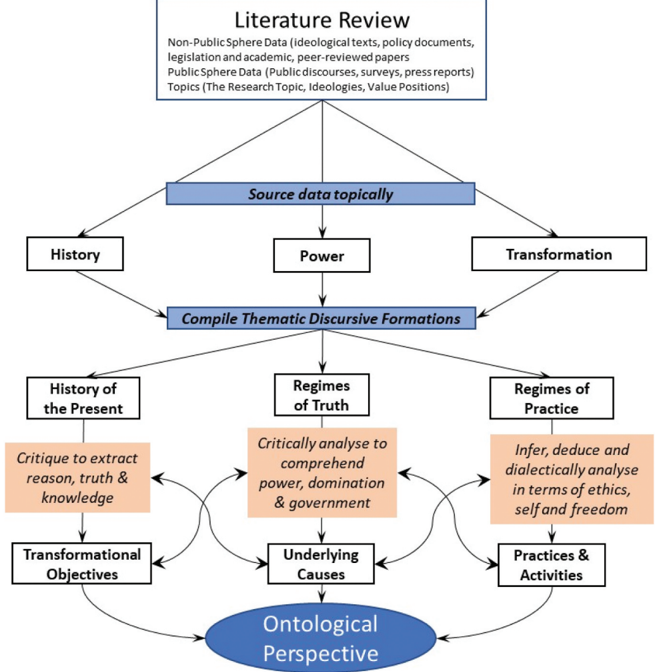
“The sourced data is therefore categorised into the three interrelated themes required to perform a Foucauldian critical analysis; “history”, “power structures” and “transforma-tion for social emancipation” (Myers & Klein, 2011).”
BackgroundMethodInfluentialThe Active Society: A Theory of Societal and Political Processes.
Stewart, R. L., & Etzioni, A. (1969) · Social Forces · doi:10.2307/2575271 · Cited by 259 · cited 1×
“Critical research embraces fundamental criticism (Etzioni, 1968) tempered by an explicit value position to engage effectively with the social and ethical aspects of problems.”
BackgroundBaskerville, R., & Pries-Heje, J. (2010) · Business & Information Systems Engineering · doi:10.1007/s12599-010-0118-4 · Cited by 232 · cited 2×
“However, a researcher may rest assured that not only are there other DSR methodologies which have not implied such limitations, such as Explanatory Design Theory (Baskerville & Pries-Heje, 2010; Niehaves & Ortbach, 2016) and Design-oriented IS research (Österle et al., 2011; Winter, 2008) but that those methodologies…”
BackgroundDesign Research in the Technology of Information Systems: Truth or Dare
Purao, S. (2002) · Cited by 210
Cukier, W., Ngwenyama, O. K., Bauer, R., & Middleton, C. A. (2009) · Information Systems Journal · doi:10.1111/j.1365-2575.2008.00296.x · Cited by 206 · cited 1×
“…accessing the public sphere of discourse (Myers & Klein, 2011) that encompasses political parties, politicians, lobbyists and pressure groups, mass media professionals and the vast networks of electronic and print media that focus on informing and transforming public opinion (Cukier et al., 2008).”
BackgroundGregg, D. G., Kulkarni, U. R., & Vinzé, A. (2001) · Information Systems Frontiers · doi:10.1023/a:1011491322406 · Cited by 202 · cited 1×
“Frameworks developed by Hevner et al. (2004), Purao (2002), and Gregg et al. (2001) proceed similarly.”
MethodChucking the Checklist: A Contextual Approach to Teaching Undergraduates Web-Site Evaluation
Meola, M. (2004) · portal: Libraries and the Academy · doi:10.1353/pla.2004.0055 · Cited by 200 · cited 1×
“Manual methods have been developed for determining the validity and veracity of internet content (Fritch & Cromwell, 2001; Meola, 2004; Metzger et al., 2003) but automated systems may also be developed for these purposes (Wijnhoven & Brinkhuis, 2015) where a situation demands it.”
MethodSnelson-Powell, A. C., Grosvold, J., & Millington, A. (2016) · Academy of Management Learning and Education · doi:10.5465/amle.2015.0307 · Cited by 175 · cited 2×
“moted by educational institutions under the influence of the powerful who in turn became their benefactors (Ghoshal, 2005; Snelson-Powell et al., 2016).”
BackgroundEvaluating Internet resources: Identity, affiliation, and cognitive authority in a networked world
Fritch, J. W., & Cromwell, R. L. (2001) · Journal of the American Society for Information Science and Technology · doi:10.1002/asi.1081 · Cited by 173 · cited 1×
“Manual methods have been developed for determining the validity and veracity of internet content (Fritch & Cromwell, 2001; Meola, 2004; Metzger et al., 2003) but automated systems may also be developed for these purposes (Wijnhoven & Brinkhuis, 2015) where a situation demands it.”
MethodRetrospect and Prospect: Information Systems Research in the Last and Next 25 Years
Lee, A. S. (2010) · Journal of Information Technology · doi:10.1057/jit.2010.24 · Cited by 165 · cited 4×
“However, fairly contemporary research trends indicate that IS researchers predominantly approach research with an episteme -centric understanding of knowledge while the techne -centric and phronesis - centric forms of knowledge are under-utilised (Lee, 2010).”
BackgroundInfluentialMcGrath, K. (2005) · Information Systems Journal · doi:10.1111/j.1365-2575.2005.00187.x · Cited by 159 · cited 1×
“…its application remains relatively rare and this state of low adoption has been a prevailing cause for concern (Brooke, 2002; Cecez-Kecmanovic et al., 2008; Howcroft & Trauth, 2005; Kvasny & Richardson, 2006; McGrath, 2005; Myers & Klein, 2011; Palvia et al., 2015; Truex & Howcroft, 2001).”
BackgroundThe Data Base for Advances in Information Systems: A New Editorial Vision
Petter, S., & Stafford, T. (2017) · ACM SIGMIS Database: the DATABASE for Advances in Information Systems · doi:10.1145/3051473.3051475 · Cited by 151
(1982) · doi:10.1007/978-1-349-16801-9 · Cited by 149
Encyclopedia of Consumer Culture
Southerton, D. (2011) · Sage eBooks · doi:10.4135/9781412994248 · Cited by 145 · cited 2×
“…there were abounding innovations of mechanisms (Ashton, 1997) that consumed and continue to consume finite raw materials in production processes of artefacts designed to not only meet our needs and increase our comfort but also inflame our desires for unnecessary consumption (Southerton, 2011).”
BackgroundTHE ECONOMIC ROLE OF THE AUDIT IN FREE AND REGULATED MARKETS: A LOOK BACK AND A LOOK FORWARD
Wallace, W. A. (2004) · Research in Accounting Regulation · doi:10.1016/s1052-0457(04)17012-4 · Cited by 139 · cited 1×
“(W. A. Wallace, 2004 p. 270).”
OECD Guidelines on Corporate Governance of State-Owned Enterprises, 2015 Edition
OECD (2015) · OECD eBooks · doi:10.1787/9789264244160-en · Cited by 139
On the Impact of the Computer on Society: How does one insult a machine?
Weizenbaum, J. (1972) · Science · doi:10.1126/science.176.4035.609 · Cited by 137 · cited 1×
“Friedman et al. (2008) had in turn, built on earlier academic studies into this complex topic that is encapsulated by these words of Weizenbaum (1972); What is wrong, I think, is that we have permitted technological metaphors . . . and technique itself to so thoroughly pervade our thought processes…”
BackgroundA Note on Profit Maximisation and its Implications
Scitovszky, T. D. (1943) · The Review of Economic Studies · doi:10.2307/2967520 · Cited by 129 · cited 1×
“Profit maximisation “has almost come to be regarded as equivalent to rational behaviour, and as an axiom, which is self-evident and needs no proof or justification” (De Scitovszky, 1943, p. 57).”
BackgroundWhat does it Mean to be ‘Critical’ in is Research?
Brooke, C. (2002) · Journal of Information Technology · doi:10.1080/02683960210164336 · Cited by 125 · cited 2×
““Foucault’s historical analyses lead us to critically reflect upon the conditions of contemporary existence, both in the sense of the organisational practices we seek to explore and of our own research practices in doing so” (Brooke, 2002, p. 54).”
BackgroundReflections: Academia's Emerging Crisis of Relevance and the Consequent Role of the Engaged Scholar
Hoffman, A. J. (2016) · Journal of Change Management · doi:10.1080/14697017.2015.1128168 · Cited by 110 · cited 1×
“With time, he worried that brickmaking would become an end in itself” (Hoffman, 2016, p. 77).”
BackgroundThe Conduct of Inquiry: Methodology for Behavioural Science
Gellner, E., & Kaplan, A. (1965) · British Journal of Sociology · doi:10.2307/588769 · Cited by 97
Stahl, B. C., Eden, G., & Jirotka, M. (2013) · Responsible Innovation · doi:10.1002/9781118551424.ch11 · Cited by 96 · cited 1×
“Papers by Stahl et al. (2013) and Von Schomberg (2011) expand on the imperative arising from these policies to practice design and innovation in a socially responsible manner and this paper’s methodology builds on the principles revealed in those studies.”
MethodThe Industrial Revolution 1760-1830
Ashton, T. S. (1997) · doi:10.1093/oso/9780192892898.001.0001 · Cited by 95
Computational Propaganda and Political Big Data: Moving Toward a More Critical Research Agenda
Bolsover, G., & Howard, P. N. (2017) · Big Data · doi:10.1089/big.2017.29024.cpr · Cited by 91 · cited 1×
“The advent of computational propaganda exercised through social media platforms (Bolsover & Howard, 2017), adds to the inherent unreliability of these platforms as sources of data.”
BackgroundProfit maximization: The ethical mandate of business
Primeaux, P., & Stieber, J. (1994) · Journal of Business Ethics · doi:10.1007/bf00871675 · Cited by 88 · cited 1×
“In a distortion of the egalitarian and socially just ethos of a balanced free-market mechanism, a profit-maximising-at-any-cost orientation became the norm for many enterprises (Primeaux & Stieber, 1994).”
BackgroundMethodological and Topic Trends in Information Systems Research: A Meta-Analysis of IS Journals
Palvia, P., Kakhki, M. D., Ghoshal, T., Uppala, V., & Wang, W. (2015) · Communications of the Association for Information Systems · doi:10.17705/1cais.03730 · Cited by 88 · cited 2×
“…its application remains relatively rare and this state of low adoption has been a prevailing cause for concern (Brooke, 2002; Cecez-Kecmanovic et al., 2008; Howcroft & Trauth, 2005; Kvasny & Richardson, 2006; McGrath, 2005; Myers & Klein, 2011; Palvia et al., 2015; Truex & Howcroft, 2001).”
BackgroundAllais, S. (2007) · European Journal of Education · doi:10.1111/j.1465-3435.2007.00320.x · Cited by 87
Handbook of Critical Information Systems Research: Theory and Application
(2005) · Edward Elgar Publishing eBooks · doi:10.4337/9781845426743 · Cited by 87 · cited 2×
“…its application remains relatively rare and this state of low adoption has been a prevailing cause for concern (Brooke, 2002; Cecez-Kecmanovic et al., 2008; Howcroft & Trauth, 2005; Kvasny & Richardson, 2006; McGrath, 2005; Myers & Klein, 2011; Palvia et al., 2015; Truex & Howcroft, 2001).”
BackgroundG20/OECD-Grundsätze der Corporate Governance
OECD (2015) · OECD eBooks · doi:10.1787/9789264250130-de · Cited by 85
The Great Arch : English State Formation as Cultural Revolution
Corrigan, P. R. D., & Sayer, D. (1985) · Lancaster EPrints (Lancaster University) · Cited by 78
Exploring the critical agenda in information systems research
Ćećez-Kecmanović, D., Klein, H. K., & Brooke, C. (2008) · Information Systems Journal · doi:10.1111/j.1365-2575.2008.00295.x · Cited by 71 · cited 2×
“However, in spite of numerous studies having been produced on the principles and theories for conducting critical IS research, its application remains relatively rare and this state of low adoption has been a prevailing cause for concern (Brooke, 2002; Cecez-Kecmanovic et al., 2008; Howcroft & Trauth, 2005; Kvasny & R…”
BackgroundTechnological Environmentality: Conceptualizing Technology as a Mediating Milieu
Aydin, C., González Woge, M., & Verbeek, P.-P. (2019) · Philosophy & Technology · doi:10.1007/s13347-018-0309-3 · Cited by 70 · cited 2×
“…between people and their environments where the technologies may become imbedded in the various fabrics of our environments to heighten our perceptive capabilities, increase our monitoring capacities and facilitate our social interactions in Active Technology Environments (Aydin et al., 2019).”
BackgroundSolving the climate crisis: lessons from ozone depletion and COVID-19
Baldwin, M., & Lenton, T. M. (2020) · Global Sustainability · doi:10.1017/sus.2020.25 · Cited by 65 · cited 1×
“The reluctance of various governments to undertake the necessary changes (Baldwin & Lenton, 2020) is analogous to a tobacco addict who is aware of the detrimental consequences of smoking but continues on regardless, while both justifying the habit and ignoring the critics.”
Backgroundfoucault as parrhesiast: his last course at the collège de france (1984
Flynn, T. R. (1987) · Philosophy & Social Criticism · doi:10.1177/019145378701200207 · Cited by 57 · cited 2×
“…method addresses questions to three broad domains: firstly, one of reason, truth, and knowledge; secondly, one of power, domination, and government; and finally, one of ethics, self, and freedom, collectively forming the “Foucauldian trian-gle” of truth, power and self (Dean, 1994a; Flynn, 1987).”
BackgroundMethodCritical research in information systems: looking forward, looking back
Kvasny, L., & Richardson, H. (2006) · Information Technology and People · doi:10.1108/09593840610689813 · Cited by 56 · cited 1×
“…its application remains relatively rare and this state of low adoption has been a prevailing cause for concern (Brooke, 2002; Cecez-Kecmanovic et al., 2008; Howcroft & Trauth, 2005; Kvasny & Richardson, 2006; McGrath, 2005; Myers & Klein, 2011; Palvia et al., 2015; Truex & Howcroft, 2001).”
BackgroundNiehaves, B., & Ortbach, K. (2016) · European Journal of Information Systems · doi:10.1057/ejis.2016.3 · Cited by 55 · cited 1×
“…only are there other DSR methodologies which have not implied such limitations, such as Explanatory Design Theory (Baskerville & Pries-Heje, 2010; Niehaves & Ortbach, 2016) and Design-oriented IS research (Österle et al., 2011; Winter, 2008) but that those methodologies which do imply those…”
BackgroundMiller, D. (1978) · British Journal of Political Science · doi:10.1017/s0007123400001198 · Cited by 52 · cited 1×
“…variations and perspectives applied to the term, it is used with a bias based on the perception that it is analogous to principles of democracy while also conflicting with them, dependent upon prevailing political orientation and understanding of the concepts at a given time (Miller, 1978).”
BackgroundThe Club of Rome and sustainable development
Colombo, U. (2001) · Futures · doi:10.1016/s0016-3287(00)00048-3 · Cited by 48 · cited 1×
“This study and report applied the System Dynamic Modelling (Forrester, 1961) techniques developed by Jay Forrester to produce models that illustrated how the Earth’s many systems and natural resources cannot be sustained under the impact of mankind’s consumptive activities (Colombo, 2001).”
MethodImproving school governance through participative democracy and the law
Smit, M. H., & Oosthuizen, I. J. (2011) · South African Journal of Education · doi:10.15700/saje.v31n1a415 · Cited by 48
Christie, P. (1996) · International Journal of Educational Development · doi:10.1016/s0738-0593(96)00061-2 · Cited by 34
Realizing the Social Internet? Online Social Networking Meets Offline Social Capital
Pasek, J., More, E., & Römer, D. (2008) · Cited by 26
I nternet information triangulation: Design theory and prototype evaluation
Wijnhoven, F., & Brinkhuis, M. (2014) · Journal of the Association for Information Science and Technology · doi:10.1002/asi.23203 · Cited by 25 · cited 1×
“Manual methods have been developed for determining the validity and veracity of internet content (Fritch & Cromwell, 2001; Meola, 2004; Metzger et al., 2003) but automated systems may also be developed for these purposes (Wijnhoven & Brinkhuis, 2015) where a situation demands it.”
MethodCritical Research in Information Systems: The Question of Methodology
Ćećez-Kecmanović, D. (2007) · AIS Electronic Library (AISeL) · Cited by 19
Beggs-Humphreys, M. (2013) · Routledge eBooks · doi:10.4324/9781315020259 · Cited by 6
Monson, M. L. (2013) · Open University of Cape Town (University of Cape Town) · Cited by 1
Self-citation
Research works printed but not linked: 26
- Avison, D., & Elliot, S. (2005). Scoping the discipline of information systems. In D. E. Avison & J. Pries-Heje (Eds.), Research in information systems: A handbook for research.
- Chisholm, L. (Ed.)(2004).Changing Class, Education and Social Change in Post-Apartheid South Africa, First pub- lished in South Africa in 2004 by HSRC Press
- Christie, P., Butler, D. & Potterton, M. (Eds.),(2007). Ministerial Committee on schools that work, 13 October 2007
- Davey, C. L., Wootton, A. B., Thomas, A., Cooper, R., & Press, M. (2007). Design for the surreal world?: A new model of socially responsible design. In The Sixth International Conference of the European Academy of Design.
- Dean, M. (1994a). Sociology, Foucault, and the uses of history. In M. Dean (Ed.), Critical and effective histories: Foucault's methods and historical sociology. Routledge, 7- 22.
- Dean, M. (1994b). Thematics of state power. In M. Dean (Ed.), Critical and effective histories: Foucault's methods and historical sociology. Routledge, 141-173.
- Dewey, J. (1916). Democracy & Education, Originally Published in 1916, 2008 Student Handouts, Inc. Toledo, Ohio, U.S.A Dourish, P. and Belotti, V. (1992). Awareness and Coordination in Shared Workspaces. In: Proc. of the Conf. on Computer-Supported Cooperative Work, pp. 107-114
- Forrester, J. W. (1961). Industrial dynamics. 1961. Pegasus Communications.
- Foucault, M. (1985). The history of sexuality. In R. Hurley (Ed.), The use of pleasure (Vol. 2). Pantheon.
- Goldkuhl, G. (2004). Design theories in information systems-a need for multi-grounding. Journal of Information Technology Theory and Application (JITTA), 6(2), 7.
- Habermas, J. (1989). The structural transformation of the public sphere: An enquiry into a category of bourgeois society (T. Burger, translated by). Polity Press.
- Karlova, N. A., & Fisher, K. E. (2013). A social diffusion model of misinformation and disinformation for under- standing human information behaviour. Information Research, 18(1), 573. [Available at http://InformationR. net/ir/18-1/paper573.html ]
- Kyriakopoulou, K. (2011) Authoritarian states and Internet social media: Instruments of democratisation or instru- ments of control?, Human Affairs21, 1, 18-26.
- Chisholm L. (Eds.), Changing Class: education and social change in post-apartheid South Africa, HSRC Press.
- Louche, C., & Lydenberg, S. (2006, July). Socially responsi- ble investment: differences between Europe and the United States. In Proceedings of the International Association for Business and Society (Vol.17, pp. 112-117), Philosophy Documentation Center.
- Merton, R. K. (1949). On sociological theories of the middle range. In R. K. Merton (Ed.), Social theory and social structure (pp. 39-53).
- Muller, J. (2004). Assessment, qualifications and the NQF in South African schooling, In Chisholm L. (Eds.), Changing Class: education and social change in post- apartheid South Africa, HSRC Press.
- Nel, E. & Binns, T. (1999). Changing the geography of apartheid education in South Africa, Geography,1999, volume 84(2), pp. 119-28
- Polanyi, K. (1944). The creat transformation. Beacon.
- Secretariat Of The Convention On Biological Diversity, 2020, Global biodiversity outlook 5
- Simon, H. A. (1969). The sciences of the artificial. MIT Press.
- Takeda, H., Veerkamp, P., & Yoshikawa, H. (1990). Modeling design process. AI Magazine, 11(4), 37.
- Truex, D., & Howcroft, D. (2001). Critical analyses of ERP systems: The macro level (1). The Database for Advances in Information Systems, 32(4), 13-18.
- Van Wyk, N. (2004). School governing bodies: the experi- ences of South African educators, South African Journal of Education, Vol. 24(1): 49 -54
- Van Wyk, N. (2007). The rights and roles of parents on school governing bodies in South Africa, International Journal about Parents in Education, Vol.1, (No. 0), 132- 139.
- Wallace, S. E. (1999). Social problems: An ecological perspec- tive. Pearson Custom Pub.
Cited by
Dwivedi, Y. K., Hughes, L., Kar, A. K., Baabdullah, A. M., Grover, P., Abbas, R., Andreini, D., Abumoghli, I., Barlette, Y., Bunker, D., et al. (2022) · International Journal of Information Management · doi:10.1016/j.ijinfomgt.2021.102456 · Cited by 761
“…expertise to support transdisciplinarity, and it is our obligation to actively implement sustainability transitions and responsible systems design (Monson, 2021),IS research (Pan & Zhang, 2020) and innovation (Stilgoe, Owen, & Macnaghten, 2013) in the interest of sustainable futures (Hadorn,…”
BackgroundJärvenpää, S. L., & Essén, A. (2023) · Information and Organization · doi:10.1016/j.infoandorg.2023.100449 · Cited by 73
Betz, S., Penzenstadler, B., Duboc, L., Chitchyan, R., Kocak, S. A., Brooks, I., Oyedeji, S., Porras, J., Seyff, N., & Venters, C. C. (2024) · ACM Transactions on Software Engineering and Methodology · doi:10.1145/3649597 · Cited by 23
“Most recently, Monson [73] introduced a socially responsible design cience methodology encompassing “the objectives of socially inclusive and environmentally sustainable economic growth” (p. 1).”
Ciriello, R., Gal, U., Hannon, O., & Thatcher, J. B. (2024) · European Journal of Information Systems · doi:10.1080/0960085x.2024.2444249 · Cited by 30
“In the technocentric DSR stream, focusing on affor-dance-oriented interventions provides a proactive blue-print for social media (re)design to transform these platforms into spaces that promote responsible use.”
InfluentialNaswar, N., Ilmar, A., Mukhlis, M. M., Achmad, A., & Khalid, R. M. (2024) · Jurnal IUS Kajian Hukum dan Keadilan · doi:10.29303/ius.v12i3.1543 · Cited by 12
Metadata
- Authors
- Monson, M.
- Affiliations
- University of Twente (NL)
- Corresponding author
- Monson, Mike
- ORCID
- Monson, Mike
- Venue
- European Journal of Information Systems
- Publisher
- Informa UK Limited
- Published
- 2021-07-21
- Volume
- 32
- Issue
- 2
- Pages
- 207-237
- ISSN
- 0960-085X (ISSN-L)
- 1476-9344
- OpenAlex
- W3193411319
- Cited by
- 21
- References
- 89
- Citations by year
- 2026: 4 · 2025: 6 · 2024: 9 · 2023: 1 · 2021: 1
- FWCI
- 3.81
- Type
- journal article
- Language
- en
- Open access
- hybrid
- doi.org
- Licence
- Locations
- European Journal of Information Systems (publishedVersion, cc-by-nc-nd)
- RePEc: Research Papers in Economics (submittedVersion)
- University of Twente Research Information (submittedVersion, cc-by-nc-nd)
- University of Twente Research Information (submittedVersion, other-oa)
- Topics
- Social Sciences › Business, Management and Accounting › Management Information Systems › Information Systems Theories and Implementation
- Physical Sciences › Engineering › Electrical and Electronic Engineering › Green IT and Sustainability
- Physical Sciences › Computer Science › Information Systems › Information Systems Education and Curriculum Development
- Keywords
- design science research, sustainable development, socially responsible research, critical research methodology, problem formulation, environmental sustainability, public discourse
About these checks
Registry, retraction, Cites and statistics results are computed, not judged, with one exception: a printed reference that no index lists is read once by a model before it counts as a citation error. Claims are extracted by a model and kept only when their quote appears verbatim in the text; each cited source is then checked, with a model’s help, for whether it says what the claim relies on. Those verdicts can be wrong — read the claim’s quote and the cited source before relying on one.
Statistics and arithmetic are recomputed, not judged.
Confidence bands are shown only for fields calibrated on our annotated test set. None is calibrated yet, so no band is shown.
What counts as a claim ›How we measure confidence ›How we check this ›
Are you an author, or do you see a problem with this page? Request a review
Data sources
Bibliographic data: Semantic Scholar, OpenAlex, Crossref.
Contains information from the Semantic Scholar Academic Graph Datasets, made available under the ODC Attribution License (ODC-BY 1.0).
Semantic Scholar’s data is described in: Kinney, R., et al. (2023). The Semantic Scholar Open Data Platform. arXiv:2301.10140.
