

Microbial metabolite butyrate promotes anti-PD-1 antitumor efficacy by modulating T cell receptor signaling of cytotoxic CD8 T cell
Open accessThe DOI matches its Crossref record; 48 of the 48 references it cites were found in a registry or an index.
Abstract
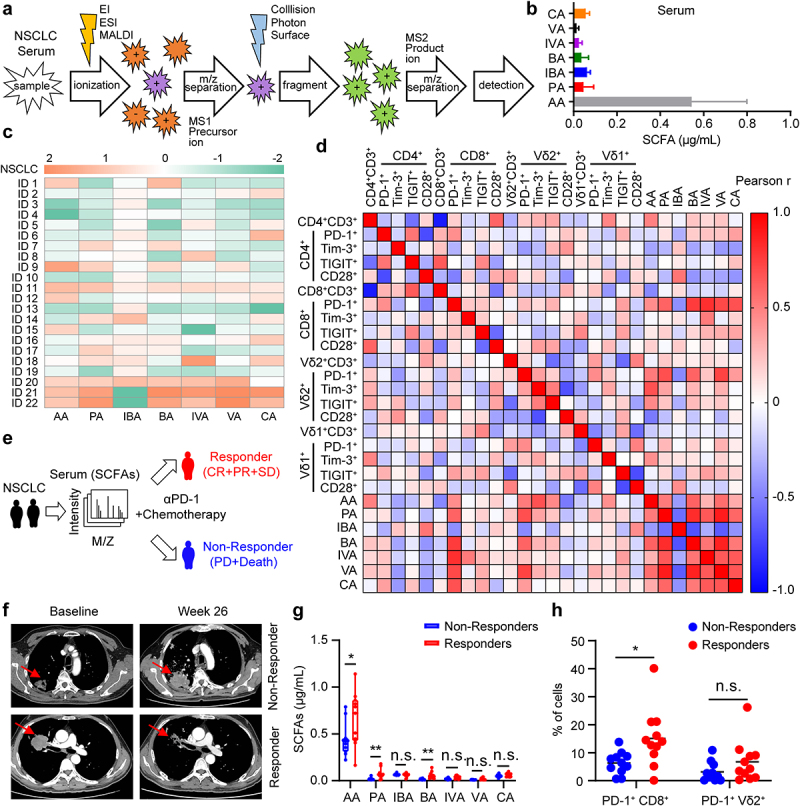
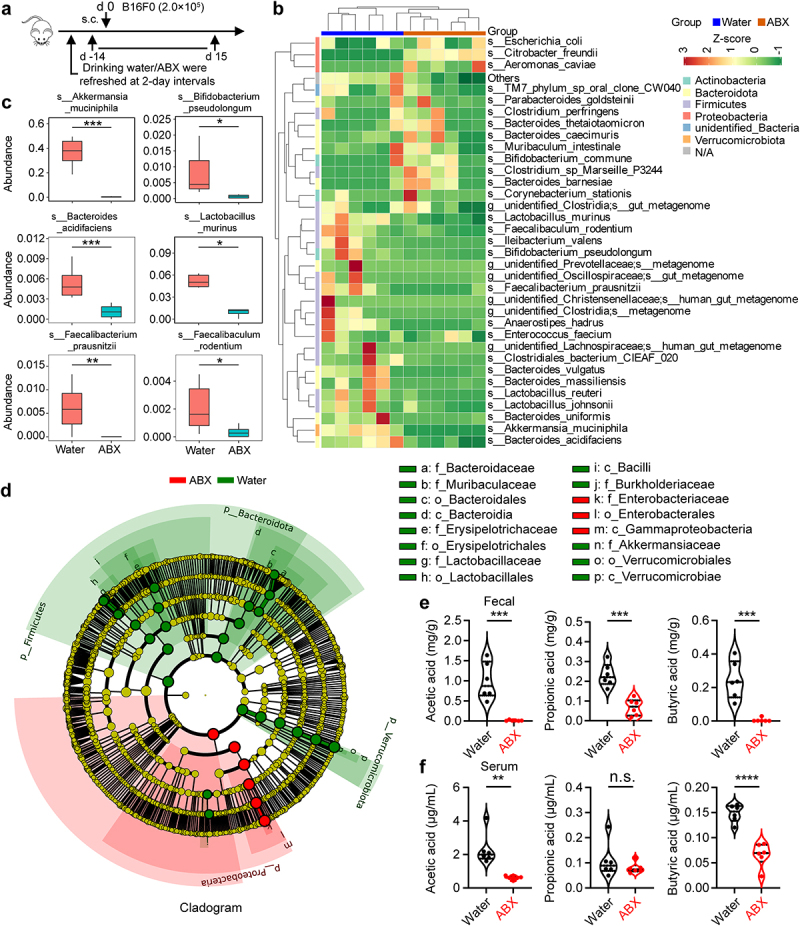
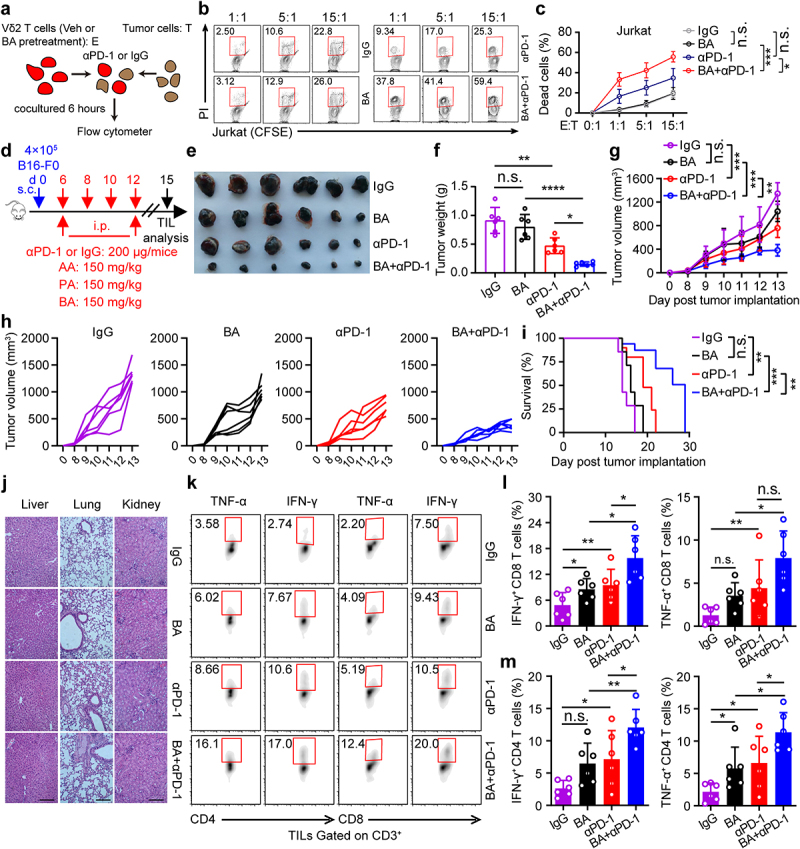
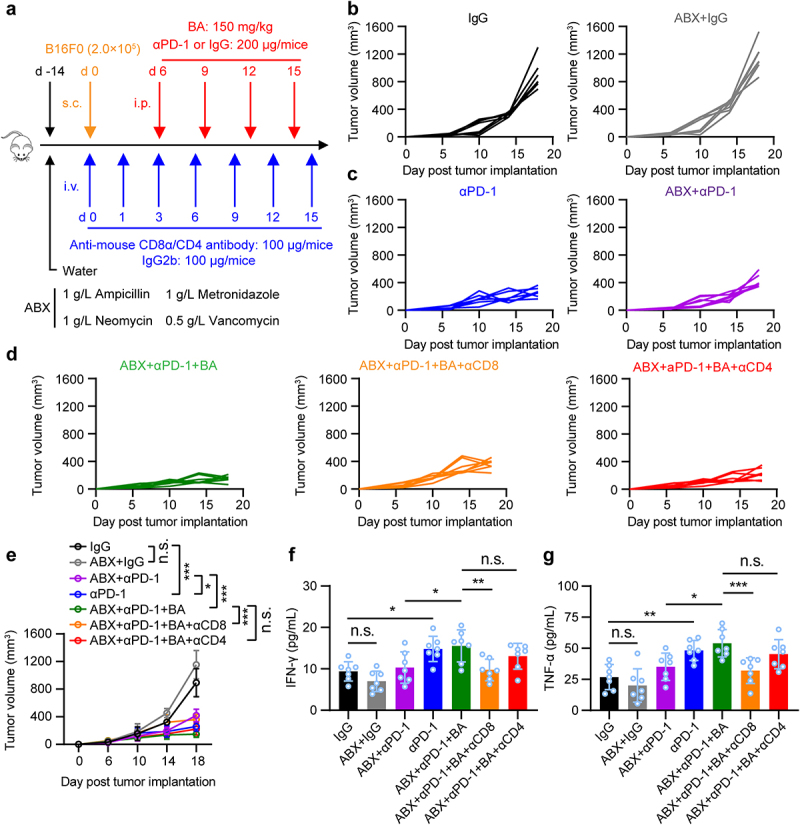
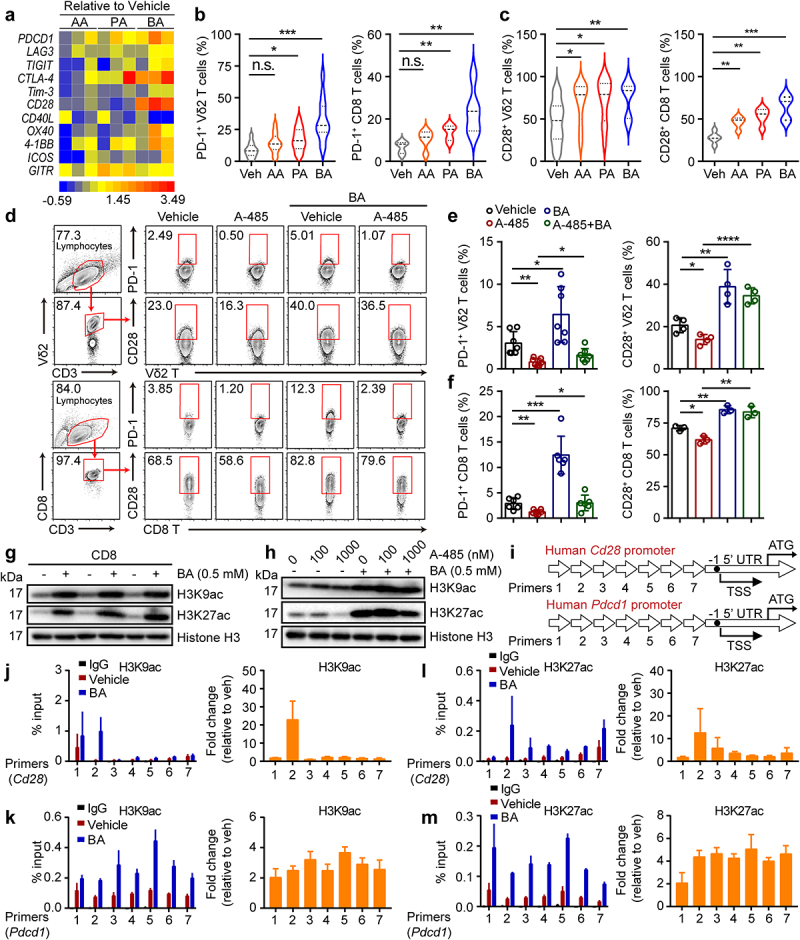
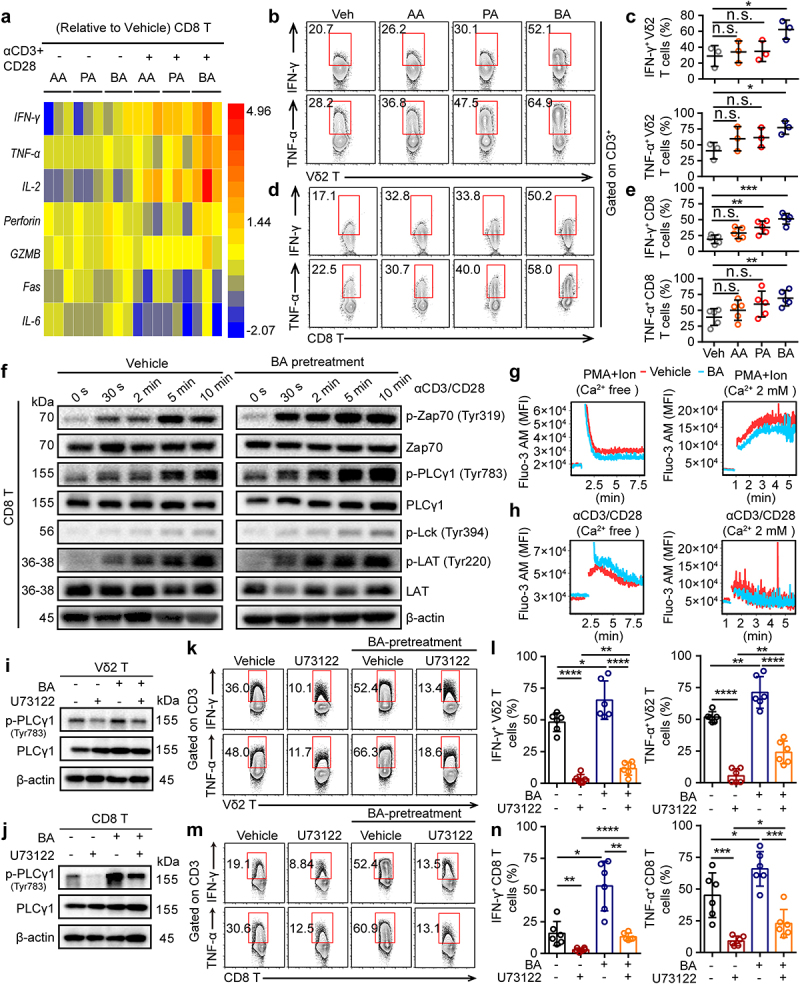
Recent studies have demonstrated that the antitumor immunity of immune cells can be modulated by gut microbiota and their metabolites. However, the underlying mechanisms remain unclear. Here, we showed that the serum butyric acid level is positively correlated with the expression of programmed cell death-1 (PD-1) on circulating CD8+ and Vγ9 Vδ2 (Vδ2+) T cells in patients with non-small cell lung cancer (NSCLC). Responder NSCLC patients exhibited higher levels of serum acetic acid, propionic acid, and butyric acid than non-responders. Depletion of the gut microbiota reduces butyrate levels in both feces and serum in tumor-bearing mice. Mechanistically, butyrate increased histone 3 lysine 27 acetylation (H3K27ac) at the promoter region of Pdcd1 and Cd28 in human CD8+ T cells, thereby promoting the expression of PD-1/CD28 and enhancing the efficacy of anti-PD-1 therapy. Butyrate supplementation promotes the expression of antitumor cytokines in cytotoxic CD8+ T cells by modulating the T-cell receptor (TCR) signaling pathway. Collectively, our findings reveal that the metabolite butyrate of the gut microbiota facilitates the efficacy of anti-PD-1 immunotherapy by modulating TCR signaling of cytotoxic CD8 T cells, and is a highly promising therapeutic biomarker for enhancing antitumor immunity.
Overview
The claims and statistics of this paper haven’t been checked yet.
Free: it reads the open-access text and checks the first 5 claims that cite a source we can check. Create a free account to check every claim.
Integrity signals
Registry
Cites
Statistics
Figures
Verification
Claims the paper makes
The claims and statistics of this paper haven’t been checked yet.
Free: it reads the open-access text and checks the first 5 claims that cite a source we can check. Create a free account to check every claim.
Claims other papers make about this one
Each is checked against this paper’s own text: does it say what the citing paper says it does?
In the citing paper
“Notably, SCFA supplementation without ICI does not improve tumor control or survival.127”
From Gut dysbiosis in oncology: a risk factor for immunoresistance (2026) · doi:10.1038/s41422-025-01212-6 · cites this paper as [127]
In the citing paper
“Butyrate is a frequently studied SCFA compound that has been shown to boost anti-tumor immunity in preclinical models.127”
From Gut dysbiosis in oncology: a risk factor for immunoresistance (2026) · doi:10.1038/s41422-025-01212-6 · cites this paper as [127]
In the citing paper
“systemic butyrate given by intraperitoneal injection improved anti‑PD‑1 efficacy,127 whereas intratumoral butyrate may drive tumor fatty acid oxidation and lead to treatment resistance.152”
From Gut dysbiosis in oncology: a risk factor for immunoresistance (2026) · doi:10.1038/s41422-025-01212-6 · cites this paper as [127]
Self-check
Percentages, sums and reported differences re-computed from the paper’s own numbers.
The self-check needs the paper’s full text.
Citations
Cites
New response evaluation criteria in solid tumours: revised RECIST guideline (version 1.1)
Eisenhauer, E. A., Therasse, P., Bogaerts, J., Schwartz, L. H., Sargent, D., Ford, R., Dancey, J., Arbuck, S., Gwyther, S., Mooney, M., et al. (2009) · European Journal of Cancer · doi:10.1016/j.ejca.2008.10.026 · Cited by 29,534 · cited 1×
“1) criteria for at least 6 months.(49) Lack of a clinical response (non-responder) was defined as disease progression (PD) on serial CT scans or stable disease lasting less than 6 months (26 weeks).”
BackgroundCancer Immunoediting: Integrating Immunity’s Roles in Cancer Suppression and Promotion
Schreiber, R. D., Old, L. J., & Smyth, M. J. (2011) · Science · doi:10.1126/science.1203486 · Cited by 6,474
Gut microbiome influences efficacy of PD-1-based immunotherapy against epithelial tumors
Routy, B., Le Chatelier, E., Derosa, L., Duong, C. P. M., Alou, M. T., Daillère, R., Fluckiger, A., Messaoudene, M., Rauber, C., Roberti, M. P., et al. (2018) · Science · doi:10.1126/science.aan3706 · Cited by 5,671 · cited 1×
“Similarly, compared with anti-PD -1 immunotherapy responders, non-responders have a reduced abundance of SCFA-producing bacteria, such as Faecalibacterium and Akkermansia muciniphila.(15,39) Recent study also demonstrated that in humans, the oxaliplatin responder cancer patients exhibited a higher amount of serum buty…”
BackgroundCommensal microbe-derived butyrate induces the differentiation of colonic regulatory T cells
Furusawa, Y., Obata, Y., Fukuda, S., Endo, T. A., Nakato, G., Takahashi, D., Nakanishi, Y., Uetake, C., Kato, K., Kato, T., et al. (2013) · Nature · doi:10.1038/nature12721 · Cited by 5,549 · cited 1×
“Previous studies have shown that SCFAs in mice, especially butyrate, promote the extrathymic generation of Treg cells, induce the differentiation of colonic regulatory T cells, and are regulated by histone deacetylase (HDAC).(34,35,40) In addition, SCFAs can directly induce T-cell differentiation into T cells producin…”
BackgroundThe Microbial Metabolites, Short-Chain Fatty Acids, Regulate Colonic T reg Cell Homeostasis
Smith, P. M., Howitt, M. R., Panikov, N., Michaud, M., Gallini, C. A., Bohlooly-Y, M., Glickman, J. N., & Garrett, W. S. (2013) · Science · doi:10.1126/science.1241165 · Cited by 5,413
Metabolites produced by commensal bacteria promote peripheral regulatory T-cell generation
Arpaia, N., Campbell, C., Fan, X., Dikiy, S., van der Veeken, J., deRoos, P., Liu, H., Cross, J. R., Pfeffer, K., Coffer, P. J., et al. (2013) · Nature · doi:10.1038/nature12726 · Cited by 4,838 · cited 1×
“Previous studies have shown that SCFAs in mice, especially butyrate, promote the extrathymic generation of Treg cells, induce the differentiation of colonic regulatory T cells, and are regulated by histone deacetylase (HDAC).(34,35,40) In addition, SCFAs can directly induce T-cell differentiation into T cells producin…”
BackgroundGut microbiome modulates response to anti-PD-1 immunotherapy in melanoma patients
Gopalakrishnan, V., Spencer, C. N., Nezi, L., Reuben, A., Andrews, M. C., Karpinets, T. V., Prieto, P. A., Vicente, D., Hoffman, K., Wei, S. C., et al. (2018) · Science · doi:10.1126/science.aan4236 · Cited by 4,812 · cited 1×
“Similarly, compared with anti-PD -1 immunotherapy responders, non-responders have a reduced abundance of SCFA-producing bacteria, such as Faecalibacterium and Akkermansia muciniphila.(15,39) Recent study also demonstrated that in humans, the oxaliplatin responder cancer patients exhibited a higher amount of serum buty…”
BackgroundSelf-citationIpilimumab plus Dacarbazine for Previously Untreated Metastatic Melanoma
Robert, C., Thomas, L., Bondarenko, I., O'Day, S., Weber, J., Garbe, C., Lebbe, C., Baurain, J.-F., Testori, A., Grob, J.-J., et al. (2011) · New England Journal of Medicine · doi:10.1056/nejmoa1104621 · Cited by 4,496
Commensal Bifidobacterium promotes antitumor immunity and facilitates anti–PD-L1 efficacy
Sivan, A., Corrales, L., Hubert, N., Williams, J. B., Aquino-Michaels, K., Earley, Z. M., Benyamin, F. W., Man Lei, Y., Jabri, B., Alegre, M.-L., et al. (2015) · Science · doi:10.1126/science.aac4255 · Cited by 3,888
Anticancer immunotherapy by CTLA-4 blockade relies on the gut microbiota
Vétizou, M., Pitt, J. M., Daillère, R., Lepage, P., Waldschmitt, N., Flament, C., Rusakiewicz, S., Routy, B., Roberti, M. P., Duong, C. P. M., et al. (2015) · Science · doi:10.1126/science.aad1329 · Cited by 3,488 · cited 1×
“and Bacteroides fragilis and activating IL-12-producing dendritic cells (DCs) and T helper 1 (Th1) immune responses.(16) Gut microbiota promotes antitumor immunity and facilitates anti-PD-L1 efficacy in tumor-mice model, and one explanation for this finding is that commensal Bifidobacterium-derived signals modulate th…”
BackgroundShort chain fatty acids in human large intestine, portal, hepatic and venous blood
Cummings, J. H., Pomare, E. W., Branch, W. J., Naylor, C. P., & Macfarlane, G. T. (1987) · Gut · doi:10.1136/gut.28.10.1221 · Cited by 3,119 · cited 1×
“Short-chain fatty acids (SCFAs), including acetate (AA), propionate (PA), and butyrate (BA), are bacterial fermentation products of the gut microbiota and range in concentration from 50 to 100 mM in the colonic lumen.(24,25) Recent reports demonstrate that the antitumor immunity of cytotoxic CD8 T cells can be promote…”
BackgroundMolecular mechanisms of T cell co-stimulation and co-inhibition
Chen, L., & Flies, D. B. (2013) · Nature Reviews Immunology · doi:10.1038/nri3405 · Cited by 3,114 · cited 1×
“T-cell activation requires two signals: a primary antigen-induced signal from the TCR and a secondary signal from co-stimulatory receptors.(44) Previous reports have shown that the TCR/CD28/Ca signaling pathway could enhance the antigen sensitivity of T cells.”
BackgroundThe commensal microbiome is associated with anti-PD-1 efficacy in metastatic melanoma patients
Matson, V., Fessler, J., Bao, R., Chongsuwat, T., Zha, Y., Alegre, M.-L., Luke, J. J., & Gajewski, T. F. (2018) · Science · doi:10.1126/science.aao3290 · Cited by 3,107
The evolving landscape of biomarkers for checkpoint inhibitor immunotherapy
Havel, J. J., Chowell, D., & Chan, T. A. (2019) · Nature Reviews Cancer · doi:10.1038/s41568-019-0116-x · Cited by 2,286 · cited 2×
“A previous study reported that the abundance of PD-1 in patients with tumors is a prognostic factor associated with better survival after ICI therapy.(8) Some studies have demonstrated the CD28GUT MICROBES 5”
BackgroundCommensal Bacteria Control Cancer Response to Therapy by Modulating the Tumor Microenvironment
Iida, N., Dzutsev, A., Stewart, C. A., Smith, L., Bouladoux, N., Weingarten, R. A., Molina, D. A., Salcedo, R., Back, T., Cramer, S., et al. (2013) · Science · doi:10.1126/science.1240527 · Cited by 2,251
T cell costimulatory receptor CD28 is a primary target for PD-1–mediated inhibition
Hui, E., Cheung, J., Zhu, J., Su, X., Taylor, M. J., Wallweber, H. A., Sasmal, D. K., Huang, J., Kim, J. M., Mellman, I., et al. (2017) · Science · doi:10.1126/science.aaf1292 · Cited by 1,689 · cited 2×
“Some studies have revealed that PD-1 suppresses the antitumor function of T cells primarily by inactivating CD28 signaling, indicating an important role for the CD28/B7 pathway in anti-PD-1 therapy in cancer patients.(33,43) Indeed, we further found that butyrate promotes the expression of CD28 and PD-1 in cytotoxic C…”
BackgroundHallmarks of response, resistance, and toxicity to immune checkpoint blockade
Morad, G., Helmink, B. A., Sharma, P., & Wargo, J. A. (2021) · Cell · doi:10.1016/j.cell.2021.09.020 · Cited by 1,648 · cited 1×
“programmed death ligand 1 (PD-L1), and cytotoxic T lymphocyte-associated antigen 4 (CTLA-4).(3,4,8,38) However, the response rate to ICIs for solid tumors is relatively low.”
BackgroundHiam-Galvez, K. J., Allen, B. M., & Spitzer, M. H. (2021) · Nature Reviews Cancer · doi:10.1038/s41568-021-00347-z · Cited by 1,400
A Paradigm Shift in Cancer Immunotherapy: From Enhancement to Normalization
Sanmamed, M. F., & Chen, L. (2018) · Cell · doi:10.1016/j.cell.2018.09.035 · Cited by 1,392
Immune checkpoint signaling and cancer immunotherapy
He, X., & Xu, C. (2020) · Cell Research · doi:10.1038/s41422-020-0343-4 · Cited by 1,371
Park, J., Kim, M., Kang, S. G., Jannasch, A. H., Cooper, B., Patterson, J., & Kim, C. H. (2015) · Mucosal Immunology · doi:10.1038/mi.2014.44 · Cited by 1,307 · cited 1×
“In addition, SCFAs can directly induce T-cell differentiation into T cells producing cytokine, including interleukin-17 (IL-17), IFN-γ, and IL10, and this effect of SCFAs on T cells is independent of GPR41 (FFAR3) or GPR43 (FFAR2), but dependent on direct HDAC inhibitor activity.(41) However, several studies have indi…”
BackgroundClinical implications of T cell exhaustion for cancer immunotherapy
Chow, A., Perica, K., Klebanoff, C. A., & Wolchok, J. D. (2022) · Nature Reviews Clinical Oncology · doi:10.1038/s41571-022-00689-z · Cited by 1,044 · cited 1×
“programmed death ligand 1 (PD-L1), and cytotoxic T lymphocyte-associated antigen 4 (CTLA-4).(3,4,8,38) However, the response rate to ICIs for solid tumors is relatively low.”
BackgroundRescue of exhausted CD8 T cells by PD-1–targeted therapies is CD28-dependent
Kamphorst, A. O., Wieland, A., Nasti, T., Yang, S., Zhang, R., Barber, D. L., Konieczny, B. T., Daugherty, C. Z., Koenig, L., Yu, K., et al. (2017) · Science · doi:10.1126/science.aaf0683 · Cited by 1,015 · cited 1×
“Some studies have revealed that PD-1 suppresses the antitumor function of T cells primarily by inactivating CD28 signaling, indicating an important role for the CD28/B7 pathway in anti-PD-1 therapy in cancer patients.(33,43) Indeed, we further found that butyrate promotes the expression of CD28 and PD-1 in cytotoxic C…”
BackgroundEnhancing immunotherapy in cancer by targeting emerging immunomodulatory pathways
Kraehenbuehl, L., Weng, C.-H., Eghbali, S., Wolchok, J. D., & Merghoub, T. (2022) · Nature Reviews Clinical Oncology · doi:10.1038/s41571-021-00552-7 · Cited by 846 · cited 1×
“programmed death ligand 1 (PD-L1), and cytotoxic T lymphocyte-associated antigen 4 (CTLA-4).(3,4,8,38) However, the response rate to ICIs for solid tumors is relatively low.”
BackgroundThe microbiome in cancer immunotherapy: Diagnostic tools and therapeutic strategies
Zitvogel, L., Ma, Y., Raoult, D., Kroemer, G., & Gajewski, T. F. (2018) · Science · doi:10.1126/science.aar6918 · Cited by 777 · cited 1×
“The potential mechanisms by which gut microbiota mediate antitumor immunity are through the activation of specific T cell responses against microbial antigens, which either provide support for tumor-specific immune activation or may cross-react against tumorspecific antigens.(17,22,23) However, it is still not”
BackgroundLuu, M., Riester, Z., Baldrich, A., Reichardt, N., Yuille, S., Busetti, A., Klein, M., Wempe, A., Leister, H., Raifer, H., et al. (2021) · Nature Communications · doi:10.1038/s41467-021-24331-1 · Cited by 771
He, Y., Fu, L., Li, Y., Wang, W., Gong, M., Zhang, J., Dong, X., Huang, J., Wang, Q., Mackay, C. R., et al. (2021) · Cell Metabolism · doi:10.1016/j.cmet.2021.03.002 · Cited by 729
Derosa, L., Routy, B., Thomas, A. M., Iebba, V., Zalcman, G., Friard, S., Mazieres, J., Audigier-Valette, C., Moro-Sibilot, D., Goldwasser, F., et al. (2022) · Nature Medicine · doi:10.1038/s41591-021-01655-5 · Cited by 685
Jurkat T cells and development of the T-cell receptor signalling paradigm
Abraham, R. T., & Weiss, A. (2004) · Nature Reviews Immunology · doi:10.1038/nri1330 · Cited by 598
Vitamin D controls T cell antigen receptor signaling and activation of human T cells
von Essen, M. R., Kongsbak, M., Schjerling, P., Olgaard, K., Ødum, N., & Geisler, C. (2010) · Nature Immunology · doi:10.1038/ni.1851 · Cited by 536
Trebak, M., & Kinet, J.-P. (2019) · Nature Reviews Immunology · doi:10.1038/s41577-018-0110-7 · Cited by 508 · cited 2×
“A previous report showed that antigen binding to TCR initiates a cascade of protein phosphorylation that converges in the activation of phospholipase Cγ1 (PLCγ1), the production of inositol-1,4,5-trisphosphate (InsP3), and Ca release from endoplasmic reticulum Ca stores via InsP3 receptor channels.(37) Interestingly,…”
BackgroundGut microbiota influence immunotherapy responses: mechanisms and therapeutic strategies
(2022) · doi:10.1186/s13045-022-01273-9 · Cited by 495
Translating gammadelta (γδ) T cells and their receptors into cancer cell therapies
Sebestyen, Z., Prinz, I., Déchanet-Merville, J., Silva-Santos, B., & Kuball, J. (2020) · Nature Reviews Drug Discovery · doi:10.1038/s41573-019-0038-z · Cited by 425
Nomura, M., Nagatomo, R., Doi, K., Shimizu, J., Baba, K., Saito, T., Matsumoto, S., Inoue, K., & Muto, M. (2020) · JAMA Network Open · doi:10.1001/jamanetworkopen.2020.2895 · Cited by 396 · cited 1×
“Recent studies have demonstrated that the gut microbiota and their metabolites can improve tumor responsiveness to chemoor immunotherapies.(26,27,30) However, the underlying mechanism remains unclear.”
Adaptive immune resistance at the tumour site: mechanisms and therapeutic opportunities
Kim, T. K., Vandsemb, E. N., Herbst, R. S., & Chen, L. (2022) · Nature Reviews Drug Discovery · doi:10.1038/s41573-022-00493-5 · Cited by 351
γδ T cells are effectors of immunotherapy in cancers with HLA class I defects
de Vries, N. L., van de Haar, J., Veninga, V., Chalabi, M., Ijsselsteijn, M. E., van der Ploeg, M., van den Bulk, J., Ruano, D., van den Berg, J. G., Haanen, J. B., et al. (2023) · Nature · doi:10.1038/s41586-022-05593-1 · Cited by 311
Microbial short-chain fatty acids: a strategy to tune adoptive T cell therapy
Rangan, P., & Mondino, A. (2022) · Journal for ImmunoTherapy of Cancer · doi:10.1136/jitc-2021-004147 · Cited by 104
Understanding immune–microbiota interactions in the intestine
Ahern, P. P., & Maloy, K. J. (2020) · Immunology · doi:10.1111/imm.13150 · Cited by 99 · cited 1×
“Previous studies have shown that SCFAs in mice, especially butyrate, promote the extrathymic generation of Treg cells, induce the differentiation of colonic regulatory T cells, and are regulated by histone deacetylase (HDAC).(34,35,40) In addition, SCFAs can directly induce T-cell differentiation into T cells producin…”
BackgroundZhang, S.-L., Han, B., Mao, Y.-Q., Zhang, Z.-Y., Li, Z.-M., Kong, C.-Y., Wu, Y., Chen, G.-Q., & Wang, L.-S. (2022) · Gut Microbes · doi:10.1080/19490976.2022.2046246 · Cited by 89
Impact of gut microbiota on gut‐distal autoimmunity: a focus on T cells
Sprouse, M. L., Bates, N. A., Felix, K. M., & Wu, H.-J. J. (2019) · Immunology · doi:10.1111/imm.13037 · Cited by 83 · cited 1×
“Short-chain fatty acids (SCFAs), including acetate (AA), propionate (PA), and butyrate (BA), are bacterial fermentation products of the gut microbiota and range in concentration from 50 to 100 mM in the colonic lumen.(24,25) Recent reports demonstrate that the antitumor immunity of cytotoxic CD8 T cells can be promote…”
BackgroundDynamic regulation of CD28 conformation and signaling by charged lipids and ions
Yang, W., Pan, W., Chen, S., Trendel, N., Jiang, S., Xiao, F., Xue, M., Wu, W., Peng, Z., Li, X., et al. (2017) · Nature Structural & Molecular Biology · doi:10.1038/nsmb.3489 · Cited by 73 · cited 1×
“Previous reports have shown that the TCR/CD28/Ca signaling pathway could enhance the antigen sensitivity of T cells.(37,45) The present model for TCR activation postulates that after TCR ligation, Lck is activated, which result in phosphorylation of the CD3 coreceptor complex”
Background1α,25(OH) 2 D 3 reverses exhaustion and enhances antitumor immunity of human cytotoxic T cells
Li, P., Zhu, X., Cao, G., Wu, R., Li, K., Yuan, W., Chen, B., Sun, G., Xia, X., Zhang, H., et al. (2021) · Journal for ImmunoTherapy of Cancer · doi:10.1136/jitc-2021-003477 · Cited by 59
Self-citationGut Microbiota and Antitumor Immunity: Potential Mechanisms for Clinical Effect
Baruch, E. N., Wang, J., & Wargo, J. A. (2021) · Cancer Immunology Research · doi:10.1158/2326-6066.cir-20-0877 · Cited by 58 · cited 1×
“The potential mechanisms by which gut microbiota mediate antitumor immunity are through the activation of specific T cell responses against microbial antigens, which either provide support for tumor-specific immune activation or may cross-react against tumorspecific antigens.(17,22,23) However, it is still not”
BackgroundBodywide ecological interventions on cancer
Kroemer, G., McQuade, J. L., Mérad, M., André, F., & Zitvogel, L. (2023) · Nature Medicine · doi:10.1038/s41591-022-02193-4 · Cited by 57 · cited 1×
“However, several studies have indicated that SCFAs, such as acetic acid, propionic acid, and butyric acid, are major end-product metabolites produced by the gut microbiome and have been confirmed to regulate immune cell response and immunotherapy.(26,27,42) Our findings showed that the serum butyric acid level is posi…”
BackgroundButyrate, a new microbiota-dependent player in CD8+ T cells immunity and cancer therapy?
Danne, C., & Sokol, H. (2021) · Cell Reports Medicine · doi:10.1016/j.xcrm.2021.100328 · Cited by 51
IDO Inhibition Facilitates Antitumor Immunity of Vγ9Vδ2 T Cells in Triple-Negative Breast Cancer
Li, P., Wu, R., Li, K., Yuan, W., Zeng, C., Zhang, Y., Wang, X., Zhu, X., Zhou, J., Li, P., et al. (2021) · Frontiers in Oncology · doi:10.3389/fonc.2021.679517 · Cited by 40
Self-citationThe role of the sex hormone-gut microbiome axis in tumor immunotherapy
Wang, L., Tang, L., Zhai, D., Song, M., Li, W., Xu, S., Jiang, S., Meng, H., Liang, J., Wang, Y., et al. (2023) · Gut Microbes · doi:10.1080/19490976.2023.2185035 · Cited by 34
Liang, W., Yi, R., Wang, W., Shi, Y., Zhang, J., Xu, X., Wang, Q., Liu, M., & Wang, F. (2022) · Cancer Immunology Research · doi:10.1158/2326-6066.cir-21-1118 · Cited by 13
Research works printed but not linked: 1
- Kamphorst AO, Wieland A, Nasti T, Yang S, Zhang R, Barber DL, Konieczny BT, Daugherty CZ, Koenig L, Yu K, et al. Rescue of exhausted CD8 T cells by PD-1–targeted therapies is CD28-dependent. Science. 2017; 355(6332): 1423– 1427. doi: 10.1126/science.aaf0683. 28280249 PMC5595217 · DOI · Paper page
Cited by
Fusobacterium nucleatum facilitates anti-PD-1 therapy in microsatellite stable colorectal cancer
Wang, X., Fang, Y., Liang, W., Wong, C. C., Qin, H., Gao, Y., Liang, M., Song, L., Zhang, Y., Fan, M., et al. (2024) · Cancer Cell · doi:10.1016/j.ccell.2024.08.019 · Cited by 247
Self-citationModulating gut microbiome in cancer immunotherapy: Harnessing microbes to enhance treatment efficacy
Kang, X., Lau, H. C.-H., & Yu, J. Q. (2024) · Cell Reports Medicine · doi:10.1016/j.xcrm.2024.101478 · Cited by 197
“87 More-over, butyrate derived from R . intestinalis can directly bind to TLR5 on CD8 + T cells to activate the nuclear factor k B (NF-k B) signaling pathway, leading to the induction of cytotoxic granzyme B + , IFN-g + , and TNF-a + CD8 + T cells in CRC with MSI-low CT26 tumors in mice.”
BackgroundLin, A., Xiong, M., Jiang, A., Huang, L., Wong, H. Z. H., Feng, S., Zhang, C., Yu, H., Chen, L., Chi, H., et al. (2025) · iMeta · doi:10.1002/imt2.70070 · Cited by 108
Self-citationLi, X., Shang, S., Wu, M., Song, Q., & Chen, D. (2024) · Cancer Letters · doi:10.1016/j.canlet.2024.217096 · Cited by 93
Lin, A., Jiang, A., Huang, L., Yu, H., Zhang, C., Zhu, L., Mou, W., Liu, Z., Zhang, J., Cheng, Q., et al. (2025) · Gut Microbes · doi:10.1080/19490976.2025.2452277 · Cited by 82
“65,67,69 Research has demonstrated that SCFAs can augment the mitochondrial content in antitumor effector T cells and upregulate key metabolic pathways, including glycolysis, oxidative phosphorylation, tricarboxylic acid (TCA) cycle, and fatty acid oxidation (FAO).”
Metadata
- Authors
- Zhu, X., Li, K., Liu, G., Wu, R., Zhang, Y., Wang, S., Xu, M., Lu, L., & Li, P.
- Affiliations
- Jinan University (CN)
- Sun Yat-sen University (CN)
- Anhui Provincial Center for Disease Control and Prevention (CN)
- Corresponding author
- Xu, Meng
- Lu, Ligong
- Li, Peng
- Venue
- Gut Microbes
- Publisher
- Informa UK Limited
- Published
- 2023-08-27
- Volume
- 15
- Issue
- 2
- Pages
- 2249143-2249143
- ISSN
- 1949-0976 (ISSN-L)
- 1949-0984
- PMC
- PMC10464552
- OpenAlex
- W4386208749
- Cited by
- 220
- References
- 48
- Citations by year
- 2026: 85 · 2025: 86 · 2024: 48 · 2023: 1
- FWCI
- 26.96
- Type
- journal article
- Language
- en
- Open access
- gold
- doi.org
- Licence
- Locations
- Gut Microbes (publishedVersion, cc-by)
- PubMed Central (publishedVersion, cc-by)
- PubMed (publishedVersion)
- DOAJ (DOAJ: Directory of Open Access Journals) (submittedVersion, cc-by-sa)
- Funders
- China Postdoctoral Science Foundation (2022M713670)
- Guangdong Basic and Applied Basic Research Foundation (2022A1515110416)
- Medical Scientific Research Foundation of Guangdong Province (A2022417)
- Topics
- Health Sciences › Medicine › Oncology › Cancer Immunotherapy and Biomarkers
- Life Sciences › Biochemistry, Genetics and Molecular Biology › Molecular Biology › Gut microbiota and health
- Life Sciences › Immunology and Microbiology › Immunology › T-cell and B-cell Immunology
- Keywords
- butyrate, gut microbiota metabolites, anti-PD-1 therapy, PD-1, CD8+ T cells, T cell receptor signaling, non-small cell lung cancer, H3K27 acetylation, PDCD1, CD28, antitumor immunity, short-chain fatty acids, immunotherapy response biomarkers, gut microbiota depletion
- MeSH terms
- Gastrointestinal Microbiome, Animals, Antineoplastic Agents, Carcinoma, Non-Small-Cell Lung, Humans, Lung Neoplasms, Receptors, Antigen, T-Cell, Signal Transduction, CD28 Antigens, CD8-Positive T-Lymphocytes, Butyric Acid, Mice
About these checks
Registry, retraction, Cites and statistics results are computed, not judged, with one exception: a printed reference that no index lists is read once by a model before it counts as a citation error. Claims are extracted by a model and kept only when their quote appears verbatim in the text; each cited source is then checked, with a model’s help, for whether it says what the claim relies on. Those verdicts can be wrong — read the claim’s quote and the cited source before relying on one.
Statistics and arithmetic are recomputed, not judged.
Confidence bands are shown only for fields calibrated on our annotated test set. None is calibrated yet, so no band is shown.
What counts as a claim ›How we measure confidence ›How we check this ›
Are you an author, or do you see a problem with this page? Request a review
Data sources
Bibliographic data: Semantic Scholar, OpenAlex, Crossref.
Contains information from the Semantic Scholar Academic Graph Datasets, made available under the ODC Attribution License (ODC-BY 1.0).
Semantic Scholar’s data is described in: Kinney, R., et al. (2023). The Semantic Scholar Open Data Platform. arXiv:2301.10140.
