

Targeting the interleukin-17 immune axis for cancer immunotherapy
Open accessThe DOI matches its Crossref record; 130 of the 132 references it cites were found in a registry or an index.
Abstract
The role of IL-17 in cancer remains controversial. Emerging evidence suggests that during early oncogenesis IL-17 supports tumor growth, whereas in established tumors IL-17 production by γδ and Th17 cells potentiates antitumor immunity. Consequently, γδ and Th17 cells are attractive targets for immunotherapy in the IL-17 immune axis. To optimize IL-17–based immunotherapy, a deeper understanding of the cytokines dictating IL-17 production and the polarity of γδ and Th17 cells is critical. Here, we delve into the dichotomous roles of IL-17 in cancer and provide insight into the tumor microenvironment conducive for successful IL-17–based γδ and Th17 cell immunotherapy.
Overview
The claims and statistics of this paper haven’t been checked yet.
Free: it reads the open-access text and checks the first 5 claims that cite a source we can check. Create a free account to check every claim.
Integrity signals
Registry
Cites
Statistics
Figures
Verification
Claims the paper makes
The claims and statistics of this paper haven’t been checked yet.
Free: it reads the open-access text and checks the first 5 claims that cite a source we can check. Create a free account to check every claim.
Claims other papers make about this one
Each is checked against this paper’s own text: does it say what the citing paper says it does?
The source backs part of the claim, not all of it — or backs it for a different population, condition or comparison.
In the citing paper
“In this context, Th17-like Tregs secreting IL-17 within tumors may be advantageous for patients with malignancies [60].”
From Potential anti-tumor effects of regulatory T cells in the tumor microenvironment: a review (2024) · cites this paper as [60]
Experimental — accuracy not yet measured
Self-check
Percentages, sums and reported differences re-computed from the paper’s own numbers.
The self-check needs the paper’s full text.
Citations
Cites
PD-1 and PD-L1 Immune Checkpoint Blockade to Treat Breast Cancer
Hartkopf, A. D., Taran, F.-A., Wallwiener, M., Walter, C. B., Krämer, B., Grischke, E.-M., & Brucker, S. Y. (2016) · Breast Care · doi:10.1159/000453569 · Cited by 30,845
Adverse Renal Effects of Immune Checkpoint Inhibitors: A Narrative Review
Wanchoo, R., Karam, S., Uppal, N. N., Barta, V. S., Deray, G., Devoe, C., Launay-Vacher, V., Jhaveri, K. D., & on behalf of Cancer and Kidney International Network Workgroup on Immune Checkpoint Inhibitors (2017) · American Journal of Nephrology · doi:10.1159/000455014 · Cited by 15,256
Improved Survival with Ipilimumab in Patients with Metastatic Melanoma
Hodi, F. S., O'Day, S. J., McDermott, D. F., Weber, R. W., Sosman, J. A., Haanen, J. B., Gonzalez, R., Robert, C., Schadendorf, D., Hassel, J. C., et al. (2010) · New England Journal of Medicine · doi:10.1056/nejmoa1003466 · Cited by 15,155 · cited 1×
“…in patients whose malignancies previously carried a dismal prognosis, providing hope for those with advanced and metastatic melanoma, renal, and lung cancers (Borghaei et al., 2015; Brahmer et al., 2015; Eggermont et al., 2016; Hodi et al., 2010; Robert et al., 2015; Brahmer, J., et al. 2017.”
BackgroundNivolumab versus docetaxel in advanced nonsquamous non-small-cell lung cancer
Borghaei, H., Paz-Ares, L., Horn, L., Spigel, D. R., Steins, M., Ready, N. E., Chow, L. Q., Vokes, E. E., Felip, E., Holgado, E., et al. (2015) · New England Journal of Medicine · doi:10.1056/nejmoa1507643 · Cited by 9,335 · cited 1×
“The lack of response to immunotherapy, however, has been disappointing in a variety of other malignancies, including pancreatic cancer, in which an unfavorable, immunosuppressive tumor microenvironment precludes immunotherapy success (Brahmer et al., 2012; Royal et al., 2010).”
BackgroundNivolumab versus Docetaxel in Advanced Squamous-Cell Non–Small-Cell Lung Cancer
Brahmer, J., Reckamp, K. L., Baas, P., Crinò, L., Eberhardt, W. E. E., Poddubskaya, E., Antonia, S., Pluzanski, A., Vokes, E. E., Holgado, E., et al. (2015) · New England Journal of Medicine · doi:10.1056/nejmoa1504627 · Cited by 8,447 · cited 1×
“…using IL-2 and zalendronate (which mimics TLR ligation) has shown some efficacy in prostate cancer (Dieli et al., 2007), advanced renal cell carcinoma (Bennouna et al., 2008; Fisher et al., 2014b), non-small cell lung cancer (Nakajima et al., 2010), and neuroblastoma (Capsomidis et al., 2018).”
BackgroundSafety and activity of anti-PD-L1 antibody in patients with advanced cancer
Brahmer, J. R., Tykodi, S. S., Chow, L. Q. M., Hwu, W.-J., Topalian, S. L., Hwu, P., Drake, C. G., Camacho, L. H., Kauh, J., Odunsi, K., et al. (2012) · New England Journal of Medicine · doi:10.1056/nejmoa1200694 · Cited by 7,945 · cited 1×
“…in patients whose malignancies previously carried a dismal prognosis, providing hope for those with advanced and metastatic melanoma, renal, and lung cancers (Borghaei et al., 2015; Brahmer et al., 2015; Eggermont et al., 2016; Hodi et al., 2010; Robert et al., 2015; Brahmer, J., et al. 2017.”
BackgroundNivolumab in Previously Untreated Melanoma without BRAF Mutation
Robert, C., Long, G. V., Brady, B., Dutriaux, C., Maio, M., Mortier, L., Hassel, J. C., Rutkowski, P., McNeil, C., Kalinka-Warzocha, E., et al. (2015) · New England Journal of Medicine · doi:10.1056/nejmoa1412082 · Cited by 5,519
Tumor mutational load predicts survival after immunotherapy across multiple cancer types
Samstein, R. M., Lee, C.-H., Shoushtari, A. N., Hellmann, M. D., Shen, R., Janjigian, Y. Y., Barron, D. A., Zehir, A., Jordan, E. J., Omuro, A., et al. (2019) · Nature Genetics · doi:10.1038/s41588-018-0312-8 · Cited by 4,071
Interleukin-17 Family Members and Inflammation
Kolls, J. K., & Lindén, A. (2004) · Immunity · doi:10.1016/j.immuni.2004.08.018 · Cited by 2,372 · cited 4×
“The roles of IL-17 in the tumor microenvironment The IL-17 family comprises six cytokines (IL-17A through IL-17F) that ligate five receptors (IL-17RA through IL-17RE; Kolls and Lindén, 2004).”
BackgroundInfluentialCouzin-Frankel, J. (2013) · Science · doi:10.1126/science.342.6165.1432 · Cited by 2,051 · cited 1×
“Immunotherapy has changed the landscape of cancer treatment (Couzin-Frankel, 2013).”
BackgroundIL-17-producing γδ T cells and neutrophils conspire to promote breast cancer metastasis
Coffelt, S. B., Kersten, K., Doornebal, C. W., Weiden, J., Vrijland, K., Hau, C.-S., Verstegen, N. J. M., Ciampricotti, M., Hawinkels, L. J. A. C., Jonkers, J., et al. (2015) · Nature · doi:10.1038/nature14282 · Cited by 1,703
The IL-23-IL-17 immune axis: from mechanisms to therapeutic testing
Gaffen, S. L., Jain, R., Garg, A. V., & Cua, D. J. (2014) · Nature reviews. Immunology · doi:10.1038/nri3707 · Cited by 1,585
Structure and signalling in the IL-17 receptor family
Gaffen, S. L. (2009) · Nature reviews. Immunology · doi:10.1038/nri2586 · Cited by 1,475 · cited 1×
“IL-17A signaling strength, for example, is nearly 10–30 times as potent as IL-17F signaling, which may explain why IL-17A has been implicated in global immune function, while IL-17F participates more peripherally in mucosal immunity (Gaffen, 2009; Zhou et al., 2007).”
BackgroundProlonged Survival in Stage III Melanoma with Ipilimumab Adjuvant Therapy
Eggermont, A. M. M., Chiarion-Sileni, V., Grob, J.-J., Dummer, R., Wolchok, J. D., Schmidt, H., Hamid, O., Robert, C., Ascierto, P. A., Richards, J. M., et al. (2016) · New England Journal of Medicine · doi:10.1056/nejmoa1611299 · Cited by 1,318
Functional Specialization of Interleukin-17 Family Members
Iwakura, Y., Ishigame, H., Saijo, S., & Nakae, S. (2011) · Immunity · doi:10.1016/j.immuni.2011.02.012 · Cited by 1,289
Royal, R. E., Levy, C., Turner, K., Mathur, A., Hughes, M., Kammula, U. S., Sherry, R. M., Topalian, S. L., Yang, J. C., Lowy, I., et al. (2010) · Journal of Immunotherapy · doi:10.1097/cji.0b013e3181eec14c · Cited by 1,257
Tumors as Organs: Complex Tissues that Interface with the Entire Organism
Egeblad, M., Nakasone, E. S., & Werb, Z. (2010) · Developmental Cell · doi:10.1016/j.devcel.2010.05.012 · Cited by 1,234
Six-of-the-best: unique contributions of γδ T cells to immunology
Vantourout, P., & Hayday, A. (2013) · Nature Reviews Immunology · doi:10.1038/nri3384 · Cited by 1,232 · cited 5×
“…and developing an antigen-specific, monoclonal TCR, γδ T cells migrate to well-defined and anatomically distinct immunological tissues (e.g., intestinal mucosa and dermis) in preparation for rapid education of an immune response to commensal pathogens or inflammation (Vantourout and Hayday, 2013).”
BackgroundResultInfluentialPatient HLA class I genotype influences cancer response to checkpoint blockade immunotherapy
Chowell, D., Morris, L. G. T., Grigg, C. M., Weber, J. K., Samstein, R. M., Makarov, V., Kuo, F., Kendall, S. M., Requena, D., Riaz, N., et al. (2018) · Science · doi:10.1126/science.aao4572 · Cited by 1,142 · cited 1×
“IL-17–mediated ERK activation and HER1 phosphorylation also promote resistance to docetaxel-based chemotherapy and tyrosine kinase inhibition, highlighting the role of IL-17 not only in cancer cell growth but also as a mechanism of treatment resistance (Cochaud et al., 2013; Merrouche et al., 2016).”
BackgroundLate Developmental Plasticity in the T Helper 17 Lineage
Lee, Y. K., Turner, H., Maynard, C. L., Oliver, J. R., Chen, D., Elson, C. O., & Weaver, C. T. (2009) · Immunity · doi:10.1016/j.immuni.2008.11.005 · Cited by 1,053
Jovanović, D., Battista, J. A. D., Pelletier, J., Jolicoeur, F. C., He, Y., Zhang, M., Mineau, F., & Martel‐Pelletier, J. (1998) · PubMed · Cited by 973
Interleukin-17 and its target genes: mechanisms of interleukin-17 function in disease
Onishi, R. M., & Gaffen, S. L. (2010) · Immunology · doi:10.1111/j.1365-2567.2009.03240.x · Cited by 894
Neutrophil Recruitment by Human IL-17 Via C-X-C Chemokine Release in the Airways
Laan, M., Cui, Z.-H., Hoshino, H., Lötvall, J., Sjöstrand, M., Gruenert, D. C., Skoogh, B.-E., & Lindén, A. (1999) · The Journal of Immunology · doi:10.4049/jimmunol.162.4.2347 · Cited by 880
Jovanovic, D. V., Di Battista, J. A., Martel-Pelletier, J., Jolicoeur, F. C., He, Y., Zhang, M., Mineau, F., & Pelletier, J.-P. (1998) · The Journal of Immunology · doi:10.4049/jimmunol.160.7.3513 · Cited by 867 · cited 1×
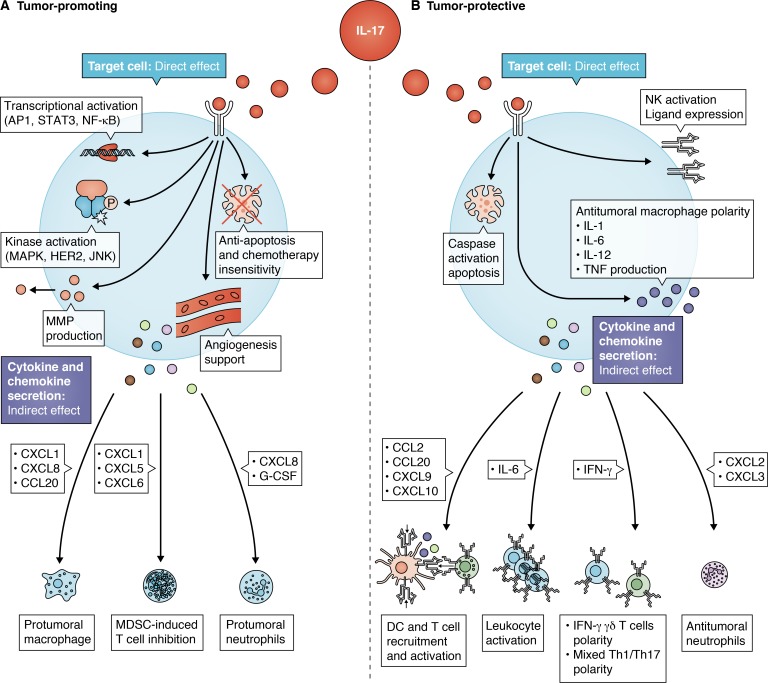
“…individual immune cells, as evidenced by enhanced CD107a, TNF, IFN-γ, perforin, NKp46, NKG2D, and NKp44 expression in natural killer (NK) cells, or antitumoral macrophage polarization via expression of IL-1, IL-6, IL-12, and TNF (Al Omar et al., 2013; Jovanovic et al., 1998; Lu et al., 2013).”
BackgroundTumor-specific Th17-polarized cells eradicate large established melanoma
Muranski, P., Boni, A., Antony, P. A., Cassard, L., Irvine, K. R., Kaiser, A., Paulos, C. M., Palmer, D. C., Touloukian, C. E., Ptak, K., et al. (2008) · Blood · doi:10.1182/blood-2007-11-120998 · Cited by 845 · cited 1×
“Next, the antitumoral effects of IL-17 appear to be related to cytokine shifts and the expression of IFN-γ in the tumor microenvironment (Muranski et al., 2008), with Th1-like IFN-γ–producing Th17 cells being the major mediators of tumor destruction (Kryczek et al., 2009a).”
BackgroundKryczek, I., Banerjee, M., Cheng, P., Vatan, L., Szeliga, W., Wei, S., Huang, E., Finlayson, E., Simeone, D., Welling, T. H., et al. (2009) · Blood · doi:10.1182/blood-2009-03-208249 · Cited by 813
T Helper 17 Cells Promote Cytotoxic T Cell Activation in Tumor Immunity
Martin-Orozco, N., Muranski, P., Chung, Y., Yang, X. O., Yamazaki, T., Lu, S., Hwu, P., Restifo, N. P., Overwijk, W. W., & Dong, C. (2009) · Immunity · doi:10.1016/j.immuni.2009.09.014 · Cited by 800
The two faces of IL-6 in the tumor microenvironment
Fisher, D. T., Appenheimer, M. M., & Evans, S. S. (2014) · Seminars in Immunology · doi:10.1016/j.smim.2014.01.008 · Cited by 693
Tumor-associated neutrophils stimulate T cell responses in early-stage human lung cancer
Eruslanov, E. B., Bhojnagarwala, P. S., Quatromoni, J. G., Stephen, T. L., Ranganathan, A., Deshpande, C., Akimova, T., Vachani, A., Litzky, L., Hancock, W. W., et al. (2014) · Journal of Clinical Investigation · doi:10.1172/jci77053 · Cited by 644
Ribot, J. C., deBarros, A., Pang, D. J., Neves, J. F., Peperzak, V., Roberts, S. J., Girardi, M., Borst, J., Hayday, A. C., Pennington, D. J., et al. (2009) · Nature Immunology · doi:10.1038/ni.1717 · Cited by 628
TH17 cells in tumour immunity and immunotherapy
Zou, W., & Restifo, N. P. (2010) · Nature Reviews Immunology · doi:10.1038/nri2742 · Cited by 624 · cited 1×
“Th17 cells Th17 cells are a subset of CD4 helper T cells that play an essential role in immunological development and response to pathogens (Asadzadeh et al., 2017; Zou and Restifo, 2010).”
BackgroundDieli, F., Vermijlen, D., Fulfaro, F., Caccamo, N., Meraviglia, S., Cicero, G., Roberts, A., Buccheri, S., D'Asaro, M., Gebbia, N., et al. (2007) · Cancer Research · doi:10.1158/0008-5472.can-07-0199 · Cited by 497 · cited 5×
“Polarization and ACT of γδ T cells using IL-2 and zalendronate (which mimics TLR ligation) has shown some efficacy in prostate cancer (Dieli et al., 2007), advanced renal cell carcinoma (Bennouna et al., 2008; Fisher et al., 2014b), non-small cell lung cancer (Nakajima et al., 2010), and…”
InfluentialPrat, A., Navarro, A., Paré, L., Reguart, N., Galván, P., Pascual, T., Martínez, A., Nuciforo, P., Comerma, L., Alos, L., et al. (2017) · Cancer Research · doi:10.1158/0008-5472.can-16-3556 · Cited by 455
γδ T Cells Provide an Early Source of Interferon γ in Tumor Immunity
Gao, Y., Yang, W., Pan, M., Scully, E., Girardi, M., Augenlicht, L. H., Craft, J., & Yin, Z. (2003) · The Journal of Experimental Medicine · doi:10.1084/jem.20030584 · Cited by 453 · cited 1×
“However, there is a distinct phenotypic difference between naive IL-17–producing γδ T cells and activated IFN-γ–producing γδ T cells, the latter of which are the earliest producers of IFN-γ in the tumor environment and “set the stage” for a cytotoxic immune response (Gao et al., 2003).”
BackgroundBroadening the Impact of Immunotherapy to Pancreatic Cancer: Challenges and Opportunities
Balachandran, V. P., Beatty, G. L., & Dougan, S. K. (2019) · Gastroenterology · doi:10.1053/j.gastro.2018.12.038 · Cited by 444 · cited 1×
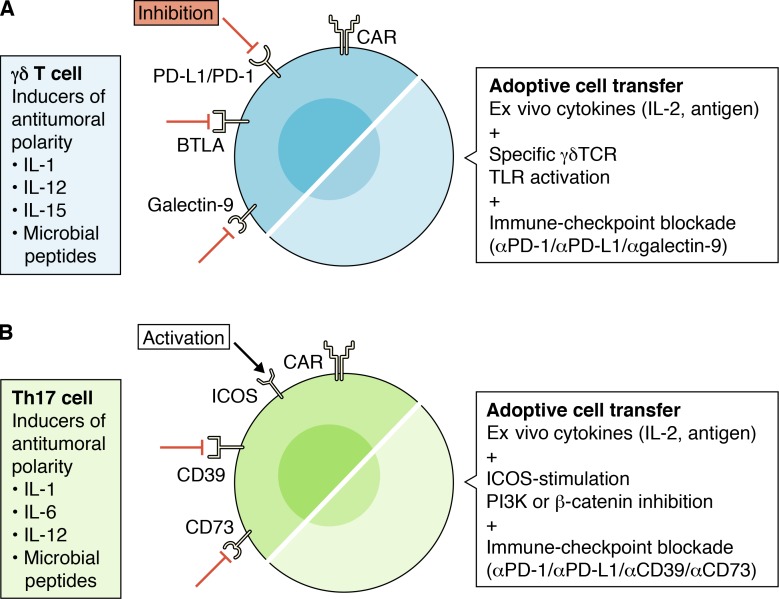
“B- and T-lymphocyte attenuator (BTLA) negatively regulates γδ T cell cytotoxicity and IL-17 production (Bekiaris et al., 2013; Gertner-Dardenne et al., 2013a; Gertner-Dardenne et al., 2013b), but the clinical applications of BTLA antagonism in γδ T cells have yet to be explored.”
BackgroundTh17 cells are long lived and retain a stem cell-like molecular signature
Muranski, P., Borman, Z. A., Kerkar, S. P., Klebanoff, C. A., Ji, Y., Sanchez-Perez, L., Sukumar, M., Reger, R. N., Yu, Z., Kern, S. J., et al. (2011) · Immunity · doi:10.1016/j.immuni.2011.09.019 · Cited by 443
Numasaki, M., Watanabe, M., Suzuki, T., Takahashi, H., Nakamura, A., McAllister, F., Hishinuma, T., Goto, J., Lotze, M. T., Kolls, J. K., et al. (2005) · The Journal of Immunology · doi:10.4049/jimmunol.175.9.6177 · Cited by 416
Peng, G., Wang, H. Y., Peng, W., Kiniwa, Y., Seo, K. H., & Wang, R.-F. (2007) · Immunity · doi:10.1016/j.immuni.2007.05.020 · Cited by 408
McAllister, F., Bailey, J. M., Alsina, J., Nirschl, C. J., Sharma, R., Fan, H., Rattigan, Y., Roeser, J. C., Lankapalli, R. H., Zhang, H., et al. (2014) · Cancer Cell · doi:10.1016/j.ccr.2014.03.014 · Cited by 405 · cited 4×
“…in colorectal cancer and prevent the progression of pancreatic intraepithelial neoplasia and pancreatic cancer metastasis (Ibrahim et al., 2018; McAllister et al., 2014; Wu et al., 2015a), redundant signaling mechanisms in the MAPK, NF-κB, and STAT3 signaling pathways may reduce the…”
BackgroundInfluentialEndogenous IL-17 contributes to reduced tumor growth and metastasis
Kryczek, I., Wei, S., Szeliga, W., Vatan, L., & Zou, W. (2009) · Blood · doi:10.1182/blood-2008-09-177360 · Cited by 403
Gut microbiota promotes tumor growth in mice by modulating immune response
Sethi, V., Kurtom, S., Tarique, M., Lavania, S., Malchiodi, Z., Hellmund, L., Zhang, L., Sharma, U., Giri, B., Garg, B., et al. (2018) · Gastroenterology · doi:10.1053/j.gastro.2018.04.001 · Cited by 403 · cited 1×
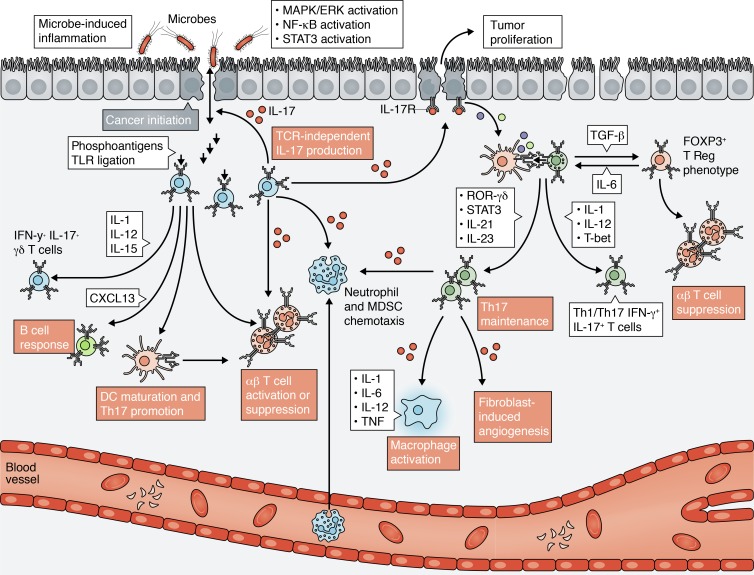
“In pancreatic cancer, the intestinal microbiome induces Th17 IL-17 expression and promotes pancreatic oncogenesis (McAllister et al., 2014; Sethi et al., 2018).”
BackgroundDaley, D., Mani, V. R., Mohan, N., Akkad, N., Ochi, A., Heindel, D. W., Lee, K. B., Zambirinis, C. P., Pandian, G. S. B., Savadkar, S., et al. (2017) · Nature Medicine · doi:10.1038/nm.4314 · Cited by 381
Self-citationProtumor vs Antitumor Functions of IL-17
Murugaiyan, G., & Saha, B. (2009) · The Journal of Immunology · doi:10.4049/jimmunol.0901017 · Cited by 369 · cited 1×
“IL-17 has been described as a prevalent cytokine in the tumor microenvironment, where it can play dichotomous roles in both cancer growth and tumor elimination (Murugaiyan and Saha, 2009).”
BackgroundICOS-based chimeric antigen receptors program bipolar TH17/TH1 cells
Guedan, S., Chen, X., Madar, A., Carpenito, C., McGettigan, S. E., Frigault, M. J., Lee, J., Posey, A. D., Scholler, J., Scholler, N., et al. (2014) · Blood · doi:10.1182/blood-2013-10-535245 · Cited by 353
Interleukin-17 inhibits tumor cell growth by means of a T-cell–dependent mechanism
Benchetrit, F., Ciree, A., Vives, V., Warnier, G., Gey, A., Sautès-Fridman, C., Fossiez, F., Haicheur, N., Fridman, W. H., & Tartour, E. (2002) · Blood · doi:10.1182/blood.v99.6.2114 · Cited by 347 · cited 1×
“…using IL-2 and zalendronate (which mimics TLR ligation) has shown some efficacy in prostate cancer (Dieli et al., 2007), advanced renal cell carcinoma (Bennouna et al., 2008; Fisher et al., 2014b), non-small cell lung cancer (Nakajima et al., 2010), and neuroblastoma (Capsomidis et al., 2018).”
BackgroundChalmin, F., Mignot, G., Bruchard, M., Chevriaux, A., Végran, F., Hichami, A., Ladoire, S., Derangère, V., Vincent, J., Masson, D., et al. (2012) · Immunity · doi:10.1016/j.immuni.2011.12.019 · Cited by 338 · cited 1×
“Analysis of IL-17 in gastric cancer surgical specimens reveals that greater immunohistochemical IL-17 expression independently reduces the likelihood of death by 48% at 5 yr (Chen et al., 2011).”
BackgroundTh17 Cells in Cancer: The Ultimate Identity Crisis
Bailey, S. R., Nelson, M. H., Himes, R. A., Li, Z., Mehrotra, S., & Paulos, C. M. (2014) · Frontiers in Immunology · doi:10.3389/fimmu.2014.00276 · Cited by 334 · cited 1×
“This may be because the established tumor is a complex microenvironment, rich in immune cells, stromal components, and redundant signaling pathways that make the effect of any individual cytokine less predictable (Balachandran et al., 2019; Egeblad et al., 2010).”
BackgroundHe, D., Li, H., Yusuf, N., Elmets, C. A., Li, J., Mountz, J. D., & Xu, H. (2010) · The Journal of Immunology · doi:10.4049/jimmunol.0902574 · Cited by 334
γδ T Cells Support Pancreatic Oncogenesis by Restraining αβ T Cell Activation
Daley, D., Zambirinis, C. P., Seifert, L., Akkad, N., Mohan, N., Werba, G., Barilla, R., Torres-Hernandez, A., Hundeyin, M., Mani, V. R. K., et al. (2016) · Cell · doi:10.1016/j.cell.2016.07.046 · Cited by 329
Self-citationIL-17+ γδ T cells as kick-starters of inflammation
Papotto, P. H., Ribot, J. C., & Silva-Santos, B. (2017) · Nature Immunology · doi:10.1038/ni.3726 · Cited by 304 · cited 2×
“3). γδ T cells express PD-L1, PD-1, BTLA, galectin-9, TLRs, and NK immunoglobulin receptors including NKG2A, KIR2DL1, and KIR3DL1 (D’Ombrain et al., 2007; Papotto et al., 2017).”
BackgroundGamma-delta (γδ) T cells: friend or foe in cancer development?
Zhao, Y., Niu, C., & Cui, J. (2018) · Journal of Translational Medicine · doi:10.1186/s12967-017-1378-2 · Cited by 298
Tartour, É., Fossiez, F., Joyeux, I., Galinha, A., Gey, A., Claret, E. J., Sastre‐Garau, X., Couturier, J., Mosseri, V., Vives, V., et al. (1999) · PubMed · Cited by 290
Efficient Killing of Human Colon Cancer Stem Cells by γδ T Lymphocytes
Todaro, M., D'Asaro, M., Caccamo, N., Iovino, F., Francipane, M. G., Meraviglia, S., Orlando, V., La Mendola, C., Gulotta, G., Salerno, A., et al. (2009) · The Journal of Immunology · doi:10.4049/jimmunol.0804288 · Cited by 280
Human T H 17 Cells Are Long-Lived Effector Memory Cells
Kryczek, I., Zhao, E., Liu, Y., Wang, Y., Vatan, L., Szeliga, W., Moyer, J., Klimczak, A., Lange, A., & Zou, W. (2011) · Science Translational Medicine · doi:10.1126/scitranslmed.3002949 · Cited by 278
Capsomidis, A., Benthall, G., Van Acker, H. H., Fisher, J., Kramer, A. M., Abeln, Z., Majani, Y., Gileadi, T., Wallace, R., Gustafsson, K., et al. (2018) · Molecular Therapy · doi:10.1016/j.ymthe.2017.12.001 · Cited by 274 · cited 1×
“Similarly, exposure to TGF-β and IL-15 can stimulate γδ T cells to become more like FOXP3+ immunosuppressive T regulatory cells (Casetti et al., 2009).”
BackgroundTh17 Cell Plasticity and Functions in Cancer Immunity
Guéry, L., & Hugues, S. (2015) · BioMed Research International · doi:10.1155/2015/314620 · Cited by 261 · cited 2×
“Similar to γδ T cells, Th17 cells exhibit “plasticity,”where the presence or absence of specific cytokines directs differentiation and function (Guéry and Hugues, 2015; Majchrzak et al., 2016).”
BackgroundThe Inducible Costimulator (ICOS) Is Critical for the Development of Human T H 17 Cells
Paulos, C. M., Carpenito, C., Plesa, G., Suhoski, M. M., Varela-Rohena, A., Golovina, T. N., Carroll, R. G., Riley, J. L., & June, C. H. (2010) · Science Translational Medicine · doi:10.1126/scitranslmed.3000448 · Cited by 255
Bennouna, J., Bompas, E., Neidhardt, E. M., Rolland, F., Philip, I., Galéa, C., Salot, S., Saiagh, S., Audrain, M., Rimbert, M., et al. (2008) · Cancer Immunology, Immunotherapy · doi:10.1007/s00262-008-0491-8 · Cited by 249 · cited 1×
“…in patients whose malignancies previously carried a dismal prognosis, providing hope for those with advanced and metastatic melanoma, renal, and lung cancers (Borghaei et al., 2015; Brahmer et al., 2015; Eggermont et al., 2016; Hodi et al., 2010; Robert et al., 2015; Brahmer, J., et al. 2017.”
BackgroundAblation of IL-17A abrogates progression of spontaneous intestinal tumorigenesis
Chae, W.-J., Gibson, T. F., Zelterman, D., Hao, L., Henegariu, O., & Bothwell, A. L. M. (2010) · Proceedings of the National Academy of Sciences · doi:10.1073/pnas.0912675107 · Cited by 243 · cited 1×
“TGF-β and IL-6 co-culture also induces the expression of the immunosuppressive ectonucleotidases CD39 and CD73 on Th17 cells, perpetuating a protumoral phenotype (Chalmin et al., 2012).”
BackgroundRIP1 Kinase Drives Macrophage-Mediated Adaptive Immune Tolerance in Pancreatic Cancer
Wang, W., Marinis, J. M., Beal, A. M., Savadkar, S., Wu, Y., Khan, M., Taunk, P. S., Wu, N., Su, W., Wu, J., et al. (2018) · Cancer Cell · doi:10.1016/j.ccell.2018.10.006 · Cited by 242
Self-citationWakita, D., Sumida, K., Iwakura, Y., Nishikawa, H., Ohkuri, T., Chamoto, K., Kitamura, H., & Nishimura, T. (2010) · European Journal of Immunology · doi:10.1002/eji.200940157 · Cited by 236
Li, J., Lau, G. K.-K., Chen, L., Dong, S.-S., Lan, H.-Y., Huang, X.-R., Li, Y., Luk, J. M., Yuan, Y.-F., & Guan, X.-Y. (2011) · PLoS ONE · doi:10.1371/journal.pone.0021816 · Cited by 232
Type 17 CD8+ T cells display enhanced antitumor immunity
Hinrichs, C. S., Kaiser, A., Paulos, C. M., Cassard, L., Sanchez-Perez, L., Heemskerk, B., Wrzesinski, C., Borman, Z. A., Muranski, P., & Restifo, N. P. (2009) · Blood · doi:10.1182/blood-2009-02-203935 · Cited by 225 · cited 1×
“3) doubled the duration of antitumor activity and increased the number of Th17 cells persisting in vivo nearly 16- fold (Hinrichs et al., 2009).”
BackgroundRole of Galectins in Tumors and in Clinical Immunotherapy
Chou, F.-C., Chen, H.-Y., Kuo, C.-C., & Sytwu, H.-K. (2018) · International Journal of Molecular Sciences · doi:10.3390/ijms19020430 · Cited by 222
Wu, L., Chen, X., Zhao, J., Martin, B., Zepp, J. A., Ko, J. S., Gu, C., Cai, G., Ouyang, W., Sen, G., et al. (2015) · Journal of Experimental Medicine · doi:10.1084/jem.20150204 · Cited by 221 · cited 4×
“…via the IL-17R-Act1-TRAF4-MEKK3-ERK5 circuit in skin cancer, and promotes MMP-dependent cell invasion, supports angiogenesis, inhibits TGF-β–dependent cellular apoptosis, and enhances MEK-, ERK-, JNK-, and STAT3-mediated cell proliferation in breast cancer (Fabre et al., 2018; Wu et al., 2015b).”
BackgroundInfluentialThe paradox of Th17 cell functions in tumor immunity
Asadzadeh, Z., Mohammadi, H., Safarzadeh, E., Hemmatzadeh, M., Mahdian-shakib, A., Jadidi-Niaragh, F., Azizi, G., & Baradaran, B. (2017) · Cellular Immunology · doi:10.1016/j.cellimm.2017.10.015 · Cited by 219 · cited 2×
“Finally, IL-17–producing immune cells are not constitutive IFN-γ producers, but are instead activated by the tumor environment to produce IFN-γ in the appropriate setting (Bailey et al., 2014; Chien et al., 2013).”
BackgroundRevu, S., Wu, J., Henkel, M., Rittenhouse, N., Menk, A., Delgoffe, G. M., Poholek, A. C., & McGeachy, M. J. (2018) · Cell Reports · doi:10.1016/j.celrep.2018.02.044 · Cited by 208
Regulation and Function of Proinflammatory TH17 Cells
Martinez, G. J., Nurieva, R. I., Yang, X. O., & Dong, C. (2008) · Annals of the New York Academy of Sciences · doi:10.1196/annals.1443.021 · Cited by 203
Xiang, T., Long, H., He, L., Han, X., Lin, K., Liang, Z., Zhuo, W., Xie, R., & Zhu, B. (2015) · Oncogene · doi:10.1038/onc.2013.537 · Cited by 194 · cited 1×
“For example, IL-17 ligation stimulates the proliferation and selfrenewal of ovarian cancer stem cells in a dose-dependent fashion via the NF-κB and MAPK pathways (Xiang et al., 2015).”
BackgroundPhosphostim-Activated γδ T Cells Kill Autologous Metastatic Renal Cell Carcinoma
Viey, E., Fromont, G., Escudier, B., Morel, Y., Da Rocha, S., Chouaib, S., & Caignard, A. (2005) · The Journal of Immunology · doi:10.4049/jimmunol.174.3.1338 · Cited by 192 · cited 1×
“…promote tumor growth via angiogenesis in gallbladder cancer, pancreatic adenocarcinoma, and fibrosarcoma (McAllister et al., 2014; Patil et al., 2016; Wakita et al., 2010). γδ T cells also elicit antitumoral properties by directly lysing breast, renal, squamous, and osteosarcoma cells…”
BackgroundNakajima, J., Murakawa, T., Fukami, T., Goto, S., Kaneko, T., Yoshida, Y., Takamoto, S., & Kakimi, K. (2010) · European Journal of Cardio-Thoracic Surgery · doi:10.1016/j.ejcts.2009.11.051 · Cited by 186 · cited 1×
“…using IL-2 and zalendronate (which mimics TLR ligation) has shown some efficacy in prostate cancer (Dieli et al., 2007), advanced renal cell carcinoma (Bennouna et al., 2008; Fisher et al., 2014b), non-small cell lung cancer (Nakajima et al., 2010), and neuroblastoma (Capsomidis et al., 2018).”
BackgroundCasetti, R., Agrati, C., Wallace, M., Sacchi, A., Martini, F., Martino, A., Rinaldi, A., & Malkovsky, M. (2009) · The Journal of Immunology · doi:10.4049/jimmunol.0901334 · Cited by 177
γδ T cells for cancer immunotherapy: A systematic review of clinical trials
Fisher, J. P., Heuijerjans, J., Yan, M., Gustafsson, K., & Anderson, J. (2014) · OncoImmunology · doi:10.4161/onci.27572 · Cited by 177
Alexander, A. A. Z., Maniar, A., Cummings, J.-S., Hebbeler, A. M., Schulze, D. H., Gastman, B. R., Pauza, C. D., Strome, S. E., & Chapoval, A. I. (2008) · Clinical Cancer Research · doi:10.1158/1078-0432.ccr-07-4912 · Cited by 162 · cited 1×
“Th17 cells are a subset of CD4 helper T cells that play an essential role in immunological development and response to pathogens (Asadzadeh et al., 2017; Zou and Restifo, 2010).”
BackgroundModulation of γδ T cell responses by TLR ligands
Wesch, D., Peters, C., Oberg, H., Pietschmann, K., & Kabelitz, D. (2011) · Cellular and Molecular Life Sciences · doi:10.1007/s00018-011-0699-1 · Cited by 160
Patil, R. S., Shah, S. U., Shrikhande, S. V., Goel, M., Dikshit, R. P., & Chiplunkar, S. V. (2016) · International Journal of Cancer · doi:10.1002/ijc.30134 · Cited by 159
Wu, H.-H., Hwang-Verslues, W. W., Lee, W.-H., Huang, C.-K., Wei, P.-C., Chen, C.-L., Shew, J.-Y., Lee, E. Y.-H. P., Jeng, Y.-M., Tien, Y.-W., et al. (2015) · Journal of Experimental Medicine · doi:10.1084/jem.20141702 · Cited by 157 · cited 4×
“…via the IL-17R-Act1-TRAF4-MEKK3-ERK5 circuit in skin cancer, and promotes MMP-dependent cell invasion, supports angiogenesis, inhibits TGF-β–dependent cellular apoptosis, and enhances MEK-, ERK-, JNK-, and STAT3-mediated cell proliferation in breast cancer (Fabre et al., 2018; Wu et al., 2015b).”
BackgroundInfluentialCochaud, S., Giustiniani, J., Thomas, C., Laprevotte, E., Garbar, C., Savoye, A.-M., Curé, H., Mascaux, C., Alberici, G., Bonnefoy, N., et al. (2013) · Scientific Reports · doi:10.1038/srep03456 · Cited by 156
Novel Bispecific Antibodies Increase γδ T-Cell Cytotoxicity against Pancreatic Cancer Cells
Oberg, H.-H., Peipp, M., Kellner, C., Sebens, S., Krause, S., Petrick, D., Adam-Klages, S., Röcken, C., Becker, T., Vogel, I., et al. (2014) · Cancer Research · doi:10.1158/0008-5472.can-13-0675 · Cited by 156
Differentiation of Resting Human Peripheral Blood γδ T Cells toward Th1- or Th2-Phenotype
Wesch, D., Glatzel, A., & Kabelitz, D. (2001) · Cellular Immunology · doi:10.1006/cimm.2001.1850 · Cited by 152 · cited 5×
“While some data imply that the production of IFN-γ and IL-17 by γδ T cells is developmentally defined through epigenetic and transcriptional programming in the thymus (Ribot et al., 2009; Schmolka et al., 2013; Shibata et al., 2014), IL-1, IL-12, IL-15, microbial peptides, and ligation of specific γδ TCRs can also unl…”
BackgroundInfluentialVermijlen, D., Ellis, P., Langford, C., Klein, A., Engel, R., Willimann, K., Jomaa, H., Hayday, A. C., & Eberl, M. (2007) · The Journal of Immunology · doi:10.4049/jimmunol.178.7.4304 · Cited by 149
Plasticity of γδ T Cells: Impact on the Anti-Tumor Response
Lafont, V., Sanchez, F., Laprevotte, E., Michaud, H.-A., Gros, L., Eliaou, J.-F., & Bonnefoy, N. (2014) · Frontiers in Immunology · doi:10.3389/fimmu.2014.00622 · Cited by 141
TGF-β Receptor II Loss Promotes Mammary Carcinoma Progression by Th17-Dependent Mechanisms
Novitskiy, S. V., Pickup, M. W., Gorska, A. E., Owens, P., Chytil, A., Aakre, M., Wu, H., Shyr, Y., & Moses, H. L. (2011) · Cancer Discovery · doi:10.1158/2159-8290.cd-11-0100 · Cited by 136
The natural and the inducible: interleukin (IL)-17-producing γδ T cells
Chien, Y.-H., Zeng, X., & Prinz, I. (2013) · Trends in Immunology · doi:10.1016/j.it.2012.11.004 · Cited by 134
Differential Regulation of Chemokines by IL-17 in Colonic Epithelial Cells
Lee, J. W., Wang, P., Kattah, M. G., Youssef, S., Steinman, L., DeFea, K., & Straus, D. S. (2008) · The Journal of Immunology · doi:10.4049/jimmunol.181.9.6536 · Cited by 133
Harnessing γδ T cells in anticancer immunotherapy
Hannani, D., Ma, Y., Yamazaki, T., Déchanet‐Merville, J., Kroemer, G., & Zitvogel, L. (2012) · Trends in Immunology · doi:10.1016/j.it.2012.01.006 · Cited by 129
Skeen, M. J., & Ziegler, H. K. (1995) · The Journal of Immunology · doi:10.4049/jimmunol.154.11.5832 · Cited by 128 · cited 1×
“Similarly, cervical carcinoma cells respond to IL-17 by increasing IL-6 and CXCL8 expression, which recruit tumor-promoting macrophages and neutrophils in vivo and result in increased tumor size (Tartour et al., 1999).”
BackgroundInterleukin-17: A Promoter in Colorectal Cancer Progression
Wu, D., Wu, P., Huang, Q., Liu, Y., Ye, J., & Huang, J. (2013) · Clinical and Developmental Immunology · doi:10.1155/2013/436307 · Cited by 124
Human γδT-cell subsets and their involvement in tumor immunity
Wu, D., Wu, P., Qiu, F., Wei, Q., & Huang, J. (2017) · Cellular & Molecular Immunology · doi:10.1038/cmi.2016.55 · Cited by 123
Fisher, J. P. H., Yan, M., Heuijerjans, J., Carter, L., Abolhassani, A., Frosch, J., Wallace, R., Flutter, B. R., Capsomidis, A., Hubank, M. J. F., et al. (2014) · Clinical Cancer Research · doi:10.1158/1078-0432.ccr-13-3464 · Cited by 119
D'Ombrain, M. C., Hansen, D. S., Simpson, K. M., & Schofield, L. (2007) · European Journal of Immunology · doi:10.1002/eji.200636889 · Cited by 117
Schmolka, N., Serre, K., Grosso, A. R., Rei, M., Pennington, D. J., Gomes, A. Q., & Silva-Santos, B. (2013) · Nature Immunology · doi:10.1038/ni.2702 · Cited by 113 · cited 1×
“In pancreatic cancer, the intestinal microbiome induces Th17 IL-17 expression and promotes pancreatic oncogenesis (McAllister et al., 2014; Sethi et al., 2018).”
BackgroundIntratumoral Expression of IL-17 and Its Prognostic Role in Gastric Adenocarcinoma Patients
Chen, J.-G., Xia, J.-C., Liang, X.-T., Pan, K., Wang, W., Lv, L., Zhao, J.-J., Wang, Q.-J., Li, Y.-Q., Chen, S.-P., et al. (2011) · International Journal of Biological Sciences · doi:10.7150/ijbs.7.53 · Cited by 110
Furuta, S., Jeng, Y.-M., Zhou, L., Huang, L., Kuhn, I., Bissell, M. J., & Lee, W.-H. (2011) · Science Translational Medicine · doi:10.1126/scitranslmed.3001374 · Cited by 106
Sethi, V., Vitiello, G. A., Saxena, D., Miller, G., & Dudeja, V. (2019) · Gastroenterology · doi:10.1053/j.gastro.2018.12.045 · Cited by 104 · cited 1×
“…of IFN-γ and IL-17 by γδ T cells is developmentally defined through epigenetic and transcriptional programming in the thymus (Ribot et al., 2009; Schmolka et al., 2013; Shibata et al., 2014), IL-1, IL-12, IL-15, microbial peptides, and ligation of specific γδ TCRs can also unleash IFN-γ production.”
BackgroundSelf-citationPunt, S., Dronkers, E. A. C., Welters, M. J. P., Goedemans, R., Koljenović, S., Bloemena, E., Snijders, P. J. F., Gorter, A., van der Burg, S. H., de Jong, R. J. B., et al. (2016) · Cancer Immunology, Immunotherapy · doi:10.1007/s00262-016-1805-x · Cited by 103 · cited 1×
“In patients with human papillomavirus–positive oropharyngeal cancer, the presence of IFN-γ+Th17 cytotoxic T cells correlated with diseasefree survival, whereas the presence of IL-17–producing non-T cells was associated with an unfavorable immune response and poor survival (Punt et al., 2016).”
Backgroundγδ T Cells and Tumor Microenvironment: From Immunosurveillance to Tumor Evasion
Presti, E. L., Pizzolato, G., Corsale, A. M., Caccamo, N., Sireci, G., Dieli, F., & Meraviglia, S. (2018) · Frontiers in Immunology · doi:10.3389/fimmu.2018.01395 · Cited by 103
Gertner-Dardenne, J., Fauriat, C., Orlanducci, F., Thibult, M.-L., Pastor, S., Fitzgibbon, J., Bouabdallah, R., Xerri, L., & Olive, D. (2013) · Blood · doi:10.1182/blood-2012-11-464685 · Cited by 100 · cited 1×
“B- and T-lymphocyte attenuator (BTLA) negatively regulates γδ T cell cytotoxicity and IL-17 production (Bekiaris et al., 2013; Gertner-Dardenne et al., 2013a; Gertner-Dardenne et al., 2013b), but the clinical applications of BTLA antagonism in γδ T cells have yet to be explored.”
BackgroundLu, L., Pan, K., Zheng, H.-X., Li, J.-J., Qiu, H.-J., Zhao, J.-J., Weng, D.-S., Pan, Q.-Z., Wang, D.-D., Jiang, S.-S., et al. (2013) · Journal of Immunotherapy · doi:10.1097/cji.0b013e3182a802cf · Cited by 95
The Inhibitory Receptor BTLA Controls γδ T Cell Homeostasis and Inflammatory Responses
Bekiaris, V., Šedý, J. R., Macauley, M. G., Rhode-Kurnow, A., & Ware, C. F. (2013) · Immunity · doi:10.1016/j.immuni.2013.10.017 · Cited by 95 · cited 12×
“While some data imply that the production of IFN-γ and IL-17 by γδ T cells is developmentally defined through epigenetic and transcriptional programming in the thymus (Ribot et al., 2009; Schmolka et al., 2013; Shibata et al., 2014), IL-1, IL-12, IL-15, microbial peptides, and ligation of specific γδ TCRs can also unl…”
BackgroundInfluentialPD-1 signaling modulates interferon-γ production by Gamma Delta (γδ) T-Cells in response to leukemia
Hoeres, T., Holzmann, E., Smetak, M., Birkmann, J., & Wilhelm, M. (2018) · OncoImmunology · doi:10.1080/2162402x.2018.1550618 · Cited by 94 · cited 1×
“Anti–PD-1 and anti–PD-L1 therapy has already been shown to enhance γδ T cell–dependent tumor destruction (Daley et al., 2016; Hoeres et al., 2018).”
BackgroundEfficient killing of human colon cancer stem cells by gammadelta T lymphocytes
Iovino, F., Mendola, C. L., Todaro, M., Meraviglia, S., Gulotta, G., Dieli, F., Stassi, G., Salerno, A., Caccamo, N., Francipane, M. G., et al. (2009) · Default journal · Cited by 92
IL-17A in the tumor microenvironment of the human colorectal adenoma–carcinoma sequence
Cui, G., Yuan, A., Goll, R., & Florholmen, J. (2012) · Scandinavian Journal of Gastroenterology · doi:10.3109/00365521.2012.725089 · Cited by 90
Chen, C.-L., Wang, Y., Huang, C.-Y., Zhou, Z.-Q., Zhao, J.-J., Zhang, X.-F., Pan, Q., Wu, J.-X., Weng, D., Tang, Y., et al. (2017) · OncoImmunology · doi:10.1080/2162402x.2017.1373234 · Cited by 90
The Emerging Protumor Role of γδ T Lymphocytes: Implications for Cancer Immunotherapy
Rei, M., Pennington, D. J., & Silva-Santos, B. (2015) · Cancer Research · doi:10.1158/0008-5472.can-14-3228 · Cited by 88
Jain, P., Javdan, M., Feger, F., Chiu, P., Sison, C., Damle, R. N., Bhuiya, T., Şen, F., Abruzzo, L. V., Burger, J. A., et al. (2011) · Haematologica · doi:10.3324/haematol.2011.047316 · Cited by 84
The Interleukin-17 Family of Cytokines in Breast Cancer
Fabre, J., Giustiniani, J., Garbar, C., Merrouche, Y., Antonicelli, F. D., & Bensussan, A. (2018) · International Journal of Molecular Sciences · doi:10.3390/ijms19123880 · Cited by 81 · cited 1×
“…via the IL-17R-Act1-TRAF4-MEKK3-ERK5 circuit in skin cancer, and promotes MMP-dependent cell invasion, supports angiogenesis, inhibits TGF-β–dependent cellular apoptosis, and enhances MEK-, ERK-, JNK-, and STAT3-mediated cell proliferation in breast cancer (Fabre et al., 2018; Wu et al., 2015b).”
BackgroundInterleukin-17 is a favorable prognostic marker for colorectal cancer
Lin, Y., Xu, J., Su, H., Zhong, W., Yuan, Y., Yu, Z., Fang, Y., Zhou, H., Li, C., & Huang, K. (2014) · Clinical & Translational Oncology · doi:10.1007/s12094-014-1197-3 · Cited by 75
FoxP3+ and IL-17+ cells are correlated with improved prognosis in cervical adenocarcinoma
Punt, S., van Vliet, M. E., Spaans, V. M., de Kroon, C. D., Fleuren, G. J., Gorter, A., & Jordanova, E. S. (2015) · Cancer Immunology Immunotherapy · doi:10.1007/s00262-015-1678-4 · Cited by 74 · cited 1×
“In cervical cancer, an increased number of IL-17+ cells correlates significantly with smaller tumors, reduced depth of tumor infiltration, and less frequent vascular invasion (Punt et al., 2015).”
BackgroundKehlen, A., Thiele, K., Riemann, D., Rainov, N. G., & Langner, J. (1999) · Journal of Neuroimmunology · doi:10.1016/s0165-5728(99)00111-3 · Cited by 73
Shibata, K., Yamada, H., Nakamura, M., Hatano, S., Katsuragi, Y., Kominami, R., & Yoshikai, Y. (2014) · The Journal of Immunology · doi:10.4049/jimmunol.1302145 · Cited by 71 · cited 2×
“On the other hand, antitumoral IFNγ–producing γδ T cells rely heavily on IL-1, IL-12, and IL-15 (Corpuz et al., 2016; Skeen and Ziegler, 1995; Wesch et al., 2001).”
BackgroundZhou, Y., Toh, M., Zrioual, S., & Miossec, P. (2007) · Cytokine · doi:10.1016/j.cyto.2007.06.002 · Cited by 70
Non-peptide antigens activating human Vγ9/Vδ2 T lymphocytes
Poupot, M., & Fournié, J. (2004) · Immunology Letters · doi:10.1016/j.imlet.2004.06.013 · Cited by 69
Devaud, C., Rousseau, B., Netzer, S., Pitard, V., Paroissin, C., Khairallah, C. F., Costet, P., Moreau, J., Couillaud, F., Déchanet‐Merville, J., et al. (2013) · Cancer Immunology Immunotherapy · doi:10.1007/s00262-013-1402-1 · Cited by 65 · cited 1×
“Some TCRs have already proven to be targetable in pancreatic and colon cancer (Devaud et al., 2013; Oberg et al., 2014; Ramutton et al., 2014), and the cytotoxic features of each subset of γδ T cell are currently being studied and evaluated for additional ACT applications (Hannani et al., 2012; Wu…”
BackgroundLi, Z., Xu, Q., Peng, H., Cheng, R.-L., Sun, Z., & Ye, Z. (2011) · International Immunopharmacology · doi:10.1016/j.intimp.2011.01.001 · Cited by 64
Chen, T., Chen, C.-H., Wang, C., Lin, P., Yang, T., Lou, P., Ko, J., Wu, C., & Chang, Y. (2017) · Scientific Reports · doi:10.1038/s41598-017-10386-y · Cited by 55 · cited 1×
“Finally, IL-17–producing immune cells are not constitutive IFN-γ producers, but are instead activated by the tumor environment to produce IFN-γ in the appropriate setting (Bailey et al., 2014; Chien et al., 2013).”
BackgroundDistinctive expression pattern of interleukin-17 cytokine family members in colorectal cancer
Al‐Samadi, A., Moossavi, S., Salem, A., Sotoudeh, M., Tuovinen, S. M., Konttinen, Y. T., Salo, T. A., & Bishehsari, F. (2015) · Tumor Biology · doi:10.1007/s13277-015-3941-x · Cited by 48 · cited 2×
“…and fibrosarcoma (McAllister et al., 2014; Patil et al., 2016; Wakita et al., 2010). γδ T cells also elicit antitumoral properties by directly lysing breast, renal, squamous, and osteosarcoma cells (Alexander et al., 2008; Dhar and Chiplunkar, 2010; Li et al., 2011b; Viey et al., 2005).”
BackgroundExploiting IL-17-producing CD4+ and CD8+ T cells to improve cancer immunotherapy in the clinic
Majchrzak, K., Nelson, M. H., Bailey, S. R., Bowers, J. S., Yu, X.-Z., Rubinstein, M. P., Himes, R. A., & Paulos, C. M. (2016) · Cancer Immunology, Immunotherapy · doi:10.1007/s00262-016-1797-6 · Cited by 47 · cited 1×
“Similar to γδ T cells, Th17 cells exhibit “plasticity,”where the presence or absence of specific cytokines directs differentiation and function (Guéry and Hugues, 2015; Majchrzak et al., 2016).”
BackgroundCorpuz, T. M., Stolp, J., Kim, H.-O., Pinget, G. V., Gray, D. H. D., Cho, J.-H., Sprent, J., & Webster, K. E. (2016) · The Journal of Immunology · doi:10.4049/jimmunol.1502082 · Cited by 47 · cited 1×
“Immunotherapy has changed the landscape of cancer treatment (Couzin-Frankel, 2013).”
BackgroundLysis of aminobisphosphonate-sensitized MCF-7 breast tumor cells by Vγ9Vδ2 T cells.
Dhar, S., & Chiplunkar, S. V. (2010) · PubMed Central · Cited by 43
Majchrzak, K., Nelson, M. H., Bowers, J. S., Bailey, S. R., Wyatt, M. M., Wrangle, J. M., Rubinstein, M. P., Varela, J. C., Li, Z., Himes, R. A., et al. (2017) · JCI Insight · doi:10.1172/jci.insight.90547 · Cited by 43
Liu, S., Zhang, Q., Chen, C., Ge, D., Qu, Y., Chen, R., Fan, Y.-M., Li, N., Tang, W. W., Zhang, W., et al. (2016) · Oncotarget · doi:10.18632/oncotarget.7296 · Cited by 42
Ibrahim, S., Girault, A., Ohresser, M. C. P., Lereclus, E., Paintaud, G., Lecomte, T., & Raoul, W. (2017) · Clinical Colorectal Cancer · doi:10.1016/j.clcc.2017.10.003 · Cited by 39
The effects of IL-17 upon human natural killer cells
Alomar, S. Y., Flanagan, B., Almehmadi, M. M., & Christmas, S. E. (2013) · Cytokine · doi:10.1016/j.cyto.2013.02.005 · Cited by 35 · cited 1×
“In colorectal cancer, both secretory and membrane-bound forms of IL-17 can contribute to cell cycle progression and oncogenesis (Al-Samadi et al., 2016; Cui et al., 2012; Do Thi et al., 2016).”
BackgroundIL-17E synergizes with EGF and confersin vitroresistance to EGFR-targeted therapies in TNBC cells
Merrouche, Y., Fabre, J., Curé, H., Garbar, C., Fuselier, C., Bastid, J., Antonicelli, F. D., Al‐Daccak, R., Bensussan, A., & Giustiniani, J. (2016) · Oncotarget · doi:10.18632/oncotarget.10804 · Cited by 35 · cited 1×
“IL-17–mediated ERK activation and HER1 phosphorylation also promote resistance to docetaxel-based chemotherapy and tyrosine kinase inhibition, highlighting the role of IL-17 not only in cancer cell growth but also as a mechanism of treatment resistance (Cochaud et al., 2013; Merrouche et al., 2016).”
BackgroundInnate αβ T Cells Mediate Antitumor Immunity by Orchestrating Immunogenic Macrophage Programming
Barry-Hundeyin, M., Kurz, E., Mishra, A., Rossi, J. A. K., Liudahl, S. M., Leis, K. R., Mehrotra, H., Kim, M., Torres, L. E., Ogunsakin, A., et al. (2019) · Cancer Discovery · doi:10.1158/2159-8290.cd-19-0161 · Cited by 31
Self-citationThe Membrane-Bound Form of IL-17A Promotes the Growth and Tumorigenicity of Colon Cancer Cells
Anh, D. T. V., Park, S. M., Lee, H., & Kim, Y. S. (2016) · Molecules and Cells · doi:10.14348/molcells.2016.0048 · Cited by 24 · cited 1×
“In colorectal cancer, both secretory and membrane-bound forms of IL-17 can contribute to cell cycle progression and oncogenesis (Al-Samadi et al., 2016; Cui et al., 2012; Do Thi et al., 2016).”
Backgroundγδ T Cells as a Potential Tool in Colon Cancer Immunotherapy
Ramutton, T., Buccheri, S., Dieli, F., Todaro, M., Stassi, G., & Meraviglia, S. (2014) · Immunotherapy · doi:10.2217/imt.14.59 · Cited by 20
Les bactéries filamenteuses segmentées induisent les cellules Th17 dans l’intestin
Ivanov, I. I., & Manel, N. (2010) · médecine/sciences · doi:10.1051/medsci/2010264352 · Cited by 13 · cited 1×
“IL-17 regulates the immune response to microbes, balancing both cytotoxic and tolerant immune profiles that foster symbiosis, but also results in chronic inflammation (Gaffen et al., 2014; Ivanov and Manel, 2010).”
BackgroundBTLA, a key regulator of Vγ9Vδ2 T-cell proliferation
Gertner-Dardenne, J., Fauriat, C., & Olive, D. (2013) · OncoImmunology · doi:10.4161/onci.25853 · Cited by 9 · cited 1×
“B- and T-lymphocyte attenuator (BTLA) negatively regulates γδ T cell cytotoxicity and IL-17 production (Bekiaris et al., 2013; Gertner-Dardenne et al., 2013a; Gertner-Dardenne et al., 2013b), but the clinical applications of BTLA antagonism in γδ T cells have yet to be explored.”
Background
Cited by
IL-17 and IL-17-producing cells in protection versus pathology
Mills, K. H. G. (2023) · Nature Reviews Immunology · doi:10.1038/s41577-022-00746-9 · Cited by 1,000
Interleukins in cancer: from biology to therapy
Briukhovetska, D., Dörr, J., Endres, S., Libby, P., Dinarello, C. A., & Kobold, S. (2021) · Nature Reviews Cancer · doi:10.1038/s41568-021-00363-z · Cited by 781
Speiser, D. E., Chijioke, O., Schaeuble, K., & Münz, C. (2023) · Nature Cancer · doi:10.1038/s43018-023-00521-2 · Cited by 479
Cytotoxic CD4+ T cells in cancer: Expanding the immune effector toolbox
Oh, D. Y., & Fong, L. (2021) · Immunity · doi:10.1016/j.immuni.2021.11.015 · Cited by 467
Crosstalk Between the MSI Status and Tumor Microenvironment in Colorectal Cancer
Lin, A., Zhang, J., & Luo, P. (2020) · Frontiers in Immunology · doi:10.3389/fimmu.2020.02039 · Cited by 358
“Additionally, IL-1, IL6, and TNF play important roles in macrophage polarization, converting myeloid-derived suppressor cells (MDSCs) into M1like macrophages with antitumor functions (41).”
Background
Metadata
- Authors
- Vitiello, G. A., & Miller, G.
- Affiliations
- NYU Langone Health (US)
- Corresponding author
- Miller, George
- Venue
- Journal of Experimental Medicine
- Publisher
- Rockefeller University Press
- Published
- 2019-11-14
- Volume
- 217
- Issue
- 1
- ISSN
- 0022-1007 (ISSN-L)
- 1540-9538
- PMC
- PMC7037254
- OpenAlex
- W2988046914
- Semantic Scholar
- 5e851f3e5d4ea3530366d36de2c1c89182d02d47
- Cited by
- 151
- References
- 132
- Citations by year
- 2026: 12 · 2025: 21 · 2024: 22 · 2023: 32 · 2022: 30 · 2021: 24 · 2020: 10
- FWCI
- 1.52
- Type
- journal article
- Language
- en
- Open access
- hybrid
- doi.org
- Licence
- Locations
- The Journal of Experimental Medicine (publishedVersion, cc-by-nc-sa)
- PubMed Central (publishedVersion, cc-by-nc-sa)
- PubMed (publishedVersion)
- Funders
- National Institutes of Health (CA168611, CA203105, CA215471, CA19311, DK106025, L30 TR002111)
- Topics
- Health Sciences › Medicine › Oncology › Cancer Immunotherapy and Biomarkers
- Life Sciences › Immunology and Microbiology › Immunology › T-cell and B-cell Immunology
- Life Sciences › Immunology and Microbiology › Immunology › Psoriasis: Treatment and Pathogenesis
- Keywords
- IL-17, cancer immunotherapy, γδ T cells, Th17 cells, tumor microenvironment, antitumor immunity, tumor growth, cytokines, immunotherapy targets
- MeSH terms
- Animals, Humans, Immunotherapy, Neoplasms, Interleukin-17, Th17 Cells, Tumor Microenvironment
About these checks
Registry, retraction, Cites and statistics results are computed, not judged, with one exception: a printed reference that no index lists is read once by a model before it counts as a citation error. Claims are extracted by a model and kept only when their quote appears verbatim in the text; each cited source is then checked, with a model’s help, for whether it says what the claim relies on. Those verdicts can be wrong — read the claim’s quote and the cited source before relying on one.
Statistics and arithmetic are recomputed, not judged.
Confidence bands are shown only for fields calibrated on our annotated test set. None is calibrated yet, so no band is shown.
What counts as a claim ›How we measure confidence ›How we check this ›
Are you an author, or do you see a problem with this page? Request a review
Data sources
Bibliographic data: Semantic Scholar, OpenAlex, Crossref.
Contains information from the Semantic Scholar Academic Graph Datasets, made available under the ODC Attribution License (ODC-BY 1.0).
Semantic Scholar’s data is described in: Kinney, R., et al. (2023). The Semantic Scholar Open Data Platform. arXiv:2301.10140.
