

OlympiAD final overall survival and tolerability results: olaparib versus chemotherapy treatment of physician's choice in patients with a germline BRCA mutation and HER2-negative metastatic breast cancer
Open accessThe DOI matches its Crossref record; 8 of the 9 references it cites were found in a registry or an index.
Abstract
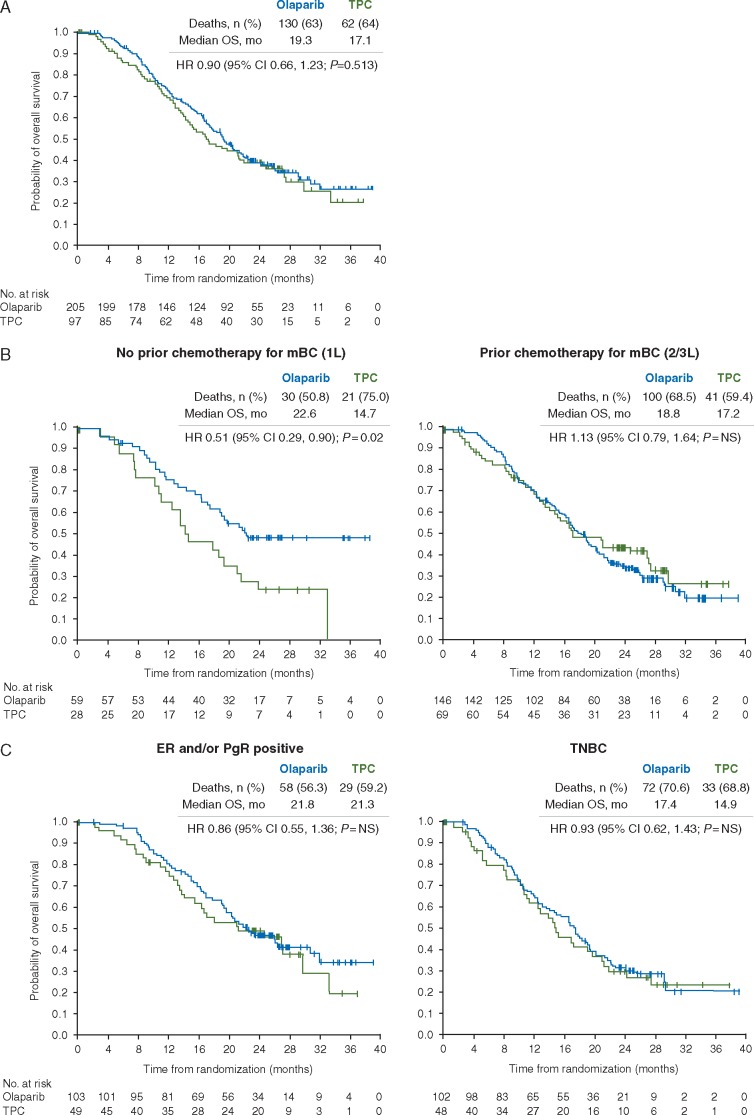
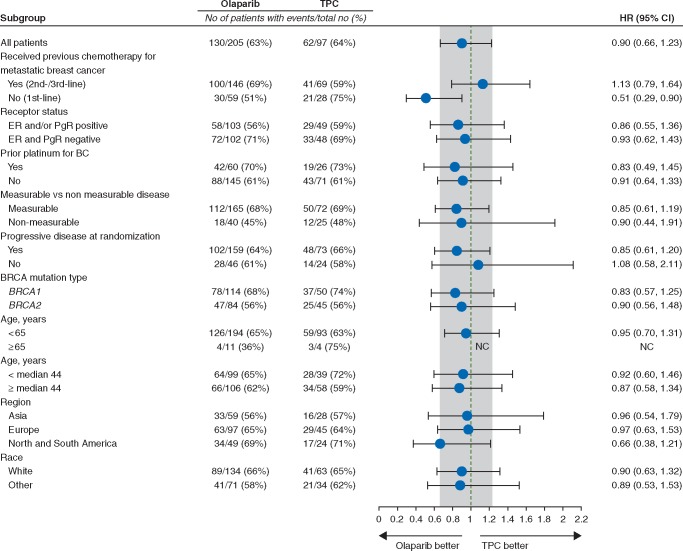
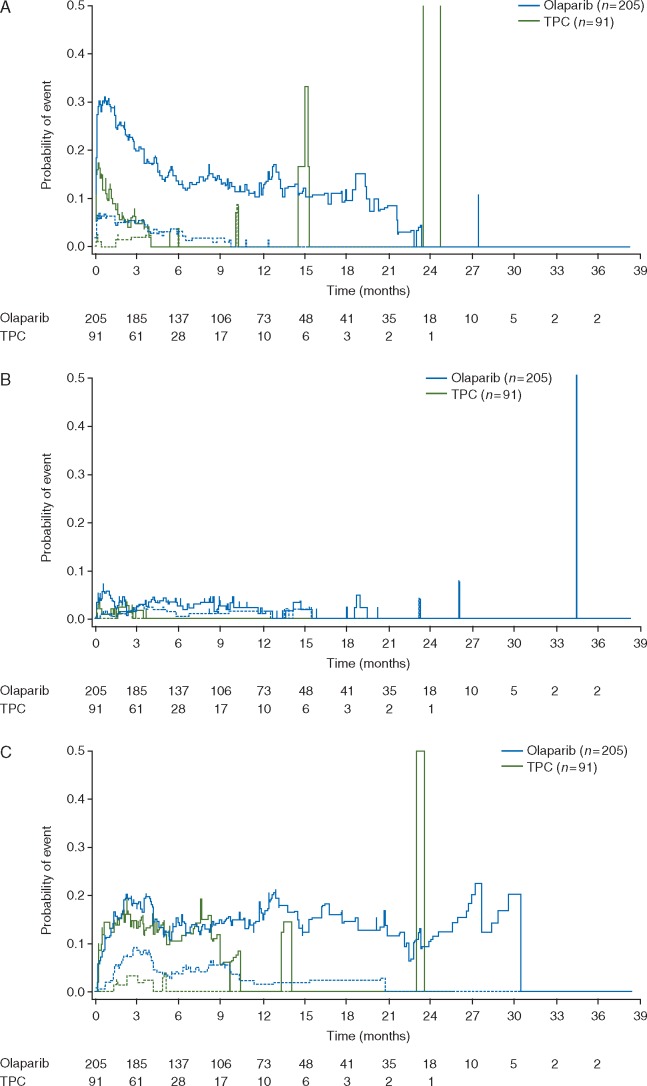
BACKGROUND: In the OlympiAD study, olaparib was shown to improve progression-free survival compared with chemotherapy treatment of physician's choice (TPC) in patients with a germline BRCA1 and/or BRCA2 mutation (BRCAm) and human epidermal growth factor receptor 2 (HER2)-negative metastatic breast cancer (mBC). We now report the planned final overall survival (OS) results, and describe the most common adverse events (AEs) to better understand olaparib tolerability in this population. PATIENTS AND METHODS: OlympiAD, a Phase III, randomized, controlled, open-label study (NCT02000622), enrolled patients with a germline BRCAm and HER2-negative mBC who had received ≤2 lines of chemotherapy for mBC. Patients were randomized to olaparib tablets (300 mg bid) or predeclared TPC (capecitabine, vinorelbine, or eribulin). OS and safety were secondary end points. RESULTS: A total of 205 patients were randomized to olaparib and 97 to TPC. At 64% data maturity, median OS was 19.3 months with olaparib versus 17.1 months with TPC (HR 0.90, 95% CI 0.66-1.23; P = 0.513); median follow-up was 25.3 and 26.3 months, respectively. HR for OS with olaparib versus TPC in prespecified subgroups were: prior chemotherapy for mBC [no (first-line setting): 0.51, 95% CI 0.29-0.90; yes (second/third-line): 1.13, 0.79-1.64]; receptor status (triple negative: 0.93, 0.62-1.43; hormone receptor positive: 0.86, 0.55-1.36); prior platinum (yes: 0.83, 0.49-1.45; no: 0.91, 0.64-1.33). Adverse events during olaparib treatment were generally low grade and manageable by supportive treatment or dose modification. There was a low rate of treatment discontinuation (4.9%), and the risk of developing anemia did not increase with extended olaparib exposure. CONCLUSIONS: While there was no statistically significant improvement in OS with olaparib compared to TPC, there was the possibility of meaningful OS benefit among patients who had not received chemotherapy for metastatic disease. Olaparib was generally well-tolerated, with no evidence of cumulative toxicity during extended exposure. Please see the article online for additional video content.
Overview
The claims and statistics of this paper haven’t been checked yet.
Free: it reads the open-access text and checks the first 5 claims that cite a source we can check. Create a free account to check every claim.
Integrity signals
Registry
Cites
Statistics
Figures
Verification
Claims the paper makes
The claims and statistics of this paper haven’t been checked yet.
Free: it reads the open-access text and checks the first 5 claims that cite a source we can check. Create a free account to check every claim.
Claims other papers make about this one
Each is checked against this paper’s own text: does it say what the citing paper says it does?
The source backs part of the claim, not all of it — or backs it for a different population, condition or comparison.
In the citing paper
“Since ABC 4, further data from the OlympiAD study suggested an OS benefit for olaparib when given in the first-line setting, with a median OS of 22.6 versus 14.7 months (HR 0.51; 95% CI 0.29-0.90, P = 0.02) in a subgroup analysis of predefined stratification subgroups,75”
From 5th ESO-ESMO international consensus guidelines for advanced breast cancer (ABC 5) (2020) · cites this paper as [75]
Experimental — accuracy not yet measured
Self-check
Percentages, sums and reported differences re-computed from the paper’s own numbers.
The self-check needs the paper’s full text.
Citations
Cites
Olaparib for Metastatic Breast Cancer in Patients with a Germline BRCA Mutation
Robson, M., Im, S.-A., Senkus, E., Xu, B., Domchek, S. M., Masuda, N., Delaloge, S., Li, W., Tung, N., Armstrong, A., et al. (2017) · New England Journal of Medicine · doi:10.1056/nejmoa1706450 · Cited by 3,294 · cited 4×
“The efficacy of the oral poly(ADP ribose) polymerase (PARP) inhibitor olaparib in patients with a germline BRCAm and HER2negative metastatic breast cancer (mBC) was confirmed in the Phase III OlympiAD study, with a statistically significant benefit in progression-free survival compared with chemotherapy treatment of p…”
BackgroundMethodResultSelf-citationTalazoparib in Patients with Advanced Breast Cancer and a Germline BRCA Mutation
Litton, J. K., Rugo, H. S., Ettl, J., Hurvitz, S. A., Gonçalves, A., Lee, K.-H., Fehrenbacher, L., Yerushalmi, R., Mina, L. A., Martin, M., et al. (2018) · New England Journal of Medicine · doi:10.1056/nejmoa1802905 · Cited by 2,175
Olaparib Monotherapy in Patients With Advanced Cancer and a Germline BRCA1/2 Mutation
Kaufman, B., Shapira-Frommer, R., Schmutzler, R. K., Audeh, M. W., Friedlander, M., Balmaña, J., Mitchell, G., Fried, G., Stemmer, S. M., Hubert, A., et al. (2015) · Journal of Clinical Oncology · doi:10.1200/jco.2014.56.2728 · Cited by 1,671
Self-citationCouch, F. J., Hart, S. N., Sharma, P., Toland, A. E., Wang, X., Miron, P., Olson, J. E., Godwin, A. K., Pankratz, V. S., Olswold, C., et al. (2015) · Journal of Clinical Oncology · doi:10.1200/jco.2014.57.1414 · Cited by 672 · cited 1×
“Germline BRCAm breast cancers tend to affect younger patients, those with a strong family history of breast cancer and Ashkenazi Jewish ancestry [1, 3].”
BackgroundMalone, K. E., Daling, J. R., Doody, D. R., Hsu, L., Bernstein, L., Coates, R. J., Marchbanks, P. A., Simon, M. S., McDonald, J. A., Norman, S. A., et al. (2006) · Cancer Research · doi:10.1158/0008-5472.can-06-0503 · Cited by 373 · cited 2×
“Germline BRCAm breast cancers tend to affect younger patients, those with a strong family history of breast cancer and Ashkenazi Jewish ancestry [1, 3].”
BackgroundKurian, A. W., Gong, G. D., John, E. M., Miron, A., Felberg, A., Phipps, A. I., West, D. W., & Whittemore, A. S. (2009) · Cancer Epidemiology, Biomarkers & Prevention · doi:10.1158/1055-9965.epi-08-1090 · Cited by 75 · cited 1×
“Approximately 5% of all breast cancer patients carry a germline deleterious mutation in BRCA1 and/or BRCA2 (BRCAm), with higher rates among those with human epidermal growth factor receptor 2 (HER2)-negative disease [1, 2].”
BackgroundKümmel, S., Jackisch, C., Müller, V., Schneeweiß, A., Klawitter, S., & Lux, M. P. (2017) · Annals of Oncology · doi:10.1093/annonc/mdx365.030 · Cited by 4
Kümmel, S., Jackisch, C., Müller, V., Schneeweiß, A., Klawitter, S., & Lux, M. P. (2018) · Cancer Management and Research · doi:10.2147/cmar.s177240 · Cited by 3
Cited by
Items 101–200 of 823
Marret, G., Bièche, I., Dupain, C., Borcoman, É., du Rusquec, P., Ricci, F., Hescot, S., Sablin, M., Tresca, P., Bello, D., et al. (2021) · JCO Precision Oncology · doi:10.1200/po.20.00280 · Cited by 60
Şahin, T. K., Rizzo, A., Güven, D. C., & Aksoy, S. (2025) · Cancer Treatment Reviews · doi:10.1016/j.ctrv.2025.102924 · Cited by 55
Nagaraj, G., & Ma, C. X. (2020) · Advances in Therapy · doi:10.1007/s12325-020-01552-2 · Cited by 53
Druggable Molecular Targets for the Treatment of Triple Negative Breast Cancer
Nakhjavani, M., Hardingham, J. E., Palethorpe, H. M., Price, T. J., & Townsend, A. R. (2019) · Journal of Breast Cancer · doi:10.4048/jbc.2019.22.e39 · Cited by 55
Circular RNAs as Potential Biomarkers in Breast Cancer
Palma, F. D. E. D., Salvatore, F., Pol, J. G., Kroemer, G., & Maiuri, M. C. (2022) · Biomedicines · doi:10.3390/biomedicines10030725 · Cited by 55
Sivakumar, S., Jin, D. X., Tukachinsky, H., Murugesan, K., McGregor, K., Danziger, N. A., Pavlick, D. C., Gjoerup, O. V., Ross, J. S., Harmon, R., et al. (2022) · Nature Communications · doi:10.1038/s41467-022-35245-x · Cited by 51
“The study included 7681 patients satisfying the following cohort inclusion criteria: (1) Chart-confirmed diagnosis of breast cancer (data collected through September 30, 2020), (2) Had at least two documented clinical visits in the FH network on or after January 1, 2011, (3) Underwent CGP testing on a pathologist-conf…”
MethodZha, F., Cao, C., Hong, M., Hou, H., Zhang, Q., Tang, B. H., Hu, H., Han, Y. Y., Zan, Y., Wang, Y., et al. (2023) · Frontiers in Endocrinology · doi:10.3389/fendo.2023.1120277 · Cited by 51
Clinical Utility of Universal Germline Genetic Testing for Patients With Breast Cancer
Whitworth, P. W., Beitsch, P. D., Patel, R. P., Rosen, B. P., Compagnoni, G., Baron, P. L., Simmons, R. M., Brown, E. A., Gold, L. P., Holmes, D. R., et al. (2022) · JAMA Network Open · doi:10.1001/jamanetworkopen.2022.32787 · Cited by 52
BRCA genetic testing and counseling in breast cancer: how do we meet our patients’ needs?
Dubsky, P. C., Jackisch, C., Im, S., Hunt, K. K., Li, C., Unger, S., & Paluch–Shimon, S. (2024) · npj Breast Cancer · doi:10.1038/s41523-024-00686-8 · Cited by 53
Self-citationPARP Inhibitors for Breast Cancer: Germline BRCA1/2 and Beyond
Menezes, M. C. S., Raheem, F., Mina, L. A., Ernst, B. J., & Batalini, F. (2022) · Cancers · doi:10.3390/cancers14174332 · Cited by 57
“There were no reports of myelodysplastic syndrome (MDS), acute myeloid leukemia (AML), or other secondary malignancies [12,84,85].”
BackgroundCollet, L., Hanvic, B., Turinetto, M., Treilleux, I., Chopin, N., Saux, O. L., & Ray-Coquard, I. L. (2024) · Frontiers in Oncology · doi:10.3389/fonc.2024.1354427 · Cited by 50
Emerging Therapeutics for Patients with Triple-Negative Breast Cancer
Agostinetto, E., Eiger, D., Punie, K., & de Azambuja, E. (2021) · Current Oncology Reports · doi:10.1007/s11912-021-01038-6 · Cited by 48
Nitecki, R., Melamed, A., Gockley, A. A., Floyd, J. L., Krause, K. J., Coleman, R. L., Matulonis, U. A., Giordano, S. H., Lu, K. H., & Rauh‐Hain, J. A. (2021) · Gynecologic Oncology · doi:10.1016/j.ygyno.2021.03.011 · Cited by 52
Therapeutic evolution in HR+/HER2- breast cancer: from targeted therapy to endocrine therapy
Cao, L.-Q., Sun, H., Xie, Y., Patel, H. H., Bo, L., Lin, H., & Chen, Z. (2024) · Frontiers in Pharmacology · doi:10.3389/fphar.2024.1340764 · Cited by 51
Oligometastatic breast cancer: where are we now and where are we headed?—a narrative review
Kent, C. L., McDuff, S. G. R., & Salama, J. K. (2020) · Annals of Palliative Medicine · doi:10.21037/apm-20-1128 · Cited by 49
“Other targeted agents such as PI3K and PARP inhibitors are also being incorporated into the treatment of metastatic breast cancer to improve outcomes (17-20).”
BackgroundAdvances in Therapeutic Approaches for Triple-Negative Breast Cancer
Mahtani, R. L., Kittaneh, M., Kalinsky, K. M., Mamounas, E. P., Badve, S., Vogel, C. L., Lower, E. E., Schwartzberg, L. S., & Pegram, M. D. (2020) · Clinical Breast Cancer · doi:10.1016/j.clbc.2020.12.011 · Cited by 49
Tan, T. J., Sammons, S. L., Im, Y., She, L., Mundy, K., Bigelow, R., Traina, T. A., Anders, C. K., Yeong, J. P.-S., Renzulli, E., et al. (2024) · Clinical Cancer Research · doi:10.1158/1078-0432.ccr-23-2513 · Cited by 50
PARP (Poly ADP-Ribose Polymerase) inhibitors for locally advanced or metastatic breast cancer
Taylor, A. M., Chan, D. L. H., Tio, M., Patil, S. M., Traina, T. A., Robson, M. E., & Khasraw, M. (2021) · Cochrane Database of Systematic Reviews · doi:10.1002/14651858.cd011395.pub2 · Cited by 50
Self-citationGenetic Testing Enhances the Precision Diagnosis and Treatment of Breast Cancer
Yang, T.-L., Li, W., Huang, T., & Zhou, J. (2023) · International Journal of Molecular Sciences · doi:10.3390/ijms242316607 · Cited by 50
Self-citationNabieva, N., & Fasching, P. A. (2021) · Cancers · doi:10.3390/cancers13225643 · Cited by 45
“However, in both studies a significant influence on OS was not observed [98,99].”
BackgroundTargeting DNA Damage Response and Immune Checkpoint for Anticancer Therapy
Huang, J.-L., Chang, Y.-T., Hong, Z.-Y., & Lin, C.-S. (2022) · International Journal of Molecular Sciences · doi:10.3390/ijms23063238 · Cited by 42
“The olaparib has been approved by FDA for gBRCAm, HER2-negative metastatic breast cancer and ovary cancer [72,121,122].”
BackgroundThe evolving management of metastatic triple negative breast cancer
Malhotra, M. K., & Emens, L. A. (2020) · Seminars in Oncology · doi:10.1053/j.seminoncol.2020.05.005 · Cited by 42
Clinical Development of PARP Inhibitors in Treating Metastatic Castration-Resistant Prostate Cancer
Adashek, J. J., Jain, R., & Zhang, J. (2019) · Cells · doi:10.3390/cells8080860 · Cited by 44
Mittal, A., Moltó, C., Tamimi, F., Schlam, I. M., Sammons, S. L., Tolaney, S. M., & Tarantino, P. (2023) · Cancers · doi:10.3390/cancers15072015 · Cited by 43
DNA damage response in breast cancer and its significant role in guiding novel precise therapies
Li, J., Jia, Z., Lin, D., Cao, H., Huang, Y., Xu, H., Xie, Z., Jiang, Y., Wang, X., & Liu, J. (2024) · Biomarker Research · doi:10.1186/s40364-024-00653-2 · Cited by 46
“Also, a substantial number of patients with BRCA mutations fail to respond to PARP inhibitors, while BRCA mutation non-carriers could still respond [113, 119].”
BackgroundResultInfluentialGalván-Morales, M. Á., Rodríguez, R. B., Cruz, J. R. S., & Teran, L. M. (2020) · Molecules · doi:10.3390/molecules25235686 · Cited by 42
“Some examples of PARPi are iniparib (Sanofi® BSI 201), talazoparib (BMN-673), olaparib (Lynparza® AZD-2281 and TOPARP-A), veliparib (ABT-888), and niraparib (Tesaro®) (Figure 1) (Table 3) [131–135].”
BackgroundHao, K.-J., Jia, X. P., Dai, W.-T., Huo, Z.-M., Zhang, H., Liu, J., & Wang, X. (2022) · Frontiers in Oncology · doi:10.3389/fonc.2021.689553 · Cited by 44
Cai, J., Ji, Z., Wu, J., Chen, L., Zheng, D., Chen, Y., Zhang, X., Xie, W., Huang, J., Chen, M., et al. (2022) · Frontiers in Genetics · doi:10.3389/fgene.2022.949314 · Cited by 53
“significantly prolonged PFS compared with chemotherapy in patients with BRCA-mutated HER-2-negative advanced BC (Robson et al., 2017; Robson et al., 2019).”
BackgroundSystemic Therapy in Breast Cancer
Corti, C., Batra-Sharma, H., Kelsten, M. F., Shatsky, R. A., Garrido-Castro, A. C., & Gradishar, W. J. (2024) · American Society of Clinical Oncology Educational Book · doi:10.1200/edbk_432442 · Cited by 42
The Asian Breast Cancer Cooperative Group, Yeo, W., Ueno, T., Lin, C., Liu, Q., Lee, K.-H., Leung, R. C.-Y., Naito, Y., Park, Y. H., Im, S., et al. (2019) · Breast Cancer Research and Treatment · doi:10.1007/s10549-019-05318-5 · Cited by 41
Self-citationPARP Inhibitors in the Treatment of Early Breast Cancer: The Step Beyond?
Gonçalvès, A., Bertucci, A., & Bertucci, F. (2020) · Cancers · doi:10.3390/cancers12061378 · Cited by 41
“chemotherapy at physician’s choice), anemia of any grade was present in 40% to 52%, including 16% to 38% grade > 3, and blood transfusion was required in 18% to 38% of patients [14,54].”
BackgroundCai, Z., Liu, C., Chang, C., Shen, C., Yin, Y., Yin, X., Jiang, Z., Zhao, Z., Mu, M., Cao, D., et al. (2021) · Pharmacological Research · doi:10.1016/j.phrs.2021.105808 · Cited by 44
Senkus, E., Delaloge, S., Domchek, S. M., Conte, P., Im, S., Xu, B., Armstrong, A., Masuda, N., Fielding, A., Robson, M., et al. (2023) · International Journal of Cancer · doi:10.1002/ijc.34525 · Cited by 39
“In the prespecified final overall survival (OS) analysis performed after 192 deaths (data cut-off date [DCO] September 25, 2017, 64% data maturity), there was a trend towards improved survival in patients who had not received prior chemotherapy for mBC.(17) Here, we report efficacy (investigator-assessed) and HRQoL ou…”
BackgroundMethodResultSelf-citationExploring neurotransmitters and their receptors for breast cancer prevention and treatment
Li, R. Q., Zhao, X. H., Zhu, Q., Liu, T., Hondermarck, H., Thorne, R. F., Zhang, X. D., & Gao, J. N. (2023) · Theranostics · doi:10.7150/thno.81403 · Cited by 40
“toremifene, and humanized anti-HER2 antibodies, such as trastuzumab and pertuzumab, are the standard of care for patients with estrogen receptor (ER)- and HER2-positive BCs, respectively; whereas the poly(ADP-ribose) polymerase (PARP) inhibitors olaparib and talazoparib are used in BRCA mutation carriers with metastat…”
BackgroundMethodA pan‐tumor review of the role of poly(adenosine diphosphate ribose) polymerase inhibitors
Chehade, C. H., Gebrael, G., Sayegh, N., Özay, Z. İ., Narang, A., Crispino, T., Golan, T., Litton, J. K., Swami, U., Moore, K. N., et al. (2025) · CA A Cancer Journal for Clinicians · doi:10.3322/caac.21870 · Cited by 50
Dullens, B., Putter, R. D., Lambertini, M., Toss, A., Han, S., Nieuwenhuysen, E. V., Gorp, T. V., Vanderstichele, A., Ongeval, C. V., Keupers, M., et al. (2020) · Journal of Oncology · doi:10.1155/2020/9873954 · Cited by 41
“Besides the increased cancer risks and the identified prognostic and predictive implications in BRCA-related breast, ovarian, pancreatic, and prostate cancers, the autosomal dominant inheritance pattern has important implications for the children and relatives of mutation carriers [5, 6].”
BackgroundMa, Z., Sun, X., Zhao, Z., Lu, W., Guo, Q., Wang, S., You, J., Zhang, Y., & Liu, L. (2021) · Gynecologic Oncology · doi:10.1016/j.ygyno.2021.05.012 · Cited by 44
Meijer, T. G., Nguyen, L., van Hoeck, A., Sieuwerts, A. M., Verkaik, N. S., Ladan, M. M., Ruigrok-Ritstier, K., van Deurzen, C. H. M., van de Werken, H. J. G., Lips, E. H., et al. (2022) · Oncogene · doi:10.1038/s41388-022-02363-1 · Cited by 37
Therapeutic advances and application of PARP inhibitors in breast cancer
Zhou, T., & Zhang, J. (2025) · Translational Oncology · doi:10.1016/j.tranon.2025.102410 · Cited by 40
“Although most events are low-grade (CTCAE grade 1 – 2) [21], these cytopenias correlate mechanistically with PARP-DNA trapping and typically manifest within the first 3 months of treatment, resolving spontaneously in most cases.”
Drugging DNA Damage Repair Pathways for Trinucleotide Repeat Expansion Diseases
Benn, C., Gibson, K. R., & Reynolds, D. S. (2021) · Journal of Huntington s Disease · doi:10.3233/jhd-200421 · Cited by 39
“In addition to being effective, olaparib has been reportedly well tolerated by patients (although it still has notable side effects, particularly in the context of long term treatment, such as decreased red and white blood cell counts), which strengthens confidence that at least some DDR approaches may be suitable to…”
BackgroundGenomic, Transcriptomic, and Proteomic Profiling of Metastatic Breast Cancer
Akçakanat, A., Zheng, X., Pico, C. X. C., Kim, T., Chen, K., Korkut, A., Şahin, A. A., Holla, V. R., Tarco, E., Singh, G., et al. (2021) · Clinical Cancer Research · doi:10.1158/1078-0432.ccr-20-4048 · Cited by 40
“Germline alterations in BRCA1 and BRCA2 have already been associated with a benefit in progression-free survival with the use of PARP inhibitors (14, 15).”
BackgroundGelmon, K. A., Fasching, P. A., Couch, F. J., Balmañà, J., Delaloge, S., Labidi‐Galy, S. I., Bennett, J., McCutcheon, S., Walker, G., O’Shaughnessy, J., et al. (2021) · European Journal of Cancer · doi:10.1016/j.ejca.2021.03.029 · Cited by 39
Self-citationVoutsadakis, I. A., & Stravodimou, A. (2023) · Anticancer Research · doi:10.21873/anticanres.16241 · Cited by 39
Lang, Y., Chai, Q., Tao, W., Liao, Y., Liu, X., & Wu, B. (2023) · The Breast · doi:10.1016/j.breast.2023.02.003 · Cited by 40
“Food and Drug Administration (FDA) approved the poly ADP-ribose polymerase (PARP) inhibitors olaparib and talazoparib for patients with TNBC of germline BRCA mutations [5,6], and the programmed cell death protein receptor-1 (PD-1) inhibitor”
BackgroundShah, A. N., Metzger, O., Bartlett, C. H., Liu, Y., Huang, X., & Cristofanilli, M. (2020) · The Oncologist · doi:10.1634/theoncologist.2019-0729 · Cited by 39
“3%); most were grade 1 or 2 in severity [54].”
BackgroundMethodInfluentialThe role of Trop2 in prostate cancer: an oncogene, biomarker, and therapeutic target.
Shen, M., Liu, S., & Stoyanova, T. I. (2021) · PubMed Central · Cited by 55
Hobbs, E. A., Litton, J. K., & Yap, T. A. (2021) · Expert Opinion on Pharmacotherapy · doi:10.1080/14656566.2021.1952181 · Cited by 39
“Unfortunately, an OS benefit was not detected in either of the two pivotal phase III trials [44,110].”
BackgroundMittal, A., Deo, S. V. S., Gogia, A., Batra, A., Kumar, A., Bhoriwal, S. K., Deb, K. S., Dhamija, E., Thulkar, S. P., Ramprasad, V., et al. (2021) · Annals of Surgical Oncology · doi:10.1245/s10434-021-10870-w · Cited by 38
Yang, C., Zhang, Z., Tang, X., Zhang, X., Chen, Y., Hu, T., Zhang, H., Guan, M., Zhang, X., & Wu, Z. (2021) · Human Cell · doi:10.1007/s13577-021-00630-z · Cited by 38
Advancements in the Treatment of Triple-Negative Breast Cancer: A Narrative Review of the Literature
Landry, I., Sumbly, V., & Vest, M. (2022) · Cureus · doi:10.7759/cureus.21970 · Cited by 39
“…(n=412) Talazoparib NA NA 8.6 months <0.001, HR: 0.54 (0.41- 0.71) 19.3 months 0.17, HR: 0.85 (0.67- 1.07) TPC** NA 5.6 months 19.5 months OlympiAD, Robson et al. (2019) [24] BRCA+/HER2- mTNBC who received no more than 2 lines of previous CTx (n=205) Olaparib NA NA NA NA 22.6 months 0.02, HR:…”
BackgroundMethodInfluentialKinj, R., Muggeo-Bertin, E., Schiappacasse, L., Bourhis, J., & Herrera, F. G. (2022) · Cancers · doi:10.3390/cancers14051152 · Cited by 38
The biology and treatment of leiomyosarcomas
Kerrison, W. G. J., Thway, K., Jones, R. L., & Huang, P. H. (2023) · Critical Reviews in Oncology/Hematology · doi:10.1016/j.critrevonc.2023.103955 · Cited by 40
Li, H., Liu, R., Shao, B., Ran, R., Song, G., Wang, K., Shi, Y., Liu, J., Hu, W., Chen, F., et al. (2020) · Chinese Journal of Cancer Research · doi:10.21147/j.issn.1000-9604.2020.03.08 · Cited by 36
“These data add to larger studies in gBRCAMut BC showing significant PFS benefit with olaparib or talazoparib (11,19,23-25).”
ResultGalland, L., Ballot, E., Mananet, H., Boidot, R., Lecuelle, J., Albuisson, J., Arnould, L., Desmoulins, I., Mayeur, D., Kaderbhaï, C., et al. (2022) · npj Breast Cancer · doi:10.1038/s41523-022-00395-0 · Cited by 41
PARP inhibitors in breast and ovarian cancer with BRCA mutations: a meta-analysis of survival
Shao, F., Duan, Y., Zhao, Y., Li, Y., Liu, J., Zhang, C., & He, S. (2021) · Aging · doi:10.18632/aging.202724 · Cited by 38
Thill, M., Friedrich, M., Kolberg‐Liedtke, C., Albert, U., Banys‐Paluchowski, M., Bauerfeind, I., Blohmer, J., Budach, W., Dall, P., Fallenberg, E. M., et al. (2021) · Breast Care · doi:10.1159/000516420 · Cited by 34
Li, D., Tao, Z., Wang, B., Wang, L., Cao, J., Hu, X., & Zhang, J. (2022) · npj Breast Cancer · doi:10.1038/s41523-022-00462-6 · Cited by 34
Emara, H. M., Allam, N. K., & Youness, R. A. (2025) · Discover Oncology · doi:10.1007/s12672-025-02227-6 · Cited by 37
“PARP enzyme inhibitors such as Olaparib ® or Talazoparib ® are used as a second line of treatment for mTNBC with positive BRCA gene mutations or deletions after the chemotherapy [22, 23].”
Chinese expert consensus on the clinical diagnosis and treatment of advanced breast cancer (2018)
Xu, B., Hu, X., Feng, J., Geng, C., Jin, F., Li, H., Li, M., Li, Q., Liao, N., Liu, D., et al. (2020) · Cancer · doi:10.1002/cncr.32832 · Cited by 34
Self-citationModulatory Role of microRNAs in Triple Negative Breast Cancer with Basal-Like Phenotype
Angius, A., Cossu‐Rocca, P., Arru, C., Muroni, M. R., Rallo, V., Carru, C., Uva, P., Pira, G., Orrù, S., & Miglio, M. R. D. (2020) · Cancers · doi:10.3390/cancers12113298 · Cited by 33
Labrie, M., Li, A., Creason, A., Betts, C. B., Keck, J. M., Johnson, B., Sivagnanam, S., Boniface, C. T., Ma, H., Blucher, A., et al. (2021) · npj Precision Oncology · doi:10.1038/s41698-021-00232-w · Cited by 32
Development of Next-Generation Poly(ADP-Ribose) Polymerase 1–Selective Inhibitors
Ngoi, N. Y. L., Leo, E., O'Connor, M. J., & Yap, T. A. (2021) · The Cancer Journal · doi:10.1097/ppo.0000000000000556 · Cited by 36
Gupta, T., Vinayak, S., & Telli, M. L. (2022) · Breast Cancer Research and Treatment · doi:10.1007/s10549-022-06780-4 · Cited by 33
“In 2018, the poly (adenosine diphosphate-ribose) polymerase (PARP) inhibitor olaparib gained approval for patients with locally advanced or metastatic HER2-negative breast cancer and germline BRCA1/2 mutation [4, 5].”
BackgroundImmune Checkpoint Blockade in Patients with Triple-Negative Breast Cancer
Michel, L. L., von Au, A., Mavratzas, A., Smetanay, K., Schütz, F., & Schneeweiß, A. (2020) · Targeted Oncology · doi:10.1007/s11523-020-00730-0 · Cited by 35
“3 months seems longer than described previously for PARP monotherapy [64, 65].”
BackgroundPark‐Simon, T., Müller, V., Jackisch, C., Albert, U., Banys-Paluchowski, M. J., Bauerfeind, I., Blohmer, J., Budach, W., Dall, P., Ditsch, N., et al. (2023) · Breast Care · doi:10.1159/000531578 · Cited by 31
Morrison, L., & Okines, A. F. C. (2023) · Cancers · doi:10.3390/cancers15153801 · Cited by 33
“23) [37], likely influenced by more patients on the standard arm accessing PARP inhibitors and/or platinum-based chemotherapy as subsequent treatments.”
BackgroundInfluentialMilitello, A. M., Zielli, T., Boggiani, D., Michiara, M., Naldi, N., Bortesi, B., Zanelli, P., Uliana, V., Giuliotti, S., & Musolino, A. (2019) · Frontiers in Oncology · doi:10.3389/fonc.2019.00759 · Cited by 31
Hasson, S. P., Menes, T. S., & Sonnenblick, A. (2020) · Pharmacogenomics and Personalized Medicine · doi:10.2147/pgpm.s233485 · Cited by 34
Wang, L., Zhai, Q., Lu, Q., Lee, K., Zheng, Q., Hong, R., & Wang, S. (2021) · Annals of Medicine · doi:10.1080/07853890.2021.1966086 · Cited by 30
“001), but no statistically significant improvement in OS [46,47].”
Li, S., Bao, C., Huang, L., & Wei, J. (2022) · Journal of Clinical Medicine · doi:10.3390/jcm11206021 · Cited by 31
New Biomarkers and Treatment Advances in Triple-Negative Breast Cancer
Hejjioui, B. E., Lamrabet, S., Joutei, S. A., Senhaji, N., Bouhafa, T., Malhouf, M. A., Bennis, S., & Bouguenouch, L. (2023) · Diagnostics · doi:10.3390/diagnostics13111949 · Cited by 34
Small molecule agents for triple negative breast cancer: Current status and future prospects
Ou, Y., Wang, M., Xu, Q., Sun, B., & Jia, Y. (2024) · Translational Oncology · doi:10.1016/j.tranon.2024.101893 · Cited by 31
“The OlympiAD trial showed that olaparib improved mPFS in germline BRCA-mutated or HER2-negative metastatic BC, with a subgroup analysis showing a greater PFS benefit in TNBC patients among all HER2-negative patients [291].”
BackgroundPoly-ADP-ribose polymerases (PARPs) as a therapeutic target in the treatment of selected cancers
Przybyciński, J., Nalewajska, M., Marchelek‐Myśliwiec, M., Dziedziejko, V., & Pawlik, A. (2019) · Expert Opinion on Therapeutic Targets · doi:10.1080/14728222.2019.1654458 · Cited by 30
Targeted therapy approaches for epithelial-mesenchymal transition in triple negative breast cancer
Haque, M., Shyanti, R. K., & Mishra, M. K. (2024) · Frontiers in Oncology · doi:10.3389/fonc.2024.1431418 · Cited by 33
Reduced penetrance BRCA1 and BRCA2 pathogenic variants in clinical germline genetic testing
Pal, T., Mundt, E., Richardson, M. E., Chao, E., Pesaran, T. F., Slavin, T. P., Couch, F. J., & Monteiro, Á. N. A. (2024) · npj Precision Oncology · doi:10.1038/s41698-024-00741-4 · Cited by 30
Tung, N., Robson, M. E., Li, T., Nanda, R., Shah, P. D., Khoury, K. E., Kimmick, G. G., Santa-Maria, C. A., Brufsky, A., DeMeo, M. K., et al. (2026) · Journal of Clinical Oncology · doi:10.1200/jco-25-02075 · Cited by 32
Self-citationDixon-Douglas, J. R., Loibl, S., Denkert, C., Telli, M. L., & Loi, S. (2022) · American Society of Clinical Oncology Educational Book · doi:10.1200/edbk_351186 · Cited by 31
Pan, W., Han, Y. Y., Hu, H., & He, Y. (2022) · BMC Nephrology · doi:10.1186/s12882-022-02920-6 · Cited by 37
“A log-rank test compared the Kaplan–Meier probability of renal composite endpointfree survival among Hb groups [40].”
MethodRepetto, M., Crimini, E., Bielo, L. B., Guerini‐Rocco, E., Ascione, L., Bonfanti, A., Zanzottera, C., Mazzarella, L., Ranghiero, A., Belli, C., et al. (2023) · European Journal of Cancer · doi:10.1016/j.ejca.2023.01.019 · Cited by 28
The impact of PET imaging on triple negative breast cancer: an updated evidence-based perspective
Filippi, L., Urso, L., Ferrari, C., Guglielmo, P., & Evangelista, L. (2024) · European Journal of Nuclear Medicine and Molecular Imaging · doi:10.1007/s00259-024-06866-9 · Cited by 30
Sammons, S. L., Shastry, M., Dent, S. F., Anders, C. K., & Hamilton, E. P. (2019) · Clinical Breast Cancer · doi:10.1016/j.clbc.2019.06.017 · Cited by 32
Rao, X., Qiao, Z., Yang, Y., Deng, Y., Zhang, Z., Yu, X., & Guo, X. (2024) · Pharmaceuticals · doi:10.3390/ph17020225 · Cited by 30
“PARP inhibitors have demonstrated particular effectiveness in BRCA-mutated cases, as evidenced by the OlympiAD [3,4] and OlympiA trials [5], which indicated that Olaparib improved survival rates in metastatic and early-stage HER2-negative breast cancer.”
BackgroundGenomic Alteration in Metastatic Breast Cancer and Its Treatment
Li, A., Schleicher, S. M., André, F., & Mitri, Z. I. (2020) · American Society of Clinical Oncology Educational Book · doi:10.1200/edbk_280463 · Cited by 28
Sun, X., Wang, X., Zhang, J., Zhao, Z., Feng, X., Liu, L., & Ma, Z. (2021) · The Breast · doi:10.1016/j.breast.2021.08.009 · Cited by 30
Integrated analysis reveals prognostic value of HLA-I LOH in triple-negative breast cancer
Zhou, Y.-F., Xiao, Y., Jin, X., Di, G., Jiang, Y., & Shao, Z. (2021) · Journal for ImmunoTherapy of Cancer · doi:10.1136/jitc-2021-003371 · Cited by 28
Caramelo, O. L., Silva, C., Caramelo, F. J., Frutuoso, C., Pinto, L., & Almeida‐Santos, T. (2022) · Hereditary Cancer in Clinical Practice · doi:10.1186/s13053-022-00242-0 · Cited by 29
Batalini, F., Madison, R. W., Sokol, E. S., Jin, D. X., Chen, K., Decker, B. J., Pavlick, D. C., Frampton, G. M., Wulf, G. M., Garber, J. E., et al. (2023) · JCO Precision Oncology · doi:10.1200/po.23.00091 · Cited by 32
Self-citationGuidelines for diagnosis and treatment of advanced breast cancer in China (2022 edition)
Xu, B., & Ma, F. (2023) · Journal of the National Cancer Center · doi:10.1016/j.jncc.2023.12.001 · Cited by 30
Self-citationBalmañà, J., Fasching, P. A., Couch, F. J., Delaloge, S., Labidi‐Galy, S. I., O’Shaughnessy, J., Park, Y. H., Eisen, A. F., You, B., Bourgeois, H., et al. (2023) · Breast Cancer Research and Treatment · doi:10.1007/s10549-023-07165-x · Cited by 27
“Interestingly, the median OS in the gBRCAm cohort of the LUCY trial (24.94 months) was numerically longer than that reported for olaparib in the final prespecified analysis of OlympiAD (19.25 months) [14].”
BackgroundMethodResultInfluentialSelf-citationPaluch–Shimon, S., & Cardoso, F. (2020) · Nature Reviews Clinical Oncology · doi:10.1038/s41571-020-00452-2 · Cited by 28
Shi, J., Liu, F., & Song, Y. (2020) · Cancer Management and Research · doi:10.2147/cmar.s272685 · Cited by 29
Immunotherapy in breast cancer: A clinician's perspective
Chaudhuri, S., Thomas, S., & Münster, P. N. (2021) · Journal of the National Cancer Center · doi:10.1016/j.jncc.2021.01.001 · Cited by 26
Vysyaraju, N. R., Paul, M., Ch, S., Ghosh, B., & Biswas, S. (2022) · Journal of drug targeting · doi:10.1080/1061186x.2022.2092623 · Cited by 29
“Moreover, olaparib treatment is associated with several side effects, including anaemia, nausea, myelodysplastic syndrome, acute myeloid leukaemia and pneumonitis [14,18].”
BackgroundPost-CDK 4/6 Inhibitor Therapy: Current Agents and Novel Targets
Ashai, N., & Swain, S. M. (2023) · Cancers · doi:10.3390/cancers15061855 · Cited by 26
“90); however, this benefit was not seen in patients who used olaparib in the second or third line [15].”
BackgroundCorrelation of PTEN signaling pathway and miRNA in breast cancer
Mohammadi, M., Fazilat, A., Mamalo, A. S., Ojarudi, M., Hemmati-Dinarvand, M., Beilankouhi, E. A. V., & Valilo, M. (2024) · Molecular Biology Reports · doi:10.1007/s11033-023-09191-w · Cited by 29
“Considering that tumor cells and tissues have less drug resistance mechanism in the early stages of the cancer, therefore the use of PARP inhibitors in combina - tion with other treatments in the early stages can have more effects compared to the advanced stages of cancer [ 11–13].”
Lee, K., Chen, G., Chen, T., Kuo, Y., & Su, Y.-K. (2020) · Cancers · doi:10.3390/cancers12082122 · Cited by 27
“Notably, in a subgroup analysis of 121 metastatic TNBC, marked improvements were noticed in comparison with the hormone-receptor positive group [64,65].”
ResultMapping genetic interactions in cancer: a road to rational combination therapies
Tutuncuoglu, B., & Krogan, N. J. (2019) · Genome Medicine · doi:10.1186/s13073-019-0680-4 · Cited by 26
Roubaud, G., Özgüroğlu, M., Penel, N., Matsubara, N., Mehra, N., Kolinsky, M. P., Procopio, G., Feyerabend, S., Joung, J. Y., Gravis, G., et al. (2022) · European Journal of Cancer · doi:10.1016/j.ejca.2022.04.016 · Cited by 26
Huo, Y., Shao, S., Liu, E., Li, J., Tian, Z., Wu, X., Zhang, S., Stover, D. G., Wu, H., Cheng, L., et al. (2022) · Cancers · doi:10.3390/cancers14194878 · Cited by 25
The Diversity of Liquid Biopsies and Their Potential in Breast Cancer Management
Keup, C., Kimmig, R., & Kasimir‐Bauer, S. (2023) · Cancers · doi:10.3390/cancers15225463 · Cited by 27
Metadata
- Authors
- Robson, M. E., Tung, N., Conte, P., Im, S.-A., Senkus, E., Xu, B., Masuda, N., Delaloge, S., Li, W., Armstrong, A., Wu, W., Goessl, C., Runswick, S., & Domchek, S. M.
- Affiliations
- Memorial Sloan Kettering Cancer Center (US)
- Beth Israel Deaconess Medical Center (US)
- University of Padua (IT)
- Seoul National University (KR)
- Gdańsk Medical University (PL)
- Chinese Academy of Medical Sciences & Peking Union Medical College (CN)
- Osaka National Hospital (JP)
- Institut Gustave Roussy (FR)
- First Hospital of Jilin University (CN)
- The Christie Hospital (GB)
- AstraZeneca (United States) (US)
- AstraZeneca (United Kingdom) (GB)
- University of Pennsylvania (US)
- Corresponding author
- Robson, M.E.
- Runswick, S.
- ORCID
- Venue
- Annals of Oncology
- Publisher
- Elsevier BV
- Published
- 2019-04
- Volume
- 30
- Issue
- 4
- Pages
- 558-566
- ISSN
- 0923-7534 (ISSN-L)
- PMC
- PMC6503629
- OpenAlex
- W2913584903
- Cited by
- 779
- References
- 9
- Citations by year
- 2026: 76 · 2025: 84 · 2024: 108 · 2023: 144 · 2022: 133 · 2021: 118 · 2020: 83 · 2019: 33
- FWCI
- 38.45
- Type
- journal article
- Language
- en
- Open access
- hybrid
- doi.org
- Licence
- cc-by-nc
- www.elsevier.com/tdm/userlicense/1.0/ (tdm)
- creativecommons.org/licenses/by-nc/4.0/ (vor, 326 d)
- Locations
- Annals of Oncology (publishedVersion, cc-by-nc)
- PubMed Central (publishedVersion, cc-by-nc)
- PubMed (publishedVersion)
- Seoul National University Open Repository (Seoul National University) (submittedVersion)
- Padua Research Archive (University of Padova) (submittedVersion)
- Funders
- AstraZeneca
- AstraZeneca and Merck & Co.
- Inc.
- NIH/NCI Cancer Center
- Breast Cancer Research Foundation
- Mudskipper Business Ltd
- Topics
- Health Sciences › Medicine › Oncology › PARP inhibition in cancer therapy
- Life Sciences › Biochemistry, Genetics and Molecular Biology › Genetics › BRCA gene mutations in cancer
- Health Sciences › Medicine › Oncology › Advanced Breast Cancer Therapies
- Keywords
- olaparib, HER2-negative metastatic breast cancer, germline BRCA1 mutation, germline BRCA2 mutation, PARP inhibitors, overall survival, tolerability, adverse events, capecitabine, vinorelbine, eribulin, platinum-based chemotherapy, triple-negative breast cancer, hormone receptor-positive breast cancer, Olympiad
- MeSH terms
- Poly(ADP-ribose) Polymerase Inhibitors, Progression-Free Survival, Administration, Oral, Adult, Aged, Anemia, Antineoplastic Combined Chemotherapy Protocols, Breast Neoplasms, Female, Follow-Up Studies, Humans, Middle Aged, Phthalazines, Piperazines, Tablets, Germ-Line Mutation, Receptor, ErbB-2, Erb-b2 Receptor Tyrosine Kinases, BRCA1 Protein
About these checks
Registry, retraction, Cites and statistics results are computed, not judged, with one exception: a printed reference that no index lists is read once by a model before it counts as a citation error. Claims are extracted by a model and kept only when their quote appears verbatim in the text; each cited source is then checked, with a model’s help, for whether it says what the claim relies on. Those verdicts can be wrong — read the claim’s quote and the cited source before relying on one.
Statistics and arithmetic are recomputed, not judged.
Confidence bands are shown only for fields calibrated on our annotated test set. None is calibrated yet, so no band is shown.
What counts as a claim ›How we measure confidence ›How we check this ›
Are you an author, or do you see a problem with this page? Request a review
Data sources
Bibliographic data: Semantic Scholar, OpenAlex, Crossref.
Contains information from the Semantic Scholar Academic Graph Datasets, made available under the ODC Attribution License (ODC-BY 1.0).
Semantic Scholar’s data is described in: Kinney, R., et al. (2023). The Semantic Scholar Open Data Platform. arXiv:2301.10140.
