

OlympiAD final overall survival and tolerability results: olaparib versus chemotherapy treatment of physician's choice in patients with a germline BRCA mutation and HER2-negative metastatic breast cancer
Open accessThe DOI matches its Crossref record; 8 of the 9 references it cites were found in a registry or an index.
Abstract
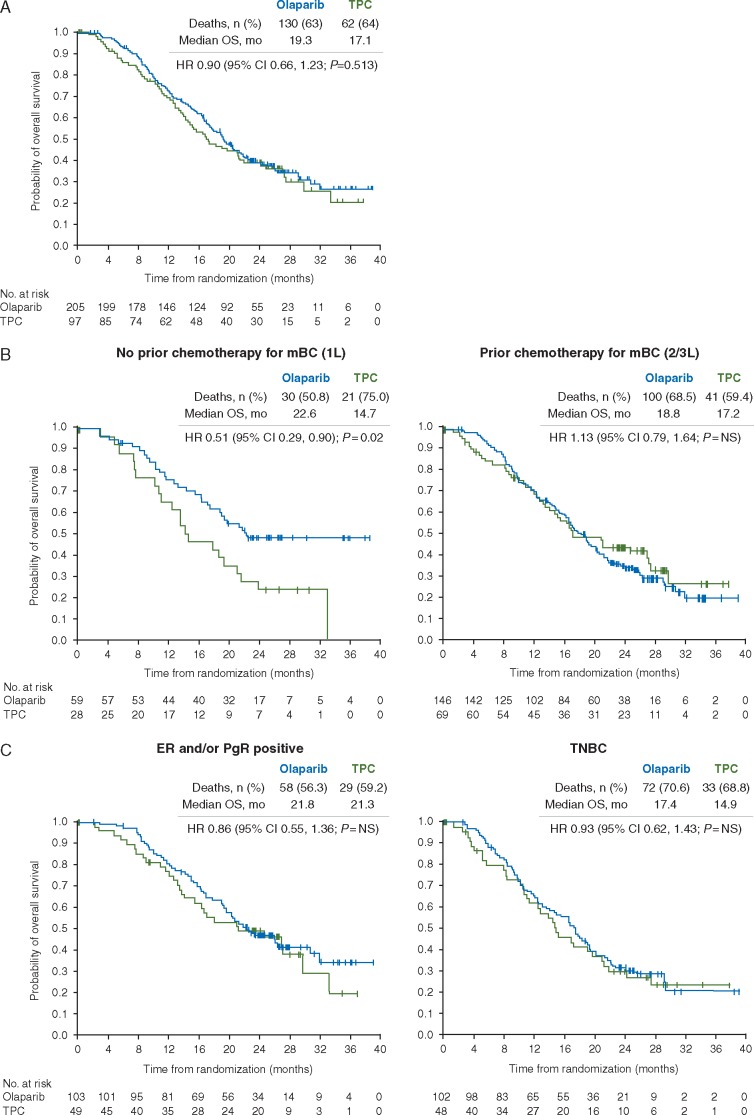
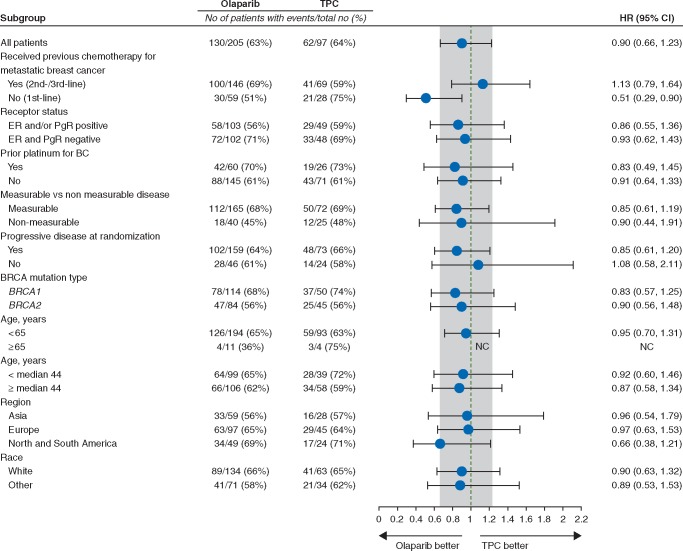
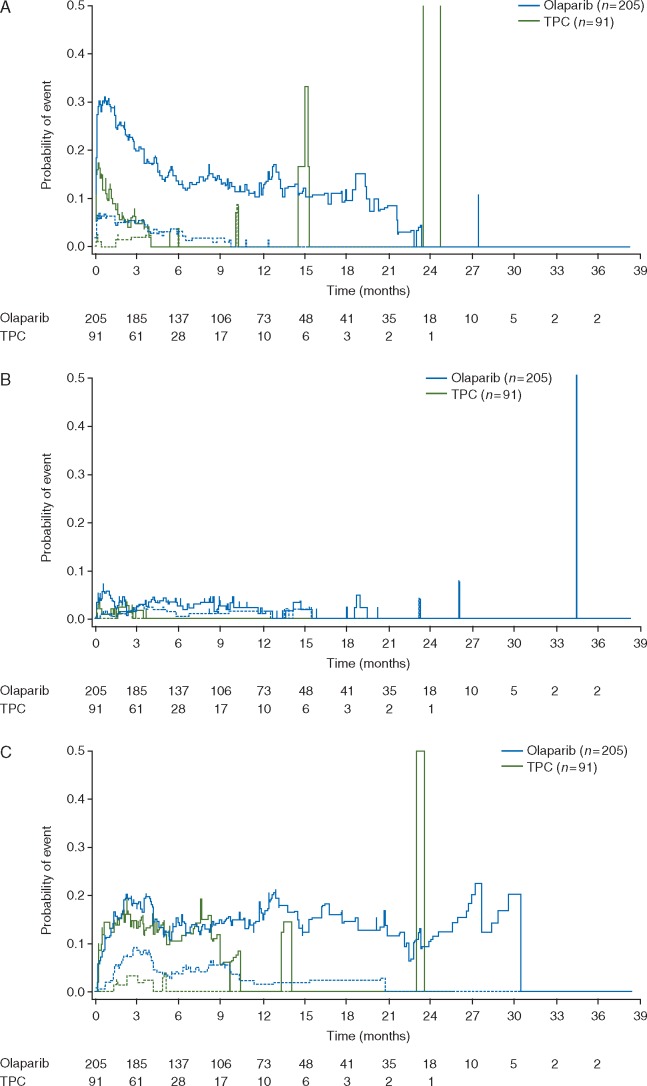
BACKGROUND: In the OlympiAD study, olaparib was shown to improve progression-free survival compared with chemotherapy treatment of physician's choice (TPC) in patients with a germline BRCA1 and/or BRCA2 mutation (BRCAm) and human epidermal growth factor receptor 2 (HER2)-negative metastatic breast cancer (mBC). We now report the planned final overall survival (OS) results, and describe the most common adverse events (AEs) to better understand olaparib tolerability in this population. PATIENTS AND METHODS: OlympiAD, a Phase III, randomized, controlled, open-label study (NCT02000622), enrolled patients with a germline BRCAm and HER2-negative mBC who had received ≤2 lines of chemotherapy for mBC. Patients were randomized to olaparib tablets (300 mg bid) or predeclared TPC (capecitabine, vinorelbine, or eribulin). OS and safety were secondary end points. RESULTS: A total of 205 patients were randomized to olaparib and 97 to TPC. At 64% data maturity, median OS was 19.3 months with olaparib versus 17.1 months with TPC (HR 0.90, 95% CI 0.66-1.23; P = 0.513); median follow-up was 25.3 and 26.3 months, respectively. HR for OS with olaparib versus TPC in prespecified subgroups were: prior chemotherapy for mBC [no (first-line setting): 0.51, 95% CI 0.29-0.90; yes (second/third-line): 1.13, 0.79-1.64]; receptor status (triple negative: 0.93, 0.62-1.43; hormone receptor positive: 0.86, 0.55-1.36); prior platinum (yes: 0.83, 0.49-1.45; no: 0.91, 0.64-1.33). Adverse events during olaparib treatment were generally low grade and manageable by supportive treatment or dose modification. There was a low rate of treatment discontinuation (4.9%), and the risk of developing anemia did not increase with extended olaparib exposure. CONCLUSIONS: While there was no statistically significant improvement in OS with olaparib compared to TPC, there was the possibility of meaningful OS benefit among patients who had not received chemotherapy for metastatic disease. Olaparib was generally well-tolerated, with no evidence of cumulative toxicity during extended exposure. Please see the article online for additional video content.
Overview
The claims and statistics of this paper haven’t been checked yet.
Free: it reads the open-access text and checks the first 5 claims that cite a source we can check. Create a free account to check every claim.
Integrity signals
Registry
Cites
Statistics
Figures
Verification
Claims the paper makes
The claims and statistics of this paper haven’t been checked yet.
Free: it reads the open-access text and checks the first 5 claims that cite a source we can check. Create a free account to check every claim.
Claims other papers make about this one
Each is checked against this paper’s own text: does it say what the citing paper says it does?
The source backs part of the claim, not all of it — or backs it for a different population, condition or comparison.
In the citing paper
“Since ABC 4, further data from the OlympiAD study suggested an OS benefit for olaparib when given in the first-line setting, with a median OS of 22.6 versus 14.7 months (HR 0.51; 95% CI 0.29-0.90, P = 0.02) in a subgroup analysis of predefined stratification subgroups,75”
From 5th ESO-ESMO international consensus guidelines for advanced breast cancer (ABC 5) (2020) · cites this paper as [75]
Experimental — accuracy not yet measured
Self-check
Percentages, sums and reported differences re-computed from the paper’s own numbers.
The self-check needs the paper’s full text.
Citations
Cites
Olaparib for Metastatic Breast Cancer in Patients with a Germline BRCA Mutation
Robson, M., Im, S.-A., Senkus, E., Xu, B., Domchek, S. M., Masuda, N., Delaloge, S., Li, W., Tung, N., Armstrong, A., et al. (2017) · New England Journal of Medicine · doi:10.1056/nejmoa1706450 · Cited by 3,294 · cited 4×
“The efficacy of the oral poly(ADP ribose) polymerase (PARP) inhibitor olaparib in patients with a germline BRCAm and HER2negative metastatic breast cancer (mBC) was confirmed in the Phase III OlympiAD study, with a statistically significant benefit in progression-free survival compared with chemotherapy treatment of p…”
BackgroundMethodResultSelf-citationTalazoparib in Patients with Advanced Breast Cancer and a Germline BRCA Mutation
Litton, J. K., Rugo, H. S., Ettl, J., Hurvitz, S. A., Gonçalves, A., Lee, K.-H., Fehrenbacher, L., Yerushalmi, R., Mina, L. A., Martin, M., et al. (2018) · New England Journal of Medicine · doi:10.1056/nejmoa1802905 · Cited by 2,175
Olaparib Monotherapy in Patients With Advanced Cancer and a Germline BRCA1/2 Mutation
Kaufman, B., Shapira-Frommer, R., Schmutzler, R. K., Audeh, M. W., Friedlander, M., Balmaña, J., Mitchell, G., Fried, G., Stemmer, S. M., Hubert, A., et al. (2015) · Journal of Clinical Oncology · doi:10.1200/jco.2014.56.2728 · Cited by 1,671
Self-citationCouch, F. J., Hart, S. N., Sharma, P., Toland, A. E., Wang, X., Miron, P., Olson, J. E., Godwin, A. K., Pankratz, V. S., Olswold, C., et al. (2015) · Journal of Clinical Oncology · doi:10.1200/jco.2014.57.1414 · Cited by 672 · cited 1×
“Germline BRCAm breast cancers tend to affect younger patients, those with a strong family history of breast cancer and Ashkenazi Jewish ancestry [1, 3].”
BackgroundMalone, K. E., Daling, J. R., Doody, D. R., Hsu, L., Bernstein, L., Coates, R. J., Marchbanks, P. A., Simon, M. S., McDonald, J. A., Norman, S. A., et al. (2006) · Cancer Research · doi:10.1158/0008-5472.can-06-0503 · Cited by 373 · cited 2×
“Germline BRCAm breast cancers tend to affect younger patients, those with a strong family history of breast cancer and Ashkenazi Jewish ancestry [1, 3].”
BackgroundKurian, A. W., Gong, G. D., John, E. M., Miron, A., Felberg, A., Phipps, A. I., West, D. W., & Whittemore, A. S. (2009) · Cancer Epidemiology, Biomarkers & Prevention · doi:10.1158/1055-9965.epi-08-1090 · Cited by 75 · cited 1×
“Approximately 5% of all breast cancer patients carry a germline deleterious mutation in BRCA1 and/or BRCA2 (BRCAm), with higher rates among those with human epidermal growth factor receptor 2 (HER2)-negative disease [1, 2].”
BackgroundKümmel, S., Jackisch, C., Müller, V., Schneeweiß, A., Klawitter, S., & Lux, M. P. (2017) · Annals of Oncology · doi:10.1093/annonc/mdx365.030 · Cited by 4
Kümmel, S., Jackisch, C., Müller, V., Schneeweiß, A., Klawitter, S., & Lux, M. P. (2018) · Cancer Management and Research · doi:10.2147/cmar.s177240 · Cited by 3
Cited by
Loibl, S., Poortmans, P., Morrow, M., Denkert, C., & Curigliano, G. (2021) · The Lancet · doi:10.1016/s0140-6736(20)32381-3 · Cited by 1,648
Adjuvant Olaparib for Patients with BRCA1 - or BRCA2 -Mutated Breast Cancer
Tutt, A. N. J., Garber, J. E., Kaufman, B., Viale, G., Fumagalli, D., Rastogi, P., Gelber, R. D., de Azambuja, E., Fielding, A., Balmaña, J., et al. (2021) · New England Journal of Medicine · doi:10.1056/nejmoa2105215 · Cited by 1,729
Self-citationBreast Cancer, Version 3.2020, NCCN Clinical Practice Guidelines in Oncology
Gradishar, W. J., Anderson, B. O., Abraham, J., Aft, R., Agnese, D., Allison, K. H., Blair, S. L., Burstein, H. J., Dang, C., Elias, A. D., et al. (2020) · Journal of the National Comprehensive Cancer Network · doi:10.6004/jnccn.2020.0016 · Cited by 1,584
Gennari, A., André, F., Barrios, C. H., Cortés, J., de Azambuja, E., DeMichele, A., Dent, R., Fenlon, D., Gligorov, J., Hurvitz, S. A., et al. (2021) · Annals of Oncology · doi:10.1016/j.annonc.2021.09.019 · Cited by 1,417
“suggested improved OS in patients receiving olaparib who had not received prior ChT for metastatic disease.(81) Notably, over 40% of the control arm in each study received a platinum or PARP inhibitor after progression on study treatment.”
BackgroundSelf-citationTreatment landscape of triple-negative breast cancer — expanded options, evolving needs
Bianchini, G., De Angelis, C., Licata, L., & Gianni, L. (2022) · Nature Reviews Clinical Oncology · doi:10.1038/s41571-021-00565-2 · Cited by 1,382
5th ESO-ESMO international consensus guidelines for advanced breast cancer (ABC 5)
Cardoso, F., Paluch-Shimon, S., Senkus, E., Curigliano, G., Aapro, M. S., André, F., Barrios, C. H., Bergh, J., Bhattacharyya, G. S., Biganzoli, L., et al. (2020) · Annals of Oncology · doi:10.1016/j.annonc.2020.09.010 · Cited by 1,369
Self-citationTriple negative breast cancer: Pitfalls and progress
Zagami, P., & Carey, L. A. (2022) · npj Breast Cancer · doi:10.1038/s41523-022-00468-0 · Cited by 839
PARP Inhibitors: Clinical Relevance, Mechanisms of Action and Tumor Resistance
Rose, M., Burgess, J. T., O’Byrne, K., Richard, D. J., & Bolderson, E. (2020) · Frontiers in Cell and Developmental Biology · doi:10.3389/fcell.2020.564601 · Cited by 719
Advances in systemic therapies for triple negative breast cancer
Leon-Ferre, R. A., & Goetz, M. P. (2023) · BMJ · doi:10.1136/bmj-2022-071674 · Cited by 507
PARP inhibitor resistance: the underlying mechanisms and clinical implications
Li, H., Liu, Z.-Y., Wu, N., Chen, Y.-C., Cheng, Q., & Wang, J. (2020) · Molecular Cancer · doi:10.1186/s12943-020-01227-0 · Cited by 539
Triple‑negative breast cancer therapy: Current and future perspectives (Review)
Won, K., & Spruck, C. (2020) · International Journal of Oncology · doi:10.3892/ijo.2020.5135 · Cited by 527
“There was no statistically significant improvement in OS with olaparib compared to the control group (19.3 vs. 17.1 months), but there was potential OS benefit among patients with no prior chemotherapy for metastatic breast cancer (HR 0.51, 95% CI 0.29-0.90) (22).”
InfluentialDomchek, S. M., Postel-Vinay, S., Im, S.-A., Park, Y. H., Delord, J.-P., Italiano, A., Alexandre, J., You, B., Bastian, S., Krebs, M. G., et al. (2020) · The Lancet Oncology · doi:10.1016/s1470-2045(20)30324-7 · Cited by 484
Self-citationEmens, L. A., Adams, S., Barrios, C. H., Diéras, V., Iwata, H., Loi, S., Rugo, H. S., Schneeweiss, A., Winer, E. P., Patel, S., et al. (2021) · Annals of Oncology · doi:10.1016/j.annonc.2021.05.355 · Cited by 475
NCCN Guidelines® Insights: Breast Cancer, Version 4.2023: Featured Updates to the NCCN Guidelines
Gradishar, W. J., Moran, M. S., Abraham, J., Abramson, V., Aft, R., Agnese, D., Allison, K. H., Anderson, B., Burstein, H. J., Chew, H., et al. (2023) · Journal of the National Comprehensive Cancer Network · doi:10.6004/jnccn.2023.0031 · Cited by 453
Breast cancer: an up‐to‐date review and future perspectives
Hong, R., & Xu, B. (2022) · Cancer Communications · doi:10.1002/cac2.12358 · Cited by 407
Self-citationThe Landscape of Targeted Therapies in TNBC
Vagia, E., Mahalingam, D., & Cristofanilli, M. (2020) · Cancers · doi:10.3390/cancers12040916 · Cited by 450
“This fact classifies it among the most potent and cytotoxic PARPi [69].”
BackgroundLitton, J. K., Hurvitz, S. A., Mina, L. A., Rugo, H. S., Lee, K.-H., Gonçalves, A., Diab, S., Woodward, N., Goodwin, A., Yerushalmi, R., et al. (2020) · Annals of Oncology · doi:10.1016/j.annonc.2020.08.2098 · Cited by 412
An Overview of PARP Inhibitors for the Treatment of Breast Cancer
Cortesi, L., Rugo, H. S., & Jackisch, C. (2021) · Targeted Oncology · doi:10.1007/s11523-021-00796-4 · Cited by 393
“These findings indicate that, although patients should be carefully monitored, toxicities can be effectively managed by supportive treatment, dose interruptions, and dose reductions, enabling patients to gain benefit by remaining on treatment with olaparib [32].”
BackgroundResultInfluentialRecent advances in targeted strategies for triple-negative breast cancer
Zhu, S., Wu, Y., Song, B., Yi, M., Yan, Y., Mei, Q., & Wu, K. (2023) · Journal of Hematology & Oncology · doi:10.1186/s13045-023-01497-3 · Cited by 331
“In patients with TNBC, although the olaparib group prolonged OS, the difference was not statistically significant [33].”
BackgroundBurstein, H. J., Somerfield, M. R., Barton, D. L., Dorris, A., Fallowfield, L. J., Jain, D., Johnston, S. R. D., Korde, L. A., Litton, J. K., Macrae, E. R., et al. (2021) · Journal of Clinical Oncology · doi:10.1200/jco.21.01392 · Cited by 317
Gupta, G. K., Collier, A. L., Lee, D., Hoefer, R. A., Zheleva, V., Siewertsz van Reesema, L. L., Tang-Tan, A. M., Guye, M. L., Chang, D. Z., Winston, J. S., et al. (2020) · Cancers · doi:10.3390/cancers12092392 · Cited by 331
Diéras, V., Han, H. S., Kaufman, B., Wildiers, H., Friedlander, M., Ayoub, J.-P., Puhalla, S. L., Bondarenko, I., Campone, M., Jakobsen, E. H., et al. (2020) · The Lancet Oncology · doi:10.1016/s1470-2045(20)30447-2 · Cited by 311
Emens, L. A., Molinero, L., Loi, S., Rugo, H. S., Schneeweiss, A., Diéras, V., Iwata, H., Barrios, C. H., Nechaeva, M., Nguyen-Duc, A., et al. (2021) · JNCI: Journal of the National Cancer Institute · doi:10.1093/jnci/djab004 · Cited by 304
“Exploratory analyses of the OlympiAD trial in a small number of patients suggest a possible OS benefit if olaparib is used for first-line treatment of germline BRCA mTNBC (32).”
Mehta, A. K., Cheney, E. M., Hartl, C. A., Pantelidou, C., Oliwa, M., Castrillon, J. A., Lin, J.-R., Hurst, K. E., de Oliveira Taveira, M., Johnson, N. T., et al. (2020) · Nature Cancer · doi:10.1038/s43018-020-00148-7 · Cited by 275
Self-citationCardoso, F., Paluch-Shimon, S., Schumacher-Wulf, E., Matos, L., Gelmon, K., Aapro, M. S., Bajpai, J., Barrios, C. H., Bergh, J., Bergsten-Nordström, E., et al. (2024) · The Breast · doi:10.1016/j.breast.2024.103756 · Cited by 237
Self-citationWang, Q., Bergholz, J. S., Ding, L., Lin, Z., Kabraji, S. K., Hughes, M. E., He, X., Xie, S., Jiang, T., Wang, W., et al. (2022) · Nature Communications · doi:10.1038/s41467-022-30568-1 · Cited by 258
Xiong, N., Wu, H., & Yu, Z. (2024) · Frontiers in Oncology · doi:10.3389/fonc.2024.1405491 · Cited by 224
So, J. Y., Ohm, J., Lipkowitz, S., & Yang, L. (2022) · Pharmacology & Therapeutics · doi:10.1016/j.pharmthera.2022.108253 · Cited by 256
Lee, K.-L., Kuo, Y.-C., Ho, Y.-S., & Huang, Y.-H. (2019) · Cancers · doi:10.3390/cancers11091334 · Cited by 260
Treatment strategies for breast cancer brain metastases
Bailleux, C., Eberst, L., & Bachelot, T. (2021) · British Journal of Cancer · doi:10.1038/s41416-020-01175-y · Cited by 233
Olaparib monotherapy as primary treatment in unselected triple negative breast cancer
Eikesdal, H. P., Yndestad, S., Elzawahry, A., Llop-Guevara, A., Gilje, B., Blix, E. S., Espelid, H., Lundgren, S., Geisler, J., Vagstad, G., et al. (2021) · Annals of Oncology · doi:10.1016/j.annonc.2020.11.009 · Cited by 219
Huppert, L. A., Gumusay, O., Idossa, D., & Rugo, H. S. (2023) · CA: A Cancer Journal for Clinicians · doi:10.3322/caac.21777 · Cited by 164
“513).(149) In an exploratory subgroup analysis, olaparib showed a greater OS benefit than TPC in the first‐line setting for metastatic disease (22.”
BackgroundEndocrine Resistance in Hormone Receptor Positive Breast Cancer–From Mechanism to Therapy
Rani, A., Stebbing, J., Giamas, G., & Murphy, J. (2019) · Frontiers in Endocrinology · doi:10.3389/fendo.2019.00245 · Cited by 219
“The PARP inhibitor olaparib has shown promise as a drug of choice in germline BRCA-mutated, ER+/HER-2 negative MBC patients who have been treated with a prior endocrine therapy or been considered inappropriate for endocrine treatment (285).”
BackgroundGermline Testing in Patients With Breast Cancer: ASCO–Society of Surgical Oncology Guideline
Bedrosian, I., Somerfield, M. R., Achatz, M. I., Boughey, J. C., Curigliano, G., Friedman, S., Kohlmann, W. K., Kurian, A. W., Laronga, C., Lynce, F., et al. (2024) · Journal of Clinical Oncology · doi:10.1200/jco.23.02225 · Cited by 216
Self-citationPARP Inhibition in Cancer: An Update on Clinical Development
Sachdev, E., Tabatabai, R., Roy, V., Rimel, B. J., & Mita, M. M. (2019) · Targeted Oncology · doi:10.1007/s11523-019-00680-2 · Cited by 179
Triple-negative breast cancer: current perspective on the evolving therapeutic landscape
Mehanna, J., Haddad, F. G., Eid, R., Lambertini, M., & Kourie, H. R. (2019) · International Journal of Women's Health · doi:10.2147/ijwh.s178349 · Cited by 172
Biomarkers for Systemic Therapy in Metastatic Breast Cancer: ASCO Guideline Update
Henry, N. L., Somerfield, M. R., Dayao, Z. R., ELIAS, A. D., Kalinsky, K. M., McShane, L. M., Moy, B., Park, B. H., Shanahan, K. M., Sharma, P., et al. (2022) · Journal of Clinical Oncology · doi:10.1200/jco.22.01063 · Cited by 174
Wang, J., Li, B., Luo, M., Huang, J., Zhang, K., Zheng, S., Zhang, S., & Zhou, J. (2024) · Signal Transduction and Targeted Therapy · doi:10.1038/s41392-024-01779-3 · Cited by 191
Shu, Y., He, X., Liu, Y., Wu, P., & Zhang, Q. (2022) · Clinical Epidemiology · doi:10.2147/clep.s365513 · Cited by 160
Targeted therapy for breast cancer: An overview of drug classes and outcomes
Jacobs, A. T., Castaneda-Cruz, D. M., Rose, M. M., & Connelly, L. (2022) · Biochemical Pharmacology · doi:10.1016/j.bcp.2022.115209 · Cited by 173
Li, C. H., Karantza, V., Aktan, G., & Lala, M. (2019) · Breast Cancer Research · doi:10.1186/s13058-019-1210-4 · Cited by 168
PARP inhibition in breast cancer: progress made and future hopes
Tung, N., & Garber, J. E. (2022) · npj Breast Cancer · doi:10.1038/s41523-022-00411-3 · Cited by 164
Self-citationFasching, P. A., Link, T., Hauke, J., Seither, F., Jackisch, C., Klare, P., Schmatloch, S., Hanusch, C., Huober, J., Stefek, A., et al. (2021) · Annals of Oncology · doi:10.1016/j.annonc.2020.10.471 · Cited by 146
Molecular tumour boards — current and future considerations for precision oncology
Tsimberidou, A. M., Kahle, M., Vo, H. H., Baysal, M. A., Johnson, A., & Meric-Bernstam, F. (2023) · Nature Reviews Clinical Oncology · doi:10.1038/s41571-023-00824-4 · Cited by 144
BRCA1 and Breast Cancer: Molecular Mechanisms and Therapeutic Strategies
Fu, X., Tan, W., Song, Q., Pei, H., & Li, J. (2022) · Frontiers in Cell and Developmental Biology · doi:10.3389/fcell.2022.813457 · Cited by 152
“Olaparib and talazoparib, as PARP inhibitors, could bring improvement in progression-free survival (PFS) and tumor response rates, and likely improve overall survival for metastatic germline BRCA1-mutated, HER2-negative BC patients based on the primary results from two phase III randomized controlled trials (OlympiAD…”
BackgroundNgoi, N. Y. L., & Tan, D. S. P. (2021) · ESMO Open · doi:10.1016/j.esmoop.2021.100144 · Cited by 139
Robson, M. E., Im, S., Senkus, E., Xu, B., Domchek, S. M., Masuda, N., Delaloge, S., Tung, N., Armstrong, A. C., Dymond, M., et al. (2023) · European Journal of Cancer · doi:10.1016/j.ejca.2023.01.031 · Cited by 136
Self-citationManjunath, M., & Choudhary, B. (2021) · Oncology Letters · doi:10.3892/ol.2021.12773 · Cited by 129
“Olaparib showed less toxicity in tumor‐ grade3 and 4 patients than the chemotherapy arm (98,99).”
BackgroundGupta, N., Huang, T., Horibata, S., & Lee, J. (2022) · Pharmacological Research · doi:10.1016/j.phrs.2022.106162 · Cited by 134
Rugo, H. S., Tolaney, S. M., Loirat, D., Punie, K., Bardia, A., Hurvitz, S. A., O’Shaughnessy, J., Cortés, J., Diéras, V., Carey, L. A., et al. (2022) · npj Breast Cancer · doi:10.1038/s41523-022-00467-1 · Cited by 114
“Leukopenia(4) 33 (16) 19 (9) 2 (1) 8 (16) 4 (8) 1 (2) 18 (10) 8 (5) 2 (1) 7 (15) 2 (4) 0”
Ragupathi, A., Singh, M., Perez, A. M., & Zhang, D. (2023) · Frontiers in Cell and Developmental Biology · doi:10.3389/fcell.2023.1133472 · Cited by 133
Singh, D. D., & Yadav, D. K. (2021) · Biomedicines · doi:10.3390/biomedicines9080876 · Cited by 124
Zhu, X., Chen, L., Huang, B., Li, X., Yang, L., Hu, X., Jiang, Y., Shao, Z., & Wang, Z. (2021) · Journal of Experimental & Clinical Cancer Research · doi:10.1186/s13046-021-01930-w · Cited by 96
Breast cancer liver metastasis: current and future treatment approaches
Rashid, N. S., Grible, J. M., Clevenger, C. V., & Harrell, J. C. (2021) · Clinical & Experimental Metastasis · doi:10.1007/s10585-021-10080-4 · Cited by 117
Barchiesi, G., Roberto, M., Verrico, M., Vici, P., Tomao, F., & Tomao, F. (2021) · Frontiers in Oncology · doi:10.3389/fonc.2021.769280 · Cited by 120
Spring, L. M., Nakajima, E., Hutchinson, J. A., Viscosi, E., Blouin, G. C., Weekes, C. D., Rugo, H. S., Moy, B., & Bardia, A. (2021) · The Oncologist · doi:10.1002/onco.13878 · Cited by 117
“NCT04468061 II Sacituzumab Govitecan With or Without Pembrolizumab in PD-L1-negative mTNBC NCT04039230 I/II Sacituzumab Govitecan in combination with Talazoparib for mTNBC NCT03424005 Ib/II Evaluating The Efficacy And Safety Of Multiple ImmunotherapyBased Treatment Combinations In Patients With Metastatic TripleNegati…”
BackgroundGerosa, R., Sanctis, R. D., Jacobs, F., Benvenuti, C., Gaudio, M., Saltalamacchia, G., Torrisi, R., Masci, G., Miggiano, C., Agustoni, F., et al. (2024) · Critical Reviews in Oncology/Hematology · doi:10.1016/j.critrevonc.2024.104324 · Cited by 111
“These advancements encompass the new revolutionary ADCs, already representing a new standard of care in both pretreated HR + and mTNBC (Bardia et al., 2021; Robson et al., 2019; Rugo et al., 2023; Bardia et al., 2023).”
PARP Inhibitors for Breast Cancer Treatment: A Review
Morganti, S., Marra, A., Angelis, C. D., Toss, A., Licata, L., Giugliano, F., Salimbeni, B. T., Giachetti, P. P. M. B., Espósito, A., Giordano, A., et al. (2024) · JAMA Oncology · doi:10.1001/jamaoncol.2023.7322 · Cited by 114
Targeting brain metastases in breast cancer
Corti, C., Antonarelli, G., Criscitiello, C., Lin, N., Carey, L., Cortés, J., Poortmans, P. M., & Curigliano, G. (2021) · Cancer Treatment Reviews · doi:10.1016/j.ctrv.2021.102324 · Cited by 105
Miglietta, F., Bottosso, M., Griguolo, G., Dieci, M. V., & Guarneri, V. (2022) · ESMO Open · doi:10.1016/j.esmoop.2022.100409 · Cited by 109
López-González, L., Cendra, A. S., Cendra, C. S., Cervantes, E. D. R., Espinosa, J. C., Pekarek, T., Fraile‐Μartinez, O., Montero, C. G., Rodriguez-Slocker, A. M., Jiménez-Álvarez, L., et al. (2024) · Medicina · doi:10.3390/medicina60010168 · Cited by 107
“The OlympiAD trial [124] compared the efficacy of olaparib with the physician’s choice of single-agent chemotherapy in patients with HER2-negative metastatic breast cancer and germline mutations in BRCA1 or BRCA2 (gBRCAm).”
BackgroundMethodEarly versus deferred use of CDK4/6 inhibitors in advanced breast cancer
Sonke, G. S., van Ommen‐Nijhof, A., Wortelboer, N., van der Noort, V., Swinkels, A. C. P., Blommestein, H. M., Páez, C. G., Mol, L., Beeker, A., Beelen, K. J., et al. (2024) · Nature · doi:10.1038/s41586-024-08035-2 · Cited by 105
Platinum-based systematic therapy in triple-negative breast cancer
Zhu, Y., Hu, Y., Tang, C., Guan, X., & Zhang, W. (2022) · Biochimica et Biophysica Acta (BBA) - Reviews on Cancer · doi:10.1016/j.bbcan.2022.188678 · Cited by 104
Corti, C., Venetis, K., Sajjadi, E., Zattoni, L., Curigliano, G., & Fusco, N. (2022) · Expert Opinion on Investigational Drugs · doi:10.1080/13543784.2022.2054326 · Cited by 96
Precision therapeutics and emerging strategies for HR-positive metastatic breast cancer
Lloyd, M. R., Jhaveri, K. L., Kalinsky, K. M., Bardia, A., & Wander, S. A. (2024) · Nature Reviews Clinical Oncology · doi:10.1038/s41571-024-00935-6 · Cited by 97
“However, OS data from each trial failed to demonstrate a significant improvement with either of these agents 108,109 .”
BRCA-mutated breast cancer: the unmet need, challenges and therapeutic benefits of genetic testing
Arun, B., Couch, F. J., Abraham, J., Tung, N., & Fasching, P. A. (2024) · British Journal of Cancer · doi:10.1038/s41416-024-02827-z · Cited by 94
Self-citationCheng, T., Wang, X., Han, Y. Y., Hao, J., Hu, H., & Hao, L. (2023) · BMC Nephrology · doi:10.1186/s12882-023-03110-8 · Cited by 97
“We compared the Kaplan–Meier likelihood of renal composite endpoint-free survival among ALB groups using a log-rank test [27].”
MethodRobson, M. E., Ruddy, K. J., Im, S., Senkus, E., Xu, B., Domchek, S. M., Masuda, N., Li, W., Tung, N., Armstrong, A. C., et al. (2019) · European Journal of Cancer · doi:10.1016/j.ejca.2019.06.023 · Cited by 93
“Previously reported safety data from the OlympiAD trial showed that more patients experienced nausea/vomiting with olaparib versus TPC, but no grade 3 events were reported and discontinuation rates were low [5,13].”
BackgroundSelf-citationRole of PARP in TNBC: Mechanism of Inhibition, Clinical Applications, and Resistance
Singh, D. D., Parveen, A., & Yadav, D. K. (2021) · Biomedicines · doi:10.3390/biomedicines9111512 · Cited by 94
Fan, L., Wang, Z., Ma, L., Wu, S., Wu, J., Yu, K., Sui, X.-Y., Xu, Y., Liu, X., Chen, L., et al. (2024) · The Lancet Oncology · doi:10.1016/s1470-2045(23)00579-x · Cited by 88
Advances in Targeted Therapies for Triple-Negative Breast Cancer
McCann, K. E., Hurvitz, S. A., & McAndrew, N. P. (2019) · Drugs · doi:10.1007/s40265-019-01155-4 · Cited by 90
Two may be better than one: PD-1/PD-L1 blockade combination approaches in metastatic breast cancer
Page, D. B., Bear, H., Prabhakaran, S., Gatti-Mays, M. E., Thomas, A., Cobain, E., McArthur, H., Balko, J. M., Gameiro, S. R., Nanda, R., et al. (2019) · npj Breast Cancer · doi:10.1038/s41523-019-0130-x · Cited by 84
A review of current progress in triple-negative breast cancer therapy
Shen, M., Pan, H., Chen, Y., Xu, Y. H., Yang, W., & Wu, Z. (2020) · Open Medicine · doi:10.1515/med-2020-0138 · Cited by 89
Luo, L., & Keyomarsi, K. (2022) · Expert Opinion on Investigational Drugs · doi:10.1080/13543784.2022.2067527 · Cited by 86
Breast cancer brain metastasis: Current evidence and future directions
Sun, H., Xu, J., Dai, S., Ma, Y., & Sun, T. (2022) · Cancer Medicine · doi:10.1002/cam4.5021 · Cited by 84
Targeting the Hypoxic and Acidic Tumor Microenvironment with pH-Sensitive Peptides
Dharmaratne, N. U., Kaplan, A. R., & Glazer, P. M. (2021) · Cells · doi:10.3390/cells10030541 · Cited by 78
BRCA mutated pancreatic cancer: A change is coming
Rosen, M. N., Goodwin, R. A., & Vickers, M. M. (2021) · World Journal of Gastroenterology · doi:10.3748/wjg.v27.i17.1943 · Cited by 88
U.S. FDA Drug Approvals for Breast Cancer: A Decade in Review
Arora, S., Narayan, P., Osgood, C. L., Wedam, S. B., Prowell, T. M., Gao, J. J., Shah, M., Krol, D., Wahby, S., Royce, M., et al. (2021) · Clinical Cancer Research · doi:10.1158/1078-0432.ccr-21-2600 · Cited by 82
Rethinking breast cancer follow-up based on individual risk and recurrence management
Rose, F. D., Meduri, B., Santis, M. C. D., Ferro, A., Marino, L., Colciago, R. R., Gregucci, F., Vanoni, V., Apolone, G., Cosimo, S. D., et al. (2022) · Cancer Treatment Reviews · doi:10.1016/j.ctrv.2022.102434 · Cited by 73
Self-citationNew Perspectives for Resistance to PARP Inhibitors in Triple-Negative Breast Cancer
Han, Y., Yu, X., Li, S., Tian, Y. E., & Liu, C. (2020) · Frontiers in Oncology · doi:10.3389/fonc.2020.578095 · Cited by 77
Li, T., Tao, Z., Zhu, Y., Liu, X., Wang, L., Du, Y., Cao, J., Wang, B., Zhang, J., & Hu, X. (2021) · Cell Death and Disease · doi:10.1038/s41419-021-03963-7 · Cited by 73
“Recent efforts have led to the development of new therapies that have increased patient survival, such as PARP inhibitors [2] and immunotherapy [3], whereas traditional chemotherapy remains the primary systematic treatment for metastatic TNBC.”
BackgroundDri, A., Arpino, G., Bianchini, G., Curigliano, G., Danesi, R., Laurentiis, M. D., Mastro, L. D., Fabi, A., Generali, D., Gennari, A., et al. (2023) · Cancer Treatment Reviews · doi:10.1016/j.ctrv.2023.102672 · Cited by 78
PARP mediated DNA damage response, genomic stability and immune responses
Zong, C., Zhu, T., He, J., Huang, R., Jia, R., & Shen, J. (2022) · International Journal of Cancer · doi:10.1002/ijc.33918 · Cited by 74
Mavratzas, A., Seitz, J., Smetanay, K., Schneeweiß, A., Jäger, D., & Fremd, C. (2019) · Future Oncology · doi:10.2217/fon-2019-0468 · Cited by 69
Circulating tumor DNA validity and potential uses in metastatic breast cancer
Amato, O., Giannopoulou, N., & Ignatiadis, M. (2024) · npj Breast Cancer · doi:10.1038/s41523-024-00626-6 · Cited by 69
Poly (ADP-ribose) polymerase inhibitors in solid tumours: Systematic review and meta-analysis
Schettini, F., Giudici, F., Bernocchi, O., Sirico, M., Corona, S. P., Giuliano, M., Locci, M., Paris, I., Scambia, G., Placido, S. D., et al. (2021) · European Journal of Cancer · doi:10.1016/j.ejca.2021.02.035 · Cited by 68
Rej, R. K., Roy, J., & Allu, S. R. (2024) · Cancers · doi:10.3390/cancers16030552 · Cited by 70
Li, P., Zhen, Y., Kim, C., Liu, Z., Hao, J., Deng, H., Deng, H., Zhou, M., Wang, X., Qin, T., et al. (2023) · Science Advances · doi:10.1126/sciadv.adg7752 · Cited by 66
BRCA1, BRCA2 , and Associated Cancer Risks and Management for Male Patients: A Review
Cheng, H. H., Shevach, J. W., Castro, E., Couch, F. J., Domchek, S. M., Eeles, R. A., Giri, V. N., Hall, M. J., King, M., Lin, D. W., et al. (2024) · JAMA Oncology · doi:10.1001/jamaoncol.2024.2185 · Cited by 70
Self-citationVeneris, J. T., Matulonis, U. A., Liu, J. F., & Konstantinopoulos, P. A. (2019) · Gynecologic Oncology · doi:10.1016/j.ygyno.2019.09.021 · Cited by 63
Everything Comes with a Price: The Toxicity Profile of DNA-Damage Response Targeting Agents
Martorana, F., da Silva, L. A., Sessa, C., & Colombo, I. (2022) · Cancers · doi:10.3390/cancers14040953 · Cited by 66
“OLIMPIAD [47] 30% 3% 12% 2% NR NR 17% 0% NR NR 20% 1% NR NR NR NR NR NR”
DNA damage response inhibitors: An avenue for TNBC treatment
Jin, J., Tao, Z., Cao, J., Li, T., & Hu, X. (2021) · Biochimica et Biophysica Acta (BBA) - Reviews on Cancer · doi:10.1016/j.bbcan.2021.188521 · Cited by 64
PARP Inhibitors in Breast and Ovarian Cancer
Wang, S. S. Y., Jie, Y. E., Cheng, S. W., Ling, G. L., & Heong, V. Y. M. (2023) · Cancers · doi:10.3390/cancers15082357 · Cited by 67
“7% discontinuation rate due to toxicity [15].”
Mangogna, A., Munari, G., Pepe, F., Maffii, E., Giampaolino, P., Ricci, G., Fassan, M., Malapelle, U., & Biffi, S. (2023) · Journal of Personalized Medicine · doi:10.3390/jpm13020284 · Cited by 62
Pasculli, B., Barbano, R., Fontana, A., Biagini, T., Viesti, M. P. D., Rendina, M., Valori, V. M., Morritti, M. G., Bravaccini, S., Ravaioli, S., et al. (2020) · Frontiers in Oncology · doi:10.3389/fonc.2020.01415 · Cited by 63
Wu, H., & Chu, P. (2021) · International Journal of Molecular Sciences · doi:10.3390/ijms22020636 · Cited by 64
Endometrial Carcinoma: Immune Microenvironment and Emerging Treatments in Immuno-Oncology
Rousset-Rouviere, S., Rochigneux, P., Chrétien, A.-S., Fattori, S., Gorvel, L., Provansal, M., Lambaudie, É., Olive, D., & Sabatier, R. (2021) · Biomedicines · doi:10.3390/biomedicines9060632 · Cited by 64
Schmid, P., Turner, N. C., Barrios, C. H., Isakoff, S. J., Kim, S., Sablin, M., Saji, S., Savas, P. S., Vidal, G. A., Oliveira, M., et al. (2023) · Clinical Cancer Research · doi:10.1158/1078-0432.ccr-23-2084 · Cited by 59
The paradox of cancer genes in non-malignant conditions: implications for precision medicine
Adashek, J. J., Kato, S., Lippman, S. M., & Kurzrock, R. (2020) · Genome Medicine · doi:10.1186/s13073-020-0714-y · Cited by 62
Colomer, R., González‐Farré, B., Ballesteros, A. I., Peg, V., Bermejo, B., Perez‐Mies, B., de la Cruz, S., Rojo, F., Pernas, S., & Palacios, J. (2024) · Clinical & Translational Oncology · doi:10.1007/s12094-024-03541-1 · Cited by 68
“There were no differences in OS, either at the interim or the final analysis [69].”
Metadata
- Authors
- Robson, M. E., Tung, N., Conte, P., Im, S.-A., Senkus, E., Xu, B., Masuda, N., Delaloge, S., Li, W., Armstrong, A., Wu, W., Goessl, C., Runswick, S., & Domchek, S. M.
- Affiliations
- Memorial Sloan Kettering Cancer Center (US)
- Beth Israel Deaconess Medical Center (US)
- University of Padua (IT)
- Seoul National University (KR)
- Gdańsk Medical University (PL)
- Chinese Academy of Medical Sciences & Peking Union Medical College (CN)
- Osaka National Hospital (JP)
- Institut Gustave Roussy (FR)
- First Hospital of Jilin University (CN)
- The Christie Hospital (GB)
- AstraZeneca (United States) (US)
- AstraZeneca (United Kingdom) (GB)
- University of Pennsylvania (US)
- Corresponding author
- Robson, M.E.
- Runswick, S.
- ORCID
- Venue
- Annals of Oncology
- Publisher
- Elsevier BV
- Published
- 2019-04
- Volume
- 30
- Issue
- 4
- Pages
- 558-566
- ISSN
- 0923-7534 (ISSN-L)
- PMC
- PMC6503629
- OpenAlex
- W2913584903
- Cited by
- 779
- References
- 9
- Citations by year
- 2026: 76 · 2025: 84 · 2024: 108 · 2023: 144 · 2022: 133 · 2021: 118 · 2020: 83 · 2019: 33
- FWCI
- 38.45
- Type
- journal article
- Language
- en
- Open access
- hybrid
- doi.org
- Licence
- cc-by-nc
- www.elsevier.com/tdm/userlicense/1.0/ (tdm)
- creativecommons.org/licenses/by-nc/4.0/ (vor, 326 d)
- Locations
- Annals of Oncology (publishedVersion, cc-by-nc)
- PubMed Central (publishedVersion, cc-by-nc)
- PubMed (publishedVersion)
- Seoul National University Open Repository (Seoul National University) (submittedVersion)
- Padua Research Archive (University of Padova) (submittedVersion)
- Funders
- AstraZeneca
- AstraZeneca and Merck & Co.
- Inc.
- NIH/NCI Cancer Center
- Breast Cancer Research Foundation
- Mudskipper Business Ltd
- Topics
- Health Sciences › Medicine › Oncology › PARP inhibition in cancer therapy
- Life Sciences › Biochemistry, Genetics and Molecular Biology › Genetics › BRCA gene mutations in cancer
- Health Sciences › Medicine › Oncology › Advanced Breast Cancer Therapies
- Keywords
- olaparib, HER2-negative metastatic breast cancer, germline BRCA1 mutation, germline BRCA2 mutation, PARP inhibitors, overall survival, tolerability, adverse events, capecitabine, vinorelbine, eribulin, platinum-based chemotherapy, triple-negative breast cancer, hormone receptor-positive breast cancer, Olympiad
- MeSH terms
- Poly(ADP-ribose) Polymerase Inhibitors, Progression-Free Survival, Administration, Oral, Adult, Aged, Anemia, Antineoplastic Combined Chemotherapy Protocols, Breast Neoplasms, Female, Follow-Up Studies, Humans, Middle Aged, Phthalazines, Piperazines, Tablets, Germ-Line Mutation, Receptor, ErbB-2, Erb-b2 Receptor Tyrosine Kinases, BRCA1 Protein
About these checks
Registry, retraction, Cites and statistics results are computed, not judged, with one exception: a printed reference that no index lists is read once by a model before it counts as a citation error. Claims are extracted by a model and kept only when their quote appears verbatim in the text; each cited source is then checked, with a model’s help, for whether it says what the claim relies on. Those verdicts can be wrong — read the claim’s quote and the cited source before relying on one.
Statistics and arithmetic are recomputed, not judged.
Confidence bands are shown only for fields calibrated on our annotated test set. None is calibrated yet, so no band is shown.
What counts as a claim ›How we measure confidence ›How we check this ›
Are you an author, or do you see a problem with this page? Request a review
Data sources
Bibliographic data: Semantic Scholar, OpenAlex, Crossref.
Contains information from the Semantic Scholar Academic Graph Datasets, made available under the ODC Attribution License (ODC-BY 1.0).
Semantic Scholar’s data is described in: Kinney, R., et al. (2023). The Semantic Scholar Open Data Platform. arXiv:2301.10140.
