

OlympiAD final overall survival and tolerability results: olaparib versus chemotherapy treatment of physician's choice in patients with a germline BRCA mutation and HER2-negative metastatic breast cancer
Open accessThe DOI matches its Crossref record; 8 of the 9 references it cites were found in a registry or an index.
Abstract
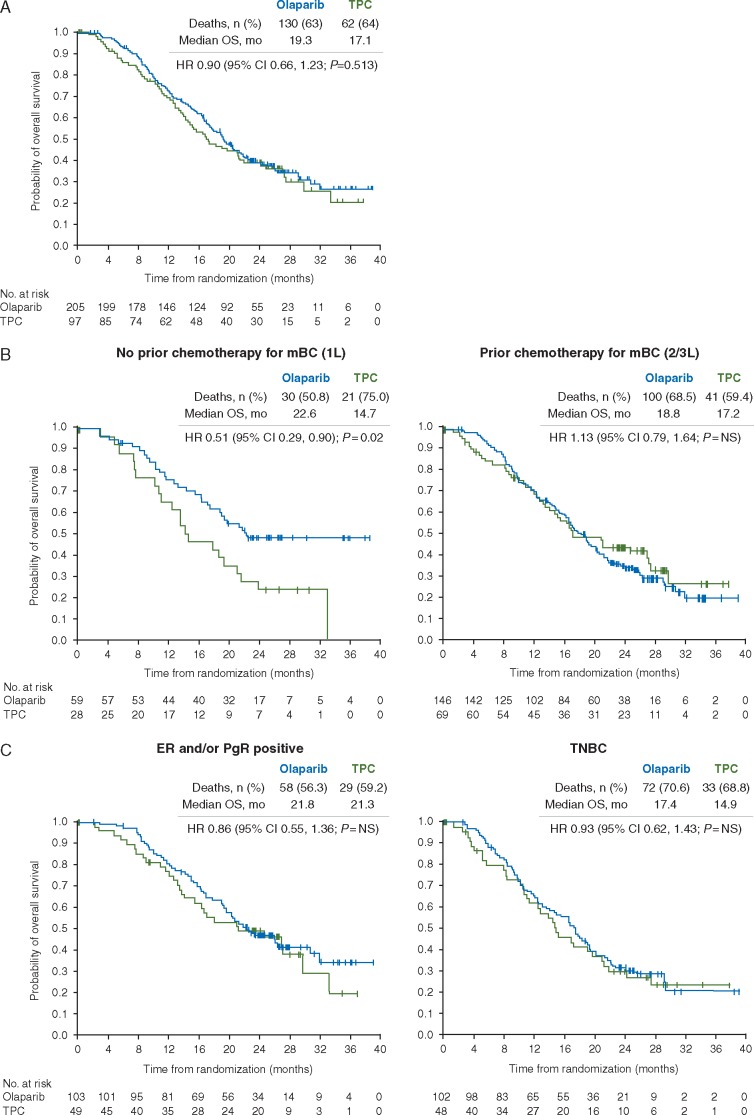
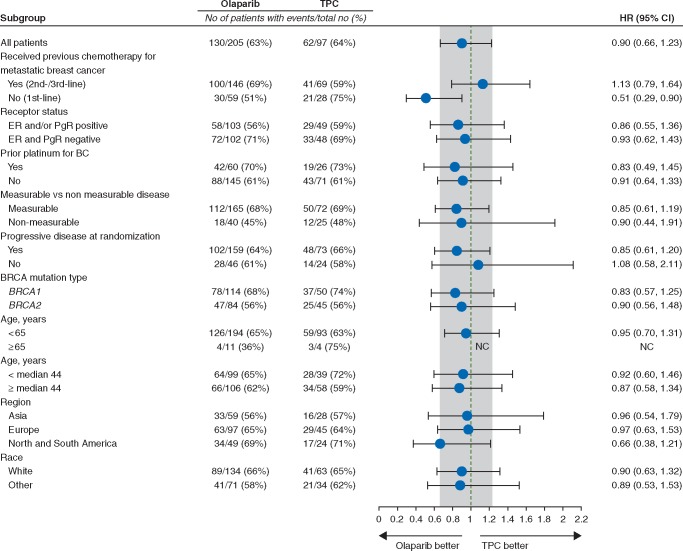
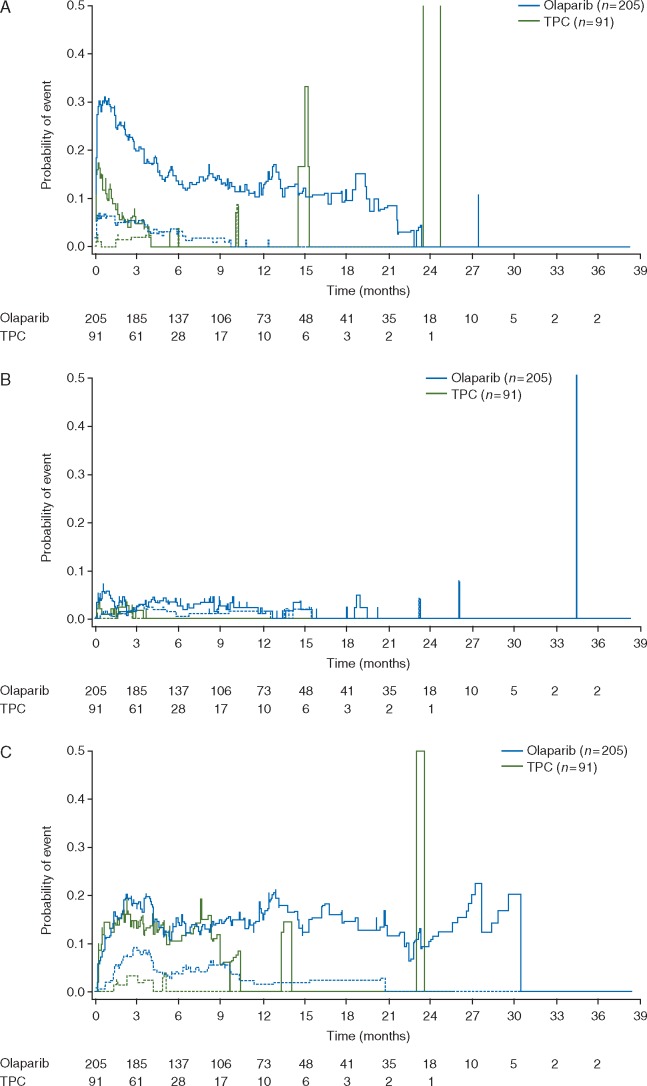
BACKGROUND: In the OlympiAD study, olaparib was shown to improve progression-free survival compared with chemotherapy treatment of physician's choice (TPC) in patients with a germline BRCA1 and/or BRCA2 mutation (BRCAm) and human epidermal growth factor receptor 2 (HER2)-negative metastatic breast cancer (mBC). We now report the planned final overall survival (OS) results, and describe the most common adverse events (AEs) to better understand olaparib tolerability in this population. PATIENTS AND METHODS: OlympiAD, a Phase III, randomized, controlled, open-label study (NCT02000622), enrolled patients with a germline BRCAm and HER2-negative mBC who had received ≤2 lines of chemotherapy for mBC. Patients were randomized to olaparib tablets (300 mg bid) or predeclared TPC (capecitabine, vinorelbine, or eribulin). OS and safety were secondary end points. RESULTS: A total of 205 patients were randomized to olaparib and 97 to TPC. At 64% data maturity, median OS was 19.3 months with olaparib versus 17.1 months with TPC (HR 0.90, 95% CI 0.66-1.23; P = 0.513); median follow-up was 25.3 and 26.3 months, respectively. HR for OS with olaparib versus TPC in prespecified subgroups were: prior chemotherapy for mBC [no (first-line setting): 0.51, 95% CI 0.29-0.90; yes (second/third-line): 1.13, 0.79-1.64]; receptor status (triple negative: 0.93, 0.62-1.43; hormone receptor positive: 0.86, 0.55-1.36); prior platinum (yes: 0.83, 0.49-1.45; no: 0.91, 0.64-1.33). Adverse events during olaparib treatment were generally low grade and manageable by supportive treatment or dose modification. There was a low rate of treatment discontinuation (4.9%), and the risk of developing anemia did not increase with extended olaparib exposure. CONCLUSIONS: While there was no statistically significant improvement in OS with olaparib compared to TPC, there was the possibility of meaningful OS benefit among patients who had not received chemotherapy for metastatic disease. Olaparib was generally well-tolerated, with no evidence of cumulative toxicity during extended exposure. Please see the article online for additional video content.
Overview
The claims and statistics of this paper haven’t been checked yet.
Free: it reads the open-access text and checks the first 5 claims that cite a source we can check. Create a free account to check every claim.
Integrity signals
Registry
Cites
Statistics
Figures
Verification
Claims the paper makes
The claims and statistics of this paper haven’t been checked yet.
Free: it reads the open-access text and checks the first 5 claims that cite a source we can check. Create a free account to check every claim.
Claims other papers make about this one
Each is checked against this paper’s own text: does it say what the citing paper says it does?
The source backs part of the claim, not all of it — or backs it for a different population, condition or comparison.
In the citing paper
“Since ABC 4, further data from the OlympiAD study suggested an OS benefit for olaparib when given in the first-line setting, with a median OS of 22.6 versus 14.7 months (HR 0.51; 95% CI 0.29-0.90, P = 0.02) in a subgroup analysis of predefined stratification subgroups,75”
From 5th ESO-ESMO international consensus guidelines for advanced breast cancer (ABC 5) (2020) · cites this paper as [75]
Experimental — accuracy not yet measured
Self-check
Percentages, sums and reported differences re-computed from the paper’s own numbers.
The self-check needs the paper’s full text.
Citations
Cites
Olaparib for Metastatic Breast Cancer in Patients with a Germline BRCA Mutation
Robson, M., Im, S.-A., Senkus, E., Xu, B., Domchek, S. M., Masuda, N., Delaloge, S., Li, W., Tung, N., Armstrong, A., et al. (2017) · New England Journal of Medicine · doi:10.1056/nejmoa1706450 · Cited by 3,294 · cited 4×
“The efficacy of the oral poly(ADP ribose) polymerase (PARP) inhibitor olaparib in patients with a germline BRCAm and HER2negative metastatic breast cancer (mBC) was confirmed in the Phase III OlympiAD study, with a statistically significant benefit in progression-free survival compared with chemotherapy treatment of p…”
BackgroundMethodResultSelf-citationTalazoparib in Patients with Advanced Breast Cancer and a Germline BRCA Mutation
Litton, J. K., Rugo, H. S., Ettl, J., Hurvitz, S. A., Gonçalves, A., Lee, K.-H., Fehrenbacher, L., Yerushalmi, R., Mina, L. A., Martin, M., et al. (2018) · New England Journal of Medicine · doi:10.1056/nejmoa1802905 · Cited by 2,175
Olaparib Monotherapy in Patients With Advanced Cancer and a Germline BRCA1/2 Mutation
Kaufman, B., Shapira-Frommer, R., Schmutzler, R. K., Audeh, M. W., Friedlander, M., Balmaña, J., Mitchell, G., Fried, G., Stemmer, S. M., Hubert, A., et al. (2015) · Journal of Clinical Oncology · doi:10.1200/jco.2014.56.2728 · Cited by 1,671
Self-citationCouch, F. J., Hart, S. N., Sharma, P., Toland, A. E., Wang, X., Miron, P., Olson, J. E., Godwin, A. K., Pankratz, V. S., Olswold, C., et al. (2015) · Journal of Clinical Oncology · doi:10.1200/jco.2014.57.1414 · Cited by 672 · cited 1×
“Germline BRCAm breast cancers tend to affect younger patients, those with a strong family history of breast cancer and Ashkenazi Jewish ancestry [1, 3].”
BackgroundMalone, K. E., Daling, J. R., Doody, D. R., Hsu, L., Bernstein, L., Coates, R. J., Marchbanks, P. A., Simon, M. S., McDonald, J. A., Norman, S. A., et al. (2006) · Cancer Research · doi:10.1158/0008-5472.can-06-0503 · Cited by 373 · cited 2×
“Germline BRCAm breast cancers tend to affect younger patients, those with a strong family history of breast cancer and Ashkenazi Jewish ancestry [1, 3].”
BackgroundKurian, A. W., Gong, G. D., John, E. M., Miron, A., Felberg, A., Phipps, A. I., West, D. W., & Whittemore, A. S. (2009) · Cancer Epidemiology, Biomarkers & Prevention · doi:10.1158/1055-9965.epi-08-1090 · Cited by 75 · cited 1×
“Approximately 5% of all breast cancer patients carry a germline deleterious mutation in BRCA1 and/or BRCA2 (BRCAm), with higher rates among those with human epidermal growth factor receptor 2 (HER2)-negative disease [1, 2].”
BackgroundKümmel, S., Jackisch, C., Müller, V., Schneeweiß, A., Klawitter, S., & Lux, M. P. (2017) · Annals of Oncology · doi:10.1093/annonc/mdx365.030 · Cited by 4
Kümmel, S., Jackisch, C., Müller, V., Schneeweiß, A., Klawitter, S., & Lux, M. P. (2018) · Cancer Management and Research · doi:10.2147/cmar.s177240 · Cited by 3
Cited by
Items 301–400 of 823
Optimizing CDK4/6 inhibitors in advanced HR+/HER2- breast cancer: A personalized approach
Fontanella, C., Giorgi, C. A., Russo, S., Angelini, S., Nicolardi, L., Giarratano, T., Frezzini, S., Pestrin, M., Palleschi, D., Bolzonello, S., et al. (2022) · Critical Reviews in Oncology/Hematology · doi:10.1016/j.critrevonc.2022.103848 · Cited by 15
Miglietta, F., Fabi, A., Generali, D., Dieci, M. V., Arpino, G., Bianchini, G., Cinieri, S., Conte, P., Curigliano, G., Laurentiis, M. D., et al. (2023) · Cancer Treatment Reviews · doi:10.1016/j.ctrv.2023.102511 · Cited by 14
Self-citationBreast Cancer and Genetic BRCA1/2 Testing in Routine Clinical Practice: Why, When and For Whom?
Lux, M. P., & Fasching, P. A. (2023) · Geburtshilfe und Frauenheilkunde · doi:10.1055/a-1929-2629 · Cited by 13
Martínez-Cannon, B. A., Barragán-Carrillo, R., & Villarreal-Garza, C. M. (2021) · Breast Cancer Targets and Therapy · doi:10.2147/bctt.s303047 · Cited by 16
ABC6 Consensus: Assessment by a Group of German Experts
Lüftner, D., Fasching, P. A., Haidinger, R., Harbeck, N., Jackisch, C., Müller, V., Schumacher-Wulf, E., Thomssen, C., Untch, M., & Würstlein, R. (2022) · Breast Care · doi:10.1159/000522068 · Cited by 13
PARP-1 Expression and BRCA1 Mutations in Breast Cancer Patients’ CTCs
Sklias, T., Vardas, V., Pantazaka, E., Christopoulou, A. N., Georgoulias, V., Kotsakis, A. P., Vasilopoulos, Y., & Kallergi, G. (2022) · Cancers · doi:10.3390/cancers14071731 · Cited by 14
“These inhibitors were identified following the OlympiAD [28,29] and EMBRACA [30,31] phase III trials, respectively.”
MethodInfluentialMcClurg, D. P., Urquhart, G., McGoldrick, T., Chatterji, S., Miedzybrodzka, Z., Speirs, V., & Elsberger, B. (2022) · Cancers · doi:10.3390/cancers14133175 · Cited by 15
“In FBC, clinical trials investigating PARPi have led to the licencing of both Olaparib and Talozoparib by the US Food and Drug Administration (FDA) and the European Medicine’s Agency (EMA), respectively, for germline BRCA (gBRCA)-positive advanced breast cancer (Table 3) [38,40,102]”
BackgroundSaito, S., Nakazawa, K., Nagahashi, M., Ishikawa, T., & Akazawa, K. (2019) · Personalized Medicine · doi:10.2217/pme-2018-0141 · Cited by 13
Paik, E. S., Chang, H. K., & Lee, S. (2023) · Cancers · doi:10.3390/cancers15123095 · Cited by 12
Astore, S., Oneda, E., & Zaniboni, A. (2024) · Critical Reviews in Oncology/Hematology · doi:10.1016/j.critrevonc.2024.104535 · Cited by 13
Gales, L. N., Păun, M.-A., Butnariu, I., Simion, L., Manolescu, L. S. C., Trifanescu, O. G., & Anghel, R. M. (2025) · International Journal of Molecular Sciences · doi:10.3390/ijms26073123 · Cited by 12
Huang, C., Yeh, Y., Cheng, H.-F., Chen, B.-F., Liu, C., Tsai, Y., Ho, H., & Tseng, L. (2025) · Journal of the Chinese Medical Association · doi:10.1097/jcma.0000000000001258 · Cited by 12
“25 26–28 Although all patients in this study were HR-negative, four patients harbored the AKT1 E17K hotspot mutation, suggesting a potential benefit from the oral AKT1 inhibitor capivasertib (AZD5363).”
PARP Inhibitors: A Major Therapeutic Option in Endocrine-Receptor Positive Breast Cancers
Collet, L., Péron, J., Penault-Llorca, F. M., Pujol, P., Lopez, J., Freyer, G., & You, B. (2022) · Cancers · doi:10.3390/cancers14030599 · Cited by 13
“BRCA1/2 pathogenic variant Targeted sequencing for single nucleotide variant and small indels PCR multiplex for large deletion and duplication BRACanalyse Myriad Genetic test Phase III clinical trials: OlympiAD [62], Embraca [64], and Brocade3 [68] in metastatic HER2breast cancer Easy to perform Validated in clinical…”
MethodAmin, S., Tolaney, S. M., Cambron‐Mellott, M. J., Beusterien, K. M., Maculaitis, M. C., Mulvihill, E., Shinde, R., & McLaurin, K. K. (2022) · Future Oncology · doi:10.2217/fon-2021-0761 · Cited by 13
Hasanov, E., Pimentel, I., Cruellas, M., Lewis, M. A., Jonasch, E. W., & Balmañà, J. (2022) · American Society of Clinical Oncology Educational Book · doi:10.1200/edbk_350232 · Cited by 12
Guideline-Based, Multi-Gene Panel Germline Genetic Testing for at-Risk Patients with Breast Cancer
Abdel‐Razeq, H., Abujamous, L., Al‐Azzam, K., Abu‐Fares, H., Hani, H. B., Alkyam, M., Sharaf, B., Elemian, S., Tamimi, F., Abuhijla, F., et al. (2023) · Breast Cancer Targets and Therapy · doi:10.2147/bctt.s394092 · Cited by 13
“The randomized phase-3 trial (OlympiAD) showed that olaparib, when compared to palliative chemotherapy, in a cohort of 302 HER2-negative metastatic breast cancer patients with pathogenic germline BRCA1/2 mutation, was associated with better PFS.(32) Talazoparib, another PARP inhibitor, had shown similar results in ano…”
ResultTherapy Algorithms for the Diagnosis and Treatment of Patients with Early and Advanced Breast Cancer
Schneeweiß, A., Bauerfeind, I., Fehm, T. N., Janni, W., Thomssen, C., Witzel, I., Wöckel, A., Müller, V., & on behalf of the Commission Breast of the Working Group Gynecologic Oncology (AGO) (2020) · Breast Care · doi:10.1159/000511925 · Cited by 13
McCrea, C., Hettle, R., Gulati, P., Taneja, A., & Rajora, P. (2021) · Journal of Comparative Effectiveness Research · doi:10.2217/cer-2021-0097 · Cited by 12
Dogheim, G. M., & Amralla, M. T. (2023) · Drug Development Research · doi:10.1002/ddr.22055 · Cited by 13
“In the olympiAD study, olaparib final overall survival (OS) and tolerability were assessed against CT treatment (M. E. Robson et al., 2019).”
BackgroundMethodInfluentialSchochter, F., Werner, K., Köstler, C., Faul, A., Tzschaschel, M. L. J., Alberter, B., Müller, V., Neubauer, H. J., Fehm, T. N., Friedl, T. W. P., et al. (2020) · Cancers · doi:10.3390/cancers12040930 · Cited by 12
“Two different phase III trials (OlympiaAD and EMBRACA) showed an improved response rate and PFS for PARP inhibitor (Olaparib or Talazoparib)-treated patients compared to patients who received standard chemotherapy [10,11].”
BackgroundPerformance of a RAD51-based functional HRD test on paraffin-embedded breast cancer tissue
van Wijk, L. M., Vermeulen, S., ter Haar, N. T., Kramer, C. J. H., Terlouw, D., Vrieling, H., Cohen, D., & Vreeswijk, M. P. G. (2023) · Breast Cancer Research and Treatment · doi:10.1007/s10549-023-07102-y · Cited by 12
Cheng, H.-F., Tsai, Y., Liu, C., Hsu, C., Lien, P., Lin, Y., Chao, T., Lai, J., Feng, C.-J., Chen, Y.-J., et al. (2023) · Breast Cancer Research · doi:10.1186/s13058-023-01751-z · Cited by 12
Dannehl, D., von Au, A., Engler, T., Volmer, L. L., Gutsfeld, R., Englisch, J. F., Hahn, M., Hawighorst‐Knapstein, S., Chaudhuri, A., Bauer, A., et al. (2024) · Cancers · doi:10.3390/cancers16081490 · Cited by 11
“This is lower than the range of mean 5-year OS between 17.4 and 23.9 months that has been reported [32,33].”
BackgroundResultInfluentialMao, J., Wang, K., Tong, J., Zhang, W., Shen, G., Wang, D., Liao, Z., Zhang, Z., Miao, Q., Jiang, S., et al. (2025) · Bioorganic & Medicinal Chemistry Letters · doi:10.1016/j.bmcl.2025.130117 · Cited by 12
Genomic characterization of tumor mutational burden-high breast carcinomas
Vougiouklakis, T., Vanderbilt, C., Rana, S., Mohanty, A. S., Pareja, F. G., Brogi, E., Schwartz, C. J., Arcila, M. E., Ladanyi, M., Wen, H. Y., et al. (2025) · npj Precision Oncology · doi:10.1038/s41698-025-01045-x · Cited by 11
Li, H., Liu, J., Ouyang, Q., Wang, S., Liu, Y., Teng, Y., Wang, X., Cheng, J., Tong, Z., Sun, T., et al. (2025) · The Lancet Oncology · doi:10.1016/s1470-2045(25)00523-6 · Cited by 12
Rugo, H. S., Cescon, D. W., Robson, M. E., Im, S., Dalenc, F., Ruiz, E. Y., Reyes-Cosmelli, F., Walshe, J. M., Im, Y., Kulyk, S., et al. (2025) · Clinical Cancer Research · doi:10.1158/1078-0432.ccr-25-1818 · Cited by 11
Self-citationComparison of Adverse Reactions Caused by Olaparib for Different Indications
Zhou, Y., Zhao, S., Wu, T., & Zhang, H. (2022) · Frontiers in Pharmacology · doi:10.3389/fphar.2022.968163 · Cited by 11
Counting the cost of public and philanthropic R&D funding: the case of olaparib
Schmidt, L., Sehic, O., & Wild, C. (2022) · Journal of Pharmaceutical Policy and Practice · doi:10.1186/s40545-022-00445-9 · Cited by 11
“Funding sources Three clinical trials cited a combination of industry, government and charity funding for their studies [36, 39, 43].”
BackgroundCharacterization of Oncology Clinical Trials Using Germline Genetic Data
Kammula, A. V., Schäffer, A. A., & Rajagopal, P. S. (2022) · JAMA Network Open · doi:10.1001/jamanetworkopen.2022.42370 · Cited by 11
Suo, J., Zhu, K., Zhuang, C., Zhong, X., Bravaccini, S., Maltoni, R., Bertucci, F., Zheng, H. Y., & Luo, T. L. (2023) · Annals of Translational Medicine · doi:10.21037/atm-23-1913 · Cited by 11
“Regarding the next treatment option after the progression of tucidinostat, for patients with germline BRCA1/2 mutations, PARP inhibitors (such as olaparib) are recommended (33).”
Nayeem, N., Sauma, S., Ahad, A., Rameau, R. D., Kebadze, S., Bazett, M., Park, B., Casaccia, P., Prabha, S., Hubbard, K., et al. (2024) · ACS Pharmacology & Translational Science · doi:10.1021/acsptsci.4c00020 · Cited by 12
Untch, M., Banys-Paluchowski, M. J., Brucker, S. Y., Denkert, C., Fasching, P. A., Haidinger, R., Harbeck, N., Janni, W. J., Krug, D. A., Loibl, S., et al. (2025) · Geburtshilfe und Frauenheilkunde · doi:10.1055/a-2612-3790 · Cited by 11
“Clinical data for these patients is available in the metastatic setting [35].”
Integrating PARP inhibitors into the management of breast cancer: where are we?
Azim, H. A., Kassem, L. M. H., & Azim, H. A. (2021) · Chinese Clinical Oncology · doi:10.21037/cco-19-230 · Cited by 11
SABR in oligometastatic breast cancer: Current status and future directions
Stewart, R., White, M. A., Tan, J., Siva, S., Karroum, L., & David, S. (2021) · The Breast · doi:10.1016/j.breast.2021.10.009 · Cited by 11
“PARP inhibitors have also demonstrated activity in patients with germline BRCA1/2 mutations based on the result of the Olympiad and EMBRACA studies [22,23].”
Jurj, M.-A., Buse, M., Zimța, A., Paradiso, A., Korban, S. S., Pop, L., & Berindan‐Neagoe, I. (2020) · International Journal of Molecular Sciences · doi:10.3390/ijms21165835 · Cited by 14
“The first clinical trial focused on the use of Olaparib, and included patients with positive pathogenic BRCA1/2 mutations, Her2 negative, locally advanced, or metastatic cancer that have been previously treated by chemotherapy (OlympiAD) [42].”
Verret, B., Bottosso, M., Hervais, S., & Pistilli, B. (2022) · Cancers · doi:10.3390/cancers14174203 · Cited by 13
“Based on two large phase III clinical trials, two PARP inhibitors, talazoparib and olaparib, are currently approved in germline BRCA1/2 mutated advanced BC [42,43].”
BackgroundCorti, G., Buzo, K., Berrino, E., Miotto, M., Aquilano, M. C., Lentini, M., Bellomo, S. E., Lorenzato, A., Bartolini, A., Mauri, G., et al. (2024) · npj Precision Oncology · doi:10.1038/s41698-024-00706-7 · Cited by 14
Treatment Sequencing in Metastatic HR+/HER2− Breast Cancer: A Delphi Consensus
POPOVIC, L. S., Borštnar, S., Božović‐Spasojević, I., Cvetanović, A., Plavetić, N. D., Kaneva, R. P., Konsoulova, A., Matos, E., Tomić, S., & Vrdoljak, E. (2025) · Cancers · doi:10.3390/cancers17091412 · Cited by 10
Zhu, X.-Z., Zhang, H.-Y.-L., Zhou, Y.-F., Chen, Y.-Y., Fu, T., Jin, M.-L., Zhao, Y.-X., Xie, Y.-F., Zeng, X., Jin, X., et al. (2025) · Cancer Research · doi:10.1158/0008-5472.can-24-5002 · Cited by 11
Guidelines for the Diagnosis and Treatment of Advanced Breast Cancer in China (2024 Edition)
Breast Cancer Expert Committee of the National Quality Control Center for Cancer, Breast Cancer Expert Committee of the China Anti-Cancer Association, & Cancer Drug Clinical Research Committee of the China Anti-Cancer Association (2025) · Cancer Innovation · doi:10.1002/cai2.70032 · Cited by 11
Advances in the Management of Central Nervous System Metastases from Breast Cancer
Ávila, J., & Leone, J. P. (2022) · International Journal of Molecular Sciences · doi:10.3390/ijms232012525 · Cited by 10
Yan, S., & Imam, M. (2023) · Discover Oncology · doi:10.1007/s12672-023-00732-0 · Cited by 10
“The OlympiAD and EMBRACA trials provided evidence that PARPi treatment is superior to chemotherapy in terms of efficacy and toxicity in HER2-negative (HER2-) metastatic BC (mBC) [18, 19].”
BackgroundMethodNerone, M., Rossi, L. A., Condorelli, R., Ratti, V., Conforti, F., Palazzo, A., & Graffeo, R. (2023) · Cancers · doi:10.3390/cancers15133305 · Cited by 10
“The data on the PFS and overall response rate (ORR) are encouraging; however, subsequent data on the OS did not show a statistically significant improvement over chemotherapy [11,12].”
ResultErgün, Y., Doğan, M., Uçar, G., Karaçin, P., & Karaçin, C. (2023) · Expert Opinion on Pharmacotherapy · doi:10.1080/14656566.2023.2258791 · Cited by 10
Differential DNA damage repair and PARP inhibitor vulnerability of the mammary epithelial lineages
Kim, H., Aliar, K., Tharmapalan, P., McCloskey, C. W., Kuttanamkuzhi, A., Grünwald, B. T., Palomero, L., Mahendralingam, M. J., Waas, M., Mer, A. S., et al. (2023) · Cell Reports · doi:10.1016/j.celrep.2023.113256 · Cited by 11
Gligorov, J., Benderra, M., Barthere, X., Forceville, L. D., Antoine, É.-C., Cottu, P. H., Delaloge, S., Pierga, J., Belkacémi, Y., Houvenaegel, G., et al. (2023) · Bulletin du Cancer · doi:10.1016/s0007-4551(23)00473-3 · Cited by 11
Self-citationUSP35 promotes breast cancer progression by regulating PFK-1 ubiquitination to mediate glycolysis
Lian, W., Hong, C., Chen, D., & Wang, C. (2024) · American Journal of Physiology-Cell Physiology · doi:10.1152/ajpcell.00733.2024 · Cited by 10
PARPi, immunothérapies et anticorps monoclonaux conjugués dans les cancers du sein triple-négatifs
Dalenc, F., Sarradin, V., Nicolaï, V., Franchet, C., & Ung, M. (2021) · Bulletin du Cancer · doi:10.1016/j.bulcan.2020.11.007 · Cited by 11
Abdel‐Razeq, H. (2021) · Oncology Reviews · doi:10.4081/oncol.2021.544 · Cited by 10
Is adjuvant chemotherapy necessary in older patients with breast cancer?
Morita, M., Shimomura, A., Tokuda, E., Horimoto, Y., Kawamura, Y., Ishizuka, Y., Sekine, K., Obayashi, S., Kojima, Y., Uemura, Y., et al. (2022) · Breast Cancer · doi:10.1007/s12282-021-01329-7 · Cited by 12
“Abemaciclib and Olaparib are given orally and are generally well-tolerated [23]; thus, it is acceptable as a treatment for older patients.”
BackgroundRamos-Solís, N., & Yeh, E. S. (2021) · Elsevier eBooks · doi:10.1016/b978-0-12-820472-6.00056-6 · Cited by 12
Methylation synthetic lethality: Exploiting selective drug targets for cancer therapy
Ye, B.-J., Li, D.-F., Li, X., Hao, J.-L., Liu, D.-J., Yu, H., & Zhang, C. (2024) · Cancer Letters · doi:10.1016/j.canlet.2024.217010 · Cited by 10
Ilieva, N., Pencheva, M. M., Hadzhiev, H., Tashkova, D., Daskalova, E., Georgiev, P., & Genova, S. (2024) · Diagnostics · doi:10.3390/diagnostics14232672 · Cited by 10
Li, Y., Shan, L., Wen, Q., Cao, C., Huang, M., Zhang, C., Li, X., Wang, K., Zhou, T., Zha, F., et al. (2025) · BMC Endocrine Disorders · doi:10.1186/s12902-025-01834-2 · Cited by 9
“Differences between different TyG-WC groups were analyzed using chi-square tests, ANOVA, and Kruskal-Wallis H tests [19– 20], and Kaplan-Meier methods were used to assess the diabetes-free survival probability [21, 22].”
The cGAS-STING signaling pathway: emerging targets and challenges in breast cancer immunotherapy
Sun, L., Chen, J., & Zeng, S. (2026) · Frontiers in Immunology · doi:10.3389/fimmu.2025.1685931 · Cited by 10
Abdel‐Razeq, H. (2023) · Frontiers in Oncology · doi:10.3389/fonc.2023.1265197 · Cited by 9
Abdel‐Razeq, H., Sharaf, B., Tamimi, F., Hani, H. B., Alsmadi, O. A., Khalil, H., Abunasser, M., Edaily, S., & Mansour, A. H. (2024) · Frontiers in Oncology · doi:10.3389/fonc.2024.1431985 · Cited by 9
Can we cure oligometastatic disease? A practical point of view
Pérez-García, J. M., Cortez, P., Gión, M., & Cortés, J. (2020) · Current Opinion in Oncology · doi:10.1097/cco.0000000000000684 · Cited by 9
Dawood, S. S., Konstantionva, M., Dent, R. A., Perazzo, F., Kim, S., Villarreal-Garza, C. M., Franco, S., Dai, M., & Simon, S. D. (2021) · BMC Proceedings · doi:10.1186/s12919-021-00224-5 · Cited by 10
“Phase II/III studies of singleagent PARP inhibitors (PARPi) have shown encouraging progression-free survival results in patients with BRCA1/2-mutated breast cancer [72, 73].”
BackgroundHu, H., Han, Y. Y., Guan, M., Wei, L., Wan, Q., & Hu, Y. (2022) · Journal of Diabetes Investigation · doi:10.1111/jdi.13900 · Cited by 10
Effect of the PARP inhibitor veliparib on germ cell tumor cell lines
Schmidtova, S., Udvorková, N., Čierna, Z., Horák, S., Kaľavská, K., Chovanec, M., Rojikova, L., Vulevova, M., Kučerová, L., & Mego, M. (2022) · Oncology Letters · doi:10.3892/ol.2022.13512 · Cited by 9
ILT4 reprograms glucose metabolism to promote tumor progression in triple-negative breast cancer
Zhang, H., Gao, A., Liu, Q., Zhang, F., Wang, S., Chen, X., Shi, W., Zhang, Y., Liu, Q., Zheng, Y., et al. (2023) · Journal of Cell Science · doi:10.1242/jcs.260964 · Cited by 9
Li, T., Cao, C., Xuan, X., Liu, W., Xiao, X., & Wei, C. (2023) · BMC Endocrine Disorders · doi:10.1186/s12902-023-01518-9 · Cited by 9
“We utilized the log-rank test in pre-diabetes populations to compare the probability of diabetes-free survival among Cre/BW ratio groups [27].”
MethodIntegrating Genetic and Genomic Testing Into Oncology Practice
Domchek, S. M., Mardis, E. R., Carlisle, J. W., & Owonikoko, T. K. (2020) · American Society of Clinical Oncology Educational Book · doi:10.1200/edbk_280607 · Cited by 9
Self-citationMetastatic triple‐negative breast cancer: Established and emerging treatments
Puri, A., Reddy, T. P., Patel, T. A., & Chang, J. C. (2020) · The Breast Journal · doi:10.1111/tbj.13946 · Cited by 9
Recent Advances in Enhancing the Therapeutic Index of PARP Inhibitors in Breast Cancer
Franchet, C., Hoffmann, J., & Dalenc, F. (2021) · Cancers · doi:10.3390/cancers13164132 · Cited by 9
“The median overall survival (OS) was not improved by PARPi [47,48].”
BackgroundChan, W., Marinho, J. C. L., Chávarri-Guerra, Y., Hincapie-Echeverri, J., Velasco, R., Akagündüz, B., Roy, M., Kwong, W. T. G., Wu, W.-F., Battisti, N. M. L., et al. (2022) · Journal of Geriatric Oncology · doi:10.1016/j.jgo.2022.01.002 · Cited by 12
Self-citationPharmacological methods to transcriptionally modulate double-strand break DNA repair
Kaplan, A. R., & Glazer, P. M. (2019) · International review of cytology · doi:10.1016/bs.ircmb.2019.11.003 · Cited by 9
BRCA and Beyond: Impact on Therapeutic Choices Across Cancer
Tan, J. S. H., Zhang, Z., Goh, H. X., & Ngeow, J. Y. Y. (2024) · Cancers · doi:10.3390/cancers17010008 · Cited by 9
“While there was a numerical trend towards OS benefit with olaparib (median OS 19.3 months versus 17.1 months), this was not statistically significant (HR 0.90; 95% CI 0.66–1.23; p = 0.513) [6].”
InfluentialGarcía-Sáenz, J. Á., Rodríguez-Lescure, Á., Jurado, J. C., Albanell, J., Alba, E., & Llombart‐Cussac, A. (2025) · Targeted Oncology · doi:10.1007/s11523-024-01125-1 · Cited by 11
“However, no significant OS benefit was observed with olaparib in this study [60].”
Pratama, S., Wiyono, L., Setiawan, M. S., & Lauren, B. C. (2024) · Cancer Treatment and Research Communications · doi:10.1016/j.ctarc.2025.100874 · Cited by 10
Buonaiuto, R., Botticelli, A., Criscitiello, C., Dieci, M. V., Fusco, N., Gerratana, L., Lambertini, M., Malapelle, U., Malorni, L., & Angelis, C. D. (2025) · Cancer Treatment Reviews · doi:10.1016/j.ctrv.2025.102972 · Cited by 8
Targeting DNA Damage Repair Pathways Beyond PARP Inhibition
Merry, E., & Gourley, C. (2025) · Targeted Oncology · doi:10.1007/s11523-025-01183-z · Cited by 8
Lovsund, T., Mashayekhi, F., Fitieh, A. M., Stafford, J. L., & Ismail, I. H. (2023) · Cells · doi:10.3390/cells12141904 · Cited by 8
“The trial also noted that toxicity from Olaparib was minor and capable of being treated following dose interruptions, reductions or supporting treatment [81].”
BackgroundKim, M., Shim, H. S., Kim, S., Lee, I. H., Kim, J., Yoon, S., Kim, H., Park, I., Jeong, J. H., Yoo, C., et al. (2023) · Cancer Research and Treatment · doi:10.4143/crt.2023.1043 · Cited by 8
“…in the HRR pathway has been linked to several cancers, including breast, ovarian, prostate Miso Kim, Recommendations for the Use of NGS in Solid Cancer and pancreatic cancer [117,142,153,195], and HRD can make tumors more sensitive to platinum-based chemotherapy and PARP inhibitors [196,197].”
BackgroundValue of next generation sequencing (NGS) testing in advanced cancer patients
Ortendahl, J. D., Carter, G. C., Thakkar, S. G., Bognar, K., Hall, D. W., & Abdou, Y. G. (2024) · Journal of Medical Economics · doi:10.1080/13696998.2024.2329009 · Cited by 8
Chlorin Conjugates in Photodynamic Chemotherapy for Triple-Negative Breast Cancer
Isaac-Lam, M. F. (2024) · Pharmaceuticals · doi:10.3390/ph17050576 · Cited by 8
“The Food and Drug Administration (FDA) in the US approved in 2018 the first targeted therapy, Olaparib, a poly(ADP-ribose) polymerase (PARP) inhibitor, for the treatment of metastatic HER2-negative breast cancer [13,14].”
BackgroundFasching, P. A., Hu, C., Hart, S. N., Ruebner, M., Polley, E. C., Gnanaolivu, R. D., Hartkopf, A. D., Huebner, H., Janni, W., Hadji, P., et al. (2024) · npj Breast Cancer · doi:10.1038/s41523-024-00667-x · Cited by 8
Zambelli, A., Cortesi, L., Gaudio, M., Arpino, G., Bianchini, G., Caruso, F., Cinieri, S., Curigliano, G., Mastro, L. D., Placido, S. D., et al. (2024) · Cancer Treatment Reviews · doi:10.1016/j.ctrv.2024.102815 · Cited by 8
Developing combination therapies with biologics in triple-negative breast cancer
Gaudio, G., Martino, E., Pellizzari, G., Cavallone, M., Castellano, G., Omar, A. A., Katselashvili, L., Trapani, D., & Curigliano, G. (2024) · Expert Opinion on Biological Therapy · doi:10.1080/14712598.2024.2408756 · Cited by 9
“Currently, talazoparib and Olaparib are approved for TNBC, with Olaparib having dual indication for early and metastatic, BRCA-mutated TNBC [64,65].”
Andujar, J. M. C., de la Peña, F. A., Vila, M. M., Pascual, J., Tolosa, P., Pages, C., Cuenca, M., & Zotano, Á. G. (2025) · Cancer Drug Resistance · doi:10.20517/cdr.2024.169 · Cited by 15
Kang, I. M., Naghi, L. A., Yost, S. E., & Mortimer, J. E. (2025) · Molecular Diagnosis & Therapy · doi:10.1007/s40291-025-00777-7 · Cited by 8
“Median OS was 19.3 months with olaparib versus 17.1 months with treatment of physician's choice [22].”
InfluentialRodríguez-Hernández, Á. E., Martínez‐Sáez, O., Brasó‐Maristany, F., Conte, B., Gomez, R. M. S., García-Fructuoso, I., Fratini, B., Seguí, E., Potrony, M., Sanfeliu, E., et al. (2025) · ESMO Open · doi:10.1016/j.esmoop.2025.104543 · Cited by 8
Surgical therapy for breast cancer liver metastases
Terata, K., Imai, K., Wakita, A., Sato, Y., Motoyama, S., & Minamiya, Y. (2020) · Translational Cancer Research · doi:10.21037/tcr-20-1598 · Cited by 9
“From the 2000s, especially, molecularly-targeted therapies such as anti-human epidermal growth factor receptor type 2 (HER2) agents, including trastuzumab, pertuzumab and T-DM1 (9,10), mTOR inhibitors and CDK4/6 combined hormonal therapy (11-13), immune checkpoint inhibitors (ICI) such as humanized monoclonal anti-PD-…”
BackgroundJiang, Y., Meng, X., Deng, N.-N., Meng, C., Li, L., He, Z., Wang, X., Song, Z., & Cui, R. (2021) · Frontiers in Oncology · doi:10.3389/fonc.2021.718761 · Cited by 9
Koh, S., Ohsumi, S., Takahashi, M., Fukuma, E., Jung, K. H., Ishida, T., Dai, M., Chang, C.-H., Dalvi, T. B., Walker, G., et al. (2021) · Breast Cancer · doi:10.1007/s12282-021-01283-4 · Cited by 8
“Prior to the BREAKOUT study, no studies had examined the prevalence of gBRCA1/2 mutations within a global population of patients with HER2-negative MBC who were not selected based on risk factors for gBRCA mutations.”
MethodInfluentialNCCN Guidelines Updates: Management of Patients With HER2-Negative Breast Cancer
Gradishar, W. J. (2022) · Journal of the National Comprehensive Cancer Network · doi:10.6004/jnccn.2022.5016 · Cited by 9
Targeted therapy: twenty years of success and failures
Tyulyandin, S. А. (2019) · Practical oncology · doi:10.31917/2004274 · Cited by 10
Hall, P. E., & Schmid, P. (2021) · Expert Opinion on Emerging Drugs · doi:10.1080/14728214.2021.1916468 · Cited by 8
“chemotherapy, with ORR improving from around 28% to approximately 60% [34,35].”
BackgroundOlaparib: A narrative drug review
Sharma, V., & Sharma, A. (2021) · Cancer Research Statistics and Treatment · doi:10.4103/crst.crst_107_21 · Cited by 8
Chen, J., Feng, L., Sheng, Q., & Li, L. (2021) · Evidence-based Complementary and Alternative Medicine · doi:10.1155/2021/8720679 · Cited by 8
RetractedZambelli, A., Sgarra, R., Sanctis, R. D., Agostinetto, E., Santoro, A., & Manfioletti, G. (2022) · Expert Opinion on Therapeutic Targets · doi:10.1080/14728222.2022.2084380 · Cited by 8
Hu, Z.-Y., Tang, Y., Liu, L., Xie, N., Tian, C., Liu, B., Zou, L.-X., Zhou, W., Wang, Y., Xia, X., et al. (2022) · EClinicalMedicine · doi:10.1016/j.eclinm.2022.101567 · Cited by 9
Jiang, K., & Wang, S. (2025) · Translational Breast Cancer Research · doi:10.21037/tbcr-24-38 · Cited by 7
“However, the improvement of overall survival (OS) did not reach statistical significance (19,20), and the clinical use of related drugs in China is still not approved.”
Update Breast Cancer 2024 Part 3 – Patients with Advanced Stage Breast Cancer
Lüftner, D., Kolberg, H., Hartkopf, A. D., Fehm, T. N., Welslau, M., Müller, V., Schütz, F., Fasching, P. A., Jackisch, C., Marmé, F., et al. (2025) · Geburtshilfe und Frauenheilkunde · doi:10.1055/a-2515-2366 · Cited by 7
Yadav, S., Couch, F. J., Hillman, S., Luo, L., Li, W., Li, Q., Hayes, J. F., Earla, J. R., & Xu, X. (2025) · JCO Precision Oncology · doi:10.1200/po-24-00814 · Cited by 7
Self-citationNew Perspectives in the Management of Triple-Negative Breast Cancer
Bartsch, R., Bagó-Horváth, Z., Egle, D., Gampenrieder, S. P., Grünberger, B., Heibl, S., Marhold, M., Preuß, C., Rinnerthaler, G., Strasser‐Weippl, K., et al. (2025) · Breast Care · doi:10.1159/000547988 · Cited by 7
“PARPi were investigated in the BRCA -mutated setting in the EMBRACA and OlympiAD trials [38, 39].”
Güren, A. K., Kırcalı, M. F., Köstek, O., & Demircan, N. C. (2025) · Expert Review of Anticancer Therapy · doi:10.1080/14737140.2025.2593540 · Cited by 11
“…7.0 months compared with chemotherapy in progressive metastatic gBRCAm HR+ breast cancer patients (HR = 0.58, 95% CI 0.43–0.80, p 0.001) [42] Although PARPi use in HR+ breast cancer has shown only modest OS benefit, the high efficacy of CDK4/6is has limited its use in the front-line setting [43].”
InfluentialFan, L., Zhang, W., Li, H., Zeng, X., Teng, Y.-E., Gong, Y., Jin, X., Zhao, S., Sun, T., Chen, W., et al. (2025) · Cancer Cell · doi:10.1016/j.ccell.2025.11.003 · Cited by 9
Metadata
- Authors
- Robson, M. E., Tung, N., Conte, P., Im, S.-A., Senkus, E., Xu, B., Masuda, N., Delaloge, S., Li, W., Armstrong, A., Wu, W., Goessl, C., Runswick, S., & Domchek, S. M.
- Affiliations
- Memorial Sloan Kettering Cancer Center (US)
- Beth Israel Deaconess Medical Center (US)
- University of Padua (IT)
- Seoul National University (KR)
- Gdańsk Medical University (PL)
- Chinese Academy of Medical Sciences & Peking Union Medical College (CN)
- Osaka National Hospital (JP)
- Institut Gustave Roussy (FR)
- First Hospital of Jilin University (CN)
- The Christie Hospital (GB)
- AstraZeneca (United States) (US)
- AstraZeneca (United Kingdom) (GB)
- University of Pennsylvania (US)
- Corresponding author
- Robson, M.E.
- Runswick, S.
- ORCID
- Venue
- Annals of Oncology
- Publisher
- Elsevier BV
- Published
- 2019-04
- Volume
- 30
- Issue
- 4
- Pages
- 558-566
- ISSN
- 0923-7534 (ISSN-L)
- PMC
- PMC6503629
- OpenAlex
- W2913584903
- Cited by
- 779
- References
- 9
- Citations by year
- 2026: 76 · 2025: 84 · 2024: 108 · 2023: 144 · 2022: 133 · 2021: 118 · 2020: 83 · 2019: 33
- FWCI
- 38.45
- Type
- journal article
- Language
- en
- Open access
- hybrid
- doi.org
- Licence
- cc-by-nc
- www.elsevier.com/tdm/userlicense/1.0/ (tdm)
- creativecommons.org/licenses/by-nc/4.0/ (vor, 326 d)
- Locations
- Annals of Oncology (publishedVersion, cc-by-nc)
- PubMed Central (publishedVersion, cc-by-nc)
- PubMed (publishedVersion)
- Seoul National University Open Repository (Seoul National University) (submittedVersion)
- Padua Research Archive (University of Padova) (submittedVersion)
- Funders
- AstraZeneca
- AstraZeneca and Merck & Co.
- Inc.
- NIH/NCI Cancer Center
- Breast Cancer Research Foundation
- Mudskipper Business Ltd
- Topics
- Health Sciences › Medicine › Oncology › PARP inhibition in cancer therapy
- Life Sciences › Biochemistry, Genetics and Molecular Biology › Genetics › BRCA gene mutations in cancer
- Health Sciences › Medicine › Oncology › Advanced Breast Cancer Therapies
- Keywords
- olaparib, HER2-negative metastatic breast cancer, germline BRCA1 mutation, germline BRCA2 mutation, PARP inhibitors, overall survival, tolerability, adverse events, capecitabine, vinorelbine, eribulin, platinum-based chemotherapy, triple-negative breast cancer, hormone receptor-positive breast cancer, Olympiad
- MeSH terms
- Poly(ADP-ribose) Polymerase Inhibitors, Progression-Free Survival, Administration, Oral, Adult, Aged, Anemia, Antineoplastic Combined Chemotherapy Protocols, Breast Neoplasms, Female, Follow-Up Studies, Humans, Middle Aged, Phthalazines, Piperazines, Tablets, Germ-Line Mutation, Receptor, ErbB-2, Erb-b2 Receptor Tyrosine Kinases, BRCA1 Protein
About these checks
Registry, retraction, Cites and statistics results are computed, not judged, with one exception: a printed reference that no index lists is read once by a model before it counts as a citation error. Claims are extracted by a model and kept only when their quote appears verbatim in the text; each cited source is then checked, with a model’s help, for whether it says what the claim relies on. Those verdicts can be wrong — read the claim’s quote and the cited source before relying on one.
Statistics and arithmetic are recomputed, not judged.
Confidence bands are shown only for fields calibrated on our annotated test set. None is calibrated yet, so no band is shown.
What counts as a claim ›How we measure confidence ›How we check this ›
Are you an author, or do you see a problem with this page? Request a review
Data sources
Bibliographic data: Semantic Scholar, OpenAlex, Crossref.
Contains information from the Semantic Scholar Academic Graph Datasets, made available under the ODC Attribution License (ODC-BY 1.0).
Semantic Scholar’s data is described in: Kinney, R., et al. (2023). The Semantic Scholar Open Data Platform. arXiv:2301.10140.
