

OlympiAD final overall survival and tolerability results: olaparib versus chemotherapy treatment of physician's choice in patients with a germline BRCA mutation and HER2-negative metastatic breast cancer
Open accessThe DOI matches its Crossref record; 8 of the 9 references it cites were found in a registry or an index.
Abstract
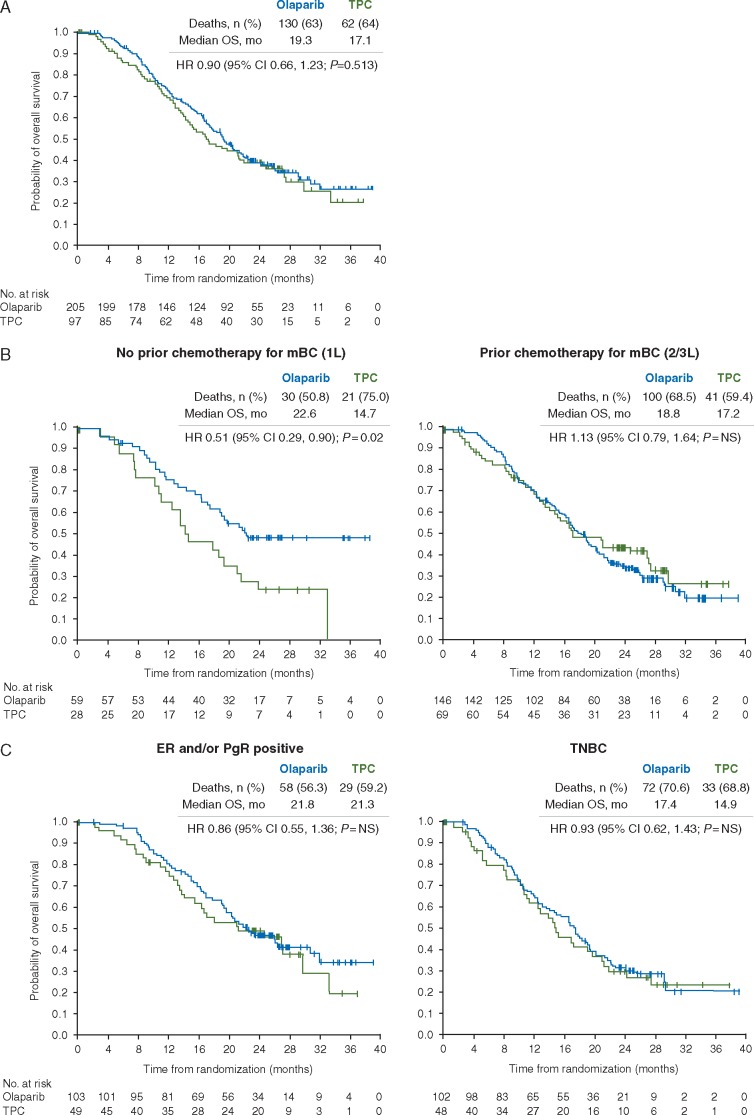
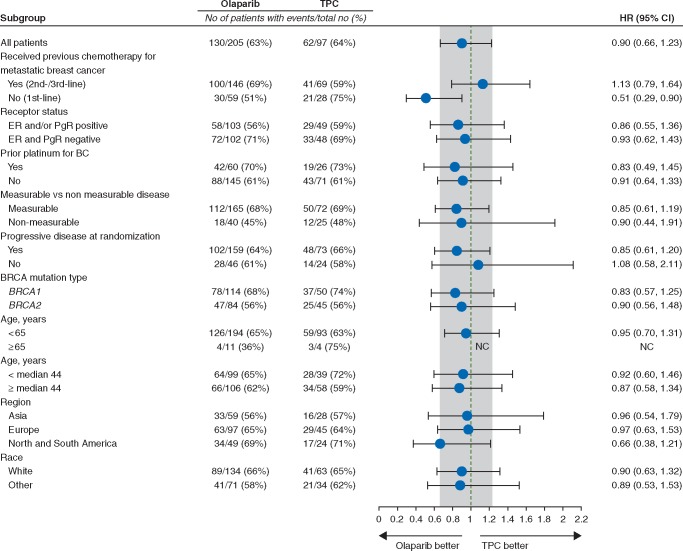
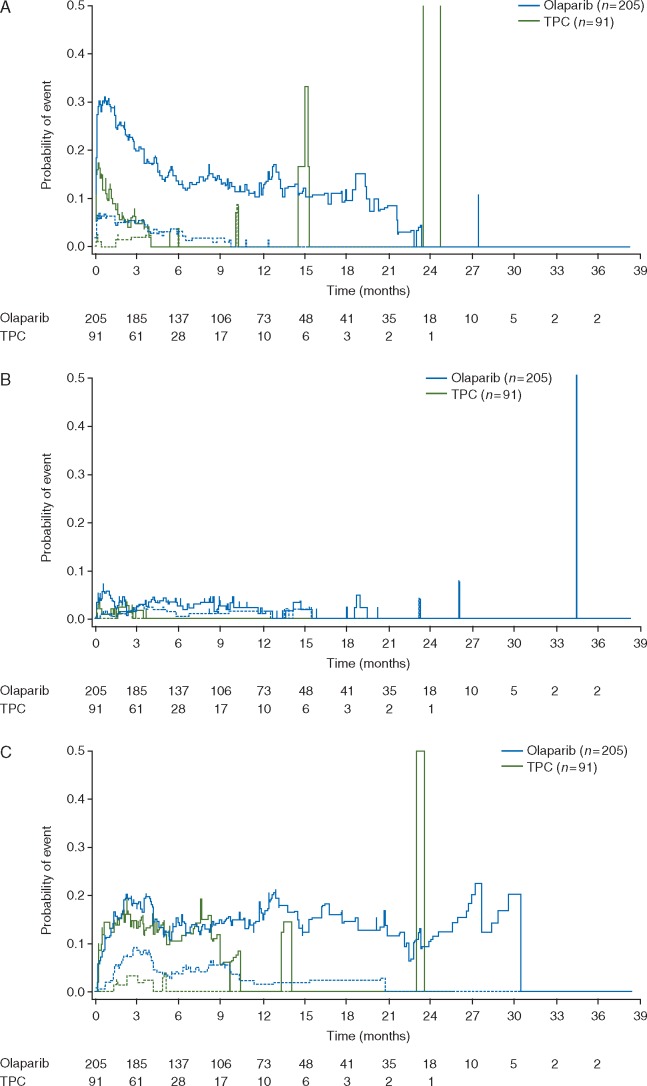
BACKGROUND: In the OlympiAD study, olaparib was shown to improve progression-free survival compared with chemotherapy treatment of physician's choice (TPC) in patients with a germline BRCA1 and/or BRCA2 mutation (BRCAm) and human epidermal growth factor receptor 2 (HER2)-negative metastatic breast cancer (mBC). We now report the planned final overall survival (OS) results, and describe the most common adverse events (AEs) to better understand olaparib tolerability in this population. PATIENTS AND METHODS: OlympiAD, a Phase III, randomized, controlled, open-label study (NCT02000622), enrolled patients with a germline BRCAm and HER2-negative mBC who had received ≤2 lines of chemotherapy for mBC. Patients were randomized to olaparib tablets (300 mg bid) or predeclared TPC (capecitabine, vinorelbine, or eribulin). OS and safety were secondary end points. RESULTS: A total of 205 patients were randomized to olaparib and 97 to TPC. At 64% data maturity, median OS was 19.3 months with olaparib versus 17.1 months with TPC (HR 0.90, 95% CI 0.66-1.23; P = 0.513); median follow-up was 25.3 and 26.3 months, respectively. HR for OS with olaparib versus TPC in prespecified subgroups were: prior chemotherapy for mBC [no (first-line setting): 0.51, 95% CI 0.29-0.90; yes (second/third-line): 1.13, 0.79-1.64]; receptor status (triple negative: 0.93, 0.62-1.43; hormone receptor positive: 0.86, 0.55-1.36); prior platinum (yes: 0.83, 0.49-1.45; no: 0.91, 0.64-1.33). Adverse events during olaparib treatment were generally low grade and manageable by supportive treatment or dose modification. There was a low rate of treatment discontinuation (4.9%), and the risk of developing anemia did not increase with extended olaparib exposure. CONCLUSIONS: While there was no statistically significant improvement in OS with olaparib compared to TPC, there was the possibility of meaningful OS benefit among patients who had not received chemotherapy for metastatic disease. Olaparib was generally well-tolerated, with no evidence of cumulative toxicity during extended exposure. Please see the article online for additional video content.
Overview
The claims and statistics of this paper haven’t been checked yet.
Free: it reads the open-access text and checks the first 5 claims that cite a source we can check. Create a free account to check every claim.
Integrity signals
Registry
Cites
Statistics
Figures
Verification
Claims the paper makes
The claims and statistics of this paper haven’t been checked yet.
Free: it reads the open-access text and checks the first 5 claims that cite a source we can check. Create a free account to check every claim.
Claims other papers make about this one
Each is checked against this paper’s own text: does it say what the citing paper says it does?
The source backs part of the claim, not all of it — or backs it for a different population, condition or comparison.
In the citing paper
“Since ABC 4, further data from the OlympiAD study suggested an OS benefit for olaparib when given in the first-line setting, with a median OS of 22.6 versus 14.7 months (HR 0.51; 95% CI 0.29-0.90, P = 0.02) in a subgroup analysis of predefined stratification subgroups,75”
From 5th ESO-ESMO international consensus guidelines for advanced breast cancer (ABC 5) (2020) · cites this paper as [75]
Experimental — accuracy not yet measured
Self-check
Percentages, sums and reported differences re-computed from the paper’s own numbers.
The self-check needs the paper’s full text.
Citations
Cites
Olaparib for Metastatic Breast Cancer in Patients with a Germline BRCA Mutation
Robson, M., Im, S.-A., Senkus, E., Xu, B., Domchek, S. M., Masuda, N., Delaloge, S., Li, W., Tung, N., Armstrong, A., et al. (2017) · New England Journal of Medicine · doi:10.1056/nejmoa1706450 · Cited by 3,294 · cited 4×
“The efficacy of the oral poly(ADP ribose) polymerase (PARP) inhibitor olaparib in patients with a germline BRCAm and HER2negative metastatic breast cancer (mBC) was confirmed in the Phase III OlympiAD study, with a statistically significant benefit in progression-free survival compared with chemotherapy treatment of p…”
BackgroundMethodResultSelf-citationTalazoparib in Patients with Advanced Breast Cancer and a Germline BRCA Mutation
Litton, J. K., Rugo, H. S., Ettl, J., Hurvitz, S. A., Gonçalves, A., Lee, K.-H., Fehrenbacher, L., Yerushalmi, R., Mina, L. A., Martin, M., et al. (2018) · New England Journal of Medicine · doi:10.1056/nejmoa1802905 · Cited by 2,175
Olaparib Monotherapy in Patients With Advanced Cancer and a Germline BRCA1/2 Mutation
Kaufman, B., Shapira-Frommer, R., Schmutzler, R. K., Audeh, M. W., Friedlander, M., Balmaña, J., Mitchell, G., Fried, G., Stemmer, S. M., Hubert, A., et al. (2015) · Journal of Clinical Oncology · doi:10.1200/jco.2014.56.2728 · Cited by 1,671
Self-citationCouch, F. J., Hart, S. N., Sharma, P., Toland, A. E., Wang, X., Miron, P., Olson, J. E., Godwin, A. K., Pankratz, V. S., Olswold, C., et al. (2015) · Journal of Clinical Oncology · doi:10.1200/jco.2014.57.1414 · Cited by 672 · cited 1×
“Germline BRCAm breast cancers tend to affect younger patients, those with a strong family history of breast cancer and Ashkenazi Jewish ancestry [1, 3].”
BackgroundMalone, K. E., Daling, J. R., Doody, D. R., Hsu, L., Bernstein, L., Coates, R. J., Marchbanks, P. A., Simon, M. S., McDonald, J. A., Norman, S. A., et al. (2006) · Cancer Research · doi:10.1158/0008-5472.can-06-0503 · Cited by 373 · cited 2×
“Germline BRCAm breast cancers tend to affect younger patients, those with a strong family history of breast cancer and Ashkenazi Jewish ancestry [1, 3].”
BackgroundKurian, A. W., Gong, G. D., John, E. M., Miron, A., Felberg, A., Phipps, A. I., West, D. W., & Whittemore, A. S. (2009) · Cancer Epidemiology, Biomarkers & Prevention · doi:10.1158/1055-9965.epi-08-1090 · Cited by 75 · cited 1×
“Approximately 5% of all breast cancer patients carry a germline deleterious mutation in BRCA1 and/or BRCA2 (BRCAm), with higher rates among those with human epidermal growth factor receptor 2 (HER2)-negative disease [1, 2].”
BackgroundKümmel, S., Jackisch, C., Müller, V., Schneeweiß, A., Klawitter, S., & Lux, M. P. (2017) · Annals of Oncology · doi:10.1093/annonc/mdx365.030 · Cited by 4
Kümmel, S., Jackisch, C., Müller, V., Schneeweiß, A., Klawitter, S., & Lux, M. P. (2018) · Cancer Management and Research · doi:10.2147/cmar.s177240 · Cited by 3
Cited by
Items 701–800 of 823
Kim, D. W., Pico, C. X. C., Forester, E., Belsare, A., Whitaker, K. D., Obeid, E. I., Goldstein, L. J., Bleicher, R. J., Daly, M. B., & Williams, A. D. (2023) · Current Breast Cancer Reports · doi:10.1007/s12609-023-00510-5
“…breast cancer and g BRCA showing a statistically significant improvement in median progression-free survival by 2.8 months (7.0 vs. 4.2 months, hazard ratio for disease progression or death, 0.58, 95% confidence interval 0.43–0.80, p 0.001), and later demonstrating a survival benefit [5, 11].”
InfluentialPersonalisierte Medizin – von der Translation zur Klinik
Schmidt, M., Denkert, C., Rhiem, K., Decker, T. W., & Loibl, S. (2023) · Wiener klinisches Magazin · doi:10.1007/s00740-023-00502-2
“Für Olaparib wurde auch eine Verlängerung des Gesamtüberlebens (OS) um 7,9 Monate (HR 0,51) bei in der ersten Therapielinie behandelten Patientinnen nachgewiesen [5].”
Beitrag der Humangenetik zur Präzisionsonkologie
William, D., Jahn, A., Meinhardt, A., & Schröck, E. (2023) · Die Onkologie · doi:10.1007/s00761-023-01401-1
Triple‐Negative Metastatic Breast Cancer
Nasrazadani, A., Gomez, J., & Brufsky, A. (2023) · Wiley eBooks · doi:10.1002/9781119823766.ch16
Lux, M. P., & Fasching, P. A. (2023) · Senologie - Zeitschrift für Mammadiagnostik und -therapie · doi:10.1055/a-2183-3310
“Ein mögli-cher Benefit in Bezug auf das OS zeigte sich jedoch bei Verabrei-chung von Olaparib vs. Chemotherapie in der Erstlinientherapie (medianes OS: 22,6 vs. 14,7 Monate; HR 0,51; 95%-KI 0,29 – 0,90; p=0,02) [31].”
BackgroundAlaklabi, S., Roy, A. M., Chaudhary, L. N., & Gandhi, S. (2023) · Exploration of Targeted Anti-tumor Therapy · doi:10.37349/etat.2023.00198 · Cited by 1
Actualités en anatomie et cytologie pathologiques dans le cancer du sein
Kossaï, M., & Penault-Llorca, F. M. (2023) · Revue Francophone des Laboratoires · doi:10.1016/s1773-035x(24)00015-7
Ido, M., Fujii, K., Mishima, H., Kubo, A., Saito, M., Banno, H., Ito, Y., Goto, M., Ando, T., Mouri, Y., et al. (2024) · BMC Cancer · doi:10.1186/s12885-023-11442-9
“For the recurrent breast cancer patients harboring those germline mutations, the treatment of olaparib, a poly (ADP-ribose) polymerase inhibitor, is considered as an effective targeted therapy [2].”
BackgroundSchmid, P., Turner, N. C., Barrios, C. H., Isakoff, S. J., Kim, S., Sablin, M., Saji, S., Savas, P. S., Vidal, G. A., Oliveira, M., et al. (2024) · doi:10.1158/1078-0432.c.7077781.v1
Mutationsanalyse bei PatientInnen mit metastasiertem Mammakarzinom
Cho, H. (2024) · Publication Server of Goethe University Frankfurt am Main (Goethe University Frankfurt) · doi:10.21248/gups.82540
Consenso mexicano de cáncer mamario. Manejo del cáncer de mama avanzado
Poitevin‐Chacón, A., Hernández-Barragán, T., Maffuz‐Aziz, A., Flores-Balcázar, C. H., Arce-Salinas, C., Salas-González, E., Soto‐Pérez‐de‐Celis, E., Aldaco-Sarvide, F., Jaliffe, G. G., Cervantes-Sánchez, G., et al. (2026) · Gaceta Mexicana de Oncología · doi:10.24875/j.gamo.m23000258
Zhu, X.-Z., Chen, L., Huang, B., Li, X., Yang, L., Hu, X., Jiang, Y., Shao, Z., & Wang, Z. (2021) · Figshare · doi:10.6084/m9.figshare.14391489
Schmidt, M. (2024) · Trillium Krebsmedizin · doi:10.47184/tk.2024.02.1
Comprehensive Genomic Profiling of Taiwanese Breast Cancer Using a Novel Targeted Sequencing PanelPreprint
Huang, C., Yeh, Y., Liu, C., Tsai, Y., Ho, H., & Tseng, L. (2024) · Research Square · doi:10.21203/rs.3.rs-4180298/v1
Das metastasierte Mammakarzinom – ein Überblick zur Entwicklung der Therapiestandards 2024
Thomssen, C., & Park‐Simon, T. (2024) · Die Gynäkologie · doi:10.1007/s00129-024-05216-y
Mexican breast cancer consensus. Management of advanced breast cancer
Poitevin‐Chacón, A., Hernández-Barragán, T., Maffuz‐Aziz, A., Flores-Balcázar, C. H., Arce-Salinas, C., Salas-González, E., Soto‐Pérez‐de‐Celis, E., Aldaco-Sarvide, F., Jaliffe, G. G., Cervantes-Sánchez, G., et al. (2026) · Gaceta Mexicana de Oncología · doi:10.24875/j.gamo.m24000266
HER2-positive breast cancer : Clinical and molecular aspects
Ellegård, S. (2024) · Linköping University medical dissertations · doi:10.3384/9789180756242
Möbus, V. J. (2024) · Elsevier eBooks · doi:10.1016/b978-3-437-21011-2.00047-8
廖, 丽. (2024) · Advances in Clinical Medicine · doi:10.12677/acm.2024.1471991
Verbeek, J. G. E., Azarang, L., Pilli, L. E., de Jong, V. M. T., Jager, A., Linn, S. C., Retèl, V. P., & van Harten, W. H. (2024) · Acta Oncologica · doi:10.2340/1651-226x.2024.40276
“The levels assigned to these attributes were based on the current literature and verified for plausibility by the three medical oncologists on our study team [23–27].”
MethodNuclear localization of APLF facilitates breast cancer metastasis
Nandy, D., Shirude, M. B., Archana, S., Devarajan, A., Mukherjee, A., & Dutta, D. (2024) · Biochimica et Biophysica Acta (BBA) - Molecular Basis of Disease · doi:10.1016/j.bbadis.2024.167537
Management of Metastatic Breast Cancer (MBC): Tailoring of Systemic Therapy in HR Positive MBC
Bhatia, K. P., Fernandes, S., & Kumar, A. (2024) · Springer eBooks · doi:10.1007/978-981-97-7755-6_28
Kim, M. H., Park, M. K., Park, H. N., Ham, S. M., Lee, H., & Lee, S. (2025) · Cells · doi:10.3390/cells14030181
Anderson, S. A., Bartow, B. B., Siegal, G. P., Harada, S., Yalnız, C., Khoury, K. E., Huo, L., Ding, Q., Şahin, A. A., Wei, S., et al. (2025) · Human Pathology Reports · doi:10.1016/j.hpr.2025.300775
Cancer du sein métastatique RH+ HER2– : vers une médecine personnalisée ?
Mailly-Giacchetti, L., & Verret, B. (2025) · Bulletin du Cancer · doi:10.1016/j.bulcan.2025.04.002
Ossikbayeva, S., Orazgaliyeva, M., Aidarov, A., Dubchev, D., & Абдрахманов, Р. (2025) · Oncologia i radiologia Kazakhstana · doi:10.52532/2521-6414-2025-2-76-472
Karagodina, Y. B., Ruban, M. S., Болотина, Л. В., Savchina, V. V., Kornietskaya, A. L., & Феденко, А. А. (2025) · Medical alphabet · doi:10.33667/2078-5631-2025-11-55-59
Abaszadeh, M., Kermani, A. A., Armin, A., Abolhassani, Y., Haghani, F., Sabouri, S., Amirheidari, B., & Behnam, B. (2025) · Acta chimica slovenica · doi:10.17344/acsi.2025.9331
Treatment Options for HR-Positive, HER2-Negative Advanced Breast Cancer: Focus on Capivasertib
Landin, J., Chiru, D., Romanens, A., & Vetter, M. H. F. (2025) · healthbook TIMES Oncology Hematology · doi:10.36000/hbt.oh.2025.25.188 · Cited by 1
Wu, J., Xu, Y., Xie, F., Yang, L., Li, H., Liu, M., Yang, H., Wang, C., Peng, Y., Yang, Y., et al. (2025) · Journal of Translational Medicine · doi:10.1186/s12967-025-07068-z
Molekulare Testungen zu therapeutischen Zwecken bei Brustkrebs – Hilfe für die klinische Praxis
Holtschmidt, J., Rhiem, K., Denkert, C., Decker, T. W., & Loibl, S. (2025) · Onkologische Welt · doi:10.1055/a-2830-1603
Kim, K. J., Kang, E. K., Baek, S. H., Lee, H., Ahn, S. G., Park, W. K., Shin, D. S., Lee, H., Nam, S. J., Kim, S. W., et al. (2025) · European Journal of Surgical Oncology · doi:10.1016/j.ejso.2025.111332
Emerging trends in cancer biomarkers and their clinical effect on personalized treatment
Opatoyinbo, J. O., Akanbi, C. A., Ojo, A. B., Ogunlakin, A. D., Molehin, O. R., & Ojo, O. A. (2025) · Advances in cancer research · doi:10.1016/bs.acr.2025.12.002
Cao, C., Hu, H., Han, Y., Yuan, S., Zheng, X., Zhang, X., Zan, Y., Wang, Y., & He, Y. (2023) · Figshare · doi:10.6084/m9.figshare.23258908
Additional file 1 of BRCA1 and BRCA2 germline mutations in Chinese Hakka breast cancer patients
Zhang, Y., Wu, H., Gan, C., Rao, H., Wang, Q., & Guo, X. (2024) · Figshare · doi:10.6084/m9.figshare.24934064
Zhang, X., Mu, X., Huang, O., Wang, Z., Chen, J., Chen, D., & Wang, G. (2022) · Figshare · doi:10.6084/m9.figshare.19298372
Cheng, T., Wang, X., Han, Y. Y., Hao, J., Hu, H., & Hao, L. (2023) · Figshare · doi:10.6084/m9.figshare.22618297
Li, T., Cao, C., Xuan, X., Liu, W., Xiao, X., & Wei, C. (2023) · Figshare · doi:10.6084/m9.figshare.24719235
Метастатичен тройно-негативен рак на гърдата – лечение отвъд химиотерапията.
Arabadjiev, J., & Zlatanova, T. (2020) · Figshare · doi:10.6084/m9.figshare.12624605
Zhu, Y., Hu, H., Wu, Y., Rao, Y., Li, Q., Duan, X., Yao, G., 尹合坤, & Luo, Z. (2023) · Figshare · doi:10.6084/m9.figshare.22619920
Zhu, X., Chen, L., Huang, B., Li, X., Yang, L., Hu, X., Jiang, Y., Shao, Z., & Wang, Z. (2021) · Figshare · doi:10.6084/m9.figshare.14391492
Pan, W., Han, Y., Hu, H., & He, Y. (2022) · Figshare · doi:10.6084/m9.figshare.20581017
Zhang, X., Mu, X., Huang, O., Wang, Z., Chen, J., Chen, D., & Wang, G. (2022) · Figshare · doi:10.6084/m9.figshare.19298366
Joris, S., Giron, P., Olsen, C., Seneca, S., Gheldof, A., Staessens, S., Shahi, R. B., Brakeleer, S. D., Teugels, E., Grève, J. D., et al. (2024) · Figshare · doi:10.6084/m9.figshare.26036368
Cheng, H.-F., Tsai, Y.-F., Liu, C.-Y., Hsu, C.-Y., Lien, P.-J., Lin, Y.-S., Chao, T.-C., Lai, J.-I., Feng, C.-J., Chen, Y.-J., et al. (2024) · Figshare · doi:10.6084/m9.figshare.26654218
Mahtani, R., Niyazov, A., Arondekar, B. V., Lewis, K., Rider, A., Massey, L., & Lux, M. P. (2023) · Figshare · doi:10.6084/m9.figshare.22610558
Luna Mass, A. C. (2024) · Qucosa (Saxon State and University Library Dresden)
Exome oncogenetics missing heredity INca extreme phenotype
Clément Le Choismier, M. (2023) · HAL
Untch, M., Banys-Paluchowski, M., Brucker, S. Y., Denkert, C., Fasching, P. A., Haidinger, R., Harbeck, N., Janni, W., Krug, D., Loibl, S., et al. (2025) · Senologie - Zeitschrift für Mammadiagnostik und -therapie · doi:10.1055/a-2646-9889
“Klinische Daten dazu gibt es aus der metasta-sierten Situation [35].”
Kim, B., Nguyen, T. O. O., Nguyen, B. L., Le, N. D., Kim, J. O., & Kim, J. (2025) · Macromolecular Research · doi:10.1007/s13233-025-00483-7
Abahssain, H., Pasquier, D., Laabid, K., Barani, M., Borges, S., Poitureau, S., Bettache, G., Nguyen, T.-L.-A., Bytha, M., Rodriguez, J., et al. (2025) · Cancers · doi:10.3390/cancers18010131
“The OlympiAD and EMBRACA trials demonstrated significantly improved progression-free survival over standard chemotherapy, leading to regulatory approval [57,58].”
Update Mammakarzinom 2024 Teil 3 – Patientinnen mit fortgeschrittenen Stadien des Mammakarzinoms
Lüftner, D., Kolberg, H.-C., Hartkopf, A., Fehm, T. N., Welslau, M., Müller, V., Schütz, F., Fasching, P. A., Jackisch, C., Marme, F., et al. (2025) · Senologie - Zeitschrift für Mammadiagnostik und -therapie · doi:10.1055/a-2723-4918
Ivanova, E. (2025) · Queensland University of Technology · doi:10.5204/thesis.eprints.262371
Campone, M., Frenel, J., Kiver, V. I. I., Woeckel, A., Kerscher, A., Krebs, M., Leal, C., Saglimbene, V. M., Ann, Q., Sadetsky, N., et al. (2026) · BMC Cancer · doi:10.1186/s12885-026-15611-4
“…for patients with ET-resistant mBC is poor, with data from randomised clinical trials, including the EMBRACE study (patients with mBC who had received 2–5 prior CT regimens), demonstrating a median overall survival (OS) with single-agent CT ranging from approximately 13 to 31 months [8–11].”
Dinis, R. P. D. (2023) · Portuguese National Funding Agency for Science, Research and Technology (RCAAP Project by FCT)
Liu, J., Liu, Y., Song, E., & Li, H. (2026) · The Lancet Oncology · doi:10.1016/s1470-2045(25)00761-2
Kahl, Matt, & Huober (2026) · healthbook TIMES Oncology Hematology · doi:10.36000/hbt.oh.2026.27.200
Ивановна, Е. С., Игоревна, М. А., Владимировна, Р. Е., Борисовна, М. К., & Мозес, В. Г. (2026) · CyberLeninK (CyberLeninka) · doi:10.24412/2687-0053-2026-1-114-118
Chi, R., Zhang, J., Li, Z., Xie, Y., Zheng, Q., Chen, J., Liu, Y., & Gong, F. (2026) · Breast Cancer Targets and Therapy · doi:10.2147/bctt.s579112
“7,26 Although recent advancements in targeted therapies have shown promise for both early-stage and metastatic TNBC, 27,28 patient prognosis—especially in advanced disease—remains poor.”
Molekulare Testungen zu therapeutischen Zwecken bei Brustkrebs – Hilfe für die klinische Praxis
Holtschmidt, J., Rhiem, K., Denkert, C., Decker, T. W., & Loibl, S. (2026) · Senologie - Zeitschrift für Mammadiagnostik und -therapie · doi:10.1055/a-2787-0979 · Cited by 1
CIURLI, E. (2026) · Electronic Theses and Dissertations Repository (University of Pisa)
MODERN APPROACHES TO THE TREATMENT OF TRIPLE-NEGATIVE BREAST CANCER
Melekhov, S., Kononchuk, V., Khristin, A., Sidorov, S., Gulyaeva, L. F., & Kushlinskii, N. E. (2026) · Problems of Biological Medical and Pharmaceutical Chemistry · doi:10.29296/25877313-2026-03-01
Prihharsanti, C. H. N., Prajoko, Y. W., Respati, D. R. P., Tjandra, K. C., Mutmainnah, F., Rismadha, M. B., Nugrahani, A. S. D., Aryasatya, D. P., Manik, A. V., Nurkolis, F., et al. (2026) · Cancers · doi:10.3390/cancers18071106
Minoura, Y. (2026) · Springer eBooks · doi:10.1007/978-981-95-6580-1_14
Xu, H., Wang, Y. Q., Sa, Q., Zhou, Y., Wang, J., & Xu, B. (2026) · BMC Cancer · doi:10.1186/s12885-026-15947-x
Self-citationAhn, J. H., Park, J. O., Won, D., Lee, S., Lee, S. J., Yang, S. H., Kim, J. Y., Park, S., Kim, S. I., Park, B., et al. (2026) · Journal of Breast Cancer · doi:10.4048/jbc.2025.0172
“Variants in cancer predisposition genes contribute to the elevation in TNBC risk, with notable relevance attributed to BRCA1 and BRCA2 [3,4].”
Targeting the cell cycle : A novel therapeutic strategy against ATIP3- deficient breast cancer
Haykal, M. M. (2023) · theses.fr (ABES) · doi:10.70675/03dee32bz395cz469ez9a0dzf4c5f2e84330
Marret, G. (2023) · theses.fr (ABES) · doi:10.70675/fe5bbd3fzfc82z43ffz9c6dzf2c8d40c19dd
Outcomes of patients with or without DNA repair pathway alterations: the MD Anderson IMPACT2 study
Venturini, J., Baysal, M. A., Chakraborty, A., Yap, T. A., Fu, S., Hong, D. S., Piha-Paul, S. A., Naing, A., Rodon, J. A., Dumbrava, E. E. I., et al. (2026) · npj Precision Oncology · doi:10.1038/s41698-026-01404-2
AI-Driven Insights in Breast Cancer: A Deep Learning Review Integrating Medical Imaging and Genomic
Hanoon, R. H. (2026) · Kerbala Journal for Engineering Sciences · doi:10.63463/kjes1209
Decaminada, A., Sunder‐Plaßmann, R., Ho, W.-K., Muhr, D., Starzer, A. M., Berghoff, A. S., Bartsch, R. A., Singer, C. F., kConFab Investigators, & Tan, Y. Y. (2026) · Cancers · doi:10.3390/cancers18081240
Kozan, E. N., la Mora, J. D.-D., Assaad, M. A., Ginter, P. S., Gundem, G., Levine, M. F., Gorski, K., Phan, A., Beg, S., Sigaras, A., et al. (2026) · Pathology - Research and Practice · doi:10.1016/j.prp.2026.156469
Tang, J., Liu, Q., Tao, Z., Niu, N., Zhan, W., Shi, J., & Yang, Z. (2026) · Scientific Reports · doi:10.1038/s41598-026-46678-5
Badanie internalizacji cząsteczek chemicznych i biologicznych do wnętrza żywych komórek
Magiera, A. (2025) · RCIN (Digital Repository of the Scientifics Institutes) (Institute of Archaeology and Ethnology of the Polish Academy of Sciences)
Zi, G. R., Zhang, D.-J., He, D.-L., Feng, R., & Ke, C. (2026) · Frontiers in Immunology · doi:10.3389/fimmu.2026.1803771
Wang, T., Chen, J., Jin, Y., Fu, M., Wei, H., JIA, W., Liu, Y., Wang, B., Yan, M., Hao, C., et al. (2026) · Translational Breast Cancer Research · doi:10.21037/tbcr-25-51
“Compared with standard therapy, olaparib and talazoparib prolonged PFS in patients with BMs (103).”
Huang, L., Yang, Y., Dai, L., Zhou, J., Shao, J., & Qian, B. (2026) · Scientific Reports · doi:10.1038/s41598-026-52778-z
Erblicher Brustkrebs: Syndrome, Pathologie, klinische Aspekte
Lebeau, A., & Schmutzler, R. (2026) · Die Pathologie · doi:10.1007/s00292-026-01570-x
Fx, M., & Xu, B. (2026) · Cancer Innovation · doi:10.1002/cai2.70062
Self-citationA new combined immunotherapy strategy for triple-negative breast cancer
(75607), L. L., & Li, Z. H. O. U. (2026) · Shengming kexue · doi:10.3724/cbls.2026075
Sandoval, J. L., Neven, P., Emde, A., Bidard, F., Aftimos, P., Llombart, A., Ciruelos, E. M., Fasching, P. A., Li, H. P., Campone, M., et al. (2026) · The Oncologist · doi:10.1093/oncolo/oyag215
Expanding Germline Genetic Testing in Breast Cancer: Universal versus ASCO-Guided Approaches
Silva, M., & Pereira, J. (2026) · Asian journal of Current Research in Clinical Cancer · doi:10.51847/gouduiysfo
米国および日本におけるコンパニオン診断薬(CDx)と抗悪性腫瘍薬の同時開発に関する研究
Saito, K. (2026) · Institutional Repositories DataBase (IRDB)
Metcalfe, K. A., Narod, S. A., Poll, A., Hoey, C., Warner, E., Baxter, N. N., Isherwood, S., MacDougall, E., Zemani, N., Yang, F., et al. (2026) · British Journal of Cancer · doi:10.1038/s41416-026-03502-1 · Cited by 1
Garrido-Castro, A. C. (2026) · Annals of Oncology · doi:10.1016/j.annonc.2026.06.015
Sridharan, K., Fiala, O., Sivaramakrishnan, G., Rizzo, M., & Santoni, M. (2026) · Oncology Research Featuring Preclinical and Clinical Cancer Therapeutics · doi:10.32604/or.2026.081879
Metastatic Triple Negative Breast Cancer: Navigating a Rapidly Evolving Therapeutic Landscape
Browne, I. M., García, M. E., & Okines, A. F. C. (2026) · Oncology Research Featuring Preclinical and Clinical Cancer Therapeutics · doi:10.32604/or.2026.082829
“OS was numerically improved (19.3 vs. 17.1 months) but did not reach statistical significance [104,111].”
InfluentialWang, N., Huang, J., Fei, F., Ma, S., Fu, Q., Wang, X., & Guo, C. (2026) · Chemico-Biological Interactions · doi:10.1016/j.cbi.2026.112247
Leveraging Homologous Recombination Deficiency via the Repositioned Prodrug CB1954Preprint
Elia, J. L., Hill, J., Heer, C. D., Smolev, S., Sykes, A. M., Arbelaez, S. R., Lucas, K. N., Johnson, S. S., Sundaram, R. K., Herzon, S. B., et al. (2026) · bioRxiv (Cold Spring Harbor Laboratory) · doi:10.64898/2026.07.08.737246
Xu, Z., 丁林贤, Zhao, T., & Xu, Z. (2026) · Oncology Reviews · doi:10.3389/or.2026.1834466
Oelschlagel, N., Mithoowani, H., Goebel, E. A., Ghasemi, F., Knowles, S., Maciver, A., Brackstone, M., & Parsyan, A. E. (2026) · Translational Cancer Research · doi:10.21037/tcr-2026-1-0370
Cruellas, M., Rodríguez, A., Carità, L., Seguí, E., Solís, M. C., Lema, L., Torralba, E. G., Roqué, A., Fernández-Ortega, A., Melé, M., et al. (2026) · ESMO Open · doi:10.1016/j.esmoop.2026.108335 · Cited by 1
Wang, Y., Wang, J., & Xu, B. (2026) · Acta Pharmaceutica Sinica B · doi:10.1016/j.apsb.2026.07.050
“However, the pivotal OlympiAD and EMBRACA trials were conducted before CDK4/6 inhibition became standard in this setting and assessed PARP inhibitors exclusively as monotherapy 103,104 .”
Self-citationPopovic, L., Popovic, M., & Matovina-Brko, G. (2026) · Elsevier eBooks · doi:10.1016/b978-0-443-30050-9.00053-9
Shatalov, P. A., Bukaeva, A. A., Veselovsky, E., Traspov, A. A., Revkova, M. A., Mishakova, P. V., Kirillova, E. A., Raygorodskaya, M. P., Багдасарова, Д. В., Leukhina, I. A., et al. (2026) · Biomedicines · doi:10.3390/biomedicines14081742
“Several PARPis, including olaparib and talazoparib, have been approved by the FDA for clinical application in BC patients with GPVs in BRCA1/2 [8,9].”
Metadata
- Authors
- Robson, M. E., Tung, N., Conte, P., Im, S.-A., Senkus, E., Xu, B., Masuda, N., Delaloge, S., Li, W., Armstrong, A., Wu, W., Goessl, C., Runswick, S., & Domchek, S. M.
- Affiliations
- Memorial Sloan Kettering Cancer Center (US)
- Beth Israel Deaconess Medical Center (US)
- University of Padua (IT)
- Seoul National University (KR)
- Gdańsk Medical University (PL)
- Chinese Academy of Medical Sciences & Peking Union Medical College (CN)
- Osaka National Hospital (JP)
- Institut Gustave Roussy (FR)
- First Hospital of Jilin University (CN)
- The Christie Hospital (GB)
- AstraZeneca (United States) (US)
- AstraZeneca (United Kingdom) (GB)
- University of Pennsylvania (US)
- Corresponding author
- Robson, M.E.
- Runswick, S.
- ORCID
- Venue
- Annals of Oncology
- Publisher
- Elsevier BV
- Published
- 2019-04
- Volume
- 30
- Issue
- 4
- Pages
- 558-566
- ISSN
- 0923-7534 (ISSN-L)
- PMC
- PMC6503629
- OpenAlex
- W2913584903
- Cited by
- 779
- References
- 9
- Citations by year
- 2026: 76 · 2025: 84 · 2024: 108 · 2023: 144 · 2022: 133 · 2021: 118 · 2020: 83 · 2019: 33
- FWCI
- 38.45
- Type
- journal article
- Language
- en
- Open access
- hybrid
- doi.org
- Licence
- cc-by-nc
- www.elsevier.com/tdm/userlicense/1.0/ (tdm)
- creativecommons.org/licenses/by-nc/4.0/ (vor, 326 d)
- Locations
- Annals of Oncology (publishedVersion, cc-by-nc)
- PubMed Central (publishedVersion, cc-by-nc)
- PubMed (publishedVersion)
- Seoul National University Open Repository (Seoul National University) (submittedVersion)
- Padua Research Archive (University of Padova) (submittedVersion)
- Funders
- AstraZeneca
- AstraZeneca and Merck & Co.
- Inc.
- NIH/NCI Cancer Center
- Breast Cancer Research Foundation
- Mudskipper Business Ltd
- Topics
- Health Sciences › Medicine › Oncology › PARP inhibition in cancer therapy
- Life Sciences › Biochemistry, Genetics and Molecular Biology › Genetics › BRCA gene mutations in cancer
- Health Sciences › Medicine › Oncology › Advanced Breast Cancer Therapies
- Keywords
- olaparib, HER2-negative metastatic breast cancer, germline BRCA1 mutation, germline BRCA2 mutation, PARP inhibitors, overall survival, tolerability, adverse events, capecitabine, vinorelbine, eribulin, platinum-based chemotherapy, triple-negative breast cancer, hormone receptor-positive breast cancer, Olympiad
- MeSH terms
- Poly(ADP-ribose) Polymerase Inhibitors, Progression-Free Survival, Administration, Oral, Adult, Aged, Anemia, Antineoplastic Combined Chemotherapy Protocols, Breast Neoplasms, Female, Follow-Up Studies, Humans, Middle Aged, Phthalazines, Piperazines, Tablets, Germ-Line Mutation, Receptor, ErbB-2, Erb-b2 Receptor Tyrosine Kinases, BRCA1 Protein
About these checks
Registry, retraction, Cites and statistics results are computed, not judged, with one exception: a printed reference that no index lists is read once by a model before it counts as a citation error. Claims are extracted by a model and kept only when their quote appears verbatim in the text; each cited source is then checked, with a model’s help, for whether it says what the claim relies on. Those verdicts can be wrong — read the claim’s quote and the cited source before relying on one.
Statistics and arithmetic are recomputed, not judged.
Confidence bands are shown only for fields calibrated on our annotated test set. None is calibrated yet, so no band is shown.
What counts as a claim ›How we measure confidence ›How we check this ›
Are you an author, or do you see a problem with this page? Request a review
Data sources
Bibliographic data: Semantic Scholar, OpenAlex, Crossref.
Contains information from the Semantic Scholar Academic Graph Datasets, made available under the ODC Attribution License (ODC-BY 1.0).
Semantic Scholar’s data is described in: Kinney, R., et al. (2023). The Semantic Scholar Open Data Platform. arXiv:2301.10140.
