

OlympiAD final overall survival and tolerability results: olaparib versus chemotherapy treatment of physician's choice in patients with a germline BRCA mutation and HER2-negative metastatic breast cancer
Open accessThe DOI matches its Crossref record; 8 of the 9 references it cites were found in a registry or an index.
Abstract
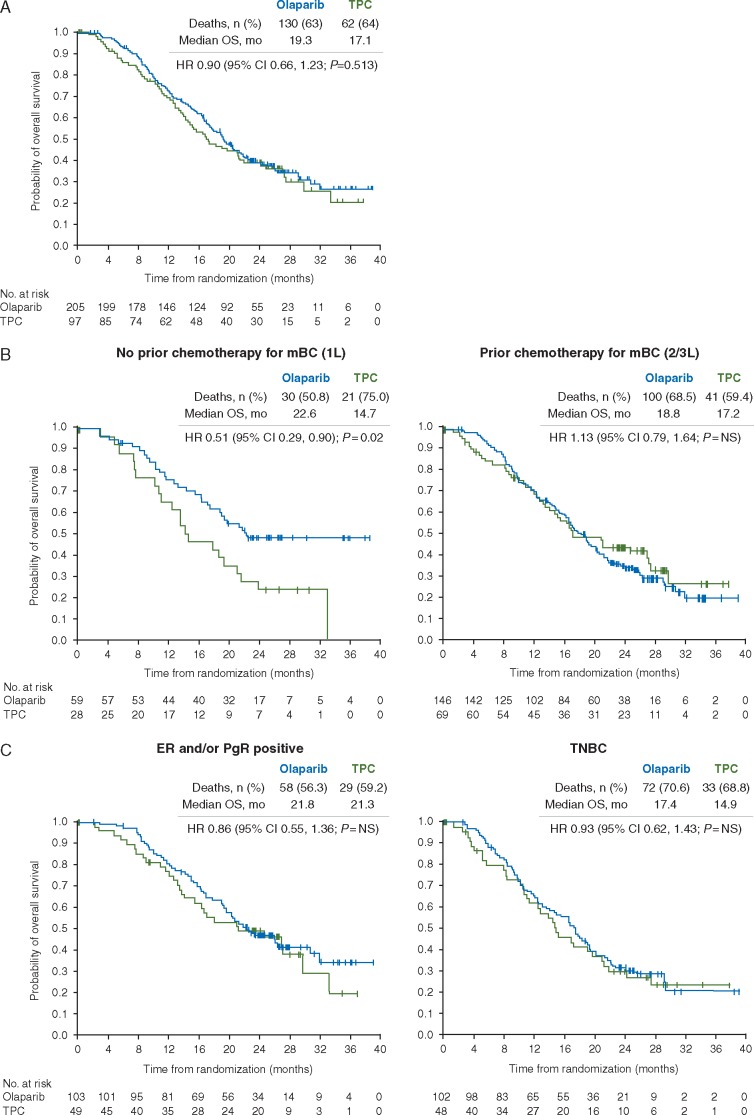
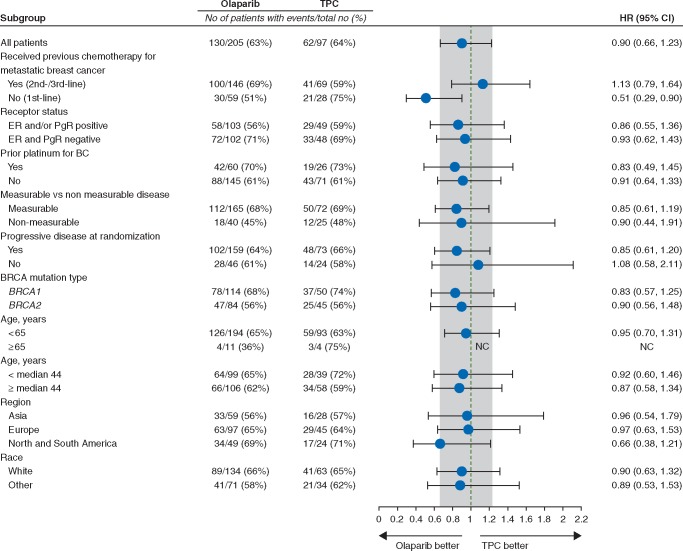
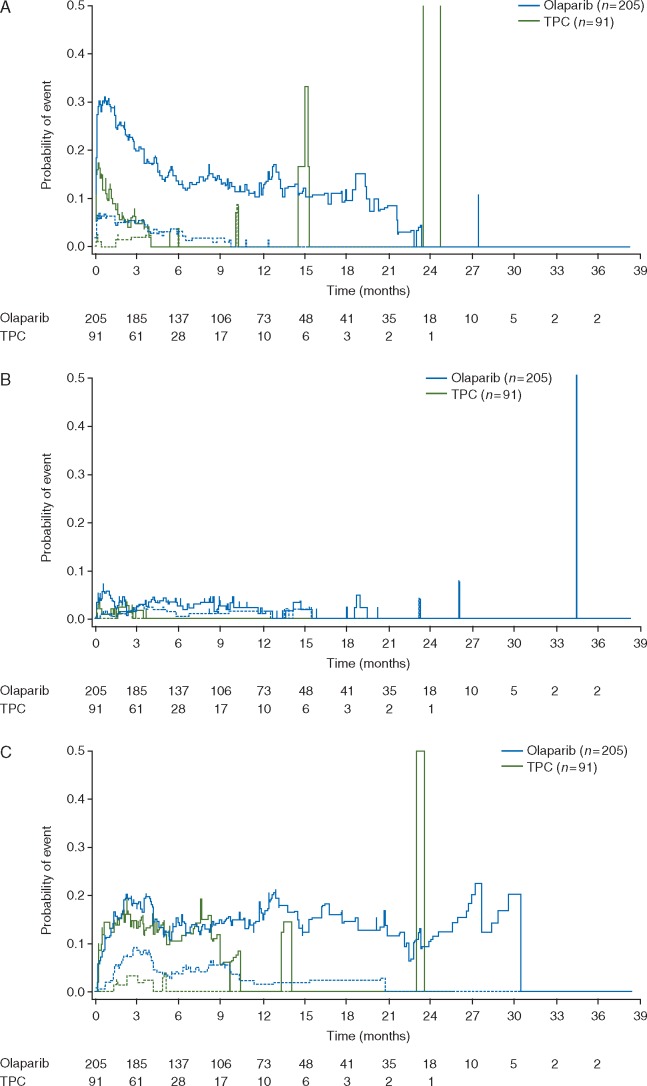
BACKGROUND: In the OlympiAD study, olaparib was shown to improve progression-free survival compared with chemotherapy treatment of physician's choice (TPC) in patients with a germline BRCA1 and/or BRCA2 mutation (BRCAm) and human epidermal growth factor receptor 2 (HER2)-negative metastatic breast cancer (mBC). We now report the planned final overall survival (OS) results, and describe the most common adverse events (AEs) to better understand olaparib tolerability in this population. PATIENTS AND METHODS: OlympiAD, a Phase III, randomized, controlled, open-label study (NCT02000622), enrolled patients with a germline BRCAm and HER2-negative mBC who had received ≤2 lines of chemotherapy for mBC. Patients were randomized to olaparib tablets (300 mg bid) or predeclared TPC (capecitabine, vinorelbine, or eribulin). OS and safety were secondary end points. RESULTS: A total of 205 patients were randomized to olaparib and 97 to TPC. At 64% data maturity, median OS was 19.3 months with olaparib versus 17.1 months with TPC (HR 0.90, 95% CI 0.66-1.23; P = 0.513); median follow-up was 25.3 and 26.3 months, respectively. HR for OS with olaparib versus TPC in prespecified subgroups were: prior chemotherapy for mBC [no (first-line setting): 0.51, 95% CI 0.29-0.90; yes (second/third-line): 1.13, 0.79-1.64]; receptor status (triple negative: 0.93, 0.62-1.43; hormone receptor positive: 0.86, 0.55-1.36); prior platinum (yes: 0.83, 0.49-1.45; no: 0.91, 0.64-1.33). Adverse events during olaparib treatment were generally low grade and manageable by supportive treatment or dose modification. There was a low rate of treatment discontinuation (4.9%), and the risk of developing anemia did not increase with extended olaparib exposure. CONCLUSIONS: While there was no statistically significant improvement in OS with olaparib compared to TPC, there was the possibility of meaningful OS benefit among patients who had not received chemotherapy for metastatic disease. Olaparib was generally well-tolerated, with no evidence of cumulative toxicity during extended exposure. Please see the article online for additional video content.
Overview
The claims and statistics of this paper haven’t been checked yet.
Free: it reads the open-access text and checks the first 5 claims that cite a source we can check. Create a free account to check every claim.
Integrity signals
Registry
Cites
Statistics
Figures
Verification
Claims the paper makes
The claims and statistics of this paper haven’t been checked yet.
Free: it reads the open-access text and checks the first 5 claims that cite a source we can check. Create a free account to check every claim.
Claims other papers make about this one
Each is checked against this paper’s own text: does it say what the citing paper says it does?
The source backs part of the claim, not all of it — or backs it for a different population, condition or comparison.
In the citing paper
“Since ABC 4, further data from the OlympiAD study suggested an OS benefit for olaparib when given in the first-line setting, with a median OS of 22.6 versus 14.7 months (HR 0.51; 95% CI 0.29-0.90, P = 0.02) in a subgroup analysis of predefined stratification subgroups,75”
From 5th ESO-ESMO international consensus guidelines for advanced breast cancer (ABC 5) (2020) · cites this paper as [75]
Experimental — accuracy not yet measured
Self-check
Percentages, sums and reported differences re-computed from the paper’s own numbers.
The self-check needs the paper’s full text.
Citations
Cites
Olaparib for Metastatic Breast Cancer in Patients with a Germline BRCA Mutation
Robson, M., Im, S.-A., Senkus, E., Xu, B., Domchek, S. M., Masuda, N., Delaloge, S., Li, W., Tung, N., Armstrong, A., et al. (2017) · New England Journal of Medicine · doi:10.1056/nejmoa1706450 · Cited by 3,294 · cited 4×
“The efficacy of the oral poly(ADP ribose) polymerase (PARP) inhibitor olaparib in patients with a germline BRCAm and HER2negative metastatic breast cancer (mBC) was confirmed in the Phase III OlympiAD study, with a statistically significant benefit in progression-free survival compared with chemotherapy treatment of p…”
BackgroundMethodResultSelf-citationTalazoparib in Patients with Advanced Breast Cancer and a Germline BRCA Mutation
Litton, J. K., Rugo, H. S., Ettl, J., Hurvitz, S. A., Gonçalves, A., Lee, K.-H., Fehrenbacher, L., Yerushalmi, R., Mina, L. A., Martin, M., et al. (2018) · New England Journal of Medicine · doi:10.1056/nejmoa1802905 · Cited by 2,175
Olaparib Monotherapy in Patients With Advanced Cancer and a Germline BRCA1/2 Mutation
Kaufman, B., Shapira-Frommer, R., Schmutzler, R. K., Audeh, M. W., Friedlander, M., Balmaña, J., Mitchell, G., Fried, G., Stemmer, S. M., Hubert, A., et al. (2015) · Journal of Clinical Oncology · doi:10.1200/jco.2014.56.2728 · Cited by 1,671
Self-citationCouch, F. J., Hart, S. N., Sharma, P., Toland, A. E., Wang, X., Miron, P., Olson, J. E., Godwin, A. K., Pankratz, V. S., Olswold, C., et al. (2015) · Journal of Clinical Oncology · doi:10.1200/jco.2014.57.1414 · Cited by 672 · cited 1×
“Germline BRCAm breast cancers tend to affect younger patients, those with a strong family history of breast cancer and Ashkenazi Jewish ancestry [1, 3].”
BackgroundMalone, K. E., Daling, J. R., Doody, D. R., Hsu, L., Bernstein, L., Coates, R. J., Marchbanks, P. A., Simon, M. S., McDonald, J. A., Norman, S. A., et al. (2006) · Cancer Research · doi:10.1158/0008-5472.can-06-0503 · Cited by 373 · cited 2×
“Germline BRCAm breast cancers tend to affect younger patients, those with a strong family history of breast cancer and Ashkenazi Jewish ancestry [1, 3].”
BackgroundKurian, A. W., Gong, G. D., John, E. M., Miron, A., Felberg, A., Phipps, A. I., West, D. W., & Whittemore, A. S. (2009) · Cancer Epidemiology, Biomarkers & Prevention · doi:10.1158/1055-9965.epi-08-1090 · Cited by 75 · cited 1×
“Approximately 5% of all breast cancer patients carry a germline deleterious mutation in BRCA1 and/or BRCA2 (BRCAm), with higher rates among those with human epidermal growth factor receptor 2 (HER2)-negative disease [1, 2].”
BackgroundKümmel, S., Jackisch, C., Müller, V., Schneeweiß, A., Klawitter, S., & Lux, M. P. (2017) · Annals of Oncology · doi:10.1093/annonc/mdx365.030 · Cited by 4
Kümmel, S., Jackisch, C., Müller, V., Schneeweiß, A., Klawitter, S., & Lux, M. P. (2018) · Cancer Management and Research · doi:10.2147/cmar.s177240 · Cited by 3
Cited by
Items 401–500 of 823
Precision targeted therapy and immunotherapy in breast cancer: Advances and clinical frontiers
Song, W. Y., Chen, P., Zhou, W., Wang, H. T., Song, C., Tian, Z., Guan, Z., & Tang, H. (2026) · Chinese Medical Journal · doi:10.1097/cm9.0000000000004168 · Cited by 7
Zhang, L., Guan, S., Meng, F., Teng, L., & Zhong, D. (2022) · Frontiers in Oncology · doi:10.3389/fonc.2022.1035808 · Cited by 7
Jia, X., Wang, K., Zhuo, Q., Zhao, Z., & Li, M. (2024) · Clinical Breast Cancer · doi:10.1016/j.clbc.2024.02.020 · Cited by 7
Schreiber, A., Smoots, S. G., Jackson, M. M., Bagby, S. M., Dus, E. D., Dominguez, A. T. A., Binns, C. A., Pitts, T. M., & Diamond, J. R. (2025) · Frontiers in Oncology · doi:10.3389/fonc.2025.1549282 · Cited by 7
Ngu, S., Tse, K. Y., Chu, M. M. Y., Ngan, H., & Chan, K. K. L. (2021) · Asia-Pacific Journal of Clinical Oncology · doi:10.1111/ajco.13584 · Cited by 7
Collier, K. A., Asad, S., Tallman, D., Jenison, J., Rajkovic, A., Mardis, E. R., Parsons, H. A., Tolaney, S. M., Winer, E. P., Lin, N., et al. (2021) · JCO Precision Oncology · doi:10.1200/po.21.00104 · Cited by 8
Chidamide Reverses Fluzoparib Resistance in Triple-Negative Breast Cancer Cells
Li, X., Yuan, X., Wang, Z., Li, J., Liu, Z., Wang, Y., Wei, L., Li, Y., & Wang, X. (2022) · Frontiers in Oncology · doi:10.3389/fonc.2022.819714 · Cited by 8
Scheiter, A., Hierl, F., Winkel, I., Keil, F., Klier-Richter, M., Coulouarn, C., Lüke, F., Kandulski, A., Evert, M., Dietmaier, W., et al. (2022) · Journal of Personalized Medicine · doi:10.3390/jpm12081270 · Cited by 8
Jiang, M., Huang, X., Yin, Y., & Tang, J. (2022) · Annals of Translational Medicine · doi:10.21037/atm-22-3434 · Cited by 7
“4–66% of patients requiring dose adjustments (42-44).”
BackgroundJacot, W., Lusque, A., Vicier, C., Mailliez, A., Rouge, T. D. L. M., Cabel, L., Lévy, C., Patsouris, A., Desmoulins, I., Uwer, L., et al. (2022) · British Journal of Cancer · doi:10.1038/s41416-022-02003-1 · Cited by 7
Self-citationTang, Y., Li, J., Liu, B., Ran, J., Hu, Z.-Y., & Ouyang, Q. (2022) · Frontiers in Endocrinology · doi:10.3389/fendo.2022.1075830 · Cited by 7
Zhu, Y., Hu, H., Wu, Y., Rao, Y., Li, Q., Duan, X., Yao, G., Yin, H., & Luo, Z. (2023) · BMC Public Health · doi:10.1186/s12889-023-15442-z · Cited by 7
“A log-rank test was employed to assess the Kaplan–Meier survival probability among FLI groups [25].”
MethodCastellano, G., Giugliano, F., Curigliano, G., & Marra, A. (2023) · Current Opinion in Oncology · doi:10.1097/cco.0000000000000989 · Cited by 7
“More advanced methodologies such as HRDetect [94], which relies on the combination of several genomic metrics of HRD based onwhole genome sequencing, have been conceived with the aim of expanding the population of patients who might benefit from HR/DDR-targeting agents, such as platinum salts [95–100] and PARP inhibit…”
BackgroundMethodAdvanced Breast Cancer: AGO Recommendations 2022 – Focus on ABC6 Consensus
Untch, M., Fasching, P. A., Haidinger, R., Harbeck, N., Jackisch, C., Lüftner, D., Müller, V., Schumacher-Wulf, E., Würstlein, R., & Thomssen, C. (2022) · Geburtshilfe und Frauenheilkunde · doi:10.1055/a-1904-6100 · Cited by 7
“Stratified analyses indicate that the first-line use of a PARP inhibitor is more effective than first-line treatment with platinum [24,25].”
Kathpalia, M., Sharma, A., & Kaur, N. (2023) · Annals of Pharmacotherapy · doi:10.1177/10600280231164110 · Cited by 7
Cao, C., Han, Y. Y., Hu, H., He, Y., & Luo, J. M. (2024) · BMJ Open · doi:10.1136/bmjopen-2023-080018 · Cited by 7
Inhibiteurs de PARP dans les cancers du sein : développement clinique actuel et perspectives
Robbe, J., Moretta, J., Vicier, C., Sabatier, R., Noguès, C., & Gonçalvès, A. (2020) · Bulletin du Cancer · doi:10.1016/j.bulcan.2020.07.011 · Cited by 11
Management of Metastatic Hormone Receptor-Positive Breast Cancer Beyond CDK4/6 Inhibitors
Tracy, P. D., Bopp, E., Milner, E. M., Garrido-Castro, A. C., Giordano, A., Mayer, E. L., Tolaney, S. M., Tarantino, P., & Schlam, I. M. (2025) · Current Oncology Reports · doi:10.1007/s11912-025-01689-9 · Cited by 7
Narvaez, D. P., & Cescon, D. W. (2025) · International Journal of Molecular Sciences · doi:10.3390/ijms262110366 · Cited by 7
Huang, S., Qiu, Y., Wu, L., Xie, Y., He, Z., Li, Y.-Q., & Xie, X. (2025) · Journal of Advanced Research · doi:10.1016/j.jare.2025.11.038 · Cited by 8
Azad, A., Agarwal, N., Armstrong, A. J., Hellmis, E., Sugimoto, M., Ürün, Y., Xing, N., Aregay, M., Lima, J., Meulendijks, D., et al. (2026) · Future Oncology · doi:10.1080/14796694.2026.2655433 · Cited by 6
“Although head-to-head comparisons with other PARP inhibitors were not made in this study, target coverage exceeded those previously reported with approved doses of niraparib, talazoparib, rucaparib, and olaparib [61–65].”
Self-citationHormone, Targeted, and Combinational Therapies for Breast Cancers: From Humans to Dogs
Ke, C., Lin, C., & Lin, C.-S. (2024) · International Journal of Molecular Sciences · doi:10.3390/ijms25020732 · Cited by 6
Insights into the Emerging Therapeutic Targets of Triple-negative Breast Cancer
Varshini, M. S., Krishnamurthy, P. T., Reddy, R. A., Wadhwani, A., & Chandrashekhar, V. M. (2024) · Current Cancer Drug Targets · doi:10.2174/0115680096280750240123054936 · Cited by 6
Hirschberg, L., Henze, F., Paradies, K., Winkler, S., Schinköthe, T., Haidinger, R., Kates, R. E., Hempel, D., Mahner, S., Kost, B., et al. (2024) · European Journal of Oncology Nursing · doi:10.1016/j.ejon.2024.102770 · Cited by 6
Clinical Application of PARP1 Inhibitors and Challenges in Cancer Therapy
Luo, Y., Nie, M., Chen, Y., Huang, X., Cui, X., Lin, W., Xu, L., Li, E., & Cheng, Y. (2025) · Current Cancer Drug Targets · doi:10.2174/0115680096327635241021115944 · Cited by 6
Weber, E., Carmona-Gonzalez, C. A., Boucher, M., Eisen, A. F., Laing, K. E., Melvin, J. C., Schrader, K. A., Sehdev, S. R., Wong, S. M., & Gelmon, K. A. (2025) · Current Oncology · doi:10.3390/curroncol32060290 · Cited by 6
“Both olaparib and talazoparib have received licensing from Health Canada [34,36] for the treatment of advanced breast cancer in individuals with BRCA1/BRCA2 PVs based on results of the phase 3 OlympiAD [4,37,38] and EMBRACA [3,39] trials, respectively.”
Breast Cancer Pathology in the Era of Genomics
Wen, H. Y., & Collins, L. C. (2022) · Hematology/Oncology Clinics of North America · doi:10.1016/j.hoc.2022.08.004 · Cited by 7
Badawi, J. K. (2023) · PubMed Central · Cited by 6
Surrogate endpoints for HTA decisions of breast cancer drugs: utility and pitfalls
Wright, K., Mittal, A., & Gyawali, B. (2023) · Current Opinion in Oncology · doi:10.1097/cco.0000000000000984 · Cited by 6
Aggressiveness of Cancer Care at End of Life in Patients with Metastatic Breast Cancer in Jordan
Abunasser, M., Abu‐Fares, H., Abdel-Razeq, S., Shamieh, O. M., Salama, O., Ashouri, K., Al-Qudah, A. M., Taqash, A., Abu-Jaish, H., Saadah, S., et al. (2023) · Journal of Multidisciplinary Healthcare · doi:10.2147/jmdh.s422391 · Cited by 7
Kim, M., Shim, H. S., Kim, S., Lee, I. H., Kim, J., Yoon, S., Kim, H., Park, I., Jeong, J. H., Yoo, C., et al. (2024) · Journal of Pathology and Translational Medicine · doi:10.4132/jptm.2023.11.01 · Cited by 6
Madroñal, I. C., Acedo, R. D., Lora-Escobar, S. J., Naranjo-Llamas, E., Jaramillo-Ruiz, D., Criado, S. A., & Mel, E. P. (2024) · Future Oncology · doi:10.1080/14796694.2024.2394408 · Cited by 6
Miglietta, F., Razeti, M. G., Caltavituro, A., Dri, A., Valenza, C., Bianchini, G., Biganzoli, L., Botticelli, A., Caruso, M., Cinieri, S., et al. (2025) · Critical Reviews in Oncology/Hematology · doi:10.1016/j.critrevonc.2025.104793 · Cited by 6
Management of early breast cancer in patients bearing germline BRCA mutations
de Roodenbeke, M. D. T., Ponde, N. F., Buisseret, L., & Piccart, M. J. (2020) · Seminars in Oncology · doi:10.1053/j.seminoncol.2020.07.006 · Cited by 6
Mexican consensus on breast cancer diagnosis and treatment
Cárdenas-Sánchez, J. (2026) · Gaceta Mexicana de Oncología · doi:10.24875/j.gamo.m21000215 · Cited by 6
Samusieva, A. A., Serga, S. V., Klymenko, S. V., Rybchenko, L. A., Klimuk, B. T., Захарцева, Л. М., Горовенко, Н. Г., Lobanova, O., Rossokha, Z. I., Fishchuk, L., et al. (2022) · Breast Cancer Research and Treatment · doi:10.1007/s10549-022-06692-3 · Cited by 6
Systemic Therapy for Hereditary Breast Cancers
Harvey-Jones, E. J., Lord, C. J., & Tutt, A. N. J. (2022) · Hematology/Oncology Clinics of North America · doi:10.1016/j.hoc.2022.08.018 · Cited by 8
Cortesi, L., Venturelli, M., Cortesi, G., Caggia, F., Toss, A., Barbieri, E., Giorgi, U. D., Guarneri, V., Musolino, A., Matteis, E. D., et al. (2023) · ESMO Open · doi:10.1016/j.esmoop.2023.101207 · Cited by 6
“The primary aim was to evaluate the ORR; secondary objectives were to assess the time to progression (TTP), duration of response (DOR), DCR, and OS.”
InfluentialZhang, R., Chen, Y., Liu, X., Gui, X., Zhu, A., Jiang, H., Shao, B., Liang, X., Yan, Y., Zhang, J., et al. (2023) · Frontiers in Oncology · doi:10.3389/fonc.2023.1076469 · Cited by 7
Innovations in targeted therapies for triple negative breast cancer
McCann, K. E., & Hurvitz, S. A. (2020) · Current Opinion in Obstetrics & Gynecology · doi:10.1097/gco.0000000000000671 · Cited by 6
Cdh1 Deficiency Sensitizes TNBC Cells to PARP Inhibitors
Li, J., Lan, M., Peng, J., Xiong, Q., Xu, Y., Yang, Y., Zhou, Y., Liu, J., Zeng, Z., Yang, X., et al. (2022) · Genes · doi:10.3390/genes13050803 · Cited by 6
“PARP inhibitors are expected to provide a novel therapeutic strategy in the treatment of TNBC, and the use of such compounds has shown a significant clinical benefit in patients with BRCAdeficient TNBC [28,29].”
BackgroundSelf-citationGalván-Morales, M. Á., Rodríguez, R. B., Cruz, J. R. S., & Teran, L. M. (2021) · Vide Leaf, Hyderabad eBooks · doi:10.37247/pamol2ed.2.2021.5 · Cited by 6
Evolving Evidence for the Optimization of Neoadjuvant Therapy in Triple-Negative Breast Cancer
Silva, D., & Mesquita, A. (2022) · Breast Cancer Basic and Clinical Research · doi:10.1177/11782234221107580 · Cited by 7
The triple negative breast cancer drugs graveyard: a review of failed clinical trials 2017-2022
Salimbeni, B. T., Corvaja, C., Valenza, C., Zagami, P., & Curigliano, G. (2022) · Expert Opinion on Investigational Drugs · doi:10.1080/13543784.2022.2151433 · Cited by 6
“Currently, olaparib and talazoparib are the only FDA and EMA approved PARPis for BRCA1/2-mutated HER2-negative advanced BC based on the positive results of the OlympiAD and EMBRACA trials [88,89].”
BackgroundSacituzumab govitecan: ascending the treatment algorithm in triple negative breast cancer
Rozenblit, M., & Lustberg, M. B. (2022) · Annals of Translational Medicine · doi:10.21037/atm-22-484 · Cited by 6
“8 months after prior chemotherapy in the second or third line setting, however only 5% of all breast cancer patients carry a germline deleterious mutation in BRCA1 and/or BRCA2 (7).”
BackgroundInfluentialSystemic treatment in triple-negative breast cancer patients — standard and novel approaches
Dębska-Szmich, S., & Potemski, P. (2023) · Oncology in Clinical Practice · doi:10.5603/ocp.96485 · Cited by 5
Palbociclib as an Antitumor Drug: A License to Kill
Łupicka‐Słowik, A., Cossu, F., & Sieńczyk, M. (2024) · Molecules · doi:10.3390/molecules29225334 · Cited by 6
“Novel FDA-approved therapeutics for TNBC include poly adenosine diphosphate-(ADP)-ribose polymerase inhibitors (PARPi) and immunotherapy [56–59].”
Xu, L., Kong, X., Zhang, B., Ma, H., Li, X., Deng, Y., Liu, W., Ren, W., Tang, X., & Zhang, D. (2026) · Pharmaceutics · doi:10.3390/pharmaceutics18030355 · Cited by 5
“Clinical validation emerged from the OlympiAD trial, which showed a significant progression-free survival benefit in patients with BRCA-mutated breast cancer [57,58].”
Hörner, M., Hartkopf, A. D., John, N., Ziegler, P., Häberle, L., Uhrig, S., Goossens, C., Amann, N., Cieslik, J., Tretschock, L. M., et al. (2026) · npj Breast Cancer · doi:10.1038/s41523-026-00947-8 · Cited by 5
Kwapisz, D. M., Verret, B., Garcia, C., & André, F. (2023) · Annals of Oncology · doi:10.1016/j.annonc.2023.01.012 · Cited by 5
Albarrán, V., Chamorro, J., Pozas, J., Román, M. S., Rosero, D. I., Saavedra, C., Gión, M., Cortés, A., Escalera, E., Guerra, E. M., et al. (2023) · Frontiers in Oncology · doi:10.3389/fonc.2023.1158981 · Cited by 6
Novel Chemotherapy Modalities for Different Cancers
Lohiya, D. V., Mehendale, A. M., Lohiya, D. V., Lahoti, H. S., & Agrawal, V. N. (2023) · Cureus · doi:10.7759/cureus.45474 · Cited by 5
“The expected concluding overall survival statistical research and highlighting of the most severe unfavorable events (AEs) in disposition are demonstrated today to understand the tolerability of olaparib [22].”
BackgroundQureshi, M. A., Khan, M. Y., Imran, A., Maqsood, Q., Hussain, N., & Ali, S. W. (2024) · Interdisciplinary cancer research · doi:10.1007/16833_2024_254 · Cited by 9
Arecco, L., Borea, R., Magaton, I. M., Janković, K., Mariamizde, E., Stana, M., Scavone, G., Ottonello, S., Spinaci, S., Genova, C., et al. (2024) · Expert Review of Anticancer Therapy · doi:10.1080/14737140.2024.2372337 · Cited by 7
“Following the approval of PARPi in the treatment of advanced disease with olaparib and talazoparib [49,50], data from the OlympiA study have led to the approval of adjuvant olaparib in BRCA carriers with early breast cancer at high-risk of relapse [31].”
Valenza, C., Marsicano, R. M., Trapani, D., & Curigliano, G. (2024) · Current Opinion in Oncology · doi:10.1097/cco.0000000000001092 · Cited by 5
Young, A. J., Pantel, A. R., Kiani, M., Doot, R. K., Bagheri, S., Pryma, D. A., Farwell, M. D., Li, S., Lee, H. S., Schubert, E. K., et al. (2024) · Journal of Nuclear Medicine · doi:10.2967/jnumed.124.268254 · Cited by 5
Liao, H., Pei, W., Zhong, J., & Li, H. (2022) · BMJ Open · doi:10.1136/bmjopen-2021-059538 · Cited by 5
Cheng, J. M., Canzoniero, J. V., Lee, S., Soni, S., Mangini, N. S., & Santa-Maria, C. A. (2023) · Breast Cancer Research and Treatment · doi:10.1007/s10549-023-06910-6 · Cited by 5
“The OlympiAD and EMBRACA trials were phase III randomized studies in which patients with metastatic human epidermal growth factor receptor 2 (HER2/neu) negative breast cancer with germline (g)BRCA1/2 mutations demonstrated significantly longer median progression-free survival (PFS) and better quality of life in groups…”
MethodInhibition of CXorf56 promotes PARP inhibitor-induced cytotoxicity in triple-negative breast cancer
Zhu, Y., Liu, Z., Gui, L., Wen, Y., Mao, C., Deng, R., Yao, Y., Yu, Q., Feng, J., Ma, H., et al. (2023) · npj Breast Cancer · doi:10.1038/s41523-023-00540-3 · Cited by 5
The Current and Future Roles of Precision Oncology in Advanced Breast Cancer
Jacene, H. A., Dietsche, E., & Specht, J. M. (2024) · Journal of Nuclear Medicine · doi:10.2967/jnumed.122.264882 · Cited by 5
Gong, Z., Zhou, D., Shen, H., Ma, C., Wu, D., Hou, L.-J., Wang, H., & Xu, T. (2024) · Frontiers in Immunology · doi:10.3389/fimmu.2024.1452097 · Cited by 7
Nicolini, A., Ferrari, P., Silvestri, R., & Bini, D. A. (2025) · MedComm · doi:10.1002/mco2.70373 · Cited by 8
Perspectives on PARP inhibitors as pharmacotherapeutic strategies for breast cancer
Oh, S. Y., Rahman, S., & Sparano, J. A. (2021) · Expert Opinion on Pharmacotherapy · doi:10.1080/14656566.2021.1876662 · Cited by 7
“Patient Olaparib OlympiAD [49,50] Phase 3 Her2- metastatic gBRCA+ 302 Olaparib vs TPC 7.0 vs 4.2 *¶ 59.9 vs 28.8 19.3 vs 17.1 Talazoparib EMBRACA [68,69] Phase 3 Her2-metastatic gBRCA+ 431 Talazoparib vs TPC 8.6 vs 5.6 *¶ 62.6 vs 27.2 * 22.3 vs 19.5 Veliparib BROCADE2 [89] Phase 2 Locally recurrent or metastatic breas…”
BackgroundInfluentialLux, M. P., Decker, T. W., Runkel, E. D., Niyazov, A., Quek, R. G. W., Marschner, N. W., & Harbeck, N. (2021) · Breast Care · doi:10.1159/000513596 · Cited by 5
A narrative review of biomarkers in advanced triple negative breast cancer
Chehade, R., Awan, A. A., & Fernandes, R. (2021) · Precision Cancer Medicine · doi:10.21037/pcm-20-76 · Cited by 8
“Recent advances in treatment include immune checkpoint inhibitors (ICIs), such as Atezolizumab with nab-paclitaxel or Pembrolizumab in combination with chemotherapy for PD-L1 positive TNBCs in the metastatic setting (9,10), and PARP inhibitors for previously treated BRCA mutation carriers with metastatic TNBCs (11-13).”
BackgroundGenetic testing in patients with triple-negative or hereditary breast cancer
Bernstein‐Molho, R., Evron, E., Yerushalmi, R., & Paluch–Shimon, S. (2021) · Current Opinion in Oncology · doi:10.1097/cco.0000000000000784 · Cited by 5
Novel Insights From the Germline Landscape of Breast Cancer in Brazil
Barbalho, D. M., Sandoval, R. L., Santos, É. M. M., Pisani, J. P., Quirino, C. V., Garicochea, B., Rossi, B., & Achatz, M. I. (2022) · Frontiers in Oncology · doi:10.3389/fonc.2021.743231 · Cited by 5
Li, Y., Chen, B., Lin, X.-Y., Zhang, G.-C., Lai, J., Li, C., Lin, J., Guo, L., Xiao, W., Mok, H., et al. (2022) · Frontiers in Oncology · doi:10.3389/fonc.2022.830124 · Cited by 6
Treatments on the Horizon: Breast Cancer Patients with Central Nervous System Metastases
Kaplan, A., Li, M. J., & Malani, R. (2022) · Current Oncology Reports · doi:10.1007/s11912-022-01206-2 · Cited by 4
Malhotra, H., Pramanik, R., Srinivas, S., Kotwal, P., Mehra, N., Gupta, S., Rajkumar, T., Sarin, R., Babu, G., Bapna, A., et al. (2025) · Indian Journal of Medical and Paediatric Oncology · doi:10.1055/s-0044-1788727 · Cited by 6
von Kroge, P., Riecke, K., Kornowski, J., Schmalfeldt, B., Müller, V., & Laakmann, E. (2025) · Breast Care · doi:10.1159/000545549 · Cited by 4
Park, Y. H., Lee, S. C., Singer, C. F., Balmañà, J., Dent, R. A., Tan, V. K. M., Mulansari, N. A., Yusof, M. M., Que, F. V., Lu, Y., et al. (2025) · Frontiers in Oncology · doi:10.3389/fonc.2025.1507840 · Cited by 4
Liu, Q., Zhou, Q., Yang, X., Yang, J., Liang, L., Kang, L., Zhang, Y., & Deng, Y. (2025) · Medical Oncology · doi:10.1007/s12032-025-02968-y · Cited by 4
“The response rate is around 57% in BRCA-mutated breast cancer patients showing that more than 40% patients could not benefit from PARP inhibitors treatment [36].”
Fan, P., & Wu, J. (2025) · Critical Reviews in Oncology/Hematology · doi:10.1016/j.critrevonc.2025.105014 · Cited by 5
Wang, K., Wang, D., Tong, J., Liao, Z., Zhang, Z., Miao, Q., Li, Z., Liu, Y., Li, J., Jiang, S., et al. (2026) · Journal of Medicinal Chemistry · doi:10.1021/acs.jmedchem.5c02659 · Cited by 7
Gestion pratique des inhibiteurs de PARP : Un consensus national DELPHI
Selle, F., Boffa, J., Étienne, G., Angelergues, A., Augereau, P., Berton, D., Dielenseger, P., Fabbro, M., Falandry, C., Follana, P., et al. (2022) · Bulletin du Cancer · doi:10.1016/j.bulcan.2022.06.011 · Cited by 4
Beas-Lozano, E. L., Verduzco-Aguirre, H. C., Salazar, R. G., & Chávarri-Guerra, Y. (2023) · ecancermedicalscience · doi:10.3332/ecancer.2023.1633 · Cited by 4
“On longer follow-up, however, no statistically significant OS improvement was observed (19.3 months versus 17.1 months, HR. 0.90) [27], although the trial was not powered for this outcome.”
BackgroundInfluentialNepomuceno, T. C., Junior, P. C. M. L., Zhu, J., Yi, F., Martin, R. H., Lupu, D. S., Peterson, L., Peres, L. C., Berry, A. B., Iversen, E. S., et al. (2024) · JCO Clinical Cancer Informatics · doi:10.1200/cci.23.00251 · Cited by 4
Jahan, N., Taraba, J. L., Boddicker, N. J., Giridhar, K. V., Leon-Ferre, R. A., Tevaarwerk, A. J., Cathcart-Rake, E. J., O'Sullivan, C. C., Peethambaram, P. P., Hobday, T. J., et al. (2024) · Clinical Breast Cancer · doi:10.1016/j.clbc.2024.10.006 · Cited by 4
Mahtani, R. L., Niyazov, A., Arondekar, B. V., Lewis, K., Rider, A., Massey, L., & Lux, M. P. (2022) · BMC Cancer · doi:10.1186/s12885-022-10325-9 · Cited by 4
“In OlympiAD and EMBRACA, no statistically significant overall survival benefit was observed by olaparib or talazoparib, respectively, compared with physician’s choice of chemotherapy, [5, 6].”
BackgroundBRCA1 and BRCA2 germline mutations in Chinese Hakka breast cancer patients
Zhang, Y., Wu, H., Gan, C., Rao, H., Wang, Q., & Guo, X. (2024) · BMC Medical Genomics · doi:10.1186/s12920-023-01772-9 · Cited by 4
“Olaparib has been shown to improve the survival time and quality of life of breast cancer patients, as it is generally well-tolerated with no evidence of cumulative toxicity during extended exposure [7, 57].”
BackgroundHigh Frequency of BRCA2 c.5576_5579del Carriers in Kakogawa, Japan
Nakamura, H., Mizumoto, S., Tanino, H., Niwa, Y., Ogino, M., Sakoda, Y., Tsuchiya, K., Kono, S., Konishi, M., Ueno, S., et al. (2024) · Cancer Diagnosis & Prognosis · doi:10.21873/cdp.10325 · Cited by 4
DNA damage targeted therapy for advanced breast cancer
Patel, V., Casimiro, S., Abreu, C., Barroso, T., Sousa, R., Torres, S., Ribeiro, L., Nogueira-Costa, G., Pais, H. L., Pinto, C., et al. (2024) · Exploration of Targeted Anti-tumor Therapy · doi:10.37349/etat.2024.00241 · Cited by 4
Pastò, B., Vida, R., Dri, A., Foffano, L., Rossa, S. D., Gerratana, L., & Puglisi, F. (2024) · The Breast · doi:10.1016/j.breast.2024.103859 · Cited by 4
Røssevold, A. H., Tekpli, X., Lingjærde, O. C., Russnes, H. G., Vallon‐Christersson, J., Borgen, E., Lømo, J., Garred, Ø., Dorraji, E., Kristensen, V. N., et al. (2025) · Communications Medicine · doi:10.1038/s43856-025-00865-z · Cited by 4
Harnessing the inflammatory signature: a review for biomarkers in inflammatory breast cancer
Hu, Y., Li, J., Wang, X., Ji, H., & Niu, X. (2025) · QJM · doi:10.1093/qjmed/hcaf219 · Cited by 4
Targeted Molecular Therapy in Palliative Cancer Management
Staats, H., Cassidy, C. S., Kelso, J. D., Mack, S. C., Morand, S. M., Choucair, K., Qaqish, H., Willis, O., Craig, D. J., Duff, J. M., et al. (2020) · Insights in Biomedicine · doi:10.36648/2572-5610.4.4.68 · Cited by 4
“Serious adverse events were seen in 51 percent of patients on chemotherapy while only 37 percent had adverse effects of the Olaparib treatment [83,85].”
BackgroundMethodTerata, K., Yamaguchi, A., Ibonai, A., Imai, K., Wakita, A., Sato, Y., Motoyama, S., & Minamiya, Y. (2020) · Translational Cancer Research · doi:10.21037/tcr-20-1690a · Cited by 4
“21037/tcr-20-1690a checkpoint inhibitors (ICI) such as humanized monoclonal anti–PD-L1 antibody (Atezolizumab) (27), and PARP inhibitors have shown efficacy for BRCA (BReast CAncer gene)-positive HER2 negative metastatic breast cancers (28) and are thereby contributing to better outcomes not only for metastatic breast…”
BackgroundOlaparib for the Treatment of Metastatic Prostate Cancer
Maurice‐Dror, C., Wyatt, A. W., & Chi, K. N. (2021) · Future Oncology · doi:10.2217/fon-2020-1245 · Cited by 5
Triple negative breast cancer: emerging light on the horizon—a narrative review
Bharaj, U. K., Lohmann, A. E., & Blanchette, P. (2021) · Precision Cancer Medicine · doi:10.21037/pcm-20-75 · Cited by 4
“Clinical trials among patients positive for germline BRCA mutations investigating various PARP inhibitors (olaparib, talazoparib and veliparib) are outlined in Table 2 (20-24).”
BackgroundApplicability of PD-L1 tests to tailor triple-negative breast cancer treatment in Brazil
Leite, K. R. M., Barrios, C. H., Buzaid, A. C., Gagliato, D. D. M., Gobbi, H., & Soares, F. A. (2021) · Surgical and Experimental Pathology · doi:10.1186/s42047-021-00092-5 · Cited by 4
“However, it is important to point out that PARP inhibitors have not yet demonstrated overall survival benefit, and most clinical trial patients received PARP inhibitors as a second-line option or greater (Litton et al. 2018; Robson et al. 2019).”
BackgroundZhang, M., Yu, X., Wang, J., Li, Y., & Cao, L. (2021) · Journal of Cancer Research and Therapeutics · doi:10.4103/jcrt.jcrt_2085_21 · Cited by 4
Yang, L., Du, W., Hu, T., Liu, M., Cai, L., Liu, Q., Yu, Z., Liu, G., & Wang, S. (2022) · Cancers · doi:10.3390/cancers14235835 · Cited by 4
“Recently, new regimens of systemic chemotherapy [13,14] and endocrine therapy [15] have made considerable progress in increasing patients’ survival with far-advanced cancer.”
BackgroundPassalacqua, M. I., Rizzo, G., Santarpía, M., & Curigliano, G. (2022) · Expert Opinion on Investigational Drugs · doi:10.1080/13543784.2022.2159805 · Cited by 4
“No benefit was observed in terms of OS at time cutoff [222].”
BackgroundZhu, Y., Li, Y., Liu, W., Zhou, R., Tse, L. A., Wang, Y., & Li, W. (2023) · Frontiers in Oncology · doi:10.3389/fonc.2023.1080297 · Cited by 4
Self-citationGRETTA: an R package for mapping in silico genetic interaction and essentiality networks
Takemon, Y., & Marra, M. A. (2023) · Bioinformatics · doi:10.1093/bioinformatics/btad381 · Cited by 4
“Most notable are the lethal GIs between BRCA1/2 and PARP1 (Bryant et al. , 2005; Farmer et al. , 2005), which led to the use of PARP inhibitors in BRCA1/2-deficient breast (Robson et al. , 2017, 2019), ovarian (Mirza et al. , 2018), and prostate cancers (Ramakrishnan Geethakumari et al. , 2017).”
BackgroundTsyganov, M. M., Sorokovikova, S. S., Lutzkaya, E. A., & Ibragimova, M. K. (2023) · Genes · doi:10.3390/genes14081554 · Cited by 4
“(=)) is significantly more beneficial (median progression-free survival of 8 months), compared with patients who do not have mutations in the PALB2 gene [19,20].”
BackgroundNew Concepts in Cardio-Oncology
Zagami, P., Nicolò, E., Corti, C., Valenza, C., & Curigliano, G. (2023) · Cancer treatment and research · doi:10.1007/978-3-031-33602-7_12 · Cited by 4
Shao, B., & Di, L. (2024) · Oncology Letters · doi:10.3892/ol.2024.14387 · Cited by 4
“The phase III trial OlympiAD has shown that compared with stan‑ dard therapy, median progression‑free survival (PFS) is 2.8 months longer and risk of disease progression or death is 42% lower with olaparib monotherapy in BRCA ‑mutated metastatic breast cancer (32).”
BackgroundInfluentialSurvival benefits of PARP inhibitors in advanced breast cancer: a mirage?
Grinda, T., & Delaloge, S. (2020) · Annals of Oncology · doi:10.1016/j.annonc.2020.09.018 · Cited by 4
Self-citation
Metadata
- Authors
- Robson, M. E., Tung, N., Conte, P., Im, S.-A., Senkus, E., Xu, B., Masuda, N., Delaloge, S., Li, W., Armstrong, A., Wu, W., Goessl, C., Runswick, S., & Domchek, S. M.
- Affiliations
- Memorial Sloan Kettering Cancer Center (US)
- Beth Israel Deaconess Medical Center (US)
- University of Padua (IT)
- Seoul National University (KR)
- Gdańsk Medical University (PL)
- Chinese Academy of Medical Sciences & Peking Union Medical College (CN)
- Osaka National Hospital (JP)
- Institut Gustave Roussy (FR)
- First Hospital of Jilin University (CN)
- The Christie Hospital (GB)
- AstraZeneca (United States) (US)
- AstraZeneca (United Kingdom) (GB)
- University of Pennsylvania (US)
- Corresponding author
- Robson, M.E.
- Runswick, S.
- ORCID
- Venue
- Annals of Oncology
- Publisher
- Elsevier BV
- Published
- 2019-04
- Volume
- 30
- Issue
- 4
- Pages
- 558-566
- ISSN
- 0923-7534 (ISSN-L)
- PMC
- PMC6503629
- OpenAlex
- W2913584903
- Cited by
- 779
- References
- 9
- Citations by year
- 2026: 76 · 2025: 84 · 2024: 108 · 2023: 144 · 2022: 133 · 2021: 118 · 2020: 83 · 2019: 33
- FWCI
- 38.45
- Type
- journal article
- Language
- en
- Open access
- hybrid
- doi.org
- Licence
- cc-by-nc
- www.elsevier.com/tdm/userlicense/1.0/ (tdm)
- creativecommons.org/licenses/by-nc/4.0/ (vor, 326 d)
- Locations
- Annals of Oncology (publishedVersion, cc-by-nc)
- PubMed Central (publishedVersion, cc-by-nc)
- PubMed (publishedVersion)
- Seoul National University Open Repository (Seoul National University) (submittedVersion)
- Padua Research Archive (University of Padova) (submittedVersion)
- Funders
- AstraZeneca
- AstraZeneca and Merck & Co.
- Inc.
- NIH/NCI Cancer Center
- Breast Cancer Research Foundation
- Mudskipper Business Ltd
- Topics
- Health Sciences › Medicine › Oncology › PARP inhibition in cancer therapy
- Life Sciences › Biochemistry, Genetics and Molecular Biology › Genetics › BRCA gene mutations in cancer
- Health Sciences › Medicine › Oncology › Advanced Breast Cancer Therapies
- Keywords
- olaparib, HER2-negative metastatic breast cancer, germline BRCA1 mutation, germline BRCA2 mutation, PARP inhibitors, overall survival, tolerability, adverse events, capecitabine, vinorelbine, eribulin, platinum-based chemotherapy, triple-negative breast cancer, hormone receptor-positive breast cancer, Olympiad
- MeSH terms
- Poly(ADP-ribose) Polymerase Inhibitors, Progression-Free Survival, Administration, Oral, Adult, Aged, Anemia, Antineoplastic Combined Chemotherapy Protocols, Breast Neoplasms, Female, Follow-Up Studies, Humans, Middle Aged, Phthalazines, Piperazines, Tablets, Germ-Line Mutation, Receptor, ErbB-2, Erb-b2 Receptor Tyrosine Kinases, BRCA1 Protein
About these checks
Registry, retraction, Cites and statistics results are computed, not judged, with one exception: a printed reference that no index lists is read once by a model before it counts as a citation error. Claims are extracted by a model and kept only when their quote appears verbatim in the text; each cited source is then checked, with a model’s help, for whether it says what the claim relies on. Those verdicts can be wrong — read the claim’s quote and the cited source before relying on one.
Statistics and arithmetic are recomputed, not judged.
Confidence bands are shown only for fields calibrated on our annotated test set. None is calibrated yet, so no band is shown.
What counts as a claim ›How we measure confidence ›How we check this ›
Are you an author, or do you see a problem with this page? Request a review
Data sources
Bibliographic data: Semantic Scholar, OpenAlex, Crossref.
Contains information from the Semantic Scholar Academic Graph Datasets, made available under the ODC Attribution License (ODC-BY 1.0).
Semantic Scholar’s data is described in: Kinney, R., et al. (2023). The Semantic Scholar Open Data Platform. arXiv:2301.10140.
