

OlympiAD final overall survival and tolerability results: olaparib versus chemotherapy treatment of physician's choice in patients with a germline BRCA mutation and HER2-negative metastatic breast cancer
Open accessThe DOI matches its Crossref record; 8 of the 9 references it cites were found in a registry or an index.
Abstract
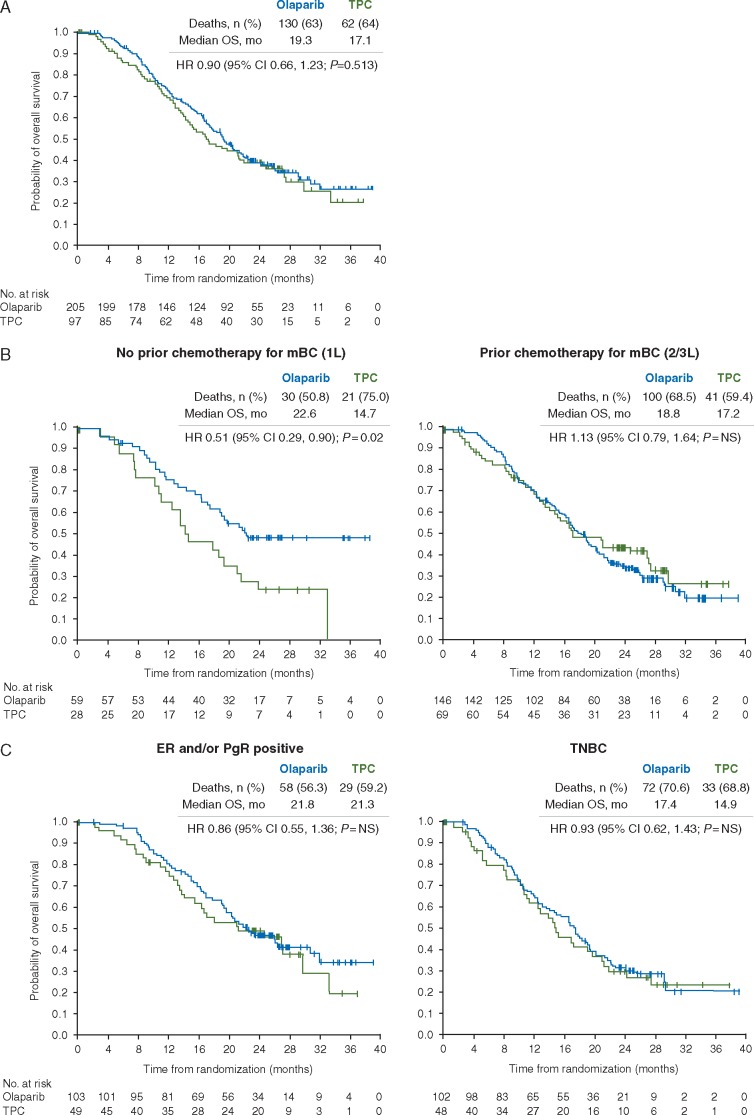
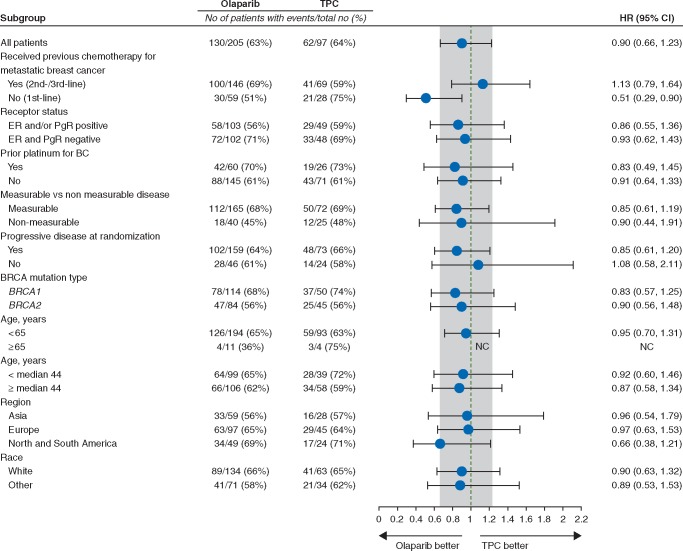
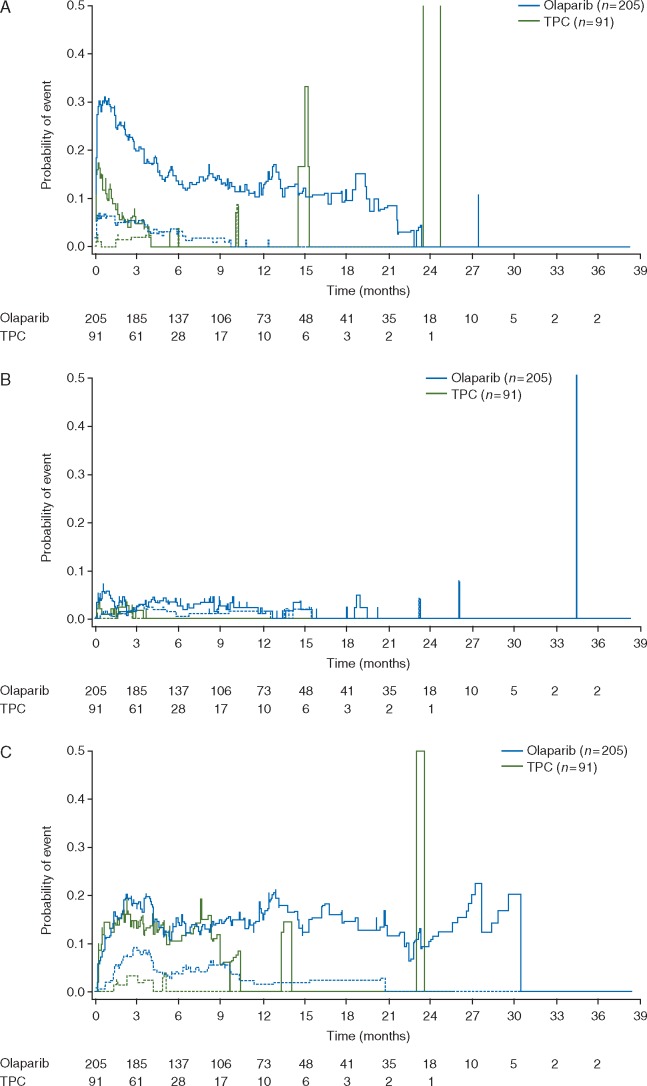
BACKGROUND: In the OlympiAD study, olaparib was shown to improve progression-free survival compared with chemotherapy treatment of physician's choice (TPC) in patients with a germline BRCA1 and/or BRCA2 mutation (BRCAm) and human epidermal growth factor receptor 2 (HER2)-negative metastatic breast cancer (mBC). We now report the planned final overall survival (OS) results, and describe the most common adverse events (AEs) to better understand olaparib tolerability in this population. PATIENTS AND METHODS: OlympiAD, a Phase III, randomized, controlled, open-label study (NCT02000622), enrolled patients with a germline BRCAm and HER2-negative mBC who had received ≤2 lines of chemotherapy for mBC. Patients were randomized to olaparib tablets (300 mg bid) or predeclared TPC (capecitabine, vinorelbine, or eribulin). OS and safety were secondary end points. RESULTS: A total of 205 patients were randomized to olaparib and 97 to TPC. At 64% data maturity, median OS was 19.3 months with olaparib versus 17.1 months with TPC (HR 0.90, 95% CI 0.66-1.23; P = 0.513); median follow-up was 25.3 and 26.3 months, respectively. HR for OS with olaparib versus TPC in prespecified subgroups were: prior chemotherapy for mBC [no (first-line setting): 0.51, 95% CI 0.29-0.90; yes (second/third-line): 1.13, 0.79-1.64]; receptor status (triple negative: 0.93, 0.62-1.43; hormone receptor positive: 0.86, 0.55-1.36); prior platinum (yes: 0.83, 0.49-1.45; no: 0.91, 0.64-1.33). Adverse events during olaparib treatment were generally low grade and manageable by supportive treatment or dose modification. There was a low rate of treatment discontinuation (4.9%), and the risk of developing anemia did not increase with extended olaparib exposure. CONCLUSIONS: While there was no statistically significant improvement in OS with olaparib compared to TPC, there was the possibility of meaningful OS benefit among patients who had not received chemotherapy for metastatic disease. Olaparib was generally well-tolerated, with no evidence of cumulative toxicity during extended exposure. Please see the article online for additional video content.
Overview
The claims and statistics of this paper haven’t been checked yet.
Free: it reads the open-access text and checks the first 5 claims that cite a source we can check. Create a free account to check every claim.
Integrity signals
Registry
Cites
Statistics
Figures
Verification
Claims the paper makes
The claims and statistics of this paper haven’t been checked yet.
Free: it reads the open-access text and checks the first 5 claims that cite a source we can check. Create a free account to check every claim.
Claims other papers make about this one
Each is checked against this paper’s own text: does it say what the citing paper says it does?
The source backs part of the claim, not all of it — or backs it for a different population, condition or comparison.
In the citing paper
“Since ABC 4, further data from the OlympiAD study suggested an OS benefit for olaparib when given in the first-line setting, with a median OS of 22.6 versus 14.7 months (HR 0.51; 95% CI 0.29-0.90, P = 0.02) in a subgroup analysis of predefined stratification subgroups,75”
From 5th ESO-ESMO international consensus guidelines for advanced breast cancer (ABC 5) (2020) · cites this paper as [75]
Experimental — accuracy not yet measured
Self-check
Percentages, sums and reported differences re-computed from the paper’s own numbers.
The self-check needs the paper’s full text.
Citations
Cites
Olaparib for Metastatic Breast Cancer in Patients with a Germline BRCA Mutation
Robson, M., Im, S.-A., Senkus, E., Xu, B., Domchek, S. M., Masuda, N., Delaloge, S., Li, W., Tung, N., Armstrong, A., et al. (2017) · New England Journal of Medicine · doi:10.1056/nejmoa1706450 · Cited by 3,294 · cited 4×
“The efficacy of the oral poly(ADP ribose) polymerase (PARP) inhibitor olaparib in patients with a germline BRCAm and HER2negative metastatic breast cancer (mBC) was confirmed in the Phase III OlympiAD study, with a statistically significant benefit in progression-free survival compared with chemotherapy treatment of p…”
BackgroundMethodResultSelf-citationTalazoparib in Patients with Advanced Breast Cancer and a Germline BRCA Mutation
Litton, J. K., Rugo, H. S., Ettl, J., Hurvitz, S. A., Gonçalves, A., Lee, K.-H., Fehrenbacher, L., Yerushalmi, R., Mina, L. A., Martin, M., et al. (2018) · New England Journal of Medicine · doi:10.1056/nejmoa1802905 · Cited by 2,175
Olaparib Monotherapy in Patients With Advanced Cancer and a Germline BRCA1/2 Mutation
Kaufman, B., Shapira-Frommer, R., Schmutzler, R. K., Audeh, M. W., Friedlander, M., Balmaña, J., Mitchell, G., Fried, G., Stemmer, S. M., Hubert, A., et al. (2015) · Journal of Clinical Oncology · doi:10.1200/jco.2014.56.2728 · Cited by 1,671
Self-citationCouch, F. J., Hart, S. N., Sharma, P., Toland, A. E., Wang, X., Miron, P., Olson, J. E., Godwin, A. K., Pankratz, V. S., Olswold, C., et al. (2015) · Journal of Clinical Oncology · doi:10.1200/jco.2014.57.1414 · Cited by 672 · cited 1×
“Germline BRCAm breast cancers tend to affect younger patients, those with a strong family history of breast cancer and Ashkenazi Jewish ancestry [1, 3].”
BackgroundMalone, K. E., Daling, J. R., Doody, D. R., Hsu, L., Bernstein, L., Coates, R. J., Marchbanks, P. A., Simon, M. S., McDonald, J. A., Norman, S. A., et al. (2006) · Cancer Research · doi:10.1158/0008-5472.can-06-0503 · Cited by 373 · cited 2×
“Germline BRCAm breast cancers tend to affect younger patients, those with a strong family history of breast cancer and Ashkenazi Jewish ancestry [1, 3].”
BackgroundKurian, A. W., Gong, G. D., John, E. M., Miron, A., Felberg, A., Phipps, A. I., West, D. W., & Whittemore, A. S. (2009) · Cancer Epidemiology, Biomarkers & Prevention · doi:10.1158/1055-9965.epi-08-1090 · Cited by 75 · cited 1×
“Approximately 5% of all breast cancer patients carry a germline deleterious mutation in BRCA1 and/or BRCA2 (BRCAm), with higher rates among those with human epidermal growth factor receptor 2 (HER2)-negative disease [1, 2].”
BackgroundKümmel, S., Jackisch, C., Müller, V., Schneeweiß, A., Klawitter, S., & Lux, M. P. (2017) · Annals of Oncology · doi:10.1093/annonc/mdx365.030 · Cited by 4
Kümmel, S., Jackisch, C., Müller, V., Schneeweiß, A., Klawitter, S., & Lux, M. P. (2018) · Cancer Management and Research · doi:10.2147/cmar.s177240 · Cited by 3
Cited by
Items 601–700 of 823
Integrating multi-omics and clinical management in breast cancer: a comprehensive review
Cao, X., Yang, Y. F., Wang, P., Wang, J. L., Zhao, Y., Zhang, Z., Jiang, J., Zhang, H., Kang, X., Feng, H., et al. (2026) · Discover Oncology · doi:10.1007/s12672-026-05357-7 · Cited by 1
“For instance, the OlympiAD trial reported a median progression-free survival (PFS) of 19.3 months with olaparib, significantly surpassing 17.1 months in the chemotherapy group [60].”
InfluentialWei, C., Liu, S., Hu, J., Cao, B., & Liu, B. (2026) · BMC Cancer · doi:10.1186/s12885-026-16520-2 · Cited by 1
Xu, Z., Wang, S., Cao, Y., Song, J., Liu, Y., Zhang, R., Tang, X., Wang, Y., Wu, H., Tu, J., et al. (2026) · Acta Pharmaceutica Sinica B · doi:10.1016/j.apsb.2026.07.022 · Cited by 2
Bridging the gap: integrating hereditary cancer into precision oncology
Aron, M. A. R., Cruellas, M., & Balmañà, J. (2026) · European Journal of Human Genetics · doi:10.1038/s41431-026-02196-6 · Cited by 1
Cheng, H., Chen, Y., Liu, P.-Y., Jin, X., Qu, Y., Liu, B., & Ai-zhuo, L. (2026) · Acta Pharmacologica Sinica · doi:10.1038/s41401-026-01892-9 · Cited by 1
Targeting DNA Damage Response Pathways for Cancer Therapy
Polu, P. R., & Vyas, M. (2026) · Springer eBooks · doi:10.1007/978-981-92-0477-9_3 · Cited by 1
Ruddy, K. J., Idossa, D. W., Black, D. M., Corbin, K. S., Cathcart-Rake, E. J., & O'Sullivan, C. C. (2026) · Mayo Clinic Proceedings · doi:10.1016/j.mayocp.2026.07.019 · Cited by 1
Current topics in hereditary breast and ovarian cancer
Ohsumi, S. (2019) · Okayama Igakkai Zasshi (Journal of Okayama Medical Association) · doi:10.4044/joma.131.89 · Cited by 1
PARP Inhibiter as a Treatment for Breast Cancer
Osanai, T., Nakagawa, T., & Takiguchi, N. (2019) · Nihon Rinsho Geka Gakkai Zasshi (Journal of Japan Surgical Association) · doi:10.3919/jjsa.80.1802 · Cited by 1
NGS zur Selektion innovativer Therapien – Was bringt das?
Schulmeyer, C. E., Bader, S., Hübner, H., Rübner, M., & Fasching, P. A. (2021) · Der Gynäkologe · doi:10.1007/s00129-021-04774-9 · Cited by 1
Kin, T., Ueno, A., Takamatsu, Y., Ito, M., Kawasaki, K., & Ohtani, S. (2020) · Nihon Rinsho Geka Gakkai Zasshi (Journal of Japan Surgical Association) · doi:10.3919/jjsa.81.1497 · Cited by 1
Experience in treating BRCA-associated breast cancer. The BRCA-history of a family
Султанбаев, А. В., Меньшиков, К. В., Насретдинов, А. Ф., Измайлов, А. А., Мусин, Ш. И., Menshikovа, I. A., Chashchin, A. V., & Султанбаева, Н. И. (2021) · Meditsinskiy sovet = Medical Council · doi:10.21518/2079-701x-2021-9-34-41 · Cited by 1
Is Molecular Tailored-Therapy Changing the Paradigm for CNS Metastases in Breast Cancer?
Nunno, V. D., Franceschi, E., Tosoni, A., Mura, A., Minichillo, S., Battista, M. D., Gatto, L., Maggio, I., Lodi, R., Bartolini, S., et al. (2021) · Clinical Drug Investigation · doi:10.1007/s40261-021-01070-1 · Cited by 1
Immune Checkpoint Inhibitor Sensitivity of DNA Repair Deficient Tumors
Rochefort, P., Desseigne, F., Bonadona, V., Dussart, S., Coutzac, C., Sarabi, M., & de la Fouchardière, C. (2021) · Immunotherapy · doi:10.2217/imt-2021-0024 · Cited by 1
PARPi: Efficacy in Hereditary Breast Cancer
Yoshimura, A. (2021) · Springer eBooks · doi:10.1007/978-981-16-4521-1_19 · Cited by 1
Cwilich, R. G., Olivares-Beltrán, G. M., Lázaro-León, J. M., Porras, G. O. R., Noguez-Ramos, A., Olvera, J. A. S., & Juarez, D. V. (2021) · Anales Médicos de la Asociación Médica del Centro Médico ABC · doi:10.35366/102924 · Cited by 1
Management of Hereditary Breast Cancer: An Overview
Kattepur, A. K., & Gopinath, K. S. (2022) · Springer eBooks · doi:10.1007/978-981-16-4546-4_18 · Cited by 2
Stukan, А. I., Goryainova, А. Y., Викторович, Ш. С., Алексеевна, Г. О., Khachmamuk, Z. K., & Durov, V. V. (2022) · Tumors of female reproductive system · doi:10.17650/1994-4098-2022-18-1-54-65 · Cited by 1
Rhiem, K., Hauke, J., Tüchler, A., Isselhard, A., Kautz‐Freimuth, S., Stock, S., Hahnen, E., & Schmutzler, R. K. (2022) · Die Gynäkologie · doi:10.1007/s00129-022-04940-7 · Cited by 1
“Nachweis von pathogenen gBRCA1-/BRCA2-Mutationen zur Indikationsstellung einer OlaparibTherapie Sowohl für Patientinnen mit einem primären als auch einem fortgeschrittenen Her2-negativen Mammakarzinom und nachgewiesener BRCA1/2-Keimbahnmutation bringt die Behandlung mit dem PARP-Inhibitor (PARPi) Olaparib einen klinis…”
BackgroundInfluentialTherapy options for metastatic triple negative breast cancer
Glazkova, E., Фролова, М. А., & Israelyan, E. R. (2022) · Meditsinskiy sovet = Medical Council · doi:10.21518/2079-701x-2022-16-9-201-206 · Cited by 1
Султанбаев, А. В., Меньшиков, К. В., Мусин, Ш. И., Насретдинов, А. Ф., Fatikhova, A., Измайлов, А. А., Lipatov, O. N., Ayupov, R. Т., Султанбаева, Н. И., Menshikovа, I. A., et al. (2022) · Journal of Modern Oncology · doi:10.26442/18151434.2022.2.201550 · Cited by 1
Defektif Homolog Rekombinasyon DNA Tamiri ve PARP İnhibisyonu Arasındaki Sentetik Letal Etkileşim
Toy, Y., Gündoğdu, R., SEVER, A., & Erdoğan, M. K. (2022) · Iğdır Üniversitesi Fen Bilimleri Enstitüsü Dergisi · doi:10.21597/jist.1095366 · Cited by 4
2022 : nouvelles pratiques thérapeutiques en oncologie mammaire
Deluche, É., & Verret, B. (2023) · Bulletin du Cancer · doi:10.1016/j.bulcan.2023.01.002 · Cited by 1
Mouthuy, N. (2023) · Imagerie de la Femme · doi:10.1016/j.femme.2022.12.001 · Cited by 1
Endocrine therapy in metastatic breast cancer-more than just CDK4/6 inhibitors
Droste, A., & Schmidt, M. (2023) · Journal of Cancer Metastasis and Treatment · doi:10.20517/2394-4722.2022.94 · Cited by 1
CADTH (2023) · Canadian Journal of Health Technologies · doi:10.51731/cjht.2023.640 · Cited by 1
The Recent Advances of PARP Inhibitors in the Treatment of Cancer
Li, D. (2023) · Theoretical and Natural Science · doi:10.54254/2753-8818/3/20220498 · Cited by 1
“Several clinical trials have shown a lower value of AEs and toxicity in the patients cured with PARP suppressor compared with chemotherapy [15][16].”
Sacituzumab Govitecan for the Treatment of HR+/HER2- Breast Cancer in Heavily Pre-treated Patients
Lucas, T., Chan, J., & Chopra, N. (2023) · touchREVIEWS in Oncology & Haematology · doi:10.17925/ohr.2023.19.1.1 · Cited by 1
Calaf, G. M., Roy, D., Lilian Jara, S., Aguayo, F., & Crispin, L. A. (2023) · Biomedicines · doi:10.3390/biomedicines11123111 · Cited by 1
Rygiel, K. (2023) · BENTHAM SCIENCE PUBLISHERS eBooks · doi:10.2174/9789815196023123010004 · Cited by 1
Promising Response of Olaparib in Patient With Germline ATM -Mutated Metastatic Gastric Cancer
Chan, K. H., Rutazanaa, D., Wray, C. J., Thosani, N. C., Yang, V., & Cen, P. (2024) · Journal of Investigative Medicine High Impact Case Reports · doi:10.1177/23247096241240176 · Cited by 1
Chmielewski, G., & Góźdź, S. S. (2024) · Medical Studies · doi:10.5114/ms.2024.137605 · Cited by 1
Joris, S., Giron, P., Olsen, C., Seneca, S., Gheldof, A., Staessens, S., Shahi, R. B., Brakeleer, S. D., Teugels, E., Grève, J. D., et al. (2024) · BMC Cancer · doi:10.1186/s12885-024-12442-z · Cited by 1
Avxentyev, N. А., Makarova, Y. V., & Makarov, A. S. (2024) · Tumors of female reproductive system · doi:10.17650/1994-4098-2024-16-2-55-65 · Cited by 1
Cedillo, S., Domínguez, A. G., Ivanova-Markova, Y., López‐López, R., López‐Tarruella, S., & Pedrosa, J. A. P. (2024) · PharmacoEconomics - Open · doi:10.1007/s41669-024-00518-2 · Cited by 1
“…in the Olym-piA RCT [13], except from the lmBC health status where, due to a lack of sufficiently mature data from OlympiA, the OlympiAD (the only RCT with similar characteristics to the study population in the OlympiA RCT where survival in this health status was studied) study was used [24, 25].”
MethodMoukadem, H. A., Fakhreddine, M. A., Assaf, N., Safi, N., Al-Masri, A., Darazi, M. H. A., Mahfouz, R. A., & Saghir, N. S. E. (2024) · World Journal of Clinical Oncology · doi:10.5306/wjco.v15.i12.1481 · Cited by 1
Gao, R., Wu, P., Yin, X., Zhuang, L., & Meng, X. (2025) · International Immunopharmacology · doi:10.1016/j.intimp.2025.114116 · Cited by 1
Targeted therapy in patients with genetic tumor syndromes
Jahn, A., Heining, C., Fröhling, S., Glimm, H., & Schröck, E. (2025) · Medizinische Genetik · doi:10.1515/medgen-2025-2045 · Cited by 1
Akkoc-Mustafayev, F. N., Fountzilas, E., Munsell, M. F., Layman, R. M., Yam, C., Gutierrez‐Barrera, A. M., Albarracin, C. T., Ahmed, Z., Schlacher, K., Tainer, J. A., et al. (2026) · Cancers · doi:10.3390/cancers18081258 · Cited by 1
“…analysis in the OlympiAD trial did not show a difference in survival between cohorts of patients with triple-negative BC and hormone receptor-positive BC, there was a potentially significant benefit for olaparib in patients who had not received chemotherapy for metastatic disease [15,27,28].”
InfluentialCordell, E., Mansour, M., Pantel, A. R., Schubert, E., Nabavizadeh, A., Mohan, S., Maloney, E., Prior, T., Angeloni, N., Blessing, C., et al. (2026) · Neuro-Oncology Advances · doi:10.1093/noajnl/vdag076 · Cited by 1
Investigating mechanisms of acquired drug resistance in Triple Negative Breast Cancer
Grimsley, H. E. (2021) · Kent Academic Repository (University of Kent) · doi:10.22024/unikent/01.02.88062 · Cited by 1
Koh, S., Ohsumi, S., Takahashi, M., Fukuma, E., Jung, K. H., Ishida, T., Dai, M., Chang, C.-H., Dalvi, T. B., Walker, G., et al. (2021) · Breast Cancer · doi:10.1007/s12282-021-01299-w · Cited by 1
Deciding on the best pharmacotherapy for advanced triple-negative breast cancer: expert guidance
Corvaja, C., Salimbeni, B. T., Nicolò, E., Puglisi, F., & Curigliano, G. (2022) · Expert Opinion on Pharmacotherapy · doi:10.1080/14656566.2022.2139176 · Cited by 1
“001, respectively) in both untreated and pretreated gBRCA1/2-mutated mTNBC but none of them has demonstrated an OS advantage in this setting, with only a trend in increased OS detected in the OlympiAD [7,9].”
BackgroundInfluentialNakamura, S. (2022) · Annals of Surgical Oncology · doi:10.1245/s10434-022-12329-y · Cited by 1
“8 months longer, and the risk of disease progression or death was 42% lower with olaparib monotherapy than with standard therapy.(1)”
BackgroundChang, L., Cui, H., Ren, X., Dai, L., Zhai, Z., Xiao, Z., Wu, H., Kang, H., & Ma, X. (2023) · Research Square · doi:10.21203/rs.3.rs-3180802/v1 · Cited by 1
Takuwa, H., Sasaki, S., Yamada, T., & Takeuchi, M. (2022) · Authorea · doi:10.22541/au.165692195.50180823/v1 · Cited by 1
Shao, Y., He, Y., Guo, F., Luo, Z., Yu, Y., Liu, C., Chen, Q., Zhu, F., & Liu, H. (2025) · Research Square · doi:10.21203/rs.3.rs-7072445/v1 · Cited by 1
Nan, Y., O'Keefe, S., He, X., Luo, Q., Wu, X., Ni, J., Zou, Y., Meade, J. M., Li, Y., Ji, R., et al. (2025) · bioRxiv (Cold Spring Harbor Laboratory) · doi:10.1101/2025.10.14.682312 · Cited by 2
Bono, M. (2021) · Nova Science Publishers (Nova Science Publishers, Inc.) · Cited by 1
Domchek, S. M. (2026) · Journal of Clinical Oncology · doi:10.1200/jco-25-02428 · Cited by 1
Self-citationMammakarzinom bei jungen Frauen: Was Sie wissen sollten
Burgmann, D.-M., Dobler, F., Zeder-Göß, C., Mahner, S., Harbeck, N., & Würstlein, R. (2019) · MMW - Fortschritte der Medizin · doi:10.1007/s15006-019-0783-2
Response of Estrogen-Receptor-Positive Metastatic Breast Cancer to Olaparib in Late-Line Therapy
Kumeta, T., Matsunuma, R., Yamaguchi, K., Hayami, R., & Tsuneizumi, M. (2019) · Case Reports in Oncology · doi:10.1159/000503858
Metastatic Breast Cancer : Efficacy of Bevacizumab-based Chemotherapy and Prognostic Factors
Tiainen, L. (2020) · Tampere University Institutional Repository (Tampere University) · Cited by 1
Mammakarzinom bei jungen Frauen: Was Sie wissen sollten
Burgmann, M. (2020) · Im Focus Onkologie · doi:10.1007/s15015-019-0747-5
Stau am Östrogenrezeptor bei fortgeschrittenem Mammakarzinom: Ende der endokrinen Monotherapie
Lüftner, D., & Busse, A. (2020) · Der Onkologe · doi:10.1007/s00761-020-00730-9
Zielgerichtete Therapie des Mammakarzinoms – ein Update
Jäger, B., Krawczyk, N., Ruckhäberle, E., & Fehm, T. N. (2020) · Frauenheilkunde up2date · doi:10.1055/a-0857-1087
Implications of BRCA Germline Mutations on Breast Cancer Medical Treatment
Du, F. L., Brunot, A., Rouge, T. D. L. M., & Dieras, V. C. (2020) · Current Breast Cancer Reports · doi:10.1007/s12609-020-00362-3
Mammakarzinom bei jungen Frauen: Was Sie wissen sollten
Burgmann, M. (2020) · gynäkologie + geburtshilfe · doi:10.1007/s15013-020-3026-9
Zielgerichtete Therapie beim metastasierten Mammakarzinom – welche molekularen Tests sind notwendig?
Schmidt, M. (2020) · Journal für Gynäkologische Endokrinologie/Österreich · doi:10.1007/s41974-020-00141-z
State of the Art for Metastatic Histologies
Haghshenas, V., Sayari, A. J., Shehabeldin, A. N., & Marco, R. A. W. (2020) · Springer eBooks · doi:10.1007/978-3-030-50722-0_14 · Cited by 1
Untch, M., Würstlein, R., Lüftner, D., Haidinger, R., Fasching, P. A., Augustin, D., Briest, S., Ettl, J., Forster, F. M. C., Kurbacher, C. M., et al. (2020) · Senologie - Zeitschrift für Mammadiagnostik und -therapie · doi:10.1055/a-1205-4313
Practical aspects of treating relapsed BRCA-associated ovarian cancer
Rumyantse, A. A., & Tyulyandina, A. S. (2019) · Meditsinskiy sovet = Medical Council · doi:10.21518/2079-701x-2019-19-144-149
Moderne Therapie beim metastasierten triple-negativen Mammakarzinom
Fink, A., de Gregorio, A., & Huober, J. (2020) · best practice onkologie · doi:10.1007/s11654-020-00248-x
Albert, A., Stüber, T. N., Bauer, J., & Wöckel, A. (2020) · DMW - Deutsche Medizinische Wochenschrift · doi:10.1055/a-1026-3620
“Bei metastasiertem TNBC kann bei einem Nachweis einer BRCA1/2-Mutation in der Keimbahn ein PARP-Inhibitor gegeben werden [13].”
BackgroundPreuß, C., Hein, A., Beckmann, M. W., & Jud, S. M. (2020) · Der Klinikarzt · doi:10.1055/a-1298-3661
“Aktuell wurde ein Langzeit-Follow der OlympiAD-Studie für das Gesamtüberleben und die Sicherheit von Olaparib vorgestellt.”
BackgroundSystemic Therapy for the Treatment of Breast Cancer
Leon, A. C. S., & Richardson, A. E. (2021) · Elsevier eBooks · doi:10.1016/b978-0-323-72166-0.00008-6
Positive Entwicklung beim triple-negativen Mammakarzinom
Eichbaum, M. H. R. (2021) · TumorDiagnostik & Therapie · doi:10.1055/a-1256-2688
“Positive prognostische Effekte zeigten sich dabei insbesondere für die Subgruppe von Patientinnen mit triple-negativem Befund [10].”
BackgroundMetastatic Breast Cancer: Clinical Relevance of Metastatic Sampling and Therapeutic Targets
Silva, D. (2021) · Biomedical Journal of Scientific & Technical Research · doi:10.26717/bjstr.2021.33.005353
“Sequencing of BRCA gene was performed due to family history and availability of targeted drug in this context of disease [3].”
BackgroundFink, A., de Gregorio, A., Braun, T., Ernst, K. L., Huober, J., Fink, V., Janni, W., & Rack, B. K. (2021) · Der Onkologe · doi:10.1007/s00761-021-00952-5
Characteristics and therapy of advanced cancer diseases
Taghizadeh, H. (2021)
Investigating molecular targets of the DNA damage response in triple negative breast cancer
Ward, A. (2021) · The University of Queensland · doi:10.14264/662cbf8 · Cited by 1
Prädiktive und prognostische Faktoren in der Therapie des frühen Mammakarzinoms
Thomssen, C. (2021) · Der Onkologe · doi:10.1007/s00761-021-01054-y
“In der metastasierten Situation bei HER2-negativer Erkrankung stehen 2 PARP-Inhibitoren (Olaparib, Talazoparib) zur Verfügung, die zu einer klinisch bedeutsamen Verlängerung des progressionsfreien Überlebens (PFS) und einer Stabilisierung der Lebensqualität führen können [47, 68, 69].”
BackgroundGermline Findings from Genetic Testing for Breast Cancer
Sakurai, A. (2021) · Springer eBooks · doi:10.1007/978-981-16-4521-1_15
Place of CDK 4/6 and PARP inhibitors in the modern treatment approach of HER2-negative breast cancer
Board Editorial (2021) · Journal of Modern Oncology · doi:10.26442/18151434.2021.3.201122
“В рамках своих РКИ ингибиторы PARP продемонстрировали предсказуемый и управляемый профиль токсичности [9, 10, 27].”
Möbus, V. J. (2021) · Elsevier eBooks · doi:10.1016/b978-3-437-23824-6.00046-8
A Case of Triple Negative Advanced Breast Cancer Suggested as a G-CSF Producing Tumor
Fujii, M., Noshima, S., Kawaguchi, Y., Kaneda, Y., SUDOU, R., & Tanaka, S. (2021) · Nihon Rinsho Geka Gakkai Zasshi (Journal of Japan Surgical Association) · doi:10.3919/jjsa.82.1076
Therapiealgorithmen für das Mammakarzinom
Blohmer, J., Schneeweiß, A., Bauerfeind, I., Fehm, T. N., Müller, V., Thomssen, C., Witzel, I., Wöckel, A., & Janni, W. (2021) · Der Onkologe · doi:10.1007/s00761-021-01060-0
Kümmel, S., Blohmer, J., Janni, W., Thill, M., & Reinisch, M. (2019) · Deutsches Ärzteblatt · doi:10.3238/personko.2019.11.15.01
Systemic therapy for triple-negative breast cancer: A changing landscape
Kessler, A. J., & Sparano, J. A. (2022) · Critical Reviews in Oncology/Hematology · doi:10.1016/j.critrevonc.2022.103608
Rygie, K. (2021) · Asia-Pacific Journal of Oncology · doi:10.32948/ajo.2021.07.28
“, median PFS was almost three months longer and the risk of disease progression or death was over 40% lower in women, who received olaparib, compared to those who received standard CHT (Table 1) [29].”
BackgroundInfluential(2020) · Geburtshilfe und Frauenheilkunde · doi:10.1055/a-1131-7106
Rumyantsev, А. А., Tyulyandina, A. S., Покатаев, И. А., Israelyan, E. R., Abramov, M. Е., Луд, А. Н., & Tyulyandin, S. А. (2022) · Meditsinskiy sovet = Medical Council · doi:10.21518/2079-701x-2022-16-9-77-83
The increasing importance of pathology in modern clinical trial conduct: OlympiA as a case in point
Kalinowski, L., Viale, G., Domchek, S. M., Tutt, A. N. J., Lucas, P. C., & Lakhani, S. R. (2022) · Pathology · doi:10.1016/j.pathol.2022.05.003
Self-citationAspectos clínicos y terapéuticos del carcinoma de mama metastásico triple negativo
Olvera, J. A. S., Pérez, D. O., Noguez-Ramos, A., Medina, R. G. R., Cantero, A. J., & de la Borbolla, L. F. M.-C. (2022) · Anales Médicos de la Asociación Médica del Centro Médico ABC · doi:10.35366/106027
Therapie des triple-negativen Mammakarzinoms
Maier, A. M., Hester, A., Harbeck, N., & Würstlein, R. (2022) · InFo Hämatologie + Onkologie · doi:10.1007/s15004-022-9153-9
DNA damage, metabolism, and epigenetic regulation
Ganguly, S., Ghanem, A., & Mian, O. Y. (2022) · Elsevier eBooks · doi:10.1016/b978-0-323-91081-1.00001-7 · Cited by 1
Implications of BRCA1 and BRCA2 Mutations in Mexico
Núñez, C. A. G., Galeana, P. A. C., Cruz, S. R., & Reyes, A. G. (2023) · IntechOpen eBooks · doi:10.5772/intechopen.107144
Wang, L. (2023) · Clinical Oncology · doi:10.1016/j.clon.2023.02.001
Immuntherapie beim triple-negativen Mammakarzinom – State of the Art
Stickeler, E., & Fehm, T. N. (2023) · Die Gynäkologie · doi:10.1007/s00129-023-05064-2
Hereditary Breast Cancer Non-CDH1 Associated
Micco, R. D., Esposito, E., Accardo, G., Sibilio, A., Kouloura, A., Costa, M. J. M., & Gentilini, O. (2023) · Springer eBooks · doi:10.1007/978-3-031-21317-5_23
Data from Genomic, Transcriptomic, and Proteomic Profiling of Metastatic Breast Cancer
Akçakanat, A., Zheng, X., Pico, C. X. C., Kim, T., Chen, K., Korkut, A., Şahin, A. A., Holla, V. R., Tarco, E., Singh, G., et al. (2023) · doi:10.1158/1078-0432.c.6530036
Personalisierte Medizin – von der Translation zur Klinik
Schmidt, M., Denkert, C., Rhiem, K., Decker, T. W., & Loibl, S. (2023) · Die Gynäkologie · doi:10.1007/s00129-023-05081-1
“Für Olaparib wurde auch eine Verlängerung des Gesamtüberlebens (OS) um 7,9 Monate (HR 0,51) bei in der ersten Therapielinie behandelten Patientinnen nachgewiesen [5].”
Cancers du sein triples négatifs, l’innovation thérapeutique enfin accessible
Béguinot, M., Fondrevelle, M.-E., Paradisi‐Prieur, L., & Archinard, C. (2022) · Sages-Femmes · doi:10.1016/j.sagf.2022.01.008
Burk, S. R., & Morrione, A. (2023) · Annals of Research in Oncology · doi:10.48286/aro.2023.65
Palácová, M. (2023) · Onkologie · doi:10.36290/xon.2023.029
Future trends in advanced triple negative breast cancer
Eslava, M. S., Avila, J. B., Olmedo, M., & Bernabé, S. R. (2023) · Revisiones en cáncer · doi:10.20960/revcancer.00029
Luminal breast cancer treatment beyond cell cycle inhibitors
Sánchez-Bayona, R., & Bianchi, M. A. (2023) · Revisiones en cáncer · doi:10.20960/revcancer.00027
Jeute, A. (2023) · Publication Server of Goethe University Frankfurt am Main (Goethe University Frankfurt) · doi:10.21248/gups.74723
Entitätsagnostische Tumortherapie – Was spricht dafür, was dagegen?
Desuki, A., Pretzell, I., Kloth, M. T., & Paret, C. (2023) · TumorDiagnostik & Therapie · doi:10.1055/a-1917-4870
Tsareva, А. S., Владимировна, Л. Е., Rumyantsev, А. А., Glazkova, E., & Петровна, Г. И. (2023) · Meditsinskiy sovet = Medical Council · doi:10.21518/ms2023-247
Metadata
- Authors
- Robson, M. E., Tung, N., Conte, P., Im, S.-A., Senkus, E., Xu, B., Masuda, N., Delaloge, S., Li, W., Armstrong, A., Wu, W., Goessl, C., Runswick, S., & Domchek, S. M.
- Affiliations
- Memorial Sloan Kettering Cancer Center (US)
- Beth Israel Deaconess Medical Center (US)
- University of Padua (IT)
- Seoul National University (KR)
- Gdańsk Medical University (PL)
- Chinese Academy of Medical Sciences & Peking Union Medical College (CN)
- Osaka National Hospital (JP)
- Institut Gustave Roussy (FR)
- First Hospital of Jilin University (CN)
- The Christie Hospital (GB)
- AstraZeneca (United States) (US)
- AstraZeneca (United Kingdom) (GB)
- University of Pennsylvania (US)
- Corresponding author
- Robson, M.E.
- Runswick, S.
- ORCID
- Venue
- Annals of Oncology
- Publisher
- Elsevier BV
- Published
- 2019-04
- Volume
- 30
- Issue
- 4
- Pages
- 558-566
- ISSN
- 0923-7534 (ISSN-L)
- PMC
- PMC6503629
- OpenAlex
- W2913584903
- Cited by
- 779
- References
- 9
- Citations by year
- 2026: 76 · 2025: 84 · 2024: 108 · 2023: 144 · 2022: 133 · 2021: 118 · 2020: 83 · 2019: 33
- FWCI
- 38.45
- Type
- journal article
- Language
- en
- Open access
- hybrid
- doi.org
- Licence
- cc-by-nc
- www.elsevier.com/tdm/userlicense/1.0/ (tdm)
- creativecommons.org/licenses/by-nc/4.0/ (vor, 326 d)
- Locations
- Annals of Oncology (publishedVersion, cc-by-nc)
- PubMed Central (publishedVersion, cc-by-nc)
- PubMed (publishedVersion)
- Seoul National University Open Repository (Seoul National University) (submittedVersion)
- Padua Research Archive (University of Padova) (submittedVersion)
- Funders
- AstraZeneca
- AstraZeneca and Merck & Co.
- Inc.
- NIH/NCI Cancer Center
- Breast Cancer Research Foundation
- Mudskipper Business Ltd
- Topics
- Health Sciences › Medicine › Oncology › PARP inhibition in cancer therapy
- Life Sciences › Biochemistry, Genetics and Molecular Biology › Genetics › BRCA gene mutations in cancer
- Health Sciences › Medicine › Oncology › Advanced Breast Cancer Therapies
- Keywords
- olaparib, HER2-negative metastatic breast cancer, germline BRCA1 mutation, germline BRCA2 mutation, PARP inhibitors, overall survival, tolerability, adverse events, capecitabine, vinorelbine, eribulin, platinum-based chemotherapy, triple-negative breast cancer, hormone receptor-positive breast cancer, Olympiad
- MeSH terms
- Poly(ADP-ribose) Polymerase Inhibitors, Progression-Free Survival, Administration, Oral, Adult, Aged, Anemia, Antineoplastic Combined Chemotherapy Protocols, Breast Neoplasms, Female, Follow-Up Studies, Humans, Middle Aged, Phthalazines, Piperazines, Tablets, Germ-Line Mutation, Receptor, ErbB-2, Erb-b2 Receptor Tyrosine Kinases, BRCA1 Protein
About these checks
Registry, retraction, Cites and statistics results are computed, not judged, with one exception: a printed reference that no index lists is read once by a model before it counts as a citation error. Claims are extracted by a model and kept only when their quote appears verbatim in the text; each cited source is then checked, with a model’s help, for whether it says what the claim relies on. Those verdicts can be wrong — read the claim’s quote and the cited source before relying on one.
Statistics and arithmetic are recomputed, not judged.
Confidence bands are shown only for fields calibrated on our annotated test set. None is calibrated yet, so no band is shown.
What counts as a claim ›How we measure confidence ›How we check this ›
Are you an author, or do you see a problem with this page? Request a review
Data sources
Bibliographic data: Semantic Scholar, OpenAlex, Crossref.
Contains information from the Semantic Scholar Academic Graph Datasets, made available under the ODC Attribution License (ODC-BY 1.0).
Semantic Scholar’s data is described in: Kinney, R., et al. (2023). The Semantic Scholar Open Data Platform. arXiv:2301.10140.
