

OlympiAD final overall survival and tolerability results: olaparib versus chemotherapy treatment of physician's choice in patients with a germline BRCA mutation and HER2-negative metastatic breast cancer
Open accessThe DOI matches its Crossref record; 8 of the 9 references it cites were found in a registry or an index.
Abstract
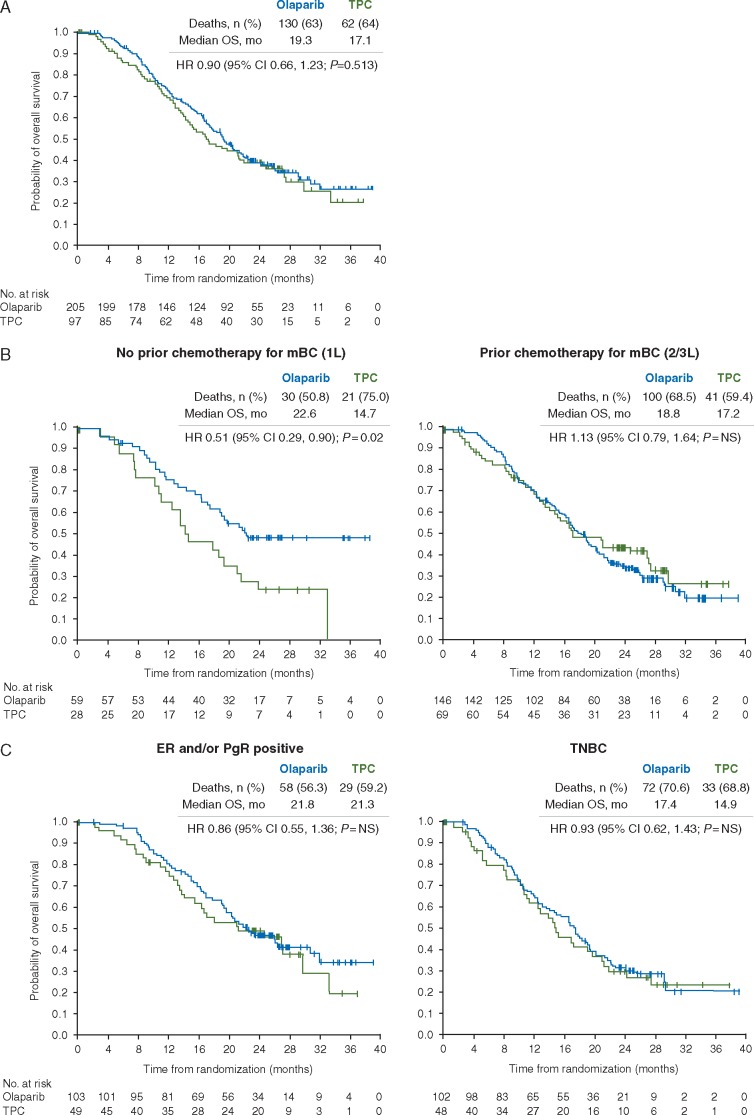
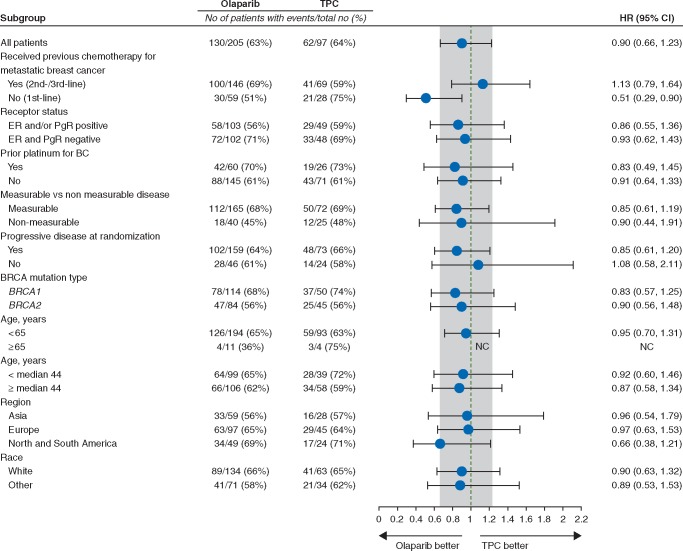
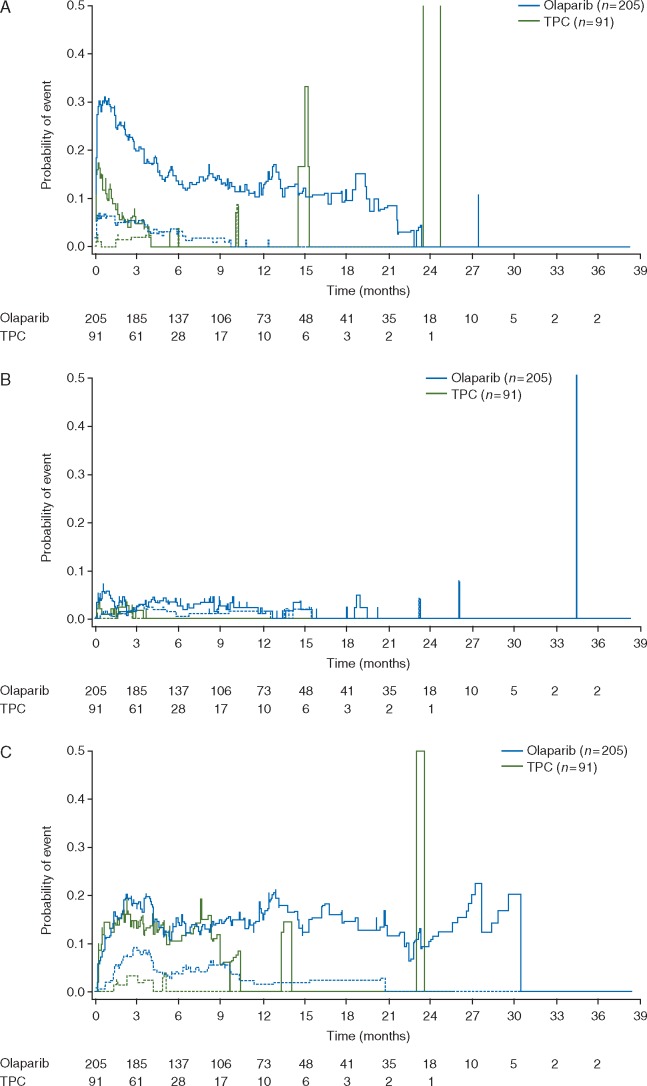
BACKGROUND: In the OlympiAD study, olaparib was shown to improve progression-free survival compared with chemotherapy treatment of physician's choice (TPC) in patients with a germline BRCA1 and/or BRCA2 mutation (BRCAm) and human epidermal growth factor receptor 2 (HER2)-negative metastatic breast cancer (mBC). We now report the planned final overall survival (OS) results, and describe the most common adverse events (AEs) to better understand olaparib tolerability in this population. PATIENTS AND METHODS: OlympiAD, a Phase III, randomized, controlled, open-label study (NCT02000622), enrolled patients with a germline BRCAm and HER2-negative mBC who had received ≤2 lines of chemotherapy for mBC. Patients were randomized to olaparib tablets (300 mg bid) or predeclared TPC (capecitabine, vinorelbine, or eribulin). OS and safety were secondary end points. RESULTS: A total of 205 patients were randomized to olaparib and 97 to TPC. At 64% data maturity, median OS was 19.3 months with olaparib versus 17.1 months with TPC (HR 0.90, 95% CI 0.66-1.23; P = 0.513); median follow-up was 25.3 and 26.3 months, respectively. HR for OS with olaparib versus TPC in prespecified subgroups were: prior chemotherapy for mBC [no (first-line setting): 0.51, 95% CI 0.29-0.90; yes (second/third-line): 1.13, 0.79-1.64]; receptor status (triple negative: 0.93, 0.62-1.43; hormone receptor positive: 0.86, 0.55-1.36); prior platinum (yes: 0.83, 0.49-1.45; no: 0.91, 0.64-1.33). Adverse events during olaparib treatment were generally low grade and manageable by supportive treatment or dose modification. There was a low rate of treatment discontinuation (4.9%), and the risk of developing anemia did not increase with extended olaparib exposure. CONCLUSIONS: While there was no statistically significant improvement in OS with olaparib compared to TPC, there was the possibility of meaningful OS benefit among patients who had not received chemotherapy for metastatic disease. Olaparib was generally well-tolerated, with no evidence of cumulative toxicity during extended exposure. Please see the article online for additional video content.
Overview
The claims and statistics of this paper haven’t been checked yet.
Free: it reads the open-access text and checks the first 5 claims that cite a source we can check. Create a free account to check every claim.
Integrity signals
Registry
Cites
Statistics
Figures
Verification
Claims the paper makes
The claims and statistics of this paper haven’t been checked yet.
Free: it reads the open-access text and checks the first 5 claims that cite a source we can check. Create a free account to check every claim.
Claims other papers make about this one
Each is checked against this paper’s own text: does it say what the citing paper says it does?
The source backs part of the claim, not all of it — or backs it for a different population, condition or comparison.
In the citing paper
“Since ABC 4, further data from the OlympiAD study suggested an OS benefit for olaparib when given in the first-line setting, with a median OS of 22.6 versus 14.7 months (HR 0.51; 95% CI 0.29-0.90, P = 0.02) in a subgroup analysis of predefined stratification subgroups,75”
From 5th ESO-ESMO international consensus guidelines for advanced breast cancer (ABC 5) (2020) · cites this paper as [75]
Experimental — accuracy not yet measured
Self-check
Percentages, sums and reported differences re-computed from the paper’s own numbers.
The self-check needs the paper’s full text.
Citations
Cites
Olaparib for Metastatic Breast Cancer in Patients with a Germline BRCA Mutation
Robson, M., Im, S.-A., Senkus, E., Xu, B., Domchek, S. M., Masuda, N., Delaloge, S., Li, W., Tung, N., Armstrong, A., et al. (2017) · New England Journal of Medicine · doi:10.1056/nejmoa1706450 · Cited by 3,294 · cited 4×
“The efficacy of the oral poly(ADP ribose) polymerase (PARP) inhibitor olaparib in patients with a germline BRCAm and HER2negative metastatic breast cancer (mBC) was confirmed in the Phase III OlympiAD study, with a statistically significant benefit in progression-free survival compared with chemotherapy treatment of p…”
BackgroundMethodResultSelf-citationTalazoparib in Patients with Advanced Breast Cancer and a Germline BRCA Mutation
Litton, J. K., Rugo, H. S., Ettl, J., Hurvitz, S. A., Gonçalves, A., Lee, K.-H., Fehrenbacher, L., Yerushalmi, R., Mina, L. A., Martin, M., et al. (2018) · New England Journal of Medicine · doi:10.1056/nejmoa1802905 · Cited by 2,175
Olaparib Monotherapy in Patients With Advanced Cancer and a Germline BRCA1/2 Mutation
Kaufman, B., Shapira-Frommer, R., Schmutzler, R. K., Audeh, M. W., Friedlander, M., Balmaña, J., Mitchell, G., Fried, G., Stemmer, S. M., Hubert, A., et al. (2015) · Journal of Clinical Oncology · doi:10.1200/jco.2014.56.2728 · Cited by 1,671
Self-citationCouch, F. J., Hart, S. N., Sharma, P., Toland, A. E., Wang, X., Miron, P., Olson, J. E., Godwin, A. K., Pankratz, V. S., Olswold, C., et al. (2015) · Journal of Clinical Oncology · doi:10.1200/jco.2014.57.1414 · Cited by 672 · cited 1×
“Germline BRCAm breast cancers tend to affect younger patients, those with a strong family history of breast cancer and Ashkenazi Jewish ancestry [1, 3].”
BackgroundMalone, K. E., Daling, J. R., Doody, D. R., Hsu, L., Bernstein, L., Coates, R. J., Marchbanks, P. A., Simon, M. S., McDonald, J. A., Norman, S. A., et al. (2006) · Cancer Research · doi:10.1158/0008-5472.can-06-0503 · Cited by 373 · cited 2×
“Germline BRCAm breast cancers tend to affect younger patients, those with a strong family history of breast cancer and Ashkenazi Jewish ancestry [1, 3].”
BackgroundKurian, A. W., Gong, G. D., John, E. M., Miron, A., Felberg, A., Phipps, A. I., West, D. W., & Whittemore, A. S. (2009) · Cancer Epidemiology, Biomarkers & Prevention · doi:10.1158/1055-9965.epi-08-1090 · Cited by 75 · cited 1×
“Approximately 5% of all breast cancer patients carry a germline deleterious mutation in BRCA1 and/or BRCA2 (BRCAm), with higher rates among those with human epidermal growth factor receptor 2 (HER2)-negative disease [1, 2].”
BackgroundKümmel, S., Jackisch, C., Müller, V., Schneeweiß, A., Klawitter, S., & Lux, M. P. (2017) · Annals of Oncology · doi:10.1093/annonc/mdx365.030 · Cited by 4
Kümmel, S., Jackisch, C., Müller, V., Schneeweiß, A., Klawitter, S., & Lux, M. P. (2018) · Cancer Management and Research · doi:10.2147/cmar.s177240 · Cited by 3
Cited by
Items 201–300 of 823
Efficacy and Safety of CDK4/6 Inhibitors: A Focus on HR+/HER2− Early Breast Cancer
Klocker, E. V., Egle, D., Bartsch, R., Rinnerthaler, G., & Gnant, M. (2025) · Drugs · doi:10.1007/s40265-024-02144-y · Cited by 25
Geng, A., Xu, S., Yao, Y., Qian, Z. Y., Wang, X., Sun, J., Zhang, J., Shi, F., Chen, Z., Zhang, W., et al. (2022) · Cell Cycle · doi:10.1080/15384101.2021.2020434 · Cited by 25
Ngoi, N. Y. L., Westin, S. N., & Yap, T. A. (2022) · Current Opinion in Oncology · doi:10.1097/cco.0000000000000867 · Cited by 24
Poddar, A., Rao, S. R., Prithviraj, P., Kannourakis, G., & Jayachandran, A. (2022) · Current Oncology · doi:10.3390/curroncol29100540 · Cited by 25
“There have been recent breakthrough therapies including poly ADP ribose polymerase (PARP) inhibitors olaparib and talazoparib in a subpopulation of TNBC patients who harbour germline BRCA1 or BRCA2 mutation [10,11].”
BackgroundMalhotra, H., Kowtal, P., Mehra, N., Pramank, R., Sarin, R., Rajkumar, T., Gupta, S., Bapna, A., Bhattacharyya, G. S., Gupta, S., et al. (2020) · JCO Global Oncology · doi:10.1200/jgo.19.00381 · Cited by 26
Huynh, M.-M., Pambid, M. R., Jayanthan, A., Dorr, A., Los, G., & Dunn, S. E. (2020) · Expert Opinion on Investigational Drugs · doi:10.1080/13543784.2020.1818067 · Cited by 25
Heitmeir, B., Deniz, M., Janni, W., Rack, B. K., Schochter, F., & Wiesmüller, L. (2022) · Cancers · doi:10.3390/cancers14040997 · Cited by 23
A review of treatment options in HER2‐low breast cancer and proposed treatment sequencing algorithm
Roy, A. M., Kumarasamy, V. M., Dhakal, A., O'Regan, R. M., & Gandhi, S. (2023) · Cancer · doi:10.1002/cncr.34904 · Cited by 25
“02).(43) Talazoparib is another oral PARPi approved for patients with advanced HER2‐negative BRCA mutated BC.”
BackgroundNicolini, A., & Ferrari, P. (2024) · Cancers · doi:10.3390/cancers16020466 · Cited by 24
Nguyen, T. H., Nguyen, V. H., Nguyen, T. L., Qiuyin, C., & Phung, H. T. (2019) · BioMed Research International · doi:10.1155/2019/7391237 · Cited by 23
“Meanwhile, in the triple-negative group, treatment options are usually limited to chemotherapy, and the polyadenosine diphosphate-ribose polymerase (PARP) inhibitor olaparib for selected cases with BRCA mutation [11].”
BackgroundOlaparib for Advanced Breast Cancer
Griguolo, G., Dieci, M. V., Miglietta, F., Guarneri, V., & Conte, P. (2020) · Future Oncology · doi:10.2217/fon-2019-0689 · Cited by 23
Self-citationOlaparib for metastatic breast cancer in a patient with a germline PALB2 variant
Küemmel, S., Harrach, H., Schmutzler, R. K., Kostara, A., Ziegler-Löhr, K., Dyson, M. H., Chiari, O., & Reinisch, M. (2020) · npj Breast Cancer · doi:10.1038/s41523-020-00174-9 · Cited by 24
Lu, Y., Yeo, W., Yap, Y. S., Park, Y. H., Tamura, K., Li, H., & Cheng, R. (2021) · Targeted Oncology · doi:10.1007/s11523-021-00838-x · Cited by 24
Expert consensus to optimize the treatment of elderly patients with luminal metastatic breast cancer
Torregrosa, M. D., Barco, S. D., Cotes, A., Roso, L. L., Servitja, S., & Sarrió, R. G. (2022) · Clinical & Translational Oncology · doi:10.1007/s12094-021-02766-8 · Cited by 24
“513), it positively affected patients’ quality of life [59].”
BackgroundZhang, X., Mu, X. L., Huang, O., Wang, Z., Chen, J., Chen, D., & Wang, G. (2022) · BMC Cancer · doi:10.1186/s12885-022-09286-w · Cited by 26
Gandhi, G. R., Antony, P. J., Lana, M. J. M. D. P., da Silva, B. F. X., Oliveira, R. V., Jothi, G., Hariharan, G., Mohana, T., Gan, R., Gurgel, R. Q., et al. (2022) · Phytomedicine · doi:10.1016/j.phymed.2022.154038 · Cited by 24
Morganti, S., Bychkovsky, B., Poorvu, P. D., Garrido-Castro, A. C., Weiss, A. C., Block, C. C., Partridge, A. H., Curigliano, G., Tung, N., Lin, N., et al. (2023) · The Oncologist · doi:10.1093/oncolo/oyad123 · Cited by 25
Self-citationPark‐Simon, T., Müller, V., Albert, U., Banys-Paluchowski, M. J., Bauerfeind, I., Blohmer, J., Budach, W., Dall, P., Ditsch, N. C., Fallenberg, E. M., et al. (2024) · Breast Care · doi:10.1159/000538596 · Cited by 23
Yuan, P., Ma, N., & Xu, B. (2024) · Medicinal Research Reviews · doi:10.1002/med.22058 · Cited by 23
Self-citationUpdates on the treatment of invasive breast cancer: Quo Vadimus?
Nigdelis, M. P., Karamouzis, M. V., Kontos, M. C., Alexandrou, A. P., Goulis, D. G., & Lambrinoudaki, I. V. (2020) · Maturitas · doi:10.1016/j.maturitas.2020.11.006 · Cited by 24
PARP Inhibitors in Triple-Negative Breast Cancer Including Those With BRCA Mutations
Layman, R. M., & Arun, B. K. (2021) · The Cancer Journal · doi:10.1097/ppo.0000000000000499 · Cited by 22
Giachetti, P. P. M. B., Morganti, S., Gandini, S., Giudici, F., Marra, A., Nicolò, E., Zattarin, E., Corti, C., Boldrini, L., Verrazzo, A., et al. (2025) · JAMA Network Open · doi:10.1001/jamanetworkopen.2024.61067 · Cited by 22
Schütz, F., Fasching, P. A., Welslau, M., Hartkopf, A. D., Wöckel, A., Lux, M. P., Janni, W., Ettl, J., Lüftner, D., Belleville, E., et al. (2019) · Geburtshilfe und Frauenheilkunde · doi:10.1055/a-1001-9925 · Cited by 22
Huart, C., Fransolet, M., Demazy, C., Calvé, B. L., Lucas, S., Michiels, C., & Wéra, A.-C. (2022) · Cancers · doi:10.3390/cancers14061460 · Cited by 23
Greco, S., Fabbri, N., Spaggiari, R., Giorgi, A. D., Fabbian, F., & Giovine, A. (2023) · Biomedicines · doi:10.3390/biomedicines11061772 · Cited by 21
“The second and final part of the study (OlympiAD trial) was published in 2019, and, although it did not demonstrate statistically significant improvement in terms of OS by olaparib treatment compared to standard chemotherapy, it showed a possible meaningful OS benefit among the patients not previously treated with che…”
ResultDieras, V. C., Han, H. S., Wildiers, H. P. M. W., Friedlander, M. L., Ayoub, J.-P., Puhalla, S. L., Loirat, D., Ratajczak, C. K., Adamu, H., Girardi, V., et al. (2024) · European Journal of Cancer · doi:10.1016/j.ejca.2024.113580 · Cited by 25
Prevention, diagnosis and clinical management of hereditary breast cancer beyond BRCA1/2 genes
Calabrese, A., von Arx, C., Tafuti, A. A., Pensabene, M., & Laurentiis, M. D. (2024) · Cancer Treatment Reviews · doi:10.1016/j.ctrv.2024.102785 · Cited by 21
What’s the Price? Toxicities of Targeted Therapies in Breast Cancer Care
Anders, C. K., LeBoeuf, N. R., Bashoura, L., Faiz, S. A., Shariff, A. I., & Thomas, A. (2020) · American Society of Clinical Oncology Educational Book · doi:10.1200/edbk_279465 · Cited by 21
Sigorski, D., Iżycka‐Świeszewska, E., & Bodnar, L. (2020) · Targeted Oncology · doi:10.1007/s11523-020-00756-4 · Cited by 22
Mo, Z., Hu, H., Du, X., Huang, Q., Chen, P., Lai, L., & Yu, Z. (2022) · Frontiers in Medicine · doi:10.3389/fmed.2021.724582 · Cited by 23
Current and New Novel Combination Treatments for Metastatic Triple-Negative Breast Cancer
Pauls, M., Chia, S., & LeVasseur, N. (2022) · Current Oncology · doi:10.3390/curroncol29070377 · Cited by 21
“This is particularly relevant as an OS advantage was noted for patients who received olaparib as a first-line treatment and had not received prior chemotherapy in the OlympiAD study, as previously discussed [16].”
BackgroundHope and Hype around Immunotherapy in Triple-Negative Breast Cancer
Jacobs, F., Agostinetto, E., Miggiano, C., Sanctis, R. D., Zambelli, A., & Santoro, A. (2023) · Cancers · doi:10.3390/cancers15112933 · Cited by 21
Antibody-drug conjugates in HER-2 negative breast cancers with poor prognosis
Püsküllüoğlu, M., Rudzińska, A., & Pacholczak‐Madej, R. (2023) · Biochimica et Biophysica Acta (BBA) - Reviews on Cancer · doi:10.1016/j.bbcan.2023.188991 · Cited by 20
The Landscape of PARP Inhibitors in Solid Cancers
Muzzana, M., Broggini, M., & Damia, G. L. M. (2025) · OncoTargets and Therapy · doi:10.2147/ott.s499226 · Cited by 21
“47 In an extended further analysis, the 3-year survival was 27.9% for olaparib versus 21.2% for standard of care, 8.8% of patients received olaparib treatment for ≥3 years versus none with chemotherapy treated patients.”
InfluentialPoly (ADP-ribose) Polymerase Inhibition in Patients with Breast Cancer and BRCA 1 and 2 Mutations
Jerez, Y., Márquez‐Rodas, I., Aparicio, I., Alva, M., Martín, M., & López‐Tarruella, S. (2019) · Drugs · doi:10.1007/s40265-019-01235-5 · Cited by 21
Goda, N., Nakashima, C., Nagamine, I., & Otagaki, S. (2022) · Cancers · doi:10.3390/cancers14092138 · Cited by 19
“In addition, the evaluation of some cancer-related gene mutations, such as in BRCA1/2, is promising for obtaining additional molecular-targeted agent options [11,12].”
BackgroundDNA Damage Response Inhibitors in Cholangiocarcinoma: Current Progress and Perspectives
Geyik, Ö. G., Anichini, G., Ulukaya, E., Marra, F., & Raggi, C. (2022) · Cells · doi:10.3390/cells11091463 · Cited by 19
Management Strategies of Breast Cancer Patients with BRCA1 and BRCA2 Pathogenic Germline Variants
Edaily, S., & Abdel‐Razeq, H. (2022) · OncoTargets and Therapy · doi:10.2147/ott.s369844 · Cited by 20
“However, there was no OS advantage even with an updated analysis of the study.(36) Talazoparib, another PARP inhibitor, was also studied in a phase 3 randomized trial, EMBRACA.”
BackgroundLiu, H., Chen, X., Jia, Y., Chen, H., Wang, X., Liu, G., & Luo, Y. (2023) · Interdisciplinary medicine · doi:10.1002/inmd.20220013 · Cited by 20
Zattarin, E., Taglialatela, I., Lobefaro, R., Leporati, R., Fucà, G., Ligorio, F., Sposetti, C., Provenzano, L., Azzollini, J., Vingiani, A., et al. (2023) · Critical Reviews in Oncology/Hematology · doi:10.1016/j.critrevonc.2023.104109 · Cited by 23
Lee, E. Y., Lee, D., Lee, K.-H., & Im, S. (2023) · Cancer Research and Treatment · doi:10.4143/crt.2023.846 · Cited by 19
“…arm (7.0 vs. 4.2 months; hazard ratio, 0.58; p < 0.01), and while there was no significant improvement in OS (19.3 vs. 17.1 months; hazard ratio, 0.90; p=0.513), subgroup analyses suggested potential benefit in individuals who had not received prior chemotherapy in the metastatic setting [63,64].”
InfluentialSelf-citationAdvances in Personalized Oncology
Mechahougui, H., Gutmans, J., Colarusso, G., Gouasmi, R., & Friedlaender, A. (2024) · Cancers · doi:10.3390/cancers16162862 · Cited by 21
“The OlympiAD trial [63] has highlighted olaparib’s ability to improve PFS by 2.8 months over standard therapy.”
BackgroundInfluentialThe Present and Future of Clinical Management in Metastatic Breast Cancer
Lin, P., & Laliotis, G. (2022) · Journal of Clinical Medicine · doi:10.3390/jcm11195891 · Cited by 20
“The recent data regarding the efficacy of PI3-Kinase [9,10] and PARP [11,12] inhibitors in metastatic breast cancer (mBC) treatment, identified the importance of clinicians to be familiar with the recent advancements in experimental clinical and basic research.”
BackgroundMiglietta, F., Cinquini, M., Dieci, M. V., Cortesi, L., Criscitiello, C., Montemurro, F., Mastro, L. D., Zambelli, A., Biganzoli, L., Levaggi, A., et al. (2022) · The Breast · doi:10.1016/j.breast.2022.10.014 · Cited by 20
Wilson, E. A. H., Sultana, N., Shah, K. N., Elford, H. L., & Faridi, J. S. (2021) · Molecular Cancer Therapeutics · doi:10.1158/1535-7163.mct-20-0373 · Cited by 19
Schneeweiß, A., Hartkopf, A. D., Müller, V., Wöckel, A., Lux, M. P., Janni, W., Ettl, J., Belleville, E., Huober, J., Thill, M., et al. (2020) · Geburtshilfe und Frauenheilkunde · doi:10.1055/a-1111-2431 · Cited by 18
Welslau, M., Hartkopf, A. D., Müller, V., Wöckel, A., Lux, M. P., Janni, W., Ettl, J., Lüftner, D., Belleville, E., Schütz, F., et al. (2019) · Geburtshilfe und Frauenheilkunde · doi:10.1055/a-1001-9952 · Cited by 18
Wallner, L. P., Chen, L. H., Hogan, T. A., Brasfield, F. M., & Haque, R. (2022) · Cancer Epidemiology Biomarkers & Prevention · doi:10.1158/1055-9965.epi-22-0065 · Cited by 18
Frey, B., Borgmann, K., Jost, T., Greve, B., Oertel, M., Micke, O., & Eckert, F. (2023) · Strahlentherapie und Onkologie · doi:10.1007/s00066-023-02122-5 · Cited by 22
Cardiotoxicity of Agents Used in Patients With Breast Cancer
Zagami, P., Trapani, D., Nicolò, E., Corti, C., Valenza, C., Criscitiello, C., Curigliano, G., & Carey, L. (2023) · JCO Oncology Practice · doi:10.1200/op.23.00494 · Cited by 21
ER-positive and BRCA2-mutated breast cancer: a literature review
Li, P., Zhu, Y., Cao, W., & Li, B. (2024) · European journal of medical research · doi:10.1186/s40001-023-01618-1 · Cited by 20
“In the OlympiAD study [73], the final OS did not significantly differ between patients treated with olaparib and with standard treatment in the ER-positive subgroup (median: 21.8 months for olaparib vs 21.3 months for standard therapy, HR = 0.86, 95% CI 0.55–1.36, P = NS).”
ResultInfluentialChallenges and Opportunities in Breast Cancer Care in Low-Resourced Countries, Jordan as An Example
Abdel‐Razeq, H., & Mansour, A. H. (2024) · Cancers · doi:10.3390/cancers16091751 · Cited by 18
Current and emerging biologic therapies for triple negative breast cancer
Shaikh, S. S., & Emens, L. A. (2020) · Expert Opinion on Biological Therapy · doi:10.1080/14712598.2020.1801627 · Cited by 20
Progress in systemic therapy for triple-negative breast cancer
Mo, H., & Xu, B. (2020) · Frontiers of Medicine · doi:10.1007/s11684-020-0741-5 · Cited by 19
Self-citationMolecular Features and Clinical Management of Hereditary Gynecological Cancers
Ueki, A., & Hirasawa, A. (2020) · International Journal of Molecular Sciences · doi:10.3390/ijms21249504 · Cited by 20
Valenza, C., Trapani, D., Gandini, S., Sposetti, C., Bielo, L. B., Marra, A., Giarratano, T., Favero, D., Cortesi, L., Moscetti, L. I., et al. (2023) · European Journal of Cancer · doi:10.1016/j.ejca.2023.112944 · Cited by 19
Raghavendra, A. S., Damodaran, S., Barcenas, C. H., Fuqua, S. A. W., Layman, R. M., & Tripathy, D. (2026) · CA A Cancer Journal for Clinicians · doi:10.3322/caac.70055 · Cited by 23
Targeting nuclear hormone receptors for the prevention of breast cancer
Moyer, C. L., & Brown, P. H. (2023) · Frontiers in Medicine · doi:10.3389/fmed.2023.1200947 · Cited by 20
Habaka, M., Daly, G. R., Shinyanbola, D., Alabdulrahman, M., McGrath, J., Dowling, G. P., Hehir, C. M., Huang, H. Y. R., Hill, A. D. K., Varešlija, D., et al. (2025) · Current Oncology Reports · doi:10.1007/s11912-025-01669-z · Cited by 17
“These phase III randomised control trials (RCTs) reported significantly improved progression-free survival (PFS) in the PARPi cohorts compared to treat-ment of physician’s choice (TPC) respectively [31, 33].”
Multi-Gene Testing Overview with a Clinical Perspective in Metastatic Triple-Negative Breast Cancer
Dameri, M., Ferrando, L., Cirmena, G., Vernieri, C., Pruneri, G., Ballestrero, A., & Zoppoli, G. M. (2021) · International Journal of Molecular Sciences · doi:10.3390/ijms22137154 · Cited by 19
Therapeutic implications of germline vulnerabilities in DNA repair for precision oncology
Shah, S. M., Demidova, E. V., Lesh, R. W., Hall, M. J., Daly, M. B., Meyer, J. E., Edelman, M. J., & Arora, S. (2022) · Cancer Treatment Reviews · doi:10.1016/j.ctrv.2021.102337 · Cited by 17
Personalized Systemic Therapies in Hereditary Cancer Syndromes
Mastrodomenico, L., Piombino, C., Riccò, B., Barbieri, E., Venturelli, M., Piacentini, F., Dominici, M., Cortesi, L., & Toss, A. (2023) · Genes · doi:10.3390/genes14030684 · Cited by 18
“Nevertheless, the final pre-specified overall survival (OS) analysis did not show significant difference between the two treatment arms [65].”
BackgroundClinical efficacy of PARP inhibitors in breast cancer
Pandya, K., Scher, A., Omene, C. O., Ganesan, S., Kumar, S., Ohri, N., Potdevin, L. B., Haffty, B. G., Toppmeyer, D., & George, M. A. (2023) · Breast Cancer Research and Treatment · doi:10.1007/s10549-023-06940-0 · Cited by 17
“No significant overall survival benefit was noted at the interim or final analysis, and though subgroup analysis showed no difference in survival amongst the TNBC and HR+ BC cohorts, there was a potentially meaningful benefit for olaparib in patients who had not received chemotherapy for metastatic disease [15, 16].”
Background“Triple-Negative Breast Cancer Central Nervous System Metastases From the Laboratory to the Clinic”
Zimmer, A. S. (2021) · The Cancer Journal · doi:10.1097/ppo.0000000000000503 · Cited by 18
“001).(72,73,80,81) In the phase III trial evaluating talazoparib, patients with treated and stable CNS disease were enrolled,(73) but no patient with active CNS disease or evaluation of CNS endpoints was performed in both trials.”
BackgroundArun, B., Han, H. S., Kaufman, B., Wildiers, H. P. M. W., Friedlander, M. L., Ayoub, J.-P., Puhalla, S. L., Bell‐McGuinn, K. M., Bach, B. A., Kundu, M. G., et al. (2021) · European Journal of Cancer · doi:10.1016/j.ejca.2021.05.037 · Cited by 16
Cao, C., Zhang, X., Yuan, J., Zan, Y., Zhang, X., Xue, C., Wang, Y., & Zheng, X. (2022) · Frontiers in Endocrinology · doi:10.3389/fendo.2022.1041616 · Cited by 18
Wang, X., Huang, C., Liu, Y., Han, Y. Y., & Hu, H. (2022) · Frontiers in Endocrinology · doi:10.3389/fendo.2022.965545 · Cited by 17
“We used the log-rank test to compare the probability of prediabetes-free survival among the eGFR groups (24).”
MethodUliano, J., Nicolò, E., Corvaja, C., Salimbeni, B. T., Trapani, D., & Curigliano, G. (2022) · Expert Review of Clinical Pharmacology · doi:10.1080/17512433.2022.2142559 · Cited by 16
Sun, W., Wu, Y., Ma, F., Fan, J., & Qiao, Y. (2023) · Journal of Clinical Medicine · doi:10.3390/jcm12041588 · Cited by 17
“PARP inhibitors (PARPi) are synthetic lethal in cells with DNA damage defects [16] and showed promising antitumor activity in patients with BRCA-mutated cancers [17,18].”
BackgroundAli, U., Vungarala, S., & Tiriveedhi, V. (2024) · Genes · doi:10.3390/genes15020162 · Cited by 22
Mapping breast cancer therapy with circulating tumor cells: The expert perspective
Gerratana, L., Gianni, C., Nicolò, E., Pontolillo, L., Bidard, F., Reduzzi, C., & Cristofanilli, M. (2025) · The Breast · doi:10.1016/j.breast.2025.104463 · Cited by 16
“In arm B, patients with detectable Homologous Recombination Deficiency, defined as either germline or somatic alteration of the BRCA1 , BRCA2 and PALB2 genes will be allocated to receiving receive olaparib [63].”
Breast Cancer Drug Approvals Issued by EMA: A Review of Clinical Trials
Duranti, S., Fabi, A., Filetti, M., Falcone, R., Lombardi, P., Daniele, G., Franceschini, G., Carbognin, L., Palazzo, A., Garganese, G., et al. (2021) · Cancers · doi:10.3390/cancers13205198 · Cited by 18
“OlympiAD [30,31] III BRCAm ER and/or PgR: 50 TN: 50 BRCA1m: 55 BRCA2m: 45 Olaparib Investigators’ choice CHT ≥1 PFS 7.”
BackgroundInfluentialFacts and Hopes in Immunotherapy for Early-Stage Triple-Negative Breast Cancer
Nederlof, I., Voorwerk, L., & Kok, M. (2023) · Clinical Cancer Research · doi:10.1158/1078-0432.ccr-22-0701 · Cited by 18
“PARP inhibitors have proven effective in metastatic breast cancer patients with a germline BRCA1 or BRCA2 mutation (42, 43) but also have the potential to be effective in cancers with other defects in homologous recombination DNA repair.”
BackgroundAbdel‐Razeq, H., Abujamous, L., & Jadaan, D. Y. (2020) · Journal of Oncology · doi:10.1155/2020/8362179 · Cited by 20
Top advances of the year: Precision oncology
Desai, A. P., Reddy, N. K., & Subbiah, V. (2023) · Cancer · doi:10.1002/cncr.34743 · Cited by 17
“In the OlympiA trial, adjuvant treatment for patients with high‐risk patients with primary TNBC were studied, in Neo‐Olympia neo‐adjuvant treatment for primary TNBC was the study population, and in OlympiAD patients with metastatic breast cancer were studied.(45,46) OlympiaAD did not show significant OS in comparison…”
MethodResultCao, C., Hu, H., Han, Y. Y., Yuan, S., Zheng, X., Zhang, X., Zan, Y., Wang, Y., & He, Y. (2023) · BMC Endocrine Disorders · doi:10.1186/s12902-023-01382-7 · Cited by 16
“Kaplan–Meier curves with the log-rank test were employed to demonstrate and investigate the differences in the development of DM during the study period among different ALT/ HDL-C ratio groups [24].”
MethodIntegrating PARP Inhibitors in mCRPC Therapy: Current Strategies and Emerging Trends
Thapa, B., Sarkar, N. D., Giri, S., Sharma, K., Kim, M., & Kilari, D. (2024) · Cancer Management and Research · doi:10.2147/cmar.s411023 · Cited by 16
Defeating lethal cancer: Interrupting the ecologic and evolutionary basis of death from malignancy
Pienta, K. J., Goodin, P. L., & Amend, S. R. (2025) · CA A Cancer Journal for Clinicians · doi:10.3322/caac.70000 · Cited by 19
“…in the adjuvant setting, in which, in studies like OlympiAD (ClinicalTrials.gov identifier NCT02000622) and EMBRACA (ClinicalTrials.gov 151–153 Ongoing phase 2/3 studies include PARP inhibitors combined with chemotherapy and with immune checkpoint inhibitors are now directly addressing…”
After a CDK4/6 Inhibitor: State of the Art in Hormone Receptor–Positive Metastatic Breast Cancer
Teysir, J., Lloyd, M. R., Alkassis, S., Callahan, R. D., Fairley, R., Wander, S. A., Bardia, A., & Jhaveri, K. L. (2025) · American Society of Clinical Oncology Educational Book · doi:10.1200/edbk-25-473372 · Cited by 18
Truly personalized therapy — an end to the era of one size fits all
Harbeck, N., & Wuerstlein, R. (2019) · Nature Reviews Clinical Oncology · doi:10.1038/s41571-018-0165-1 · Cited by 15
Tackling metastatic triple-negative breast cancer with sacituzumab govitecan
Schreiber, A., Andress, M., & Diamond, J. R. (2021) · Expert Review of Anticancer Therapy · doi:10.1080/14737140.2021.1993065 · Cited by 15
Yordanova, M., Hubert, A., & Hassan, S. N. (2021) · Pharmaceuticals · doi:10.3390/ph14121270 · Cited by 16
“[26,49] OlympiAD 2017 302 (302 BC) Phase III, randomized ≤2 lines Olaparib tablet 300 mg twice daily Capecitabine, eribulin, or vinorelbine gBRCAMUT HER2-negative ORR 59.”
BackgroundPersonalised Therapies for Metastatic Triple-Negative Breast Cancer: When Target Is Not Everything
Capici, S., Ammoni, L. C., Meli, N., Cogliati, V., Pepe, F. F., Piazza, F., & Cazzaniga, M. E. (2022) · Cancers · doi:10.3390/cancers14153729 · Cited by 15
Wu, H., Luo, Z.-Y., He, Z., Gong, Y., Mo, M., Ming, W., & Liu, G. (2022) · British Journal of Cancer · doi:10.1038/s41416-022-02111-y · Cited by 16
“Considering the clinical benefits of PARPi and RROs for HER2-negative BC, we assessed the cost-effectiveness of expanding the gBRCA testing to HER2-negative BC patients from TNBC. Surprisingly, moving toward such a universal policy could lead to fewer patients (1.5%/1.3”
BackgroundResultInfluentialHerbert, K. J., Upstill‐Goddard, R., Dreyer, S. B., Rebus, S., Initiative, A. P. C. G., Pilarsky, C. P., Mukhopadhyay, D., Lord, C. J., Genomics Innovation Alliance, Biankin, A. V., et al. (2025) · British Journal of Cancer · doi:10.1038/s41416-025-03051-z · Cited by 14
Joly, F., Leary, A. F., Ray-Coquard, I. L., Asselain, B. J. R., Rodrigues, M. J., Gladieff, L., Meynard, G., Abadie‐Lacourtoisie, S., Lebreton, C., Bengrine-Lefèvre, L., et al. (2025) · Nature Communications · doi:10.1038/s41467-025-62678-x · Cited by 17
Moving beyond PARP Inhibition: Current State and Future Perspectives in Breast Cancer
Palleschi, M., Tedaldi, G., Sirico, M., Virga, A., Ulivi, P., & Giorgi, U. D. (2021) · International Journal of Molecular Sciences · doi:10.3390/ijms22157884 · Cited by 14
“The most frequently observed hematological adverse reaction was anemia [63].”
BackgroundDe novo Metastatic Breast Cancer Arising in Young Women: Review of the Current Evidence
Conte, B., Soldato, D., Razeti, M. G., Fregatti, P., de Azambuja, E., Schettini, F., Prat, A., Mastro, L. D., & Lambertini, M. (2021) · Clinical Breast Cancer · doi:10.1016/j.clbc.2021.10.001 · Cited by 16
Mailliez, A., D’Hondt, V., Lusque, A., Caron, O., Cabel, L., Gonçalvès, A., Debled, M., Gladieff, L., Ferrero, J.-M., Petit, T., et al. (2022) · International Journal of Cancer · doi:10.1002/ijc.34304 · Cited by 15
Self-citationXie, X.-F., Wu, N.-Q., Wu, J., Zhang, G.-L., Guo, J., Chen, X., & Du, C. (2022) · Cancer Letters · doi:10.1016/j.canlet.2022.215944 · Cited by 14
di Mauro, P., Schivardi, G., Pedersini, R., Laini, L., Esposito, A. A., Amoroso, V., Laganà, M., Grisanti, S., Cosentini, D., & Berruti, A. (2023) · Frontiers in Oncology · doi:10.3389/fonc.2023.1139372 · Cited by 16
Targeting DNA repair in breast cancer
Paluch–Shimon, S., & Evron, E. (2019) · The Breast · doi:10.1016/j.breast.2019.06.007 · Cited by 15
Saavedra-Leos, M. Z., Jordan‐Alejandre, E., López‐Camarillo, C., Pozos‐Guillén, A., Leyva‐Porras, C., & Silva-Cázares, M. B. (2021) · Frontiers in Oncology · doi:10.3389/fonc.2021.664380 · Cited by 14
PARP inhibitors and breast cancer: from therapeutic breakthrough to resistance challenge
Wang, W., Cai, C., Qin, S., He, L., Liang, Q., Siyao, T., Xie, J., Long, T., Hou, J., Kim, W., et al. (2026) · Experimental & Molecular Medicine · doi:10.1038/s12276-026-01673-8 · Cited by 16
Fanale, D., Corsini, L. R., Pedone, E., Randazzo, U., Fiorino, A., Piazza, M. D., Brando, C., Magrin, L., Contino, S., Piraino, P., et al. (2023) · Critical Reviews in Oncology/Hematology · doi:10.1016/j.critrevonc.2023.104086 · Cited by 15
Schreiber, A., O’Bryant, C. L., Kabos, P., & Diamond, J. R. (2023) · Expert Review of Anticancer Therapy · doi:10.1080/14737140.2023.2257885 · Cited by 14
“The overall impact of successfully targeting low HER2 expression in metastatic TNBC exceeds that of PARP inhibitors (option for ~ 15% of patients with BRCA mutated TNBC) and is on par with immunotherapy (option for ~ 40% of patients with PD-L1+ TNBC) [7,47–49].”
BackgroundOikawa, M. (2020) · Chinese Clinical Oncology · doi:10.21037/cco-20-12 · Cited by 13
“For other agents for triple-negative breast cancer, poly ADP-ribose polymerase (PARP) inhibitor was effective in metastatic breast cancer patients with BRCA1 or BRCA2 mutations (38).”
BackgroundA narrative review of chemotherapy in advanced triple negative breast cancer
Lagunes, M. L. R., & Pezo, R. C. (2021) · Precision Cancer Medicine · doi:10.21037/pcm-20-69 · Cited by 17
“Cytotoxic chemotherapy (CT) was the only treatment option for all stages of TNBC until the FDA approved the first targeted therapy Olaparib a poly (ADP-ribose) polymerase (PARP) inhibitor for the treatment of locally advanced or metastatic HER2-negative breast cancer in patients with germline BRCA-mutated (gBRCAm) in…”
BackgroundLiu, X., Ge, Z., Yang, F., Contreras, A., Lee, S., White, J. B., Lu, Y., Labrie, M., Arun, B., Moulder, S. L., et al. (2022) · npj Breast Cancer · doi:10.1038/s41523-022-00427-9 · Cited by 15
CSCO expert consensus on the diagnosis and treatment of breast cancer brain metastasis
cancer, T. C. E. P. O. B., Wang, T., Chen, J., Yang, J., Fu, M., Hua, W., Wang, J., Liu, Y., Wang, B., Yan, M., et al. (2022) · Translational Breast Cancer Research · doi:10.21037/tbcr-22-30 · Cited by 13
“Compared with standard therapy, olaparib and talazoparib prolonged PFS in patients with BMs (94).”
Metadata
- Authors
- Robson, M. E., Tung, N., Conte, P., Im, S.-A., Senkus, E., Xu, B., Masuda, N., Delaloge, S., Li, W., Armstrong, A., Wu, W., Goessl, C., Runswick, S., & Domchek, S. M.
- Affiliations
- Memorial Sloan Kettering Cancer Center (US)
- Beth Israel Deaconess Medical Center (US)
- University of Padua (IT)
- Seoul National University (KR)
- Gdańsk Medical University (PL)
- Chinese Academy of Medical Sciences & Peking Union Medical College (CN)
- Osaka National Hospital (JP)
- Institut Gustave Roussy (FR)
- First Hospital of Jilin University (CN)
- The Christie Hospital (GB)
- AstraZeneca (United States) (US)
- AstraZeneca (United Kingdom) (GB)
- University of Pennsylvania (US)
- Corresponding author
- Robson, M.E.
- Runswick, S.
- ORCID
- Venue
- Annals of Oncology
- Publisher
- Elsevier BV
- Published
- 2019-04
- Volume
- 30
- Issue
- 4
- Pages
- 558-566
- ISSN
- 0923-7534 (ISSN-L)
- PMC
- PMC6503629
- OpenAlex
- W2913584903
- Cited by
- 779
- References
- 9
- Citations by year
- 2026: 76 · 2025: 84 · 2024: 108 · 2023: 144 · 2022: 133 · 2021: 118 · 2020: 83 · 2019: 33
- FWCI
- 38.45
- Type
- journal article
- Language
- en
- Open access
- hybrid
- doi.org
- Licence
- cc-by-nc
- www.elsevier.com/tdm/userlicense/1.0/ (tdm)
- creativecommons.org/licenses/by-nc/4.0/ (vor, 326 d)
- Locations
- Annals of Oncology (publishedVersion, cc-by-nc)
- PubMed Central (publishedVersion, cc-by-nc)
- PubMed (publishedVersion)
- Seoul National University Open Repository (Seoul National University) (submittedVersion)
- Padua Research Archive (University of Padova) (submittedVersion)
- Funders
- AstraZeneca
- AstraZeneca and Merck & Co.
- Inc.
- NIH/NCI Cancer Center
- Breast Cancer Research Foundation
- Mudskipper Business Ltd
- Topics
- Health Sciences › Medicine › Oncology › PARP inhibition in cancer therapy
- Life Sciences › Biochemistry, Genetics and Molecular Biology › Genetics › BRCA gene mutations in cancer
- Health Sciences › Medicine › Oncology › Advanced Breast Cancer Therapies
- Keywords
- olaparib, HER2-negative metastatic breast cancer, germline BRCA1 mutation, germline BRCA2 mutation, PARP inhibitors, overall survival, tolerability, adverse events, capecitabine, vinorelbine, eribulin, platinum-based chemotherapy, triple-negative breast cancer, hormone receptor-positive breast cancer, Olympiad
- MeSH terms
- Poly(ADP-ribose) Polymerase Inhibitors, Progression-Free Survival, Administration, Oral, Adult, Aged, Anemia, Antineoplastic Combined Chemotherapy Protocols, Breast Neoplasms, Female, Follow-Up Studies, Humans, Middle Aged, Phthalazines, Piperazines, Tablets, Germ-Line Mutation, Receptor, ErbB-2, Erb-b2 Receptor Tyrosine Kinases, BRCA1 Protein
About these checks
Registry, retraction, Cites and statistics results are computed, not judged, with one exception: a printed reference that no index lists is read once by a model before it counts as a citation error. Claims are extracted by a model and kept only when their quote appears verbatim in the text; each cited source is then checked, with a model’s help, for whether it says what the claim relies on. Those verdicts can be wrong — read the claim’s quote and the cited source before relying on one.
Statistics and arithmetic are recomputed, not judged.
Confidence bands are shown only for fields calibrated on our annotated test set. None is calibrated yet, so no band is shown.
What counts as a claim ›How we measure confidence ›How we check this ›
Are you an author, or do you see a problem with this page? Request a review
Data sources
Bibliographic data: Semantic Scholar, OpenAlex, Crossref.
Contains information from the Semantic Scholar Academic Graph Datasets, made available under the ODC Attribution License (ODC-BY 1.0).
Semantic Scholar’s data is described in: Kinney, R., et al. (2023). The Semantic Scholar Open Data Platform. arXiv:2301.10140.
