

OlympiAD final overall survival and tolerability results: olaparib versus chemotherapy treatment of physician's choice in patients with a germline BRCA mutation and HER2-negative metastatic breast cancer
Open accessThe DOI matches its Crossref record; 8 of the 9 references it cites were found in a registry or an index.
Abstract
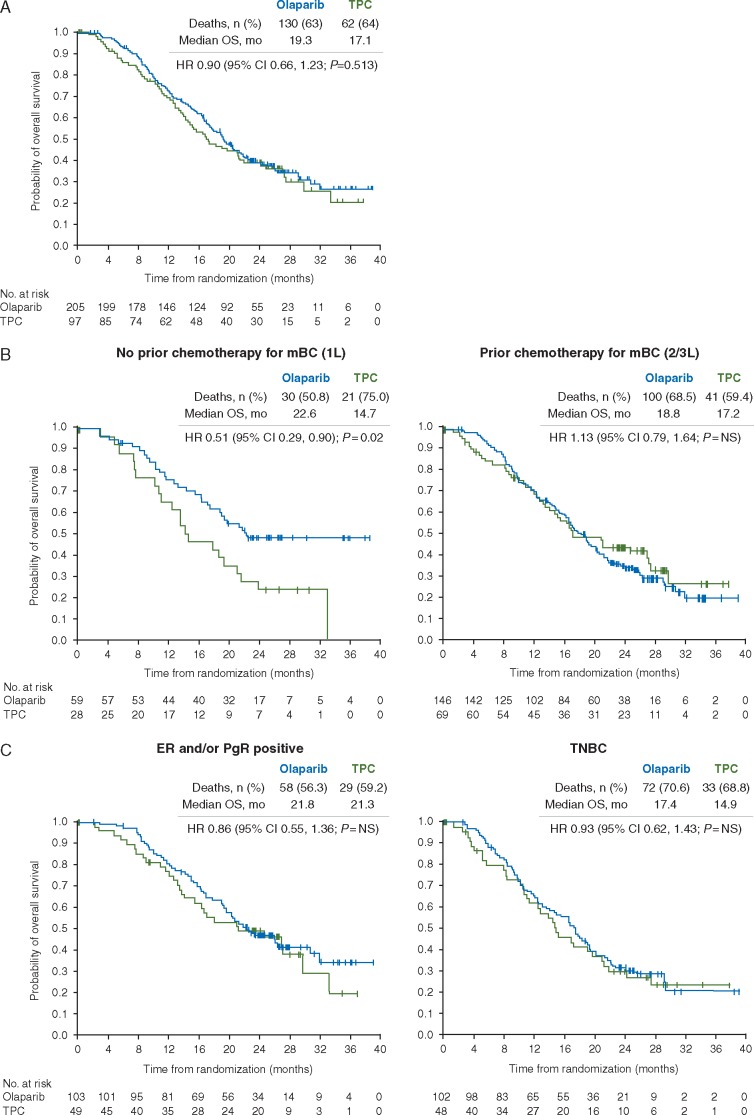
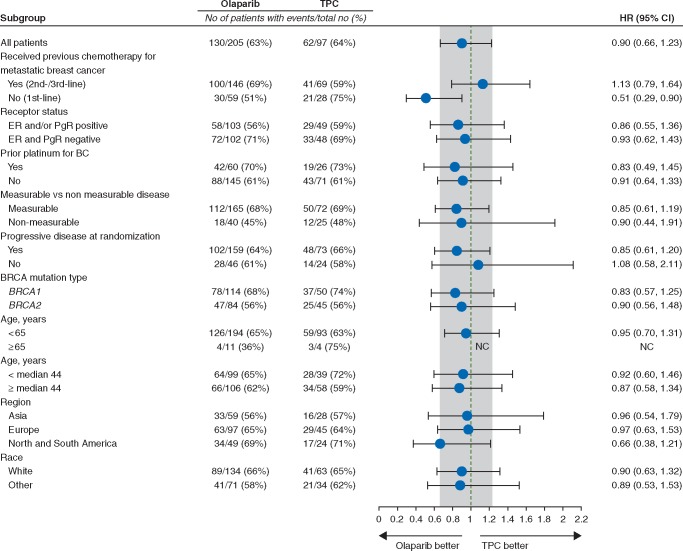
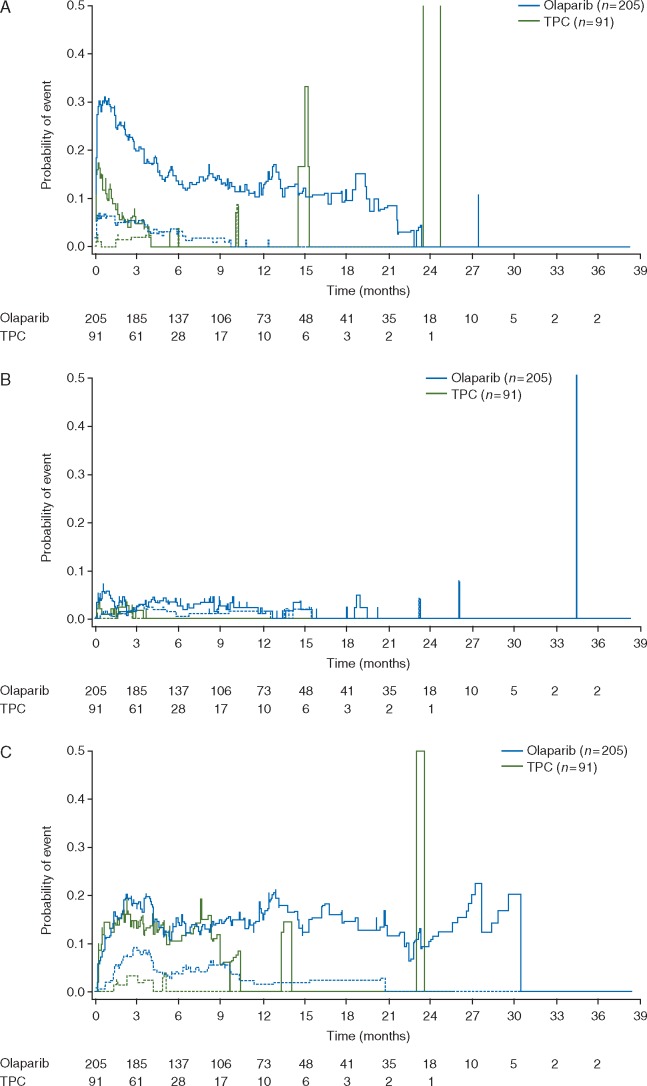
BACKGROUND: In the OlympiAD study, olaparib was shown to improve progression-free survival compared with chemotherapy treatment of physician's choice (TPC) in patients with a germline BRCA1 and/or BRCA2 mutation (BRCAm) and human epidermal growth factor receptor 2 (HER2)-negative metastatic breast cancer (mBC). We now report the planned final overall survival (OS) results, and describe the most common adverse events (AEs) to better understand olaparib tolerability in this population. PATIENTS AND METHODS: OlympiAD, a Phase III, randomized, controlled, open-label study (NCT02000622), enrolled patients with a germline BRCAm and HER2-negative mBC who had received ≤2 lines of chemotherapy for mBC. Patients were randomized to olaparib tablets (300 mg bid) or predeclared TPC (capecitabine, vinorelbine, or eribulin). OS and safety were secondary end points. RESULTS: A total of 205 patients were randomized to olaparib and 97 to TPC. At 64% data maturity, median OS was 19.3 months with olaparib versus 17.1 months with TPC (HR 0.90, 95% CI 0.66-1.23; P = 0.513); median follow-up was 25.3 and 26.3 months, respectively. HR for OS with olaparib versus TPC in prespecified subgroups were: prior chemotherapy for mBC [no (first-line setting): 0.51, 95% CI 0.29-0.90; yes (second/third-line): 1.13, 0.79-1.64]; receptor status (triple negative: 0.93, 0.62-1.43; hormone receptor positive: 0.86, 0.55-1.36); prior platinum (yes: 0.83, 0.49-1.45; no: 0.91, 0.64-1.33). Adverse events during olaparib treatment were generally low grade and manageable by supportive treatment or dose modification. There was a low rate of treatment discontinuation (4.9%), and the risk of developing anemia did not increase with extended olaparib exposure. CONCLUSIONS: While there was no statistically significant improvement in OS with olaparib compared to TPC, there was the possibility of meaningful OS benefit among patients who had not received chemotherapy for metastatic disease. Olaparib was generally well-tolerated, with no evidence of cumulative toxicity during extended exposure. Please see the article online for additional video content.
Overview
The claims and statistics of this paper haven’t been checked yet.
Free: it reads the open-access text and checks the first 5 claims that cite a source we can check. Create a free account to check every claim.
Integrity signals
Registry
Cites
Statistics
Figures
Verification
Claims the paper makes
The claims and statistics of this paper haven’t been checked yet.
Free: it reads the open-access text and checks the first 5 claims that cite a source we can check. Create a free account to check every claim.
Claims other papers make about this one
Each is checked against this paper’s own text: does it say what the citing paper says it does?
The source backs part of the claim, not all of it — or backs it for a different population, condition or comparison.
In the citing paper
“Since ABC 4, further data from the OlympiAD study suggested an OS benefit for olaparib when given in the first-line setting, with a median OS of 22.6 versus 14.7 months (HR 0.51; 95% CI 0.29-0.90, P = 0.02) in a subgroup analysis of predefined stratification subgroups,75”
From 5th ESO-ESMO international consensus guidelines for advanced breast cancer (ABC 5) (2020) · cites this paper as [75]
Experimental — accuracy not yet measured
Self-check
Percentages, sums and reported differences re-computed from the paper’s own numbers.
The self-check needs the paper’s full text.
Citations
Cites
Olaparib for Metastatic Breast Cancer in Patients with a Germline BRCA Mutation
Robson, M., Im, S.-A., Senkus, E., Xu, B., Domchek, S. M., Masuda, N., Delaloge, S., Li, W., Tung, N., Armstrong, A., et al. (2017) · New England Journal of Medicine · doi:10.1056/nejmoa1706450 · Cited by 3,294 · cited 4×
“The efficacy of the oral poly(ADP ribose) polymerase (PARP) inhibitor olaparib in patients with a germline BRCAm and HER2negative metastatic breast cancer (mBC) was confirmed in the Phase III OlympiAD study, with a statistically significant benefit in progression-free survival compared with chemotherapy treatment of p…”
BackgroundMethodResultSelf-citationTalazoparib in Patients with Advanced Breast Cancer and a Germline BRCA Mutation
Litton, J. K., Rugo, H. S., Ettl, J., Hurvitz, S. A., Gonçalves, A., Lee, K.-H., Fehrenbacher, L., Yerushalmi, R., Mina, L. A., Martin, M., et al. (2018) · New England Journal of Medicine · doi:10.1056/nejmoa1802905 · Cited by 2,175
Olaparib Monotherapy in Patients With Advanced Cancer and a Germline BRCA1/2 Mutation
Kaufman, B., Shapira-Frommer, R., Schmutzler, R. K., Audeh, M. W., Friedlander, M., Balmaña, J., Mitchell, G., Fried, G., Stemmer, S. M., Hubert, A., et al. (2015) · Journal of Clinical Oncology · doi:10.1200/jco.2014.56.2728 · Cited by 1,671
Self-citationCouch, F. J., Hart, S. N., Sharma, P., Toland, A. E., Wang, X., Miron, P., Olson, J. E., Godwin, A. K., Pankratz, V. S., Olswold, C., et al. (2015) · Journal of Clinical Oncology · doi:10.1200/jco.2014.57.1414 · Cited by 672 · cited 1×
“Germline BRCAm breast cancers tend to affect younger patients, those with a strong family history of breast cancer and Ashkenazi Jewish ancestry [1, 3].”
BackgroundMalone, K. E., Daling, J. R., Doody, D. R., Hsu, L., Bernstein, L., Coates, R. J., Marchbanks, P. A., Simon, M. S., McDonald, J. A., Norman, S. A., et al. (2006) · Cancer Research · doi:10.1158/0008-5472.can-06-0503 · Cited by 373 · cited 2×
“Germline BRCAm breast cancers tend to affect younger patients, those with a strong family history of breast cancer and Ashkenazi Jewish ancestry [1, 3].”
BackgroundKurian, A. W., Gong, G. D., John, E. M., Miron, A., Felberg, A., Phipps, A. I., West, D. W., & Whittemore, A. S. (2009) · Cancer Epidemiology, Biomarkers & Prevention · doi:10.1158/1055-9965.epi-08-1090 · Cited by 75 · cited 1×
“Approximately 5% of all breast cancer patients carry a germline deleterious mutation in BRCA1 and/or BRCA2 (BRCAm), with higher rates among those with human epidermal growth factor receptor 2 (HER2)-negative disease [1, 2].”
BackgroundKümmel, S., Jackisch, C., Müller, V., Schneeweiß, A., Klawitter, S., & Lux, M. P. (2017) · Annals of Oncology · doi:10.1093/annonc/mdx365.030 · Cited by 4
Kümmel, S., Jackisch, C., Müller, V., Schneeweiß, A., Klawitter, S., & Lux, M. P. (2018) · Cancer Management and Research · doi:10.2147/cmar.s177240 · Cited by 3
Cited by
Items 501–600 of 823
Tang, H., Chen, J., Jiang, K., He, J., Tang, F., Li, D., & Wu, Y. (2025) · Anti-Cancer Agents in Medicinal Chemistry · doi:10.2174/0118715206381898250428064533 · Cited by 3
Huang, J., Luan, F., Yan, L., Liang, X. P., Ma, X., An, Y., Hu, S., Gao, G., Wang, Y.-Y., Yang, J., et al. (2025) · Frontiers in Oncology · doi:10.3389/fonc.2025.1608968 · Cited by 3
Mesothelin-expressing triple-negative breast cancer: a highly invasive and immunosuppressive subtype
Zhao, Z., Lei, H., Wang, B., Guo, L., Gao, L., Wang, B., Zheng, S., & Ying, J. (2025) · Breast Cancer Research and Treatment · doi:10.1007/s10549-025-07860-x · Cited by 3
“However, these approaches have shown limited efficacy in extending overall survival (OS) or treating metastatic TNBC [1–3].”
Küemmel, S., Jung, K. H., Andrade, L., Assad, D. X., de la Cruz‐Merino, L., Freitas‐Júnior, R., Hegg, R., Huang, C.-S., Martin, H. L., Schneeweiß, A., et al. (2025) · ESMO Open · doi:10.1016/j.esmoop.2025.105869 · Cited by 3
Filis, P., FİLİS, N., Foukakis, T., & Matikas, A. (2026) · ESMO Open · doi:10.1016/j.esmoop.2026.106062 · Cited by 3
Current and future therapies for triple-negative breast cancer
Wang, Z.-X., Liu, X., Wu, Y., Xiao, Y.-L., Ge, L., Wu, S., Jiang, Y., & Shao, Z.-M. (2026) · Journal of Hematology & Oncology · doi:10.1186/s13045-026-01839-x · Cited by 3
Synthetic lethality in cancer: mechanisms, therapeutic exploitation and clinical translation
Camps-Fajol, C., Minguillón, J., & Surrallés, J. (2026) · Signal Transduction and Targeted Therapy · doi:10.1038/s41392-026-02954-4 · Cited by 3
New Roles of Poly(ADP-Ribose) Polymerase Inhibitors in the Treatment of Breast Cancer
Harvey-Jones, E. J., Villaro, G. V., & Tutt, A. N. J. (2021) · The Cancer Journal · doi:10.1097/ppo.0000000000000559 · Cited by 3
Lieberman, S., Goldvaser, H., & Levy‐Lahad, E. (2022) · Journal of Clinical Oncology · doi:10.1200/jco.22.00003 · Cited by 3
Recent advances in the treatment of triple-negative breast cancer
Pogoda, K., Jagiełło-Gruszfeld, A., Kunkiel, M., Niwińska, A., & Nowecki, Z. I. (2023) · Oncology in Clinical Practice · doi:10.5603/ocp.2022.0056 · Cited by 3
Petracci, F. E., Villarreal-Garza, C. M., Argañaraz, F., Abuin, G. G., Penaloza, J. M., Flores, M. A., Piazzoni, L., Riggi, M. C., Fabiano, L., González, L., et al. (2023) · ecancermedicalscience · doi:10.3332/ecancer.2023.1634 · Cited by 3
Breast Cancer Brain Metastases: Achilles’ Heel in Breast Cancer Patients’ Care
Ferraro, E., & Seidman, A. D. (2023) · Cancer treatment and research · doi:10.1007/978-3-031-33602-7_11 · Cited by 3
Germline Pathogenic Variants in Squamous Cell Carcinoma of the Head and Neck
Drbohlavová, T., Argalácsová, S., Soukupová, J., & Vočka, M. (2023) · Folia Biologica · doi:10.14712/fb2023069040107 · Cited by 3
Ribeiro, R., Carvalho, F. M., Baiocchi, G., Guindalini, R. S. C., da Cunha, J. R., dos Anjos, C. H., Costa, C. D. N., Gifoni, A. C. L. V. C., Neto, R. C., Cagnacci, A. Q. C., et al. (2024) · Journal of Surgical Oncology · doi:10.1002/jso.27717 · Cited by 4
“36,37 Patients with pathogenic variants may benefit from therapy with poly (ADP ‐ Ribose) polymerase (PARP) inhibitors such as olaparib 38 or talazoparib 39 A biopsy of the metastatic site is recommended as part of the investigation in case of suspected metastatic disease or first recurrence.”
Liu, X., Zhao, W., Jia, Y., Shi, Y., Wang, X., Li, S., Zhang, P., Wang, C., Hao, C., & Tong, Z. (2024) · Therapeutic Advances in Medical Oncology · doi:10.1177/17588359241240304 · Cited by 3
Lynce, F. C., Graham, N., Kochupurakkal, B. S., Nguyen, H. Q., Bychkovsky, B., Poorvu, P. D., Attaya, V., Davis, R., DiLullo, M. K., D’Andrea, A. D., et al. (2025) · Clinical Cancer Research · doi:10.1158/1078-0432.ccr-25-0571 · Cited by 3
Untch, M., Würstlein, R., Lüftner, D., Haidinger, R., Fasching, P. A., Augustin, D., Briest, S., Ettl, J., Forster, F. M. C., Kurbacher, C. M., et al. (2020) · Geburtshilfe und Frauenheilkunde · doi:10.1055/a-1139-9380 · Cited by 3
“To date, an overall survival benefit was only reported in the OlympiAD study in a first-line setting [39,40].”
Hallenstein, L. G., Sorensen, C., Hodgson, L., Wen, S., Westhuyzen, J., Hansen, C. J., Last, A. J., Amalaseelan, J., Salindera, S., Ross, W., et al. (2021) · Hereditary Cancer in Clinical Practice · doi:10.1186/s13053-021-00176-z · Cited by 3
Expert review on systemic treatment in the St. Gallen International Breast Cancer Conference 2021
Lin, M., Jin, Y., & Zhang, J. (2021) · Translational Breast Cancer Research · doi:10.21037/tbcr-21-7 · Cited by 3
“For BRCA1/2 -associated breast cancer patients, Olaparib has demonstrated significant improvement in PFS for metastatic patients (47,48) and shown promising results in neoadjuvant settings (49).”
Place des inhibiteurs de PARP dans le traitement des cancers de l’endomètre et du col de l’utérus
Gac, M. L., Koual, M., Delanoy, N., Perkins, G., Nguyen-Xuan, H.-T., Blons, H., Frère‐Belda, M. L., Laurent‐Puig, P., Bentivegna, E., Durdux, C., et al. (2021) · Bulletin du Cancer · doi:10.1016/j.bulcan.2021.09.011 · Cited by 3
Zhou, Y., & Yang, J. (2022) · Translational Breast Cancer Research · doi:10.21037/tbcr-22-12 · Cited by 3
“…patients with human epidermal growth factor receptor 2 (HER2) negative and breast cancer susceptibility gene 1/2 (gBRCA 1/2) mutation, the benefit of PFS was demonstrated in the treatment of olaparib groups and talazoparib groups from the OlympiAD trial (24) and EMBRACA trial (25) respectively.”
Wang, N., & Yu, X. (2022) · Frontiers in Immunology · doi:10.3389/fimmu.2022.901636 · Cited by 3
Moltó, C., & Amir, E. (2023) · Translational Cancer Research · doi:10.21037/tcr-23-365 · Cited by 3
Sequencing systemic therapy in hormone-receptor positive metastatic breast cancer: a modern paradigm
Haddad, S. A., Dizon, D. S., & Graff, S. L. (2023) · Chinese Clinical Oncology · doi:10.21037/cco-23-22 · Cited by 6
Sato, M., & Goto, T. (2023) · Journal of obstetrics and gynaecology research · doi:10.1111/jog.15806 · Cited by 3
Liao, C.-P., Hsieh, Y.-C., Lu, C., Dai, W.-C., Yang, W.-T., Cheng, K., Ramani, M. V., Subbaraju, G. V., & Chang, C. (2023) · Biomedicines · doi:10.3390/biomedicines11102742 · Cited by 3
Çiçin, İ., Karadurmuş, N., Bilici, A. E., Bahsi, T., Şendur, M. A. N., Demırcı, U., Göksu, S. S., Er, O., Bişgin, A., Saglam, O. F. O., et al. (2023) · Future Oncology · doi:10.2217/fon-2023-0518 · Cited by 3
Polyzoi, M., Ekman, M., Reithmeier, A., Jacob, J., Karlsson, E., Bertranou, E., Linderholm, B. K., & Hettle, R. (2023) · PharmacoEconomics - Open · doi:10.1007/s41669-023-00457-4 · Cited by 3
Lebedeva, A., Veselovsky, E., Kavun, A., Belova, E., Grigoreva, T. V., Orlov, P., Subbotovskaya, A., Shipunov, M., Mashkov, O., Bilalov, F. S., et al. (2024) · World Journal of Oncology · doi:10.14740/wjon1820 · Cited by 3
Current treatment paradigms for triple-negative breast cancer
Yadav, S. K., & Leon-Ferre, R. A. (2024) · Minerva Medica · doi:10.23736/s0026-4806.24.09458-8 · Cited by 3
Miller, K. D., Thomas, A., Althouse, S. K., Zang, Y., Conder, E., Burgos, R. S., Schneider, B. P., Ballinger, T. J., Douglas, E. H., Ansley, K. C., et al. (2026) · Cancer · doi:10.1002/cncr.70407 · Cited by 3
Hartkopf, A. D., Emons, J., Lux, M. P., Taran, F., Overkamp, F., Tesch, H., Titzmann, A., Pöschke, P., Lüftner, D., Wallwiener, M., et al. (2020) · Der Onkologe · doi:10.1007/s00761-020-00766-x · Cited by 3
Pattern of Failure and Treatment Results in Triple Negative Breast Cancer Patients
Elzawawy, S. F., & Khedr, G. A. E. (2022) · Advances in Breast Cancer Research · doi:10.4236/abcr.2022.112006 · Cited by 3
Leung, J. H., Tai, Y.-S., Wang, S.-Y., Tsung-Chin, H., Fion, H.-T. Y., Chan, A. L. F., & Yu-Chen, H. (2022) · Expert Opinion on Drug Safety · doi:10.1080/14740338.2022.2116001 · Cited by 3
Genetic Testing in Metastatic Breast Cancer in the USA: A Podcast
Basho, R. K., & Chase, M.-C. (2023) · Oncology and Therapy · doi:10.1007/s40487-023-00243-6 · Cited by 3
Hype or hope? The strange case of platinum salts’ renaissance in breast cancer
Corvaja, C., Garutti, M., Gerratana, L., Pelizzari, G., & Puglisi, F. (2019) · Expert Review of Anticancer Therapy · doi:10.1080/14737140.2019.1699066 · Cited by 3
Shi, Q., Gao, J., Yu, H., Niu, Y., Yuan, E., Guo, Y., Song, L., Yang, F. Y., Wang, Y., Yuan, E., et al. (2025) · Translational Oncology · doi:10.1016/j.tranon.2025.102471 · Cited by 2
“…germline BRCA mutation and human epidermal growth factor receptor-2 (HER2)-negative metastatic BC was confirmed in the Phase III OlympiAD study, with a statistically significant benefit in progression-free survival and well-tolerated compared with chemotherapy treatment of patients ’ choice[10,11].”
Cruz, G., Kane, K., Matsuno, R. K., Sweetnam, C., Williams, A., Toland, L., Stone, A., Berry, A. B., Izano, M. A., Lee, L. C., et al. (2025) · The Oncologist · doi:10.1093/oncolo/oyaf100 · Cited by 2
Sun, Y., An, L., Kong, L., Liu, X., Zhang, H., Liu, J., & Qian, P. (2025) · Hereditas · doi:10.1186/s41065-025-00572-8 · Cited by 2
Hlevnjak, M., Heublein, S., Thewes, V., Wagener, L., Pixberg, C., Fremd, C., Michel, L. L., Maurer, C., Buschhorn, L., Dikow, N., et al. (2025) · International Journal of Cancer · doi:10.1002/ijc.70208 · Cited by 3
Han, H., Semenov, M., Li, C., Zhang, Y., Lin, T., Zheng, P., & Cai, J. (2025) · Frontiers in Immunology · doi:10.3389/fimmu.2025.1636581 · Cited by 2
Alhalabi, A., Abdo, T., Hijazi, A., Mohanna, M., Tfayli, R., Herrán, M., Sabbagh, S., Guleryuz, S., Mohanna, R. A., Mahrous, R., et al. (2025) · BMC Cancer · doi:10.1186/s12885-025-15422-z · Cited by 2
Abdel‐Razeq, H., Tamimi, F., Abdel-Razeq, S., Sharaf, B., Khalil, H., Hani, H. B., Abu-Jaish, H., Khater, S., Saket, L. E., Al-Batsh, T. M. W., et al. (2026) · Oncology Reviews · doi:10.3389/or.2025.1638255 · Cited by 2
Recent advances in systemic treatment for HER2-negative breast cancer with brain metastases
Hao, C., Zhang, J., & Zhu, Y. (2026) · Critical Reviews in Oncology/Hematology · doi:10.1016/j.critrevonc.2026.105156 · Cited by 2
Xia, Z., 戴宇平, Zhang, J., Yang, L., & Yang, Z. (2026) · Frontiers in Oncology · doi:10.3389/fonc.2026.1739129 · Cited by 2
Triple negative breast cancer: what clinical progress have we seen in the last 5 years?
Peiffer, D. S., Hennessy, M. A., & Nanda, R. (2026) · Expert Opinion on Investigational Drugs · doi:10.1080/13543784.2026.2629512 · Cited by 6
“Importantly, both agents tend to be generally well tolerated with the major reported side effect being anemia [127,128].”
Hu, J., Jin, M., Fang, J., Huang, F., Xia, L., Wang, D., Wu, G., Huang, J., & Chen, Z. (2026) · Cell investigation. · doi:10.1016/j.clnves.2026.100062 · Cited by 2
BROCADE3: a challenge to the treatment paradigm in BRCA breast cancer?
Telli, M. L. (2020) · The Lancet Oncology · doi:10.1016/s1470-2045(20)30431-9 · Cited by 3
Triple-negatives Mammakarzinom – neue Behandlungsstrategien
Krawczyk, N., Banys‐Paluchowski, M., & Fehm, T. N. (2020) · Der Gynäkologe · doi:10.1007/s00129-020-04650-y · Cited by 2
Kast, K., Häfner, J., Schröck, E., Jahn, A., Werner, C., Meisel, C., & Wimberger, P. (2021) · Breast Care · doi:10.1159/000517021 · Cited by 2
Yamaguchi, A., Taji, T., & Suwa, H. (2021) · Nihon Rinsho Geka Gakkai Zasshi (Journal of Japan Surgical Association) · doi:10.3919/jjsa.82.1084 · Cited by 2
Rygiel, K. (2021) · Exploration of Targeted Anti-tumor Therapy · doi:10.37349/etat.2021.00066 · Cited by 2
“, atezolizumab-anti-programmed cell death ligand 1 (PD-L1) monoclonal antibody, and pembrolizumab—anti-programmed cell death protein-1 (PD-1) monoclonal antibody], and a combination of a monoclonal antibody targeting trophoblast cell-surface antigen 2 (Trop-2) with SN-38 (sacituzumab govitecan-hziy, an antibody-drug c…”
BackgroundBRCA1 and BRCA2 Mutations - Diagnostic and Therapeutic Implications
Valarmathi, M. T. (2022) · IntechOpen eBooks · doi:10.5772/intechopen.100842 · Cited by 2
Guidance on the management of adverse reactions induced by poly(ADP-ribose) polymerase inhibitors
Society of Obstetrics and Gynecology Of Zhejiang Medical Association, Society of Urology Of Zhejiang Medical Association, Committee of Breast Cancer Of Zhejiang Anticancer Association, Committee of Clinical Pharmacy on Oncology of Zhejiang Anticancer Association, & Committee of Urology Of Zhejiang Society for Mathematical Medicine (2022) · Journal of Zhejiang University (Medical Sciences) · doi:10.3724/zdxbyxb-2022-0284 · Cited by 2
Cost-Effectiveness of Genetic Testing Strategies for Breast Cancer
Oxley, S. G., Xia, W., Sideris, M. C., & Manchanda, R. (2023) · Springer eBooks · doi:10.1007/978-981-19-7630-8_8 · Cited by 2
Unveiling the vulnerabilities of synthetic lethality in triple-negative breast cancer
Chatterjee, P., Karn, R., Isaac, A. E., & Ray, S. (2023) · Clinical & Translational Oncology · doi:10.1007/s12094-023-03191-9 · Cited by 2
“But recently, the two PARPi(s) Olaparib and Talazoparib have been approved for use in monotherapy treatment by food and drug administration (FDA) in metastatic triple-negative breast cancer, after two phases of three clinical trials, OlympiAD and EMBRACA [84, 85].”
BackgroundUpdated Austrian treatment algorithm for metastatic triple-negative breast cancer
Bartsch, R., Rinnerthaler, G., Petru, E., Egle, D., Gnant, M., Balić, M., Sliwa, T., & Singer, C. F. (2023) · Wiener klinische Wochenschrift · doi:10.1007/s00508-023-02254-9 · Cited by 2
Jain, P. (2023) · Cureus · doi:10.7759/cureus.46405 · Cited by 2
“This finding is particularly significant given that approximately two-thirds of triple-negative patients possess proficient BRCA1 and lack homologous recombination deficiency [10,11,12].”
BackgroundInfluentialVoutsadakis, I. A. (2023) · Cancer Genomics & Proteomics · doi:10.21873/cgp.20404 · Cited by 2
“%) expression of the PD-L1 receptor (14-17).”
Management of breast cancer patients with BRCA gene mutations in Jordan: perspectives and challenges
Abdel‐Razeq, H., Abbasi, S., Abdeen, G., Abdulelah, H., Debs, J., Masri, S., Aljadayeh, M. H., & Awidi, A. (2023) · Hospital Practice · doi:10.1080/21548331.2023.2266019 · Cited by 2
“The OlympiAD trial demonstrated that olaparib ensured better progression-free survival (PFS), but not OS, compared to single agent palliative chemotherapy (capecitabine, eribulin or vinorelbine) in patients with g BRCA1/2 m [48,49].”
Jackson, E. B., Curry, L. C., Mariano, C. J., Hsu, T., Cook, S., Pezo, R. C., Savard, M.-F., Desautels, D. N., Leblanc, D., & Gelmon, K. A. (2023) · Current Oncology · doi:10.3390/curroncol31010010 · Cited by 2
“Furthermore, only 5% of patients were >65 years old and the oldest patient was 76 [107].”
BackgroundNarusawa, E., Kurozumi, S., Katayama, A., Koibuchi, Y., Ogawa, A., Takata, D., Tokuda, S., Obayashi, S., Oyama, T., Horiguchi, J., et al. (2024) · Medical Molecular Morphology · doi:10.1007/s00795-024-00386-z · Cited by 2
In silico analysis of the wild-type and mutant-type of BRCA2 gene
Li, J., Ge, R., Lu, G., Cai, Y., Teng, Y., Fan, Z., Liao, L., Kong, L., Zhang, J., Wei, T., et al. (2024) · Journal of Translational Medicine · doi:10.1186/s12967-024-05200-z · Cited by 4
“Cells with wild-type BRCA2 genes repair DNA DSBs through HR; however, cells with mutations in BRCA2 or those with homologous recombination deficiency (HRD) are susceptible to poly (ADP-ribose) polymerase (PARP) inhibitors, leading to synthetic lethality [15, 16].”
BackgroundKwong, A., Ho, C. Y. S., Leung, H. C. M., Leung, A. W.-S., Au, C. H., & Ma, E. S. K. (2024) · Cancers · doi:10.3390/cancers16173066 · Cited by 2
“The use of PARP inhibitor resulted in a significant improvement in PFS and health-related quality of life in gBRCAm carriers compared to non-platinum based single-agent chemotherapy [4,5].”
Tanaka, K., Watanabe, J., Arai, M., Kushida, T., Ito, T., Sato, K., & Saito, M. (2024) · Cureus · doi:10.7759/cureus.71522 · Cited by 2
“The median OS was numerically longer in the olaparib arm than in the TPC arm; however, the difference was not statistically significant (19.3 vs. 17.1 months; HR = 0.90; 95% CI = 0.66-1.23; p = 0.513) [9,25].”
InfluentialZhang, J., Du, Y., Meng, Y., Jin, Y., Lin, M., Shao, X., Liu, X., Mu, Y., Liu, Y., & Hu, Z. (2026) · MedComm · doi:10.1002/mco2.70684 · Cited by 2
Palácová, M. (2019) · Klinicka onkologie · doi:10.14735/amko2019s24 · Cited by 2
Familiärer Brust- und Eierstockkrebs (einschließlich Hormone)
Kast, K., Rhiem, K., & Schmutzler, R. K. (2020) · Der Gynäkologe · doi:10.1007/s00129-020-04697-x · Cited by 3
Olaparib in the metastatic HER2-negative breast cancer setting
Zhukova, L., Khatkova, E. I., Петровна, Г. И., Kolyadina, I. V., & Владимировна, Л. Е. (2020) · Meditsinskiy sovet = Medical Council · doi:10.21518/2079-701x-2020-20-22-30 · Cited by 2
With Our Powers Combined: Exploring PARP Inhibitors and Immunotherapy
Kasherman, L., Karakasis, K., & Oza, A. M. (2021) · The Cancer Journal · doi:10.1097/ppo.0000000000000557 · Cited by 2
Long, M., Liu, H., Wu, J., Wang, S., Liao, X., Liu, Y., & Hu, T. (2022) · Computational and Mathematical Methods in Medicine · doi:10.1155/2022/5508301 · Cited by 2
Belac-Lovasić, I., Bašić-Koretić, M., Podolski, P., Plavetić, N. D., Silovski, T., Pleština, S., Jazvić, M., Soldić, Ž., Šeparović, R., Vuger, A. T., et al. (2022) · Liječnički vjesnik · doi:10.26800/lv-144-9-10-2 · Cited by 2
Shen, X., Wu, J., Li, J., Shao, X., & Wang, X. (2024) · Clinical Case Reports · doi:10.1002/ccr3.8680 · Cited by 2
A Comprehensive Review on PARP Inhibitors in Targeted Therapy for Cancers
Guduri, M., Kolluru, S., Pasupulati, H., & Padi, S. S. (2024) · Journal of international research in medical and pharmaceutical sciences · doi:10.56557/jirmeps/2024/v19i28811 · Cited by 2
Bhatia, K. P., & Batra, A. (2025) · Springer eBooks · doi:10.1007/978-981-97-9847-6_15 · Cited by 2
McGuire, K. P., Arthur, D. W., & Mamounas, E. P. (2022) · Annals of Surgical Oncology · doi:10.1245/s10434-022-12048-4 · Cited by 2
“In that trial, 45% of the patients received capecitabine as the comparative therapy.(16) Thus, for triplenegative breast cancer (TNBC) patients with residual disease after neoadjuvant chemotherapy, olaparib should be favored over capecitabine.”
BackgroundUpdated Guidelines on When to Consider Germline Testing for Patients with Breast Cancer
van den Bruele, A. B., Weiss, A. C., Society of Surgical Oncology Breast Disease Site Work Group, Laronga, C., Boughey, J. C., Agnese, D., Amin, M., Barrio, A. V., van den Bruele, A. B., Burke, E. E., et al. (2024) · Annals of Surgical Oncology · doi:10.1245/s10434-024-15638-6 · Cited by 2
Janni, W., & Rack, B. K. (2021) · Elsevier eBooks · doi:10.1016/b978-3-437-23917-5.00011-2 · Cited by 1
Hereditary breast and ovarian cancer – University Hospital of Split experiences
Miše, B. P., Katalenić, M., Hrepić, D., Kuret, S., & Hofman, I. D. (2023) · Libri Oncologici Croatian Journal of Oncology · doi:10.20471/lo.2023.51.01.02 · Cited by 1
“…(gBr-Cam) breast cancer, and both of them showed significantly prolonged progression-free survival (pfs) in comparison with monochemothera-py(11,12). in the olimpia study, adjuvant olapar-ib showed benefit in patients with gBRCAm with high-risk recurrence(13). parp inhibitors (olapar-ib,…”
Current approaches to systemic treatment of BRCA-associated triple-negative breast cancer
Еналдиева, Д. А., Криворотько, П. В., Имянитов, Е. Н., Жильцова, Е. К., Донских, Р. В., Shaikhelislamova, L. F. S., Гиголаева, Л. П., & Семиглазов, В. Ф. (2023) · Advances in molecular oncology · doi:10.17650/2313-805x-2023-10-3-8-14 · Cited by 1
Abdullaeva, S. R., Semiglazova, Т. Y., Artemyeva, A. S., Kudryashova, T. I., Филатова, Л. В., Семиглазов, В. В., Криворотько, П. В., & Семиглазов, В. Ф. (2024) · Medical Technologies Assessment and Choice · doi:10.17116/medtech20244601191 · Cited by 1
Kou, F., Liu, H., Zhang, Y., Liao, X., Hu, L., Sun, J., Zhang, J., Xu, Y., Yao, L., & Xie, Y. (2025) · JCO Precision Oncology · doi:10.1200/po-24-00679 · Cited by 1
Huynh, V. D., Mouabbi, J. A., Kuerer, H. M., Wanis, K. N., Abdel-Salam, H., Gutierrez‐Barrera, A. M., Johnson, H. M., Lucci, A., Hunt, K. K., & Arun, B. K. (2025) · Annals of Surgical Oncology · doi:10.1245/s10434-025-17366-x · Cited by 1
“5,8 10–12 More importantly, its use in early-stage, high-risk, germline BRCA -mutated breast cancer has also revealed improved survival with olaparib at 4 years compared with placebo.”
Cazzaniga, M. E., Pronzato, P., AMOROSO, D., Arpino, G., Atzori, F., Beano, A., Biganzoli, L., Bisagni, G., Blasi, L., Capello, C., et al. (2025) · Cancers · doi:10.3390/cancers17101715 · Cited by 3
“…options have included Cycline-Dependent Kinases 4/6 inhibitors (CDK4/6i) in combination with aromatase inhibitors or tamoxifen for HR+ patients, [9–12], PARP inhibitors for patients with BRCA1/2 mutations [13,14], and checkpoint inhibitors for PD-L1-positive triple-negative disease (TNBC) [15].”
Lema, L., Pérez-García, J. M., Blanch, S., Balmañà, J., García-Sáenz, J. Á., Vegas, E. F., Jiménez, B., de la Haba-Rodríguez, J., Campolier, M., Shimizu, E., et al. (2025) · Cancers · doi:10.3390/cancers17111744 · Cited by 1
“The OlympiAD trial was an open-label, randomized, phase III trial that determined that olaparib was superior, in terms of PFS, to the physician’s choice single-agent chemotherapy in patients with g BRCA m, HER2[ − ] advanced breast cancer [14,26].”
Li, J., Li, S., Zhang, D., Zhu, Y., Wang, Y., Xing, X., Mo, J., Zhang, Y., Liao, D., & Li, J. (2025) · Scientific Reports · doi:10.1038/s41598-025-03423-8 · Cited by 2
“Additionally, new drug therapies such as anti-programmed cell death ligand 1 (PD-L1) immunotherapy, CDK4/6 inhibitors (cyclin-dependent kinase 4/6), and phosphatidylinositol 3 kinase (PI3 K) inhibitors are also available 6–8 .”
Thérapies ciblées en situation néoadjuvante dans le cancer du sein : place des iCDK4/6 et des iPARP
Papazyan, T., & Frenel, J. (2025) · Bulletin du Cancer · doi:10.1016/j.bulcan.2025.06.005 · Cited by 1
Neoadjuvant Therapy in Triple-Negative Breast Cancer: Current Landscape and Emerging Therapies
Premji, S., & Leon-Ferre, R. A. (2025) · doi:10.33590/oncolamj/cdlw3732 · Cited by 1
Saxena, A., Phay, R., Chiang, J., Wong, F. Y., Yuen, J., Ishak, D., Tasnim, S., & Ngeow, J. Y. Y. (2025) · BMJ Open · doi:10.1136/bmjopen-2025-107513 · Cited by 1
Triple Negative Breast Cancer: A Comprehensive Review of Epidemiology, Biology, and Management
Onyewuchi, A., Uko, A., Otene, S., Gbaa, Z., Anenga, R., Ugwu, I., Umobong, E., Ojo, B., & Gbaa, A. (2025) · Journal of American Medical Science and Research. · doi:10.51470/amsr.2025.04.02.88 · Cited by 2
Lüftner, D., Banys-Paluchowski, M. J., Brucker, S. Y., Denkert, C., Ditsch, N., Fasching, P. A., Haidinger, R., Harbeck, N., Huober, J., Janni, W., et al. (2025) · Die Onkologie · doi:10.1007/s00761-025-01879-x · Cited by 1
Self-citationPeng, X., Song, R., Fan, Y., Wang, J., Li, Q., Mo, H., Wang, J., Luo, Y., Chen, S., Sun, X., et al. (2026) · Therapeutic Advances in Medical Oncology · doi:10.1177/17588359251411096 · Cited by 1
“21 In the phase III EMBRACA trial, talazoparib improved PFS (HR = 0.54, 95% CI: 0.41–0.71, p 0.001) and ORR (62.6% vs 27.2”
InfluentialSelf-citationAlshehri, A. M., Altwairgi, A. K., AlTourah, A., Alwbari, A. M., Chehal, A. A., Calaud, F., Al-Hashem, H., Marashi, H., Elsamany, S., & Tirmazy, S. H. (2026) · Frontiers in Oncology · doi:10.3389/fonc.2025.1706670 · Cited by 1
POPOVIC, L. S., Barroso‐Sousa, R., Ns, S., Dent, R. A., Tuzlalı, S., Akhtar, S., Juozaitytė, E., Eglītis, J., Doval, D., Castaneda, C., et al. (2026) · The Breast · doi:10.1016/j.breast.2026.104720 · Cited by 1
Toàn, T. T., To, T. V., Lan, T. T. H., Thinh, N. V., Ánh, D. T. N., & Hanh, B. T. M. (2026) · Cancer Control · doi:10.1177/10732748261424961 · Cited by 1
Advances in cancer biomarkers: Diagnostic, prognostic, and therapeutic implications
Madhuranga, H. D. T., Joseph, R., Madhan, G., Sarvananda, L., & Premarathna, A. D. (2026) · The Journal of Precision Medicine Health and Disease · doi:10.1016/j.premed.2026.100032 · Cited by 1
Deserti, M., Sabbioni, S., Poli, F., Vasuri, F., Relli, V., Palloni, A., Deiana, C., Brandi, G., & Tavolari, S. (2026) · Frontiers in Oncology · doi:10.3389/fonc.2026.1713273 · Cited by 1
Huang, Y., Yang, Y., Zhang, Q., & Wang, S. (2026) · Critical Reviews in Oncology/Hematology · doi:10.1016/j.critrevonc.2026.105278 · Cited by 1
Marick, A., Manna, B., Khan, H. M. R., & Manna, P. R. (2026) · International Journal of Molecular Sciences · doi:10.3390/ijms27073117 · Cited by 1
Antonini, M., Mattar, A. P. L., Madeira, M., Cavalcante, F. P., Zerwes, F., Brenelli, F. P., Frasson, A. L., Millen, E. C., Tosello, G. T., Teixeira, M. D., et al. (2026) · Clinical Breast Cancer · doi:10.1016/j.clbc.2026.04.016 · Cited by 1
Metadata
- Authors
- Robson, M. E., Tung, N., Conte, P., Im, S.-A., Senkus, E., Xu, B., Masuda, N., Delaloge, S., Li, W., Armstrong, A., Wu, W., Goessl, C., Runswick, S., & Domchek, S. M.
- Affiliations
- Memorial Sloan Kettering Cancer Center (US)
- Beth Israel Deaconess Medical Center (US)
- University of Padua (IT)
- Seoul National University (KR)
- Gdańsk Medical University (PL)
- Chinese Academy of Medical Sciences & Peking Union Medical College (CN)
- Osaka National Hospital (JP)
- Institut Gustave Roussy (FR)
- First Hospital of Jilin University (CN)
- The Christie Hospital (GB)
- AstraZeneca (United States) (US)
- AstraZeneca (United Kingdom) (GB)
- University of Pennsylvania (US)
- Corresponding author
- Robson, M.E.
- Runswick, S.
- ORCID
- Venue
- Annals of Oncology
- Publisher
- Elsevier BV
- Published
- 2019-04
- Volume
- 30
- Issue
- 4
- Pages
- 558-566
- ISSN
- 0923-7534 (ISSN-L)
- PMC
- PMC6503629
- OpenAlex
- W2913584903
- Cited by
- 779
- References
- 9
- Citations by year
- 2026: 76 · 2025: 84 · 2024: 108 · 2023: 144 · 2022: 133 · 2021: 118 · 2020: 83 · 2019: 33
- FWCI
- 38.45
- Type
- journal article
- Language
- en
- Open access
- hybrid
- doi.org
- Licence
- cc-by-nc
- www.elsevier.com/tdm/userlicense/1.0/ (tdm)
- creativecommons.org/licenses/by-nc/4.0/ (vor, 326 d)
- Locations
- Annals of Oncology (publishedVersion, cc-by-nc)
- PubMed Central (publishedVersion, cc-by-nc)
- PubMed (publishedVersion)
- Seoul National University Open Repository (Seoul National University) (submittedVersion)
- Padua Research Archive (University of Padova) (submittedVersion)
- Funders
- AstraZeneca
- AstraZeneca and Merck & Co.
- Inc.
- NIH/NCI Cancer Center
- Breast Cancer Research Foundation
- Mudskipper Business Ltd
- Topics
- Health Sciences › Medicine › Oncology › PARP inhibition in cancer therapy
- Life Sciences › Biochemistry, Genetics and Molecular Biology › Genetics › BRCA gene mutations in cancer
- Health Sciences › Medicine › Oncology › Advanced Breast Cancer Therapies
- Keywords
- olaparib, HER2-negative metastatic breast cancer, germline BRCA1 mutation, germline BRCA2 mutation, PARP inhibitors, overall survival, tolerability, adverse events, capecitabine, vinorelbine, eribulin, platinum-based chemotherapy, triple-negative breast cancer, hormone receptor-positive breast cancer, Olympiad
- MeSH terms
- Poly(ADP-ribose) Polymerase Inhibitors, Progression-Free Survival, Administration, Oral, Adult, Aged, Anemia, Antineoplastic Combined Chemotherapy Protocols, Breast Neoplasms, Female, Follow-Up Studies, Humans, Middle Aged, Phthalazines, Piperazines, Tablets, Germ-Line Mutation, Receptor, ErbB-2, Erb-b2 Receptor Tyrosine Kinases, BRCA1 Protein
About these checks
Registry, retraction, Cites and statistics results are computed, not judged, with one exception: a printed reference that no index lists is read once by a model before it counts as a citation error. Claims are extracted by a model and kept only when their quote appears verbatim in the text; each cited source is then checked, with a model’s help, for whether it says what the claim relies on. Those verdicts can be wrong — read the claim’s quote and the cited source before relying on one.
Statistics and arithmetic are recomputed, not judged.
Confidence bands are shown only for fields calibrated on our annotated test set. None is calibrated yet, so no band is shown.
What counts as a claim ›How we measure confidence ›How we check this ›
Are you an author, or do you see a problem with this page? Request a review
Data sources
Bibliographic data: Semantic Scholar, OpenAlex, Crossref.
Contains information from the Semantic Scholar Academic Graph Datasets, made available under the ODC Attribution License (ODC-BY 1.0).
Semantic Scholar’s data is described in: Kinney, R., et al. (2023). The Semantic Scholar Open Data Platform. arXiv:2301.10140.
