

Ultraprocessed foods and chronic kidney disease—double trouble
Open accessThe DOI matches its Crossref record; 85 of the 85 references it cites were found in a registry or an index.
Abstract
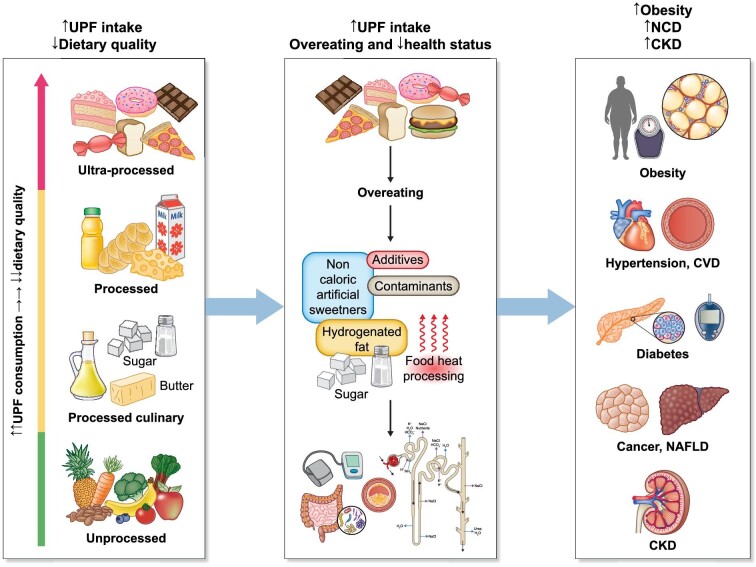
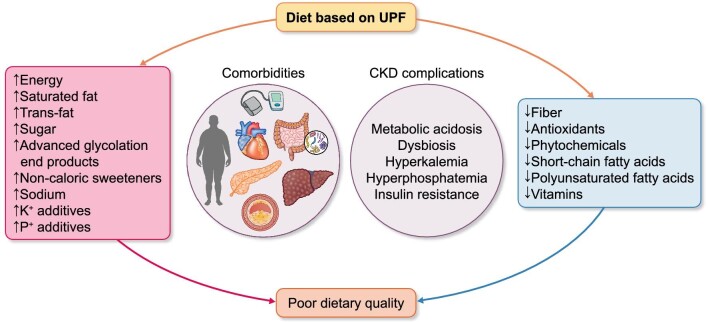
High energy intake combined with low physical activity generates positive energy balance, which, when maintained, favours obesity, a highly prevalent morbidity linked to development of non-communicable chronic diseases, including chronic kidney disease (CKD). Among many factors contributing to disproportionately high energy intakes, and thereby to the obesity epidemic, the type and degree of food processing play an important role. Ultraprocessed foods (UPFs) are industrialized and quite often high-energy-dense products with added sugar, salt, unhealthy fats and food additives formulated to be palatable or hyperpalatable. UPFs can trigger an addictive eating behaviour and is typically characterized by an increase in energy intake. Furthermore, high consumption of UPFs, a hallmark of a Western diet, results in diets with poor quality. A high UPF intake is associated with higher risk for CKD. In addition, UPF consumption by patients with CKD is likely to predispose and/or to exacerbate uraemic metabolic derangements, such as insulin resistance, metabolic acidosis, hypertension, dysbiosis, hyperkalaemia and hyperphosphatemia. Global sales of UPFs per capita increased in all continents in recent decades. This is an important factor responsible for the nutrition transition, with home-made meals being replaced by ready-to-eat products. In this review we discuss the potential risk of UPFs in activating hedonic eating and their main implications for health, especially for kidney health and metabolic complications of CKD. We also present various aspects of consequences of UPFs on planetary health and discuss future directions for research to bring awareness of the harms of UPFs within the CKD scenario.
Overview
The claims and statistics of this paper haven’t been checked yet.
Free: it reads the open-access text and checks the first 5 claims that cite a source we can check. Create a free account to check every claim.
Integrity signals
Registry
Cites
Statistics
Figures
Verification
Claims the paper makes
The claims and statistics of this paper haven’t been checked yet.
Free: it reads the open-access text and checks the first 5 claims that cite a source we can check. Create a free account to check every claim.
Claims other papers make about this one
Each is checked against this paper’s own text: does it say what the citing paper says it does?
The source backs part of the claim, not all of it — or backs it for a different population, condition or comparison.
In the citing paper
“The Western diet, in particular, is abundant in ultra‐processed sugar‐rich foods that can directly contribute to the predisposition and progression of the metabolic disease [53, 54].”
From Ignoring the planet: A critical blind spot for research on ageing (2025) · cites this paper as [54]
Experimental — accuracy not yet measured
Self-check
Percentages, sums and reported differences re-computed from the paper’s own numbers.
The self-check needs the paper’s full text.
Citations
Cites
Food in the Anthropocene: the EAT–Lancet Commission on healthy diets from sustainable food systems
Willett, W., Rockström, J., Loken, B., Springmann, M., Lang, T., Vermeulen, S., Garnett, T., Tilman, D., DeClerck, F., Wood, A., et al. (2019) · The Lancet · doi:10.1016/s0140-6736(18)31788-4 · Cited by 10,880
Ultra-processed foods: What they are and how to identify them
Monteiro, C. A., Cannon, G., Levy, R. B., Moubarac, J.-C., Louzada, M. L., Rauber, F., Khandpur, N., Cediel, G., Neri, D., Martinez-Steele, E., et al. (2019) · Public Health Nutrition · doi:10.1017/s1368980018003762 · Cited by 2,964 · cited 2×
“UPFs are packed with synthetic materials and the final product is palatable or highly palatable and can create an addictive eating pattern[9].”
BackgroundArtificial sweeteners induce glucose intolerance by altering the gut microbiota
Suez, J., Korem, T., Zeevi, D., Zilberman-Schapira, G., Thaiss, C. A., Maza, O., Israeli, D., Zmora, N., Gilad, S., Weinberger, A., et al. (2014) · Nature · doi:10.1038/nature13793 · Cited by 2,067 · cited 1×
“Alsoofimportance,thepresenceofnon-caloricarti-ficial sweeteners in UPFs, such as saccharin and aspartame, has been implicated in the development of glucose intolerance,central obesity and poor glucose control through changes of composition and function of the gut microbiota [39].”
BackgroundHall, K. D., Ayuketah, A., Brychta, R., Cai, H., Cassimatis, T., Chen, K. Y., Chung, S. T., Costa, E., Courville, A., Darcey, V., et al. (2019) · Cell Metabolism · doi:10.1016/j.cmet.2019.05.008 · Cited by 1,971
Baker, P., Machado, P., Santos, T., Sievert, K., Backholer, K., Hadjikakou, M., Russell, C., Huse, O., Bell, C., Scrinis, G., et al. (2020) · Obesity Reviews · doi:10.1111/obr.13126 · Cited by 1,194 · cited 4×
“UPFs have become more affordable in recent decades and,as a result,sales have increased tremendously over time [10–12].”
BackgroundInfluentialLichtenstein, A. H., Appel, L. J., Vadiveloo, M., Hu, F. B., Kris-Etherton, P. M., Rebholz, C. M., Sacks, F. M., Thorndike, A. N., Van Horn, L., Wylie-Rosett, J., et al. (2021) · Circulation · doi:10.1161/cir.0000000000001031 · Cited by 1,065 · cited 1×
“The Brazilian nutrition guidelines [88] and the 2021 dietary guidance to improve cardiovascular health [89] are examples of how to emphasize the importance of advocating healthy dietary patterns rather than recommendations based on advantages or restric-tionsofindividualnutrients.”
BackgroundFiolet, T., Srour, B., Sellem, L., Kesse-Guyot, E., Allès, B., Méjean, C., Deschasaux, M., Fassier, P., Latino-Martel, P., Beslay, M., et al. (2018) · BMJ · doi:10.1136/bmj.k322 · Cited by 1,057
Srour, B., Fezeu, L. K., Kesse-Guyot, E., Allès, B., Méjean, C., Andrianasolo, R. M., Chazelas, E., Deschasaux, M., Hercberg, S., Galan, P., et al. (2019) · BMJ · doi:10.1136/bmj.l1451 · Cited by 955 · cited 2×
“This means that the higher the proportion of UPFs, the worse the dietary quality [17, 28, 29], even among pesco-vegetarians, vegetarians and vegans that replace regular milk and meat for plant-based drinks and textured soy protein foods, respectively [30].”
BackgroundPotential Renal Acid Load of Foods and its Influence on Urine pH
REMER, T., & MANZ, F. (1995) · Journal of the American Dietetic Association · doi:10.1016/s0002-8223(95)00219-7 · Cited by 738 · cited 2×
“Duetothepreponderanceof animal-sourced food components, including many of the UPFs, the modern Western-type diet is considered H + -producing as compared with base-producing plant-sourced diets [63].”
BackgroundSalt Reduction to Prevent Hypertension and Cardiovascular Disease
He, F. J., Tan, M., Ma, Y., & MacGregor, G. A. (2020) · Journal of the American College of Cardiology · doi:10.1016/j.jacc.2019.11.055 · Cited by 589 · cited 1×
“Among the potential explanations behind these associations are the effect of a high sodium diet in altering the renal and vascular systems and by increasing oxidative stress regardless of changes in blood pressure [52, 53].”
BackgroundHousehold availability of ultra-processed foods and obesity in nineteen European countries
Monteiro, C. A., Moubarac, J.-C., Levy, R. B., Canella, D. S., Louzada, M. L. D. C., & Cannon, G. (2018) · Public Health Nutrition · doi:10.1017/s1368980017001379 · Cited by 566 · cited 2×
“A similar finding was observed in studies from European countries, where the UK and Germany had the highest average household availability of UPFs, while Portugal and Italy had the lowest [31].”
BackgroundResultLane, M. M., Davis, J. A., Beattie, S., Gómez‐Donoso, C., Loughman, A., O'Neil, A., Jacka, F., Berk, M., Page, R., Marx, W., et al. (2021) · Obesity Reviews · doi:10.1111/obr.13146 · Cited by 564
Understanding Sources of Dietary Phosphorus in the Treatment of Patients with Chronic Kidney Disease
Kalantar-Zadeh, K., Gutekunst, L., Mehrotra, R., Kovesdy, C. P., Bross, R., Shinaberger, C. S., Noori, N., Hirschberg, R., Benner, D., Nissenson, A. R., et al. (2010) · Clinical Journal of the American Society of Nephrology · doi:10.2215/cjn.06080809 · Cited by 510 · cited 1×
“[78].”
Advanced glycation end products induce glomerular sclerosis and albuminuria in normal rats.
Vlassara, H., Striker, L. J., Teichberg, S., Fuh, H., Li, Y. M., & Steffes, M. (1994) · Proceedings of the National Academy of Sciences · doi:10.1073/pnas.91.24.11704 · Cited by 462
The Gut as a Source of Inflammation in Chronic Kidney Disease
Lau, W. L., Kalantar-Zadeh, K., & Vaziri, N. D. (2015) · Nephron · doi:10.1159/000381990 · Cited by 461 · cited 1×
“…the uraemic milieu can lead to gut dysbiosis by increasing the influx of circulating urea and other toxins to the gut lumen, the combination with poor fibre intake can increase gut production of uraemic toxins, such as p-cresyl sulphate, indoxyl sulphate and trimethylamine-N-oxide [68, 69, 71].”
BackgroundGarofalo, C., Borrelli, S., Minutolo, R., Chiodini, P., De Nicola, L., & Conte, G. (2017) · Kidney International · doi:10.1016/j.kint.2016.12.013 · Cited by 363 · cited 1×
“Systematicreviews showthat obesity is associated with an increased risk of proteinuria, CKD and end-stage kidney disease (ESKD) in persons with comorbidities predisposing to CKD and also in healthy individuals without these comorbidities [3,4].”
BackgroundVandevijvere, S., Jaacks, L. M., Monteiro, C. A., Moubarac, J., Girling‐Butcher, M., Lee, A. C., Pan, A., Bentham, J., & Swinburn, B. (2019) · Obesity Reviews · doi:10.1111/obr.12860 · Cited by 358 · cited 3×
“Altogether, it is not surprising that in the past 10 years a plethora of studies have showed a consistent finding—the higher the consumption of UPFs, the higher the chances of developing NCDs [14–19 , 22 ].”
BackgroundFardet, A. (2016) · Food & Function · doi:10.1039/c6fo00107f · Cited by 356 · cited 1×
“In addition, an investigation that analysed 98 ready-to-eat foods found that the higher the degree of industrial food processing, the higher the glycaemic response and the lower its satiety potential [25].”
Backgroundde Boer, I. H., Khunti, K., Sadusky, T., Tuttle, K. R., Neumiller, J. J., Rhee, C. M., Rosas, S. E., Rossing, P., & Bakris, G. (2022) · Kidney International · doi:10.1016/j.kint.2022.08.012 · Cited by 353
A Systematic Review of Worldwide Consumption of Ultra-Processed Foods: Findings and Criticisms
Marino, M., Puppo, F., Del Bo’, C., Vinelli, V., Riso, P., Porrini, M., & Martini, D. (2021) · Nutrients · doi:10.3390/nu13082778 · Cited by 334 · cited 7×
“This means that the higher the proportion of UPFs, the worse the dietary quality [17, 28, 29], even among pesco-vegetarians, vegetarians and vegans that replace regular milk and meat for plant-based drinks and textured soy protein foods, respectively [30].”
BackgroundInfluentialSalt Intake, Oxidative Stress, and Renal Expression of NADPH Oxidase and Superoxide Dismutase
Kitiyakara, C., Chabrashvili, T., Chen, Y., Blau, J., Karber, A., Aslam, S., Welch, W. J., & Wilcox, C. S. (2003) · Journal of the American Society of Nephrology · doi:10.1097/01.asn.0000092145.90389.65 · Cited by 310 · cited 1×
“Moreover, in animals with normal kidney function fed a high sodium diet, there were increases in markers of oxidative stress in skeletal muscle arterioles and vessels, blood pressure, protein excretion and renal fibrosis and worsened kidney function [54].”
BackgroundRossing, P., Caramori, M. L., Chan, J. C. N., Heerspink, H. J. L., Hurst, C., Khunti, K., Liew, A., Michos, E. D., Navaneethan, S. D., Olowu, W. A., et al. (2022) · Kidney International · doi:10.1016/j.kint.2022.06.013 · Cited by 274 · cited 1×
“…higher intake of UPFs and hyperphosphatemia and hy-perkalaemia are lacking in CKD. Limiting the consumption of UPFs may be especially important in the large group of patients with both T2DM and CKD, as part of a holistic approach for improving management and outcomes in these patients [79, 80].”
BackgroundRisk Assessment of Acrylamide in Foods
Dybing, E. (2003) · Toxicological Sciences · doi:10.1093/toxsci/kfg165 · Cited by 264 · cited 1×
“…formulas to enhance flavouring, leads to the generation of high levels of neo-formed contaminants (e.g. acrylamide,furans, heterocyclic amines and others) [40, 41] that are considered potentially carcinogenic, explaining the association between UPF consumption and the increased risk of cancer [42].”
BackgroundDicken, S. J., & Batterham, R. L. (2021) · Nutrients · doi:10.3390/nu14010023 · Cited by 256 · cited 1×
“The main harm that UPFs represent to health is that due to its poor nutritional value, the increase in the proportion of UPFs in the diet is associated with a decrease in dietary quality indexes and to lower adherence to a healthy dietary pattern, such as the Mediterranean diet [16].”
BackgroundTrends in consumption of ultra-processed foods and obesity in Sweden between 1960 and 2010
Juul, F., & Hemmingsson, E. (2015) · Public Health Nutrition · doi:10.1017/s1368980015000506 · Cited by 248 · cited 2×
“In Sweden, a 142% increase in the consumption of UPFs was observed between 1960 and 2010, with the greatest increase observed after 1995 [13].”
BackgroundWeight loss and proteinuria: systematic review of clinical trials and comparative cohorts
Afshinnia, F., Wilt, T. J., Duval, S., Esmaeili, A., & Ibrahim, H. N. (2010) · Nephrology Dialysis Transplantation · doi:10.1093/ndt/gfp640 · Cited by 239 · cited 1×
“In contrast,weight loss is normally accompanied by a decrease in proteinuria, which may indicate a protective effect on glomerular hyperfiltration [5, 6].”
BackgroundContribution of ultra-processed foods in the diet of adults from the French NutriNet-Santé study.
Julia, C., Martinez, L., Allès, B., Touvier, M., Hercberg, S., Méjean, C., & Kesse-Guyot, E. (2018) · Public Health Nutrition · doi:10.1017/s1368980017001367 · Cited by 235 · cited 1×
“This means that the higher the proportion of UPFs, the worse the dietary quality [17, 28, 29], even among pesco-vegetarians, vegetarians and vegans that replace regular milk and meat for plant-based drinks and textured soy protein foods, respectively [30].”
BackgroundGómez-Donoso, C., Sánchez-Villegas, A., Martínez-González, M. A., Gea, A., Mendonça, R. D. D., Lahortiga-Ramos, F., & Bes-Rastrollo, M. (2020) · European Journal of Nutrition · doi:10.1007/s00394-019-01970-1 · Cited by 229
Relative ability of fat and sugar tastes to activate reward, gustatory, and somatosensory regions
Stice, E., Burger, K. S., & Yokum, S. (2013) · The American Journal of Clinical Nutrition · doi:10.3945/ajcn.113.069443 · Cited by 210 · cited 1×
“In this regard, high fat and high sugar foods that are characteristic of UPFs, activate mesolimbic reward, gustatory and oral somatosensory brain regions, contributing to overeating [23].”
BackgroundDiet posttranslationally modifies the mouse gut microbial proteome to modulate renal function
Lobel, L., Cao, Y. G., Fenn, K., Glickman, J. N., & Garrett, W. S. (2020) · Science · doi:10.1126/science.abb3763 · Cited by 205 · cited 1×
“However, a recent study in mice has raised the possibility that some of the uraemic toxins generated by bacterial fermentation of amino acids, including hydrogen sulphide, seem to have a physiological and potentially beneficial effect on the progression of CKD [70].”
BackgroundGehring, J., Touvier, M., Baudry, J., Julia, C., Buscail, C., Srour, B., Hercberg, S., Péneau, S., Kesse-Guyot, E., & Allès, B. (2021) · The Journal of Nutrition · doi:10.1093/jn/nxaa196 · Cited by 202 · cited 2×
“Infact,itwasshowninaFrenchcohortthat avoidance of animal-based food was associated with an increase in UPF consumption among pesco-vegetarians, vegetarians and vegans, with plant-based drinks, soy products, salty snacks and biscuits being examples of commonly consumed UPFs [30].”
BackgroundPatterns of food consumption among vegetarians and non-vegetarians
Orlich, M. J., Jaceldo-Siegl, K., Sabaté, J., Fan, J., Singh, P. N., & Fraser, G. E. (2014) · British Journal of Nutrition · doi:10.1017/s000711451400261x · Cited by 191 · cited 1×
“As plant-based UPFs and substitutes for meat and dairy products may be used by vegans and vegetarians, UPFs could be a concern also among thosecategories[32].”
BackgroundForde, C. G., Mars, M., & de Graaf, K. (2020) · Current Developments in Nutrition · doi:10.1093/cdn/nzaa019 · Cited by 178 · cited 1×
“[24] found that going from unprocessed (36 ± 4 kcal/min) and processed (54 ± 4 kcal/min) foods to UPFs (69 ± 3 kcal/min), the average energy intake rate increases significantly [24].”
Backgroundda Silva, J. T., Garzillo, J. M. F., Rauber, F., Kluczkovski, A., Rivera, X. C. S., da Cruz, G. L., Frankowska, A., Martins, C. A., Louzada, M. L. D. C., Monteiro, C. A., et al. (2020) · The Lancet Planetary Health · doi:10.1016/s2542-5196(21)00254-0 · Cited by 168
Processed foods drive intestinal barrier permeability and microvascular diseases
Snelson, M., Tan, S. M., Clarke, R. E., de Pasquale, C., Thallas-Bonke, V., Nguyen, T.-V., Penfold, S. A., Harcourt, B. E., Sourris, K. C., Lindblom, R. S., et al. (2021) · Science Advances · doi:10.1126/sciadv.abe4841 · Cited by 154 · cited 2×
“This condition can be worsened in animals with T2DM [45].”
BackgroundDietary Components That May Influence the Disturbed Gut Microbiota in Chronic Kidney Disease
Mafra, D., Borges, N., Alvarenga, L., Esgalhado, M., Cardozo, L., Lindholm, B., & Stenvinkel, P. (2019) · Nutrients · doi:10.3390/nu11030496 · Cited by 152 · cited 2×
“Under this condition,there is growth of proteolytic species (proteolytic bacteria), resulting in increased generation and uptake of end products of bacterial protein fermentation (ammonia,amines,thiols,phenols and indoles) and to gut dysbiosis [67–69].”
BackgroundSelf-citationMetabolic Acidosis in CKD: Core Curriculum 2019
Raphael, K. L. (2019) · American Journal of Kidney Diseases · doi:10.1053/j.ajkd.2019.01.036 · Cited by 150 · cited 1×
“Metabolic acidosis is a common complication of CKD [61] that can lead to bone demineralization, muscle masslossandCKDprogression[62].”
BackgroundCarbon black, titanium dioxide, and talc.
(2010) · PubMed Central · Cited by 149
What to expect from the price of healthy and unhealthy foods over time? The case from Brazil
Maia, E. G., dos Passos, C. M., Levy, R. B., Bortoletto Martins, A. P., Mais, L. A., & Claro, R. M. (2020) · Public Health Nutrition · doi:10.1017/s1368980019003586 · Cited by 137 · cited 1×
“UPFs have become more affordable in recent decades and,as a result,sales have increased tremendously over time [10–12].”
BackgroundAssociation between consumption of ultraprocessed foods and cognitive decline
Gomes Gonçalves, N., Vidal Ferreira, N., Khandpur, N., Martinez Steele, E., Bertazzi Levy, R., Andrade Lotufo, P., Bensenor, I. M., Caramelli, P., Alvim de Matos, S. M., Marchioni, D. M., et al. (2023) · JAMA Neurology · doi:10.1001/jamaneurol.2022.4397 · Cited by 132
Benini, O., D’Alessandro, C., Gianfaldoni, D., & Cupisti, A. (2010) · Journal of Renal Nutrition · doi:10.1053/j.jrn.2010.06.021 · Cited by 131 · cited 1×
“Compared with similar food items without additives, phosphorus and potassium content is ≈ 70–100% higher in food that contain additives [75–77].”
BackgroundMoodie, R., Bennett, E., Kwong, E. J. L., Santos, T. M., Pratiwi, L., Williams, J., & Baker, P. (2021) · International Journal of Health Policy and Management · doi:10.34172/ijhpm.2021.45 · Cited by 130
Fotheringham, A. K., Gallo, L. A., Borg, D. J., & Forbes, J. M. (2022) · Nutrients · doi:10.3390/nu14132675 · Cited by 130 · cited 3×
“Other mechanisms could be that UPFs contain increased amounts of advanced glycation end products (AGEs) [55].”
BackgroundInfluentialLi, K., Zou, J., Ye, Z., Di, J., Han, X., Zhang, H., Liu, W., Ren, Q., & Zhang, P. (2016) · PLOS ONE · doi:10.1371/journal.pone.0163907 · Cited by 127 · cited 1×
“In contrast,weight loss is normally accompanied by a decrease in proteinuria, which may indicate a protective effect on glomerular hyperfiltration [5, 6].”
BackgroundFood Processing at a Crossroad
Knorr, D., & Watzke, H. (2019) · Frontiers in Nutrition · doi:10.3389/fnut.2019.00085 · Cited by 124
Ultra-processed foods should be central to global food systems dialogue and action on biodiversity
Leite, F. H. M., Khandpur, N., Andrade, G. C., Anastasiou, K., Baker, P., Lawrence, M., & Monteiro, C. A. (2022) · BMJ Global Health · doi:10.1136/bmjgh-2021-008269 · Cited by 123 · cited 3×
“In other words, the food chain of UPFs is highly unsustainable and leads to a ‘lose–lose’ situation, meaning bad for the environment and bad for human health [84].”
BackgroundInfluentialPassey, C. (2017) · Journal of Renal Nutrition · doi:10.1053/j.jrn.2016.11.006 · Cited by 111 · cited 1×
“Other widely used phosphate-based additives in UPFs, such as calcium acid pyrophosphate used in processed meat and potato products, are also a source of acids [65].”
BackgroundPrevalence of and risk factors for reduced serum bicarbonate in chronic kidney disease
Raphael, K. L., Zhang, Y., Ying, J., & Greene, T. (2014) · Nephrology · doi:10.1111/nep.12315 · Cited by 102 · cited 1×
“Metabolic acidosis is a common complication of CKD [61] that can lead to bone demineralization, muscle masslossandCKDprogression[62].”
BackgroundMonteiro, C. A., & Astrup, A. (2022) · The American Journal of Clinical Nutrition · doi:10.1093/ajcn/nqac122 · Cited by 102 · cited 1×
“We suggest the inclusion of statements regarding UPFs in dietary CKD guidelines to guide healthcare professionals and patients [87].”
What Would You Like to Eat, Mr CKD Microbiota? A Mediterranean Diet, please!
Montemurno, E., Cosola, C., Dalfino, G., Daidone, G., De Angelis, M., Gobbetti, M., & Gesualdo, L. (2014) · Kidney and Blood Pressure Research · doi:10.1159/000355785 · Cited by 97
Frassetto, L. A., Morris, R. C., & Sebastian, A. (2007) · American Journal of Physiology-Renal Physiology · doi:10.1152/ajprenal.00048.2007 · Cited by 96 · cited 1×
“Furthermore, the additives present in UPFs, such as salt (sodium chloride), can independently increase acid load and lower bicarbonate, accounting for 50–100% of the dietary acid load [64].”
BackgroundManagement of Obesity in Adults with CKD
Friedman, A. N., Kaplan, L. M., le Roux, C. W., & Schauer, P. R. (2021) · Journal of the American Society of Nephrology · doi:10.1681/asn.2020101472 · Cited by 94 · cited 1×
“Systematicreviews showthat obesity is associated with an increased risk of proteinuria, CKD and end-stage kidney disease (ESKD) in persons with comorbidities predisposing to CKD and also in healthy individuals without these comorbidities [3,4].”
Fiber intake and health in people with chronic kidney disease
Su, G., Qin, X., Yang, C., Sabatino, A., Kelly, J. T., Avesani, C. M., & Carrero, J. J. (2021) · Clinical Kidney Journal · doi:10.1093/ckj/sfab169 · Cited by 90 · cited 1×
“The high intake of protein and fat is harmful for the gut,leading to detrimental protein and choline fermentation instead of beneficial fermentation coming from fibre carbohydrates [66].”
BackgroundSelf-citationDu, S., Kim, H., Crews, D. C., White, K., & Rebholz, C. M. (2022) · American Journal of Kidney Diseases · doi:10.1053/j.ajkd.2022.03.016 · Cited by 83
Parpia, A. S., L’Abbé, M. R., Goldstein, M. B., Arcand, J., Magnuson, B. A., & Darling, P. B. (2017) · Journal of Renal Nutrition · doi:10.1053/j.jrn.2017.08.013 · Cited by 80 · cited 1×
“Phosphate-based and potassium-based additives present in UPFs may worsen hyperphosphatemia and hyperkalaemia [73, 74].”
BackgroundChao, P., Huang, C., Hsu, C., Yin, M., & Guo, Y. (2010) · European Journal of Nutrition · doi:10.1007/s00394-010-0101-3 · Cited by 78 · cited 1×
“…a n t d i a b e t e s ; P R : p r e va l e n c e r a t i o ; S C r : s e r u m c r e a t i n i n e . humans, consumption of diets with excessive amounts of AGEs was associated with serum biomarkers of inflammation, oxidative stress, hyperglycaemia, hyperlipidaemia and endothelial dysfunction [57].”
BackgroundAlonso-Pedrero, L., Ojeda-Rodríguez, A., Martínez-González, M. A., Zalba, G., Bes-Rastrollo, M., & Marti, A. (2020) · The American Journal of Clinical Nutrition · doi:10.1093/ajcn/nqaa075 · Cited by 69 · cited 1×
“In another study with a cohort comprised of older individuals from Spain, it was shown that those with higher UPF consumption ( > 3 servings/day) had almost twice the odds of having short telomeres than the others with lower UPF consumption [38].”
BackgroundRey-García, J., Donat-Vargas, C., Sandoval-Insausti, H., Bayan-Bravo, A., Moreno-Franco, B., Banegas, J. R., Rodríguez-Artalejo, F., & Guallar-Castillón, P. (2021) · Nutrients · doi:10.3390/nu13020428 · Cited by 67 · cited 1×
“…published observational studies from cohorts of different geographic regions (Table 2) consistently show a significant association between increased UPF intake and the risk of developing CKD or a more rapid kidney function decline,independent of how UPF consumption was evaluated [22, 46–51].”
BackgroundUltra-processed food: a global problem requiring a global solution
Dicken, S. J., & Batterham, R. L. (2022) · The Lancet Diabetes & Endocrinology · doi:10.1016/s2213-8587(22)00248-0 · Cited by 66 · cited 1×
“There is no doubt that food processing has had a positive role in decreasing hunger by delivering ready-to-eat food that can be stored for long periods of time, but it has evolved to a degree where its benefits to our overall health can be argued [8].”
BackgroundBirlouez‐Aragon, I., Morales, F. J., Fogliano, V., & Pain, J.-P. (2009) · Pathologie Biologie · doi:10.1016/j.patbio.2009.09.015 · Cited by 63 · cited 1×
“…formulas to enhance flavouring, leads to the generation of high levels of neo-formed contaminants (e.g. acrylamide,furans, heterocyclic amines and others) [40, 41] that are considered potentially carcinogenic, explaining the association between UPF consumption and the increased risk of cancer [42].”
BackgroundCai, Q., Duan, M.-J., Dekker, L. H., Carrero, J. J., Avesani, C. M., Bakker, S. J., de Borst, M. H., & Navis, G. J. (2022) · The American Journal of Clinical Nutrition · doi:10.1093/ajcn/nqac073 · Cited by 58 · cited 1×
“Altogether, it is not surprising that in the past 10 years a plethora of studies have showed a consistent finding—the higher the consumption of UPFs, the higher the chances of developing NCDs [14–19 , 22 ].”
Self-citationFuran: a critical heat induced dietary contaminant
Mariotti‐Celis, M. S., Granby, K., Rozowski, J., & Pedreschi, F. (2013) · Food & Function · doi:10.1039/c3fo30375f · Cited by 55 · cited 1×
“…formulas to enhance flavouring, leads to the generation of high levels of neo-formed contaminants (e.g. acrylamide,furans, heterocyclic amines and others) [40, 41] that are considered potentially carcinogenic, explaining the association between UPF consumption and the increased risk of cancer [42].”
BackgroundOrlich, M. J., Sabaté, J., Mashchak, A., Fresán, U., Jaceldo-Siegl, K., Miles, F., & Fraser, G. E. (2022) · The American Journal of Clinical Nutrition · doi:10.1093/ajcn/nqac043 · Cited by 54 · cited 1×
“…the lower 10 th percentile (12.1% of energy intake from UPFs), whilethesame comparison between highand low animal-based food intake (6.2% versus 0% of dietary energy with meats, diary and eggs from the 90 th and 10 th percentiles, respectively) was not associated with a higher mortality risk [33].”
InfluentialStanford, J., Charlton, K. E., Stefoska‐Needham, A., Zheng, H., Bird, L., Borst, A., Fuller, A., & Lambert, K. (2020) · Journal of Renal Nutrition · doi:10.1053/j.jrn.2020.07.008 · Cited by 51 · cited 1×
“Moreover, an increase in the intake of these UPFs was linked to higher circulating concentrations of indoxyl sulphate and p-cresyl sulphate [72], suggesting an indirect effect of UPFs in worsening gut microbiotic uraemic toxin production.”
BackgroundUltra-processed foods as a possible culprit for the rising prevalence of inflammatory bowel diseases
Vissers, E., Wellens, J., & Sabino, J. (2022) · Frontiers in Medicine · doi:10.3389/fmed.2022.1058373 · Cited by 49 · cited 1×
“Moreover, these contaminants and many other foodadditiveshavebeenshowntonegativelyaffectcomponents of the intestinal microbiota that may lead to a disruption of the intestinal barrier with increased abdominal bacterial exposure and systemic inflammation [44, 45].”
BackgroundWatanabe, M. T., Araujo, R. M., Vogt, B. P., Barretti, P., & Caramori, J. C. T. (2016) · Clinical Nutrition ESPEN · doi:10.1016/j.clnesp.2016.05.001 · Cited by 48
Martins, A. M., Moreira, A. S. B., Canella, D. S., Rodrigues, J., Santin, F. G. D. O., Wanderley, B., Lourenço, R. A., & Avesani, C. M. (2017) · Nutrition · doi:10.1016/j.nut.2017.03.013 · Cited by 47 · cited 2×
“In older adults ( > 60 years) on haemodialysis (HD), the intake of UPFs (expressed as a percentage of TEI) was significantly higher than in non-CKD older adults [59].”
BackgroundSelf-citationUltra-processed foods and risk of all-cause mortality in renal transplant recipients
Osté, M. C. J., Duan, M.-J., Neto, A. W. G., Vinke, P. C., Carrero, J. J., Avesani, C. M., Cai, Q., Dekker, L. H., Navis, G. J., Bakker, S. J. L., et al. (2022) · American Journal of Clinical Nutrition · doi:10.1093/ajcn/nqac053 · Cited by 44 · cited 1×
“Furthermore, UPF consumption was associated with a 2-fold increased mortality risk [47].”
Self-citationFardet, A., Lakhssassi, S., & Briffaz, A. (2018) · Food & Function · doi:10.1039/c7fo01423f · Cited by 43
Sodium Intake and Blood Pressure in Patients with Chronic Kidney Disease: A Salty Relationship
Nerbass, F. B., Cálice-Silva, V., & Pecoits‐Filho, R. (2018) · Blood Purification · doi:10.1159/000485154 · Cited by 41 · cited 1×
“Among the potential explanations behind these associations are the effect of a high sodium diet in altering the renal and vascular systems and by increasing oxidative stress regardless of changes in blood pressure [52, 53].”
BackgroundSelf-citationAdded flavors: potential contributors to body weight gain and obesity?
Neumann, N. J., & Faßhauer, M. (2022) · BMC Medicine · doi:10.1186/s12916-022-02619-3 · Cited by 40
Avesani, C. M., Cardozo, L., Wang, A. Y.-M., Shiels, P. G., Lambert, K., Lindholm, B., Stenvinkel, P., & Mafra, D. (2022) · Journal of Renal Nutrition · doi:10.1053/j.jrn.2022.09.003 · Cited by 39 · cited 2×
“Adding to the harms of high UPF intake for overall and kidney health, UPFs tend to be harmful for the environment [81].”
BackgroundSelf-citationGu, Y., Li, H., Ma, H., Zhang, S., Meng, G., Zhang, Q., Liu, L., Wu, H., Zhang, T., Wang, X., et al. (2022) · American Journal of Clinical Nutrition · doi:10.1016/j.ajcnut.2022.11.005 · Cited by 38 · cited 1×
“…published observational studies from cohorts of different geographic regions (Table 2) consistently show a significant association between increased UPF intake and the risk of developing CKD or a more rapid kidney function decline,independent of how UPF consumption was evaluated [22, 46–51].”
Backgroundde la Garza, A. L., Martínez-Tamez, A. M., Mellado-Negrete, A., Arjonilla-Becerra, S., Peña-Vázquez, G. I., Marín‐Obispo, L. M., & Hernández‐Brenes, C. (2022) · Nutrients · doi:10.3390/nu15010086 · Cited by 38
Kityo, A., & Lee, S. (2022) · Nutrients · doi:10.3390/nu14173548 · Cited by 34
Martinez Steele, E., Marrón Ponce, J. A., Cediel, G., Louzada, M. L. C., Khandpur, N., Machado, P., Moubarac, J.-C., Rauber, F., Corvalán, C., Levy, R. B., et al. (2022) · Nutrition, Metabolism and Cardiovascular Diseases · doi:10.1016/j.numecd.2022.08.018 · Cited by 32 · cited 1×
“…the UPF intake to levels similar to that observed in countries with low UPF consumers was shown in a study where the estimated dietary inadequacy for energy density, free sugars and saturated fat and fibre would decrease from 9.5% to 76.8% depending on the nutrient and country in question [60].”
BackgroundInfluentialLawrence, M. A. (2022) · Public Health Nutrition · doi:10.1017/s1368980022002117 · Cited by 32
The cross-talk between the kidney and the gut: implications for chronic kidney disease
de Andrade, L. S., Ramos, C. I., & Cuppari, L. (2017) · Nutrire · doi:10.1186/s41110-017-0054-x · Cited by 31
Self-citationVictor, A., Ribeiro‐Silva, R. D. C., Silva, N. D. J., Ferreira, A. J. F., Barreto, M. L., & Campello, T. (2022) · American Journal of Preventive Medicine · doi:10.1016/j.amepre.2022.09.018 · Cited by 31
Vettor, R., Vincenzo, A. D., Maffei, P., & Rossato, M. (2020) · Reviews in Endocrine and Metabolic Disorders · doi:10.1007/s11154-020-09565-6 · Cited by 26 · cited 7×
“This triggered metabolic adaptations to save energy in the form of adipose tissue for the sometimes long periods without food [1].”
BackgroundInfluentialPicard, K., Picard, C. T., Mager, D. R., & Richard, C. (2021) · Seminars in Dialysis · doi:10.1111/sdi.13007 · Cited by 26 · cited 1×
“Compared with similar food items without additives, phosphorus and potassium content is ≈ 70–100% higher in food that contain additives [75–77].”
BackgroundLawrence, M. A. (2022) · British Journal Of Nutrition · doi:10.1017/s000711452200280x · Cited by 22 · cited 1×
“As recently discussed by Lawrence [86], theUPFconceptchallengesseveraltraditionalnutritionresearch and policy undertakings as well as the political economy of the industrial food system.”
BackgroundAGE Content of a Protein Load Is Responsible for Renal Performances: A Pilot Study
Normand, G., Lemoine, S., Villien, M., Bars, D. L., Mérida, I., Irace, Z., Troalen, T., Costes, N., & Juillard, L. (2018) · Diabetes Care · doi:10.2337/dc18-0131 · Cited by 18 · cited 1×
“Despite the short-term diet, this trial demonstrated that the AGEs content of UPFs can modify kidney haemodynamics [58].”
BackgroundHow Food Processing Impacts Hyperkalemia and Hyperphosphatemia Management in Chronic Kidney Disease
Picard, K., Mager, D. R., & Richard, C. (2020) · Canadian Journal of Dietetic Practice and Research · doi:10.3148/cjdpr-2020-003 · Cited by 15 · cited 1×
“Phosphate-based and potassium-based additives present in UPFs may worsen hyperphosphatemia and hyperkalaemia [73, 74].”
BackgroundMontero-Salazar, H., Guallar‐Castillón, P., Banegas, J. R., Åkesson, A., Rey-García, J., Rodríguez‐Artalejo, F., & Donat‐Vargas, C. (2022) · Clinical Nutrition · doi:10.1016/j.clnu.2022.05.004 · Cited by 13 · cited 1×
“2022 [ 50 ] T h e a ss o c i a t i o n s b e t w ee n U P F c o n s u m p t i o n a n d k i d n e y f u n c t i o n d e c li n e w e r e s t r o n ge r a m o n g p a t i e n t s w i t h d i a b e t e s a n d w i t h o u t o b e s i t y C I : c o n fid e n c e i n t e r va l ; e G F R : e s t i m a…”
Research works printed but not linked: 5
- World Obesity Federation. World Obesity Atlas 2022. London: Ludgate House; 2022.
- Cai Q, Duan MJ, Dekker LH et al. Ultraprocessed food consumption and kidney function decline in a population-based cohort in the Netherlands. Am J Clin Nutr 2022; 116: 263– 73. 10.1093/ajcn/nqac073 35348601 PMC9257475 · DOI · Paper page
- Monteiro CA, Cannon G, Lawrence M et al. Ultra-processed foods, diet quality, and health using the NOVA classification system. Rome: Food and Agriculture Organization; 2019.
- EAT-Lancet Commission. Healthy diets from sustainable food systems. Food Planet Health. Summary report. 2020. https://eatforum.org/content/uploads/2019/01/EAT-Lancet_Commission_Summary_Report.pdf
- Ministry of Health of Brazil. Dietary guidelines for the Brazilian population. Brasilia: Ministry of Health, 2014.
Cited by
Pathological mechanisms of kidney disease in ageing
Yamamoto, T., & Isaka, Y. (2024) · Nature Reviews Nephrology · doi:10.1038/s41581-024-00868-4 · Cited by 113
“Although the adverse effects of phosphate over-consumption are largely overlooked, contemporary dietary habits often involve the consumption of phosphate-rich foods such as red meat and dairy products, along with the widespread use of phosphate-containing food additives in processed foods 98–100 .”
Çelik, Ö. M., Güler, Ü., Ekici, E. M., & Şahin, G. A. (2025) · BMC Public Health · doi:10.1186/s12889-025-23196-z · Cited by 33
Ultra-processed foods and cardio-kidney-metabolic syndrome: A review of recent evidence
Kanbay, M., Özbek, L., Güldan, M., Abdel‐Rahman, S. M., Narin, A. E., & Ortíz, A. (2025) · European Journal of Internal Medicine · doi:10.1016/j.ejim.2025.03.017 · Cited by 27
Biruete, A., Leal-Escobar, G., Espinosa-Cuevas, Á., Mojica, L., & Kistler, B. M. (2024) · Nutrients · doi:10.3390/nu16050574 · Cited by 32
“Consider sugar content [34].”
Kanbay, M., Özbek, L., Güldan, M., Abdel‐Rahman, S. M., Şişman, U., Mallamaci, F., & Zoccali, C. (2025) · European Journal of Clinical Investigation · doi:10.1111/eci.70045 · Cited by 22
“86,87 Overconsumption of UPFs can lead to transient satiety, reducing the intake of essential nutrients required for CKD management.”
Metadata
- Authors
- Avesani, C. M., Cuppari, L., Nerbass, F. B., Lindholm, B., & Stenvinkel, P.
- Affiliations
- Division of Renal Medicine and Baxter Novum, Department of Clinical Science, Technology and Intervention, Karolinska Instituted , Stockholm , Sweden
- Division of Nephrology and Nutrition Program, Federal University of São Paulo and Sāo Paulo , Brazil
- Pró-Rim Foundation , Joinville, Santa Catarina , Brazil
- Karolinska Institutet (SE)
- Venue
- Clinical Kidney Journal
- Publisher
- Oxford University Press (OUP)
- Published
- 2023-05-04
- Volume
- 16
- Issue
- 11
- Pages
- 1723-1736
- ISSN
- 2048-8505 (ISSN-L)
- 2048-8513
- PMC
- PMC10616474
- OpenAlex
- W4382585614
- Cited by
- 46
- References
- 85
- Citations by year
- 2026: 11 · 2025: 27 · 2024: 8
- FWCI
- 2.27
- Type
- journal article
- Language
- en
- Open access
- gold
- doi.org
- Licence
- Locations
- Clinical Kidney Journal (publishedVersion, cc-by-nc)
- PubMed Central (publishedVersion, cc-by-nc)
- PubMed (publishedVersion)
- Funders
- European Union (2021-1-NL01-KA220-HED-000032029)
- The Stig and Gunborg Westman Foundation
- Martin Rind Foundation
- Conselho Nacional de Desenvolvimento Científico e Tecnológico (302765/2017-4)
- Karolinska Institutet
- Heart and Lung Foundation
- Njurfonden
- Swedish Medical Research Council
- Topics
- Health Sciences › Medicine › Public Health, Environmental and Occupational Health › Consumer Attitudes and Food Labeling
- Health Sciences › Medicine › Public Health, Environmental and Occupational Health › Global Public Health Policies and Epidemiology
- Health Sciences › Medicine › Endocrinology, Diabetes and Metabolism › Diet, Metabolism, and Disease
- Keywords
- ultra-processed foods, chronic kidney disease, energy intake, obesity, food processing, hyperpalatable foods, food addiction, Western diet, nutrition transition, insulin resistance, metabolic acidosis, dysbiosis, hyperkalemia, hyperphosphatemia, planetary health
About these checks
Registry, retraction, Cites and statistics results are computed, not judged, with one exception: a printed reference that no index lists is read once by a model before it counts as a citation error. Claims are extracted by a model and kept only when their quote appears verbatim in the text; each cited source is then checked, with a model’s help, for whether it says what the claim relies on. Those verdicts can be wrong — read the claim’s quote and the cited source before relying on one.
Statistics and arithmetic are recomputed, not judged.
Confidence bands are shown only for fields calibrated on our annotated test set. None is calibrated yet, so no band is shown.
What counts as a claim ›How we measure confidence ›How we check this ›
Are you an author, or do you see a problem with this page? Request a review
Data sources
Bibliographic data: Semantic Scholar, OpenAlex, Crossref.
Contains information from the Semantic Scholar Academic Graph Datasets, made available under the ODC Attribution License (ODC-BY 1.0).
Semantic Scholar’s data is described in: Kinney, R., et al. (2023). The Semantic Scholar Open Data Platform. arXiv:2301.10140.
