

Mendelian randomization of blood lipids for coronary heart disease
Open accessThe DOI matches its Crossref record; 36 of the 36 references it cites were found in a registry or an index.
Abstract
AIMS: To investigate the causal role of high-density lipoprotein cholesterol (HDL-C) and triglycerides in coronary heart disease (CHD) using multiple instrumental variables for Mendelian randomization. METHODS AND RESULTS: We developed weighted allele scores based on single nucleotide polymorphisms (SNPs) with established associations with HDL-C, triglycerides, and low-density lipoprotein cholesterol (LDL-C). For each trait, we constructed two scores. The first was unrestricted, including all independent SNPs associated with the lipid trait identified from a prior meta-analysis (threshold P < 2 × 10(-6)); and the second a restricted score, filtered to remove any SNPs also associated with either of the other two lipid traits at P ≤ 0.01. Mendelian randomization meta-analyses were conducted in 17 studies including 62,199 participants and 12,099 CHD events. Both the unrestricted and restricted allele scores for LDL-C (42 and 19 SNPs, respectively) associated with CHD. For HDL-C, the unrestricted allele score (48 SNPs) was associated with CHD (OR: 0.53; 95% CI: 0.40, 0.70), per 1 mmol/L higher HDL-C, but neither the restricted allele score (19 SNPs; OR: 0.91; 95% CI: 0.42, 1.98) nor the unrestricted HDL-C allele score adjusted for triglycerides, LDL-C, or statin use (OR: 0.81; 95% CI: 0.44, 1.46) showed a robust association. For triglycerides, the unrestricted allele score (67 SNPs) and the restricted allele score (27 SNPs) were both associated with CHD (OR: 1.62; 95% CI: 1.24, 2.11 and 1.61; 95% CI: 1.00, 2.59, respectively) per 1-log unit increment. However, the unrestricted triglyceride score adjusted for HDL-C, LDL-C, and statin use gave an OR for CHD of 1.01 (95% CI: 0.59, 1.75). CONCLUSION: The genetic findings support a causal effect of triglycerides on CHD risk, but a causal role for HDL-C, though possible, remains less certain.
Overview
The claims and statistics of this paper haven’t been checked yet.
Free: it reads the open-access text and checks the first 5 claims that cite a source we can check. Create a free account to check every claim.
Integrity signals
Registry
Cites
Statistics
Figures
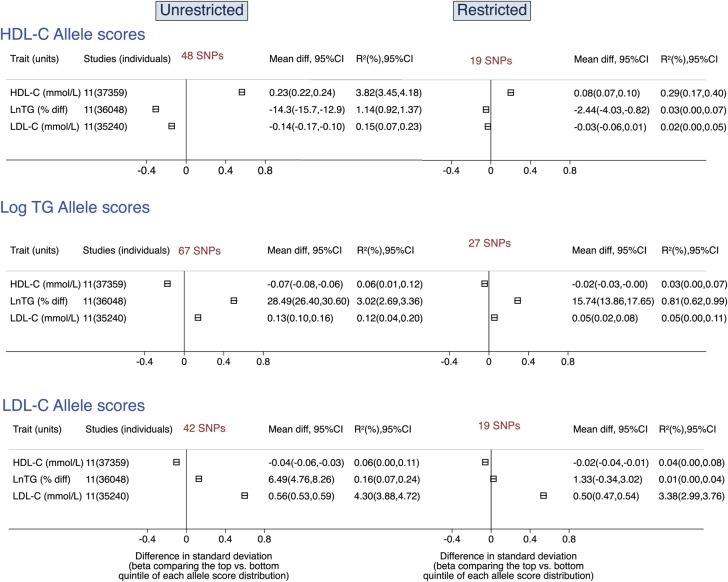
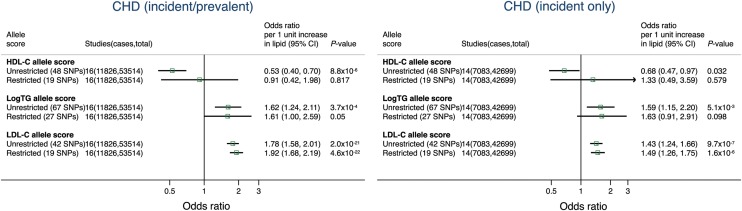
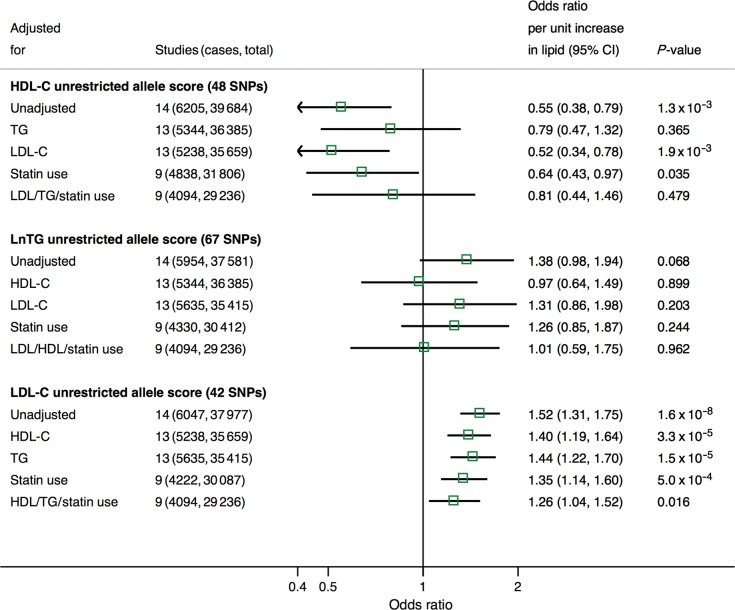
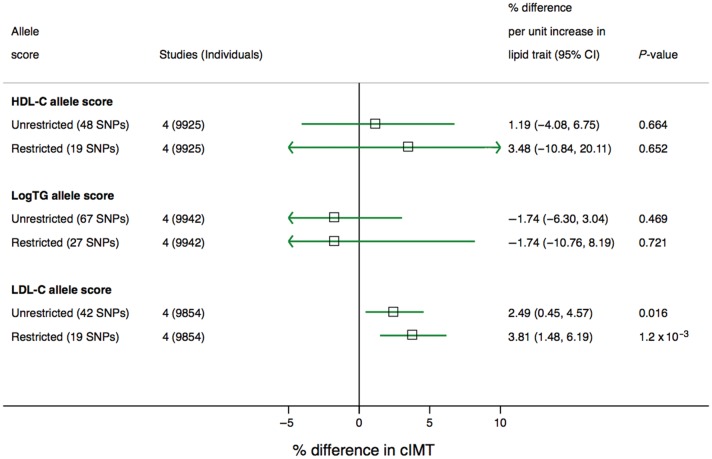
Verification
Claims the paper makes
The claims and statistics of this paper haven’t been checked yet.
Free: it reads the open-access text and checks the first 5 claims that cite a source we can check. Create a free account to check every claim.
Claims other papers make about this one
Each is checked against this paper’s own text: does it say what the citing paper says it does?
The cited source doesn’t support the claim as written.
In the citing paper
“Furthermore, Mendelian randomization studies have demonstrated that long-term exposure to lower LDL-C levels is associated with a much lower risk of CV events as compared with shorter-term exposure to lower LDL-C (as achieved, for example, in randomized trials) [48,52].”
From 2019 ESC/EAS guidelines for the management of dyslipidaemias: lipid modification to reduce cardiovascular risk (2019) · cites this paper as [48]
Checked by a reasoning model — may be wrong.
Experimental — accuracy not yet measuredThe source backs part of the claim, not all of it — or backs it for a different population, condition or comparison.
In the citing paper
“Numerous epidemiological studies, Mendelian randomization studies, and RCTs have consistently demonstrated a log-linear relationship between the absolute changes in plasma LDL-C and the risk of ASCVD [34,45-50].”
From 2019 ESC/EAS guidelines for the management of dyslipidaemias: lipid modification to reduce cardiovascular risk (2019) · cites this paper as [48]
Experimental — accuracy not yet measuredThe source backs part of the claim, not all of it — or backs it for a different population, condition or comparison.
In the citing paper
“Non-HDL-C also includes the atherogenic TG-rich lipoproteins (VLDL, IDL and remnants), which is essential considering the recent information from genome-wide association studies (GWASs) and Mendelian randomization 76,86 - 89 supporting TGs and remnant particles as causative factors in atherogenesis.”
From 2016 ESC/EAS Guidelines for the Management of Dyslipidaemias (2016) · cites this paper as [89]
Experimental — accuracy not yet measuredThe source backs part of the claim, not all of it — or backs it for a different population, condition or comparison.
In the citing paper
“At a more extreme level, while both CETP inhibitors and HMGCR lower CHD through the pharmacological reductions of apolipoprotein B 22 , their metabolomic signatures differ wildly 68 .”
From Integrating genomics with biomarkers and therapeutic targets to invigorate cardiovascular drug development (2021) · cites this paper as [22]
Experimental — accuracy not yet measuredThe source backs part of the claim, not all of it — or backs it for a different population, condition or comparison.
In the citing paper
“The approach outlined here to obtaining a scaling estimate has generally held true for lipid-lowering therapies and risk of cardiovascular disease 22,23,40,92 but there are several potential reasons why the derivation of such a scaling for other therapeutic target-indication pairs may pose a challenge.”
From Integrating genomics with biomarkers and therapeutic targets to invigorate cardiovascular drug development (2021) · cites this paper as [22]
Experimental — accuracy not yet measured
4 more claims about this paper
Create a free account to see every claim other papers make about this one.
Self-check
Percentages, sums and reported differences re-computed from the paper’s own numbers.
The self-check needs the paper’s full text.
Citations
Cites
Mendelian randomization: Using genes as instruments for making causal inferences in epidemiology
Lawlor, D. A., Harbord, R. M., Sterne, J. A. C., Timpson, N., & Davey Smith, G. (2008) · Statistics in Medicine · doi:10.1002/sim.3034 · Cited by 4,618 · cited 3×
“Moreover, at a population level the randomized allocation of parental alleles at conception tends to balance confounding factors among groups of differing genotypes.(9,10) Where a polymorphism is”
Self-citationBiological, clinical and population relevance of 95 loci for blood lipids
Teslovich, T. M., Musunuru, K., Smith, A. V., Edmondson, A. C., Stylianou, I. M., Koseki, M., Pirruccello, J. P., Ripatti, S., Chasman, D. I., Willer, C. J., et al. (2010) · Nature · doi:10.1038/nature09270 · Cited by 3,487
Self-citationEffects of torcetrapib in patients at high risk for coronary events
Barter, P. J., Caulfield, M., Eriksson, M., Grundy, S. M., Kastelein, J. J. P., Komajda, M., Lopez-Sendon, J., Mosca, L., Tardif, J.-C., Waters, D. D., et al. (2007) · New England Journal of Medicine · doi:10.1056/nejmoa0706628 · Cited by 3,139 · cited 1×
“the negative findings from clinical trials may have arisen from inadequate selection of drug targets or drug molecules.(6,8) Given this uncertainty, it remains unclear whether elevating HDL-C or reducing”
Collaborators, C. T. T. (. (2012) · The Lancet · doi:10.1016/s0140-6736(12)60367-5 · Cited by 2,833 · cited 1×
“studies has been established as causal based on randomized trials of LDL-C-lowering drugs.(1,2) In contrast, uncertainty existson the causal relevance of high-density lipoprotein cholesterol (HDL-C) and trigly-”
Major lipids, apolipoproteins, and risk of vascular disease
The Emerging Risk Factors Collaboration* (2009) · JAMA · doi:10.1001/jama.2009.1619 · Cited by 2,731
Effects of dalcetrapib in patients with a recent acute coronary syndrome
Schwartz, G. G., Olsson, A. G., Abt, M., Ballantyne, C. M., Barter, P. J., Brumm, J., Chaitman, B. R., Holme, I. M., Kallend, D., Leiter, L. A., et al. (2012) · New England Journal of Medicine · doi:10.1056/nejmoa1206797 · Cited by 2,022
Using multiple genetic variants as instrumental variables for modifiable risk factors
Palmer, T. M., Lawlor, D. A., Harbord, R. M., Sheehan, N. A., Tobias, J. H., Timpson, N. J., Smith, G. D., & Sterne, J. A. (2012) · Statistical Methods in Medical Research · doi:10.1177/0962280210394459 · Cited by 1,289 · cited 2×
“This should increase power, because each additional SNP contributes incrementally to the explained variance in the lipid fraction of interest and reduces the lack of specificity often observed with single SNPs, because the effects on traits other than the lipid fraction of interest should be small, non-systematic, and…”
Self-citationRemnant Cholesterol as a Causal Risk Factor for Ischemic Heart Disease
Varbo, A., Benn, M., Tybjærg-Hansen, A., Jørgensen, A. B., Frikke-Schmidt, R., & Nordestgaard, B. G. (2013) · Journal of the American College of Cardiology · doi:10.1016/j.jacc.2012.08.1026 · Cited by 1,115
Cited by
Items 101–200 of 808
HDL from an Alzheimer's disease perspective
Button, E. B., Robert, J., Caffrey, T. M., Fan, J., Zhao, W., & Wellington, C. L. (2019) · Current Opinion in Lipidology · doi:10.1097/mol.0000000000000604 · Cited by 114
Correlation without a cause: an epidemiological odyssey
Davey Smith, G., & Phillips, A. N. (2020) · International Journal of Epidemiology · doi:10.1093/ije/dyaa016 · Cited by 107
Mendelian randomisation implicates hyperlipidaemia as a risk factor for colorectal cancer
Rodriguez‐Broadbent, H., Law, P., Sud, A., Palin, K., Tuupanen, S., Gylfe, A. E., Hänninen, U. A., Cajuso, T., Tanskanen, T. J., Kondelin, J., et al. (2017) · International Journal of Cancer · doi:10.1002/ijc.30709 · Cited by 113
“J. Cancer: 140, 2701–2708 (2017) VC 2017 UICC “unrestricted allele score” that included all SNPs associated with the lipid trait, we also calculated a “restricted allele score” as per Holmes et al.11 based on SNPs exclusively associated with HDL (n5 43), LDL (n5 9), or TG (n5 14) to make them as specific as possible (…”
MethodSoria-Florido, M. T., Schröder, H., Grau, M., Fitó, M., & Lassale, C. (2020) · Atherosclerosis · doi:10.1016/j.atherosclerosis.2020.04.015 · Cited by 99
The application of big data to cardiovascular disease: paths to precision medicine
Leopold, J. A., Maron, B. A., & Loscalzo, J. (2020) · Journal of Clinical Investigation · doi:10.1172/jci129203 · Cited by 111
“Some of these approaches have already been proposed or considered in studies on lipid-lowering agents (103), and in rare cardiovascular diseases for which the “ N -of-1 trial” may ultimately prove useful for patients with a specific biological profile matching a specific pharmacotherapeutic agent…”
BackgroundMillard, L. A. C., Davies, N. M., Timpson, N. J., Tilling, K., Flach, P. A., & Smith, G. D. (2015) · Scientific Reports · doi:10.1038/srep16645 · Cited by 96
Wong, N. D., Toth, P. P., & Amsterdam, E. A. (2019) · Trends in Cardiovascular Medicine · doi:10.1016/j.tcm.2019.11.013 · Cited by 106
Xu, L., Borges, M. C., Hemani, G., & Lawlor, D. A. (2017) · Diabetologia · doi:10.1007/s00125-017-4396-y · Cited by 104
Self-citationIs a High HDL-Cholesterol Level Always Beneficial?
Franczyk, B., Rysz, J., Ławiński, J., Rysz-Górzyńska, M., & Gluba-Brzózka, A. (2021) · Biomedicines · doi:10.3390/biomedicines9091083 · Cited by 105
Dunder, L., Lind, P. M., Salihovic, S., Stubleski, J., Kärrman, A., & Lind, L. (2022) · Environmental Research · doi:10.1016/j.envres.2022.112903 · Cited by 97
Khan, T. A., Field, D., Chen, V., Ahmad, S., Mejía, S. B., Kahleová, H., Rahelić, D., Salas‐Salvadó, J., Leiter, L. A., Uusitupa, M. I. J., et al. (2023) · Diabetes Care · doi:10.2337/dc22-1024 · Cited by 104
“Some meta-analyses of prospective cohort studies have observed a 30% lower diabetes incidence in individuals with moderate alcohol intake compared with nonconsumers (63–65), although recent Mendelian randomization studies have caused some doubt regarding the beneficial effect of alcohol intake (66,67).”
BackgroundDifferential effects of PCSK9 variants on risk of coronary disease and ischaemic stroke
Hopewell, J. C., Malik, R., Valdés-Márquez, E., Worrall, B. B., Collins, R., & METASTROKE Collaboration of the ISGC (2018) · European Heart Journal · doi:10.1093/eurheartj/ehx373 · Cited by 74
“CHD risk is broadly consistent with that predicted from Mendelian randomization studies of LDL-C and CHD.(33,34) Hence, the CHD results are consistent with the effects of PCSK9 being mediated chiefly”
ResultInfluentialHDL and Reverse Remnant-Cholesterol Transport (RRT): Relevance to Cardiovascular Disease
Kontush, A. (2020) · Trends in Molecular Medicine · doi:10.1016/j.molmed.2020.07.005 · Cited by 101
“As mutual adjustments can eliminate associations with CHD of HDL-C and TG [74], these lipid traits may influence cardiovascular disease through the same processes.”
Xu, L., Tian, Z., Chen, H., Zhao, Y., & Yang, Y. (2021) · Frontiers in Nutrition · doi:10.3389/fnut.2021.747884 · Cited by 100
“0% higher risks of CHD, respectively (49, 50).”
BackgroundA Mendelian randomization analysis of circulating lipid traits and breast cancer risk
Beeghly-Fadiel, A. C., Khankari, N. K., Delahanty, R., Shu, X., Lu, Y., Schmidt, M. K., Bolla, M. K., Michailidou, K., Wang, Q., Dennis, J., et al. (2019) · International Journal of Epidemiology · doi:10.1093/ije/dyz242 · Cited by 97
“Although it is an established risk factor for coronary heart disease,(10) large Mendelian randomization analyses have suggested that the association between low HDL-C and heart disease may not be causal.(11,12) Furthermore, clinical trials designed to increase circulating HDL-C levels pharmacologically have not demons…”
BackgroundKelly, R. K., Tong, T. Y. N., Watling, C. Z., Reynolds, A. N., Piernas, C., Schmidt, J. A., Papier, K., Carter, J. L., Key, T. J., & Perez‐Cornago, A. (2023) · BMC Medicine · doi:10.1186/s12916-022-02712-7 · Cited by 98
“Moreover, MR studies support a causal effect of triglycerides on IHD risk [49, 50], but have strongly suggested that HDL cholesterol is not causal [49, 51], and it is possible that associations of triglycerides vary by the type of transporting lipoprotein particle [10].”
BackgroundSchwingshackl, L., Krause, M., Schmucker, C., Hoffmann, G., Rücker, G., & Meerpohl, J. J. (2019) · Nutrition, Metabolism and Cardiovascular Diseases · doi:10.1016/j.numecd.2019.07.001 · Cited by 85
Using Multivariable Mendelian Randomization to Disentangle the Causal Effects of Lipid Fractions
Burgess, S., Freitag, D. F., Khan, H., Gorman, D. N., & Thompson, S. G. (2014) · PLoS ONE · doi:10.1371/journal.pone.0108891 · Cited by 94
“05) was not associated with CAD risk [19].”
Georgakis, M. K., Malik, R., Anderson, C. D., Parhofer, K. G., Hopewell, J. C., & Dichgans, M. (2020) · Brain · doi:10.1093/brain/awz413 · Cited by 90
Hypertriglyceridemia and cardiovascular risk: a cautionary note about metabolic confounding
Sniderman, A. D., Couture, P., Martin, S. S., DeGraaf, J., Lawler, P. R., Cromwell, W. C., Wilkins, J. T., & Thanassoulis, G. (2018) · Journal of Lipid Research · doi:10.1194/jlr.r082271 · Cited by 92
“Mendelian randomization of blood lipids for coronary heart disease (39)”
BackgroundHighlighting Residual Atherosclerotic Cardiovascular Disease Risk
Matsuura, Y., Kanter, J. E., & Bornfeldt, K. (2018) · Arteriosclerosis Thrombosis and Vascular Biology · doi:10.1161/atvbaha.118.311999 · Cited by 95
“On the contrary, recent Mendelian randomization studies strongly support the causal relationship between genes involved in triglyceride metabolism and coronary heart disease.(31) Genetic and genomic studies have revealed that genes involved in triglyceride clearance, including APOC3, APOA5,(35) ANGPTL3,(36) and LPL,(3…”
Triglycerides and cardiovascular disease
Esan, O., & Wierzbicki, A. S. (2021) · Current Opinion in Cardiology · doi:10.1097/hco.0000000000000862 · Cited by 81
Triglyceride-rich lipoproteins and remnants: targets for therapy?
Dallinga-Thie, G. M., Kroon, J., Borén, J., & Chapman, M. J. (2016) · Current Cardiology Reports · doi:10.1007/s11886-016-0745-6 · Cited by 90
Gallois, A., Mefford, J., Ko, A., Vaysse, A., Julienne, H., Ala-Korpela, M., Laakso, M., Zaitlen, N., Pajukanta, P., & Aschard, H. (2019) · Nature Communications · doi:10.1038/s41467-019-12703-7 · Cited by 81
Millwood, I. Y., Bennett, D. A., Holmes, M. V., Boxall, R., Guo, Y., Bian, Z., Yang, L., Sansome, S., Chen, Y., Du, H., et al. (2018) · JAMA Cardiology · doi:10.1001/jamacardio.2017.4177 · Cited by 81
“Although inverse associations between HDL cholesterol concentration and occlusive CVD have been widely reported in large prospective studies,(1,2) including the CKB,(35) the causal relevance of such associations has not been established.(12,36,37) In a prospective study, HDL efflux capacity was inversely associated wi…”
BackgroundSelf-citationUnderberg, J., Toth, P. P., & Rodriguez, F. (2022) · Postgraduate Medicine · doi:10.1080/00325481.2022.2117498 · Cited by 78
Andersson, C., Lyass, A., Vasan, R. S., Massaro, J. M., D’Agostino, R. B., & Robins, S. J. (2014) · American Heart Journal · doi:10.1016/j.ahj.2014.08.007 · Cited by 88
“2) Smokers 275 (22) 33 (26) 46 (27) 238 (23) 45 (22) 51 (23) 66 (30) 85 (34) Antihypertensive treatment 104 (8) 37 (29) 20 (11) 149 (14) 60 (30) 56 (25) 39 (18) 61 (25)”
Soria-Florido, M. T., Castañer, O., Lassale, C. M., Estruch, R., Salas‐Salvadó, J., Martínez‐González, M. Á., Corella, D., Ros, E., Arós, F., Elosúa, R., et al. (2020) · Circulation · doi:10.1161/circulationaha.119.041658 · Cited by 85
High-Density Lipoproteins Are Bug Scavengers
Meilhac, O., Tanaka, S., & Couret, D. (2020) · Biomolecules · doi:10.3390/biom10040598 · Cited by 82
“In addition, recent Mendelian studies challenged the causal role of low HDL-C levels in cardiovascular diseases (CVD) [5].”
BackgroundAging and cardiovascular diseases: the role of gene-diet interactions
Corella, D., & Ordovás, J. M. (2014) · Ageing Research Reviews · doi:10.1016/j.arr.2014.08.002 · Cited by 83
Noordam, R., Bos, M. M., Wang, H., Winkler, T. W., Bentley, A. R., Kilpeläinen, T. O., de Vries, P. S., Sung, Y. J., Schwander, K., Cade, B. E., et al. (2019) · Nature Communications · doi:10.1038/s41467-019-12958-0 · Cited by 83
Self-citationPrimary prevention of cardiovascular disease: Updated review of contemporary guidance and literature
Stewart, J., Addy, K., Campbell, S., & Wilkinson, P. (2020) · JRSM Cardiovascular Disease · doi:10.1177/2048004020949326 · Cited by 84
Age-dependent sex differences in cardiometabolic risk factors
Zhernakova, D. V., Sinha, T., Andreu‐Sánchez, S., Prins, J. R., Kurilshikov, A., Balder, J.-W., Sanna, S., Study, L. C., Franke, L., Kuivenhoven, J. A., et al. (2022) · Nature Cardiovascular Research · doi:10.1038/s44161-022-00131-8 · Cited by 82
Wang, K., Shi, X., Zhu, Z., Hao, X., Chen, L., Cheng, S., Foo, R., & Wang, C. (2022) · Genome Medicine · doi:10.1186/s13073-022-01067-1 · Cited by 82
“In particular, MR analyses have uncovered the causal roles of height [9], body mass index (BMI) [10], serum lipids [11], blood pressure [12], hemoglobin A1c (HbA1c) [13], and type 2 diabetes (T2D) [13] in CAD.”
BackgroundMolecular Biomarkers for Cardiometabolic Disease: Risk Assessment in Young Individuals
Tahir, U. A., & Gerszten, R. E. (2023) · Circulation Research · doi:10.1161/circresaha.123.322000 · Cited by 82
Blood lipids and prostate cancer: a Mendelian randomization analysis
Bull, C. J., Bonilla, C., Holly, J. M. P., Perks, C. M., Davies, N. M., Haycock, P., Yu, O. H. Y., Richards, J. B., Eeles, R. A., Easton, D. F., et al. (2016) · Cancer Medicine · doi:10.1002/cam4.695 · Cited by 82
“[15]) (Table S2), minimizing the possibility of pleiotropic effects.”
The Role of High-Density Lipoproteins in Diabetes and Its Vascular Complications
Wong, N. K. P., Nicholls, S. J., Tan, J. T. M., & Bursill, C. A. (2018) · International Journal of Molecular Sciences · doi:10.3390/ijms19061680 · Cited by 81
“Moreover, analysis of a range of single-nucleotide polymorphisms (SNPs) linked to increased plasma HDL levels have revealed that these do not predict a lower risk of MI [35] nor the risk of CAD more broadly [36].”
BackgroundMinică, C. C., Dolan, C. V., Boomsma, D. I., de Geus, E., & Neale, M. C. (2018) · Behavior Genetics · doi:10.1007/s10519-018-9904-4 · Cited by 80
Doi, T., Langsted, A., & Nordestgaard, B. G. (2023) · Atherosclerosis · doi:10.1016/j.atherosclerosis.2023.05.010 · Cited by 72
Karjalainen, M. K., Holmes, M. V., Wang, Q., Anufrieva, O., Kähönen, M., Lehtimäki, T., Havulinna, A. S., Kristiansson, K., Salomaa, V., Perola, M., et al. (2020) · Atherosclerosis · doi:10.1016/j.atherosclerosis.2020.02.002 · Cited by 73
Self-citationChan, M. S., Arnold, M., Offer, A. R., Hammami, I., Mafham, M. M., Armitage, J., Perera, R., & Parish, S. (2021) · The Journals of Gerontology Series A · doi:10.1093/gerona/glab069 · Cited by 79
McGurk, K. A., Keavney, B. D., & Nicolaou, A. (2021) · Atherosclerosis · doi:10.1016/j.atherosclerosis.2021.04.021 · Cited by 79
Engel, S., & Tholstrup, T. (2015) · American Journal of Clinical Nutrition · doi:10.3945/ajcn.115.112227 · Cited by 80
Neuenschwander, M., HOFFMANN, G. E., Schwingshackl, L., & Schlesinger, S. (2019) · European Journal of Epidemiology · doi:10.1007/s10654-019-00534-1 · Cited by 77
“Additionally, genetic information in the general population showed no association between HDL and coronary heart disease (CHD) [128].”
BackgroundMendelian randomization and pleiotropy analysis
Zhu, X. (2021) · Quantitative Biology · doi:10.1007/s40484-020-0216-3 · Cited by 75
“[53] suggested uncertainty in a causal role for HDL-C on CVD risk.”
BackgroundLee, J., Chi, G., Fitzgerald, C., Kazmi, S. H. A., Kalaycı, A., Korjian, S., Duffy, D., Shaunik, A., Kingwell, B. A., Yeh, R. W., et al. (2021) · Frontiers in Cardiovascular Medicine · doi:10.3389/fcvm.2021.774418 · Cited by 77
Relative effects of LDL-C on ischemic stroke and coronary disease: A Mendelian randomization study
Valdés‐Márquez, E., Parish, S., Clarke, R., Stari, T., Worrall, B. B., & Hopewell, J. C. (2019) · Neurology · doi:10.1212/wnl.0000000000007091 · Cited by 76
Self-citationRethinking good cholesterol: a clinicians' guide to understanding HDL
Xiang, A. S., & Kingwell, B. A. (2019) · The Lancet Diabetes & Endocrinology · doi:10.1016/s2213-8587(19)30003-8 · Cited by 75
Green, H., Jones, A. G., Evans, J. P., Wood, A. R., Beaumont, R. N., Tyrrell, J., Frayling, T. M., Smith, C., & Weedon, M. N. (2021) · PLoS Genetics · doi:10.1371/journal.pgen.1009577 · Cited by 77
“This method is now extensively used to infer causal associations and proof of principle examples include evidence that increased BMI causes diabetes [10] and increased LDL cholesterol causes coronary artery disease [11].”
MethodEffects of lifelong testosterone exposure on health and disease using Mendelian randomization
Mohammadi‐Shemirani, P., Chong, M., Pigeyre, M., Morton, R. W., Gerstein, H. C., & Paré, G. (2020) · eLife · doi:10.7554/elife.58914 · Cited by 73
Genetic-Driven Druggable Target Identification and Validation
Floris, M., Olla, S., Schlessinger, D., & Cucca, F. (2018) · Trends in Genetics · doi:10.1016/j.tig.2018.04.004 · Cited by 64
Alexopoulos, A., Qamar, A., Hutchins, K., Crowley, M. J., Batch, B. C., & Guyton, J. R. (2019) · Current Diabetes Reports · doi:10.1007/s11892-019-1136-3 · Cited by 77
HDL cholesterol and ASCVD risk stratification: A debate
Barter, P. J., & Genest, J. J. (2019) · Atherosclerosis · doi:10.1016/j.atherosclerosis.2019.01.001 · Cited by 73
Inflammation, remodeling, and other factors affecting HDL cholesterol efflux
Ronsein, G. E., & Vaisar, T. (2016) · Current Opinion in Lipidology · doi:10.1097/mol.0000000000000382 · Cited by 71
Sex differences in systemic metabolites at four life stages: cohort study with repeated metabolomics
Bell, J. A., Ferreira, D. L. S., Fraser, A., Soares, A. G., Howe, L. D., Lawlor, D. A., Carslake, D., Smith, G. D., & O’Keeffe, L. M. (2021) · BMC Medicine · doi:10.1186/s12916-021-01929-2 · Cited by 72
“However, despite robust observational associations of lower HDL cholesterol with higher CHD risk [44], genetic [35, 45] and pharmacological intervention studies [46] do not support a causal effect of HDL cholesterol Fig.”
BackgroundSelf-citationMendelian randomisation applied to drug development in cardiovascular disease: a review
Mokry, L. E., Ahmad, O., Forgetta, V., Thanassoulis, G., & Richards, J. B. (2015) · Journal of Medical Genetics · doi:10.1136/jmedgenet-2014-102438 · Cited by 68
Yu, D., Wang, Z., Zhang, X., Qu, B., Cai, Y., Ma, S., Zhao, Z., & Simmons, D. S. (2021) · The Journal of Clinical Endocrinology & Metabolism · doi:10.1210/clinem/dgab533 · Cited by 71
Exploring apolipoprotein C-III: pathophysiological and pharmacological relevance
Packard, C. J., Pirillo, A., Tsimikas, S., Ference, B. A., & Catapano, A. L. (2024) · Cardiovascular Research · doi:10.1093/cvr/cvad177 · Cited by 61
Bonilla, C., Ness, A., Wills, A. K., Lawlor, D. A., Lewis, S. J., & Smith, G. D. (2014) · BMC Public Health · doi:10.1186/1471-2458-14-597 · Cited by 69
Self-citationToth, P. P., Fazio, S., Wong, N. D., HULL, M. L., & Nichols, G. A. (2019) · Diabetes Obesity and Metabolism · doi:10.1111/dom.13921 · Cited by 71
von Scheidt, M., Zhao, Y., de Aguiar Vallim, T. Q., Che, N., Wierer, M., Seldin, M. M., Franzén, O., Kurt, Z., Pang, S., Bongiovanni, D., et al. (2021) · Circulation · doi:10.1161/circulationaha.120.050186 · Cited by 68
Robust multivariable Mendelian randomization based on constrained maximum likelihood
Lin, Z., Xue, H., & Pan, W. (2023) · The American Journal of Human Genetics · doi:10.1016/j.ajhg.2023.02.014 · Cited by 70
Postprandial Plasma Phospholipids in Men Are Influenced by the Source of Dietary Fat
Meikle, P. J., Barlow, C. K., Mellett, N. A., Mundra, P. A., Bonham, M. P., Larsen, A., Cameron‐Smith, D., Sinclair, A. J., Nestel, P. J., & Wong, G. (2015) · Journal of Nutrition · doi:10.3945/jn.115.210104 · Cited by 68
“However, the clinical importance has been heightened by the recent demonstration that the plasma triglyceride concentration is not only independently but also causally associated with increased risk of coronary heart disease (11, 12).”
BackgroundRichardson, T. G., Wang, Q., Sanderson, E., Mahajan, A., McCarthy, M. I., Frayling, T. M., Ala-Korpela, M., Sniderman, A., Davey Smith, G., & Holmes, M. V. (2021) · The Lancet Healthy Longevity · doi:10.1016/s2666-7568(21)00086-6 · Cited by 61
Self-citationColesterol LDL y aterosclerosis: evidencias
Guijarro, C., & Cosín-Sales, J. (2021) · Clínica e Investigación en Arteriosclerosis · doi:10.1016/j.arteri.2020.12.004 · Cited by 69
Laclaustra, M., López‐García, E., Civeira, F., García‐Esquinas, E., Graciani, A., Guallar‐Castillón, P., Banegas, J. R., & Rodríguez‐Artalejo, F. (2018) · Diabetes Care · doi:10.2337/dc18-0372 · Cited by 67
Surowiec, I., Noordam, R., Bennett, K., Beekman, M., Slagboom, P. E., Lundstedt, T., & van Heemst, D. (2019) · Metabolomics · doi:10.1007/s11306-019-1484-7 · Cited by 66
Lu, J., Han, G., Liu, X., Chen, B., Peng, K., Shi, Y., Zhang, M., Yang, Y., Cui, J., Song, L., et al. (2023) · The Lancet Regional Health - Western Pacific · doi:10.1016/j.lanwpc.2023.100874 · Cited by 66
“…controlled trials (RCTs) and mendelian randomization (MR) studies which tested the linear casual association with HDL-C, a key diagnostic criterion for dyslipidemia and risk indicator for CVD. 3,4 However, comprehensive understanding on the association between HDL-C and mortality is lacking.”
BackgroundBurgess, S., & Harshfield, E. (2016) · Current Opinion in Endocrinology, Diabetes & Obesity · doi:10.1097/med.0000000000000230 · Cited by 59
Toth, P. P., Philip, S., HULL, M. L., & Granowitz, C. B. (2019) · Mayo Clinic Proceedings · doi:10.1016/j.mayocp.2019.03.028 · Cited by 64
Polygenic link between blood lipids and amyotrophic lateral sclerosis
Chen, X., Yazdani, S., Piehl, F., Magnusson, P. K. E., & Fang, F. (2018) · Neurobiology of Aging · doi:10.1016/j.neurobiolaging.2018.03.022 · Cited by 63
Burger, P. M., Dorresteijn, J. A. N., Koudstaal, S., Holtrop, J., Kastelein, J. J. P., Jukema, J. W., Ridker, P. M., Mosterd, A., & Visseren, F. L. J. (2024) · Atherosclerosis · doi:10.1016/j.atherosclerosis.2024.118540 · Cited by 63
“Mendelian randomization studies have shown that genetic variants associated with lifelong exposure to lower LDL-C are associated with considerably larger reductions in the risk of CVD than the same magnitude of LDL-C reduction achieved with lipid-lowering therapy in RCTs [5 – 8].”
Molecular biology of calcific aortic valve disease: towards new pharmacological therapies
Mathieu, P., Boulanger, M.-C., & Bouchareb, R. (2014) · Expert Review of Cardiovascular Therapy · doi:10.1586/14779072.2014.923756 · Cited by 52
“However, Mendelian randomized studies suggested that HDLs may not be causally related to atherosclerosis [34].”
BackgroundSerum magnesium levels and risk of coronary artery disease: Mendelian randomisation study
Larsson, S. C., Burgess, S., & Michaëlsson, K. (2018) · BMC Medicine · doi:10.1186/s12916-018-1065-z · Cited by 64
“In addition, the inverse association between serum magnesium levels and CAD is unlikely explained by major lipids, as genetically higher magnesium levels were not associated with cholesterol but were weakly associated with higher triglycerides, which increase CAD risk [37].”
BackgroundYuan, S., Lin, A., He, Q., Burgess, S., & Larsson, S. C. (2020) · International Journal of Cardiology · doi:10.1016/j.ijcard.2020.03.053 · Cited by 63
“Elevated low-density lipoprotein cholesterol and tri-glyceride levels are associated with CAD but not cardioembolic stroke [44,45].”
Mendelian randomization with Egger pleiotropy correction and weakly informative Bayesian priors
Schmidt, A. F., & Dudbridge, F. (2018) · International Journal of Epidemiology · doi:10.1093/ije/dyx254 · Cited by 53
“For example, if one is interested in estimating the causal relation between high-density lipoprotein cholesterol (HDL-C) and coronary heart disease (CHD), it is often difficult to find genes that affect HDL-C but not lowdensity lipoprotein cholesterol (LDL-C) or triglycerides.(3,4) Such a situation may indicate violat…”
BackgroundSelf-citationNatarajan, P., Pampana, A., Graham, S. E., Ruotsalainen, S. E., Perry, J. A., de Vries, P. S., Broome, J. G., Pirruccello, J. P., Honigberg, M. C., Aragam, K., et al. (2021) · Nature Communications · doi:10.1038/s41467-021-22339-1 · Cited by 38
Self-citationZhu, L., Hayen, A., & Bell, K. J. L. (2020) · Cardiovascular Diabetology · doi:10.1186/s12933-020-01002-x · Cited by 54
Mendelian randomization in pharmacogenomics: The unforeseen potentials
Khasawneh, L. Q., Al-Mahayri, Z. N., & Ali, B. R. (2022) · Biomedicine & Pharmacotherapy · doi:10.1016/j.biopha.2022.112952 · Cited by 59
Numata, S., Kinoshita, M., Tajima, A., Nishi, A., Imoto, I., & Ohmori, T. (2015) · BMC Medical Genetics · doi:10.1186/s12881-015-0197-7 · Cited by 59
Gugliucci, A., Lustig, R. H., Caccavello, R. J., Erkin‐Cakmak, A., Noworolski, S. M., Tai, V., Wen, M., Mulligan, K. M., & Schwarz, J. (2016) · Atherosclerosis · doi:10.1016/j.atherosclerosis.2016.06.048 · Cited by 63
Triglycerides, Atherosclerosis, and Cardiovascular Outcome Studies: Focus on Omega-3 Fatty Acids
Handelsman, Y., & Shapiro, M. D. (2016) · Endocrine Practice · doi:10.4158/ep161445.ra · Cited by 60
“In a Mendelian randomization meta-analysis of 17 studies, single-nucleotide polymorphisms of alleles independently associated with triglycerides increased CHD risk by 61% for each 1-log increment in triglycerides (28).”
2016 ESC/EAS Guidelines for the Management of Dyslipidaemias
Catapano, A. L., Graham, I. M., Backer, G. D., Wiklund, O., Chapman, M. J., Drexel, H., Hoes, A. W., Jennings, C. S., Landmesser, U., Pedersen, T. R., et al. (2016) · Kardiologia Polska · doi:10.5603/kp.2016.0157 · Cited by 65
Self-citationBjörnsson, E., Thorleifsson, G., Helgadóttir, A., Guðnason, T., Guðbjartsson, T., Andersen, K., Grétarsdóttir, S., Ólafsson, Í., Tragante, V., Ólafsson, Ó. H., et al. (2020) · JAMA Cardiology · doi:10.1001/jamacardio.2019.2946 · Cited by 60
Self-citationLipid and metabolic syndrome traits in coronary artery disease: a Mendelian randomization study
Thomas, D. G., Wei, Y., & Tall, A. R. (2021) · Journal of Lipid Research · doi:10.1194/jlr.p120001000 · Cited by 49
Engel, S., Elhauge, M., & Tholstrup, T. (2017) · European Journal of Clinical Nutrition · doi:10.1038/s41430-017-0042-5 · Cited by 58
O’Neill, D., Britton, A. R., Hannah, M., Goldberg, M., Kuh, D. J., Khaw, K., & Bell, S. (2018) · BMC Medicine · doi:10.1186/s12916-018-1123-6 · Cited by 56
A Mendelian randomization study of the role of lipoprotein subfractions in coronary artery disease
Zhao, Q., Wang, J., Miao, Z., Zhang, N. R., Hennessy, S., Small, D. S., & Rader, D. J. (2021) · eLife · doi:10.7554/elife.58361 · Cited by 58
“Those baseline analyses suggested that HDL-C/ ApoA1 had a weak, non-significant protective effect on CAD, which is consistent with prior studies (Holmes et al., 2015; Wang et al., 2020).”
ResultFurtado, J. D., Ruotolo, G., Nicholls, S. J., Dullea, R., Carvajal-Gonzalez, S., & Sacks, F. M. (2022) · Arteriosclerosis, Thrombosis, and Vascular Biology · doi:10.1161/atvbaha.121.317181 · Cited by 52
Lee, H., Park, J.-B., Hwang, I.-C., Yoon, Y. E., Park, H. E., Choi, S.-Y., Kim, Y.-J., Cho, G.-Y., Han, K., & Kim, H.-K. (2020) · European Journal of Preventive Cardiology · doi:10.1177/2047487319898571 · Cited by 56
Patel, R. S., Pasea, L., Soran, H., Downie, P., Jones, R., Hingorani, A. D., Neely, D., Denaxas, S., & Hemingway, H. (2022) · Cardiovascular Diabetology · doi:10.1186/s12933-022-01525-5 · Cited by 57
“Third, the relationship between hypertriglyceridemia and coronary heart disease has been revisited with Mendelian Randomization studies suggesting a possible causal link [3].”
BackgroundSelf-citationChen, J., Li, Y., Zhang, Y., Wang, Y., Zhou, Y., Geng, T., Liu, G., Pan, A., & Liao, Y.-F. (2024) · Metabolism · doi:10.1016/j.metabol.2024.155817 · Cited by 58
The Influence of Big (Clinical) Data and Genomics on Precision Medicine and Drug Development
Denny, J. C., Driest, S. L. V., Wei, W., & Roden, D. M. (2018) · Clinical Pharmacology & Therapeutics · doi:10.1002/cpt.951 · Cited by 59
“10,11 The latter is particularly interesting as cholesteryl ester transfer protein (CETP) inhibitors, medications effective at raising HDL, have so far not been successful at reducing cardio-vascular events, 12 with the exception of anacetrapib, whose cardiovascular event reduction could be through…”
BackgroundLiu, K., Hui, S., Wang, B., Kaliannan, K., Guo, X., & Liang, L. (2019) · American Journal of Clinical Nutrition · doi:10.1093/ajcn/nqz280 · Cited by 56
ApoE e2 and aging-related outcomes in 379,000 UK Biobank participants
Kuo, C.-L., Pilling, L. C., Atkins, J. L., Kuchel, G. A., & Melzer, D. (2020) · Aging · doi:10.18632/aging.103405 · Cited by 55
“The associations between CHD and LDL cholesterol, lipoprotein A, triglycerides, and reticulocyte count are likely to be causal based on the Mendelian randomization results [28][29][30], in which genetic variants associated with each risk factor were used to estimate associations with CHD to minimize confounding and av…”
BackgroundBell, S., Mehta, G., Moore, K. P., & Britton, A. R. (2016) · Journal of Internal Medicine · doi:10.1111/joim.12544 · Cited by 56
Weng, L.-C. C., Roetker, N. S., Lutsey, P. L., Alonso, Á., Guan, W., Pankow, J. S., Folsom, A. R., Steffen, L. M., Pankratz, N., & Tang, W. (2018) · PLoS ONE · doi:10.1371/journal.pone.0195719 · Cited by 55
Berman, A. N., & Blankstein, R. (2019) · Current Cardiology Reports · doi:10.1007/s11886-019-1175-z · Cited by 56
Li, H., Qian, F., Hou, C., Li, X., Gao, Q., Luo, Y., Tao, L., Yang, X., Wang, W., Zheng, D., et al. (2019) · The Journals of Gerontology Series A · doi:10.1093/gerona/glz228 · Cited by 55
Harshfield, E. L., & Markus, H. S. (2023) · Neurology · doi:10.1212/wnl.0000000000207458 · Cited by 54
Metadata
- Authors
- Holmes, M. V., Asselbergs, F. W., Palmer, T. M., Drenos, F., Lanktree, M. B., Nelson, C. P., Dale, C. E., Padmanabhan, S., Finan, C., Swerdlow, D. I., Tragante, V., van Iperen, E. P. A., Sivapalaratnam, S., Shah, S., Elbers, C. C., Shah, T., Engmann, J., Giambartolomei, C., White, J., Zabaneh, D., Sofat, R., McLachlan, S., on behalf of the UCLEB consortium, Doevendans, P. A., Balmforth, A. J., Hall, A. S., North, K. E., Almoguera, B., Hoogeveen, R. C., Cushman, M., Fornage, M., Patel, S. R., Redline, S., Siscovick, D. S., Tsai, M. Y., Karczewski, K. J., Hofker, M. H., Verschuren, W. M., Bots, M. L., van der Schouw, Y. T., Melander, O., Dominiczak, A. F., Morris, R., Ben-Shlomo, Y., Price, J., Kumari, M., Baumert, J., Peters, A., Thorand, B., Koenig, W., Gaunt, T. R., Humphries, S. E., Clarke, R., Watkins, H., Farrall, M., Wilson, J. G., Rich, S. S., de Bakker, P. I. W., Lange, L. A., Davey Smith, G., Reiner, A. P., Talmud, P. J., Kivimäki, M., Lawlor, D. A., Dudbridge, F., Samani, N. J., Keating, B. J., Hingorani, A. D., & Casas, J. P.
- Affiliations
- University College London (GB)
- University Medical Center Utrecht (NL)
- University of Warwick (GB)
- University of Bristol (GB)
- McMaster University (CA)
- University of Leicester (GB)
- London School of Hygiene & Tropical Medicine (GB)
- University of Glasgow (GB)
- Durrer Center for Cardiogenetic Research, ICIN-Netherlands Heart Institute, Utrecht, The Netherlands
- Amsterdam UMC Location University of Amsterdam (NL)
- Children's Hospital of Philadelphia (US)
- University of Edinburgh (GB)
- University of Leeds (GB)
- University of North Carolina at Chapel Hill (US)
- Baylor College of Medicine (US)
- University of Vermont (US)
- The University of Texas Health Science Center at Houston (US)
- Brigham and Women's Hospital (US)
- University of Washington (US)
- University of Minnesota (US)
- Stanford Medicine (US)
- University Medical Center Groningen (NL)
- National Institute for Public Health and the Environment (NL)
- Julius Center for Health Sciences and Primary Care, University Medical Center Utrecht, Utrecht, The Netherlands
- Lund University (SE)
- The Royal Free Hospital (GB)
- School of Social and Community Medicine, University of Bristol
- Genetic Epidemiology Group, Institute of Cardiovacular Science, Faculty of Population Healh Sciences, University College London, 1–19 Torrington Place, London WC1E 6BT, UK
- Helmholtz Munich (DE)
- Department of Internal Medicine II-Cardiology, University of Ulm Medical Center, Ulm, Germany
- University of Oxford (GB)
- University of Mississippi Medical Center (US)
- University of Virginia (US)
- Department of Medical Genetics, Division of Biomedical Genetics, University Medical Center Utrecht, Utrecht, The Netherlands
- MRC Integrative Epidemiology Unit, School of Social and Community Medicine, University of Bristol, Oakfield House, Oakfield Grove, Bristol BS8 2BN, UK
- Fred Hutch Cancer Center (US)
- Department of Epidemiology and Public Health, University College London, 1–19 Torrington Place, London WC1E 6BT, UK
- Corresponding author
- Holmes, Michael V.
- ORCID
- Holmes, Michael V.
- Asselbergs, Folkert W.
- Palmer, Tom M.
- Drenos, Fotios
- Lanktree, Matthew B.
- Nelson, Christopher P.
- Dale, Caroline E.
- Padmanabhan, Sandosh
- Finan, Chris
- Swerdlow, Daniel I.
- Tragante, Vinicius
- Sivapalaratnam, Suthesh
- Shah, Sonia
- Elbers, Clara C.
- Shah, Tina
- Engmann, Jorgen
- Giambartolomei, Claudia
- White, Jon
- Zabaneh, Delilah
- Sofat, Reecha
- McLachlan, Stela
- Doevendans, Pieter A.
- Hall, Alistair S.
- North, Kari E.
- Almoguera, Berta
- Hoogeveen, Ron C.
- Cushman, Mary
- Fornage, Myriam
- Patel, Sanjay R.
- Redline, Susan
- Siscovick, David S.
- Tsai, Michael Y.
- Karczewski, Konrad J.
- Verschuren, W. Monique
- Bots, Michiel L.
- Melander, Olle
- Dominiczak, Anna F.
- Morris, Richard
- Price, Jackie
- Baumert, Jens
- Peters, Annette
- Thorand, Barbara
- Gaunt, Tom R.
- Humphries, Steve E.
- Watkins, Hugh
- Farrall, Martin
- Wilson, James G.
- Rich, Stephen S.
- Lange, Leslie A.
- Reiner, Alex P.
- Talmud, Philippa J.
- Lawlor, Debbie A.
- Dudbridge, Frank
- Samani, Nilesh J.
- Keating, Brendan J.
- Hingorani, Aroon D.
- Casas, Juan P.
- Venue
- European Heart Journal
- Publisher
- Oxford University Press (OUP)
- Published
- 2014-01-28
- Volume
- 36
- Issue
- 9
- Pages
- 539-550
- ISSN
- 0195-668X (ISSN-L)
- 1522-9645
- PMC
- PMC4344957
- OpenAlex
- W2159738130
- Cited by
- 748
- References
- 36
- Citations by year
- 2026: 35 · 2025: 58 · 2024: 69 · 2023: 63 · 2022: 67 · 2021: 94 · 2020: 77 · 2019: 66 · 2018: 53 · 2017: 58 · 2016: 55 · 2015: 32 · 2014: 18
- FWCI
- 7.20
- Type
- journal article
- Language
- en
- Open access
- hybrid
- doi.org
- Licence
- other-oa
- Locations
- European Heart Journal (publishedVersion, other-oa)
- Europe PMC (PubMed Central) (publishedVersion, cc-by-nc)
- PubMed Central (publishedVersion, cc-by-nc)
- PubMed (publishedVersion)
- Pure Amsterdam UMC (publishedVersion, other-oa)
- Bristol Research (University of Bristol) (publishedVersion)
- ENLIGHTEN (Jurnal Bimbingan dan Konseling Islam) (acceptedVersion)
- UniSA Research Outputs Repository (University of South Australia) (acceptedVersion, cc-by-nc)
- Open Access at Essex (University of Essex) (acceptedVersion)
- LSHTM Research Online (London School of Hygiene and Tropical Medicine) (acceptedVersion)
- Carolina Digital Repository (University of North Carolina at Chapel Hill) (submittedVersion, other-oa)
- Data Archiving and Networked Services (DANS) (submittedVersion)
- Brunel University Research Archive (BURA) (Brunel University London) (submittedVersion)
- Adelaide Research & Scholarship (AR&S) (University of Adelaide) (submittedVersion, cc-by-nc)
- Utrecht University Repository (Utrecht University) (submittedVersion, other-oa)
- Lancaster EPrints (Lancaster University) (submittedVersion)
- UCL Discovery (University College London) (submittedVersion)
- Figshare (submittedVersion, cc-by)
- Leicester Research Archive (University of Leicester) (submittedVersion, other-oa)
- Lund University Publications (Lund University) (submittedVersion, other-oa)
- Site cant be reached (submittedVersion)
- Edinburgh Research Explorer (University of Edinburgh) (submittedVersion, cc-by-nc)
- University of Groningen research database (University of Groningen / Centre for Information Technology) (submittedVersion, cc-by-nc)
- Spiral (Imperial College London) (submittedVersion, other-oa)
- Utrecht University Repository (Utrecht University) (submittedVersion)
- UNC Libraries
- Funders
- U.S. Department of Health and Human Services (42129‐32, 42107-26, 32108‐9, 32118-32119, 32115, 32111‐13, 32100‐2, 44221, 32105‐6, 32122, 24152)
- AstraZeneca
- GlaxoSmithKline
- Queen Mary University of London
- London School of Hygiene and Tropical Medicine
- Wellcome Trust (090532, 090532/Z/09/Z, 090532/Z/09/)
- Government of the United Kingdom
- National Institute for Health and Care Research
- British Heart Foundation (LSHM-CT-2007-037273, G0802432, 090532/Z/09/Z, CH98001, RG/13/16/30528, PG/07/133/24260, RG/08/008/25291, BHF RG 08/008, PG/07/133/24260, RG/07/005, RG 08/008, RG/10/12/28456, RG/07/005/23633, PG/13/66/30442, RG/13/2/30098, PG/07/131/24254)
- Research Councils UK
- University College London
- European Commission (LSHM-CT-2007–037273)
- Rosetrees Trust
- University of Bristol
- European Foundation for the Study of Diabetes
- Deutsche Forschungsgemeinschaft (TH-784/2–2)
- ZonMw
- Academy of Finland
- Bundesministerium für Bildung und Forschung (01GS0834)
- Hjärt-Lungfonden (RG/10/12/28456)
- Karolinska Institutet
- Knut och Alice Wallenbergs Stiftelse
- Stockholms Läns Landsting (560183)
- Universitetet i Oslo
- Universität Ulm
- National Institutes of Health (n01wh32105-27-0-1, n01hc95164-17-0-1, n01wh32108-30-0-1, n01wh32100-28-0-1, n01hc55021-47-0-1, n01wh32118-27-0-1, 32122, n01hc95165-34-0-1, n01hc55020-39-0-0, 32111‐13, n01hc55016-37-0-0, n01hc055022-024, n01hc95161-24-0-1, 32108‐9, 42129‐32, n01hc095169-003, NHLBI 33014, n01wh44221-7-0-1, 42107–26, n01wh42129-23-0-1, n01hc65226-6-0-0, n01hc95166-21-0-1, n01wh32111-28-0-1, n01wh32115-26-0-1, N01 WH 44221, n01wh22110-38-0-0, N01-WH-3-2115, n01hc95162-31-0-1, N01WH24152, 32118-32119, n01hc55019-35-0-1, 44221, 32115, n01hc95168-27-0-1, 32100‐2, n01hc95160-18-0-1, n01hc095167-000, n01wh24152-12-0-0, n01hc55018-38-0-1, n01hc95163-22-0-1, n01wh32122-31-0-1, N01-WH-3-2122, n01wh42107-22-0-1, n01hc95159-40-0-1, 23633, 24152, N01WH42129-32, N01-WH-32108-9, N01WH 32111-13, N01 WH 32105-6, N01 WH022110, N01-WH-32100-2, N01-WH-42107-26, N01WH 32118-32119, n01hc55015-48-0-1, 32105-6)
- U.S. Public Health Service (HHSN268200960009C, 33014)
- Medical Research Council (MR/K013351/1, MR/K006584/1, RG/10/12/28456, MR/L01629X/1, MR/K006215/1, WC1E 6BT, G0802432)
- Economic and Social Research Council (ES/J023299/1)
- World Cancer Research Fund
- Agentschap NL (grant IGE05012, IGE05012)
- Sahlgrenska Akademin
- Münchner Zentrum für Gesundheitswissenschaften
- National Institute on Aging (R01 AG1764406 S1, RG/10/12/28456, R01AG017644)
- National Heart, Lung, and Blood Institute (33014, N01-HC55022, N01-HC-65226, N01 HC-95159, N01-HC-95160, N01 HC055016, N01-HC-55018, N01-HC095169, 32100‐2, N01 HC-95168, 32118‐32119, N01 HC95167, N01 HC 55020, (N01-HC-95163, 32118, N01 HC 55019, N01 HC-95161, N01 HC95165, N01HC95164, N01 HC055020, 42107‐26, N01-HC-095159, N01 HC055018, 32119, 24152, 32105–6, RG/10/12/28456, 32108‐9, N01-HC55016, 32111–13, 32115, N01 HC055022, N01 HC065226, 42129‐32, HL36310, N01 HC055019, N01‐HC‐95166, 32122, N01‐HC‐55015, N01 HC-95162, N01-HC55021, N01 HC055021, N01 HC055015, R01HL036310, 44221, N01 HC95169)
- National Center for Research Resources (UL1RR024156, RR024156)
- Topics
- Life Sciences › Biochemistry, Genetics and Molecular Biology › Genetics › Genetic Associations and Epidemiology
- Health Sciences › Medicine › Cardiology and Cardiovascular Medicine › Lipoproteins and Cardiovascular Health
- Life Sciences › Biochemistry, Genetics and Molecular Biology › Clinical Biochemistry › Paraoxonase enzyme and polymorphisms
- Keywords
- coronary artery disease, HDL cholesterol, triglycerides, LDL cholesterol, serum lipids, single nucleotide polymorphisms, instrumental variables, statin use, genetic risk factors, lipid-lowering therapy, cardiovascular risk prediction, triglyceride-lowering therapy, LDL-C lowering therapy
- MeSH terms
- Coronary Artery Disease, Female, Gene Frequency, Genotype, Humans, Cholesterol, HDL, Male, Middle Aged, Triglycerides, Case-Control Studies, Risk Assessment, Polymorphism, Single Nucleotide, Mendelian Randomization Analysis, Genotyping Techniques
About these checks
Registry, retraction, Cites and statistics results are computed, not judged, with one exception: a printed reference that no index lists is read once by a model before it counts as a citation error. Claims are extracted by a model and kept only when their quote appears verbatim in the text; each cited source is then checked, with a model’s help, for whether it says what the claim relies on. Those verdicts can be wrong — read the claim’s quote and the cited source before relying on one.
Statistics and arithmetic are recomputed, not judged.
Confidence bands are shown only for fields calibrated on our annotated test set. None is calibrated yet, so no band is shown.
What counts as a claim ›How we measure confidence ›How we check this ›
Are you an author, or do you see a problem with this page? Request a review
Data sources
Bibliographic data: Semantic Scholar, OpenAlex, Crossref.
Contains information from the Semantic Scholar Academic Graph Datasets, made available under the ODC Attribution License (ODC-BY 1.0).
Semantic Scholar’s data is described in: Kinney, R., et al. (2023). The Semantic Scholar Open Data Platform. arXiv:2301.10140.
