

Mendelian randomization of blood lipids for coronary heart disease
Open accessThe DOI matches its Crossref record; 36 of the 36 references it cites were found in a registry or an index.
Abstract
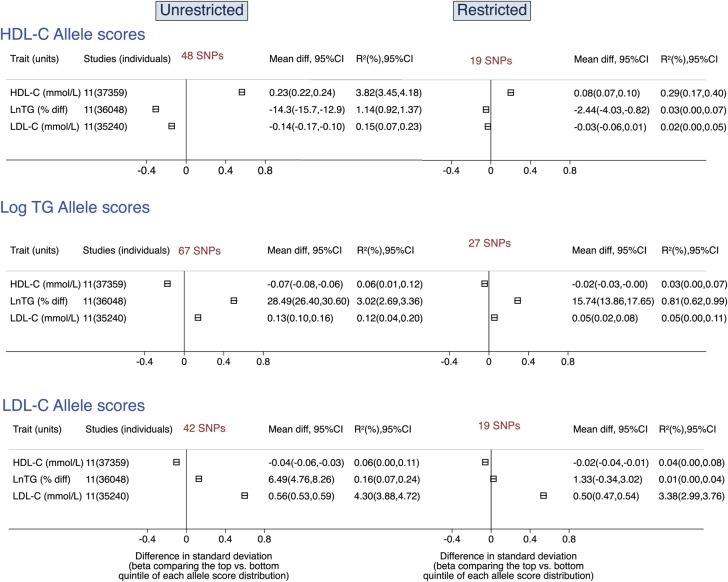
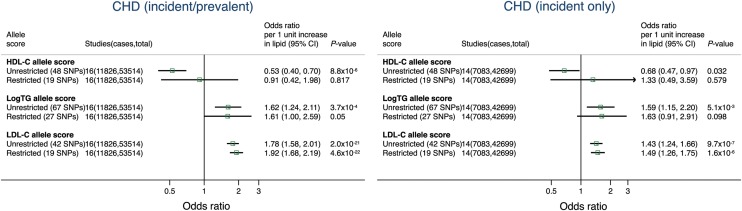
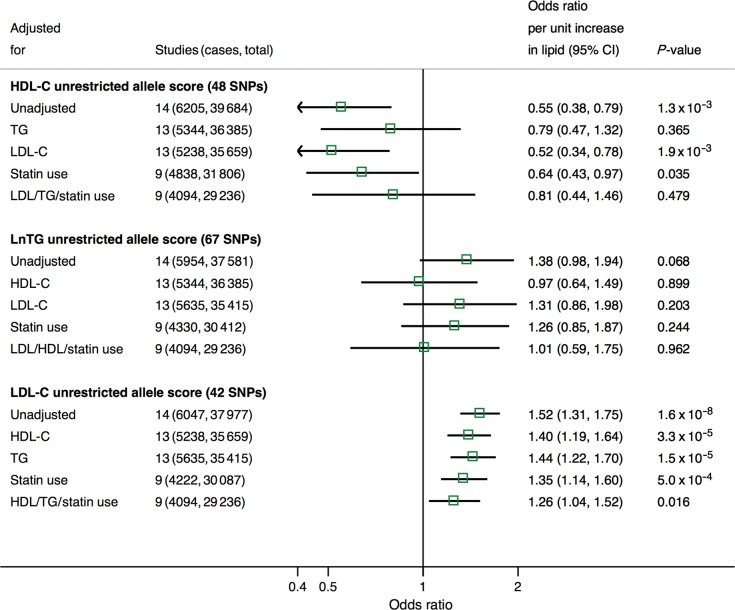
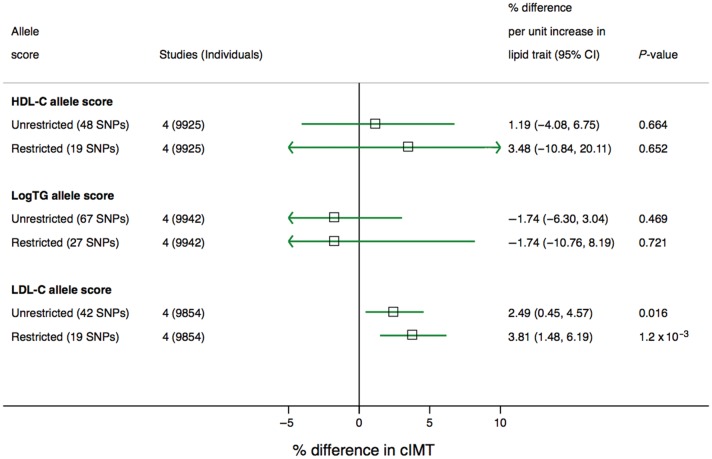
AIMS: To investigate the causal role of high-density lipoprotein cholesterol (HDL-C) and triglycerides in coronary heart disease (CHD) using multiple instrumental variables for Mendelian randomization. METHODS AND RESULTS: We developed weighted allele scores based on single nucleotide polymorphisms (SNPs) with established associations with HDL-C, triglycerides, and low-density lipoprotein cholesterol (LDL-C). For each trait, we constructed two scores. The first was unrestricted, including all independent SNPs associated with the lipid trait identified from a prior meta-analysis (threshold P < 2 × 10(-6)); and the second a restricted score, filtered to remove any SNPs also associated with either of the other two lipid traits at P ≤ 0.01. Mendelian randomization meta-analyses were conducted in 17 studies including 62,199 participants and 12,099 CHD events. Both the unrestricted and restricted allele scores for LDL-C (42 and 19 SNPs, respectively) associated with CHD. For HDL-C, the unrestricted allele score (48 SNPs) was associated with CHD (OR: 0.53; 95% CI: 0.40, 0.70), per 1 mmol/L higher HDL-C, but neither the restricted allele score (19 SNPs; OR: 0.91; 95% CI: 0.42, 1.98) nor the unrestricted HDL-C allele score adjusted for triglycerides, LDL-C, or statin use (OR: 0.81; 95% CI: 0.44, 1.46) showed a robust association. For triglycerides, the unrestricted allele score (67 SNPs) and the restricted allele score (27 SNPs) were both associated with CHD (OR: 1.62; 95% CI: 1.24, 2.11 and 1.61; 95% CI: 1.00, 2.59, respectively) per 1-log unit increment. However, the unrestricted triglyceride score adjusted for HDL-C, LDL-C, and statin use gave an OR for CHD of 1.01 (95% CI: 0.59, 1.75). CONCLUSION: The genetic findings support a causal effect of triglycerides on CHD risk, but a causal role for HDL-C, though possible, remains less certain.
Overview
The claims and statistics of this paper haven’t been checked yet.
Free: it reads the open-access text and checks the first 5 claims that cite a source we can check. Create a free account to check every claim.
Integrity signals
Registry
Cites
Statistics
Figures
Verification
Claims the paper makes
The claims and statistics of this paper haven’t been checked yet.
Free: it reads the open-access text and checks the first 5 claims that cite a source we can check. Create a free account to check every claim.
Claims other papers make about this one
Each is checked against this paper’s own text: does it say what the citing paper says it does?
The cited source doesn’t support the claim as written.
In the citing paper
“Furthermore, Mendelian randomization studies have demonstrated that long-term exposure to lower LDL-C levels is associated with a much lower risk of CV events as compared with shorter-term exposure to lower LDL-C (as achieved, for example, in randomized trials) [48,52].”
From 2019 ESC/EAS guidelines for the management of dyslipidaemias: lipid modification to reduce cardiovascular risk (2019) · cites this paper as [48]
Checked by a reasoning model — may be wrong.
Experimental — accuracy not yet measuredThe source backs part of the claim, not all of it — or backs it for a different population, condition or comparison.
In the citing paper
“Numerous epidemiological studies, Mendelian randomization studies, and RCTs have consistently demonstrated a log-linear relationship between the absolute changes in plasma LDL-C and the risk of ASCVD [34,45-50].”
From 2019 ESC/EAS guidelines for the management of dyslipidaemias: lipid modification to reduce cardiovascular risk (2019) · cites this paper as [48]
Experimental — accuracy not yet measuredThe source backs part of the claim, not all of it — or backs it for a different population, condition or comparison.
In the citing paper
“Non-HDL-C also includes the atherogenic TG-rich lipoproteins (VLDL, IDL and remnants), which is essential considering the recent information from genome-wide association studies (GWASs) and Mendelian randomization 76,86 - 89 supporting TGs and remnant particles as causative factors in atherogenesis.”
From 2016 ESC/EAS Guidelines for the Management of Dyslipidaemias (2016) · cites this paper as [89]
Experimental — accuracy not yet measuredThe source backs part of the claim, not all of it — or backs it for a different population, condition or comparison.
In the citing paper
“At a more extreme level, while both CETP inhibitors and HMGCR lower CHD through the pharmacological reductions of apolipoprotein B 22 , their metabolomic signatures differ wildly 68 .”
From Integrating genomics with biomarkers and therapeutic targets to invigorate cardiovascular drug development (2021) · cites this paper as [22]
Experimental — accuracy not yet measuredThe source backs part of the claim, not all of it — or backs it for a different population, condition or comparison.
In the citing paper
“The approach outlined here to obtaining a scaling estimate has generally held true for lipid-lowering therapies and risk of cardiovascular disease 22,23,40,92 but there are several potential reasons why the derivation of such a scaling for other therapeutic target-indication pairs may pose a challenge.”
From Integrating genomics with biomarkers and therapeutic targets to invigorate cardiovascular drug development (2021) · cites this paper as [22]
Experimental — accuracy not yet measured
4 more claims about this paper
Create a free account to see every claim other papers make about this one.
Self-check
Percentages, sums and reported differences re-computed from the paper’s own numbers.
The self-check needs the paper’s full text.
Citations
Cites
Mendelian randomization: Using genes as instruments for making causal inferences in epidemiology
Lawlor, D. A., Harbord, R. M., Sterne, J. A. C., Timpson, N., & Davey Smith, G. (2008) · Statistics in Medicine · doi:10.1002/sim.3034 · Cited by 4,618 · cited 3×
“Moreover, at a population level the randomized allocation of parental alleles at conception tends to balance confounding factors among groups of differing genotypes.(9,10) Where a polymorphism is”
Self-citationBiological, clinical and population relevance of 95 loci for blood lipids
Teslovich, T. M., Musunuru, K., Smith, A. V., Edmondson, A. C., Stylianou, I. M., Koseki, M., Pirruccello, J. P., Ripatti, S., Chasman, D. I., Willer, C. J., et al. (2010) · Nature · doi:10.1038/nature09270 · Cited by 3,487
Self-citationEffects of torcetrapib in patients at high risk for coronary events
Barter, P. J., Caulfield, M., Eriksson, M., Grundy, S. M., Kastelein, J. J. P., Komajda, M., Lopez-Sendon, J., Mosca, L., Tardif, J.-C., Waters, D. D., et al. (2007) · New England Journal of Medicine · doi:10.1056/nejmoa0706628 · Cited by 3,139 · cited 1×
“the negative findings from clinical trials may have arisen from inadequate selection of drug targets or drug molecules.(6,8) Given this uncertainty, it remains unclear whether elevating HDL-C or reducing”
Collaborators, C. T. T. (. (2012) · The Lancet · doi:10.1016/s0140-6736(12)60367-5 · Cited by 2,833 · cited 1×
“studies has been established as causal based on randomized trials of LDL-C-lowering drugs.(1,2) In contrast, uncertainty existson the causal relevance of high-density lipoprotein cholesterol (HDL-C) and trigly-”
Major lipids, apolipoproteins, and risk of vascular disease
The Emerging Risk Factors Collaboration* (2009) · JAMA · doi:10.1001/jama.2009.1619 · Cited by 2,731
Effects of dalcetrapib in patients with a recent acute coronary syndrome
Schwartz, G. G., Olsson, A. G., Abt, M., Ballantyne, C. M., Barter, P. J., Brumm, J., Chaitman, B. R., Holme, I. M., Kallend, D., Leiter, L. A., et al. (2012) · New England Journal of Medicine · doi:10.1056/nejmoa1206797 · Cited by 2,022
Using multiple genetic variants as instrumental variables for modifiable risk factors
Palmer, T. M., Lawlor, D. A., Harbord, R. M., Sheehan, N. A., Tobias, J. H., Timpson, N. J., Smith, G. D., & Sterne, J. A. (2012) · Statistical Methods in Medical Research · doi:10.1177/0962280210394459 · Cited by 1,289 · cited 2×
“This should increase power, because each additional SNP contributes incrementally to the explained variance in the lipid fraction of interest and reduces the lack of specificity often observed with single SNPs, because the effects on traits other than the lipid fraction of interest should be small, non-systematic, and…”
Self-citationRemnant Cholesterol as a Causal Risk Factor for Ischemic Heart Disease
Varbo, A., Benn, M., Tybjærg-Hansen, A., Jørgensen, A. B., Frikke-Schmidt, R., & Nordestgaard, B. G. (2013) · Journal of the American College of Cardiology · doi:10.1016/j.jacc.2012.08.1026 · Cited by 1,115
Cited by
Items 201–300 of 808
Low-carbohydrate diets for the treatment of obesity and type 2 diabetes
Hall, K. D., & Chung, S. T. (2018) · Current Opinion in Clinical Nutrition & Metabolic Care · doi:10.1097/mco.0000000000000470 · Cited by 46
Bell, J. A., Hamer, M., Richmond, R. C., Timpson, N. J., Carslake, D., & Smith, G. D. (2018) · PLoS Medicine · doi:10.1371/journal.pmed.1002649 · Cited by 54
“Lower HDL cholesterol is not supported as a cause of CHD by the same standard of evidence [41,45].”
BackgroundSchwingshackl, L., Zähringer, J., Nitschke, K., Torbahn, G., Lohner, S., Kühn, T., Fontana, L., Veronese, N., Schmucker, C., & Meerpohl, J. J. (2021) · Critical Reviews in Food Science and Nutrition · doi:10.1080/10408398.2020.1757616 · Cited by 53
Gene-by-environment modulation of lifespan and weight gain in the murine BXD family
Roy, S., Sleiman, M. B., Jha, P., Ingels, J. F., Chapman, C. J., McCarty, M. S., Ziebarth, J. D., Hook, M., Sun, A., Zhao, W., et al. (2021) · Nature Metabolism · doi:10.1038/s42255-021-00449-w · Cited by 52
Lind, L., Ingelsson, M., Sundström, J., & Ärnlöv, J. (2021) · Open Heart · doi:10.1136/openhrt-2021-001735 · Cited by 52
Does Elevated High-Density Lipoprotein Cholesterol Protect Against Cardiovascular Disease?
Razavi, A. C., Jain, V., Grandhi, G. R., Patel, P., Karagiannis, A. D., Patel, N. H., Dhindsa, D. S., Liu, C., Desai, S., Almuwaqqat, Z., et al. (2023) · The Journal of Clinical Endocrinology & Metabolism · doi:10.1210/clinem/dgad406 · Cited by 50
Gooding, H. C., Rodday, A. M., Wong, J. B., Gillman, M. W., Lloyd‐Jones, D. M., Leslie, L. K., & de Ferranti, S. D. (2015) · Archives of Pediatrics and Adolescent Medicine · doi:10.1001/jamapediatrics.2015.0168 · Cited by 50
Cummings, B. B., Joing, M. P., Bouchard, P. R., Milton, M. N., Moesta, P. F., Ramanan, V., Lane, A., Hirman, J., Trauger, J. W., Maratos-Flier, E., et al. (2025) · The Lancet · doi:10.1016/s0140-6736(25)00825-6 · Cited by 49
ApoB-containing lipoproteins: count, type, size, and risk of coronary artery disease
Morze, J., Melloni, G. E. M., Wittenbecher, C., Ala‐Korpela, M., Rynkiewicz, A., Guasch‐Ferré, M., Ruff, C. T., Hu, F. B., Sabatine, M. S., & Marston, N. (2025) · European Heart Journal · doi:10.1093/eurheartj/ehaf207 · Cited by 49
“4 Similarly, Mendelian randomization studies have demonstrated equivalent atherogenicity of VLDL and LDL. 5,6 However, this view was challenged by a recent gen-etic analysis suggesting that the per-particle risk of VLDL carries twice the atherogenic risk compared with LDL particles.”
Li, X., Guan, B., Wang, Y., Tse, G., Zou, F., Waleed, K. B., Xia, Y., Wu, S., & Sun, J. (2019) · Scientific Reports · doi:10.1038/s41598-019-50924-4 · Cited by 49
Multitrait GWAS to connect disease variants and biological mechanisms
Julienne, H., Laville, V., McCaw, Z. R., He, Z., Guillemot, V., Lasry, C., Ziyatdinov, A., Nerin, C., Vaysse, A., Lechat, P., et al. (2021) · PLoS Genetics · doi:10.1371/journal.pgen.1009713 · Cited by 48
“Under this hypothesis, drugs targeting mechanisms outside these pathways would be ineffective in decreasing CAD risk.”
InfluentialComparative Cardiovascular Benefits of Bempedoic Acid and Statin Drugs
Lincoff, A. M., Ray, K. K., Sasiela, W. J., Haddad, T., Nicholls, S. J., Li, N., Cho, L., Mason, D., Libby, P., Goodman, S. G., et al. (2024) · Journal of the American College of Cardiology · doi:10.1016/j.jacc.2024.04.048 · Cited by 36
Prats‐Uribe, A., Sayols-Baixeras, S., Fernández‐Sanlés, A., Subirana, I., Carreras‐Torres, R., Vilahur, G., Civeira, F., Marrugat, J., Fitó, M., Hernáez, Á., et al. (2020) · Metabolism · doi:10.1016/j.metabol.2020.154351 · Cited by 48
“Our data are consistent with previous evidence, and reflect that HDL-C and ApoA-I levels in the bloodstream are not causally related to CAD [3,11].”
BackgroundResultInfluentialLipoprotein signatures of cholesteryl ester transfer protein and HMG-CoA reductase inhibition
Kettunen, J., Holmes, M. V., Allara, E., Anufrieva, O., Ohukainen, P., Oliver-Williams, C., Wang, Q., Tillin, T., Hughes, A. D., Kähönen, M., et al. (2019) · PLOS Biology · doi:10.1371/journal.pbio.3000572 · Cited by 47
Self-citationHDL/ApoA-1 infusion and ApoA-1 gene therapy in atherosclerosis
Chyu, K., & Shah, P. K. (2015) · Frontiers in Pharmacology · doi:10.3389/fphar.2015.00187 · Cited by 48
Yi, S.-W., Park, S.-J., Yi, J.-J., Ohrr, H., & Kim, H. (2021) · International Journal of Epidemiology · doi:10.1093/ije/dyaa243 · Cited by 45
Taylor, A. E., Lu, F., Carslake, D., Hu, Z., Qian, Y., Liu, S., Chen, J., Shen, H., & Smith, G. D. (2015) · Scientific Reports · doi:10.1038/srep14005 · Cited by 45
Lipids and Lipoproteins in Health and Disease: Focus on Targeting Atherosclerosis
Lee, C., Liao, C., Meng, S., Wu, W., Chiang, J., & Wu, M. (2021) · Biomedicines · doi:10.3390/biomedicines9080985 · Cited by 47
“The results of these ongoing clinical trials and upcoming evidence regarding omega-3 fatty acids (high-dose icosapent ethyl) [78], and the selective peroxisome proliferator-activated receptor modulator pemafibrate may help to clarify which population will benefit from a reduced risk of ASCVD by lowering TRL levels [84…”
BackgroundWilliams, K. J. (2023) · Arteriosclerosis Thrombosis and Vascular Biology · doi:10.1161/atvbaha.123.320065 · Cited by 48
MRBEE: A bias-corrected multivariable Mendelian randomization method
Lorincz‐Comi, N. J., Yang, Y., Li, G., & Zhu, X. (2024) · Human Genetics and Genomics Advances · doi:10.1016/j.xhgg.2024.100290 · Cited by 46
“For instance, Holmes et al. and Lin et al. 20,33 found that HDL-C is not significant, while Zhu et al., 7 using the GWAS summary data with a much larger sample size (1.3M vs. 90K), found it to be significant.”
Xue, H., & Pan, W. (2020) · PLoS Genetics · doi:10.1371/journal.pgen.1009105 · Cited by 46
“On the other hand, contrary to observational studies [18], HDL cholesterol does not appear to have a causal role on CAD, as evidenced by several MR analyses and recent RCTs [26, 52, 56, 2, 43].”
Bruikman, C. S., Stoekenbroek, R. M., Hovingh, G. K., & Kastelein, J. J. P. (2016) · Canadian Journal of Cardiology · doi:10.1016/j.cjca.2016.09.010 · Cited by 45
Understanding Hypertriglyceridemia: Integrating Genetic Insights
Alves, M., Laranjeira, F., & Correia‐da‐Silva, G. (2024) · Genes · doi:10.3390/genes15020190 · Cited by 47
Cholesterol as a Risk Factor for Subarachnoid Hemorrhage: A Systematic Review
Lindbohm, J. V., Kaprio, J. A., & Korja, M. (2016) · PLoS ONE · doi:10.1371/journal.pone.0152568 · Cited by 44
Zhu, X., Li, X., Xu, R., & Wang, T. (2020) · Bioinformatics · doi:10.1093/bioinformatics/btaa985 · Cited by 44
Liu, X., Li, C., Sun, X., Yu, Y., Si, S., Hou, L., Yan, R., Yu, Y., Li, M., Li, H., et al. (2021) · Journal of the American Heart Association · doi:10.1161/jaha.120.020187 · Cited by 45
Bays, H. E., Ballantyne, C. M., Doyle, R. T., Juliano, R. A., & Philip, S. (2016) · Prostaglandins & Other Lipid Mediators · doi:10.1016/j.prostaglandins.2016.07.007 · Cited by 43
Smith, M. L., Bull, C. J., Holmes, M. V., Smith, G. D., Sanderson, E. C. M., Anderson, E. L., & Bell, J. A. (2023) · EBioMedicine · doi:10.1016/j.ebiom.2023.104503 · Cited by 44
Self-citationBody composition and risk factors for cardiovascular disease in global multi-ethnic populations
Carter, J. L., Abdullah, N., Bragg, F., Murad, N. A. A., Taylor, H., Fong, C. S., Lacey, B., Sherliker, P., Karpe, F., Mustafa, N., et al. (2023) · International Journal of Obesity · doi:10.1038/s41366-023-01339-9 · Cited by 43
“Blood lipids were measured as detailed elsewhere [2, 9]; analyses were restricted to low-density lipoprotein (LDL-C; mmol/L) and triglycerides (mmol/L) due to their causal relevance for CVD risk [10].”
MethodLow‐Density Lipoprotein Cholesterol Attributable Cardiovascular Disease Risk Is Sex Specific
Cupido, A. J., Asselbergs, F. W., Schmidt, A. F., & Hovingh, G. K. (2022) · Journal of the American Heart Association · doi:10.1161/jaha.121.024248 · Cited by 44
“…variation to investigate the causal effect of an exposure on an outcome and has previously been used to explore the causal relation be-tween LDL-C and CVD. 6,7 Here we apply MR to explore the potential sex-differential CVD-effects of increased LDL-C concentration, leveraging an LDL-C genetic score.”
Self-citationElhakeem, A., Taylor, A. E., Inskip, H. M., Huang, J. Y., Mansell, T., Rodrigues, C., Asta, F., Blaauwendraad, S. M., Håberg, S. E., Halliday, J. L., et al. (2023) · European Heart Journal · doi:10.1093/eurheartj/ehac726 · Cited by 44
Self-citationLinden, F., Domschke, G., Erbel, C., Akhavanpoor, M., Katus, H. A., & Gleissner, C. A. (2014) · Frontiers in Physiology · doi:10.3389/fphys.2014.00455 · Cited by 43
Zhou, X., Lian, P., Liu, H., Wang, Y., Zhou, M., & Feng, Z. (2023) · Nutrients · doi:10.3390/nu15204445 · Cited by 41
Taylor, K., Davey Smith, G., Relton, C. L., Gaunt, T. R., & Richardson, T. G. (2019) · Genome Medicine · doi:10.1186/s13073-019-0613-2 · Cited by 40
Self-citationYu, X., Wang, T., Huang, S., & Zeng, P. (2020) · Journal of Human Genetics · doi:10.1038/s10038-020-00863-0 · Cited by 41
“Indeed, Mendelian randomization has become a potent and effective statistical method for 107 causal inference in observational studies, owing to recent achievements of genome-wide 108 association studies (GWASs) (26-34).”
MethodEuropean guidelines for the treatment of dyslipidaemias: New concepts and future challenges
Pirillo, A., Casula, M., & Catapano, A. L. (2023) · Pharmacological Research · doi:10.1016/j.phrs.2023.106936 · Cited by 42
The pleiotropic vasoprotective functions of high density lipoproteins (HDL)
Guilaine, B., Emily, B., Sonja, S., & Cheryl, W. (2018) · The Journal of Biomedical Research · doi:10.7555/jbr.31.20160103 · Cited by 41
“[13] Holmes MV, Asselbergs FW, Palmer TM, et al.”
BackgroundOrho‐Melander, M. (2015) · Journal of Internal Medicine · doi:10.1111/joim.12407 · Cited by 35
High-Density Lipoprotein (HDL) in Allergy and Skin Diseases: Focus on Immunomodulating Functions
Trakaki, A., & Marsche, G. (2020) · Biomedicines · doi:10.3390/biomedicines8120558 · Cited by 42
“Although their association with reduced cardiovascular risk is well established [7–10], HDL-cholesterol raising therapies failed to improve the cardiovascular outcome [11–13], and recent studies challenged the causal role of low HDL-cholesterol levels in cardiovascular diseases [14].”
BackgroundCao, X., Zhang, L., Wang, X., Chen, Z., Zheng, C., Chen, L., Zhou, H., Cai, J., Hu, Z., Tian, Y., et al. (2023) · BMC Public Health · doi:10.1186/s12889-023-16659-8 · Cited by 41
“One of the reasons is that the definition of dyslipidemia was based on abnormal TC, LDL-C, and HDL-C, and previous study showed inconsistent association between HDL-C and CVD risk [28–30], which may affect the estimation of the effect and overall test efficacy.”
ResultLipoproteins, Cholesterol, and Atherosclerotic Cardiovascular Disease in East Asians and Europeans
Doi, T., Langsted, A., & Nordestgaard, B. G. (2023) · Journal of Atherosclerosis and Thrombosis · doi:10.5551/jat.rv22013 · Cited by 42
Guan, X., Wu, S., Yang, X., Han, X., Yang, Y., Li, X., Waleed, K. B., Du, Y., Zhan, S., Liu, Y., et al. (2017) · International Journal of Cancer · doi:10.1002/ijc.31149 · Cited by 40
Han, Y. Y., Dorajoo, R., Chang, X., Wang, L., Khor, C. C., Sim, X., Cheng, C., Shi, Y., Tham, Y. C., Zhao, W., et al. (2017) · Scientific Reports · doi:10.1038/s41598-017-18214-z · Cited by 40
The Hong Kong Diabetes Register TRS Study Group, Tam, C. H. T., The Hong Kong Diabetes Biobank Study Group, Lim, C. K. P., Luk, A. O. Y., Ng, A. C. W., Lee, H. M., Jiang, G., Lau, E. S. H., Fan, B., et al. (2021) · Genome Medicine · doi:10.1186/s13073-021-00831-z · Cited by 39
“SNPs with established associations with TG, HDL-C, and LDL-C and performed MR meta-analyses in 62,199 participants with 12,099 CHD events [42].”
BackgroundResultMckenzie, K. M., Lee, C., Mijatovic, J., Haghighi, M. M., & Skilton, M. R. (2021) · Journal of Nutrition · doi:10.1093/jn/nxab220 · Cited by 39
HDL maturation and remodelling
Ong, K. L., Cochran, B. J., Manandhar, B., Thomas, S. R., & Rye, K. (2022) · Biochimica et Biophysica Acta (BBA) - Molecular and Cell Biology of Lipids · doi:10.1016/j.bbalip.2022.159119 · Cited by 39
Seifirad, S., & Haghpanah, V. (2019) · The EPMA Journal · doi:10.1007/s13167-019-00176-z · Cited by 38
Lipid efflux mechanisms, relation to disease and potential therapeutic aspects
Castaño, D., Rattanasopa, C., Monteiro-Cardoso, V. F., Corlianò, M., Liu, Y., Zhong, A., Rusu, M., Liehn, E. A., & Singaraja, R. R. (2020) · Advanced Drug Delivery Reviews · doi:10.1016/j.addr.2020.04.013 · Cited by 38
Li, S., Guo, Y., Zhao, X., Zhang, Y., Zhu, C., Wu, N., Xu, R., Qing, P., Gao, Y., Li, X., et al. (2017) · Scientific Reports · doi:10.1038/s41598-017-00499-9 · Cited by 38
Zhu, X., Huang, S., Kang, W., Chen, P., & Liu, J. (2023) · Frontiers in Aging Neuroscience · doi:10.3389/fnagi.2023.1123239 · Cited by 37
“In order to avoid potential bias to the utmost extent, pleiotropic SNPs selected from Phenoscanner were deleted from instrument sets of AA and LA before analyzing, and this method was called strict Mendelian randomization (Holmes et al., 2015).”
MethodWhat Causes Premature Coronary Artery Disease?
Le, A., Peng, H., Golinsky, D., Scipio, M. D., Lali, R., & Paré, G. (2024) · Current Atherosclerosis Reports · doi:10.1007/s11883-024-01200-y · Cited by 39
“Through the use of Mendelian randomization (MR) studies, which examine the causal effects of risk factors on diseases using genetic variants as instruments [66], LPL has been associated with an independent effect of TGs on CAD [67, 68].”
AI-empowered perturbation proteomics for complex biological systems
Qian, L., Sun, R., Aebersold, R. H., Bühlmann, P., Sander, C., & Guo, T. (2024) · Cell Genomics · doi:10.1016/j.xgen.2024.100691 · Cited by 37
Razavi, A. C., Mehta, A., Jain, V., Patel, P., Liu, C., Patel, N. H., Eisenberg, S. D., Vaccarino, V., Isiadinso, I., Sperling, L. S., et al. (2023) · Current Cardiology Reports · doi:10.1007/s11886-023-01987-3 · Cited by 37
“In over 12,000 coronary heart disease (CHD) cases, although a causal effect of triglycerides was recognized, there was no clear evidence of causal effect for HDL-C [23].”
Palmos, A., Millischer, V., Menon, D. K., Nicholson, T. R., Taams, L. S., Michael, B. D., Sunderland, G. J., Griffiths, M. J., Hübel, C., & Breen, G. D. (2022) · PLoS Genetics · doi:10.1371/journal.pgen.1010042 · Cited by 37
Niu, W., & Qi, Y. (2015) · Circulation: Cardiovascular Genetics · doi:10.1161/circgenetics.114.000748 · Cited by 35
Translating GWAS Findings to Novel Therapeutic Targets for Coronary Artery Disease
Shu, L., Blencowe, M., & Yang, X. (2018) · Frontiers in Cardiovascular Medicine · doi:10.3389/fcvm.2018.00056 · Cited by 36
GENIUS-MAWII: for robust Mendelian randomization with many weak invalid instruments
Ye, T., Liu, Z., Sun, B., & Tchetgen, E. T. (2024) · Journal of the Royal Statistical Society Series B (Statistical Methodology) · doi:10.1093/jrsssb/qkae024 · Cited by 36
Kofink, D., Eppinga, R. N., van Gilst, W. H., Bakker, S. J. L., Dullaart, R. P. F., van der Harst, P., & Asselbergs, F. W. (2017) · Circulation Cardiovascular Genetics · doi:10.1161/circgenetics.117.001759 · Cited by 35
Self-citationGenomic prediction of alcohol-related morbidity and mortality
Kiiskinen, T., Mars, N., Palviainen, T., Koskela, J. T., Rämö, J. T., Ripatti, P., Ruotsalainen, S., Palotie, A. V., Madden, P. A. F., Rose, R. J., et al. (2020) · Translational Psychiatry · doi:10.1038/s41398-019-0676-2 · Cited by 36
Jurado-García, A., Molina‐Recio, G., Collado, N. F., Palomares-Muriana, A., Gómez-González, A. M., Márquez-Pérez, F. L., & Gámez, B. J. (2020) · International Journal of Environmental Research and Public Health · doi:10.3390/ijerph17176334 · Cited by 34
“One advantage of our study is that the physical exercise program was home-based and easily performed by all patients, which allows us to generalize this recommendation to treat and prevent chronic conditions [42], as well as to reduce body weight and dyslipidemia, considered as cardiovascular risk factors [39,40,42,43…”
BackgroundCumulative burden of lipid profiles predict future incidence of ischaemic stroke and residual risk
Dai, L., Xu, J., Zhang, Y., Wang, A., Chen, Z., Mo, J., Li, H., Meng, X., Wu, S., & Wang, Y. (2021) · Stroke and Vascular Neurology · doi:10.1136/svn-2020-000726 · Cited by 34
Gordillo‐Marañón, M., Zwierzyna, M., Charoen, P., Drenos, F., Chopade, S., Shah, T., Engmann, J., Casas, J. P., Chaturvedi, N., Papacosta, O., et al. (2021) · Nature Communications · doi:10.1038/s41467-021-25731-z · Cited by 35
Self-citationThe multifaceted interplay between lipids and epigenetics
Dekkers, K. F., Slagboom, P. E., Jukema, J. W., & Heijmans, B. T. (2016) · Current Opinion in Lipidology · doi:10.1097/mol.0000000000000301 · Cited by 34
Ktenopoulos, N., Sagris, Μ., Gerogianni, M., Pamporis, K., Apostolos, A., Balampanis, K., Tsioufis, K. P., Toutouzas, K. P., & Tousoulis, D. (2024) · International Journal of Molecular Sciences · doi:10.3390/ijms251910595 · Cited by 33
Triglycerides and endothelial function: molecular biology to clinical perspective
Kajikawa, M., & Higashi, Y. (2019) · Current Opinion in Lipidology · doi:10.1097/mol.0000000000000630 · Cited by 35
Schmidt, A. F., Joshi, R., Gordillo‐Marañón, M., Drenos, F., Charoen, P., Giambartolomei, C., Bis, J. C., Gaunt, T. R., Hughes, A. D., Lawlor, D. A., et al. (2023) · Communications Medicine · doi:10.1038/s43856-022-00234-0 · Cited by 33
Self-citationPlaque imaging to refine indications for emerging lipid-lowering drugs
Alkhalil, M., Chai, J. T., & Choudhury, R. P. (2016) · European Heart Journal - Cardiovascular Pharmacotherapy · doi:10.1093/ehjcvp/pvw034 · Cited by 34
“ides, LDL-c, and statin use, had no effect on coronary heart disease (CHD) event rates.(31) Moreover, a recent study demonstrated that a”
BackgroundMetabolic Profiling of Adiponectin Levels in Adults: Mendelian Randomization Analysis
Borges, M. C., Barros, A. J. D., Ferreira, D. L. S., Casas, J. P., Horta, B. L., Kivimäki, M., Kumari, M., Menon, U., Gaunt, T. R., Ben‐Shlomo, Y., et al. (2017) · Circulation Cardiovascular Genetics · doi:10.1161/circgenetics.117.001837 · Cited by 33
Self-citationEffect of ANGPTL3 Inhibition With Solbinsiran in Preclinical and Early Human Studies
Ray, K. K., Linnebjerg, H., Michael, L. F., Shen, X. P., Ma, X., Lim, S., Zhen, Y., Dudek, H., Abrams, M., Saxena, U. H., et al. (2025) · Journal of the American College of Cardiology · doi:10.1016/j.jacc.2025.03.005 · Cited by 32
Mendelian randomization studies on atherosclerotic cardiovascular disease: evidence and limitations
Hu, Q., Hao, P., Liu, Q., Dong, M., Gong, Y., Zhang, C., & Zhang, Y. (2019) · Science China Life Sciences · doi:10.1007/s11427-019-9537-4 · Cited by 32
Menon, V., Kumar, A., Patel, D. R., John, J. S., Riesmeyer, J., Weerakkody, G. J., Ruotolo, G., Wolski, K., McErlean, E. S., Cremer, P. C., et al. (2020) · BMJ Open Diabetes Research & Care · doi:10.1136/bmjdrc-2019-000943 · Cited by 32
Triglycerides and Atherosclerosis
Toth, P. P. (2021) · Journal of the American College of Cardiology · doi:10.1016/j.jacc.2021.04.058 · Cited by 33
Zobel, E. H., Wretlind, A., Ripa, R. S., Rotbain Curovic, V., von Scholten, B. J., Suvitaival, T., Hansen, T. W., Kjær, A., Legido-Quigley, C., & Rossing, P. (2021) · BMJ Open Diabetes Research & Care · doi:10.1136/bmjdrc-2021-002395 · Cited by 31
“…or secondary to weight loss or improved glycemic control following liraglutide treat-ment, an active comparator should have been included (ie, insulin as a comparator for liraglutides effect on glycemic control or diet-induced weight loss as a comparator for liraglutides effect on body weight).”
Si, J., Li, J., Yu, C., Guo, Y., Bian, Z., Millwood, I. Y., Yang, L., Walters, R. G., Chen, Y., Du, H., et al. (2021) · eLife · doi:10.7554/elife.60999 · Cited by 31
“The results indicated that participants with healthy lifestyles were characterized by an antiatherogenic lipidomic profile, which has been related to lower CHD risk previously (Varbo et al., 2013; Holmes et al., 2015; Peter et al., 2015; Natarajan et al., 2010; Inouye et al., 2010).”
Sanllorente, A., Lassale, C. M., Soria-Florido, M. T., Castañer, O., Fitó, M., & Hernáez, Á. (2021) · Journal of Clinical Medicine · doi:10.3390/jcm10245897 · Cited by 31
“In addition, Mendelian randomization studies have reported that presenting genetic predisposition to high levels of HDL-C is not linked to lower CVD risk [4,5], although recent results show a likely causal association with medium-size HDL-C [6].”
BackgroundRoa‐Díaz, Z. M., Teuscher, J., Gamba, M., Bundo, M., Grisotto, G., Wehrli, F., Gamboa-Delgado, E. M., Rojas, L. Z., Gómez‐Ochoa, S. A., Verhoog, S., et al. (2022) · BMC Cardiovascular Disorders · doi:10.1186/s12872-022-02808-1 · Cited by 31
Chathoth, S., Al-Mueilo, S., Cyrus, C., Vatte, C., Al-Nafaie, A., Alali, R. A., Keating, B. J., Al‐Muhanna, F., & Ali, A. A. (2015) · Cardiorenal Medicine · doi:10.1159/000440984 · Cited by 31
Self-citationDyslipidemias and Cardiovascular Prevention: Tailoring Treatment According to Lipid Phenotype
Sanin, V., Pfetsch, V., & Köenig, W. (2017) · Current Cardiology Reports · doi:10.1007/s11886-017-0869-3 · Cited by 32
Dose-Response Associations of Lipid Traits With Coronary Artery Disease and Mortality
Yang, G., Mason, A. M., Wood, A., Schooling, C. M., & Burgess, S. (2024) · JAMA Network Open · doi:10.1001/jamanetworkopen.2023.52572 · Cited by 31
Cardioprotective Properties of HDL: Structural and Functional Considerations
Pappa, E. T., Elisaf, M., Kostara, C. E., Bairaktari, E. T., & Tsimihodimos, V. (2019) · Current Medicinal Chemistry · doi:10.2174/0929867326666190201142321 · Cited by 30
Soohoo, M., Moradi, H., Obi, Y., Kovesdy, C. P., Kalantar‐Zadeh, K., & Streja, E. (2019) · Journal of clinical lipidology · doi:10.1016/j.jacl.2019.08.001 · Cited by 31
“73 m(2))* 76 [61, 91] 83 [72, 95] 49 [41, 55] 54 [50, 57] 39 [36, 42] 25 [21, 28] 12 [10, 14] Age (y) 64 6 14 60 6 13 74 6 10 73 6 9 76 6 9 75 6 10 65 6 12 Gender (%female) 5 6 3 3 3 3 2 Married (%) 56 54 60 61 60 59 56 Race (%) White 82 80 87 88 88 85 64 African-American 15 16 10 9 9 12 29 Other 4 4 3 3 3 4 7 Ethnici…”
HDLs and the pathogenesis of atherosclerosis
Schwertani, A. G., Choi, H. Y., & Genest, J. J. (2018) · Current Opinion in Cardiology · doi:10.1097/hco.0000000000000508 · Cited by 29
Genkel, V. V., & Иосифович, Ш. И. (2020) · International Journal of Chronic Diseases · doi:10.1155/2020/5950813 · Cited by 29
“Research data with Mendelian randomization also do not confirm the causal role of HDL in the development of atherosclerotic CVDs [93].”
BackgroundApolipoprotein E content of VLDL limits LPL-mediated triglyceride hydrolysis
Whitacre, B. E., Howles, P. N., Street, S. E., Morris, J. C., Swertfeger, D. K., & Davidson, W. S. (2021) · Journal of Lipid Research · doi:10.1016/j.jlr.2021.100157 · Cited by 29
Mengozzi, A., Pugliese, N. R., Desideri, G., Masi, S., Angeli, F., Barbagallo, C. M., Bombelli, M., Cappelli, F., Casiglia, E., Cianci, R., et al. (2023) · Metabolites · doi:10.3390/metabo13020244 · Cited by 29
Wilkins, J. T., Gidding, S. S., & Robinson, J. G. (2019) · Current Opinion in Lipidology · doi:10.1097/mol.0000000000000644 · Cited by 29
Lipids and Cardiovascular Risk with CKD
Afshinnia, F., & Pennathur, S. (2019) · Clinical Journal of the American Society of Nephrology · doi:10.2215/cjn.13531119 · Cited by 30
Causal Effect of Lipids and Lipoproteins on Atherosclerosis
Ference, B. A. (2018) · Cardiology Clinics · doi:10.1016/j.ccl.2017.12.001 · Cited by 28
Bertrand, C., Saulnier, P., Potier, L., Croyal, M., Blanchard, V., Gand, E., Ragot, S., Schneider, F. M., Bocock, O., Baillet‐Blanco, L., et al. (2021) · Diabetologia · doi:10.1007/s00125-020-05326-x · Cited by 28
“Normalisation of HDL-cholesterol has been described as an unmet need in the management of patients with high cardiovascular risk, including type 2 diabetes [30], but Mendelian randomisation studies have generated scepticism about the hypothetical HDL causality [31, 32].”
BackgroundDrenos, F., Davey Smith, G., Ala-Korpela, M., Kettunen, J., Würtz, P., Soininen, P., Kangas, A. J., Dale, C., Lawlor, D. A., Gaunt, T. R., et al. (2016) · Circulation: Cardiovascular Genetics · doi:10.1161/circgenetics.115.001302 · Cited by 26
Self-citationPlatania, A., Zappala, G., Mirabella, M. U., Gullo, C., Mellini, G., Beneventano, G., Maugeri, G., & Marranzano, M. (2017) · International Journal of Food Sciences and Nutrition · doi:10.1080/09637486.2017.1389860 · Cited by 28
“evidence that LDL-C and triglycerides are causally associated with CHD (Barter et al. 2007; Voight et al. 2012; Tresserra-Rimbau et al. 2013; Holmes et al. 2015), reduction in total cholesterol (TC) by lifestyle and dietary modifications showed more than a 20% decrease in mortality rates (Palmieri et al.”
BackgroundInfluentialSiewert, K. M., & Voight, B. F. (2018) · Circulation Genomic and Precision Medicine · doi:10.1161/circgen.118.002239 · Cited by 27
Li, F., Liu, Y., Wang, Z., Zhao, Q., Li, Y., & Tang, T. (2022) · Frontiers in Genetics · doi:10.3389/fgene.2022.949325 · Cited by 27
Cyrus, C., Vatte, C., Al-Nafie, A. N., Chathoth, S., Alali, R. A., Alshehri, A., Akhtar, M., Almansori, M., Al‐Muhanna, F., Keating, B. J., et al. (2016) · Human Genomics · doi:10.1186/s40246-016-0065-3 · Cited by 27
“Epidemiological and clinical studies have demonstrated a contradictory association between HDL-C concentrations and cardiovascular risk [10, 14, 15].”
Self-citationNew approaches to triglyceride reduction: is there any hope left?
Filtz, A., Parihar, S., Greenberg, G. S., Park, C. M., Scotti, A., Lorenzatti, D., Badimon, J. J., Soffer, D. E., Toth, P. P., Lavie, C. J., et al. (2024) · American Journal of Preventive Cardiology · doi:10.1016/j.ajpc.2024.100648 · Cited by 26
“A study of the Cardiovascular Health in Ambulatory Care Research Team (CAN-HEART) cohort analyzed a secondary prevention cohort of 196,717 patients, almost all of which were already on statin therapy [44].”
BackgroundLeón‐Mimila, P., Villamil‐Ramírez, H., Kauffer, L. R. M., Jacobo‐Albavera, L., López-Contreras, B. E., Posadas‐Sánchez, R., Posadas‐Romero, C., Romero‐Hidalgo, S., Morán‐Ramos, S., Domínguez‐Pérez, M., et al. (2021) · Arteriosclerosis Thrombosis and Vascular Biology · doi:10.1161/atvbaha.120.315391 · Cited by 28
Chi, G., Lee, J., Kazmi, S. H. A., Fitzgerald, C., Montazerin, S. M., Kalaycı, A., Korjian, S., Heise, M. A., Deckelbaum, L. I., Libby, P., et al. (2022) · Clinical Cardiology · doi:10.1002/clc.23773 · Cited by 27
Chen, J., Li, R., Geng, T., Wang, Y., Lu, Q., Tu, Z., Li, Y., Liao, Y.-F., Yang, K., Zhou, L., et al. (2023) · European Journal of Preventive Cardiology · doi:10.1093/eurjpc/zwad053 · Cited by 26
Mendelian randomization studies on coronary artery disease: a systematic review and meta-analysis
Silva, S., Fatumo, S., & Nitsch, D. (2024) · Systematic Reviews · doi:10.1186/s13643-023-02442-8 · Cited by 26
Palmer, T., Holmes, M. V., Keating, B. J., & Sheehan, N. A. (2017) · American Journal of Epidemiology · doi:10.1093/aje/kwx175 · Cited by 27
Self-citation
Metadata
- Authors
- Holmes, M. V., Asselbergs, F. W., Palmer, T. M., Drenos, F., Lanktree, M. B., Nelson, C. P., Dale, C. E., Padmanabhan, S., Finan, C., Swerdlow, D. I., Tragante, V., van Iperen, E. P. A., Sivapalaratnam, S., Shah, S., Elbers, C. C., Shah, T., Engmann, J., Giambartolomei, C., White, J., Zabaneh, D., Sofat, R., McLachlan, S., on behalf of the UCLEB consortium, Doevendans, P. A., Balmforth, A. J., Hall, A. S., North, K. E., Almoguera, B., Hoogeveen, R. C., Cushman, M., Fornage, M., Patel, S. R., Redline, S., Siscovick, D. S., Tsai, M. Y., Karczewski, K. J., Hofker, M. H., Verschuren, W. M., Bots, M. L., van der Schouw, Y. T., Melander, O., Dominiczak, A. F., Morris, R., Ben-Shlomo, Y., Price, J., Kumari, M., Baumert, J., Peters, A., Thorand, B., Koenig, W., Gaunt, T. R., Humphries, S. E., Clarke, R., Watkins, H., Farrall, M., Wilson, J. G., Rich, S. S., de Bakker, P. I. W., Lange, L. A., Davey Smith, G., Reiner, A. P., Talmud, P. J., Kivimäki, M., Lawlor, D. A., Dudbridge, F., Samani, N. J., Keating, B. J., Hingorani, A. D., & Casas, J. P.
- Affiliations
- University College London (GB)
- University Medical Center Utrecht (NL)
- University of Warwick (GB)
- University of Bristol (GB)
- McMaster University (CA)
- University of Leicester (GB)
- London School of Hygiene & Tropical Medicine (GB)
- University of Glasgow (GB)
- Durrer Center for Cardiogenetic Research, ICIN-Netherlands Heart Institute, Utrecht, The Netherlands
- Amsterdam UMC Location University of Amsterdam (NL)
- Children's Hospital of Philadelphia (US)
- University of Edinburgh (GB)
- University of Leeds (GB)
- University of North Carolina at Chapel Hill (US)
- Baylor College of Medicine (US)
- University of Vermont (US)
- The University of Texas Health Science Center at Houston (US)
- Brigham and Women's Hospital (US)
- University of Washington (US)
- University of Minnesota (US)
- Stanford Medicine (US)
- University Medical Center Groningen (NL)
- National Institute for Public Health and the Environment (NL)
- Julius Center for Health Sciences and Primary Care, University Medical Center Utrecht, Utrecht, The Netherlands
- Lund University (SE)
- The Royal Free Hospital (GB)
- School of Social and Community Medicine, University of Bristol
- Genetic Epidemiology Group, Institute of Cardiovacular Science, Faculty of Population Healh Sciences, University College London, 1–19 Torrington Place, London WC1E 6BT, UK
- Helmholtz Munich (DE)
- Department of Internal Medicine II-Cardiology, University of Ulm Medical Center, Ulm, Germany
- University of Oxford (GB)
- University of Mississippi Medical Center (US)
- University of Virginia (US)
- Department of Medical Genetics, Division of Biomedical Genetics, University Medical Center Utrecht, Utrecht, The Netherlands
- MRC Integrative Epidemiology Unit, School of Social and Community Medicine, University of Bristol, Oakfield House, Oakfield Grove, Bristol BS8 2BN, UK
- Fred Hutch Cancer Center (US)
- Department of Epidemiology and Public Health, University College London, 1–19 Torrington Place, London WC1E 6BT, UK
- Corresponding author
- Holmes, Michael V.
- ORCID
- Holmes, Michael V.
- Asselbergs, Folkert W.
- Palmer, Tom M.
- Drenos, Fotios
- Lanktree, Matthew B.
- Nelson, Christopher P.
- Dale, Caroline E.
- Padmanabhan, Sandosh
- Finan, Chris
- Swerdlow, Daniel I.
- Tragante, Vinicius
- Sivapalaratnam, Suthesh
- Shah, Sonia
- Elbers, Clara C.
- Shah, Tina
- Engmann, Jorgen
- Giambartolomei, Claudia
- White, Jon
- Zabaneh, Delilah
- Sofat, Reecha
- McLachlan, Stela
- Doevendans, Pieter A.
- Hall, Alistair S.
- North, Kari E.
- Almoguera, Berta
- Hoogeveen, Ron C.
- Cushman, Mary
- Fornage, Myriam
- Patel, Sanjay R.
- Redline, Susan
- Siscovick, David S.
- Tsai, Michael Y.
- Karczewski, Konrad J.
- Verschuren, W. Monique
- Bots, Michiel L.
- Melander, Olle
- Dominiczak, Anna F.
- Morris, Richard
- Price, Jackie
- Baumert, Jens
- Peters, Annette
- Thorand, Barbara
- Gaunt, Tom R.
- Humphries, Steve E.
- Watkins, Hugh
- Farrall, Martin
- Wilson, James G.
- Rich, Stephen S.
- Lange, Leslie A.
- Reiner, Alex P.
- Talmud, Philippa J.
- Lawlor, Debbie A.
- Dudbridge, Frank
- Samani, Nilesh J.
- Keating, Brendan J.
- Hingorani, Aroon D.
- Casas, Juan P.
- Venue
- European Heart Journal
- Publisher
- Oxford University Press (OUP)
- Published
- 2014-01-28
- Volume
- 36
- Issue
- 9
- Pages
- 539-550
- ISSN
- 0195-668X (ISSN-L)
- 1522-9645
- PMC
- PMC4344957
- OpenAlex
- W2159738130
- Cited by
- 748
- References
- 36
- Citations by year
- 2026: 35 · 2025: 58 · 2024: 69 · 2023: 63 · 2022: 67 · 2021: 94 · 2020: 77 · 2019: 66 · 2018: 53 · 2017: 58 · 2016: 55 · 2015: 32 · 2014: 18
- FWCI
- 7.20
- Type
- journal article
- Language
- en
- Open access
- hybrid
- doi.org
- Licence
- other-oa
- Locations
- European Heart Journal (publishedVersion, other-oa)
- Europe PMC (PubMed Central) (publishedVersion, cc-by-nc)
- PubMed Central (publishedVersion, cc-by-nc)
- PubMed (publishedVersion)
- Pure Amsterdam UMC (publishedVersion, other-oa)
- Bristol Research (University of Bristol) (publishedVersion)
- ENLIGHTEN (Jurnal Bimbingan dan Konseling Islam) (acceptedVersion)
- UniSA Research Outputs Repository (University of South Australia) (acceptedVersion, cc-by-nc)
- Open Access at Essex (University of Essex) (acceptedVersion)
- LSHTM Research Online (London School of Hygiene and Tropical Medicine) (acceptedVersion)
- Carolina Digital Repository (University of North Carolina at Chapel Hill) (submittedVersion, other-oa)
- Data Archiving and Networked Services (DANS) (submittedVersion)
- Brunel University Research Archive (BURA) (Brunel University London) (submittedVersion)
- Adelaide Research & Scholarship (AR&S) (University of Adelaide) (submittedVersion, cc-by-nc)
- Utrecht University Repository (Utrecht University) (submittedVersion, other-oa)
- Lancaster EPrints (Lancaster University) (submittedVersion)
- UCL Discovery (University College London) (submittedVersion)
- Figshare (submittedVersion, cc-by)
- Leicester Research Archive (University of Leicester) (submittedVersion, other-oa)
- Lund University Publications (Lund University) (submittedVersion, other-oa)
- Site cant be reached (submittedVersion)
- Edinburgh Research Explorer (University of Edinburgh) (submittedVersion, cc-by-nc)
- University of Groningen research database (University of Groningen / Centre for Information Technology) (submittedVersion, cc-by-nc)
- Spiral (Imperial College London) (submittedVersion, other-oa)
- Utrecht University Repository (Utrecht University) (submittedVersion)
- UNC Libraries
- Funders
- U.S. Department of Health and Human Services (42129‐32, 42107-26, 32108‐9, 32118-32119, 32115, 32111‐13, 32100‐2, 44221, 32105‐6, 32122, 24152)
- AstraZeneca
- GlaxoSmithKline
- Queen Mary University of London
- London School of Hygiene and Tropical Medicine
- Wellcome Trust (090532, 090532/Z/09/Z, 090532/Z/09/)
- Government of the United Kingdom
- National Institute for Health and Care Research
- British Heart Foundation (LSHM-CT-2007-037273, G0802432, 090532/Z/09/Z, CH98001, RG/13/16/30528, PG/07/133/24260, RG/08/008/25291, BHF RG 08/008, PG/07/133/24260, RG/07/005, RG 08/008, RG/10/12/28456, RG/07/005/23633, PG/13/66/30442, RG/13/2/30098, PG/07/131/24254)
- Research Councils UK
- University College London
- European Commission (LSHM-CT-2007–037273)
- Rosetrees Trust
- University of Bristol
- European Foundation for the Study of Diabetes
- Deutsche Forschungsgemeinschaft (TH-784/2–2)
- ZonMw
- Academy of Finland
- Bundesministerium für Bildung und Forschung (01GS0834)
- Hjärt-Lungfonden (RG/10/12/28456)
- Karolinska Institutet
- Knut och Alice Wallenbergs Stiftelse
- Stockholms Läns Landsting (560183)
- Universitetet i Oslo
- Universität Ulm
- National Institutes of Health (n01wh32105-27-0-1, n01hc95164-17-0-1, n01wh32108-30-0-1, n01wh32100-28-0-1, n01hc55021-47-0-1, n01wh32118-27-0-1, 32122, n01hc95165-34-0-1, n01hc55020-39-0-0, 32111‐13, n01hc55016-37-0-0, n01hc055022-024, n01hc95161-24-0-1, 32108‐9, 42129‐32, n01hc095169-003, NHLBI 33014, n01wh44221-7-0-1, 42107–26, n01wh42129-23-0-1, n01hc65226-6-0-0, n01hc95166-21-0-1, n01wh32111-28-0-1, n01wh32115-26-0-1, N01 WH 44221, n01wh22110-38-0-0, N01-WH-3-2115, n01hc95162-31-0-1, N01WH24152, 32118-32119, n01hc55019-35-0-1, 44221, 32115, n01hc95168-27-0-1, 32100‐2, n01hc95160-18-0-1, n01hc095167-000, n01wh24152-12-0-0, n01hc55018-38-0-1, n01hc95163-22-0-1, n01wh32122-31-0-1, N01-WH-3-2122, n01wh42107-22-0-1, n01hc95159-40-0-1, 23633, 24152, N01WH42129-32, N01-WH-32108-9, N01WH 32111-13, N01 WH 32105-6, N01 WH022110, N01-WH-32100-2, N01-WH-42107-26, N01WH 32118-32119, n01hc55015-48-0-1, 32105-6)
- U.S. Public Health Service (HHSN268200960009C, 33014)
- Medical Research Council (MR/K013351/1, MR/K006584/1, RG/10/12/28456, MR/L01629X/1, MR/K006215/1, WC1E 6BT, G0802432)
- Economic and Social Research Council (ES/J023299/1)
- World Cancer Research Fund
- Agentschap NL (grant IGE05012, IGE05012)
- Sahlgrenska Akademin
- Münchner Zentrum für Gesundheitswissenschaften
- National Institute on Aging (R01 AG1764406 S1, RG/10/12/28456, R01AG017644)
- National Heart, Lung, and Blood Institute (33014, N01-HC55022, N01-HC-65226, N01 HC-95159, N01-HC-95160, N01 HC055016, N01-HC-55018, N01-HC095169, 32100‐2, N01 HC-95168, 32118‐32119, N01 HC95167, N01 HC 55020, (N01-HC-95163, 32118, N01 HC 55019, N01 HC-95161, N01 HC95165, N01HC95164, N01 HC055020, 42107‐26, N01-HC-095159, N01 HC055018, 32119, 24152, 32105–6, RG/10/12/28456, 32108‐9, N01-HC55016, 32111–13, 32115, N01 HC055022, N01 HC065226, 42129‐32, HL36310, N01 HC055019, N01‐HC‐95166, 32122, N01‐HC‐55015, N01 HC-95162, N01-HC55021, N01 HC055021, N01 HC055015, R01HL036310, 44221, N01 HC95169)
- National Center for Research Resources (UL1RR024156, RR024156)
- Topics
- Life Sciences › Biochemistry, Genetics and Molecular Biology › Genetics › Genetic Associations and Epidemiology
- Health Sciences › Medicine › Cardiology and Cardiovascular Medicine › Lipoproteins and Cardiovascular Health
- Life Sciences › Biochemistry, Genetics and Molecular Biology › Clinical Biochemistry › Paraoxonase enzyme and polymorphisms
- Keywords
- coronary artery disease, HDL cholesterol, triglycerides, LDL cholesterol, serum lipids, single nucleotide polymorphisms, instrumental variables, statin use, genetic risk factors, lipid-lowering therapy, cardiovascular risk prediction, triglyceride-lowering therapy, LDL-C lowering therapy
- MeSH terms
- Coronary Artery Disease, Female, Gene Frequency, Genotype, Humans, Cholesterol, HDL, Male, Middle Aged, Triglycerides, Case-Control Studies, Risk Assessment, Polymorphism, Single Nucleotide, Mendelian Randomization Analysis, Genotyping Techniques
About these checks
Registry, retraction, Cites and statistics results are computed, not judged, with one exception: a printed reference that no index lists is read once by a model before it counts as a citation error. Claims are extracted by a model and kept only when their quote appears verbatim in the text; each cited source is then checked, with a model’s help, for whether it says what the claim relies on. Those verdicts can be wrong — read the claim’s quote and the cited source before relying on one.
Statistics and arithmetic are recomputed, not judged.
Confidence bands are shown only for fields calibrated on our annotated test set. None is calibrated yet, so no band is shown.
What counts as a claim ›How we measure confidence ›How we check this ›
Are you an author, or do you see a problem with this page? Request a review
Data sources
Bibliographic data: Semantic Scholar, OpenAlex, Crossref.
Contains information from the Semantic Scholar Academic Graph Datasets, made available under the ODC Attribution License (ODC-BY 1.0).
Semantic Scholar’s data is described in: Kinney, R., et al. (2023). The Semantic Scholar Open Data Platform. arXiv:2301.10140.
