

Mendelian randomization of blood lipids for coronary heart disease
Open accessThe DOI matches its Crossref record; 36 of the 36 references it cites were found in a registry or an index.
Abstract
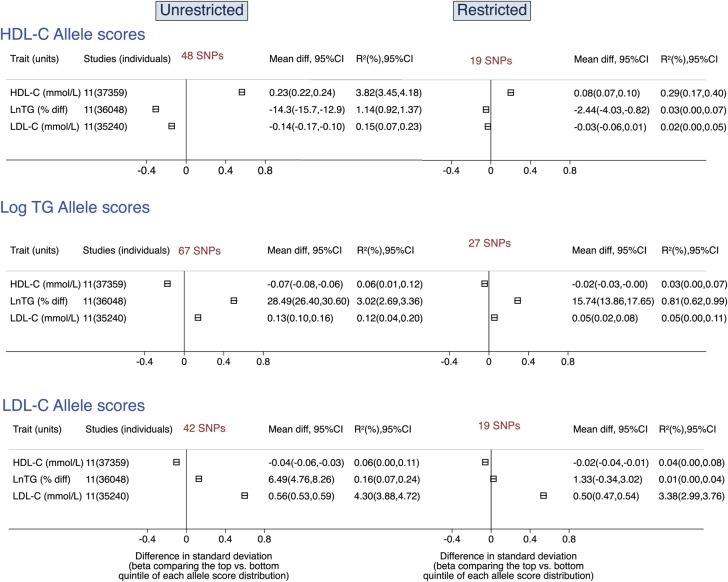
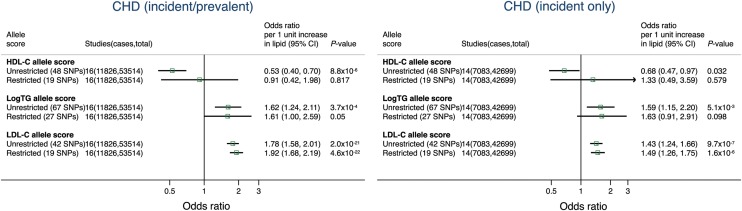
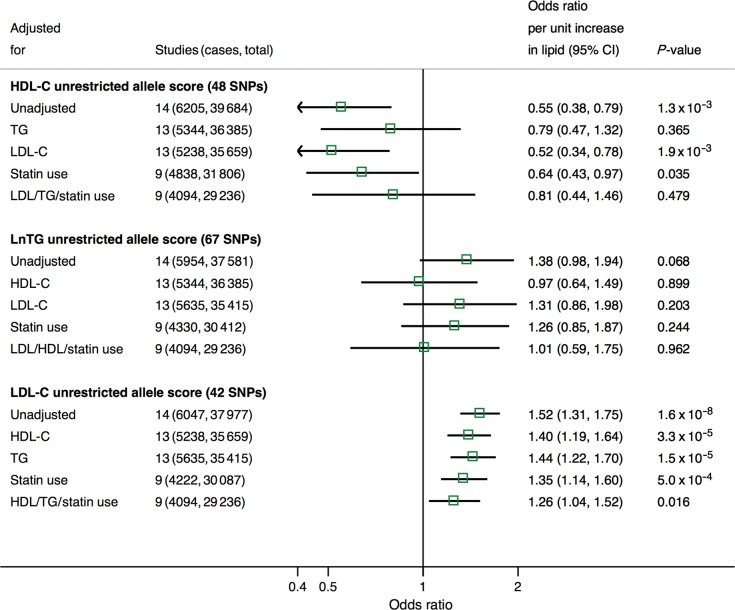
AIMS: To investigate the causal role of high-density lipoprotein cholesterol (HDL-C) and triglycerides in coronary heart disease (CHD) using multiple instrumental variables for Mendelian randomization. METHODS AND RESULTS: We developed weighted allele scores based on single nucleotide polymorphisms (SNPs) with established associations with HDL-C, triglycerides, and low-density lipoprotein cholesterol (LDL-C). For each trait, we constructed two scores. The first was unrestricted, including all independent SNPs associated with the lipid trait identified from a prior meta-analysis (threshold P < 2 × 10(-6)); and the second a restricted score, filtered to remove any SNPs also associated with either of the other two lipid traits at P ≤ 0.01. Mendelian randomization meta-analyses were conducted in 17 studies including 62,199 participants and 12,099 CHD events. Both the unrestricted and restricted allele scores for LDL-C (42 and 19 SNPs, respectively) associated with CHD. For HDL-C, the unrestricted allele score (48 SNPs) was associated with CHD (OR: 0.53; 95% CI: 0.40, 0.70), per 1 mmol/L higher HDL-C, but neither the restricted allele score (19 SNPs; OR: 0.91; 95% CI: 0.42, 1.98) nor the unrestricted HDL-C allele score adjusted for triglycerides, LDL-C, or statin use (OR: 0.81; 95% CI: 0.44, 1.46) showed a robust association. For triglycerides, the unrestricted allele score (67 SNPs) and the restricted allele score (27 SNPs) were both associated with CHD (OR: 1.62; 95% CI: 1.24, 2.11 and 1.61; 95% CI: 1.00, 2.59, respectively) per 1-log unit increment. However, the unrestricted triglyceride score adjusted for HDL-C, LDL-C, and statin use gave an OR for CHD of 1.01 (95% CI: 0.59, 1.75). CONCLUSION: The genetic findings support a causal effect of triglycerides on CHD risk, but a causal role for HDL-C, though possible, remains less certain.
Overview
The claims and statistics of this paper haven’t been checked yet.
Free: it reads the open-access text and checks the first 5 claims that cite a source we can check. Create a free account to check every claim.
Integrity signals
Registry
Cites
Statistics
Figures
Verification
Claims the paper makes
The claims and statistics of this paper haven’t been checked yet.
Free: it reads the open-access text and checks the first 5 claims that cite a source we can check. Create a free account to check every claim.
Claims other papers make about this one
Each is checked against this paper’s own text: does it say what the citing paper says it does?
The cited source doesn’t support the claim as written.
In the citing paper
“Furthermore, Mendelian randomization studies have demonstrated that long-term exposure to lower LDL-C levels is associated with a much lower risk of CV events as compared with shorter-term exposure to lower LDL-C (as achieved, for example, in randomized trials) [48,52].”
From 2019 ESC/EAS guidelines for the management of dyslipidaemias: lipid modification to reduce cardiovascular risk (2019) · cites this paper as [48]
Checked by a reasoning model — may be wrong.
Experimental — accuracy not yet measuredThe source backs part of the claim, not all of it — or backs it for a different population, condition or comparison.
In the citing paper
“Numerous epidemiological studies, Mendelian randomization studies, and RCTs have consistently demonstrated a log-linear relationship between the absolute changes in plasma LDL-C and the risk of ASCVD [34,45-50].”
From 2019 ESC/EAS guidelines for the management of dyslipidaemias: lipid modification to reduce cardiovascular risk (2019) · cites this paper as [48]
Experimental — accuracy not yet measuredThe source backs part of the claim, not all of it — or backs it for a different population, condition or comparison.
In the citing paper
“Non-HDL-C also includes the atherogenic TG-rich lipoproteins (VLDL, IDL and remnants), which is essential considering the recent information from genome-wide association studies (GWASs) and Mendelian randomization 76,86 - 89 supporting TGs and remnant particles as causative factors in atherogenesis.”
From 2016 ESC/EAS Guidelines for the Management of Dyslipidaemias (2016) · cites this paper as [89]
Experimental — accuracy not yet measuredThe source backs part of the claim, not all of it — or backs it for a different population, condition or comparison.
In the citing paper
“At a more extreme level, while both CETP inhibitors and HMGCR lower CHD through the pharmacological reductions of apolipoprotein B 22 , their metabolomic signatures differ wildly 68 .”
From Integrating genomics with biomarkers and therapeutic targets to invigorate cardiovascular drug development (2021) · cites this paper as [22]
Experimental — accuracy not yet measuredThe source backs part of the claim, not all of it — or backs it for a different population, condition or comparison.
In the citing paper
“The approach outlined here to obtaining a scaling estimate has generally held true for lipid-lowering therapies and risk of cardiovascular disease 22,23,40,92 but there are several potential reasons why the derivation of such a scaling for other therapeutic target-indication pairs may pose a challenge.”
From Integrating genomics with biomarkers and therapeutic targets to invigorate cardiovascular drug development (2021) · cites this paper as [22]
Experimental — accuracy not yet measured
4 more claims about this paper
Create a free account to see every claim other papers make about this one.
Self-check
Percentages, sums and reported differences re-computed from the paper’s own numbers.
The self-check needs the paper’s full text.
Citations
Cites
Mendelian randomization: Using genes as instruments for making causal inferences in epidemiology
Lawlor, D. A., Harbord, R. M., Sterne, J. A. C., Timpson, N., & Davey Smith, G. (2008) · Statistics in Medicine · doi:10.1002/sim.3034 · Cited by 4,618 · cited 3×
“Moreover, at a population level the randomized allocation of parental alleles at conception tends to balance confounding factors among groups of differing genotypes.(9,10) Where a polymorphism is”
Self-citationBiological, clinical and population relevance of 95 loci for blood lipids
Teslovich, T. M., Musunuru, K., Smith, A. V., Edmondson, A. C., Stylianou, I. M., Koseki, M., Pirruccello, J. P., Ripatti, S., Chasman, D. I., Willer, C. J., et al. (2010) · Nature · doi:10.1038/nature09270 · Cited by 3,487
Self-citationEffects of torcetrapib in patients at high risk for coronary events
Barter, P. J., Caulfield, M., Eriksson, M., Grundy, S. M., Kastelein, J. J. P., Komajda, M., Lopez-Sendon, J., Mosca, L., Tardif, J.-C., Waters, D. D., et al. (2007) · New England Journal of Medicine · doi:10.1056/nejmoa0706628 · Cited by 3,139 · cited 1×
“the negative findings from clinical trials may have arisen from inadequate selection of drug targets or drug molecules.(6,8) Given this uncertainty, it remains unclear whether elevating HDL-C or reducing”
Collaborators, C. T. T. (. (2012) · The Lancet · doi:10.1016/s0140-6736(12)60367-5 · Cited by 2,833 · cited 1×
“studies has been established as causal based on randomized trials of LDL-C-lowering drugs.(1,2) In contrast, uncertainty existson the causal relevance of high-density lipoprotein cholesterol (HDL-C) and trigly-”
Major lipids, apolipoproteins, and risk of vascular disease
The Emerging Risk Factors Collaboration* (2009) · JAMA · doi:10.1001/jama.2009.1619 · Cited by 2,731
Effects of dalcetrapib in patients with a recent acute coronary syndrome
Schwartz, G. G., Olsson, A. G., Abt, M., Ballantyne, C. M., Barter, P. J., Brumm, J., Chaitman, B. R., Holme, I. M., Kallend, D., Leiter, L. A., et al. (2012) · New England Journal of Medicine · doi:10.1056/nejmoa1206797 · Cited by 2,022
Using multiple genetic variants as instrumental variables for modifiable risk factors
Palmer, T. M., Lawlor, D. A., Harbord, R. M., Sheehan, N. A., Tobias, J. H., Timpson, N. J., Smith, G. D., & Sterne, J. A. (2012) · Statistical Methods in Medical Research · doi:10.1177/0962280210394459 · Cited by 1,289 · cited 2×
“This should increase power, because each additional SNP contributes incrementally to the explained variance in the lipid fraction of interest and reduces the lack of specificity often observed with single SNPs, because the effects on traits other than the lipid fraction of interest should be small, non-systematic, and…”
Self-citationRemnant Cholesterol as a Causal Risk Factor for Ischemic Heart Disease
Varbo, A., Benn, M., Tybjærg-Hansen, A., Jørgensen, A. B., Frikke-Schmidt, R., & Nordestgaard, B. G. (2013) · Journal of the American College of Cardiology · doi:10.1016/j.jacc.2012.08.1026 · Cited by 1,115
Cited by
Heart Disease and Stroke Statistics—2019 Update: A Report From the American Heart Association
Benjamin, E. J., Muntner, P., Alonso, A., Bittencourt, M. S., Callaway, C. W., Carson, A. P., Chamberlain, A. M., Chang, A. R., Cheng, S., Das, S. R., et al. (2019) · Circulation · doi:10.1161/cir.0000000000000659 · Cited by 9,036
Self-citationMach, F., Baigent, C., Catapano, A. L., Koskinas, K. C., Casula, M., Badimon, L., Chapman, M. J., De Backer, G. G., Delgado, V., Ference, B. A., et al. (2020) · European Heart Journal · doi:10.1093/eurheartj/ehz455 · Cited by 8,961
Bowden, J., Davey Smith, G., Haycock, P. C., & Burgess, S. (2016) · Genetic Epidemiology · doi:10.1002/gepi.21965 · Cited by 8,922
“However, a more liberal Mendelian randomization analysis including genetic variants associated with other lipid fractions (in particular, triglycerides) did suggest a causal effect of HDL-c on CAD risk (Holmes et al., 2015).”
Background2021 ESC Guidelines on cardiovascular disease prevention in clinical practice
Visseren, F. L. J., Mach, F., Smulders, Y. M., Carballo, D., Koskinas, K. C., Bäck, M., Benetos, A., Biffi, A., Boavida, J.-M., Capodanno, D., et al. (2021) · European Heart Journal · doi:10.1093/eurheartj/ehab484 · Cited by 6,485
Mach, F., Baigent, C., Catapano, A. L., Koskinas, K. C., Casula, M., Badimon, L., Chapman, M. J., De Backer, G. G., Delgado, V., Ference, B. A., et al. (2019) · Atherosclerosis · doi:10.1016/j.atherosclerosis.2019.08.014 · Cited by 4,854
“In contrast, Mendelian randomization studies do not provide compelling evidence that HDL-C is causally associated with the risk of ASCVD.(49,61,62) However, this evidence must be interpreted with caution because most genetic variants associated with HDL-C are also associated with directionally opposite changes in TGs,…”
Mendelian randomization: genetic anchors for causal inference in epidemiological studies
Davey Smith, G., & Hemani, G. (2014) · Human Molecular Genetics · doi:10.1093/hmg/ddu328 · Cited by 4,677
“An initial way of interrogating this problem is to use regression methods to attempt to separate the effects, and two independent studies utilizing this approach have recently suggested that the causal influence of triglycerides was robust, whereas the apparent protective effect of HDL-C was not (81,82).”
MethodReading Mendelian randomisation studies: a guide, glossary, and checklist for clinicians
Davies, N. M., Holmes, M. V., & Davey Smith, G. (2018) · BMJ · doi:10.1136/bmj.k601 · Cited by 4,404
Self-citationFerence, B. A., Ginsberg, H. N., Graham, I., Ray, K. K., Packard, C. J., Bruckert, E., Hegele, R. A., Krauss, R. M., Raal, F. J., Schunkert, H., et al. (2017) · European Heart Journal · doi:10.1093/eurheartj/ehx144 · Cited by 3,962
“Indeed, when the effect of each LDL-C variant is plotted against its effect on CHD, there is a continuous, dose-dependent, and log-linear causal association between the magnitude of the absolute change in LDL-C level and the lifetime risk of CHD (Figure 2).(28,30) Furthermore, when adjusted for a standard decrement in…”
Background2016 ESC/EAS Guidelines for the Management of Dyslipidaemias
Catapano, A. L., Graham, I., De Backer, G., Wiklund, O., Chapman, M. J., Drexel, H., Hoes, A. W., Jennings, C. S., Landmesser, U., Pedersen, T. R., et al. (2016) · European Heart Journal · doi:10.1093/eurheartj/ehw272 · Cited by 3,162
Self-citationSanderson, E., Glymour, M. M., Holmes, M. V., Kang, H., Morrison, J., Munafò, M. R., Palmer, T., Schooling, C. M., Wallace, C., Zhao, Q., et al. (2022) · Nature Reviews Methods Primers · doi:10.1038/s43586-021-00092-5 · Cited by 2,229
Self-citationBurgess, S., Bowden, J., Fall, T., Ingelsson, E., & Thompson, S. G. (2017) · Epidemiology · doi:10.1097/ede.0000000000000559 · Cited by 2,017
Burgess, S., & Thompson, S. G. (2015) · American Journal of Epidemiology · doi:10.1093/aje/kwu283 · Cited by 1,605
2016 ESC/EAS Guidelines for the Management of Dyslipidaemias
Catapano, A. L., Graham, I., De Backer, G., Wiklund, O., Chapman, M. J., Drexel, H., Hoes, A. W., Jennings, C. S., Landmesser, U., Pedersen, T. R., et al. (2016) · Atherosclerosis · doi:10.1016/j.atherosclerosis.2016.08.018 · Cited by 1,582
“The causative role of HDL-C for protection against CVD has been questioned in several studies utilizing Mendelian randomization.(87,89,91,92) Recent studies suggest that HDL has a complex role in atherogenesis and that the presence of dysfunctional HDL may be more relevant to the ESC/EAS Guidelines 3016”
BackgroundSelf-citationBowden, J., Del Greco M., F., Minelli, C., Davey Smith, G., Sheehan, N. A., & Thompson, J. R. (2016) · International Journal of Epidemiology · doi:10.1093/ije/dyw220 · Cited by 1,565
“We do not therefore claim that this approach is superior to the more liberal inclusion policy adopted by Holmes et al.(8) in their main analysis, or that any single approach should be relied upon.”
BackgroundResultInfluentialDietary fats and cardiovascular disease: a presidential advisory from the American Heart Association
Sacks, F. M., Lichtenstein, A. H., Wu, J. H. Y., Appel, L. J., Creager, M. A., Kris-Etherton, P. M., Miller, M., Rimm, E. B., Rudel, L. L., Robinson, J. G., et al. (2017) · Circulation · doi:10.1161/cir.0000000000000510 · Cited by 1,386
Recent Developments in Mendelian Randomization Studies
Zheng, J., Baird, D., Borges, M.-C., Bowden, J., Hemani, G., Haycock, P., Evans, D. M., & Smith, G. D. (2017) · Current Epidemiology Reports · doi:10.1007/s40471-017-0128-6 · Cited by 1,147
Burgess, S., Dudbridge, F., & Thompson, S. G. (2015) · American Journal of Epidemiology · doi:10.1093/aje/kwv017 · Cited by 934
Self-citationRichardson, T. G., Sanderson, E., Palmer, T. M., Ala-Korpela, M., Ference, B. A., Davey Smith, G., & Holmes, M. V. (2020) · PLOS Medicine · doi:10.1371/journal.pmed.1003062 · Cited by 843
Self-citationDysfunctional HDL and atherosclerotic cardiovascular disease
Rosenson, R. S., Brewer, H. B., Ansell, B. J., Barter, P., Chapman, M. J., Heinecke, J. W., Kontush, A., Tall, A. R., & Webb, N. R. (2016) · Nature Reviews Cardiology · doi:10.1038/nrcardio.2015.124 · Cited by 822
Evacetrapib and cardiovascular outcomes in high-risk vascular disease
Lincoff, A. M., Nicholls, S. J., Riesmeyer, J. S., Barter, P. J., Brewer, H. B., Fox, K. A. A., Gibson, C. M., Granger, C., Menon, V., Montalescot, G., et al. (2017) · New England Journal of Medicine · doi:10.1056/nejmoa1609581 · Cited by 801
Mendelian randomization for cardiovascular diseases: Principles and applications
Larsson, S. C., Butterworth, A. S., & Burgess, S. (2023) · European Heart Journal · doi:10.1093/eurheartj/ehad736 · Cited by 735
Mendelian randomization in cardiometabolic disease: challenges in evaluating causality
Holmes, M. V., Ala-Korpela, M., & Smith, G. D. (2017) · Nature Reviews Cardiology · doi:10.1038/nrcardio.2017.78 · Cited by 679
Self-citationSandesara, P. B., Virani, S. S., Fazio, S., & Shapiro, M. D. (2019) · Endocrine Reviews · doi:10.1210/er.2018-00184 · Cited by 608
Haycock, P. C., Burgess, S., Wade, K. H., Bowden, J., Relton, C., & Davey Smith, G. (2016) · The American Journal of Clinical Nutrition · doi:10.3945/ajcn.115.118216 · Cited by 600
“, SNPs associated with nontarget exposures as well as the target exposure) can be excluded in a sensitivity analysis (18).”
BackgroundMorrison, J., Knoblauch, N., Marcus, J. H., Stephens, M., & He, X. (2020) · Nature Genetics · doi:10.1038/s41588-020-0631-4 · Cited by 591
Machine learning in cardiovascular medicine: are we there yet?
Shameer, K., Johnson, K. W., Glicksberg, B. S., Dudley, J. T., & Sengupta, P. P. (2018) · Heart · doi:10.1136/heartjnl-2017-311198 · Cited by 555
“45 MR has recently been used to demonstrate that a biomarker associated with CVD (cystatin C) was not causally related.”
Method2021 ESC Guidelines on cardiovascular disease prevention in clinical practice
Visseren, F. L. J., Mach, F., Smulders, Y. M., Carballo, D., Koskinas, K. C., Bäck, M., Benetos, A., Biffi, A., Boavida, J.-M., Capodanno, D., et al. (2022) · European Journal of Preventive Cardiology · doi:10.1093/eurjpc/zwab154 · Cited by 542
Remnant Cholesterol, Not LDL Cholesterol, Is Associated With Incident Cardiovascular Disease
Castañer, O., Pintó, X., Subirana, I., Amor, A. J., Ros, E., Hernáez, Á., Martínez-González, M. Á., Corella, D., Salas-Salvadó, J., Estruch, R., et al. (2020) · Journal of the American College of Cardiology · doi:10.1016/j.jacc.2020.10.008 · Cited by 540
Lipids, lipoproteins, and metabolites and risk of myocardial infarction and stroke
Holmes, M. V., Millwood, I. Y., Kartsonaki, C., Hill, M. R., Bennett, D. A., Boxall, R., Guo, Y., Xu, X., Bian, Z., Hu, R., et al. (2018) · Journal of the American College of Cardiology · doi:10.1016/j.jacc.2017.12.006 · Cited by 508
“Although this could be explained by residual confounding or reverse causality, we note that most genetic investigations of HDL in CHD to date (16,17,21,22) have used genetic variants associated with HDL-C overall, a composite measure of the sum of cholesterol concentrations across HDL lipoproteins.”
BackgroundSelf-citationA Modern Approach to Dyslipidemia
Berberich, A. J., & Hegele, R. A. (2022) · Endocrine Reviews · doi:10.1210/endrev/bnab037 · Cited by 469
“Mendelian randomization studies have linked genetic elevations in TGs to ASCVD outcomes, supporting TG as an independent risk factor after adjusting for other lipid effects, but again given the huge underlying metabolic pleiotropy associated with elevated TGs, these cannot definitively prove causation in our opinion (…”
BackgroundPrimary prevention of cardiovascular disease: A review of contemporary guidance and literature
Stewart, J., Manmathan, G., & Wilkinson, P. (2017) · JRSM Cardiovascular Disease · doi:10.1177/2048004016687211 · Cited by 464
Selecting instruments for Mendelian randomization in the wake of genome-wide association studies.
Swerdlow, D. I., Kuchenbaecker, K. B., Shah, S., Sofat, R., Holmes, M. V., White, J., Mindell, J. S., Kivimaki, M., Brunner, E. J., Whittaker, J. C., et al. (2016) · International Journal of Epidemiology · doi:10.1093/ije/dyw088 · Cited by 387
“Approaches developed to deal with residual pleiotropy include dropping the most pleiotropic SNPs from the instrument (with a corresponding reduction in power) or adjusting for residual pleiotropy in the analysis, which requires access to participant-level data and is unsatisfying conceptually as it returns to a standa…”
Self-citationHypertriglyceridaemia and risk of coronary artery disease
Reiner, Ž. (2017) · Nature Reviews Cardiology · doi:10.1038/nrcardio.2017.31 · Cited by 387
HDL-targeted therapies: progress, failures and future
Kingwell, B. A., Chapman, M. J., Kontush, A., & Miller, N. E. (2014) · Nature Reviews Drug Discovery · doi:10.1038/nrd4279 · Cited by 354
Pradhan, A. D., Paynter, N. P., Everett, B. M., Glynn, R. J., Amarenco, P., Elam, M., Ginsberg, H., Hiatt, W. R., Ishibashi, S., Koenig, W., et al. (2018) · American Heart Journal · doi:10.1016/j.ahj.2018.09.011 · Cited by 319
Richardson, T. G., Leyden, G. M., Wang, Q., Bell, J. A., Elsworth, B., Davey Smith, G., & Holmes, M. V. (2022) · PLOS Biology · doi:10.1371/journal.pbio.3001547 · Cited by 304
Self-citation2026 ACC/AHA/AACVPR/ABC/ACPM/ADA/AGS/APhA/ASPC/NLA/PCNA Guideline on the Management of Dyslipidemia
Blumenthal, R. S., Morris, P. B., Gaudino, M., Johnson, H. M., Anderson, T. S., Bittner, V. A., Blankstein, R., Brewer, L. C., Cho, L., de Ferranti, S. D., et al. (2026) · JACC · doi:10.1016/j.jacc.2025.11.016 · Cited by 304
Association of Lipid Fractions With Risks for Coronary Artery Disease and Diabetes
White, J., Swerdlow, D. I., Preiss, D., Fairhurst-Hunter, Z., Keating, B. J., Asselbergs, F. W., Sattar, N., Humphries, S. E., Hingorani, A. D., & Holmes, M. V. (2016) · JAMA Cardiology · doi:10.1001/jamacardio.2016.1884 · Cited by 293
Self-citationRobinet, P., Milewicz, D. M., Cassis, L. A., Leeper, N. J., Lu, H. S., & Smith, J. D. (2018) · Arteriosclerosis, Thrombosis, and Vascular Biology · doi:10.1161/atvbaha.117.309524 · Cited by 264
Helgadottir, A., Gretarsdottir, S., Thorleifsson, G., Hjartarson, E., Sigurdsson, A., Magnusdottir, A., Jonasdottir, A., Kristjansson, H., Sulem, P., Oddsson, A., et al. (2016) · Nature Genetics · doi:10.1038/ng.3561 · Cited by 254
Metabolomics in Diabetes and Diabetic Complications: Insights from Epidemiological Studies
Jin, Q., & Ma, R. C. W. (2021) · Cells · doi:10.3390/cells10112832 · Cited by 252
Webb, T. R., Erdmann, J., Stirrups, K. E., Stitziel, N. O., Masca, N. G. D., Jansen, H., Kanoni, S., Nelson, C. P., Ferrario, P. G., König, I. R., et al. (2017) · Journal of the American College of Cardiology · doi:10.1016/j.jacc.2016.11.056 · Cited by 252
Self-citationGeorgakis, M. K., Gill, D., Rannikmäe, K., Traylor, M., Anderson, C. D., MEGASTROKE consortium of the International Stroke Genetics Consortium (ISGC), Lee, J.-M., Kamatani, Y., Hopewell, J. C., Worrall, B. B., et al. (2019) · Circulation · doi:10.1161/circulationaha.118.035905 · Cited by 252
Liu, C., Dhindsa, D., Almuwaqqat, Z., Ko, Y.-A., Mehta, A., Alkhoder, A. A., Alras, Z., Desai, S. R., Patel, K. J., Hooda, A., et al. (2022) · JAMA Cardiology · doi:10.1001/jamacardio.2022.0912 · Cited by 250
Hypertriglyceridemia and atherosclerosis
Peng, J., Luo, F., Ruan, G., Peng, R., & Li, X. (2017) · Lipids in Health and Disease · doi:10.1186/s12944-017-0625-0 · Cited by 245
“More recently, several Mendelian randomization studies has been conducted to evaluate whether factors involved in TRL metabolism are causally associated with atherosclerosis and coronary heart disease (CHD), and provide robust evidence for TG contributing to ASCVD.”
MethodCoronary heart disease risk: Low-density lipoprotein and beyond
Shaya, G. E., Leucker, T. M., Jones, S. R., Martin, S. S., & Toth, P. P. (2022) · Trends in Cardiovascular Medicine · doi:10.1016/j.tcm.2021.04.002 · Cited by 236
Drapkina, O. M., Васильевна, К. А., Калинина, А. М., Avdeev, S. M., Викторович, А. М., Alexandrova, L. M., Анциферова, А. А., Dm, A., Ахмеджанов, Н. М., Balanova, Y. А., et al. (2022) · CARDIOVASCULAR THERAPY AND PREVENTION · doi:10.15829/1728-8800-2022-3235 · Cited by 234
High-density lipoproteins during sepsis: from bench to bedside
Tanaka, S., Couret, D., Tran-Dinh, A., Duranteau, J., Montravers, P., Schwendeman, A., & Meilhac, O. (2020) · Critical Care · doi:10.1186/s13054-020-02860-3 · Cited by 229
“On the one hand, Mendelian randomization studies report that single nucleotide polymorphism modulating HDL-C levels such as variants of endothelial lipase [16] or phospholipid transfer protein [17] did not impact on CVD risk prediction (see metaanalysis in [18]).”
BackgroundFerence, B. A., Bhatt, D. L., Catapano, A. L., Packard, C. J., Graham, I., Kaptoge, S., Ference, T. B., Guo, Q., Laufs, U., Ruff, C. T., et al. (2019) · JAMA · doi:10.1001/jama.2019.14120 · Cited by 222
Self-citation‘Mendelian randomization’: an approach for exploring causal relations in epidemiology
Gupta, V., Walia, G. K., & Sachdeva, M. P. (2017) · Public Health · doi:10.1016/j.puhe.2016.12.033 · Cited by 210
Menopausal hormone therapy and women’s health: An umbrella review
Zhang, G.-Q., Chen, J.-L., Luo, Y., Mathur, M. B., Anagnostis, P., Nurmatov, U., Talibov, M., Zhang, J., Hawrylowicz, C. M., Lumsden, M. A., et al. (2021) · PLOS Medicine · doi:10.1371/journal.pmed.1003731 · Cited by 208
Qi, G., & Chatterjee, N. (2019) · Nature Communications · doi:10.1038/s41467-019-09432-2 · Cited by 207
PCSK9 monoclonal antibodies for the primary and secondary prevention of cardiovascular disease
Schmidt, A. F., Pearce, L. S., Wilkins, J. T., Overington, J. P., Hingorani, A. D., & Casas, J. P. (2017) · Cochrane Database of Systematic Reviews · doi:10.1002/14651858.cd011748.pub2 · Cited by 205
Self-citationRosoff, D. B., Davey Smith, G., Mehta, N., Clarke, T.-K., & Lohoff, F. W. (2020) · PLOS Medicine · doi:10.1371/journal.pmed.1003410 · Cited by 202
Richardson, T. G., Harrison, S., Hemani, G., & Davey Smith, G. (2019) · eLife · doi:10.7554/elife.43657 · Cited by 198
“For example, instead of using a coronary heart disease (CHD) PRS to predict incidence of this disease, studies have investigated whether scores for known risk factors, such cholesterol and lipid levels (Holmes et al., 2015), are also strongly associated with CHD incidence.”
MethodThe Evolving Understanding and Approach to Residual Cardiovascular Risk Management
Dhindsa, D. S., Sandesara, P. B., Shapiro, M. D., & Wong, N. D. (2020) · Frontiers in Cardiovascular Medicine · doi:10.3389/fcvm.2020.00088 · Cited by 192
“Additionally, Mendelian randomization studies have not supported a causal relationship between HDL-C levels and cardiovascular disease (88, 89).”
BackgroundCalculating Polygenic Risk Scores (PRS) in UK Biobank: A Practical Guide for Epidemiologists
Collister, J. A., Liu, X., & Clifton, L. (2022) · Frontiers in Genetics · doi:10.3389/fgene.2022.818574 · Cited by 191
Genetics of height and risk of atrial fibrillation: A Mendelian randomization study
Levin, M. G., Judy, R., Gill, D., Vujkovic, M., Verma, S. S., Bradford, Y., Regeneron Genetics Center, Ritchie, M. D., Hyman, M. C., Nazarian, S., et al. (2020) · PLOS Medicine · doi:10.1371/journal.pmed.1003288 · Cited by 191
Zhao, Q., Chen, Y., Wang, J., & Small, D. S. (2019) · International Journal of Epidemiology · doi:10.1093/ije/dyz142 · Cited by 188
Hindy, G., Engström, G., Larsson, S. C., Traylor, M., Markus, H. S., Melander, O., & Orho-Melander, M. (2018) · Stroke · doi:10.1161/strokeaha.117.019653 · Cited by 186
Self-citationHolmes, M. V., Richardson, T. G., Ference, B. A., Davies, N. M., & Davey Smith, G. (2021) · Nature Reviews Cardiology · doi:10.1038/s41569-020-00493-1 · Cited by 184
Self-citationTriglycerides and Triglyceride-Rich Lipoproteins in the Causal Pathway of Cardiovascular Disease
Budoff, M. (2016) · The American Journal of Cardiology · doi:10.1016/j.amjcard.2016.04.004 · Cited by 184
Pirola, C. J., & Sookoian, S. (2015) · Hepatology · doi:10.1002/hep.28142 · Cited by 172
“For example, (1) efficacy of currently used medications in lowering lipids and lipoproteins in patients with hypertriglyceridemia is in the range of 10%-20%, using standard doses,36 and (2) TG lowering by pharmacological intervention is directly proportional to the baseline TG level.38 Moreover, results of mendelian r…”
BackgroundInfluentialNovel Risk Markers and Risk Assessments for Cardiovascular Disease
Thomas, M. R., & Lip, G. Y. H. (2017) · Circulation Research · doi:10.1161/circresaha.116.309955 · Cited by 172
“trials of drugs that increase high-density lipoprotein cholesterol and by negative Mendelian randomization studies.(3,4) In Review”
BackgroundStatistical methods for cis‐Mendelian randomization with two‐sample summary‐level data
Gkatzionis, A., Burgess, S., & Newcombe, P. J. (2023) · Genetic Epidemiology · doi:10.1002/gepi.22506 · Cited by 155
Allara, E., Morani, G., Carter, P., Gkatzionis, A., Zuber, V., Foley, C. N., Rees, J. M. B., Mason, A. M., Bell, S., Gill, D., et al. (2019) · Circulation: Genomic and Precision Medicine · doi:10.1161/circgen.119.002711 · Cited by 145
“Evidence from randomized trials has shown that therapies that lower low-density lipoprotein (LDL)-cholesterol, such as statins, are beneficial for preventing or treating several atheromatous diseases such as coronary artery disease (CAD),1 ischaemic stroke,2 and peripheral vascular disease,3,4 as well as both postoper…”
BackgroundResultInfluentialAssociations of Body Mass and Fat Indexes With Cardiometabolic Traits
Bell, J. A., Carslake, D., O’Keeffe, L. M., Frysz, M., Howe, L. D., Hamer, M., Wade, K. H., Timpson, N. J., & Davey Smith, G. (2018) · Journal of the American College of Cardiology · doi:10.1016/j.jacc.2018.09.066 · Cited by 166
“Our results suggest that BMI and DXA fat mass index are similarly associated with cardiometabolic traits relevant to CHD.”
BackgroundInfluentialCommon Methods for Performing Mendelian Randomization
Teumer, A. (2018) · Frontiers in Cardiovascular Medicine · doi:10.3389/fcvm.2018.00051 · Cited by 165
“This type of MR was conducted for assessing the causal effect of blood lipids on coronary heart disease (15).”
BackgroundMethodEffects of oils and solid fats on blood lipids: a systematic review and network meta-analysis
Schwingshackl, L., Bogensberger, B., Benčič, A., Knüppel, S., Boeing, H., & Hoffmann, G. (2018) · Journal of Lipid Research · doi:10.1194/jlr.p085522 · Cited by 162
“HDL-C was not associated with an increased risk of myocardial infarction, thereby calling into question a causal association between HDL-C and CVD (94).”
InfluentialHDL in Atherosclerotic Cardiovascular Disease: In Search of a Role
Casula, M., Colpani, O., Xie, S., Catapano, A. L., & Baragetti, A. (2021) · Cells · doi:10.3390/cells10081869 · Cited by 165
Dudbridge, F. (2016) · Genetic Epidemiology · doi:10.1002/gepi.21966 · Cited by 159
“…interpretable in the context of an assumed model, usually (for disease traits) a liability threshold model, and the population-specific environment [Hopper and Mack, 2015]; however it is generally useful to estimate the broad degree of genetic variance and correlation, even if it is challenging to…”
BackgroundSelf-citationLechner, K., McKenzie, A. L., Kränkel, N., Von Schacky, C., Worm, N., Nixdorff, U., Lechner, B., Scherr, J., Weingärtner, O., & Krauss, R. M. (2020) · Metabolic Syndrome and Related Disorders · doi:10.1089/met.2019.0115 · Cited by 141
“Mendelian randomization analyses indicate that triglyceride-related risk is causal in ASCVD and considering triglyceride levels along with waist circumference improves risk prediction.(8,78) Hypertriglyceridemic waist, a visceral adiposity marker combining elevated waist circumference (‡90 cm) and elevated fasting pla…”
BackgroundBenn, M., & Nordestgaard, B. G. (2018) · Cardiovascular Research · doi:10.1093/cvr/cvy045 · Cited by 130
Islam, S. U., Ahmed, M. B., Ahsan, H., & Lee, Y. S. (2021) · Antioxidants · doi:10.3390/antiox10050784 · Cited by 155
The Role of Lipids and Lipoproteins in Atherosclerosis
Linton, M. F., Yancey, P. G., Davies, S. S., Jerome, W. G., Linton, E. F., Song, W., Doran, A. C., & Vickers, K. C. (2015) · Europe PMC (PubMed Central) · Cited by 153
McGuinn, L. A., Schneider, A. E., McGarrah, R. W., Ward-Caviness, C. K., Neas, L., Di, Q., Schwartz, J. D., Hauser, E. R., Kraus, W. E., Cascio, W. E., et al. (2018) · Environment International · doi:10.1016/j.envint.2018.11.001 · Cited by 151
“Moreover, recent genetic studies suggest that triglycerides may also have a causal relationship with cardiovascular disease (Holmes et al. 2015; Triglyceride Coronary Disease Genetics et al. 2010).”
BackgroundCholesteryl ester transfer protein (CETP) as a drug target for cardiovascular disease
Schmidt, A. F., Hunt, N. B., Gordillo-Marañón, M., Charoen, P., Drenos, F., Kivimaki, M., Lawlor, D. A., Giambartolomei, C., Papacosta, O., Chaturvedi, N., et al. (2021) · Nature Communications · doi:10.1038/s41467-021-25703-3 · Cited by 142
Self-citationSchwingshackl, L., Hoffmann, G., Iqbal, K., Schwedhelm, C., & Boeing, H. (2018) · The American Journal of Clinical Nutrition · doi:10.1093/ajcn/nqy151 · Cited by 147
“Abbreviations used: CHD, coronary heart disease; CRP, C-reactive protein; DBP, diastolic blood pressure; FG, fasting glucose; HbA1c, glycated hemoglobin; NMA, network meta-analysis; SSB, sugar-sweetened beverage; SBP, systolic blood pressure; SUCRA, surface under the cumulative ranking curves; TG, triacylglycerol.”
BackgroundInfluentialRosenzweig, J. L., Bakris, G. L., Berglund, L. F., Hivert, M.-F., Horton, E. S., Kalyani, R. R., Murad, M. H., & Vergès, B. L. (2019) · The Journal of Clinical Endocrinology & Metabolism · doi:10.1210/jc.2019-01338 · Cited by 126
Genetic Association of Lipids and Lipid Drug Targets With Abdominal Aortic Aneurysm: A Meta-analysis
Harrison, S. C., Holmes, M. V., Burgess, S., Asselbergs, F. W., Jones, G. T., Baas, A. F., van ’t Hof, F. N., de Bakker, P. I. W., Blankensteijn, J. D., Powell, J. T., et al. (2018) · JAMA Cardiology · doi:10.1001/jamacardio.2017.4293 · Cited by 131
Self-citationLanktree, M. B., Thériault, S., Walsh, M. W., & Paré, G. (2017) · American Journal of Kidney Diseases · doi:10.1053/j.ajkd.2017.06.011 · Cited by 143
Self-citationTrimarco, V., Izzo, R., Morisco, C., Mone, P., Virginia Manzi, M., Falco, A., Pacella, D., Gallo, P., Lembo, M., Santulli, G., et al. (2022) · Hypertension · doi:10.1161/hypertensionaha.122.19912 · Cited by 130
Sniderman, A. D., Dufresne, L., Pencina, K. M., Bilgic, S., Thanassoulis, G., & Pencina, M. J. (2024) · European Heart Journal · doi:10.1093/eurheartj/ehae258 · Cited by 139
“…to demonstrate any clinical benefit related to increase in HDL-C 23 and the Mendelian randomization studies, which did not support a causal relation between HDL-C and cardiovascular risk, 24,25 interest in the potential role of HDL-C as a determinant of the outcome of atherosclerosis has plummeted.”
BackgroundCausal Effect of Plasminogen Activator Inhibitor Type 1 on Coronary Heart Disease
Song, C., Burgess, S., Eicher, J. D., CHARGE Consortium Hemostatic Factor Working Group, ICBP Consortium, O'Donnell, C. J., Johnson, A. D., Huang, J., Sabater‐Lleal, M., Asselbergs, F. W., et al. (2017) · Journal of the American Heart Association · doi:10.1161/jaha.116.004918 · Cited by 133
“In addition, further functional studies are required to understand the mechanism of the causal association between PAI-1 and CHD.”
InfluentialSelf-citationMeat consumption and risk of ischemic heart disease: A systematic review and meta-analysis
Papier, K., Knüppel, A., Syam, N. R., Jebb, S. A., & Key, T. J. (2021) · Critical Reviews in Food Science and Nutrition · doi:10.1080/10408398.2021.1949575 · Cited by 137
A Mendelian Randomization Study of Circulating Uric Acid and Type 2 Diabetes
Sluijs, I., Holmes, M. V., van der Schouw, Y. T., Beulens, J. W. J., Asselbergs, F. W., Huerta, J. M., Palmer, T., Arriola, L., Balkau, B., Barricarte, A., et al. (2015) · Diabetes · doi:10.2337/db14-0742 · Cited by 131
“The percentage of explained variation is very comparable to previous Mendelian randomization studies (36), and the corresponding F statistic was high, indicating the study was unlikely to suffer from weak instrument bias (13).”
Self-citationSacks, F. M., & Jensen, M. K. (2018) · Arteriosclerosis, Thrombosis, and Vascular Biology · doi:10.1161/atvbaha.117.307025 · Cited by 117
“and straightforward in supporting the role of LDL cholesterol in atherosclerosis.(78,79,81)”
BackgroundDeep Lipidomics in Human Plasma: Cardiometabolic Disease Risk and Effect of Dietary Fat Modulation
Eichelmann, F., Sellem, L., Wittenbecher, C., Jäger, S., Kuxhaus, O., Prada, M., Cuadrat, R. R. C., Jackson, K. G., Lovegrove, J. A., & Schulze, M. B. (2022) · Circulation · doi:10.1161/circulationaha.121.056805 · Cited by 130
Mendelian Randomization as a Tool for Cardiovascular Research: A Review
Levin, M. G., & Burgess, S. (2023) · JAMA Cardiology · doi:10.1001/jamacardio.2023.4115 · Cited by 129
Johansson, Å., Andreassen, O. A., Brunak, S., Franks, P. W., Hedman, H., Loos, R. J. F., Meder, B., Melén, E., Wheelock, C. E., & Jacobsson, B. (2023) · Journal of Internal Medicine · doi:10.1111/joim.13640 · Cited by 128
“Genetic data has also been used to identify causal effects by, for example, proteins [130] and metabolites [131] through Mendelian randomization analyses.”
Adult height, coronary heart disease and stroke: a multi-locus Mendelian randomization meta-analysis
Nüesch, E., Dale, C., Palmer, T. M., White, J., Keating, B. J., van Iperen, E. P., Goel, A., Padmanabhan, S., Asselbergs, F. W., EPIC-Netherland Investigators, et al. (2016) · International Journal of Epidemiology · doi:10.1093/ije/dyv074 · Cited by 126
“We used inverse-variance weighted fixed-effects meta-analysis to pool estimates across studies.(17) We used linear or logistic regression models to examine the genetic association of the allele score with clinical events, cardiovascular traits and confounders (smoking) in individual studies.”
Self-citationKatzke, V. A., Sookthai, D., Johnson, T., Kuhn, T. E., & Kaaks, R. (2017) · BMC Medicine · doi:10.1186/s12916-017-0976-4 · Cited by 125
“Although uncertainty still exists with regard to HDL’s causal role [7], a pattern of high LDL-C, TG, and Lp(a) levels, and possibly of low HDL-C levels, is widely used for CVD risk stratification.”
Writing Committee Members, Blumenthal, R. S., Morris, P. B., Gaudino, M., Johnson, H. M., Anderson, T. S., Bittner, V. A., Blankstein, R., Brewer, L. C., Cho, L., et al. (2026) · Circulation · doi:10.1161/cir.0000000000001423 · Cited by 122
Guía ESC 2021 sobre la prevención de la enfermedad cardiovascular en la práctica clínica
Visseren, F. L. J., Mach, F., Smulders, Y. M., Carballo, D., Koskinas, K. C., Bäck, M., Bénétos, A., Biffi, A., Boavida, J. M., Capodanno, D., et al. (2022) · Revista Española de Cardiología · doi:10.1016/j.recesp.2021.10.016 · Cited by 124
Triglyceride-Rich Lipoprotein Remnants and Cardiovascular Disease
Duran, E. K., & Pradhan, A. D. (2021) · Clinical Chemistry · doi:10.1093/clinchem/hvaa296 · Cited by 109
Novel and future lipid-modulating therapies for the prevention of cardiovascular disease
Brandts, J., & Ray, K. K. (2023) · Nature Reviews Cardiology · doi:10.1038/s41569-023-00860-8 · Cited by 119
Zhao, Y., Zhuang, Z., Li, Y., Xiao, W., Song, Z., Huang, N., Wang, W., Dong, X., Jia, J., Clarke, R., et al. (2024) · Nature Communications · doi:10.1038/s41467-024-46686-x · Cited by 117
“Please also mention in the limitations section of the Discussion, that statin use is a likely collider on the pathway from remnant cholesterol to cardiometabolic risk, and what that means for the present results.”
Self-citationToth, P. P., Granowitz, C., Hull, M., Liassou, D., Anderson, A., & Philip, S. (2018) · Journal of the American Heart Association · doi:10.1161/jaha.118.008740 · Cited by 117
Wulff, A. B., Nordestgaard, B. G., & Tybjærg-Hansen, A. (2018) · Arteriosclerosis, Thrombosis, and Vascular Biology · doi:10.1161/atvbaha.117.310473 · Cited by 112
Paquette, M., Chong, M., Thériault, S., Dufour, R., Paré, G., & Baass, A. (2017) · Journal of Clinical Lipidology · doi:10.1016/j.jacl.2017.03.019 · Cited by 115
Metadata
- Authors
- Holmes, M. V., Asselbergs, F. W., Palmer, T. M., Drenos, F., Lanktree, M. B., Nelson, C. P., Dale, C. E., Padmanabhan, S., Finan, C., Swerdlow, D. I., Tragante, V., van Iperen, E. P. A., Sivapalaratnam, S., Shah, S., Elbers, C. C., Shah, T., Engmann, J., Giambartolomei, C., White, J., Zabaneh, D., Sofat, R., McLachlan, S., on behalf of the UCLEB consortium, Doevendans, P. A., Balmforth, A. J., Hall, A. S., North, K. E., Almoguera, B., Hoogeveen, R. C., Cushman, M., Fornage, M., Patel, S. R., Redline, S., Siscovick, D. S., Tsai, M. Y., Karczewski, K. J., Hofker, M. H., Verschuren, W. M., Bots, M. L., van der Schouw, Y. T., Melander, O., Dominiczak, A. F., Morris, R., Ben-Shlomo, Y., Price, J., Kumari, M., Baumert, J., Peters, A., Thorand, B., Koenig, W., Gaunt, T. R., Humphries, S. E., Clarke, R., Watkins, H., Farrall, M., Wilson, J. G., Rich, S. S., de Bakker, P. I. W., Lange, L. A., Davey Smith, G., Reiner, A. P., Talmud, P. J., Kivimäki, M., Lawlor, D. A., Dudbridge, F., Samani, N. J., Keating, B. J., Hingorani, A. D., & Casas, J. P.
- Affiliations
- University College London (GB)
- University Medical Center Utrecht (NL)
- University of Warwick (GB)
- University of Bristol (GB)
- McMaster University (CA)
- University of Leicester (GB)
- London School of Hygiene & Tropical Medicine (GB)
- University of Glasgow (GB)
- Durrer Center for Cardiogenetic Research, ICIN-Netherlands Heart Institute, Utrecht, The Netherlands
- Amsterdam UMC Location University of Amsterdam (NL)
- Children's Hospital of Philadelphia (US)
- University of Edinburgh (GB)
- University of Leeds (GB)
- University of North Carolina at Chapel Hill (US)
- Baylor College of Medicine (US)
- University of Vermont (US)
- The University of Texas Health Science Center at Houston (US)
- Brigham and Women's Hospital (US)
- University of Washington (US)
- University of Minnesota (US)
- Stanford Medicine (US)
- University Medical Center Groningen (NL)
- National Institute for Public Health and the Environment (NL)
- Julius Center for Health Sciences and Primary Care, University Medical Center Utrecht, Utrecht, The Netherlands
- Lund University (SE)
- The Royal Free Hospital (GB)
- School of Social and Community Medicine, University of Bristol
- Genetic Epidemiology Group, Institute of Cardiovacular Science, Faculty of Population Healh Sciences, University College London, 1–19 Torrington Place, London WC1E 6BT, UK
- Helmholtz Munich (DE)
- Department of Internal Medicine II-Cardiology, University of Ulm Medical Center, Ulm, Germany
- University of Oxford (GB)
- University of Mississippi Medical Center (US)
- University of Virginia (US)
- Department of Medical Genetics, Division of Biomedical Genetics, University Medical Center Utrecht, Utrecht, The Netherlands
- MRC Integrative Epidemiology Unit, School of Social and Community Medicine, University of Bristol, Oakfield House, Oakfield Grove, Bristol BS8 2BN, UK
- Fred Hutch Cancer Center (US)
- Department of Epidemiology and Public Health, University College London, 1–19 Torrington Place, London WC1E 6BT, UK
- Corresponding author
- Holmes, Michael V.
- ORCID
- Holmes, Michael V.
- Asselbergs, Folkert W.
- Palmer, Tom M.
- Drenos, Fotios
- Lanktree, Matthew B.
- Nelson, Christopher P.
- Dale, Caroline E.
- Padmanabhan, Sandosh
- Finan, Chris
- Swerdlow, Daniel I.
- Tragante, Vinicius
- Sivapalaratnam, Suthesh
- Shah, Sonia
- Elbers, Clara C.
- Shah, Tina
- Engmann, Jorgen
- Giambartolomei, Claudia
- White, Jon
- Zabaneh, Delilah
- Sofat, Reecha
- McLachlan, Stela
- Doevendans, Pieter A.
- Hall, Alistair S.
- North, Kari E.
- Almoguera, Berta
- Hoogeveen, Ron C.
- Cushman, Mary
- Fornage, Myriam
- Patel, Sanjay R.
- Redline, Susan
- Siscovick, David S.
- Tsai, Michael Y.
- Karczewski, Konrad J.
- Verschuren, W. Monique
- Bots, Michiel L.
- Melander, Olle
- Dominiczak, Anna F.
- Morris, Richard
- Price, Jackie
- Baumert, Jens
- Peters, Annette
- Thorand, Barbara
- Gaunt, Tom R.
- Humphries, Steve E.
- Watkins, Hugh
- Farrall, Martin
- Wilson, James G.
- Rich, Stephen S.
- Lange, Leslie A.
- Reiner, Alex P.
- Talmud, Philippa J.
- Lawlor, Debbie A.
- Dudbridge, Frank
- Samani, Nilesh J.
- Keating, Brendan J.
- Hingorani, Aroon D.
- Casas, Juan P.
- Venue
- European Heart Journal
- Publisher
- Oxford University Press (OUP)
- Published
- 2014-01-28
- Volume
- 36
- Issue
- 9
- Pages
- 539-550
- ISSN
- 0195-668X (ISSN-L)
- 1522-9645
- PMC
- PMC4344957
- OpenAlex
- W2159738130
- Cited by
- 748
- References
- 36
- Citations by year
- 2026: 35 · 2025: 58 · 2024: 69 · 2023: 63 · 2022: 67 · 2021: 94 · 2020: 77 · 2019: 66 · 2018: 53 · 2017: 58 · 2016: 55 · 2015: 32 · 2014: 18
- FWCI
- 7.20
- Type
- journal article
- Language
- en
- Open access
- hybrid
- doi.org
- Licence
- other-oa
- Locations
- European Heart Journal (publishedVersion, other-oa)
- Europe PMC (PubMed Central) (publishedVersion, cc-by-nc)
- PubMed Central (publishedVersion, cc-by-nc)
- PubMed (publishedVersion)
- Pure Amsterdam UMC (publishedVersion, other-oa)
- Bristol Research (University of Bristol) (publishedVersion)
- ENLIGHTEN (Jurnal Bimbingan dan Konseling Islam) (acceptedVersion)
- UniSA Research Outputs Repository (University of South Australia) (acceptedVersion, cc-by-nc)
- Open Access at Essex (University of Essex) (acceptedVersion)
- LSHTM Research Online (London School of Hygiene and Tropical Medicine) (acceptedVersion)
- Carolina Digital Repository (University of North Carolina at Chapel Hill) (submittedVersion, other-oa)
- Data Archiving and Networked Services (DANS) (submittedVersion)
- Brunel University Research Archive (BURA) (Brunel University London) (submittedVersion)
- Adelaide Research & Scholarship (AR&S) (University of Adelaide) (submittedVersion, cc-by-nc)
- Utrecht University Repository (Utrecht University) (submittedVersion, other-oa)
- Lancaster EPrints (Lancaster University) (submittedVersion)
- UCL Discovery (University College London) (submittedVersion)
- Figshare (submittedVersion, cc-by)
- Leicester Research Archive (University of Leicester) (submittedVersion, other-oa)
- Lund University Publications (Lund University) (submittedVersion, other-oa)
- Site cant be reached (submittedVersion)
- Edinburgh Research Explorer (University of Edinburgh) (submittedVersion, cc-by-nc)
- University of Groningen research database (University of Groningen / Centre for Information Technology) (submittedVersion, cc-by-nc)
- Spiral (Imperial College London) (submittedVersion, other-oa)
- Utrecht University Repository (Utrecht University) (submittedVersion)
- UNC Libraries
- Funders
- U.S. Department of Health and Human Services (42129‐32, 42107-26, 32108‐9, 32118-32119, 32115, 32111‐13, 32100‐2, 44221, 32105‐6, 32122, 24152)
- AstraZeneca
- GlaxoSmithKline
- Queen Mary University of London
- London School of Hygiene and Tropical Medicine
- Wellcome Trust (090532, 090532/Z/09/Z, 090532/Z/09/)
- Government of the United Kingdom
- National Institute for Health and Care Research
- British Heart Foundation (LSHM-CT-2007-037273, G0802432, 090532/Z/09/Z, CH98001, RG/13/16/30528, PG/07/133/24260, RG/08/008/25291, BHF RG 08/008, PG/07/133/24260, RG/07/005, RG 08/008, RG/10/12/28456, RG/07/005/23633, PG/13/66/30442, RG/13/2/30098, PG/07/131/24254)
- Research Councils UK
- University College London
- European Commission (LSHM-CT-2007–037273)
- Rosetrees Trust
- University of Bristol
- European Foundation for the Study of Diabetes
- Deutsche Forschungsgemeinschaft (TH-784/2–2)
- ZonMw
- Academy of Finland
- Bundesministerium für Bildung und Forschung (01GS0834)
- Hjärt-Lungfonden (RG/10/12/28456)
- Karolinska Institutet
- Knut och Alice Wallenbergs Stiftelse
- Stockholms Läns Landsting (560183)
- Universitetet i Oslo
- Universität Ulm
- National Institutes of Health (n01wh32105-27-0-1, n01hc95164-17-0-1, n01wh32108-30-0-1, n01wh32100-28-0-1, n01hc55021-47-0-1, n01wh32118-27-0-1, 32122, n01hc95165-34-0-1, n01hc55020-39-0-0, 32111‐13, n01hc55016-37-0-0, n01hc055022-024, n01hc95161-24-0-1, 32108‐9, 42129‐32, n01hc095169-003, NHLBI 33014, n01wh44221-7-0-1, 42107–26, n01wh42129-23-0-1, n01hc65226-6-0-0, n01hc95166-21-0-1, n01wh32111-28-0-1, n01wh32115-26-0-1, N01 WH 44221, n01wh22110-38-0-0, N01-WH-3-2115, n01hc95162-31-0-1, N01WH24152, 32118-32119, n01hc55019-35-0-1, 44221, 32115, n01hc95168-27-0-1, 32100‐2, n01hc95160-18-0-1, n01hc095167-000, n01wh24152-12-0-0, n01hc55018-38-0-1, n01hc95163-22-0-1, n01wh32122-31-0-1, N01-WH-3-2122, n01wh42107-22-0-1, n01hc95159-40-0-1, 23633, 24152, N01WH42129-32, N01-WH-32108-9, N01WH 32111-13, N01 WH 32105-6, N01 WH022110, N01-WH-32100-2, N01-WH-42107-26, N01WH 32118-32119, n01hc55015-48-0-1, 32105-6)
- U.S. Public Health Service (HHSN268200960009C, 33014)
- Medical Research Council (MR/K013351/1, MR/K006584/1, RG/10/12/28456, MR/L01629X/1, MR/K006215/1, WC1E 6BT, G0802432)
- Economic and Social Research Council (ES/J023299/1)
- World Cancer Research Fund
- Agentschap NL (grant IGE05012, IGE05012)
- Sahlgrenska Akademin
- Münchner Zentrum für Gesundheitswissenschaften
- National Institute on Aging (R01 AG1764406 S1, RG/10/12/28456, R01AG017644)
- National Heart, Lung, and Blood Institute (33014, N01-HC55022, N01-HC-65226, N01 HC-95159, N01-HC-95160, N01 HC055016, N01-HC-55018, N01-HC095169, 32100‐2, N01 HC-95168, 32118‐32119, N01 HC95167, N01 HC 55020, (N01-HC-95163, 32118, N01 HC 55019, N01 HC-95161, N01 HC95165, N01HC95164, N01 HC055020, 42107‐26, N01-HC-095159, N01 HC055018, 32119, 24152, 32105–6, RG/10/12/28456, 32108‐9, N01-HC55016, 32111–13, 32115, N01 HC055022, N01 HC065226, 42129‐32, HL36310, N01 HC055019, N01‐HC‐95166, 32122, N01‐HC‐55015, N01 HC-95162, N01-HC55021, N01 HC055021, N01 HC055015, R01HL036310, 44221, N01 HC95169)
- National Center for Research Resources (UL1RR024156, RR024156)
- Topics
- Life Sciences › Biochemistry, Genetics and Molecular Biology › Genetics › Genetic Associations and Epidemiology
- Health Sciences › Medicine › Cardiology and Cardiovascular Medicine › Lipoproteins and Cardiovascular Health
- Life Sciences › Biochemistry, Genetics and Molecular Biology › Clinical Biochemistry › Paraoxonase enzyme and polymorphisms
- Keywords
- coronary artery disease, HDL cholesterol, triglycerides, LDL cholesterol, serum lipids, single nucleotide polymorphisms, instrumental variables, statin use, genetic risk factors, lipid-lowering therapy, cardiovascular risk prediction, triglyceride-lowering therapy, LDL-C lowering therapy
- MeSH terms
- Coronary Artery Disease, Female, Gene Frequency, Genotype, Humans, Cholesterol, HDL, Male, Middle Aged, Triglycerides, Case-Control Studies, Risk Assessment, Polymorphism, Single Nucleotide, Mendelian Randomization Analysis, Genotyping Techniques
About these checks
Registry, retraction, Cites and statistics results are computed, not judged, with one exception: a printed reference that no index lists is read once by a model before it counts as a citation error. Claims are extracted by a model and kept only when their quote appears verbatim in the text; each cited source is then checked, with a model’s help, for whether it says what the claim relies on. Those verdicts can be wrong — read the claim’s quote and the cited source before relying on one.
Statistics and arithmetic are recomputed, not judged.
Confidence bands are shown only for fields calibrated on our annotated test set. None is calibrated yet, so no band is shown.
What counts as a claim ›How we measure confidence ›How we check this ›
Are you an author, or do you see a problem with this page? Request a review
Data sources
Bibliographic data: Semantic Scholar, OpenAlex, Crossref.
Contains information from the Semantic Scholar Academic Graph Datasets, made available under the ODC Attribution License (ODC-BY 1.0).
Semantic Scholar’s data is described in: Kinney, R., et al. (2023). The Semantic Scholar Open Data Platform. arXiv:2301.10140.
