

Validation of non-invasive central blood pressure devices: ARTERY Society task force consensus statement on protocol standardization
Open accessThe DOI matches its Crossref record; 78 of the 78 references it cites were found in a registry or an index.
Abstract
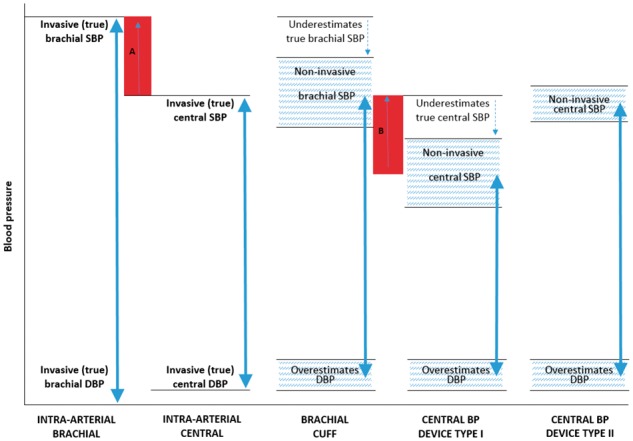
The original Riva-Rocci method to measure blood pressure (BP) using a cuff at the upper arm assumed the pressure obtained by this technique was a good proxy for central aortic BP.1,2 The clinical (prognostic) importance of brachial cuff BP is undeniable for both the assessment of cardiovascular risk associated with elevated BP and the benefits of treatment-induced BP reduction.3 However, it is also generally appreciated that peripheral artery systolic BP (SBP; brachial or radial artery) may be an inaccurate substitute for central SBP.4 This has been reported in human studies using intra-arterial catheterization of peripheral and central arteries.5–8 There may also be a discrepancy between peripheral and central BP responses to vasoactive drugs.9 These findings are corroborated in larger studies using non-invasive central aortic BP methods,10–13 and, while yet to be fully adopted in clinical practice, an independent prognostic value of central BP has been demonstrated.14–16 Altogether, there is a growing interest among clinicians towards improving risk estimates by using devices that provide more accurate measures of central aortic BP than those provided by current brachial cuff BP methods. Many non-invasive devices have been developed that purport to estimate central BP from different peripheral artery sites (e.g. radial, brachial, carotid arteries) using different principles of recording the pressure or surrogate signals (e.g. applanation tonometry, oscillometry, ultrasound, or magnetic resonance imaging) and different calibration methods to derive central BP. Since upper arm cuff-based devices to estimate central BP are more clinically appealing, in recent years several companies have developed such devices using a variety of techniques (e.g. oscillometric sub-diastolic or supra-systolic waveform analysis with generalized transfer functions), which employ a variety of signal processing steps to estimate central BP from peripheral signals.17,18 Yet, with no standardized guidelines,17 the accuracy testing of these new devices (as well as the preceding devices) has not been undertaken in a uniform fashion with comparable protocols, emphasizing the need for guidance in this field.19–22 An international task force was convened to address this situation. To identify issues that need to be addressed and reach consensus relating to methods for assessing and reporting the accuracy of central BP devices. To provide recommendations regarding appropriate protocols to assess and report the evaluation of accuracy (validation) of central BP devices. Initiation of the task force emanated from issues raised at an organized debate relating to central BP at the ARTERY Society Meeting, Maastricht, The Netherlands in October 2014. Task force members were invited to provide feedback on a draft document of intent prior to the first meeting at the ESH Meeting, Milan, Italy, June 2015. At this meeting, terms of reference, principal issues, and topics were refined. A second meeting to discuss outstanding issues was held at the 2015 ARTERY Society meeting, Krakow, Poland, with communication of upgraded documents to members for input, and with disagreements settled by majority consensus. Identified issues and recommendations (a glossary of terms is provided in Table 1): Glossary of terms Glossary of terms (1) Disparity of non-invasive central BP devices as to what is being measured. Most central BP devices claim to produce an estimated central BP relative to cuff brachial BP with brachial SBP usually higher than central SBP. This can be achieved by a variety of techniques including: (a) Brachial forearm or radial applanation tonometry and a peripheral waveform-aorta transfer function23 or the radial waveform second systolic peak.24 (b) Local derivation of carotid BP on the assumption that with appropriate waveform calibration (i.e. mean arterial pressure [MAP] and diastolic BP [DBP]) carotid BP represents central aortic BP. This can be achieved by non-invasive carotid artery tonometry or ultrasound/magnetic resonance imaging of the carotid diameter/area waveform.25–27 (similar techniques are also being applied on aortic distension waveforms).28 However, for practical applications, the radial or brachial artery waveform is more readily recorded where waveforms are registered with more consistent reproducibility and repeatability, and are less prone to noise introduced by incorrect vessel applanation or respiration as can occur with carotid waveforms. (c) Calculated central BP through transfer function and modified calibration of peripheral pressure waveforms.26,29,30 Methods (b) or (c) may produce central SBP estimates higher than brachial cuff SBP (discussed within issue 2). (i) Recommendations: Device manufacturers should clearly state the purported measurement function of their device. While recognizing wide variety in devices, these can be broadly categorized into two types based on their function: Type I—device purports to give
Overview
The claims and statistics of this paper haven’t been checked yet.
Free: it reads the open-access text and checks the first 5 claims that cite a source we can check. Create a free account to check every claim.
Integrity signals
Registry
Cites
Statistics
Figures
Verification
Claims the paper makes
The claims and statistics of this paper haven’t been checked yet.
Free: it reads the open-access text and checks the first 5 claims that cite a source we can check. Create a free account to check every claim.
Claims other papers make about this one
Each is checked against this paper’s own text: does it say what the citing paper says it does?
The source backs part of the claim, not all of it — or backs it for a different population, condition or comparison.
In the citing paper
“at present, a standardized validation protocol has not been established for assessing the accuracy of these devices, and thus their accuracy and clinical usefulness remain questionable37.”
From Blood pressure and its variability: classic and novel measurement techniques (2022) · cites this paper as [37]
Experimental — accuracy not yet measuredThe source backs part of the claim, not all of it — or backs it for a different population, condition or comparison.
In the citing paper
“The figure highlights that divergence from true intra-arterial BP values is greatest for automated BPMDs, and this issue forms a major component of the rationale to develop new BP technology to provide better estimates of BP, especially at the central aortic level [66].”
From Automated 'oscillometric' blood pressure measuring devices: how they work and what they measure (2022) · cites this paper as [66]
Experimental — accuracy not yet measured
Self-check
Percentages, sums and reported differences re-computed from the paper’s own numbers.
The self-check needs the paper’s full text.
Citations
Cites
(2013) · European Heart Journal · doi:10.1093/eurheartj/eht151 · Cited by 13,655
Self-citationMeasuring agreement in method comparison studies
Bland, J. M., & Altman, D. G. (1999) · Statistical Methods in Medical Research · doi:10.1177/096228029900800204 · Cited by 9,619 · cited 2×
“When log transformations do not solve the problem of a relationship between the difference and the mean, regression approaches or non-parametric approaches can be used instead, but with preference for the latter (for details see 72 ).”
MethodMeasuring agreement in method comparison studies
Bland, J. M., & Altman, D. G. (1999) · Statistical Methods in Medical Research · doi:10.1191/096228099673819272 · Cited by 9,619
Mancia, G., Fagard, R., Narkiewicz, K., Redón, J., Zanchetti, A., Böhm, M., Christiaens, T., Cifkova, R., De Backer, G., Dominiczak, A., et al. (2013) · Journal of Hypertension · doi:10.1097/01.hjh.0000431740.32696.cc · Cited by 5,655
Self-citationMedical Instrumentation-Application and Design
Webster, J. G. (1978) · Journal of Clinical Engineering · doi:10.1097/00004669-197807000-00017 · Cited by 1,847
Human blood pressure determination by sphygmomanometry.
Perloff, D., Grim, C., Flack, J., Frohlich, E. D., Hill, M., McDonald, M., & Morgenstern, B. Z. (1993) · Circulation · doi:10.1161/01.cir.88.5.2460 · Cited by 1,591 · cited 1×
“but with greater differences (>10 mmHg lower BP with inspiration) in the presence of cardiac or respiratory abnormalities such as constrictive pericarditis or severe pulmonary disease.(53) Due to limits around the amount of time that can be dedicated to validation studies within the clinical laboratory, it may not be…”
BackgroundVlachopoulos, C., Aznaouridis, K., O'Rourke, M. F., Safar, M. E., Baou, K., & Stefanadis, C. (2010) · European Heart Journal · doi:10.1093/eurheartj/ehq024 · Cited by 1,363 · cited 1×
“14,74 For unfamiliar readers, an accompanying editorial addresses the issues.”
BackgroundSelf-citationNormal Vascular Aging: Differential Effects on Wave Reflection and Aortic Pulse Wave Velocity
McEniery, C. M., Yasmin, Hall, I. R., Qasem, A., Wilkinson, I. B., & Cockcroft, J. R. (2005) · Journal of the American College of Cardiology · doi:10.1016/j.jacc.2005.07.037 · Cited by 1,359
Self-citationChen, C.-H., Nevo, E., Fetics, B., Pak, P. H., Yin, F. C. P., Maughan, W. L., & Kass, D. A. (1997) · Circulation · doi:10.1161/01.cir.95.7.1827 · Cited by 1,307 · cited 9×
“Many non-invasive devices have been developed that purport to estimate central BP from different peripheral artery sites (e.g. radial, brachial, carotid arteries) using different principles of recording the pressure or surrogate signals (e.g. applanation tonometry, oscillome-try, ultrasound, or magnetic resonance imag…”
BackgroundInfluentialSelf-citationThe influence of heart rate on augmentation index and central arterial pressure in humans
Wilkinson, I. B., MacCallum, H., Flint, L., Cockcroft, J. R., Newby, D. E., & Webb, D. J. (2000) · The Journal of Physiology · doi:10.1111/j.1469-7793.2000.t01-1-00263.x · Cited by 1,091 · cited 1×
“), because heart rate influences aortic stiffness and SBP amplification.(70,71) Exact criteria for BP and heart rate ranges needs to be resolved.”
BackgroundSelf-citation
Research works printed but not linked: 1
- Review of the Australian Code for the Responsible Conduct of Research (2007). National Health and Medical Research Council, the Australian Research Council and Universities Australia; 2015.
Cited by
Items 101–200 of 231
Scolletta, S., Herpain, A., Romano, S. M., Taccone, F. S., Donadello, K., Lubicz, B., Franchi, F., Kaefer, K. M., Polati, E., Vincent, J., et al. (2019) · BMC Anesthesiology · doi:10.1186/s12871-019-0844-1 · Cited by 10
Willinger, L., Brudy, L., Oberhoffer, R., Ewert, P., & Müller, J. (2021) · Journal of Clinical Medicine · doi:10.3390/jcm10153266 · Cited by 9
Argyris, A., Mouziouras, D., Samara, S., Zhang, Y., Georgakis, M. K., Blacher, J., Safar, M. E., Sfikakis, P. P., & Protogerou, A. D. (2022) · Hypertension · doi:10.1161/hypertensionaha.121.17906 · Cited by 8
Self-citationAlsomali, A., Lip, G. Y. H., Akhtar, R., Field, M., Grillo, A., Tidbury, N., Leo, D. G., & Proietti, R. (2024) · Current Problems in Cardiology · doi:10.1016/j.cpcardiol.2024.102874 · Cited by 8
Bia, D., Zócalo, Y., Sanchez, R. A., Torrado, J., Lev, G. A., Méndiz, O., Pessana, F., Ramirez, A. J., & Cabrera‐Fischer, E. I. (2023) · Journal of Cardiovascular Development and Disease · doi:10.3390/jcdd10020045 · Cited by 12
“state that although micromanometer-tipped catheters are the preferred instruments to use, meticulously managed fluid column catheters may also be acceptable to accurately measure intra-arterial BP [22].”
BackgroundClimie, R. E., Schultz, M. G., Fell, J. W., Romero, L., Otáhal, P., & Sharman, J. E. (2018) · Journal of Human Hypertension · doi:10.1038/s41371-018-0124-4 · Cited by 8
Self-citationSharman, J. E., Avolio, A. P., Baulmann, J., Bénétos, A., Blacher, J., Blizzard, C. L., Boutouyrie, P., Chen, C., Chowienczyk, P., Cockcroft, J. R., et al. (2017) · Artery Research · doi:10.1016/j.artres.2017.11.001 · Cited by 8
“The full report of the task force was recently published 23 and in this abridged version, the majority of information is presented in summary format within Tables.”
InfluentialSelf-citationCardoso, C. R. L., Leite, N. C., & Salles, G. F. (2023) · Journal of Hypertension · doi:10.1097/hjh.0000000000003387 · Cited by 8
“In this respect, a type 2 device, which measures more accurately absolute central BPs [21], may result in weaker correlations between central and brachial BPs [25], and hence may provide better prognostic value than a type 1 device [26].”
BackgroundMethodResultInfluentialComparing Office, Central, Home and Ambulatory Blood Pressure in Predicting Left Ventricular Mass
Aparicio, L. S., Barochiner, J., Peuchot, V. A., Giunta, D. H., Martínez, R., Morales, M. S., Cuffaro, P. E., & Waisman, G. D. (2018) · Hipertensión y Riesgo Vascular · doi:10.1016/j.hipert.2018.09.001 · Cited by 10
Armstrong, M. K., Schultz, M. G., Picone, D. S., Black, J. A., Dwyer, N., Roberts‐Thomson, P., & Sharman, J. E. (2020) · American Journal of Hypertension · doi:10.1093/ajh/hpaa013 · Cited by 8
Self-citationEvidence on Blood Pressure Measurement Methodology and Clinical Implementation
Stergiou, G. S., Kollias, A., & Protogerou, A. D. (2017) · Journal of the American College of Cardiology · doi:10.1016/j.jacc.2017.06.026 · Cited by 7
Self-citationGiudici, A., Palombo, C., Morizzo, C., Kozàkovà, M., Cruickshank, J. K., Wilkinson, I. B., & Khir, A. W. (2021) · Physiological Reports · doi:10.14814/phy2.15040 · Cited by 7
“Therefore, using brachial pressure to estimate pressure in other regions of the arterial tree will generally be poor (Sharman et al., 2017).”
MethodSelf-citationHaferanke, J., Baumgartner, L., Willinger, L., Schulz, T., Mühlbauer, F., Engl, T., Weberruß, H., Hofmann, H., Wasserfurth, P., Köhler, K., et al. (2024) · CJC Open · doi:10.1016/j.cjco.2024.09.005 · Cited by 7
Díaz, A., & Bia, D. (2021) · High Blood Pressure & Cardiovascular Prevention · doi:10.1007/s40292-021-00440-2 · Cited by 9
Value of measuring central blood pressure in clinical practice
Sharman, J. E. (2023) · Kidney International · doi:10.1016/j.kint.2022.09.032 · Cited by 8
Self-citationNon-invasive central aortic pressure measurement: what limits its application in clinical practice?
Díaz, A., Zócalo, Y., Salazar, F., & Bia, D. (2023) · Frontiers in Cardiovascular Medicine · doi:10.3389/fcvm.2023.1159433 · Cited by 7
Lindroos, A. S., Langén, V. L., Kantola, I. M., Salomaa, V. V., Juhanoja, E. P., Sivén, S. S. E., Jousilahti, P., Jula, A., & Niiranen, T. (2018) · Journal of Hypertension · doi:10.1097/hjh.0000000000001688 · Cited by 7
Impact of hemodialysis on cardiovascular system assessed by pulse wave analysis
Dębowska, M., Poleszczuk, J., Dąbrowski, W., Wójcik-Załuska, A., Załuska, W., & Waniewski, J. (2018) · PLoS ONE · doi:10.1371/journal.pone.0206446 · Cited by 8
Häcker, A., Reiner, B., Oberhoffer, R., Hager, A., Ewert, P., & Müller, J. (2019) · Archives of Disease in Childhood · doi:10.1136/archdischild-2018-316444 · Cited by 7
A High Sensitivity of Vital Signs Detector using Fiber Optic-based Fabry-Perot Interferometer
Pullteap, S., & Samartkit, P. (2020) · ECTI Transactions on Electrical Engineering Electronics and Communications · doi:10.37936/ecti-eec.2020182.218271 · Cited by 7
Landry, C., Dubrofsky, L., Pasricha, S. V., Ringrose, J., Ruzicka, M., Tran, K. C., Tsuyuki, R. T., Hiremath, S. S., & Goupil, R. (2024) · American Journal of Hypertension · doi:10.1093/ajh/hpae154 · Cited by 6
Barroso, W. K. S., Gonçalves, C. F., Berigó, J. A. C., Melo, M. A., Arantes, A. C., Lelis, E. D. S., Sousa, W. D. M., Rezende, J. M., Jardim, T. S. V., Jardim, P. C. B. V., et al. (2020) · International Journal of Cardiovascular Sciences · doi:10.36660/ijcs.20190020 · Cited by 6
Zhang, X., Gou, Z., Wang, T., & Liang, F. (2020) · PubMed Central · doi:10.7507/1001-5515.202008076 · Cited by 7
Zócalo, Y., Bia, D., Sanchez, R. A., Lev, G. A., Méndiz, O., Ramirez, A. J., & Cabrera‐Fischer, E. I. (2023) · Frontiers in Cardiovascular Medicine · doi:10.3389/fcvm.2023.1256221 · Cited by 7
Pessana, F., Lev, G. A., Mirada, M., Ramirez, A. J., Méndiz, O., & Fischer, E. I. C. (2019) · Global Medical Engineering Physics Exchanges/Pan American Health Care Exchanges (GMEPE/PAHCE) · doi:10.1109/gmepe-pahce.2019.8717323 · Cited by 6
Improved estimation of cardiac power output by including pulsatile power
Jozwiak, M., Teboul, J., Millasseau, S., Petitjean, M., Francs, C. C. D., Roisman, G. L., & Chemla, D. (2020) · British Journal of Anaesthesia · doi:10.1016/j.bja.2020.05.010 · Cited by 6
Self-citationAthanasopoulou, E., Karachalias, F., Yofoglu, L. K., Kanatas, P., Danninger, K., Weber, T., Blacher, J., Papaioannou, T. G., Manios, E. D., Sfikakis, P. P., et al. (2024) · Hypertension Research · doi:10.1038/s41440-024-02061-3 · Cited by 5
Self-citationNyvad, J. T., Christensen, K. L., Andersen, G., Reinhard, M., Mæng, M., Nielsen, S., Thomsen, M. B., Jensen, J. M., Nørgaard, B. L., & Buus, N. H. (2024) · American Journal of Hypertension · doi:10.1093/ajh/hpae029 · Cited by 5
Cuff Under Pressure for Greater Accuracy
Picone, D. S., Schultz, M. G., Hughes, A. D., & Sharman, J. E. (2020) · Current Hypertension Reports · doi:10.1007/s11906-020-01103-8 · Cited by 7
Self-citationChi, C., Lu, Y., Zhou, Y., Li, J., Xu, Y., & Zhang, Y. (2022) · Journal of Personalized Medicine · doi:10.3390/jpm12091482 · Cited by 5
“There are currently three main strategies for noninvasive central BP measurement [7]: (1) measuring the radial waveform and estimating aortic BP with a transfer function (or the second systolic peak), which is represented by the SphygmoCor device; (2) measuring the carotid waveform and estimating the carotid BP, which…”
MethodChemla, D., Agnoletti, D., Jozwiak, M., Zhang, Y., Protogerou, A. D., Millasseau, S., & Blacher, J. (2023) · Journal of Personalized Medicine · doi:10.3390/jpm13081244 · Cited by 5
“It is important to note that the high accuracy and good precision of DCBP in that study were likely dependent upon the use of intra-arterial blood pressure measurements, which may not reflect real life conditions [11,24,25].”
BackgroundMethodSelf-citationNgene, N. C., & Moodley, J. (2018) · Pregnancy Hypertension · doi:10.1016/j.preghy.2018.02.013 · Cited by 5
Regular physical activity: a major component of isolated systolic hypertension in the young
Palatini, P. (2022) · Minerva Medica · doi:10.23736/s0026-4806.21.07624-2 · Cited by 7
Hungerford, S. L., Adji, A. I., Bart, N., Lin, L., Song, N., Jabbour, A., O’Rourke, M. F., Hayward, C., & Muller, D. W. (2021) · International Journal of Cardiology Hypertension · doi:10.1016/j.ijchy.2021.100087 · Cited by 6
Xiong, J., Xu, M., Hui, K., Zhou, J., Zhang, J., Duan, M., & Zhang, L. (2023) · Journal of International Medical Research · doi:10.1177/03000605231188285 · Cited by 4
Stäuber, A., Piper, C., Köster, M., Dörr, M., Richter, S. E., Ohlow, M., Eckert, S., & Baulmann, J. (2023) · BMJ Open Diabetes Research & Care · doi:10.1136/bmjdrc-2022-003119 · Cited by 4
Self-citationPicone, D. S., Côté, N., Corney, R. A., Sharman, J. E., Agharazii, M., & Goupil, R. (2024) · Journal of Hypertension · doi:10.1097/hjh.0000000000003770 · Cited by 4
Self-citationChemla, D., Jozwiak, M., Millasseau, S., & Attal, P. D. (2025) · Journal of the American Heart Association · doi:10.1161/jaha.124.037064 · Cited by 5
Self-citationSystolic BP Amplification: Systematic Review and Individual Participant Meta-Analysis
Picone, D. S., Bui, T. V., Schultz, M. G., Otáhal, P., Hughes, A. D., Black, J. A., Westerhof, B. E., Chen, C.-H., Liang, F., Pucci, G., et al. (2025) · Hypertension · doi:10.1161/hypertensionaha.124.24483 · Cited by 4
Self-citationCuffaro, P. E., Morales, M. S., Barochiner, J., Rada, M. A., Alfie, J., Aparicio, L. S., Galarza, C. R., Micali, R. G., Marín, M. J., & Waisman, G. D. (2017) · Blood Pressure Monitoring · doi:10.1097/mbp.0000000000000298 · Cited by 5
Zuo, J., Chu, S., Tan, I., Butlin, M., Zhao, J., & Avolio, A. P. (2017) · Pulse · doi:10.1159/000484441 · Cited by 4
Self-citationImpacts of sodium-glucose co-transporter type 2 inhibitors on central blood pressure
Takenaka, T., Ohno, Y., & Suzuki, H. (2017) · Diabetes and Vascular Disease Research · doi:10.1177/1479164117742317 · Cited by 4
Testing a Patient-Specific In-Silico Model to Noninvasively Estimate Central Blood Pressure
Gallo, C., Olbers, J., Ridolfi, L., Scarsoglio, S., & Witt, N. (2021) · Cardiovascular Engineering and Technology · doi:10.1007/s13239-020-00512-9 · Cited by 6
Ramkumar, S., Yang, H., Nolan, M. T., Negishi, T., Sharman, J. E., Marwick, T. H., & Negishi, K. (2021) · International journal of cardiac imaging · doi:10.1007/s10554-021-02444-4 · Cited by 4
Self-citationBia, D., Salazar, F., Cinca, L., Gutiérrez, M., Facta, A. D., Zócalo, Y., & Díaz, A. (2023) · Frontiers in Cardiovascular Medicine · doi:10.3389/fcvm.2023.1207069 · Cited by 4
“, Blant-Altman test) between invasive and non-invasive BP measurements (17).”
BackgroundInfluentialAccuracy of central blood pressure by Mobil-O-Graph in children and adolescents
Mynard, J. P., Sharman, J. E., Smolich, J. J., Cheung, M. M. H., & Avolio, A. P. (2020) · Journal of Hypertension · doi:10.1097/hjh.0000000000002466 · Cited by 4
“4 mmHg, leading to the conclusion that Mobil-OGraph fails as a type I device [3], such analysis was not provided in [1] as a reference brachial blood pressure was not available.”
BackgroundMethodSelf-citationMeasurements of arterial pressure and flow in vivo
Sharman, J. E., Segers, P., & Chirinos, J. A. (2022) · Textbook of Arterial Stiffness and Pulsatile Hemodynamics in Health and Disease · doi:10.1016/b978-0-323-91391-1.00002-9 · Cited by 3
Self-citationMoittié, S., Dobbs, P., Redrobe, S. P., Liptovszky, M., & White, K. (2021) · Veterinary Anaesthesia and Analgesia · doi:10.1016/j.vaa.2021.01.010 · Cited by 5
Scalia, A., Ghafari, C., Navarre, W., Delmotte, P., Phillips, R. A., & CARLIER, S. G. (2023) · Biomedicines · doi:10.3390/biomedicines11041235 · Cited by 4
“7 mmHg, exceeding both recommended mean values ≤ 5 mmHg and SD ≤ 8 mmHg [31].”
BackgroundMethodInfluentialGreiner, A.-S., von der Born, J., Kohlmeier, L., Grabitz, C., Bauer, E., Memaran, N., Sugianto, R. I., Kanzelmeyer, N. K., Froede, K., Schmidt, B. M. W., et al. (2023) · Pediatric Nephrology · doi:10.1007/s00467-022-05857-y · Cited by 3
“C2 is based on the mean arterial BP and the peripheral diastolic BP (DPB) and is considered to provide better accuracy for cBP [29, 30], but offers no reference data.”
BackgroundZimmermann, G., Joly, L., Schoepfer, P., Doyen, M., Roch, V., Grignon, R., Salvi, P., Marie, P., Bénétos, A., & Verger, A. (2024) · Journal of Hypertension · doi:10.1097/hjh.0000000000003886 · Cited by 3
Sharman, J. E., Takeuchi, F., Protogerou, A. D., Weber, T., Wassertheurer, S., & Marwick, T. H. (2025) · Journal of Hypertension · doi:10.1097/hjh.0000000000003969 · Cited by 3
Self-citationAccurate Measurement of Blood Pressure
Picone, D. S. (2020) · Artery Research · doi:10.2991/artres.k.200624.001 · Cited by 3
“This final point has led to devices that estimate central BP being described as either ‘type I’ or ‘type II’ [31].”
BackgroundMethodPradenas, L. (2020) · Biomedical Journal of Scientific & Technical Research · doi:10.26717/bjstr.2020.30.004883 · Cited by 3
“22978 On the other hand, non-invasive methods for measuring blood pressure include non-continuous and continuous methods [2,5,8-12].”
MethodEnhancing central blood pressure accuracy through statistical modeling: A proof-of-concept study
Desbiens, L., Goulamhoussen, N., Fortier, C., Bernier-Jean, A., Agharazii, M., & Goupil, R. (2022) · Frontiers in Cardiovascular Medicine · doi:10.3389/fcvm.2022.1048507 · Cited by 3
“Our study was conducted following the ARTERY Society task force consensus statement on protocol standardization (22) and was approved by the institutional ethics review board of the CIUSSS du Nord-de-l’île-de-Montréal.”
MethodInfluentialGoupil, R., Nadeau‐Fredette, A., Prasad, B., Hundemer, G. L., Suri, R. S., Beaubien‐Souligny, W., & Agharazii, M. (2023) · Canadian Journal of Kidney Health and Disease · doi:10.1177/20543581231172407 · Cited by 3
Moinuddin, A., Stone, K. J., Turner, L. A., Paterson, C. A., Hall, N., Daykin, A. R., Lucas, S. J. E., Faulkner, J., & Fryer, S. M. (2024) · European Journal of Applied Physiology · doi:10.1007/s00421-024-05502-6 · Cited by 3
“The Artery Task Force suggest central blood pressure may be influenced by respiration by 2–4 mmHg (Sharman et al. 2017).”
Clarity in validation protocols for central blood pressure devices
Sharman, J. E., Mynard, J. P., Armstrong, M. K., Picone, D. S., & Schultz, M. G. (2020) · Journal of Hypertension · doi:10.1097/hjh.0000000000002376 · Cited by 3
Self-citationPucci, G., Curcio, R., D’Abbondanza, M., & Vaudo, G. (2022) · Journal of Human Hypertension · doi:10.1038/s41371-022-00674-0 · Cited by 2
“However, evidence about which cut-off defines “normal” cSBP in clinical practice is still lacking, as well as standardized protocols aiming at harmonizing criteria and procedures to appropriately assess the accuracy of non-invasive devices for cBP estimation are eagerly awaited [4].”
BackgroundNovel hypertension phenotypes based on cross-classification of 24-h brachial and aortic SBP
Athanasopoulou, E., Weber, T., Sharman, J. E., Wassertheurer, S., Agharazii, M., Argyris, A., Bahous, S. A., Banegas, J., Binder, R. K., Blacher, J., et al. (2026) · Journal of Hypertension · doi:10.1097/hjh.0000000000004376 · Cited by 2
Self-citationDanninger, K., Athanasopoulou, E., Agharazii, M., Argyris, A., Bahous, S. A., Banegas, J. R., Binder, R. K., Blacher, J., Brandão, A. A., Brandt, M. C., et al. (2026) · Journal of the American Heart Association · doi:10.1161/jaha.125.048665 · Cited by 2
“…and detailed in an Association for Research into Arterial Structure and Physiology position paper on the validation of devices to assess cSBP. 21 Briefly, whereas noninvasive brachial cuff-based measurement is the gold standard for BP measurement in clinical routine due to the over-whelming…”
InfluentialSelf-citationBentivegna, E., Luciani, M., & Martelletti, P. (2020) · SN Comprehensive Clinical Medicine · doi:10.1007/s42399-020-00347-4 · Cited by 2
“Recently, the ARTERY Society task force published standardized guidelines to conform the accuracy testing of CBP devices [31].”
MethodFeitosa, A. D. M., de Paiva, A. M. G., Gomes, M. A. M., Brandão, A. A., Sposito, A. C., & Nadruz, W. (2020) · Journal of Clinical Hypertension · doi:10.1111/jch.14012 · Cited by 2
Carlini, N. A., Harber, M. P., & Fleenor, B. S. (2021) · Hypertension Research · doi:10.1038/s41440-021-00637-x · Cited by 2
“Guidelines from the 2017 ARTERY society task force consensus statement [9] provides an overview of the validation criteria (minimum acceptable error of ≤5 ± 8 mmHg) of noninvasive central pressure devices and standardization protocols.”
Stäuber, A., Dörr, M., Piper, C., Köster, M., Lapp, H., Richter, S. E., Ohlow, M., Eckert, S., Hoppe, M. W., Barroso, M. T. C., et al. (2023) · PLoS ONE · doi:10.1371/journal.pone.0294075 · Cited by 2
Self-citationFalcón, D. G., Gómez‐Sánchez, L., Gómez‐Sánchez, M., Rodríguez‐Sánchez, E., Tamayo‐Morales, O., Lugones‐Sánchez, C., González‐Sánchez, S., García‐Ortiz, L., Díaz, M., Gómez-Marcos, M. Á., et al. (2024) · American Journal of Hypertension · doi:10.1093/ajh/hpae121 · Cited by 2
Pucci, G., D’ABBONDANZA, M., CURCIO, R., ALCIDI, R., CAMPANELLA, T., CHIATTI, L., Arrivi, A., BISOGNI, V., Vito, V. E. C. A., & Vaudo, G. (2022) · Minerva Medica · doi:10.23736/s0026-4806.22.07940-x · Cited by 2
Age issue in the pressure equivalence method
Zanoli, L., & Boutouyrie, P. (2021) · Journal of Hypertension · doi:10.1097/hjh.0000000000002789 · Cited by 2
Self-citationExcise taxes on sugar-sweetened beverages in Latin America and the Caribbean
Sandoval, R. C., Roche, M., Belausteguigoitia, I., Alvarado, M., Galicia, L., Gomes, F. D. S., & Paraje, G. R. (2020) · Revista Panamericana de Salud Pública · doi:10.26633/rpsp.2020.21 · Cited by 9
“nes de las asociaciones profesionales (56), no existe ninguna”
BackgroundLüscher, T. F. (2017) · European Heart Journal · doi:10.1093/eurheartj/ehx647 · Cited by 1
Goździk, A., Jasic-Szpak, E., Michałowicz, J., Przewłocka‐Kosmala, M., Sharman, J. E., & Kosmala, W. (2021) · Advances in Clinical and Experimental Medicine · doi:10.17219/acem/141863 · Cited by 1
Self-citationWeber, T., & Segers, P. (2024) · Elsevier eBooks · doi:10.1016/b978-0-443-15512-3.00031-3 · Cited by 1
Self-citationHu, Y., Yang, H., Chang, G., Bai, Y., Avolio, A. P., Wang, Q., Gao, S., & Zuo, J. (2025) · Journal of Clinical Hypertension · doi:10.1111/jch.14956 · Cited by 1
Self-citationMcEvoy, J. W., McCarthy, C. P., Brouwers, S., & Others, A. (2025) · HYPERTENSION · doi:10.22141/2224-1485.17.4.2024.372 · Cited by 2
Bui, T. V., Picone, D. S., Kosmala, W., Kosowski, M., Zachwyc, J., Pucci, G., Arrivi, A., Curcio, R., Schultz, M. G., Black, J. A., et al. (2025) · Blood Pressure Monitoring · doi:10.1097/mbp.0000000000000754 · Cited by 1
Self-citationCentral Blood Pressure and Augmentation Index in Older Adults With Intellectual Disabilities
Hilgenkamp, T. I. M., Oppewal, A., Böhmer, M. N., Paul, A., Ryan, C. A., Burke, É., McCarron, M., McCallion, P., Festen, D. A. M., & O’Brien, F. (2025) · Journal of Intellectual Disability Research · doi:10.1111/jir.70002 · Cited by 1
“Recent reports have shown that central (or aortic) blood pressure measurements are more strongly related to cardiovascular outcomes than the traditional brachial blood pressure measurement (Roman et al. 2007; Sharman et al. 2017; Cheng et al. 2022).”
Hao, K., Williams, C. A., BARKER, A. R., Wadey, C. A., Müller, J., Oberhoffer, R. M., & Willinger, L. (2026) · Journal of Clinical Medicine · doi:10.3390/jcm15082863 · Cited by 1
“Central BP was indirectly estimated with the ARCSolver Algorithm (Austrian Institute of Technology, Vienna, Austria) based on the recorded brachial pulse waves [18].”
Accurate blood pressure measurement
Sherwood, J. (1979) · Preventive Medicine · doi:10.1016/0091-7435(79)90260-3 · Cited by 1
Papaioannou, T. G., Tsioufis, C. P., Karamanou, M., & Tousoulis, D. M. (2017) · Journal of the American Society of Hypertension · doi:10.1016/j.jash.2017.02.004 · Cited by 1
Self-citationClinical usefulness of noninvasively estimated central blood pressure
Chen, Y., & Wang, J. (2018) · Journal of Hypertension · doi:10.1097/hjh.0000000000001744 · Cited by 1
Self-citationTomiyama, H., Nakano, H., Takahashi, T., Fujii, M., Shiina, K., Matsumoto, C., Chikamori, T., & Yamashina, A. (2021) · ESC Heart Failure · doi:10.1002/ehf2.13540 · Cited by 1
Self-citationIsolierte systolische Hypertonie beim jungen Menschen
van der Giet, M. (2022) · CardioVasc · doi:10.1007/s15027-021-3622-1 · Cited by 1
Arterial stiffness for cardiovascular risk stratification in clinical practice
Terentes-Printzios, D. G., & Vlachopoulos, C. V. (2022) · Elsevier eBooks · doi:10.1016/b978-0-323-91391-1.00033-9 · Cited by 1
Self-citationHelleputte, S., Spronck, B., Sharman, J. E., Bortel, L. M. V., Segers, P., Calders, P., Lapauw, B., & Backer, T. L. M. D. (2022) · Journal of Hypertension · doi:10.1097/hjh.0000000000003308 · Cited by 1
“However, difficulties exist to accurately estimate MAP noninvasively, as most commercial devices do not provide MAP derived from the peak oscillometric waveform, or the accuracy of the internal algorithms of these automated oscillometric devices is not reported [12,20].”
BackgroundMethodInfluentialSelf-citationKim, G., & Kim, M. (2023) · Journal of Hypertension · doi:10.1097/01.hjh.0000939092.84832.4e · Cited by 1
Cruickshank, J. K. (2024) · Journal of Hypertension · doi:10.1097/hjh.0000000000003701 · Cited by 1
Self-citationChemla, D., Agnoletti, D., Attal, P. D., Millasseau, S., Blacher, J., & Jozwiak, M. (2024) · American Journal of Hypertension · doi:10.1093/ajh/hpae039 · Cited by 1
Self-citationGlenning, J. P., Sandhu, K., Harrington, H. A., Eastaugh, L., Lane, G. K., Smolich, J. J., & Mynard, J. P. (2024) · Journal of Human Hypertension · doi:10.1038/s41371-024-00956-9 · Cited by 1
Reproducibility of measurement of skin melanin, total hemoglobin, and oxygen saturation
Papaioannou, T. G., Karamanou, M., & Tousoulis, D. M. (2017) · Skin Research and Technology · doi:10.1111/srt.12408 · Cited by 1
Self-citationSchutte, A. E., & Laurent, S. (2017) · Hypertension · doi:10.1161/hypertensionaha.117.10024 · Cited by 1
“Calibration is indeed a major issue, as underlined by the authors and by a recent consensus statement.(9) Unfortunately, the study was limited by a relatively small sample size (n=289), despite including patients from 7 European centers.”
ResultSelf-citationAyala, I. S. (2000) · Revista multidisciplinar de gerontología · Cited by 1
Protogerou, A. D., Athanasopoulou, E., & Argyris, A. (2024) · Hypertension Research · doi:10.1038/s41440-024-01729-0 · Cited by 1
“Indeed, as just recently shown in a randomized control trial, individuals with IaoSH can safely bene fi t from more intensive BP lowering drug treatment with spironolactone [14], suggesting that a potential valid process for more aggressive treatment.”
Self-citationHigh blood pressure: new frontiers of an old risk factor.
Lüscher, T. F. (2017) · PubMed · doi:10.1093/eurheartj/ehx544
Obituary (Life-time achievement award Artery17) Giuseppe Schillaci (27/09/1961, 21/12/2016)
Pucci, G., Cruickshank, K. J., Ghiadoni, L., & Cockcroft, J. R. (2017) · Artery Research · doi:10.1016/j.artres.2017.10.198
Self-citationDoes the Treatment of Obstructive Sleep Apnea and Obesity Improve Pulsatile Hemodynamics?
Weber, T., & Wassertheurer, S. (2017) · Hypertension · doi:10.1161/hypertensionaha.117.09528
Self-citationCentral Blood Pressure and Prehypertension
Vlachopoulos, C. V., Terentes-Printzios, D. G., & Tousoulis, D. M. (2018) · Updates in hypertension and cardiovascular protection · doi:10.1007/978-3-319-75310-2_9
Self-citation(2024) · Elsevier eBooks · doi:10.1016/b978-0-443-15512-3.00050-7
Bendary, A., Magdy, M., Aal, S. A., & Rashid, H. (2019) · Arterial Hypertension · doi:10.5603/ah.a2019.0019
“They were also devoid of any medications that could induce an acute vasoactive response as per the ARTERY guidelines (Association for Research into Arterial Structure and Physiology) [12].”
Cai, T. Y., Qasem, A., Butlin, M., Avolio, A. P., Ayer, J. G., Celermajer, D. S., & Skilton, M. R. (2020) · Artery Research · doi:10.2991/artres.k.201003.001
“Firstly, regarding the absolute accuracy of the iTF method for estimating central hemodynamic parameters, we first note that at both 8 and 14 years of age, the iTF estimates cSBP within the validation criteria proposed by the ARTERY society of 5 ± 8 mmHg as adapted from the AAMI standard [21,27].”
MethodSelf-citationA multiscale modelling of the cardiovascular fluid dynamics for clinical and space applications
Gallo, C. (2021) · PORTO@Iris
Metadata
- Authors
- Sharman, J. E., Avolio, A. P., Baulmann, J., Benetos, A., Blacher, J., Blizzard, C. L., Boutouyrie, P., Chen, C.-H., Chowienczyk, P., Cockcroft, J. R., Cruickshank, J. K., Ferreira, I., Ghiadoni, L., Hughes, A., Jankowski, P., Laurent, S., McDonnell, B. J., McEniery, C., Millasseau, S. C., Papaioannou, T. G., Parati, G., Park, J. B., Protogerou, A. D., Roman, M. J., Schillaci, G., Segers, P., Stergiou, G. S., Tomiyama, H., Townsend, R. R., Van Bortel, L. M., Wang, J., Wassertheurer, S., Weber, T., Wilkinson, I. B., & Vlachopoulos, C.
- Affiliations
- University of Tasmania (AU)
- Macquarie University (AU)
- University Hospital Schleswig-Holstein (DE)
- Département de Médecine Gériatrique, CHRU de Nancy and INSERM U1116, Université de Lorraine, Vandoeuvre-les-Nancy, France
- Assistance Publique – Hôpitaux de Paris (FR)
- Inserm (FR)
- National Yang Ming University (TW)
- King's College London (GB)
- Cardiff Metropolitan University (GB)
- The University of Queensland (AU)
- University of Pisa (IT)
- University College London (GB)
- Jagiellonian University (PL)
- Departments of Pharmacology, European Georges Pompidou Hospital, Assistance Publique Hôpitaux de Paris, Inserm UMR 970, University Paris Descartes, Paris, France
- University of Cambridge (GB)
- Pulse Wave Consulting, Saint Leu la Foret, France
- Biomedical Engineering Unit, First Department of Cardiology, Hippokration Hospital, Medical School, National and Kapodistrian University of Athens, Athens, Greece
- IRCCS Istituto Auxologico Italiano (IT)
- Dankook University (KR)
- National and Kapodistrian University of Athens (GR)
- Weill Cornell Medicine (US)
- University of Perugia (IT)
- Ghent University (BE)
- Tokyo Medical University (JP)
- University of Pennsylvania (US)
- Heymans Institute of Pharmacology, Ghent University, Ghent, Belgium
- The Shanghai Institute of Hypertension, Ruijin Hospital, Shanghai Jiaotong University School of Medicine, Shanghai, China
- AIT Austrian Institute of Technology GmbH (AT)
- Klinikum Wels-Grieskirchen (AT)
- Corresponding author
- Sharman, James E.
- ORCID
- Sharman, James E.
- Avolio, Alberto P.
- Baulmann, Johannes
- Blacher, Jacques
- Blizzard, C. Leigh
- Boutouyrie, Pierre
- Chowienczyk, Phil
- Cruickshank, J. Kennedy
- Ferreira, Isabel
- Ghiadoni, Lorenzo
- Hughes, Alun
- Jankowski, Piotr
- McDonnell, Barry J.
- McEniery, Carmel
- Parati, Gianfranco
- Park, Jeong Bae
- Protogerou, Athanase D.
- Roman, Mary J.
- Segers, Patrick
- Stergiou, George S.
- Tomiyama, Hirofumi
- Townsend, Raymond R.
- Wassertheurer, Siegfried
- Weber, Thomas
- Wilkinson, Ian B.
- Vlachopoulos, Charalambos
- Venue
- European Heart Journal
- Publisher
- Oxford University Press (OUP)
- Published
- 2017-01-30
- Volume
- 38
- Issue
- 37
- Pages
- 2805-2812
- ISSN
- 0195-668X (ISSN-L)
- 1522-9645
- PMC
- PMC5837446
- OpenAlex
- W2585667310
- Semantic Scholar
- 7659f24f87e5b1eb398db9ee74333cf1055c71d0
- Cited by
- 231
- References
- 77
- Citations by year
- 2026: 10 · 2025: 13 · 2024: 25 · 2023: 26 · 2022: 27 · 2021: 27 · 2020: 35 · 2019: 24 · 2018: 23 · 2017: 19
- FWCI
- 18.12
- Type
- journal article
- Language
- en
- Open access
- hybrid
- doi.org
- Licence
- cc-by-nc
- Locations
- European Heart Journal (publishedVersion, cc-by-nc)
- PubMed Central (publishedVersion, cc-by-nc)
- PubMed (publishedVersion)
- UTAS Research Repository (acceptedVersion)
- eCite Digital Repository (University of Tasmania) (submittedVersion, cc-by-nc)
- Research Online (University of Wollongong) (submittedVersion)
- Homo Politicus (Academy of Humanities and Economics in Lodz) (submittedVersion, cc-by-nc-nd)
- Jagiellonian University Repository (Jagiellonian University) (submittedVersion, cc-by-nc-nd)
- Ghent University Academic Bibliography (Ghent University) (submittedVersion)
- CINECA IRIS Institutial research information system (University of Pisa) (submittedVersion)
- BOA (University of Milano-Bicocca) (submittedVersion)
- UCL Discovery (University College London) (submittedVersion)
- Figshare (submittedVersion, cc-by)
- Figshare (submittedVersion)
- Research Portal (King's College London) (submittedVersion, cc-by-nc)
- Cardiff Metropolitan Research Repository (Cardiff Metropolitan University) (submittedVersion, cc-by)
- Apollo (University of Cambridge) (submittedVersion, cc-by-nc)
- Apollo
- Funders
- National Institute for Health and Care Research (NF-SI-0515-10093)
- British Heart Foundation (FS/12/8/29377, SP/14/8/31352)
- High Blood Pressure Research Council of Australia
- Servier
- Menzies Institute for Medical Research
- Institut Servier
- Topics
- Health Sciences › Medicine › Cardiology and Cardiovascular Medicine › Cardiovascular Health and Disease Prevention
- Health Sciences › Medicine › Cardiology and Cardiovascular Medicine › Blood Pressure and Hypertension Studies
- Physical Sciences › Engineering › Biomedical Engineering › Non-Invasive Vital Sign Monitoring
- Keywords
- central blood pressure, non-invasive blood pressure measurement, device validation, applanation tonometry, generalized transfer function, cardiovascular risk assessment, protocol standardization
- MeSH terms
- Blood Pressure, Blood Pressure Determination, Cardiology, Congresses as Topic, Humans, Hypertension, Netherlands, Reference Standards, Societies, Medical, Consensus
About these checks
Registry, retraction, Cites and statistics results are computed, not judged, with one exception: a printed reference that no index lists is read once by a model before it counts as a citation error. Claims are extracted by a model and kept only when their quote appears verbatim in the text; each cited source is then checked, with a model’s help, for whether it says what the claim relies on. Those verdicts can be wrong — read the claim’s quote and the cited source before relying on one.
Statistics and arithmetic are recomputed, not judged.
Confidence bands are shown only for fields calibrated on our annotated test set. None is calibrated yet, so no band is shown.
What counts as a claim ›How we measure confidence ›How we check this ›
Are you an author, or do you see a problem with this page? Request a review
Data sources
Bibliographic data: Semantic Scholar, OpenAlex, Crossref.
Contains information from the Semantic Scholar Academic Graph Datasets, made available under the ODC Attribution License (ODC-BY 1.0).
Semantic Scholar’s data is described in: Kinney, R., et al. (2023). The Semantic Scholar Open Data Platform. arXiv:2301.10140.
