

Validation of non-invasive central blood pressure devices: ARTERY Society task force consensus statement on protocol standardization
Open accessThe DOI matches its Crossref record; 78 of the 78 references it cites were found in a registry or an index.
Abstract
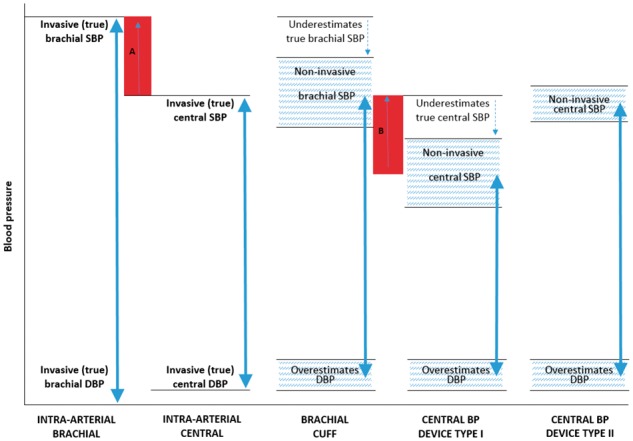
The original Riva-Rocci method to measure blood pressure (BP) using a cuff at the upper arm assumed the pressure obtained by this technique was a good proxy for central aortic BP.1,2 The clinical (prognostic) importance of brachial cuff BP is undeniable for both the assessment of cardiovascular risk associated with elevated BP and the benefits of treatment-induced BP reduction.3 However, it is also generally appreciated that peripheral artery systolic BP (SBP; brachial or radial artery) may be an inaccurate substitute for central SBP.4 This has been reported in human studies using intra-arterial catheterization of peripheral and central arteries.5–8 There may also be a discrepancy between peripheral and central BP responses to vasoactive drugs.9 These findings are corroborated in larger studies using non-invasive central aortic BP methods,10–13 and, while yet to be fully adopted in clinical practice, an independent prognostic value of central BP has been demonstrated.14–16 Altogether, there is a growing interest among clinicians towards improving risk estimates by using devices that provide more accurate measures of central aortic BP than those provided by current brachial cuff BP methods. Many non-invasive devices have been developed that purport to estimate central BP from different peripheral artery sites (e.g. radial, brachial, carotid arteries) using different principles of recording the pressure or surrogate signals (e.g. applanation tonometry, oscillometry, ultrasound, or magnetic resonance imaging) and different calibration methods to derive central BP. Since upper arm cuff-based devices to estimate central BP are more clinically appealing, in recent years several companies have developed such devices using a variety of techniques (e.g. oscillometric sub-diastolic or supra-systolic waveform analysis with generalized transfer functions), which employ a variety of signal processing steps to estimate central BP from peripheral signals.17,18 Yet, with no standardized guidelines,17 the accuracy testing of these new devices (as well as the preceding devices) has not been undertaken in a uniform fashion with comparable protocols, emphasizing the need for guidance in this field.19–22 An international task force was convened to address this situation. To identify issues that need to be addressed and reach consensus relating to methods for assessing and reporting the accuracy of central BP devices. To provide recommendations regarding appropriate protocols to assess and report the evaluation of accuracy (validation) of central BP devices. Initiation of the task force emanated from issues raised at an organized debate relating to central BP at the ARTERY Society Meeting, Maastricht, The Netherlands in October 2014. Task force members were invited to provide feedback on a draft document of intent prior to the first meeting at the ESH Meeting, Milan, Italy, June 2015. At this meeting, terms of reference, principal issues, and topics were refined. A second meeting to discuss outstanding issues was held at the 2015 ARTERY Society meeting, Krakow, Poland, with communication of upgraded documents to members for input, and with disagreements settled by majority consensus. Identified issues and recommendations (a glossary of terms is provided in Table 1): Glossary of terms Glossary of terms (1) Disparity of non-invasive central BP devices as to what is being measured. Most central BP devices claim to produce an estimated central BP relative to cuff brachial BP with brachial SBP usually higher than central SBP. This can be achieved by a variety of techniques including: (a) Brachial forearm or radial applanation tonometry and a peripheral waveform-aorta transfer function23 or the radial waveform second systolic peak.24 (b) Local derivation of carotid BP on the assumption that with appropriate waveform calibration (i.e. mean arterial pressure [MAP] and diastolic BP [DBP]) carotid BP represents central aortic BP. This can be achieved by non-invasive carotid artery tonometry or ultrasound/magnetic resonance imaging of the carotid diameter/area waveform.25–27 (similar techniques are also being applied on aortic distension waveforms).28 However, for practical applications, the radial or brachial artery waveform is more readily recorded where waveforms are registered with more consistent reproducibility and repeatability, and are less prone to noise introduced by incorrect vessel applanation or respiration as can occur with carotid waveforms. (c) Calculated central BP through transfer function and modified calibration of peripheral pressure waveforms.26,29,30 Methods (b) or (c) may produce central SBP estimates higher than brachial cuff SBP (discussed within issue 2). (i) Recommendations: Device manufacturers should clearly state the purported measurement function of their device. While recognizing wide variety in devices, these can be broadly categorized into two types based on their function: Type I—device purports to give
Overview
The claims and statistics of this paper haven’t been checked yet.
Free: it reads the open-access text and checks the first 5 claims that cite a source we can check. Create a free account to check every claim.
Integrity signals
Registry
Cites
Statistics
Figures
Verification
Claims the paper makes
The claims and statistics of this paper haven’t been checked yet.
Free: it reads the open-access text and checks the first 5 claims that cite a source we can check. Create a free account to check every claim.
Claims other papers make about this one
Each is checked against this paper’s own text: does it say what the citing paper says it does?
The source backs part of the claim, not all of it — or backs it for a different population, condition or comparison.
In the citing paper
“at present, a standardized validation protocol has not been established for assessing the accuracy of these devices, and thus their accuracy and clinical usefulness remain questionable37.”
From Blood pressure and its variability: classic and novel measurement techniques (2022) · cites this paper as [37]
Experimental — accuracy not yet measuredThe source backs part of the claim, not all of it — or backs it for a different population, condition or comparison.
In the citing paper
“The figure highlights that divergence from true intra-arterial BP values is greatest for automated BPMDs, and this issue forms a major component of the rationale to develop new BP technology to provide better estimates of BP, especially at the central aortic level [66].”
From Automated 'oscillometric' blood pressure measuring devices: how they work and what they measure (2022) · cites this paper as [66]
Experimental — accuracy not yet measured
Self-check
Percentages, sums and reported differences re-computed from the paper’s own numbers.
The self-check needs the paper’s full text.
Citations
Cites
(2013) · European Heart Journal · doi:10.1093/eurheartj/eht151 · Cited by 13,655
Self-citationMeasuring agreement in method comparison studies
Bland, J. M., & Altman, D. G. (1999) · Statistical Methods in Medical Research · doi:10.1177/096228029900800204 · Cited by 9,619 · cited 2×
“When log transformations do not solve the problem of a relationship between the difference and the mean, regression approaches or non-parametric approaches can be used instead, but with preference for the latter (for details see 72 ).”
MethodMeasuring agreement in method comparison studies
Bland, J. M., & Altman, D. G. (1999) · Statistical Methods in Medical Research · doi:10.1191/096228099673819272 · Cited by 9,619
Mancia, G., Fagard, R., Narkiewicz, K., Redón, J., Zanchetti, A., Böhm, M., Christiaens, T., Cifkova, R., De Backer, G., Dominiczak, A., et al. (2013) · Journal of Hypertension · doi:10.1097/01.hjh.0000431740.32696.cc · Cited by 5,655
Self-citationMedical Instrumentation-Application and Design
Webster, J. G. (1978) · Journal of Clinical Engineering · doi:10.1097/00004669-197807000-00017 · Cited by 1,847
Human blood pressure determination by sphygmomanometry.
Perloff, D., Grim, C., Flack, J., Frohlich, E. D., Hill, M., McDonald, M., & Morgenstern, B. Z. (1993) · Circulation · doi:10.1161/01.cir.88.5.2460 · Cited by 1,591 · cited 1×
“but with greater differences (>10 mmHg lower BP with inspiration) in the presence of cardiac or respiratory abnormalities such as constrictive pericarditis or severe pulmonary disease.(53) Due to limits around the amount of time that can be dedicated to validation studies within the clinical laboratory, it may not be…”
BackgroundVlachopoulos, C., Aznaouridis, K., O'Rourke, M. F., Safar, M. E., Baou, K., & Stefanadis, C. (2010) · European Heart Journal · doi:10.1093/eurheartj/ehq024 · Cited by 1,363 · cited 1×
“14,74 For unfamiliar readers, an accompanying editorial addresses the issues.”
BackgroundSelf-citationNormal Vascular Aging: Differential Effects on Wave Reflection and Aortic Pulse Wave Velocity
McEniery, C. M., Yasmin, Hall, I. R., Qasem, A., Wilkinson, I. B., & Cockcroft, J. R. (2005) · Journal of the American College of Cardiology · doi:10.1016/j.jacc.2005.07.037 · Cited by 1,359
Self-citationChen, C.-H., Nevo, E., Fetics, B., Pak, P. H., Yin, F. C. P., Maughan, W. L., & Kass, D. A. (1997) · Circulation · doi:10.1161/01.cir.95.7.1827 · Cited by 1,307 · cited 9×
“Many non-invasive devices have been developed that purport to estimate central BP from different peripheral artery sites (e.g. radial, brachial, carotid arteries) using different principles of recording the pressure or surrogate signals (e.g. applanation tonometry, oscillome-try, ultrasound, or magnetic resonance imag…”
BackgroundInfluentialSelf-citationThe influence of heart rate on augmentation index and central arterial pressure in humans
Wilkinson, I. B., MacCallum, H., Flint, L., Cockcroft, J. R., Newby, D. E., & Webb, D. J. (2000) · The Journal of Physiology · doi:10.1111/j.1469-7793.2000.t01-1-00263.x · Cited by 1,091 · cited 1×
“), because heart rate influences aortic stiffness and SBP amplification.(70,71) Exact criteria for BP and heart rate ranges needs to be resolved.”
BackgroundSelf-citationOʼBrien, E., Pickering, T., Asmar, R., Myers, M., Parati, G., Staessen, J., Mengden, T., Imai, Y., Waeber, B., Palatini, P., et al. (2002) · Blood Pressure Monitoring · doi:10.1097/00126097-200202000-00002 · Cited by 744
Self-citationCentral blood pressure: current evidence and clinical importance
McEniery, C. M., Cockcroft, J. R., Roman, M. J., Franklin, S. S., & Wilkinson, I. B. (2014) · European Heart Journal · doi:10.1093/eurheartj/eht565 · Cited by 678 · cited 1×
“oscillometric sub-diastolic or supra-systolic waveform analysis with generalized transfer functions), which employ a variety of signal processing steps to estimate central BP from peripheral signals.(17,18) Yet, with no standardized guidelines,(17) the accuracy testing of these new devices (as well as the preceding de…”
BackgroundSelf-citationO'Brien, E., Atkins, N., Stergiou, G., Karpettas, N., Parati, G., Asmar, R., Imai, Y., Wang, J., Mengden, T., & Shennan, A. (2010) · Blood Pressure Monitoring · doi:10.1097/mbp.0b013e3283360e98 · Cited by 610 · cited 1×
“Participants should have a sex distribution of at least 30% male and female and in sinus rhythm unless the device is being tested for accuracy during arrhythmias.(55) In keeping with all other brachial cuff BP validation guidelines, devices should be tested over a range of BP.”
MethodSelf-citationAvolio, A. P., Van Bortel, L. M., Boutouyrie, P., Cockcroft, J. R., McEniery, C. M., Protogerou, A. D., Roman, M. J., Safar, M. E., Segers, P., & Smulyan, H. (2009) · Hypertension · doi:10.1161/hypertensionaha.109.134379 · Cited by 521 · cited 1×
“The accepted central BP reference standard is intra-arterial measurement by catheter, 4,53 but this method still requires careful handling by experienced operators to avoid measurement error.”
MethodSelf-citationO??Brien, E., Petrie, J., Little, W., de Swiet, M., Padfield, P. L., Altma, D. G., Bland, M., Coats, A., & Atkins, N. (1993) · Journal of Hypertension · doi:10.1097/00004872-199306000-00013 · Cited by 519
Direct Blood Pressure Measurement —Dynamic Response Requirements
Gardner, R. M. (1981) · Anesthesiology · doi:10.1097/00000542-198103000-00010 · Cited by 518
Validation of a Brachial Cuff-Based Method for Estimating Central Systolic Blood Pressure
Weber, T., Wassertheurer, S., Rammer, M., Maurer, E., Hametner, B., Mayer, C. C., Kropf, J., & Eber, B. (2011) · Hypertension · doi:10.1161/hypertensionaha.111.176313 · Cited by 461 · cited 10×
“Many non-invasive devices have been developed that purport to estimate central BP from different peripheral artery sites (e.g. radial, brachial, carotid arteries) using different principles of recording the pressure or surrogate signals (e.g. applanation tonometry, oscillome-try, ultrasound, or magnetic resonance imag…”
BackgroundInfluentialSelf-citationMcEniery, C. M., Yasmin, McDonnell, B., Munnery, M., Wallace, S. M., Rowe, C. V., Cockcroft, J. R., & Wilkinson, I. B. (2008) · Hypertension · doi:10.1161/hypertensionaha.107.105445 · Cited by 429
Self-citationKROEKER, E. J., & WOOD, E. H. (1955) · Circulation Research · doi:10.1161/01.res.3.6.623 · Cited by 423
White, W. B., Berson, A. S., Robbins, C., Jamieson, M. J., Prisant, L. M., Roccella, E., & Sheps, S. G. (1993) · Hypertension · doi:10.1161/01.hyp.21.4.504 · Cited by 385 · cited 1×
“Several scientific bodies have developed validation protocols for non-invasive peripheral BP monitors, 54–59 yet they differ on procedural features such as sample size and selection criteria, number of assessment phases, acceptable margin of error, BP range and pass/fail criteria.”
BackgroundVan Bortel, L. M., Balkestein, E. J., van der Heijden-Spek, J. J., Vanmolkot, F. H., Staessen, J. A., Kragten, J. A., Vredeveld, J. W., Safar, M. E., Boudier, H. A. S., & Hoeks, A. P. (2001) · Journal of Hypertension · doi:10.1097/00004872-200106000-00007 · Cited by 382 · cited 1×
“26,29,30 Methods (b) or (c) may produce central SBP estimates higher than brachial cuff SBP (discussed within issue 2).”
BackgroundWilkinson, I. B., Hall, I. R., MacCallum, H., Mackenzie, I. S., McEniery, C. M., van der Arend, B. J., Shu, Y.-E., MacKay, L. S., Webb, D. J., & Cockcroft, J. R. (2002) · Arteriosclerosis, Thrombosis, and Vascular Biology · doi:10.1161/hq0102.101770 · Cited by 371 · cited 1×
“Before recording resting values, the subject should be allowed a period of undisturbed rest (e.g. without talking or movement for at least 5min 54,64 ) and must be free from the acute effects of interventions causing hemodynamic changes (e.g. vasoactive drugs, 65 contrast dye 66 ).”
BackgroundSelf-citationKELLY, R. P., GIBS, H. H., O'ROURKE, M. F., DALEY, J. E., MANG, K., MORGEN, J. J., & AVOLID, A. P. (1990) · European Heart Journal · doi:10.1093/oxfordjournals.eurheartj.a059669 · Cited by 312 · cited 2×
“There may also be a discrepancy between peripheral and central BP responses to vasoactive drugs.(9) These findings are corroborated in larger studies using noninvasive central aortic BP methods, and, while yet to be fully adopted in clinical practice, an independent prognostic value of central BP has been demonstrated.”
BackgroundResultSharman, J. E., Lim, R., Qasem, A. M., Coombes, J. S., Burgess, M. I., Franco, J., Garrahy, P., Wilkinson, I. B., & Marwick, T. H. (2006) · Hypertension · doi:10.1161/01.hyp.0000223013.60612.72 · Cited by 308 · cited 1×
“31 Once the hemodynamic change has been initiated, performance of the non-invasive BP test device can be tested against the intra-arterial standard, as described for the resting state.”
MethodSelf-citationSalvi, P., Lio, G., Labat, C., Ricci, E., Pannier, B., & Benetos, A. (2004) · Journal of Hypertension · doi:10.1097/00004872-200412000-00010 · Cited by 295 · cited 8×
“Many non-invasive devices have been developed that purport to estimate central BP from different peripheral artery sites (e.g. radial, brachial, carotid arteries) using different principles of recording the pressure or surrogate signals (e.g. applanation tonometry, oscillome-try, ultrasound, or magnetic resonance imag…”
BackgroundInfluentialHerbert, A., Cruickshank, J. K., Laurent, S., & Boutouyrie, P. (2014) · European Heart Journal · doi:10.1093/eurheartj/ehu293 · Cited by 290
Self-citationKollias, A., Lagou, S., Zeniodi, M. E., Boubouchairopoulou, N., & Stergiou, G. S. (2016) · Hypertension · doi:10.1161/hypertensionaha.115.06066 · Cited by 287
Self-citationStergiou, G. S., Alpert, B., Mieke, S., Asmar, R., Atkins, N., Eckert, S., Frick, G., Friedman, B., Graßl, T., Ichikawa, T., et al. (2018) · Journal of Hypertension · doi:10.1097/hjh.0000000000001634 · Cited by 278
Self-citationA Short History of Blood Pressure Measurement
Booth, J. (1977) · Proceedings of the Royal Society of Medicine · doi:10.1177/003591577707001112 · Cited by 268 · cited 9×
“The original Riva-Rocci method to measure blood pressure (BP) using a cuff at the upper arm assumed the pressure obtained by this technique was a good proxy for central aortic BP.(1,2) The clinical (prognostic) importance of brachial cuff BP is undeniable for both the assessment of cardiovascular risk associated with…”
MethodInfluentialMeasuring Blood Pressure Accurately: New and Persistent Challenges
Jones, D. W., Appel, L. J., Sheps, S. G., Roccella, E. J., & Lenfant, C. (2003) · JAMA · doi:10.1001/jama.289.8.1027 · Cited by 264 · cited 1×
“Indeed, calls have been made for more rigorous brachial BP accuracy criteria.(51,52) (ii) Recommendations.”
BackgroundROWELL, L. B., BRENGELMANN, G. L., BLACKMON, J. R., BRUGE, R. A., & MURRAY, J. A. (1968) · Circulation · doi:10.1161/01.cir.37.6.954 · Cited by 257
TAKAZAWA, K., KOBAYASHI, H., SHINDO, N., TANAKA, N., & YAMASHINA, A. (2007) · Hypertension Research · doi:10.1291/hypres.30.219 · Cited by 247 · cited 3×
“If the brachial BP waveform undergoes recalibration to produce a ‘new’ brachial BP (as per two Type II devices already using this method), 29,42 then the recalibrated brachial BP values (and the method to derive them) should also be provided so that the level of estimated aorta-to-brachial SBP…”
BackgroundMethodAmplification of the Pressure Pulse in the Upper Limb in Healthy, Middle-Aged Men and Women
Segers, P., Mahieu, D., Kips, J., Rietzschel, E., De Buyzere, M., De Bacquer, D., Bekaert, S., De Backer, G., Gillebert, T., Verdonck, P., et al. (2009) · Hypertension · doi:10.1161/hypertensionaha.109.133009 · Cited by 186
Self-citationVerbeke, F., Segers, P., Heireman, S., Vanholder, R., Verdonck, P., & Van Bortel, L. M. (2005) · Hypertension · doi:10.1161/01.hyp.0000166723.07809.7e · Cited by 169 · cited 2×
“36 Therefore, calibrating the waveform to brachial cuff SBP and DBP is likely to result in underestimation of central SBP and central pulse pressure, but overestimation of central DBP relative to intra-arterial central DBP. 40 The magnitude of calibration-induced error may often exceed 10mmHg for each of SBP, pulse pr…”
BackgroundSelf-citationHow to assess mean blood pressure properly at the brachial artery level
Bos, W. J., Verrij, E., Vincent, H. H., Westerhof, B. E., Parati, G., & van Montfrans, G. A. (2007) · Journal of Hypertension · doi:10.1097/hjh.0b013e32803fb621 · Cited by 161 · cited 1×
“%) pulse pressure, 44 or from integration of the pressure waveforms calibrated to cuff BP], or estimation from the peak oscillometric signal, 45 but information regarding the accuracy of these approaches is limited.”
MethodSelf-citationCheng, H.-M., Chuang, S.-Y., Sung, S.-H., Yu, W.-C., Pearson, A., Lakatta, E. G., Pan, W.-H., & Chen, C.-H. (2013) · Journal of the American College of Cardiology · doi:10.1016/j.jacc.2013.06.029 · Cited by 148
Self-citationPapaioannou, T. G., Karageorgopoulou, T. D., Sergentanis, T. N., Protogerou, A. D., Psaltopoulou, T., Sharman, J. E., Weber, T., Blacher, J., Daskalopoulou, S. S., Wassertheurer, S., et al. (2016) · Journal of Hypertension · doi:10.1097/hjh.0000000000000921 · Cited by 136 · cited 2×
“Notwithstanding the complex interaction of calibration and wave propagation phenomena relating central and peripheral SBP, it still needs to be determined if the recalibrated brachial SBP derived by this process is an accurate estimate of intra-arterial brachial SBP. Data from meta-analysis indicate that using MAP and…”
MethodSelf-citationCheng, H., Lang, D. S. P., Tufănaru, C., & Pearson, A. (2012) · International Journal of Cardiology · doi:10.1016/j.ijcard.2012.04.155 · Cited by 131 · cited 1×
“41 Despite these issues, calibration of peripheral waveforms with brachial SBP and DBP still results in the estimation of a central SBP that is relative to, and usually lower than, the measured brachial cuff SBP (device Type I).”
ResultAmbulatory blood pressure monitoring in Australia: 2011 consensus position statement
Head, G. A., McGrath, B. P., Mihailidou, A. S., Nelson, M. R., Schlaich, M. P., Stowasser, M., Mangoni, A. A., Cowley, D., Brown, M. A., Ruta, L.-A., et al. (2012) · Journal of Hypertension · doi:10.1097/hjh.0b013e32834de621 · Cited by 125 · cited 1×
“Testing the performance of non-invasive central BP monitors under ambulatory conditions is not feasible using intra-aortic monitoring, but in any case this may not necessarily be required since subjects undertaking 24 hour ambulatory BP are instructed to avoid exercise and temporarily stop moving or talking, to relax…”
MethodPauca, A. L., Kon, N. D., & O’Rourke, M. F. (2004) · British Journal of Anaesthesia · doi:10.1093/bja/aeh121 · Cited by 123 · cited 1×
“This can be achieved by a variety of techniques including: (a) Brachial forearm or radial applanation tonometry and a peripheral waveform-aorta transfer function(23) or the radial waveform second systolic peak.(24) (b) Local derivation of carotid BP on the assumption that with appropriate waveform calibration (i.”
MethodComparison of performance of various sphygmomanometers with intra-arterial blood-pressure readings.
Hunyor, S. N., Flynn, J. M., & Cochineas, C. (1978) · BMJ · doi:10.1136/bmj.2.6131.159 · Cited by 122 · cited 1×
“36 Therefore, calibrating the waveform to brachial cuff SBP and DBP is likely to result in underestimation of central SBP and central pulse pressure, but overestimation of central DBP relative to intra-arterial central DBP. 40 The magnitude of calibration-induced error may often exceed 10mmHg for…”
BackgroundProtogerou, A. D., Argyris, A. A., Papaioannou, T. G., Kollias, G. E., Konstantonis, G. D., Nasothimiou, E., Achimastos, A., Blacher, J., Safar, M. E., & Sfikakis, P. P. (2014) · Journal of Hypertension · doi:10.1097/hjh.0000000000000263 · Cited by 119 · cited 1×
“24 hour ambulatory BP monitoring is used as an adjunct to clinical BP to determine underlying BP control and devices with ambulatory central BP capacity are available.(47,67,68) Testing the performance of non-invasive central BP monitors under ambulatory conditions is not feasible using intra-aortic monitoring, but in…”
MethodSelf-citationHuang, C.-M., Wang, K.-L., Cheng, H.-M., Chuang, S.-Y., Sung, S.-H., Yu, W.-C., Ting, C.-T., Lakatta, E. G., Yin, F. C., Chou, P., et al. (2011) · Journal of Hypertension · doi:10.1097/hjh.0b013e3283424b4d · Cited by 117 · cited 1×
“9 16 Altogether, there is a growing interest among clinicians towards improving risk estimates by using devices that provide more accurate measures of central aortic BP than those provided by current brachial cuff BP methods.”
BackgroundSelf-citationCentral blood pressure measurement may improve risk stratification
Sharman, J. E., Stowasser, M., Fassett, R. G., Marwick, T. H., & Franklin, S. S. (2008) · Journal of Human Hypertension · doi:10.1038/jhh.2008.71 · Cited by 89
Self-citationHOPE, S. A., MEREDITH, I. T., & CAMERON, J. D. (2004) · Clinical Science · doi:10.1042/cs20030294 · Cited by 87
Ding, F.-H., Fan, W.-X., Zhang, R.-Y., Zhang, Q., Li, Y., & Wang, J.-G. (2011) · American Journal of Hypertension · doi:10.1038/ajh.2011.145 · Cited by 83 · cited 2×
“If the brachial BP waveform undergoes recalibration to produce a ‘new’ brachial BP (as per two Type II devices already using this method), 29,42 then the recalibrated brachial BP values (and the method to derive them) should also be provided so that the level of estimated aorta-to-brachial SBP…”
MethodSelf-citationShih, Y.-T., Cheng, H. M., Sung, S., Hu, W.-C., & Chen, C. (2011) · American Journal of Hypertension · doi:10.1038/ajh.2011.146 · Cited by 83
Self-citationThe haemodynamic effects of iodinated water soluble radiographic contrast media: a review
Morcos, S. K., Dawson, P., Pearson, J. D., Jeremy, J. Y., Davenport, A. P., Yates, M. S., Tirone, P., Cipolla, P., de Haën, C., Muschick, P., et al. (1998) · European Journal of Radiology · doi:10.1016/s0720-048x(98)00018-7 · Cited by 72 · cited 1×
“Before recording resting values, the subject should be allowed a period of undisturbed rest (e.g. without talking or movement for at least 5min 54,64 ) and must be free from the acute effects of interventions causing hemodynamic changes (e.g. vasoactive drugs, 65 contrast dye 66 ).”
BackgroundWassertheurer, S., & Baumann, M. (2015) · Journal of Hypertension · doi:10.1097/hjh.0000000000000633 · Cited by 70 · cited 1×
“50 These data come from independent investigators that have used the same device, 46–50 and it remains to be clarified if the findings may be more widely generalizable or if this is a device-specific phenomenon.”
BackgroundSelf-citationWilliams, B., Lacy, P. S., Baschiera, F., Brunel, P., & Düsing, R. (2013) · Hypertension · doi:10.1161/hypertensionaha.111.00763 · Cited by 68 · cited 1×
“47,67,68 Testing the performance of non-invasive central BP monitors under ambulatory conditions is not feasible using intra-aortic monitoring, but in any case this may not necessarily be required since subjects undertaking 24hour ambulatory BP are instructed to avoid exercise and temporarily stop…”
MethodZhang, Y., Κόλλιας, Γ., Argyris, A., Papaioannou, T. G., Tountas, C., Konstantonis, G. D., Achimastos, A. D., Blacher, J., Safar, M. E., Sfikakis, P. P., et al. (2014) · Journal of Human Hypertension · doi:10.1038/jhh.2014.101 · Cited by 67
Self-citationKroeker, E. J., & Wood, E. H. (1956) · Journal of Applied Physiology · doi:10.1152/jappl.1956.8.5.483 · Cited by 61
Mitchell, G. F., Hwang, S., Larson, M. G., Hamburg, N. M., Benjamin, E. J., Vasan, R. S., Levy, D. A., & Vita, J. A. (2016) · Journal of Hypertension · doi:10.1097/hjh.0000000000000968 · Cited by 57
Non-invasive Estimation of Aortic Blood Pressures: A Close Look at Current Devices and Methods
Millasseau, S., & Agnoletti, D. (2014) · Current Pharmaceutical Design · doi:10.2174/1381612820666141023163748 · Cited by 50 · cited 1×
“oscillometric sub-diastolic or supra-systolic waveform analysis with generalized transfer functions), which employ a variety of signal processing steps to estimate central BP from peripheral signals.(17,18) Yet, with no standardized guidelines,(17) the accuracy testing of these new devices (as well as the preceding de…”
BackgroundSelf-citationImportance of Calibration Method in Central Blood Pressure for Cardiac Structural Abnormalities
Negishi, K., Yang, H., Wang, Y., Nolan, M. T., Negishi, T., Pathan, F. K., Marwick, T. H., & Sharman, J. E. (2016) · American Journal of Hypertension · doi:10.1093/ajh/hpw039 · Cited by 49 · cited 1×
“50 These data come from independent investigators that have used the same device, 46–50 and it remains to be clarified if the findings may be more widely generalizable or if this is a device-specific phenomenon.”
BackgroundSelf-citationA Preliminary Evaluation of the Mean Arterial Pressure as Measured by Cuff Oscillometry
Smulyan, H., Sheehe, P. R., & Safar, M. E. (2008) · American Journal of Hypertension · doi:10.1038/ajh.2007.45 · Cited by 49
Protogerou, A., Papaioannou, T., Lekakis, J., Blacher, J., & Safar, M. (2009) · Current Pharmaceutical Design · doi:10.2174/138161209787354267 · Cited by 47 · cited 1×
“drug treatment in which responses may differ between the brachial artery and the aorta.(9,12) Different calibration modes have been suc-”
BackgroundSelf-citationCheng, H.-M., Sung, S.-H., Shih, Y.-T., Chuang, S.-Y., Yu, W.-C., & Chen, C.-H. (2013) · American Journal of Hypertension · doi:10.1093/ajh/hps021 · Cited by 40
Self-citationPicone, D. S., Climie, R. E., Ahuja, K., Keske, M. A., & Sharman, J. E. (2015) · Journal of Hypertension · doi:10.1097/hjh.0000000000000637 · Cited by 40
Self-citationCentral pressure should not be used in clinical practice
Mitchell, G. F. (2014) · Artery Research · doi:10.1016/j.artres.2014.11.002 · Cited by 39
Jankowski, P., Bednarek, A., Olszanecka, A., Windak, A., Kawecka-Jaszcz, K., & Czarnecka, D. (2012) · American Journal of Hypertension · doi:10.1093/ajh/hps030 · Cited by 35 · cited 1×
“47,67,68 Testing the performance of non-invasive central BP monitors under ambulatory conditions is not feasible using intra-aortic monitoring, but in any case this may not necessarily be required since subjects undertaking 24hour ambulatory BP are instructed to avoid exercise and temporarily stop…”
Self-citationThe Physiological Measurement Handbook
(2014) · doi:10.1201/b17831 · Cited by 34
Cheng, H.-M., Sung, S., Shih, Y.-T., Chuang, S., Yu, W., & Chen, C.-H. (2012) · American Journal of Hypertension · doi:10.1038/ajh.2012.116 · Cited by 33 · cited 2×
“8 There may also be a discrepancy between peripheral and central BP responses to vasoactive drugs.”
BackgroundMethodSelf-citationQuail, M. A., Steeden, J. A., Knight, D. S., Segers, P., Taylor, A. M., & Muthurangu, V. (2013) · Journal of Magnetic Resonance Imaging · doi:10.1002/jmri.24471 · Cited by 33 · cited 1×
“(similar techniques are also being applied on aortic distension waveforms).(28) However, for practical applications, the radial or brachial artery waveform is more readily recorded where waveforms are registered with more consistent reproducibility and repeatability, and are less prone to noise introduced by incorrect…”
MethodSelf-citationKobayashi, H., Kinou, M., & Takazawa, K. (2013) · Internal Medicine · doi:10.2169/internalmedicine.52.9396 · Cited by 30
Pereira, T. S., Maldonado, J. M. P., Coutinho, R., Cardoso, E., Laranjeiro, M., Andrade, I., & Conde, J. (2014) · Blood Pressure Monitoring · doi:10.1097/mbp.0000000000000058 · Cited by 26
Central versus peripheral blood pressure: finding a solution
Laurent, S., Sharman, J. E., & Boutouyrie, P. (2016) · Journal of Hypertension · doi:10.1097/hjh.0000000000001000 · Cited by 22 · cited 1×
“For unfamiliar readers, an accompanying editorial addresses the issues.(75) A number of perceived deficits relating to both brachial and central BP measurement have been brought to attention in this current paper, and accordingly some points of intent require additional explanation.”
BackgroundSelf-citationValidation protocols for blood pressure-measuring devices: status quo and development needs
Beime, B., Deutsch, C., Gomez, T., Zwingers, T., Mengden, T., & Bramlage, P. (2015) · Blood Pressure Monitoring · doi:10.1097/mbp.0000000000000150 · Cited by 20 · cited 2×
“52 A ‘universal’ brachial BP validation protocol is under development through collaboration of the American Association for the Advancement of Medical Instrumentation (AAMI), the International Organization for Standardisation (ISO), and the ESH Working Group on Blood Pressure Monitoring and…”
MethodBlood Pressure Measurement: Lessons Learned from Our Ancestors
Karamanou, M., Papaioannou, T. G., Tsoucalas, G., Tousoulis, D., Stefanadis, C., & Androutsos, G. (2014) · Current Pharmaceutical Design · doi:10.2174/1381612820666141023163313 · Cited by 17 · cited 9×
“The original Riva-Rocci method to measure blood pressure (BP) using a cuff at the upper arm assumed the pressure obtained by this technique was a good proxy for central aortic BP.(1,2) The clinical (prognostic) importance of brachial cuff BP is undeniable for both the assessment of cardiovascular risk associated with…”
MethodInfluentialSelf-citationCentral pressure should be used in clinical practice
Sharman, J. E. (2014) · Artery Research · doi:10.1016/j.artres.2014.11.001 · Cited by 15
Self-citationPapaioannou, T. G., Protogerou, A. D., & Stefanadis, C. (2012) · Blood Pressure Monitoring · doi:10.1097/mbp.0b013e32835b5a9f · Cited by 13
Self-citationTholl, U., & Anlauf, M. (1999) · PubMed · Cited by 9
Nakagomi, A., Okada, S., Shoji, T., & Kobayashi, Y. (2016) · Blood Pressure · doi:10.3109/11038128.2016.1172823 · Cited by 8
Xu, J., Wu, Y., Su, H., Hu, W., Li, J., Wang, W., Liu, X., & Cheng, X. (2014) · PLoS ONE · doi:10.1371/journal.pone.0100287 · Cited by 7
RATE OF STABILISATION OF SYSTOLIC BLOOD‐PRESSURE FOLLOWING ADOPTION OF THE SUPINE POSTURE
Ogden, E., Shock, N. W., & Heck, K. (1938) · Quarterly Journal of Experimental Physiology and Cognate Medical Sciences · doi:10.1113/expphysiol.1938.sp000784 · Cited by 7 · cited 1×
“Before recording resting values, the subject should be allowed a period of undisturbed rest (e.g. without talking or movement for at least 5min 54,64 ) and must be free from the acute effects of interventions causing hemodynamic changes (e.g. vasoactive drugs, 65 contrast dye 66 ).”
BackgroundAgnoletti, D., Millasseau, S., Topouchian, J. A., Safar, M. E., & Blacher, J. (2014) · Blood Pressure Monitoring · doi:10.1097/mbp.0000000000000028 · Cited by 3 · cited 1×
“17,18 22 An international task force was convened to address this situation.”
BackgroundSelf-citationBeime, B., Deutsch, C., & Bramlage, P. (2016) · Blood Pressure Monitoring · doi:10.1097/mbp.0000000000000194 · Cited by 3
[OP.5B.01] QUANTIFICATION OF HEART RATE DEPENDENCY OF AORTIC PULSE WAVE VELOCITY
Tan, I., Spronck, B., Delhaas, T., Reesink, K. D., Kiat, H., Barin, E. S., Butlin, M., & Avolio, A. P. (2016) · Journal of Hypertension · doi:10.1097/01.hjh.0000491482.98261.5f · Cited by 3
Self-citation
Research works printed but not linked: 1
- Review of the Australian Code for the Responsible Conduct of Research (2007). National Health and Medical Research Council, the Australian Research Council and Universities Australia; 2015.
Cited by
Mancia, G., Kreutz, R., Brunström, M., Burnier, M., Grassi, G., Januszewicz, A., Muiesan, M. L., Tsioufis, K., Agabiti-Rosei, E., Algharably, E. A. E., et al. (2023) · Journal of Hypertension · doi:10.1097/hjh.0000000000003480 · Cited by 3,473
Self-citation2024 ESC Guidelines for the management of elevated blood pressure and hypertension
McEvoy, J. W., McCarthy, C. P., Bruno, R. M., Brouwers, S., Canavan, M. D., Ceconi, C., Christodorescu, R. M., Daskalopoulou, S. S., Ferro, C. J., Gerdts, E., et al. (2024) · European Heart Journal · doi:10.1093/eurheartj/ehae178 · Cited by 2,298
Self-citationDigital health: a path to validation
Mathews, S. C., McShea, M. J., Hanley, C. L., Ravitz, A., Labrique, A. B., & Cohen, A. B. (2019) · npj Digital Medicine · doi:10.1038/s41746-019-0111-3 · Cited by 508
“Applications that claim to perform the functions of established medical devices, such as those reflecting biological processes like heart rate, blood pressure, or respiratory rate, should be able to demonstrate equivalence according to rigorous standards set for other non-smartphone based novel devices.(26) System fai…”
BackgroundBlood pressure and its variability: classic and novel measurement techniques
Schutte, A. E., Kollias, A., & Stergiou, G. S. (2022) · Nature Reviews Cardiology · doi:10.1038/s41569-022-00690-0 · Cited by 335
Self-citationArterial Stiffness and Hypertension in the Elderly
Laurent, S., & Boutouyrie, P. (2020) · Frontiers in Cardiovascular Medicine · doi:10.3389/fcvm.2020.544302 · Cited by 266
“Their goal is to determine the discrete value of central SBP using the second systolic peak (SBP2) on the radial or brachial pressure waveforms (1, 78, 79, 81, 82).”
MethodSelf-citation
Metadata
- Authors
- Sharman, J. E., Avolio, A. P., Baulmann, J., Benetos, A., Blacher, J., Blizzard, C. L., Boutouyrie, P., Chen, C.-H., Chowienczyk, P., Cockcroft, J. R., Cruickshank, J. K., Ferreira, I., Ghiadoni, L., Hughes, A., Jankowski, P., Laurent, S., McDonnell, B. J., McEniery, C., Millasseau, S. C., Papaioannou, T. G., Parati, G., Park, J. B., Protogerou, A. D., Roman, M. J., Schillaci, G., Segers, P., Stergiou, G. S., Tomiyama, H., Townsend, R. R., Van Bortel, L. M., Wang, J., Wassertheurer, S., Weber, T., Wilkinson, I. B., & Vlachopoulos, C.
- Affiliations
- University of Tasmania (AU)
- Macquarie University (AU)
- University Hospital Schleswig-Holstein (DE)
- Département de Médecine Gériatrique, CHRU de Nancy and INSERM U1116, Université de Lorraine, Vandoeuvre-les-Nancy, France
- Assistance Publique – Hôpitaux de Paris (FR)
- Inserm (FR)
- National Yang Ming University (TW)
- King's College London (GB)
- Cardiff Metropolitan University (GB)
- The University of Queensland (AU)
- University of Pisa (IT)
- University College London (GB)
- Jagiellonian University (PL)
- Departments of Pharmacology, European Georges Pompidou Hospital, Assistance Publique Hôpitaux de Paris, Inserm UMR 970, University Paris Descartes, Paris, France
- University of Cambridge (GB)
- Pulse Wave Consulting, Saint Leu la Foret, France
- Biomedical Engineering Unit, First Department of Cardiology, Hippokration Hospital, Medical School, National and Kapodistrian University of Athens, Athens, Greece
- IRCCS Istituto Auxologico Italiano (IT)
- Dankook University (KR)
- National and Kapodistrian University of Athens (GR)
- Weill Cornell Medicine (US)
- University of Perugia (IT)
- Ghent University (BE)
- Tokyo Medical University (JP)
- University of Pennsylvania (US)
- Heymans Institute of Pharmacology, Ghent University, Ghent, Belgium
- The Shanghai Institute of Hypertension, Ruijin Hospital, Shanghai Jiaotong University School of Medicine, Shanghai, China
- AIT Austrian Institute of Technology GmbH (AT)
- Klinikum Wels-Grieskirchen (AT)
- Corresponding author
- Sharman, James E.
- ORCID
- Sharman, James E.
- Avolio, Alberto P.
- Baulmann, Johannes
- Blacher, Jacques
- Blizzard, C. Leigh
- Boutouyrie, Pierre
- Chowienczyk, Phil
- Cruickshank, J. Kennedy
- Ferreira, Isabel
- Ghiadoni, Lorenzo
- Hughes, Alun
- Jankowski, Piotr
- McDonnell, Barry J.
- McEniery, Carmel
- Parati, Gianfranco
- Park, Jeong Bae
- Protogerou, Athanase D.
- Roman, Mary J.
- Segers, Patrick
- Stergiou, George S.
- Tomiyama, Hirofumi
- Townsend, Raymond R.
- Wassertheurer, Siegfried
- Weber, Thomas
- Wilkinson, Ian B.
- Vlachopoulos, Charalambos
- Venue
- European Heart Journal
- Publisher
- Oxford University Press (OUP)
- Published
- 2017-01-30
- Volume
- 38
- Issue
- 37
- Pages
- 2805-2812
- ISSN
- 0195-668X (ISSN-L)
- 1522-9645
- PMC
- PMC5837446
- OpenAlex
- W2585667310
- Cited by
- 231
- References
- 77
- Citations by year
- 2026: 10 · 2025: 13 · 2024: 25 · 2023: 26 · 2022: 27 · 2021: 27 · 2020: 35 · 2019: 24 · 2018: 23 · 2017: 19
- FWCI
- 18.12
- Type
- journal article
- Language
- en
- Open access
- hybrid
- doi.org
- Licence
- cc-by-nc
- Locations
- European Heart Journal (publishedVersion, cc-by-nc)
- PubMed Central (publishedVersion, cc-by-nc)
- PubMed (publishedVersion)
- UTAS Research Repository (acceptedVersion)
- eCite Digital Repository (University of Tasmania) (submittedVersion, cc-by-nc)
- Research Online (University of Wollongong) (submittedVersion)
- Homo Politicus (Academy of Humanities and Economics in Lodz) (submittedVersion, cc-by-nc-nd)
- Jagiellonian University Repository (Jagiellonian University) (submittedVersion, cc-by-nc-nd)
- Ghent University Academic Bibliography (Ghent University) (submittedVersion)
- CINECA IRIS Institutial research information system (University of Pisa) (submittedVersion)
- BOA (University of Milano-Bicocca) (submittedVersion)
- UCL Discovery (University College London) (submittedVersion)
- Figshare (submittedVersion, cc-by)
- Figshare (submittedVersion)
- Research Portal (King's College London) (submittedVersion, cc-by-nc)
- Cardiff Metropolitan Research Repository (Cardiff Metropolitan University) (submittedVersion, cc-by)
- Apollo (University of Cambridge) (submittedVersion, cc-by-nc)
- Apollo
- Funders
- National Institute for Health and Care Research (NF-SI-0515-10093)
- British Heart Foundation (FS/12/8/29377, SP/14/8/31352)
- High Blood Pressure Research Council of Australia
- Servier
- Menzies Institute for Medical Research
- Institut Servier
- Topics
- Health Sciences › Medicine › Cardiology and Cardiovascular Medicine › Cardiovascular Health and Disease Prevention
- Health Sciences › Medicine › Cardiology and Cardiovascular Medicine › Blood Pressure and Hypertension Studies
- Physical Sciences › Engineering › Biomedical Engineering › Non-Invasive Vital Sign Monitoring
- Keywords
- central blood pressure, non-invasive blood pressure measurement, device validation, applanation tonometry, generalized transfer function, cardiovascular risk assessment, protocol standardization
- MeSH terms
- Blood Pressure, Blood Pressure Determination, Cardiology, Congresses as Topic, Humans, Hypertension, Netherlands, Reference Standards, Societies, Medical, Consensus
About these checks
Registry, retraction, Cites and statistics results are computed, not judged, with one exception: a printed reference that no index lists is read once by a model before it counts as a citation error. Claims are extracted by a model and kept only when their quote appears verbatim in the text; each cited source is then checked, with a model’s help, for whether it says what the claim relies on. Those verdicts can be wrong — read the claim’s quote and the cited source before relying on one.
Statistics and arithmetic are recomputed, not judged.
Confidence bands are shown only for fields calibrated on our annotated test set. None is calibrated yet, so no band is shown.
What counts as a claim ›How we measure confidence ›How we check this ›
Are you an author, or do you see a problem with this page? Request a review
Data sources
Bibliographic data: Semantic Scholar, OpenAlex, Crossref.
Contains information from the Semantic Scholar Academic Graph Datasets, made available under the ODC Attribution License (ODC-BY 1.0).
Semantic Scholar’s data is described in: Kinney, R., et al. (2023). The Semantic Scholar Open Data Platform. arXiv:2301.10140.
