

Horizontal Gene Transfer Contributes to the Evolution of Arthropod Herbivory
Open accessThe DOI matches its Crossref record; 152 of the 152 references it cites were found in a registry or an index.
Abstract
Within animals, evolutionary transition toward herbivory is severely limited by the hostile characteristics of plants. Arthropods have nonetheless counteracted many nutritional and defensive barriers imposed by plants and are currently considered as the most successful animal herbivores in terrestrial ecosystems. We gather a body of evidence showing that genomes of various plant feeding insects and mites possess genes whose presence can only be explained by horizontal gene transfer (HGT). HGT is the asexual transmission of genetic information between reproductively isolated species. Although HGT is known to have great adaptive significance in prokaryotes, its impact on eukaryotic evolution remains obscure. Here, we show that laterally transferred genes into arthropods underpin many adaptations to phytophagy, including efficient assimilation and detoxification of plant produced metabolites. Horizontally acquired genes and the traits they encode often functionally diversify within arthropod recipients, enabling the colonization of more host plant species and organs. We demonstrate that HGT can drive metazoan evolution by uncovering its prominent role in the adaptations of arthropods to exploit plants.
Overview
The claims and statistics of this paper haven’t been checked yet.
Free: it reads the open-access text and checks the first 5 claims that cite a source we can check. Create a free account to check every claim.
Integrity signals
Registry
Cites
Statistics
Figures
Verification
Claims the paper makes
The claims and statistics of this paper haven’t been checked yet.
Free: it reads the open-access text and checks the first 5 claims that cite a source we can check. Create a free account to check every claim.
Claims other papers make about this one
Each is checked against this paper’s own text: does it say what the citing paper says it does?
The source backs part of the claim, not all of it — or backs it for a different population, condition or comparison.
In the citing paper
“A notable example in animals is the presence of microbial genes in the genome of the coffee borer beetle Hypothenemus hampei, which facilitates the digestion of caffeine and reflects a functional adaptation through HGT [35].”
From Origin and Evolution of Genes in Eukaryotes: Mechanisms, Dynamics, and Functional Implications (2025) · cites this paper as [35]
Experimental — accuracy not yet measured
Self-check
Percentages, sums and reported differences re-computed from the paper’s own numbers.
The self-check needs the paper’s full text.
Citations
Cites
The Carbohydrate-Active EnZymes database (CAZy): an expert resource for Glycogenomics
Cantarel, B. L., Coutinho, P. M., Rancurel, C., Bernard, T., Lombard, V., & Henrissat, B. (2009) · Nucleic Acids Research · doi:10.1093/nar/gkn663 · Cited by 5,972 · cited 2×
“GHs are delineated into specific families and sub-families through the curated Carbohydrate-Active database of enzymes involved in carbohydrate metabolism (Cantarel et al. 2009).”
OrthoMCL: Identification of Ortholog Groups for Eukaryotic Genomes
Li, L., Stoeckert, C. J., & Roos, D. S. (2003) · Genome Research · doi:10.1101/gr.1224503 · Cited by 5,707 · cited 1×
“Using the plethora of sequenced genomes, families of orthologues can be systemically classified (Tatusov et al. 1997; Li et al. 2003).”
Carpita, N., & Gibeaut, D. (1993) · The Plant Journal · doi:10.1046/j.1365-313x.1993.00999.x · Cited by 3,651 · cited 1×
“In some plant species, these composite fibers form a thick rigid layer (for instance in woody plants), and pose a barrier for arthropods aiming to feed on plant nutrients (Carpita and Gibeaut 1993; Whetten and Sederoff 1995; Heredia 2003; Sorensen et al. 2010).”
A Genomic Perspective on Protein Families
Tatusov, R. L., Koonin, E. V., & Lipman, D. J. (1997) · Science · doi:10.1126/science.278.5338.631 · Cited by 3,590 · cited 1×
“Using the plethora of sequenced genomes, families of orthologues can be systemically classified (Tatusov et al. 1997; Li et al. 2003).”
Herbivory in Relation to Plant Nitrogen Content
Mattson, W. J. (1980) · Annual Review of Ecology and Systematics · doi:10.1146/annurev.es.11.110180.001003 · Cited by 3,425 · cited 2×
“As many plant species and tissues are characterized by a relatively high carbohydrate content, but low protein and vitamin levels (Mattson 1980; Strong et al. 1984; Awmack and Leather 2002), herbivorous animals need to optimize the assimilation of the limited supply of nutrients in plant tissues.”
Phylogenomics resolves the timing and pattern of insect evolution
Misof, B., Liu, S., Meusemann, K., Peters, R. S., Donath, A., Mayer, C., Frandsen, P. B., Ware, J., Flouri, T., Beutel, R. G., et al. (2014) · Science · doi:10.1126/science.1257570 · Cited by 2,694 · cited 1×
“For many arthropod studies, both requirements can be met as a significant part of the arthropod phylogenomic tree is well mapped and keeps improving due to the increasing number of sequenced arthropod genomes and transcriptomes (Regier et al. 2010; Wheat and Wahlberg 2013; Misof et al. 2014).”
Host Plant Quality and Fecundity in Herbivorous Insects
Awmack, C. S., & Leather, S. R. (2002) · Annual Review of Entomology · doi:10.1146/annurev.ento.47.091201.145300 · Cited by 2,611 · cited 2×
“As many plant species and tissues are characterized by a relatively high carbohydrate content, but low protein and vitamin levels (Mattson 1980; Strong et al. 1984; Awmack and Leather 2002), herbivorous animals need to optimize the assimilation of the limited supply of nutrients in plant tissues.”
Plant Immunity to Insect Herbivores
Howe, G. A., & Jander, G. (2008) · Annual Review of Plant Biology · doi:10.1146/annurev.arplant.59.032607.092825 · Cited by 2,427 · cited 2×
“Plant resistance to herbivory can be achieved by physical barriers such as trichomes and waxy cuticles and/or by the production of chemical defenses (Howe and Jander 2008).”
Schoonhoven, L. M., Jermy, T., & van Loon, J. J. A. (1998) · Springer eBooks · doi:10.1007/978-1-4899-3200-6 · Cited by 1,686 · cited 2×
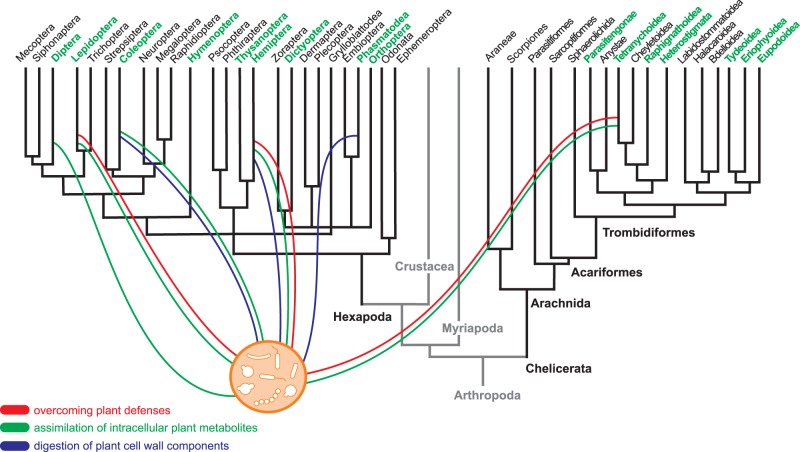
“The arthropod phylum is now considered to harbor the most successful animal herbivores in terrestrial ecosystems, both in terms of biomass and species diversity (Strong et al. 1984; Labandeira 2002, 2006; Schoonhoven et al. 2006) (fig.”
Fundamentals of molecular evolution
(1991) · Journal of Human Evolution · doi:10.1016/0047-2484(91)90069-8 · Cited by 1,654
Insects on Plants: Community Patterns and Mechanisms
Strong, D. R., Lawton, J. H., & Southwood, S. R. (1984) · Medical Entomology and Zoology · Cited by 1,600
Extreme genome reduction in symbiotic bacteria
McCutcheon, J. P., & Moran, N. A. (2012) · Nature Reviews Microbiology · doi:10.1038/nrmicro2670 · Cited by 1,464
Endosymbiosis of Animals with Plant Microorganisms
Batra, L. R., & Buchner, P. (1968) · Mycologia · doi:10.2307/3757184 · Cited by 1,245 · cited 3×
“Indeed, arthropods often host large bacterial communities in various organs, including their digestive tract (Buchner 1965; Watanabe and Tokuda 2010).”
Wolbachia Pipientis: Microbial Manipulator of Arthropod Reproduction
Stouthamer, R., Breeuwer, J. A. J., & Hurst, G. D. D. (1999) · Annual Review of Microbiology · doi:10.1146/annurev.micro.53.1.71 · Cited by 1,236 · cited 1×
“Some endosymbionts are extremely closely associated with germ line tissues as they are able to interfere with the reproductive processes of their arthropod hosts in order to increase their vertical transmission to the next generation (Stouthamer et al. 1999; Hotopp et al. 2007; Hotopp, 2011).”
Whittaker, R. H., & Feeny, P. P. (1971) · Science · doi:10.1126/science.171.3973.757 · Cited by 1,207 · cited 2×
“Plant toxins and their mode of action vary widely across the plant kingdom (Whittaker and Feeny 1971; Howe and Jander 2008), and HGT events have been implicated in arthropod adaptations to some of them.”
On the Evolution of Host Specificity in Phytophagous Arthropods
Bernays, E., & Graham, M. (1988) · Ecology · doi:10.2307/1941237 · Cited by 1,188
Schoonhoven, L. M., Loon, J. J. A. V., & Dicke, M. (2005) · doi:10.1093/oso/9780198525943.001.0001 · Cited by 1,161
Horizontal gene transfer in prokaryotes: Quantification and classification
Koonin, E. V., Makarova, K. S., & Aravind, L. (2001) · Annual Review of Microbiology · doi:10.1146/annurev.micro.55.1.709 · Cited by 1,126
Plant-animal interactions: an evolutionary approach
(2003) · Choice Reviews Online · doi:10.5860/choice.40-4600 · Cited by 1,118
The genome of Tetranychus urticae reveals herbivorous pest adaptations
Grbić, M., Van Leeuwen, T., Clark, R. M., Rombauts, S., Rouzé, P., Grbić, V., Osborne, E. J., Dermauw, W., Thi Ngoc, P. C., Ortego, F., et al. (2011) · Nature · doi:10.1038/nature10640 · Cited by 1,115 · cited 6×
“Previous studies uncovered a high transcriptional response of this unique gene family to various chemical stresses, including host plants and acaricides (Grbic et al. 2011; Dermauw et al. 2013; Bajda et al. 2015; Van Leeuwen and Dermauw 2016).”
InfluentialInsect digestive enzymes: properties, compartmentalization and function
Terra, W. R., & Ferreira, C. (1994) · Comparative Biochemistry and Physiology Part B: Comparative Biochemistry · doi:10.1016/0305-0491(94)90141-4 · Cited by 1,100 · cited 1×
“The insect host benefits from its microflora, as a - and b -glycosidases only hydrolyze terminal a - and b -linked glucosyl residues, respectively, and differ in substrate specificities (Terra and Ferreira 1994).”
Arthropod relationships revealed by phylogenomic analysis of nuclear protein-coding sequences
Regier, J. C., Shultz, J. W., Zwick, A., Hussey, A., Ball, B., Wetzer, R., Martin, J. W., & Cunningham, C. W. (2010) · Nature · doi:10.1038/nature08742 · Cited by 1,017 · cited 1×
“For many arthropod studies, both requirements can be met as a significant part of the arthropod phylogenomic tree is well mapped and keeps improving due to the increasing number of sequenced arthropod genomes and transcriptomes (Regier et al. 2010; Wheat and Wahlberg 2013; Misof et al. 2014).”
Biology of Termites: a Modern Synthesis
(2011) · Springer eBooks · doi:10.1007/978-90-481-3977-4 · Cited by 974 · cited 2×
“For instance, using this extensive sequence dataset, phylogenetic analysis finally concluded that a much-debated putative horizontally transferred gene in termites is instead much more likely to be a typical vertically transmitted gene, present in various other arthropod lineages (Lo et al. 2011).”
Amelioration of Bacterial Genomes: Rates of Change and Exchange
Lawrence, J. G., & Ochman, H. (1997) · Journal of Molecular Evolution · doi:10.1007/pl00006158 · Cited by 863 · cited 2×
“…that the codon usage pattern of all coding sequences within a certain genome is similar and that this genomic signature varies between species (Lawrence and Ochman 1997), a horizontally transferred gene candidate can be confirmed by detecting a different codon content compared with the rest of…”
Widespread Lateral Gene Transfer from Intracellular Bacteria to Multicellular Eukaryotes
Hotopp, J. C. D., Clark, M. E., Oliveira, D. C. S. G., Foster, J. M., Fischer, P., Torres, M. C. M., Giebel, J. D., Kumar, N., Ishmael, N., Wang, S., et al. (2007) · Science · doi:10.1126/science.1142490 · Cited by 817 · cited 3×
“Recent comparative studies show a high prevalence of HGT in arthropod lineages, relative to other animal clades (Hotopp et al. 2007; Hotopp 2011; Ramulu et al. 2012), which raises the question of how these genes and the traits they encode shape arthropod evolution.”
"Inordinate Fondness" Explained: Why Are There So Many Beetles?
Farrell, B. D. (1998) · Science · doi:10.1126/science.281.5376.555 · Cited by 815 · cited 7×
“Bacterial pectin methyles-terase genes have been transferred to an ancestral species within the Curculionoidea superfamily and could serve a similar function in other descendent weevil species (Pauchet et al. 2010a; Evangelista et al. 2015; Kirsch et al. 2016).”
InfluentialBiogeography of the ecosystems of the healthy human body
Zhou, Y., Gao, H., Mihindukulasuriya, K. A., La Rosa, P. S., Wylie, K. M., Vishnivetskaya, T., Podar, M., Warner, B., Tarr, P. I., Nelson, D. E., et al. (2013) · Genome Biology · doi:10.1186/gb-2013-14-1-r1 · Cited by 682
Whetten, R., & Sederoff, R. (1995) · The Plant Cell · doi:10.1105/tpc.7.7.1001 · Cited by 662
Lateral Transfer of Genes from Fungi Underlies Carotenoid Production in Aphids
Moran, N. A., & Jarvik, T. (2010) · Science · doi:10.1126/science.1187113 · Cited by 645 · cited 2×
“…code for functional enzymes and likely offer phytophagous arthropods the unique ability to endogenously produce carotenoids, which are conjugated isoprenoid molecules (Moran and Jarvik 2010; Grbic et al. 2011; Altincicek et al. 2012; Novakova and Moran 2012; Bryon et al. 2013; Cobbs et al. 2013).”
Cellulolytic Systems in Insects
Watanabe, H., & Tokuda, G. (2010) · Annual Review of Entomology · doi:10.1146/annurev-ento-112408-085319 · Cited by 563 · cited 2×
“Indeed, arthropods often host large bacterial communities in various organs, including their digestive tract (Buchner 1965; Watanabe and Tokuda 2010).”
Bootstrap confidence levels for phylogenetic trees
Efron, B., Halloran, E., & Holmes, S. (1996) · Proceedings of the National Academy of Sciences · doi:10.1073/pnas.93.23.13429 · Cited by 548 · cited 1×
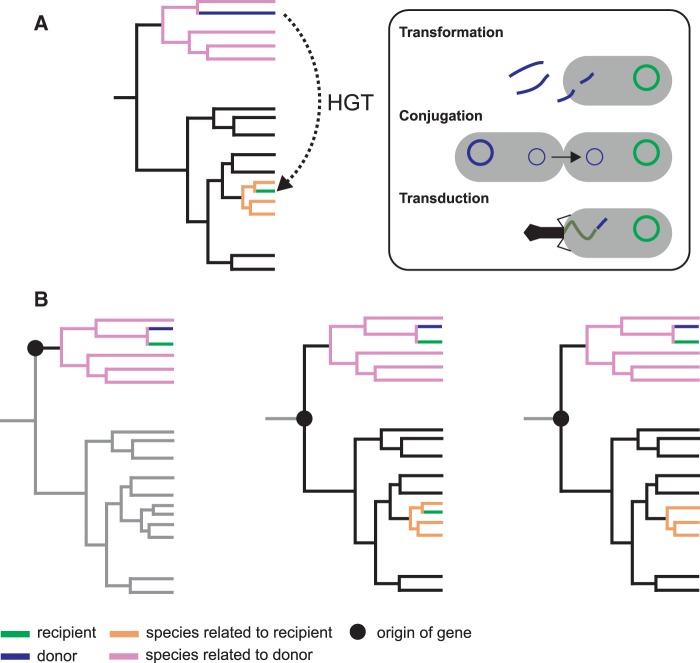
“Molecular phylogenetic methods are the gold standard in arthropod studies and suggest an HGT when the gene of interest is grouped with homologues of nonrelated species by strongly statistically supported branches (for instance with at least 60% bootstrap support) (Efron et al. 1996) (fig.”
LeBlanc, J. G., Laiño, J. E., del Valle, M. J., Vannini, V., van Sinderen, D., Taranto, M. P., de Valdez, G. F., de Giori, G. S., & Sesma, F. (2011) · Journal of Applied Microbiology · doi:10.1111/j.1365-2672.2011.05157.x · Cited by 529 · cited 1×
“This rich enzymatic repertoire enables microorganisms to uniquely synthesize certain compounds, some of which have been defined as vitamins (Karlin et al. 2001; LeBlanc et al. 2011).”
Adaptive evolution of bacterial metabolic networks by horizontal gene transfer
Pál, C., Papp, B., & Lercher, M. J. (2005) · Nature Genetics · doi:10.1038/ng1686 · Cited by 500 · cited 1×
“HGT is accepted to be widespread and prevalent among prokaryotes and acknowledged as a major force in their adaptive evolution (Koonin et al. 2001; Springael and Top 2004; Pal et al. 2005).”
Dermauw, W., Wybouw, N., Rombauts, S., Menten, B., Vontas, J., Grbić, M., Clark, R. M., Feyereisen, R., & Van Leeuwen, T. (2013) · Proceedings of the National Academy of Sciences · doi:10.1073/pnas.1213214110 · Cited by 477 · cited 2×
“Previous studies uncovered a high transcriptional response of this unique gene family to various chemical stresses, including host plants and acaricides (Grbic et al. 2011; Dermauw et al. 2013; Bajda et al. 2015; Van Leeuwen and Dermauw 2016).”
Self-citationBiophysical and biochemical characteristics of cutin, a plant barrier biopolymer
Heredia, A. (2003) · Biochimica et Biophysica Acta (BBA) - General Subjects · doi:10.1016/s0304-4165(02)00510-x · Cited by 471 · cited 1×
“In some plant species, these composite fibers form a thick rigid layer (for instance in woody plants), and pose a barrier for arthropods aiming to feed on plant nutrients (Carpita and Gibeaut 1993; Whetten and Sederoff 1995; Heredia 2003; Sorensen et al. 2010).”
Rye, C. S., & Withers, S. G. (2000) · Current Opinion in Chemical Biology · doi:10.1016/s1367-5931(00)00135-6 · Cited by 470
The Shikimate Pathway as an Entry to Aromatic Secondary Metabolism
Herrmann, K. M. (1995) · Plant Physiology · doi:10.1104/pp.107.1.7 · Cited by 462 · cited 1×
“Aromatic allelochemicals (including flavonoids) are produced by enzymes of the conserved shikimate pathway, restricted to plants and bacteria (Herrmann 1995).”
The Ins and Outs of Ring-Cleaving Dioxygenases
Vaillancourt, F. H., Bolin, J. T., & Eltis, L. D. (2006) · Critical Reviews in Biochemistry and Molecular Biology · doi:10.1080/10409230600817422 · Cited by 441 · cited 1×
“This family of dioxygenases, restricted to microorganisms, catalyze the oxygenolytic fission of aromatic structures between adjacent hydroxyl groups (Vaillancourt et al. 2006; Roopesh et al. 2010, 2012; Yang et al. 2012).”
Husnik, F., Nikoh, N., Koga, R., Ross, L., Duncan, R. P., Fujie, M., Tanaka, M., Satoh, N., Bachtrog, D., Wilson, A. C. C., et al. (2013) · Cell · doi:10.1016/j.cell.2013.05.040 · Cited by 433 · cited 5×
“The transcription of these foreign genes is often concentrated in the bacteriocytes where the enzyme products can readily interact with the intermediate substrates within the bacterial synthetic pathways (Husnik et al. 2013; Sloan et al. 2014; Luan et al. 2015).”
InfluentialSpecial delivery: vesicle trafficking in prokaryotes
Mashburn‐Warren, L. M., & Whiteley, M. (2006) · Molecular Microbiology · doi:10.1111/j.1365-2958.2006.05272.x · Cited by 391 · cited 1×
“Notably, within bacteria, genetic information is known to be transferred not only between the cells of the same organism but also across species boundaries ( et al. 2000; Mashburn-Warren and Whiteley 2006).”
Genomic evidence for ameiotic evolution in the bdelloid rotifer Adineta vaga
Flot, J.-F., Hespeels, B., Li, X., Noel, B., Arkhipova, I., Danchin, E. G. J., Hejnol, A., Henrissat, B., Koszul, R., Aury, J.-M., et al. (2013) · Nature · doi:10.1038/nature12326 · Cited by 384
Kant, M. R., Jonckheere, W., Knegt, B., Lemos, F., Liu, J., Schimmel, B. C. J., Villarroel, C. A., Ataide, L. M. S., Dermauw, W., Glas, J. J., et al. (2015) · Annals of Botany · doi:10.1093/aob/mcv054 · Cited by 360 · cited 1×
“Such manipulation of plant physiology by arthropods (and other herbivores) is achieved by secreting salivary compounds into the plant where these interfere with plant pathways (Kant et al. 2015; Zhao et al. 2015; Villarroel et al. 2016).”
Endosymbiotic origin and differential loss of eukaryotic genes
Ku, C., Nelson-Sathi, S., Roettger, M., Sousa, F. L., Lockhart, P. J., Bryant, D., Hazkani-Covo, E., McInerney, J. O., Landan, G., & Martin, W. F. (2015) · Nature · doi:10.1038/nature14963 · Cited by 347 · cited 1×
“…distribution, as gene duplications, differential gene losses and evolutionary convergence can also result in a phylogenetic reconstruction where distant species lineages cluster together, the likelihood of an HGT event versus alternative scenarios should always be weighed (Ku et al. 2015).”
Intestinal Microbiota of Termites and other Xylophagous Insects
Breznak, J. A. (1982) · Annual Review of Microbiology · doi:10.1146/annurev.mi.36.100182.001543 · Cited by 344 · cited 1×
“…arthropods, like wood-feeding termites, have extensively proliferated a gene family of ancestral animal cellulases to enzymatically cleave certain cell wall components (Watanabe and Tokuda 2010), while other arthropods seem to solely rely on microbial symbionts in their gut (Breznak 1982).”
Horizontal gene transfer between bacteria and animals
Dunning Hotopp, J. C. (2011) · Trends in Genetics · doi:10.1016/j.tig.2011.01.005 · Cited by 341 · cited 3×
“Recent comparative studies show a high prevalence of HGT in arthropod lineages, relative to other animal clades (Hotopp et al. 2007; Hotopp 2011; Ramulu et al. 2012), which raises the question of how these genes and the traits they encode shape arthropod evolution.”
Vesicle-Mediated Transfer of Virulence Genes from Escherichia coli O157:H7 to Other Enteric Bacteria
Yaron, S., Kolling, G. L., Simon, L., & Matthews, K. R. (2000) · Applied and Environmental Microbiology · doi:10.1128/aem.66.10.4414-4420.2000 · Cited by 338
The Biochemistry and Structural Biology of Plant Cell Wall Deconstruction
Gilbert, H. J. (2010) · Plant Physiology · doi:10.1104/pp.110.156646 · Cited by 328 · cited 1×
“Although GH families are found across the whole tree of life, most GH families coding for PCWDEs are restricted to bacterial and fungal species (Rye and Withers 2000; Gilbert 2010).”
Bootstrap confidence levels for phylogenetic trees.
Efron, B., Halloran, E., & Holmes, S. (1996) · Proceedings of the National Academy of Sciences · doi:10.1073/pnas.93.14.7085 · Cited by 326
Multiple lateral gene transfers and duplications have promoted plant parasitism ability in nematodes
Danchin, E. G. J., Rosso, M.-N., Vieira, P., de Almeida-Engler, J., Coutinho, P. M., Henrissat, B., & Abad, P. (2010) · Proceedings of the National Academy of Sciences · doi:10.1073/pnas.1008486107 · Cited by 323 · cited 4×
“The genomic innovations due to HGT have shaped the penetration, assimilation and detoxification pathways of plant tissue independently and in parallel within these phylogenetically diverse plant parasites (Danchin et al. 2010; Haegeman et al. 2011; Soanes and Richards 2014).”
InfluentialDraft genome of the mountain pine beetle, Dendroctonus ponderosae Hopkins, a major forest pest
Keeling, C. I., Yuen, M. M., Liao, N. Y., Roderick Docking, T., Chan, S. K., Taylor, G. A., Palmquist, D. L., Jackman, S. D., Nguyen, A., Li, M., et al. (2013) · Genome Biology · doi:10.1186/gb-2013-14-3-r27 · Cited by 296 · cited 2×
“…to the Curculionoidea and Buprestoidea superfamilies, the dip-teran Mayetolia destructor and in the chelicerate spider mite T. urticae , suggestive of multiple, independent HGT events (Grbic et al. 2011; Keeling et al. 2013; Sun et al. 2013; Pedezzi et al. 2014; Zhao et al. 2014, 2015) (figs.”
The Molecular Evolution of Xenobiotic Metabolism and Resistance in Chelicerate Mites
Van Leeuwen, T., & Dermauw, W. (2016) · Annual Review of Entomology · doi:10.1146/annurev-ento-010715-023907 · Cited by 296 · cited 1×
“Previous studies uncovered a high transcriptional response of this unique gene family to various chemical stresses, including host plants and acaricides (Grbic et al. 2011; Dermauw et al. 2013; Bajda et al. 2015; Van Leeuwen and Dermauw 2016).”
Introduction to Modern Virology
Dimmock, N. J., Easton, A. J., & Leppard, K. N. (1974) · Cited by 274
Cyanogenesis in plants and arthropods
Zagrobelny, M., Bak, S., & Møller, B. L. (2008) · Phytochemistry · doi:10.1016/j.phytochem.2008.02.019 · Cited by 268 · cited 3×
“By endogenously producing this cyanide detoxifying enzyme, some Lepidoptera could not only colonize a whole new range of host plants, but also develop their own cyanogenic defenses to deter predators (Witthohn and Naumann 1987; Zagrobelny et al. 2008).”
Mobilisation of storage cell wall polysaccharides in seeds
Buckeridge, M. S., Pessoa dos Santos, H., & Tiné, M. A. S. (2000) · Plant Physiology and Biochemistry · doi:10.1016/s0981-9428(00)00162-5 · Cited by 266 · cited 1×
“In addition to their stalks and leaves, plants also accumulate huge amounts of complex cell wall carbohydrates in their seeds (Buckeridge et al. 2000).”
Biological degradation of cyanide compounds
Ebbs, S. (2004) · Current Opinion in Biotechnology · doi:10.1016/j.copbio.2004.03.006 · Cited by 266 · cited 1×
“CAS efficiently detoxifies cyanide by incorporating it into cysteine, hereby releasing the amino acid derivative b -cyanoalanine (Miller and Conn 1980; Ebbs 2004).”
Possible Horizontal Transfer of Drosophila Genes by the Mite Proctolaelaps regalis
Houck, M. A., Clark, J. B., Peterson, K. R., & Kidwell, M. G. (1991) · Science · doi:10.1126/science.1653453 · Cited by 256 · cited 1×
“…viruses can act as gene transfer agents, the donor and recipient species do not necessarily have to be in direct physical contact, further increasing the potential source of alien genetic information (Houck et al. 1991; Dimmock et al. 2007; Liu et al. 2010; Gilbert et al. 2014; Gasmi et al. 2015).”
Metabolism of Hydrogen Cyanide by Higher Plants
Miller, J. M., & Conn, E. E. (1980) · Plant Physiology · doi:10.1104/pp.65.6.1199 · Cited by 242 · cited 1×
“CAS efficiently detoxifies cyanide by incorporating it into cysteine, hereby releasing the amino acid derivative b -cyanoalanine (Miller and Conn 1980; Ebbs 2004).”
Widespread Horizontal Gene Transfer from Double-Stranded RNA Viruses to Eukaryotic Nuclear Genomes
Liu, H., Fu, Y., Jiang, D., Li, G., Xie, J., Cheng, J., Peng, Y., Ghabrial, S. A., & Yi, X. (2010) · Journal of Virology · doi:10.1128/jvi.00955-10 · Cited by 240 · cited 2×
“…viruses can act as gene transfer agents, the donor and recipient species do not necessarily have to be in direct physical contact, further increasing the potential source of alien genetic information (Houck et al. 1991; Dimmock et al. 2007; Liu et al. 2010; Gilbert et al. 2014; Gasmi et al. 2015).”
Sandström, J., & Pettersson, J. (1994) · Journal of Insect Physiology · doi:10.1016/0022-1910(94)90133-3 · Cited by 228 · cited 1×
“Relative to other plant tissues, phloem, which translocates photosynthate, is especially low in essential amino acids and vitamins (Sandstrom and Pettersson 1994; Sandstrom and Moran 1999).”
Koutsovoulos, G., Kumar, S., Laetsch, D. R., Stevens, L., Daub, J., Conlon, C., Maroon, H., Thomas, F., Aboobaker, A. A., & Blaxter, M. (2016) · Proceedings of the National Academy of Sciences · doi:10.1073/pnas.1600338113 · Cited by 226 · cited 1×
“As genome assemblies can have imperfect computational sequence filters (Baker 2012), an apparent lateral acquisition can be an artifact due to the presence and incorrect concatenation of contaminating bacterial sequences with other reads from the shotgun library (Koutsovoulos et al. 2016).”
The four phases of plant-arthropod associations in deep time
LABANDEIRA, C. (2006) · Geologica Acta · doi:10.1344/105.000000344 · Cited by 223 · cited 1×
“The arthropod phylum is now considered to harbor the most successful animal herbivores in terrestrial ecosystems, both in terms of biomass and species diversity (Strong et al. 1984; Labandeira 2002, 2006; Schoonhoven et al. 2006) (fig.”
Reconciling the many faces of lateral gene transfer
Lawrence, J. G., & Ochman, H. (2002) · Trends in Microbiology · doi:10.1016/s0966-842x(01)02282-x · Cited by 215
Adaptive horizontal transfer of a bacterial gene to an invasive insect pest of coffee
Acuña, R., Padilla, B. E., Flórez-Ramos, C. P., Rubio, J. D., Herrera, J. C., Benavides, P., Lee, S.-J., Yeats, T. H., Egan, A. N., Doyle, J. J., et al. (2012) · Proceedings of the National Academy of Sciences · doi:10.1073/pnas.1121190109 · Cited by 213
De novo genome assembly: what every biologist should know
Baker, M. (2012) · Nature Methods · doi:10.1038/nmeth.1935 · Cited by 201 · cited 2×
“This family of dioxygenases, restricted to microorganisms, catalyze the oxygenolytic fission of aromatic structures between adjacent hydroxyl groups (Vaillancourt et al. 2006; Roopesh et al. 2010, 2012; Yang et al. 2012).”
Springael, D., & Top, E. M. (2004) · Trends in Microbiology · doi:10.1016/j.tim.2003.12.010 · Cited by 200 · cited 1×
“HGT is accepted to be widespread and prevalent among prokaryotes and acknowledged as a major force in their adaptive evolution (Koonin et al. 2001; Springael and Top 2004; Pal et al. 2005).”
Zhao, C., Escalante, L. N., Chen, H., Benatti, T. R., Qu, J., Chellapilla, S., Waterhouse, R. M., Wheeler, D., Andersson, M. N., Bao, R., et al. (2015) · Current Biology · doi:10.1016/j.cub.2014.12.057 · Cited by 195 · cited 2×
“Such manipulation of plant physiology by arthropods (and other herbivores) is achieved by secreting salivary compounds into the plant where these interfere with plant pathways (Kant et al. 2015; Zhao et al. 2015; Villarroel et al. 2016).”
Sloan, D. B., Nakabachi, A., Richards, S., Qu, J., Murali, S. C., Gibbs, R. A., & Moran, N. A. (2014) · Molecular Biology and Evolution · doi:10.1093/molbev/msu004 · Cited by 194 · cited 4×
“Clear-cut examples of completely novel genes in plant feeding arthropods include genes that code for carotenoid cyclases/synthases, chorismate mutase (CM), and cyanase (Grbic et al. 2011; Novakova and Moran 2012; Wybouw et al. 2012; Sloan et al. 2014).”
InfluentialMetabolic Coevolution in the Bacterial Symbiosis of Whiteflies and Related Plant Sap-Feeding Insects
Luan, J.-B., Chen, W., Hasegawa, D. K., Simmons, A. M., Wintermantel, W. M., Ling, K.-S., Fei, Z., Liu, S.-S., & Douglas, A. E. (2015) · Genome Biology and Evolution · doi:10.1093/gbe/evv170 · Cited by 189 · cited 7×
“The transcription of these foreign genes is often concentrated in the bacteriocytes where the enzyme products can readily interact with the intermediate substrates within the bacterial synthetic pathways (Husnik et al. 2013; Sloan et al. 2014; Luan et al. 2015).”
InfluentialHorizontal Gene Transfer in Nematodes: A Catalyst for Plant Parasitism?
Haegeman, A., Jones, J. T., & Danchin, E. G. J. (2011) · Molecular Plant-Microbe Interactions® · doi:10.1094/mpmi-03-11-0055 · Cited by 182
Strack, D. (1997) · Elsevier eBooks · doi:10.1016/b978-012214674-9/50011-4 · Cited by 180 · cited 1×
“Specifically, the aromatic toxins are derived from chorismate, the end product of the shikimate pathway (Strack 1997).”
How nutritionally imbalanced is phloem sap for aphids?
Sandström, J., & Moran, N. (1999) · Entomologia Experimentalis et Applicata · doi:10.1046/j.1570-7458.1999.00485.x · Cited by 178 · cited 1×
“Relative to other plant tissues, phloem, which translocates photosynthate, is especially low in essential amino acids and vitamins (Sandstrom and Pettersson 1994; Sandstrom and Moran 1999).”
On surrogate methods for detecting lateral gene transfer
Ragan, M. (2001) · FEMS Microbiology Letters · doi:10.1016/s0378-1097(01)00262-2 · Cited by 176 · cited 1×
“These and other methodologies are not yet well established in arthropod studies but show great potential for future studies, despite the fact that each technique is not without its potential limitations (Koonin et al. 2001; Ragan 2001; Lawrence and Ochman 2002).”
Lambert, K. N., Allen, K. D., & Sussex, I. M. (1999) · Molecular Plant-Microbe Interactions® · doi:10.1094/mpmi.1999.12.4.328 · Cited by 176 · cited 1×
“In plant parasitic nematodes, it has been proposed that by horizontal transfer of a CM gene, nematodes are able to modulate the plant shikimate pathway to their own benefit (Lambert et al. 1999; Vanholme et al. 2009; Haegeman et al. 2011).”
LATERAL TRANSFER IN NATURAL POPULATIONS OF EUKARYOTES
Kidwell, M. G. (1993) · Annual Review of Genetics · doi:10.1146/annurev.ge.27.120193.001315 · Cited by 173 · cited 1×
“…phylogenetic distribution has often prompted the conclusion that these functional genes were introduced to the arthropod genome by the process of horizontal gene transfer (HGT), defined as the nonsexual transmission of genetic material across species boundaries (Kidwell 1993; Li and Graur 1991).”
Diversity of Beetle Genes Encoding Novel Plant Cell Wall Degrading Enzymes
Pauchet, Y., Wilkinson, P. A., Chauhan, R., & ffrench‐Constant, R. H. (2010) · PLoS ONE · doi:10.1371/journal.pone.0015635 · Cited by 165 · cited 3×
“The first nucleotide and amino acid sequences of horizontally transferred genes in plant feeding arthropods were mainly uncovered by transcriptomic and proteomic studies (Pauchet et al. 2008, 2009, 2010b; Kirsch et al. 2012).”
Self-citationthe history of associations between plants and animals
Labandeira, C. C., Herrera, C. M., & Pellmyr, O. (2002) · Smithsonian Digital Repository (Smithsonian Institution) · Cited by 164
A gene horizontally transferred from bacteria protects arthropods from host plant cyanide poisoning
Wybouw, N., Dermauw, W., Tirry, L., Stevens, C., Grbić, M., Feyereisen, R., & Van Leeuwen, T. (2014) · eLife · doi:10.7554/elife.02365 · Cited by 164
Self-citationVillarroel, C. A., Jonckheere, W., Alba, J. M., Glas, J. J., Dermauw, W., Haring, M. A., Leeuwen, T. V., Schuurink, R. C., & Kant, M. R. (2016) · The Plant Journal · doi:10.1111/tpj.13152 · Cited by 164 · cited 1×
“Such manipulation of plant physiology by arthropods (and other herbivores) is achieved by secreting salivary compounds into the plant where these interfere with plant pathways (Kant et al. 2015; Zhao et al. 2015; Villarroel et al. 2016).”
Horizontal Gene Transfer in Eukaryotic Plant Pathogens
Soanes, D., & Richards, T. A. (2014) · Annual Review of Phytopathology · doi:10.1146/annurev-phyto-102313-050127 · Cited by 162 · cited 1×
“The genomic innovations due to HGT have shaped the penetration, assimilation and detoxification pathways of plant tissue independently and in parallel within these phylogenetically diverse plant parasites (Danchin et al. 2010; Haegeman et al. 2011; Soanes and Richards 2014).”
Horizontally transferred fungal carotenoid genes in the two-spotted spider mite Tetranychus urticae
Altincicek, B., Kovacs, J. L., & Gerardo, N. M. (2012) · Biology Letters · doi:10.1098/rsbl.2011.0704 · Cited by 161 · cited 1×
“…code for functional enzymes and likely offer phytophagous arthropods the unique ability to endogenously produce carotenoids, which are conjugated isoprenoid molecules (Moran and Jarvik 2010; Grbic et al. 2011; Altincicek et al. 2012; Novakova and Moran 2012; Bryon et al. 2013; Cobbs et al. 2013).”
Pauchet, Y., Wilkinson, P., Vogel, H., Nelson, D. R., Reynolds, S. E., Heckel, D. G., & ffrench‐Constant, R. H. (2009) · Insect Molecular Biology · doi:10.1111/j.1365-2583.2009.00936.x · Cited by 159
Self-citationKirsch, R., Gramzow, L., Theißen, G., Siegfried, B. D., ffrench‐Constant, R. H., Heckel, D. G., & Pauchet, Y. (2014) · Insect Biochemistry and Molecular Biology · doi:10.1016/j.ibmb.2014.06.008 · Cited by 159
Self-citationHow Have Plant Cell Walls Evolved?
Sørensen, I., Domozych, D., & Willats, W. G. T. (2010) · Plant Physiology · doi:10.1104/pp.110.154427 · Cited by 154 · cited 1×
“In some plant species, these composite fibers form a thick rigid layer (for instance in woody plants), and pose a barrier for arthropods aiming to feed on plant nutrients (Carpita and Gibeaut 1993; Whetten and Sederoff 1995; Heredia 2003; Sorensen et al. 2010).”
Characterizations of Highly Expressed Genes of Four Fast-Growing Bacteria
Karlin, S., Mrázek, J., Campbell, A., & Kaiser, D. (2001) · Journal of Bacteriology · doi:10.1128/jb.183.17.5025-5040.2001 · Cited by 146 · cited 1×
“This rich enzymatic repertoire enables microorganisms to uniquely synthesize certain compounds, some of which have been defined as vitamins (Karlin et al. 2001; LeBlanc et al. 2011).”
Mapping the Larval Midgut Lumen Proteome of Helicoverpa armigera , a Generalist Herbivorous Insect
Pauchet, Y., Muck, A., Svatoš, A., Heckel, D. G., & Preiß, S. (2008) · Journal of Proteome Research · doi:10.1021/pr7006208 · Cited by 138 · cited 2×
“However, more recent studies started to indicate that these digestive enzymes might be expressed by the insects themselves and not by associated symbionts ( et al. 2004; Pauchet et al. 2008).”
Self-citationPopulation genomics supports baculoviruses as vectors of horizontal transfer of insect transposons
Gilbert, C., Chateigner, A., Ernenwein, L., Barbe, V., Bézier, A., Herniou, E. A., & Cordaux, R. (2014) · Nature Communications · doi:10.1038/ncomms4348 · Cited by 132 · cited 2×
“…viruses can act as gene transfer agents, the donor and recipient species do not necessarily have to be in direct physical contact, further increasing the potential source of alien genetic information (Houck et al. 1991; Dimmock et al. 2007; Liu et al. 2010; Gilbert et al. 2014; Gasmi et al. 2015).”
β-Fructofuranosidase Genes of the Silkworm, Bombyx mori
Daimon, T., Taguchi, T., Meng, Y., Katsuma, S., Mita, K., & Shimada, T. (2008) · Journal of Biological Chemistry · doi:10.1074/jbc.m709350200 · Cited by 117 · cited 3×
“Therefore, Daimon et al. (2008) claimed that after HGT to an ancestor and subsequent natural selection, B.”
Clarke, G. D. P., Beiko, R. G., Ragan, M. A., & Charlebois, R. L. (2002) · Journal of Bacteriology · doi:10.1128/jb.184.8.2072-2080.2002 · Cited by 117 · cited 1×
“…against a large species curated sequence database, Clarke’s phylogenetic discordance test identifies horizontally transferred genes that exhibit statistically significantly different similarity patterns compared with the median similarity pattern shown by the proteome (Clarke et al. 2002).”
Sugimura, M., Watanabe, H., Lo, N. C., & Saitô, H. (2003) · European Journal of Biochemistry · doi:10.1046/j.1432-1033.2003.03735.x · Cited by 117 · cited 1×
“Enzyme kinetics also show that post-transfer gene duplications have led to functional diversifica-tion, potentially further expanding the host plant range of the beetles (Sugimura et al. 2003; Lee et al. 2005; Pauchet and Heckel 2013; Xia et al. 2013; Kirsch et al. 2014, 2016; Pauchet et al. 2014a).”
Marvaldi, A. E., Duckett, C. N., Kjer, K. M., & Gillespie, J. J. (2008) · Zoologica Scripta · doi:10.1111/j.1463-6409.2008.00360.x · Cited by 115 · cited 2×
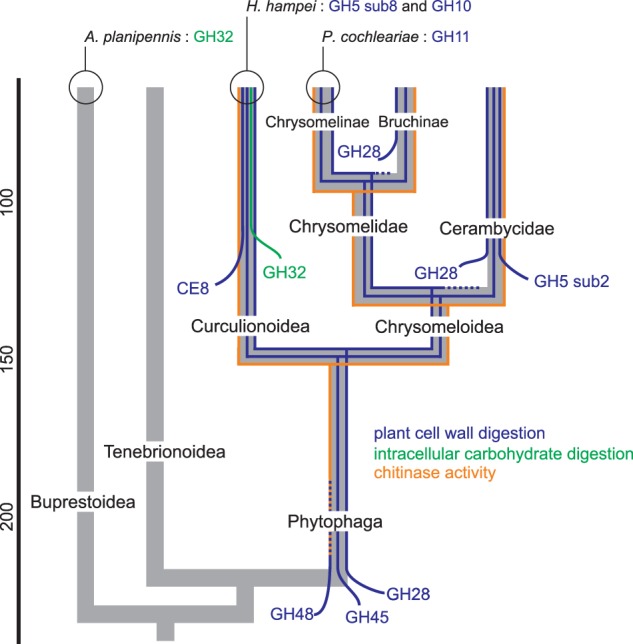
“Within Coleoptera, the most diverse monophyletic clade of herbivorous beetles is the Phytophaga group (harboring ~80% of all plant feeding bee-tles) and contains the superfamilies Chrysomeloidea and Curculionoidea (Farrell 1998; Marvaldi et al. 2009) (fig.”
Bajda, S., Dermauw, W., Greenhalgh, R., Nauen, R., Tirry, L., Clark, R. M., & Leeuwen, T. V. (2015) · BMC Genomics · doi:10.1186/s12864-015-2157-1 · Cited by 112
Chemical structures of green coffee bean polysaccharides
Bradbury, A. G. W., & Halliday, D. J. (1990) · Journal of Agricultural and Food Chemistry · doi:10.1021/jf00092a010 · Cited by 112 · cited 1×
“Seeds of the coffee plant consist of 60% of recalcitrant polymeric carbohydrates of which galactomannan is the major storage product (Bradbury and Halliday 1990).”
Yang, F., Jensen, J. D., Svensson, B., Jørgensen, H. J. L., Collinge, D. B., & Finnie, C. (2011) · Molecular Plant Pathology · doi:10.1111/j.1364-3703.2011.00759.x · Cited by 110
Pauchet, Y., & Heckel, D. G. (2013) · Proceedings of the Royal Society B Biological Sciences · doi:10.1098/rspb.2013.1021 · Cited by 107 · cited 6×
“Enzyme kinetics also show that post-transfer gene duplications have led to functional diversifica-tion, potentially further expanding the host plant range of the beetles (Sugimura et al. 2003; Lee et al. 2005; Pauchet and Heckel 2013; Xia et al. 2013; Kirsch et al. 2014, 2016; Pauchet et al. 2014a).”
InfluentialSelf-citationAhn, S., Dermauw, W., Wybouw, N., Heckel, D. G., & Leeuwen, T. V. (2014) · Insect Biochemistry and Molecular Biology · doi:10.1016/j.ibmb.2014.04.003 · Cited by 103 · cited 3×
“Moreover, horizontally transferred genes have a tendency to duplicate and form novel multi-gene families across the four lineages, strongly indicative of functional diversification (Danchin et al. 2010; Dermauw et al. 2013; Ahn et al. 2014; Kirsch et al. 2014).”
Self-citationCobbs, C. C., Heath, J. J., Stireman, J. O., & Abbot, P. (2013) · Molecular Phylogenetics and Evolution · doi:10.1016/j.ympev.2013.03.012 · Cited by 100 · cited 1×
“…code for functional enzymes and likely offer phytophagous arthropods the unique ability to endogenously produce carotenoids, which are conjugated isoprenoid molecules (Moran and Jarvik 2010; Grbic et al. 2011; Altincicek et al. 2012; Novakova and Moran 2012; Bryon et al. 2013; Cobbs et al. 2013).”
Bryon, A., Wybouw, N., Dermauw, W., Tirry, L., & Leeuwen, T. V. (2013) · BMC Genomics · doi:10.1186/1471-2164-14-815 · Cited by 99 · cited 1×
“…code for functional enzymes and likely offer phytophagous arthropods the unique ability to endogenously produce carotenoids, which are conjugated isoprenoid molecules (Moran and Jarvik 2010; Grbic et al. 2011; Altincicek et al. 2012; Novakova and Moran 2012; Bryon et al. 2013; Cobbs et al. 2013).”
Self-citationVega, F. E., Brown, S. M., Chen, H., Shen, E., Nair, M. B., Ceja-Navarro, J. A., Brodie, E., Infante, F., Dowd, P. F., & Pain, A. (2015) · Scientific Reports · doi:10.1038/srep12525 · Cited by 95
Fujita, K., Shimomura, K., Yamamoto, K.-I., Yamashita, T., & Suzuki, K. (2006) · Biochemical and Biophysical Research Communications · doi:10.1016/j.bbrc.2006.04.126 · Cited by 93 · cited 1×
“Such functional diversification is shown by microbial GH48 genes, which no longer code for PCWDEs with cellobiosidase activity, but have been co-opted by the beetles to serve as chitinases (Fujita et al. 2006; Sukharnikov et al. 2012) (fig.”
Anthranilate synthase in microorganisms and plants
Romero, R., Roberts, M. F., & Phillipson, J. D. (1995) · Phytochemistry · doi:10.1016/0031-9422(95)00010-5 · Cited by 93
Pauchet, Y., Wilkinson, P., van Munster, M., Augustin, S., Pauron, D., & ffrench‐Constant, R. H. (2009) · Insect Biochemistry and Molecular Biology · doi:10.1016/j.ibmb.2009.04.001 · Cited by 92 · cited 2×
“The first nucleotide and amino acid sequences of horizontally transferred genes in plant feeding arthropods were mainly uncovered by transcriptomic and proteomic studies (Pauchet et al. 2008, 2009, 2010b; Kirsch et al. 2012).”
Self-citationNováková, E., & Moran, N. A. (2011) · Molecular Biology and Evolution · doi:10.1093/molbev/msr206 · Cited by 92 · cited 2×
“Clear-cut examples of completely novel genes in plant feeding arthropods include genes that code for carotenoid cyclases/synthases, chorismate mutase (CM), and cyanase (Grbic et al. 2011; Novakova and Moran 2012; Wybouw et al. 2012; Sloan et al. 2014).”
Recurrent Domestication by Lepidoptera of Genes from Their Parasites Mediated by Bracoviruses
Gasmi, L., Boulain, H., Gauthier, J., Hua‐Van, A., Musset, K., Jakubowska, A. K., Aury, J., Volkoff, A., Huguet, E., Herrero, S., et al. (2015) · PLoS Genetics · doi:10.1371/journal.pgen.1005470 · Cited by 89 · cited 1×
“…to the Curculionoidea and Buprestoidea superfamilies, the dip-teran Mayetolia destructor and in the chelicerate spider mite T. urticae , suggestive of multiple, independent HGT events (Grbic et al. 2011; Keeling et al. 2013; Sun et al. 2013; Pedezzi et al. 2014; Zhao et al. 2014, 2015) (figs.”
Scully, E. D., Hoover, K., Carlson, J. E., Tien, M., & Geib, S. M. (2013) · BMC Genomics · doi:10.1186/1471-2164-14-850 · Cited by 86 · cited 1×
“First, transcriptomic and proteomic studies show that transcription and translation of these foreign genes is concentrated in the mid-and hindgut, where the digestion takes place (Pauchet et al. 2009, 2014a; Kirsch et al. 2012, 2014; Pauchet and Heckel 2013;Scully et al. 2013).”
Kirsch, R., Wielsch, N., Vogel, H., Svatoš, A., Heckel, D. G., & Pauchet, Y. (2012) · BMC Genomics · doi:10.1186/1471-2164-13-587 · Cited by 82 · cited 3×
“…some laterally acquired genes subsequently duplicated and diversified in a lineage-specific manner, while others were lost and replaced by other, more recently laterally acquired GH genes (Shen et al. 2003; Kirsch et al. 2012, 2014; Eyun et al. 2014; ; Pauchet et al. 2014b; Vega et al. 2015) (fig.”
Self-citationStauber, E. J., Kuczka, P., van Ohlen, M., Vogt, B., Janowitz, T., Piotrowski, M., Beuerle, T., & Wittstock, U. (2012) · PLoS ONE · doi:10.1371/journal.pone.0035545 · Cited by 81 · cited 1×
“Furthermore, it is shown in caterpillars that CAS activity is widespread and inducible upon exposure to dietary cyanide (Witthohn and Naumann, 1987; Meyers and Ahmad 1991; Stauber et al. 2012).”
Wheat, C. W., & Wahlberg, N. (2013) · Systematic Biology · doi:10.1093/sysbio/sys074 · Cited by 80 · cited 2×
“Although these genes are not yet functionally characterized, GH31 genes often code for enzymes that cleave oligosaccharides (Cantarel et al. 2009; Sun et al. 2013; Wheeler et al. 2013).”
Chorismate mutase in microorganisms and plants
Romero, R. M., ROBERTS, M. F., & Phillipson, J. D. (1995) · Phytochemistry · doi:10.1016/0031-9422(95)00408-y · Cited by 80 · cited 1×
“CM is a key branch-point enzyme that converts chorismate to prephenate (Romero et al. 1995).”
Zandleven, J., BELDMAN, G., Bosveld, M., Schols, H. A., & Voragen, A. G. J. (2006) · Carbohydrate Polymers · doi:10.1016/j.carbpol.2006.02.015 · Cited by 80
Paganini, J., Campan-Fournier, A., Rocha, M. D., Gouret, P., Pontarotti, P., Wajnberg, É., Abad, P., & Danchin, É. (2012) · PLoS ONE · doi:10.1371/journal.pone.0050875 · Cited by 80 · cited 1×
“Studies have found that some laterally transferred genes in animal recipients are linked to genomic regions enriched in TEs (Acuna et al. 2012; Paganini et al. 2012; Flot et al. 2013; Pauchet and Heckel 2013; Gasmi et al. 2015).”
Danchin, É., Guzeeva, E. A., Mantelin, S., Berepiki, A., & Jones, J. T. (2016) · Molecular Biology and Evolution · doi:10.1093/molbev/msw041 · Cited by 78
Pauchet, Y., Kirsch, R., Giraud, S., Vogel, H., & Heckel, D. G. (2014) · Insect Biochemistry and Molecular Biology · doi:10.1016/j.ibmb.2014.03.004 · Cited by 72 · cited 6×
“For instance, cerambycid beetles are wood-feeders and can metabolize xylan, a polysaccharide abundantly present in woody plant tissues, by the enzymes coded by horizontally acquired sub-family 2 genes of the extremely diverse GH5 family (Pauchet et al. 2014a) (fig.”
InfluentialSelf-citationEyun, S., Wang, H., Pauchet, Y., ffrench‐Constant, R. H., Benson, A. K., Valencia‐Jiménez, A., Moriyama, E. N., & Siegfried, B. D. (2014) · PLoS ONE · doi:10.1371/journal.pone.0094052 · Cited by 72 · cited 1×
“…some laterally acquired genes subsequently duplicated and diversified in a lineage-specific manner, while others were lost and replaced by other, more recently laterally acquired GH genes (Shen et al. 2003; Kirsch et al. 2012, 2014; Eyun et al. 2014; ; Pauchet et al. 2014b; Vega et al. 2015) (fig.”
Self-citationLee, S. J., Lee, K. S., Kim, S., Gui, Z. Z., Kim, Y. S., Yoon, H. J., Kim, I., Kang, P., Sohn, H. D., & Jin, B. R. (2005) · Comparative Biochemistry and Physiology Part B Biochemistry and Molecular Biology · doi:10.1016/j.cbpc.2004.12.003 · Cited by 65 · cited 1×
“Enzyme kinetics also show that post-transfer gene duplications have led to functional diversifica-tion, potentially further expanding the host plant range of the beetles (Sugimura et al. 2003; Lee et al. 2005; Pauchet and Heckel 2013; Xia et al. 2013; Kirsch et al. 2014, 2016; Pauchet et al. 2014a).”
Horizontal gene transfer in silkworm, Bombyx mori
Zhu, B., Lou, M.-M., Xie, G., Zhang, G., Zhou, X., Li, B., & Jin, G. (2011) · BMC Genomics · doi:10.1186/1471-2164-12-248 · Cited by 61 · cited 1×
“Further phylogenetic analysis and genome mining shows that close homologues of the B. mori GH32 gene are present in all lepidopteran genomes sequenced so far, suggestive of a single ancient HGT about 145-200 MYA (Li et al. 2011; Zhu et al. 2011; Sun et al. 2013).”
Characterization of an Ancient Lepidopteran Lateral Gene Transfer
Wheeler, D., Redding, A. J., & Werren, J. H. (2013) · PLoS ONE · doi:10.1371/journal.pone.0059262 · Cited by 60 · cited 2×
“Although these genes are not yet functionally characterized, GH31 genes often code for enzymes that cleave oligosaccharides (Cantarel et al. 2009; Sun et al. 2013; Wheeler et al. 2013).”
Multiple ancient horizontal gene transfers and duplications in lepidopteran species
Sun, B., Xiao, J., He, S., Liu, L., Murphy, R. W., & Huang, D. (2012) · Insect Molecular Biology · doi:10.1111/imb.12004 · Cited by 56 · cited 5×
“Further phylogenetic analysis and genome mining shows that close homologues of the B. mori GH32 gene are present in all lepidopteran genomes sequenced so far, suggestive of a single ancient HGT about 145-200 MYA (Li et al. 2011; Zhu et al. 2011; Sun et al. 2013).”
InfluentialWybouw, N., Balabanidou, V., Ballhorn, D. J., Dermauw, W., Grbić, M., VONTAS, J. G., & Leeuwen, T. V. (2012) · Insect Biochemistry and Molecular Biology · doi:10.1016/j.ibmb.2012.08.002 · Cited by 56
Self-citationShen, Z., Denton, M., Mutti, N. S., Pappan, K. L., Kanost, M. R., Reese, J. C., & Reeck, G. R. (2003) · Journal of Insect Science · doi:10.1093/jis/3.1.24 · Cited by 56
Sequence, Structure, and Evolution of Cellulases in Glycoside Hydrolase Family 48
Sukharnikov, L. O., Alahuhta, M., Brunecky, R., Upadhyay, A. A., Himmel, M. E., Lunin, V. V., & Zhulin, I. B. (2012) · Journal of Biological Chemistry · doi:10.1074/jbc.m112.405720 · Cited by 56 · cited 1×
“Such functional diversification is shown by microbial GH48 genes, which no longer code for PCWDEs with cellobiosidase activity, but have been co-opted by the beetles to serve as chitinases (Fujita et al. 2006; Sukharnikov et al. 2012) (fig.”
van Ohlen, M., Herfurth, A.-M., Kerbstadt, H., & Wittstock, U. (2015) · Insect Biochemistry and Molecular Biology · doi:10.1016/j.ibmb.2015.12.004 · Cited by 56 · cited 2×
“Functional characterization of both mite and lepidopteran recombinant CAS enzymes shows that they convert toxic cyanide rapidly into b -cyanoalanine (Wybouw et al. 2014; Van Ohlen et al. 2016).”
Shelomi, M., Jasper, W. C., Atallah, J., Kimsey, L. S., & Johnson, B. R. (2014) · BMC Genomics · doi:10.1186/1471-2164-15-917 · Cited by 55 · cited 3×
“3), were also laterally transferred into the Phasmatodea and Hemiptera lineages and were subsequently duplicated within their genomes (Allen and Mertens 2008; Celorio-Mancera et al. 2008; Shelomi et al. 2014) (fig.”
Sequencing and De Novo Assembly of the Western Tarnished Plant Bug (Lygus hesperus) Transcriptome
Hull, J. J., Geib, S. M., Fabrick, J. A., & Brent, C. S. (2013) · PLoS ONE · doi:10.1371/journal.pone.0055105 · Cited by 55 · cited 1×
“Within Hemiptera, the distribution of laterally acquired polygalacturonase genes seems to be limited to species of the Mirinae, a subfamily within the large and diverse Miridae family (Allen and Mertens 2008; Celorio-Mancera et al. 2008; Hull et al. 2013; Shelomi et al. 2014).”
Pathogen-origin horizontally transferred genes contribute to the evolution of Lepidopteran insects
Li, Z., Shen, Y.-H., Xiang, Z.-H., & Zhang, Z. (2011) · BMC Evolutionary Biology · doi:10.1186/1471-2148-11-356 · Cited by 54 · cited 3×
“Arthropods have widespread and intimate relationships with bacterial communities which consist of free-living bacterial species and/or of symbiotic bacteria that permanently reside within certain arthropod organs (Buchner 1965; Hotopp et al. 2007; Hotopp 2011; Li et al. 2011).”
Evolution and Function of Endogenous Termite Cellulases
Lo, N. C., Tokuda, G., & Watanabe, H. (2010) · Springer eBooks · doi:10.1007/978-90-481-3977-4_3 · Cited by 51 · cited 1×
“For instance, using this extensive sequence dataset, phylogenetic analysis finally concluded that a much-debated putative horizontally transferred gene in termites is instead much more likely to be a typical vertically transmitted gene, present in various other arthropod lineages (Lo et al. 2011).”
Vanholme, B., Kast, P., Haegeman, A., Jacob, J., Grunewald, W., & Gheysen, G. (2008) · Molecular Plant Pathology · doi:10.1111/j.1364-3703.2008.00521.x · Cited by 50 · cited 1×
“In plant parasitic nematodes, it has been proposed that by horizontal transfer of a CM gene, nematodes are able to modulate the plant shikimate pathway to their own benefit (Lambert et al. 1999; Vanholme et al. 2009; Haegeman et al. 2011).”
‘Osmotic pump‘ feeding by coreids
Miles, P. W., & Taylor, G. S. (1994) · Entomologia Experimentalis et Applicata · doi:10.1111/j.1570-7458.1994.tb01852.x · Cited by 49 · cited 1×
“These mirid insects digest plant material extra-orally by secreting enzymatically active saliva through their stylet into the host (Miles and Taylor 1994).”
Beesley, S. G., Compton, S. G., & Jones, D. A. (1985) · Journal of Chemical Ecology · doi:10.1007/bf00987603 · Cited by 47 · cited 1×
“In contrast, animals have less efficient cyanide detoxi-fication pathways, making cyanide an effective allelochemical (Beesley et al. 1985; Zagrobelny et al. 2008).”
Pedezzi, R., Fonseca, F. P. P., Júnior, C. D. S., Kishi, L. T., Terra, W. R., & Henrique‐Silva, F. (2014) · Insect Biochemistry and Molecular Biology · doi:10.1016/j.ibmb.2014.10.005 · Cited by 46 · cited 3×
“As within Lepidoptera, the transferred gene into the Curculionoidea superfamily still codes for a functional b -fructofuranosidase (Pedezzi et al. 2014).”
How the rice weevil breaks down the pectin network: Enzymatic synergism and sub-functionalization
Kirsch, R., Heckel, D. G., & Pauchet, Y. (2016) · Insect Biochemistry and Molecular Biology · doi:10.1016/j.ibmb.2016.02.007 · Cited by 45 · cited 4×
“Bacterial pectin methyles-terase genes have been transferred to an ancestral species within the Curculionoidea superfamily and could serve a similar function in other descendent weevil species (Pauchet et al. 2010a; Evangelista et al. 2015; Kirsch et al. 2016).”
InfluentialSelf-citationCyanogenesis?a general phenomenon in the lepidoptera?
Witthohn, K., & Naumann, C. M. (1987) · Journal of Chemical Ecology · doi:10.1007/bf01013229 · Cited by 43 · cited 2×
“By endogenously producing this cyanide detoxifying enzyme, some Lepidoptera could not only colonize a whole new range of host plants, but also develop their own cyanogenic defenses to deter predators (Witthohn and Naumann 1987; Zagrobelny et al. 2008).”
Shen, Z., Denton, M., Mutti, N. S., Pappan, K. L., Kanost, M. R., Reese, J. C., & Reeck, G. R. (2003) · Journal of Insect Science · doi:10.1673/031.003.2401 · Cited by 41 · cited 1×
“…some laterally acquired genes subsequently duplicated and diversified in a lineage-specific manner, while others were lost and replaced by other, more recently laterally acquired GH genes (Shen et al. 2003; Kirsch et al. 2012, 2014; Eyun et al. 2014; ; Pauchet et al. 2014b; Vega et al. 2015) (fig.”
Zhao, C., Doucet, D. S., & Mittapalli, O. (2014) · Insect Molecular Biology · doi:10.1111/imb.12127 · Cited by 40 · cited 2×
“…to the Curculionoidea and Buprestoidea superfamilies, the dip-teran Mayetolia destructor and in the chelicerate spider mite T. urticae , suggestive of multiple, independent HGT events (Grbic et al. 2011; Keeling et al. 2013; Sun et al. 2013; Pedezzi et al. 2014; Zhao et al. 2014, 2015) (figs.”
Midgut α-glucosidase and β-fructosidase from Erinnyis ello larvae and imagoes
dos Santos, C. D., & Terra, W. R. (1986) · Insect Biochemistry · doi:10.1016/0020-1790(86)90119-8 · Cited by 39 · cited 1×
“Indeed, early studies indicate that leaf-feeding caterpillars harvest this energy by a dual a - and b -glycosidase activity in their midgut, which breaks disaccharides down into monosaccharides (Santos and Terra 1986; Sumida et al. 1994).”
Shen, Z., Reese, J. C., & Reeck, G. R. (1996) · Insect Biochemistry and Molecular Biology · doi:10.1016/0965-1748(95)00098-4 · Cited by 39 · cited 1×
“Second, in vitro functional expression assays unambiguously prove that these GH genes continue to code for functionally active enzymes that cleave cell wall constituents (Shen et al. 1996; Padilla-Hurtado et al. 2012; Pauchet and Heckel 2013; Kirsch et al. 2014; Pauchet et al. 2014a).”
Allen, M. L., & Mertens, J. A. (2008) · Journal of Insect Science · doi:10.1673/031.008.2701 · Cited by 38
Link between ?-3-cyanoalanine synthase activity and differential cyanide sensitivity of insects
Meyers, D., & Ahmad, S. (1991) · Biochimica et Biophysica Acta (BBA) - General Subjects · doi:10.1016/0304-4165(91)90252-c · Cited by 36 · cited 1×
“Furthermore, it is shown in caterpillars that CAS activity is widespread and inducible upon exposure to dietary cyanide (Witthohn and Naumann, 1987; Meyers and Ahmad 1991; Stauber et al. 2012).”
Meng, Y., Katsuma, S., Mita, K., & Shimada, T. (2009) · Genes to Cells · doi:10.1111/j.1365-2443.2008.01257.x · Cited by 35 · cited 1×
“Both the functional replacement of pre-existing metabolic traits as well as the acquisition of completely new ones by HGT have occurred in phytophagous arthropod lineages (Meng et al. 2009; Moran and Jarvik 2010; Grbic et al. 2011; Sun et al. 2013; Luan et al. 2015).”
Celorio‐Mancera, M. D. L. P., Allen, M. L., Powell, A. L. T., Ahmadi, H. Z., Salemi, M., Phinney, B. S., Shackel, K. A., Greve, L. C., Teuber, L. R., & Labavitch, J. M. (2008) · Arthropod-Plant Interactions · doi:10.1007/s11829-008-9050-7 · Cited by 35
Cloning and expression of an endo-1,4-β-xylanase from the coffee berry borer, Hypothenemus hampei
Hurtado, B. E. P., Flórez-Ramos, C. P., Aguilera-Gálvez, C., Medina-Olaya, J., Ramírez-Sanjuan, A., Rubio-Gómez, J. D., & Acuña-Zornosa, R. (2012) · BMC Research Notes · doi:10.1186/1756-0500-5-23 · Cited by 29
The rhizome of life: what about metazoa?
Ramulu, H. G., Raoult, D., & Pontarotti, P. (2012) · Frontiers in Cellular and Infection Microbiology · doi:10.3389/fcimb.2012.00050 · Cited by 28 · cited 1×
“Recent comparative studies show a high prevalence of HGT in arthropod lineages, relative to other animal clades (Hotopp et al. 2007; Hotopp 2011; Ramulu et al. 2012), which raises the question of how these genes and the traits they encode shape arthropod evolution.”
Sucrose hydrolases from the midgut of the sugarcane stalk borer Diatraea saccharalis
Carneiro, C. N. B., Isejima, E. M., Samuels, R. I., & Silva, C. P. (2004) · Journal of Insect Physiology · doi:10.1016/j.jinsphys.2004.09.011 · Cited by 27 · cited 1×
“However, more recent studies started to indicate that these digestive enzymes might be expressed by the insects themselves and not by associated symbionts ( et al. 2004; Pauchet et al. 2008).”
Shen, Z., Pappan, K. L., Mutti, N. S., He, Q.-J., Denton, M., Zhang, Y., Kanost, M. R., Reese, J. C., & Reeck, G. R. (2005) · Journal of Insect Science · doi:10.1093/jis/5.1.21 · Cited by 25
Evangelista, D. E., de Paula, F. F. P., Rodrigues, A. L., & Henrique‐Silva, F. (2015) · Journal of Insect Science · doi:10.1093/jisesa/ieu168 · Cited by 23
Krishnankutty, R., Guyot, S., Abdulhameed, S., Haridas, M., Perraud, I. G., Roussos, S., & Augur, C. (2010) · Process Biochemistry · doi:10.1016/j.procbio.2010.02.019 · Cited by 21 · cited 1×
“This family of dioxygenases, restricted to microorganisms, catalyze the oxygenolytic fission of aromatic structures between adjacent hydroxyl groups (Vaillancourt et al. 2006; Roopesh et al. 2010, 2012; Yang et al. 2012).”
Xia, D., Wei, Y., Zhang, G., Zhao, Q., Zhang, Y., Xiang, Z., & Lu, C. C. (2012) · Gene · doi:10.1016/j.gene.2012.08.044 · Cited by 20 · cited 1×
“Enzyme kinetics also show that post-transfer gene duplications have led to functional diversifica-tion, potentially further expanding the host plant range of the beetles (Sugimura et al. 2003; Lee et al. 2005; Pauchet and Heckel 2013; Xia et al. 2013; Kirsch et al. 2014, 2016; Pauchet et al. 2014a).”
Shen, Z., Manning, G., Reese, J. C., & Reeck, G. R. (1999) · Insect Biochemistry and Molecular Biology · doi:10.1016/s0965-1748(98)00127-1 · Cited by 19 · cited 1×
“Rice weevil, a seed specialist, is however able to demethylate pectin through an independent horizontal transmission of bacterial genes of the carbohydrate esterase family 8 (Shen et al. 1999, 2005; Pauchet et al. 2010a; Kirsch et al. 2016).”
Pauchet, Y., Saski, C. A., Feltus, F. A., Luyten, I., Quesneville, H., & Heckel, D. G. (2014) · Insect Molecular Biology · doi:10.1111/imb.12081 · Cited by 15 · cited 2×
“…some laterally acquired genes subsequently duplicated and diversified in a lineage-specific manner, while others were lost and replaced by other, more recently laterally acquired GH genes (Shen et al. 2003; Kirsch et al. 2012, 2014; Eyun et al. 2014; ; Pauchet et al. 2014b; Vega et al. 2015) (fig.”
Self-citationDalmasso, M. C., Carmona, S. J., Angel, S. O., & Agüero, F. (2014) · BMC Genomics · doi:10.1186/1471-2164-15-21 · Cited by 13
Sumida, M., Yuan, X. L., & Matsubara, F. (1994) · Comparative Biochemistry and Physiology Part B Comparative Biochemistry · doi:10.1016/0305-0491(94)90050-7 · Cited by 11 · cited 1×
“Indeed, early studies indicate that leaf-feeding caterpillars harvest this energy by a dual a - and b -glycosidase activity in their midgut, which breaks disaccharides down into monosaccharides (Santos and Terra 1986; Sumida et al. 1994).”
Krishnankutty, R., Abhilash, J., Haridas, M., Abdulhameed, S., Perraud, I. G., Roussos, S., & Augur, C. (2011) · Molecular Simulation · doi:10.1080/08927022.2011.608672 · Cited by 3
Alotibi, R., Al-Ahmadi, A., Ata, M. M. A., Karim, S., Huwait, E. A., Gari, M. A., Al-Qahtani, M. H., Schulten, H.-J., & Al-Maghrabi, J. A. (2014) · BMC Genomics · doi:10.1186/1471-2164-15-s2-p21 · Cited by 2
Cited by
The evolution and genomic basis of beetle diversity
McKenna, D. D., Shin, S., Ahrens, D., Balke, M., Beza-Beza, C., Clarke, D. J., Donath, A., Escalona, H. E., Friedrich, F., Letsch, H., et al. (2019) · Proceedings of the National Academy of Sciences · doi:10.1073/pnas.1909655116 · Cited by 606
“For GH5-2, GH28, GH45, and GH32, a similar gene has been independently horizontally transferred to a plant-feeding organism outside of Insecta (16).”
InfluentialFunctional horizontal gene transfer from bacteria to eukaryotes
Husnik, F., & McCutcheon, J. P. (2018) · Nature Reviews Microbiology · doi:10.1038/nrmicro.2017.137 · Cited by 480
Division of labor in honey bee gut microbiota for plant polysaccharide digestion
Zheng, H., Perreau, J., Powell, J. E., Han, B., Zhang, Z., Kwong, W. K., Tringe, S. G., & Moran, N. A. (2019) · Proceedings of the National Academy of Sciences · doi:10.1073/pnas.1916224116 · Cited by 358
“P polysaccharides are abundant in many animal diets, but animals generally lack enzymes to digest these substrates (1).”
BackgroundWhitefly hijacks a plant detoxification gene that neutralizes plant toxins
Xia, J., Guo, Z., Yang, Z., Han, H., Wang, S., Xu, H., Yang, X., Yang, F., Wu, Q., Xie, W., et al. (2021) · Cell · doi:10.1016/j.cell.2021.02.014 · Cited by 298
Potential Effects of Horizontal Gene Exchange in the Human Gut
Lerner, A., Matthias, T., & Aminov, R. (2017) · Frontiers in Immunology · doi:10.3389/fimmu.2017.01630 · Cited by 198
Metadata
- Authors
- Wybouw, N., Pauchet, Y., Heckel, D. G., & Van Leeuwen, T.
- Affiliations
- University of Amsterdam (NL)
- Max Planck Institute for Chemical Ecology (DE)
- Corresponding author
- Wybouw, Nicky
- Venue
- Genome Biology and Evolution
- Publisher
- Oxford University Press (OUP)
- Published
- 2016-06
- Volume
- 8
- Issue
- 6
- Pages
- 1785-1801
- ISSN
- 1759-6653 (ISSN-L)
- PMC
- PMC4943190
- OpenAlex
- W2432572080
- Semantic Scholar
- 8c6db48b95bdd6fc88dcd10ba8be8db425851ea9
- Cited by
- 209
- References
- 152
- Citations by year
- 2026: 16 · 2025: 23 · 2024: 16 · 2023: 19 · 2022: 32 · 2021: 23 · 2020: 28 · 2019: 13 · 2018: 22 · 2017: 14 · 2016: 3
- FWCI
- 20.30
- Type
- journal article
- Language
- en
- Open access
- gold
- doi.org
- Licence
- cc-by-nc
- Locations
- Genome Biology and Evolution (publishedVersion, cc-by-nc)
- Europe PMC (PubMed Central) (publishedVersion, cc-by-nc)
- PubMed Central (publishedVersion, cc-by-nc)
- PubMed (publishedVersion)
- Ghent University Academic Bibliography (Ghent University) (submittedVersion, other-oa)
- UvA-DARE (University of Amsterdam) (submittedVersion, cc-by-nc)
- MPG.PuRe (Max Planck Society) (submittedVersion, other-oa)
- Data Archiving and Networked Services (DANS) (submittedVersion, other-oa)
- Max Planck Digital Library (submittedVersion, other-oa)
- HighWire Press Open Archive (submittedVersion)
- Funders
- European Commission (618105, HORIZON2020, 658795)
- Fonds Wetenschappelijk Onderzoek (G.0093.12N, G053815N)
- Max-Planck-Gesellschaft
- Vlaamse regering
- Topics
- Life Sciences › Biochemistry, Genetics and Molecular Biology › Genetics › Chromosomal and Genetic Variations
- Life Sciences › Agricultural and Biological Sciences › Insect Science › Insect symbiosis and bacterial influences
- Life Sciences › Biochemistry, Genetics and Molecular Biology › Molecular Biology › Genomics and Phylogenetic Studies
- Keywords
- horizontal gene transfer, arthropod herbivory, phytophagy, phytophagous insects, plant-feeding mites, plant defense metabolites, detoxification, host plant colonization, eukaryotic evolution, animal evolution
- MeSH terms
- Animals, Arthropods, Biological Evolution, Phylogeny, Plants, Ecosystem, Evolution, Molecular, Gene Transfer, Horizontal, Herbivory
About these checks
Registry, retraction, Cites and statistics results are computed, not judged, with one exception: a printed reference that no index lists is read once by a model before it counts as a citation error. Claims are extracted by a model and kept only when their quote appears verbatim in the text; each cited source is then checked, with a model’s help, for whether it says what the claim relies on. Those verdicts can be wrong — read the claim’s quote and the cited source before relying on one.
Statistics and arithmetic are recomputed, not judged.
Confidence bands are shown only for fields calibrated on our annotated test set. None is calibrated yet, so no band is shown.
What counts as a claim ›How we measure confidence ›How we check this ›
Are you an author, or do you see a problem with this page? Request a review
Data sources
Bibliographic data: Semantic Scholar, OpenAlex, Crossref.
Contains information from the Semantic Scholar Academic Graph Datasets, made available under the ODC Attribution License (ODC-BY 1.0).
Semantic Scholar’s data is described in: Kinney, R., et al. (2023). The Semantic Scholar Open Data Platform. arXiv:2301.10140.
