

Frameworks for Proof-of-Concept Clinical Trials of Interventions That Target Fundamental Aging Processes
Open accessThe DOI matches its Crossref record; 55 of the 55 references it cites were found in a registry or an index.
Abstract
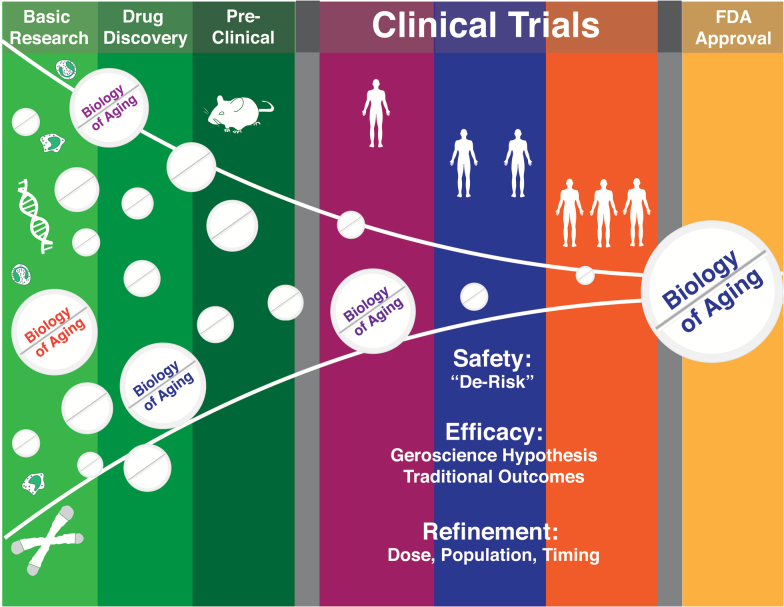
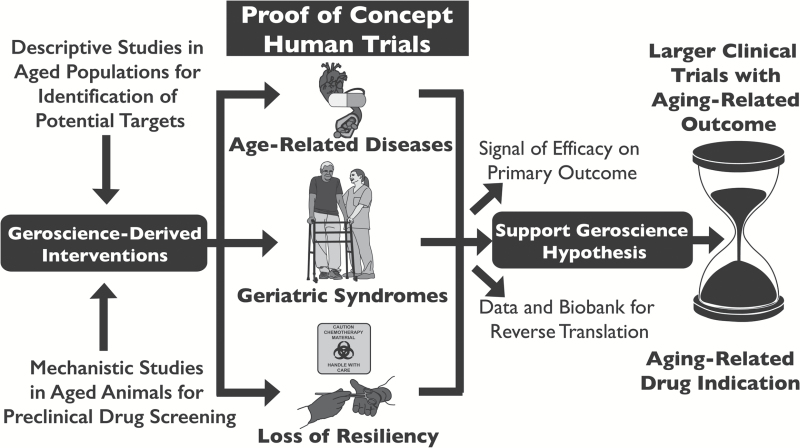
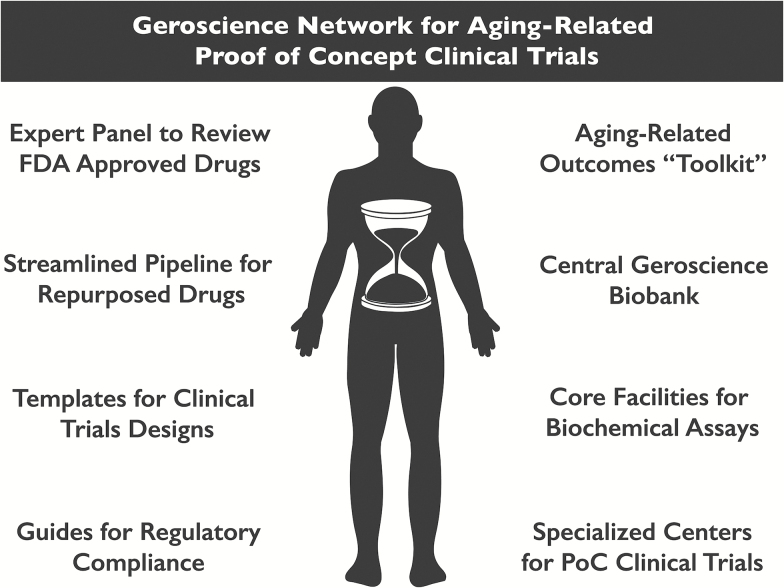
Therapies targeted at fundamental processes of aging may hold great promise for enhancing the health of a wide population by delaying or preventing a range of age-related diseases and conditions-a concept dubbed the "geroscience hypothesis." Early, proof-of-concept clinical trials will be a key step in the translation of therapies emerging from model organism and preclinical studies into clinical practice. This article summarizes the outcomes of an international meeting partly funded through the NIH R24 Geroscience Network, whose purpose was to generate concepts and frameworks for early, proof-of-concept clinical trials for therapeutic interventions that target fundamental processes of aging. The goals of proof-of-concept trials include generating preliminary signals of efficacy in an aging-related disease or outcome that will reduce the risk of conducting larger trials, contributing data and biological samples to support larger-scale research by strategic networks, and furthering a dialogue with regulatory agencies on appropriate registration indications. We describe three frameworks for proof-of-concept trials that target age-related chronic diseases, geriatric syndromes, or resilience to stressors. We propose strategic infrastructure and shared resources that could accelerate development of therapies that target fundamental aging processes.
Overview
The claims and statistics of this paper haven’t been checked yet.
Free: it reads the open-access text and checks the first 5 claims that cite a source we can check. Create a free account to check every claim.
Integrity signals
Registry
Cites
Statistics
Figures
Verification
Claims the paper makes
The claims and statistics of this paper haven’t been checked yet.
Free: it reads the open-access text and checks the first 5 claims that cite a source we can check. Create a free account to check every claim.
Claims other papers make about this one
Each is checked against this paper’s own text: does it say what the citing paper says it does?
The source backs part of the claim, not all of it — or backs it for a different population, condition or comparison.
In the citing paper
“A barrier to advancing translation of these therapies through human trials is that intervention studies run for months or years, but human aging takes decades to cause disease46–48.”
From Effect of long-term caloric restriction on DNA methylation measures of biological aging in healthy adults from the CALERIE trial (2023) · cites this paper as [48]
Experimental — accuracy not yet measuredThe cited source says what the claim attributes to it.
In the citing paper
“This hypothesis posits that by targeting a fundamental ageing process such as cellular senescence, multiple age-related disorders can be delayed, prevented, or alleviated as a group, instead of one-at-a-time.”
The check wasn’t confident either way, so it gives no verdict — never disputed.
In the citing paper
“The PhenoAge and GrimAge clocks were developed to predict mortality risk at a single timepoint in mixed-age and older adults.”
From Effect of long-term caloric restriction on DNA methylation measures of biological aging in healthy adults from the CALERIE trial (2023) · cites this paper as [48]
Experimental — accuracy not yet measuredThe check wasn’t confident either way, so it gives no verdict — never disputed.
In the citing paper
“The GrimAge clock was based on analysis of eight plasma protein markers, smoking pack years, age, sex and mortality data from the Framingham Heart Study Offspring and Gen3 Cohorts (n = 2,751 participants aged 24–92 yr)47–49.”
From Effect of long-term caloric restriction on DNA methylation measures of biological aging in healthy adults from the CALERIE trial (2023) · cites this paper as [48]
Experimental — accuracy not yet measuredIn the citing paper
“aging leads to an increased incidence of glucose intolerance, insulin resistance, and diabetes, as well as a decrease in physical activity and exercise capacity, and impairment in skeletal muscle architecture and cardiac function”
From A Potent and Specific CD38 Inhibitor Ameliorates Age-Related Metabolic Dysfunction by Reversing Tissue NAD+ Decline (2018) · cites this paper as Justice et al., 2016
2 more claims about this paper
Create a free account to see every claim other papers make about this one.
Self-check
Percentages, sums and reported differences re-computed from the paper’s own numbers.
The self-check needs the paper’s full text.
Citations
Cites
Reduction in the incidence of type 2 diabetes with lifestyle intervention or metformin
(2002) · New England Journal of Medicine · doi:10.1056/nejmoa012512 · Cited by 19,011
Rapamycin fed late in life extends lifespan in genetically heterogeneous mice
Harrison, D. E., Strong, R., Sharp, Z. D., Nelson, J. F., Astle, C. M., Flurkey, K., Nadon, N. L., Wilkinson, J. E., Frenkel, K., Carter, C. S., et al. (2009) · Nature · doi:10.1038/nature08221 · Cited by 3,766
Ngandu, T., Lehtisalo, J., Solomon, A., Levälahti, E., Ahtiluoto, S., Antikainen, R., Bäckman, L., Hänninen, T., Jula, A., Laatikainen, T., et al. (2015) · The Lancet · doi:10.1016/s0140-6736(15)60461-5 · Cited by 3,689
Roberts, H. C., Denison, H. J., Martin, H. J., Patel, H. P., Syddall, H., Cooper, C., & Sayer, A. A. (2011) · Age and Ageing · doi:10.1093/ageing/afr051 · Cited by 3,001 · cited 1×
“For example, frailty and immobility are often closely related to sarcopenia, which has well-characterized physiological markers (eg, grip strength (27)) and emerging molecular markers (eg, senescent cell density or mTOR activity in skeletal muscle (28)).”
Geroscience: Linking Aging to Chronic Disease
Kennedy, B. K., Berger, S. L., Brunet, A., Campisi, J., Cuervo, A. M., Epel, E. S., Franceschi, C., Lithgow, G. J., Morimoto, R. I., Pessin, J. E., et al. (2014) · Cell · doi:10.1016/j.cell.2014.10.039 · Cited by 2,764
Bodine, S. C., Stitt, T. N., Gonzalez, M., Kline, W. O., Stover, G. L., Bauerlein, R., Zlotchenko, E., Scrimgeour, A., Lawrence, J. C., Glass, D. J., et al. (2001) · Nature Cell Biology · doi:10.1038/ncb1101-1014 · Cited by 2,752 · cited 1×
“Similarly, mTOR inhibition suppresses skeletal muscle hypertrophy (45), and so might exacerbate muscle atrophy from immobilization, such as following major surgery.”
The Achilles' heel of senescent cells: from transcriptome to senolytic drugs
Zhu, Y., Tchkonia, T., Pirtskhalava, T., Gower, A. C., Ding, H., Giorgadze, N., Palmer, A. K., Ikeno, Y., Hubbard, G. B., Lenburg, M., et al. (2015) · Aging Cell · doi:10.1111/acel.12344 · Cited by 2,584 · cited 2×
“Senolytic agents delay multiple frailty-associated phenotypes in progeroid mice (8) and Janus kinase (JAK1/2) inhibitors, which attenuate the senescence-associated secretory phenotype, alleviate frailty in older mice (6).”
Self-citationMTOR: a pharmacologic target for autophagy regulation
Kim, Y. C., & Guan, K.-L. (2015) · Journal of Clinical Investigation · doi:10.1172/jci73939 · Cited by 2,126 · cited 1×
“The geroscience-derived hypothesis is that rapamycin will protect against age-associated bone loss via activation of autophagy (18) in osteocytes (19).”
An Essential Role for Senescent Cells in Optimal Wound Healing through Secretion of PDGF-AA
Demaria, M., Ohtani, N., Youssef, S. A., Rodier, F., Toussaint, W., Mitchell, J. R., Laberge, R.-M., Vijg, J., Van Steeg, H., Dollé, M. E. T., et al. (2014) · Developmental Cell · doi:10.1016/j.devcel.2014.11.012 · Cited by 2,045
Inouye, S. K., Studenski, S., Tinetti, M. E., & Kuchel, G. A. (2007) · Journal of the American Geriatrics Society · doi:10.1111/j.1532-5415.2007.01156.x · Cited by 1,874 · cited 1×
“Examples include frailty, falls, cognitive decline, major mobility disability, delirium, pressure ulcers, and incontinence (20).”
Metformin improves healthspan and lifespan in mice
Martin-Montalvo, A., Mercken, E. M., Mitchell, S. J., Palacios, H. H., Mote, P. L., Scheibye-Knudsen, M., Gomes, A. P., Ward, T. M., Minor, R. K., Blouin, M.-J., et al. (2013) · Nature Communications · doi:10.1038/ncomms3192 · Cited by 1,445
Zhu, Y., Tchkonia, T., Fuhrmann‐Stroissnigg, H., Dai, H. M., Ling, Y. Y., Stout, M. B., Pirtskhalava, T., Giorgadze, N., Johnson, K. O., Giles, C. B., et al. (2016) · Aging Cell · doi:10.1111/acel.12445 · Cited by 1,148 · cited 2×
“Other promising compounds with varying degrees of evidence include the senolytic drugs (dasatinib and quercetin in isolation or in combination, navitoclax (9)), mitochondrial-targeted peptides, novel analogues of rapamycin, NAD therapies (nicotinamide riboside and nicotinamide mononucleoside), myostatin, and sirtuin a…”
Self-citationMeta-analysis: secondary prevention programs for patients with coronary artery disease
Clark, A. M., Hartling, L., Vandermeer, B., & McAlister, F. A. (2005) · Annals of Internal Medicine · doi:10.7326/0003-4819-143-9-200511010-00010 · Cited by 979
Xu, M., Tchkonia, T., Ding, H., Ogrodnik, M., Lubbers, E. R., Pirtskhalava, T., White, T. A., Johnson, K. O., Stout, M. B., Mezera, V., et al. (2015) · Proceedings of the National Academy of Sciences · doi:10.1073/pnas.1515386112 · Cited by 915 · cited 1×
“Senolytic agents delay multiple frailty-associated phenotypes in progeroid mice (8) and Janus kinase (JAK1/2) inhibitors, which attenuate the senescence-associated secretory phenotype, alleviate frailty in older mice (6).”
Self-citationNIH Toolbox for Assessment of Neurological and Behavioral Function
Gershon, R. C., Wagster, M. V., Hendrie, H. C., Fox, N. A., Cook, K. F., & Nowinski, C. J. (2013) · Neurology · doi:10.1212/wnl.0b013e3182872e5f · Cited by 895 · cited 1×
“Second, a national network could develop a standardized “toolkit” of aging-related outcomes that can be modularly incorporated into a variety of study designs, as has been developed in other fields (53).”
Effectiveness of Multicomponent Nonpharmacological Delirium Interventions: A Meta-analysis
Hshieh, T. T., Yue, J., Oh, E., Puelle, M., Dowal, S., Travison, T., & Inouye, S. K. (2015) · JAMA Internal Medicine · doi:10.1001/jamainternmed.2014.7779 · Cited by 801 · cited 1×
“Due to these multifactorial causes, the best evidence-based treatments are multicomponent interventions (21).”
Roos, C. M., Zhang, B., Palmer, A. K., Ogrodnik, M. B., Pirtskhalava, T., Thalji, N. M., Hagler, M., Jurk, D., Smith, L. A., Casaclang‐Verzosa, G., et al. (2016) · Aging Cell · doi:10.1111/acel.12458 · Cited by 738 · cited 1×
“Examples of this include reducing the burden of senescent cells in human tissues using senolytic drugs (anticancer drugs, high-dose flavonoids, or Bcl-2 family member inhibitors) (5,8,9), inhibiting mammalian target of rapamycin (mTOR) signaling with rapamycin (10), or enhancing AMP-activated protein kinase activity a…”
Self-citationHospitalization, Restricted Activity, and the Development of Disability Among Older Persons
Gill, T. M. (2004) · JAMA · doi:10.1001/jama.292.17.2115 · Cited by 623 · cited 2×
“In older adults, 50%– 80% of all new disability (defined as new inability to perform activities of daily living) begins suddenly after a hospitalization for injury or illness (31).”
Wilkinson, J. E., Burmeister, L., Brooks, S. V., Chan, C., Friedline, S., Harrison, D. E., Hejtmancik, J. F., Nadon, N., Strong, R., Wood, L. K., et al. (2012) · Aging Cell · doi:10.1111/j.1474-9726.2012.00832.x · Cited by 619
Targeting senescent cells enhances adipogenesis and metabolic function in old age
Xu, M., Palmer, A. K., Ding, H., Weivoda, M. M., Pirtskhalava, T., White, T. A., Sepe, A., Johnson, K. O., Stout, M. B., Giorgadze, N., et al. (2015) · eLife · doi:10.7554/elife.12997 · Cited by 604
Self-citationInterventions to slow aging in humans: are we ready?
Longo, V. D., Antebi, A., Bartke, A., Barzilai, N., Brown‐Borg, H. M., Caruso, C., Curiel, T. J., Cabo, R., Franceschi, C., Gems, D., et al. (2015) · Aging Cell · doi:10.1111/acel.12338 · Cited by 592 · cited 1×
“Interventions These frameworks can apply broadly to behavioral, dietary, nutraceutical, or pharmacological interventions (40,41).”
Self-citationFunctional Impact of 10 Days of Bed Rest in Healthy Older Adults
Kortebein, P., Symons, T. B., Ferrando, A., Paddon-Jones, D., Ronsen, O., Protas, E., Conger, S., Lombeida, J., Wolfe, R., & Evans, W. J. (2008) · The Journals of Gerontology Series A: Biological Sciences and Medical Sciences · doi:10.1093/gerona/63.10.1076 · Cited by 550 · cited 1×
“The primary outcome could be change in quadriceps muscle power and stair-climbing power at 1 week and 1 month postoperatively (39).”
Harrison, D. E., Strong, R., Allison, D. B., Ames, B. N., Astle, C. M., Atamna, H., Fernandez, E., Flurkey, K., Javors, M. A., Nadon, N. L., et al. (2014) · Aging Cell · doi:10.1111/acel.12170 · Cited by 445 · cited 1×
“feasible to publish effects detected at early time-points, but also wise to plan for longer-term follow-up in order to (1) increase likelihood of definitively testing the impact of the intervention, rather than concluding the trial at an early point but with an indeterminate outcome, (b) ascertain the durability of an…”
Cesari, M., Vellas, B., Hsu, F.-C., Newman, A. B., Doss, H., King, A. C., Manini, T. M., Church, T., Gill, T. M., Miller, M. E., et al. (2015) · The Journals of Gerontology Series A: Biological Sciences and Medical Sciences · doi:10.1093/gerona/glu099 · Cited by 374
Physiological geroscience: targeting function to increase healthspan and achieve optimal longevity
Seals, D. R., Justice, J. N., & LaRocca, T. J. (2016) · The Journal of Physiology · doi:10.1113/jphysiol.2014.282665 · Cited by 312 · cited 1×
“Interventions These frameworks can apply broadly to behavioral, dietary, nutraceutical, or pharmacological interventions (40,41).”
Self-citationEffect of Cytotoxic Chemotherapy on Markers of Molecular Age in Patients With Breast Cancer
Sanoff, H. K., Deal, A. M., Krishnamurthy, J., Torrice, C., Dillon, P., Sorrentino, J., Ibrahim, J. G., Jolly, T. A., Williams, G., Carey, L. A., et al. (2014) · JNCI: Journal of the National Cancer Institute · doi:10.1093/jnci/dju057 · Cited by 283
Goldman, D. P., Cutler, D., Rowe, J. W., Michaud, P.-C., Sullivan, J., Peneva, D., & Olshansky, S. J. (2013) · Health Affairs · doi:10.1377/hlthaff.2013.0052 · Cited by 274 · cited 1×
“The successful translation of therapies that target fundamental aging processes into routine clinical interventions could transform the practice of medicine and human health (55).”
Hazzard's geriatric medicine and gerontology
Hazzard, W. R., & Halter, J. B. (2009) · Medical Entomology and Zoology · Cited by 258
Self-citationDemark-Wahnefried, W., Clipp, E. C., Morey, M. C., Pieper, C. F., Sloane, R., Snyder, D. C., & Cohen, H. J. (2006) · Journal of Clinical Oncology · doi:10.1200/jco.2006.05.7224 · Cited by 243 · cited 1×
“Trials of geroscience-derived interventions might be modeled on trials of lifestyle prehabilitation interventions that have proven effective at improving molecular markers and clinical outcomes following surgery (33) or antineoplastic therapies (34,35).”
Advances in Geroscience: Impact on Healthspan and Chronic Disease
Burch, J. B., Augustine, A. D., Frieden, L. A., Hadley, E., Howcroft, T. K., Johnson, R., Khalsa, P. S., Kohanski, R. A., Li, X. L., Macchiarini, F., et al. (2014) · The Journals of Gerontology Series A: Biological Sciences and Medical Sciences · doi:10.1093/gerona/glu041 · Cited by 209
601 octogenarians undergoing cardiac surgery: outcome and comparison with younger age groups
Craver, J. M., Puskas, J. D., Weintraub, W. W., Shen, Y., Guyton, R. A., Gott, J. P., & Jones, E. L. (1999) · The Annals of Thoracic Surgery · doi:10.1016/s0003-4975(99)00154-x · Cited by 205 · cited 1×
“Age is an independent risk factor for adverse outcomes from interventions such as cardiac surgical procedures (36), which are commonly pursued in older adults (37).”
Addressing the Aging Crisis in U . S . Criminal Justice Health Care
Williams, B. A., Goodwin, J. S., Baillargeon, J., Ahalt, C., & Walter, L. C. (2012) · Journal of the American Geriatrics Society · doi:10.1111/j.1532-5415.2012.03962.x · Cited by 185
Caloric restriction and cancer: molecular mechanisms and clinical implications
Meynet, O., & Ricci, J. (2014) · Trends in Molecular Medicine · doi:10.1016/j.molmed.2014.05.001 · Cited by 154 · cited 1×
“Trials of geroscience-derived interventions might be modeled on trials of lifestyle prehabilitation interventions that have proven effective at improving molecular markers and clinical outcomes following surgery (33) or antineoplastic therapies (34,35).”
Impact of Longevity Interventions on a Validated Mouse Clinical Frailty Index
Kane, A. E., Hilmer, S. N., Boyer, D., Gavin, K., Nines, D., Howlett, S. E., de Cabo, R., & Mitchell, S. J. (2016) · The Journals of Gerontology Series A: Biological Sciences and Medical Sciences · doi:10.1093/gerona/glu315 · Cited by 144 · cited 1×
“Preclinical studies suggest this may indeed be feasible (22).”
Cardiac surgery in the octogenarian: evaluation of risk, cost, and outcome
Avery, G., Ley, S. J., HILL, J. D., Hershon, J. J., & Dick, S. E. (2001) · The Annals of Thoracic Surgery · doi:10.1016/s0003-4975(00)02163-9 · Cited by 143 · cited 1×
“Age is an independent risk factor for adverse outcomes from interventions such as cardiac surgical procedures (36), which are commonly pursued in older adults (37).”
Strategies and Challenges in Clinical Trials Targeting Human Aging
Newman, J. C., Milman, S., Hashmi, S. K., Austad, S. N., Kirkland, J. L., Halter, J. B., & Barzilai, N. (2016) · The Journals of Gerontology Series A: Biological Sciences and Medical Sciences · doi:10.1093/gerona/glw149 · Cited by 138 · cited 1×
“Approved drugs with strong evidence as therapies that target fundamental processes of aging from human and animal studies are reviewed in Newman and colleagues (42) in this issue and include metformin, rapamycin, acarbose, and 17α-estradiol.”
Self-citationMedical and Long-Term Care Costs When Older Persons Become More Dependent
Guralnik, J. M., Alecxih, L., Branch, L. G., & Wiener, J. M. (2002) · American Journal of Public Health · doi:10.2105/ajph.92.8.1244 · Cited by 132 · cited 1×
“Preventing even some of this disability could save tens of billions of dollars in medical and long-term care costs every year (32).”
Antagonism of Myostatin Enhances Muscle Regeneration During Sarcopenia
Siriett, V., Salerno, M. S., Berry, C., Nicholas, G., Bower, R., Kambadur, R., & Sharma, M. (2007) · Molecular Therapy · doi:10.1038/sj.mt.6300182 · Cited by 132 · cited 1×
“The geroscience-derived hypothesis would be that myostatin inhibition begun prior to elective coronary artery bypass surgery will reduce postsurgical muscle atrophy via enhanced satellite cell activation (38).”
A longer and healthier life with TOR down-regulation: genetics and drugs
Bjedov, I., & Partridge, L. (2011) · Biochemical Society Transactions · doi:10.1042/bst0390460 · Cited by 128 · cited 1×
“Examples of this include reducing the burden of senescent cells in human tissues using senolytic drugs (anticancer drugs, high-dose flavonoids, or Bcl-2 family member inhibitors) (5,8,9), inhibiting mammalian target of rapamycin (mTOR) signaling with rapamycin (10), or enhancing AMP-activated protein kinase activity a…”
Rapamycin reduces severity of senile osteoporosis by activating osteocyte autophagy
Luo, D., Ren, H. J., Li, T., Lian, K., & Lin, D. (2015) · Osteoporosis International · doi:10.1007/s00198-015-3325-5 · Cited by 119 · cited 1×
“The geroscience-derived hypothesis is that rapamycin will protect against age-associated bone loss via activation of autophagy (18) in osteocytes (19).”
Stout, M. B., Steyn, F. J., Jurczak, M. J., Camporez, J.-P. G., Zhu, Y., Hawse, J. R., Jurk, D., Palmer, A. K., Xu, M., Pirtskhalava, T., et al. (2017) · The Journals of Gerontology Series A: Biological Sciences and Medical Sciences · doi:10.1093/gerona/glv309 · Cited by 119 · cited 1×
“Examples of this include reducing the burden of senescent cells in human tissues using senolytic drugs (anticancer drugs, high-dose flavonoids, or Bcl-2 family member inhibitors) (5,8,9), inhibiting mammalian target of rapamycin (mTOR) signaling with rapamycin (10), or enhancing AMP-activated protein kinase activity a…”
Self-citationMurine models of atrophy, cachexia, and sarcopenia in skeletal muscle
Romanick, M., Thompson, L. V., & Brown-Borg, H. M. (2013) · Biochimica et Biophysica Acta (BBA) - Molecular Basis of Disease · doi:10.1016/j.bbadis.2013.03.011 · Cited by 92 · cited 1×
“For example, frailty and immobility are often closely related to sarcopenia, which has well-characterized physiological markers (eg, grip strength (27)) and emerging molecular markers (eg, senescent cell density or mTOR activity in skeletal muscle (28)).”
Translational Geroscience: Emphasizing function to achieve optimal longevity
Seals, D. R., & Melov, S. (2014) · Aging · doi:10.18632/aging.100694 · Cited by 90
Schmidt, B. (2005) · Epilepsy Research · doi:10.1016/j.eplepsyres.2005.09.019 · Cited by 77 · cited 1×
“One goal of a proof-of-concept trial is to “de-risk” an intervention by providing a signal of efficacy in an outcome that is relevant to the ultimate clinical indication as well as data on intervention safety in the target population (12).”
Biobanking for Interdisciplinary Clinical Research
Riegman, P. H. J., Dinjens, W. N. M., & Oosterhuis, J. W. (2007) · Pathobiology · doi:10.1159/000104451 · Cited by 75 · cited 1×
“Such a biobank could facilitate wide access for the entire scientific community to the diversity of biological specimens that will be generated (54), uniquely enriched in samples from multimorbid, frail, and older individuals.”
Engaging basic scientists in translational research: identifying opportunities, overcoming obstacles
Hobin, J. A., Deschamps, A. M., Bockman, R. S., Cohen, S., Dechow, P. C., Eng, C., Galey, W. R., Morris, M., Prabhakar, S. S., Raj, U. J., et al. (2012) · Journal of Translational Medicine · doi:10.1186/1479-5876-10-72 · Cited by 74 · cited 1×
“These suggestions for common resources or strategic infrastructure span the full breadth of the translational pipeline, and are in some cases inspired by similar efforts in fields such as oncology, whereas others leverage existing common infrastructure to assist translational geroscience (14,50,51).”
Debes, C., Aïssou, M., & Beaussier, M. (2014) · Annales Françaises d Anesthésie et de Réanimation · doi:10.1016/j.annfar.2013.12.012 · Cited by 65
White Matter and Cognitive Decline in Aging: A Focus on Processing Speed and Variability
Nilsson, J., Thomas, A. J., O'Brien, J. T., & Gallagher, P. (2014) · Journal of the International Neuropsychological Society · doi:10.1017/s1355617713001458 · Cited by 64 · cited 1×
“Cognitive tests such as processing speed or executive functioning might be an early physiological marker for cognitive decline (29).”
Biologic aging, frailty, and age-related disease in chronic HIV infection
Brothers, T. D., & Rockwood, K. (2014) · Current Opinion in HIV and AIDS · doi:10.1097/coh.0000000000000070 · Cited by 61
The aging process. Physiologic changes and pharmacologic implications.
Troncale, J. A. (1996) · PubMed · Cited by 57
Huffman, D. M., Justice, J. N., Stout, M. B., Kirkland, J. L., Barzilai, N., & Austad, S. N. (2016) · The Journals of Gerontology Series A: Biological Sciences and Medical Sciences · doi:10.1093/gerona/glw106 · Cited by 52 · cited 1×
“Demonstration of efficacy in preclinical models that accurately recapture clinical scenarios can be challenging, but are essential to increasing the probability of success in proof-of-concept trials [see Huffman and colleagues (43) in this issue].”
Self-citationThe aging process: Physiologic changes and pharmacologic implications
Troncale, J. A. (1996) · Postgraduate Medicine · doi:10.1080/00325481.1996.11946121 · Cited by 52
The Pathway from Idea to Regulatory Approval: Examples for Drug Development
Lo, B., & Field, M. J. (2009) · Cited by 24
The Course of Functional Impairment in Older Homeless Adults
Cimino, T., Steinman, M. A., Mitchell, S. L., Miao, Y., Bharel, M., Barnhart, C. E., & Brown, R. T. (2015) · JAMA Internal Medicine · doi:10.1001/jamainternmed.2015.1562 · Cited by 15
Translational research in oncology: key bottlenecks and new paradigms
Simon, R. M. (2010) · Expert Reviews in Molecular Medicine · doi:10.1017/s1462399410001638 · Cited by 15 · cited 1×
“These suggestions for common resources or strategic infrastructure span the full breadth of the translational pipeline, and are in some cases inspired by similar efforts in fields such as oncology, whereas others leverage existing common infrastructure to assist translational geroscience (14,50,51).”
Cited by
Sarcopenia: Aging-Related Loss of Muscle Mass and Function
Larsson, L., Degens, H., Li, M., Salviati, L., Lee, Y. I., Thompson, W., Kirkland, J. L., & Sandri, M. (2019) · Physiological Reviews · doi:10.1152/physrev.00061.2017 · Cited by 1,797
Self-citationFrom discoveries in ageing research to therapeutics for healthy ageing
Campisi, J., Kapahi, P., Lithgow, G. J., Melov, S., Newman, J. C., & Verdin, E. (2019) · Nature · doi:10.1038/s41586-019-1365-2 · Cited by 1,389
Self-citationHickson, L. J., Langhi Prata, L. G. P., Bobart, S. A., Evans, T. K., Giorgadze, N., Hashmi, S. K., Herrmann, S. M., Jensen, M. D., Jia, Q., Jordan, K. L., et al. (2019) · EBioMedicine · doi:10.1016/j.ebiom.2019.08.069 · Cited by 1,383
“By conducting trials across different age- and senescence-related conditions and using different sets of senolytic agents, the Geroscience Hypothesis [21,74,75] can be tested in humans.”
BackgroundSelf-citationFisetin is a senotherapeutic that extends health and lifespan
Yousefzadeh, M. J., Zhu, Y., McGowan, S. J., Angelini, L., Fuhrmann-Stroissnigg, H., Xu, M., Ling, Y. Y., Melos, K. I., Pirtskhalava, T., Inman, C. L., et al. (2018) · EBioMedicine · doi:10.1016/j.ebiom.2018.09.015 · Cited by 1,032
Self-citationCellular senescence: a translational perspective
Kirkland, J. L., & Tchkonia, T. (2017) · EBioMedicine · doi:10.1016/j.ebiom.2017.04.013 · Cited by 1,013
“…obvious, as would endpoints occurring in old age as a consequence of beginning to administer a drug in adulthood or middle-age (Burd et al., 2016; Justice et al., 2016; Kirkland, 2013; Kirkland, 2016; Kirkland and Tchkonia, 2015; Kirkland and Peterson, 2009; Newman et al., 2016; Tchkonia et al.,…”
BackgroundMethodSelf-citation
Metadata
- Authors
- Justice, J., Miller, J. D., Newman, J. C., Hashmi, S. K., Halter, J., Austad, S. N., Barzilai, N., & Kirkland, J. L.
- Affiliations
- Wake Forest University Health Sciences (US)
- Mayo Clinic (US)
- University of California, San Francisco (US)
- University of Michigan (US)
- University of Alabama at Birmingham (US)
- Albert Einstein College of Medicine (US)
- Corresponding author
- Justice, Jamie
- Miller, Jordan D.
- Newman, John C.
- Venue
- The Journals of Gerontology Series A: Biological Sciences and Medical Sciences
- Publisher
- Oxford University Press (OUP)
- Published
- 2016-08-16
- Volume
- 71
- Issue
- 11
- Pages
- 1415-1423
- ISSN
- 1079-5006 (ISSN-L)
- 1758-535X
- PMC
- PMC5055651
- OpenAlex
- W2513348288
- Cited by
- 96
- References
- 55
- Citations by year
- 2026: 9 · 2025: 9 · 2024: 12 · 2023: 7 · 2022: 4 · 2021: 14 · 2020: 14 · 2019: 10 · 2018: 10 · 2017: 6 · 2016: 1
- FWCI
- 4.85
- Type
- journal article
- Language
- en
- Open access
- hybrid
- doi.org
- Licence
- cc-by-nc-nd
- Locations
- The Journals of Gerontology Series A (publishedVersion, cc-by-nc-nd)
- PubMed Central (publishedVersion, cc-by-nc-nd)
- PubMed (publishedVersion)
- HighWire Press Open Archive (submittedVersion)
- Funders
- NIH (R24AG044396)
- Topics
- Life Sciences › Biochemistry, Genetics and Molecular Biology › Aging › Genetics, Aging, and Longevity in Model Organisms
- Life Sciences › Biochemistry, Genetics and Molecular Biology › Cell Biology › Telomeres, Telomerase, and Senescence
- Social Sciences › Psychology › Developmental and Educational Psychology › Aging and Gerontology Research
- Keywords
- anti-aging therapy, age-related chronic diseases, geriatric syndromes, research networks, shared research resources
- MeSH terms
- Aged, Aging, Animals, Chronic Disease, Clinical Trials as Topic, Congresses as Topic, Disease Models, Animal, Humans, Longevity, Research Design, Biomarkers, Disease Progression, Biomedical Research
About these checks
Registry, retraction, Cites and statistics results are computed, not judged, with one exception: a printed reference that no index lists is read once by a model before it counts as a citation error. Claims are extracted by a model and kept only when their quote appears verbatim in the text; each cited source is then checked, with a model’s help, for whether it says what the claim relies on. Those verdicts can be wrong — read the claim’s quote and the cited source before relying on one.
Statistics and arithmetic are recomputed, not judged.
Confidence bands are shown only for fields calibrated on our annotated test set. None is calibrated yet, so no band is shown.
What counts as a claim ›How we measure confidence ›How we check this ›
Are you an author, or do you see a problem with this page? Request a review
Data sources
Bibliographic data: Semantic Scholar, OpenAlex, Crossref.
Contains information from the Semantic Scholar Academic Graph Datasets, made available under the ODC Attribution License (ODC-BY 1.0).
Semantic Scholar’s data is described in: Kinney, R., et al. (2023). The Semantic Scholar Open Data Platform. arXiv:2301.10140.
