

Anhedonia, Apathy, Pleasure, and Effort-Based Decision-Making in Adult and Adolescent Cannabis Users and Controls
Open accessThe DOI matches its Crossref record; 76 of the 76 references it cites were found in a registry or an index.
Abstract
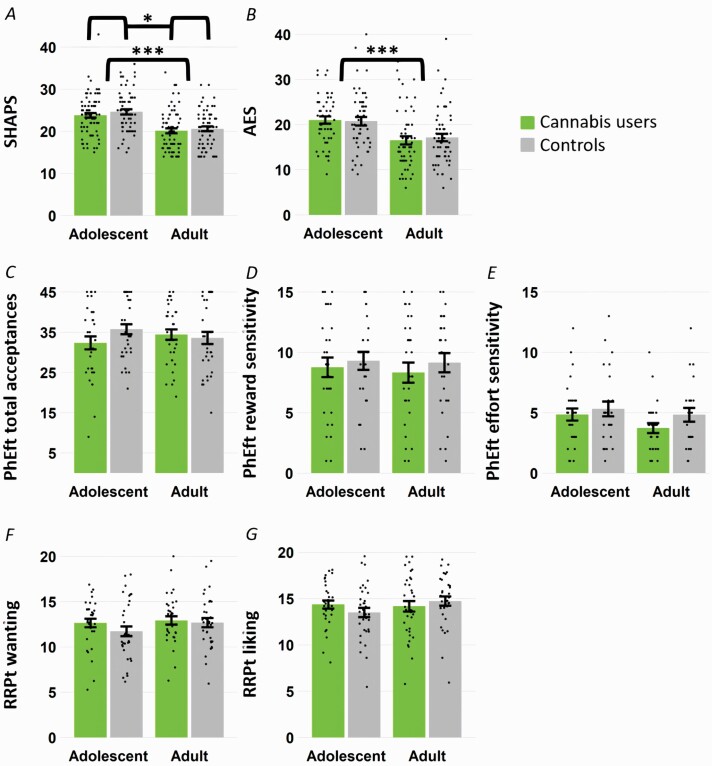
Background: Cannabis use may be linked with anhedonia and apathy. However, previous studies have shown mixed results, and few have examined the association between cannabis use and specific reward sub-processes. Adolescents may be more vulnerable than adults to harmful effects of cannabis. This study investigated (1) the association between non-acute cannabis use and apathy, anhedonia, pleasure, and effort-based decision-making for reward; and (2) whether these relationships were moderated by age group. Methods: We used data from the “CannTeen” study. Participants were 274 adult (26–29 years) and adolescent (16–17 years) cannabis users (1–7 d/wk use in the past 3 months) and gender- and age-matched controls. Anhedonia was measured with the Snaith-Hamilton Pleasure Scale (n = 274), and apathy was measured with the Apathy Evaluation Scale (n = 215). Effort-based decision-making for reward was measured with the Physical Effort task (n = 139), and subjective wanting and liking of rewards was measured with the novel Real Reward Pleasure task (n = 137). Results: Controls had higher levels of anhedonia than cannabis users (F1,258 = 5.35, P = .02, η p2 = .02). There were no other significant effects of user-group and no significant user-group*age-group interactions. Null findings were supported by post hoc Bayesian analyses. Conclusion: Our results suggest that cannabis use at a frequency of 3 to 4 d/wk is not associated with apathy, effort-based decision-making for reward, reward wanting, or reward liking in adults or adolescents. Cannabis users had lower anhedonia than controls, albeit at a small effect size. These findings are not consistent with the hypothesis that non-acute cannabis use is associated with amotivation.
Overview
The claims and statistics of this paper haven’t been checked yet.
Free: it reads the open-access text and checks the first 5 claims that cite a source we can check. Create a free account to check every claim.
Integrity signals
Registry
Cites
Statistics
Figures
Verification
Claims the paper makes
The claims and statistics of this paper haven’t been checked yet.
Free: it reads the open-access text and checks the first 5 claims that cite a source we can check. Create a free account to check every claim.
Claims other papers make about this one
Each is checked against this paper’s own text: does it say what the citing paper says it does?
The source backs part of the claim, not all of it — or backs it for a different population, condition or comparison.
In the citing paper
“In humans, moderate adolescent cannabis users have reported less anhedonia than nonusers [165].”
From Consequences of adolescent drug use (2023) · cites this paper as [165]
Experimental — accuracy not yet measured
Self-check
Percentages, sums and reported differences re-computed from the paper’s own numbers.
The self-check needs the paper’s full text.
Citations
Cites
R: A Language and Environment for Statistical Computing
R Core Team (2025) · doi:10.32614/r.manuals · Cited by 352,181
Brain development during childhood and adolescence: a longitudinal MRI study
Giedd, J. N., Blumenthal, J., Jeffries, N. O., Castellanos, F. X., Liu, H., Zijdenbos, A., Paus, T., Evans, A. C., & Rapoport, J. L. (1999) · Nature Neuroscience · doi:10.1038/13158 · Cited by 5,552 · cited 1×
“…period of socio-emotional, cognitive, and brain development, during which external factors such as cannabis and other substance use may be particularly influential in shaping the brain and cognition (Giedd et al., 1999; Giedd, 2004; Schneider, 2008; Bossong and Niesink, 2010; Lubman et al., 2015).”
Casey, B. J., Jones, R. M., & Hare, T. A. (2008) · Annals of the New York Academy of Sciences · doi:10.1196/annals.1440.010 · Cited by 3,345
Cannabis use and risk of psychotic or affective mental health outcomes: a systematic review.
Moore, T. H., Zammit, S., Lingford-Hughes, A., Barnes, T. R., Jones, P. B., Burke, M., & Lewis, G. (2007) · The Lancet · doi:10.1016/s0140-6736(07)61162-3 · Cited by 2,224 · cited 1×
“Additionally, cannabis might have indirect effects on apathy and anhedonia by increasing the risk of psychosis and depression (Moore et al., 2007; Lev-Ran et al., 2014).”
BackgroundDissecting components of reward: ‘liking’, ‘wanting’, and learning
Berridge, K. C., Robinson, T. E., & Aldridge, J. W. (2009) · Current Opinion in Pharmacology · doi:10.1016/j.coph.2008.12.014 · Cited by 1,942 · cited 2×
“The RRPt was developed in previous studies (Lawn et al., 2015, 2018) and mimics existing reward liking tasks that have been validated in cannabis users and other populations (Berridge et al., 2009; Ford et al., 2014; de Bruijn et al., 2017; Freeman et al., 2018).”
Reliability and validity of the apathy evaluation scale
Marin, R. S., Biedrzycki, R. C., & Firinciogullari, S. (1991) · Psychiatry Research · doi:10.1016/0165-1781(91)90040-v · Cited by 1,805 · cited 1×
“Questionnaire Measures — Anhedonia was assessed with the SHAPS (Snaith et al., 1995), and apathy was assessed with the AES (Marin et al., 1991).”
A scale for the assessment of hedonic tone the Snaith-Hamilton pleasure scale
Snaith, R. P., Hamilton, M., Morley, S., Humayan, A., Hargreaves, D., & Trigwell, P. (1995) · British Journal of Psychiatry · doi:10.1192/bjp.167.1.99 · Cited by 1,778 · cited 12×
“However, the mean difference between cannabis users and controls was 1 point on the SHAPS, corresponding to a small effect size ( η p2 = .02).”
InfluentialStructural magnetic resonance imaging of the adolescent brain
GIEDD, J. N. (2004) · Annals of the New York Academy of Sciences · doi:10.1196/annals.1308.009 · Cited by 1,610 · cited 1×
“…period of socio-emotional, cognitive, and brain development, during which external factors such as cannabis and other substance use may be particularly influential in shaping the brain and cognition (Giedd et al., 1999; Giedd, 2004; Schneider, 2008; Bossong and Niesink, 2010; Lubman et al., 2015).”
Reconsidering anhedonia in depression: Lessons from translational neuroscience
Treadway, M. T., & Zald, D. H. (2011) · Neuroscience & Biobehavioral Reviews · doi:10.1016/j.neubiorev.2010.06.006 · Cited by 1,579 · cited 1×
“Syndromes of disrupted reward processing include apathy, defined as a loss of or reduction in motivation (Robert et al., 2009), and anhedonia, defined as a loss of interest in or pleasure from previously rewarding activities (Treadway and Zald, 2011).”
Liking, wanting, and the incentive-sensitization theory of addiction
Berridge, K. C., & Robinson, T. E. (2016) · American Psychologist · doi:10.1037/amp0000059 · Cited by 1,440 · cited 1×
“Reward processing refers to any process that underpins the seeking and consumption of rewards (Berridge and Robinson, 2016) and encompasses several reward sub-processes (Berridge et al., 2009; Husain and Roiser, 2018).”
In vivo evidence for post-adolescent brain maturation in frontal and striatal regions
Sowell, E. R., Thompson, P. M., Holmes, C. J., Jernigan, T. L., & Toga, A. W. (1999) · Nature Neuroscience · doi:10.1038/13154 · Cited by 1,439 · cited 1×
“Grey matter differences between adults and adolescents are pronounced in frontal and striatal regions (Sowell et al., 1999), which are important to reward and motivation (Oldham et al., 2018),”
Galvan, A., Hare, T. A., Parra, C. E., Penn, J., Voss, H., Glover, G., & Casey, B. J. (2006) · Journal of Neuroscience · doi:10.1523/jneurosci.1062-06.2006 · Cited by 1,282 · cited 1×
“1093 / ij np / p y a c 056 / 6674260 b y U n i v e r s i t y C o ll ege London u s e r on 11 J anua r y 2023 and adolescents may overactivate limbic and striatal regions during reward-processing tasks (Galvan et al., 2006; Silverman et al., 2015).”
Cannabis use and mental health in young people: cohort study.
Patton, G. C., Coffey, C., Carlin, J. B., Degenhardt, L., Lynskey, M., & Hall, W. (2002) · BMJ · doi:10.1136/bmj.325.7374.1195 · Cited by 997 · cited 1×
“These were chosen a priori due to their possible interaction with cannabis use and reward processing (Patton et al., 2002; Fergusson et al., 2006; Balodis and Potenza, 2015; Leadbeater et al., 2019; Millar et al., 2021).”
Wagenmakers, E.-J., Wetzels, R., Borsboom, D., & van der Maas, H. L. J. (2011) · Journal of Personality and Social Psychology · doi:10.1037/a0022790 · Cited by 977
Adamson, S. J., Kay-Lambkin, F. J., Baker, A. L., Lewin, T. J., Thornton, L., Kelly, B. J., & Sellman, J. D. (2010) · Drug and Alcohol Dependence · doi:10.1016/j.drugalcdep.2010.02.017 · Cited by 958 · cited 1×
“%) meeting the cut-off for at least mild cannabis use disorder (Adamson et al., 2010).”
Treadway, M. T., Buckholtz, J. W., Schwartzman, A. N., Lambert, W. E., & Zald, D. H. (2009) · PLoS ONE · doi:10.1371/journal.pone.0006598 · Cited by 769 · cited 4×
“The PhEft was developed based on the EEfRT (Treadway et al., 2009; Husain and Roiser, 2018), and similar versions have been used in previous studies (Bonnelle et al., 2016; Valton et al., 2017).”
InfluentialReliability of the Timeline Followback for cocaine, cannabis, and cigarette use
Robinson, S. M., Sobell, L. C., Sobell, M. B., & Leo, G. I. (2014) · Psychology of Addictive Behaviors · doi:10.1037/a0030992 · Cited by 699 · cited 1×
“All drug use was assessed with the timeline follow-back (Robinson et al., 2014).”
Neuroscience of apathy and anhedonia: a transdiagnostic approach
Husain, M., & Roiser, J. P. (2018) · Nature Reviews Neuroscience · doi:10.1038/s41583-018-0029-9 · Cited by 640 · cited 3×
“The PhEft was developed based on the EEfRT (Treadway et al., 2009; Husain and Roiser, 2018), and similar versions have been used in previous studies (Bonnelle et al., 2016; Valton et al., 2017).”
Proposed diagnostic criteria for apathy in Alzheimer’s disease and other neuropsychiatric disorders
Robert, P., Onyike, C. U., Leentjens, A. F. G., Dujardin, K., Aalten, P., Starkstein, S., Verhey, F. R. J., Yessavage, J., Clement, J. P., Drapier, D., et al. (2009) · European Psychiatry · doi:10.1016/j.eurpsy.2008.09.001 · Cited by 619 · cited 1×
“Syndromes of disrupted reward processing include apathy, defined as a loss of or reduction in motivation (Robert et al., 2009), and anhedonia, defined as a loss of interest in or pleasure from previously rewarding activities (Treadway and Zald, 2011).”
Lev-Ran, S., Roerecke, M., Le Foll, B., George, T. P., McKenzie, K., & Rehm, J. (2014) · Psychological Medicine · doi:10.1017/s0033291713001438 · Cited by 589 · cited 1×
“Additionally, cannabis might have indirect effects on apathy and anhedonia by increasing the risk of psychosis and depression (Moore et al., 2007; Lev-Ran et al., 2014).”
BackgroundReward and Punishment Processing in Depression
Eshel, N., & Roiser, J. P. (2010) · Biological Psychiatry · doi:10.1016/j.biopsych.2010.01.027 · Cited by 575 · cited 1×
“This demonstrates the validity of the tasks, given the existing relationship between depression and compromised reward processing (Eshel and Roiser, 2010).”
BackgroundCannabis use and other illicit drug use: testing the cannabis gateway hypothesis
Fergusson, D. M., Boden, J. M., & Horwood, L. J. (2006) · Addiction · doi:10.1111/j.1360-0443.2005.01322.x · Cited by 484 · cited 1×
“These were chosen a priori due to their possible interaction with cannabis use and reward processing (Patton et al., 2002; Fergusson et al., 2006; Balodis and Potenza, 2015; Leadbeater et al., 2019; Millar et al., 2021).”
Oldham, S., Murawski, C., Fornito, A., Youssef, G., Yücel, M., & Lorenzetti, V. (2018) · Human Brain Mapping · doi:10.1002/hbm.24184 · Cited by 425 · cited 1×
“Grey matter differences between adults and adolescents are pronounced in frontal and striatal regions (Sowell et al., 1999), which are important to reward and motivation (Oldham et al., 2018),”
Franken, I. H. A., Rassin, E., & Muris, P. (2007) · Journal of Affective Disorders · doi:10.1016/j.jad.2006.08.020 · Cited by 373 · cited 2×
“Both measures have been demonstrated as reliable and valid in both adults (Franken et al., 2007; Raimo et al., 2014; Lueken et al., 2017) and adolescents (Leventhal et al., 2015; Pacheco-Colón et al., 2018).”
Cannabis and adolescent brain development.
Lubman, D. I., Cheetham, A., & Yücel, M. (2015) · Pharmacology & Therapeutics · doi:10.1016/j.pharmthera.2014.11.009 · Cited by 360 · cited 1×
“…period of socio-emotional, cognitive, and brain development, during which external factors such as cannabis and other substance use may be particularly influential in shaping the brain and cognition (Giedd et al., 1999; Giedd, 2004; Schneider, 2008; Bossong and Niesink, 2010; Lubman et al., 2015).”
Bossong, M. G., & Niesink, R. J. M. (2010) · Progress in Neurobiology · doi:10.1016/j.pneurobio.2010.06.010 · Cited by 333 · cited 1×
“…period of socio-emotional, cognitive, and brain development, during which external factors such as cannabis and other substance use may be particularly influential in shaping the brain and cognition (Giedd et al., 1999; Giedd, 2004; Schneider, 2008; Bossong and Niesink, 2010; Lubman et al., 2015).”
Puberty as a highly vulnerable developmental period for the consequences of cannabis exposure
Schneider, M. (2008) · Addiction Biology · doi:10.1111/j.1369-1600.2008.00110.x · Cited by 316 · cited 2×
“Adolescents may be particularly susceptible to effects of cannabis on mental health and cognition, including reward processing (Schneider, 2008).”
Silverman, M. H., Jedd, K., & Luciana, M. (2015) · NeuroImage · doi:10.1016/j.neuroimage.2015.07.083 · Cited by 277 · cited 1×
“1093 / ij np / p y a c 056 / 6674260 b y U n i v e r s i t y C o ll ege London u s e r on 11 J anua r y 2023 and adolescents may overactivate limbic and striatal regions during reward-processing tasks (Galvan et al., 2006; Silverman et al., 2015).”
Anticipatory reward processing in addicted populations: a focus on the monetary incentive delay task
Balodis, I. M., & Potenza, M. N. (2015) · Biological Psychiatry · doi:10.1016/j.biopsych.2014.08.020 · Cited by 267 · cited 1×
“These were chosen a priori due to their possible interaction with cannabis use and reward processing (Patton et al., 2002; Fergusson et al., 2006; Balodis and Potenza, 2015; Leadbeater et al., 2019; Millar et al., 2021).”
The endocannabinoid system in brain reward processes
Solinas, M., Goldberg, S. R., & Piomelli, D. (2008) · British Journal of Pharmacology · doi:10.1038/bjp.2008.130 · Cited by 244 · cited 2×
“The endocannabinoid system plays a central role in brain reward processes, chiefly through modulation of dopaminergic and opioidergic neurotransmission (Solinas et al., 2008; Wenzel and Cheer, 2018).”
The Marihuana Problem: An Overview
MCGLOTHLIN, W. H., & WEST, L. J. (1968) · American Journal of Psychiatry · doi:10.1176/ajp.125.3.370 · Cited by 194 · cited 1×
“Prevalent, derogatory “stoner” stereotypes portray cannabis users as lazy and demotivated (McGlothlin and West, 1968; Mortensen et al., 2020); however, limited scientific evidence exists to support this claim.”
Endocannabinoid functions controlling neuronal specification during brain development
Harkany, T., Keimpema, E., Barabás, K., & Mulder, J. (2008) · Molecular and Cellular Endocrinology · doi:10.1016/j.mce.2008.02.011 · Cited by 186 · cited 1×
“Adolescence is also an important period for maturation of the endocannabinoid system, which plays a central role in several neurodevelopmental processes, including neural proliferation, differentiation, and migration (Harkany et al., 2008; Viveros et al., 2012).”
Wenzel, J. M., & Cheer, J. F. (2017) · Neuropsychopharmacology · doi:10.1038/npp.2017.126 · Cited by 180 · cited 1×
“The endocannabinoid system plays a central role in brain reward processes, chiefly through modulation of dopaminergic and opioidergic neurotransmission (Solinas et al., 2008; Wenzel and Cheer, 2018).”
Lawn, W., Freeman, T. P., Pope, R. A., Joye, A., Harvey, L., Hindocha, C., Mokrysz, C., Moss, A., Wall, M. B., Bloomfield, M. A., et al. (2016) · Psychopharmacology · doi:10.1007/s00213-016-4383-x · Cited by 178 · cited 3×
“For instance, it could be that cannabis has acute amotivational or anhedonic effects (Lawn et al., 2016; Wardle et al., 2022), which may result in a persistent apathetic or anhedonic state if used daily, disregarding any tolerance effects.”
Self-citationIndividual Differences in Premotor Brain Systems Underlie Behavioral Apathy
Bonnelle, V., Manohar, S., Behrens, T., & Husain, M. (2015) · Cerebral Cortex · doi:10.1093/cercor/bhv247 · Cited by 163 · cited 1×
“The PhEft was developed based on the EEfRT (Treadway et al., 2009; Husain and Roiser, 2018), and similar versions have been used in previous studies (Bonnelle et al., 2016; Valton et al., 2017).”
Don't Worry, Be Happy: Endocannabinoids and Cannabis at the Intersection of Stress and Reward
Volkow, N. D., Hampson, A. J., & Baler, R. D. (2017) · Annual Review of Pharmacology and Toxicology · doi:10.1146/annurev-pharmtox-010716-104615 · Cited by 152 · cited 1×
“Cannabis acts on the endocannabinoid system, and repeated exposure may impair its sensitivity to rewarding stimuli and increase the susceptibility to anhedonia and apathy in cannabis users (Volkow et al., 2017).”
BackgroundLeadbeater, B. J., Ames, M. E., & Linden‐Carmichael, A. N. (2019) · Addiction · doi:10.1111/add.14459 · Cited by 126 · cited 1×
“These were chosen a priori due to their possible interaction with cannabis use and reward processing (Patton et al., 2002; Fergusson et al., 2006; Balodis and Potenza, 2015; Leadbeater et al., 2019; Millar et al., 2021).”
Viveros, M., Llorente, R., Suarez, J., Llorente-Berzal, A., López-Gallardo, M., & Rodriguez de Fonseca, F. (2012) · Journal of Psychopharmacology · doi:10.1177/0269881111408956 · Cited by 124 · cited 1×
“Adolescence is also an important period for maturation of the endocannabinoid system, which plays a central role in several neurodevelopmental processes, including neural proliferation, differentiation, and migration (Harkany et al., 2008; Viveros et al., 2012).”
BackgroundUnited Nations Office on Drugs and Crime (2020) · World Drug Report · doi:10.18356/c8bbbf82-en · Cited by 115
Association of Marijuana Use With Blunted Nucleus Accumbens Response to Reward Anticipation
Martz, M. E., Trucco, E. M., Cope, L. M., Hardee, J. E., Jester, J. M., Zucker, R. A., & Heitzeg, M. M. (2016) · JAMA Psychiatry · doi:10.1001/jamapsychiatry.2016.1161 · Cited by 102 · cited 1×
“The impact of cannabis on reward processing in adolescence and young adulthood could have a time-lagged effect (e.g., Martz et al., 2016).”
Performance of heavy marijuana-smoking adolescents on a laboratory measure of motivation
Lane, S. D., Cherek, D. R., Pietras, C. J., & Steinberg, J. L. (2004) · Addictive Behaviors · doi:10.1016/j.addbeh.2004.08.026 · Cited by 98 · cited 2×
“One previous study found evidence of reduced motivation/willingness to expend effort for reward in adolescent cannabis users compared with controls (Lane et al., 2005) but with a different task and smaller sample than the current study.”
Associations between anhedonia and marijuana use escalation across mid‐adolescence
Leventhal, A. M., Cho, J., Stone, M. D., Barrington‐Trimis, J. L., Chou, C., Sussman, S. Y., Riggs, N. R., Unger, J. B., Audrain‐McGovern, J., & Strong, D. R. (2017) · Addiction · doi:10.1111/add.13912 · Cited by 92 · cited 4×
“As previously discussed, some large-scale studies have found that anhedonia predicts cannabis use during adolescence (Leventhal et al., 2017) and that adolescent cannabis users are at greater risk of anhedonia than adult users (Skumlien et al., 2021a).”
InfluentialMeasuring Anhedonia in Adolescents: A Psychometric Analysis
Leventhal, A. M., Unger, J. B., Audrain-McGovern, J., Sussman, S., Volk, H. E., & Strong, D. R. (2015) · Journal of Personality Assessment · doi:10.1080/00223891.2015.1029072 · Cited by 90 · cited 1×
“Both measures have been demonstrated as reliable and valid in both adults (Franken et al., 2007; Raimo et al., 2014; Lueken et al., 2017) and adolescents (Leventhal et al., 2015; Pacheco-Colón et al., 2018).”
Cannabis, motivation, and life satisfaction in an internet sample
Barnwell, S. S., Earleywine, M., & Wilcox, R. (2006) · Substance Abuse Treatment, Prevention, and Policy · doi:10.1186/1747-597x-1-2 · Cited by 70
Cannabis Dampens the Effects of Music in Brain Regions Sensitive to Reward and Emotion
Freeman, T. P., Pope, R. A., Wall, M. B., Bisby, J. A., Luijten, M., Hindocha, C., Mokrysz, C., Lawn, W., Moss, A., Bloomfield, M., et al. (2017) · The International Journal of Neuropsychopharmacology · doi:10.1093/ijnp/pyx082 · Cited by 67 · cited 2×
“and mimics existing reward liking tasks that have been validated in cannabis users and other populations (Berridge et al., 2009; Ford et al., 2014; de Bruijn et al., 2017; Freeman et al., 2018).”
Self-citationJager, G., Block, R. I., Luijten, M., & Ramsey, N. F. (2013) · Journal of Psychoactive Drugs · doi:10.1080/02791072.2013.785837 · Cited by 66 · cited 1×
“…functional neuroimaging studies have also found different neural reward processing responses in adolescent cannabis users compared with controls (Jager et al., 2013; Acheson et al., 2015; Nestor et al., 2020), though this has not been consistently found (Karoly et al., 2015), and there were no…”
Schaefer, J. D., Hamdi, N. R., Malone, S. M., Vrieze, S., Wilson, S., McGue, M., & Iacono, W. G. (2021) · Proceedings of the National Academy of Sciences · doi:10.1073/pnas.2013180118 · Cited by 64 · cited 1×
“For instance, Pacheco-Colón et al. (2021) found a negative relationship between cannabis use and valuing of school in adolescents, and Schaefer et al. (2021) found that cannabis use was prospectively associated with decreased academic motivation during adolescence.”
Lawn, W., Mokrysz, C., Lees, R., Trinci, K., Petrilli, K., Skumlien, M., Borissova, A., Ofori, S., Bird, C., Jones, G., et al. (2022) · Journal of Psychopharmacology · doi:10.1177/02698811221108956 · Cited by 60
Self-citationKaroly, H. C., Bryan, A. D., Weiland, B. J., Mayer, A., Dodd, A., & Feldstein Ewing, S. W. (2015) · Developmental Cognitive Neuroscience · doi:10.1016/j.dcn.2015.05.005 · Cited by 58
Apathy in multiple sclerosis: A validation study of the apathy evaluation scale
Raimo, S., Trojano, L., Spitaleri, D. L. A., Petretta, V., Grossi, D., & Santangelo, G. (2014) · Journal of the Neurological Sciences · doi:10.1016/j.jns.2014.10.027 · Cited by 50 · cited 1×
“Both measures have been demonstrated as reliable and valid in both adults (Franken et al., 2007; Raimo et al., 2014; Lueken et al., 2017) and adolescents (Leventhal et al., 2015; Pacheco-Colón et al., 2018).”
The acute and non-acute effects of cannabis on reward processing: A systematic review
Skumlien, M., Langley, C., Lawn, W., Voon, V., Curran, H. V., Roiser, J. P., & Sahakian, B. J. (2021) · Neuroscience & Biobehavioral Reviews · doi:10.1016/j.neubiorev.2021.09.008 · Cited by 42 · cited 10×
“Consistent with this, we recently found that adolescents were more susceptible to cannabis-related an-hedonia on the SHAPS than adults, with adolescent dependent users showing the highest levels of anhedonia and apathy overall (Skumlien et al., 2021a).”
InfluentialSelf-citationA Comprehensive Examination of the Links between Cannabis Use and Motivation
Petrucci, A. S., LaFrance, E. M., & Cuttler, C. (2020) · Substance Use & Misuse · doi:10.1080/10826084.2020.1729203 · Cited by 41 · cited 3×
“However, consistent with Petrucci et al. (2020), we did not find a significant correlation with frequency of use.”
InfluentialMortensen, T. M., Moscowitz, L. M., Wan, A., & Yang, A. (2019) · Visual Communication · doi:10.1177/1470357219864995 · Cited by 39 · cited 1×
“Prevalent, derogatory “stoner” stereotypes portray cannabis users as lazy and demotivated (McGlothlin and West, 1968; Mortensen et al., 2020); however, limited scientific evidence exists to support this claim.”
Altered striatal reward processing in abstinent dependent cannabis users: Social context matters
Zimmermann, K., Kendrick, K. M., Scheele, D., Dau, W., Banger, M., Maier, W., Weber, B., Ma, Y., Hurlemann, R., & Becker, B. (2019) · European Neuropsychopharmacology · doi:10.1016/j.euroneuro.2019.01.106 · Cited by 33 · cited 1×
“These showed lower mood responses to positive feedback on a spatial delayed response task (Martin-Soelch et al., 2009) and a lower increase in pleasantness ratings to female compared with male touch in cannabis users compared with controls (Zimmermann et al., 2019).”
Dysregulation as a correlate of cannabis use and problem use
Lopez-Vergara, H. I., Jackson, K. M., Meshesha, L. Z., & Metrik, J. (2019) · Addictive Behaviors · doi:10.1016/j.addbeh.2019.03.010 · Cited by 32 · cited 1×
“However, participants used cannabis on average 4 d/wk, which is similar to previous studies that have found significant cannabis effects (e.g., Lopez-Vergara et al., 2019; Skumlien et al., 2021a), and frequency of use did not correlate with apathy or anhe-donia.”
Reduced Response to Reward in Smokers and Cannabis Users
Martin-Soelch, C., Kobel, M., Stoecklin, M., Michael, T., Weber, S., Krebs, B., & Opwis, K. (2009) · Neuropsychobiology · doi:10.1159/000239685 · Cited by 30 · cited 1×
“These showed lower mood responses to positive feedback on a spatial delayed response task (Martin-Soelch et al., 2009) and a lower increase in pleasantness ratings to female compared with male touch in cannabis users compared with controls (Zimmermann et al., 2019).”
Lawn, W., Fernandez‐Vinson, N., Mokrysz, C., Hogg, G., Lees, R., Trinci, K., Petrilli, K., Borissova, A., Ofori, S., Waters, S., et al. (2022) · Psychopharmacology · doi:10.1007/s00213-022-06143-3 · Cited by 30 · cited 1×
“We have also not found significant age-group by user-group interactions for depression, anxiety, or psychotic-like symptoms (Lawn et al., 2022b), or verbal episodic memory, spatial working memory, or response inhibition (Lawn et al., 2022a) using the same sample.”
Self-citationLawn, W., Freeman, T. P., Hindocha, C., Mokrysz, C., Das, R., Morgan, C. J. A., & Curran, H. V. (2015) · Psychopharmacology · doi:10.1007/s00213-015-3883-4 · Cited by 27 · cited 1×
“The RRPt was developed in previous studies (Lawn et al., 2015, 2018) and mimics existing reward liking tasks that have been validated in cannabis users and other populations (Berridge et al., 2009; Ford et al., 2014; de Bruijn et al., 2017; Freeman et al., 2018).”
Self-citationSkumlien, M., Mokrysz, C., Freeman, T. P., Wall, M. B., Bloomfield, M., Lees, R., Borissova, A., Petrilli, K., Carson, J., Coughlan, T., et al. (2022) · Neuropsychopharmacology · doi:10.1038/s41386-022-01316-2 · Cited by 27 · cited 5×
“This could be because cannabis does not chronically compromise the reward system (Skumlien et al., 2022), perhaps because the reward system has matured enough by age 16 to not be sensitive to disruption (Casey et al., 2008).”
InfluentialSelf-citationAcheson, A., Ray, K. L., Hines, C. S., Li, K., Dawes, M. A., Mathias, C. W., Dougherty, D. M., & Laird, A. R. (2015) · Journal of Addiction · doi:10.1155/2015/783106 · Cited by 23 · cited 1×
“…studies have also found different neural reward processing responses in adolescent cannabis users compared with controls (Jager et al., 2013; Acheson et al., 2015; Nestor et al., 2020), though this has not been consistently found (Karoly et al., 2015), and there were no cannabis-related…”
Nestor, L. J., Behan, B., Suckling, J., & Garavan, H. (2019) · Addiction Biology · doi:10.1111/adb.12752 · Cited by 22 · cited 1×
“…found different neural reward processing responses in adolescent cannabis users compared with controls (Jager et al., 2013; Acheson et al., 2015; Nestor et al., 2020), though this has not been consistently found (Karoly et al., 2015), and there were no cannabis-related differences in the…”
Psychometric properties of the apathy evaluation scale in patients with Parkinson's disease
Lueken, U., Evens, R., Balzer‐Geldsetzer, M., Baudrexel, S., Dodel, R. C., Gräber‐Sultan, S., Hilker‐Roggendorf, R., Kalbe, E., Kaut, O., Mollenhauer, B., et al. (2017) · International Journal of Methods in Psychiatric Research · doi:10.1002/mpr.1564 · Cited by 22 · cited 1×
“Both measures have been demonstrated as reliable and valid in both adults (Franken et al., 2007; Raimo et al., 2014; Lueken et al., 2017) and adolescents (Leventhal et al., 2015; Pacheco-Colón et al., 2018).”
de Bruijn, S. E. M., de Graaf, C., Witkamp, R. F., & Jager, G. (2017) · Cannabis and Cannabinoid Research · doi:10.1089/can.2017.0018 · Cited by 20 · cited 1×
“The RRPt was developed in previous studies (Lawn et al., 2015, 2018) and mimics existing reward liking tasks that have been validated in cannabis users and other populations (Berridge et al., 2009; Ford et al., 2014; de Bruijn et al., 2017; Freeman et al., 2018).”
Do young-adult cannabis users show amotivation? An analysis of informant reports.
Meier, M. H., & White, M. (2018) · Translational Issues in Psychological Science · doi:10.1037/tps0000150 · Cited by 19 · cited 1×
“Meier and White (2018) is the only study to have looked at informant-reported apathy and found that cannabis users were rated as significantly more apathetic than controls, which contrasts with the null findings reported in the present study of self-reported apathy.”
ResultMillar, S., Mongan, D., O’Dwyer, C., Long, J., Smyth, B. P., Perry, I. J., & Galvin, B. (2021) · European Journal of Public Health · doi:10.1093/eurpub/ckab007 · Cited by 19 · cited 1×
“These were chosen a priori due to their possible interaction with cannabis use and reward processing (Patton et al., 2002; Fergusson et al., 2006; Balodis and Potenza, 2015; Leadbeater et al., 2019; Millar et al., 2021).”
Vele, K. C., Cavalli, J. M., & Cservenka, A. (2022) · Journal of Clinical and Experimental Neuropsychology · doi:10.1080/13803395.2022.2093335 · Cited by 18 · cited 2×
“More recently, and using larger samples of 86 participants and 60 participants, respectively, both Taylor and Filbey (2021) and Vele et al. (2022) found that adult cannabis users selected hard trials on the Effort Expenditure for Reward task (EEfRT) more often than adult controls.”
2002 Monitoring the Future Survey Results
(2003) · PsycEXTRA Dataset · doi:10.1037/e403312005-003 · Cited by 18
Unique Functional Abnormalities in Youth with Combined Marijuana Use and Depression: An fMRI Study
Ford, K. A., Wammes, M., Neufeld, R. W. J., Mitchell, D. G. V., Théberge, J., Williamson, P., & Osuch, E. A. (2014) · Frontiers in Psychiatry · doi:10.3389/fpsyt.2014.00130 · Cited by 17 · cited 1×
“The RRPt was developed in previous studies (Lawn et al., 2015, 2018) and mimics existing reward liking tasks that have been validated in cannabis users and other populations (Berridge et al., 2009; Ford et al., 2014; de Bruijn et al., 2017; Freeman et al., 2018).”
Is Cannabis Use Associated with Various Indices of Motivation among Adolescents?
Pacheco‐Colón, I., Coxe, S. J., Musser, E. D., Duperrouzel, J. C., Ross, J. M., & González, R. (2017) · Substance Use & Misuse · doi:10.1080/10826084.2017.1400566 · Cited by 16 · cited 1×
“Both measures have been demonstrated as reliable and valid in both adults (Franken et al., 2007; Raimo et al., 2014; Lueken et al., 2017) and adolescents (Leventhal et al., 2015; Pacheco-Colón et al., 2018).”
Residual Effects of Cannabis Use on Effort-Based Decision-Making
Taylor, M. B., & Filbey, F. M. (2021) · Journal of the International Neuropsychological Society · doi:10.1017/s1355617721000473 · Cited by 16 · cited 5×
“More recently, and using larger samples of 86 participants and 60 participants, respectively, both Taylor and Filbey (2021) and Vele et al. (2022) found that adult cannabis users selected hard trials on the Effort Expenditure for Reward task (EEfRT) more often than adult controls.”
InfluentialSkumlien, M., Langley, C., Lawn, W., Voon, V., & Sahakian, B. J. (2021) · The International Journal of Neuropsychopharmacology · doi:10.1093/ijnp/pyab033 · Cited by 16 · cited 10×
“Consistent with this, we recently found that adolescents were more susceptible to cannabis-related an-hedonia on the SHAPS than adults, with adolescent dependent users showing the highest levels of anhedonia and apathy overall (Skumlien et al., 2021a).”
InfluentialSelf-citationLawn, W., Freeman, T. P., East, K. A., Gaule, A., Aston, E. R., Bloomfield, M., Das, R., Morgan, C. J. A., & Curran, H. V. (2017) · Nicotine & Tobacco Research · doi:10.1093/ntr/ntx159 · Cited by 15 · cited 1×
“The RRPt was developed in previous studies (Lawn et al., 2015, 2018) and mimics existing reward liking tasks that have been validated in cannabis users and other populations (Berridge et al., 2009; Ford et al., 2014; de Bruijn et al., 2017; Freeman et al., 2018).”
Self-citationEffort-related decision making and cannabis use among college students.
Acuff, S. F., Simon, N. W., & Murphy, J. G. (2023) · Experimental and Clinical Psychopharmacology · doi:10.1037/pha0000544 · Cited by 15 · cited 8×
“Similarly, Acuff et al. (2022) found that frequency of cannabis use and symptoms of cannabis use disorder were positively associated with selecting a high-effort trial in a sample of 47 young adult cannabis users and controls.”
InfluentialPacheco‐Colón, I., Hawes, S. W., Duperrouzel, J. C., & González, R. (2021) · Journal of the International Neuropsychological Society · doi:10.1017/s135561772000096x · Cited by 13 · cited 6×
“Conversely, previous large-scale studies in adolescent samples have not found an association between cannabis use and apathy (Pacheco-Colón et al., 2021) or a greater risk of apathy in adolescent compared with adult users (Skumlien et al.”
InfluentialDelta-9-tetrahydrocannabinol reduces willingness to exert effort in women
Wardle, M. C., Pabon, E., Webber, H. E., & de Wit, H. (2022) · Psychopharmacology · doi:10.1007/s00213-021-06032-1 · Cited by 10 · cited 1×
“For instance, it could be that cannabis has acute amotivational or anhedonic effects (Lawn et al., 2016; Wardle et al., 2022), which may result in a persistent apathetic or anhedonic state if used daily, disregarding any tolerance effects.”
Lawn, W., Mokrysz, C., Borissova, A., Lees, R., Petrilli, K., Bloomfield, M., Wall, M. B., Freeman, T. P., & Curran, H. V. (2019) · Cited by 1
Self-citation
Research works printed but not linked: 1
- Wechsler D (2001) Wechsler Test of Adult Reading (WTAR), San Antonio, TX: The Psychological Corporation.
Cited by
Consequences of adolescent drug use
Steinfeld, M. R., & Torregrossa, M. M. (2023) · Translational Psychiatry · doi:10.1038/s41398-023-02590-4 · Cited by 237
“In humans, moderate adolescent cannabis users have reported less anhedonia than nonusers [165].”
BackgroundThe effects of recreational marijuana legalization on employment and earnings
Dave, D., Yang, L., Muratori, C., & Sabia, J. J. (2025) · Journal of Population Economics · doi:10.1007/s00148-025-01100-8 · Cited by 25
“…syndrome in relation to cannabis use was McGlothlin and West in 1968 (McGlothlin and West, 1968) who characterized it as apathy—that is, a loss of, or reduction in, motivation (Skumlien et al. 2022)—and diminished ability to concentrate, follow routines, or successfully master new material.”
Skumlien, M., Freeman, T. P., Hall, D., Mokrysz, C., Wall, M. B., Ofori, S., Petrilli, K., Trinci, K., Borissova, A., Fernandez‐Vinson, N., et al. (2022) · Biological Psychiatry Cognitive Neuroscience and Neuroimaging · doi:10.1016/j.bpsc.2022.10.004 · Cited by 15
Self-citationLaraki, Y., Bayard, S., Décombe, A., Capdevielle, D., & Raffard, S. (2023) · Frontiers in Psychiatry · doi:10.3389/fpsyt.2023.1098932 · Cited by 15
“Currently there are mixed results suggesting links between symptoms of anhedonia and cannabis use in non-schizophrenic populations (76, 77).”
BackgroundInzlicht, M., Sparrow-Mungal, T. B., & Depow, G. J. (2024) · Social Psychological and Personality Science · doi:10.1177/19485506241245744 · Cited by 13
Metadata
- Authors
- Skumlien, M., Mokrysz, C., Freeman, T. P., Valton, V., Wall, M. B., Bloomfield, M., Lees, R., Borissova, A., Petrilli, K., Giugliano, M., Clisu, D., Langley, C., Sahakian, B. J., Curran, H. V., & Lawn, W.
- Affiliations
- University of Cambridge (GB)
- University College London (GB)
- Invicro (United Kingdom) (GB)
- King's College London (GB)
- Corresponding author
- Skumlien, Martine
- ORCID
- Venue
- International Journal of Neuropsychopharmacology
- Publisher
- Oxford University Press (OUP)
- Published
- 2022-08-24
- Volume
- 26
- Issue
- 1
- Pages
- 9-19
- ISSN
- 1461-1457 (ISSN-L)
- 1469-5111
- PMC
- PMC9850660
- OpenAlex
- W4293027866
- Cited by
- 20
- References
- 76
- Citations by year
- 2026: 3 · 2025: 5 · 2024: 5 · 2023: 6 · 2022: 1
- FWCI
- 2.54
- Type
- journal article
- Language
- en
- Open access
- gold
- doi.org
- Licence
- Locations
- The International Journal of Neuropsychopharmacology (publishedVersion, cc-by)
- PubMed Central (publishedVersion, cc-by)
- PubMed (publishedVersion)
- Research Portal (King's College London) (submittedVersion, cc-by)
- UCL Discovery (University College London) (submittedVersion)
- Funders
- Medical Research Council (MR/P012728/1)
- Aker Foundation
- National Institute for Health Research
- Wallitt Foundation
- Wellcome Trust (200181/Z//15/Z, MR/P012728/1)
- UK Department of Health
- Topics
- Health Sciences › Medicine › Pharmacology (medical) › Cannabis and Cannabinoid Research
- Life Sciences › Neuroscience › Cellular and Molecular Neuroscience › Neurotransmitter Receptor Influence on Behavior
- Health Sciences › Medicine › Epidemiology › Substance Abuse Treatment and Outcomes
- Keywords
- cannabis use, anhedonia, apathy, amotivation, effort-based decision making, reward processing, adolescents, adults, age differences
- MeSH terms
- Adolescent, Adult, Bayes Theorem, Cannabis, Decision Making, Hallucinogens, Humans, Motivation, Reward, Pleasure, Apathy, Anhedonia, Cannabinoid Receptor Agonists
About these checks
Registry, retraction, Cites and statistics results are computed, not judged, with one exception: a printed reference that no index lists is read once by a model before it counts as a citation error. Claims are extracted by a model and kept only when their quote appears verbatim in the text; each cited source is then checked, with a model’s help, for whether it says what the claim relies on. Those verdicts can be wrong — read the claim’s quote and the cited source before relying on one.
Statistics and arithmetic are recomputed, not judged.
Confidence bands are shown only for fields calibrated on our annotated test set. None is calibrated yet, so no band is shown.
What counts as a claim ›How we measure confidence ›How we check this ›
Are you an author, or do you see a problem with this page? Request a review
Data sources
Bibliographic data: Semantic Scholar, OpenAlex, Crossref.
Contains information from the Semantic Scholar Academic Graph Datasets, made available under the ODC Attribution License (ODC-BY 1.0).
Semantic Scholar’s data is described in: Kinney, R., et al. (2023). The Semantic Scholar Open Data Platform. arXiv:2301.10140.
