

Longitudinal Serological Analysis and Neutralizing Antibody Levels in Coronavirus Disease 2019 Convalescent Patients
Open accessPublished version of a preprint
The DOI matches its Crossref record; 56 of the 60 references it cites were found in a registry or an index.
Abstract
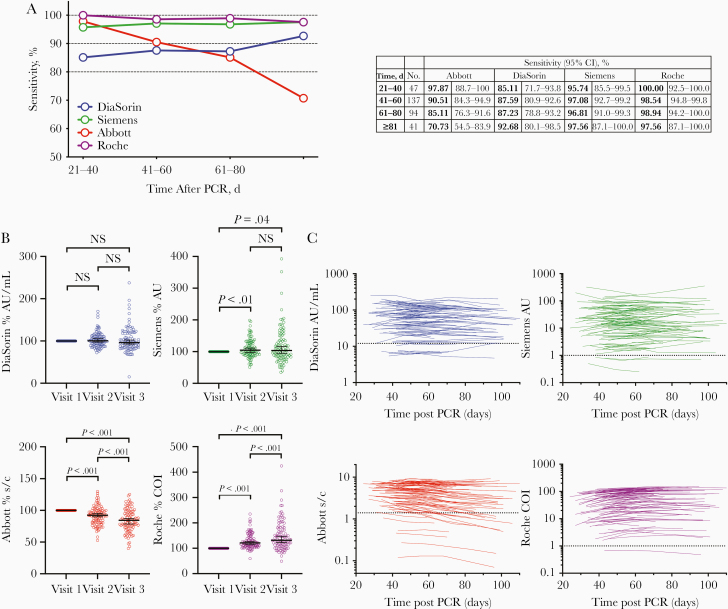
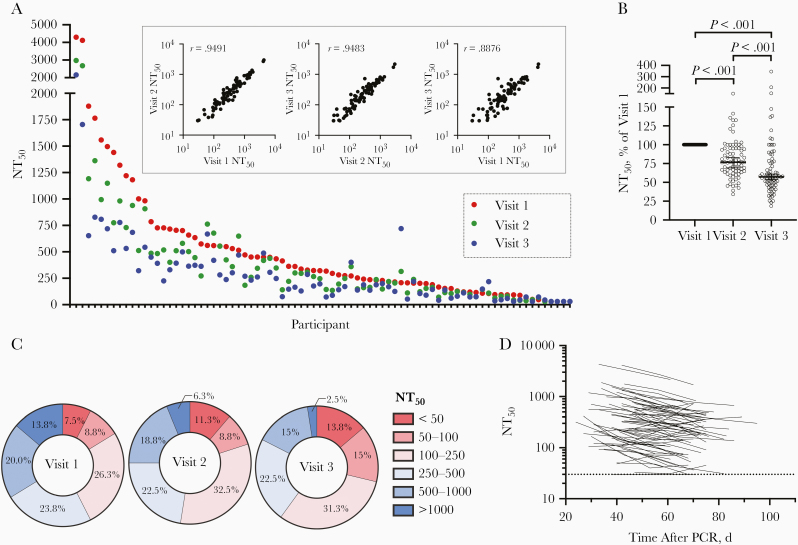
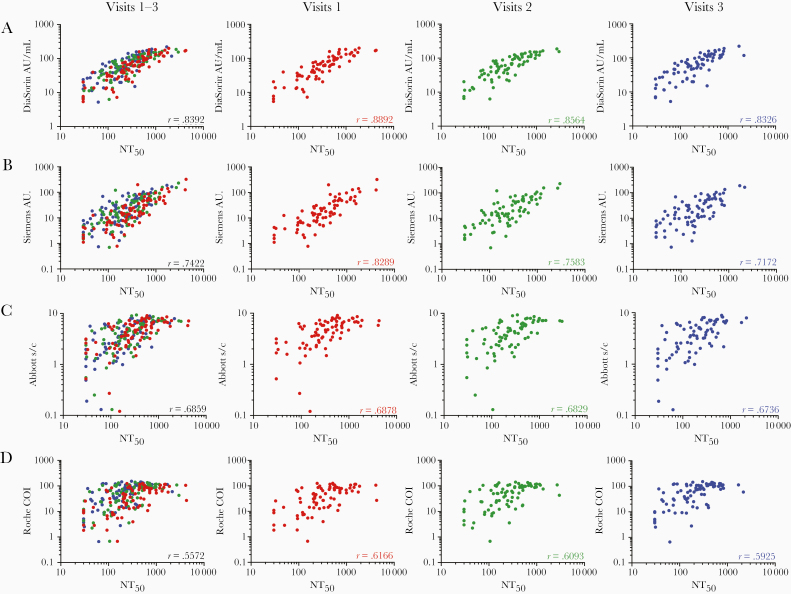
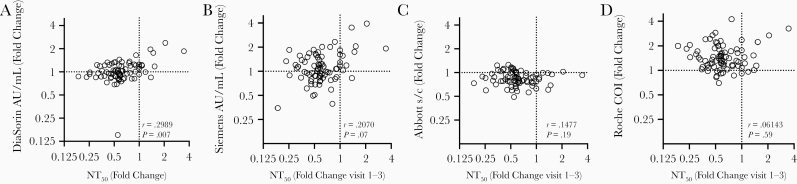
Background: Understanding the longitudinal trajectory of severe acute respiratory syndrome coronavirus 2 (SARS-CoV-2) antibodies is crucial for diagnosis of prior infection and predicting future immunity. Methods: We conducted a longitudinal analysis of coronavirus disease 2019 convalescent patients, with neutralizing antibody assays and SARS-CoV-2 serological assay platforms using SARS-CoV-2 spike (S) or nucleocapsid (N) antigens. Results: Sensitivities of serological assays in diagnosing prior SARS-CoV-2 infection changed with time. One widely used commercial platform that had an initial sensitivity of >95% declined to 71% at 81–100 days after diagnosis. The trajectories of median binding antibody titers measured over approximately 3–4 months were not dependent on the use of SARS-CoV-2 N or S proteins as antigen. The median neutralization titer decreased by approximately 45% per month. Each serological assay gave quantitative antibody titers that were correlated with SARS-CoV-2 neutralization titers, but S-based serological assay measurements better predicted neutralization potency. Correlation between S-binding and neutralization titers deteriorated with time, and decreases in neutralization titers were not predicted by changes in S-binding antibody titers. Conclusions: Different SARS-CoV-2 serological assays are more or less well suited for surveillance versus prediction of serum neutralization potency. Extended follow-up should facilitate the establishment of appropriate serological correlates of protection against SARS-CoV-2 reinfection.
Overview
The claims and statistics of this paper haven’t been checked yet.
Free: it reads the open-access text and checks the first 5 claims that cite a source we can check. Create a free account to check every claim.
Integrity signals
Registry
Cites
Statistics
Figures
Verification
Claims the paper makes
The claims and statistics of this paper haven’t been checked yet.
Free: it reads the open-access text and checks the first 5 claims that cite a source we can check. Create a free account to check every claim.
Claims other papers make about this one
Each is checked against this paper’s own text: does it say what the citing paper says it does?
The source backs part of the claim, not all of it — or backs it for a different population, condition or comparison.
In the citing paper
“neutralizing antibody responses to SARS-CoV-2 peak within the first few weeks after symptom onset but seem to decay after this time, with a proportion of individuals losing detectable neutralizing antibodies within months after infection5”
From Prospects for durable immune control of SARS-CoV-2 and prevention of reinfection (2021) · cites this paper as [5]
Experimental — accuracy not yet measuredThe source backs part of the claim, not all of it — or backs it for a different population, condition or comparison.
In the citing paper
“High concentrations of neutralising antibodies targeting the SARS-CoV-2 spike protein offer considerable protection against SARS-CoV-2 reinfection, supported by data from common human coronaviruses and non-human primate models and vaccine studies.”
From SARS-CoV-2 infection rates of antibody-positive compared with antibody-negative health-care workers in England: a large, multicentre, prospective cohort study (SIREN) (2021) · cites this paper as [25]
Experimental — accuracy not yet measuredThe cited source says what the claim attributes to it.
In the citing paper
“SARS-CoV-2 infection rapidly elicits nAbs (16, 21–24) that decline, but remain detectable, over several months (25–29).”
From mRNA vaccination boosts cross-variant neutralizing antibodies elicited by SARS-CoV-2 infection (2021) · cites this paper as [29]
Self-check
Percentages, sums and reported differences re-computed from the paper’s own numbers.
The self-check needs the paper’s full text.
Citations
Cites
Grifoni, A., Weiskopf, D., Ramirez, S. I., Mateus, J., Dan, J. M., Moderbacher, C. R., Rawlings, S. A., Sutherland, A., Premkumar, L., Jadi, R. S., et al. (2020) · Cell · doi:10.1016/j.cell.2020.05.015 · Cited by 3,595
Antibody responses to SARS-CoV-2 in patients with COVID-19
Long, Q.-X., Liu, B.-Z., Deng, H.-J., Wu, G.-C., Deng, K., Chen, Y.-K., Liao, P., Qiu, J.-F., Lin, Y., Cai, X.-F., et al. (2020) · Nature Medicine · doi:10.1038/s41591-020-0897-1 · Cited by 2,876
SARS-CoV-2-specific T cell immunity in cases of COVID-19 and SARS, and uninfected controls
Le Bert, N., Tan, A. T., Kunasegaran, K., Tham, C. Y. L., Hafezi, M., Chia, A., Chng, M. H. Y., Lin, M., Tan, N., Linster, M., et al. (2020) · Nature · doi:10.1038/s41586-020-2550-z · Cited by 1,887
Convergent Antibody Responses to SARS-CoV-2 in Convalescent Individuals
Robbiani, D. F., Gaebler, C., Muecksch, F., Lorenzi, J. C. C., Wang, Z., Cho, A., Agudelo, M., Barnes, C. O., Gazumyan, A., Finkin, S., et al. (2020) · Nature · doi:10.1038/s41586-020-2456-9 · Cited by 1,853 · cited 6×
“Moreover, this assay has been successfully applied for analysis of convalescent plasma samples and in a campaign to identify potent human monoclonal antibodies [6, 7].”
BackgroundMethodResultInfluentialSelf-citationRobust T Cell Immunity in Convalescent Individuals with Asymptomatic or Mild COVID-19
Sekine, T., Perez-Potti, A., Rivera-Ballesteros, O., Strålin, K., Gorin, J.-B., Olsson, A., Llewellyn-Lacey, S., Kamal, H., Bogdanovic, G., Muschiol, S., et al. (2020) · Cell · doi:10.1016/j.cell.2020.08.017 · Cited by 1,788
Seow, J., Graham, C., Merrick, B., Acors, S., Pickering, S., Steel, K. J. A., Hemmings, O., O’Byrne, A., Kouphou, N., Galao, R. P., et al. (2020) · Nature Microbiology · doi:10.1038/s41564-020-00813-8 · Cited by 1,419
Escape from neutralizing antibodies by SARS-CoV-2 spike protein variants
Weisblum, Y., Schmidt, F., Zhang, F., DaSilva, J., Poston, D., Lorenzi, J. C., Muecksch, F., Rutkowska, M., Hoffmann, H.-H., Michailidis, E., et al. (2020) · eLife · doi:10.7554/elife.61312 · Cited by 1,308
Self-citationRobust neutralizing antibodies to SARS-CoV-2 infection persist for months
Wajnberg, A., Amanat, F., Firpo, A., Altman, D. R., Bailey, M. J., Mansour, M., McMahon, M., Meade, P., Mendu, D. R., Muellers, K., et al. (2020) · Science · doi:10.1126/science.abd7728 · Cited by 1,195
Robust neutralizing antibodies to SARS-CoV-2 infection persist for months
(2020) · Science · doi:10.1101/2020.07.14.20151126 · Cited by 1,192
Rapid Decay of Anti–SARS-CoV-2 Antibodies in Persons with Mild Covid-19
Ibarrondo, F. J., Fulcher, J. A., Goodman-Meza, D., Elliott, J., Hofmann, C., Hausner, M. A., Ferbas, K. G., Tobin, N. H., Aldrovandi, G. M., & Yang, O. O. (2020) · New England Journal of Medicine · doi:10.1056/nejmc2025179 · Cited by 1,021 · cited 1×
“Recent reports have similarly indicated that SARS-CoV-2 neutralizing antibody titers decline with time [23, 24], while another study reported that neutralization titers remained stable for ≥3 months after infection [30].”
Result
Cited by
Evolution of antibody immunity to SARS-CoV-2
Gaebler, C., Wang, Z., Lorenzi, J. C. C., Muecksch, F., Finkin, S., Tokuyama, M., Cho, A., Jankovic, M., Schaefer-Babajew, D., Oliveira, T. Y., et al. (2021) · Nature · doi:10.1038/s41586-021-03207-w · Cited by 1,674
Self-citationSeow, J., Graham, C., Merrick, B., Acors, S., Pickering, S., Steel, K. J. A., Hemmings, O., O’Byrne, A., Kouphou, N., Galao, R. P., et al. (2020) · Nature Microbiology · doi:10.1038/s41564-020-00813-8 · Cited by 1,419
Antibody Status and Incidence of SARS-CoV-2 Infection in Health Care Workers
Lumley, S. F., O’Donnell, D., Stoesser, N. E., Matthews, P. C., Howarth, A., Hatch, S. B., Marsden, B. D., Cox, S., James, T., Warren, F., et al. (2021) · New England Journal of Medicine · doi:10.1056/nejmoa2034545 · Cited by 940
Persistent neurologic symptoms and cognitive dysfunction in non-hospitalized COVID-19 “long haulers”
Graham, E. L., Clark, J. R., Orban, Z. S., Lim, P. H., Szymanski, A. L., Taylor, C., DiBiase, R. M., Jia, D. T., Balabanov, R., Ho, S. U., et al. (2021) · Annals of Clinical and Translational Neurology · doi:10.1002/acn3.51350 · Cited by 693
Hall, V. J., Foulkes, S., Charlett, A., Atti, A., Monk, E. J. M., Simmons, R., Wellington, E., Cole, M. J., Saei, A., Oguti, B., et al. (2021) · The Lancet · doi:10.1016/s0140-6736(21)00675-9 · Cited by 638
Self-citationStamatatos, L., Czartoski, J., Wan, Y.-H., Homad, L. J., Rubin, V., Glantz, H., Neradilek, M., Seydoux, E., Jennewein, M. F., MacCamy, A. J., et al. (2021) · doi:10.1101/2021.02.05.21251182 · Cited by 559
mRNA vaccination boosts cross-variant neutralizing antibodies elicited by SARS-CoV-2 infection
Stamatatos, L., Czartoski, J., Wan, Y.-H., Homad, L. J., Rubin, V., Glantz, H., Neradilek, M., Seydoux, E., Jennewein, M. F., MacCamy, A. J., et al. (2021) · Science · doi:10.1126/science.abg9175 · Cited by 557
Buss, L. F., Prete, C. A., Abrahim, C. M. M., Mendrone, A., Salomon, T., de Almeida-Neto, C., França, R. F. O., Belotti, M. C., Carvalho, M. P. S. S., Costa, A. G., et al. (2021) · Science · doi:10.1126/science.abe9728 · Cited by 488
Past SARS-CoV-2 infection protection against re-infection: a systematic review and meta-analysis
Stein, C., Nassereldine, H., Sorensen, R. J. D., Amlag, J. O., Bisignano, C., Byrne, S., Castro, E., Coberly, K., Collins, J. K., Dalos, J., et al. (2023) · The Lancet · doi:10.1016/s0140-6736(22)02465-5 · Cited by 412
Evolution of immune responses to SARS-CoV-2 in mild-moderate COVID-19
Wheatley, A. K., Juno, J. A., Wang, J. J., Selva, K. J., Reynaldi, A., Tan, H.-X., Lee, W. S., Wragg, K. M., Kelly, H. G., Esterbauer, R., et al. (2021) · Nature Communications · doi:10.1038/s41467-021-21444-5 · Cited by 351
Barber, R. M., Sorensen, R. J. D., Pigott, D. M., Bisignano, C., Carter, A., Amlag, J. O., Collins, J. K., Abbafati, C., Adolph, C., Allorant, A., et al. (2022) · The Lancet · doi:10.1016/s0140-6736(22)00484-6 · Cited by 298
Lumley, S. F., Wei, J., O’Donnell, D., Stoesser, N. E., Matthews, P. C., Howarth, A., Hatch, S. B., Marsden, B. D., Cox, S., James, T., et al. (2021) · Clinical Infectious Diseases · doi:10.1093/cid/ciab004 · Cited by 288
Muecksch, F., Weisblum, Y., Barnes, C. O., Schmidt, F., Schaefer-Babajew, D., Wang, Z., C. Lorenzi, J. C., Flyak, A. I., DeLaitsch, A. T., Huey-Tubman, K. E., et al. (2021) · Immunity · doi:10.1016/j.immuni.2021.07.008 · Cited by 277
“Nevertheless, variability and decay of convalescent neutralizing titers (Gaebler et al., 2021; Luchsinger et al., 2020; Muecksch et al., 2021; Robbiani et al., 2020; Seow et al., 2020) suggests that reinfection by SARS-CoV-2 may occur with some frequency.”
BackgroundSelf-citationProspects for durable immune control of SARS-CoV-2 and prevention of reinfection
Cromer, D., Juno, J. A., Khoury, D., Reynaldi, A., Wheatley, A. K., Kent, S. J., & Davenport, M. P. (2021) · Nature Reviews Immunology · doi:10.1038/s41577-021-00550-x · Cited by 265
The germinal centre B cell response to SARS-CoV-2
Laidlaw, B. J., & Ellebedy, A. H. (2022) · Nature Reviews Immunology · doi:10.1038/s41577-021-00657-1 · Cited by 268
Humoral Responses and Serological Assays in SARS-CoV-2 Infections
Galipeau, Y., Greig, M., Liu, G., Driedger, M., & Langlois, M.-A. (2020) · Frontiers in Immunology · doi:10.3389/fimmu.2020.610688 · Cited by 244
Evolution of antibody responses up to 13 months after SARS-CoV-2 infection and risk of reinfection
Gallais, F., Gantner, P., Bruel, T., Velay, A., Planas, D., Wendling, M.-J., Bayer, S., Solis, M., Laugel, E., Reix, N., et al. (2021) · eBioMedicine · doi:10.1016/j.ebiom.2021.103561 · Cited by 239
“These differences could be explained by an increased avidity or affinity that compensates antibody loss, or by changes in recognized epitopes over time [30].”
Levin, A. T., Owusu-Boaitey, N., Pugh, S., Fosdick, B. K., Zwi, A. B., Malani, A., Soman, S., Besançon, L., Kashnitsky, I., Ganesh, S., et al. (2022) · BMJ Global Health · doi:10.1136/bmjgh-2022-008477 · Cited by 208
Antibody tests for identification of current and past infection with SARS-CoV-2
Fox, T., Geppert, J., Dinnes, J., Scandrett, K., Bigio, J., Sulis, G., Hettiarachchi, D., Mathangasinghe, Y., Weeratunga, P., Wickramasinghe, D., et al. (2022) · Cochrane Database of Systematic Reviews · doi:10.1002/14651858.cd013652.pub2 · Cited by 199
The humoral response and antibodies against SARS-CoV-2 infection
Qi, H., Liu, B., Wang, X., & Zhang, L. (2022) · Nature Immunology · doi:10.1038/s41590-022-01248-5 · Cited by 191
Perkmann, T., Perkmann-Nagele, N., Koller, T., Mucher, P., Radakovics, A., Marculescu, R., Wolzt, M., Wagner, O. F., Binder, C. J., & Haslacher, H. (2021) · Microbiology Spectrum · doi:10.1128/spectrum.00247-21 · Cited by 185
COVID ‐19 Vaccine Response in People with Multiple Sclerosis
Tallantyre, E. C., Vickaryous, N., Anderson, V., Asardag, A. N., Baker, D., Bestwick, J., Bramhall, K., Chance, R., Evangelou, N., George, K., et al. (2022) · Annals of Neurology · doi:10.1002/ana.26251 · Cited by 158
“19 (those seronegative at baseline).(25) It is likely that in the full cohort who provided post-vaccine samples, at least a similar proportion of all participants already had antiSARS-CoV-2 antibodies at baseline.”
BackgroundGraham, C., Seow, J., Huettner, I., Khan, H., Kouphou, N., Acors, S., Winstone, H., Pickering, S., Galao, R. P., Dupont, L., et al. (2021) · Immunity · doi:10.1016/j.immuni.2021.03.023 · Cited by 152
Understanding neutralising antibodies against SARS-CoV-2 and their implications in clinical practice
Pang, N. Y., Pang, A. S., Chow, V. T. K., & Wang, D. Y. (2021) · Military Medical Research · doi:10.1186/s40779-021-00342-3 · Cited by 161
“Serological tests of antibodies Serological assays for infectious agents have two important and separate applications: firstly, to diagnose chronic infections, and secondly, to determine prior infection or immunisation status which may be used to predict immunity against future infection [95].”
BackgroundAnti-spike antibody response to natural SARS-CoV-2 infection in the general population
Wei, J., Matthews, P. C., Stoesser, N. E., Maddox, T., Lorenzi, L., Studley, R., Bell, J. I., Newton, J. N., Farrar, J., Diamond, I. D., et al. (2021) · Nature Communications · doi:10.1038/s41467-021-26479-2 · Cited by 143
SARS-CoV-2 antibody magnitude and detectability are driven by disease severity, timing, and assay
Peluso, M. J., Takahashi, S., Hakim, J., Kelly, J. D., Torres, L., Iyer, N. S., Turcios, K., Janson, O., Munter, S. E., Thanh, C., et al. (2021) · Science Advances · doi:10.1126/sciadv.abh3409 · Cited by 130
Beaudoin-Bussières, G., Chen, Y., Ullah, I., Prévost, J., Tolbert, W. D., Symmes, K., Ding, S., Benlarbi, M., Gong, S. Y., Tauzin, A., et al. (2022) · Cell Reports · doi:10.1016/j.celrep.2022.110368 · Cited by 127
“Some studies have shown that around 25%–45% of people who resolve the infection have plasma with low or undetectable levels of SARSCoV-2 neutralizing activity (Beaudoin-Bussieres et al., 2020; Luchsinger et al., 2020; Muecksch et al., 2021; Payne et al., 2020; Prevost et al., 2020; Robbiani et al., 2020; Wu et al., 20…”
BackgroundReinfection With SARS-CoV-2: Implications for Vaccines
Cohen, J. I., & Burbelo, P. D. (2020) · Clinical Infectious Diseases · doi:10.1093/cid/ciaa1866 · Cited by 112
Alfego, D., Sullivan, A., Poirier, B., Williams, J., Grover, A., Gillim, L., Adcock, D. M., & Letovsky, S. I. (2021) · EClinicalMedicine · doi:10.1016/j.eclinm.2021.100902 · Cited by 116
The COVID-19 pandemic: viral variants and vaccine efficacy
Ciotti, M., Ciccozzi, M., Pieri, M., & Bernardini, S. (2021) · Critical Reviews in Clinical Laboratory Sciences · doi:10.1080/10408363.2021.1979462 · Cited by 118
“Therefore, S-based assays may be preferable to N-based assays for assessing future reinfection risk [54].”
MethodDupont, L., Snell, L. B., Graham, C., Seow, J., Merrick, B., Lechmere, T., Maguire, T. J. A., Hallett, S. R., Pickering, S., Charalampous, T., et al. (2021) · Nature Microbiology · doi:10.1038/s41564-021-00974-0 · Cited by 111
Comparison of Seroconversion in Children and Adults With Mild COVID-19
Toh, Z. Q., Anderson, J., Mazarakis, N., Neeland, M. R., Higgins, R. A., Rautenbacher, K., Dohle, K., Nguyen, J., Overmars, I., Donato, C. M., et al. (2022) · JAMA Network Open · doi:10.1001/jamanetworkopen.2022.1313 · Cited by 109
Elslande, J. V., Oyaert, M., Lorent, N., Weygaerde, Y. V., Pottelbergh, G. V., Godderis, L., Ranst, M. A. V., André, E., Padalko, E. Y., Lagrou, K., et al. (2022) · Diagnostic Microbiology and Infectious Disease · doi:10.1016/j.diagmicrobio.2022.115659 · Cited by 105
“As assays detecting total Ig anti-N (such as the Roche Elecsys) remain positive for a longer period, these could be more useful for serosurveillance purposes [19,27,28].”
Hall, V, Foulkes, S., Charlett, A., Atti, A., Monk, E., Simmons, R., Wellington, E., Cole, M., Saei, A., Oguti, B., et al. (2021) · medRxiv · doi:10.1101/2021.01.13.21249642 · Cited by 96
“CoV-2 reinfection, supported by data from common human coronaviruses and non-human 70 primate models and vaccine studies.(25-29) Whilst the exact length of immunity conferred by 71”
MethodB-cell and antibody responses to SARS-CoV-2: infection, vaccination, and hybrid immunity
Lapuente, D., Winkler, T., & Tenbusch, M. (2023) · Cellular and Molecular Immunology · doi:10.1038/s41423-023-01095-w · Cited by 112
“An important observation was the early appearance of potent nAb clones upon SARS-CoV-2 infection, though this does not necessarily coincide with high serum neutralization titers [70, 86, 89, 90, 121, 122].”
BackgroundResultGrzelak, L., Velay, A., Madec, Y., Gallais, F., Staropoli, I., Schmidt-Mutter, C., Wendling, M.-J., Meyer, N., Planchais, C., Rey, D., et al. (2021) · The Journal of Infectious Diseases · doi:10.1093/infdis/jiab127 · Cited by 89
Neutralizing Antibodies in COVID-19 Patients and Vaccine Recipients after Two Doses of BNT162b2
Favresse, J., Gillot, C., Chiaro, L. D., Eucher, C., Elsen, M., Eeckhoudt, S. V., David, C., Morimont, L., Dogné, J., & Douxfils, J. (2021) · Viruses · doi:10.3390/v13071364 · Cited by 91
Primary, Recall, and Decay Kinetics of SARS-CoV-2 Vaccine Antibody Responses
Ibarrondo, F. J., Hofmann, C., Fulcher, J. A., Goodman‐Meza, D., Mu, W., Hausner, M. A., Ali, A., Balamurugan, A., Taus, E., Elliott, J. E., et al. (2021) · ACS Nano · doi:10.1021/acsnano.1c03972 · Cited by 84
Bruni, M., Cecatiello, V., Diaz-Basabe, A., Lattanzi, G., Mileti, E., Monzani, S., Pirovano, L., Rizzelli, F., Visintin, C., Bonizzi, G., et al. (2020) · Journal of Clinical Medicine · doi:10.3390/jcm9103188 · Cited by 75
Mehta, A., Michler, T., & Merkel, O. M. (2021) · Advanced Healthcare Materials · doi:10.1002/adhm.202001650 · Cited by 80
Evolution of neurologic symptoms in non‐hospitalized COVID ‐19 “long haulers”
Ali, S. T., Kang, A. K., Patel, T. R., Clark, J. R., Perez-Giraldo, G., Orban, Z. S., Lim, P. H., Jimenez, M., Graham, E. L., Batra, A., et al. (2022) · Annals of Clinical and Translational Neurology · doi:10.1002/acn3.51570 · Cited by 77
Lin, Y., Wang, G., Shen, Y., Wang, Z.-Y., Zhan, B.-D., Duan, L., Lu, B., Shi, C., Gao, Y., Peng, H.-H., et al. (2021) · The Journal of Infectious Diseases · doi:10.1093/infdis/jiab255 · Cited by 80
Roberts, J., Pritchard, A. L., Treweeke, A. T., Rossi, A. G., Brace, N., Cahill, P. A., MacRury, S. M., Wei, J., & Megson, I. L. (2021) · Frontiers in Cardiovascular Medicine · doi:10.3389/fcvm.2020.629933 · Cited by 73
“However, a long-lasting B-cell response was less common in those with mild COVID-19 (146).”
BackgroundQureshi, A. I., Baskett, W. I., Huang, W., Lobanova, I., Naqvi, S. H., & Shyu, C. (2021) · Clinical Infectious Diseases · doi:10.1093/cid/ciab345 · Cited by 80
“Long et al [32] and Muecksch et al [33] reported a decline in immunoglobulin G (IgG) antibodies and neutralizing antibody against SARS-CoV-2 spike (S) or nucleocapsid (N) within the first 3 months after infection.”
BackgroundTerpos, E., Stellas, D., Rosati, M., Sergentanis, T. Ν., Hu, X., Politou, M., Pappa, V., Ntanasis‐Stathopoulos, I., Karaliota, S., Bear, J., et al. (2021) · European Journal of Internal Medicine · doi:10.1016/j.ejim.2021.05.010 · Cited by 74
“[33] reported a 45% decline per month in NAb titers.”
From Infection to Immunity: Understanding the Response to SARS-CoV2 Through In-Silico Modeling
Castiglione, F., Deb, D., Srivastava, A. P., Lió, P., & Liso, A. (2021) · Frontiers in Immunology · doi:10.3389/fimmu.2021.646972 · Cited by 73
Manisty, C., Treibel, T. A., Jensen, M. P., Semper, A. E., Joy, G., Gupta, R. K., Cutiño‐Moguel, T., Andiapen, M., Jones, J., Taylor, S. C., et al. (2021) · EBioMedicine · doi:10.1016/j.ebiom.2021.103259 · Cited by 65
Jung, K., Shin, S., Nam, M., Hong, Y. J., Roh, E. Y., Park, K. U., & Song, E. Y. (2021) · Journal of Clinical Laboratory Analysis · doi:10.1002/jcla.23921 · Cited by 63
Hall, V. J., Foulkes, S., Charlett, A., Atti, A., Monk, E. J. M., Simmons, R., Wellington, E., Cole, M. J., Saei, A., Oguti, B., et al. (2021) · SSRN Electronic Journal · doi:10.2139/ssrn.3768524 · Cited by 59
Naturally Acquired SARS-CoV-2 Immunity Persists for Up to 11 Months Following Infection
Giorgi, V. D., West, K. A., Henning, A. N., Chen, L. N., Holbrook, M. R., Gross, R., Liang, J. Y., Postnikova, E. N., Trenbeath, J. L., Pogue, S., et al. (2021) · The Journal of Infectious Diseases · doi:10.1093/infdis/jiab295 · Cited by 71
“Importantly, as CCP donors may return for multiple repeat donations, these individuals provide a valuable opportunity to characterize anti–SARS-CoV-2 serologic responses and to determine how circulating antibody levels change over time in a well-defined cohort [6].”
BackgroundPopulation-based seroprevalence of SARS-CoV-2 and the herd immunity threshold in Maranhão
da Sílva, A. A. M., Neto, L. G. L., de Azevedo, C. D. M. P. E. S., da Costa, L. M. M., Bragança, M. L. B. M., Filho, A. K. D. B., Wittlin, B. B., de Souza, B. F., de Oliveira, B. L. C. A., de Carvalho, C. A., et al. (2020) · Revista de Saúde Pública · doi:10.11606/s1518-8787.2020054003278 · Cited by 70
Demographic and occupational determinants of anti-SARS-CoV-2 IgG seropositivity in hospital staff
Martin, C., Patel, P., Goss, C., Jenkins, D. R., Price, A., Barton, L. M., Gupta, P., Zaccardi, F., Jerina, H., Duraisingham, S., et al. (2020) · Journal of Public Health · doi:10.1093/pubmed/fdaa199 · Cited by 59
Favresse, J., Eucher, C., Elsen, M., Gillot, C., Eeckhoudt, S. V., Dogné, J., & Douxfils, J. (2021) · Microorganisms · doi:10.3390/microorganisms9030556 · Cited by 54
“These are only correlation studies that are not related to direct measures of neutralizing activity [27].”
InfluentialBrazeau, N. F., Verity, R., Jenks, S. J., Fu, H., Whittaker, C., Winskill, P., Dorigatti, I., Walker, P. G. T., Riley, S., Schnekenberg, R. P., et al. (2022) · Communications Medicine · doi:10.1038/s43856-022-00106-7 · Cited by 61
Self-citationRoxhed, N., Bendes, A., Dale, M., Mattsson, C., Hanke, L., Dodig‐Crnković, T., Christian, M., Meineke, B., Elsässer, S. J., Andréll, J., et al. (2021) · Nature Communications · doi:10.1038/s41467-021-23893-4 · Cited by 46
Muecksch, F., Wise, H. M., Templeton, K. E., Batchelor, B., Squires, M., McCance, K., JARVIS, L. M., Malloy, K., Furrie, E., Richardson, C., et al. (2022) · The Lancet Microbe · doi:10.1016/s2666-5247(22)00090-8 · Cited by 50
Self-citationSARS-CoV-2 Seroprevalence Survey Estimates Are Affected by Anti-Nucleocapsid Antibody Decline
Bolotin, S., Tran, V., Osman, S., Brown, K. A., Buchan, S. A., Joh, E., Deeks, S. L., & Allen, V. G. (2021) · The Journal of Infectious Diseases · doi:10.1093/infdis/jiaa796 · Cited by 46
Brisotto, G., Muraro, E., Montico, M., Corso, C., Evangelista, C., Casarotto, M., Caffau, C., Vettori, R., Cozzi, M. R., Zanussi, S., et al. (2021) · Clinica Chimica Acta · doi:10.1016/j.cca.2021.10.035 · Cited by 57
“immediately to neutralize incoming virus [27,26].”
The complexities of SARS-CoV-2 serology
Houlihan, C. F., & Beale, R. C. L. (2020) · The Lancet Infectious Diseases · doi:10.1016/s1473-3099(20)30699-x · Cited by 50
Li, Y., Bi, Y., Xiao, H., Yao, Y., Liu, X., Hu, Z., Duan, J., Yang, Y., Li, Z., Li, Y., et al. (2021) · Emerging Microbes & Infections · doi:10.1080/22221751.2021.1887767 · Cited by 45
“At the same time, reports suggest that that SARS-CoV-2 infections may not lead to long-lasting immune responses and that some recovered patients may be re-infected again by the same virus (23-25).”
ResultDorigatti, I., Lavezzo, E., Manuto, L., Ciavarella, C., Pacenti, M., Boldrin, C., Cattai, M., Saluzzo, F., Franchin, E., Vecchio, C. D., et al. (2021) · Nature Communications · doi:10.1038/s41467-021-24622-7 · Cited by 48
SARS-CoV-2 reinfection in patients negative for immunoglobulin G following recovery from COVID-19
Ali, A. M., Ali, K., Fatah, M. H., Tawfeeq, H. M., & Rostam, H. M. (2021) · New Microbes and New Infections · doi:10.1016/j.nmni.2021.100926 · Cited by 48
Abela, I. A., Pasin, C., Schwarzmüller, M., Epp, S., Sickmann, M., Schanz, M., Rusert, P., Weber, J., Schmutz, S., Audigé, A., et al. (2021) · Nature Communications · doi:10.1038/s41467-021-27040-x · Cited by 49
Comparison of Antibody Response Elicited by ChAdOx1 and BNT162b2 COVID-19 Vaccine
Kang, Y. M., Minn, D., Lim, J., Lee, K.-D., Jo, D. H., Choe, K. W., Kim, M. J., Kim, J. M., & Kim, K. N. (2021) · Journal of Korean Medical Science · doi:10.3346/jkms.2021.36.e311 · Cited by 51
Dhakal, S., Yu, T., Yin, A., Pisanic, N., Demko, Z. O., Antar, A. A. R., Cox, A. L., Heaney, C. D., Manabe, Y. C., & Klein, S. L. (2022) · Open Forum Infectious Diseases · doi:10.1093/ofid/ofac677 · Cited by 46
The protective effect of SARS-CoV-2 antibodies in Scottish healthcare workers
Abo-Leyah, H., Gallant, S., Cassidy, D. M., Giam, Y. H., Killick, J., Marshall, B., Hay, G., Snowdon, C., Hothersall, E. J., Pembridge, T., et al. (2021) · ERJ Open Research · doi:10.1183/23120541.00080-2021 · Cited by 43
Self-citationValdivia, A., Torres, I., Latorre, V., Francés‐Gómez, C., Albert, E., Gozalbo‐Rovira, R., Alcaráz, M. J., Buesa, J., Rodríguez‐Díaz, J., Geller, R., et al. (2021) · European Journal of Clinical Microbiology & Infectious Diseases · doi:10.1007/s10096-020-04128-8 · Cited by 42
Marconato, M., Abela, I. A., Hauser, A., Schwarzmüller, M., Katzensteiner, R., Braun, D. L., Epp, S., Audigé, A., Weber, J., Rusert, P., et al. (2022) · Journal of Clinical Investigation · doi:10.1172/jci158190 · Cited by 45
“In contrast to therapeutic antibodies, for which dosing and half-life can be optimized (17, 66), the neutralizing antibody content in convalescent plasma varies and is commonly modest (34, 35).”
T cell responses to SARS-CoV-2 in people with and without neurologic symptoms of long COVIDPreprint
Visvabharathy, L., Hanson, B. A., Orban, Z. S., Lim, P. H., Palacio, N. M., Jimenez, M., Clark, J. R., Graham, E. L., Liotta, E. M., Tachas, G., et al. (2021) · medRxiv · doi:10.1101/2021.08.08.21261763 · Cited by 43
Muecksch, F., Weisblum, Y., Barnes, C. O., Schmidt, F., Schaefer-Babajew, D., Lorenzi, J. C. C., Flyak, A. I., DeLaitsch, A. T., Huey-Tubman, K. E., Hou, S., et al. (2021) · doi:10.1101/2021.03.07.434227 · Cited by 39
“Nevertheless, variability and decay of convalescent neutralizing titers, (Gaebler et al., 2021; Luchsinger et al., 2020; Muecksch et al., 2020; Robbiani et al., 2020; Seow et al., 2020), suggests that reinfection by SARS-CoV-2 may occur at some frequency.”
BackgroundSelf-citationCharacteristics of Anti-SARS-CoV-2 Antibodies in Recovered COVID-19 Subjects
Huynh, A., Arnold, D. M., Smith, J. W., Moore, J. C., Zhang, A., Chagla, Z., Harvey, B. J., Stacey, H. D., Ang, J. C., Clare, R., et al. (2021) · Viruses · doi:10.3390/v13040697 · Cited by 39
Rode, O. Đ., Bodulić, K., Zember, S., Balent, N. C., Novokmet, A., Čulo, M., Rašić, Ž., Mikulić, R., & Markotić, A. (2022) · Vaccines · doi:10.3390/vaccines10020153 · Cited by 41
Poljak, M., Oštrbenk, A., Štamol, T., & Seme, K. (2021) · Journal of Clinical Virology · doi:10.1016/j.jcv.2021.104784 · Cited by 36
Aiello, A., Fard, S. N., & Goletti, D. (2023) · Frontiers in Immunology · doi:10.3389/fimmu.2023.1244556 · Cited by 41
Anti-SARS-CoV-2 Antibodies Persist for up to 13 Months and Reduce Risk of Reinfection
Gallais, F., Gantner, P., Bruel, T., Velay, A., Planas, D., Wendling, M.-J., Bayer, S., Solis, M., Laugel, E., Reix, N., et al. (2021) · doi:10.1101/2021.05.07.21256823 · Cited by 240
“1) Time from symptom onset to serum collection at: M1 (days), median (IQR; range) 31 (24-38; 6-58) 32 (24-38; 6-53) 29 (24-37; 13-58) 0.”
BackgroundResultPapenburg, J., Cheng, M. P., Corsini, R., Caya, C., Mendoza, E. J., Manguiat, K., Lindsay, L. R., Wood, H., DREBOT, M. A., Dibernardo, A., et al. (2021) · Open Forum Infectious Diseases · doi:10.1093/ofid/ofab220 · Cited by 37
“However, we note that this technique has been used by other groups and thus offers a high degree of generalizability with other results [24, 25].”
ResultSariol, C. A., Pantoja, P., Serrano-Collazo, C., Rosa-Arocho, T., Armina-Rodríguez, A., Cruz, L. A., Stone, E. T., Arana, T., Climent, C., Latoni, G., et al. (2021) · Viruses · doi:10.3390/v13101972 · Cited by 32
“This finding is consistent with previous reports, suggesting that SARS-CoV-2 serological assays may be poorly suited for prediction of serum neutralization potency, a metric necessary to facilitate the establishment of the appropriate serologic correlates of protection against SARS-CoV-2 [32].”
ResultChansaenroj, J., Yorsaeng, R., Puenpa, J., Wanlapakorn, N., Chirathaworn, C., Sudhinaraset, N., Sripramote, M., Chalongviriyalert, P., Jirajariyavej, S., Kiatpanabhikul, P., et al. (2022) · PLoS ONE · doi:10.1371/journal.pone.0267102 · Cited by 41
“2 months after infection, following which the antibodies they express acquire more somatic hypermutations, increased potency, and resistance to RBD mutation, indicative of continued evolution of the humoral response [38,41].”
BackgroundTherrien, C., Serhir, B., Bélanger-Collard, M., Skrzypczak, J., Shank, D. K., Renaud, C., Girouard, J., Loungnarath, V., Carrier, M., Brochu, G., et al. (2020) · Journal of Clinical Microbiology · doi:10.1128/jcm.02511-20 · Cited by 30
Rosati, M., Terpos, E., Ntanasis‐Stathopoulos, I., Agarwal, M., Bear, J., Burns, R. T., Hu, X., Korompoki, E., Donohue, D. E., Venzon, D. J., et al. (2021) · Frontiers in Immunology · doi:10.3389/fimmu.2021.793953 · Cited by 36
Liu, B., Su, X., Yu, G., Yang, S.-L., Wang, F., Huang, T., Zhou, L., Hui, Z., Liao, Y., Qiu, Y., et al. (2021) · International Journal of Infectious Diseases · doi:10.1016/j.ijid.2021.12.316 · Cited by 36
Kataria, Y., Cole, M., Duffy, E. R., Cena, K. O. C. D. L., Schechter‐Perkins, E. M., Bouton, T. C., Werler, M. M., Pierre, C. M., Ragan, E. J., Weber, S., et al. (2021) · Scientific Reports · doi:10.1038/s41598-021-89107-5 · Cited by 30
Neuhauser, H. K., Rosario, A. S., Butschalowsky, H., Haller, S., Hoebel, J., Michel, J., Nitsche, A., Poethko‐Müller, C., Prütz, F., Schlaud, M., et al. (2022) · Scientific Reports · doi:10.1038/s41598-022-23821-6 · Cited by 50
Harmonization of six quantitative SARS-CoV-2 serological assays using sera of vaccinated subjects
Ferrari, D., Clementi, N., Spanò, S. M., Albitar‐Nehme, S., Ranno, S., Colombini, A., Criscuolo, E., Resta, C. D., Tomaiuolo, R., Viganò, M., et al. (2021) · Clinica Chimica Acta · doi:10.1016/j.cca.2021.08.024 · Cited by 32
“In this context, reproducibility of the WHO-IS might be hindered by the high variability observed in post-infection SARS-CoV-2 antibody levels as a consequence of variable antigen exposure [18], and also, in view of the different SARS-CoV-2 variants [19].”
Chen, S., Flegg, J. A., White, L. J., & Aguas, R. J. (2021) · PLoS Computational Biology · doi:10.1371/journal.pcbi.1009436 · Cited by 29
“other serological assays [22,23], which limits comparisons across the two datasets as time progresses.”
BackgroundRegression Models for Understanding COVID-19 Epidemic Dynamics With Incomplete Data
Quick, C., Dey, R., & Lin, X. (2021) · Journal of the American Statistical Association · doi:10.1080/01621459.2021.2001339 · Cited by 37
Karger, A. B., Brien, J. D., Christen, J. M., Dhakal, S., Kemp, T. J., Klein, S. L., Pinto, L. A., Premkumar, L., Roback, J. D., Binder, R. A., et al. (2022) · mSphere · doi:10.1128/msphere.00193-22 · Cited by 33
“reported that the Abbott SARS-CoV-2 anti-nucleocapsid IgG assay dropped from a peak sensitivity of 98% at 21 to 40 days post-PCR diagnosis to around 70% when patients were tested $81 days postdiagnosis, whereas the Roche Elecsys SARS-CoV-2 anti-nucleocapsid total antibody assay and Siemens SARS-CoV-2 anti-receptor-bin…”
BackgroundSuhandynata, R. T., Bevins, N., Tran, J. T., Huang, D., Hoffman, M. A., Lund, K., Kelner, M. J., McLawhon, R. W., Gonias, S. L., Nemazee, D. A., et al. (2021) · The Journal of Applied Laboratory Medicine · doi:10.1093/jalm/jfab080 · Cited by 30
Graham, C., Seow, J., Huettner, I., Khan, H., Kouphou, N., Acors, S., Winstone, H., Pickering, S., Galao, R. P., Lista, M. J., et al. (2021) · doi:10.1101/2021.02.03.429355 · Cited by 27
Theel, E. S., Johnson, P. W., Kunze, K. L., Wu, L. L., Gorsh, A. P., Granger, D., Roforth, M. M., Jerde, C. R., Lasho, M. A., Andersen, K. J., et al. (2021) · Journal of Clinical Microbiology · doi:10.1128/jcm.01231-21 · Cited by 26
Eberhardt, K. A., Dewald, F., Heger, E., Gieselmann, L., Vanshylla, K., Wirtz, M., Kleipass, F., Johannis, W., Schommers, P., Gruell, H., et al. (2021) · Microorganisms · doi:10.3390/microorganisms9040733 · Cited by 28
“Hence, S69 protein based assays could be considered more suitable as surrogate for protection [10].”
BackgroundInfluentialLuo, Y. R., Yun, C., Chakraborty, I., Wu, A. H. B., & Lynch, K. L. (2021) · Journal of Clinical Microbiology · doi:10.1128/jcm.00193-21 · Cited by 24
Marconato, M., Abela, I. A., Hauser, A., Schwarzmüller, M., Katzensteiner, R., Braun, D. L., Epp, S., Audigé, A., Weber, J., Rusert, P., et al. (2022) · PubMed Central · doi:10.5167/uzh-221980 · Cited by 27
Quantifying previous SARS-CoV-2 infection through mixture modelling of antibody levels
Bottomley, C., Otiende, M., Uyoga, S. M., Gallagher, K. E., Kagucia, E. W., Etyang, A. O., Mugo, D., Gitonga, J. N., Karanja, H., Nyagwange, J., et al. (2021) · Nature Communications · doi:10.1038/s41467-021-26452-z · Cited by 31
Sarkar, L., Oko, L. M., Gupta, S., Bubak, A. N., Das, B., Gupta, P., Safiriyu, A. A., Singhal, C., Neogi, U., Bloom, D. C., et al. (2022) · Virology · doi:10.1016/j.virol.2022.01.002 · Cited by 32
“While antibodies (Jiang et al., 2020), repur-posed drugs (Hossein-Khannazer et al., 2020), anti-convalescent plasma therapy (Muecksch et al., 2021), and advances in diagnosis and vaccine development (Padron-Regalado, 2020) helped manage this pandemic (Rabaan et al., 2020), no single antiviral drug…”
Rathe, J. A., Hemann, E. A., Eggenberger, J., Li, Z., Knoll, M. L., Stokes, C., Hsiang, T.-Y., Netland, J., Takehara, K. K., Pepper, M., et al. (2020) · The Journal of Infectious Diseases · doi:10.1093/infdis/jiaa797 · Cited by 25
Multisystem Inflammatory Syndrome Following SARS-CoV-2 Vaccination in Two Children
Karatzios, C., Scuccimarri, R., Chédeville, G., Basfar, W., Bullard, J., & Stein, D. R. (2022) · PEDIATRICS · doi:10.1542/peds.2021-055956 · Cited by 25
Lavezzo, E., Pacenti, M., Manuto, L., Boldrin, C., Cattai, M., Grazioli, M., Bianca, F., Sartori, M., Caldart, F., Castelli, G., et al. (2022) · Genome Medicine · doi:10.1186/s13073-022-01066-2 · Cited by 26
Allen, N., Brady, M., Martín, A. I. C., Domegan, L. M., Walsh, C., Houlihan, E., Kerr, C., Doherty, L., King, J., Doheny, M., et al. (2021) · Microbiology Spectrum · doi:10.1128/spectrum.00391-21 · Cited by 31
Zhang, L., Poorbaugh, J., Dougan, M. L., Chen, P., Gottlieb, R., Huhn, G. D., Beasley, S., Daniels, M., Trinh, T. N. V., Crisp, M., et al. (2021) · Frontiers in Immunology · doi:10.3389/fimmu.2021.790469 · Cited by 25
“351 1253 (1-241; 245-1256) Wuhan spike with (L18F,D80A,D215G,del242-244, K417N,E484K, N501Y,D614G,”
Background
Metadata
- Authors
- Muecksch, F., Wise, H., Batchelor, B., Squires, M., Semple, E., Richardson, C., McGuire, J., Clearly, S., Furrie, E., Greig, N., Hay, G., Templeton, K., Lorenzi, J. C. C., Hatziioannou, T., Jenks, S., & Bieniasz, P. D.
- Affiliations
- Rockefeller University (US)
- NHS Lothian (GB)
- NHS Lanarkshire (GB)
- NHS Tayside (GB)
- Laboratory of Retrovirology, The Rockefeller University, New York, New York, USA
- Howard Hughes Medical Institute (US)
- Corresponding author
- Bieniasz, Paul D
- Venue
- The Journal of Infectious Diseases
- Publisher
- Oxford University Press (OUP)
- Published
- 2020-11-03
- Volume
- 223
- Issue
- 3
- Pages
- 389-398
- ISSN
- 0022-1899 (ISSN-L)
- 1537-6613
- PMC
- PMC7665595
- OpenAlex
- W3096243826
- Cited by
- 308
- References
- 60
- Citations by year
- 2026: 6 · 2025: 9 · 2024: 15 · 2023: 37 · 2022: 73 · 2021: 147 · 2020: 20
- FWCI
- 9.03
- Type
- journal article
- Language
- en
- Open access
- hybrid
- doi.org
- Licence
- Locations
- The Journal of Infectious Diseases (publishedVersion, cc-by-nc-nd)
- medRxiv (acceptedVersion, cc-by-nc-nd)
- PubMed Central (publishedVersion, cc-by-nc-nd)
- PubMed (publishedVersion)
- Discovery Research Portal (University of Dundee) (submittedVersion, cc-by-nc-nd)
- PubMed Central (submittedVersion, cc-by-nc-nd)
- Funders
- National Institute of Allergy and Infectious Diseases (R01AI078788, R37AI064003)
- Topics
- Health Sciences › Medicine › Infectious Diseases › SARS-CoV-2 and COVID-19 Research
- Health Sciences › Medicine › Infectious Diseases › SARS-CoV-2 detection and testing
- Health Sciences › Medicine › Infectious Diseases › COVID-19 Clinical Research Studies
- Keywords
- SARS-CoV-2, COVID-19 pandemic, neutralizing antibodies, serological assays, antibody titers, spike protein antigen, antibody waning, reinfection, convalescent patients
About these checks
Registry, retraction, Cites and statistics results are computed, not judged, with one exception: a printed reference that no index lists is read once by a model before it counts as a citation error. Claims are extracted by a model and kept only when their quote appears verbatim in the text; each cited source is then checked, with a model’s help, for whether it says what the claim relies on. Those verdicts can be wrong — read the claim’s quote and the cited source before relying on one.
Statistics and arithmetic are recomputed, not judged.
Confidence bands are shown only for fields calibrated on our annotated test set. None is calibrated yet, so no band is shown.
What counts as a claim ›How we measure confidence ›How we check this ›
Are you an author, or do you see a problem with this page? Request a review
Data sources
Bibliographic data: Semantic Scholar, OpenAlex, Crossref.
Contains information from the Semantic Scholar Academic Graph Datasets, made available under the ODC Attribution License (ODC-BY 1.0).
Semantic Scholar’s data is described in: Kinney, R., et al. (2023). The Semantic Scholar Open Data Platform. arXiv:2301.10140.
