

Longitudinal Serological Analysis and Neutralizing Antibody Levels in Coronavirus Disease 2019 Convalescent Patients
Open accessPublished version of a preprint
The DOI matches its Crossref record; 56 of the 60 references it cites were found in a registry or an index.
Abstract
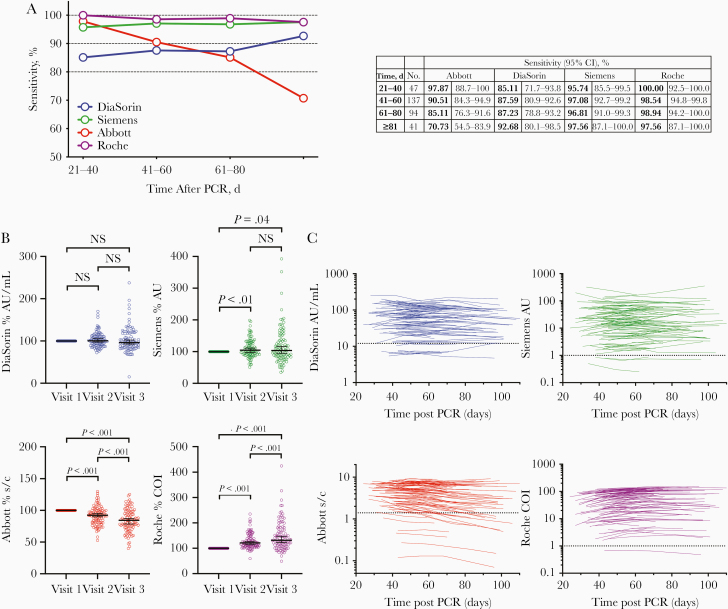
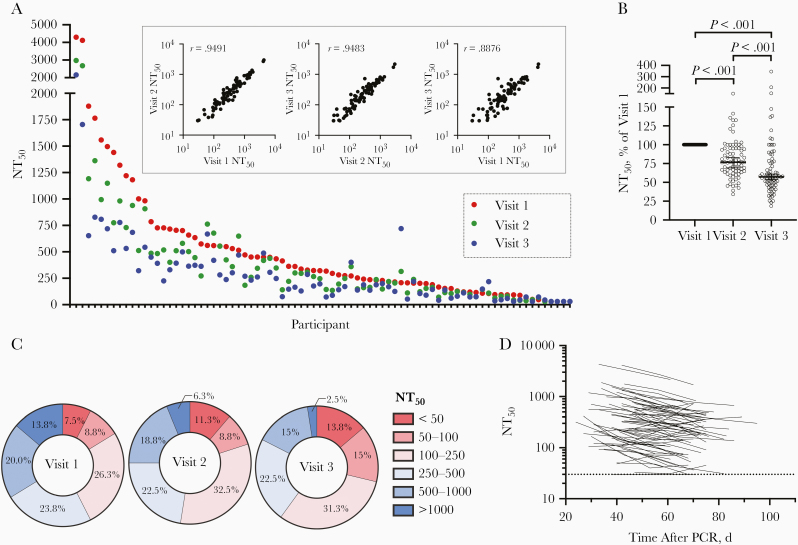
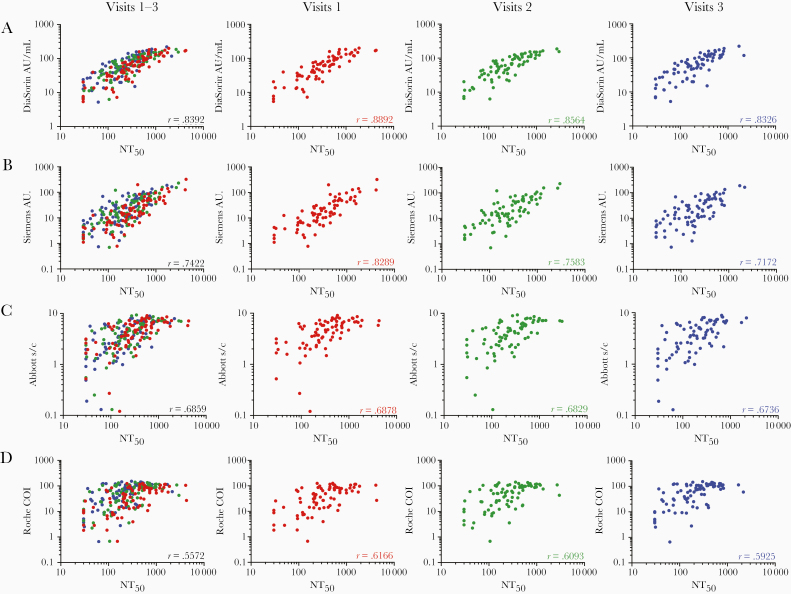
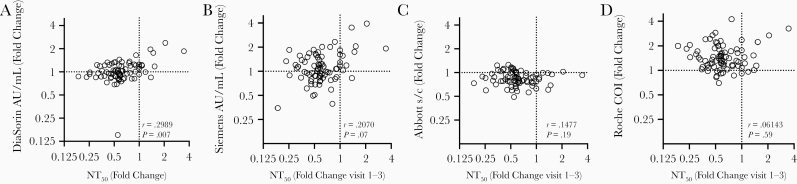
Background: Understanding the longitudinal trajectory of severe acute respiratory syndrome coronavirus 2 (SARS-CoV-2) antibodies is crucial for diagnosis of prior infection and predicting future immunity. Methods: We conducted a longitudinal analysis of coronavirus disease 2019 convalescent patients, with neutralizing antibody assays and SARS-CoV-2 serological assay platforms using SARS-CoV-2 spike (S) or nucleocapsid (N) antigens. Results: Sensitivities of serological assays in diagnosing prior SARS-CoV-2 infection changed with time. One widely used commercial platform that had an initial sensitivity of >95% declined to 71% at 81–100 days after diagnosis. The trajectories of median binding antibody titers measured over approximately 3–4 months were not dependent on the use of SARS-CoV-2 N or S proteins as antigen. The median neutralization titer decreased by approximately 45% per month. Each serological assay gave quantitative antibody titers that were correlated with SARS-CoV-2 neutralization titers, but S-based serological assay measurements better predicted neutralization potency. Correlation between S-binding and neutralization titers deteriorated with time, and decreases in neutralization titers were not predicted by changes in S-binding antibody titers. Conclusions: Different SARS-CoV-2 serological assays are more or less well suited for surveillance versus prediction of serum neutralization potency. Extended follow-up should facilitate the establishment of appropriate serological correlates of protection against SARS-CoV-2 reinfection.
Overview
The claims and statistics of this paper haven’t been checked yet.
Free: it reads the open-access text and checks the first 5 claims that cite a source we can check. Create a free account to check every claim.
Integrity signals
Registry
Cites
Statistics
Figures
Verification
Claims the paper makes
The claims and statistics of this paper haven’t been checked yet.
Free: it reads the open-access text and checks the first 5 claims that cite a source we can check. Create a free account to check every claim.
Claims other papers make about this one
Each is checked against this paper’s own text: does it say what the citing paper says it does?
The source backs part of the claim, not all of it — or backs it for a different population, condition or comparison.
In the citing paper
“neutralizing antibody responses to SARS-CoV-2 peak within the first few weeks after symptom onset but seem to decay after this time, with a proportion of individuals losing detectable neutralizing antibodies within months after infection5”
From Prospects for durable immune control of SARS-CoV-2 and prevention of reinfection (2021) · cites this paper as [5]
Experimental — accuracy not yet measuredThe source backs part of the claim, not all of it — or backs it for a different population, condition or comparison.
In the citing paper
“High concentrations of neutralising antibodies targeting the SARS-CoV-2 spike protein offer considerable protection against SARS-CoV-2 reinfection, supported by data from common human coronaviruses and non-human primate models and vaccine studies.”
From SARS-CoV-2 infection rates of antibody-positive compared with antibody-negative health-care workers in England: a large, multicentre, prospective cohort study (SIREN) (2021) · cites this paper as [25]
Experimental — accuracy not yet measuredThe cited source says what the claim attributes to it.
In the citing paper
“SARS-CoV-2 infection rapidly elicits nAbs (16, 21–24) that decline, but remain detectable, over several months (25–29).”
From mRNA vaccination boosts cross-variant neutralizing antibodies elicited by SARS-CoV-2 infection (2021) · cites this paper as [29]
Self-check
Percentages, sums and reported differences re-computed from the paper’s own numbers.
The self-check needs the paper’s full text.
Citations
Cites
Grifoni, A., Weiskopf, D., Ramirez, S. I., Mateus, J., Dan, J. M., Moderbacher, C. R., Rawlings, S. A., Sutherland, A., Premkumar, L., Jadi, R. S., et al. (2020) · Cell · doi:10.1016/j.cell.2020.05.015 · Cited by 3,595
Antibody responses to SARS-CoV-2 in patients with COVID-19
Long, Q.-X., Liu, B.-Z., Deng, H.-J., Wu, G.-C., Deng, K., Chen, Y.-K., Liao, P., Qiu, J.-F., Lin, Y., Cai, X.-F., et al. (2020) · Nature Medicine · doi:10.1038/s41591-020-0897-1 · Cited by 2,876
SARS-CoV-2-specific T cell immunity in cases of COVID-19 and SARS, and uninfected controls
Le Bert, N., Tan, A. T., Kunasegaran, K., Tham, C. Y. L., Hafezi, M., Chia, A., Chng, M. H. Y., Lin, M., Tan, N., Linster, M., et al. (2020) · Nature · doi:10.1038/s41586-020-2550-z · Cited by 1,887
Convergent Antibody Responses to SARS-CoV-2 in Convalescent Individuals
Robbiani, D. F., Gaebler, C., Muecksch, F., Lorenzi, J. C. C., Wang, Z., Cho, A., Agudelo, M., Barnes, C. O., Gazumyan, A., Finkin, S., et al. (2020) · Nature · doi:10.1038/s41586-020-2456-9 · Cited by 1,853 · cited 6×
“Moreover, this assay has been successfully applied for analysis of convalescent plasma samples and in a campaign to identify potent human monoclonal antibodies [6, 7].”
BackgroundMethodResultInfluentialSelf-citationRobust T Cell Immunity in Convalescent Individuals with Asymptomatic or Mild COVID-19
Sekine, T., Perez-Potti, A., Rivera-Ballesteros, O., Strålin, K., Gorin, J.-B., Olsson, A., Llewellyn-Lacey, S., Kamal, H., Bogdanovic, G., Muschiol, S., et al. (2020) · Cell · doi:10.1016/j.cell.2020.08.017 · Cited by 1,788
Seow, J., Graham, C., Merrick, B., Acors, S., Pickering, S., Steel, K. J. A., Hemmings, O., O’Byrne, A., Kouphou, N., Galao, R. P., et al. (2020) · Nature Microbiology · doi:10.1038/s41564-020-00813-8 · Cited by 1,419
Escape from neutralizing antibodies by SARS-CoV-2 spike protein variants
Weisblum, Y., Schmidt, F., Zhang, F., DaSilva, J., Poston, D., Lorenzi, J. C., Muecksch, F., Rutkowska, M., Hoffmann, H.-H., Michailidis, E., et al. (2020) · eLife · doi:10.7554/elife.61312 · Cited by 1,308
Self-citationRobust neutralizing antibodies to SARS-CoV-2 infection persist for months
Wajnberg, A., Amanat, F., Firpo, A., Altman, D. R., Bailey, M. J., Mansour, M., McMahon, M., Meade, P., Mendu, D. R., Muellers, K., et al. (2020) · Science · doi:10.1126/science.abd7728 · Cited by 1,195
Robust neutralizing antibodies to SARS-CoV-2 infection persist for months
(2020) · Science · doi:10.1101/2020.07.14.20151126 · Cited by 1,192
Rapid Decay of Anti–SARS-CoV-2 Antibodies in Persons with Mild Covid-19
Ibarrondo, F. J., Fulcher, J. A., Goodman-Meza, D., Elliott, J., Hofmann, C., Hausner, M. A., Ferbas, K. G., Tobin, N. H., Aldrovandi, G. M., & Yang, O. O. (2020) · New England Journal of Medicine · doi:10.1056/nejmc2025179 · Cited by 1,021 · cited 1×
“Recent reports have similarly indicated that SARS-CoV-2 neutralizing antibody titers decline with time [23, 24], while another study reported that neutralization titers remained stable for ≥3 months after infection [30].”
Result
Cited by
Items 201–300 of 310
Li, X., Pang, L., Yin, Y., Zhang, Y., Xu, S., Xu, D., & Shen, T. (2022) · Viruses · doi:10.3390/v14010080 · Cited by 6
Re-positive PCR of SARS-CoV-2 in health care persons during COVID-19 pandemic
Alebouyeh, M., Aavani, P., Abdulrahman, N., Haleem, A. A., Karimi, A., Armin, S., Fallah, F., Amirali, A., Sadr, S., Ghandchi, G., et al. (2022) · Cellular and Molecular Biology · doi:10.14715/cmb/2021.67.5.19 · Cited by 6
Seroprevalence and infection attack rate of COVID-19 in Indian cities
Fei, Y., Xu, H., Zhang, X., Musa, S. S., Zhao, S., & He, D. (2022) · Infectious Disease Modelling · doi:10.1016/j.idm.2022.03.001 · Cited by 6
Kinetics of Neutralizing Antibody Response Underscores Clinical COVID-19 Progression
Lei, Q., Hou, H., Yu, C., Zhang, Y., Ndzouboukou, J. B., Lin, X., Yao, Z., Fu, H., Ziyong, S., Wang, F., et al. (2021) · Journal of Immunology Research · doi:10.1155/2021/9822706 · Cited by 6
“nAb responses in COVID-19 patients peaked in the days following the onset of symptoms and declined over time [27, 29, 33, 37, 38].”
BackgroundTakahashi, S., Peluso, M. J., Hakim, J. M. C., Turcios, K., Janson, O., Routledge, I., Busch, M. P., Hoh, R., Tai, V., Kelly, J. D., et al. (2021) · medRxiv · doi:10.1101/2021.09.09.21263139 · Cited by 6
SARS ‐ CoV ‐2 antibody levels and long COVID occurrence in blood donors
Avelino‐Silva, V. I., Bruhn, R. L., Zurita, K. G., Deng, X., Yu, E. A., Grebe, E., Stone, M., Lanteri, M. C., Spencer, B. R., Busch, M. P., et al. (2024) · Transfusion · doi:10.1111/trf.17952 · Cited by 5
“12 16 Impor-tantly, Ab responses following SARS-CoV-2 infection and vaccination are dynamic and heterogenous 17 – 19 ; while antibodies (Abs) with neutralizing activity could promote viral clearance, higher levels of Abs with no neutralizing capacity could theoretically be associated with…”
InfluentialJanaka, S. K., Clark, N. M., Evans, D. T., Mou, H., Farzan, M., & Connor, J. P. (2021) · PLoS ONE · doi:10.1371/journal.pone.0253551 · Cited by 4
Cortellini, A., Salazar, R., Bower, M., Sita-Lumsden, A. R., Plaja, A., Lee, A. J. X., Bertuzzi, A. F., Tondini, C. A., Diamantis, N., Martínez-Vila, C., et al. (2022) · British Journal of Cancer · doi:10.1038/s41416-022-01952-x · Cited by 6
“Among patients who died within 14 days from the second infection, most prevalent primary disease were gastrointestinal tumours [2], followed by breast cancer [1] and thoracic malignancy [1], while three patients (75”
Kharroubi, G., Cherif, I., Ghawar, W., Dhaouadi, N., Yazidi, R., Châabane, S., Snoussi, M. A., Salem, S., Hamouda, W. B., Hamouda, S. B., et al. (2023) · Archives of Virology · doi:10.1007/s00705-022-05636-y · Cited by 6
“This is in accordance with the results of previous studies showing that anti-S antibody titers tend to stabilize over time, while anti-N IgG titers decay at a faster rate [16, 17].”
ResultAugustinussen, M. H., Tylden, G. D., & Rinaldo, C. H. (2023) · Viruses · doi:10.3390/v15030619 · Cited by 7
“Nevertheless, as testing was initiated by the participants themselves, there is a chance that some asymptomatic infections went undetected, especially since the sensitivity of the anti-N assay used is generally low and decreases with time after infection [28].”
BackgroundResultNedelcu, I., Jipa, R. E., Vasilescu, R., Băicuş, C., Popescu, C.-I., Manea, E., Stoichitoiu, L. E., Pinte, L., Damalan, A., Simulescu, O., et al. (2021) · Viruses · doi:10.3390/v13071244 · Cited by 6
Rooyen, C. V., Brauer, M., Swanepoel, P., van den Berg, S., van der Merwe, C., van der Merwe, M., Green, R. J., & Becker, P. (2022) · Journal of Clinical Pathology · doi:10.1136/jclinpath-2021-207556 · Cited by 5
Atzl, M., Muendlein, A., Winder, T. L., Fraunberger, P., Brandtner, E., Geiger, K. D., Klausberger, M., Duerkop, M., Sprenger, L., Mutschlechner, B., et al. (2022) · BMJ Open · doi:10.1136/bmjopen-2021-052130 · Cited by 5
Davis, K. A. S., Carr, E., Leightley, D., Vitiello, V., Bergin-Cartwright, G., Lavelle, G., Wickersham, A., Malim, M. H., Oetzmann, C., Polling, C., et al. (2022) · BMC Public Health · doi:10.1186/s12889-022-13889-0 · Cited by 4
SARS-CoV-2-Seroprävalenz bei Kindern und Jugendlichen in Deutschland – ein Überblick
Thamm, M., Buttmann‐Schweiger, N., Fiebig, J., Poethko‐Müller, C., Prütz, F., Sarganas, G., & Neuhauser, H. K. (2021) · Bundesgesundheitsblatt - Gesundheitsforschung - Gesundheitsschutz · doi:10.1007/s00103-021-03448-0 · Cited by 9
Immunoassays for anti-SARS-CoV-2 antibodies: recent insights
Elslande, J. V., André, E., Ranst, M. A. V., Lagrou, K., & Vermeersch, P. (2020) · The Lancet Infectious Diseases · doi:10.1016/s1473-3099(20)30846-x · Cited by 5
Bal, A., Trabaud, M., Fassier, J., Rabilloud, M., Saker, K., Langlois, C., Guibert, N., d’Aubarede, C., Paul, A., Alfaiate, D., et al. (2020) · medRxiv · doi:10.1101/2020.12.08.20245811 · Cited by 5
Population-based study of the durability of humoral immunity after SARS-CoV-2 infection
Peterhoff, D., Wiegrebe, S., Einhauser, S., Patt, A. J., Beileke, S., Günther, F., Steininger, P. A., Niller, H. H., Burkhardt, R., Küchenhoff, H., et al. (2023) · Frontiers in Immunology · doi:10.3389/fimmu.2023.1242536 · Cited by 6
Lee, J., Naoe, Y., Bang, U., Nakagama, Y., Saito, A., Kido, Y., & Hotta, A. (2024) · Virology · doi:10.1016/j.virol.2024.110067 · Cited by 5
Poeschla, E. M. (2020) · eLife · doi:10.7554/elife.64496 · Cited by 4
Buch, D. A., Johndrow, J. E., & Dunson, D. B. (2023) · Biometrics · doi:10.1111/biom.13901 · Cited by 4
“Unfortunately, measurements of the population state, such as seroprevalence studies to estimate 𝑟 𝑡 , can be difficult to obtain and biologically unreliable (Muecksch et al., 2021).”
BackgroundYounes, S. N., Nicolai, E., Al‐Sadeq, D. W., Younes, N., Al-Dewik, N. I. E., Abou-Saleh, H., Halawa, B. Y. A., Eid, A. H., Pieri, M., Liu, N., et al. (2023) · Journal of Infection and Public Health · doi:10.1016/j.jiph.2023.08.009 · Cited by 4
Ahmed, N., Athavale, A., Tripathi, A. H., Subramaniam, A., Upadhyay, S. K., Pandey, A. K., Rai, R. C., & Awasthi, A. (2023) · Scandinavian Journal of Immunology · doi:10.1111/sji.13345 · Cited by 4
Evaluation of the Roche SARS-CoV-2 Rapid Antibody Test in Samples from Vaccinated Individuals
Hayer, J., & Urlaub, E. (2022) · Microbiology Spectrum · doi:10.1128/spectrum.02709-21 · Cited by 4
Alasmari, F. A., Mukahal, M., AlQurashi, A., Huq, M. M., Alabdrabalnabi, F., AlJurayyan, A. N., Alkahtani, S. M., Assari, F. S., Bashaweeh, R., Salam, R., et al. (2022) · PLoS ONE · doi:10.1371/journal.pone.0272818 · Cited by 5
Leightley, D., Vitiello, V., Bergin-Cartwright, G., Wickersham, A., Davis, K. A. S., Stevelink, S. A. M., Hotopf, M. H., & Razavi, R. (2020) · medRxiv · doi:10.1101/2020.09.10.20191841 · Cited by 4
Ekström, N., Virta, C., Haveri, A., Dub, T., Hagberg, L., Solastie, A., Österlund, P., Vihervaara, T., Erlund, I., Nohynek, H., et al. (2021) · medRxiv · doi:10.1101/2021.01.21.21250207 · Cited by 5
Janaka, S. K., Hartman, W. R., Mou, H., Farzan, M., Stramer, S. L., Goodhue, E., Weiss, J., Evans, D. T., & Connor, J. P. (2021) · medRxiv · doi:10.1101/2021.02.25.21252463 · Cited by 4
Ert, H. A. V., Bohan, D., Rogers, K. J., Fili, M., Chávez, R. A. R., Qing, E., Han, C., Dempewolf, S., Hu, G., Schwery, N., et al. (2022) · Microbiology Spectrum · doi:10.1128/spectrum.02676-21 · Cited by 4
“181 These findings correspond with previous studies, which showed that spike-based 182 immunoassays exhibit better correlations with IC50 values than the nucleocapsid-based Roche 183 assay (33-35).”
ResultBratcher, A. M., Kao, S. Z., Chun, K., Petropoulos, C. J., Gundlapalli, A. V., Jones, J. M., & Clarke, K. E. N. (2024) · Emerging infectious diseases · doi:10.3201/eid3011.240043 · Cited by 5
“When testing with this assay, anti-N positivity remains high over a substantial follow-up period; >94% of persons retain a positive value 10 months after infection ( 19 , 20 ).”
BackgroundZhang, H., Li, B., Sun, J., Zou, L., Yi, L., Lin, H., Zhou, P., Liang, C., Zeng, L., Zhuang, X., et al. (2024) · Virology Journal · doi:10.1186/s12985-024-02573-x · Cited by 3
Models to inform neutralizing antibody therapy strategies during pandemics: the case of SARS-CoV-2
Guttieres, D., Sinskey, A. J., & Springs, S. L. (2021) · Antibody Therapeutics · doi:10.1093/abt/tbab006 · Cited by 3
“While not unique to SARS-CoV-2, titers of antibodies against the RBD of the S protein significantly decay with time following infection, though the number of memory B cells is more constant [33, 34].”
BackgroundPadma, M. R., Dinesh, P., Sundaresan, R., Athreya, S., Shiju, S., Maroor, P. S., Hande, R. L., Akhtar, J., Chandra, T., Deepa, R., et al. (2021) · IJID Regions · doi:10.1016/j.ijregi.2021.10.008 · Cited by 6
Mizoue, T., Yamamoto, S., Tanaka, A., Oshiro, Y., Inamura, N., Konishi, M., Ozeki, M., & Ohmagari, N. (2021) · GHM Open · doi:10.35772/ghmo.2021.01030 · Cited by 3
“Following an earlier report that showed a variation in sensitivity among assays after 3-4 months since disease onset (4), several serological studies with a longer period of follow-up have demonstrated an even larger between-assay variation in sensitivity (5-7).”
BackgroundInfluentialThe changing profile of SARS-CoV-2 serology in Irish blood donors
Coyne, D., Butler, D., Meehan, A., Keogh, E., Williams, P., Carterson, A., Hervig, T. A., O’Flaherty, N., & Waters, A. (2023) · Global Epidemiology · doi:10.1016/j.gloepi.2023.100108 · Cited by 3
“The sensitivity of the Abbott SARS-CoV-2 IgG assay has been reported to reduce to 71% at >81 days post diagnosis [17].”
MethodGong, Y., Zhang, X., Han, X., Chen, B., Xu, Y., Huang, J., Yang, W., Fu, X., Wang, Q., Li, Z., et al. (2023) · Expert Review of Vaccines · doi:10.1080/14760584.2023.2272655 · Cited by 3
“It is well known that antibody levels gradually decrease over time following vaccination; previous studies have reported a decrease in serum antibody levels after vaccination [24,25].”
BackgroundYan, Y., Saito, K., Naito, T., Ito, K., Nojiri, S., Horiuchi, Y., Deshpande, G. A., Yokokawa, H., & Tabe, Y. (2024) · Scientific Reports · doi:10.1038/s41598-024-53656-2 · Cited by 3
“Previous studies have reported that antibody seropositivity (magnitude and detectability) is driven by disease severity, as well as both timing and type of assay 10–13 .”
BackgroundTess, B. H., Martelli, C. M. T., Alves, M. C. G. P., Cortés, F., Bernal, R. T. I., de Souza, W. V., Luna, E. J. D. A., Rodrigues, L. D. C., Nunes, M. C., Reinach, F. D. C., et al. (2024) · PLoS ONE · doi:10.1371/journal.pone.0309441 · Cited by 4
Kwiecińska-Piróg, J., Przekwas, J., Kraszewska, Z., Sękowska, A., Brodzka, S., Wiktorczyk-Kapischke, N., Grudlewska‐Buda, K., Wałecka-Zacharska, E., Zacharski, M., Mańkowska‐Cyl, A., et al. (2021) · Vaccines · doi:10.3390/vaccines9121402 · Cited by 3
“[24] have noted declines in neutralizing antibodies over a similar period.”
BackgroundMehboob, S., Rehman, A., Haq, M., Rajab, H., Haq, M., Haq, H., Ahmad, J., Ahmad, S., Abbas, M., Anwar, S., et al. (2022) · Irish Journal of Medical Science (1971 -) · doi:10.1007/s11845-022-02997-w · Cited by 3
“In another the trajectory of the neutralizing antibodies (S and N antibodies) showed that the median neutralization potency decreased by 45% per month, and S-based serological assay best predicted the neutralization potency [16].”
BackgroundA Dual‐Encoded Bead‐Based Immunoassay with Tunable Detection Range for COVID‐19 Serum Evaluation
Lin, Z., Zhang, J., Zou, Z., Lu, G., Wu, M., Niu, L., & Zhang, Y. (2022) · Angewandte Chemie · doi:10.1002/ange.202203706 · Cited by 3
Chansaenroj, J., Yorsaeng, R., Wanlapakorn, N., Chirathaworn, C., Sudhinaraset, N., Sripram, M., Chalongviriyalert, P., Jirajariyavej, S., Kiatpanabhikul, P., Saiyarin, J., et al. (2021) · Research Square · doi:10.21203/rs.3.rs-1073046/v1 · Cited by 3
Preanalytical stability of SARS-CoV-2 anti-nucleocapsid antibodies
Niedrist, T., Kriegl, L., Zurl, C., Schmidt, F., Perkmann‐Nagele, N., Mucher, P., Repl, M., Flieder, I., Radakovics, A., Sieghart, D., et al. (2022) · Clinical Chemistry and Laboratory Medicine (CCLM) · doi:10.1515/cclm-2022-0875 · Cited by 2
Zheng, X., Chen, Q., Liao, Q., & Zhang, X. (2025) · Frontiers in Immunology · doi:10.3389/fimmu.2025.1533102 · Cited by 1
Lubetzky, M., Zhao, Z., Sukhu, A. C., Sharma, V., Sultan, S. T., Kapur, Z., Albakry, S., Craig‐Schapiro, R., Lee, J. R., Salinas, T., et al. (2022) · Nephrology Dialysis Transplantation · doi:10.1093/ndt/gfac132 · Cited by 2
Comparative performance of COVID-19 serology testing
Tran, N. K., May, L. S., Cohen, S. H., Rodrigo, J., Gong, R., Liu, Y., & Conner, P. M. (2022) · Practical Laboratory Medicine · doi:10.1016/j.plabm.2022.e00289 · Cited by 2
“Both Assays A and C target anti-S IgG, with Assay A reporting strong correlation to neutralizing antibody tests [15], and Assay C being able to identify neutralizing antibodies in 72% of samples [16] in literature.”
Renaud, C., Lewin, A., Grégoire, Y., Simard, N. N., Vallières, É., Paquette, M., Drews, S. J., O’Brien, S. F., Germanio, C. D., Busch, M. P., et al. (2024) · Vox Sanguinis · doi:10.1111/vox.13625 · Cited by 2
“On the other hand, longer gaps might have caused anti-N waning [16, 17].”
BackgroundTiwari, A. K., Aggarwal, G., Kale, P. R., Yadav, N., Kumar, V., Singh, G., Cheirmaraj, K., & Krishnan, K. (2024) · Transfusion and Apheresis Science · doi:10.1016/j.transci.2024.103937 · Cited by 2
Wang, W., Fan, B., Zhang, X., Yang, S., Zhou, J., Guo, R., Zhao, Y., Zhou, J., Li, J., & Li, B. (2024) · Animal Diseases · doi:10.1186/s44149-024-00137-8 · Cited by 2
“Research has indicated that the S protein of SARS-CoV-2 has a greater correlation with virus neutralization assays than the N protein does (Jung et al. 2021; Muecksch et al. 2021).”
BackgroundChen, J.-C., Yu, Y., O'Brien, S., Charlton, C. L., Drews, S. J., Heffernan, J., Smith, A. M., Nakagama, Y., Kido, Y., Buckeridge, D. L., et al. (2025) · American Journal of Epidemiology · doi:10.1093/aje/kwaf157 · Cited by 2
“Using auxiliary data from early in the pandemic ( n = 1784, Table S1,Supplementary data), 3, 4,24,25 we developed multinomial logistic regression models, separately for Roche and Abbott, that used the quantitative anti-N results to estimate the probability that a sample was collected from a person…”
Immunogenicity and Reactogenicity of CoronaVac: A Cohort Study
Masyeni, S., Johar, E., Budhitresna, A. A. G., Mahardika, N., Dewi, N. R. K., Widiana, I. G. R., Yudhaputri, F. A., & Myint, K. S. A. (2022) · COVID · doi:10.3390/covid2040035 · Cited by 2
“The Roche Elecsys® Anti-SARS-CoV-2 S quantitative assay kit used in our study has a moderate agreement with live virus [30] and pseudovirus [31] neutralizing tests, and a good agreement with the surrogate Spike RBD-based neutralizing test [32].”
MethodRejoinder: Regression Models for Understanding COVID-19 Epidemic Dynamics With Incomplete Data
Quick, C., Dey, R., & Lin, X. (2021) · Journal of the American Statistical Association · doi:10.1080/01621459.2021.2001340 · Cited by 2
“Recent work suggests that some antibody tests have substantially lower longterm sensitivity than previously thought (Muecksch et al. 2021).”
BackgroundSARS-CoV-2 Infection-Blocking Immunity Post Natural Infection: The Role of Vitamin D
Fanne, R. A., Moed, M., Kedem, A., Lidawi, G., Maraga, E., Mohsen, F., Roguin, A., & Meisel, S.-R. (2023) · Vaccines · doi:10.3390/vaccines11020475 · Cited by 2
“Previous studies have shown progressive decay of neutralizing antibody levels over time, even with maintained levels of serologically measured anti-spike antibodies [43].”
BackgroundKayalı, G. A., Durmaz, S., Şahin, İ. N., Akkul, B., Durusoy, R., Akarca, F. K., Ulukaya, S., & Çiçek, C. (2023) · Vaccines · doi:10.3390/vaccines11071258 · Cited by 2
Comparison of SARS-CoV-2 serological assays for use in epidemiological surveillance in Scotland
McDonald, L., Wise, H. M., Muecksch, F., Poston, D., Mavin, S., Templeton, K. E., Furrie, E., Richardson, C., McGuire, J., JARVIS, L. M., et al. (2021) · Journal of Clinical Virology Plus · doi:10.1016/j.jcvp.2021.100028 · Cited by 3
Self-citationJung, B. K., Yoon, J. H., Bae, J., Kim, J., Park, M., Lee, S. Y., & Lim, C. S. (2021) · Diagnostics · doi:10.3390/diagnostics11122193 · Cited by 3
Impact of Prior Infection on Protection and Transmission of SARS-CoV-2 in Golden HamstersPreprint
Zhang, C., Guo, Z., Li, N., Cui, H. Y., Meng, K., Liu, L., Zhao, L., Zhang, S., Qin, C., Liu, J., et al. (2021) · bioRxiv (Cold Spring Harbor Laboratory) · doi:10.1101/2021.01.30.428920 · Cited by 2
Ensemble forecast of COVID-19 in Karnataka for vulnerability assessment and policy interventionsPreprint
Ganesan, S., Subramani, D., Anandh, T., Ghose, D., & Babu, G. R. (2021) · medRxiv · doi:10.1101/2021.08.31.21262943 · Cited by 2
“The reported district-wise CIR values in the first serological survey for Karnataka [7,26,27] are used in our model.”
Damour, A., Faure, M., Landrein, N., Ragues, J., Ardah, N., Dhaidel, H., Lafon, M., Wodrich, H., & Basha, W. (2024) · Vaccines · doi:10.3390/vaccines12050493 · Cited by 3
“Consistent with previous studies showing a decline of such a correlation over time [17,19], we observed a poor overall correlation between the calculated IC50 values and the anti-S antibody levels (Figure 1C).”
ResultGuo, Y., Guo, P., Tian, J., Tuluhongtayi, Y., Song, R., Gao, G. F., Zhao, X., & Liu, J. (2026) · Frontiers in Immunology · doi:10.3389/fimmu.2026.1731340 · Cited by 3
Braeye, T., Abrams, S., & Hens, N. (2026) · PLoS ONE · doi:10.1371/journal.pone.0328144 · Cited by 1
Rhea, S. K., Collier, D. N., Cuffney, M., Lea, C. S., Kotlarz, N., & Hoppin, J. A. (2026) · International Journal of Hygiene and Environmental Health · doi:10.1016/j.ijheh.2026.114755 · Cited by 1
“…immunity following initial vaccination (Menegale et al., 2023), and to minimize confounding by vulnerable life stage (e.g., early childhood) (Committee on the Guidance on, 2022), and neutralizing antibody production as a result of natural infection (Marziano et al., 2023; Muecksch et al., 2021).”
Beverland, A., Keogan, M. T., Connell, J., Gascun, C. F. D., & Igoe, D. (2021) · The Journal of Infectious Diseases · doi:10.1093/infdis/jiab346 · Cited by 1
Comparative IgG Antibody Titers Following Second Dose of Sinopharm and Pfizer Vaccination
Tanveer, H., Zaffar, S., Osama, M., Ishaq, I., Malik, J. A., Bilal, R., Talat, A., & Talat, A. (2023) · BIOMEDICA · doi:10.24911/biomedica/5-675 · Cited by 1
Persistence of SARS-CoV-2 antibodies beyond 6 months in health care workers in Mumbai
Singhal, T., Shah, S., Naik, R., Kazi, A., & Thakkar, P. (2021) · Indian Journal of Medical Microbiology · doi:10.1016/j.ijmmb.2021.02.003 · Cited by 1
Lier, M., Nessler, S., Stadelmann, C., Pressler, M., Saager, L., Moerer, O., Roeßler, M., Meissner, K., & Winkler, M. S. (2021) · Scandinavian Journal of Trauma Resuscitation and Emergency Medicine · doi:10.1186/s13049-021-00969-0 · Cited by 1
Chisolm, T., Walker, J. P., Leys, Y. E., Butterfield, T. R., Medley, C., Thompson, T. K., Reynolds-Campbell, G., Mulder, W. H., Mitchell, M. C., & Anzinger, J. J. (2021) · medRxiv · doi:10.1101/2021.02.08.21251367 · Cited by 1
Tang, C. Y., Wang, Y., Gao, C., Smith, D. R., McElroy, J. A., Li, T., Segovia, K. M., Haynes, T., Hammer, R., Sampson, C. S., et al. (2021) · medRxiv · doi:10.1101/2021.02.03.21250928 · Cited by 1
Davis, K. A. S., Oetzmann, C., Carr, E., Lavelle, G., Leightley, D., Malim, M. H., Vitiello, V., Wickersham, A., KCL-CHECK team, Razavi, R., et al. (2021) · medRxiv · doi:10.1101/2021.08.23.21261638 · Cited by 1
Seroprevalence and Infection Attack Rate of COVID-19 in Indian CitiesPreprint
He, D., Fei, Y., Zhao, S., Xu, H., Zhang, X., & Musa, S. S. (2021) · Research Square · doi:10.21203/rs.3.rs-934038/v1 · Cited by 1
Leightley, D., Vitiello, V., Wickersham, A., Davis, K. A. S., Bergin-Cartwright, G., Lavelle, G., Stevelink, S. A. M., Hotopf, M. H., & Razavi, R. (2021) · medRxiv · doi:10.1101/2021.01.26.21249744 · Cited by 1
Agreement between self-reported COVID-19 and dried blood spot serologyPreprint
Sheppard, N., Carroll, M. T. C., Borg, B. M., Toh, Z. Q., Licciardi, P. V., Smith, C. L., Ikin, J. F., Abramson, M. J., Walker-Bone, K. E., & Lane, T. J. (2025) · medRxiv · doi:10.1101/2025.04.08.25325501 · Cited by 1
Fluctuating High Throughput Serological Assay Results in Recurrent Convalescent Plasma DonorsPreprint
Luchsinger, L. L., Rehmani, S., Opalka, A., Strauss, D., Hillyer, C. D., Shi, P. A., & Sachais, B. S. (2020) · medRxiv · doi:10.1101/2020.10.25.20219147
Persistence of immunoglobulin G after natural infection with SARS-CoV-2
Kreuzberger, N., Hirsch, C., Vanshylla, K., Cristanziano, V. D., Dorando, E., Khosravi, Z., Neidhardt, M., Salomon, S., Monsef, I., Lange, B., et al. (2021) · Cochrane Database of Systematic Reviews · doi:10.1002/14651858.cd014946 · Cited by 1
Sim, M., Cockcroft, C., Darby, D., Ellis, C. R., Heaps, A. G., Scargill, J., & Garcez, T. P. (2021) · Annals of Clinical Biochemistry International Journal of Laboratory Medicine · doi:10.1177/00045632211030957
“This relative decrease seen on the Abbott platform has been described in other longitudinal cohorts.(5,6) Differences in assay format and design beyond the main assay target may account for this, as the Roche nucleocapsid assay did not show the same deterioration.”
ResultSARS-CoV-2 Antibody Response in Patients Undergoing Kidney TransplantationPreprint
Lubetzky, M., Sukhu, A. C., Zhao, Z., Rand, S., Sharma, V., Sultan, S. T., Kapur, Z., Albakry, S., Hauser, N., Marku‐Podvorica, J., et al. (2021) · medRxiv · doi:10.1101/2021.07.25.21261066
Ensemble Forecast of COVID-19 for Vulnerability Assessment and Policy InterventionsPreprint
Ganesan, S., Subramani, D., Anandh, T., Ghose, D., & Babu, G. R. (2021) · Research Square · doi:10.21203/rs.3.rs-931186/v1
Mathematics Achievement in Young Children Is Increased with a Cognitively Oriented Curriculum.
Rawl, R. K., & O'Tuel, F. S. (1983)
Farshidi, H., Hassaniazad, M., Hosseinpoor, M., Gharibzadeh, A., Nikpoor, A. R., Mohseni, S., Abbasi, H., Rafati, S., Madani, A., Zakeri, A.-J., et al. (2021) · Disease and Diagnosis · doi:10.34172/ddj.2021.27
“Although the precise durability of the generated immunity is elusive, high levels of neutralizing antibodies targeting SARS-CoV-2 Spike protein seem to offer significant safety against SARS CoV-2 reinfection for several months (10, 11).”
BackgroundSuntronwong, N., Yorsaeng, R., Auphimai, C., Thongmee, T., Vichaiwattana, P., Kanokudom, S., Assawakosri, S., Nilyanimit, P., Srimuan, D., Thatsanatorn, T., et al. (2022) · medRxiv · doi:10.1101/2022.01.03.22268704
Ellis, J. E., Morgan, M., Simon, W., Lawson, V., & Lindner, N. M. (2022) · Research Square · doi:10.21203/rs.3.rs-1268493/v1
Purshouse, K. R., Thomson, J. P., Vallet, M., Alexander, L., Bonisteel, I., Brennan, M., Cameron, D., Figueroa, J. D., Furrie, E., Haig, P., et al. (2022) · medRxiv · doi:10.1101/2022.02.22.22271041
Self-citationBrousseau, N., Morin, L., Ouakki, M., Savard, P., Quach, C., Longtin, Y., Cheng, M. P., Carignan, A., Dufresne, S. F., Leduc, J., et al. (2022) · Canadian Medical Association Journal · doi:10.1503/cmaj.202783-f
Self-administered, remote assessment of SARS-CoV-2 seroprevalence in health care workers
Card, L., Litwin, C. M., Curry, S. R., Mack, E. H., Nietert, P. J., & Meissner, E. G. (2022) · The American Journal of the Medical Sciences · doi:10.1016/j.amjms.2022.01.025
The Reported Side Effects of Corona Virus Vaccination among Oral Health Care Workers
Naveel, T., & Chunda, R. (2022) · Pakistan Journal of Medical and Health Sciences · doi:10.53350/pjmhs22163546
Features of the humoral response to immunization "Gam-COVID-Vac" and in patients with COVID-19
Akinshina, Y. A., Mardanly, S. G., Ротанов, С. В., Pomazanov, V. V., Kiseleva, V. A., & Ermolaev, I. I. (2022) · Russian Clinical Laboratory Diagnostics · doi:10.51620/0869-2084-2022-67-4-227-233
Coronaviruses Research in BRICS Countries
Fielding, B. C., & Schäfer, G. (2022) · MDPI eBooks · doi:10.3390/books978-3-0365-4027-6
Structural epitope profiling identifies antibodies associated with critical COVID-19 and long COVIDPreprint
Kearns, P. K. A., Dixon, C. R., Badonyi, M., Lee, K., Czapiewski, R., Fleming, O., Nadukkandy, P., Gerasimivicius, L., Sahputra, R., Potts, B., et al. (2022) · medRxiv · doi:10.1101/2022.07.11.22277368
Self-citationDzananovic, B., Williamson, M., Nwaigwe, C. I., & Routray, C. (2022) · World Journal of Clinical Infectious Diseases · doi:10.5495/wjcid.v12.i2.50
Houshmand, H., Jafary, R., Rasoli, J., & Ahmadi, A. (2023) · Health Science Monitor · doi:10.52547/hsm.2.1.61
Investigation of the Change in Antibody Levels of COVID-19 RT-PCR Positive Patients Over Time
Çöplü, N., Kılınç, Ç., Özbek, R., Demir, C., Çalışır, B., & AHLATCIOGLU, Z. A. (2023) · Flora the Journal of Infectious Diseases and Clinical Microbiology · doi:10.5578/flora.20239915
Sex difference in the discordance between Abbott Architect and EuroImmun serological assays
Hartsell, J. D., Leung, D. T., Zhang, Y., Delgado, J. C., Alder, S. C., & Samore, M. H. (2023) · PeerJ · doi:10.7717/peerj.15247
COVID-19 Antibody Testing in Healthcare Workers in Arkansas
Joshi, M., Theus, J. W., Joshi, A., Burns, M. C., & Bartter, T. C. (2023) · Cureus · doi:10.7759/cureus.48511
The Covid-19 and TB Syndemic: Differences and Similarities
Kaufmann, S. H. E., Sher, A., Sigal, A., & Sawitzki, B. (2023) · Frontiers research topics · doi:10.3389/978-2-8325-4116-6
Holdenrieder, S., Ferreira, C. E. D. S., Izopet, J., Theel, E. S., & Wieser, A. (2023) · Frontiers in Public Health · doi:10.3389/fpubh.2023.1290402
Neutralizing Antibodies against SARS-CoV2
Athavale, P. V., Athavale, V. S., Suryawanshi, P. V., Khillare, K. M., & Tripathy, S. P. (2023) · Medical Journal of Dr D Y Patil Vidyapeeth · doi:10.4103/mjdrdypu.mjdrdypu_819_22
de Oliveira, J. R. (2023) · Digital Library of Theses and Dissertations (Universidade de São Paulo) · doi:10.11606/t.5.2023.tde-24082023-110203
Villari, C. A., Siqueira, A. W. D. S., Strunz, C. M. C., Moscan, C., Jatene, M. B., Miura, N., & Azeka, E. (2024) · Transplantation Proceedings · doi:10.1016/j.transproceed.2024.04.023
Structural epitope profiling identifies antibodies associated with critical COVID-19 and long COVIDPreprint
Kearns, P. K. A., Dixon, C. R., Badonyi, M., Lee, K., Czapiewski, R., Fleming, O., Nadukkandy, P., Gerasimivicius, L., Sahputra, R., Potts, B., et al. (2024) · eLife · doi:10.7554/elife.98840.1
Self-citationStructural epitope profiling identifies antibodies associated with critical COVID-19 and long COVIDPreprint
Kearns, P. K. A., Dixon, C. R., Badonyi, M., Lee, K., Czapiewski, R., Fleming, O., Nadukkandy, P., Gerasimivicius, L., Sahputra, R., Potts, B., et al. (2024) · eLife · doi:10.7554/elife.98840
Self-citation
Metadata
- Authors
- Muecksch, F., Wise, H., Batchelor, B., Squires, M., Semple, E., Richardson, C., McGuire, J., Clearly, S., Furrie, E., Greig, N., Hay, G., Templeton, K., Lorenzi, J. C. C., Hatziioannou, T., Jenks, S., & Bieniasz, P. D.
- Affiliations
- Rockefeller University (US)
- NHS Lothian (GB)
- NHS Lanarkshire (GB)
- NHS Tayside (GB)
- Laboratory of Retrovirology, The Rockefeller University, New York, New York, USA
- Howard Hughes Medical Institute (US)
- Corresponding author
- Bieniasz, Paul D
- Venue
- The Journal of Infectious Diseases
- Publisher
- Oxford University Press (OUP)
- Published
- 2020-11-03
- Volume
- 223
- Issue
- 3
- Pages
- 389-398
- ISSN
- 0022-1899 (ISSN-L)
- 1537-6613
- PMC
- PMC7665595
- OpenAlex
- W3096243826
- Cited by
- 308
- References
- 60
- Citations by year
- 2026: 6 · 2025: 9 · 2024: 15 · 2023: 37 · 2022: 73 · 2021: 147 · 2020: 20
- FWCI
- 9.03
- Type
- journal article
- Language
- en
- Open access
- hybrid
- doi.org
- Licence
- Locations
- The Journal of Infectious Diseases (publishedVersion, cc-by-nc-nd)
- medRxiv (acceptedVersion, cc-by-nc-nd)
- PubMed Central (publishedVersion, cc-by-nc-nd)
- PubMed (publishedVersion)
- Discovery Research Portal (University of Dundee) (submittedVersion, cc-by-nc-nd)
- PubMed Central (submittedVersion, cc-by-nc-nd)
- Funders
- National Institute of Allergy and Infectious Diseases (R01AI078788, R37AI064003)
- Topics
- Health Sciences › Medicine › Infectious Diseases › SARS-CoV-2 and COVID-19 Research
- Health Sciences › Medicine › Infectious Diseases › SARS-CoV-2 detection and testing
- Health Sciences › Medicine › Infectious Diseases › COVID-19 Clinical Research Studies
- Keywords
- SARS-CoV-2, COVID-19 pandemic, neutralizing antibodies, serological assays, antibody titers, spike protein antigen, antibody waning, reinfection, convalescent patients
About these checks
Registry, retraction, Cites and statistics results are computed, not judged, with one exception: a printed reference that no index lists is read once by a model before it counts as a citation error. Claims are extracted by a model and kept only when their quote appears verbatim in the text; each cited source is then checked, with a model’s help, for whether it says what the claim relies on. Those verdicts can be wrong — read the claim’s quote and the cited source before relying on one.
Statistics and arithmetic are recomputed, not judged.
Confidence bands are shown only for fields calibrated on our annotated test set. None is calibrated yet, so no band is shown.
What counts as a claim ›How we measure confidence ›How we check this ›
Are you an author, or do you see a problem with this page? Request a review
Data sources
Bibliographic data: Semantic Scholar, OpenAlex, Crossref.
Contains information from the Semantic Scholar Academic Graph Datasets, made available under the ODC Attribution License (ODC-BY 1.0).
Semantic Scholar’s data is described in: Kinney, R., et al. (2023). The Semantic Scholar Open Data Platform. arXiv:2301.10140.
