

Longitudinal Serological Analysis and Neutralizing Antibody Levels in Coronavirus Disease 2019 Convalescent Patients
Open accessPublished version of a preprint
The DOI matches its Crossref record; 56 of the 60 references it cites were found in a registry or an index.
Abstract
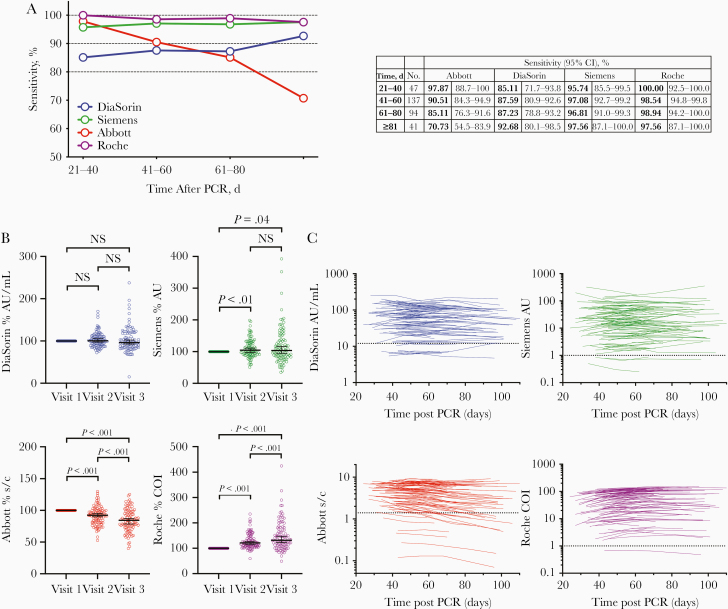
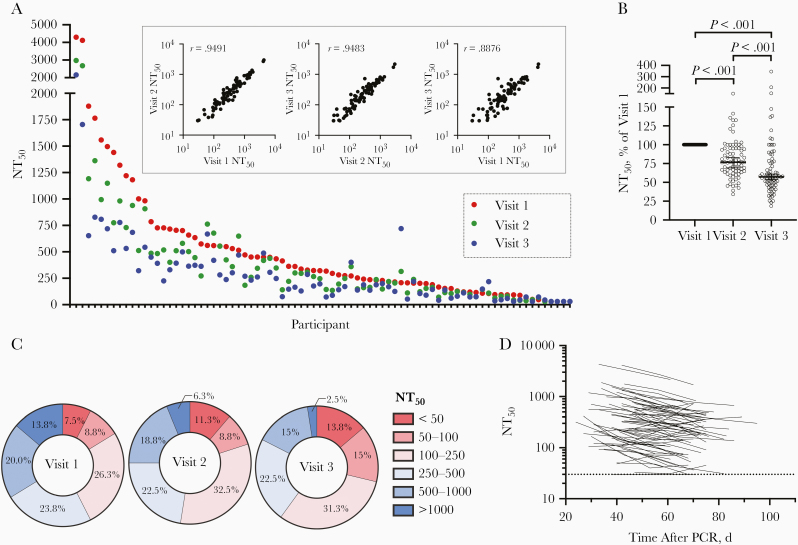
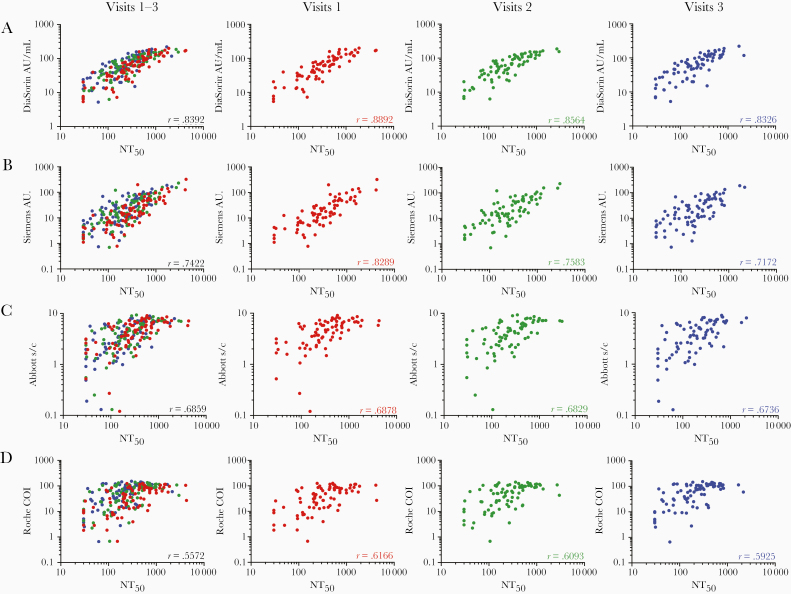
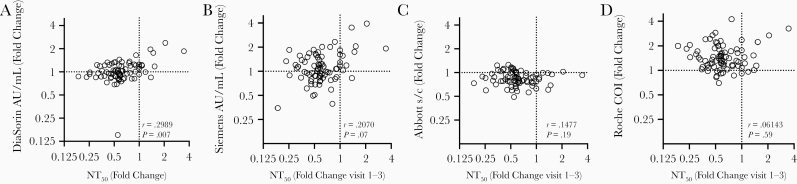
Background: Understanding the longitudinal trajectory of severe acute respiratory syndrome coronavirus 2 (SARS-CoV-2) antibodies is crucial for diagnosis of prior infection and predicting future immunity. Methods: We conducted a longitudinal analysis of coronavirus disease 2019 convalescent patients, with neutralizing antibody assays and SARS-CoV-2 serological assay platforms using SARS-CoV-2 spike (S) or nucleocapsid (N) antigens. Results: Sensitivities of serological assays in diagnosing prior SARS-CoV-2 infection changed with time. One widely used commercial platform that had an initial sensitivity of >95% declined to 71% at 81–100 days after diagnosis. The trajectories of median binding antibody titers measured over approximately 3–4 months were not dependent on the use of SARS-CoV-2 N or S proteins as antigen. The median neutralization titer decreased by approximately 45% per month. Each serological assay gave quantitative antibody titers that were correlated with SARS-CoV-2 neutralization titers, but S-based serological assay measurements better predicted neutralization potency. Correlation between S-binding and neutralization titers deteriorated with time, and decreases in neutralization titers were not predicted by changes in S-binding antibody titers. Conclusions: Different SARS-CoV-2 serological assays are more or less well suited for surveillance versus prediction of serum neutralization potency. Extended follow-up should facilitate the establishment of appropriate serological correlates of protection against SARS-CoV-2 reinfection.
Overview
The claims and statistics of this paper haven’t been checked yet.
Free: it reads the open-access text and checks the first 5 claims that cite a source we can check. Create a free account to check every claim.
Integrity signals
Registry
Cites
Statistics
Figures
Verification
Claims the paper makes
The claims and statistics of this paper haven’t been checked yet.
Free: it reads the open-access text and checks the first 5 claims that cite a source we can check. Create a free account to check every claim.
Claims other papers make about this one
Each is checked against this paper’s own text: does it say what the citing paper says it does?
The source backs part of the claim, not all of it — or backs it for a different population, condition or comparison.
In the citing paper
“neutralizing antibody responses to SARS-CoV-2 peak within the first few weeks after symptom onset but seem to decay after this time, with a proportion of individuals losing detectable neutralizing antibodies within months after infection5”
From Prospects for durable immune control of SARS-CoV-2 and prevention of reinfection (2021) · cites this paper as [5]
Experimental — accuracy not yet measuredThe source backs part of the claim, not all of it — or backs it for a different population, condition or comparison.
In the citing paper
“High concentrations of neutralising antibodies targeting the SARS-CoV-2 spike protein offer considerable protection against SARS-CoV-2 reinfection, supported by data from common human coronaviruses and non-human primate models and vaccine studies.”
From SARS-CoV-2 infection rates of antibody-positive compared with antibody-negative health-care workers in England: a large, multicentre, prospective cohort study (SIREN) (2021) · cites this paper as [25]
Experimental — accuracy not yet measuredThe cited source says what the claim attributes to it.
In the citing paper
“SARS-CoV-2 infection rapidly elicits nAbs (16, 21–24) that decline, but remain detectable, over several months (25–29).”
From mRNA vaccination boosts cross-variant neutralizing antibodies elicited by SARS-CoV-2 infection (2021) · cites this paper as [29]
Self-check
Percentages, sums and reported differences re-computed from the paper’s own numbers.
The self-check needs the paper’s full text.
Citations
Cites
Grifoni, A., Weiskopf, D., Ramirez, S. I., Mateus, J., Dan, J. M., Moderbacher, C. R., Rawlings, S. A., Sutherland, A., Premkumar, L., Jadi, R. S., et al. (2020) · Cell · doi:10.1016/j.cell.2020.05.015 · Cited by 3,595
Antibody responses to SARS-CoV-2 in patients with COVID-19
Long, Q.-X., Liu, B.-Z., Deng, H.-J., Wu, G.-C., Deng, K., Chen, Y.-K., Liao, P., Qiu, J.-F., Lin, Y., Cai, X.-F., et al. (2020) · Nature Medicine · doi:10.1038/s41591-020-0897-1 · Cited by 2,876
SARS-CoV-2-specific T cell immunity in cases of COVID-19 and SARS, and uninfected controls
Le Bert, N., Tan, A. T., Kunasegaran, K., Tham, C. Y. L., Hafezi, M., Chia, A., Chng, M. H. Y., Lin, M., Tan, N., Linster, M., et al. (2020) · Nature · doi:10.1038/s41586-020-2550-z · Cited by 1,887
Convergent Antibody Responses to SARS-CoV-2 in Convalescent Individuals
Robbiani, D. F., Gaebler, C., Muecksch, F., Lorenzi, J. C. C., Wang, Z., Cho, A., Agudelo, M., Barnes, C. O., Gazumyan, A., Finkin, S., et al. (2020) · Nature · doi:10.1038/s41586-020-2456-9 · Cited by 1,853 · cited 6×
“Moreover, this assay has been successfully applied for analysis of convalescent plasma samples and in a campaign to identify potent human monoclonal antibodies [6, 7].”
BackgroundMethodResultInfluentialSelf-citationRobust T Cell Immunity in Convalescent Individuals with Asymptomatic or Mild COVID-19
Sekine, T., Perez-Potti, A., Rivera-Ballesteros, O., Strålin, K., Gorin, J.-B., Olsson, A., Llewellyn-Lacey, S., Kamal, H., Bogdanovic, G., Muschiol, S., et al. (2020) · Cell · doi:10.1016/j.cell.2020.08.017 · Cited by 1,788
Seow, J., Graham, C., Merrick, B., Acors, S., Pickering, S., Steel, K. J. A., Hemmings, O., O’Byrne, A., Kouphou, N., Galao, R. P., et al. (2020) · Nature Microbiology · doi:10.1038/s41564-020-00813-8 · Cited by 1,419
Escape from neutralizing antibodies by SARS-CoV-2 spike protein variants
Weisblum, Y., Schmidt, F., Zhang, F., DaSilva, J., Poston, D., Lorenzi, J. C., Muecksch, F., Rutkowska, M., Hoffmann, H.-H., Michailidis, E., et al. (2020) · eLife · doi:10.7554/elife.61312 · Cited by 1,308
Self-citationRobust neutralizing antibodies to SARS-CoV-2 infection persist for months
Wajnberg, A., Amanat, F., Firpo, A., Altman, D. R., Bailey, M. J., Mansour, M., McMahon, M., Meade, P., Mendu, D. R., Muellers, K., et al. (2020) · Science · doi:10.1126/science.abd7728 · Cited by 1,195
Robust neutralizing antibodies to SARS-CoV-2 infection persist for months
(2020) · Science · doi:10.1101/2020.07.14.20151126 · Cited by 1,192
Rapid Decay of Anti–SARS-CoV-2 Antibodies in Persons with Mild Covid-19
Ibarrondo, F. J., Fulcher, J. A., Goodman-Meza, D., Elliott, J., Hofmann, C., Hausner, M. A., Ferbas, K. G., Tobin, N. H., Aldrovandi, G. M., & Yang, O. O. (2020) · New England Journal of Medicine · doi:10.1056/nejmc2025179 · Cited by 1,021 · cited 1×
“Recent reports have similarly indicated that SARS-CoV-2 neutralizing antibody titers decline with time [23, 24], while another study reported that neutralization titers remained stable for ≥3 months after infection [30].”
Result
Cited by
Items 101–200 of 310
A Dual‐Encoded Bead‐Based Immunoassay with Tunable Detection Range for COVID‐19 Serum Evaluation
Lin, Z., Zhang, J., Zou, Z., Lu, G., Wu, M., Niu, L., & Zhang, Y. (2022) · Angewandte Chemie International Edition · doi:10.1002/anie.202203706 · Cited by 23
Comparison of the Immune Responses to COVID-19 Vaccines in Bangladeshi Population
Sarker, P., Akhtar, E., Kuddusi, R. U., Alam, M. M., Haq, M. A., Hosen, M. B., Chanda, B. C., Haque, F., Alam, M., Razzaque, A., et al. (2022) · Vaccines · doi:10.3390/vaccines10091498 · Cited by 32
“A strong association between neutralizing antibodies and anti-S antibodies was also seen in this study as well as in other populations, inclu i g vaccine recipients and convalescent ti nts [24,29,31].”
BackgroundSaxena, A., Guttmann, A., Masson, M., Kim, M., Haberman, R. H., Castillo, R., Scher, J. U., Deonaraine, K., Engel, A., Belmont, M. H., et al. (2021) · The Lancet Rheumatology · doi:10.1016/s2665-9913(21)00114-4 · Cited by 26
“16,17,28,29 Ng and colleagues 16 28 it is reassuring that although SARS-CoV-2 IgG titres in our cohort were obtained at a longer interval after RT-PCR testing, the mean titre of 4·1 was similar to those reported in previous studies, which were not limited to patients with SLE or immunosuppressed…”
Schuler, C. F., IV, Gherasim, C., O’Shea, K. J., Manthei, D. M., Chen, J., Zettel, C., Troost, J. P., Kennedy, A. A., Tai, A. W., Giacherio, D. A., et al. (2021) · Microbiology Spectrum · doi:10.1128/spectrum.00087-21 · Cited by 22
“commercial antibody measures, consistent with prior reports (20).”
ResultKaruna, S., Li, S. S., Grant, S., Walsh, S. R., Frank, I., Casapía, M., Trahey, M., Hyrien, O., Fisher, L. H., Miner, M. D., et al. (2021) · PLoS Medicine · doi:10.1371/journal.pmed.1003868 · Cited by 22
Brousseau, N., Morin, L., Ouakki, M., Savard, P., Quach, C., Longtin, Y., Cheng, M. P., Carignan, A., Dufresne, S. F., Leduc, J., et al. (2021) · Canadian Medical Association Journal · doi:10.1503/cmaj.202783 · Cited by 21
Perkmann, T., Mucher, P., Perkmann‐Nagele, N., Radakovics, A., Repl, M., Köller, T., Schmetterer, K. G., Bigenzahn, J. W., Leitner, F., Jordakieva, G., et al. (2022) · Microbiology Spectrum · doi:10.1128/spectrum.01402-21 · Cited by 23
Kreuzberger, N., Hirsch, C., Andreas, M., Böhm, L., Bröckelmann, P. J., Cristanziano, V. D., Golinski, M., Hausinger, R. I., Mellinghoff, S. C., Lange, B., et al. (2022) · Cochrane Database of Systematic Reviews · doi:10.1002/14651858.cd015021 · Cited by 27
Underwood, A. P., Sølund, C. S., Fernandez-Antunez, C., Villadsen, S. L., Winckelmann, A. A., Bollerup, S., Mikkelsen, L. S., Sørensen, A.-L., Feng, S., Fahnøe, U., et al. (2021) · EBioMedicine · doi:10.1016/j.ebiom.2021.103519 · Cited by 28
“number [15,18] or the use of pseudotyped or surrogate models [11-15,17,19].”
InfluentialExperimental Animal Models of Coronavirus Infections: Strengths and Limitations
Casel, M. A. B., Rollon, R., & Choi, Y. K. (2021) · Immune Network · doi:10.4110/in.2021.21.e12 · Cited by 22
Kitagawa, Y., Imai, K., Matsuoka, M., Fukada, A., Kubota, K., Sato, M., Takada, T., Noguchi, S., Tarumoto, N., Maesaki, S., et al. (2021) · Journal of Medical Virology · doi:10.1002/jmv.27338 · Cited by 18
Suggested guidelines for convalescent plasma therapy for the treatment of COVID-19
Santis, G. C. D., Mendrone, A., Langhi, D. M., Covas, D. T., Fabron, A., Cortez, A. J. P., Dinardo, C. L., Ubiali, E. M. A., Marques, J. F. C., Bordin, J. O., et al. (2021) · Hematology Transfusion and Cell Therapy · doi:10.1016/j.htct.2021.03.001 · Cited by 20
Focosi, D., & Franchini, M. (2021) · European Journal Of Haematology · doi:10.1111/ejh.13630 · Cited by 20
Persistence of T Cell and Antibody Responses to SARS-CoV-2 Up to 9 Months after Symptom Onset
Law, J. C., Girard, M., Chao, G. Y. C., Ward, L. A., Isho, B., Rathod, B., Colwill, K., Li, Z., Rini, J. M., Yue, F. Y., et al. (2022) · The Journal of Immunology · doi:10.4049/jimmunol.2100727 · Cited by 23
Барчук, А. А., Shirokov, D., Sergeeva, M. V., Турсун-заде, Р. Т., Dudkina, O., Tychkova, V., Barabanova, L., Skougarevskiy, D. A., & Danilenko, D. (2021) · Journal of Medical Virology · doi:10.1002/jmv.27126 · Cited by 19
Peluso, M. J., Donatelli, J. L., & Henrich, T. J. (2021) · Translational research · doi:10.1016/j.trsl.2021.11.006 · Cited by 20
Chang, M., Ke, H., Coherd, C. D., Wang, Y., Mashima, K., Kastrunes, G. M., Huang, C., & Marasco, W. A. (2022) · EBioMedicine · doi:10.1016/j.ebiom.2022.104025 · Cited by 22
“7 8-18 Here we investigated the breadth of antibody responses to both the SARS-CoV-2 Spike and RBD in a cohort of individuals with hybrid immunity.”
Rovida, F., Cassaniti, I., Percivalle, E., Sarasini, A., Paolucci, S., Klersy, C., Cutti, S., Novelli, V., Marena, C., Luzzaro, F., et al. (2021) · International Journal of Infectious Diseases · doi:10.1016/j.ijid.2021.07.003 · Cited by 17
Stability of SARS-CoV-2 IgG in multiple laboratory conditions and blood sample types
Kanji, J. N., Bailey, A., Fenton, J., Lindsay, L. R., Dibernardo, A., Toledo, N., Waitt, B., Lecocq, N., Osiowy, C., Giles, E., et al. (2021) · Journal of Clinical Virology · doi:10.1016/j.jcv.2021.104933 · Cited by 18
An update on host immunity correlates and prospects of re-infection in COVID-19
Negi, N., Maurya, S. P., Singh, R., & Das, B. K. (2021) · International Reviews of Immunology · doi:10.1080/08830185.2021.2019727 · Cited by 23
Neuhauser, H. K., Rosario, A. S., Butschalowsky, H., Haller, S., Hoebel, J., Michel, J., Nitsche, A., Poethko‐Müller, C., Prütz, F., Schlaud, M., et al. (2021) · medRxiv · doi:10.1101/2021.11.22.21266711 · Cited by 18
Katz, M. A., Bron‐Harlev, E., Chazan, B., Chowers, M., Greenberg, D., Peretz, A., Tshori, S., Levy, J., Yacobi, M., Hirsch, A., et al. (2021) · Vaccine · doi:10.1016/j.vaccine.2021.11.092 · Cited by 19
“In addition, while the serological test (Abbott SARS-CoV-2 nucleocapsid IgG test) we used to determine new infections during the 30- to 90day follow-up window has been shown to be over 90% sensitive in identifying PCR infections in mildly symptomatic individuals [26], it may be less sensitive in capturing asymptomatic…”
MethodDesign and performance characteristics of the Elecsys anti-SARS-CoV-2 S assay
Taffertshofer, K., Walter, M., Mackeben, P., Kraemer, J., Potapov, S., & Jochum, S. (2022) · Frontiers in Immunology · doi:10.3389/fimmu.2022.1002576 · Cited by 20
Favresse, J., Elsen, M., Eucher, C., Laffineur, K., Eeckhoudt, S. V., Nicolas, J., Gillot, C., Dogné, J.-M., & Douxfils, J. (2020) · Clinical Chemistry and Laboratory Medicine (CCLM) · doi:10.1515/cclm-2020-1736 · Cited by 16
Johannesen, C. K., Rezahosseini, O., Gybel‐Brask, M., Kristensen, J. H., Hasselbalch, R. B., Pries‐Heje, M. M., Nielsen, P. B., Knudsen, A. D., Fogh, K., Norsk, J. B., et al. (2021) · Microbiology Spectrum · doi:10.1128/spectrum.00904-21 · Cited by 17
“BMI ,25 423 (49) 415 (49) 8 (38) 25–30 241 (28) 234 (28) 7 (33) 30 109 (13) 103 (12) 6 (29) No information 93 (11) 93 (11) 0 (0)”
Dynamics of SARS-CoV-2 seroassay sensitivity: a systematic review and modelling study
Owusu‐Boaitey, N., Russell, T., Meyerowitz‐Katz, G., Levin, A., & Herrera, D. (2023) · Eurosurveillance · doi:10.2807/1560-7917.es.2023.28.21.2200809 · Cited by 16
“Roche Elecsys S [14] Vitros Ortho CoV2T total [13,14] Wantai ELISA [14,117-120] LumiraDx [22] Tosoh S sandwich [75] Tosoh N sandwich [75] SenASTrIS test [106,107] Abbot Quant II [44] COVIDAR [64-66] Luminex xMAP, RBD portion [101] Mount Sinai [103] Sinai Health ELISA, S [110] University of Rio de Janeiro [84,112] Roch…”
MethodInfluentialAbdullahi, A., Frimpong, J. O., Cheng, M. T. K., Aliyu, S. H., Smith, C. J., Abimiku, A., Phillips, R. O., Owusu, M., & Gupta, R. K. (2023) · American Journal of Tropical Medicine and Hygiene · doi:10.4269/ajtmh.23-0179 · Cited by 16
“Two reports showed sustained responses to IgG spike and nucleocapsid up to 125 days after exposure, 34,35 whereas other reports reported declines in antibody levels over the same time period, 36 – 38 with limited antibody data.”
Perspectives and Challenges in the Fight Against COVID-19: The Role of Genetic Variability
Guilger‐Casagrande, M., de Barros, C. T., Antunes, V. A. N., de Araújo, D. R., & de Lima, R. (2021) · Frontiers in Cellular and Infection Microbiology · doi:10.3389/fcimb.2021.598875 · Cited by 18
“, 2020), however, the detailed analysis of responses of T cells is currently not viable in a high-performance clinical environment (Muecksch et al., 2020).”
BackgroundComparative analysis of antibodies to SARS-CoV-2 between asymptomatic and convalescent patients
Dwyer, C. J., Cloud, C. A., Wang, C., Heidt, P., Chakraborty, P., Duke, T., McGue, S. R., Jeffcoat, B., Dunne, J., Johnson, L., et al. (2021) · iScience · doi:10.1016/j.isci.2021.102489 · Cited by 17
“As SARSCoV-2 antibody responses have been shown to decrease with viral resolution and time, this was a limiting factor of our data (Beaudoin-Bussières et al., 2020; Gaebler et al., 2020; Muecksch et al., 2021; Prévost et al., 2020).”
Maine, G. N., Krishnan, S. M., Walewski, K., Trueman, J., Sykes, E., & Sun, Q. (2022) · Journal of Immunological Methods · doi:10.1016/j.jim.2022.113243 · Cited by 16
“In addition, our study suggests that anti-RBD and anti-S IgG are longer lasting than the anti-NP antibody, which has been similarly shown in other reports (Muecksch et al., 2021).”
Estimating COVID-19 infection fatality rate in Mumbai during 2020Preprint
Banaji, M. (2021) · medRxiv · doi:10.1101/2021.04.08.21255101 · Cited by 16
“We expect sensitivity to peak two to three weeks after infection, and then decline; however the speed of the decline depends strongly on the test used [7].”
BackgroundMethodPerformance Evaluation of the Siemens SARS-CoV-2 Total Antibody and IgG Antibody Test
Florin, L., Maelegheer, K., Vandewal, W., Bernard, D. R., & Robbrecht, J. (2021) · Laboratory Medicine · doi:10.1093/labmed/lmab027 · Cited by 16
Freund, O., Breslavsky, A., Fried, S., Givoli-Vilensky, R., Rubin, S. C., Zacks, N., Kleinhendler, E., Unterman, A., Frydman, S., Wand, O., et al. (2023) · Clinical and Experimental Medicine · doi:10.1007/s10238-023-01139-5 · Cited by 15
“Higher anti-S levels are known to be associated with more severe infections [22, 23], further supporting our results.”
ResultLongitudinal evaluation of laboratory-based serological assays for SARS-CoV-2 antibody detection
Bond, K. A., Williams, E., Nicholson, S. R., Lim, S. M., Johnson, D. F., Cox, B., Putland, M., Gardiner, E., Tippett, E., Graham, M., et al. (2021) · Pathology · doi:10.1016/j.pathol.2021.05.093 · Cited by 16
Paul, G., Strnad, P., Wienand, O., Krause, U., Plecko, T., Effenberger-Klein, A., Giel, K. E., Junne, F., Galante-Gottschalk, A., Ehehalt, S., et al. (2022) · Infection · doi:10.1007/s15010-022-01830-x · Cited by 17
“showed that in a longitudinal approach, sensitivity of serological assays for anti-SARS-CoV-2 antibodies is dependent on the assay used [15].”
MethodBeaudoin-Bussières, G., Tauzin, A., Dionne, K., Gendron‐Lepage, G., Medjahed, H., Perreault, J., Levade, I., Alfadhli, L., Bo, Y., Bazin, R., et al. (2023) · Viruses · doi:10.3390/v15061274 · Cited by 16
Detection of SARS-CoV-2 antibodies in pediatric kidney transplant patients
Alshami, A., Attas, R. A. A., Azzam, A., Mohammed, A., & Al-Quhaidan, N. (2021) · BMC Nephrology · doi:10.1186/s12882-021-02325-x · Cited by 14
Kanji, J. N., Bailey, A., Fenton, J., Ling, S. H., Rivera, R., Plitt, S. S., Sligl, W., Taylor, S. C., Turnbull, L., Tipples, G. A., et al. (2021) · Vaccine · doi:10.1016/j.vaccine.2021.08.022 · Cited by 13
“This may be due to a number of factors including, the severity of the initial SARS-CoV-2 infection [37], the specific anti-N IgG assay used [38], the natural decline of N antibodies overtime [39], or possible immune modulation from the vaccine, where the abundance of antibodies produced switched from anti-N following…”
Durable T-cellular and humoral responses in SARS-CoV-2 hospitalized and community patients
Mohn, K. G.-I., Bredholt, G., Zhou, F., Madsen, A., Onyango, T. B., Fjelltveit, E. B., Lartey, S. L., Brokstad, K. A., Cantoni, D. M., Neto, M. M., et al. (2022) · PLoS ONE · doi:10.1371/journal.pone.0261979 · Cited by 18
“Most infected people seroconvert but reports of antibody waning and heterogeneity in antibody responses among infected people, have caused concern for the long-term protection after infection and particularly with the ongoing vaccination campaign [7, 8] The protective antibody level is unknown, and there is no agreed…”
BackgroundTaus, E., Hofmann, C., Ibarrondo, F. J., Gong, L. S., Hausner, M. A., Fulcher, J. A., Krogstad, P. A., Kitchen, S. G., Ferbas, K. G., Tobin, N. H., et al. (2023) · Frontiers in Immunology · doi:10.3389/fimmu.2023.1100594 · Cited by 17
Assay dependence of long-term kinetics of SARS-CoV-2 antibodies
Schallier, A., Baets, S. D., Bruyne, D. D., Dauwe, K., Herpol, M., & Couck, P. (2021) · Diagnostic Microbiology and Infectious Disease · doi:10.1016/j.diagmicrobio.2021.115403 · Cited by 11
Sensitivity of the Elecsys Nucleocapsid Assay for the Detection of Preceding SARS-CoV-2 Infections
Grunau, B. E., Tom, J., Asamoah-Boaheng, M., O’Brien, S. F., Drews, S. J., Sediqi, S., Lavoie, P. M., Barakauskas, V., & Goldfarb, D. A. (2022) · Open Forum Infectious Diseases · doi:10.1093/ofid/ofac349 · Cited by 13
“6% (95% CI, 87%–100%) in tests performed >81 days postdiagnosis, similar to performance at 21–80 days [8].”
BackgroundAssefa, N., Regassa, L. D., Teklemariam, Z., Oundo, J. O., Madrid, L., Kebede, A., Dessie, Y., & Scott, J. (2021) · BMJ Open · doi:10.1136/bmjopen-2021-055834 · Cited by 15
Seroprevalence of Antibodies to SARS-CoV-2 in US Blood DonorsPreprint
Vassallo, R. R., Bravo, M. D., Dumont, L. J., Hazegh, K. E., & Kamel, H. T. (2020) · medRxiv · doi:10.1101/2020.09.17.20195131 · Cited by 13
Bal, A., Trabaud, M., Fassier, J., Rabilloud, M., Saker, K., Langlois, C., Guibert, N., Paul, A., Alfaiate, D., Massardier-Pilonchery, A., et al. (2021) · Clinical Microbiology and Infection · doi:10.1016/j.cmi.2021.01.003 · Cited by 13
TOP-Plus Is a Versatile Biosensor Platform for Monitoring SARS-CoV-2 Antibody Durability
Racine‐Brzostek, S., Karbaschi, M., Gaebler, C., Klasse, P. J., Yee, J. K., Caskey, M. F., Yang, H. S., Hao, Y., Sukhu, A. C., Rand, S., et al. (2021) · Clinical Chemistry · doi:10.1093/clinchem/hvab069 · Cited by 12
“(22) Our findings of the decay in total SARS-CoV-2 antibodies and neutralization antibody activities are consistent with the previous studies.(10, 16, 21, 33-37) However, SARS-CoV-2 antibody avidity did not show the same pattern of diminishment during the first six months of infection (Figure 5).”
ResultVeríssimo, C. D. M., O'Brien, C. L., Corrales, J. L., Dorey, A., Cwiklinski, K., Lalor, R., Doyle, J. M., Field, S., Masterson, C. H., Martínez, E. R., et al. (2021) · Epidemiology and Infection · doi:10.1017/s0950268821001308 · Cited by 13
“Previously, it was reported that the sensitivity of the Abbott test shifted from >90% to 71% when samples collected more than 80 days after onset of symptoms were tested [42]; however, such a decline in sensitivity was not found in our study and those samples collected >80 days after the onset of symptoms (N = 3) were…”
Vicenti, I., Gatti, F., Scaggiante, R., Boccuto, A., Zago, D., Basso, M., Dragoni, F., Parisi, S. G., & Zazzi, M. (2021) · Infection · doi:10.1007/s15010-021-01680-z · Cited by 13
Serum antibody response to BNT162b2 after natural SARS‐CoV‐2 infection
Perkmann, T., Perkmann‐Nagele, N., Köller, T., Mucher, P., Radakovics, A., Wolzt, M., Wagner, O. F., Binder, C. J., & Haslacher, H. (2021) · European Journal of Clinical Investigation · doi:10.1111/eci.13632 · Cited by 11
Mustanski, B. S., Saber, R., Ryan, D. T., Benbow, N., Madkins, K., Hayford, C. S., Newcomb, M. E., Schrock, J. M., Vaught, L. A., Reiser, N. L., et al. (2021) · Annals of Epidemiology · doi:10.1016/j.annepidem.2021.10.006 · Cited by 12
Gigot, C., Pisanic, N., Kruczynski, K. L., Rivera, M. G., Spicer, K., Kurowski, K. M., Randad, P. R., Koehler, K. A., Clarke, W. A., Holmes, P., et al. (2023) · mSphere · doi:10.1128/msphere.00522-22 · Cited by 12
Takahashi, S., Peluso, M. J., Hakim, J. M. C., Turcios, K., Janson, O., Routledge, I., Busch, M. P., Hoh, R., Tai, V., Kelly, J. D., et al. (2023) · American Journal of Epidemiology · doi:10.1093/aje/kwad106 · Cited by 13
SARS-CoV-2 anti-nucleocapsid assay performance in healthcare workers at baseline and 6 months
Kerr, C., Allen, N., Hughes, G., Kelly, M., O’Rourke, F., Lynagh, Y., Dunne, J., Crowley, B., Conlon, N. P., & Bergin, C. J. (2021) · Irish Journal of Medical Science (1971 -) · doi:10.1007/s11845-021-02700-5 · Cited by 13
Quantitative serological evaluation as a valuable tool in the COVID-19 vaccination campaign
Ferrari, D., Mangia, A., Spanò, S. M., Zaffarano, L., Viganò, M., Resta, C. D., Locatelli, M., Ciceri, F., & Vecchi, E. D. (2021) · Clinical Chemistry and Laboratory Medicine (CCLM) · doi:10.1515/cclm-2021-0364 · Cited by 11
Törnell, A., Wiktorin, H. G., Ringlander, J., Arabpour, M., Nilsson, M., Nilsson, S., Kiffin, R., Lindh, M., Lagging, M., Hellstrand, K., et al. (2022) · The Journal of Infectious Diseases · doi:10.1093/infdis/jiac005 · Cited by 11
“In agreement with earlier studies [12, 17-19], only 5/17 (29%) of patients remained NC-IgG seropositive when analyzed at >180 days after verified COVID-19 (median 333 days, range 237-408).”
Beaudoin-Bussières, G., Chen, Y.-Z., Ullah, I., Prévost, J., Tolbert, W., Symmes, K., Ding, S.-L., Benlarbi, M., Gong, S., Tauzin, A., et al. (2021) · bioRxiv · doi:10.1101/2021.09.08.459408 · Cited by 15
Dynamics of infection-elicited SARS-CoV-2 antibodies in children over timePreprint
Gentles, L. E., Kehoe, L., Crawford, K. H. D., Lacombe, K., Dickerson, J. A., Wolf, C. R., Yuan, J., Schuler, S., Watson, J. T., Nyanseor, S., et al. (2022) · medRxiv · doi:10.1101/2022.01.14.22269235 · Cited by 11
Cento, V., Alteri, C., Merli, M., Ruscio, F. D., Tartaglione, L., Rossotti, R., Travi, G., Vecchi, M., Raimondi, A., Nava, A., et al. (2020) · PLoS ONE · doi:10.1371/journal.pone.0242765 · Cited by 10
Increasing test specificity without impairing sensitivity: lessons learned from SARS-CoV-2 serology
Perkmann, T., Köller, T., Perkmann‐Nagele, N., Ozsvár-Kozma, M., Eyre, D. W., Matthews, P. C., Bown, A., Stoesser, N. E., Breyer, M., Breyer‐Kohansal, R., et al. (2022) · Journal of Clinical Pathology · doi:10.1136/jcp-2022-208171 · Cited by 13
Nuccetelli, M., Pieri, M., Gisone, F., Sarubbi, S., Ciotti, M., Andreoni, M., & Bernardini, S. (2020) · International Immunopharmacology · doi:10.1016/j.intimp.2020.107330 · Cited by 10
Menon, V. P., Shariff, M. A., Perez-Gutierrez, V. A., Carreño, J. M., Yu, B., Jawed, M., Gossai, M., Valdez, E., Pillai, A., Venugopal, U., et al. (2021) · BMJ Open · doi:10.1136/bmjopen-2021-051045 · Cited by 10
Evaluation of SARS-CoV-2 antibody point of care devices in the laboratory and clinical setting
McCance, K., Wise, H. M., Simpson, J., Batchelor, B., Hale, H., McDonald, L., Zorzoli, A., Furrie, E., Chopra, C., Muecksch, F., et al. (2022) · PLoS ONE · doi:10.1371/journal.pone.0266086 · Cited by 9
“Neutralising antibody assays were performed on serum samples using a pseudotyped chimeric virus, expressing the SARS-CoV-2 spike protein, as described elsewhere [12].”
MethodSelf-citationHeavey, L., Garvey, P., Colgan, A., Thornton, L., Connell, J., (1444018), T. R., Hunt, M., O'Callaghan, F., Culkin, F., Keogan, M. T., et al. (2022) · Figshare · Cited by 10
Humble, R. M., Merrill, A. E., Ford, B. A., Diekema, D. J., & Krasowski, M. D. (2021) · Academic Pathology · doi:10.1177/23742895211002802 · Cited by 10
Pathogenic Mechanism and Multi-omics Analysis of Oral Manifestations in COVID-19
Hao, M., Wang, D., Xia, Q., Kan, S., Chang, L., Liu, H., Yang, Z., & Liu, W. (2022) · Frontiers in Immunology · doi:10.3389/fimmu.2022.879792 · Cited by 11
Zember, S., Bodulić, K., Balent, N. C., Mikulić, R., Markotić, A., & Rode, O. Đ. (2022) · Vaccines · doi:10.3390/vaccines10111813 · Cited by 12
Dynamics of SARS-CoV-2-specific antibodies among COVID19 biobank donors in Argentina
Longueira, Y., Polo, M. L., InViV working group, Turk, G., Laufer, N., & Biobanco de Enfermedades Infecciosas Colección COVID19 working group (2021) · Heliyon · doi:10.1016/j.heliyon.2021.e08140 · Cited by 16
Plasmonic Fluor-Enhanced Antigen Arrays for High-Throughput, Serological Studies of SARS-CoV-2
Qavi, A. J., Wu, C., Lloyd, M., Zaman, M. M.-U., Luan, J., Ballman, C., Leung, D. W., Crick, S. L., Farnsworth, C. W., & Amarasinghe, G. K. (2022) · ACS Infectious Diseases · doi:10.1021/acsinfecdis.2c00086 · Cited by 9
Longitudinal survey of humoral and cellular response to SARS-CoV-2 infection in children
Ruedas-López, A., Berzosa, A., Illán-Ramos, M., Caballero, I. C., Guillén-Martín, S., Bodas-Pinedo, A., Rueda-Esteban, S., Pérez‐Rodríguez, O., López, R. V., Lara, D. L., et al. (2022) · Microbiological Research · doi:10.1016/j.micres.2022.127145 · Cited by 9
“It could be due to differences in methodology, as well as to the different techniques performed to analyse the humoral response [26].”
MethodButler, D., Coyne, D., Pomeroy, L., Williams, P., Holder, P., Carterson, A., Field, S., Waters, A., & O’Flaherty, N. (2021) · Journal of Clinical Virology · doi:10.1016/j.jcv.2021.105045 · Cited by 9
Faller, E., Wyse, A., Barry, R., Conlon, K. C., Everard, C., Finnegan, P., Foran, C., Herlihy, E., Kerr, G. M., Lapthorne, S., et al. (2021) · BMJ Open · doi:10.1136/bmjopen-2021-051415 · Cited by 8
Standardized Two-Step Testing of Antibody Activity in COVID-19 Convalescent Plasma
Gilchuk, P., Thomsen, I. P., Yoder, S. M., Brady, E. J., Chappell, J. D., Stevens, L. J., Denison, M. R., Sutton, R. E., Chen, R. E., VanBlargan, L. A., et al. (2021) · iScience · doi:10.1016/j.isci.2021.103602 · Cited by 7
“…plasma that varies depending on the clinical assay used and the cohort studied ((Chia et al., 2021; Gniadek et al., 2021; Grzelak et al., 2020; Muecksch et al., 2021; Rathe et al., 2021); this study)); (2) limitedsuitability of commercial serological assays for inferringneutralizing activity…”
MethodCuykx, M., Mortelé, O., Jansens, H., Schouwers, S., Meskal, A., Hoffbauer, I., & Peeters, B. (2021) · Diagnostic Microbiology and Infectious Disease · doi:10.1016/j.diagmicrobio.2021.115486 · Cited by 8
“This waning phenomenon is not seen in the Roche anti-N tAb assay (Mueksch et al., 2021).”
Long-Term Comparison of 7 SARS-CoV-2 Antibody Assays in the North Zealand Covid-19 Cohort
Wiwe, E. F., Carlsson, E. R., Rasmussen, C. L., Rasmussen, P., Ougaard, R., Hansen, S. I., Schiøler, T., Kristiansen, S. M., Hansen, Y. B. L., & Hillig, T. (2021) · The Journal of Applied Laboratory Medicine · doi:10.1093/jalm/jfab173 · Cited by 7
“Our findings of low assay sensitivities compared to PCR of Wantai-RBD-total, Roche-NC-total, and Siemens-RBD-total between 89% and 90% are comparable to reports of Herroelen et al. (20) (Wantai-RBD-total 92.1%, Roche-NC-total 88.2%, day 20þ after symptom onset, 52.6% severe illness) and Oved et al. (21) (Siemens-RBD-t…”
InfluentialDinç, H. Ö., Demırci, M., Özdemir, Y. E., Sirekbasan, S., Aktas, A., Karaali, R., Tok, Y., Özbey, D., Akçin, R., Gareayaghi, N., et al. (2022) · Balkan Medical Journal · doi:10.4274/balkanmedj.galenos.2022.2021-8-131 · Cited by 8
Seropositivity to SARS-CoV-2 in Alberta, Canada in a post-vaccination period (March 2021–July 2021)
Kanji, J. N., Nguyen, L. T., Plitt, S. S., Charlton, C. L., Fenton, J., Braun, S., Marohn, C., Lau, C. K. Y., Svenson, L. W., Hinshaw, D., et al. (2022) · Scandinavian Journal of Infectious Diseases · doi:10.1080/23744235.2022.2080250 · Cited by 9
“Based on current evidence, spike-induced antibody titres correlate well with predicting serum neutralising potency [39].”
BackgroundBaisa, G. A., Rancour, D. M., Mansfield, K. G., Burns, M. A., Martin, L., Cunha, D., Fischer, J., Muecksch, F., Hatziioannou, T., Bieniasz, P. D., et al. (2020) · bioRxiv (Cold Spring Harbor Laboratory) · doi:10.21203/rs.3.rs-137857/v1 · Cited by 8
Self-citationAnti-SARS-CoV-2 Serology persistence over time in COVID-19 Convalescent Plasma DonorsPreprint
Giorgi, V. D., West, K. A., Henning, A. N., Chen, L., Holbrook, M. R., Gross, R., Liang, J. Y., Postnikova, E. N., Trenbeath, J. L., Pogue, S., et al. (2021) · medRxiv · doi:10.1101/2021.03.08.21253093 · Cited by 8
Abela, I. A., Pasin, C., Schwarzmüller, M., Epp, S., Sickmann, M. E., Schanz, M. M., Rusert, P., Weber, J., Schmutz, S., Audigé, A., et al. (2021) · medRxiv · doi:10.1101/2021.04.21.21255410 · Cited by 8
Dou, X., Wang, E., Jiang, R., Li, M., Xiong, D., Sun, B., & Zhang, X. (2022) · Immunity Inflammation and Disease · doi:10.1002/iid3.612 · Cited by 7
“Above longitudinal serological and Nabs by rapid assays were mainly focused on COVID‐19 patients, the change pattern was seldom studied on vaccination subjects.(9) Danese et al.”
Zhang, C., Guo, Z., Li, N., Cui, H. Y., Meng, K., Liu, L., Zhao, L., Zhang, S., Qin, C., Liu, J., et al. (2021) · Frontiers in Microbiology · doi:10.3389/fmicb.2021.722178 · Cited by 9
Ueno, M., Iwata‐Yoshikawa, N., Matsunaga, A., Okamura, T., Saito, S., Ashida, S., Yoshida, I., Nagashima, M., Asakura, H., Yaoita, Y., et al. (2022) · Antiviral Research · doi:10.1016/j.antiviral.2022.105297 · Cited by 7
Prevalence of SARS-CoV-2 antibodies after the Omicron surge, Kingston, Jamaica, 2022
Anzinger, J. J., Cameron-McDermott, S. M., Phillips, Y. Z. R., Mendoza, L., Anderson, M., Cloherty, G., Strachan-Johnson, S., Lindo, J., & Figueroa, J. P. (2022) · Journal of Clinical Virology Plus · doi:10.1016/j.jcvp.2022.100124 · Cited by 11
Kwee, K. V., Murk, J., Yin, Q., Visch, M. B., Davidson, L., de Jong, E. M. G. J., van den Reek, J. M. P. A., & Tjioe, M. (2022) · Journal of Dermatological Treatment · doi:10.1080/09546634.2022.2161297 · Cited by 7
“However, other longitudinal studies have shown that SARS-CoV-2-antibody levels decrease over time after initial infection; most notably in mild cases (23,24).”
Nemeth, K. L., Yauney, E., Rock, J. M., Bievenue, R., Parker, M. M., & Styer, L. M. (2023) · Microbiology Spectrum · doi:10.1128/spectrum.01336-22 · Cited by 6
“levels have been correlated with neutralizing antibody levels (33, 42, 43), antibody levels TABLE 4Mean S MFI index values of individuals who received the Pfizer-BioNTech vaccine and submitted a sample within 1 week before second vaccine dose based on side effects reported from the second dose of the vaccine (n = 80)a”
BackgroundKroidl, I., Winter, S., Rubio‐Acero, R., Bakuli, A., Geldmacher, C., Eser, T. M., Deák, F., Horn, S., Zielke, A., Ahmed, M. I. M., et al. (2023) · Virology Journal · doi:10.1186/s12985-023-02167-z · Cited by 7
“Muecksch et al. [33] compared four different assays: the Ro-N-Ig and the Abbott SARS-CoV-2 immunoglobulin (Ig) G assay for anti-N detection, and the DiaSorin SARS-CoV-2 IgG together with the Siemens SARS-CoV-2 RBD assay for anti-S comparisons.”
BackgroundMethodResultStern, D., Meyer, T. C., Treindl, F., Mages, H. W., Krüger, M., Skiba, M., Krüger, J. P., Zobel, C., Schreiner, M., Grossegesse, M., et al. (2023) · Scientific Reports · doi:10.1038/s41598-023-48581-9 · Cited by 9
Diego, J. G.-B., Singh, G., Jangra, S., Handrejk, K., Laporte, M., Chang, L. A., Zahed, S. S. E., Pache, L., Chang, M. W., Warang, P., et al. (2024) · PLoS Pathogens · doi:10.1371/journal.ppat.1011805 · Cited by 9
“Moreover, immune responses in vaccinated as well as convalescent individuals wane over time, which is another reason why re-infections can occur and further”
Wendel, S., Fachini, R. M., Fontão‐Wendel, R., Mello, R., Velasquez, C. V., Machado, R. R. G., Brito, M., Amaral, M., Soares, C. P., Achkar, R., et al. (2021) · Transfusion · doi:10.1111/trf.16714 · Cited by 6
“It is known that tests targeted at NP proteins might behave differently than those that react against spikebased tests, which would also explain the variability found in this work.(23,34) In addition, when working only with a selected panel of previously known nAb status, one could consider creating an artificial popu…”
BackgroundThe new SARS-CoV-2 variant and reinfection in the resurgence of COVID-19 outbreaks in Manaus, BrazilPreprint
He, D., Fan, G., Wang, X., Li, Y., & Peng, Z. (2021) · medRxiv · doi:10.1101/2021.03.25.21254281 · Cited by 11
Strategies to Mitigate COVID-19 Resurgence Assuming Immunity Waning: A Study for Karnataka, IndiaPreprint
Adiga, A., Athreya, S., Lewis, B. L., MARATHE, M. V., Rathod, N., Sundaresan, R., Swarup, S., Venkatramanan, S., & Yasodharan, S. (2021) · medRxiv · doi:10.1101/2021.05.26.21257836 · Cited by 8
“[36] at approximately 25% reduction every two weeks.”
BackgroundSeroprevalence of Anti-SARS-CoV-2 Antibodies Following the Omicron BA.1 Wave
Sočan, M., Prosenc, K., & Mrzel, M. (2023) · International Journal of Environmental Research and Public Health · doi:10.3390/ijerph20043665 · Cited by 6
“Some early and more recent studies suggested that patients with more severe illnesses eventually had higher antibody titres than those with a milder form of the disease [8,9].”
ResultHuang, Y., Hsu, F., Wu, J., Lin, Y., Liu, M., Yang, C.-H., Kuo, H., Chen, Y., Cheng, C., Lin, H.-H., et al. (2023) · Journal of Microbiology Immunology and Infection · doi:10.1016/j.jmii.2023.03.004 · Cited by 7
“512 titers of neutralizing antibodies decreased modestly, with the titers at 3e4 months after diagnosis generally being approximately 4-fold lower than those at 1 month.(13,15) Our study suggests that convalescent COVID-19 individuals, after more than a year and four months, account for up to only 25% of positive NAbs…”
BackgroundPinto, P. B. A., Timis, J., Chuensirikulchai, K., Li, Q. H., Lu, H.-H., Maule, E., Nguyen, M. N., Alves, R. P. D. S., Verma, S. K., Ana‐Sosa‐Batiz, F., et al. (2024) · npj Vaccines · doi:10.1038/s41541-024-01043-3 · Cited by 10
Evaluation of effectiveness of humoral immune response after vaccination with ‘CoviVaс’
Казаков, С. П., Reshetnyak, D. V., Davydova, N. V., & Putkov, S. B. (2022) · Medical alphabet · doi:10.33667/2078-5631-2022-6-18-24 · Cited by 7
Lagousi, T., Routsias, J. G., Mavrouli, M. D., Papadatou, I., Geropeppa, M., & Spoulou, V. I. (2022) · Vaccines · doi:10.3390/vaccines10081210 · Cited by 7
“Antibodies against S-protein following wild-type infection were relatively stable over 6 months [6,16,17].”
BackgroundPurshouse, K. R., Thomson, J. P., Vallet, M., Alexander, L., Bonisteel, I., Brennan, M., Cameron, D., Figueroa, J. D., Furrie, E., Haig, P., et al. (2023) · The Oncologist · doi:10.1093/oncolo/oyac257 · Cited by 5
“Follow-up period, days, median (range) 405 (3-521)”
Self-citationКазаков, С. П., Reshetnyak, D. V., Davydova, N. V., Efimushkina, O. A., & Putkov, S. B. (2023) · Russian Journal of Infection and Immunity · doi:10.15789/2220-7619-vrk-1977 · Cited by 6
Geyter, D. D., Vancutsem, E., Laere, S. V., Piérard, D., Lacor, P., Weets, I., & Allard, S. D. (2021) · Epidemiology and Infection · doi:10.1017/s0950268821001540 · Cited by 6
Sensitivity of SARS-CoV-2 antibody tests with late convalescent sera
Kannenberg, J., Schnurra, C., Reiners, N., Henschler, R., Buhmann, R., Kaiser, T., Biemann, R., Hönemann, M., Ackermann, G., Trawinski, H., et al. (2021) · Journal of Clinical Virology Plus · doi:10.1016/j.jcvp.2021.100038 · Cited by 6
Metadata
- Authors
- Muecksch, F., Wise, H., Batchelor, B., Squires, M., Semple, E., Richardson, C., McGuire, J., Clearly, S., Furrie, E., Greig, N., Hay, G., Templeton, K., Lorenzi, J. C. C., Hatziioannou, T., Jenks, S., & Bieniasz, P. D.
- Affiliations
- Rockefeller University (US)
- NHS Lothian (GB)
- NHS Lanarkshire (GB)
- NHS Tayside (GB)
- Laboratory of Retrovirology, The Rockefeller University, New York, New York, USA
- Howard Hughes Medical Institute (US)
- Corresponding author
- Bieniasz, Paul D
- Venue
- The Journal of Infectious Diseases
- Publisher
- Oxford University Press (OUP)
- Published
- 2020-11-03
- Volume
- 223
- Issue
- 3
- Pages
- 389-398
- ISSN
- 0022-1899 (ISSN-L)
- 1537-6613
- PMC
- PMC7665595
- OpenAlex
- W3096243826
- Cited by
- 308
- References
- 60
- Citations by year
- 2026: 6 · 2025: 9 · 2024: 15 · 2023: 37 · 2022: 73 · 2021: 147 · 2020: 20
- FWCI
- 9.03
- Type
- journal article
- Language
- en
- Open access
- hybrid
- doi.org
- Licence
- Locations
- The Journal of Infectious Diseases (publishedVersion, cc-by-nc-nd)
- medRxiv (acceptedVersion, cc-by-nc-nd)
- PubMed Central (publishedVersion, cc-by-nc-nd)
- PubMed (publishedVersion)
- Discovery Research Portal (University of Dundee) (submittedVersion, cc-by-nc-nd)
- PubMed Central (submittedVersion, cc-by-nc-nd)
- Funders
- National Institute of Allergy and Infectious Diseases (R01AI078788, R37AI064003)
- Topics
- Health Sciences › Medicine › Infectious Diseases › SARS-CoV-2 and COVID-19 Research
- Health Sciences › Medicine › Infectious Diseases › SARS-CoV-2 detection and testing
- Health Sciences › Medicine › Infectious Diseases › COVID-19 Clinical Research Studies
- Keywords
- SARS-CoV-2, COVID-19 pandemic, neutralizing antibodies, serological assays, antibody titers, spike protein antigen, antibody waning, reinfection, convalescent patients
About these checks
Registry, retraction, Cites and statistics results are computed, not judged, with one exception: a printed reference that no index lists is read once by a model before it counts as a citation error. Claims are extracted by a model and kept only when their quote appears verbatim in the text; each cited source is then checked, with a model’s help, for whether it says what the claim relies on. Those verdicts can be wrong — read the claim’s quote and the cited source before relying on one.
Statistics and arithmetic are recomputed, not judged.
Confidence bands are shown only for fields calibrated on our annotated test set. None is calibrated yet, so no band is shown.
What counts as a claim ›How we measure confidence ›How we check this ›
Are you an author, or do you see a problem with this page? Request a review
Data sources
Bibliographic data: Semantic Scholar, OpenAlex, Crossref.
Contains information from the Semantic Scholar Academic Graph Datasets, made available under the ODC Attribution License (ODC-BY 1.0).
Semantic Scholar’s data is described in: Kinney, R., et al. (2023). The Semantic Scholar Open Data Platform. arXiv:2301.10140.
