

Changes in Kidney Function Do Not Differ Between Healthy Adults Consuming Higher-Compared with Lower- or Normal-Protein Diets: A Systematic Review and Meta-Analysis
Open accessThe DOI matches its Crossref record; 78 of the 78 references it cites were found in a registry or an index; 1 of the 70 sources its claims cite were checked for support.
Abstract
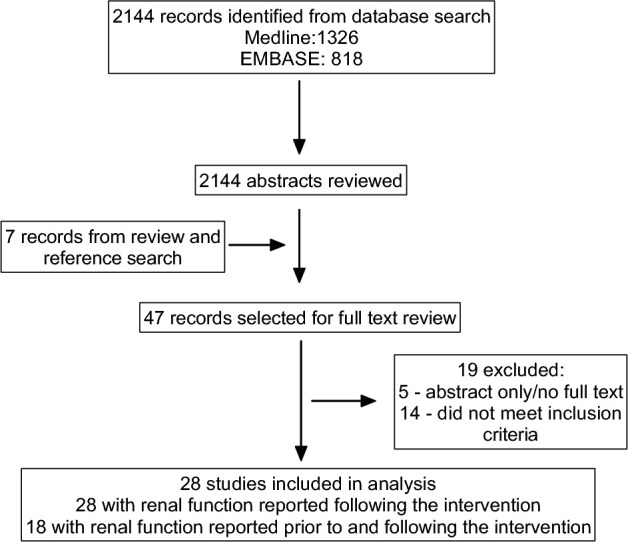
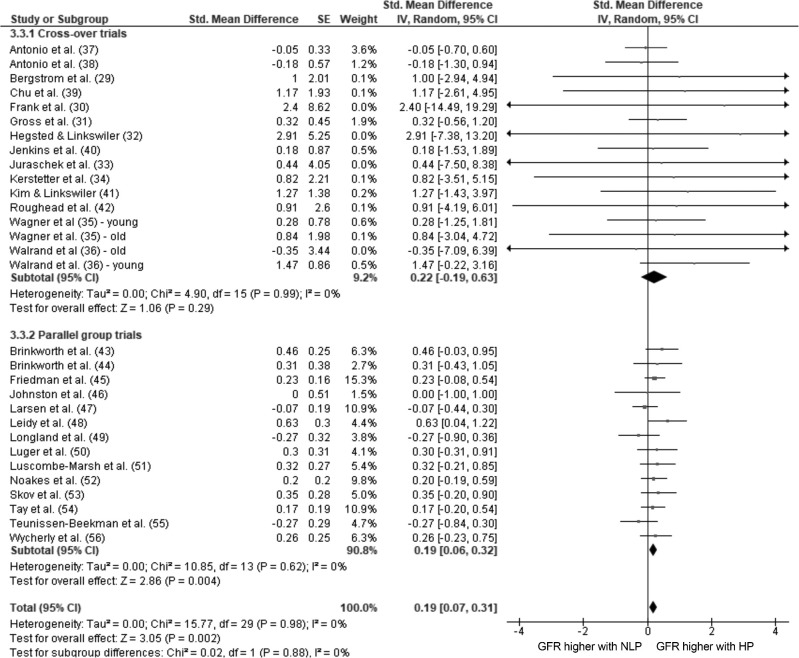
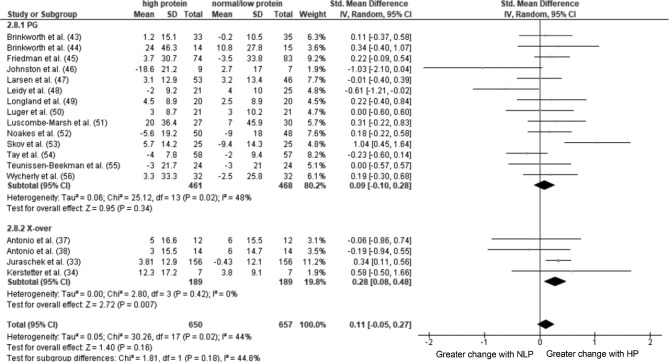
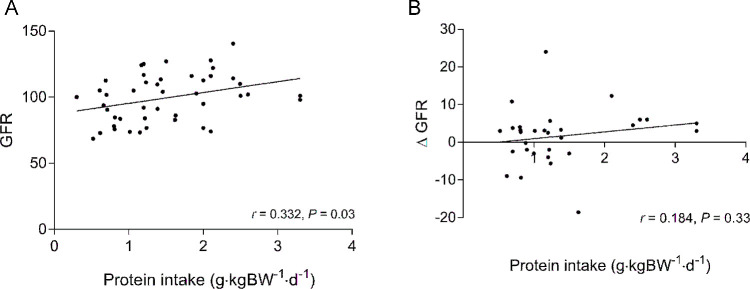
Background: Higher-protein (HP) diets are advocated for several reasons, including mitigation of sarcopenia, but their effects on kidney function are unclear. Objective: This meta-analysis was conducted to determine the effect of HP intakes on kidney function in healthy adults. Methods: We conducted a systematic review and meta-analysis of trials comparing HP (≥1.5 g/kg body weight or ≥20% energy intake or ≥100 g protein/d) with normal- or lower-protein (NLP; ≥5% less energy intake from protein/d compared with HP group) intakes on kidney function. Medline and EMBASE databases were searched. Randomized controlled trials comparing the effects of HP with NLP (>4 d duration) intakes on glomerular filtration rate (GFR) in adults without kidney disease were included. Results: A total of 2144 abstracts were reviewed, with 40 articles selected for full-text review; 28 of these were analyzed and included data from 1358 participants. Data were analyzed using random-effects meta-analysis (RevMan 5; The Cochrane Collaboration), meta-regression (STATA; StataCorp), and dose-response analysis (Prism; GraphPad). Analyses were conducted using postintervention (post) GFR and the change in GFR from preintervention to post. The post-only comparison showed a trivial effect for GFR to be higher after HP intakes [standardized mean difference (SMD): 0.19; 95% CI: 0.07, 0.31; P = 0.002]. The change in GFR did not differ between interventions (SMD: 0.11; 95% CI: -0.05, 0.27; P = 0.16). There was a linear relation between protein intake and GFR in the post-only comparison (r = 0.332, P = 0.03), but not between protein intake and the change in GFR (r = 0.184, P = 0.33). The main limitation of the current analysis is the unclear risk of selection bias of the included trials. Conclusions: Postintervention GFR comparisons indicate that HP diets result in higher GFRs; however, when changes in GFR were compared, dietary protein had no effect. Our analysis indicates that HP intakes do not adversely influence kidney function on GFR in healthy adults.
Overview
CoChat Summary
TL;DR
In healthy adults without chronic kidney disease, higher-protein diets did not change glomerular filtration rate from baseline compared with lower- or normal-protein diets, although postintervention-only GFR was trivially higher with higher protein. The authors conclude that higher protein intake does not adversely affect kidney function as measured by GFR.
Key findings
- Across 28 trials and 1358 participants, higher-protein diets averaged 1.81 ± 0.60 g · kg BW−1 · d−1 versus 0.93 ± 0.51 g · kg BW−1 · d−1 for normal- or lower-protein diets.
- Postintervention-only GFR was trivially higher after higher-protein intake: SMD 0.19 (95% CI: 0.07, 0.31; P = 0.002).
- The change in GFR from pre- to postintervention did not differ between diets: SMD 0.11 (95% CI: −0.05, 0.27; P = 0.16).
- Protein intake showed a linear relation with postintervention GFR (r = 0.332, P = 0.03) but not with the change in GFR (r = 0.184, P = 0.33).
Methods
- Systematic review and meta-analysis of randomized controlled trials comparing higher-protein intake (≥1.5 g/kg BW, ≥20% energy, or ≥100 g/d) with normal- or lower-protein intake (≥5% less energy from protein) for >4 d in adults without kidney disease; Medline and EMBASE were searched to 3 April 2017.
- From 2144 abstracts, 40 articles were reviewed in full and 28 trials were included; data were analyzed with random-effects meta-analysis, meta-regression, and dose-response analysis using postintervention GFR and pre-to-post change in GFR.
- Subgroup and sensitivity analyses examined trial design, GFR measurement type, energy balance/restriction, diabetes status, intervention length, and macronutrient manipulation; certainty was assessed with GRADE.
Limitations
- The paper states that the main limitation is the unclear risk of selection bias in included trials; only 4 trials reported the method of random sequence generation and only 2 provided adequate allocation concealment information.
- The paper also notes risk of carryover in crossover trials, small numbers of studies in subgroup analyses, significant heterogeneity in the pre/post change analysis (chi-square = 30.26, P = 0.02; I² = 44%), and low to very low GRADE certainty.
- Evident from the text: included trials varied widely in duration (4 d to 104 wk), populations, and GFR measurement methods, and some crossover trials did not report a washout period, which may limit interpretation despite sensitivity analyses showing no overall influence.
Model-written summary. Check it against the paper before relying on it.
Integrity signals
Registry
Cites
Statistics
Figures
Verification
Claims the paper makes
1 Valid · 0 Not valid · 35 Not checked · 108 Own results and interpretations
The cited sources support only part of this claim — read each source’s verdict below.
In the paper
“Of the studies included in this meta-analysis, only 2 studies (45, 51) reported mean GFR values above what would be considered to be within the normal range for the age of the subjects tested (74).”
§ Changes in Kidney Function Do Not Differ between Healthy Adults Consuming Higher- Compared with Lower- or Normal-Protein Diets: A Systematic Review and Meta-Analysis > Discussion
What the sources say
- Partly supportedcites [45] Friedman A, Ogden L, Foster G, Klein S, Stein R, Miller B, Hill J, Brill C, Bailer B, Rosenbaum D Comparative effects of low-carbohydrate high-protein versus low-fat diets on the kidney. Clin J Am Soc Nephrol 2012; 7: 1103– 11. 22653255 PMC3386674 sourceExperimental — accuracy not yet measured
The Study Population section (p. 1 of our copy) states that baseline 'Mean 24-hour creatinine clearance was elevated in both groups in the setting of normal serum creatinine and cystatin C,' and the accompanying baseline table gives 24-hr creatinine clearance of 133 ± 41.8 and 135 ± 35.3 ml/min, i.e. a reported mean filtration value above the normative range while other baseline measures were 'within the normative range.' That supports the attribution that this study reported a mean GFR-type value above normal. However, the paper did not measure GFR directly (Discussion: 'GFR was not directly measured'; creatinine clearance is used as the surrogate), and nowhere does our copy benchmark the mean clearance against a normal range predicted for the subjects' age — the age-specific qualifier in the citing sentence is not stated in this source. (LLM, conf=0.72)
- Not checked yetcites [51] Luscombe-Marsh ND, Noakes M, Wittert GA, Keogh J, Foster P, Clifton P Carbohydrate-restricted diets high in either monounsaturated fat or protein are equally effective at promoting fat loss and improving blood lipids. Am J Clin Nutr 2005; 81: 762– 72. 15817850 source
- Not checked yetcites [74] Poggio E, Rule A, Tanchanco R, Arrigain D, Butler R, Srinivas T, Stephany B, Meyer K, Nurko S, Fatica R Demographic and clinical characteristics associated with glomerular filtration rates in living kidney donors. Kidney Int 2009; 75(10): 1079– 87. 19212414 PMC2713659 source
plain- Asserted: passes — The authors put it forward as true.
- Checkable: passes — It can be checked against evidence.
- Load-bearing: unclear — It is unclear whether the paper’s conclusions depend on it.
- Based: passes — The paper gives a reason why it holds.
- Partly supported
A result the paper reports from its own data — it cites no other source for it, so there is none to check. The quote shows it is in the paper.
In the paper
“There was a linear relation between protein intake and GFR in the post-only comparison (r = 0.332, P = 0.03), but not between protein intake and the change in GFR (r = 0.184, P = 0.33).”
§ Changes in Kidney Function Do Not Differ between Healthy Adults Consuming Higher- Compared with Lower- or Normal-Protein Diets: A Systematic Review and Meta-Analysis > Abstract > Results
plainstates an associationn = 1,358 ·- Asserted: passes — The authors put it forward as true.
- Checkable: passes — It can be checked against evidence.
- Load-bearing: unclear — It is unclear whether the paper’s conclusions depend on it.
- Based: passes — The paper gives a reason why it holds.
A result the paper reports from its own data — it cites no other source for it, so there is none to check. The quote shows it is in the paper.
In the paper
“The post-only comparison showed a trivial effect for GFR to be higher after HP intakes [standardized mean difference (SMD): 0.19; 95% CI: 0.07, 0.31; P = 0.002].”
§ Changes in Kidney Function Do Not Differ between Healthy Adults Consuming Higher- Compared with Lower- or Normal-Protein Diets: A Systematic Review and Meta-Analysis > Abstract > Results
plainstates a causen = 1,358 ·- Asserted: passes — The authors put it forward as true.
- Checkable: passes — It can be checked against evidence.
- Load-bearing: unclear — It is unclear whether the paper’s conclusions depend on it.
- Based: passes — The paper gives a reason why it holds.
A result the paper reports from its own data — it cites no other source for it, so there is none to check. The quote shows it is in the paper.
In the paper
“The change in GFR did not differ between interventions (SMD: 0.11; 95% CI: −0.05, 0.27; P = 0.16).”
§ Changes in Kidney Function Do Not Differ between Healthy Adults Consuming Higher- Compared with Lower- or Normal-Protein Diets: A Systematic Review and Meta-Analysis > Abstract > Results
plainn = 1,358- Asserted: passes — The authors put it forward as true.
- Checkable: passes — It can be checked against evidence.
- Load-bearing: passes — The paper’s conclusions depend on it.
- Based: passes — The paper gives a reason why it holds.
A result the paper reports from its own data — it cites no other source for it, so there is none to check. The quote shows it is in the paper.
In the paper
“The effect of HP intakes on the change in GFR during energy balance was mainly due to the effects seen in the first 8 wk of consuming an HP diet (SMD: 0.30; 95% CI: 0.10, 0.51; P = 0.004),”
§ Changes in Kidney Function Do Not Differ between Healthy Adults Consuming Higher- Compared with Lower- or Normal-Protein Diets: A Systematic Review and Meta-Analysis > Results > Meta-analysis
plainstates a cause- Asserted: passes — The authors put it forward as true.
- Checkable: passes — It can be checked against evidence.
- Load-bearing: unclear — It is unclear whether the paper’s conclusions depend on it.
- Based: passes — The paper gives a reason why it holds.
80 more claims
Create a free account to see all 144 claims and to verify the 69 references still open.
- Probably not a substantial claim. 40
- It may state two separate claims as one. 24
Claims other papers make about this one
Each is checked against this paper’s own text: does it say what the citing paper says it does?
The source backs part of the claim, not all of it — or backs it for a different population, condition or comparison.
In the citing paper
“It is worth noting that traditional concerns with high protein intakes (i.e. adverse effects on kidney, liver, and bone health) lack evidentiary support in healthy populations [123–128].”
From International Society of Sports Nutrition position stand: diets for body weight reduction (2026) · cites this paper as [126]
Experimental — accuracy not yet measuredThe cited source says what the claim attributes to it.
In the citing paper
“Concerns about kidney safety have not been confirmed in individuals with normal kidney function who consume at least 1.5 g per kg of body weight per day of protein [137].”
From Dietary and Behavioral Strategies for Weight Loss and Weight Loss Maintenance: A Narrative Review (2025) · cites this paper as [137]
Statistics that don’t add up
Each reported p-value recomputed from its test statistic and degrees of freedom, each partial η² from its F, and each ratio, mean difference or B printed with a p checked against its own confidence interval.
Rated minor: it would not touch a result — a value no result rests on, a p-value that stays on the same side of the significance level, or a conflict that is clerical, resolved elsewhere in the paper, or outside its own findings.
In the paper
“SMD: 0.16; 95% CI: 0.03, 0.34; P = 0.09”
§ Changes in Kidney Function Do Not Differ between Healthy Adults Consuming Higher- Compared with Lower- or Normal-Protein Diets: A Systematic Review and Meta-Analysis > Results > Meta-analysis
Rated minor: it would not touch a result — a value no result rests on, a p-value that stays on the same side of the significance level, or a conflict that is clerical, resolved elsewhere in the paper, or outside its own findings.
In the paper
“SMD: 0.18; 95% CI: 0.01, 0.35; P = 0.06”
§ Changes in Kidney Function Do Not Differ between Healthy Adults Consuming Higher- Compared with Lower- or Normal-Protein Diets: A Systematic Review and Meta-Analysis > Results > Meta-analysis
Self-check
Percentages, sums and reported differences re-computed from the paper’s own numbers.
Each contradiction between two passages listed here was confirmed by an independent check.
Rated minor: it would not touch a result — a value no result rests on, a p-value that stays on the same side of the significance level, or a conflict that is clerical, resolved elsewhere in the paper, or outside its own findings.
In the paper
“52 wk : 12 wk ER; 36 wk EB”
§ Changes in Kidney Function Do Not Differ between Healthy Adults Consuming Higher- Compared with Lower- or Normal-Protein Diets: A Systematic Review and Meta-Analysis > Results > Study and subject characteristics
Reported 52 · recomputed 48
Rated minor: it would not touch a result — a value no result rests on, a p-value that stays on the same side of the significance level, or a conflict that is clerical, resolved elsewhere in the paper, or outside its own findings.
In the paper
§ Changes in Kidney Function Do Not Differ between Healthy Adults Consuming Higher- Compared with Lower- or Normal-Protein Diets: A Systematic Review and Meta-Analysis > Results > Meta-analysis
“carbohydrate—post-only SMD: 0.18; 95% CI: 0.01, 0.35; P = 0.06”
§ Changes in Kidney Function Do Not Differ between Healthy Adults Consuming Higher- Compared with Lower- or Normal-Protein Diets: A Systematic Review and Meta-Analysis > Results > Meta-analysis
“95% CI: 0.01, 0.35; P = 0.06”
Rated minor: it would not touch a result — a value no result rests on, a p-value that stays on the same side of the significance level, or a conflict that is clerical, resolved elsewhere in the paper, or outside its own findings.
In the paper
§ Changes in Kidney Function Do Not Differ between Healthy Adults Consuming Higher- Compared with Lower- or Normal-Protein Diets: A Systematic Review and Meta-Analysis > Results > Meta-analysis
“eGFR (SMD: 0.16; 95% CI: 0.03, 0.34; P = 0.09)”
§ Changes in Kidney Function Do Not Differ between Healthy Adults Consuming Higher- Compared with Lower- or Normal-Protein Diets: A Systematic Review and Meta-Analysis > Results > Meta-analysis
“95% CI: 0.03, 0.34; P = 0.09”
Rated minor: it would not touch a result — a value no result rests on, a p-value that stays on the same side of the significance level, or a conflict that is clerical, resolved elsewhere in the paper, or outside its own findings.
In the paper
§ Changes in Kidney Function Do Not Differ between Healthy Adults Consuming Higher- Compared with Lower- or Normal-Protein Diets: A Systematic Review and Meta-Analysis > Discussion
“differences in baseline mean GFR between groups of >5% were observed in 6 of the 19 studies that reported baseline GFR values (34, 43, 46, 48, 50, 53)”
§ Changes in Kidney Function Do Not Differ between Healthy Adults Consuming Higher- Compared with Lower- or Normal-Protein Diets: A Systematic Review and Meta-Analysis > Results > Study and subject characteristics
“| Teunissen-Beekman et al. (55) | PG | HP | 48 | 30 | 24 | No | 55 | 29.0 | 4 | Protein isolate supplement (pea, soy, egg white, milk) | 1.5 g/kg | EB, ad libitum | Inulin clearance (mL/min) | 130 ± 25 | 127 ± 25 | | | | NLP | | | 24 | | | | | Isocaloric maltodextrin | 1.0 g/kg | | | 137 ± 26 | 134 ± 26 |”
Rated minor: it would not touch a result — a value no result rests on, a p-value that stays on the same side of the significance level, or a conflict that is clerical, resolved elsewhere in the paper, or outside its own findings.
In the paper
§ Changes in Kidney Function Do Not Differ between Healthy Adults Consuming Higher- Compared with Lower- or Normal-Protein Diets: A Systematic Review and Meta-Analysis > Results > Meta-analysis
“SMD: 0.20; 96% CI: 0.07, 0.33; P = 0.003”
§ Changes in Kidney Function Do Not Differ between Healthy Adults Consuming Higher- Compared with Lower- or Normal-Protein Diets: A Systematic Review and Meta-Analysis > Discussion
“the post-only analysis found that HP intakes resulted in higher post GFR, whereas the pre/post change analysis was not significant (SMD: 0.24 compared with 0.12)”
2 more findings
Create a free account to see every finding of this check.
Citations
Cites
KDIGO 2024 clinical practice guideline for the evaluation and management of chronic kidney disease
Stevens, P. E., Ahmed, S. B., Carrero, J. J., Foster, B., Francis, A., Hall, R. K., Herrington, W. G., Hill, G., Inker, L. A., Kazancıoğlu, R., et al. (2024) · Kidney International · doi:10.1016/j.kint.2023.10.018 · Cited by 8,530
GRADE guidelines: 3. Rating the quality of evidence
Balshem, H., Helfand, M., Schünemann, H. J., Oxman, A. D., Kunz, R., Brozek, J., Vist, G. E., Falck-Ytter, Y., Meerpohl, J., & Norris, S. (2011) · Journal of Clinical Epidemiology · doi:10.1016/j.jclinepi.2010.07.015 · Cited by 8,285 · cited 1×
“In GRADE, when assessing certainty, RCTs start as high; however, serious or very serious issues across 5 domains may reduce the certainty of: 1) risk of bias, 2) inconsistency, 3) imprecision, 4) indirectness, and 5) publication bias (23).”
BackgroundSterne, J. A. C., Sutton, A. J., Ioannidis, J. P. A., Terrin, N., Jones, D. R., Lau, J., Carpenter, J., Rucker, G., Harbord, R. M., Schmid, C. H., et al. (2011) · BMJ · doi:10.1136/bmj.d4002 · Cited by 7,709 · cited 1×
“Last, when funnel plot asymmetry existed in the presence of heterogeneity, then the results from both fixedand random-effects models were compared to verify that the results of the random-effects meta-analysis were not greater than those of the fixed-effects model (21).”
ResultTrumbo, P., Schlicker, S., Yates, A. A., & Poos, M. (2002) · Journal of the American Dietetic Association · doi:10.1016/s0002-8223(02)90346-9 · Cited by 5,993
What is ‘quality of evidence’ and why is it important to clinicians?
Guyatt, G. H., Oxman, A. D., Kunz, R., Vist, G. E., Falck-Ytter, Y., & Schünemann, H. J. (2008) · BMJ · doi:10.1136/bmj.39490.551019.be · Cited by 3,250 · cited 1×
“Certainty in the evidence means to what extent the estimates in treatment effect are correct or close to the truth (22).”
BackgroundBauer, J., Biolo, G., Cederholm, T., Cesari, M., Cruz-Jentoft, A. J., Morley, J. E., Phillips, S., Sieber, C., Stehle, P., Teta, D., et al. (2013) · Journal of the American Medical Directors Association · doi:10.1016/j.jamda.2013.05.021 · Cited by 2,553 · cited 1×
“HP intake (compared with the RDA) has also been advocated for older persons to preserve skeletal muscle mass loss due to sarcopenia (4, 5).”
BackgroundSelf-citationMeta-analyses involving cross-over trials: methodological issues
Elbourne, D. R., Altman, D. G., Higgins, J. P., Curtin, F., Worthington, H. V., & Vail, A. (2002) · International Journal of Epidemiology · doi:10.1093/ije/31.1.140 · Cited by 2,305 · cited 1×
“Because of the risk of carryover in crossover trials, the use of post values, not change from baseline, is preferred when including crossover trials in a meta-analysis (79).”
MethodEpstein, F. H., Brenner, B. M., Meyer, T. W., & Hostetter, T. H. (1982) · New England Journal of Medicine · doi:10.1056/nejm198209093071104 · Cited by 2,075 · cited 3×
“Broadly stated, the thesis that protein affects kidney function is that with persistent consumption of an HP diet the increased renal solute load (as urea) is an antecedent step leading to compensatory hyperfiltration, which then leads to glomerular damage and eventual kidney damage and failure (9).”
BackgroundInfluentialPlasma aldosterone regulation in anephric man
Walker, W. G., & Cooke, C. R. (1973) · Kidney International · doi:10.1038/ki.1973.1 · Cited by 1,841
Deutz, N. E. P., Bauer, J. M., Barazzoni, R., Biolo, G., Boirie, Y., Bosy-Westphal, A., Cederholm, T., Cruz-Jentoft, A., Krznariç, Z., Nair, K. S., et al. (2014) · Clinical Nutrition · doi:10.1016/j.clnu.2014.04.007 · Cited by 1,738 · cited 1×
“HP intake (compared with the RDA) has also been advocated for older persons to preserve skeletal muscle mass loss due to sarcopenia (4, 5).”
Background
Research works printed but not linked: 3
- MEDINFO 2001: Proceedings of the 10th World Congress on Medical Informatics, Part 1. Volume 84 of Studies in health technology and informatics. Patel VL, Rogers R, Haux R, editors. IOS Press, 2001.
- Cohen J Statistical power analysis for the behavioural sciences. 1st ed New Work: Academic Press; 1969.
- WHO; FAO; UN University Protein and amino acid requirements in human nutrition: report of a joint FAO/WHO/UNU expert consultation. World Health Organ Tech Rep Ser 2007; 935, p. 224. 18330140
Cited by
Dietary Protein and Muscle Mass: Translating Science to Application and Health Benefit
Carbone, J. W., & Pasiakos, S. M. (2019) · Nutrients · doi:10.3390/nu11051136 · Cited by 198
“This finding held true across non-dairy animal, animal, and plant protein sources and neither glomerular filtration rate (GFR) nor blood creatinine concentrations were related to dietary protein content.”
BackgroundInfluentialBeneficial Effects of Soybean-Derived Bioactive Peptides
Kim, I.-S., Yang, W., & Kim, C. (2021) · International Journal of Molecular Sciences · doi:10.3390/ijms22168570 · Cited by 170
“In a meta-analysis of patients with CKD, bean-based products were shown to greatly decrease the level of proteinuria and blood creatinine, inter alia, despite a lower increase in the glomerular filtration rate [110].”
BackgroundHengeveld, L. M., Boer, J. M. A., Gaudreau, P., Heymans, M. W., Jagger, C., Mendonça, N., Ocké, M. C., Presse, N., Sette, S., Simonsick, E. M., et al. (2020) · Journal of Cachexia Sarcopenia and Muscle · doi:10.1002/jcsm.12580 · Cited by 132
Givens, D. I. (2020) · Journal of Dairy Science · doi:10.3168/jds.2020-18296 · Cited by 143
Slater, G. J., Dieter, B. P., Marsh, D. J., Helms, E. R., Shaw, G., & Iraki, J. (2019) · Frontiers in Nutrition · doi:10.3389/fnut.2019.00131 · Cited by 88
A clinical guide to the pathophysiology, diagnosis and treatment of osteosarcopenia
Kirk, B., Miller, S., Zanker, J., & Duque, G. (2020) · Maturitas · doi:10.1016/j.maturitas.2020.05.012 · Cited by 94
Supplements with purported effects on muscle mass and strength
Valenzuela, P. L., Morales, J. S., Emanuele, E., Pareja-Galeano, H., & Lucia, A. (2019) · European Journal of Nutrition · doi:10.1007/s00394-018-1882-z · Cited by 92
Indicators and Recommendations for Assessing Sustainable Healthy Diets
Aldaya, M. M., Ibáñez, F. C., Domínguez-Lacueva, P., Murillo-Arbizu, M. T., Rubio-Varas, M., Soret, B., & Beriain, M. J. (2021) · Foods · doi:10.3390/foods10050999 · Cited by 84
Optimizing Adult Protein Intake During Catabolic Health Conditions
Phillips, S. M., Paddon-Jones, D., & Layman, D. K. (2020) · Advances in Nutrition · doi:10.1093/advances/nmaa047 · Cited by 65
Self-citationPoultry Consumption and Human Cardiometabolic Health-Related Outcomes: A Narrative Review
Connolly, G., & Campbell, W. W. (2023) · Nutrients · doi:10.3390/nu15163550 · Cited by 81
Kirk, B., Mooney, K., Vogrin, S., Jackson, M. J., Duque, G., Alizadehkhaiyat, O., & Amirabdollahian, F. (2021) · Journal of Cachexia Sarcopenia and Muscle · doi:10.1002/jcsm.12805 · Cited by 57
Bordes, C., Leguelinel, G., Lavigne, J.-P., Mauboussin, J. M., Laureillard, D., Faure, H., Rouanet, I., Sotto, A., & Loubet, P. (2020) · Clinical Microbiology and Infection · doi:10.1016/j.cmi.2020.04.019 · Cited by 52
Ajjarapu, A. S., Hinkle, S. N., Li, M., Francis, E. C., & Zhang, C. (2019) · Nutrients · doi:10.3390/nu11081877 · Cited by 60
Tagawa, R., Watanabe, D., Ito, K., Otsuyama, T., Nakayama, K., Sanbongi, C., & Miyachi, M. (2022) · Sports Medicine - Open · doi:10.1186/s40798-022-00508-w · Cited by 45
“Conflicting results were reported regarding adverse effects of protein intake on renal function [83, 84].”
ResultRecent advances in exploring and exploiting soybean functional peptides—a review
Zhu, Y., Chen, G., Diao, J., & Wang, C. (2023) · Frontiers in Nutrition · doi:10.3389/fnut.2023.1185047 · Cited by 47
Nutritional Strategies to Combat Type 2 Diabetes in Aging Adults: The Importance of Protein
Beaudry, K. M., & Devries, M. C. (2019) · Frontiers in Nutrition · doi:10.3389/fnut.2019.00138 · Cited by 45
“Furthermore, a sub-analysis revealed that increased protein consumption did not adversely affect kidney function in individuals with type 2 diabetes (57).”
BackgroundSelf-citationHamamah, S., Iatcu, O. C., & Covașă, M. (2024) · Nutrients · doi:10.3390/nu16020269 · Cited by 43
“However, in diabetes complications such as diabetic nephropathy, the recommendation is to reduce protein intake [172,174].”
BackgroundProtein Supplementation in Sport: Source, Timing, and Intended Benefits
Huecker, M., Sarav, M., Pearlman, M., & Laster, J. (2019) · Current Nutrition Reports · doi:10.1007/s13668-019-00293-1 · Cited by 37
Norton, V., Lignou, S., & Methven, L. (2021) · Foods · doi:10.3390/foods10020433 · Cited by 42
“For example, its effects on kidney function, though a recent meta-analysis demonstrated that in healthy adults this was not the case [66].”
BackgroundMcKenna, C. F., Salvador, A. F., Hughes, R., Scaroni, S. E., Alamilla, R. A., Askow, A. T., Paluska, S. A., Dilger, A. C., Holscher, H. D., Lisio, M. D., et al. (2021) · American Journal of Physiology-Endocrinology and Metabolism · doi:10.1152/ajpendo.00574.2020 · Cited by 43
Unwin, D., Unwin, J., Crocombe, D., Delon, C., Guess, N. D., & Wong, C. (2021) · Current Opinion in Endocrinology Diabetes and Obesity · doi:10.1097/med.0000000000000658 · Cited by 37
“5 g protein per kg bodyweight, or 20% of total kcal from protein, or 100 g of total protein per day) did not significantly affect eGFR [46].”
BackgroundBauer, J. M., Mikušová, L., Verlaan, S., Bautmans, I., Brandt, K., Donini, L. M., Maggio, M. G., Mets, T. F., Wijers, S. L. J., Garthoff, J. A., et al. (2020) · Aging Clinical and Experimental Research · doi:10.1007/s40520-020-01519-x · Cited by 35
Remer, T., Kalotai, N., Amini, A. M., Lehmann, A. C., Schmidt, A., Bischoff-Ferrari, H. A., Egert, S., Ellinger, S., Kroke, A., Kuhn, T. E., et al. (2023) · European Journal of Nutrition · doi:10.1007/s00394-023-03143-7 · Cited by 39
“Instead of 8 out of 13 RCTs with GFR determinations (< 2/3), as reported by the authors, actually 8 out of 11 RCTs with GFR determinations (> 2/3) showed higher GFRs with HPI [15], thus rather allowing an assessment of the overall certainty of evidence as ‘almost probable’ and not just ‘possible’.”
InfluentialBagheri, R., Kargarfard, M., Sadeghi, R., Scott, D. S., & CAMERA, D. M. (2023) · Journal of the International Society of Sports Nutrition · doi:10.1080/15502783.2023.2236053 · Cited by 39
“While such links may be more likely in individuals with compromised kidney function (such as chronic kidney disease) [105], the association between high dietary protein availability and reduced kidney and liver function appears much less evident in healthy individuals [106].”
BackgroundJheng, H., Hayashi, K., Matsumura, Y., Kawada, T., Seno, S., Matsuda, H., Inoue, K., Nomura, W., Takahashi, H., & Goto, T. (2020) · Molecular Nutrition & Food Research · doi:10.1002/mnfr.202000015 · Cited by 31
Vuković, V., Hantikainen, E. M., Raftopoulou, A., Gögele, M., Rainer, J., Domingues, F. S., Pramstaller, P. P., García-Larsen, V., & Pattaro, C. (2022) · Journal of Nephrology · doi:10.1007/s40620-022-01409-7 · Cited by 37
“While a systematic review of clinical trials lasting > 4 weeks on 2140 CKD-free individuals observed that HP diet was associated with post intervention GFR levels [16], a more recent meta-analysis on 1358 individuals from 28 studies observed that HP diet was not associated with eGFR change over time, concluding that H…”
ResultFirman, C., Mellor, D. D., Unwin, D., & Brown, A. C. (2023) · Diabetes Therapy · doi:10.1007/s13300-023-01492-4 · Cited by 33
Low Birth Weight, Blood Pressure and Renal Susceptibility
Coats, L. E., Davis, G. K., Newsome, A. D., Ojeda, N. B., & Alexander, B. T. (2019) · Current Hypertension Reports · doi:10.1007/s11906-019-0969-0 · Cited by 30
Yager, Z., Doley, J. R., McLean, S. A., & Griffiths, S. (2022) · Body Image · doi:10.1016/j.bodyim.2022.11.003 · Cited by 35
Morgan, P. T., Witard, O. C., Højfeldt, G. W., Church, D. D., & Breen, L. (2023) · Proceedings of The Nutrition Society · doi:10.1017/s0029665123003750 · Cited by 35
Nutrients to mitigate osteosarcopenia: the role of protein, vitamin D and calcium
Kirk, B., Prokopidis, K., & Duque, G. (2020) · Current Opinion in Clinical Nutrition & Metabolic Care · doi:10.1097/mco.0000000000000711 · Cited by 36
Teixeira, F. J., Matias, C. N., Faleiro, J., Giro, R., Pires, J., Figueiredo, H., Carvalhinho, R., Monteiro, C. P., Reis, J. F., Valamatos, M. J., et al. (2022) · Frontiers in Nutrition · doi:10.3389/fnut.2022.934438 · Cited by 28
Firman, S. J., Witard, O. C., O'Keeffe, M. M., & Ramachandran, R. (2020) · Clinical Nutrition · doi:10.1016/j.clnu.2020.11.003 · Cited by 27
D’Amico, F., Marmiere, M., Fonti, M., Battaglia, M., & Belletti, A. (2024) · Journal of Evaluation in Clinical Practice · doi:10.1111/jep.14288 · Cited by 34
Protein intake and renal function in older patients
Narasaki, Y., Rhee, C. M., Kramer, H., & Kalantar‐Zadeh, K. (2020) · Current Opinion in Clinical Nutrition & Metabolic Care · doi:10.1097/mco.0000000000000712 · Cited by 28
“All rights rese average GFR and RPF are consequently lower in the older population as compared with their younger counterparts irrespective of the presence of CKD and may lead to inability to augment GFR in the setting of high DPI [16,17].”
BackgroundA fifty percent leucine-restricted diet reduces fat mass and improves glucose regulation
Zhou, Z., Yin, H., Guo, Y., Fang, Y., Yuan, F., Chen, S., & Guo, F. (2021) · Nutrition & Metabolism · doi:10.1186/s12986-021-00564-1 · Cited by 23
Nunes, E. A., Currier, B. S., Lim, C., & Phillips, S. M. (2021) · Proceedings of the Nutrition Society · doi:10.1017/s0029665120007892 · Cited by 19
“Consuming NDP clearly contributes to healthy ageing; however, despite the observed benefits of consuming higher protein doses, the hypothesis that high-protein diets negatively affect kidney function is frequently raised((128)).”
BackgroundMethodInfluentialSelf-citationElevated Serum Creatinine: But Is It Renal Failure?
Vega, M. W., Swartz, S. J., Devaraj, S., & Srivaths, P. R. (2020) · PEDIATRICS · doi:10.1542/peds.2019-2828 · Cited by 20
“Creatine has been identified as an ergogenic and medical aide that does not lead to kidney failure in adults with normal kidney function.(13) It is unknown how higher levels of creatine intake over time would have influenced this infant’s kidney function long term, but given the patient’s elevated potassium and phosph…”
BackgroundDietary and Behavioral Strategies for Weight Loss and Weight Loss Maintenance: A Narrative Review
Żurawski, T., & Bartosiewicz, A. (2025) · Nutrients · doi:10.3390/nu18010012 · Cited by 18
“Concerns about kidney safety have not been confirmed in individuals with normal kidney function who consume at least 1.5 g per kg of body weight per day of protein [137].”
Influentialde Lorenzo, A., Bomback, A. S., & Mihic, N. (2024) · Sports Medicine · doi:10.1007/s40279-024-02086-1 · Cited by 21
“Another more recent meta-analysis conducted by Devries et al. [39] of 28 RCTs (15 of them included in the study by Schwingshackl et al. [17]) with 1358 participants analyzed GFR after HPI and the change in GFR from pre-intervention to post.”
The harms of high protein intake: conjectured, postulated, claimed, and presumed, but shown?
French, S. J., Kanter, M., Maki, K. C., Rust, B. M., & Allison, D. B. (2025) · The American Journal of Clinical Nutrition · doi:10.1016/j.ajcnut.2025.05.002 · Cited by 15
Ooi, D. S. Q., Ling, J. Q. R., Sadananthan, S. A., Velan, S. S., Ong, F. Y., Khoo, C. M., Tai, E. S., Henry, C. J., Leow, M. K., Khoo, E. Y. H., et al. (2020) · Journal of Nutrition · doi:10.1093/jn/nxaa414 · Cited by 22
Jespersen, S. E., & Agergaard, J. (2021) · European Journal of Nutrition · doi:10.1007/s00394-021-02487-2 · Cited by 22
“However, later studies have shown that a high protein intake does not compromise renal function [54].”
BackgroundMessing, M., Torres, J. A., Holznecht, N. J., & Weimbs, T. (2024) · Nutrients · doi:10.3390/nu16193281 · Cited by 19
Carbone, J. W., Phillips, S. M., Weaver, C. M., Hughes, J. M., & Pasiakos, S. M. (2024) · Advances in Nutrition · doi:10.1016/j.advnut.2024.100347 · Cited by 15
Self-citationMyths and Facts Regarding Low-Carbohydrate Diets
Teicholz, N., Croft, S. M., Cuaranta, I., Cucuzzella, M. T., Glandt, M., Hafez, D., Jerome-Zapadka, K., Kalayjian, T., Murphy, K. C., Nelson, M., et al. (2025) · Nutrients · doi:10.3390/nu17061047 · Cited by 19
“A recent systematic review pointed to several studies showing that ketogenic diets can be therapeutic for kidney disease [51].”
Morehen, S., Smeuninx, B., Perkins, M., Morgan, P. T., & Breen, L. (2019) · Nutrients · doi:10.3390/nu12010090 · Cited by 17
“0 g·kg−1·day−1 has been shown to reduce long-term lean mass loss in the elderly [13], and has been shown to have no negative side-effects on health outcomes such as kidney function [14].”
BackgroundProtein – a scoping review for Nordic Nutrition Recommendations 2023
Geirsdóttir, Ó. G., & Pajari, A. (2023) · Food & Nutrition Research · doi:10.29219/fnr.v67.10261 · Cited by 19
“However, the evidence for associations between protein intake and kidney function and kidney stones in healthy people needs to be more conclusive (35, 56, 58, 59).”
BackgroundResultFotheringham, A. K., Solon‐Biet, S. M., Bielefeldt‐Ohmann, H., McCarthy, D. A., McMahon, A. C., Ruohonen, K., Li, I., Sullivan, M. A., Whiddett, R. O., Borg, D. J., et al. (2021) · iScience · doi:10.1016/j.isci.2021.103308 · Cited by 14
“This is consistent with findings in humans where meta-analyses have revealed a mean increase in GFR with increasing protein intake in both men and women, but no loss of GFR in the long term (Schwingshackl and Hoffmann, 2014; Devries et al., 2018).”
ResultKwon, Y., Park, K., & Lee, J. (2022) · European Journal of Nutrition · doi:10.1007/s00394-022-02981-1 · Cited by 15
“Conversely, a recent meta-analysis reported that HPD did not adversely affect renal function in healthy adults [31].”
BackgroundChoi, Y., Steffen, L. M., Chu, H., Duprez, D. A., Gallaher, D. D., Shikany, J. M., Schreiner, P. J., Shroff, G. R., & Jacobs, D. R. (2021) · Journal of Nutrition · doi:10.1093/jn/nxab155 · Cited by 13
Jamaluddin, J., Mohamed-Yassin, M.-S., Jamil, S. N., Kamel, M. A. M., & Yusof, M. Y. (2023) · Heliyon · doi:10.1016/j.heliyon.2023.e14998 · Cited by 11
Effects of protein supplementation on muscle wasting disorders: A brief update of the evidence
Kirk, B., Iuliano, S., Daly, R. M., & Duque, G. (2020) · Australian Journal on Ageing · doi:10.1111/ajag.12853 · Cited by 9
Wu, W., Chen, F., Ma, H., Lu, J., Zhang, Y., Zhou, H., Yang, Y., Nie, S., Wang, R., Yue, W., et al. (2025) · Frontiers in Nutrition · doi:10.3389/fnut.2025.1486482 · Cited by 10
Kolivas, D., Fraser, L., Schweitzer, R., Brukner, P. D., & Moschonis, G. (2025) · Nutrients · doi:10.3390/nu17060937 · Cited by 10
“While many believe that higher protein intakes are harmful to kidney function, emerging research has found that higher protein intakes have no adverse effects on kidney function and can be beneficial in healthy adults and people with T2D who do not have advanced kidney disease [66–69].”
Do the high‐protein recommendations for athletes set some on a path to kidney injury and dialysis?
Marinaro, M., Alexander, D. S., & de Waal, D. (2021) · Seminars in Dialysis · doi:10.1111/sdi.13046 · Cited by 9
“15 These studies were not designed to assess long-term kidney outcomes but suggest that eGFR might change in relation to protein intake.”
Bagheri, R., Shakibaee, A., CAMERA, D. M., Sobhani, V., Ghobadi, H., Nazar, E., Fakhari, H., & Dutheil, F. (2023) · Frontiers in Nutrition · doi:10.3389/fnut.2023.1205310 · Cited by 8
Koguchi, T. (2021) · American Journal of Health Research · doi:10.11648/j.ajhr.20210905.13 · Cited by 6
“In healthy adults, consuming a higher-protein diet did not cause changes in kidney function compared with lower- or normal-protein diets [123].”
BackgroundJeong, M., McColl, T. J., & Clarke, D. C. (2025) · Applied Physiology, Nutrition, and Metabolism · doi:10.1139/apnm-2025-0017 · Cited by 5
Protein intake and its interaction with dietary patterns on clinical outcomes among older adults
Coelho-Júnior, H. J., & Marzetti, E. (2026) · npj Aging · doi:10.1038/s41514-026-00368-8 · Cited by 6
“…without chronic kidney disease), and pooled analyzes have shown that high-protein diets do not adversely affect kidney function in healthy adults 44 , some researchers have hypothesized that excessive protein intake could increase the production of waste products (e.g., urea),…”
Kanter, M. M., Aaron, S., Austad, S. N., Brown, A. W., Burd, N. A., Campbell, W. W., Cope, M. B., Davis, T. A., Erdman, J. W., Freitas, M., et al. (2026) · Critical Reviews in Food Science and Nutrition · doi:10.1080/10408398.2026.2658728 · Cited by 7
“…(≥1.5 g/kg body weight, or ≥20% energy, or ≥100 g protein/day) with normal or lower protein intakes (≥5% less energy intake from protein/day) with durations up to 2 years suggested that there were no adverse effects of higher-protein diets on kidney function in healthy humans (Devries et al. 2018).”
InfluentialSelf-citationMolina, C. N., Gasparre, N., Garzón, R., Vinuesa, J. M., & Scanlon, M. G. (2024) · Food and Humanity · doi:10.1016/j.foohum.2024.100286 · Cited by 5
Hagiyama, A., Yamamoto, N., Watanabe, J., Tsuge, T., Nakashima, Y., Nakao, S., Sato, H., & Yorifuji, T. (2024) · Cureus · doi:10.7759/cureus.69212 · Cited by 4
“Additionally, another SR suggested that higher protein intake does not worsen kidney function in individuals with normal kidney function, regardless of age or type 2 diabetes [56].”
BackgroundSilva, P. R. T., Santos, P., Nogueira, P. A. D. M. S., Nogueira, I. D. B., Vieira, R. P., Nascimento, M. F., Tuesta, M., Filho, A. S. S., & Chiappa, G. R. (2026) · Diabetes Obesity and Metabolism · doi:10.1111/dom.70996 · Cited by 4
Macdonald, C. (2026) · Frontiers in Nutrition · doi:10.3389/fnut.2026.1853124 · Cited by 2
Trehan, A., Verma, M. K., Maheshwari, S., Khanna, T., Kumari, P., & Singh, H. (2020) · Journal of Food Processing & Technology · doi:10.35248/2157-7110.20.11.820 · Cited by 6
“These elements will contribute to the reduction in the recuperative effects of a protein-rich diet, including improved lean muscle mass and increased N2 assimilation, along with constructive cardiovascular effects, such as the decline in levels of C-Reactive Protein (CRP) [27-32].”
BackgroundSystematic review of branched-chain amino acid supplementation high in leucine on interleukin-6
Wulandari, Y., & Sunardi, D. (2025) · International journal of Nutrition Pharmacology Neurological Diseases · doi:10.4103/ijnpnd.ijnpnd_83_24 · Cited by 2
Wang, S.-N., Liu, Y.-X., Sun, G.-Y., Liu, X., Sun, Y., Ma, Y.-X., Ning, S.-Y., & Shi, Y. (2026) · Frontiers in Nutrition · doi:10.3389/fnut.2026.1805807 · Cited by 1
“A systematic review and meta-analysis further confirmed these findings (137).”
Shiraga, Y., Mori, Y., Osaka, N., Terasaki, M., Yashima, H., Saito, T., Tanno, D., Ogino, M., Ohara, M., & Yamagishi, S.-I. (2026) · Current Developments in Nutrition · doi:10.1016/j.cdnut.2026.107647 · Cited by 1
Reversing 20 years of diabetes using the carnivore diet in India: a case report
Verma, A. (2026) · Clinical Nutrition Research · doi:10.7762/cnr.2025.0026 · Cited by 2
Qannas, F. A., Nurgozhina, M., Owen, A. J., Gašević, D., Polkinghorne, K., Bongetti, E. K., Chen, Y., & Wild, H. (2026) · Nutrition Reviews · doi:10.1093/nutrit/nuag037 · Cited by 1
Dairy foods and maintenance of muscle mass in the elderly
Breen, L., & Smeuninx, B. (2020) · Elsevier eBooks · doi:10.1016/b978-0-12-815603-2.00014-0 · Cited by 3
Shah, N., Perkovic, V., & Kotwal, S. S. (2022) · Expert Review of Clinical Pharmacology · doi:10.1080/17512433.2022.2108402 · Cited by 3
Creatine supplementation and the young kidney
Filler, G. (2026) · Nature Reviews Nephrology · doi:10.1038/s41581-026-01121-w
“Indeed, a meta-analysis of 28 trials involving 1,358 healthy adults found slightly higher post-intervention glomerular filtration rate with high protein intake but no adverse change in kidney function compared with lower or normal protein intake 7 .”
Eiweißreiche Ernährung für Adipöse und Patienten mit Typ-2-Diabetes-mellitus
Brandl, B., & Skurk, T. (2019) · CardioVasc · doi:10.1007/s15027-019-1564-7
“Neuere systematische Analysen scheinen zu bestätigen, dass eine Hochproteindiät mit mehr als 100 g/d die Nierenfunktion zumindest bei Gesunden nicht verschlechtert [6].”
BackgroundProteina Ugariko Dietak: Lagunak ala Etsaiak? Artikuluen Berrikusketa.
Barandiaran, A. G. (2019) · Osagaiz osasun-zientzien aldizkaria · doi:10.26876/osagaiz.1.2019.228
SAFETY AND EFFICACY OF WHEY PROTEIN SUPPLEMENTATION IN TEENAGE ATHLETES
Stranieri, A. (2019) · Digital Commons - URI (University of Rhode Island) · doi:10.23860/thesis-stranieri-andrew-2019 · Cited by 1
“A similar systematic review and meta-analysis also investigating high protein intake on kidney function was conducted by Devries et al. (Devries et al., 2018).”
BackgroundMaintaining It after Losing It: Advantage Protein!
Phillips, S. M. (2019) · Journal of Nutrition · doi:10.1093/jn/nxz316
Self-citationBando, H., & Kato, Y. (2020) · Journal of Health Care and Research · doi:10.36502/2020/hcr.6167 · Cited by 1
Usage of high-protein diet for physical fitness and sports activities
Lohan, A. (2021) · Asian Journal of Research in Social Sciences and Humanities · doi:10.5958/2249-7315.2021.00064.2
Hot topics: Nytt innen internasjonal ernæringsforskning
(2018) · Norsk tidsskrift for ernæring · doi:10.18261/ntfe.16.4.10
Is high protein intake a real concern for healthy kidneys?
Giannese, D., Panichi, V., & Cupisti, A. (2022) · Journal of Nephrology · doi:10.1007/s40620-022-01503-w
“A meta-analysis reported that high protein intake was associated with higher eGFR, but no change over time was observed with respect to normal/low dietary protein intake, suggesting that high protein regimens do not impair kidney function in healthy adults [5].”
BackgroundErnährung und Lymphologie. Insulinresistenz und Inflammation
Faerber, G. (2023) · Springer eBooks · doi:10.1007/978-3-662-61452-5_28
Modification of Macronutrient Intake for Prevention of Gout in Japanese People in 2022: 2024 Update
Koguchi, T. (2024) · American Journal of Health Research · doi:10.11648/j.ajhr.20241206.16
An excellent source of protein: Health, hype and hard truths
McKendry, J. (2025) · The Conversation · doi:10.64628/aam.rhhmw6rk4
Nutrition and healthy aging: The role of protein quality in combatting muscle loss
McKendry, J. (2024) · The Conversation · doi:10.64628/aam.g6jwv9vst
Nutrition in Lymphology. Insulin Resistance and Inflammation
Faerber, G. (2025) · Springer eBooks · doi:10.1007/978-3-031-77734-9_35
Tagawa, R., Watanabe, D., Ito, K., Otsuyama, T., Nakayama, K., Sanbongi, C., & Miyachi, M. (2022) · Figshare · doi:10.6084/m9.figshare.20921197
Tagawa, R., Watanabe, D., Ito, K., Otsuyama, T., Nakayama, K., Sanbongi, C., & Miyachi, M. (2022) · Figshare · doi:10.6084/m9.figshare.20921200
Zhou, Z., Yin, H., Guo, Y., Fang, Y., Yuan, F., Chen, S., & Guo, F. (2021) · Figshare · doi:10.6084/m9.figshare.14329367
Tagawa, R., Watanabe, D., Ito, K., Otsuyama, T., Nakayama, K., Sanbongi, C., & Miyachi, M. (2022) · Figshare · doi:10.6084/m9.figshare.20921191
Tagawa, R., Watanabe, D., Ito, K., Otsuyama, T., Nakayama, K., Sanbongi, C., & Miyachi, M. (2022) · Figshare · doi:10.6084/m9.figshare.20921188
Radfar, B., Bagheri, R., Ghobadi, H., Hematabadi, A., Askari, B., Rashidlamir, A., & Dutheil, F. (2026) · Nutrients · doi:10.3390/nu18040611
“Although prolonged excessive protein intake has been suggested to contribute to glomerular damage, this effect appears minimal in individuals with healthy kidneys [22,100].”
How much protein should you eat?Preprint
Rochussen, A. M. (2025) · doi:10.32388/substack.o72c0z
Aryani, H. P., Suryani, L., & Sugiyanta (2026) · Public Health of Indonesia · doi:10.36685/phi.v12i1.1316
Yadav, V., Mahapatra, H. S., Tripathi, M., Pursnani, L., Balakrishnan, M., Binoy, R., Dev, V., Arora, D., & Prasad, H. (2026) · Kidney International Reports · doi:10.1016/j.ekir.2026.104456
Fuchs, C. J., Brauwers, B., Trommelen, J., Yildiz, S., Widholm, P., Leinhard, O. D., Prompers, J. J., & van Loon, L. J. C. (2026) · Medicine & Science in Sports & Exercise · doi:10.1249/mss.0000000000004011
“Notably, regardless of potential effects on organ size, high-protein intakes (at least up to ~3.3 g/kg/d) do not appear to adversely affect liver or kidney function in healthy individuals (16–18).”
Influentialde Lorenzo, A., & Mihic, N. (2026) · Nefrología · doi:10.1016/j.nefro.2026.501611
Sbaihia, A., Benbouziane, B., Waqar, M., Bentahar, M. C., Benabdelmoumene, D., Dahmouni, S., Keddari, S., Qadi, W. S. M., Mediani, A., & Ageru, T. A. (2026) · Food Science & Nutrition · doi:10.1002/fsn3.72118
“…evidence in healthy adults indicates that higher protein intake does not necessarily produce an adverse change in glomerular filtration rate over the duration of controlled interventions, highlighting the need for cautious interpretation across populations and models (Devries et al. 2018).”
Protein: The Supply Side of Muscle Growth
Toigo, M. (2026) · Springer eBooks · doi:10.1007/978-3-662-74087-3_13
Metadata
- Authors
- Devries, M. C., Sithamparapillai, A., Brimble, K. S., Banfield, L., Morton, R. W., & Phillips, S. M.
- Affiliations
- University of Waterloo (CA)
- McMaster University (CA)
- Corresponding author
- Phillips, Stuart M
- ORCID
- Venue
- The Journal of Nutrition
- Publisher
- Elsevier BV
- Published
- 2018-11
- Volume
- 148
- Issue
- 11
- Pages
- 1760-1775
- ISSN
- 0022-3166 (ISSN-L)
- PMC
- PMC6236074
- OpenAlex
- W2899097956
- Semantic Scholar
- b817f2d6f90f7fd9d19dfc1e4b57b99b5f7cf89c
- Cited by
- 108
- References
- 78
- Citations by year
- 2026: 24 · 2025: 10 · 2024: 9 · 2023: 10 · 2022: 11 · 2021: 14 · 2020: 17 · 2019: 12 · 2018: 1
- FWCI
- 1.24
- Type
- journal article
- Language
- en
- Open access
- hybrid
- doi.org
- Licence
- cc-by-nc
- www.elsevier.com/tdm/userlicense/1.0/ (tdm)
- creativecommons.org/licenses/by-nc/4.0/ (vor)
- Locations
- Journal of Nutrition (publishedVersion, cc-by-nc)
- Europe PMC (PubMed Central) (publishedVersion, cc-by-nc)
- PubMed Central (publishedVersion, cc-by-nc)
- PubMed (publishedVersion)
- Topics
- Health Sciences › Nursing › Nutrition and Dietetics › Muscle metabolism and nutrition
- Health Sciences › Medicine › Nephrology › Chronic Kidney Disease and Diabetes
- Health Sciences › Medicine › Physiology (medical) › Diet and metabolism studies
- Keywords
- protein intake, renal function, glomerular filtration rate, healthy adults, sarcopenia, dose-response relationship, proteinuria, kidney disease risk, sarcopenia interventions, sarcopenia prevention, sarcopenia treatment, sarcopenia screening
- MeSH terms
- Adult, Dietary Proteins, Glomerular Filtration Rate, Humans, Diet, Protein-Restricted
About these checks
Registry, retraction, Cites and statistics results are computed, not judged, with one exception: a printed reference that no index lists is read once by a model before it counts as a citation error. Claims are extracted by a model and kept only when their quote appears verbatim in the text; each cited source is then checked, with a model’s help, for whether it says what the claim relies on. Those verdicts can be wrong — read the claim’s quote and the cited source before relying on one.
The claim verdicts this report counts are experimental: their accuracy is not yet measured.
A language model drew the claims from the paper on 2026-11-23, under version 3 of the claim definition (model deepseek-v4.1-flash, prompt extract-v3).
A second model labelled each claim on 2026-11-23 (model jev-1.13-20260917, definition revision gold-guideline-v0.2).
Cited sources are checked with a language model’s help (qwen3.8-omni-flash).
Statistics and arithmetic are recomputed, not judged.
Confidence bands are shown only for fields calibrated on our annotated test set. None is calibrated yet, so no band is shown.
What counts as a claim ›How we measure confidence ›How we check this ›
Are you an author, or do you see a problem with this page? Request a review
Data sources
Bibliographic data: Semantic Scholar, OpenAlex, Crossref.
Contains information from the Semantic Scholar Academic Graph Datasets, made available under the ODC Attribution License (ODC-BY 1.0).
Semantic Scholar’s data is described in: Kinney, R., et al. (2023). The Semantic Scholar Open Data Platform. arXiv:2301.10140.
