

The DOI matches its Crossref record; 44 of the 45 references it cites were found in a registry or an index.
Regulation of nucleotide excision repair activity by transcriptional and post-transcriptional control of the XPA protein
Open accessAbstract
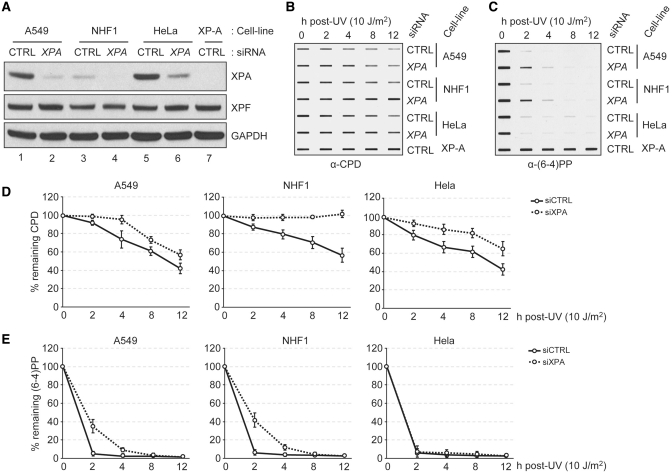
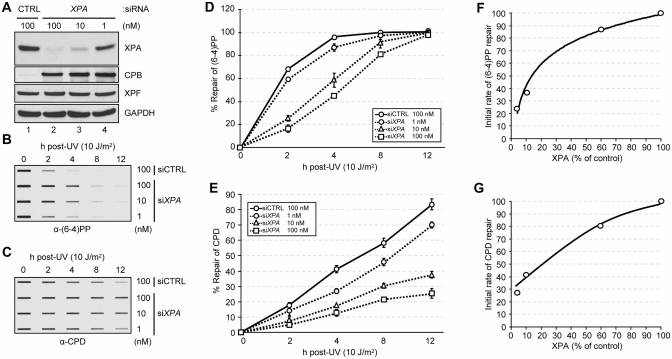
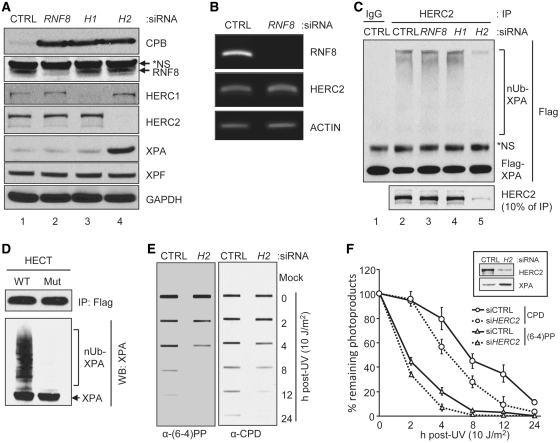
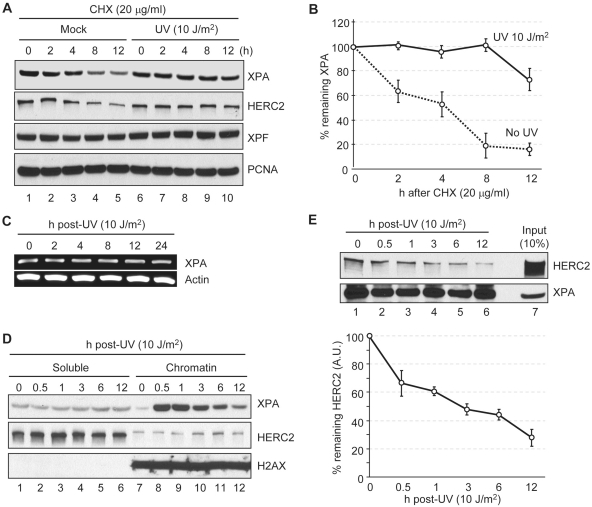
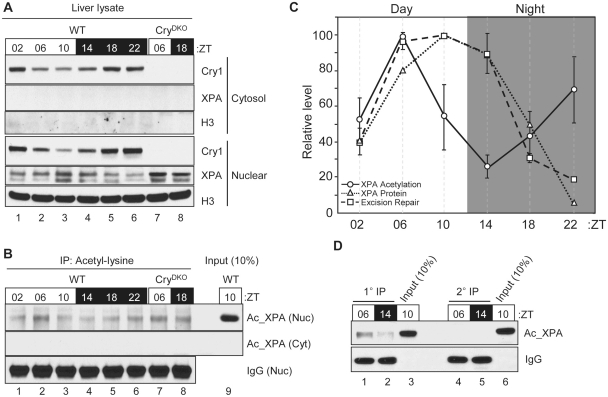
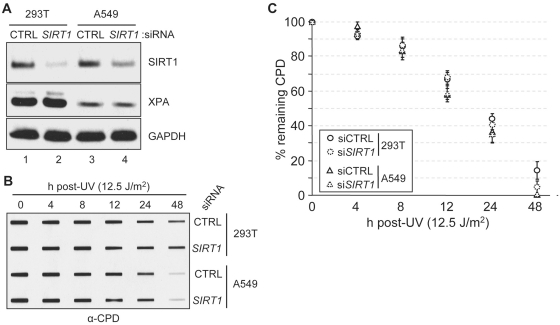
The XPA (Xeroderma pigmentosum A) protein is one of the six core factors of the human nucleotide excision repair system. In this study we show that XPA is a rate-limiting factor in all human cell lines tested, including a normal human fibroblast cell line. The level of XPA is controlled at the transcriptional level by the molecular circadian clock and at the post-translational level by a HECT domain family E3 ubiquitin ligase called HERC2. Stabilization of XPA by downregulation of HERC2 moderately enhances excision repair activity. Conversely, downregulation of XPA by siRNA reduces excision repair activity in proportion to the level of XPA. Ubiquitination and proteolysis of XPA are inhibited by DNA damage that promotes tight association of the protein with chromatin and its dissociation from the HERC2 E3 ligase. Finally, in agreement with a recent report, we find that XPA is post-translationally modified by acetylation. However, contrary to the previous claim, we find that in mouse liver only a small fraction of XPA is acetylated and that downregulation of SIRT1 deacetylase in two human cell lines does not affect the overall repair rate. Collectively, the data reveal that XPA is a limiting factor in excision repair and that its level is coordinately regulated by the circadian clock, the ubiquitin-proteasome system and DNA damage.
Overview
The claims and statistics of this paper haven’t been checked yet.
Run the check — free, no account needed. It reads the open-access text and checks the sources it cites.
Integrity signals
Registry
Cites
Statistics
Figures
Verification
Claims the paper makes
The claims and statistics of this paper haven’t been checked yet.
Run the check — free, no account needed. It reads the open-access text and checks the sources it cites.
Claims other papers make about this one
Each is checked against this paper’s own text: does it say what the citing paper says it does?
In the citing paper
“Because of XPA’s crucial functions in NER, the activity of NER and sensitization of cancer cells to chemotherapy can be regulated by transcriptional and post-transcriptional control of the XPA protein [19], [20], [21], [22], [23], [24], [25], [26].”
From UV-Induced Nuclear Import of XPA Is Mediated by Importin-α4 in An ATR-Dependent Manner (2013) · cites this paper as [21]
In the citing paper
“XPA may serve as a potential target for sensitization to cancer chemotherapy (e.g. cisplatin) via manipulation of available nuclear XPA, either at the transcriptional or post-transcriptional level [53], [54], [55].”
From UV-Induced Nuclear Import of XPA Is Mediated by Importin-α4 in An ATR-Dependent Manner (2013) · cites this paper as [55]
In the citing paper
“Xeroderma pigmentosum complement group A (XPA), a gene frequently mutated in XP patients, is part of the core incision complex of NER and interacts with DNA as well as many other NER and damage response proteins”
From RETRACTED: PKA-Mediated Phosphorylation of ATR Promotes Recruitment of XPA to UV-Induced DNA Damage (2014) · cites this paper as Kang et al., 2011
Self-check
Percentages, sums and reported differences re-computed from the paper’s own numbers.
The self-check needs the paper’s full text.
Citations
Cites
Molecular Mechanisms of Mammalian DNA Repair and the DNA Damage Checkpoints
Sancar, A., Lindsey-Boltz, L. A., Ünsal-Kaçmaz, K., & Linn, S. (2004) · Annual Review of Biochemistry · doi:10.1146/annurev.biochem.73.011303.073723 · Cited by 3,317
Self-citationNakahata, Y., Kaluzova, M., Grimaldi, B., Sahar, S., Hirayama, J., Chen, D., Guarente, L. P., & Sassone-Corsi, P. (2008) · Cell · doi:10.1016/j.cell.2008.07.002 · Cited by 1,427
SIRT1 regulates circadian clock gene expression through PER2 deacetylation
Asher, G., Gatfield, D., Stratmann, M., Reinke, H., Dibner, C., Kreppel, F., Mostoslavsky, R., Alt, F. W., & Schibler, U. (2008) · Cell · doi:10.1016/j.cell.2008.06.050 · Cited by 1,376
Circadian Control of the NAD + Salvage Pathway by CLOCK-SIRT1
Nakahata, Y., Sahar, S., Astarita, G., Kaluzova, M., & Sassone-Corsi, P. (2009) · Science · doi:10.1126/science.1170803 · Cited by 1,198
Sancar, A. (1996) · Annual Review of Biochemistry · doi:10.1146/annurev.bi.65.070196.000355 · Cited by 1,131
Self-citationCircadian Clock Feedback Cycle Through NAMPT-Mediated NAD + Biosynthesis
Ramsey, K. M., Yoshino, J., Brace, C. S., Abrassart, D., Kobayashi, Y., Marcheva, B., Hong, H.-K., Chong, J. L., Buhr, E. D., Lee, C., et al. (2009) · Science · doi:10.1126/science.1171641 · Cited by 1,126
Physiological functions of the HECT family of ubiquitin ligases
Rotin, D., & Kumar, S. (2009) · Nature Reviews Molecular Cell Biology · doi:10.1038/nrm2690 · Cited by 1,105
Transcription-coupled DNA repair: two decades of progress and surprises
Hanawalt, P. C., & Spivak, G. (2008) · Nature Reviews Molecular Cell Biology · doi:10.1038/nrm2549 · Cited by 1,081
Differential regulation of mammalian Period genes and circadian rhythmicity by cryptochromes 1 and 2
Vitaterna, M. H., Selby, C. P., Todo, T., Niwa, H., Thompson, C., Fruechte, E. M., Hitomi, K., Thresher, R. J., Ishikawa, T., Miyazaki, J., et al. (1999) · Proceedings of the National Academy of Sciences · doi:10.1073/pnas.96.21.12114 · Cited by 690
Self-citationCircadian Rhythms: Mechanisms and Therapeutic Implications
Levi, F., & Schibler, U. (2007) · Annual Review of Pharmacology and Toxicology · doi:10.1146/annurev.pharmtox.47.120505.105208 · Cited by 645
Hwang, B. J., Ford, J. M., Hanawalt, P. C., & Chu, G. (1999) · Proceedings of the National Academy of Sciences · doi:10.1073/pnas.96.2.424 · Cited by 581
Oxy radicals, lipid peroxidation and DNA damage
Marnett, L. J. (2002) · Toxicology · doi:10.1016/s0300-483x(02)00448-1 · Cited by 563
Principles of ubiquitin and SUMO modifications in DNA repair
Bergink, S., & Jentsch, S. (2009) · Nature · doi:10.1038/nature07963 · Cited by 554
Nucleotide Excision Repair in Mammalian Cells
Wood, R. D. (1997) · Journal of Biological Chemistry · doi:10.1074/jbc.272.38.23465 · Cited by 444
The Relative Cytotoxicity of (6-4) Photoproducts and Cyclobutane Dimers in Mammalian Cells
Mitchell, D. L. (1988) · Photochemistry and Photobiology · doi:10.1111/j.1751-1097.1988.tb02785.x · Cited by 352
Reardon, J. T., & Sancar, A. (2005) · Progress in Nucleic Acid Research and Molecular Biology · doi:10.1016/s0079-6603(04)79004-2 · Cited by 350
Self-citationProkaryotic Nucleotide Excision Repair: The UvrABC System
Truglio, J. J., Croteau, D. L., Van Houten, B., & Kisker, C. (2006) · Chemical Reviews · doi:10.1021/cr040471u · Cited by 340
Köberle, B., Masters, J. R., Hartley, J. A., & Wood, R. D. (1999) · Current Biology · doi:10.1016/s0960-9822(99)80118-3 · Cited by 302
HERC2 coordinates ubiquitin-dependent assembly of DNA repair factors on damaged chromosomes
Bekker‐Jensen, S., Danielsen, J. M. R., Fugger, K., Gromova, I., Nerstedt, A., Lukas, C., Bártek, J., Lukas, J., & Mailand, N. (2009) · Nature Cell Biology · doi:10.1038/ncb2008 · Cited by 277
Kang, T.-H., Lindsey-Boltz, L. A., Reardon, J. T., & Sancar, A. (2010) · Proceedings of the National Academy of Sciences · doi:10.1073/pnas.0915085107 · Cited by 250
Self-citationSIRT1 Regulates UV-Induced DNA Repair through Deacetylating XPA
Fan, W., & Luo, J. (2010) · Molecular Cell · doi:10.1016/j.molcel.2010.07.006 · Cited by 223
Circadian oscillation of nucleotide excision repair in mammalian brain
Kang, T., Reardon, J. T., Kemp, M. G., & Sancar, A. (2009) · Proceedings of the National Academy of Sciences · doi:10.1073/pnas.0812638106 · Cited by 210
Self-citationSelby, C. P., Thompson, C., Schmitz, T. M., Van Gelder, R. N., & Sancar, A. (2000) · Proceedings of the National Academy of Sciences · doi:10.1073/pnas.260498597 · Cited by 184
Self-citationMarteijn, J. A., Bekker-Jensen, S., Mailand, N., Lans, H., Schwertman, P., Gourdin, A. M., Dantuma, N. P., Lukas, J., & Vermeulen, W. (2009) · Journal of Cell Biology · doi:10.1083/jcb.200902150 · Cited by 184
Reardon, J. T., & Sancar, A. (2003) · Genes & Development · doi:10.1101/gad.1131003 · Cited by 179
Self-citationMitotic Histone H3 Phosphorylation by Vaccinia-Related Kinase 1 in Mammalian Cells
Kang, T., Park, D. Y., Choi, Y. H., Kim, K., Yoon, H. S., & Kim, K. (2007) · Molecular and Cellular Biology · doi:10.1128/mcb.00018-07 · Cited by 159
Self-citationRegulation of the Mammalian Circadian Clock by Cryptochrome
Sancar, A. (2004) · Journal of Biological Chemistry · doi:10.1074/jbc.r400016200 · Cited by 148
Self-citationHERC2 Is an E3 Ligase That Targets BRCA1 for Degradation
Wu, W., Sato, K., Koike, A., Nishikawa, H., Koizumi, H., Venkitaraman, A. R., & Ohta, T. (2010) · Cancer Research · doi:10.1158/0008-5472.can-10-1304 · Cited by 148
The Coevolution of Blue-Light Photoreception and Circadian Rhythms
Gehring, W., & Rosbash, M. (2003) · Journal of Molecular Evolution · doi:10.1007/s00239-003-0038-8 · Cited by 132
Miyamoto, I., Miura, N., Niwa, H., Miyazaki, J., & Tanaka, K. (1992) · Journal of Biological Chemistry · doi:10.1016/s0021-9258(19)49821-9 · Cited by 122
DNA Repair Excision Nuclease Attacks Undamaged DNA
Branum, M. E., Reardon, J. T., & Sancar, A. (2001) · Journal of Biological Chemistry · doi:10.1074/jbc.m101032200 · Cited by 103
Self-citationCircadian regulation of cryptochrome genes in the mouse
Miyamoto, Y., & Sancar, A. (1999) · Molecular Brain Research · doi:10.1016/s0169-328x(99)00192-8 · Cited by 98
Self-citationXPA protein as a limiting factor for nucleotide excision repair and UV sensitivity in human cells
Köberle, B., Roginskaya, V. Y., & Wood, R. D. (2006) · DNA repair · doi:10.1016/j.dnarep.2005.12.001 · Cited by 92
Circadian regulation of DNA excision repair: Implications for chrono-chemotherapy
Kang, T., & Sancar, A. (2009) · Cell Cycle · doi:10.4161/cc.8.11.8707 · Cited by 72
Self-citationCleaver, J. E., Charles, W. C., McDowell, M., Sadinski, W., & Mitchell, D. L. (1995) · PubMed · Cited by 62
Similar Nucleotide Excision Repair Capacity in Melanocytes and Melanoma Cells
Gaddameedhi, S., Kemp, M. G., Reardon, J. T., Shields, J. M., Smith-Roe, S. L., Kaufmann, W. K., & Sancar, A. (2010) · Cancer Research · doi:10.1158/0008-5472.can-10-0095 · Cited by 56
Self-citationLevy, D. D., Saijo, M., Tanaka, K., & Kraemer, K. H. (1995) · Carcinogenesis · doi:10.1093/carcin/16.7.1557 · Cited by 38
Köberle, B., Roginskaya, V. Y., Zima, K. S., Masters, J. R., & Wood, R. D. (2008) · Molecular Carcinogenesis · doi:10.1002/mc.20418 · Cited by 35
Pruteanu, M., & Baker, T. A. (2008) · Molecular Microbiology · doi:10.1111/j.1365-2958.2008.06574.x · Cited by 33
Role of postreplication repair in transformation of human fibroblasts to anchorage independence.
Boyer, J. C., Kaufmann, W. K., & Cordeiro‐Stone, M. (1991) · PubMed · Cited by 33
Proteolysis in the SOS response and metal homeostasis in Escherichia coli
Pruteanu, M., & Baker, T. A. (2009) · Research in Microbiology · doi:10.1016/j.resmic.2009.08.012 · Cited by 29
Spontaneous mutagenesis associated with nucleotide excision repair in Escherichia coli
Hasegawa, K., Yoshiyama, K., & Maki, H. (2008) · Genes to Cells · doi:10.1111/j.1365-2443.2008.01185.x · Cited by 28
Navigating the nucleotide excision repair threshold
Liu, L., Lee, J., & Zhou, P. (2010) · Journal of Cellular Physiology · doi:10.1002/jcp.22205 · Cited by 28
Koskiniemi, S., Hughes, D., & Andersson, D. I. (2010) · Genetics · doi:10.1534/genetics.110.116376 · Cited by 16
Research works printed but not linked: 2
- Boyer, 1991, Cancer Research, 51, 2960
- Cleaver, 1995, Cancer Research, 55, 6152
Cited by
Sorted by citations
Nucleotide Excision Repair in EukaryotesPreprint
Schärer, O. D. (2013) · Cold Spring Harbor Perspectives in Biology · doi:10.1101/cshperspect.a012609 · Cited by 863
Mukherji, A., Kobiita, A., Ye, T., & Chambon, P. (2013) · Cell · doi:10.1016/j.cell.2013.04.020 · Cited by 560
Nucleotide excision repair in humans
Spivak, G. (2015) · DNA Repair · doi:10.1016/j.dnarep.2015.09.003 · Cited by 354
Mammalian HECT ubiquitin-protein ligases: Biological and pathophysiological aspects
Scheffner, M., & Kumar, S. (2013) · Biochimica et Biophysica Acta (BBA) - Molecular Cell Research · doi:10.1016/j.bbamcr.2013.03.024 · Cited by 290
Mechanisms of DNA Repair by Photolyase and Excision Nuclease (Nobel Lecture)
Sancar, A. (2016) · Angewandte Chemie International Edition · doi:10.1002/anie.201601524 · Cited by 283
Self-citation
Metadata
- Authors
- Kang, T.-H., Reardon, J. T., & Sancar, A.
- Affiliations
- University of North Carolina at Chapel Hill (US)
- Corresponding author
- Sancar, A.
- Venue
- Nucleic Acids Research
- Publisher
- Oxford University Press (OUP)
- Published
- 2010-12-30
- Volume
- 39
- Issue
- 8
- Pages
- 3176-3187
- ISSN
- 0305-1048 (ISSN-L)
- 1362-4962
- PMC
- PMC3082913
- OpenAlex
- W2116594363
- Cited by
- 124
- References
- 45
- Citations by year
- 2026: 4 · 2025: 4 · 2024: 5 · 2023: 2 · 2022: 4 · 2021: 15 · 2020: 6 · 2019: 5 · 2018: 9 · 2017: 13 · 2016: 11 · 2015: 11 · 2014: 12 · 2013: 7 · 2012: 11
- FWCI
- 2.99
- Type
- journal article
- Language
- en
- Open access
- gold
- doi.org
- Licence
- Locations
- Nucleic Acids Research (publishedVersion, cc-by-nc)
- Europe PMC (PubMed Central) (publishedVersion, cc-by-nc)
- PubMed Central (publishedVersion, cc-by-nc)
- PubMed (publishedVersion)
- Carolina Digital Repository (University of North Carolina at Chapel Hill) (submittedVersion)
- UNC Libraries
- Funders
- National Institutes of Health
- National Institute of General Medical Sciences (R01GM032833, R01GM031082, GM310.82, R37GM031082, GM32833)
- National Institute of Environmental Health Sciences (P30ES010126)
- Topics
- Life Sciences › Biochemistry, Genetics and Molecular Biology › Molecular Biology › DNA Repair Mechanisms
- Life Sciences › Biochemistry, Genetics and Molecular Biology › Molecular Biology › Ubiquitin and proteasome pathways
- Life Sciences › Biochemistry, Genetics and Molecular Biology › Molecular Biology › Nuclear Structure and Function
- Keywords
- XPA, nucleotide excision repair, xeroderma pigmentosum, HERC2, E3 ubiquitin ligase, ubiquitination, protein stability, circadian clock, SIRT1, protein acetylation, DNA damage response, chromatin association, transcriptional regulation, post-transcriptional regulation, mouse liver
- MeSH terms
- Acetylation, Animals, Cell Line, DNA Damage, DNA Repair, Fibroblasts, Humans, Transcription, Genetic, Ubiquitin-Protein Ligases, Mice, Xeroderma Pigmentosum Group A Protein, Ubiquitination, Circadian Clocks
About these checks
Registry, retraction, Cites and statistics results are computed, not judged, with one exception: a printed reference that no index lists is read once by a model before it counts as a citation error. Claims are extracted by a model and kept only when their quote appears verbatim in the text; each cited source is then checked, with a model’s help, for whether it says what the claim relies on. Those verdicts can be wrong — read the claim’s quote and the cited source before relying on one.
Statistics and arithmetic are recomputed, not judged.
Confidence bands are shown only for fields calibrated on our annotated test set. None is calibrated yet, so no band is shown.
What counts as a claim ›How we measure confidence ›How we check this ›
Are you an author, or do you see a problem with this page? Request a review
