

Integration of DNA into bacterial chromosomes from plasmids without a counter-selection marker
Open accessThe DOI matches its Crossref record; 31 of the 31 references it cites were found in a registry or an index.
Abstract
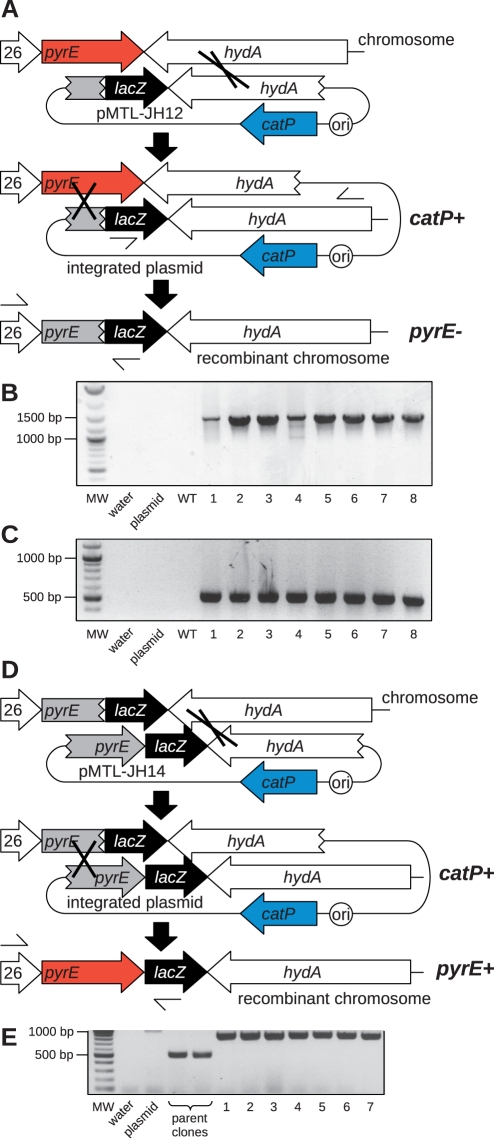
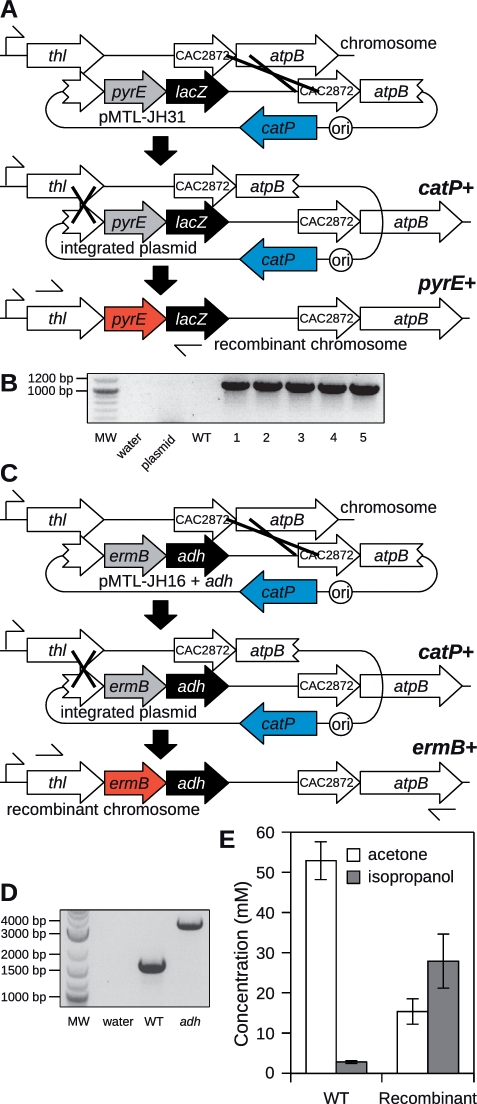
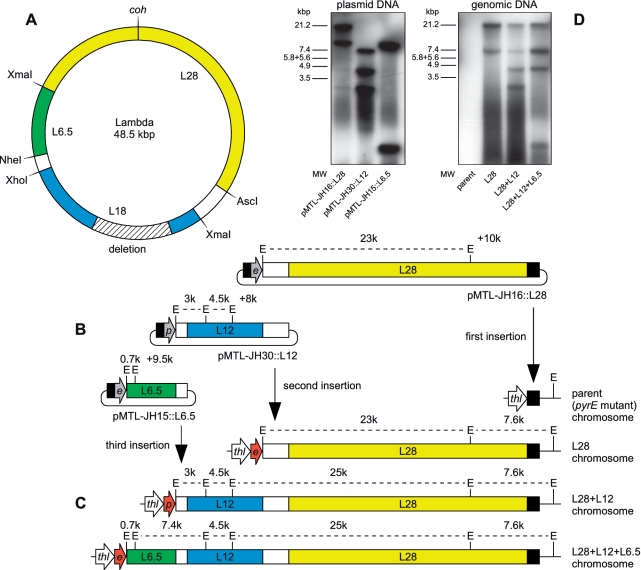
Most bacteria can only be transformed with circular plasmids, so robust DNA integration methods for these rely upon selection of single-crossover clones followed by counter-selection of double-crossover clones. To overcome the limited availability of heterologous counter-selection markers, here we explore novel DNA integration strategies that do not employ them, and instead exploit (i) activation or inactivation of genes leading to a selectable phenotype, and (ii) asymmetrical regions of homology to control the order of recombination events. We focus here on the industrial biofuel-producing bacterium Clostridium acetobutylicum, which previously lacked robust integration tools, but the approach we have developed is broadly applicable. Large sequences can be delivered in a series of steps, as we demonstrate by inserting the chromosome of phage lambda (minus a region apparently unstable in Escherichia coli in our cloning context) into the chromosome of C. acetobutylicum in three steps. This work should open the way to reliable integration of DNA including large synthetic constructs in diverse microorganisms.
Overview
The claims and statistics of this paper haven’t been checked yet.
Free: it reads the open-access text and checks the first 5 claims that cite a source we can check. Create a free account to check every claim.
Integrity signals
Registry
Cites
Statistics
Figures
Verification
Claims the paper makes
The claims and statistics of this paper haven’t been checked yet.
Free: it reads the open-access text and checks the first 5 claims that cite a source we can check. Create a free account to check every claim.
Claims other papers make about this one
Each is checked against this paper’s own text: does it say what the citing paper says it does?
The cited source says what the claim attributes to it.
In the citing paper
“For example, a promoterless primary/secondary adh from C. beijerinckii coupled to the ermB gene was introduced into the downstream region of the thlA gene in the genome of C. acetobutylicum. The native promoter of thlA drives the expression of ermB and adh, allowing selection for the second recombination event using erythromycin or acid-stable analog clarithromycin, and also creation of a”
From Gas Fermentation—A Flexible Platform for Commercial Scale Production of Low-Carbon-Fuels and Chemicals from Waste and Renewable Feedstocks (2016) · cites this paper as Heap et al., 2012
The check wasn’t confident either way, so it gives no verdict — never disputed.
In the citing paper
“We used the FgH1tUT vectors, which enable the sgRNA expression under the control of doxycycline and harbour the miRFP670 fluorescent reporter driven by the Ubiquitin promoter [21] (Figure 1B).”
From Rapid and Robust Generation of Homozygous Fluorescent Reporter Knock-In Cell Pools by CRISPR-Cas9 (2025) · cites this paper as [21]
Experimental — accuracy not yet measuredIn the citing paper
“Instead, it utilizes the activation or inactivation of gene(s) that result in a selectable phenotype, and asymmetrical homology arms to direct the order of recombination events (Heap et al., 2012).”
From Gas Fermentation—A Flexible Platform for Commercial Scale Production of Low-Carbon-Fuels and Chemicals from Waste and Renewable Feedstocks (2016) · cites this paper as Heap et al., 2012
In the citing paper
“Recently, a novel genetic tool that allows stable genome insertion via homologous recombination was developed. Termed Allele-Coupled Exchange (ACE), this approach does not employ a counter selective marker to select for the rare second recombination event.”
From Gas Fermentation—A Flexible Platform for Commercial Scale Production of Low-Carbon-Fuels and Chemicals from Waste and Renewable Feedstocks (2016) · cites this paper as Heap et al., 2012
In the citing paper
“Remarkably, the whole genome of phage lambda (48.5 kb minus a 6 kb region) was successfully inserted into the genome of C. acetobutylicum in three successive steps using this genetic tool.”
From Gas Fermentation—A Flexible Platform for Commercial Scale Production of Low-Carbon-Fuels and Chemicals from Waste and Renewable Feedstocks (2016) · cites this paper as Heap et al., 2012
1 more claim about this paper
Create a free account to see every claim other papers make about this one.
Self-check
Percentages, sums and reported differences re-computed from the paper’s own numbers.
The self-check needs the paper’s full text.
Citations
Cites
Boeke, J. D., La Croute, F., & Fink, G. R. (1984) · Molecular and General Genetics MGG · doi:10.1007/bf00330984 · Cited by 2,318
Acetone-butanol fermentation revisited
Jones, D. T., & Woods, D. (1986) · Microbiological Reviews · doi:10.1128/mmbr.50.4.484-524.1986 · Cited by 1,990
The ClosTron: a universal gene knock-out system for the genus Clostridium
Heap, J. T., Pennington, O. J., Cartman, S. T., Carter, G. P., & Minton, N. P. (2007) · Journal of Microbiological Methods · doi:10.1016/j.mimet.2007.05.021 · Cited by 663 · cited 2×
“coli strain TOP10 (Invitrogen) was used for plasmid cloning and storage, strain CA434 (5) was used as a conjugation donor, and TOP10 containing pAN2 (6) was used for in vivo methylation of plasmid DNA prior to transformation of C.”
MethodSelf-citationA modular system for Clostridium shuttle plasmids
Heap, J. T., Pennington, O. J., Cartman, S. T., & Minton, N. P. (2009) · Journal of Microbiological Methods · doi:10.1016/j.mimet.2009.05.004 · Cited by 489 · cited 4×
“coli shuttle plasmids pMTL85141, pMTL85151 and pMTL83151, respectively (7), and differ to those parental plasmids only between the SbfI and AscI sites.”
BackgroundMethodInfluentialSelf-citationThe ClosTron: mutagenesis in Clostridium refined and streamlined
Heap, J. T., Kuehne, S. A., Ehsaan, M., Cartman, S. T., Cooksley, C. M., Scott, J. C., & Minton, N. P. (2010) · Journal of Microbiological Methods · doi:10.1016/j.mimet.2009.10.018 · Cited by 418
Self-citationEngineering solventogenic clostridia
Papoutsakis, E. T. (2008) · Current Opinion in Biotechnology · doi:10.1016/j.copbio.2008.08.003 · Cited by 332
Clewell, D. B., Yagi, Y., Dunny, G. M., & Schultz, S. K. (1974) · Journal of Bacteriology · doi:10.1128/jb.117.1.283-289.1974 · Cited by 324
Sato, T., Fukui, T., Atomi, H., & Imanaka, T. (2003) · Journal of Bacteriology · doi:10.1128/jb.185.1.210-220.2003 · Cited by 294
Oxygen and the Growth and Metabolism of Clostridium acetobutylicum
O'BRIEN, R. W., & MORRIS, J. G. (1971) · Journal of General Microbiology · doi:10.1099/00221287-68-3-307 · Cited by 286
Counterselectable Markers: Untapped Tools for Bacterial Genetics and Pathogenesis
Reyrat, J., Pelicic, V., Gicquel, B., & Rappuoli, R. (1998) · Infection and Immunity · doi:10.1128/.66.9.4011-4017.1998 · Cited by 282
Cited by
Liew, F., Martin, M. E., Tappel, R. C., Heijstra, B. D., Mihalcea, C., & Köpke, M. (2016) · Frontiers in Microbiology · doi:10.3389/fmicb.2016.00694 · Cited by 485
Commercial Biomass Syngas Fermentation.
Daniell, J., Köpke, M., & Simpson, S. (2012) · Energies · doi:10.3390/en5125372 · Cited by 444
“More recently, integration based techniques such as ClosTron [213–215], as well as marker-less integration methods [216], have been applied to C.”
MethodBiogenesis and functions of bacterial S-layers
Fagan, R. P., & Fairweather, N. F. (2014) · Nature Reviews Microbiology · doi:10.1038/nrmicro3213 · Cited by 384
Metabolic Engineering: Past and Future
Woolston, B. M., Edgar, S., & Stephanopoulos, G. (2013) · Annual Review of Chemical and Biomolecular Engineering · doi:10.1146/annurev-chembioeng-061312-103312 · Cited by 292
Pathway engineering and synthetic biology using acetogens
Schiel-Bengelsdorf, B., & Dürre, P. (2012) · FEBS Letters · doi:10.1016/j.febslet.2012.04.043 · Cited by 265
Metabolic engineering of Clostridium autoethanogenum for selective alcohol production
Liew, F., Henstra, A. M., Kӧpke, M., Winzer, K., Simpson, S. D., & Minton, N. P. (2017) · Metabolic Engineering · doi:10.1016/j.ymben.2017.01.007 · Cited by 245
“Creation of ΔpyrE strain The procedure adopted was as previously described (Heap et al., 2012).”
MethodSelf-citationPlasmid persistence: costs, benefits, and the plasmid paradox
Carroll, A. C., & Wong, A. (2018) · Canadian Journal of Microbiology · doi:10.1139/cjm-2017-0609 · Cited by 245
Xue, C., Zhao, J., Chen, L., Yang, S.-T., & Bai, F. (2017) · Biotechnology Advances · doi:10.1016/j.biotechadv.2017.01.007 · Cited by 244
One hundred years of clostridial butanol fermentation
Moon, H. G., Jang, Y.-S., Cho, C., Lee, J., Binkley, R., & Lee, S. Y. (2016) · FEMS Microbiology Letters · doi:10.1093/femsle/fnw001 · Cited by 226
Efficient Genome Editing in Clostridium cellulolyticum via CRISPR-Cas9 Nickase
Xu, T., Li, Y., Shi, Z., Hemme, C. L., Li, Y., Zhu, Y., Van Nostrand, J. D., He, Z., & Zhou, J. (2015) · Applied and Environmental Microbiology · doi:10.1128/aem.00873-15 · Cited by 223
“, allele exchange, group II intron retrotransposition, and recombineering) can be used for genome modification in many microbes (1, 2), they have some limitations: (i) traditional stepwise recombination-dependent allele exchange is time-consuming and has low efficiency (3), which can be worse when host transformation…”
BackgroundLeang, C., Ueki, T., Nevin, K. P., & Lovley, D. R. (2013) · Applied and Environmental Microbiology · doi:10.1128/aem.02891-12 · Cited by 202
“However, with renewed interest in biotechnological applications of Clostridium species there have been renewed efforts to develop strategies for genetic modification, leading to such recent developments as the following: replicative plasmids for gene deletion (27); counterselection methods to improve the efficiency of…”
BackgroundTremblay, P.-L., Zhang, T., Dar, S. A., Leang, C., & Lovley, D. R. (2013) · mBio · doi:10.1128/mbio.00406-12 · Cited by 202
Huang, H., Chai, C., Li, N., Rowe, P., Minton, N. P., Yang, S., Jiang, W., & Gu, Y. (2016) · ACS Synthetic Biology · doi:10.1021/acssynbio.6b00044 · Cited by 201
Self-citationLatif, H., Zeidan, A. A., Nielsen, A. T., & Zengler, K. (2014) · Current Opinion in Biotechnology · doi:10.1016/j.copbio.2013.12.001 · Cited by 199
“counter-selection for markerless gene deletions/insertions at any desired genomic loci [51], coupled expression of heterologous selectable markers to a chromosomal promoter to select for double crossover events [52 ], and antisense RNA for protein down-regulation [53].”
BackgroundSustainable life support on Mars – the potential roles of cyanobacteria
Verseux, C., Baqué, M., Lehto, K., de Vera, J.-P. P., Rothschild, L. J., & Billi, D. (2016) · International Journal of Astrobiology · doi:10.1017/s147355041500021x · Cited by 194
“Exogenous genes should rather be irreversibly inserted in cyanobacteria’s genomes, which leads to much higher stability and more control over expression levels (e.g., Herrero et al. 1990; Heap et al. 2012).”
BackgroundBiobutanol: the outlook of an academic and industrialist
Bankar, S. B., Survase, S. A., Ojamo, H., & Granström, T. (2013) · RSC Advances · doi:10.1039/c3ra43011a · Cited by 190
Thermophilic lignocellulose deconstruction
Blumer-Schuette, S. E., Brown, S. D., Sander, K. B., Bayer, E. A., Kataeva, I., Zurawski, J. V., Conway, J. M., Adams, M. W. W., & Kelly, R. M. (2014) · FEMS Microbiology Reviews · doi:10.1111/1574-6976.12044 · Cited by 183
“…and knockin systems have been developed for mesophilic members of the genus Clostridium (Heap et al., 2007; Tolonen et al., 2009; Heap et al., 2010; Heap et al., 2012), deletion of key genes involved in organic acid formation facilitates higher ethanol titers by the thermophile T. saccharolyticum…”
BackgroundTargeted mutagenesis of the Clostridium acetobutylicum acetone–butanol–ethanol fermentation pathway
Cooksley, C. M., Zhang, Y., Wang, H., Redl, S., Winzer, K., & Minton, N. P. (2012) · Metabolic Engineering · doi:10.1016/j.ymben.2012.09.001 · Cited by 181
Self-citationPyne, M. E., Bruder, M. R., Moo-Young, M., Chung, D. A., & Chou, C. P. (2016) · Scientific Reports · doi:10.1038/srep25666 · Cited by 176
Ng, Y. K., Ehsaan, M., Philip, S., Collery, M. M., Janoir, C., Collignon, A., Cartman, S. T., & Minton, N. P. (2013) · PLoS ONE · doi:10.1371/journal.pone.0056051 · Cited by 175
“sporogenes fdx promoter was isolated from plasmid pMTL82253 and inserted between the equivalent sites of pMTL-JH14 [9].”
BackgroundMethodInfluentialSelf-citationFackler, N., Heijstra, B. D., Rasor, B. J., Brown, H., Martin, J., Ni, Z., Shebek, K. M., Rosin, R. R., Simpson, S. D., Tyo, K. E., et al. (2021) · Annual Review of Chemical and Biomolecular Engineering · doi:10.1146/annurev-chembioeng-120120-021122 · Cited by 174
Biological conversion of methane to liquid fuels: Status and opportunities
Ge, X., Yang, L., Sheets, J. P., Yu, Z., & Li, Y. (2014) · Biotechnology Advances · doi:10.1016/j.biotechadv.2014.09.004 · Cited by 170
Bacterial Anaerobic Synthesis Gas (Syngas) and CO 2 + H 2 Fermentation
Bengelsdorf, F. R., Beck, M. H., Erz, C., Hoffmeister, S., Karl, M. M., Riegler, P., Wirth, S., Poehlein, A., Weuster-Botz, D., & Dürre, P. (2018) · Advances in Applied Microbiology · doi:10.1016/bs.aambs.2018.01.002 · Cited by 165
Pathogenicity and virulence of Clostridium botulinum
Rawson, A. M., Dempster, A. W., Humphreys, C. M., & Minton, N. P. (2023) · Virulence · doi:10.1080/21505594.2023.2205251 · Cited by 149
Self-citationA roadmap for gene system development in Clostridium
Minton, N. P., Ehsaan, M., Humphreys, C. M., Little, G. T., Baker, J., Henstra, A. M., Liew, F. E., Kelly, M. L., Sheng, L., Schwarz, K. M., et al. (2016) · Anaerobe · doi:10.1016/j.anaerobe.2016.05.011 · Cited by 146
Self-citationCarbon Dioxide Capture and Utilization using Biological Systems: Opportunities and Challenges
Wong, T. S. (2014) · Journal of Bioprocessing & Biotechniques · doi:10.4172/2155-9821.1000155 · Cited by 139
Acetogenic mixotrophy: novel options for yield improvement in biofuels and biochemicals production
Fast, A. G., Schmidt, E. D., Jones, S. W., & Tracy, B. P. (2014) · Current Opinion in Biotechnology · doi:10.1016/j.copbio.2014.11.014 · Cited by 137
Butanol production from lignocellulosics
Jurgens, G., Survase, S. A., Berezina, O., Sklavounos, E., Linnekoski, J. A., Kurkijärvi, A. J., Väkevä, M., van Heiningen, A., & Granström, T. B. (2012) · Biotechnology Letters · doi:10.1007/s10529-012-0926-3 · Cited by 131
Westphal, L., Wiechmann, A., Baker, J., Minton, N. P., & Müller, V. (2018) · Journal of Bacteriology · doi:10.1128/jb.00357-18 · Cited by 125
Self-citationAl-Hinai, M. A., Fast, A. G., & Papoutsakis, E. T. (2012) · Applied and Environmental Microbiology · doi:10.1128/aem.02214-12 · Cited by 122
Recent Developments of the Synthetic Biology Toolkit for Clostridium
Joseph, R. C., Kim, N. M., & Sandoval, N. R. (2018) · Frontiers in Microbiology · doi:10.3389/fmicb.2018.00154 · Cited by 124
The role of flagella in Clostridium difficile pathogenicity
Stevenson, E. C., Minton, N. P., & Kuehne, S. A. (2015) · Trends in Microbiology · doi:10.1016/j.tim.2015.01.004 · Cited by 119
Self-citationGas Fermentation for Commercial Biofuels Production
Min, F., Köpke, M., & Dennis, S. (2013) · InTech eBooks · doi:10.5772/52164 · Cited by 114
Li, S., Huang, L., Ke, C., Pang, Z., & Liu, L. (2020) · Biotechnology for Biofuels · doi:10.1186/s13068-020-01674-3 · Cited by 108
Gas fermentation: cellular engineering possibilities and scale up
Heijstra, B. D., Leang, C., & Juminaga, A. (2017) · Microbial Cell Factories · doi:10.1186/s12934-017-0676-y · Cited by 107
A review of food-grade vectors in lactic acid bacteria: from the laboratory to their application
Landete, J. M. (2016) · Critical Reviews in Biotechnology · doi:10.3109/07388551.2016.1144044 · Cited by 100
A two-plasmid inducible CRISPR/Cas9 genome editing tool for Clostridium acetobutylicum
Wasels, F., Jean-Marie, J., Collas, F., López-Contreras, A. M., & Lopes Ferreira, N. (2017) · Journal of Microbiological Methods · doi:10.1016/j.mimet.2017.06.010 · Cited by 98
Recombinant biosynthesis of bacterial cellulose in genetically modified Escherichia coli
Buldum, G., Bismarck, A., & Mantalaris, A. (2017) · Bioprocess and Biosystems Engineering · doi:10.1007/s00449-017-1864-1 · Cited by 96
Engineering Clostridium organisms as microbial cell-factories: challenges & opportunities
Charubin, K., Bennett, R. K., Fast, A. G., & Papoutsakis, E. T. (2018) · Metabolic Engineering · doi:10.1016/j.ymben.2018.07.012 · Cited by 97
Heap, J. T., Theys, J., Ehsaan, M., Kubiak, A. M., Dubois, L. J., Paesmans, K., Mellaert, L. V., Knox, R. J., Kuehne, S. A., Lambin, P., et al. (2014) · Oncotarget · doi:10.18632/oncotarget.1761 · Cited by 94
Self-citationFisher, A. K., Freedman, B. G., Bevan, D. R., & Senger, R. S. (2014) · Computational and Structural Biotechnology Journal · doi:10.1016/j.csbj.2014.08.010 · Cited by 96
Ehsaan, M., Kuit, W., Zhang, Y., Cartman, S. T., Heap, J. T., Winzer, K., & Minton, N. P. (2016) · Biotechnology for Biofuels · doi:10.1186/s13068-015-0410-0 · Cited by 90
Self-citationApplication of new metabolic engineering tools for Clostridium acetobutylicum
Lütke‐Eversloh, T. (2014) · Applied Microbiology and Biotechnology · doi:10.1007/s00253-014-5785-5 · Cited by 88
Bruder, M. R., Pyne, M. E., Moo‐Young, M., Chung, D. A., & Chou, C.-H. P. (2016) · Applied and Environmental Microbiology · doi:10.1128/aem.02128-16 · Cited by 88
Schwarz, K. M., Grosse-Honebrink, A., Derecka, K., Rotta, C., Zhang, Y., & Minton, N. P. (2017) · Metabolic Engineering · doi:10.1016/j.ymben.2017.01.009 · Cited by 85
Self-citationProtein Secretion in Gram-Positive Bacteria: From Multiple Pathways to Biotechnology
Anné, J., Economou, A., & Bernaerts, K. (2016) · Current topics in microbiology and immunology · doi:10.1007/82_2016_49 · Cited by 83
Dai, Z., Dong, H., Zhu, Y., Zhang, Y., Li, Y., & Ma, Y. (2012) · Biotechnology for Biofuels · doi:10.1186/1754-6834-5-44 · Cited by 81
Synthetic Biology on Acetogenic Bacteria for Highly Efficient Conversion of C1 Gases to Biochemicals
Jin, S., Bae, J., Song, Y., Pearcy, N., Shin, J., Kang, S., Minton, N. P., Soucaille, P., & Cho, B. (2020) · International Journal of Molecular Sciences · doi:10.3390/ijms21207639 · Cited by 80
Self-citationTechnical guide for genetic advancement of underdeveloped and intractable Clostridium
Pyne, M. E., Bruder, M., Moo-Young, M., Chung, D. A., & Chou, C. P. (2014) · Biotechnology Advances · doi:10.1016/j.biotechadv.2014.04.003 · Cited by 78
Mehla, K., & Ramana, J. (2016) · Molecular BioSystems · doi:10.1039/c5mb00745c · Cited by 74
ClosTron-mediated engineering of Clostridium
Kuehne, S. A., & Minton, N. P. (2012) · Bioengineered · doi:10.4161/bioe.21004 · Cited by 72
Self-citationAntimicrobial resistance: Linking molecular mechanisms to public health impact
Muteeb, G., Kazi, R. N. A., Aatif, M., Azhar, A., Oirdi, M. E., & Farhan, M. (2025) · SLAS DISCOVERY · doi:10.1016/j.slasd.2025.100232 · Cited by 76
Genetic and metabolic engineering challenges of C1-gas fermenting acetogenic chassis organisms
Bourgade, B., Minton, N. P., & Islam, M. A. (2021) · FEMS Microbiology Reviews · doi:10.1093/femsre/fuab008 · Cited by 73
Self-citationGu, Y., Jiang, Y., Yang, S., & Jiang, W. (2014) · Current Opinion in Biotechnology · doi:10.1016/j.copbio.2014.04.004 · Cited by 72
Variability in Arsenic Methylation Efficiency across Aerobic and Anaerobic Microorganisms
Viacava, K., Meibom, K. L., Ortega, D., Dyer, S. M., Gelb, A., Falquet, L., Minton, N. P., Mestrot, A., & Bernier‐Latmani, R. (2020) · Environmental Science & Technology · doi:10.1021/acs.est.0c03908 · Cited by 71
Self-citationA Universal Mariner Transposon System for Forward Genetic Studies in the Genus Clostridium
Zhang, Y., Grosse-Honebrink, A., & Minton, N. P. (2015) · PLoS ONE · doi:10.1371/journal.pone.0122411 · Cited by 67
Self-citationClosTron-Mediated Engineering of Clostridium
Kuehne, S. A., Heap, J. T., Cooksley, C. M., Cartman, S. T., & Minton, N. P. (2011) · Methods in Molecular Biology · doi:10.1007/978-1-61779-197-0_23 · Cited by 65
Self-citationA Targetron-Recombinase System for Large-Scale Genome Engineering of Clostridia
Cerisy, T., Rostain, W., Chhun, A., Boutard, M., Salanoubat, M., & Tolonen, A. C. (2019) · mSphere · doi:10.1128/msphere.00710-19 · Cited by 65
Mordaka, P. M., & Heap, J. T. (2018) · ACS Synthetic Biology · doi:10.1021/acssynbio.7b00398 · Cited by 61
Self-citationThe potential of clostridial spores as therapeutic delivery vehicles in tumour therapy
Kubiak, A. M., & Minton, N. P. (2015) · Research in Microbiology · doi:10.1016/j.resmic.2014.12.006 · Cited by 62
Self-citationWu, Y. P., Yang, Y., Ren, C., Yang, C., Yang, S., Gu, Y., & Jiang, W. (2015) · Metabolic Engineering · doi:10.1016/j.ymben.2015.01.006 · Cited by 61
Sheng, L., Kovács, K., Winzer, K., Zhang, Y., & Minton, N. P. (2017) · Biotechnology for Biofuels · doi:10.1186/s13068-016-0692-x · Cited by 61
Self-citationHuang, Y., Xiaojun, L., Yu, S., Chen, R., & Chen, W.-Z. (2022) · ACS Synthetic Biology · doi:10.1021/acssynbio.2c00314 · Cited by 59
Philipps, G., de Vries, S., & Jennewein, S. (2019) · Biotechnology for Biofuels · doi:10.1186/s13068-019-1448-1 · Cited by 59
Kovács, K., Willson, B. J., Schwarz, K., Heap, J. T., Jackson, A., Bolam, D. N., Winzer, K., & Minton, N. P. (2013) · Biotechnology for Biofuels · doi:10.1186/1754-6834-6-117 · Cited by 58
Self-citationEfficient whole-cell-catalyzing cellulose saccharification using engineered Clostridium thermocellum
Zhang, J., Liu, S., Li, R., Hong, W., Xiao, Y., Feng, Y., Cui, Q., & Liu, Y. (2017) · Biotechnology for Biofuels · doi:10.1186/s13068-017-0796-y · Cited by 58
Syngas Biorefinery and Syngas Utilization
Tissera, S. L. D., Köpke, M., Simpson, S. D., Humphreys, C. M., Minton, N. P., & Dürre, P. (2017) · Advances in biochemical engineering, biotechnology · doi:10.1007/10_2017_5 · Cited by 57
Self-citationWen, Z., Li, Q., Liu, J., Jin, M., & Yang, S. (2019) · Microbial Biotechnology · doi:10.1111/1751-7915.13478 · Cited by 57
CRISPR Genome Editing Systems in the Genus Clostridium : a Timely Advancement
McAllister, K. N., & Sorg, J. A. (2019) · Journal of Bacteriology · doi:10.1128/jb.00219-19 · Cited by 55
Advancing Clostridia to Clinical Trial: Past Lessons and Recent Progress
Mowday, A. M., Guise, C. P., Ackerley, D. F., Minton, N. P., Lambin, P., Dubois, L. J., Theys, J., Smaill, J. B., & Patterson, A. V. (2016) · Cancers · doi:10.3390/cancers8070063 · Cited by 54
Self-citationMetabolic regulation in solventogenic clostridia: regulators, mechanisms and engineering
Yang, Y., Nie, X., Jiang, Y., Yang, C., Gu, Y., & Jiang, W. (2018) · Biotechnology Advances · doi:10.1016/j.biotechadv.2018.02.012 · Cited by 54
Willson, B. J., Kovács, K., Wilding-Steele, T., Márkus, R., Winzer, K., & Minton, N. P. (2016) · Biotechnology for Biofuels · doi:10.1186/s13068-016-0526-x · Cited by 50
Self-citationYang, G., Jia, D., Jin, L., Jiang, Y., Wang, Y., Jiang, W., & Gu, Y. (2017) · ACS Synthetic Biology · doi:10.1021/acssynbio.7b00155 · Cited by 47
Faulds‐Pain, A., & Wren, B. W. (2013) · Applied and Environmental Microbiology · doi:10.1128/aem.01195-13 · Cited by 46
Progress towards platform chemical production using Clostridium autoethanogenum
Norman, R. O. J., Millat, T., Winzer, K., Minton, N. P., & Hodgman, C. T. (2018) · Biochemical Society Transactions · doi:10.1042/bst20170259 · Cited by 44
Self-citationEngineering of vitamin prototrophy in Clostridium ljungdahlii and Clostridium autoethanogenum
Annan, F. J., Al‐Sinawi, B., Humphreys, C. M., Norman, R. O. J., Winzer, K., Köpke, M., Simpson, S. D., Minton, N. P., & Henstra, A. M. (2019) · Applied Microbiology and Biotechnology · doi:10.1007/s00253-019-09763-6 · Cited by 44
Self-citationBankar, S. B., Jurgens, G., Survase, S. A., Ojamo, H., & Granström, T. B. (2015) · Renewable Energy · doi:10.1016/j.renene.2015.05.052 · Cited by 43
I-SceI-mediated scarless gene modification via allelic exchange in Clostridium
Zhang, N., Shao, L., Jiang, Y., Gu, Y., Li, Q., Liu, J., Jiang, W., & Yang, S. (2014) · Journal of Microbiological Methods · doi:10.1016/j.mimet.2014.11.004 · Cited by 43
Croux, C., Nguyen, N.-P.-T., Lee, J., Raynaud, C., Saint-Prix, F., Gonzalez-Pajuelo, M., Meynial-Salles, I., & Soucaille, P. (2016) · Biotechnology for Biofuels · doi:10.1186/s13068-016-0432-2 · Cited by 41
“acetobutylicum ATCC 824, including a gene inactivation system based on non-replicative [2, 3] and replicative plasmids [4–7] and the group II intron gene inactivation system [8, 9].”
MethodZuo, F., Zeng, Z., Hammarström, L. L. G., & Marcotte, H. (2019) · ACS Synthetic Biology · doi:10.1021/acssynbio.9b00114 · Cited by 41
Clostridium to treat cancer: dream or reality?
Theys, J., & Lambin, P. (2015) · PubMed Central · doi:10.3978/j.issn.2305-5839.2015.03.39 · Cited by 36
Okonkwo, C. C., Ujor, V. C., & Ezeji, T. C. (2019) · Scientific Reports · doi:10.1038/s41598-019-44061-1 · Cited by 35
van Zyl, W. F., Deane, S. M., & Dicks, L. M. T. (2015) · Applied and Environmental Microbiology · doi:10.1128/aem.01247-15 · Cited by 34
Scheel, M., & Lütke‐Eversloh, T. (2013) · Metabolic Engineering · doi:10.1016/j.ymben.2013.03.002 · Cited by 34
Low-Carbon Fuel and Chemical Production by Anaerobic Gas Fermentation
Daniell, J., Nagaraju, S., Burton, F., Köpke, M., & Simpson, S. D. (2015) · Advances in biochemical engineering, biotechnology · doi:10.1007/10_2015_5005 · Cited by 33
Designer bacteria as intratumoural enzyme biofactories
Lehouritis, P., Hogan, G. E., & Tangney, M. (2017) · Advanced Drug Delivery Reviews · doi:10.1016/j.addr.2017.09.012 · Cited by 34
Adaptation and application of a two-plasmid inducible CRISPR-Cas9 system in Clostridium beijerinckii
Diallo, M., Hocq, R., Collas, F., Chartier, G., Wasels, F., Wijaya, H. S., Werten, M. W. T., Wolbert, E. J. H., Kengen, S. W. M., John van der, O. O. S. T., et al. (2019) · Methods · doi:10.1016/j.ymeth.2019.07.022 · Cited by 33
Improved CRISPR/Cas9 Tools for the Rapid Metabolic Engineering of Clostridium acetobutylicum
Wilding-Steele, T., Ramette, Q., Jacottin, P., & Soucaille, P. (2021) · International Journal of Molecular Sciences · doi:10.3390/ijms22073704 · Cited by 32
Atmadjaja, A. N., Holby, V., Harding, A. J., Krabben, P., Smith, H. K., & Jenkinson, E. R. (2019) · FEMS Microbiology Letters · doi:10.1093/femsle/fnz059 · Cited by 31
Mowday, A. M., Dubois, L. J., Kubiak, A. M., Chan-Hyams, J. V. E., Guise, C. P., Ashoorzadeh, A., Lambin, P., Ackerley, D. F., Smaill, J. B., Minton, N. P., et al. (2021) · Cancer Gene Therapy · doi:10.1038/s41417-021-00296-7 · Cited by 31
Self-citationWang, J., Qin, R., Guo, Y., Ma, C., Wang, X., Chen, K., & Ouyang, P. (2022) · Green Chemical Engineering · doi:10.1016/j.gce.2022.10.005 · Cited by 29
Required Gene Set for Autotrophic Growth of Clostridium autoethanogenum
Woods, C., Humphreys, C. M., Tomi-Andrino, C., Henstra, A. M., Köpke, M., Simpson, S. D., Winzer, K., & Minton, N. P. (2022) · Applied and Environmental Microbiology · doi:10.1128/aem.02479-21 · Cited by 29
Self-citationPart by Part: Synthetic Biology Parts Used in Solventogenic Clostridia
Gyulev, I. S., Willson, B. J., Hennessy, R. C., Krabben, P., Jenkinson, E. R., & Thomas, G. H. (2017) · ACS Synthetic Biology · doi:10.1021/acssynbio.7b00327 · Cited by 29
Kubiak, A. M., Bailey, T. S., Dubois, L. J., Theys, J., & Lambin, P. (2021) · Frontiers in Microbiology · doi:10.3389/fmicb.2021.669488 · Cited by 28
Peptidoglycan degradation machinery in Clostridium difficile forespore engulfment
Dembek, M., Kelly, A., Barwinska‐Sendra, A., Tarrant, E., Stanley, W. A., Vollmer, D., Biboy, J., Gray, J., Vollmer, W., & Salgado, P. S. (2018) · Molecular Microbiology · doi:10.1111/mmi.14091 · Cited by 27
Building a genome engineering toolbox in nonmodel prokaryotic microbes
Freed, E. F., Fenster, J. A., Smolinski, S. L., Walker, J. E., Henard, C. A., Gill, R. T., & Eckert, C. A. (2018) · Biotechnology and Bioengineering · doi:10.1002/bit.26727 · Cited by 26
Foulquier, C., Huang, C.-N., Nguyen, N.-P.-T., Thiel, A., Wilding-Steele, T., Soula, J., Yoo, M., Ehrenreich, A., Meynial‐Salles, I., Liebl, W., et al. (2019) · Biotechnology for Biofuels · doi:10.1186/s13068-019-1364-4 · Cited by 26
Improving the performance of solventogenic clostridia by reinforcing the biotin synthetic pathway
Yang, Y., Lang, N., Yang, G., Yang, S., Jiang, W., & Gu, Y. (2016) · Metabolic Engineering · doi:10.1016/j.ymben.2016.02.006 · Cited by 26
Clostridium Bacteria: Harnessing Tumour Necrosis for Targeted Gene Delivery
Theys, J., Patterson, A. V., & Mowday, A. M. (2024) · Molecular Diagnosis & Therapy · doi:10.1007/s40291-024-00695-0 · Cited by 26
Cui, G., Zhang, J., Hong, W., Xu, C., Feng, Y., Cui, Q., & Liu, Y. (2013) · Applied Microbiology and Biotechnology · doi:10.1007/s00253-013-5330-y · Cited by 25
Metadata
- Authors
- Heap, J. T., Ehsaan, M., Cooksley, C. M., Ng, Y.-K., Cartman, S. T., Winzer, K., & Minton, N. P.
- Affiliations
- University of Nottingham (GB)
- Corresponding author
- Minton, Nigel P.
- Venue
- Nucleic Acids Research
- Publisher
- Oxford University Press (OUP)
- Published
- 2012-01-18
- Volume
- 40
- Issue
- 8
- Pages
- e59-e59
- ISSN
- 0305-1048 (ISSN-L)
- 1362-4962
- PMC
- PMC3333862
- OpenAlex
- W2158849520
- Cited by
- 201
- References
- 31
- Citations by year
- 2026: 8 · 2025: 15 · 2024: 7 · 2023: 8 · 2022: 8 · 2021: 13 · 2020: 5 · 2019: 24 · 2018: 16 · 2017: 17 · 2016: 24 · 2015: 19 · 2014: 16 · 2013: 10 · 2012: 10
- FWCI
- 7.07
- Type
- journal article
- Language
- en
- Open access
- gold
- doi.org
- Licence
- Locations
- Nucleic Acids Research (publishedVersion, cc-by-nc)
- Europe PMC (PubMed Central) (publishedVersion, cc-by-nc)
- PubMed Central (publishedVersion, cc-by-nc)
- PubMed (publishedVersion)
- Repository@Nottingham (University of Nottingham) (submittedVersion, cc-by)
- Repository@Nottingham (University of Nottingham) (submittedVersion, other-oa)
- Funders
- European Commission (223585)
- Directorate for Biological Sciences
- Medical Research Council (G0601176)
- Biotechnology and Biological Sciences Research Council (BB/G016224/1, BB/F003390/1, BB/E021271/1)
- Topics
- Life Sciences › Biochemistry, Genetics and Molecular Biology › Molecular Biology › Microbial Metabolic Engineering and Bioproduction
- Life Sciences › Biochemistry, Genetics and Molecular Biology › Genetics › Bacterial Genetics and Biotechnology
- Life Sciences › Biochemistry, Genetics and Molecular Biology › Molecular Biology › CRISPR and Genetic Engineering
- Keywords
- homology-directed recombination, Clostridium acetobutylicum
- MeSH terms
- Alcohol Dehydrogenase, Base Sequence, Chromosomes, Bacterial, DNA, Genetic Markers, Molecular Sequence Data, Orotate Phosphoribosyltransferase, Bacteriophage lambda, Plasmids, Promoter Regions, Genetic, Transformation, Bacterial, Genome, Viral, Clostridium acetobutylicum
About these checks
Registry, retraction, Cites and statistics results are computed, not judged, with one exception: a printed reference that no index lists is read once by a model before it counts as a citation error. Claims are extracted by a model and kept only when their quote appears verbatim in the text; each cited source is then checked, with a model’s help, for whether it says what the claim relies on. Those verdicts can be wrong — read the claim’s quote and the cited source before relying on one.
Statistics and arithmetic are recomputed, not judged.
Confidence bands are shown only for fields calibrated on our annotated test set. None is calibrated yet, so no band is shown.
What counts as a claim ›How we measure confidence ›How we check this ›
Are you an author, or do you see a problem with this page? Request a review
Data sources
Bibliographic data: Semantic Scholar, OpenAlex, Crossref.
Contains information from the Semantic Scholar Academic Graph Datasets, made available under the ODC Attribution License (ODC-BY 1.0).
Semantic Scholar’s data is described in: Kinney, R., et al. (2023). The Semantic Scholar Open Data Platform. arXiv:2301.10140.
