

The DOI matches its Crossref record; 47 of the 48 references it cites were found in a registry or an index.
Self-organization of domain structures by DNA-loop-extruding enzymes
Open accessAbstract
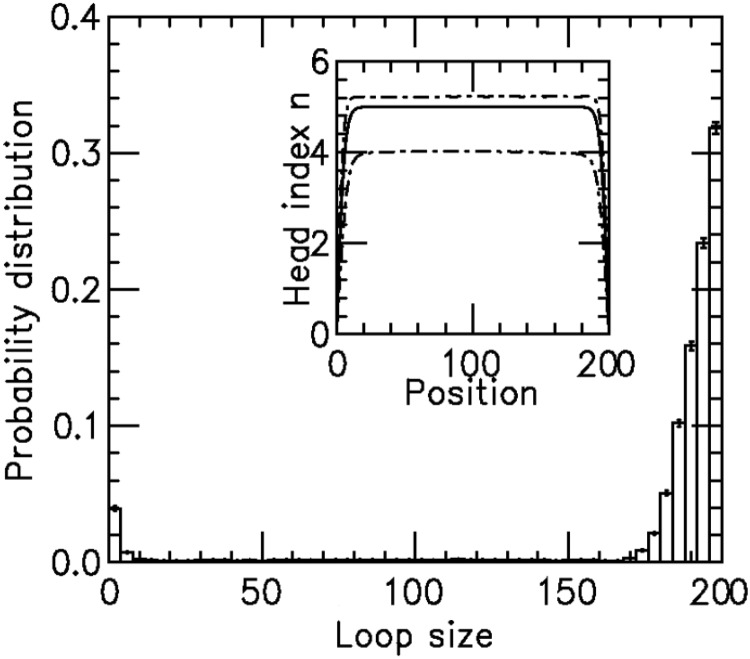
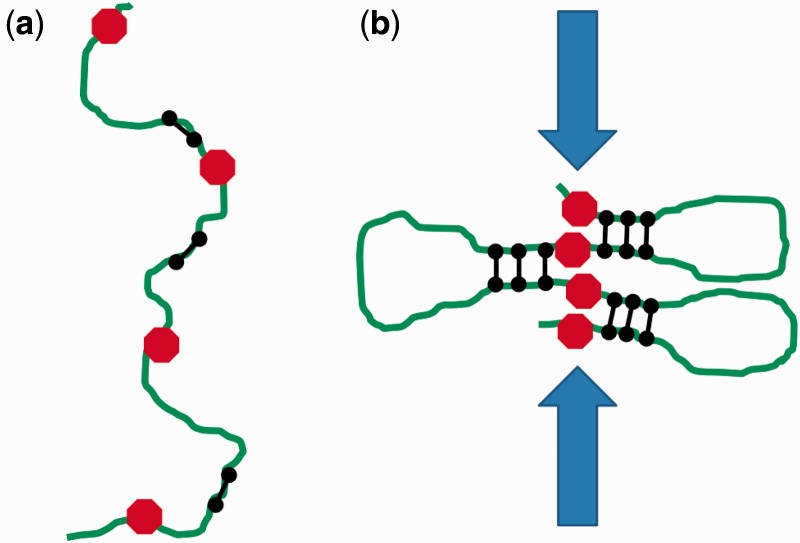
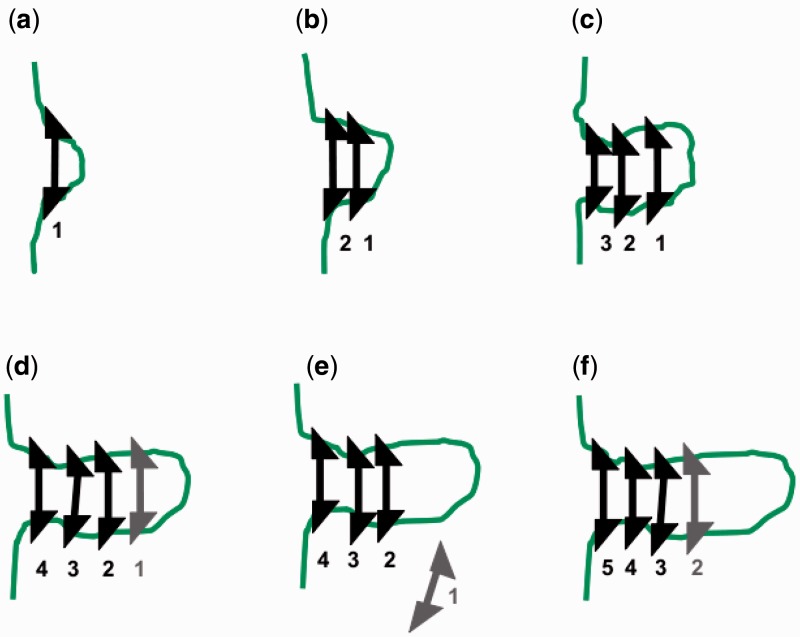
The long chromosomal DNAs of cells are organized into loop domains much larger in size than individual DNA-binding enzymes, presenting the question of how formation of such structures is controlled. We present a model for generation of defined chromosomal loops, based on molecular machines consisting of two coupled and oppositely directed motile elements which extrude loops from the double helix along which they translocate, while excluding one another sterically. If these machines do not dissociate from DNA (infinite processivity), a disordered, exponential steady-state distribution of small loops is obtained. However, if dissociation and rebinding of the machines occurs at a finite rate (finite processivity), the steady state qualitatively changes to a highly ordered 'stacked' configuration with suppressed fluctuations, organizing a single large, stable loop domain anchored by several machines. The size of the resulting domain can be simply regulated by boundary elements, which halt the progress of the extrusion machines. Possible realizations of these types of molecular machines are discussed, with a major focus on structural maintenance of chromosome complexes and also with discussion of type I restriction enzymes. This mechanism could explain the geometrically uniform folding of eukaryote mitotic chromosomes, through extrusion of pre-programmed loops and concomitant chromosome compaction.
Overview
The claims and statistics of this paper haven’t been checked yet.
Run the check — free, no account needed. It reads the open-access text and checks the sources it cites.
Integrity signals
Registry
Cites
Statistics
Figures
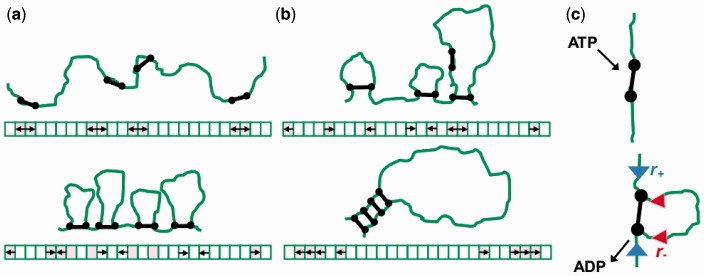
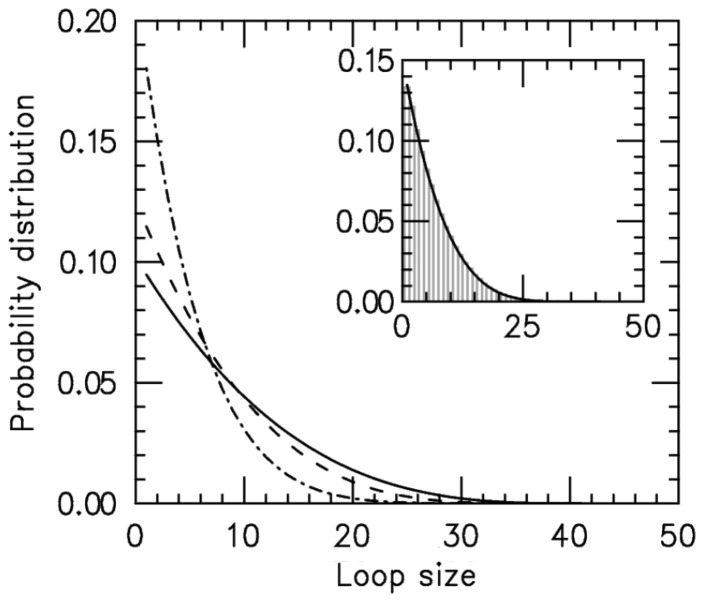
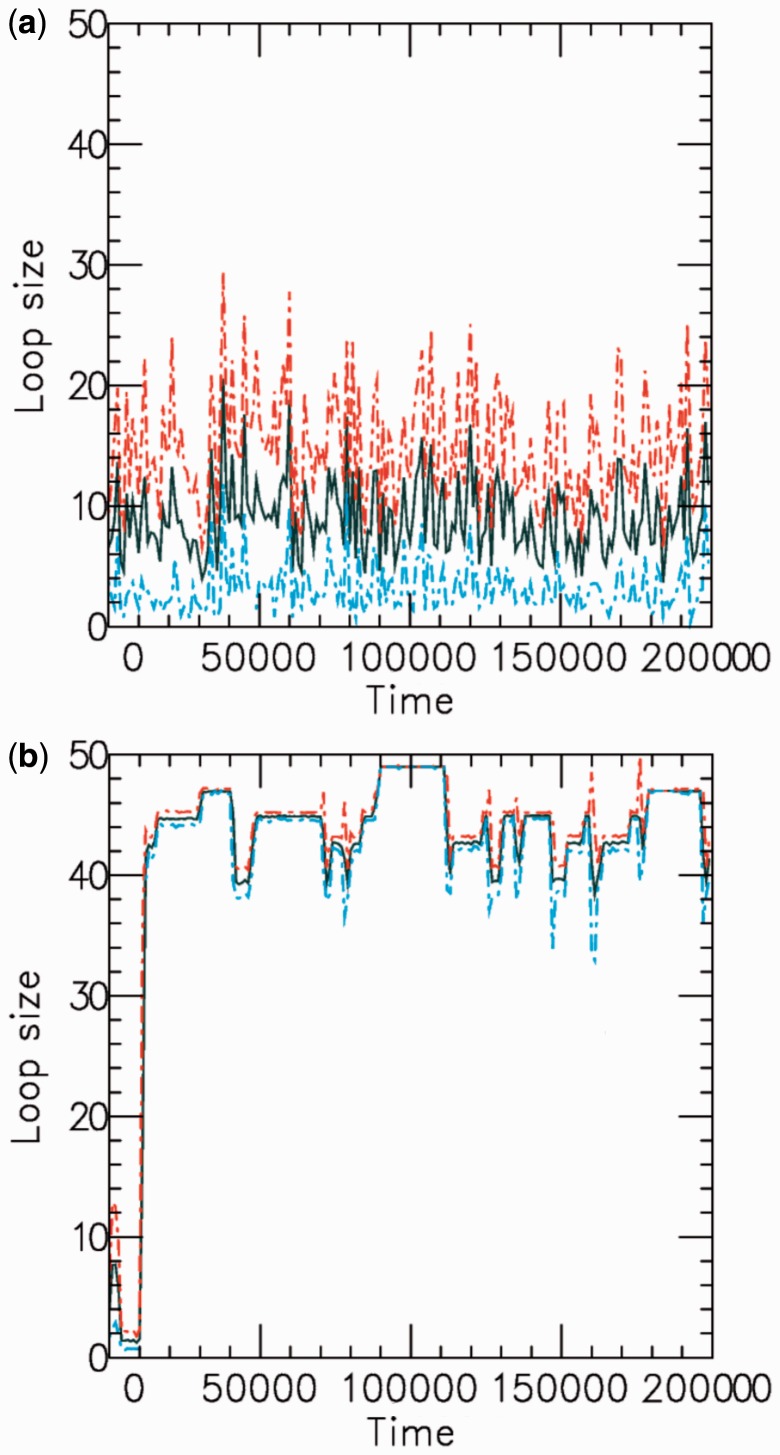
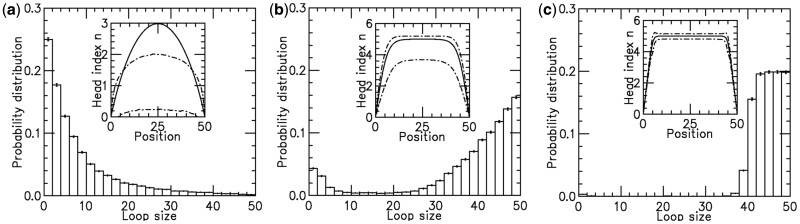
Verification
Claims the paper makes
The claims and statistics of this paper haven’t been checked yet.
Run the check — free, no account needed. It reads the open-access text and checks the sources it cites.
Claims other papers make about this one
Each is checked against this paper’s own text: does it say what the citing paper says it does?
In the citing paper
“this favors a linear tracking mechanism,47 known as the “loop extrusion model”.8,9,48”
From Recent evidence that TADs and chromatin loops are dynamic structures (2018) · cites this paper as [48]
Self-check
Percentages, sums and reported differences re-computed from the paper’s own numbers.
The self-check needs the paper’s full text.
Citations
Cites
Table of Integrals, Series, and Products
(1980) · Elsevier eBooks · doi:10.1016/c2013-0-10754-4 · Cited by 19,385
Exact stochastic simulation of coupled chemical reactions
Gillespie, D. T. (1977) · The Journal of Physical Chemistry · doi:10.1021/j100540a008 · Cited by 10,215
Scaling Concepts in Polymer Physics
de Gennes, P. G., & Witten, T. A. (1980) · Physics Today · doi:10.1063/1.2914118 · Cited by 9,348
Comprehensive Mapping of Long-Range Interactions Reveals Folding Principles of the Human Genome
Lieberman-Aiden, E., van Berkum, N. L., Williams, L., Imakaev, M., Ragoczy, T., Telling, A., Amit, I., Lajoie, B. R., Sabo, P. J., Dorschner, M. O., et al. (2009) · Science · doi:10.1126/science.1181369 · Cited by 8,898 · cited 1×
“Furthermore, analyses of DNA juxtapositions inside eukaryote nuclei reveal that loci up to tens of megabases apart along chromosomes are positioned near one another in the nucleus (9,10), with statistical properties inconsistent with randompolymer organization (10).”
BackgroundCapturing Chromosome Conformation
Dekker, J., Rippe, K., Dekker, M., & Kleckner, N. (2002) · Science · doi:10.1126/science.1067799 · Cited by 3,652
Mediator and cohesin connect gene expression and chromatin architecture
Kagey, M. H., Newman, J. J., Bilodeau, S., Zhan, Y., Orlando, D. A., van Berkum, N. L., Ebmeier, C. C., Goossens, J., Rahl, P. B., Levine, S. S., et al. (2010) · Nature · doi:10.1038/nature09380 · Cited by 1,939
Cohesin mediates transcriptional insulation by CCCTC-binding factor
Wendt, K. S., Yoshida, K., Itoh, T., Bando, M., Koch, B., Schirghuber, E., Tsutsumi, S., Nagae, G., Ishihara, K., Mishiro, T., et al. (2008) · Nature · doi:10.1038/nature06634 · Cited by 1,193 · cited 1×
“It is thought that ‘chromatin-bridging’ proteins (12) somehow stabilize these loop structures, but the processes by which sequence-defined chromatin loops are established and maintained are unknown.”
BackgroundChromosome territories – a functional nuclear landscape
Cremer, T., Cremer, M., Dietzel, S., Müller, S., Solovei, I. V., & Fakan, S. (2006) · Current Opinion in Cell Biology · doi:10.1016/j.ceb.2006.04.007 · Cited by 601 · cited 1×
“In eukaryote cells, interphase chromosomes in differentiated cells occupy distinct territories (8).”
BackgroundOno, T., Losada, A., Hirano, M., Myers, M., Neuwald, A. F., & Hirano, T. (2003) · Cell · doi:10.1016/s0092-8674(03)00724-4 · Cited by 588
A heterodimeric coiled-coil protein required for mitotic chromosome condensation in vitro.
Hirano, T., & Mitchison, T. (1994) · Cell · doi:10.1016/0092-8674(94)90254-2 · Cited by 559 · cited 1×
“Immuno-inactivation of condensin complexes in Xenopus egg extracts (an in vitro system capable of assembling mitotic chromosomes) (22), or siRNA depletion of even one subunit of condensin complexes (23,24) in tissue culture cells, causes defective mitotic chromosome condensation.”
Background
Research works printed but not linked: 2
- 2009, PHYS A, 389, 2997
- 1999, Cell, 98, 239:248
Cited by
Sorted by citations
Formation of chromosomal domains by loop extrusion
Fudenberg, G., Imakaev, M., Lu, C., Goloborodko, A., Abdennur, N., & Mirny, L. A. (2016) · Cell Reports · doi:10.1016/j.celrep.2016.04.085 · Cited by 2,003
Cohesin Loss Eliminates All Loop Domains
Rao, S. S. P., Huang, S.-C., Glenn St Hilaire, B., Engreitz, J. M., Perez, E. M., Kieffer-Kwon, K.-R., Sanborn, A. L., Johnstone, S. E., Bascom, G. D., Bochkov, I. D., et al. (2017) · Cell · doi:10.1016/j.cell.2017.09.026 · Cited by 1,883
“We (Sanborn et al., 2015) and others (Alipour and Marko, 2012; Fudenberg et al., 2016; Nasmyth, 2001) have hypothesized that the underlying physical process is the formation of loops by extrusion.”
BackgroundSanborn, A. L., Rao, S. S. P., Huang, S.-C., Durand, N. C., Huntley, M. H., Jewett, A. I., Bochkov, I. D., Chinnappan, D., Cutkosky, A., Li, J., et al. (2015) · Proceedings of the National Academy of Sciences · doi:10.1073/pnas.1518552112 · Cited by 1,730
Organizational principles of 3D genome architecture
Rowley, M. J., & Corces, V. G. (2018) · Nature Reviews Genetics · doi:10.1038/s41576-018-0060-8 · Cited by 1,171
Organization of the mitotic chromosome
Naumova, N., Imakaev, M., Fudenberg, G., Zhan, Y., Lajoie, B. R., Mirny, L. A., & Dekker, J. (2013) · Science · doi:10.1126/science.1236083 · Cited by 976
High-resolution TADs reveal DNA sequences underlying genome organization in flies
Ramírez, F., Bhardwaj, V., Arrigoni, L., Lam, K. C., Grüning, B. A., Villaveces, J. M., Habermann, B. H., Akhtar, A., & Manke, T. (2018) · Nature Communications · doi:10.1038/s41467-017-02525-w · Cited by 993
Wutz, G., Várnai, C., Nagasaka, K., Cisneros, D. A., Stocsits, R. R., Tang, W., Schoenfelder, S., Jessberger, G., Muhar, M., Hossain, M. J., et al. (2017) · The EMBO Journal · doi:10.15252/embj.201798004 · Cited by 864
“According to this idea, two distal chromosomal elements would be brought into direct proximity by a loop extrusion factor such as cohesin which would processively extrude a chromatin loop (Riggs, 1990; Nasmyth, 2001; Alipour & Marko, 2012; Gruber, 2014; Sanborn et al, 2015; Fudenberg et al, 2016).”
BackgroundReal-time imaging of DNA loop extrusion by condensin
Ganji, M., Shaltiel, I. A., Bisht, S., Kim, E., Kalichava, A., Haering, C. H., & Dekker, C. (2018) · Science · doi:10.1126/science.aar7831 · Cited by 793
The 3D Genome as Moderator of Chromosomal Communication
Dekker, J., & Mirny, L. (2016) · Cell · doi:10.1016/j.cell.2016.02.007 · Cited by 937
“Alipour and Marko have introduced a 1D model of multiple loop-extruding factors binding to DNA, which demonstrated that exchanging loop-extruding factors can form stacked configurations where a single loop is stabilized by multiple factors (Alipour and Marko, 2012).”
InfluentialThe cohesin release factor WAPL restricts chromatin loop extension
Haarhuis, J. H. I., van der Weide, R. H., Blomen, V. A., Yáñez-Cuna, J. O., Amendola, M., van Ruiten, M. S., Krijger, P. H. L., Teunissen, H., Medema, R. H., van Steensel, B., et al. (2017) · Cell · doi:10.1016/j.cell.2017.04.013 · Cited by 793
DNA loop extrusion by human cohesin
Davidson, I. F., Bauer, B., Goetz, D., Tang, W., Wutz, G., & Peters, J.-M. (2019) · Science · doi:10.1126/science.aaz3418 · Cited by 863
Chromatin Domains: The Unit of Chromosome Organization
Dixon, J. R., Gorkin, D. U., & Ren, B. (2016) · Molecular Cell · doi:10.1016/j.molcel.2016.05.018 · Cited by 811
A pathway for mitotic chromosome formation
Gibcus, J. H., Samejima, K., Goloborodko, A. A., Samejima, I., Naumova, N., Nuebler, J., Kanemaki, M. T., Xie, L., Paulson, J. R., Earnshaw, W. C., et al. (2018) · Science · doi:10.1126/science.aao6135 · Cited by 744
“Loop extrusion has been hypothesized as amechanism of chromosome compaction (69, 70) and most recently examined by simulations (25, 48, 71) and supported by single-molecule studies (72).”
ResultHuman cohesin compacts DNA by loop extrusion
Kim, Y., Shi, Z., Zhang, H., Finkelstein, I. J., & Yu, H. (2019) · Science · doi:10.1126/science.aaz4475 · Cited by 701
Active matter at the interface between materials science and cell biology
Needleman, D. J., & Dogic, Z. (2017) · Nature Reviews Materials · doi:10.1038/natrevmats.2017.48 · Cited by 647
Chromatin organization by an interplay of loop extrusion and compartmental segregation
Nuebler, J., Fudenberg, G., Imakaev, M., Abdennur, N. A., & Mirny, L. A. (2018) · Proceedings of the National Academy of Sciences · doi:10.1073/pnas.1717730115 · Cited by 638
The Energetics and Physiological Impact of Cohesin Extrusion
Vian, L., Pękowska, A., Rao, S. S. P., Kieffer-Kwon, K.-R., Jung, S., Baranello, L., Huang, S.-C., El Khattabi, L., Dose, M., Pruett, N., et al. (2018) · Cell · doi:10.1016/j.cell.2018.03.072 · Cited by 581
SMC complexes: from DNA to chromosomes
Uhlmann, F. (2016) · Nature Reviews Molecular Cell Biology · doi:10.1038/nrm.2016.30 · Cited by 536
Transcription factors and 3D genome conformation in cell-fate decisions
Stadhouders, R., Filion, G. J. P., & Graf, T. (2019) · Nature · doi:10.1038/s41586-019-1182-7 · Cited by 530
Genome folding through loop extrusion by SMC complexes
Davidson, I. F., & Peters, J. (2021) · Nature Reviews Molecular Cell Biology · doi:10.1038/s41580-021-00349-7 · Cited by 531
CTCF and Cohesin in Genome Folding and Transcriptional Gene Regulation
Merkenschlager, M., & Nora, E. P. (2016) · Annual Review of Genomics and Human Genetics · doi:10.1146/annurev-genom-083115-022339 · Cited by 528
The structural basis for cohesin–CTCF-anchored loops
Li, Y., Haarhuis, J. H. I., Sedeño Cacciatore, Á., Oldenkamp, R., van Ruiten, M. S., Willems, L., Teunissen, H., Muir, K. W., de Wit, E., Rowland, B. D., et al. (2020) · Nature · doi:10.1038/s41586-019-1910-z · Cited by 459
Condensin-based chromosome organization from bacteria to vertebrates
Hirano, T. (2016) · Cell · doi:10.1016/j.cell.2016.01.033 · Cited by 389
“Random crosslinking of a chromatin fiber would result in the formation of a spherical mass, and specific mechanisms need to be in place to explain the linear organization of eukaryotic chromosomes (Alipour and Marko, 2012).”
Genome Organization Drives Chromosome Fragility
Canela, A., Maman, Y., Jung, S., Wong, N., Callen, E., Day, A., Kieffer-Kwon, K.-R., Pekowska, A., Zhang, H., Rao, S. S. P., et al. (2017) · Cell · doi:10.1016/j.cell.2017.06.034 · Cited by 383
Zhang, Y., Li, T., Preißl, S., Amaral, M. L., Grinstein, J. D., Farah, E. N., Destici, E., Qiu, Y., Hu, R., Lee, A. Y., et al. (2019) · Nature Genetics · doi:10.1038/s41588-019-0479-7 · Cited by 384
On the existence and functionality of topologically associating domains
Beagan, J. A., & Phillips‐Cremins, J. E. (2020) · Nature Genetics · doi:10.1038/s41588-019-0561-1 · Cited by 381
Bacillus subtilis SMC complexes juxtapose chromosome arms as they travel from origin to terminus
Wang, X., Brandão, H. B., Le, T. B. K., Laub, M. T., & Rudner, D. Z. (2017) · Science · doi:10.1126/science.aai8982 · Cited by 293
Multiscale Structuring of the E. coli Chromosome by Nucleoid-Associated and Condensin Proteins
Lioy, V. S., Cournac, A., Marbouty, M., Duigou, S., Mozziconacci, J., Espéli, O., Boccard, F., & Koszul, R. (2018) · Cell · doi:10.1016/j.cell.2017.12.027 · Cited by 362
“, 2015), DNA loop extrusion, a model by which molecular motors actively generate loops (Alipour and Marko, 2012; Dekker and Mirny, 2016), could also account for the MukBEF-dependent formation of dynamic long-range cis contacts along the E.”
Organization of Chromosomal DNA by SMC Complexes
Yatskevich, S., Rhodes, J., & Nasmyth, K. (2019) · Annual Review of Genetics · doi:10.1146/annurev-genet-112618-043633 · Cited by 349
Regulation of disease-associated gene expression in the 3D genome
Krijger, P. H. L., & de Laat, W. L. (2016) · Nature Reviews Molecular Cell Biology · doi:10.1038/nrm.2016.138 · Cited by 332
“On the basis of these findings, it has now been suggested that loop extrusion 95 underlies TAD formation 93,96 (reviewed in REF.”
Compaction and segregation of sister chromatids via active loop extrusion
Goloborodko, A. A., Imakaev, M., Marko, J. F., & Mirny, L. A. (2016) · eLife · doi:10.7554/elife.14864 · Cited by 317
Self-citationDeletion of DXZ4 on the human inactive X chromosome alters higher-order genome architecture
Darrow, E. M., Huntley, M. H., Dudchenko, O., Stamenova, E. K., Durand, N. C., Sun, Z., Huang, S.-C., Sanborn, A. L., Machol, I., Shamim, M., et al. (2016) · Proceedings of the National Academy of Sciences · doi:10.1073/pnas.1609643113 · Cited by 276
Chromosome Compaction by Active Loop Extrusion
Goloborodko, A., Marko, J., & Mirny, L. (2016) · Biophysical Journal · doi:10.1016/j.bpj.2016.02.041 · Cited by 290
Self-citationCTCF: making the right connectionsPreprint
Ghirlando, R., & Felsenfeld, G. (2016) · Genes & Development · doi:10.1101/gad.277863.116 · Cited by 302
“In earlier work, Alipour and Marko (2012) had proposed an extrusion model to explain how condensin-dependent loop domains could be formed on mitotic chromosomes.”
BackgroundEmerging Evidence of Chromosome Folding by Loop ExtrusionPreprint
Fudenberg, G., Abdennur, N. A., Imakaev, M., Goloborodko, A. A., & Mirny, L. A. (2017) · Cold Spring Harbor Symposia on Quantitative Biology · doi:10.1101/sqb.2017.82.034710 · Cited by 298
YY1 and CTCF orchestrate a 3D chromatin looping switch during early neural lineage commitment
Beagan, J. A., Duong, M. T., Titus, K. R., Zhou, L., Cao, Z., Ma, J., Lachanski, C. V., Gillis, D. R., & Phillips-Cremins, J. E. (2017) · Genome Research · doi:10.1101/gr.215160.116 · Cited by 299
“Marko, Mirny, Lieberman-Aiden and colleagues have posited that a chromatin molecular motor, such as cohesin/condensin, might extrude chromatin until blocked by architectural proteins, resulting in looped out chromatin (Alipour and Marko 2012; Sanborn et al. 2015; Fudenberg et al. 2016).”
The condensin complex is a mechanochemical motor that translocates along DNA
Terakawa, T., Bisht, S., Eeftens, J., Dekker, C., Haering, C., & Greene, E. (2017) · Science · doi:10.1126/science.aan6516 · Cited by 269
Halverson, J. D., Smrek, J., Kremer, K., & Grosberg, A. Y. (2014) · Reports on Progress in Physics · doi:10.1088/0034-4885/77/2/022601 · Cited by 295
Distinct Classes of Chromatin Loops Revealed by Deletion of an RNA-Binding Region in CTCF
Hansen, A. S., Hsieh, T.-H. S., Cattoglio, C., Pustova, I., Saldaña-Meyer, R., Reinberg, D., Darzacq, X., & Tjian, R. (2019) · Molecular Cell · doi:10.1016/j.molcel.2019.07.039 · Cited by 279
Recent evidence that TADs and chromatin loops are dynamic structures
Hansen, A. S., Cattoglio, C., Darzacq, X., & Tjian, R. (2018) · Nucleus · doi:10.1080/19491034.2017.1389365 · Cited by 266
“Since cohesin can remain topologically engaged and slide on both naked DNA and chromatin,(45,46) this favors a linear tracking mechanism,(47) known as the “loop extrusion model”.(8,9,48) In this model, cohesin spontaneously engages chromatin and begins extruding a DNA loop.”
BackgroundChromosome organization in bacteria: mechanistic insights into genome structure and function
Dame, R. T., Rashid, F. M., & Grainger, D. C. (2019) · Nature Reviews Genetics · doi:10.1038/s41576-019-0185-4 · Cited by 238
Transcription shapes 3D chromatin organization by interacting with loop extrusion
Banigan, E. J., Tang, W., van den Berg, A. A., Stocsits, R. R., Wutz, G., Brandão, H. B., Busslinger, G. A., Peters, J., & Mirny, L. A. (2023) · Proceedings of the National Academy of Sciences · doi:10.1073/pnas.2210480120 · Cited by 238
Condensin promotes the juxtaposition of DNA flanking its loading site in Bacillus subtilisPreprint
Wang, X., Le, T. B. K., Lajoie, B. R., Dekker, J., Laub, M. T., & Rudner, D. Z. (2015) · Genes & Development · doi:10.1101/gad.265876.115 · Cited by 236
Two major mechanisms of chromosome organization
Mirny, L. A., Imakaev, M., & Abdennur, N. A. (2019) · Current Opinion in Cell Biology · doi:10.1016/j.ceb.2019.05.001 · Cited by 232
“Loop extrusion is a mechanism that has been conjectured several times in review articles since the 1990s [21–23], but it remained unexplored until 2012 [24].”
BackgroundCryo-EM structure of the human cohesin-NIPBL-DNA complex
Shi, Z., Gao, H., Bai, X., & Yu, H. (2020) · Science · doi:10.1126/science.abb0981 · Cited by 228
Oláh, A., Belágyi, T., Pótó, L., Romics, L., & Bengmark, S. (2007) · PubMed · Cited by 223
Catarino, R. R., & Stark, A. (2018) · Genes & Development · doi:10.1101/gad.310367.117 · Cited by 215
Cohesin and condensin extrude DNA loops in a cell cycle-dependent manner
Golfier, S., Quail, T., Kimurâ, H., & Jan Brugués, A. (2020) · eLife · doi:10.7554/elife.53885 · Cited by 201
“SMCs are thought to organize DNA by actively extruding DNA loops (Rao et al., 2014; Fudenberg et al., 2016; Alipour and Marko, 2012; Sanborn et al., 2015).”
BackgroundA CTCF Code for 3D Genome Architecture
Nichols, M. H., & Corces, V. G. (2015) · Cell · doi:10.1016/j.cell.2015.07.053 · Cited by 195
“This is supported by results showing that cohesin is able to extrude a loop, perhaps using energy from its ATPase activity (Alipour and Marko, 2012; Strick et al., 2004).”
ResultA quantitative map of human Condensins provides new insights into mitotic chromosome architecture
Walther, N., Hossain, M. J., Politi, A., Koch, B., Kueblbeck, M., Ødegård-Fougner, Ø., Lampe, M., & Ellenberg, J. (2018) · bioRxiv · doi:10.1083/jcb.201801048 · Cited by 181
“, 2011) and thereby introduce loops in the DNA molecule, which, according to the loop-extrusion theory (Alipour and Marko, 2012; Goloborodko et al., 2016A,B; Nasmyth, 2001) and very recent evidence in vitro (Ganji et al.”
BackgroundHuang, H., Zhu, Q., Jussila, A., Han, Y., Bintu, B., Kern, C., Conte, M., Zhang, Y., Bianco, S., Chiariello, A. M., et al. (2021) · Nature Genetics · doi:10.1038/s41588-021-00863-6 · Cited by 187
Sequence-based modeling of three-dimensional genome architecture from kilobase to chromosome scale
Zhou, J. (2022) · Nature Genetics · doi:10.1038/s41588-022-01065-4 · Cited by 177
“The chromosomes were divided into the training set (all chromosomes except for chr8, 9 and 10), the validation set (chr8) and the test set (chr9, 10).”
BackgroundMethodHalverson, J., Smrek, J., Kremer, K., & Grosberg, A. Y. (2014) · Max Planck Digital Library · Cited by 181
Thiecke, M. J., Wutz, G., Muhar, M., Tang, W., Bevan, S., Malysheva, V., Stocsits, R., Neumann, T., Zuber, J., Fraser, P., et al. (2020) · Cell Reports · doi:10.1016/j.celrep.2020.107929 · Cited by 177
Cohesins and condensins orchestrate the 4D dynamics of yeast chromosomes during the cell cycle
Lazar‐Stefanita, L., Scolari, V. F., Mercy, G., Muller, H., Guérin, T. M., Thierry, A., Mozziconacci, J., & Koszul, R. (2017) · The EMBO Journal · doi:10.15252/embj.201797342 · Cited by 177
“Yeast chromosome 12 could therefore prove a convenient model to study the action of loop extrusion mechanism (Alipour & Marko, 2012).”
Direct observation of a condensate effect on super-enhancer controlled gene bursting
Du, M., Stitzinger, S. H., Spille, J.-H., Cho, W., Lee, C., Hijaz, M., Quintana, A., & Cissé, I. I. (2024) · Cell · doi:10.1016/j.cell.2023.12.005 · Cited by 176
“Then, cohesin is also proposed to bring distal genomic regions through a dynamic process called loop extrusion 56,57 with CTCF acting as a barrier, 58 but we have no direct evidence for this in this study except that deleting CTCF-binding sites or depleting cohesin would both affect the…”
Human Condensin I and II Drive Extensive ATP-Dependent Compaction of Nucleosome-Bound DNA
Kong, M., Cutts, E., Pan, D., Beuron, F., Kaliyappan, T., Xue, C., Morris, E. P., Musacchio, A., Vannini, A., & Greene, E. C. (2020) · Molecular Cell · doi:10.1016/j.molcel.2020.04.026 · Cited by 162
Towards a Unified Model of SMC Complex Function
Hassler, M., Shaltiël, I. A., & Haering, C. H. (2018) · Current Biology · doi:10.1016/j.cub.2018.08.034 · Cited by 161
“Most theoretical models of SMC-driven loop extrusion are based on the idea that one loop-extruding unit consists of two tethered DNA-binding modules that translocate along the DNA in opposite directions [16,18,20,21].”
Loop extrusion: theory meets single-molecule experiments
Banigan, E. J., & Mirny, L. A. (2020) · Current Opinion in Cell Biology · doi:10.1016/j.ceb.2020.04.011 · Cited by 169
Structural Basis for a Safety-Belt Mechanism That Anchors Condensin to Chromosomes
Kschonsak, M., Merkel, F., Bisht, S., Metz, J., Rybin, V., Hassler, M., & Haering, C. H. (2017) · Cell · doi:10.1016/j.cell.2017.09.008 · Cited by 152
“…Terekawa et al., 2017) would provide an elegant solution for how condensin complexes can generate the large-sized chromatin loops that are thought to constitute the basic organizational principle of higher-order chromosome architecture (Alipour and Marko, 2012; Nasmyth, 2001; Naumova et al., 2013).”
MCM complexes are barriers that restrict cohesin-mediated loop extrusion
Dequeker, B., Scherr, M. J., Brandão, H. B., Gassler, J., Powell, S. T., Gáspár, I., Flyamer, I. M., Lalic, A., Tang, W., Stocsits, R. R., et al. (2020) · Nature · doi:10.1038/s41586-022-04730-0 · Cited by 132
Chromosome organization by one-sided and two-sided loop extrusion
Banigan, E. J., van den Berg, A. A., Brandão, H. B., Marko, J. F., & Mirny, L. A. (2020) · eLife · doi:10.7554/elife.53558 · Cited by 146
Self-citationGenome control by SMC complexes
Hoencamp, C., & Rowland, B. D. (2023) · Nature Reviews Molecular Cell Biology · doi:10.1038/s41580-023-00609-8 · Cited by 147
RNA polymerases as moving barriers to condensin loop extrusion
Brandão, H. B., Paul, P., van den Berg, A. A., Rudner, D. Z., Wang, X., & Mirny, L. A. (2019) · Proceedings of the National Academy of Sciences · doi:10.1073/pnas.1907009116 · Cited by 143
A folded conformation of MukBEF and cohesin
Bürmann, F., Lee, B., Than, T., Sinn, L. R., O’Reilly, F. J., Yatskevich, S., Rappsilber, J., Hu, B., Nasmyth, K., & Löwe, J. (2019) · Nature Structural & Molecular Biology · doi:10.1038/s41594-019-0196-z · Cited by 142
“These findings support the notion that SMC-kleisin complexes are motor proteins that use the ATPase activity of their SMC subunits to track along DNA, and some, by doing so, might actively organize chromosomes by building up loops (Alipour and Marko, 2012; Marsden and Laemmli, 1979; Nasmyth, 2001).”
Wilhelm, L., Burmann, F., Minnen, A., Shin, H.-C., Toseland, C., Oh, B., & Gruber, S. (2015) · eLife · doi:10.7554/elife.06659 · Cited by 139
SMC complexes differentially compact mitotic chromosomes according to genomic context
Schalbetter, S. A., Goloborodko, A. A., Fudenberg, G., Belton, J.-M., Miles, C., Yu, M., Dekker, J., Mirny, L. A., & Baxter, J. (2017) · Nature Cell Biology · doi:10.1038/ncb3594 · Cited by 137
Liquid chromatin Hi-C characterizes compartment-dependent chromatin interaction dynamics
Belaghzal, H., Borrman, T. M., Stephens, A. D., Lafontaine, D. L. J., Venev, S. V., Weng, Z., Marko, J. F., & Dekker, J. (2021) · Nature Genetics · doi:10.1038/s41588-021-00784-4 · Cited by 136
Self-citationMolecular Basis for SMC Rod Formation and Its Dissolution upon DNA Binding
Soh, Y., Bürmann, F., Shin, H., Oda, T., Jin, K. S., Toseland, C. P., Kim, C., Lee, H., Kim, S. J., Kong, M.-S., et al. (2014) · Molecular Cell · doi:10.1016/j.molcel.2014.11.023 · Cited by 138
“The former could be related to processive extrusion of DNA loops from the Smc-ScpAB ring (Alipour and Marko, 2012; Nasmyth 2001), whereas the latter could create a topological interaction between circular DNA and Smc-ScpAB, as seen with cohesin and condensin, starting from a DNA loop.”
DNA-loop extruding condensin complexes can traverse one another
Kim, E., Kerssemakers, J., Shaltiel, I. A., Haering, C., & Dekker, C. (2019) · Nature · doi:10.1038/s41586-020-2067-5 · Cited by 145
Radiation-induced DNA damage and repair effects on 3D genome organization
Sanders, J. T., Freeman, T. F., Xu, Y., Golloshi, R., Stallard, M. A., Hill, A. M., San Martin, R., Balajee, A. S., & McCord, R. P. (2020) · Nature Communications · doi:10.1038/s41467-020-20047-w · Cited by 134
Principles of meiotic chromosome assembly revealed in S. cerevisiae
Schalbetter, S. A., Fudenberg, G., Baxter, J., Pollard, K. S., & Neale, M. J. (2019) · Nature Communications · doi:10.1038/s41467-019-12629-0 · Cited by 140
Nonequilibrium Chromosome Looping via Molecular Slip Links
Brackley, C. A., Johnson, J., Michieletto, D., Morozov, A. N., Nicodemi, M., Cook, P. R., & Marenduzzo, D. (2017) · Physical Review Letters · doi:10.1103/physrevlett.119.138101 · Cited by 131
Grosberg, A. Y. (2013) · Soft Matter · doi:10.1039/c3sm52805g · Cited by 133
Cohesin-mediated loop anchors confine the locations of human replication origins
Emerson, D. J., Zhao, P. A., Cook, A. L., Barnett, R. J., Klein, K. N., Saulebekova, D., Ge, C., Zhou, L., Simándi, Z., Minsk, M. K., et al. (2022) · Nature · doi:10.1038/s41586-022-04803-0 · Cited by 137
CTCF shapes chromatin structure and gene expression in health and disease
Dehingia, B., Milewska, M., Janowski, M., & Pękowska, A. (2022) · EMBO Reports · doi:10.15252/embr.202255146 · Cited by 141
“Figure 1 . hinted at a one-dimensional (1D) loop extrusion as the most likely mechanism underlying TAD formation (Nasmyth, 2001; Alipour & Marko, 2012; Dekker & Mirny, 2016).”
The chromosome folding problem and how cells solve it
Dekker, J., & Mirny, L. A. (2024) · Cell · doi:10.1016/j.cell.2024.10.026 · Cited by 112
The SMC condensin complex is required for origin segregation in Bacillus subtilis
Wang, X.-D., Tang, O., Riley, E. P., & Rudner, D. (2014) · Current Biology · doi:10.1016/j.cub.2013.11.050 · Cited by 121
“This so-called lengthwise condensation [23, 24] supplemented by the parABS partitioning system could overcome factors that maintain origin cohesion [12] and promote efficient origin individualization and segregation.”
Marko, J., Rios, P. D. L., Barducci, A., & Gruber, S. (2018) · bioRxiv · doi:10.1093/nar/gkz497 · Cited by 116
“SMC complexes are thought to be involved in a number of DNA-organizing processes, including tethering of the two halves of bacterial chromosomes together (13–17), DNA-sequence-nonspecific compaction of chromosomes via crowding together of DNA loops (3,18,19), and also the bringing together of specific signal sequences…”
BackgroundInfluentialSelf-citationMitotic Chromosome Mechanics: How Cells Segregate Their Genome
Batty, P., & Gerlich, D. W. (2019) · Trends in Cell Biology · doi:10.1016/j.tcb.2019.05.007 · Cited by 121
Pelham‐Webb, B., Polyzos, A., Wojenski, L., Kloetgen, A., Li, J., Giammartino, D. C. D., Sakellaropoulos, T., Tsirigos, A., Core, L. J., & Apostolou, E. (2021) · Molecular Cell · doi:10.1016/j.molcel.2021.02.032 · Cited by 121
“, 2019), most of our Hi-C detected chromatin contacts were bound by CTCF and cohesin and their size was inversely correlated with the rate of recovery, further supporting that CTCF/cohesin-mediated loop extrusion (Alipour and Marko, 2012; Davidson et al., 2019; Fudenberg et al., 2016; Golfier et al., 2020; Kim et al.,…”
BackgroundResultPrinciples of Chromosome Architecture Revealed by Hi-C
Eagen, K. P. (2018) · Trends in Biochemical Sciences · doi:10.1016/j.tibs.2018.03.006 · Cited by 120
“This conceptual model could be recapitulated mathematically and is referred to as loop extrusion [33].”
BackgroundLooping the Genome with SMC Complexes
Kim, E., Barth, R., & Dekker, C. (2023) · Annual Review of Biochemistry · doi:10.1146/annurev-biochem-032620-110506 · Cited by 96
“…mitotic chromosome condensation early on (6, 22, 23), a novel spur of interest in the loop-extrusion hypothesis arose when it appeared that the elongated mitotic chromosome structure and segregation of the newly replicated chromosomes could be elegantly recapitulated with simulations (24, 25).”
G-quadruplexes associated with R-loops promote CTCF binding
Wulfridge, P., Yan, Q., Rell, N., Doherty, J. K., Jacobson, S., Offley, S. R., Deliard, S., Feng, K., Phillips‐Cremins, J. E., Gardini, A., et al. (2023) · Molecular Cell · doi:10.1016/j.molcel.2023.07.009 · Cited by 118
Cryo-EM structures of holo condensin reveal a subunit flip-flop mechanism
Lee, B., Merkel, F., Allegretti, M., Hassler, M., Cawood, C., Lecomte, L., O’Reilly, F. J., Sinn, L. R., Gutiérrez-Escribano, P., Kschonsak, M., et al. (2020) · Nature Structural & Molecular Biology · doi:10.1038/s41594-020-0457-x · Cited by 114
The role of chromatin loop extrusion in antibody diversification
Zhang, Y., Zhang, X., Dai, H., Hu, H., & Alt, F. W. (2022) · Nature reviews. Immunology · doi:10.1038/s41577-022-00679-3 · Cited by 106
Račko, D., Benedetti, F., Dorier, J., & Stasiak, A. (2017) · Nucleic Acids Research · doi:10.1093/nar/gkx1123 · Cited by 120
“These models combine earlier models proposed for condensin action during mitotic chromosome condensation (19,20) with more recently established facts that such chromosomal proteins as CTCF and cohesin localize at borders of TADs (2,21,22).”
BackgroundOrganization of the Escherichia coli Chromosome by a MukBEF Axial Core
Mäkelä, J., & Sherratt, D. (2020) · Molecules and Cells · doi:10.1016/j.molcel.2020.02.003 · Cited by 90
Mechanisms of Chromosome Folding and Nuclear Organization: Their Interplay and Open QuestionsPreprint
Mirny, L. A., & Dekker, J. (2021) · Cold Spring Harbor Perspectives in Biology · doi:10.1101/cshperspect.a040147 · Cited by 111
CTCF as a boundary factor for cohesin-mediated loop extrusion: evidence for a multi-step mechanism
Hansen, A. S. (2020) · Nucleus · doi:10.1080/19491034.2020.1782024 · Cited by 101
Popay, T. M., & Dixon, J. R. (2022) · Journal of Biological Chemistry · doi:10.1016/j.jbc.2022.102117 · Cited by 94
“The loop extrusion model, albeit without regard to enhancer function, was proposed by Nasmyth (84), and again by Alipour and Marko (85), as a mode of action for the ring-like, condensin complex.”
BackgroundRibosomal DNA and the nucleolus in the context of genome organization
Potapova, T., & Gerton, J. L. (2019) · Chromosome Research · doi:10.1007/s10577-018-9600-5 · Cited by 103
Scc2/Nipbl hops between chromosomal cohesin rings after loading
Rhodes, J., Mazza, D., Nasmyth, K., & Uphoff, S. (2017) · eLife · doi:10.7554/elife.30000 · Cited by 102
Rosin, L. F., Nguyen, S. C., & Joyce, E. F. (2018) · PLoS Genetics · doi:10.1371/journal.pgen.1007393 · Cited by 98
DNA-loop-extruding SMC complexes can traverse one another in vivo
Brandão, H. B., Ren, Z., Karaboja, X., Mirny, L. A., & Wang, X. (2021) · Nature Structural & Molecular Biology · doi:10.1038/s41594-021-00626-1 · Cited by 90
“Similar to previous work, we first considered models involving only blocking 13,22,30 , then extended the model to include a facilitated unloading of blocked SMC complexes.”
BackgroundMethodLarge DNA Methylation Nadirs Anchor Chromatin Loops Maintaining Hematopoietic Stem Cell Identity
Zhang, X., Jeong, M., Huang, X., Wang, X. Q. D., Wang, X., Zhou, W., Shamim, M. S., Gore, H., Himadewi, P., Liu, Y., et al. (2020) · Molecular Cell · doi:10.1016/j.molcel.2020.04.018 · Cited by 95
Madsen, J. G. S., Madsen, M. S., Rauch, A., Traynor, S., Hauwaert, E. L. V., Haakonsson, A. K., Javierre, B. M., Hyldahl, M., Fraser, P., & Mandrup, S. (2020) · Nature Genetics · doi:10.1038/s41588-020-0709-z · Cited by 97
Shaping mitotic chromosomes: From classical concepts to molecular mechanisms
Kschonsak, M., & Haering, C. H. (2015) · BioEssays · doi:10.1002/bies.201500020 · Cited by 93
“It might, for example, be conceivable that condensin complexes were able to track along the chromatin fiber while holding on to their original binding sites and thereby protrude a loop of chromatin [82, 83].”
BackgroundSMC Complexes: Universal DNA Looping Machines with Distinct Regulators
van Ruiten, M. S., & Rowland, B. D. (2018) · Trends in Genetics · doi:10.1016/j.tig.2018.03.003 · Cited by 86
Topology in soft and biological matter
Tubiana, L., Alexander, G. P., Barbensi, A., Buck, D., Cartwright, J. H. E., Chwastyk, M., Cieplak, M., Coluzza, I., Čopar, S., Craik, D. J., et al. (2024) · Physics Reports · doi:10.1016/j.physrep.2024.04.002 · Cited by 102
Metadata
- Authors
- Alipour, E., & Marko, J. F.
- Affiliations
- UConn Health (US)
- Northwestern University (US)
- Corresponding author
- Alipour, E.
- Marko, J. F.
- Venue
- Nucleic Acids Research
- Publisher
- Oxford University Press (OUP)
- Published
- 2012-10-15
- Volume
- 40
- Issue
- 22
- Pages
- 11202-11212
- ISSN
- 0305-1048 (ISSN-L)
- 1362-4962
- PMC
- PMC3526278
- OpenAlex
- W2100148696
- Cited by
- 540
- References
- 48
- Citations by year
- 2026: 26 · 2025: 45 · 2024: 44 · 2023: 46 · 2022: 38 · 2021: 55 · 2020: 71 · 2019: 61 · 2018: 54 · 2017: 52 · 2016: 27 · 2015: 10 · 2014: 7 · 2013: 3
- FWCI
- 2.56
- Type
- journal article
- Language
- en
- Open access
- gold
- doi.org
- Licence
- Locations
- Nucleic Acids Research (publishedVersion, cc-by-nc)
- Europe PMC (PubMed Central) (publishedVersion, cc-by-nc)
- PubMed Central (publishedVersion, cc-by-nc)
- PubMed (publishedVersion)
- HighWire Press Open Archive (submittedVersion)
- Funders
- National Science Foundation (1206868, 1022117, 0715099)
- National Institutes of Health (MCB-1022117, DMR-1206868)
- National Cancer Institute (U54CA143869)
- Division of Materials Research (DMR-1206868)
- Topics
- Life Sciences › Biochemistry, Genetics and Molecular Biology › Molecular Biology › Genomics and Chromatin Dynamics
- Life Sciences › Biochemistry, Genetics and Molecular Biology › Molecular Biology › Diffusion and Search Dynamics
- Life Sciences › Biochemistry, Genetics and Molecular Biology › Molecular Biology › DNA Repair Mechanisms
- Keywords
- DNA loop extrusion, self-organization, molecular machines, DNA translocation, processivity, loop size distribution, chromosome compaction, type I restriction enzymes, boundary elements
- MeSH terms
- Chromosomes, Computer Simulation, DNA, Enzymes, Models, Genetic, Nucleic Acid Conformation
About these checks
Registry, retraction, Cites and statistics results are computed, not judged, with one exception: a printed reference that no index lists is read once by a model before it counts as a citation error. Claims are extracted by a model and kept only when their quote appears verbatim in the text; each cited source is then checked, with a model’s help, for whether it says what the claim relies on. Those verdicts can be wrong — read the claim’s quote and the cited source before relying on one.
Statistics and arithmetic are recomputed, not judged.
Confidence bands are shown only for fields calibrated on our annotated test set. None is calibrated yet, so no band is shown.
What counts as a claim ›How we measure confidence ›How we check this ›
Are you an author, or do you see a problem with this page? Request a review
