

SLICE: determining cell differentiation and lineage based on single cell entropy
Open accessThe DOI matches its Crossref record; 34 of the 34 references it cites were found in a registry or an index.
Abstract
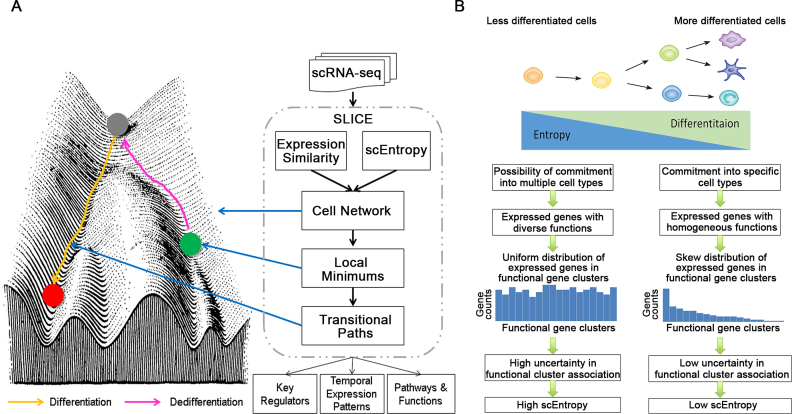
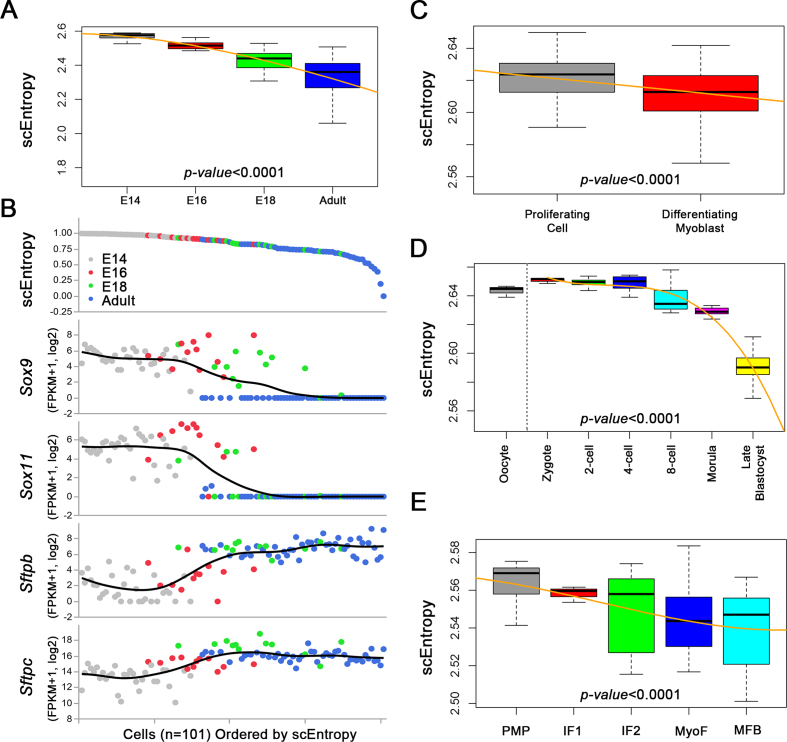
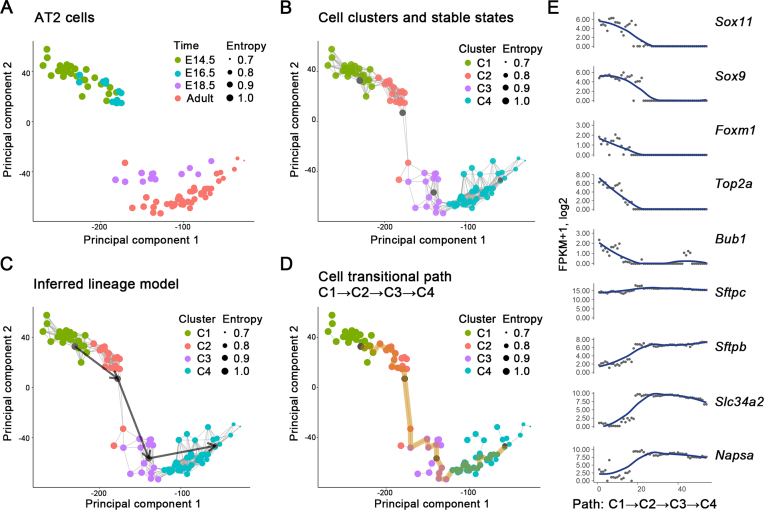
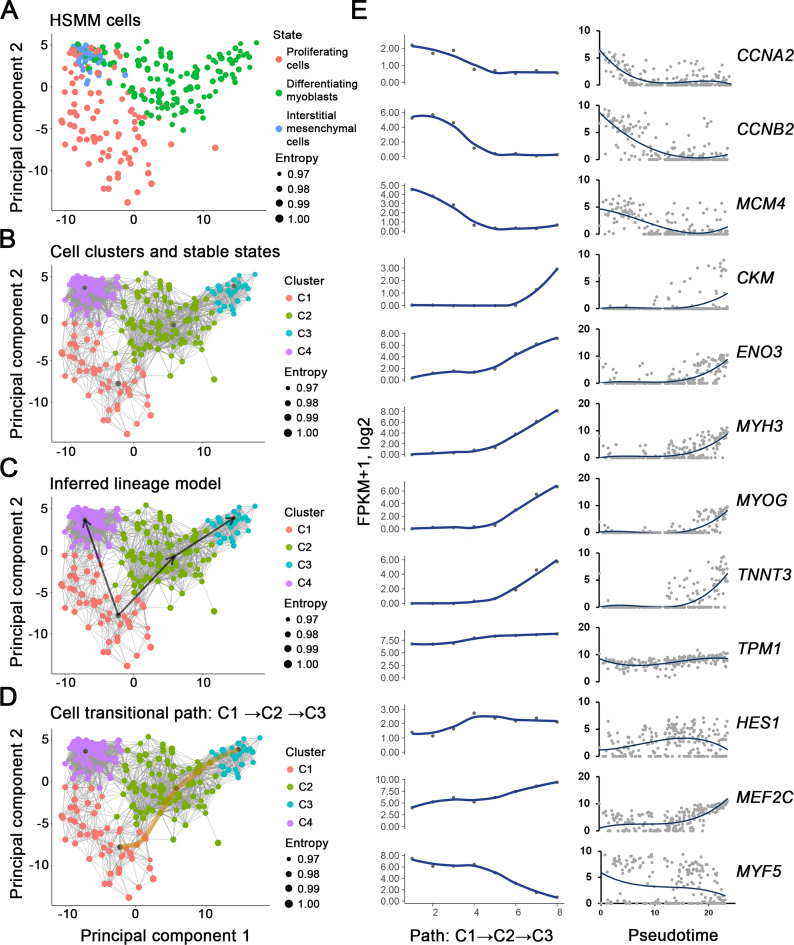
A complex organ contains a variety of cell types, each with its own distinct lineage and function. Understanding the lineage and differentiation state of each cell is fundamentally important for the ultimate delineation of organ formation and function. We developed SLICE, a novel algorithm that utilizes single-cell RNA-seq (scRNA-seq) to quantitatively measure cellular differentiation states based on single cell entropy and predict cell differentiation lineages via the construction of entropy directed cell trajectories. We validated our approach using three independent data sets with known lineage and developmental time information from both Homo sapiens and Mus musculus. SLICE successfully measured the differentiation states of single cells and reconstructed cell differentiation trajectories that have been previously experimentally validated. We then applied SLICE to scRNA-seq of embryonic mouse lung at E16.5 to identify lung mesenchymal cell lineage relationships that currently remain poorly defined. A two-branched differentiation pathway of five fibroblastic subtypes was predicted using SLICE. The present study demonstrated the general applicability and high predictive accuracy of SLICE in determining cellular differentiation states and reconstructing cell differentiation lineages in scRNA-seq analysis.
Overview
The claims and statistics of this paper haven’t been checked yet.
Free: it reads the open-access text and checks the first 5 claims that cite a source we can check. Create a free account to check every claim.
Integrity signals
Registry
Cites
Statistics
Figures
Verification
Claims the paper makes
The claims and statistics of this paper haven’t been checked yet.
Free: it reads the open-access text and checks the first 5 claims that cite a source we can check. Create a free account to check every claim.
Claims other papers make about this one
Each is checked against this paper’s own text: does it say what the citing paper says it does?
The cited source says what the claim attributes to it.
In the citing paper
“While gene expression-based models can potentially overcome these limitations (e.g., transcriptional entropy (11–13), pluripotency-associated gene sets (14), and machine learning strategies (15)), their utility across diverse developmental systems and single-cell sequencing technologies is still unclear.”
From Single-cell transcriptional diversity is a hallmark of developmental potential (2020) · cites this paper as [13]
Self-check
Percentages, sums and reported differences re-computed from the paper’s own numbers.
The self-check needs the paper’s full text.
Citations
Cites
Systematic and integrative analysis of large gene lists using DAVID bioinformatics resources
Huang, D. W., Sherman, B. T., & Lempicki, R. A. (2009) · Nature Protocols · doi:10.1038/nprot.2008.211 · Cited by 35,890
Fast unfolding of communities in large networks
Blondel, V. D., Guillaume, J.-L., Lambiotte, R., & Lefebvre, E. (2008) · Journal of Statistical Mechanics: Theory and Experiment · doi:10.1088/1742-5468/2008/10/p10008 · Cited by 21,424 · cited 1×
“After constructing the cellcell network N(S), the Louvain algorithm (19) was utilized to partition the cells in N(S) into multiple non-overlapping cell communities (clusters).”
Huang, D. W., Sherman, B. T., & Lempicki, R. A. (2009) · Nucleic Acids Research · doi:10.1093/nar/gkn923 · Cited by 14,108 · cited 3×
“late scEntropy, SLICE first computes pairwise gene functional similarities by applying Kappa statistics (12) to Gene Ontology annotations of the human or mouse genome, and then partitions genes into distinct functional clusters based on their functional similarity.”
InfluentialWood, S. N. (2011) · Journal of the Royal Statistical Society Series B: Statistical Methodology · doi:10.1111/j.1467-9868.2010.00749.x · Cited by 7,537
Trapnell, C., Cacchiarelli, D., Grimsby, J., Pokharel, P., Li, S., Morse, M., Lennon, N. J., Livak, K. J., Mikkelsen, T. S., & Rinn, J. L. (2014) · Nature Biotechnology · doi:10.1038/nbt.2859 · Cited by 7,314
Estimating the Number of Clusters in a Data Set Via the Gap Statistic
Tibshirani, R., Walther, G., & Hastie, T. (2001) · Journal of the Royal Statistical Society Series B: Statistical Methodology · doi:10.1111/1467-9868.00293 · Cited by 6,205 · cited 2×
“The number of clusters can be determined by Gap statistic (20,21).”
Single-cell RNA-seq highlights intratumoral heterogeneity in primary glioblastoma
Patel, A. P., Tirosh, I., Trombetta, J. J., Shalek, A. K., Gillespie, S. M., Wakimoto, H., Cahill, D. P., Nahed, B. V., Curry, W. T., Martuza, R. L., et al. (2014) · Science · doi:10.1126/science.1254257 · Cited by 5,063
ToppGene Suite for gene list enrichment analysis and candidate gene prioritization
Chen, J., Bardes, E. E., Aronow, B. J., & Jegga, A. G. (2009) · Nucleic Acids Research · doi:10.1093/nar/gkp427 · Cited by 2,952 · cited 1×
“To further validate the prediction, we identified lineage dependent differentially expressed genes using the method and criteria as described in the Methods section and assessed their enriched functional annotations using Toppgene suite (29).”
Single-cell RNA-Seq profiling of human preimplantation embryos and embryonic stem cells
Yan, L., Yang, M., Guo, H., Yang, L., Wu, J., Li, R., Liu, P., Lian, Y., Zheng, X., Yan, J., et al. (2013) · Nature Structural & Molecular Biology · doi:10.1038/nsmb.2660 · Cited by 1,740 · cited 12×
“The scRNA-seq and cell type information of AT2, HSMM, HEE cells were obtained from Treutlein et al. (13), Trapnell et al. (7), Yan et al. (14), respectively.”
MethodInfluentialReconstructing lineage hierarchies of the distal lung epithelium using single-cell RNA-seq
Treutlein, B., Brownfield, D. G., Wu, A. R., Neff, N. F., Mantalas, G. L., Espinoza, F. H., Desai, T. J., Krasnow, M. A., & Quake, S. R. (2014) · Nature · doi:10.1038/nature13173 · Cited by 1,342 · cited 5×
“To validate the accuracy and robustness of SLICE predictions, we applied SLICE to three independent scRNAseq data sets (7,13,14) with known lineage and developmental time information.”
Influential
Research works printed but not linked: 1
- Shin J., Berg D.A., Zhu Y., Shin J.Y., Song J., Bonaguidi M.A., Enikolopov G., Nauen D.W., Christian K.M., Ming G.L. Single-cell RNA-Seq with waterfall reveals molecular cascades underlying adult neurogenesis. Cell Stem Cell. 2015. PMC8638014 26299571 · DOI · Paper page
Cited by
Items 101–185 of 185
FitDevo: accurate inference of single-cell developmental potential using sample-specific gene weight
Zhang, F., Yang, C., Wang, Y., Jiao, H., Wang, Z., Shen, J., & Li, L. (2022) · Briefings in Bioinformatics · doi:10.1093/bib/bbac293 · Cited by 12
“Therefore, they use the network degree as gene weight (GW), and use the correlation between GW and gene expression to represent the cell’s DP. CCAT is shown to have better performance than previously published methods, including SCENT [19], CytoTRACE [21], scEnergy (in the package named scEpath) [22], StemID [23], cmE…”
MethodDeciphering the decisive factors driving fate bifurcations in somatic cell reprogramming
Long, C., Li, H., Liang, P., Chao, L., Hong, Y., Zhang, J., Xi, Q., & Zuo, Y. (2023) · Molecular Therapy — Nucleic Acids · doi:10.1016/j.omtn.2023.102044 · Cited by 9
“The SLICE 28 was used to quantitatively measure cell differentiation potential based on single-cell entropy with default parameters.”
MethodInfluentialIntegrating Dynamical Systems Modeling with Spatiotemporal scRNA-Seq Data Analysis
Zhang, Z., Sun, Y., Peng, Q., Li, T., & Zhou, P. (2025) · Entropy · doi:10.3390/e27050453 · Cited by 27
Bukhari, H., Nithianandam, V., Battaglia, R. A., Cicalo, A., Sarkar, S., Comjean, A., Hu, Y., Leventhal, M. J., Dong, X., & Feany, M. Β. (2024) · Genome Research · doi:10.1101/gr.278576.123 · Cited by 14
“…we observed significant alterations in multiple metabolic, cellular communication, and biological pathways not previously implicated in tauopathy pathogenesis Cell type selectivity is afundamental, and poorly understood, feature of human neurodegenerative diseases, including…”
Information-Theoretic Approaches to Understanding Stem Cell Variability
Smith, R. C. G., & MacArthur, B. D. (2017) · Current Stem Cell Reports · doi:10.1007/s40778-017-0093-5 · Cited by 9
“For example, it has been suggested that a high degree of cell – cell variability in gene expression patterns within a functionally pure population, as quantified by the entropy of the joint expression distribution, is characteristic of undifferentiated pluripotent cells [33, 34 (cid:129) , 35].”
BackgroundNi, X., Geng, B., Zheng, H., Shi, J., Hu, G., & Gao, J. (2021) · IEEE Transactions on Computational Biology and Bioinformatics · doi:10.1109/tcbb.2021.3112951 · Cited by 7
SCTC: inference of developmental potential from single-cell transcriptional complexity
Lin, H., Hu, H., Feng, Z., Xu, F., Lyu, J., Li, X., Liu, L., Yang, G., & Shuai, J. (2024) · Nucleic Acids Research · doi:10.1093/nar/gkae340 · Cited by 9
“The first dataset, named Human Neuron Differentiation (HND) ( 17 ), was collected at 0, 1, 5, 7, 10 and 30 days during human neuron differentiation.”
Fu, Y., Qu, H., Qu, D., & Zhao, M. (2025) · Bioinformatics · doi:10.1093/bioinformatics/btaf027 · Cited by 10
Revealing routes of cellular differentiation by single-cell RNA-seq
Grün, D. (2018) · Current Opinion in Systems Biology · doi:10.1016/j.coisb.2018.07.006 · Cited by 7
A functional module states framework reveals transcriptional states for drug and target prediction
Qin, G., Knijnenburg, T., Gibbs, D. L., Moser, R. D., Monnat, R. J., Kemp, C. J., & Shmulevich, I. (2022) · Cell Reports · doi:10.1016/j.celrep.2021.110269 · Cited by 7
“In single-cell studies, several methods have been introduced to understand cellular states, such as Monocle (Trapnell et al., 2014), Monocle 3 (Cao et al., 2019), single-cell energy path (scEpath) (Jin et al., 2018), Single Cell Lineage Inference Using Cell Expression Similarity and Entropy (SLICE) (Guo et al., 2017),…”
BackgroundInfluentialORIGINS: A protein network-based approach to quantify cell pluripotency from scRNA-seq data
Senra, D., Guisoni, N., & Diambra, L. A. (2022) · MethodsX · doi:10.1016/j.mex.2022.101778 · Cited by 7
Quantifying cancer cell plasticity with gene regulatory networks and single-cell dynamics
Groves, S. M., & Quaranta, V. (2023) · Frontiers in Network Physiology · doi:10.3389/fnetp.2023.1225736 · Cited by 12
“…ordering cells along a trajectory based on transcriptomic similarity, empirically determining transition paths in the system (Trapnell et al., 2014; Guo et al., 2016; Haghverdi et al., 2016; Welch et al., 2016; Qiu et al., 2017; Herring et al., 2018; Saelens et al., 2018; Setty et al., 2019; Wolf…”
Tsuruyama, T. (2018) · Entropy · doi:10.3390/e20060438 · Cited by 8
“Recently, single cell entropy was introduced as the analytical basis of the variable phenotypic or genotypic state of a single cell, which is based on the assembly framework of statistical physics [26].”
BackgroundGene expression noise dynamics unveil functional heterogeneity of ageing hematopoietic stem cellsPreprint
Rosales-Alvarez, R. E., Rettkowski, J., Herman, J. S., Dumbović, G., Cabezas‐Wallscheid, N., & Grün, D. (2022) · bioRxiv (Cold Spring Harbor Laboratory) · doi:10.1101/2022.08.04.502776 · Cited by 7
Miao, J., Zhang, K., Yang, Y., Xu, S., Du, J., Wu, T., Tao, C., Wang, Y., & Yang, S. (2024) · iScience · doi:10.1016/j.isci.2024.110015 · Cited by 9
“…of cellular differentiation states in disease, we utilized single-cell lineage inference using cell expression similarity and entropy (SLICE) 33 and partition-based graph abstraction (PAGA) 34 to perform single-cell entropy calculations and pseudotime analysis on all FBs from WT and TG…”
The intrinsic dimension of gene expression during cell differentiation
Biondo, M., Cirone, N., Valle, F., Lazzardi, S., Caselle, M., & Osella, M. (2025) · Nucleic Acids Research · doi:10.1093/nar/gkaf805 · Cited by 11
“In fact, to enhance robustness, many proposed entropy-based tools integrate additional information, which may not always be available, such as the protein-protein interaction network [ 79 ] or gene functional annotations [ 77 ].”
P-CSN: single-cell RNA sequencing data analysis by partial cell-specific network
Wang, Y., Xuan, C., HanWen, W., Zhang, B., Ding, T., & Gao, J. (2023) · Briefings in Bioinformatics · doi:10.1093/bib/bbad180 · Cited by 7
Fluctuation of Information Entropy Measures in Cell Image
Wohl, I., Zurgil, N., Hakuk, Y., Sobolev, M., & Deutsch, M. (2017) · Entropy · doi:10.3390/e19100565 · Cited by 6
“Entropy patterns of mRNA and protein expression could characterize cellular differentiation state [6], while network entropy measures could follow tumor progression and anticancer drug responses [7].”
BackgroundZhou, W., Su, M., Jiang, T., Xie, Y., Shi, J., Ma, Y., Xu, K., Xu, G., Li, Y., & Xu, J. (2024) · Genomics Proteomics & Bioinformatics · doi:10.1093/gpbjnl/qzae058 · Cited by 6
Wu, Y., Xie, L., Sun, J. P., Wang, Q., Xia, W., Cai, Q., Lu, X., & Gou, X. (2025) · Brain Research Bulletin · doi:10.1016/j.brainresbull.2025.111355 · Cited by 5
“The GetEntropy function in the SLICE R package version (0.99.0) (Guo et al., 2017) was used to calculate the Shannon entropy of each cell by clustering, and measure cellular heterogeneity.”
InfluentialOptoplasmonic Modulation of Cell Metabolic State Promotes Rapid Cell Differentiation
Qi, G., Chen, X., Wang, J., Tian, Y., Wang, B., Zhang, Y., Ma, K., Diao, X., & Jin, Y. (2022) · Analytical Chemistry · doi:10.1021/acs.analchem.2c00837 · Cited by 5
Tsuruyama, T. (2018) · Entropy · doi:10.3390/e20080617 · Cited by 6
““Single cell entropy” was introduced for the estimation of the specified gene and kinase protein expression network [1,2].”
BackgroundInvestigating Cell Fate Decisions with ICGS Analysis of Single Cells
Salomonis, N. (2019) · Methods in molecular biology · doi:10.1007/978-1-4939-9224-9_12 · Cited by 6
Gonçalves, A. N., Correia‐Pinto, J., & Nogueira‐Silva, C. (2022) · Frontiers in Pediatrics · doi:10.3389/fped.2022.836591 · Cited by 4
Cellular liberality is measurable as Lempel-Ziv complexity of fastq files
Ogata, N., & Hosaka, A. (2022) · IEEE International Conference on Bioinformatics and Bioengineering (BIBE) · doi:10.1109/bibe55377.2022.00072 · Cited by 4
“In this decade, several studies [3-7] following our research [8] repeatedly measured the degree of cellular dedifferentiation and differentiation as a transcriptome Shannon entropy.”
BackgroundYang, C., Wang, Z., Qian, L., Fu, J., & Sun, H. (2024) · Cellular Oncology · doi:10.1007/s13402-024-00964-4 · Cited by 4
Computing hematopoiesis plasticity in response to genetic mutations and environmental stimulations
Wen, Y., He, H., Ma, Y., Bao, D., Cai, L. C., Wang, H., Li, Y., Zhao, B., & Cai, Z. (2024) · Life Science Alliance · doi:10.26508/lsa.202402971 · Cited by 3
“Although various methods have been applied to identify cell types, only a few quantitative approaches, such as SLICE (74) and SCENT (71) based on entropy measurements, have focused on single-cell differentiation.”
Live-cell omics with Raman spectroscopy
Kamei, K.-I. F., & Wakamoto, Y. (2025) · Microscopy · doi:10.1093/jmicro/dfaf020 · Cited by 6
Ali, M., Ribeiro, M. M., & del Sol, A. (2022) · Methods in molecular biology · doi:10.1007/978-1-0716-2193-6_4 · Cited by 4
Zhang, Y., Xie, Y., Lu, W., Xu, S., Wang, X., Zhou, W., Zhang, Y., Ding, X., & Zhao, S. (2022) · Cellular Signalling · doi:10.1016/j.cellsig.2022.110506 · Cited by 5
Ogasawara, S., Chuman, Y., Michiba, T., Kamada, R., Imagawa, T., & Sakaguchi, K. (2018) · The Journal of Biochemistry · doi:10.1093/jb/mvy119 · Cited by 6
Ogata, N. (2022) · Journal of Bioinformatics and Systems Biology · doi:10.26502/jbsb.5107039 · Cited by 4
Optimal Transport using GANs for Lineage TracingPreprint
Prasad, N., Yang, K., & Uhler, C. (2020) · arXiv (Cornell University) · doi:10.48550/arxiv.2007.12098 · Cited by 17
“In recent years, various computational methods have been developed to trace pseudo-lineages of cells given singlecell gene expression data (Trapnell et al., 2014; Qiu et al., 2017; Guo et al., 2017; Shin et al., 2015; Ji & Ji, 2016; Marco et al., 2014; Bendall et al., 2014; Setty et al., 2016; Wolf et al., 2019; Weinr…”
MethodChen, X., Li, G., Zhang, J., He, F., Yang, Z., Wei, G., Hu, L., Wu, B., Wei, F., & Xiong, F. (2025) · International Dental Journal · doi:10.1016/j.identj.2025.103920 · Cited by 6
Du, Y., Benny, P., Shao, Y., Schlueter, R. J., Gurary, A., Lum‐Jones, A., Lassiter, C. B., Alakwaa, F., Tiirikainen, M., Towner, D., et al. (2025) · GigaScience · doi:10.1093/gigascience/giaf039 · Cited by 3
“We calculated the cell stemness scores using the DNA methylation β -values similar to others [ 88 ]. uHSCs deriv ed fr om the maternally obese group exhibit significantl y ele v ated stemness scor es ( P < 0.01) in comparison to the control group (Fig.”
InfluentialFluctuation Theorem of Information Exchange between Subsystems that Co-Evolve in Time
Jinwoo, L. (2019) · Symmetry · doi:10.3390/sym11030433 · Cited by 3
Cell Features Reconstruction from Gene Association Network of Single Cell
Xu, Q., Zhu, J., Luo, Y., & Li, W. (2023) · Interdisciplinary Sciences Computational Life Sciences · doi:10.1007/s12539-023-00553-3 · Cited by 4
“This potency is usually quantified in the form of entropy [6–8].”
BackgroundIdentification of Differential Gene Groups From Single-Cell Transcriptomes Using Network Entropy
Gan, Y., Liang, S., Wei, Q., & Zou, G. (2020) · Frontiers in Cell and Developmental Biology · doi:10.3389/fcell.2020.588041 · Cited by 2
Lineage Inference and Stem Cell Identity Prediction Using Single-Cell RNA-Sequencing Data
Sagar, & Grün, D. (2019) · Methods in molecular biology · doi:10.1007/978-1-4939-9224-9_13 · Cited by 3
A Waddington Epigenetic Landscape for the C. elegans embryoPreprint
Elewa, A. (2020) · bioRxiv (Cold Spring Harbor Laboratory) · doi:10.1101/2020.01.01.892414 · Cited by 3
Transiently increased intercommunity regulation characterizes concerted cell phenotypic transitionPreprint
Wang, W., Ni, K., Poe, D., & Xing, J. (2021) · bioRxiv (Cold Spring Harbor Laboratory) · doi:10.1101/2021.09.21.461257 · Cited by 3
“Most of these tools, such as Monocle, Scanpy and Seurat, focus on the pseudo-time analysis given that the scRNA-seq data only provides snap-shot information [3, 13, 15, 17-22].”
MethodRefining cell subpopulation identification and cell fate mapping using cell energy
Long, C., Li, H., Li, Z., Zhang, J., Xi, Q., & Zuo, Y. (2025) · Expert Systems with Applications · doi:10.1016/j.eswa.2025.128999 · Cited by 3
Brown, M. S., Abdollahi, B., Hassanpour, S., & Pattabiraman, D. R. (2022) · Methods in cell biology · doi:10.1016/bs.mcb.2022.06.003 · Cited by 2
The Growing Liberality Observed in Primary Animal and Plant Cultures is Common to the Social Amoeba
Ogata, N. (2023) · Journal of Bioinformatics and Systems Biology · doi:10.26502/jbsb.5107045 · Cited by 2
“[5] Guo M, Bao EL, Wagner M, Whitsett JA, and Xu Y, SLICE: determining cell differentiation and lineage based on single cell entropy.”
BackgroundIn vivo-like Culture of Monophagous Animal Organ using Dietary Components
Ogata, N., Konishi, S., & Yokoyama, T. (2023) · Journal of Biotechnology and Biomedicine · doi:10.26502/jbb.2642-91280070 · Cited by 2
“To suppress dedifferentiation [5,6], methods of devising cell scaffolds [7,8] and the inclusion of gases in incubators [9], as well as methods using components derived from other species, have been proposed.”
MethodNetMix: A Network-Structured Mixture Model for Reduced-Bias Estimation of Altered Subnetworks
Reyna, M. A., Chitra, U., Elyanow, R., & Raphael, B. J. (2020) · Lecture notes in computer science · doi:10.1007/978-3-030-45257-5_11 · Cited by 3
CONFESS: Fluorescence-based single-cell ordering in RPreprint
Motakis, E., & Low, D. H. P. (2018) · bioRxiv (Cold Spring Harbor Laboratory) · doi:10.1101/407932 · Cited by 4
“Modern statistical methods including TSCAN [10], Monocle [11], Oscope [12], Waterfall [13], SCUBA [14], DeLorean [15], SLICE [16] and SCENT [17] model directly the single-cell RNA-seq gene expression profiles to provide a pseudo-temporal ordering of the cells and subsequently study significant changes on their transcr…”
MethodGene Expression Noise Dynamics Unveil Functional Heterogeneity of Ageing Hematopoietic Stem CellsPreprint
Rosales-Alvarez, R. E., Rettkowski, J., Herman, J. S., Dumbović, G., Cabezas‐Wallscheid, N., & Grün, D. (2022) · SSRN Electronic Journal · doi:10.2139/ssrn.4197395 · Cited by 3
Du, Y., Benny, P. A., Shao, Y., Schlueter, R. J., Gurary, A., Lum‐Jones, A., Lassiter, C. B., Alakwaa, F., Tiirikainen, M., Towner, D., et al. (2024) · medRxiv · doi:10.1101/2024.07.27.24310936 · Cited by 2
“We calculated the cell stemness scores using the DNA methylation beta values similar to others 83 . uHSCs derived from the maternally obese group exhibit significantly elevated stemness scores (P<0.01) in comparison to the control group (Figure 4D) , confirming the results in KEGG pathway analysis.”
ResultInfluentialXiao, M., Xu, Z., Zhu, X., Chen, J., Wang, R., Wang, Y., Gao, X., Luan, S., & Pu, X. (2025) · Frontiers in Endocrinology · doi:10.3389/fendo.2025.1550925 · Cited by 4
“The stemness of neutrophil sub-cell clusters was assessed by calculating single-cell entropy, as previously described (27, 29).”
Al-Ghazawi, R., Lezzeik, H., Shao, X., & Perkins, T. J. (2025) · PLoS Computational Biology · doi:10.1371/journal.pcbi.1013575 · Cited by 2
SPIDE: A single cell potency inference method based on the local cell-specific network entropy
Zheng, R., Xu, Z., Zeng, Y., Wang, E., & Li, M. (2023) · Methods · doi:10.1016/j.ymeth.2023.11.006 · Cited by 2
Reconstructing Waddington Landscape from Cell Migration and Proliferation
Han, Y., Chen, B., Bi, Z., Zhang, J., Hu, Y., Bian, J., Kang, R., & Shang, X. (2025) · Interdisciplinary Sciences Computational Life Sciences · doi:10.1007/s12539-024-00686-z · Cited by 2
“Therefore, more comprehensive methodologies are required to assess the cellular transcriptome [10, 11].”
Johnson, C. S., Sham, K., Belluschi, S., Wang, X., Lau, W. W. Y., Kaufmann, K. B., Krivdova, G., Calderbank, E. F., Mende, N., McLeod, J. L., et al. (2022) · bioRxiv (Cold Spring Harbor Laboratory) · doi:10.1101/2022.11.17.516906 · Cited by 1
Decoding the heterogeneity of skin in homeostasis and regeneration at single-cell resolution
Joost, S. (2018) · Figshare · Cited by 1
A functional module states framework reveals cell states for drug and target predictionPreprint
Qin, G., Knijnenburg, T., Gibbs, D. L., Moser, R. D., Monnat, R. J., Kemp, C. J., & Ilya Shmulevich, C. (2020) · bioRxiv (Cold Spring Harbor Laboratory) · doi:10.1101/2020.11.24.394932
DiBAC: Distribution-Based Analysis of Cell Differentiation Identifies Mechanisms of Cell FatePreprint
Ghaderi, S., Magni, S., Arns, T., Ignac, T. M., & Skupin, A. (2021) · SSRN Electronic Journal · doi:10.2139/ssrn.3920667
Forschung: Nach Schwachstellen des alternden Herzens suchen
Sauer, S., & Berlin (2020) · Deutsches Ärzteblatt · doi:10.3238/perskardio.2020.10.09.06
Marczyk, M., Kujawa, T., Papież, A., & Polańska, J. (2022) · Elsevier eBooks · doi:10.1016/b978-0-323-91810-7.00015-7 · Cited by 1
A single cell potency inference method based on the local cell-specific network entropy
Xu, Z., Zheng, R., Chen, Y., Wang, E., & Li, M. (2022) · IEEE International Conference on Bioinformatics and Biomedicine (BIBM) · doi:10.1109/bibm55620.2022.9995196
“Some studies designed entropy-based methods to measuring differentiation potency of cells directly, such as LDD[9], StemID [10], SLICE [11], SCENT [12], MCE [13], etc.”
MethodIdentification and characterization of human retinal stem cells capable of retinal regenerationPreprint
Su, J., Liu, H., Ma, Y., Gao, N., Zhou, Y., Li, G. L., Zhu, Q., Liu, X., Li, S., Deng, C., et al. (2023) · Research Square · doi:10.21203/rs.3.rs-3714208/v1
StemnesScoRe: an R package to estimate the stemness of glioma cancer cells at single-cell resolution
Koçhan, N., Oktay, Y., & Karakülah, G. (2023) · TURKISH JOURNAL OF BIOLOGY · doi:10.55730/1300-0152.2672
“In addition, the literature shows that there are entropy-based approaches that express stemness index as transcriptomic stemness (Grün et al., 2016; Guo et al., 2017; Teschendorff and Enver, 2017).”
BackgroundAdvancement of in silico tools for stem cell research
Kumar, A., Kumar, K. V., Kunjulakshmi, R., Kundal, K., Sengupta, A., & Kumar, R. (2024) · Elsevier eBooks · doi:10.1016/b978-0-443-13222-3.00018-6
Liberality is More Explainable than PCA of Transcriptome for Vertebrate Embryo DevelopmentPreprint
Ogata, N. (2024) · bioRxiv (Cold Spring Harbor Laboratory) · doi:10.1101/2024.09.19.613970
“After that several studies have reached the same conclusion [5–8].”
BackgroundPHLOWER - Single cell trajectory analysis using Hodge DecompositionPreprint
Cheng, M., Jansen, J., Reimer, K. C., Grande, V., Nagai, J. S., Li, Z., Kießling, P., Graßhoff, M., Kuppe, C., Schaub, M. T., et al. (2024) · bioRxiv (Cold Spring Harbor Laboratory) · doi:10.1101/2024.10.01.613179
Al-Ghazawi, R., Shao, X., & Perkins, T. J. (2024) · bioRxiv (Cold Spring Harbor Laboratory) · doi:10.1101/2024.11.06.622368
Comprehensive Enumeration of Cancer Stem-like Cell Heterogeneity Using Deep Neural NetworkPreprint
Chowdhury, D., Priyadarshi, S., Biswas, S., Neekhra, B., Gupta, D., & Haldar, S. (2024) · bioRxiv (Cold Spring Harbor Laboratory) · doi:10.1101/2024.11.26.625418
Zhang, H., Zhang, W., Zheng, X., & Li, Y. (2025) · Scientific Reports · doi:10.1038/s41598-025-01969-1
“POS=1 represents that the inferred order of cells perfectly matches the order determined by the cells’ collection time.”
Chen, K., Zhao, S., Guo, M., Reza, H. A., Wagner, A., Cakar, A. C., Jiang, C., Zhang, E. Y., Green, J., Martin, E. T., et al. (2025) · bioRxiv (Cold Spring Harbor Laboratory) · doi:10.1101/2025.07.07.663390
Self-citationStaiano, M., Cirone, N., Biondo, M., Osella, M., & Scialdone, A. (2025) · bioRxiv (Cold Spring Harbor Laboratory) · doi:10.1101/2025.07.21.665922 · Cited by 3
“For example, these include SCENT, which incorporates protein-protein interaction networks [19]; SLICE, which leverages Gene Ontology annotations [20]; and CytoTRACE, which infers potency based on the number of expressed genes per cell [21].”
Information Exchange Fluctuation Theorem Under Coarse-Graining
Jinwoo, L. (2025) · Mathematics · doi:10.3390/math13162607
“These biological systems demonstrate remarkable capabilities in detecting environmental chemical signals [23,24], propagating information across complex signaling pathways [25–27], and regulating genetic expression through molecular communication networks [28,29].”
Xing, J., & Wang, W. (2025) · Oxford University Press eBooks · doi:10.1093/med/9780192867636.003.0013
Jiang, J., Xu, C., Han, D., Lu, Y., Yang, F., Wang, J., Yan, X., Mu, X., Zhang, J., Jia, C., et al. (2024) · Figshare · doi:10.6084/m9.figshare.27124181
Rosales-Alvarez, R. E., Rettkowski, J., Herman, J. S., Dumbović, G., Cabezas‐Wallscheid, N., & Grün, D. (2023) · Figshare · doi:10.6084/m9.figshare.23573584
Jiang, J., Xu, C., Han, D., Lu, Y., Yang, F., Wang, J., Yan, X., Mu, X., Zhang, J., Jia, C., et al. (2024) · Figshare · doi:10.6084/m9.figshare.27124175
Jiang, J., Xu, C., Han, D., Lu, Y., Yang, F., Wang, J., Yan, X., Mu, X., Zhang, J., Jia, C., et al. (2024) · Figshare · doi:10.6084/m9.figshare.27124169
Jiang, J., Xu, C., Han, D., Lu, Y., Yang, F., Wang, J., Yan, X., Mu, X., Zhang, J., Jia, C., et al. (2024) · Figshare · doi:10.6084/m9.figshare.27124190
Jiang, J., Xu, C., Han, D., Lu, Y., Yang, F., Wang, J., Yan, X., Mu, X., Zhang, J., Jia, C., et al. (2024) · Figshare · doi:10.6084/m9.figshare.27124193
Jiang, J., Xu, C., Han, D., Lu, Y., Yang, F., Wang, J., Yan, X., Mu, X., Zhang, J., Jia, C., et al. (2024) · Figshare · doi:10.6084/m9.figshare.27124184
Jiang, J., Xu, C., Han, D., Lu, Y., Yang, F., Wang, J., Yan, X., Mu, X., Zhang, J., Jia, C., et al. (2024) · Figshare · doi:10.6084/m9.figshare.27124178
Rosales-Alvarez, R. E., Rettkowski, J., Herman, J. S., Dumbović, G., Cabezas‐Wallscheid, N., & Grün, D. (2023) · Figshare · doi:10.6084/m9.figshare.23573587
Jiang, J., Xu, C., Han, D., Lu, Y., Yang, F., Wang, J., Yan, X., Mu, X., Zhang, J., Jia, C., et al. (2024) · Figshare · doi:10.6084/m9.figshare.27124196
Planer, J. D., Morley, M. P., Cai, S., Peterson, A. R., Lu, M., Yang, Y., Hallquist, H., Schaefer, S. E., Carl, J., Zhou, S., et al. (2026) · bioRxiv (Cold Spring Harbor Laboratory) · doi:10.64898/2026.03.20.713166
García, S. R. (2018) · theses.fr (ABES) · doi:10.70675/67876ef0zf5dcz40acza191z2631d60927b2 · Cited by 2
Rôle de NR5A1 dans le destin des cellules de Sertoli fœtales chez la souris
Souali‐Crespo, S. (2021) · theses.fr (ABES) · doi:10.70675/0221a4d3zfa87z4360zb881z4bea8d058b3e
Metadata
- Authors
- Guo, M., Bao, E. L., Wagner, M., Whitsett, J. A., & Xu, Y.
- Affiliations
- Cincinnati Children's Hospital Medical Center (US)
- Harvard University (US)
- Corresponding author
- Guo, Minzhe
- Bao, Erik L.
- Xu, Yan
- Venue
- Nucleic Acids Research
- Publisher
- Oxford University Press (OUP)
- Published
- 2016-12-19
- Volume
- 45
- Issue
- 7
- Pages
- gkw1278
- ISSN
- 0305-1048 (ISSN-L)
- 1362-4962
- PMC
- PMC5397210
- OpenAlex
- W2561394844
- Cited by
- 178
- References
- 34
- Citations by year
- 2026: 1 · 2025: 20 · 2024: 28 · 2023: 21 · 2022: 29 · 2021: 14 · 2020: 24 · 2019: 15 · 2018: 19 · 2017: 7
- FWCI
- 7.10
- Type
- journal article
- Language
- en
- Open access
- gold
- doi.org
- Licence
- Locations
- Nucleic Acids Research (publishedVersion, cc-by-nc)
- Europe PMC (PubMed Central) (publishedVersion, cc-by-nc)
- PubMed Central (publishedVersion, cc-by-nc)
- PubMed (publishedVersion)
- Digital Access to Scholarship at Harvard (DASH) (Harvard University) (submittedVersion, cc-by)
- Funders
- National Institutes of Health
- National Heart, Lung, and Blood Institute (R01HL095580, U01HL122642, R01HL136722)
- Topics
- Life Sciences › Biochemistry, Genetics and Molecular Biology › Molecular Biology › Single-cell and spatial transcriptomics
- Life Sciences › Biochemistry, Genetics and Molecular Biology › Molecular Biology › Gene Regulatory Network Analysis
- Life Sciences › Biochemistry, Genetics and Molecular Biology › Molecular Biology › Developmental Biology and Gene Regulation
- Keywords
- cell differentiation, cell lineage, single-cell RNA sequencing, fibroblast subtypes
- MeSH terms
- Algorithms, Animals, Cell Differentiation, Embryo, Mammalian, Fibroblasts, Humans, Lung, Sequence Analysis, RNA, Cell Lineage, Gene Expression Profiling, Myoblasts, Skeletal, Embryonic Development, Mice, Alveolar Epithelial Cells, Single-Cell Analysis
About these checks
Registry, retraction, Cites and statistics results are computed, not judged, with one exception: a printed reference that no index lists is read once by a model before it counts as a citation error. Claims are extracted by a model and kept only when their quote appears verbatim in the text; each cited source is then checked, with a model’s help, for whether it says what the claim relies on. Those verdicts can be wrong — read the claim’s quote and the cited source before relying on one.
Statistics and arithmetic are recomputed, not judged.
Confidence bands are shown only for fields calibrated on our annotated test set. None is calibrated yet, so no band is shown.
What counts as a claim ›How we measure confidence ›How we check this ›
Are you an author, or do you see a problem with this page? Request a review
Data sources
Bibliographic data: Semantic Scholar, OpenAlex, Crossref.
Contains information from the Semantic Scholar Academic Graph Datasets, made available under the ODC Attribution License (ODC-BY 1.0).
Semantic Scholar’s data is described in: Kinney, R., et al. (2023). The Semantic Scholar Open Data Platform. arXiv:2301.10140.
