

SLICE: determining cell differentiation and lineage based on single cell entropy
Open accessThe DOI matches its Crossref record; 34 of the 34 references it cites were found in a registry or an index.
Abstract
A complex organ contains a variety of cell types, each with its own distinct lineage and function. Understanding the lineage and differentiation state of each cell is fundamentally important for the ultimate delineation of organ formation and function. We developed SLICE, a novel algorithm that utilizes single-cell RNA-seq (scRNA-seq) to quantitatively measure cellular differentiation states based on single cell entropy and predict cell differentiation lineages via the construction of entropy directed cell trajectories. We validated our approach using three independent data sets with known lineage and developmental time information from both Homo sapiens and Mus musculus. SLICE successfully measured the differentiation states of single cells and reconstructed cell differentiation trajectories that have been previously experimentally validated. We then applied SLICE to scRNA-seq of embryonic mouse lung at E16.5 to identify lung mesenchymal cell lineage relationships that currently remain poorly defined. A two-branched differentiation pathway of five fibroblastic subtypes was predicted using SLICE. The present study demonstrated the general applicability and high predictive accuracy of SLICE in determining cellular differentiation states and reconstructing cell differentiation lineages in scRNA-seq analysis.
Overview
The claims and statistics of this paper haven’t been checked yet.
Free: it reads the open-access text and checks the first 5 claims that cite a source we can check. Create a free account to check every claim.
Integrity signals
Registry
Cites
Statistics
Figures



Verification
Claims the paper makes
The claims and statistics of this paper haven’t been checked yet.
Free: it reads the open-access text and checks the first 5 claims that cite a source we can check. Create a free account to check every claim.
Claims other papers make about this one
Each is checked against this paper’s own text: does it say what the citing paper says it does?
The cited source says what the claim attributes to it.
In the citing paper
“While gene expression-based models can potentially overcome these limitations (e.g., transcriptional entropy (11–13), pluripotency-associated gene sets (14), and machine learning strategies (15)), their utility across diverse developmental systems and single-cell sequencing technologies is still unclear.”
From Single-cell transcriptional diversity is a hallmark of developmental potential (2020) · cites this paper as [13]
Self-check
Percentages, sums and reported differences re-computed from the paper’s own numbers.
The self-check needs the paper’s full text.
Citations
Cites
Systematic and integrative analysis of large gene lists using DAVID bioinformatics resources
Huang, D. W., Sherman, B. T., & Lempicki, R. A. (2009) · Nature Protocols · doi:10.1038/nprot.2008.211 · Cited by 35,890
Fast unfolding of communities in large networks
Blondel, V. D., Guillaume, J.-L., Lambiotte, R., & Lefebvre, E. (2008) · Journal of Statistical Mechanics: Theory and Experiment · doi:10.1088/1742-5468/2008/10/p10008 · Cited by 21,424 · cited 1×
“After constructing the cellcell network N(S), the Louvain algorithm (19) was utilized to partition the cells in N(S) into multiple non-overlapping cell communities (clusters).”
Huang, D. W., Sherman, B. T., & Lempicki, R. A. (2009) · Nucleic Acids Research · doi:10.1093/nar/gkn923 · Cited by 14,108 · cited 3×
“late scEntropy, SLICE first computes pairwise gene functional similarities by applying Kappa statistics (12) to Gene Ontology annotations of the human or mouse genome, and then partitions genes into distinct functional clusters based on their functional similarity.”
InfluentialWood, S. N. (2011) · Journal of the Royal Statistical Society Series B: Statistical Methodology · doi:10.1111/j.1467-9868.2010.00749.x · Cited by 7,537
Trapnell, C., Cacchiarelli, D., Grimsby, J., Pokharel, P., Li, S., Morse, M., Lennon, N. J., Livak, K. J., Mikkelsen, T. S., & Rinn, J. L. (2014) · Nature Biotechnology · doi:10.1038/nbt.2859 · Cited by 7,314
Estimating the Number of Clusters in a Data Set Via the Gap Statistic
Tibshirani, R., Walther, G., & Hastie, T. (2001) · Journal of the Royal Statistical Society Series B: Statistical Methodology · doi:10.1111/1467-9868.00293 · Cited by 6,205 · cited 2×
“The number of clusters can be determined by Gap statistic (20,21).”
Single-cell RNA-seq highlights intratumoral heterogeneity in primary glioblastoma
Patel, A. P., Tirosh, I., Trombetta, J. J., Shalek, A. K., Gillespie, S. M., Wakimoto, H., Cahill, D. P., Nahed, B. V., Curry, W. T., Martuza, R. L., et al. (2014) · Science · doi:10.1126/science.1254257 · Cited by 5,063
ToppGene Suite for gene list enrichment analysis and candidate gene prioritization
Chen, J., Bardes, E. E., Aronow, B. J., & Jegga, A. G. (2009) · Nucleic Acids Research · doi:10.1093/nar/gkp427 · Cited by 2,952 · cited 1×
“To further validate the prediction, we identified lineage dependent differentially expressed genes using the method and criteria as described in the Methods section and assessed their enriched functional annotations using Toppgene suite (29).”
Single-cell RNA-Seq profiling of human preimplantation embryos and embryonic stem cells
Yan, L., Yang, M., Guo, H., Yang, L., Wu, J., Li, R., Liu, P., Lian, Y., Zheng, X., Yan, J., et al. (2013) · Nature Structural & Molecular Biology · doi:10.1038/nsmb.2660 · Cited by 1,740 · cited 12×
“The scRNA-seq and cell type information of AT2, HSMM, HEE cells were obtained from Treutlein et al. (13), Trapnell et al. (7), Yan et al. (14), respectively.”
MethodInfluentialReconstructing lineage hierarchies of the distal lung epithelium using single-cell RNA-seq
Treutlein, B., Brownfield, D. G., Wu, A. R., Neff, N. F., Mantalas, G. L., Espinoza, F. H., Desai, T. J., Krasnow, M. A., & Quake, S. R. (2014) · Nature · doi:10.1038/nature13173 · Cited by 1,342 · cited 5×
“To validate the accuracy and robustness of SLICE predictions, we applied SLICE to three independent scRNAseq data sets (7,13,14) with known lineage and developmental time information.”
InfluentialHastie, T., & Stuetzle, W. (1989) · Journal of the American Statistical Association · doi:10.1080/01621459.1989.10478797 · Cited by 1,249
Coexistence of Quiescent and Active Adult Stem Cells in Mammals
Li, L., & Clevers, H. (2010) · Science · doi:10.1126/science.1180794 · Cited by 1,247
Single-cell messenger RNA sequencing reveals rare intestinal cell types
Grün, D., Lyubimova, A., Kester, L., Wiebrands, K., Basak, O., Sasaki, N., Clevers, H., & van Oudenaarden, A. (2015) · Nature · doi:10.1038/nature14966 · Cited by 1,234
A Convergence Theorem for the Fuzzy ISODATA Clustering Algorithms
Bezdek, J. C. (1980) · IEEE Transactions on Pattern Analysis and Machine Intelligence · doi:10.1109/tpami.1980.4766964 · Cited by 980
Bendall, S. C., Davis, K. L., Amir, E.-A. D., Tadmor, M. D., Simonds, E. F., Chen, T. J., Shenfeld, D. K., Nolan, G. P., & Pe’er, D. (2014) · Cell · doi:10.1016/j.cell.2014.04.005 · Cited by 906 · cited 12×
“SLICE first identifies D(q), the nearest neighbors (distance smaller than a threshold δ) of cell vq in the path, considers cells in D(q) as replicates of vq , and then measures the gene expression along the path as (R̄i,D(x), R̄i,D(1), .”
InfluentialSingle-Cell RNA-Seq with Waterfall Reveals Molecular Cascades underlying Adult Neurogenesis
Shin, J., Berg, D. A., Zhu, Y., Shin, J. Y., Song, J., Bonaguidi, M. A., Enikolopov, G., Nauen, D. W., Christian, K. M., Ming, G.-L., et al. (2015) · Cell Stem Cell · doi:10.1016/j.stem.2015.07.013 · Cited by 784 · cited 4×
“Wanderlust (1), Monocle (7), SCUBA (9) and Waterfall (31), were developed to infer temporal orderings of single cells from scRNA-seq data, aiming to map individual cells onto specific points in the progression of biological processes by connecting cells based on gene expression similarity.”
InfluentialDe Novo Prediction of Stem Cell Identity using Single-Cell Transcriptome Data
Grün, D., Muraro, M. J., Boisset, J.-C., Wiebrands, K., Lyubimova, A., Dharmadhikari, G., van den Born, M., van Es, J., Jansen, E., Clevers, H., et al. (2016) · Cell Stem Cell · doi:10.1016/j.stem.2016.05.010 · Cited by 586 · cited 4×
“Both SLICE and signaling entropy successfully measured the known cell states in all dataset, while the transcriptome entropy proposed in StemID failed to correctly measure the known differentiation states (Supplementary Figure S3).”
InfluentialClustering Rules: A Comparison of Partitioning and Hierarchical Clustering Algorithms
Reynolds, A. P., Richards, G., de la Iglesia, B., & Rayward-Smith, V. J. (2006) · Journal of Mathematical Modelling and Algorithms · doi:10.1007/s10852-005-9022-1 · Cited by 578 · cited 3×
“The number of clusters can be determined by Gap statistic (20,21).”
Epithelial Progenitor Cells in Lung Development, Maintenance, Repair, and Disease
Rock, J. R., & Hogan, B. L. M. (2011) · Annual Review of Cell and Developmental Biology · doi:10.1146/annurev-cellbio-100109-104040 · Cited by 416 · cited 1×
“While lineage relationships among pulmonary epithelial cells are increasingly understood in the developing mouse (13,26,27), identities and lineage relationships among mesenchymal cell populations remain poorly defined.”
Hausser, J., & Strimmer, K. (2008) · arXiv (Cornell University) · doi:10.48550/arxiv.0811.3579 · Cited by 356 · cited 1×
“, αm, the Bayesian estimate (17) of the posterior probabilities is given by”
SINCERA: A Pipeline for Single-Cell RNA-Seq Profiling Analysis
Guo, M., Wang, H., Potter, S. S., Whitsett, J. A., & Xu, Y. (2015) · PLOS Computational Biology · doi:10.1371/journal.pcbi.1004575 · Cited by 354 · cited 9×
“(16); PMP: proliferative mesenchymal progenitor,”
InfluentialSelf-citationBifurcation analysis of single-cell gene expression data reveals epigenetic landscape
Marco, E., Karp, R. L., Guo, G., Robson, P., Hart, A. H., Trippa, L., & Yuan, G.-C. (2014) · Proceedings of the National Academy of Sciences · doi:10.1073/pnas.1408993111 · Cited by 268 · cited 5×
“Several algorithms, e.g. Wanderlust (1), Monocle (7), SCUBA (9) and Waterfall (10), have been developed to reconstruct lineage relationships of single cells from scRNAseq data.”
InfluentialRegulated Noise in the Epigenetic Landscape of Development and Disease
Pujadas, E., & Feinberg, A. P. (2012) · Cell · doi:10.1016/j.cell.2012.02.045 · Cited by 237 · cited 1×
“Each cell has its own dynamically programed lineage trajectory path that is influenced by its developmental stages, epigenetic status, cell cycle, biological function and microenvironment (2,3).”
BioNet: an R-Package for the functional analysis of biological networks
Beisser, D., Klau, G. W., Dandekar, T., Müller, T., & Dittrich, M. T. (2010) · Bioinformatics · doi:10.1093/bioinformatics/btq089 · Cited by 237
An Algorithmic Framework for the Exact Solution of the Prize-Collecting Steiner Tree Problem
Ljubić, I., Weiskircher, R., Pferschy, U., Klau, G. W., Mutzel, P., & Fischetti, M. (2006) · Mathematical Programming · doi:10.1007/s10107-005-0660-x · Cited by 219
Statistical Mechanics of Pluripotency
MacArthur, B. D., & Lemischka, I. R. (2013) · Cell · doi:10.1016/j.cell.2013.07.024 · Cited by 180
Cellular network entropy as the energy potential in Waddington's differentiation landscape
Banerji, C. R. S., Miranda-Saavedra, D., Severini, S., Widschwendter, M., Enver, T., Zhou, J. X., & Teschendorff, A. E. (2013) · Scientific Reports · doi:10.1038/srep03039 · Cited by 140 · cited 2×
“We compared the cell differentiation states measured by StemID, SLICE and signaling entropy (32).”
Pattern Recognition Techniques in Microarray Data Analysis: A Survey
VALAFAR, F. (2002) · Annals of the New York Academy of Sciences · doi:10.1111/j.1749-6632.2002.tb04888.x · Cited by 139
Du, Y., Guo, M., Whitsett, J. A., & Xu, Y. (2015) · Thorax · doi:10.1136/thoraxjnl-2015-207035 · Cited by 136 · cited 8×
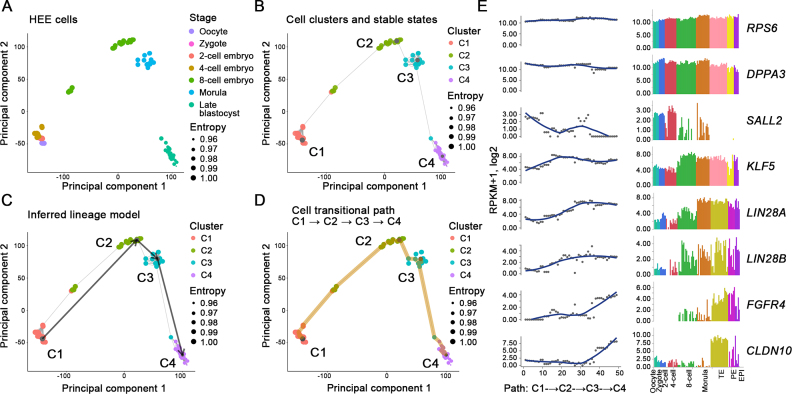
“In addition, we compared the performance of SLICE and Monocle using three independent datasets, including AT2 (n = 101) (13), FB (n = 79) (15,16), HEE (n = 88) (14) and E18.”
InfluentialSelf-citationCellular network entropy as the energy potential in Waddington's differentiation landscape
Banerji, C., Miranda-Saavedra, D., Simone Severini, B., Widschwendter, M., Enver, T., Zhou, J., & Teschendorff, A. (2013) · UCL Discovery (University College London) · Cited by 119
Alveolar Development and Disease
Whitsett, J. A., & Weaver, T. E. (2015) · American Journal of Respiratory Cell and Molecular Biology · doi:10.1165/rcmb.2015-0128ps · Cited by 109 · cited 1×
“While lineage relationships among pulmonary epithelial cells are increasingly understood in the developing mouse (13,26,27), identities and lineage relationships among mesenchymal cell populations remain poorly defined.”
Self-citationQuantifying cellular differentiation by physical phenotype using digital holographic microscopy
Chalut, K. J., Ekpenyong, A. E., Clegg, W. L., Melhuish, I. C., & Guck, J. R. (2012) · Integrative Biology · doi:10.1039/c2ib00129b · Cited by 79 · cited 1×
“Traditionally, the status of cell differentiation or stemness is determined by the expression of known differentiation markers (1) or by morphological features of cells (4,5) (e.”
Transcriptional Programs Controlling Perinatal Lung Maturation
Xu, Y. J., Wang, Y., Besnard, V., Ikegami, M., Wert, S. E., Heffner, C. S., Murray, S. A., Donahue, L. R., & Whitsett, J. A. (2012) · PLoS ONE · doi:10.1371/journal.pone.0037046 · Cited by 77 · cited 1×
“5 to the dynamic RNA expression patterns obtained from whole lung tissue during perinatal mouse lung development (E15 to PN0) (28) to understand the ontogenic changes in gene expression in each fibroblast subtype (Supplementary Figure S2).”
Self-citationTumor cell differentiation by label-free fluorescence microscopy
Weber, P., Wagner, M., Schneckenburger, H., Kioschis, P., & Kessler, W. (2012) · Journal of Biomedical Optics · doi:10.1117/1.jbo.17.10.101508 · Cited by 15 · cited 1×
“Traditionally, the status of cell differentiation or stemness is determined by the expression of known differentiation markers (1) or by morphological features of cells (4,5) (e.”
Self-citation
Research works printed but not linked: 2
- 10.2307/2289936 · DOI
- Shin J. Berg D.A. Zhu Y. Shin J.Y. Song J. Bonaguidi M.A. Enikolopov G. Nauen D.W. Christian K.M. Ming G.L. . Single-cell RNA-Seq with waterfall reveals molecular cascades underlying adult neurogenesis. Cell Stem Cell 2015. · DOI · Paper page
Cited by
A comparison of single-cell trajectory inference methods
Saelens, W., Cannoodt, R., Todorov, H., & Saeys, Y. (2019) · Nature Biotechnology · doi:10.1038/s41587-019-0071-9 · Cited by 1,670
Single-cell transcriptional diversity is a hallmark of developmental potential
Gulati, G. S., Sikandar, S. S., Wesche, D. J., Manjunath, A., Bharadwaj, A., Berger, M. J., Ilagan, F., Kuo, A. H., Hsieh, R. W., Cai, S., et al. (2020) · Science · doi:10.1126/science.aax0249 · Cited by 1,571
Construction of a human cell landscape at single-cell level
Han, X., Zhou, Z., Fei, L., Sun, H., Wang, R., Chen, Y., Chen, H., Wang, J., Tang, H., Ge, W., et al. (2020) · Nature · doi:10.1038/s41586-020-2157-4 · Cited by 1,087
The Cellular and Physiological Basis for Lung Repair and Regeneration: Past, Present, and Future
Basil, M. C., Katzen, J., Engler, A. E., Guo, M., Herriges, M. J., Kathiriya, J. J., Windmueller, R., Ysasi, A. B., Zacharias, W. J., Chapman, H. A., et al. (2020) · Cell Stem Cell · doi:10.1016/j.stem.2020.03.009 · Cited by 414
Self-citationSingle-Cell Transcriptomics Meets Lineage Tracing
Kester, L., & van Oudenaarden, A. (2018) · Cell Stem Cell · doi:10.1016/j.stem.2018.04.014 · Cited by 375
Metadata
- Authors
- Guo, M., Bao, E. L., Wagner, M., Whitsett, J. A., & Xu, Y.
- Affiliations
- Cincinnati Children's Hospital Medical Center (US)
- Harvard University (US)
- Corresponding author
- Guo, Minzhe
- Bao, Erik L.
- Xu, Yan
- Venue
- Nucleic Acids Research
- Publisher
- Oxford University Press (OUP)
- Published
- 2016-12-19
- Volume
- 45
- Issue
- 7
- Pages
- gkw1278
- ISSN
- 0305-1048 (ISSN-L)
- 1362-4962
- PMC
- PMC5397210
- OpenAlex
- W2561394844
- Cited by
- 178
- References
- 34
- Citations by year
- 2026: 1 · 2025: 20 · 2024: 28 · 2023: 21 · 2022: 29 · 2021: 14 · 2020: 24 · 2019: 15 · 2018: 19 · 2017: 7
- FWCI
- 7.10
- Type
- journal article
- Language
- en
- Open access
- gold
- doi.org
- Licence
- Locations
- Nucleic Acids Research (publishedVersion, cc-by-nc)
- Europe PMC (PubMed Central) (publishedVersion, cc-by-nc)
- PubMed Central (publishedVersion, cc-by-nc)
- PubMed (publishedVersion)
- Digital Access to Scholarship at Harvard (DASH) (Harvard University) (submittedVersion, cc-by)
- Funders
- National Institutes of Health
- National Heart, Lung, and Blood Institute (R01HL095580, U01HL122642, R01HL136722)
- Topics
- Life Sciences › Biochemistry, Genetics and Molecular Biology › Molecular Biology › Single-cell and spatial transcriptomics
- Life Sciences › Biochemistry, Genetics and Molecular Biology › Molecular Biology › Gene Regulatory Network Analysis
- Life Sciences › Biochemistry, Genetics and Molecular Biology › Molecular Biology › Developmental Biology and Gene Regulation
- Keywords
- cell differentiation, cell lineage, single-cell RNA sequencing, fibroblast subtypes
- MeSH terms
- Algorithms, Animals, Cell Differentiation, Embryo, Mammalian, Fibroblasts, Humans, Lung, Sequence Analysis, RNA, Cell Lineage, Gene Expression Profiling, Myoblasts, Skeletal, Embryonic Development, Mice, Alveolar Epithelial Cells, Single-Cell Analysis
About these checks
Registry, retraction, Cites and statistics results are computed, not judged, with one exception: a printed reference that no index lists is read once by a model before it counts as a citation error. Claims are extracted by a model and kept only when their quote appears verbatim in the text; each cited source is then checked, with a model’s help, for whether it says what the claim relies on. Those verdicts can be wrong — read the claim’s quote and the cited source before relying on one.
Statistics and arithmetic are recomputed, not judged.
Confidence bands are shown only for fields calibrated on our annotated test set. None is calibrated yet, so no band is shown.
What counts as a claim ›How we measure confidence ›How we check this ›
Are you an author, or do you see a problem with this page? Request a review
Data sources
Bibliographic data: Semantic Scholar, OpenAlex, Crossref.
Contains information from the Semantic Scholar Academic Graph Datasets, made available under the ODC Attribution License (ODC-BY 1.0).
Semantic Scholar’s data is described in: Kinney, R., et al. (2023). The Semantic Scholar Open Data Platform. arXiv:2301.10140.
