

SLICE: determining cell differentiation and lineage based on single cell entropy
Open accessThe DOI matches its Crossref record; 34 of the 34 references it cites were found in a registry or an index.
Abstract
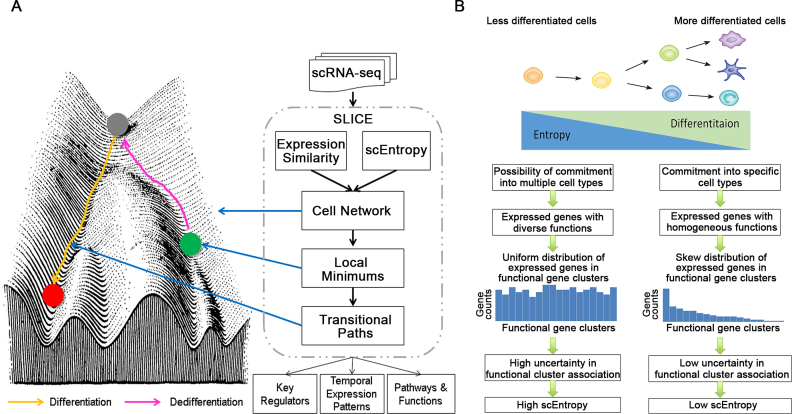
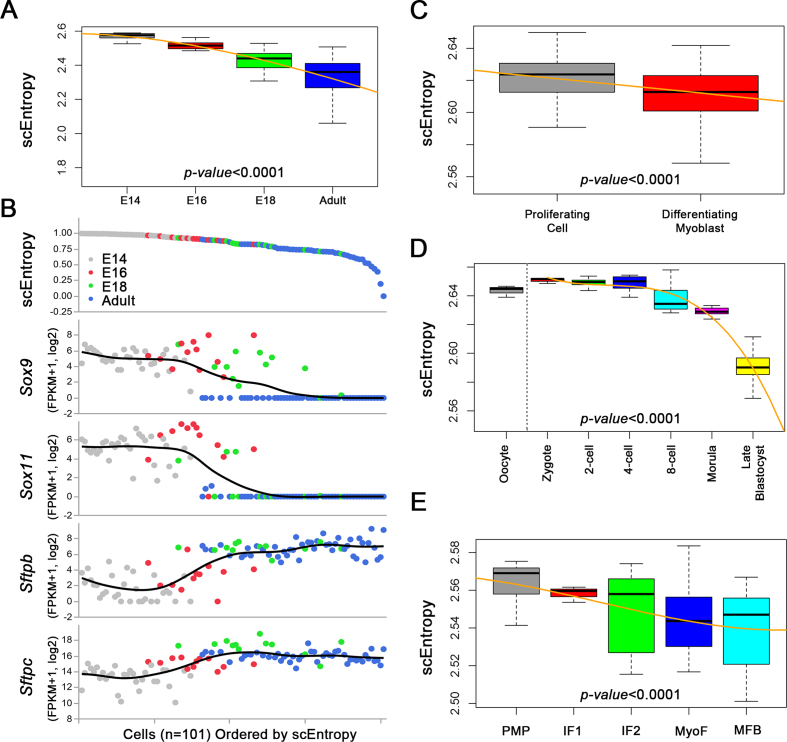
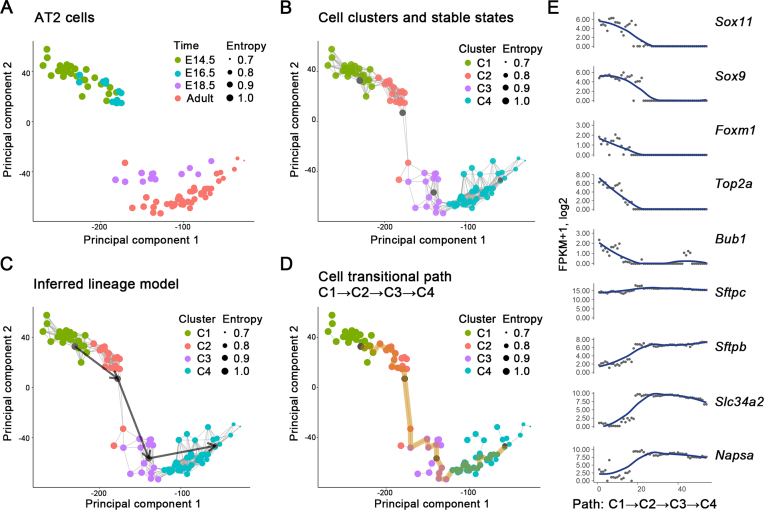
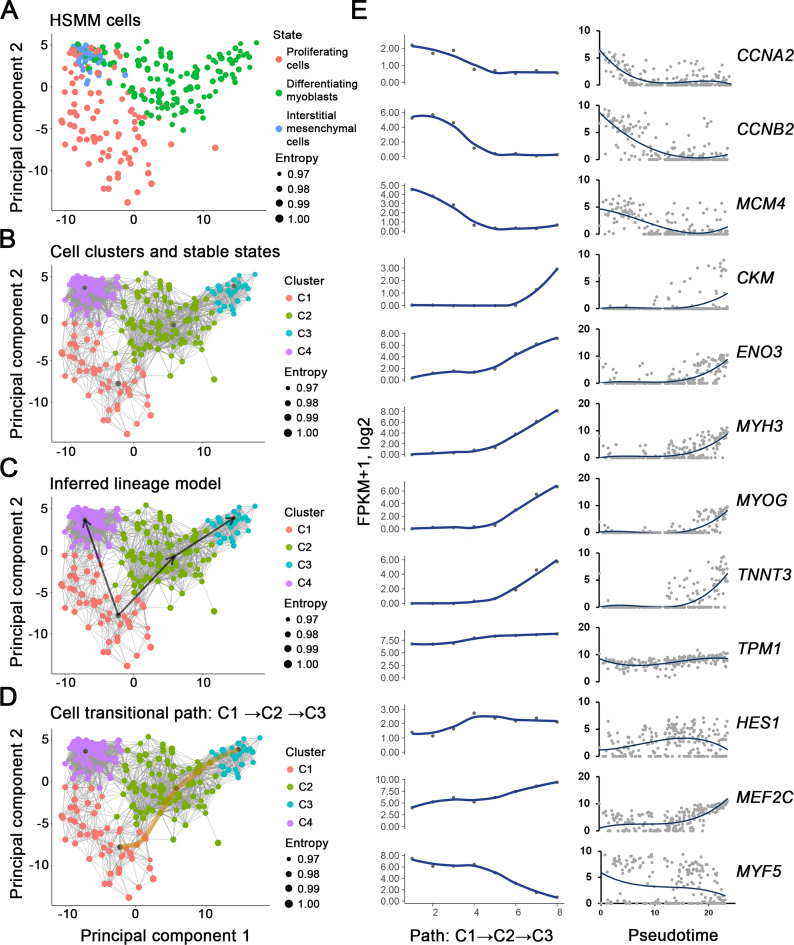
A complex organ contains a variety of cell types, each with its own distinct lineage and function. Understanding the lineage and differentiation state of each cell is fundamentally important for the ultimate delineation of organ formation and function. We developed SLICE, a novel algorithm that utilizes single-cell RNA-seq (scRNA-seq) to quantitatively measure cellular differentiation states based on single cell entropy and predict cell differentiation lineages via the construction of entropy directed cell trajectories. We validated our approach using three independent data sets with known lineage and developmental time information from both Homo sapiens and Mus musculus. SLICE successfully measured the differentiation states of single cells and reconstructed cell differentiation trajectories that have been previously experimentally validated. We then applied SLICE to scRNA-seq of embryonic mouse lung at E16.5 to identify lung mesenchymal cell lineage relationships that currently remain poorly defined. A two-branched differentiation pathway of five fibroblastic subtypes was predicted using SLICE. The present study demonstrated the general applicability and high predictive accuracy of SLICE in determining cellular differentiation states and reconstructing cell differentiation lineages in scRNA-seq analysis.
Overview
The claims and statistics of this paper haven’t been checked yet.
Free: it reads the open-access text and checks the first 5 claims that cite a source we can check. Create a free account to check every claim.
Integrity signals
Registry
Cites
Statistics
Figures
Verification
Claims the paper makes
The claims and statistics of this paper haven’t been checked yet.
Free: it reads the open-access text and checks the first 5 claims that cite a source we can check. Create a free account to check every claim.
Claims other papers make about this one
Each is checked against this paper’s own text: does it say what the citing paper says it does?
The cited source says what the claim attributes to it.
In the citing paper
“While gene expression-based models can potentially overcome these limitations (e.g., transcriptional entropy (11–13), pluripotency-associated gene sets (14), and machine learning strategies (15)), their utility across diverse developmental systems and single-cell sequencing technologies is still unclear.”
From Single-cell transcriptional diversity is a hallmark of developmental potential (2020) · cites this paper as [13]
Self-check
Percentages, sums and reported differences re-computed from the paper’s own numbers.
The self-check needs the paper’s full text.
Citations
Cites
Systematic and integrative analysis of large gene lists using DAVID bioinformatics resources
Huang, D. W., Sherman, B. T., & Lempicki, R. A. (2009) · Nature Protocols · doi:10.1038/nprot.2008.211 · Cited by 35,890
Fast unfolding of communities in large networks
Blondel, V. D., Guillaume, J.-L., Lambiotte, R., & Lefebvre, E. (2008) · Journal of Statistical Mechanics: Theory and Experiment · doi:10.1088/1742-5468/2008/10/p10008 · Cited by 21,424 · cited 1×
“After constructing the cellcell network N(S), the Louvain algorithm (19) was utilized to partition the cells in N(S) into multiple non-overlapping cell communities (clusters).”
Huang, D. W., Sherman, B. T., & Lempicki, R. A. (2009) · Nucleic Acids Research · doi:10.1093/nar/gkn923 · Cited by 14,108 · cited 3×
“late scEntropy, SLICE first computes pairwise gene functional similarities by applying Kappa statistics (12) to Gene Ontology annotations of the human or mouse genome, and then partitions genes into distinct functional clusters based on their functional similarity.”
InfluentialWood, S. N. (2011) · Journal of the Royal Statistical Society Series B: Statistical Methodology · doi:10.1111/j.1467-9868.2010.00749.x · Cited by 7,537
Trapnell, C., Cacchiarelli, D., Grimsby, J., Pokharel, P., Li, S., Morse, M., Lennon, N. J., Livak, K. J., Mikkelsen, T. S., & Rinn, J. L. (2014) · Nature Biotechnology · doi:10.1038/nbt.2859 · Cited by 7,314
Estimating the Number of Clusters in a Data Set Via the Gap Statistic
Tibshirani, R., Walther, G., & Hastie, T. (2001) · Journal of the Royal Statistical Society Series B: Statistical Methodology · doi:10.1111/1467-9868.00293 · Cited by 6,205 · cited 2×
“The number of clusters can be determined by Gap statistic (20,21).”
Single-cell RNA-seq highlights intratumoral heterogeneity in primary glioblastoma
Patel, A. P., Tirosh, I., Trombetta, J. J., Shalek, A. K., Gillespie, S. M., Wakimoto, H., Cahill, D. P., Nahed, B. V., Curry, W. T., Martuza, R. L., et al. (2014) · Science · doi:10.1126/science.1254257 · Cited by 5,063
ToppGene Suite for gene list enrichment analysis and candidate gene prioritization
Chen, J., Bardes, E. E., Aronow, B. J., & Jegga, A. G. (2009) · Nucleic Acids Research · doi:10.1093/nar/gkp427 · Cited by 2,952 · cited 1×
“To further validate the prediction, we identified lineage dependent differentially expressed genes using the method and criteria as described in the Methods section and assessed their enriched functional annotations using Toppgene suite (29).”
Single-cell RNA-Seq profiling of human preimplantation embryos and embryonic stem cells
Yan, L., Yang, M., Guo, H., Yang, L., Wu, J., Li, R., Liu, P., Lian, Y., Zheng, X., Yan, J., et al. (2013) · Nature Structural & Molecular Biology · doi:10.1038/nsmb.2660 · Cited by 1,740 · cited 12×
“The scRNA-seq and cell type information of AT2, HSMM, HEE cells were obtained from Treutlein et al. (13), Trapnell et al. (7), Yan et al. (14), respectively.”
MethodInfluentialReconstructing lineage hierarchies of the distal lung epithelium using single-cell RNA-seq
Treutlein, B., Brownfield, D. G., Wu, A. R., Neff, N. F., Mantalas, G. L., Espinoza, F. H., Desai, T. J., Krasnow, M. A., & Quake, S. R. (2014) · Nature · doi:10.1038/nature13173 · Cited by 1,342 · cited 5×
“To validate the accuracy and robustness of SLICE predictions, we applied SLICE to three independent scRNAseq data sets (7,13,14) with known lineage and developmental time information.”
Influential
Research works printed but not linked: 1
- Shin J., Berg D.A., Zhu Y., Shin J.Y., Song J., Bonaguidi M.A., Enikolopov G., Nauen D.W., Christian K.M., Ming G.L. Single-cell RNA-Seq with waterfall reveals molecular cascades underlying adult neurogenesis. Cell Stem Cell. 2015. PMC8638014 26299571 · DOI · Paper page
Cited by
A comparison of single-cell trajectory inference methods
Saelens, W., Cannoodt, R., Todorov, H., & Saeys, Y. (2019) · Nature Biotechnology · doi:10.1038/s41587-019-0071-9 · Cited by 1,670
Single-cell transcriptional diversity is a hallmark of developmental potential
Gulati, G. S., Sikandar, S. S., Wesche, D. J., Manjunath, A., Bharadwaj, A., Berger, M. J., Ilagan, F., Kuo, A. H., Hsieh, R. W., Cai, S., et al. (2020) · Science · doi:10.1126/science.aax0249 · Cited by 1,571
Construction of a human cell landscape at single-cell level
Han, X., Zhou, Z., Fei, L., Sun, H., Wang, R., Chen, Y., Chen, H., Wang, J., Tang, H., Ge, W., et al. (2020) · Nature · doi:10.1038/s41586-020-2157-4 · Cited by 1,087
The Cellular and Physiological Basis for Lung Repair and Regeneration: Past, Present, and Future
Basil, M. C., Katzen, J., Engler, A. E., Guo, M., Herriges, M. J., Kathiriya, J. J., Windmueller, R., Ysasi, A. B., Zacharias, W. J., Chapman, H. A., et al. (2020) · Cell Stem Cell · doi:10.1016/j.stem.2020.03.009 · Cited by 414
Self-citationSingle-Cell Transcriptomics Meets Lineage Tracing
Kester, L., & van Oudenaarden, A. (2018) · Cell Stem Cell · doi:10.1016/j.stem.2018.04.014 · Cited by 375
Single-cell entropy for accurate estimation of differentiation potency from a cell’s transcriptome
Teschendorff, A. E., & Enver, T. (2017) · Nature Communications · doi:10.1038/ncomms15599 · Cited by 346
Profiling cell identity and tissue architecture with single-cell and spatial transcriptomics
Gulati, G. S., D’Silva, J. P., Liu, Y., Wang, L., & Newman, A. M. (2025) · Nature Reviews Molecular Cell Biology · doi:10.1038/s41580-024-00768-2 · Cited by 293
Zou, Y., Ye, F., Kong, Y., Hu, X., Deng, X., Xie, J., Song, C., Ou, X., Wu, S., Wu, L., et al. (2023) · Advanced Science · doi:10.1002/advs.202203699 · Cited by 278
Improved reconstruction of single-cell developmental potential with CytoTRACE 2
Kang, M., Gulati, G. S., Brown, E. L., Qi, Z., Avagyan, S., Armenteros, J. J. A., Gleyzer, R., Zhang, W., Steen, C. B., D’Silva, J. P., et al. (2025) · Nature Methods · doi:10.1038/s41592-025-02857-2 · Cited by 229
Guo, M., Du, Y., Gokey, J. J., Ray, S., Bell, S. M., Adam, M., Sudha, P., Perl, A. K., Deshmukh, H., Potter, S. S., et al. (2019) · Nature Communications · doi:10.1038/s41467-018-07770-1 · Cited by 218
Self-citationLungMAP: The Molecular Atlas of Lung Development Program
Ardini-Poleske, M. E., Clark, R. F., Ansong, C., Carson, J. P., Corley, R. A., Deutsch, G. H., Hagood, J. S., Kaminski, N., Mariani, T. J., Potter, S. S., et al. (2017) · American Journal of Physiology-Lung Cellular and Molecular Physiology · doi:10.1152/ajplung.00139.2017 · Cited by 212
“Methodologies are being developed for single-cell and sorted-cell isolation, and computer programs for analysis of single-cell RNA, including Sincera (8), SLICE (7), LungGENS, LungIMAGE, and Lung Gene Expression Atlas (LGEA) (6), have been produced for the LungMAP project.”
MethodSelf-citationBuilding and Regenerating the Lung Cell by Cell
Whitsett, J. A., Kalin, T. V., Xu, Y., & Kalinichenko, V. V. (2019) · Physiological Reviews · doi:10.1152/physrev.00001.2018 · Cited by 204
“D: a branched differentiation model of AT1 and AT2 cell differentiation from bipotent progenitors was inferred using SLICE (109).”
BackgroundMethodInfluentialSelf-citationSingle-cell sequencing to multi-omics: technologies and applications
Wu, X., Yang, X., Dai, Y., Zhao, Z., Zhu, J., Guo, H., & Yang, R. (2024) · Biomarker Research · doi:10.1186/s40364-024-00643-4 · Cited by 222
“Higher entropy values suggest a greater stemness, indicating a more primitive and undifferentiated state [29].”
BackgroundTemporal modelling using single-cell transcriptomics
Ding, J., Sharon, N., & Bar-Joseph, Z. (2022) · Nature Reviews Genetics · doi:10.1038/s41576-021-00444-7 · Cited by 195
“Another group of popular pseudo-time inference methods including single-cell lineage inference using cell expression similarity and entropy (SLICE) 39 do not require the user to define root cells.”
MethodHerring, C. A., Banerjee, A., McKinley, E. T., Simmons, A. J., Ping, J., Roland, J. T., Franklin, J. L., Liu, Q., Gerdes, M. J., Coffey, R. J., et al. (2018) · Cell Systems · doi:10.1016/j.cels.2017.10.012 · Cited by 184
“1 (cre/ERT2)Rjc/J The Jackson Laboratory JAX: 018418 Mouse:VillinCreERT2;Atoh1fl/fl Kim et al., 2014 N/A Software and Algorithms Matlab Mathworks https://www.mathworks.com/ t-SNE (Matlab toolbox) van der Maaten and Hinton, 2011 https://lvdmaaten.github.io/tsne/ Cytobank (SPADE) Qiu et al., 2011 https://www.cytobank.or…”
Zheng, R., Li, M., Liang, Z., Wu, F.-X., Pan, Y., & Wang, J. (2019) · Bioinformatics · doi:10.1093/bioinformatics/btz139 · Cited by 169
Transcriptional heterogeneity of fibroblasts is a hallmark of the aging heart
Vidal, R., Wagner, J. U. G., Braeuning, C., Fischer, C., Patrick, R., Tombor, L., Muhly-Reinholz, M., John, D., Kliem, M., Conrad, T., et al. (2019) · JCI Insight · doi:10.1172/jci.insight.131092 · Cited by 167
Cell lineage and communication network inference via optimization for single-cell transcriptomics
Wang, S., Karikomi, M., MacLean, A. L., & Nie, Q. (2019) · Nucleic Acids Research · doi:10.1093/nar/gkz204 · Cited by 154
“Gene dynamics along pseudotime for embryonic markers (Supplementary Figure S5H) show good agreement between the predicted dynamics and previous studies (57).”
ResultBrown, M. S., Abdollahi, B., Wilkins, O. M., Lu, H., Chakraborty, P., Ognjenovic, N. B., Muller, K. E., Jolly, M. K., Christensen, B. C., Hassanpour, S., et al. (2022) · Science Advances · doi:10.1126/sciadv.abj8002 · Cited by 162
Single-cell senescence identification reveals senescence heterogeneity, trajectory, and modulators
Tao, W., Yu, Z., & Han, J.-D. J. (2024) · Cell Metabolism · doi:10.1016/j.cmet.2024.03.009 · Cited by 147
Jin, S., MacLean, A. L., Peng, T., & Nie, Q. (2018) · Bioinformatics · doi:10.1093/bioinformatics/bty058 · Cited by 120
Statistical mechanics meets single-cell biology
Teschendorff, A. E., & Feinberg, A. P. (2021) · Nature Reviews Genetics · doi:10.1038/s41576-021-00341-z · Cited by 139
Malagola, E., Vasciaveo, A., Ochiai, Y., Kim, W., Zheng, B., Zanella, L., Wang, A. L. E., Middelhoff, M. A., Nienhüser, H., Deng, L., et al. (2024) · Cell · doi:10.1016/j.cell.2024.05.004 · Cited by 109
Kong, W., Biddy, B. A., Kamimoto, K., Amrute, J. M., Butka, E. G., & Morris, S. A. (2020) · Nature Protocols · doi:10.1038/s41596-019-0247-2 · Cited by 92
“In this respect, Monocle 18,19 was an early leader, using dimensionality reduction via independent component analysis to project cells in a two-dimensional space.”
MethodKim, J., Li, B., Fei, L., Horne, R. G., Lee, D., Loe, A. K. H., Miyake, H., Ayar, E., Gurma, M., Kim, D., et al. (2022) · Immunity · doi:10.1016/j.immuni.2022.11.003 · Cited by 103
What are the applications of single-cell RNA sequencing in cancer research: a systematic review
Li, L., Xiong, F., Wang, Y., Zhang, S., Gong, Z., Li, X., He, Y., Shi, L., Wang, F., Liao, Q., et al. (2021) · Journal of Experimental & Clinical Cancer Research · doi:10.1186/s13046-021-01955-1 · Cited by 112
“Currently available algorithms include Monocle 2 [61], Monocle 3 [62], TSCAN [63], Slingshot [64], SLICE [65], LISA [66], p-Creode [67], WaddingtonOT [68] and others.”
Endale, M., Ahlfeld, S., Bao, E., Chen, X., Green, J., Bess, Z., Weirauch, M. T., Xu, Y., & Perl, A. K. (2017) · Developmental Biology · doi:10.1016/j.ydbio.2017.03.020 · Cited by 82
Self-citationSingle-cell omics: experimental workflow, data analyses and applications
Sun, F., Li, H., Sun, D., Fu, S., Gu, L., Shao, X., Wang, Q., Dong, X., Duan, B., Xing, F., et al. (2024) · Science China Life Sciences · doi:10.1007/s11427-023-2561-0 · Cited by 102
Pan, H., Deutsch, G. H., Wert, S. E., Subcommittee, O. B. O. T. O., Ambalavanan, N., Ansong, C., Ardini-Poleske, M. E., Bagwell, J., Chan, C., Deutsch, G. H., et al. (2019) · Journal of Biomedical Semantics · doi:10.1186/s13326-019-0209-1 · Cited by 73
Using single-cell RNA sequencing to unravel cell lineage relationships in the respiratory tract
Zaragosi, L., Deprez, M., & Barbry, P. (2020) · Biochemical Society Transactions · doi:10.1042/bst20191010 · Cited by 78
Halbritter, F., Farlik, M., Schwentner, R., Jug, G., Fortelny, N., Schnöller, T., Pisa, H., Schuster, L. C., Reinprecht, A., Czech, T., et al. (2019) · Cancer Discovery · doi:10.1158/2159-8290.cd-19-0138 · Cited by 67
Capybara: A computational tool to measure cell identity and fate transitions
Kong, W., Fu, Y. C., Holloway, E. M., Garipler, G., Yang, X., Mazzoni, E. O., & Morris, S. A. (2022) · Cell Stem Cell · doi:10.1016/j.stem.2022.03.001 · Cited by 64
Exploring single cells in space and time during tissue development, homeostasis and regeneration
Mayr, U., Serra, D., & Liberali, P. (2019) · Development · doi:10.1242/dev.176727 · Cited by 63
Predicting cell lineages using autoencoders and optimal transport
Yang, K. D., Damodaran, K., Venkatachalapathy, S., Soylemezoglu, A. C., Shivashankar, G. V., & Uhler, C. (2020) · PLOS Computational Biology · doi:10.1371/journal.pcbi.1007828 · Cited by 61
“These strategies (including Monocle [4], Monocle2 [5], SLICE [6], Waterfall [7], TSCAN [8], SCUBA [9], Wanderlust [10], Wishbone [11], PAGA [12], PBA [13] and others) generally combine techniques such as Principle Component Analysis (PCA), Independent Component Analysis (ICA), or t-Distributed Stochastic Neighbor Embe…”
MethodQuantifying Waddington’s epigenetic landscape: a comparison of single-cell potency measures
Shi, J., Teschendorff, A. E., Chen, W., Chen, L., & Li, T. (2018) · Briefings in Bioinformatics · doi:10.1093/bib/bby093 · Cited by 76
Sha, Y., Wang, S., Zhou, P., & Nie, Q. H. (2020) · Nucleic Acids Research · doi:10.1093/nar/gkaa725 · Cited by 63
Hu, X., Yang, P., Chen, S., Wei, G., Yuan, L., Yang, Z., Gong, L., He, L., Yang, L., Peng, S., et al. (2023) · Breast Cancer Research · doi:10.1186/s13058-023-01639-y · Cited by 69
“scRNA‐seq‐based copy number variation (CNV) detection The InferCNV package [27] was used to detect CNV in malignant breast cells.”
MethodChen, W., Morabito, S., Kessenbrock, K., Enver, T., Meyer, K. B., & Teschendorff, A. E. (2019) · Communications Biology · doi:10.1038/s42003-019-0554-8 · Cited by 62
Ji, G., Yang, Q., Wang, S., Yan, X., Ou, Q., Gong, L., Zhao, J., Zhou, Y., Tian, F., Lei, J., et al. (2024) · Genome Medicine · doi:10.1186/s13073-024-01320-9 · Cited by 68
“SLICE (https:// resea rch. cchmc. org/ pbge/ slice. html) was applied to determine the single-cell entropy (scEntropy) of cancer cells [44].”
MethodKannan, S., Farid, M., Lin, B. L., Miyamoto, M., & Kwon, C. (2021) · PLOS Computational Biology · doi:10.1371/journal.pcbi.1009305 · Cited by 52
“Shannon entropy is also utilized in SLICE [27], which computes entropy based on functional annotations of genes, and SCENT [25], which computes entropy within a proteinprotein interaction network.”
MethodDeciphering Cell Fate Decision by Integrated Single-Cell Sequencing Analysis
Sagar, & Grün, D. (2020) · Annual Review of Biomedical Data Science · doi:10.1146/annurev-biodatasci-111419-091750 · Cited by 53
“SLICE: determining cell differentiation and lineage based on single cell entropy.”
MethodInfluentialRiccetti, M., Gokey, J. J., Aronow, B. J., & Perl, A. T. (2020) · Matrix Biology · doi:10.1016/j.matbio.2020.05.002 · Cited by 57
“Lung epithelial cells make fate decisions early and can be grouped by hallmark gene expression into relatively nonoverlapping subpopulations, thus incredibly amenable to scRNA-seq analysis [64, 115, 145, 146].”
BackgroundThe cytoskeletal regulator HEM1 governs B cell development and prevents autoimmunity
Salzer, E., Zoghi, S., Kiss, M. G., Kage, F., Rashkova, C., Stahnke, S., Haimel, M., Platzer, R., Caldera, M., Ardy, R. C., et al. (2020) · Science Immunology · doi:10.1126/sciimmunol.abc3979 · Cited by 48
“By quantifying the connectivity of partitions with partition-based graph abstraction (71), the UMAP was recalculated and subclusters within the B cell and T cell identified using the Leiden algorithm with a resolution of 0.”
MethodSingle-Cell Transcriptomic Analysis of Dental Pulp and Periodontal Ligament Stem Cells
Yang, Y., Alves, T., Miao, M. Z., Wu, Y. C., Li, G., Lou, J., Hastürk, H., Dyke, T. E. V., Kantarcı, A., & Wu, D. (2023) · Journal of Dental Research · doi:10.1177/00220345231205283 · Cited by 50
“The differentiation potential of the cells from each cluster was quantitatively measured by single-cell entropy (scEn-tropy) score using the SLICE package with default parameters (Guo et al. 2017).”
MethodDing, J., Aronow, B. J., Kaminski, N., Kitzmiller, J., Whitsett, J. A., & Bar-Joseph, Z. (2018) · Genome Research · doi:10.1101/gr.225979.117 · Cited by 43
Self-citationThe Human Cell Atlas: Technical approaches and challenges
Hon, C.-C., Shin, J. W., Carninci, P., & Stubbington, M. J. T. (2018) · Briefings in Functional Genomics · doi:10.1093/bfgp/elx029 · Cited by 43
“Tools for definition of cell identity Goals Methods/features Tools Dimensionality reduction Linear, PCA PCA [93] Non-linear, t-SNE embedding t-SNE [94] Nonlinear, diffusion map destiny [97] Nonlinear, non-negative matrix factorization Nimfa [95], NMFEM [96] Linear, specifically designed to model, or to impute, dropout…”
Towards a Quantitative Understanding of Cell Identity
Ye, Z., & Sarkar, C. A. (2018) · Trends in Cell Biology · doi:10.1016/j.tcb.2018.09.002 · Cited by 38
“The SLICE model mentioned earlier is also based on a similar assumption of functional activation promiscuity in pluripotent cells, which are postulated to have more evenly distributed activation across functional classes of genes [48].”
BackgroundMethodInfluentialMapping the Single-Cell Differentiation Landscape of Osteosarcoma
Truong, D. D., Weistuch, C., Murgas, K. A., Admane, P. S., King, B. L., Lee, J. C., Lamhamedi-Cherradi, S.-E., Swaminathan, J., Daw, N. C., Gordon, N. B., et al. (2024) · Clinical Cancer Research · doi:10.1158/1078-0432.ccr-24-0563 · Cited by 39
Inferring cell trajectories of spatial transcriptomics via optimal transport analysis
Shen, X., Zuo, L., Ye, Z., Yuan, Z., Huang, K., Li, Z., Yu, Q., Zou, X., Wei, X., Xu, P., et al. (2025) · Cell Systems · doi:10.1016/j.cels.2025.101194 · Cited by 58
Johnson, C., Williams, M., Sham, K., Belluschi, S., Ma, W., Wang, X., Lau, W. W. Y., Kaufmann, K. B., Krivdova, G., Calderbank, E. F., et al. (2024) · Blood · doi:10.1182/blood.2023021426 · Cited by 49
“Finally, we calculated scEntropy scores, which decrease during differentiation fate decisions 41 . scEntropy scores significantly decreased only after 6h (Fig.2L), supporting the concept that cell fate decisions occur at the 6 to 24h transition.”
Computational Stem Cell Biology: Open Questions and Guiding Principles
Cahan, P., Cacchiarelli, D., Dunn, S.-J., Hemberg, M., Lopes, S. M. C. D. S., Morris, S. A., Rackham, O. J. L., del Sol, A., & Wells, C. A. (2021) · Cell stem cell · doi:10.1016/j.stem.2020.12.012 · Cited by 42
Single-Cell Computational Strategies for Lineage Reconstruction in Tissue Systems
Herring, C. A., Chen, B., McKinley, E. T., & Lau, K. S. (2018) · Cellular and Molecular Gastroenterology and Hepatology · doi:10.1016/j.jcmgh.2018.01.023 · Cited by 35
“47,48 For studies with minimal or unreliable prior knowledge, completely unsupervised methods that leverage general gene expression patterns may be used.”
BackgroundRen, H., Wen, Q., Zhao, Q., Wang, N., & Zhao, Y. (2022) · Frontiers in Physiology · doi:10.3389/fphys.2022.993478 · Cited by 39
“SLICE analysis was used to explore the genealogy and differentiation status within subpopulations of MSCs by calculating the entropy (Guo et al., 2017).”
MethodBridges, J. P., Sudha, P., Lipps, D., Wagner, A. J., Guo, M., Du, Y., Brown, K. R., Filuta, A. L., Kitzmiller, J. A., Stockman, C. A., et al. (2020) · American Journal of Physiology-Lung Cellular and Molecular Physiology · doi:10.1152/ajplung.00459.2019 · Cited by 40
Self-citationUltra-fast scalable estimation of single-cell differentiation potency from scRNA-Seq data
Teschendorff, A. E., Maity, A. K., Hu, X., Weiyan, C., & Lechner, M. (2020) · Bioinformatics · doi:10.1093/bioinformatics/btaa987 · Cited by 38
“Briefly, SLICE computes a Shannon entropy over a geneontology (GO) cluster activation profile, where the activation level of a GO-cluster is derived from the average expression of genes mapping to that GO-cluster.”
MethodInfluentialEntropy as a measure of variability and stemness in single-cell transcriptomics
Gandrillon, O., Gaillard, M., Espinasse, T., Garnier, N., Dussiau, C., Kosmider, O., & Sujobert, P. (2021) · Current Opinion in Systems Biology · doi:10.1016/j.coisb.2021.05.009 · Cited by 37
Characterizing Cellular Differentiation Potency and Waddington Landscape via Energy Indicator
Li, H., Long, C., Hong, Y., Luo, L., & Zuo, Y. (2023) · Research · doi:10.34133/research.0118 · Cited by 36
“Subsequently, numerous popular “entropy” models were introduced to infer landscapes from biological data [17,18,20,42].”
BackgroundMethodInfluentialAge- and Microbiota-Dependent Cell Stemness Plasticity Revealed by Cattle Cell Landscape
Wu, J., Zhu, S., Tang, Y., Gu, F., Valencak, T. G., Liu, J., & Sun, H. (2023) · Research · doi:10.34133/research.0025 · Cited by 33
“Novel algorithms for quantitatively measuring cellular stemness states at the singlecell level from scRNAseq data have emerged [11] and were successfully applied in a recent study on human Citation: Wu JJ, Zhu S, Tang YF, Gu F, Valencak TG, Liu JX, Sun HZ.”
BackgroundMethodInfluentialThermal Resonance and Cell Behavior
Lucia, U., & Grisolia, G. (2020) · Entropy · doi:10.3390/e22070774 · Cited by 34
Jiang, Z., Wu, F., Laise, P., Tanaka, T., Fu, N., Kim, W., Kobayashi, H., Chang, W., Takahashi, R., Valenti, G., et al. (2023) · Cell stem cell · doi:10.1016/j.stem.2023.07.002 · Cited by 27
Application of Single-Cell and Spatial Omics in Musculoskeletal Disorder Research
Feng, S., Li, J., Tian, J., Lu, S., & Zhao, Y. (2023) · International Journal of Molecular Sciences · doi:10.3390/ijms24032271 · Cited by 35
“Among advanced tools for trajectory construction, Monocle [38] has a widespread usage, while similar methods such as TSCAN [39], Slingshot [40], SLICE [41], and PAGA [42] are not commonly adopted in the research of diseases.”
MethodRosales-Alvarez, R. E., Rettkowski, J., Herman, J. S., Dumbović, G., Cabezas‐Wallscheid, N., & Grün, D. (2023) · Genome biology · doi:10.1186/s13059-023-02974-1 · Cited by 33
Shi, J., Li, T., Chen, L., & Aihara, K. (2019) · PLoS Computational Biology · doi:10.1371/journal.pcbi.1007488 · Cited by 33
“LDD TSCAN Monocle2 Diffusion map DPT SLICER Slingshot Basic Model Birth-death Dynamics Distance on tree/ graph Distance on tree/ graph Distance on tree/ graph Distance on tree/ graph Distance on tree/ graph Distance on tree/ graph Not use a root cell as input Yes No No No No No No Dimension Reduction Yes Yes Yes Yes Y…”
MethodInfluentialHuman Cell Atlas and cell-type authentication for regenerative medicine
Panina, Y., Karagiannis, P., Kurtz, A., Stacey, G. N., & Fujibuchi, W. (2020) · Experimental & Molecular Medicine · doi:10.1038/s12276-020-0421-1 · Cited by 32
Cellular origins and lineage relationships of the intestinal epithelium
Capdevila, C., Trifas, M., Miller, J. D., Anderson, T., Sims, P. A., & Yan, K. S. (2021) · American Journal of Physiology-Gastrointestinal and Liver Physiology · doi:10.1152/ajpgi.00188.2021 · Cited by 30
Wu, D., Bi, X., & Chow, H. (2024) · Journal of Neuroinflammation · doi:10.1186/s12974-023-02987-4 · Cited by 32
“Using the SCENT entropy-based method, cells labeled with higher entropies representing greater gene expression profile diversity were first deployed in the analyses [27, 56, 57], which revealed that Subclusters 3 and 9 (Fig.”
MethodDave, A., Charytonowicz, D., Francoeur, N. J., Beaumont, M. A., Beaumont, K. G., Schmidt, H., Zeleke, T. Z., Silva, J., & Sebra, R. (2023) · Cellular Oncology · doi:10.1007/s13402-022-00765-7 · Cited by 29
Metaplastic regeneration in the mouse stomach requires a reactive oxygen species pathway
Miao, Z., Sun, J., Huang, X., Bai, S., Pang, M.-J., Li, J., Chen, H., Tong, Q.-Y., Ye, S.-Y., Wang, X., et al. (2024) · Developmental Cell · doi:10.1016/j.devcel.2024.03.002 · Cited by 30
TMEM127 suppresses tumor development by promoting RET ubiquitination, positioning, and degradation
Guo, Q., Cheng, Z., Gonzalez‐Cantu, H., Rotondi, M. L., Huelgas‐Morales, G., Ethiraj, P., Qiu, Z., Lefkowitz, J., Song, W., Landry, B. N., et al. (2023) · Cell Reports · doi:10.1016/j.celrep.2023.113070 · Cited by 26
“Using SLICE, 31 cluster CC4 showed the highest instability and greater potential to differentiate (Figure 1H), supporting a role for this cluster as the “earliest” subpopulation along a hierarchical differentiation trajectory, while the SCP cluster showed the highest stability, consistent with a…”
Ye, F., Zhang, G., Weigao, E., Chen, H., Yu, C., Yang, L. X., Fu, Y., Li, J., Fu, S., Sun, Z., et al. (2022) · Nature Communications · doi:10.1038/s41467-022-31879-z · Cited by 24
Jiang, J., Xu, C., Han, D., Lu, Y., Yang, F., Wang, J., Yan, X., Mu, X., Zhang, J., Jia, C., et al. (2024) · Biomarker Research · doi:10.1186/s40364-024-00656-z · Cited by 30
“5A) and SLICE analysis (Table S6) [41].”
scRCMF: Identification of Cell Subpopulations and Transition States From Single-Cell Transcriptomes
Zheng, X., Jin, S., Nie, Q. H., & Zou, X. (2019) · IEEE Transactions on Biomedical Engineering · doi:10.1109/tbme.2019.2937228 · Cited by 23
“For example, SLICE and SCENT both quantify cell potency and cellular differentiation processes using entropy-based measures [6], [7].”
MethodLaise, P., Turunen, M. M., Garcia, A. C., Tomassoni, L., Maurer, H. C., Elyada, E., Schmierer, B., Worley, J., Kesner, J. S., Tan, X., et al. (2020) · bioRxiv (Cold Spring Harbor Laboratory) · doi:10.1101/2020.10.27.357269 · Cited by 21
Mapping the regulatory landscape of auditory hair cells from single-cell multi-omics data
Wang, S., Lee, M. P., Jones, S., Liu, J., & Waldhaus, J. (2021) · Genome Research · doi:10.1101/gr.271080.120 · Cited by 21
NetMix: A Network-Structured Mixture Model for Reduced-Bias Estimation of Altered Subnetworks
Reyna, M. A., Chitra, U., Elyanow, R., & Raphael, B. J. (2021) · Journal of Computational Biology · doi:10.1089/cmb.2020.0435 · Cited by 19
“widely-used tools with diverse applications; a few recent examples include mass-spectrometry proteomics [51, 58], damaging de novo mutations in schizophrenia and other neurological disorders [36, 17], and single-cell RNA-seq [37, 85, 52].”
MethodSingle-Cell Transcriptome Analysis Using SINCERA Pipeline
Guo, M., & Xu, Y. J. (2018) · Methods in molecular biology · doi:10.1007/978-1-4939-7710-9_15 · Cited by 16
“…SAMstrt [26] and SCDE [20] for single-cell differential expression analysis; and Monocle [21], Wanderlust [27], SCUBA [28], Waterfall [29], StemID [16], and SLICE [30] for extracting lineage relationships from scRNA-Seq and modeling the dynamic changes associated with cellular biological processes.”
MethodSelf-citationEstimating Differentiation Potency of Single Cells Using Single-Cell Entropy (SCENT)
Chen, W., & Teschendorff, A. E. (2019) · Methods in molecular biology · doi:10.1007/978-1-4939-9057-3_9 · Cited by 20
Shen, R., Li, P., Zhang, B., Feng, L., & Cheng, S. (2022) · Journal of Translational Medicine · doi:10.1186/s12967-022-03661-8 · Cited by 18
“In addition, the cell differentiation potential metric scEntropy [32] was much lower in C1-2 cells (Fig.”
BackgroundZhao, H., Chen, C., Tian, Y., Song, H.-Q., Wang, X.-X., Li, Y.-J., He, J.-F., & Zhao, H. (2023) · iScience · doi:10.1016/j.isci.2023.106862 · Cited by 20
An increment of diversity method for cell state trajectory inference of time-series scRNA-seq data
Hong, Y., Li, H., Long, C., Liang, P., Zhou, J., & Zuo, Y. (2024) · Fundamental Research · doi:10.1016/j.fmre.2024.01.020 · Cited by 17
“In recent years, a series of trajectory inference methods based on scRNA-seq data have been developed [5–9] .”
Zhang, Y., Kang, Z., Liu, M., Wang, L., & Liu, F. (2024) · Developmental Cell · doi:10.1016/j.devcel.2024.02.010 · Cited by 15
Ma, W., Tong, W. U., ZHANG, Z., Li, H., Situ, G., Yin, C., Ye, X., Chen, M., Zhao, X., He, K., et al. (2022) · Journal of Integrative Agriculture · doi:10.1016/s2095-3119(20)63394-9 · Cited by 17
Regeneration in the enteropneust hemichordate, Ptychodera flava, and its evolutionary implications
Arimoto, A., & Tagawa, K. (2018) · Development Growth & Differentiation · doi:10.1111/dgd.12557 · Cited by 18
Transiently Increased Coordination in Gene Regulation During Cell Phenotypic Transitions
Wang, W., Ni, K., Poe, D., & Xing, J. (2024) · PRX Life · doi:10.1103/prxlife.2.043009 · Cited by 22
Uncovering cellular networks in branching morphogenesis using single-cell transcriptomics
Goodwin, K., & Nelson, C. M. (2020) · Current topics in developmental biology/Current Topics in Developmental Biology · doi:10.1016/bs.ctdb.2020.09.004 · Cited by 13
TiC2D: Trajectory Inference From Single-Cell RNA-Seq Data Using Consensus Clustering
Gan, Y., Li, N., Guo, C., Zou, G., Guan, J., & Zhou, S. (2021) · IEEE Transactions on Computational Biology and Bioinformatics · doi:10.1109/tcbb.2021.3061720 · Cited by 16
“SLICE [16] quantitatively measures the cellular differentiation states based on the calculated single-cell entropy and further infers a lineage model by constructing a directed minimum spanning tree among the identified clusters.”
Identification and characterization of human retinal stem cells capable of retinal regeneration
Liu, H., Ma, Y., Gao, N., Zhou, Y., Li, G. L., Zhu, Q., Liu, X., Li, S., Deng, C., Chen, C., et al. (2025) · Science Translational Medicine · doi:10.1126/scitranslmed.adp6864 · Cited by 16
Entropy-based inference of transition states and cellular trajectory for single-cell transcriptomics
Gan, Y., Guo, C., Guo, W., Xu, G., & Zou, G. (2022) · Briefings in Bioinformatics · doi:10.1093/bib/bbac225 · Cited by 16
Liu, Q., Song, Y., Cui, Y., Hu, C., Luo, Y., Hu, D., Wang, H., Li, K., Chen, J., & Xiao, H. (2021) · SSRN Electronic Journal · doi:10.1016/j.biocel.2022.106343 · Cited by 11
Single-Cell Entropy to Quantify the Cellular Order Parameter from Single-Cell RNA-Seq Data
Liu, J., Song, Y., & Lei, J. (2020) · Biophysical Reviews and Letters · doi:10.1142/s1793048020500010 · Cited by 16
Machine Learning Approaches to Single-Cell Data Integration and Translation
Uhler, C., & Shivashankar, G. V. (2022) · Proceedings of the IEEE · doi:10.1109/jproc.2022.3166132 · Cited by 16
Single-Cell RNA Sequencing: A New Window into Cell Scale Dynamics
Dasgupta, S., Bader, G. D., & Goyal, S. (2018) · Biophysical Journal · doi:10.1016/j.bpj.2018.07.003 · Cited by 15
“…in a graph, other distance measures based on ideas from physics and information theory, such as calculating single-cell entropy and then inferring an ordering using a Waddington-like landscape, were applied in single-cell lineage inference using cell expression similarity and entropy (43).”
MethodTsuruyama, T. (2019) · Journal of Theoretical Biology · doi:10.1016/j.jtbi.2019.04.008 · Cited by 11
Seweryn, M. T., Pietrzak, M., & Ma, Q. (2020) · Computational and Structural Biotechnology Journal · doi:10.1016/j.csbj.2020.05.005 · Cited by 15
“According to that, Guo et al. and Liu et al. used the single-cell entropy concept and proposed SLICE and scEGMM [16], respectively, quantifying the differentiation state of a given cell in an unbiased way, where the direction of the transition was correctly estimated form a cross-sectional data…”
Inferring transcriptomic cell states and transitions only from time series transcriptome data
Jo, K., Sung, I., Lee, D., Jang, H., & Kim, S. (2021) · Scientific Reports · doi:10.1038/s41598-021-91752-9 · Cited by 12
Single-cell multi-omics and machine learning for dissecting stemness in cancer
Huang, X., Huang, S., Reina, C., Šabanović, B., Roberto, M., Aicher, A., Tang, J., & Heeschen, C. (2025) · Briefings in Bioinformatics · doi:10.1093/bib/bbaf566 · Cited by 13
““SLICE” estimates the differentiation state of cells by calculating single-cell entropy based on the diversity of gene expression patterns and functional activation probabilities [71].”
Liu, K.-J., Li, H., Tan, Q.-Q., Jiang, T., Peng, K., Chen, H.-J., Zhou, Q., Zhang, X., Zheng, Z., Chen, S., et al. (2024) · Lung Cancer · doi:10.1016/j.lungcan.2024.107933 · Cited by 14
Tsuruyama, T. (2018) · Entropy · doi:10.3390/e20040303 · Cited by 10
““Single cell entropy” was recently introduced as the basis of the microstate of a single cell [24].”
BackgroundIntegrated single-cell analyses decode the developmental landscape of the human fetal spine
Yu, H., Tang, D., Wu, H., Li, C., Lu, Y., He, F., Zhang, X., Yang, Y., Shi, W., Hu, W., et al. (2022) · iScience · doi:10.1016/j.isci.2022.104679 · Cited by 10
He, Y., Yu, F., Tian, Y., Hu, Q., Wang, B., Wang, L., Hu, Y. W., Tao, Y., Chen, X., & Peng, M. (2022) · Frontiers in Immunology · doi:10.3389/fimmu.2022.903513 · Cited by 13
Metadata
- Authors
- Guo, M., Bao, E. L., Wagner, M., Whitsett, J. A., & Xu, Y.
- Affiliations
- Cincinnati Children's Hospital Medical Center (US)
- Harvard University (US)
- Corresponding author
- Guo, Minzhe
- Bao, Erik L.
- Xu, Yan
- Venue
- Nucleic Acids Research
- Publisher
- Oxford University Press (OUP)
- Published
- 2016-12-19
- Volume
- 45
- Issue
- 7
- Pages
- gkw1278
- ISSN
- 0305-1048 (ISSN-L)
- 1362-4962
- PMC
- PMC5397210
- OpenAlex
- W2561394844
- Cited by
- 178
- References
- 34
- Citations by year
- 2026: 1 · 2025: 20 · 2024: 28 · 2023: 21 · 2022: 29 · 2021: 14 · 2020: 24 · 2019: 15 · 2018: 19 · 2017: 7
- FWCI
- 7.10
- Type
- journal article
- Language
- en
- Open access
- gold
- doi.org
- Licence
- Locations
- Nucleic Acids Research (publishedVersion, cc-by-nc)
- Europe PMC (PubMed Central) (publishedVersion, cc-by-nc)
- PubMed Central (publishedVersion, cc-by-nc)
- PubMed (publishedVersion)
- Digital Access to Scholarship at Harvard (DASH) (Harvard University) (submittedVersion, cc-by)
- Funders
- National Institutes of Health
- National Heart, Lung, and Blood Institute (R01HL095580, U01HL122642, R01HL136722)
- Topics
- Life Sciences › Biochemistry, Genetics and Molecular Biology › Molecular Biology › Single-cell and spatial transcriptomics
- Life Sciences › Biochemistry, Genetics and Molecular Biology › Molecular Biology › Gene Regulatory Network Analysis
- Life Sciences › Biochemistry, Genetics and Molecular Biology › Molecular Biology › Developmental Biology and Gene Regulation
- Keywords
- cell differentiation, cell lineage, single-cell RNA sequencing, fibroblast subtypes
- MeSH terms
- Algorithms, Animals, Cell Differentiation, Embryo, Mammalian, Fibroblasts, Humans, Lung, Sequence Analysis, RNA, Cell Lineage, Gene Expression Profiling, Myoblasts, Skeletal, Embryonic Development, Mice, Alveolar Epithelial Cells, Single-Cell Analysis
About these checks
Registry, retraction, Cites and statistics results are computed, not judged, with one exception: a printed reference that no index lists is read once by a model before it counts as a citation error. Claims are extracted by a model and kept only when their quote appears verbatim in the text; each cited source is then checked, with a model’s help, for whether it says what the claim relies on. Those verdicts can be wrong — read the claim’s quote and the cited source before relying on one.
Statistics and arithmetic are recomputed, not judged.
Confidence bands are shown only for fields calibrated on our annotated test set. None is calibrated yet, so no band is shown.
What counts as a claim ›How we measure confidence ›How we check this ›
Are you an author, or do you see a problem with this page? Request a review
Data sources
Bibliographic data: Semantic Scholar, OpenAlex, Crossref.
Contains information from the Semantic Scholar Academic Graph Datasets, made available under the ODC Attribution License (ODC-BY 1.0).
Semantic Scholar’s data is described in: Kinney, R., et al. (2023). The Semantic Scholar Open Data Platform. arXiv:2301.10140.
