

The DOI matches its Crossref record; 45 of the 45 references it cites were found in a registry or an index.
The Candida Genome Database (CGD): incorporation of Assembly 22, systematic identifiers and visualization of high throughput sequencing data
Open accessAbstract
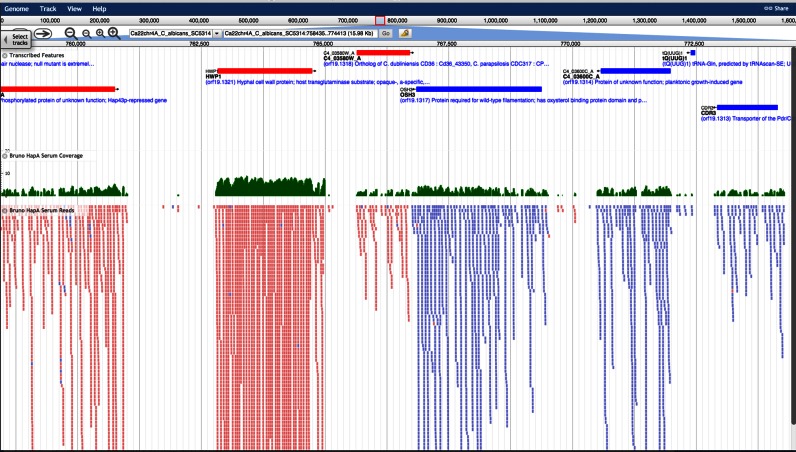
The Candida Genome Database (CGD, http://www.candidagenome.org/) is a freely available online resource that provides gene, protein and sequence information for multiple Candida species, along with web-based tools for accessing, analyzing and exploring these data. The mission of CGD is to facilitate and accelerate research into Candida pathogenesis and biology, by curating the scientific literature in real time, and connecting literature-derived annotations to the latest version of the genomic sequence and its annotations. Here, we report the incorporation into CGD of Assembly 22, the first chromosome-level, phased diploid assembly of the C. albicans genome, coupled with improvements that we have made to the assembly using additional available sequence data. We also report the creation of systematic identifiers for C. albicans genes and sequence features using a system similar to that adopted by the yeast community over two decades ago. Finally, we describe the incorporation of JBrowse into CGD, which allows online browsing of mapped high throughput sequencing data, and its implementation for several RNA-Seq data sets, as well as the whole genome sequencing data that was used in the construction of Assembly 22.
Overview
The claims and statistics of this paper haven’t been checked yet.
Run the check — free, no account needed. It reads the open-access text and checks the sources it cites.
Integrity signals
Registry
Cites
Statistics
Figures
Verification
Claims the paper makes
The claims and statistics of this paper haven’t been checked yet.
Run the check — free, no account needed. It reads the open-access text and checks the sources it cites.
Claims other papers make about this one
Each is checked against this paper’s own text: does it say what the citing paper says it does?
The check wasn’t confident either way, so it gives no verdict — never disputed.
In the citing paper
“C. glabrata harbors five PIR paralogs (PIR1–PIR5) [47], all annotated as orthologs of Neurospora crassa NCU04033—a protein shown to function as a cell wall stabilizer with significant functional redundancy among family members [48].”
From Calcineurin‐Dependent Stress Adaptation Enables Caspofungin Heteroresistance Leading to Stable Resistance in Candida Glabrata (2026) · cites this paper as [47]
Experimental — accuracy not yet measuredThe check wasn’t confident either way, so it gives no verdict — never disputed.
In the citing paper
“Since skin microbial communities can restrict bacterial pathogens through metabolic competition and immune modulation [69–72]”
From Host–Candida auris interactions in the skin (2026) · cites this paper as [71]
Experimental — accuracy not yet measuredThe check wasn’t confident either way, so it gives no verdict — never disputed.
In the citing paper
“Although fewer than 1% of C. auris open reading frames have been functionally characterized [71]”
From Host–Candida auris interactions in the skin (2026) · cites this paper as [71]
Experimental — accuracy not yet measured
Self-check
Percentages, sums and reported differences re-computed from the paper’s own numbers.
The self-check needs the paper’s full text.
Citations
Cites
Epidemiology of Invasive Candidiasis: a Persistent Public Health Problem
Pfaller, M. A., & Diekema, D. J. (2007) · Clinical Microbiology Reviews · doi:10.1128/cmr.00029-06 · Cited by 4,174 · cited 2×
“The frequency of fungal infections has risen dramatically over the past few decades, with the current annual incidence of invasive Candida infections recently estimated to range between 72 and 228 infections per million (3,4).”
BackgroundCandida albicans pathogenicity mechanisms
Mayer, F. L., Wilson, D., & Hube, B. (2013) · Virulence · doi:10.4161/viru.22913 · Cited by 1,848
Evolution of pathogenicity and sexual reproduction in eight Candida genomes
Butler, G., Rasmussen, M. D., Lin, M. F., Santos, M. A. S., Sakthikumar, S., Munro, C. A., Rheinbay, E., Grabherr, M., Forche, A., Reedy, J. L., et al. (2009) · Nature · doi:10.1038/nature08064 · Cited by 1,065
Self-citationAntifungal drug resistance: mechanisms, epidemiology, and consequences for treatment
Pfaller, M. A. (2012) · The American Journal of Medicine · doi:10.1016/j.amjmed.2011.11.001 · Cited by 903
The diploid genome sequence of Candida albicans
Jones, T., Federspiel, N. A., Chibana, H., Dungan, J. M., Kalman, S., Magee, B. B., Newport, G., Thorstenson, Y. R., Agabian, N. M., Magee, P. T., et al. (2004) · Proceedings of the National Academy of Sciences · doi:10.1073/pnas.0401648101 · Cited by 784
JBrowse: a dynamic web platform for genome visualization and analysis
Buels, R., Yao, E., Diesh, C. M., Hayes, R. D., Muñoz-Torres, M. C., Helt, G. A., Goodstein, D. M., Elsik, C. G., Lewis, S., Stein, L. D., et al. (2016) · Genome biology · doi:10.1186/s13059-016-0924-1 · Cited by 742
JBrowse: A next-generation genome browserPreprint
Skinner, M. E., Uzilov, A. V., Stein, L. D., Mungall, C., & Holmes, I. H. (2009) · Genome Research · doi:10.1101/gr.094607.109 · Cited by 718
Candida albicans: A molecular revolution built on lessons from budding yeast
Berman, J., & Sudbery, P. E. (2002) · Nature Reviews Genetics · doi:10.1038/nrg948 · Cited by 578
Kett, D. H., Azoulay, E., Echeverria, P. M., & Vincent, J.-L. (2011) · Critical Care Medicine · doi:10.1097/ccm.0b013e318206c1ca · Cited by 389
The direct cost and incidence of systemic fungal infections
Wilson, L. S., Reyes, C. M., Stolpman, M., Speckman, J., Allen, K., & Beney, J. (2002) · Value in Health · doi:10.1046/j.1524-4733.2002.51108.x · Cited by 374
Cited by
Sorted by citations
The Gene Ontology knowledgebase in 2023
Aleksander, S., Balhoff, J. P., Carbon, S., Cherry, J. M., Drabkin, H., Ebert, D., Feuermann, M., Gaudet, P., Harris, N. L., Hill, D. P., et al. (2023) · Genetics · doi:10.1093/genetics/iyad031 · Cited by 2,873
Self-citationThe BioGRID interaction database: 2019 update
Oughtred, R., Stark, C., Breitkreutz, B., Rust, J., Boucher, L., Chang, C., Kolas, N. K., O’Donnell, L., Leung, G. C., McAdam, R. F., et al. (2018) · Nucleic Acids Research · doi:10.1093/nar/gky1079 · Cited by 1,474
The BioGRID interaction database: 2017 update
Chatr‐aryamontri, A., Oughtred, R., Boucher, L., Rust, J., Chang, C., Kolas, N. K., O’Donnell, L., Oster, S. K., Theesfeld, C. L., Sellam, A., et al. (2016) · Nucleic Acids Research · doi:10.1093/nar/gkw1102 · Cited by 985
VEuPathDB: the eukaryotic pathogen, vector and host bioinformatics resource center
Amos, B., Aurrecoechea, C., Barba, M., Barreto, A., Basenko, E. Y., Bażant, W., Belnap, R., Blevins, A. S., Böhme, U., Brestelli, J. E., et al. (2021) · Nucleic Acids Research · doi:10.1093/nar/gkab929 · Cited by 460
Zhou, N., Jiang, Y., Bergquist, T. R., Lee, A. J., Kacsoh, B. Z., Crocker, A. W., Lewis, K. A., Georghiou, G., Nguyen, H. N., Hamid, M. N., et al. (2019) · Genome Biology · doi:10.1186/s13059-019-1835-8 · Cited by 452
FungiDB: An Integrated Bioinformatic Resource for Fungi and Oomycetes
Basenko, E. Y., Pulman, J. A., Shanmugasundram, A., Harb, O. S., Crouch, K., Starns, D., Warrenfeltz, S. W., Aurrecoechea, C., Stoeckert, C. J., Kissinger, J. C., et al. (2018) · Journal of Fungi · doi:10.3390/jof4010039 · Cited by 367
Candida parapsilosis: from genes to the bedside
Tóth, R., Nosek, J., Mora-Montes, H. M., Gabaldon, T., Bliss, J. M., Nosanchuk, J. D., Turner, S. A., Butler, G., Vágvölgyi, C., & Gácser, A. (2019) · Clinical Microbiology Reviews · doi:10.1128/cmr.00111-18 · Cited by 327
Deep-AmPEP30: Improve Short Antimicrobial Peptides Prediction with Deep Learning
Yan, J., Bhadra, P., Li, A., Sethiya, P., Qin, L., Tai, H. K., Wong, K. H., & Siu, S. W. I. (2020) · Molecular Therapy — Nucleic Acids · doi:10.1016/j.omtn.2020.05.006 · Cited by 305
Daneshnia, F., de Almeida Júnior, J. N., Ilkit, M., Lombardi, L., Perry, A. M., Gao, M., Nobile, C. J., Egger, M., Perlin, D. S., Zhai, B., et al. (2023) · The Lancet Microbe · doi:10.1016/s2666-5247(23)00067-8 · Cited by 257
Experimental evolution of a fungal pathogen into a gut symbiont
Tso, G. H. W., Reales‐Calderón, J. A., Tan, A. S. M., Sem, X., Le, G. T. T., Tan, T. G., Lai, G. C., Srinivasan, K. G., Yurieva, M., Liao, W. W. P., et al. (2018) · Science · doi:10.1126/science.aat0537 · Cited by 245
Witchley, J. N., Penumetcha, P., Abon, N. V., Woolford, C. A., Mitchell, A. P., & Noble, S. M. (2019) · Cell Host & Microbe · doi:10.1016/j.chom.2019.02.008 · Cited by 245
The type VI secretion system deploys antifungal effectors against microbial competitors
Trunk, K., Peltier, J., Liu, Y., Dill, B. D., Walker, L. A., Gow, N. A. R., Stark, M. J. R., Quinn, J., Strahl, H., Trost, M., et al. (2018) · Nature Microbiology · doi:10.1038/s41564-018-0191-x · Cited by 243
Gene flow contributes to diversification of the major fungal pathogen Candida albicans
Ropars, J., Maufrais, C., Diogo, D., Marcet-Houben, M., Perin, A., Sertour, N., Mosca, K., Permal, E., Laval, G., Bouchier, C., et al. (2018) · Nature Communications · doi:10.1038/s41467-018-04787-4 · Cited by 197
Self-citationCandida albicans-Induced Epithelial Damage Mediates Translocation through Intestinal Barriers
Allert, S., Förster, T. M., Svensson, C.-M., Richardson, J. P., Pawlik, T., Hebecker, B., Rudolphi, S., Juraschitz, M., Schaller, M., Blagojevic, M., et al. (2018) · mBio · doi:10.1128/mbio.00915-18 · Cited by 208
Candida glabrata: pathogenicity and resistance mechanisms for adaptation and survival
Hassan, Y., Chew, S. Y., & Than, L. T. L. (2021) · Journal of Fungi · doi:10.3390/jof7080667 · Cited by 170
Segal, E. S., Gritsenko, V., Levitan, A., Yadav, B., Dror, N., Steenwyk, J. L., Silberberg, Y., Mielich, K., Rokas, A., Gow, N. A. R., et al. (2018) · mBio · doi:10.1128/mbio.02048-18 · Cited by 150
Comparison of Healthy and Dandruff Scalp Microbiome Reveals the Role of Commensals in Scalp Health
Saxena, R., Mittal, P., Clavaud, C., Dhakan, D. B., Hegde, P. S., Veeranagaiah, M. M., Saha, S., Souverain, L., Roy, N., Breton, L., et al. (2018) · Frontiers in Cellular and Infection Microbiology · doi:10.3389/fcimb.2018.00346 · Cited by 154
Use of RNA-Protein Complexes for Genome Editing in Non- albicans Candida Species
Grahl, N., Demers, E. G., Crocker, A. W., & Hogan, D. A. (2017) · mSphere · doi:10.1128/msphere.00218-17 · Cited by 130
Recent trends in molecular diagnostics of yeast infections: from PCR to NGS
Arastehfar, A. A., Boekhout, T., Butler, G., Cesare, G. B. D., Dolk, E., Gabaldón, T., Hafez, A. I., Hube, B., Hagen, F., Hovhannisyan, H., et al. (2019) · FEMS Microbiology Reviews · doi:10.1093/femsre/fuz015 · Cited by 144
Candida albicans gains azole resistance by altering sphingolipid composition
Gao, J., Wang, H., Li, Z., Wong, A. H.-H., Wang, Y.-Z., Guo, Y., Lin, X., Zeng, G., Liu, H., Wang, Y., et al. (2018) · Nature Communications · doi:10.1038/s41467-018-06944-1 · Cited by 130
Branco, J., Miranda, I. M., & Rodrigues, A. G. (2023) · Journal of Fungi · doi:10.3390/jof9010080 · Cited by 145
Genome plasticity in Candida albicans is driven by long repeat sequences
Todd, R. T., Wikoff, T. D., Forche, A., & Selmecki, A. (2019) · eLife · doi:10.7554/elife.45954 · Cited by 118
Loss of microbial diversity and pathogen domination of the gut microbiota in critically ill patients
Ravi, A., Halstead, F. D., Bamford, A. L., Casey, A., Thomson, N. M., van Schaik, W., Snelson, C., Goulden, R., Foster-Nyarko, E., Savva, G. M., et al. (2019) · Microbial Genomics · doi:10.1099/mgen.0.000293 · Cited by 128
Pan-genome analyses of model fungal species
McCarthy, C. G. P., & Fitzpatrick, D. A. (2019) · Microbial Genomics · doi:10.1099/mgen.0.000243 · Cited by 127
New CRISPR Mutagenesis Strategies Reveal Variation in Repair Mechanisms among Fungi
Vyas, V. K., Bushkin, G. G., Bernstein, D. A., Getz, M. A., Sewastianik, M., Barrasa, M. I., Bartel, D. P., & Fink, G. R. (2018) · mSphere · doi:10.1128/msphere.00154-18 · Cited by 107
Ksiezopolska, E., Schikora-Tamarit, M. À., Beyer, R., Nunez-Rodriguez, J. C., Schüller, C., & Gabaldón, T. (2021) · Current Biology · doi:10.1016/j.cub.2021.09.084 · Cited by 107
Alonso‐Román, R., Last, A., Mirhakkak, M. H., Sprague, J. L., Möller, L., Großmann, P., Graf, K., Gratz, R., Mogavero, S., Vylkova, S., et al. (2022) · Nature Communications · doi:10.1038/s41467-022-30661-5 · Cited by 110
Teixeira, M. C., Viana, R., Palma, M., Oliveira, J. S., Galocha, M., Mota, M. N., Couceiro, D., Pereira, M. G., Antunes, M., Costa, I. V., et al. (2022) · Nucleic Acids Research · doi:10.1093/nar/gkac1041 · Cited by 108
Pekmezovic, M., Hovhannisyan, H., Gresnigt, M. S., Iracane, E., Oliveira-Pacheco, J., Siscar-Lewin, S., Seemann, E., Qualmann, B., Kalkreuter, T., Müller, S., et al. (2021) · Nature Microbiology · doi:10.1038/s41564-021-00875-2 · Cited by 96
The yeast form of the fungus Candida albicans promotes persistence in the gut of gnotobiotic mice
Böhm, L., Torsin, S., Tint, S. H., Eckstein, M., Ludwig, T., & Pérez, J. C. (2017) · PLoS Pathogens · doi:10.1371/journal.ppat.1006699 · Cited by 96
Mitochondrial proline catabolism activates Ras1/cAMP/PKA-induced filamentation in Candida albicans
Silao, F. G. S., Ward, M., Ryman, K., Wallström, A., Brindefalk, B., Udekwu, K., & Ljungdahl, P. O. (2019) · PLOS Genetics · doi:10.1371/journal.pgen.1007976 · Cited by 93
Hemizygosity Enables a Mutational Transition Governing Fungal Virulence and Commensalism
Liang, S.-H., Anderson, M. Z., Hirakawa, M. P., Wang, J. M., Frazer, C., Alaalm, L., Thomson, G. J., Ene, I. V., & Bennett, R. J. (2019) · Cell Host & Microbe · doi:10.1016/j.chom.2019.01.005 · Cited by 88
RNA polymerase II dynamics and mRNA stability feedback scale mRNA amounts with cell size
Swaffer, M. P., Marinov, G. K., Zheng, H., Valenzuela, L. F., Tsui, C. Y., Jones, A. W., Greenwood, J., Kundaje, A. B., Greenleaf, W. J., Reyes‐Lamothe, R., et al. (2023) · Cell · doi:10.1016/j.cell.2023.10.012 · Cited by 87
Spettel, K., Barousch, W., Makristathis, A., Zeller, I., Nehr, M., Selitsch, B., Lackner, M., Rath, P.-M., Steinmann, J., & Willinger, B. (2019) · PLoS ONE · doi:10.1371/journal.pone.0210397 · Cited by 86
Fu, C., Zhang, X., Veri, A. O., Iyer, K. R., Lash, E., Xue, A., Yan, H., Revie, N. M., Wong, C. J., Lin, Z., et al. (2021) · Nature Communications · doi:10.1038/s41467-021-26850-3 · Cited by 90
Olm, M. R., West, P. T., Brooks, B., Firek, B., Baker, R. W., Morowitz, M. J., & Banfield, J. F. (2019) · Microbiome · doi:10.1186/s40168-019-0638-1 · Cited by 90
Protein markers for Candida albicans EVs include claudin‐like Sur7 family proteins
Dawson, C. S., Garcia‐Ceron, D., Rajapaksha, H., Faou, P., Bleackley, M. R., & Anderson, M. A. (2020) · Journal of Extracellular Vesicles · doi:10.1080/20013078.2020.1750810 · Cited by 76
Prasath, K. G., Sethupathy, S., & Pandian, S. K. (2019) · Journal of Proteomics · doi:10.1016/j.jprot.2019.103503 · Cited by 78
Carolus, H., Sofras, D., Boccarella, G., Sephton-Clark, P., Biriukov, V., Cauldron, N. C., Lobo Romero, C., Vergauwen, R., Yazdani, S., Pierson, S., et al. (2024) · Nature Microbiology · doi:10.1038/s41564-024-01854-z · Cited by 72
A CRISPR Interference Platform for Efficient Genetic Repression in Candida albicans
Wensing, L. F., Sharma, J., Uthayakumar, D., Proteau, Y., Chavez, A., & Shapiro, R. S. (2019) · mSphere · doi:10.1128/msphere.00002-19 · Cited by 71
In-silico design of a multivalent epitope-based vaccine against Candida auris
Akhtar, N., Joshi, A., Kaushik, V., Kumar, M., & Mannan, M. A.-U. (2021) · Microbial Pathogenesis · doi:10.1016/j.micpath.2021.104879 · Cited by 73
Azadmanesh, J., Gowen, A. M., Creger, P. E., Brandquist, N. D., & Blankenship, J. R. (2017) · G3 Genes Genomes Genetics · doi:10.1534/g3.117.300224 · Cited by 72
Verma, S., Shakya, V. P. S., & Idnurm, A. (2018) · Virulence · doi:10.1080/21505594.2017.1414133 · Cited by 67
Genomic evidence for a hybrid origin of the yeast opportunistic pathogen Candida albicans
Mixão, V., & Gabaldón, T. (2020) · BMC Biology · doi:10.1186/s12915-020-00776-6 · Cited by 67
Dunker, C., Polke, M., Schulze, B., Schubert, K., Rudolphi, S., Gressler, A. E., Pawlik, T., Prada, J. P., Niemiec, M. J., Slesiona, S., et al. (2021) · Nature Communications · doi:10.1038/s41467-021-24095-8 · Cited by 71
Shahina, Z., Homsi, R. A., Price, J. D. W., Whiteway, M. S., Sultana, T., & Dahms, T. E. S. (2022) · PLoS ONE · doi:10.1371/journal.pone.0277097 · Cited by 75
Caspofungin Induced Cell Wall Changes of Candida Species Influences Macrophage Interactions
Walker, L. A., & Munro, C. A. (2020) · Frontiers in Cellular and Infection Microbiology · doi:10.3389/fcimb.2020.00164 · Cited by 68
Sieber, P. A., Voigt, K., Kämmer, P., Brunke, S., Schuster, S., & Linde, J. (2018) · Frontiers in Microbiology · doi:10.3389/fmicb.2018.02313 · Cited by 67
A common vesicle proteome drives fungal biofilm development
Zarnowski, R., Sanchez, H., Jaromin, A., Zarnowska, U. J., Nett, J. E., Mitchell, A. P., & Andes, D. (2022) · Proceedings of the National Academy of Sciences · doi:10.1073/pnas.2211424119 · Cited by 63
Ergosterol Biosynthesis and Regulation Impact the Antifungal Resistance and Virulence of Candida spp
Eliaš, D., Tóth Hervay, N., & Gbelská, Y. (2024) · Stresses · doi:10.3390/stresses4040041 · Cited by 63
Zhou, N., Jiang, Y., Bergquist, T. R., Lee, A. J., Kacsoh, B. Z., Crocker, A. W., Lewis, K. A., Georghiou, G., Nguyen, H. N., Hamid, M.-N., et al. (2019) · bioRxiv (Cold Spring Harbor Laboratory) · doi:10.1101/653105 · Cited by 62
Safeguard function of PU.1 shapes the inflammatory epigenome of neutrophils
Fischer, J., Walter, C., Tönges, A., Aleth, H., Jordão, M. J. C., Leddin, M., Gröning, V., Erdmann, T., Lenz, G., Roth, J., et al. (2019) · Nature Immunology · doi:10.1038/s41590-019-0343-z · Cited by 56
Forche, A., Solis, N. V., Swidergall, M., Thomas, R., Guyer, A., Beach, A., Cromie, G. A., Le, G. T., Lowell, E., Pavelka, N., et al. (2019) · PLoS Genetics · doi:10.1371/journal.pgen.1008137 · Cited by 52
Azole resistance in Candida auris: mechanisms and combinatorial therapy
Jangir, P., Kalra, S., Tanwar, S., & Bari, V. K. (2023) · Apmis · doi:10.1111/apm.13336 · Cited by 54
Wallace, E. W. J., Maufrais, C., Sales-Lee, J., Tuck, L., de Oliveira, L. M., Feuerbach, F., Moyrand, F., Natarajan, P., Madhani, H. D., & Janbon, G. (2020) · Nucleic Acids Research · doi:10.1093/nar/gkaa060 · Cited by 52
Recent gene selection and drug resistance underscore clinical adaptation across Candida species
Schikora-Tamarit, M. À., & Gabaldón, T. (2024) · Nature Microbiology · doi:10.1038/s41564-023-01547-z · Cited by 57
García, C., Burgain, A., Chaillot, J., Pic, É., Khemiri, I., & Sellam, A. (2018) · Scientific Reports · doi:10.1038/s41598-018-29973-8 · Cited by 51
Fluconazole resistance in Candida albicans is induced by Pseudomonas aeruginosa quorum sensing
Bandara, N., Wood, D., Vanwonterghem, I., Hugenholtz, P., Cheung, B. P. K., & Samaranayake, L. P. (2020) · Scientific Reports · doi:10.1038/s41598-020-64761-3 · Cited by 54
Puri, S., Kumar, R., Rojas, I. G., Salvatori, O., & Edgerton, M. (2019) · Antimicrobial Agents and Chemotherapy · doi:10.1128/aac.02152-18 · Cited by 48
Candida albicans Pma1p Contributes to Growth, pH Homeostasis, and Hyphal Formation
Rane, H. S., Hayek, S. R., Frye, J. E., Abeyta, E. L., Bernardo, S. M., Parra, K. J., & Lee, S. A. (2019) · Frontiers in Microbiology · doi:10.3389/fmicb.2019.01012 · Cited by 50
Evolution of the complex transcription network controlling biofilm formation in Candida species
Mancera, E., Nocedal, I., Hammel, S., Gulati, M., Mitchell, K. F., Andes, D. R., Nobile, C. J., Butler, G., & Johnson, A. D. (2021) · eLife · doi:10.7554/elife.64682 · Cited by 51
O’Meara, T. R., O’Meara, M. J., Polvi, E. J., Pourhaghighi, M. R., Liston, S. D., Lin, Z.-Y., Veri, A. O., Emili, A., Gingras, A.-C., & Cowen, L. E. (2019) · PLoS Biology · doi:10.1371/journal.pbio.3000358 · Cited by 49
Basenko, E. Y., Shanmugasundram, A., Böhme, U., Starns, D., Wilkinson, P. A., Davison, H., Crouch, K., Maslen, G. L., Harb, O. S., Amos, B., et al. (2024) · Genetics · doi:10.1093/genetics/iyae035 · Cited by 49
Badrane, H., Cheng, S., Dupont, C., Hao, B., Driscoll, E., Morder, K., Liu, G., Newbrough, A., Fleres, G., Kaul, D., et al. (2023) · doi:10.21203/rs.3.rs-2706400/v1 · Cited by 48
DeJarnette, C. A., Luna-Tapia, A., Estredge, L. R., & Palmer, G. E. (2020) · mSphere · doi:10.1128/msphere.00374-20 · Cited by 49
Wang, T. W., Sofras, D., Montelongo-Jauregui, D., Paiva, T. O., Carolus, H., Dufrêne, Y. F., Alfaifi, A. A., McCracken, C., Bruno, V. M., Van Dijck, P., et al. (2024) · Nature Communications · doi:10.1038/s41467-024-53588-5 · Cited by 47
The role of homeodomain transcription factors in fungal development
Vonk, P. J., & Ohm, R. A. (2018) · Fungal Biology Reviews · doi:10.1016/j.fbr.2018.04.002 · Cited by 48
Kämmer, P., McNamara, S., Wolf, T., Conrad, T., Allert, S., Gerwien, F., Hünniger, K., Kurzai, O., Guthke, R., Hube, B., et al. (2020) · mBio · doi:10.1128/mbio.02435-20 · Cited by 50
Can Saccharomyces cerevisiae keep up as a model system in fungal azole susceptibility research?
Demuyser, L., & Dijck, P. V. (2019) · Drug Resistance Updates · doi:10.1016/j.drup.2019.02.002 · Cited by 44
Development of a CRISPR-Cas9 System for Efficient Genome Editing of Candida lusitaniae
Norton, E. L., Sherwood, R. K., & Bennett, R. J. (2017) · mSphere · doi:10.1128/msphere.00217-17 · Cited by 41
Aguiar, M. M., Orasch, T., Misslinger, M., Dietl, A., Gsaller, F., & Haas, H. (2021) · Journal of Fungi · doi:10.3390/jof7090768 · Cited by 42
Opportunistic yeast pathogen Candida spp.: Secreted and membrane-bound virulence factors
Lim, S. J., Ali, M. S. M., Sabri, S., Noor, N. D. M., Salleh, A. B., & Oslan, S. N. (2021) · Medical Mycology · doi:10.1093/mmy/myab053 · Cited by 43
Comparative Transcriptomics Reveal Possible Mechanisms of Amphotericin B Resistance in Candida auris
Shivarathri, R., Jenull, S., Chauhan, M., Singh, A., Mazumdar, R., Chowdhary, A., Kuchler, K., & Chauhan, N. (2022) · Antimicrobial Agents and Chemotherapy · doi:10.1128/aac.02276-21 · Cited by 41
Mount, H. O., Revie, N. M., Todd, R. T., Anstett, K., Collins, C., Costanzo, M., Boone, C., Robbins, N., Selmecki, A., & Cowen, L. E. (2018) · PLOS Genetics · doi:10.1371/journal.pgen.1007319 · Cited by 34
Khemiri, I., Tebbji, F., & Sellam, A. (2020) · Frontiers in Microbiology · doi:10.3389/fmicb.2020.00935 · Cited by 40
Molecular Diagnostics for Invasive Fungal Diseases: Current and Future Approaches
Pham, D., Sivalingam, V., Tang, H. M., Montgomery, J. M., Chen, S. C. ‐., & Halliday, C. L. (2024) · Journal of Fungi · doi:10.3390/jof10070447 · Cited by 47
The Candida Genome Database: annotation and visualization updates
Lew-Smith, J., Binkley, J., & Sherlock, G. (2025) · Genetics · doi:10.1093/genetics/iyaf001 · Cited by 37
Self-citationEnhanced Efflux Pump Expression in Candida Mutants Results in Decreased Manogepix Susceptibility
Liston, S. D., Whitesell, L. J., Kapoor, M., Shaw, K. J., & Cowen, L. E. (2020) · Antimicrobial Agents and Chemotherapy · doi:10.1128/aac.00261-20 · Cited by 40
Ruben, S., Garbe, E., Mogavero, S., Albrecht-Eckardt, D., Hellwig, D., Häder, A., Krüger, T., Gerth, K., Jacobsen, I. D., Elshafee, O., et al. (2020) · mBio · doi:10.1128/mbio.00206-20 · Cited by 41
Lim, C. S., Weinstein, B. N., Roy, S. W., & Brown, C. M. (2021) · Molecular Biology and Evolution · doi:10.1093/molbev/msab094 · Cited by 37
Longitudinal study of the scalp microbiome suggests coconut oil to enrich healthy scalp commensals
Saxena, R., Mittal, P., Clavaud, C., Dhakan, D. B., Roy, N., Breton, L., Misra, N., & Sharma, V. K. (2021) · Scientific Reports · doi:10.1038/s41598-021-86454-1 · Cited by 44
Relevance of peroxiredoxins in pathogenic microorganisms
de Oliveira, M. A., Junior, C. A. T., Netto, L. E. S., de Oliveira, A. L. P., Aleixo-Silva, R. L., Cabrera, V. I. M., Breyer, C. A., & dos Santos, M. C. (2021) · Applied Microbiology and Biotechnology · doi:10.1007/s00253-021-11360-5 · Cited by 41
Antimicrobial Activity of the Peptide LfcinB15 against Candida albicans
Chang, C.-K., Kao, M., & Lan, C. (2021) · Journal of Fungi · doi:10.3390/jof7070519 · Cited by 38
Biofilm-Associated Candidiasis: Pathogenesis, Prevalence, Challenges and Therapeutic Options
Amann, V., Kissmann, A., Firacative, C., & Rosenau, F. (2025) · Pharmaceuticals · doi:10.3390/ph18040460 · Cited by 44
Lrg1 Regulates β (1,3)-Glucan Masking in Candida albicans through the Cek1 MAP Kinase Pathway
Chen, T., Wagner, A. S., Tams, R. N., Eyer, J. E., Kauffman, S. J., Gann, E. R., Fernandez, E. J., & Reynolds, T. B. (2019) · mBio · doi:10.1128/mbio.01767-19 · Cited by 33
Demuyser, L., Swinnen, E., Fiori, A., Herrera-Malaver, B., Verstrepen, K., & Van Dijck, P. (2017) · mBio · doi:10.1128/mbio.00201-17 · Cited by 33
“The closest C. glabrata orthologue of S. cerevisiae Mge1 is encoded by CAGL0J03850g, which is indicated as an uncharacterized ORF in the Candida Genome Database (CGD) (56).”
Sprenger, M., Hartung, T. S., Allert, S., Wisgott, S., Niemiec, M. J., Graf, K., Jacobsen, I. D., Kasper, L., & Hube, B. (2020) · Cellular Microbiology · doi:10.1111/cmi.13197 · Cited by 36
The long non-coding RNA landscape of Candida yeast pathogens
Hovhannisyan, H., & Gabaldón, T. (2021) · Nature Communications · doi:10.1038/s41467-021-27635-4 · Cited by 36
PerSVade: personalized structural variant detection in any species of interest
Schikora-Tamarit, M. À., & Gabaldón, T. (2022) · Genome biology · doi:10.1186/s13059-022-02737-4 · Cited by 37
McTaggart, L. R., Cabrera, A. L., Cronin, K. I., & Kus, J. V. (2020) · Antimicrobial Agents and Chemotherapy · doi:10.1128/aac.00402-20 · Cited by 35
Liu, N., Acosta‐Zaldívar, M., Qi, W., Diray‐Arce, J., Walker, L. A., Kottom, T. J., Kelly, R., Yuan, M., Asara, J. M., Lasky-Su, J. A., et al. (2020) · mBio · doi:10.1128/mbio.03225-19 · Cited by 33
Generating genomic platforms to study Candida albicans pathogenesis
Legrand, M., Bachellier‐Bassi, S., Lee, K. K., Chaudhari, Y., Tournu, H., Arbogast, L., Boyer, H., Chauvel, M., Cabral, V., Maufrais, C., et al. (2018) · Nucleic Acids Research · doi:10.1093/nar/gky594 · Cited by 34
Phosphate in Virulence of Candida albicans and Candida glabrata
Köhler, J. R., Acosta‐Zaldívar, M., & Qi, W. (2020) · Journal of Fungi · doi:10.3390/jof6020040 · Cited by 32
Wang, Y., & Xu, J. (2022) · Computational and Structural Biotechnology Journal · doi:10.1016/j.csbj.2022.06.030 · Cited by 34
Hossain, S., Veri, A. O., & Cowen, L. E. (2020) · mBio · doi:10.1128/mbio.00290-20 · Cited by 31
Candida albicans Sfl1/Sfl2 regulatory network drives the formation of pathogenic microcolonies
McCall, A. D., Kumar, R., & Edgerton, M. (2018) · PLoS Pathogens · doi:10.1371/journal.ppat.1007316 · Cited by 34
Candida auris —macrophage cellular interactions and transcriptional response
Miramón, P., Pountain, A. W., & Lorenz, M. C. (2023) · Infection and Immunity · doi:10.1128/iai.00274-23 · Cited by 29
Rodrigues, C. F., & Henriques, M. (2018) · Genes · doi:10.3390/genes9040205 · Cited by 29
Heredia, M. Y., Ikeh, M. A. C., Gunasekaran, D., Conrad, K. A., Filimonava, S., Marotta, D. H., Nobile, C. J., & Rauceo, J. M. (2020) · PLoS Genetics · doi:10.1371/journal.pgen.1008908 · Cited by 31
Marcet‐Houben, M., Alvarado, M. I., Księżopolska, E., Saus, E., de Groot, P. W. J., & Gabaldón, T. (2022) · BMC Biology · doi:10.1186/s12915-022-01412-1 · Cited by 29
Metadata
- Authors
- Skrzypek, M. S., Binkley, J., Binkley, G., Miyasato, S. R., Simison, M., & Sherlock, G.
- Affiliations
- Stanford Medicine (US)
- Corresponding author
- Sherlock, Gavin
- Venue
- Nucleic Acids Research
- Publisher
- Oxford University Press (OUP)
- Published
- 2016-10-13
- Volume
- 45
- Issue
- D1
- Pages
- D592-D596
- ISSN
- 0305-1048 (ISSN-L)
- 1362-4962
- PMC
- PMC5210628
- OpenAlex
- W2530772399
- Cited by
- 455
- References
- 45
- Citations by year
- 2026: 35 · 2025: 61 · 2024: 68 · 2023: 44 · 2022: 45 · 2021: 69 · 2020: 38 · 2019: 45 · 2018: 39 · 2017: 10 · 2016: 1
- FWCI
- 16.64
- Type
- journal article
- Language
- en
- Open access
- gold
- doi.org
- Licence
- Locations
- Nucleic Acids Research (publishedVersion, cc-by-nc)
- PubMed Central (publishedVersion, cc-by-nc)
- PubMed (publishedVersion)
- HighWire Press Open Archive (submittedVersion)
- Funders
- National Institute of Dental and Craniofacial Research (R01DE015873)
- Topics
- Life Sciences › Biochemistry, Genetics and Molecular Biology › Molecular Biology › Fungal and yeast genetics research
- Life Sciences › Biochemistry, Genetics and Molecular Biology › Molecular Biology › Genomics and Phylogenetic Studies
- Life Sciences › Immunology and Microbiology › Microbiology › Yeasts and Rust Fungi Studies
- Keywords
- Candida albicans, genome assembly, JBrowse, RNA-seq, genome annotation, fungal genomics
- MeSH terms
- Candida, Fungal Proteins, Software, Open Reading Frames, Genome, Fungal, Computational Biology, Genomics, Databases, Nucleic Acid, Molecular Sequence Annotation, High-Throughput Nucleotide Sequencing, Web Browser
About these checks
Registry, retraction, Cites and statistics results are computed, not judged, with one exception: a printed reference that no index lists is read once by a model before it counts as a citation error. Claims are extracted by a model and kept only when their quote appears verbatim in the text; each cited source is then checked, with a model’s help, for whether it says what the claim relies on. Those verdicts can be wrong — read the claim’s quote and the cited source before relying on one.
Statistics and arithmetic are recomputed, not judged.
Confidence bands are shown only for fields calibrated on our annotated test set. None is calibrated yet, so no band is shown.
What counts as a claim ›How we measure confidence ›How we check this ›
Are you an author, or do you see a problem with this page? Request a review
