

Mindfulness and Behavior Change
Open accessThe DOI matches its Crossref record; 465 of the 466 references it cites were found in a registry or an index.
Abstract
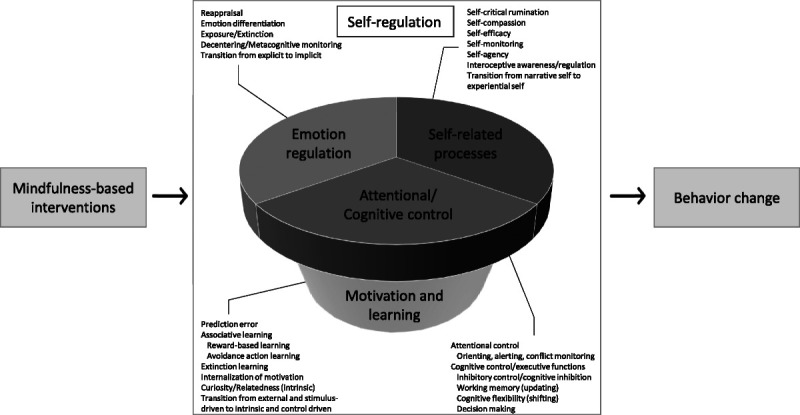
Initiating and maintaining behavior change is key to the prevention and treatment of most preventable chronic medical and psychiatric illnesses. The cultivation of mindfulness, involving acceptance and nonjudgment of present-moment experience, often results in transformative health behavior change. Neural systems involved in motivation and learning have an important role to play. A theoretical model of mindfulness that integrates these mechanisms with the cognitive, emotional, and self-related processes commonly described, while applying an integrated model to health behavior change, is needed. This integrative review (1) defines mindfulness and describes the mindfulness-based intervention movement, (2) synthesizes the neuroscience of mindfulness and integrates motivation and learning mechanisms within a mindful self-regulation model for understanding the complex effects of mindfulness on behavior change, and (3) synthesizes current clinical research evaluating the effects of mindfulness-based interventions targeting health behaviors relevant to psychiatric care. The review provides insight into the limitations of current research and proposes potential mechanisms to be tested in future research and targeted in clinical practice to enhance the impact of mindfulness on behavior change.
Overview
The claims and statistics of this paper haven’t been checked yet.
Free: it reads the open-access text and checks the first 5 claims that cite a source we can check. Create a free account to check every claim.
Integrity signals
Registry
Cites
Statistics
Figures
Verification
Claims the paper makes
The claims and statistics of this paper haven’t been checked yet.
Free: it reads the open-access text and checks the first 5 claims that cite a source we can check. Create a free account to check every claim.
Claims other papers make about this one
Each is checked against this paper’s own text: does it say what the citing paper says it does?
The source backs part of the claim, not all of it — or backs it for a different population, condition or comparison.
In the citing paper
“This study’s findings support and extend the existing literature regarding the impact and mechanisms of mindfulness on health, emotional wellness, relationships, and healthy behaviors.25–30”
From Mechanisms of mindfulness in patients with migraine: Results of a qualitative study. (2023) · cites this paper as [27]
Experimental — accuracy not yet measuredThe source backs part of the claim, not all of it — or backs it for a different population, condition or comparison.
In the citing paper
“Both the MTPC curriculum and Carina’s GLs were trauma-informed and conducive to integrating choice points, supporting individual autonomy, and developing skillful responses to trauma-related symptoms”
From Integrating choice points into mindfulness training for the dissociative subtype of PTSD: A case report (2024) · cites this paper as Schuman-Olivier et al., 2020
Experimental — accuracy not yet measuredThe source backs part of the claim, not all of it — or backs it for a different population, condition or comparison.
In the citing paper
“Contemplative practices including meditation and other mind-body techniques have been shown to yield a wide range of benefits on cardiopulmonary health, immune and physical functions, and mental health.38”
From Brief structured respiration practices enhance mood and reduce physiological arousal (2023) · cites this paper as [38]
Experimental — accuracy not yet measuredThe source backs part of the claim, not all of it — or backs it for a different population, condition or comparison.
In the citing paper
“All interventions included were group-based and utilised core mindfulness theory and practice including mindful meditation, focused thought attention, open monitoring of thoughts, and relaxation techniques (Schuman-Olivier et al., 2020).”
From Group-based mindfulness interventions in prisons: a selective critical review (2024) · cites this paper as Schuman-Olivier et al., 2020
Experimental — accuracy not yet measuredThe source backs part of the claim, not all of it — or backs it for a different population, condition or comparison.
In the citing paper
“For those with greater dysregulation, such as in chronic pain, it may be essential to achieve some measure of body-mind regulation as a beginning step for mindfulness practices and for finding cues of safety taught in PNE. 47”
From Remotely Delivered Psychologically Informed Mindful Movement Physical Therapy for Pain Care: A Framework for Operationalization (2023) · cites this paper as [47]
Experimental — accuracy not yet measured
5 more claims about this paper
Create a free account to see every claim other papers make about this one.
Self-check
Percentages, sums and reported differences re-computed from the paper’s own numbers.
The self-check needs the paper’s full text.
Citations
Cites
The theory of planned behavior
Ajzen, I. (1991) · Organizational Behavior and Human Decision Processes · doi:10.1016/0749-5978(91)90020-t · Cited by 134,657
Self-efficacy: Toward a unifying theory of behavioral change
Bandura, A. (1977) · Psychological Review · doi:10.1037/0033-295x.84.2.191 · Cited by 43,925
The "what" and "why" of goal pursuits: Human needs and the self-determination of behavior
Deci, E. L., & Ryan, R. M. (2000) · Psychological Inquiry · doi:10.1207/s15327965pli1104_01 · Cited by 34,210
Miyake, A., Friedman, N. P., Emerson, M. J., Witzki, A. H., Howerter, A., & Wager, T. D. (2000) · Cognitive Psychology · doi:10.1006/cogp.1999.0734 · Cited by 15,798
Social Cognitive Theory: An Agentic Perspective
Bandura, A. (2001) · Annual Review of Psychology · doi:10.1146/annurev.psych.52.1.1 · Cited by 15,510
The benefits of being present: Mindfulness and its role in psychological well-being
Brown, K. W., & Ryan, R. M. (2003) · Journal of Personality and Social Psychology · doi:10.1037/0022-3514.84.4.822 · Cited by 13,448
Diamond, A. (2013) · Annual Review of Psychology · doi:10.1146/annurev-psych-113011-143750 · Cited by 13,268
A default mode of brain function
Raichle, M. E., MacLeod, A. M., Snyder, A. Z., Powers, W. J., Gusnard, D. A., & Shulman, G. L. (2001) · Proceedings of the National Academy of Sciences · doi:10.1073/pnas.98.2.676 · Cited by 12,190
Gross, J. J., & John, O. P. (2003) · Journal of Personality and Social Psychology · doi:10.1037/0022-3514.85.2.348 · Cited by 11,929
Metacognition and cognitive monitoring: A new area of cognitive–developmental inquiry
Flavell, J. H. (1979) · American Psychologist · doi:10.1037/0003-066x.34.10.906 · Cited by 11,282
Research works printed but not linked: 8
- Brewer JA Elwafi HM Davis JH Craving to quit: psychological models and neurobiological mechanisms of mindfulness training as treatment for addictions. Psychol Addict Behav 2013; 27: 366– 79. 22642859 PMC3434285 · DOI · Paper page
- Cannon WB The wisdom of the body. 2nd ed. Oxford: Norton, 1939.
- Farb N Daubenmier J Price CJ, Interoception, contemplative practice, and health. Front Psychol 2015; 6: 763. 26106345 PMC4460802
- Schultz P Ryan R The “why,” “what,” and “how” of healthy self-regulation: mindfulness and well-being from a self-determination theory perspective. In: Ostafin BD Robinson MD Meier BP, eds. Handbook of mindfulness and self-regulation. New York: Springer, 2015.
- Bowen S Witkiewitz K Clifasefi SL, Relative efficacy of mindfulness-based relapse prevention, standard relapse prevention, and treatment as usual for substance use disorders: a randomized clinical trial. JAMA Psychiatry 2014; 71: 547– 56. 24647726 PMC4489711
- Bowen S Witkiewitz K Dillworth TM Marlatt GA The role of thought suppression in the relationship between mindfulness meditation and alcohol use. Addict Behav 2007; 32: 2324– 8. 17300875 PMC1989113 · DOI · Paper page
- Geller S Cultivation of therapeutic presence: therapeutic drumming and mindfulness practices. Tijdschr Clientgerichte Psychother 2009; 47: 273– 87.
- Afifi T Asmundson G Sareen J Epidemiology of traumatic events and posttraumatic stress disorder. In: Nutt DJ Stein MB Zohar J, eds. Post traumatic stress disorder: diagnosis, management and treatment. Boca Raton, FL: Taylor & Francis, 2009.
Cited by
Items 301–400 of 436
The effectiveness of pain-based training program on depression and anxiety in cancer patients
Miraveisi, S., Ahmadian, H., Moradi, O., & Ghaderi, B. (2023) · Shenakht Journal of Psychology and Psychiatry · doi:10.32598/shenakht.10.2.107
Trait Mindfulness and Counterproductive Work Behavior: The Role of Stop and Start Control
Parahyanti, E., & Rizky, M. (2023) · Psympathic Jurnal ilmiah Psikologi · doi:10.15575/psy.v9i2.11983
“Schuman-Olivier et al. (2020) also highlighted that mindfulness can impact self-regulation, including emotional regulation, self-processing, and attention and cognitive control, leading to behavioural changes.”
BackgroundMindfulness and Consumption: Routes Toward Consumer Self-Control
Vedolin, L. (2023) · OpenArchive@CBS (Copenhagen Business School) · doi:10.22439/phd.25.2023 · Cited by 1
Adigun, A. A., Mustapha, I. A., Adisa, S. A., & Tukur, H. A. (2023) · Futurity Education · doi:10.57125/fed.2023.12.25.09
Work-life balance: The importance of time management, working efficiently and self-care
Smith, J. B., Tillman, K., & Lee, O. D. (2023) · Journal of Nursing Education and Practice · doi:10.5430/jnep.v14n3p33
Strategies for Developing a Nurturing Environment for the next Generation of Nurses
Richard‐Eaglin, A., & Webb, M. A. (2023) · Nursing Clinics of North America · doi:10.1016/j.cnur.2023.11.002
de Souza, Â. M., & Pato, C. M. L. (2023) · Ambiente & Educação · doi:10.14295/ambeduc.v28i1.14330 · Cited by 1
Interactive Effects of Mindfulness and Negative Urgency on Intimate Partner Aggression PerpetrationPreprint
Brown, W. T., Martelli, A. M., & Chester, D. S. (2024) · PsyArXiv (OSF Preprints) · doi:10.31234/osf.io/g8bv6
Puente-Torre, P., Benito, V. D., Cano, S. R., & García-Delgado, M. Á. (2024) · Preprints.org · doi:10.20944/preprints202402.0934.v1
Bernaldo‐de‐Quirós, M., & Amores, A. (2024) · African journal of rhetoric · doi:10.21134/haaj.v24i1.792 · Cited by 1
Santos-Morocho, J., López, M. L., Ochoa, W. O., Muñoz-Pauta, M., & Salazar, M. D. L. P. (2024) · PSIQUEMAG/ Revista Científica Digital de Psicología · doi:10.18050/psiquemag.v13i1.2777
Addictive behaviors among youth and adolescents in the digital age
(2024) · Frontiers research topics · doi:10.3389/978-2-8325-4853-0 · Cited by 2
Strategies in Ecological Momentary Interventions for Mental Health Care in Adults: A Scoping Review
Ryu, G. W. (2024) · Journal of Digital Contents Society · doi:10.9728/dcs.2024.25.4.961
Castro, A. L. (2024) · Digital Repository Service (Northeastern University) · doi:10.17760/d20649876 · Cited by 2
Meditação de atenção plena na mulher: o que é ruído e o que é evidência? Uma revisão narrativa
Gomes, I. E. V. E. M., Freire, M. M. N. D. O., Lemos, P. P., Maistro, P. S. M., Ribeiro, C. C., Ribeiro, H. L., Ribeiro, J. D. A. M., da Silva, R. H., da Silva, A. G., & Rennó, J. (2024) · Debates em Psiquiatria · doi:10.25118/2763-9037.2024.v14.1097
A glimpse into the art and science of mindful nursing
Kirouac, N. (2024) · Journal of Pediatric Nursing · doi:10.1016/j.pedn.2024.05.034
Singha, R. (2024) · SSRN Electronic Journal · doi:10.2139/ssrn.4863558
Baer, N., Grissmer, N. V., Schenk, L., Wortmann, H. R., Warschburger, P., & Gisch, U. A. (2024) · Nutrients · doi:10.3390/nu16121949 · Cited by 1
Design and validation of the multidimensional self-care scale in university students
Soto, N. Y. T., Lara, G. A. S., Ramírez, B. M., Jiménez-Báez, M. V., Torres, E. F. P., Baldenebro, A. L. C., & Manzanero, E. C. (2024) · South Florida Journal of Development · doi:10.46932/sfjdv5n8-004 · Cited by 2
Boccardi, M., & Boccardi, V. (2024) · International Journal of Geriatric Psychiatry · doi:10.1002/gps.6136
The ART of mindfulness skills in making the most of intentional silence at work
Lemmon, G., Kuljanin, G., Golden, J. D., & Taylor, K. P. (2024) · Industrial and Organizational Psychology · doi:10.1017/iop.2024.22
Kazemi, F. G., & Farashbandi, A. (2024) · Research and Development in Medical Education · doi:10.34172/rdme.33198
“This contradicts findings by Farsijani et al 17 who reported that emotion regulation skills enhance the adoption of adaptive coping strategies, ultimately leading to reduced impulsivity and improved goal-oriented behaviors.”
Foley, J., Batchelder, A., Bernier, L., Glynn, T. R., Moskowitz, J. T., & Carrico, A. W. (2024) · Psychology Health & Medicine · doi:10.1080/13548506.2024.2407445
“Further, self-regulation skills enable individuals to have control-driven, as opposed to stimulus-driven, behavioral responses that can help individuals make positive health changes (e.g. changing diet) to further reduce inflammation (Schuman-Olivier et al., 2020).”
Insights from the evaluation of a persuasive intervention for absent-minded smartphone use
Nwagu, C., & Orji, R. (2024) · Behaviour and Information Technology · doi:10.1080/0144929x.2024.2413452 · Cited by 2
“The applications of mindfulness for behaviour change have received some attention in previous works: Schuman-Olivier et al. (2020) noted that mind-fulness-based interventions (MBIs) do lead to behaviour change in areas such as substance abuse, eating disorders, emotion regulation, and chronic…”
Santoso, V. J., & Azminah, A. (2024) · Eduvest - Journal Of Universal Studies · doi:10.59188/eduvest.v4i10.1692
Mindfulness-based interventions for people living with HIV and HIV prevention: a scoping review
Lu, J., Johnson, K. A., Lewis, P. D., Obuya, C., & Jones, S. (2024) · Journal of HIV/AIDS & Social Services · doi:10.1080/15381501.2024.2413967
“In recent years, the mechanisms of MBIs in promoting health become clearer to researchers, including but not limited to attentional and cognitive control, emotion regulation, and self-related processes (Schuman-Olivier et al., 2020).”
InfluentialPratiche di accettazione, mindfulness e terapia espositiva
Carlo, E. (2024) · QUADERNI DI PSICOTERAPIA COGNITIVA · doi:10.3280/qpc54-2024oa18660
Miranda, S. M. D., Pires, G. P. A. D. A., Mancuzo, E. V., Leal, A. N. A., & Paiva, S. D. P. C. (2024) · Journal of Religion and Health · doi:10.1007/s10943-024-02177-3 · Cited by 1
“While its philosophical foundation is deeply intertwined with Eastern faiths, Western meditative techniques with similar principles have emerged within Christian, Jewish, and Muslim traditions (Koenig, 2023; Schuman-Olivier et al., 2020).”
Cotonieto-Martínez, E. (2025) · Mexican Journal of Medical Research ICSA · doi:10.29057/mjmr.v13i25.12388
Tobin, S. Y., Smith, J. K., DeSalvo, K., Beacham, A. O., Chamberlain, E., Cornier, M., & Halliday, T. M. (2024) · American Journal of Health Behavior · doi:10.5993/ajhb.48.6.18
The Transformative Power of Mindfulness: Enhancing Behavioral Change for a Healthier Lifestyle
Shapiro, S. L., Goldenhersch, E., & Toye, E. (2025) · Springer eBooks · doi:10.1007/978-981-97-0821-5_97-1
Blignault, I., Saab, H., Woodland, L., & Mehjabeen, D. (2024) · Springer eBooks · doi:10.1007/978-981-92-1290-3_82
Practical Awareness‐Based Strategies for Eating (PASE): A Pilot and Feasibility Randomized Trial
Arterburn, D. E., Garcia, R., Rosenberg, D. E., Johnson, E., Mettert, K. D., Ng, J., & Brewer, J. A. (2025) · Obesity Science & Practice · doi:10.1002/osp4.70052
Self-citationDiseño de estrategia educomunicativa en salud para manejo del estrés en estudiantes universitarios
Bermeo, R. N. Z., Piraban, G. D. S., Sepulveda, Y. J. L., Cornejo, K. J. P., & González, C. E. (2024) · Revista CuidArte · doi:10.22201/fesi.23958979e.2024.13.25.84652
Fowers, R., Coza, A., Chung, Y., Ghasemzadeh, H. G., Cloonan, S., Huberty, J., Berardi, V., & Stecher, C. D. (2025) · Behavioral Sciences · doi:10.3390/bs15030381
“Other mechanisms of behavioral maintenance may be also present such as identity, learning, emotion regulation, and attention and cognitive control (Schuman-Olivier et al., 2020).”
General, L. T., & Suganan, M. M. M. (2025) · International Journal of Research Publication and Reviews · doi:10.55248/gengpi.6.0425.1330
Overcoming Systemic Barriers to Mindfulness in Health and Education Systems
Malizal, Z. Z. (2024) · Sinergi International Journal of Psychology · doi:10.61194/psychology.v2i4.586
“This focus was informed by prior research emphasizing the unique needs and heightened psychological burden within these groups (Parra et al., 2019; Schuman ‐ Olivier et al., 2020).”
Hâncu, A., Roman, D., Stănescu, A. Ş., Păun, D. L., Moța, M., Diculescu, M., Timar, B., & Dogaru, M. (2025) · Springer eBooks · doi:10.1007/978-3-031-82888-1_36
Wolever, R. Q., & Weinand, R. (2025) · Frontiers in Psychology · doi:10.3389/fpsyg.2025.1478525 · Cited by 2
D’Aniello, C., Tambling, R. R., Russell, B. S., & Stekler, N. (2025) · Alcoholism Treatment Quarterly · doi:10.1080/07347324.2025.2502046
“We determined that an eight-week timeframe in which one module is delivered per week, is the recommended timeframe in which to experience the benefits of a mindfulness-based curriculum (Schuman-Olivier et al., 2020).”
Wahidah, I., Dimyati, & Susanto, E. (2025) · doi:10.56984/8zg7d19spwz
Enhancing Environmental Awareness and Scientific Behaviour through Buried Compost Bin Media
Sutisno, A. N., Permana, N. P., Mastiah, M., & Liyya, R. (2025) · Profesi Pendidikan Dasar · doi:10.23917/ppd.v12i1.9807 · Cited by 3
“These tendencies develop through experiential learning, reinforced by educational tools that support value internalisation and shape thinking paradigms (Schuman-Olivier et al., 2020; Sutisno, 2023; Sutisno, 2016).”
Chatterjee, B., Biswas, K., & Chatterjee, I. (2025) · Frontiers in Health Informatics · doi:10.63682/fhi2341 · Cited by 1
Sangprasert, P., Palungrit, S., Pattaraarchachai, J., & Bunman, S. (2025) · Mindfulness · doi:10.1007/s12671-025-02616-6
“These processes cultivated positive inner strength through cognitive control and self-regulation, facilitating the modification of old behaviors and promoting health behavior change (Bandura, 2004; Schuman-Olivier et al., 2020).”
Sleep and Perinatal Major Depressive Disorder
Ganjavi, H., & MacDonald, P. A. (2025) · Springer eBooks · doi:10.1007/978-3-031-95948-6_5
Tang, W. C. (2025) · Transformative Pedagogies · doi:10.64229/2yjqm231
Tran, V., McCall, C., & Kali, M. B. (2025) · ASEE Annual Conference & Exposition · doi:10.18260/1-2--57243
Xu, K., Zhu, L. F., Li, Y., Cao, Y., & Zhang, G. (2025) · Frontiers in Psychology · doi:10.3389/fpsyg.2025.1636692 · Cited by 2
Mindfulness won’t burn calories, but it might help you stick with your health goals
Remskar, M. (2025) · The Conversation · doi:10.64628/aai.3r7rgdu7s
Mechanisms of Mindfulness Interventions: Perspectives from Monitor and Acceptance Theory (MAT)
Lindsay, E. K., Berry, D. R., & Dutcher, J. M. (2025) · Springer eBooks · doi:10.1007/978-3-031-91451-5_6 · Cited by 1
Lesińska‐Sawicka, M. (2025) · Journal of Holistic Nursing · doi:10.1177/08980101251385338 · Cited by 1
Baamer, M. Y. I. (2025) · Applied Neuropsychology Child · doi:10.1080/21622965.2025.2576076
Mindfulness and the Mediterranean diet as alternative therapies in ambulatory care of psoriasis
Barrios, X. L., Carreón‐Torres, E., & Estrada-Luna, D. (2025) · International Journal of Research in Dermatology · doi:10.18203/issn.2455-4529.intjresdermatol20253404
Harits, A. O. I., Harahap, F., & Asih, S. T. (2025) · Journal Evaluation in Education (JEE) · doi:10.37251/jee.v6i4.2170 · Cited by 1
Bryer, C. M., Stang, G. S., Collins, A. B., Haygood, L. N., Wakpa, T. B., & Proulx, J. A. (2025) · International Journal of Environmental Research and Public Health · doi:10.3390/ijerph22111685 · Cited by 1
“This foundational work produced a secular, mainstream approach to mindfulness and yoga interventions that have been used to address an array of behavior change elements including substance use disorders, chronic disease self-management, violence, suicide/self-injury, and other risk behaviors [37].”
Mindfulness and meditation: a core component of holistic care
Reddy, K. J. (2025) · Elsevier eBooks · doi:10.1016/b978-0-443-43908-7.00002-1
A Systematic Review of Mindfulness Network Analysis Studies
Kahn, D. L., Martin, A., Morris, C., & Sala, M. (2025) · Mindfulness · doi:10.1007/s12671-025-02722-5
“…practitioners learning how to intentionally direct attention to bodily sensations, sounds, and other sensory inputs to anchor themselves in the present moment (Kerr et al., 2013; Schuman-Olivier et al., 2020) and then using those mindfulness skills to facilitate other mindfulness processes.”
ESTRATÉGIAS PSICOLÓGICAS PARA MANEJO DO ESTRESSE E DA PRESSÃO DO ATLETA DE ALTO RENDIMENTO
Mingotti, V. C., & Werner, P. C. G. (2025) · Revista Contemporânea · doi:10.56083/rcv5n11-169
Baluku, M. M., Nuwagaba, R., Nansamba, J., Nantamu, S., Nansubuga, F., & Musanje, K. (2025) · International Journal of Community Well-Being · doi:10.1007/s42413-025-00279-8
“Therefore, mindfulness is an attribute that facilitates adaptive coping(Schuman-Olivier et al., 2020) and enables the deployment of other positive attributes such as psychological capital, self-compassion, openness to experience, and conscientiousness(Baer et al., 2006; Biswal & Srivastava, 2022;…”
Bagheri, S. (2025) · Physical Activity in Children · doi:10.61882/pach.2025.528401.1052
Jakupov, M., Жартаевна, А. А., Сарбасова, Г. Ж., Baimoldina, L., & Fedorovich, O. (2025) · The Educational and Developmental Psychologist · doi:10.1080/20590776.2025.2597747
“A growing body of research substantiates the multifaceted psychological benefits associated with mindfulness practice (Schuman-Olivier et al., 2020; Zhang et al., 2021), with particular effectiveness in alleviating symptoms of stress, anxiety, and depression (Aggs & Bambling, 2020; Fjorback et al.,…”
Maeder, S., Fahim, C., & Martin-Söelch, C. (2025) · Cortica · doi:10.26034/cortica.2025.8925
Zhou, H., Zhu, Z., Feng, X., & Zhang, R. (2023) · Figshare · doi:10.6084/m9.figshare.24046182
Warschburger, P., Wortmann, H. R., Gisch, U. A., Baer, N.-R., Schenk, L., Anton, V., & Bergmann, M. M. (2024) · Figshare · doi:10.6084/m9.figshare.26555606
O’Brien, J. L., McIver, S., Evans, S., Trethewey, E., & O’Shea, M. (2024) · Figshare · doi:10.6084/m9.figshare.26738367
Mindfulness and the Addictive Process: Psychological Models and Neurobiological Mechanisms
Brewer, J. A., Houlihan, S. D., Yetter, K. M., & Davis, J. H. (2025) · Springer eBooks · doi:10.1007/978-3-031-91451-5_17 · Cited by 1
Self-citationElevating Happiness Through Mindfulness
Cherukat, S., Shabnam, S., & Jafar, A. (2025) · Springer eBooks · doi:10.1007/978-981-96-6759-8_16
Mindfulness and Energy at Work Among Frontline Restaurant Employees
Nigli, K. S., & Smith, T. (2025) · Springer eBooks · doi:10.1007/978-981-96-6759-8_12
Cruise, A., Marmura, H., Fielitz, L. R., & Baez, S. (2025) · Journal of Clinical Sport Psychology · doi:10.1123/jcsp.2025-0066
Figueroa, P. B. S. (2025) · Journal of the American Geriatrics Society · doi:10.1111/jgs.70262
Kang, M., Cheung, Y. C. H., & Wong, D. F. K. (2026) · Behavior Therapy · doi:10.1016/j.beth.2026.01.002
Assessment and Treatment of Suicidal Thoughts and Behaviors in Youth
Padron, M., Balser, D., & Pettit, J. W. (2026) · Neuromethods · doi:10.1007/978-1-0716-5134-6_5
Ma, X., Zhang, J., Yang, Z., Dong, Q., & Qiao, L. (2026) · Current Psychology · doi:10.1007/s12144-025-08837-1 · Cited by 2
“…defined as the awareness generated by focusing on the present moment without judgment (Kabat-Zinn, 2003; Bishop et al., 2004 ; Brown et al., 2007; Schuman-Olivier et al., 2020), is a technique that enables individuals to purposefully recognize the present and learn to handle their thoughts,…”
Mansor, M. B., Chong, M.-C., LEI, C. P., Hamdan, M., Roslim, N. A., & Isa, R. M. (2026) · Journal of Reproductive and Infant Psychology · doi:10.1080/02646838.2026.2622923 · Cited by 3
Addressing Trauma: Behavioural Outcomes
Rodney, T. U. (2025) · Springer eBooks · doi:10.1007/978-3-031-87526-7_13
SAYGI, Y. B., & Saygi, I. (2021) · DergiPark (Istanbul University)
Rai, H., Bruel, D. M. M., Hood, P., Sabiston, C. M., Saab, B. J., & Farb, N. A. S. (2026) · Mindfulness · doi:10.1007/s12671-025-02750-1
“Similarly, while previous research supports the impacts of MT on awareness and attitude, this factor did not reach statistical significance in this current study (Schuman-Olivier et al., 2020).”
Ip, V., Jegatheeswaran, S., Cheema, A. A., FitzGerald, M., Wakif, Z., Thind, J. K., Kyte, S., Yung, S., Raiker, R., Ansar, M. A., et al. (2026) · Cognitive Behaviour Therapy · doi:10.1080/16506073.2026.2623505 · Cited by 2
Impact of Developmental Stage on Responses to a School-Based Mindfulness Intervention
Ashitani, M., Ito, Y., & Yamamoto, K. (2026) · Mindfulness · doi:10.1007/s12671-026-02792-z
Wexler, R. S., Parikshak, A., Balsamo, W., Knowles, L. M., Lendof, V., Shane, D., Fox, M., Heron, R. L., Berg, M., Hansen, T., et al. (2026) · Pilot and Feasibility Studies · doi:10.21203/rs.3.rs-8682836/v1 · Cited by 1
Goldberg, S. B., Jiwani, Z., Dahl, C. J., Tatar, R., Dunne, J. D., Davidson, R. J., & Hirshberg, M. J. (2026) · Mindfulness · doi:10.1007/s12671-026-02787-w · Cited by 1
“Thus, active practices may help support transfer learning for self-regulatory skills developed during meditation (Schuman-Olivier et al., 2020).”
Self-citationLiu, Y. C., Yan, Q., Zhao, S., Ng, S., Wang, X., & Ning, Z. (2026) · Frontiers in Psychology · doi:10.3389/fpsyg.2026.1711994 · Cited by 1
Leng, J. N. W., Sam, J. M., & Nelson, A. A. (2026) · Clinical Child Psychology and Psychiatry · doi:10.1177/13591045261433503 · Cited by 1
“These qualities align with CBT ’ s focus on persistence and goal-setting (Rusadi et al., 2021; Schuman-Olivier et al., 2020).”
Gan, Y., Zhao, Z., Zeng, G., Chen, S., & Mao, Z. (2026) · Mindfulness · doi:10.1007/s12671-026-02815-9
“This characteristic aligns with recent research findings which suggest that mindfulness promotes healthy behaviors by enhancing self-regulation capabilities (Schuman-Olivier et al., 2020).”
Aygün, Y., Gürer, H., Tüfekçi, Ş., Çolak, C., Güldoğan, E., Yagin, B., UCUZAL, H., Canpolat, B., Alkhamees, N. H., & Al-Mhanna, S. B. (2026) · Scientific Reports · doi:10.1038/s41598-026-46181-x
Dong, J., Ye, Q., Li, T., Yuan, Y., & Yan, Y. (2026) · Frontiers in Psychology · doi:10.3389/fpsyg.2026.1783570 · Cited by 2
Wu, F., Brewer, L. C., Neves, V. V., Scarpaci, M. M., Saadeh, F. B., Proulx, J. A., & Loucks, E. B. (2026) · American Journal of Preventive Cardiology · doi:10.1016/j.ajpc.2026.101584
“From a public health perspective, mindfulness has the potential to enhance intrinsic motivation, improve engagement, and make health interventions more meaningful, which are factors shown to improve adherence and long-term outcomes [11,12].”
Self-citationTascı, M., & Ozeren, A. P. (2026) · Research Square · doi:10.21203/rs.3.rs-8895761/v1
Takefuji, Y. (2026) · Advances in Integrative Medicine · doi:10.1016/j.aimed.2026.100657
The perplexing roles of mindfulness on greed and mindful consumption
Yusainy, C., Ardanti, R. S. W., Musanto, R. N. A., Wicaksono, W., & Saputra, J. C. (2026) · Current Psychology · doi:10.1007/s12144-026-09330-z
“These interventions typically include various techniques unspecific to mindfulness, for example, loving-kindness meditation, relaxation procedures, and psychoeducation (Heppner & Shirk, 2018; Schuman-Olivier et al., 2020) that may have confounded the obtained results.”
Batool, T., Iqbal, S., & Froelicher, E. S. (2026) · Clinical Nursing Research · doi:10.1177/10547738261434127 · Cited by 1
“…in 1881 by English scholar Rhys Davids from the Pali term sati used in Buddhist texts, which originally conveyed meanings such as “memory,” “recollection,” “awareness of specific facts,” and has also been interpreted as “lucid awareness” or “bare atten-tion” (Schuman-Olivier et al., 2020).”
InfluentialFarrall, A., Sharma, A., Ainsworth, B., Jacobsen, P. C., & Alexander, J. (2026) · CHI Conference on Human Factors in Computing Systems · doi:10.1145/3772318.3790933 · Cited by 3
“In line with stage models of psychological change [79, 94], our findings suggest that heightened engagement first manifests as improvements in skills and embodied processes, and that more intensive or prolonged deployment would likely be required for these gains to consolidate into robust,…”
Gillan, E., Byrne, G., & Watters, J. (2026) · Mindfulness · doi:10.1007/s12671-026-02846-2
Herrera-Plasencia, P. M., & Antón, C. A. C. (2026) · Educación Médica · doi:10.1016/j.edumed.2026.101185
Gonçalves, S. D., Diogo, R. G., de Miranda, N. G., Caramelo, A., & Esteves, V. (2026) · Exploration of Neuroprotective Therapy · doi:10.37349/ent.2026.1004149 · Cited by 1
KILIC, T., Ohana, M., & Graso, M. (2026) · Journal of Business Ethics · doi:10.1007/s10551-026-06334-4 · Cited by 1
Shiraly, R., Valizadeh, A. K., Amooee, S., Moghtaderi, M., Nabavizadeh, S. H., Nazaraghaie, F., & Mostafavi, S. (2026) · Obstetrics and Gynecology International · doi:10.1155/ogi/1249143
“Mindfulness-based stress reduction (MBSR) is a structured program that cultivates nonjudgmental awareness of present-moment experiences to improve emotional regulation and overall mental well-being [10, 11].”
Rechenberg, K., Koerner, R., & Geiss, C. (2026) · Comprehensive Child and Adolescent Nursing · doi:10.1080/24694193.2026.2668721
“MBSR was originally developed for individuals with chronic medical conditions and is now used across the lifespan in those with and without chronic conditions with positive effects (National Center for Complementary and Integrative Health, 2022; Schuman-Olivier et al., 2020).”
Tian, R., Huang, C. L., & Mertz, J. (2026) · Computers in Human Behavior Reports · doi:10.1016/j.chbr.2026.101095 · Cited by 1
Metadata
- Authors
- Schuman-Olivier, Z., Trombka, M., Lovas, D. A., Brewer, J. A., Vago, D. R., Gawande, R., Dunne, J. P., Lazar, S. W., Loucks, E. B., & Fulwiler, C.
- Affiliations
- Boston College (US)
- ORCID
- Venue
- Harvard Review of Psychiatry
- Published
- 2020-11
- Volume
- 28
- Issue
- 6
- Pages
- 371-394
- ISSN
- 1067-3229 (ISSN-L)
- 1465-7309
- PMC
- PMC7647439
- OpenAlex
- W3097790734
- Semantic Scholar
- 4d71817d634db36629fd23cbb5a31e9c6cde95e9
- Cited by
- 435
- References
- 466
- Citations by year
- 2026: 81 · 2025: 123 · 2024: 97 · 2023: 63 · 2022: 52 · 2021: 17 · 2020: 1
- FWCI
- 2.60
- Type
- journal article
- Language
- en
- Open access
- hybrid
- doi.org
- Licence
- Locations
- Harvard Review of Psychiatry (publishedVersion, cc-by-nc-nd)
- PubMed Central (publishedVersion, cc-by-nc-nd)
- PubMed (publishedVersion)
- eScholarship@UMassChan (submittedVersion, cc-by-nc-nd)
- Funders
- National Institute on Aging (R01AG048351)
- National Center for Complementary and Integrative Health (UH2AT009145, R33AT010125, UH3AT009145, R21AT010125, R01AT006344)
- Topics
- Social Sciences › Psychology › Clinical Psychology › Mindfulness and Compassion Interventions
- Social Sciences › Psychology › Applied Psychology › Behavioral Health and Interventions
- Social Sciences › Psychology › Developmental and Educational Psychology › Behavioral and Psychological Studies
- Keywords
- mindfulness, behavior change, mindfulness-based interventions, motivation, learning, self-regulation, health behavior change, psychiatric nursing, chronic disease prevention, mechanisms of change
- MeSH terms
- Self-Control, Self-Management, Mental Disorders, Humans, Motivation, Health Behavior, Mindfulness
About these checks
Registry, retraction, Cites and statistics results are computed, not judged, with one exception: a printed reference that no index lists is read once by a model before it counts as a citation error. Claims are extracted by a model and kept only when their quote appears verbatim in the text; each cited source is then checked, with a model’s help, for whether it says what the claim relies on. Those verdicts can be wrong — read the claim’s quote and the cited source before relying on one.
Statistics and arithmetic are recomputed, not judged.
Confidence bands are shown only for fields calibrated on our annotated test set. None is calibrated yet, so no band is shown.
What counts as a claim ›How we measure confidence ›How we check this ›
Are you an author, or do you see a problem with this page? Request a review
Data sources
Bibliographic data: Semantic Scholar, OpenAlex, Crossref.
Contains information from the Semantic Scholar Academic Graph Datasets, made available under the ODC Attribution License (ODC-BY 1.0).
Semantic Scholar’s data is described in: Kinney, R., et al. (2023). The Semantic Scholar Open Data Platform. arXiv:2301.10140.
