

Mindfulness and Behavior Change
Open accessThe DOI matches its Crossref record; 465 of the 466 references it cites were found in a registry or an index.
Abstract
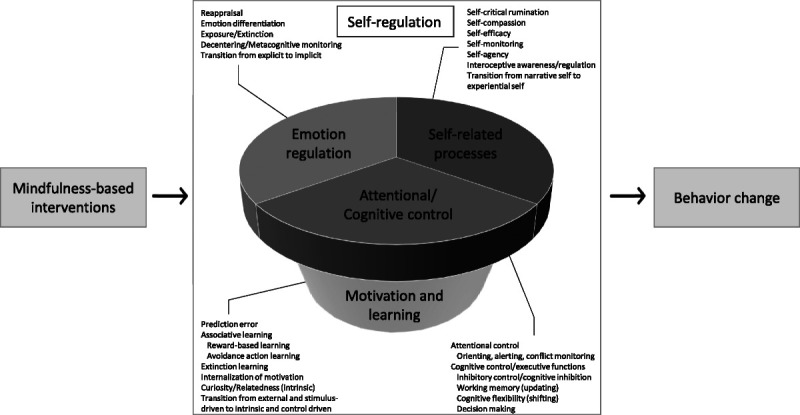
Initiating and maintaining behavior change is key to the prevention and treatment of most preventable chronic medical and psychiatric illnesses. The cultivation of mindfulness, involving acceptance and nonjudgment of present-moment experience, often results in transformative health behavior change. Neural systems involved in motivation and learning have an important role to play. A theoretical model of mindfulness that integrates these mechanisms with the cognitive, emotional, and self-related processes commonly described, while applying an integrated model to health behavior change, is needed. This integrative review (1) defines mindfulness and describes the mindfulness-based intervention movement, (2) synthesizes the neuroscience of mindfulness and integrates motivation and learning mechanisms within a mindful self-regulation model for understanding the complex effects of mindfulness on behavior change, and (3) synthesizes current clinical research evaluating the effects of mindfulness-based interventions targeting health behaviors relevant to psychiatric care. The review provides insight into the limitations of current research and proposes potential mechanisms to be tested in future research and targeted in clinical practice to enhance the impact of mindfulness on behavior change.
Overview
The claims and statistics of this paper haven’t been checked yet.
Free: it reads the open-access text and checks the first 5 claims that cite a source we can check. Create a free account to check every claim.
Integrity signals
Registry
Cites
Statistics
Figures
Verification
Claims the paper makes
The claims and statistics of this paper haven’t been checked yet.
Free: it reads the open-access text and checks the first 5 claims that cite a source we can check. Create a free account to check every claim.
Claims other papers make about this one
Each is checked against this paper’s own text: does it say what the citing paper says it does?
The source backs part of the claim, not all of it — or backs it for a different population, condition or comparison.
In the citing paper
“This study’s findings support and extend the existing literature regarding the impact and mechanisms of mindfulness on health, emotional wellness, relationships, and healthy behaviors.25–30”
From Mechanisms of mindfulness in patients with migraine: Results of a qualitative study. (2023) · cites this paper as [27]
Experimental — accuracy not yet measuredThe source backs part of the claim, not all of it — or backs it for a different population, condition or comparison.
In the citing paper
“Both the MTPC curriculum and Carina’s GLs were trauma-informed and conducive to integrating choice points, supporting individual autonomy, and developing skillful responses to trauma-related symptoms”
From Integrating choice points into mindfulness training for the dissociative subtype of PTSD: A case report (2024) · cites this paper as Schuman-Olivier et al., 2020
Experimental — accuracy not yet measuredThe source backs part of the claim, not all of it — or backs it for a different population, condition or comparison.
In the citing paper
“Contemplative practices including meditation and other mind-body techniques have been shown to yield a wide range of benefits on cardiopulmonary health, immune and physical functions, and mental health.38”
From Brief structured respiration practices enhance mood and reduce physiological arousal (2023) · cites this paper as [38]
Experimental — accuracy not yet measuredThe source backs part of the claim, not all of it — or backs it for a different population, condition or comparison.
In the citing paper
“All interventions included were group-based and utilised core mindfulness theory and practice including mindful meditation, focused thought attention, open monitoring of thoughts, and relaxation techniques (Schuman-Olivier et al., 2020).”
From Group-based mindfulness interventions in prisons: a selective critical review (2024) · cites this paper as Schuman-Olivier et al., 2020
Experimental — accuracy not yet measuredThe source backs part of the claim, not all of it — or backs it for a different population, condition or comparison.
In the citing paper
“For those with greater dysregulation, such as in chronic pain, it may be essential to achieve some measure of body-mind regulation as a beginning step for mindfulness practices and for finding cues of safety taught in PNE. 47”
From Remotely Delivered Psychologically Informed Mindful Movement Physical Therapy for Pain Care: A Framework for Operationalization (2023) · cites this paper as [47]
Experimental — accuracy not yet measured
5 more claims about this paper
Create a free account to see every claim other papers make about this one.
Self-check
Percentages, sums and reported differences re-computed from the paper’s own numbers.
The self-check needs the paper’s full text.
Citations
Cites
The theory of planned behavior
Ajzen, I. (1991) · Organizational Behavior and Human Decision Processes · doi:10.1016/0749-5978(91)90020-t · Cited by 134,657
Self-efficacy: Toward a unifying theory of behavioral change
Bandura, A. (1977) · Psychological Review · doi:10.1037/0033-295x.84.2.191 · Cited by 43,925
The "what" and "why" of goal pursuits: Human needs and the self-determination of behavior
Deci, E. L., & Ryan, R. M. (2000) · Psychological Inquiry · doi:10.1207/s15327965pli1104_01 · Cited by 34,210
Miyake, A., Friedman, N. P., Emerson, M. J., Witzki, A. H., Howerter, A., & Wager, T. D. (2000) · Cognitive Psychology · doi:10.1006/cogp.1999.0734 · Cited by 15,798
Social Cognitive Theory: An Agentic Perspective
Bandura, A. (2001) · Annual Review of Psychology · doi:10.1146/annurev.psych.52.1.1 · Cited by 15,510
The benefits of being present: Mindfulness and its role in psychological well-being
Brown, K. W., & Ryan, R. M. (2003) · Journal of Personality and Social Psychology · doi:10.1037/0022-3514.84.4.822 · Cited by 13,448
Diamond, A. (2013) · Annual Review of Psychology · doi:10.1146/annurev-psych-113011-143750 · Cited by 13,268
A default mode of brain function
Raichle, M. E., MacLeod, A. M., Snyder, A. Z., Powers, W. J., Gusnard, D. A., & Shulman, G. L. (2001) · Proceedings of the National Academy of Sciences · doi:10.1073/pnas.98.2.676 · Cited by 12,190
Gross, J. J., & John, O. P. (2003) · Journal of Personality and Social Psychology · doi:10.1037/0022-3514.85.2.348 · Cited by 11,929
Metacognition and cognitive monitoring: A new area of cognitive–developmental inquiry
Flavell, J. H. (1979) · American Psychologist · doi:10.1037/0003-066x.34.10.906 · Cited by 11,282
Research works printed but not linked: 8
- Brewer JA Elwafi HM Davis JH Craving to quit: psychological models and neurobiological mechanisms of mindfulness training as treatment for addictions. Psychol Addict Behav 2013; 27: 366– 79. 22642859 PMC3434285 · DOI · Paper page
- Cannon WB The wisdom of the body. 2nd ed. Oxford: Norton, 1939.
- Farb N Daubenmier J Price CJ, Interoception, contemplative practice, and health. Front Psychol 2015; 6: 763. 26106345 PMC4460802
- Schultz P Ryan R The “why,” “what,” and “how” of healthy self-regulation: mindfulness and well-being from a self-determination theory perspective. In: Ostafin BD Robinson MD Meier BP, eds. Handbook of mindfulness and self-regulation. New York: Springer, 2015.
- Bowen S Witkiewitz K Clifasefi SL, Relative efficacy of mindfulness-based relapse prevention, standard relapse prevention, and treatment as usual for substance use disorders: a randomized clinical trial. JAMA Psychiatry 2014; 71: 547– 56. 24647726 PMC4489711
- Bowen S Witkiewitz K Dillworth TM Marlatt GA The role of thought suppression in the relationship between mindfulness meditation and alcohol use. Addict Behav 2007; 32: 2324– 8. 17300875 PMC1989113 · DOI · Paper page
- Geller S Cultivation of therapeutic presence: therapeutic drumming and mindfulness practices. Tijdschr Clientgerichte Psychother 2009; 47: 273– 87.
- Afifi T Asmundson G Sareen J Epidemiology of traumatic events and posttraumatic stress disorder. In: Nutt DJ Stein MB Zohar J, eds. Post traumatic stress disorder: diagnosis, management and treatment. Boca Raton, FL: Taylor & Francis, 2009.
Cited by
Items 101–200 of 436
Giachos, D., Paschali, M., Datko, M., Fatkin, T., Lazaridou, A., Kaptchuk, T. J., Napadow, V., Edwards, R. R., & Schuman‐Olivier, Z. (2022) · Mindfulness · doi:10.1007/s12671-022-01903-w · Cited by 8
Self-citationDispositional mindfulness and its relationship to exercise motivation and experience
Lynn, S., Satyal, M. K., Smith, A. J., Tasnim, N., Gyamfi, D., English, D. F., SUZUKI, W. A., & Basso, J. C. (2022) · Frontiers in Sports and Active Living · doi:10.3389/fspor.2022.934657 · Cited by 12
“Subsequently, mindfulness is associated with lower engagement in unhealthy behaviors due to such negative internal states (27, 53).”
BackgroundLynn, S., & Basso, J. C. (2023) · JMIR Formative Research · doi:10.2196/40135 · Cited by 10
Mindfulness and the Satisfaction of Basic Psychological Needs
Михайловна, Б. П., & Brown, K. W. (2023) · Oxford University Press eBooks · doi:10.1093/oxfordhb/9780197600047.013.9 · Cited by 7
Advancements in the phenomenology, assessment, and treatment of Tourette syndrome
Ramsey, K. A., & Mcguire, J. F. (2023) · Current Opinion in Psychiatry · doi:10.1097/yco.0000000000000922 · Cited by 10
Li, X., Lau, E. N. S., Chan, S. K. C., Lam, T. P., Cheng, J. C. Y., Lee, E. K. P., Wong, S. Y. S., & Yip, B. H. K. (2023) · Mindfulness · doi:10.1007/s12671-022-02021-3 · Cited by 8
Dell’Aversana, V., Tofani, M., & Valente, D. (2023) · Children · doi:10.3390/children10030603 · Cited by 11
“When the difficulties concern an adolescent, on the other hand, it is possible to refer to the concepts of mindfulness such as openness, non-judgment and acceptance by integrating these mechanisms with cognitive, emotional and self-related processes [76,77].”
BackgroundTripathi, V., Devaney, K. J., Lazar, S. W., & Somers, D. C. (2024) · Mindfulness · doi:10.1007/s12671-024-02316-7 · Cited by 8
“…in turn impact myriad functions including enhanced cognitive and emotional functioning; reduction of clinical symptoms like anxiety, depression, and PTSD; and increases in compassion (Schuman-Olivier et al., 2020; Seppälä et al. 2014; Sezer et al., 2022; Whitfield et al., 2022; Young et al., 2018).”
Self-citationPerceiving Low Social Mobility Induces Zero-Sum Beliefs About Social Hierarchies
Wang, X., Zhuo, Y., Chen, W., Du, H., & Chen, Z. (2024) · Personality and Social Psychology Bulletin · doi:10.1177/01461672241290390 · Cited by 11
“For instance, mindful meditation could potentially counteract a scarcity mindset by increasing individuals’ awareness of scarcity-related thoughts, helping them detach from such thoughts and focus on the present (Schuman-Olivier et al., 2020).”
Visger, T. V., Wardlaw, K., Li, C., Chang, Y.-P., & Matura, L. A. (2024) · Heart & Lung · doi:10.1016/j.hrtlng.2024.12.002 · Cited by 8
RunMe: An Adaptive Sound System for Running Meditation
Tan, P., Zhu, X., Bi, T., & Ren, X. (2025) · ACM Transactions on Computer-Human Interaction · doi:10.1145/3717610 · Cited by 10
“This omission underscores a significant gap in the research landscape, raising questions about the comprehensiveness and applicability of current findings in the broader context of running meditation practices.”
The Gap between Health Knowledge and Action: Understanding and Overcoming Psychological Barriers
Carrillo-González, A. (2025) · IntechOpen eBooks · doi:10.5772/intechopen.1009802 · Cited by 12
Validity and Reliability of the Turkish Version of the Mindful Eating Behavior Scale
Dinç, Ö., Yıldız, E. A., Okburan, G., & Büyüktuncer, Z. (2025) · Nutrients · doi:10.3390/nu17193083 · Cited by 9
“Based on Brown and Ryan’s concept, the scale defines mindful eating as “Eating with attention and awareness,” incorporating two key components: self-regulation of attention in the present moment and attention given without judgment [26,27].”
Yadav, M., Neate, S. L., Hassed, C. S., Chambers, R., Connaughton, S., & Nag, N. (2022) · JMIR Formative Research · doi:10.2196/37406 · Cited by 9
“Benefits noted in oneself identified an increase in self-regulation (consciously managing emotions and behaviors), which is a recognized change induced by mindfulness meditation [33].”
BackgroundMultidisciplinary Assessment of Interoceptive Awareness, Version 2 (MAIA-2)
Mehling, W. E., Todd, J., & Schuman‐Olivier, Z. (2022) · Springer eBooks · doi:10.1007/978-3-030-77644-2_40-1 · Cited by 14
Self-citationDejene, A., Carter, Z., Woo, E., Sun, S., Loucks, E. B., & Proulx, J. A. (2024) · Global Advances in Integrative Medicine and Health · doi:10.1177/27536130241244744 · Cited by 12
“25 26-28 An example of this is that among clinical groups of African Americans with low income, mindfulness has been linked to a decrease in depressive symptoms and thoughts of suicide.”
BackgroundSelf-citationKraemer, K. M., Kilgore, K., Litrownik, D., Jean-Laurent, B., Wayne, P. M., Richardson, C. R., Moy, M. L., & Yeh, G. Y. (2023) · Global Advances in Integrative Medicine and Health · doi:10.1177/27536130231212169 · Cited by 6
Walach, H., Sauer, S., Kohls, N., Rose, N., & Schmidt, S. (2025) · BMC Psychology · doi:10.1186/s40359-025-03671-3 · Cited by 6
“The PHQ-4 was included to assess the concurrent criterion validity by means of testing associations of mindfulness as suggested by theory [60–62].”
Bertram, J. E., Tokac, U., Brauch, A. N., & Fish, A. F. (2022) · Perspectives In Psychiatric Care · doi:10.1111/ppc.13101 · Cited by 6
“Self ‐ care can help reduce or offset the impact of traumatic stress as well as cultivate compassion (Schuman ‐ Olivier et al., 2020).”
BackgroundA Matter for Life and Death: Managing Psychological Trauma in Care Homes
Estabrooks, C. A., Titley, H. K., Thorne, T. E., Banerjee, S., Feldman, H., Silvius, J. L., & Lanius, R. A. (2022) · Journal of the American Medical Directors Association · doi:10.1016/j.jamda.2022.02.007 · Cited by 6
(2023) · doi:10.21203/rs.3.rs-3467439/v1 · Cited by 6
Group-based mindfulness interventions in prisons: a selective critical review
Harding-White, M. F., Mojtahedi, D., & Carson, J. (2024) · The Journal of Forensic Practice · doi:10.1108/jfp-10-2022-0054 · Cited by 5
Asensio-Martínez, Á., Adame, L., Aguilar-Latorre, A., Millán, B., Domínguez-García, M., & Magallón-Botaya, R. (2024) · International Journal of Occupational Safety and Ergonomics · doi:10.1080/10803548.2024.2358676 · Cited by 5
Javadzade, N., Omranifard, V., Zargar, F., Marzban, A., & Esmaeili, S. V. (2024) · Journal of Health Psychology · doi:10.1177/13591053241302472 · Cited by 8
“Mindfulness-based cognitive therapy teaches individuals techniques such as mindfulness meditation to help them pay attention to their thoughts and feelings without judgment, accepting them as they are (Schuman-Olivier et al., 2020).”
Yang, Z., Zeng, C., Wang, S., & Koppel, S. (2025) · Transportation Research Part F Traffic Psychology and Behaviour · doi:10.1016/j.trf.2025.03.019 · Cited by 6
Effect of mindfulness-based intervention in patients with diabetes: a meta-analytic review
Páez-Márquez, C. S., Higuera-Dagovett, E., & Valencia, J. T. R. (2025) · Psychology Health & Medicine · doi:10.1080/13548506.2025.2487948 · Cited by 9
“MBIs include mindfulness-based stress reduction (MBSR) and mindfulness-based cognitive therapy (MBCT), which focus their intervention on the practice of mindfulness (Ni et al., 2020; Schuman-Olivier et al., 2020).”
Piguet, C., Celen, Z., Meuleman, B., Schilliger, Z., Smith, M. M., Mendola, E., Pham, E., Jouabli, S., Ivanova, V., Murray, R. J., et al. (2025) · Depression and Anxiety · doi:10.1155/da/2679049 · Cited by 13
“Therefore, while a positive effect of mindfulness trained self-regulation on various outcomes related to key health behavior has been documented in adults, more research is needed for younger participants and for understanding of the underlying psychological processes [43].”
Xu, X., Abdullah, B., Samsudin, S., & Tan, Y. (2025) · PeerJ · doi:10.7717/peerj.19640 · Cited by 8
Bramanti, A., Pessolano, C., Garofano, M., Maglio, A., Ciccarelli, M., Budaci, L., Calabrese, M., Marino, A., Loria, F., Corallo, F., et al. (2025) · Bioengineering · doi:10.3390/bioengineering12090931 · Cited by 13
“…interpreted as complementary to the quantitative findings of other trials, where significant reductions in perceived stress and dyspnea were observed, and collectively they support the view that mindfulness promotes adaptive emotion regulation and a decoupling from symptom-related distress [41,42].”
Hammond, C. J., Webb, L., Lee, C. Y., Adegbindin, A., Park, G. S. H., Lebo, R. A., Nanavati, J., & Sibinga, E. M. S. (2026) · PEDIATRICS · doi:10.1542/peds.2025-070779 · Cited by 6
The effects of mindfulness on eudaimonic well-being and its theoretical explanation
Qi, H. E., & Xiaoming, L. I. U. (2023) · Advances in Psychological Science · doi:10.3724/sp.j.1042.2023.01937 · Cited by 7
Zhang, Y., Wang, Q., & Zhang, Y. (2023) · Mindfulness · doi:10.1007/s12671-023-02278-2 · Cited by 6
“Mindfulness, that is paying attention on purpose, in the present moment, without any judgement, has been extensively studied in recent years (Kabat-Zinn, 2009; Schuman-Olivier et al., 2020; Zhang et al., 2021).”
Chmiel, J., Malinowska, A., Rybakowski, F., & Leszek, J. (2024) · Brain Sciences · doi:10.3390/brainsci14040320 · Cited by 13
“[57].”
Development and Validation of the Cognitive Behavioural Sati Scale (CBSS)
Sangprasert, P., Pattaraarchachai, J., Palungrit, S., & Bunman, S. (2023) · Mindfulness · doi:10.1007/s12671-023-02167-8 · Cited by 5
Mindful Meditation: A Potential Effective Therapeutic in Clinical Practice
Cho, K. (2024) · Science Insights · doi:10.15354/si.24.re1026 · Cited by 11
Profiling Preferences of the Counseling Paradigm by School Counselors in Indonesia
Sofyan, A., Hidayah, N., Ramli, M., Aminah, S., & Folastri, S. (2023) · Konselor · doi:10.24036/0202312349-0-86 · Cited by 5
“The behavioral approach prioritizes behavior modification through positive and negative reinforcement, effectively changing unwanted behaviors (Mundiri & Hamimah, 2022; Richardson et al., 2019; Schuman-Olivier et al., 2020).”
BackgroundLevin, L. K., & Machado-Gonzalez, Y. (2024) · Elsevier eBooks · doi:10.1016/b978-0-443-27366-7.00001-8 · Cited by 6
Understanding digital therapeutics in disease self-management: A systematic literature review
Yang, L., Zhang, M., Jia, L., Yan, Z., & Yin, Q. (2025) · Technology in Society · doi:10.1016/j.techsoc.2025.102831 · Cited by 9
Hungerford, C. L., Hills, S., Richards, C., Robinson, T., & Hills, D. (2022) · Issues in Mental Health Nursing · doi:10.1080/01612840.2022.2116510 · Cited by 8
“Since then, mindfulness has been widely used across Asia to manage unhelpful thoughts, feelings, and behaviors (Schuman-Olivier et al., 2020).”
BackgroundHu, H., Mo, P. K. H., She, R., & Lau, J. T. F. (2022) · The Journal of Psychology · doi:10.1080/00223980.2022.2101419 · Cited by 4
“…associated with a number of health-related behaviors, such as physical activity, healthy diet (e.g. Gilbert & Waltz, 2010; Schneider et al., 2019; Schuman-Olivier et al., 2020), and COVID-19 preventive health behaviors such as social and physical distancing practice (Haliwa et al., 2020;…”
BackgroundHanson, P., Villarreal, M., Khan, M., Dale, J. R., & Sankar, S. (2022) · Journal of Primary Care & Community Health · doi:10.1177/21501319221138425 · Cited by 9
Singh, N. N., Lancioni, G. E., Felver, J. C., Myers, R. E., Hwang, Y., Chan, J. B., & Medvedev, O. N. (2023) · Mindfulness · doi:10.1007/s12671-023-02190-9 · Cited by 6
García-Pérez, L., Ruz, R. P., Cepero-González, M., & Ubago-Jiménez, J. L. (2025) · Behavioral Sciences · doi:10.3390/bs15040549 · Cited by 7
Hughes, Z. D., Ball, L. J., Atanasov, P., & Judge, J. (2025) · Journal of Intelligence · doi:10.3390/jintelligence13090119 · Cited by 7
“Extensive findings are consistent with the view that mindfulness can serve as an effective tool to improve people’s ability to sustain attention (Schuman-Olivier et al. 2020), as evidenced by people’s higher accuracy and faster reaction times following mindfulness practice on classic tasks such as…”
Borgdorf, K. S. A., Küchler, G., Wrzus, C., & Aguilar‐Raab, C. (2025) · Scientific Reports · doi:10.1038/s41598-025-27697-0 · Cited by 5
“These findings underscore that state-trait mechanisms may be crucial for how MBIs create lasting trait change 15,39 and aligns with the understanding that mindfulness is trainable through repeated practice 4 .”
“I can't cry on cue”: Exploring distress experiences of persons with sickle cell
Childerhose, J. E., Emerson, B., Schamess, A., Caputo, J., Williams, M., & Klatt, M. D. (2024) · SSM - Qualitative Research in Health · doi:10.1016/j.ssmqr.2024.100426 · Cited by 6
Trombeta, G., Barham, E. J., & Bertho, M. A. C. (2024) · Trends in Psychology · doi:10.1007/s43076-024-00380-5 · Cited by 9
“When looking at MBI effects, we noticed that little attention has been paid to adverse effects, which have been largely undocumented in MBI research in general (Goldberg et al., 2021; Schuman-Olivier et al., 2020).”
InfluentialΑντωνιάδου, Μ., & Antoniadis, R. (2024) · Applied Sciences · doi:10.3390/app14114918 · Cited by 12
Relationship between mindfulness, test anxiety, and academic performance among nursing students
Hayat, A. A., Soltani, R., Bahmani, T., Baradaranfar, F., Zareh, A., Norouzi, A., & Keshavarzi, M. H. (2025) · Journal of Education and Health Promotion · doi:10.4103/jehp.jehp_1501_23 · Cited by 8
“[18] Mindfulness is commonly defined as the awareness that arises when paying attention to the present moment nonjudgmentally [19] and is a technique whereby a person becomes purposefully cognizant of the present moment and learns to address their thoughts, feelings, and sensations in a…”
The mind’s abyss: Exploring the adverse effects of distinct forms of meditation
Szaszkó, B., & Tran, U. S. (2025) · Academia Mental Health and Well-Being · doi:10.20935/mhealthwellb7666 · Cited by 8
Ünlü, S., Uzun, K., & Arslan, G. (2025) · Children · doi:10.3390/children12070826 · Cited by 22
Kurniawan, R., Bakti, I. K., Firmansyah, M., Bahri, R., Kholis, N., & Kusaeri, K. (2025) · British Journal of Religious Education · doi:10.1080/01416200.2025.2523385 · Cited by 4
Lu, J., Chen, Y., & Mudathir, D. (2025) · Journal of American College Health · doi:10.1080/07448481.2025.2533918 · Cited by 6
“While findings from empirical studies have pinpointed decen-tering as a key regulatory process of mindfulness to exercise its effects on health-related variables (e.g., stress 8 ), little is known about how different facets of decentering synergically act in this regulatory process.”
Vásquez-Carrasco, E., Branco, B. H. M., Hernandez-Martinez, J., Sandoval, C., & Valdés‐Badilla, P. (2025) · Journal of the American Geriatrics Society · doi:10.1111/jgs.70154 · Cited by 5
Catagnus, R. M., García, Y., & Zhang, D. X. (2022) · Advances in Neurodevelopmental Disorders · doi:10.1007/s41252-022-00294-2 · Cited by 4
The Relationship Between Mindfulness and Impulsivity: The Role of Meditation
Leshem, R., Catz, O., & Nave, A. (2024) · Mindfulness · doi:10.1007/s12671-024-02371-0 · Cited by 8
“…practice is associated with the facilitation of reflective processes and enhancement of conscious processes over automatic ones (Maran et al., 2021; Schuman-Olivier et al., 2020), we predicted that mindfulness meditation would significantly moderate and mitigate the impact of impulsivity, in…”
Cognitive connections in visitor loyalty towards environmental sustainability at World Expo 2020
Zhang, Y. (2024) · Tourism Recreation Research · doi:10.1080/02508281.2024.2386868 · Cited by 5
“…in natural environments can help restore visi-tors’ attentional resources, enabling them to insightfully reflect and devise plans to align their refined intentions (Kabat-Zinn & Hanh, 2009; Schuman-Olivier et al., 2020), and environmental behaviour intention in tourism (Akhshik et al., 2021).”
Depressive and anxiety disorders in the cardiological conditions: psychological interventions
Szczepanowski, R., Wójta-Kempa, M., Pawlak, A., Kolasa, J., Uchmanowicz, I., Czapla, M., & Cyrkot, T. (2022) · Medical Research Journal · doi:10.5603/mrj.a2022.0051 · Cited by 6
Warschburger, P., Wortmann, H. R., Gisch, U. A., Baer, N.-R., Schenk, L., Anton, V., & Bergmann, M. M. (2022) · Nutrition Journal · doi:10.1186/s12937-022-00827-4 · Cited by 6
“[49], the main skills/strategies that are targeted by the training are self-related processes (interoceptive awareness, selfefficacy, self-critical rumination and self-monitoring).”
BackgroundSchiepek, G. K., Marinell, T., Aichhorn, W., Schöller, H. J., & Harrer, M. E. (2023) · Entropy · doi:10.3390/e25101403 · Cited by 7
“Some of the items have to be reversed for calculating the factor values (r).”
BackgroundInternal Strengths for Adverse Life Events
Zhao, J., Chapman, E., & Houghton, S. J. (2024) · Behavioral Sciences · doi:10.3390/bs14080665 · Cited by 4
Balderas, J. C., Bistricky, S. L., Gimenez-Zapiola, M., Pascuzzi, B., Millmann, M., & Short, M. B. (2023) · Psychological Reports · doi:10.1177/00332941231164071 · Cited by 5
“Mindfulness has been associated with greater intention to engage in speci fi c behavior (cf. Schuman-Olivier et al., 2020), greater adherence to behavioral goals, and greater awareness of internal and external behavior change cues (Chatzisarantis & Haggar, 2007; Ryan & Deci, 2017).”
Rahrig, H., Ma, L., Brown, K. W., Martelli, A. M., West, S. J., Lasko, E. N., & Chester, D. S. (2023) · Cognitive Affective & Behavioral Neuroscience · doi:10.3758/s13415-023-01136-x · Cited by 3
“Emerging theories suggest that mindfulness programs may promote adaptive regulation by targeting similar dopaminergic vmPFC circuits involved in the negative reinforcement of harmful behaviors (Schuman-Olivier et al., 2020).”
BackgroundMasoudi, A., Chemane, N., Magida, N., Useh, U., & Bello, B. (2025) · South African Journal of Sports Medicine · doi:10.17159/2078-516x/2025/v37i1a18648 · Cited by 5
“[43] The findings of Bagheri and colleagues suggest mindfulness training may provide added benefits when combined with exercise forathletes with PFPS. [24] Incorporating mindfulness seems to target important psychosocial factors associated with chronic pain.”
Work-Life Balance in the GCC and Its Effect on Women Entrepreneurs
Awashreh, R. A. (2025) · Advances in human resources management and organizational development book series · doi:10.4018/979-8-3693-9516-5.ch020 · Cited by 3
A Systematic Review of Architectural Atmosphere That Fosters Mindfulness Constructs
Thampanichwat, C., Sirisakdi, L., Petsirasan, S., Wutisun, D., Singkham, S., Wongvorachan, T., Phaibulputhipong, P., Bunyarittikit, S., & Wongmahasiri, R. (2025) · Buildings · doi:10.3390/buildings15142443 · Cited by 6
Gonçalves, S. D. (2025) · Exploration of Medicine · doi:10.37349/emed.2025.1001355 · Cited by 7
Gutiérrez-Cabrero, A., & González-García, M. (2025) · Body Image · doi:10.1016/j.bodyim.2025.101974 · Cited by 4
Wirth, M., Raval, S., Jacob, R. L., Berryman, K., Bartle, B., Wong, A., Motl, R. W., Bombardier, C. H., & LaVela, S. L. (2025) · Spinal Cord · doi:10.1038/s41393-025-01139-0 · Cited by 3
“A documented consequence of loneliness is the diminished ability for self-regulation, which can lead to unhealthy coping mechanisms or behaviors and struggles with positive social interactions [29, 30].”
Enhancing Traumatic Stress Recovery Through Nonattachment Principles: A Scoping Review
Tremblay, L., Gordon, W. V., & Elander, J. (2025) · Journal of Personalized Medicine · doi:10.3390/jpm15120614 · Cited by 3
Saragih, I. S., Tarihoran, D. E. T. A. U., Tzeng, H., & Saragih, I. D. (2026) · Journal of research in nursing · doi:10.1177/17449871261419719 · Cited by 5
“MBIs, designed to alleviate symptoms of emotional and spiritual distress as well as physical pain, aim to foster greater attention and awareness of thoughts, feelings and perceptions while embracing the challenges of the present moment (Baer and Huss, 2008; Schuman-Olivier et al., 2020).”
Umar, R. B., Risa, N. E. W., Risa, R. D., Rasyid, R., & Setialaksana, W. (2026) · Journal of Applied Research in Higher Education · doi:10.1108/jarhe-05-2025-0376 · Cited by 3
What Happens When You Smoke a Cigarette Mindfully? A Deductive Qualitative Study
Yang, M.-J., Ketcher, D., Witkiewitz, K. A., Unrod, M., Baban, S. S., Wetter, D. W., & Vinci, C. (2022) · Mindfulness · doi:10.1007/s12671-022-01984-7 · Cited by 5
“A mindful smoking practice facilitates an individual staying in the present moment and bringing awareness to the stream of internal and external experiences that enter the field of awareness (Hölzel et al., 2011; Schuman-Olivier et al., 2020; Vinci et al., 2021), learning to inhibit automated behaviors (e.”
BackgroundPerspective on salutogenic approaches to persistent pain with a focus on mindfulness interventions
Paley, C. A., & Johnson, M. I. (2023) · Frontiers in Pain Research · doi:10.3389/fpain.2023.1188758 · Cited by 22
“A review of evidence examining behaviour changes associated with mindfulness meditation provided evidence that the intervention promotes self-regulatory activity, including the regulation and control of emotion and catalysation of health behaviour changes; both of which are important in chronic illness (55).”
BackgroundDifferential explanations of psychological well-being according to clinical personality patterns
Ciofu, V., Marian, A.-L., Apostol, M.-M., & Chiriac, L.-E. (2024) · Current Psychology · doi:10.1007/s12144-024-06897-3 · Cited by 5
“Dispositional mindfulness correlates with lower levels of maladaptive behaviors, facilitating adaptive coping and change (Schuman-Olivier et al., 2020).”
From Confound to Clinical Tool: Mindfulness and the Observer Effect in Research and Therapy
Bauer, C. C. C., Atad, D. A., Farb, N. A. S., & Brewer, J. A. (2025) · Biological Psychiatry Cognitive Neuroscience and Neuroimaging · doi:10.1016/j.bpsc.2025.01.012 · Cited by 7
Self-citationFan, Q., Yu, S., Sun, X. S., Dong, Y., Chen, Y., & Jia, L. (2025) · Psychology Research and Behavior Management · doi:10.2147/prbm.s533200 · Cited by 5
“10 There is relatively little literature on the relationship between mindfulness and DPN.”
Abundo, M. F., & Sav, A. (2025) · Healthcare · doi:10.3390/healthcare13172113 · Cited by 7
“By fostering ownership of their mental health, they are more likely to adopt these practices, leading to lasting behavioural changes [35].”
Ghaith, A., Alshirbini, M. H., & Ma, H. (2025) · EuroMed Journal of Business · doi:10.1108/emjb-11-2024-0316 · Cited by 4
Palma, E. M. S., de Sousa, A. R., Aguiar, C. V. N., Nilo, N. G., & dos Santos, T. M. (2022) · Counselling and Psychotherapy Research · doi:10.1002/capr.12606 · Cited by 4
Batabyal, S. K., & Bhal, K. T. (2023) · AJIS. Australasian journal of information systems/AJIS. Australian journal of information systems/Australian journal of information systems · doi:10.3127/ajis.v27i0.4105 · Cited by 4
Félix-Junior, I. J., Opaleye, E. S., Donate, A. P. G., Bedendo, A., Machado, M. P. A., Galduróz, J. C. F., Bowen, S. W., & Noto, A. R. (2023) · International Journal of Mental Health and Addiction · doi:10.1007/s11469-023-01113-y · Cited by 3
“At the same direction, Borders et al. (2010) showed that fewer ruminating thoughts are related to lower anger and hostility, contributing for this mechanism hypothesis (Borders et al., 2010) since mindfulness training promotes decentering and reduces rumination (Schuman-Olivier et al., 2020).”
Human Blood Circular System Educational Digital Comics for Improving Learning Outcomes
Aisyah, A., & Setiawan, D. (2023) · Jurnal Penelitian Pendidikan IPA · doi:10.29303/jppipa.v9i9.4263 · Cited by 3
“Learning is a process of changing behavior based on experience and has a relatively permanent impact (Schuman-Olivier et al., 2020).”
BackgroundAlexander, S., Vue, Z., Sevel, L. S., Vang, C., Neikirk, K., Hinton, A. O., Jr., & Oliver, K. H. (2024) · Journal of Cellular Physiology · doi:10.1002/jcp.31252 · Cited by 4
Li, A., Nie, Y., Chi, M., Wang, N., Ji, S., Zhu, Z., Li, S., & Hou, Y. (2024) · Patient Preference and Adherence · doi:10.2147/ppa.s487100 · Cited by 4
Dağ, İ., & Değer, V. B. (2025) · Obstetrics and gynecology. · doi:10.5772/intechopen.1009206 · Cited by 8
Mindfulness-based interventions for adults with type 2 diabetes mellitus
Ee, C. C., Armour, M., Piya, M. K., McMorrow, R., Al-Kanini, I., & Sabag, A. (2021) · Cochrane Database of Systematic Reviews · doi:10.1002/14651858.cd014881 · Cited by 2
To, M. N., & Schuman-Olivier, Z. (2024) · Psychiatry Research Case Reports · doi:10.1016/j.psycr.2024.100218 · Cited by 2
Self-citationYoga as an adjunct treatment for eating disorders: a qualitative enquiry of client perspectives
O’Brien, J., McIver, S., Evans, S., Trethewey, E., & O’Shea, M. (2024) · BMC Complementary Medicine and Therapies · doi:10.1186/s12906-024-04514-1 · Cited by 4
“In these examples, mindfulness practice was integral in enhancing motivation, which in turn can support the implementation of positive behaviour change interventions [60].”
BackgroundBraga-Pereira, R., Furtado, G. E., Campos, F. J. A., Sampaio, A. R., & Teques, P. (2025) · International Journal of Sport and Exercise Psychology · doi:10.1080/1612197x.2024.2437480 · Cited by 10
Mindfulness as a mediating mechanism between health importance and positive mental well-being
Borges, A. P., Rodrigues, P. C. L., Brochado, A. M., & Sousa, A. (2025) · International Journal of Pharmaceutical and Healthcare Marketing · doi:10.1108/ijphm-07-2024-0069 · Cited by 4
Burstein, O., Zevin, Z. T., & Geva, R. (2025) · Frontiers in Psychology · doi:10.3389/fpsyg.2025.1524008 · Cited by 4
Mindfulness improves negative psychotic symptoms through reducing emotional and social withdrawal
Borrás-Sansaloni, C., Ricco-Pérez, M., Mayol, A., Navarro, C., García‐Montes, J. M., & López-Navarro, E. (2025) · World Journal of Psychiatry · doi:10.5498/wjp.v15.i4.103362 · Cited by 3
Multidisciplinary Assessment of Interoceptive Awareness, Version 2 (MAIA-2)
Mehling, W. E., Todd, J., & Schuman‐Olivier, Z. (2025) · Springer eBooks · doi:10.1007/978-3-031-47219-0_40 · Cited by 2
Self-citationTrait mindfulness: a potential health asset?
Bartlett, L., Roche, M., Bindoff, A. D., Roccati, E., Sinclair, D., & Vickers, J. C. (2025) · Journal of Public Health · doi:10.1007/s10389-025-02584-0 · Cited by 2
Mindful Eating: Self-Regulation Strategies for Dysregulated Eating
Siemers, N., Frayn, M., Preissner, C. E., Carrière, K., Sante, J. D., Beebe, A., Juneau, C., & Knaüper, B. (2025) · Springer eBooks · doi:10.1007/978-3-031-91451-5_18 · Cited by 3
Kraemer, K. M., Wang, B., McCann, M. L., Lindenberg, J. H., Anderson, T. S., & Yeh, G. Y. (2025) · Basic & Clinical Pharmacology & Toxicology · doi:10.1111/bcpt.70128 · Cited by 2
“Moreover, theoretical models suggest that mindfulness may promote behaviour change through improvements in emotion regulation, attentional and cognitive control and self-related processes, including self-efficacy [35].”
KABA, N. K., & Öztürk, H. (2025) · Clinical Nurse Specialist · doi:10.1097/nur.0000000000000927 · Cited by 2
Luberto, C. M., Lopes, M., Cloutier, J. G., Hall, D. L., Wood, M. J., Schuman‐Olivier, Z., Hoeppner, B. B., & Park, E. R. (2025) · Translational Behavioral Medicine · doi:10.1093/tbm/ibaf064 · Cited by 2
Self-citationKraemer, K. M., Litrownik, D., Wayne, P. M., Richardson, C. R., Bhomia, N., Kadri, R., Rist, P. M., Ngo, L. H., Moy, M. L., & Yeh, G. Y. (2025) · JMIR Formative Research · doi:10.2196/74118 · Cited by 3
“Indeed, mindfulness interventions may impact health behavior initiation and maintenance via changes in self-regulatory processes, such as emotion regulation, attention/cognitive control, self-related processes (eg, self-efficacy and interoceptive awareness), and motivation [40].”
Metadata
- Authors
- Schuman-Olivier, Z., Trombka, M., Lovas, D. A., Brewer, J. A., Vago, D. R., Gawande, R., Dunne, J. P., Lazar, S. W., Loucks, E. B., & Fulwiler, C.
- Affiliations
- Boston College (US)
- ORCID
- Venue
- Harvard Review of Psychiatry
- Published
- 2020-11
- Volume
- 28
- Issue
- 6
- Pages
- 371-394
- ISSN
- 1067-3229 (ISSN-L)
- 1465-7309
- PMC
- PMC7647439
- OpenAlex
- W3097790734
- Semantic Scholar
- 4d71817d634db36629fd23cbb5a31e9c6cde95e9
- Cited by
- 435
- References
- 466
- Citations by year
- 2026: 81 · 2025: 123 · 2024: 97 · 2023: 63 · 2022: 52 · 2021: 17 · 2020: 1
- FWCI
- 2.60
- Type
- journal article
- Language
- en
- Open access
- hybrid
- doi.org
- Licence
- Locations
- Harvard Review of Psychiatry (publishedVersion, cc-by-nc-nd)
- PubMed Central (publishedVersion, cc-by-nc-nd)
- PubMed (publishedVersion)
- eScholarship@UMassChan (submittedVersion, cc-by-nc-nd)
- Funders
- National Institute on Aging (R01AG048351)
- National Center for Complementary and Integrative Health (UH2AT009145, R33AT010125, UH3AT009145, R21AT010125, R01AT006344)
- Topics
- Social Sciences › Psychology › Clinical Psychology › Mindfulness and Compassion Interventions
- Social Sciences › Psychology › Applied Psychology › Behavioral Health and Interventions
- Social Sciences › Psychology › Developmental and Educational Psychology › Behavioral and Psychological Studies
- Keywords
- mindfulness, behavior change, mindfulness-based interventions, motivation, learning, self-regulation, health behavior change, psychiatric nursing, chronic disease prevention, mechanisms of change
- MeSH terms
- Self-Control, Self-Management, Mental Disorders, Humans, Motivation, Health Behavior, Mindfulness
About these checks
Registry, retraction, Cites and statistics results are computed, not judged, with one exception: a printed reference that no index lists is read once by a model before it counts as a citation error. Claims are extracted by a model and kept only when their quote appears verbatim in the text; each cited source is then checked, with a model’s help, for whether it says what the claim relies on. Those verdicts can be wrong — read the claim’s quote and the cited source before relying on one.
Statistics and arithmetic are recomputed, not judged.
Confidence bands are shown only for fields calibrated on our annotated test set. None is calibrated yet, so no band is shown.
What counts as a claim ›How we measure confidence ›How we check this ›
Are you an author, or do you see a problem with this page? Request a review
Data sources
Bibliographic data: Semantic Scholar, OpenAlex, Crossref.
Contains information from the Semantic Scholar Academic Graph Datasets, made available under the ODC Attribution License (ODC-BY 1.0).
Semantic Scholar’s data is described in: Kinney, R., et al. (2023). The Semantic Scholar Open Data Platform. arXiv:2301.10140.
