

Mindfulness and Behavior Change
Open accessThe DOI matches its Crossref record; 465 of the 466 references it cites were found in a registry or an index.
Abstract
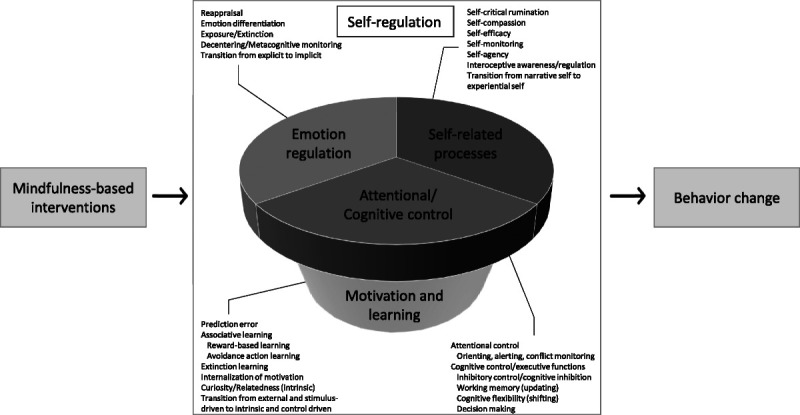
Initiating and maintaining behavior change is key to the prevention and treatment of most preventable chronic medical and psychiatric illnesses. The cultivation of mindfulness, involving acceptance and nonjudgment of present-moment experience, often results in transformative health behavior change. Neural systems involved in motivation and learning have an important role to play. A theoretical model of mindfulness that integrates these mechanisms with the cognitive, emotional, and self-related processes commonly described, while applying an integrated model to health behavior change, is needed. This integrative review (1) defines mindfulness and describes the mindfulness-based intervention movement, (2) synthesizes the neuroscience of mindfulness and integrates motivation and learning mechanisms within a mindful self-regulation model for understanding the complex effects of mindfulness on behavior change, and (3) synthesizes current clinical research evaluating the effects of mindfulness-based interventions targeting health behaviors relevant to psychiatric care. The review provides insight into the limitations of current research and proposes potential mechanisms to be tested in future research and targeted in clinical practice to enhance the impact of mindfulness on behavior change.
Overview
The claims and statistics of this paper haven’t been checked yet.
Free: it reads the open-access text and checks the first 5 claims that cite a source we can check. Create a free account to check every claim.
Integrity signals
Registry
Cites
Statistics
Figures
Verification
Claims the paper makes
The claims and statistics of this paper haven’t been checked yet.
Free: it reads the open-access text and checks the first 5 claims that cite a source we can check. Create a free account to check every claim.
Claims other papers make about this one
Each is checked against this paper’s own text: does it say what the citing paper says it does?
The source backs part of the claim, not all of it — or backs it for a different population, condition or comparison.
In the citing paper
“This study’s findings support and extend the existing literature regarding the impact and mechanisms of mindfulness on health, emotional wellness, relationships, and healthy behaviors.25–30”
From Mechanisms of mindfulness in patients with migraine: Results of a qualitative study. (2023) · cites this paper as [27]
Experimental — accuracy not yet measuredThe source backs part of the claim, not all of it — or backs it for a different population, condition or comparison.
In the citing paper
“Both the MTPC curriculum and Carina’s GLs were trauma-informed and conducive to integrating choice points, supporting individual autonomy, and developing skillful responses to trauma-related symptoms”
From Integrating choice points into mindfulness training for the dissociative subtype of PTSD: A case report (2024) · cites this paper as Schuman-Olivier et al., 2020
Experimental — accuracy not yet measuredThe source backs part of the claim, not all of it — or backs it for a different population, condition or comparison.
In the citing paper
“Contemplative practices including meditation and other mind-body techniques have been shown to yield a wide range of benefits on cardiopulmonary health, immune and physical functions, and mental health.38”
From Brief structured respiration practices enhance mood and reduce physiological arousal (2023) · cites this paper as [38]
Experimental — accuracy not yet measuredThe source backs part of the claim, not all of it — or backs it for a different population, condition or comparison.
In the citing paper
“All interventions included were group-based and utilised core mindfulness theory and practice including mindful meditation, focused thought attention, open monitoring of thoughts, and relaxation techniques (Schuman-Olivier et al., 2020).”
From Group-based mindfulness interventions in prisons: a selective critical review (2024) · cites this paper as Schuman-Olivier et al., 2020
Experimental — accuracy not yet measuredThe source backs part of the claim, not all of it — or backs it for a different population, condition or comparison.
In the citing paper
“For those with greater dysregulation, such as in chronic pain, it may be essential to achieve some measure of body-mind regulation as a beginning step for mindfulness practices and for finding cues of safety taught in PNE. 47”
From Remotely Delivered Psychologically Informed Mindful Movement Physical Therapy for Pain Care: A Framework for Operationalization (2023) · cites this paper as [47]
Experimental — accuracy not yet measured
5 more claims about this paper
Create a free account to see every claim other papers make about this one.
Self-check
Percentages, sums and reported differences re-computed from the paper’s own numbers.
The self-check needs the paper’s full text.
Citations
Cites
The theory of planned behavior
Ajzen, I. (1991) · Organizational Behavior and Human Decision Processes · doi:10.1016/0749-5978(91)90020-t · Cited by 134,657
Self-efficacy: Toward a unifying theory of behavioral change
Bandura, A. (1977) · Psychological Review · doi:10.1037/0033-295x.84.2.191 · Cited by 43,925
The "what" and "why" of goal pursuits: Human needs and the self-determination of behavior
Deci, E. L., & Ryan, R. M. (2000) · Psychological Inquiry · doi:10.1207/s15327965pli1104_01 · Cited by 34,210
Miyake, A., Friedman, N. P., Emerson, M. J., Witzki, A. H., Howerter, A., & Wager, T. D. (2000) · Cognitive Psychology · doi:10.1006/cogp.1999.0734 · Cited by 15,798
Social Cognitive Theory: An Agentic Perspective
Bandura, A. (2001) · Annual Review of Psychology · doi:10.1146/annurev.psych.52.1.1 · Cited by 15,510
The benefits of being present: Mindfulness and its role in psychological well-being
Brown, K. W., & Ryan, R. M. (2003) · Journal of Personality and Social Psychology · doi:10.1037/0022-3514.84.4.822 · Cited by 13,448
Diamond, A. (2013) · Annual Review of Psychology · doi:10.1146/annurev-psych-113011-143750 · Cited by 13,268
A default mode of brain function
Raichle, M. E., MacLeod, A. M., Snyder, A. Z., Powers, W. J., Gusnard, D. A., & Shulman, G. L. (2001) · Proceedings of the National Academy of Sciences · doi:10.1073/pnas.98.2.676 · Cited by 12,190
Gross, J. J., & John, O. P. (2003) · Journal of Personality and Social Psychology · doi:10.1037/0022-3514.85.2.348 · Cited by 11,929
Metacognition and cognitive monitoring: A new area of cognitive–developmental inquiry
Flavell, J. H. (1979) · American Psychologist · doi:10.1037/0003-066x.34.10.906 · Cited by 11,282
Research works printed but not linked: 8
- Brewer JA Elwafi HM Davis JH Craving to quit: psychological models and neurobiological mechanisms of mindfulness training as treatment for addictions. Psychol Addict Behav 2013; 27: 366– 79. 22642859 PMC3434285 · DOI · Paper page
- Cannon WB The wisdom of the body. 2nd ed. Oxford: Norton, 1939.
- Farb N Daubenmier J Price CJ, Interoception, contemplative practice, and health. Front Psychol 2015; 6: 763. 26106345 PMC4460802
- Schultz P Ryan R The “why,” “what,” and “how” of healthy self-regulation: mindfulness and well-being from a self-determination theory perspective. In: Ostafin BD Robinson MD Meier BP, eds. Handbook of mindfulness and self-regulation. New York: Springer, 2015.
- Bowen S Witkiewitz K Clifasefi SL, Relative efficacy of mindfulness-based relapse prevention, standard relapse prevention, and treatment as usual for substance use disorders: a randomized clinical trial. JAMA Psychiatry 2014; 71: 547– 56. 24647726 PMC4489711
- Bowen S Witkiewitz K Dillworth TM Marlatt GA The role of thought suppression in the relationship between mindfulness meditation and alcohol use. Addict Behav 2007; 32: 2324– 8. 17300875 PMC1989113 · DOI · Paper page
- Geller S Cultivation of therapeutic presence: therapeutic drumming and mindfulness practices. Tijdschr Clientgerichte Psychother 2009; 47: 273– 87.
- Afifi T Asmundson G Sareen J Epidemiology of traumatic events and posttraumatic stress disorder. In: Nutt DJ Stein MB Zohar J, eds. Post traumatic stress disorder: diagnosis, management and treatment. Boca Raton, FL: Taylor & Francis, 2009.
Cited by
Brief structured respiration practices enhance mood and reduce physiological arousal
Balban, M. Y., Neri, E., Kogon, M. M., Weed, L., Nouriani, B., Jo, B., Holl, G., Zeitzer, J. M., Spiegel, D., & Huberman, A. D. (2023) · Cell Reports Medicine · doi:10.1016/j.xcrm.2022.100895 · Cited by 284
“Contemplative practices including meditation and other mindbody techniques have been shown to yield a wide range of benefits on cardiopulmonary health, immune and physical functions, and mental health.(38) While both meditative practice and controlled breathwork practices show similar benefits, our data reveal they se…”
BackgroundBueno, H., Deaton, C., Farrero, M., Forsyth, F., Braunschweig, F., Buccheri, S., Dragan, S., Gevaert, S., Held, C., Kurpas, D., et al. (2025) · European Heart Journal · doi:10.1093/eurheartj/ehaf191 · Cited by 178
Sustainable Consumption Research and the Role of Marketing: A Review of the Literature (1976–2021)
Haider, M., Shannon, R. M., & Moschis, G. P. (2022) · Sustainability · doi:10.3390/su14073999 · Cited by 229
“Mindfulness implies an awareness of [217] or an enhanced focus on experiences, feelings, and thoughts [218–220], to be a conscious part of everyday mundane activities [221] like eating food or interacting with family or friends [222].”
BackgroundEmotional Intelligence: The Development of Emotional Intelligence in Leadership
Almadani, N. A. (2024) · Advances in logistics, operations, and management science book series · doi:10.4018/979-8-3693-7372-9.ch004 · Cited by 113
The Importance of Emotional Regulation in Mental Health
Menefee, D. S., Ledoux, T. A., & Johnston, C. A. (2022) · American Journal of Lifestyle Medicine · doi:10.1177/15598276211049771 · Cited by 143
“Mindfulness is a cross-cutting technique of DBT and ACT, among other interventions, and is best described as the practice of intense focus and concentration on one’s immediate situation with curiosity and acceptance rather than judgment and avoidance.(17,18) It involves present-centered awareness of sensory sensations…”
Mindfulness for Global Public Health: Critical Analysis and Agenda
Oman, D. (2025) · Mindfulness · doi:10.1007/s12671-023-02089-5 · Cited by 87
“…or geographical groups (e.g., lower and middle income countries, Ajari, 2020), relevance to health behavior change (Johnson et al., 2010; Schuman-Olivier et al., 2020), relevance to United Nations SDGs (Votruba et al., 2014), relevance to cultural approaches for fostering environmental…”
Dunne, J., Flores, M., Gawande, R., & Schuman-Olivier, Z. (2021) · Journal of Affective Disorders · doi:10.1016/j.jad.2020.12.092 · Cited by 84
Self-citationManchanda, P., Arora, N., Nazir, O., & Islam, J. U. (2023) · Journal of Retailing and Consumer Services · doi:10.1016/j.jretconser.2023.103527 · Cited by 95
Trombka, M., Demarzo, M., Campos, D., Antonio, S. B., Cicuto, K., Walcher, A. L., García-Campayo, J., Schuman-Olivier, Z., & Rocha, N. S. (2021) · Frontiers in Psychiatry · doi:10.3389/fpsyt.2021.624876 · Cited by 69
“A process of enhanced self-regulation is established by synergistic systems of attention/cognitive control, emotional regulation, and self-related processes (49, 50).”
BackgroundSelf-citationZahid, N. M., Khan, J., & Meng, T. (2022) · Current Psychology · doi:10.1007/s12144-021-02657-9 · Cited by 87
“Mindfulness facilitates the regulation of thoughts and emotions beneficial to self, others, and the environment (Schuman-Olivier et al., 2020).”
BackgroundRemskar, M., Western, M. J., Osborne, E. L., Maynard, O., & Ainsworth, B. (2023) · Mental health and physical activity · doi:10.1016/j.mhpa.2023.100575 · Cited by 70
Mindfulness-Based Interventions and Body Awareness
Pérez-Peña, M., Notermans, J., Desmedt, O., der Gucht, K. V., & Philippot, P. (2022) · Brain Sciences · doi:10.3390/brainsci12020285 · Cited by 61
“Finally, our results are in line with recent neurobiological frameworks that suggest that by practicing mindfulness, a transition is observed from the narrative self (activity in the default mode network) to the experiential or embodied self (activity in the salience network) [100,101].”
ResultMindfulness-Based Interventions and the Hypothalamic–Pituitary–Adrenal Axis: A Systematic Review
Vargas‐Uricoechea, H., Castellanos-Pinedo, A., Urrego-Noguera, K., Vargas-Sierra, H. D., Fernández, M. V. P., Barceló, E., & Giraldo, A. F. R. (2024) · Neurology International · doi:10.3390/neurolint16060115 · Cited by 63
Chang, H., Meng, X., Li, Y., Liu, J., Yuan, W., Ni, J., & Li, C. (2023) · Frontiers in Psychiatry · doi:10.3389/fpsyt.2023.1087909 · Cited by 40
“Some evidence from neuroscience suggests that selective attention and the activation of its inhibitory attention-related networks are associated with the suppression of emotions (74).”
BackgroundLutz, A., Chételat, G., Collette, F., Klimecki, O., Marchant, N. L., & Gonneaud, J. (2021) · Ageing Research Reviews · doi:10.1016/j.arr.2021.101495 · Cited by 48
Salvo, V., Curado, D. F., Sañudo, A., Kristeller, J. L., Schveitzer, M. C., Favarato, M. L., Isidoro, W., & Demarzo, M. (2022) · Appetite · doi:10.1016/j.appet.2022.106131 · Cited by 54
Selič-Zupančič, P., Klemenc-Ketiš, Z., & Onuk Tement, S. (2023) · Journal of Multidisciplinary Healthcare · doi:10.2147/jmdh.s398552 · Cited by 39
“Mindfulness is defined as an awareness which arises when paying attention to the present moment without judgement, with openness, acceptance, and curiosity.(14) In 1977, Jon Kabat-Zinn began developing MBSR (mindfulness-based stress reduction) for application in healthcare, by integrating Buddhist and other contemplat…”
BackgroundThiermann, U. B., & Sheate, W. R. (2022) · Mindfulness · doi:10.1007/s12671-022-02004-4 · Cited by 48
The mindful leader: a review of leadership qualities derived from mindfulness meditation
Doornich, J. B., & Lynch, H. M. (2024) · Frontiers in Psychology · doi:10.3389/fpsyg.2024.1322507 · Cited by 61
Remskar, M., Western, M. J., & Ainsworth, B. (2024) · British Journal of Health Psychology · doi:10.1111/bjhp.12745 · Cited by 51
“…or reach a goal (Bandura, 1986), and self-regulation (i.e., ‘the ability to adaptively regulate one's attention, emotions, cognition, and behaviour’; Schuman-Olivier et al., 2020, p. 372), both predict behaviour (change) according to established theoretical models (e.g., Ajzen's, 1991; Theory of…”
Tibber, M. S., & Silver, E. (2022) · The Cognitive Behaviour Therapist · doi:10.1017/s1754470x22000034 · Cited by 53
“Perhaps more importantly, there is evidence for the role of mindfulness in supporting behaviour change (Schuman-Olivier et al., 2020) and less compulsive/habitual patterns of behaviour (Wenk-Sormaz, 2005), including with respect to SM use and digital technologies more generally.”
Morimoto, Y., Takahashi, T., Sawa, R., Saitoh, M., Morisawa, T., Kagiyama, N., Kasai, T., Dinesen, B., Hollingdal, M., Refsgaard, J. C., et al. (2022) · Journal of Medical Internet Research · doi:10.2196/27759 · Cited by 36
“In addition, other BCTs that were not observed in the 14 portals may be included in future telerehabilitation portals, for example, prompt barrier identification or mindfulness techniques [70,76].”
BackgroundMindfulness and Acceptance–Based Interventions in Physical Therapist Practice: The Time Is Now
Tatta, J., Willgens, A. M., & Palombaro, K. M. (2022) · Physical Therapy · doi:10.1093/ptj/pzab293 · Cited by 30
Loucks, E. B., Kronish, I. M., Saadeh, F. B., Scarpaci, M. M., Proulx, J. A., Gutman, R., Britton, W. B., & Schuman-Olivier, Z. (2023) · JAMA Network Open · doi:10.1001/jamanetworkopen.2023.39243 · Cited by 27
Self-citationFelver, J. C., Cary, E. L., Helminen, E. C., Schutt, M. K. A., Gould, L. F., Greenberg, M. T., Roeser, R. W., Baelen, R. N., & Schussler, D. L. (2022) · Mindfulness · doi:10.1007/s12671-022-02015-1 · Cited by 34
“The variability that exists among MBP that are reported in the extant literature is significant, and includes differences in theoretical underpinnings, techniques employed, and intervention objectives (Chiesa & Malinowski, 2011; Lucena et al., 2020; Schuman-Olivier et al., 2020).”
BackgroundMechanisms of mindfulness in patients with migraine: Results of a qualitative study.
Estave, P. M., Margol, C., Beeghly, S., Anderson, R., Shakir, M., Coffield, A., Byrnes, J., O'Connell, N., Seng, E., Gardiner, P., et al. (2023) · Headache The Journal of Head and Face Pain · doi:10.1111/head.14481 · Cited by 26
Wang, Q., Luan, Y., Liu, D., Dai, J., Wang, H., Zhang, Y., Wang, S., Dong, X., & Bi, H. (2024) · International Journal of Nursing Practice · doi:10.1111/ijn.13204 · Cited by 26
Bagereka, P., Ameli, R., Sinaii, N., Vocci, M. C., & Berger, A. M. (2023) · BMC Palliative Care · doi:10.1186/s12904-023-01258-6 · Cited by 46
“Mindfulness, defined as paying attention on purpose and in the present moment and nonjudgmentally [18], is known to promote health and well-being at physical, psychological, and spiritual levels in various clinical groups [19–22].”
BackgroundLee, C. S., Chu, S. H., Dunne, J. P., Spintzyk, E., Locatelli, G., Babicheva, V., Lam, L., Julio, K., Chen, S., & Jurgens, C. Y. (2024) · International Journal of Nursing Studies · doi:10.1016/j.ijnurstu.2024.104809 · Cited by 29
Self-citationUnderlying mechanisms of mindfulness meditation: Genomics, circuits, and networks
Gu, Y., & Zhu, Y. (2022) · World Journal of Psychiatry · doi:10.5498/wjp.v12.i9.1141 · Cited by 38
Atta, M. H. R., El‐Ashry, A. M., & Mousa, M. A. E.-G. A. (2024) · Journal of research in nursing · doi:10.1177/17449871241252011 · Cited by 35
“This acceptance fosters positive mindsets and promotes ER (Keng et al., 2011; Schuman-Olivier et al., 2020).”
Impact of warm mindfulness on emotion regulation: a randomized controlled effectiveness trial
Gawande, R., Smith, L., Comeau, A., Creedon, T. B., Wilson, C. L., Griswold, T., Cook, B. L., Loucks, E. B., & Schuman-Olivier, Z. (2023) · Health Psychology · doi:10.1037/hea0001303 · Cited by 24
Self-citationTherapeutic Potential of Embodied Cognition for Clinical Psychotherapies: From Theory to Practice
Fugate, J. M. B., Macrine, S., & Hernandez-Cuevas, E. M. (2024) · Cognitive Therapy and Research · doi:10.1007/s10608-024-10468-y · Cited by 26
Schuman‐Olivier, Z., Goodman, H., Rosansky, J. A., Fredericksen, A. K., Barria, J., Parry, G. J., Sokol, R. G., Gardiner, P. M., Cook, B. L., & Weiss, R. D. (2025) · JAMA Network Open · doi:10.1001/jamanetworkopen.2024.54950 · Cited by 27
Self-citationAtta, M. H. R., El-Gueneidy, M., & Lachine, O. A. R. (2024) · BMC Psychology · doi:10.1186/s40359-024-01949-6 · Cited by 36
Nursing Implications of Mindfulness-Informed Interventions for Stroke Survivors and Their Families.
Saban, K. L., Tell, D., & De La Pena, P. (2022) · Stroke · doi:10.1161/strokeaha.122.038457 · Cited by 22
Zhang, Y., Chen, S., Wu, H., & Guo, C. (2021) · Mindfulness · doi:10.1007/s12671-021-01775-6 · Cited by 32
“One possible explanation for this is that MBIs are mainly derived from adult mindfulness theories, which emphasize neutral elements of self-regulating attention and acceptance when focusing on the present moment (Bishop et al., 2004; Schuman-Olivier et al., 2020) while neglecting positive elements (e.”
BackgroundConsciously Connected: The Role of Mindfulness for Mobile Phone Connectedness and Stress
Hefner, D., & Freytag, A. (2024) · Media Psychology · doi:10.1080/15213269.2023.2253732 · Cited by 20
“Even more than that and already written above, Schuman-Olivier et al. (2020) describe “the ability to adaptively regulate one’s attention, emotions, cognition, and behavior to respond effectively to internal as well as environmental demands” (p. 372) as the key beneficial characteristic of…”
BackgroundResultInfluentialMeints, S. M., Garcia, R. G., Schuman‐Olivier, Z., Datko, M., Desbordes, G., Cornelius, M. C., Edwards, R. R., & Napadow, V. (2022) · Pain Medicine · doi:10.1093/pm/pnac025 · Cited by 21
Self-citationMace, R. A., Stauder, M. J., Hopkins, S. W., Cohen, J. E., Pietrzykowski, M. O., Philpotts, L. L., Luberto, C. M., & Vranceanu, A. (2024) · American Journal of Lifestyle Medicine · doi:10.1177/15598276241230467 · Cited by 26
Why Psychotropic Drugs Don't Cure Mental Illness—But Should They?
Ivanov, I., & Schwartz, J. M. (2021) · Frontiers in Psychiatry · doi:10.3389/fpsyt.2021.579566 · Cited by 23
“Among several clinically relevant examples of this empowering concept a cardinal one is the practice of mindful awareness, an observational practice that is enhanced by training, and that enables the self to modify or redirect attention onto objects that are deemed worthy of examination (7).”
BackgroundBaluku, M. M., Nansubuga, F., Musanje, K., Nantamu, S., & Otto, K. (2023) · Current Research in Ecological and Social Psychology · doi:10.1016/j.cresp.2023.100148 · Cited by 20
Melnyk, B. M., Hoying, J., Hsieh, A. P., Buffington, B. C., Terry, A., & Moore, R. M. (2022) · Journal of the American Veterinary Medical Association · doi:10.2460/javma.21.03.0142 · Cited by 18
Schuman‐Olivier, Z., Fatkin, T., Creedon, T. B., Samawi, F., Moore, S. K., Okst, K., Fredericksen, A. (., Oxnard, A. (., Roll, D., Smith, L., et al. (2023) · The American Journal on Addictions · doi:10.1111/ajad.13364 · Cited by 15
Self-citationMitchell, A. D., Martin, L. E., Baldwin, A. S., & Levens, S. M. (2021) · Frontiers in Psychology · doi:10.3389/fpsyg.2021.742989 · Cited by 20
Non-pharmaceutical interventions to optimize cancer immunotherapy
Boesch, M., Baty, F., Rassouli, F., Kowatsch, T., Joerger, M., Früh, M., & Brutsche, M. H. (2023) · OncoImmunology · doi:10.1080/2162402x.2023.2255459 · Cited by 20
“…medicine and clinical psychology for health-promoting behavior, including cognitive behavioral therapy, 139–141 mindfulness-based approaches, 142,143 goal setting and action planning, 144–146 and motivational tools such as nudges, 147,148 gamification, 149,150 and rewards/incentives,…”
BackgroundZhang, H., Ayub, A., & Iqbal, S. (2023) · Business Process Management Journal · doi:10.1108/bpmj-02-2023-0072 · Cited by 20
Ee, C., Al-Kanini, I., Armour, M., Piya, M. K., McMorrow, R., Rao, V. S., Naidoo, D., Metzendorf, M., Kroeger, C. M., & Sabag, A. (2025) · Integrative Medicine Research · doi:10.1016/j.imr.2025.101138 · Cited by 23
Mindfulness Training for Primary Care for Portuguese-Speaking Immigrants: A Pilot Study
Trombka, M., Creedon, T. B., Demarzo, M., Cuoco, L. T., Smith, L., Oxnard, A., Rozembaque, A. T., Hirayama, M. S., Moreno, N. B., Comeau, A., et al. (2021) · Frontiers in Psychiatry · doi:10.3389/fpsyt.2021.664381 · Cited by 17
“Despite these limitations, the study has several strengths including the following: originality—it was the first study we are aware of that evaluated MBI feasibility, acceptability, cultural aspects, and effects on PSI; relevance—it meets an important need for understanding how MBIs can be better suited to a vulnerabl…”
BackgroundInfluentialSelf-citationFatkin, T., Moore, S. K., Okst, K., Creedon, T. B., Samawi, F., Fredericksen, A. K., Roll, D., Oxnard, A., Lê Cook, B., & Schuman-Olivier, Z. (2021) · Journal of Substance Abuse Treatment · doi:10.1016/j.jsat.2021.108415 · Cited by 14
Self-citationStrategies to Improve Physiological and Psychological Components of Resiliency in Firefighters
Holland, A. M., Hamil, B. K., Greene, D. R., & Kohler, A. A. (2023) · Physiologia · doi:10.3390/physiologia3040045 · Cited by 20
“If time and resources allow it, an 8-week Mindfulness-Based Stress Reduction (MBSR) course [61] should be implemented.”
BackgroundMethodBanerjee, D. (2021) · Journal of Geriatric Mental Health · doi:10.4103/jgmh.jgmh_37_21 · Cited by 17
Mace, R. A., Popok, P., Hopkins, S. W., Fishbein, N. S., & Vranceanu, A. (2022) · Aging & Mental Health · doi:10.1080/13607863.2022.2032600 · Cited by 16
“These results support our conceptual model of mindfulness for healthy lifestyle (Dutton, 2008; Geiger et al., 2016; Schuman-Olivier et al., 2020) and are consistent with increases in self-efficacy in our first MHB pilot (Mace, Greenberg, et al.”
BackgroundResultPsychedelic-Assisted Psychotherapy and Mindfulness-Based Cognitive Therapy: Potential Synergies
Chambers, R., Stoliker, D., & Simonsson, O. (2023) · Mindfulness · doi:10.1007/s12671-023-02206-4 · Cited by 17
“Mindfulness training can enhance self-related processes such as interoception, self-monitoring and self-compassion, and reduce problematic processes such as rumination and worry (Schuman-Olivier et al., 2020).”
From Novelty to Clinical Practice: Exploring VR Exergames with Physical Therapists
Chiu, M., Tochilnikova, E., & Harteveld, C. (2024) · Proceedings of the ACM on Human-Computer Interaction · doi:10.1145/3677068 · Cited by 17
“Defined as the “acceptance and nonjudgment of present-moment experience,” it is a key intervention in the management of many chronic medical and psychiatric conditions [89].”
Moore, S. K., Okst, K., Smith, L., Fatkin, T., Creedon, T., Fredericksen, A. K., Gawande, R., & Schuman-Olivier, Z. (2022) · Frontiers in Psychology · doi:10.3389/fpsyg.2022.780383 · Cited by 12
Self-citationStoyanova, S. Y., Ivantchev, N., Gergov, T. K., & Йорданова, Б. (2025) · Sports · doi:10.3390/sports13100334 · Cited by 18
Mindfulness and Attention Deficit Hyperactivity Disorder: A Neuropsychological Perspective
Gu, Y., Zhu, Y., & Brown, K. W. (2021) · The Journal of Nervous and Mental Disease · doi:10.1097/nmd.0000000000001388 · Cited by 14
Maneesang, W., Hengpraprom, S., & Kalayasiri, R. (2022) · Psychiatry Research · doi:10.1016/j.psychres.2022.114886 · Cited by 16
Korenhof, S. A., Rouwet, E. V., Elstgeest, L. E. M., Tan, S. S., Macchione, S., Vasiljev, V., Rukavina, T., Alhambra‐Borrás, T., Fierloos, I. N., & Raat, H. (2022) · International Journal of Environmental Research and Public Health · doi:10.3390/ijerph192013145 · Cited by 15
“Through modulation of attention control, emotion regulation, self-awareness, motivation and learning, mindfulness is postulated to influence self-regulation and behaviors that affect physical or mental health and quality of life [13].”
BackgroundLarsen, J. K., Hollands, G. J., Garland, E. L., Evers, A. W. M., & Wiers, R. W. H. J. (2023) · Neuroscience & Biobehavioral Reviews · doi:10.1016/j.neubiorev.2023.105408 · Cited by 13
Pehlivan, M., & Eyı, S. (2024) · Cancer Nursing · doi:10.1097/ncc.0000000000001427 · Cited by 24
Remskar, M., Ainsworth, B., Maynard, O., Malkowski, O. S., Birch, A., Burd, A., Caretu, T.-C., Assaad, L. E., Christodoulou-Tsiaoukkas, A., Menon, A., et al. (2025) · Mental health and physical activity · doi:10.1016/j.mhpa.2025.100680 · Cited by 13
Prefrontal suppression in short-video viewing: unraveling the neural correlates of self-controlPreprint
Su, C., Teng, B., Zhou, H., Geng, F., & Hu, Y. (2023) · medRxiv · doi:10.1101/2023.10.30.23296738 · Cited by 17
“The interoceptive awareness and non-judgemental acceptance ——two core elements fostered by mindfulness practice 75 —— might be an intrinsic source/power of breaking the above cycle 76 .”
BackgroundFredman Stein, K., Sawyer, K., Daryan, S., Allen, J., & Taylor, G. (2023) · Health Expectations · doi:10.1111/hex.13684 · Cited by 11
“theory, which emphasizes the role of increasing awareness of triggers and maintenance cycles,(34) and third‐wave CBT approaches, such as Mindfulness‐based Cognitive Therapy, which highlights the centrality of awareness in behaviour change.(35)”
Health Neuroscience—How the Brain/Mind and Body Affect our Health Behavior and Outcomes
Tang, Y., & Tang, R. (2024) · Journal of Integrative Neuroscience · doi:10.31083/j.jin2304069 · Cited by 12
García-Pérez, L., Atencia-Rodríguez, M. E., González, M. D. M. C., & Ruz, R. P. (2025) · Journal of American College Health · doi:10.1080/07448481.2025.2492174 · Cited by 17
Sullivan, M. B., Hill, K., Ballengee, L. A., Knoblach, D., Fowler, C., Haun, J., & Saenger, M. (2023) · Global Advances in Integrative Medicine and Health · doi:10.1177/27536130231209751 · Cited by 10
“47 Over the 10 weeks the person learns skills to ap-praise, integrate, and respond to body, mind, and environmental stimuli for healthy, adaptive self-management.”
BackgroundInfluentialSumińska, S., & Rynkiewicz, A. (2025) · PLoS ONE · doi:10.1371/journal.pone.0322413 · Cited by 14
Costa, E. C. V., Gonçalves, P., Martins, F., Monteiro, S., & Pais-Vieira, C. (2025) · Healthcare · doi:10.3390/healthcare13182310 · Cited by 13
Antezana, L., Garcia, K. M., Carlton, C. N., Andino, M. V., Gatto, A. J., & Richey, J. A. (2024) · Journal of Psychopathology and Behavioral Assessment · doi:10.1007/s10862-024-10130-7 · Cited by 12
“Since individuals with higher trait mindfulness may possess the ability to wait longer between experiencing an urge and harming, there is a critical behavioral change window which opens (Schuman-Olivier et al., 2020).”
Barua, D. R. (2024) · Advances in educational technologies and instructional design book series · doi:10.4018/979-8-3693-3952-7.ch008 · Cited by 10
Fazekas, C., Linder, D., Matzer, F., Jenewein, J., & Hanfstingl, B. (2021) · Wiener klinische Wochenschrift · doi:10.1007/s00508-021-01988-8 · Cited by 15
“Details on these theoretical assumptions and health-related implications of MBSR have been recently reviewed [38].”
BackgroundRedwine, L. S., Schwartz, E. R., & Garland, E. L. (2022) · Journal of Integrative and Complementary Medicine · doi:10.1089/jicm.2022.0761 · Cited by 15
Thampanichwat, C., Wongvorachan, T., Bunyarittikit, S., Chunhajinda, P., Phaibulputhipong, P., & Wongmahasiri, R. (2024) · Buildings · doi:10.3390/buildings14082508 · Cited by 14
Schuman‐Olivier, Z., Gawande, R., Creedon, T. B., Comeau, A., Griswold, T. R., Smith, L., To, M. N., Wilson, C. L., Loucks, E. B., & Cook, B. L. (2024) · Psychiatry Research · doi:10.1016/j.psychres.2024.116230 · Cited by 13
Self-citationAlly, D., Tobiasz-Veltz, L., Tu, K., Comeau, A., Bumpus, C., Blot, T., Rice, F. K., Orr, B., Rea, H. S., Sweezy, M., et al. (2025) · Frontiers in Psychiatry · doi:10.3389/fpsyt.2025.1544435 · Cited by 13
Self-citationLiu, M., Kong, A., Huang, F., Lau, N. M. L., & Hoorn, J. F. (2025) · Virtual Reality · doi:10.1007/s10055-025-01224-y · Cited by 11
“…field often fall into one of three categories: (1) general reviews of mindfulness interventions without a technological focus (Zhang et al. 2021 ; Schuman-Olivier et al. 2020 ), (2) reviews focusing on XR for mindfulness that emphasize conceptual classifications or therapeutic contexts without…”
Mechanisms of Change Underlying Mindfulness-Based Practice Among Adolescents
Zhang, Y., Razza, R. A., Wang, Q., Bergen‐Cico, D., & Liu, Q. (2022) · Mindfulness · doi:10.1007/s12671-022-01881-z · Cited by 16
“Moreover, both self-regulation and self-compassion were collectively believed to serve as the mechanisms through which mindfulness-based interventions influence behavioral changes (Schuman-Olivier et al., 2020).”
BackgroundOsteoarthritis Action Alliance, S. P. T. G., Driban, J. B., Vincent, H. K., Trojian, T. H., Ambrose, K., Baez, S., Beresic, N. J., Berkoff, D. J., Callahan, L. F., Cohen, B. S., et al. (2023) · Journal of Athletic Training · doi:10.4085/1062-6050-0504.22 · Cited by 14
Minding the Gap: Leveraging Mindfulness to Inform Cue Exposure Treatment for Substance Use Disorders
Vinci, C., Sawyer, L. E., & Yang, M.-J. (2021) · Frontiers in Psychology · doi:10.3389/fpsyg.2021.649409 · Cited by 13
“From a neurobiological perspective, there also appears to be overlap in those brain regions beneficially affected by both extinction and mindfulness interventions (e.g., prefrontal cortex; Myers and Davis, 2006; Hölzel et al., 2011; Allen et al., 2012; Bossert et al., 2013; Creswell and Lindsay, 2014; Schuman-Olivier…”
Backgroundde Entrambasaguas, M., Díaz‐Silveira, C., Burgos-Julián, F. A., & Germán, M. Á. S. (2023) · Clinical Psychology & Psychotherapy · doi:10.1002/cpp.2874 · Cited by 9
Preissner, C. E., Vilier, L., de Vries, H., & Oenema, A. (2024) · Health Psychology Review · doi:10.1080/17437199.2024.2310115 · Cited by 12
“Relating to one ’ s experiences with such attitudes is proposed to lead to reductions in experienced emotional distress as well as a lower use of cognitive and behavioural coping strategies for the avoidance of negative internal experiences (Bishop et al., 2004; Schuman-Olivier et al., 2020).”
Network of Mindfulness and Difficulties in Regulating Emotions in Firefighters
Chiang, H. N., Medvedev, O. N., Ponder, W. N., Carbajal, J., & Vujanovic, A. A. (2024) · Mindfulness · doi:10.1007/s12671-024-02348-z · Cited by 13
“While Schuman-Olivier et al. (2020) suggested a positive association between high situational and emotional self-awareness and goal-directed behaviours, our study revealed a reversal of the anticipated relationship among firefighters.”
Emirza, E. G., & Bilgili, N. (2024) · International Journal of Mental Health Nursing · doi:10.1111/inm.13401 · Cited by 8
Rathakrishnan, T., Gan, J. L., & Yaacob, A. (2024) · International Journal of Sustainability in Higher Education · doi:10.1108/ijshe-03-2024-0158 · Cited by 13
Reangsing, C., Wongsuraprakit, S., Punsuwun, S., & Oerther, S. E. (2024) · Psychiatry Research · doi:10.1016/j.psychres.2024.116272 · Cited by 11
Neural Correlates of Alexithymia Based on Electroencephalogram (EEG)—A Mechanistic Review
Chmiel, J., Wiażewicz-Wójtowicz, P., & Stępień–Słodkowska, M. (2025) · Journal of Clinical Medicine · doi:10.3390/jcm14061895 · Cited by 13
Marițescu, A., Pescaru, C. C., Crișan, A. F., Stoicescu, E. R., Oancea, C. I., & Iacob, D. (2025) · Journal of Clinical Medicine · doi:10.3390/jcm14082807 · Cited by 14
Achepohl, G., Heaney, C. A., Rosas, L. G., Moore, J. B., Rich, T., & Winter, S. J. (2022) · International Journal of Environmental Research and Public Health · doi:10.3390/ijerph191610224 · Cited by 12
Zhou, H., Zhu, Z., Feng, X., & Zhang, R. (2023) · BMC Psychiatry · doi:10.1186/s12888-023-05092-1 · Cited by 12
“Mindfulness relates to sleep quality positively Mindfulness has long been regarded as relating to mental health, possibly for its engagement in attentional control and emotional regulation [55].”
BackgroundClinical application of respiratory-gated auricular vagal afferent nerve stimulation
Han, Z., Zhang, C., Cheng, K., Chen, Y., Tang, Z., Chen, L., Ni, J., & Wang, Z. (2024) · Neuroscience · doi:10.1016/j.neuroscience.2024.11.065 · Cited by 9
Bawa, F. L. M., Sutton, J. W., Mercer, S. W., & Bond, C. M. (2021) · Social Science & Medicine · doi:10.1016/j.socscimed.2021.114073 · Cited by 17
Huang, S., Riccardi, D., Pflanzer, S., Redwine, L. S., Gray, H. L., Carson, T. L., McDowell, M., Thompson, Z., Hubbard, J. J., & Pabbathi, S. R. (2023) · Nutrients · doi:10.3390/nu15194205 · Cited by 13
Ahmadi, S., Rezapour-Mirsaleh, Y., & Choobforoushzadeh, A. (2024) · Mindfulness · doi:10.1007/s12671-024-02454-y · Cited by 8
“This practice heightens attention and awareness in the present moment, enabling individuals to become more attuned to their inner world, emotions, and feelings (Schuman-Olivier et al., 2020).”
Tvrtković, S., & Ünal‐Aydın, P. (2024) · Behavioral Sciences · doi:10.3390/bs14121137 · Cited by 7
Al‐Beltagi, M., Saeed, N. K., Bediwy, A. S., Bediwy, E. A., & Elbeltagi, R. M. (2025) · World Journal of Clinical Pediatrics · doi:10.5409/wjcp.v14.i3.105290 · Cited by 10
Mindfulness-Based Art Interventions for Students: A Meta-Analysis Review of the Effect on Anxiety
Zhu, Z., Xiao, L., Ahmad, N. A., Roslan, S. B., Burhanuddin, N. A. N., Gao, J., & Huang, C. (2025) · Behavioral Sciences · doi:10.3390/bs15081078 · Cited by 9
“With the promotion of MBSR, this intervention has been widely used in the general population and in other fields, including education.”
InfluentialScience Is About Thinking: How Can We Protect Thinking Time in a Distracted Digital World?
Dhahbi, W., Pyne, D. B., Dergaa, I., Zeitouny, D., Müller, P., Omri, A. E., Chamari, K., & Chaabène, H. (2026) · Brain Sciences · doi:10.3390/brainsci16070677 · Cited by 15
“Glymphatic clearance of metabolic by-products during sleep provides a fourth, longer-horizon mechanism with implications for cognitive resilience [56].”
Mace, R. A., Hopkins, S. W., Reynolds, G., & Vranceanu, A. (2022) · Journal of Clinical Psychology in Medical Settings · doi:10.1007/s10880-022-09843-2 · Cited by 8
“Both wearable devices and mindfulness, a practice of non-judgmental awareness of the present (Ludwig & Kabat-Zinn, 2008), have the potential to promote healthier lifestyle choices and sustain behavior change in older adults (Brawley et al., 2003; Dutton, 2008; Geiger et al., 2016; Sullivan & Lachman, 2017; Schuman-Oli…”
Background
Metadata
- Authors
- Schuman-Olivier, Z., Trombka, M., Lovas, D. A., Brewer, J. A., Vago, D. R., Gawande, R., Dunne, J. P., Lazar, S. W., Loucks, E. B., & Fulwiler, C.
- Affiliations
- Boston College (US)
- ORCID
- Venue
- Harvard Review of Psychiatry
- Published
- 2020-11
- Volume
- 28
- Issue
- 6
- Pages
- 371-394
- ISSN
- 1067-3229 (ISSN-L)
- 1465-7309
- PMC
- PMC7647439
- OpenAlex
- W3097790734
- Semantic Scholar
- 4d71817d634db36629fd23cbb5a31e9c6cde95e9
- Cited by
- 435
- References
- 466
- Citations by year
- 2026: 81 · 2025: 123 · 2024: 97 · 2023: 63 · 2022: 52 · 2021: 17 · 2020: 1
- FWCI
- 2.60
- Type
- journal article
- Language
- en
- Open access
- hybrid
- doi.org
- Licence
- Locations
- Harvard Review of Psychiatry (publishedVersion, cc-by-nc-nd)
- PubMed Central (publishedVersion, cc-by-nc-nd)
- PubMed (publishedVersion)
- eScholarship@UMassChan (submittedVersion, cc-by-nc-nd)
- Funders
- National Institute on Aging (R01AG048351)
- National Center for Complementary and Integrative Health (UH2AT009145, R33AT010125, UH3AT009145, R21AT010125, R01AT006344)
- Topics
- Social Sciences › Psychology › Clinical Psychology › Mindfulness and Compassion Interventions
- Social Sciences › Psychology › Applied Psychology › Behavioral Health and Interventions
- Social Sciences › Psychology › Developmental and Educational Psychology › Behavioral and Psychological Studies
- Keywords
- mindfulness, behavior change, mindfulness-based interventions, motivation, learning, self-regulation, health behavior change, psychiatric nursing, chronic disease prevention, mechanisms of change
- MeSH terms
- Self-Control, Self-Management, Mental Disorders, Humans, Motivation, Health Behavior, Mindfulness
About these checks
Registry, retraction, Cites and statistics results are computed, not judged, with one exception: a printed reference that no index lists is read once by a model before it counts as a citation error. Claims are extracted by a model and kept only when their quote appears verbatim in the text; each cited source is then checked, with a model’s help, for whether it says what the claim relies on. Those verdicts can be wrong — read the claim’s quote and the cited source before relying on one.
Statistics and arithmetic are recomputed, not judged.
Confidence bands are shown only for fields calibrated on our annotated test set. None is calibrated yet, so no band is shown.
What counts as a claim ›How we measure confidence ›How we check this ›
Are you an author, or do you see a problem with this page? Request a review
Data sources
Bibliographic data: Semantic Scholar, OpenAlex, Crossref.
Contains information from the Semantic Scholar Academic Graph Datasets, made available under the ODC Attribution License (ODC-BY 1.0).
Semantic Scholar’s data is described in: Kinney, R., et al. (2023). The Semantic Scholar Open Data Platform. arXiv:2301.10140.
