

Mindfulness and Behavior Change
Open accessThe DOI matches its Crossref record; 465 of the 466 references it cites were found in a registry or an index.
Abstract
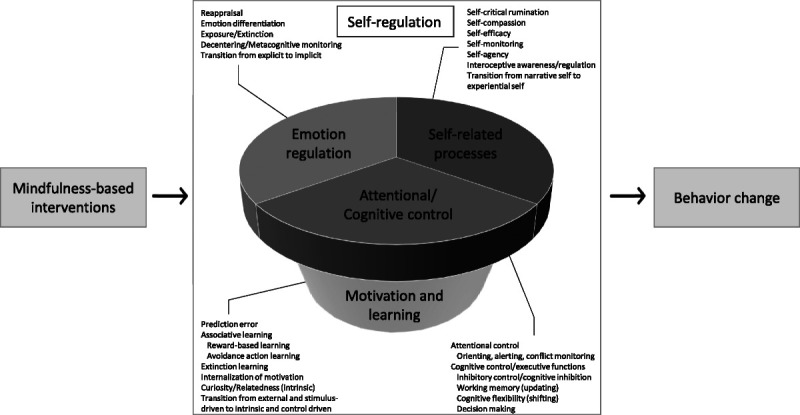
Initiating and maintaining behavior change is key to the prevention and treatment of most preventable chronic medical and psychiatric illnesses. The cultivation of mindfulness, involving acceptance and nonjudgment of present-moment experience, often results in transformative health behavior change. Neural systems involved in motivation and learning have an important role to play. A theoretical model of mindfulness that integrates these mechanisms with the cognitive, emotional, and self-related processes commonly described, while applying an integrated model to health behavior change, is needed. This integrative review (1) defines mindfulness and describes the mindfulness-based intervention movement, (2) synthesizes the neuroscience of mindfulness and integrates motivation and learning mechanisms within a mindful self-regulation model for understanding the complex effects of mindfulness on behavior change, and (3) synthesizes current clinical research evaluating the effects of mindfulness-based interventions targeting health behaviors relevant to psychiatric care. The review provides insight into the limitations of current research and proposes potential mechanisms to be tested in future research and targeted in clinical practice to enhance the impact of mindfulness on behavior change.
Overview
The claims and statistics of this paper haven’t been checked yet.
Free: it reads the open-access text and checks the first 5 claims that cite a source we can check. Create a free account to check every claim.
Integrity signals
Registry
Cites
Statistics
Figures
Verification
Claims the paper makes
The claims and statistics of this paper haven’t been checked yet.
Free: it reads the open-access text and checks the first 5 claims that cite a source we can check. Create a free account to check every claim.
Claims other papers make about this one
Each is checked against this paper’s own text: does it say what the citing paper says it does?
The source backs part of the claim, not all of it — or backs it for a different population, condition or comparison.
In the citing paper
“This study’s findings support and extend the existing literature regarding the impact and mechanisms of mindfulness on health, emotional wellness, relationships, and healthy behaviors.25–30”
From Mechanisms of mindfulness in patients with migraine: Results of a qualitative study. (2023) · cites this paper as [27]
Experimental — accuracy not yet measuredThe source backs part of the claim, not all of it — or backs it for a different population, condition or comparison.
In the citing paper
“Both the MTPC curriculum and Carina’s GLs were trauma-informed and conducive to integrating choice points, supporting individual autonomy, and developing skillful responses to trauma-related symptoms”
From Integrating choice points into mindfulness training for the dissociative subtype of PTSD: A case report (2024) · cites this paper as Schuman-Olivier et al., 2020
Experimental — accuracy not yet measuredThe source backs part of the claim, not all of it — or backs it for a different population, condition or comparison.
In the citing paper
“Contemplative practices including meditation and other mind-body techniques have been shown to yield a wide range of benefits on cardiopulmonary health, immune and physical functions, and mental health.38”
From Brief structured respiration practices enhance mood and reduce physiological arousal (2023) · cites this paper as [38]
Experimental — accuracy not yet measuredThe source backs part of the claim, not all of it — or backs it for a different population, condition or comparison.
In the citing paper
“All interventions included were group-based and utilised core mindfulness theory and practice including mindful meditation, focused thought attention, open monitoring of thoughts, and relaxation techniques (Schuman-Olivier et al., 2020).”
From Group-based mindfulness interventions in prisons: a selective critical review (2024) · cites this paper as Schuman-Olivier et al., 2020
Experimental — accuracy not yet measuredThe source backs part of the claim, not all of it — or backs it for a different population, condition or comparison.
In the citing paper
“For those with greater dysregulation, such as in chronic pain, it may be essential to achieve some measure of body-mind regulation as a beginning step for mindfulness practices and for finding cues of safety taught in PNE. 47”
From Remotely Delivered Psychologically Informed Mindful Movement Physical Therapy for Pain Care: A Framework for Operationalization (2023) · cites this paper as [47]
Experimental — accuracy not yet measured
5 more claims about this paper
Create a free account to see every claim other papers make about this one.
Self-check
Percentages, sums and reported differences re-computed from the paper’s own numbers.
The self-check needs the paper’s full text.
Citations
Cites
The theory of planned behavior
Ajzen, I. (1991) · Organizational Behavior and Human Decision Processes · doi:10.1016/0749-5978(91)90020-t · Cited by 134,657
Self-efficacy: Toward a unifying theory of behavioral change
Bandura, A. (1977) · Psychological Review · doi:10.1037/0033-295x.84.2.191 · Cited by 43,925
The "what" and "why" of goal pursuits: Human needs and the self-determination of behavior
Deci, E. L., & Ryan, R. M. (2000) · Psychological Inquiry · doi:10.1207/s15327965pli1104_01 · Cited by 34,210
Miyake, A., Friedman, N. P., Emerson, M. J., Witzki, A. H., Howerter, A., & Wager, T. D. (2000) · Cognitive Psychology · doi:10.1006/cogp.1999.0734 · Cited by 15,798
Social Cognitive Theory: An Agentic Perspective
Bandura, A. (2001) · Annual Review of Psychology · doi:10.1146/annurev.psych.52.1.1 · Cited by 15,510
The benefits of being present: Mindfulness and its role in psychological well-being
Brown, K. W., & Ryan, R. M. (2003) · Journal of Personality and Social Psychology · doi:10.1037/0022-3514.84.4.822 · Cited by 13,448
Diamond, A. (2013) · Annual Review of Psychology · doi:10.1146/annurev-psych-113011-143750 · Cited by 13,268
A default mode of brain function
Raichle, M. E., MacLeod, A. M., Snyder, A. Z., Powers, W. J., Gusnard, D. A., & Shulman, G. L. (2001) · Proceedings of the National Academy of Sciences · doi:10.1073/pnas.98.2.676 · Cited by 12,190
Gross, J. J., & John, O. P. (2003) · Journal of Personality and Social Psychology · doi:10.1037/0022-3514.85.2.348 · Cited by 11,929
Metacognition and cognitive monitoring: A new area of cognitive–developmental inquiry
Flavell, J. H. (1979) · American Psychologist · doi:10.1037/0003-066x.34.10.906 · Cited by 11,282
Research works printed but not linked: 8
- Brewer JA Elwafi HM Davis JH Craving to quit: psychological models and neurobiological mechanisms of mindfulness training as treatment for addictions. Psychol Addict Behav 2013; 27: 366– 79. 22642859 PMC3434285 · DOI · Paper page
- Cannon WB The wisdom of the body. 2nd ed. Oxford: Norton, 1939.
- Farb N Daubenmier J Price CJ, Interoception, contemplative practice, and health. Front Psychol 2015; 6: 763. 26106345 PMC4460802
- Schultz P Ryan R The “why,” “what,” and “how” of healthy self-regulation: mindfulness and well-being from a self-determination theory perspective. In: Ostafin BD Robinson MD Meier BP, eds. Handbook of mindfulness and self-regulation. New York: Springer, 2015.
- Bowen S Witkiewitz K Clifasefi SL, Relative efficacy of mindfulness-based relapse prevention, standard relapse prevention, and treatment as usual for substance use disorders: a randomized clinical trial. JAMA Psychiatry 2014; 71: 547– 56. 24647726 PMC4489711
- Bowen S Witkiewitz K Dillworth TM Marlatt GA The role of thought suppression in the relationship between mindfulness meditation and alcohol use. Addict Behav 2007; 32: 2324– 8. 17300875 PMC1989113 · DOI · Paper page
- Geller S Cultivation of therapeutic presence: therapeutic drumming and mindfulness practices. Tijdschr Clientgerichte Psychother 2009; 47: 273– 87.
- Afifi T Asmundson G Sareen J Epidemiology of traumatic events and posttraumatic stress disorder. In: Nutt DJ Stein MB Zohar J, eds. Post traumatic stress disorder: diagnosis, management and treatment. Boca Raton, FL: Taylor & Francis, 2009.
Cited by
Items 201–300 of 436
Lesmana, T., Zubaidi, A., & Yunanto, K. T. (2025) · Discover Psychology · doi:10.1007/s44202-025-00512-7 · Cited by 3
“Mindfulness, as a dispositional trait, enhances individuals’ present-moment awareness and supports more conscious regulation of attention and behavior in decision-making contexts [66].”
Time-restricted eating and circadian rhythms: A new frontier in diabetes and obesity management
Maqsood, S., Amjad, S., Ahmed, F., & Ahmad, M. F. (2025) · Primary care diabetes · doi:10.1016/j.pcd.2025.11.004 · Cited by 6
Guan, X., Zhang, Y., Wang, J., Li, X., Ma, L., & Ahmed, M. Z. (2025) · Scientific Reports · doi:10.1038/s41598-025-32733-0 · Cited by 5
Melchior, M. D. O., Dorne, B., Mélo, A. M., Messias, N. S., Ribeiro-Silva, V. H. A., Ribeiro, L. G., Lara, L. A. D. S., Leite‐Panissi, C. R. A., Gherardi‐Donato, E. C. D. S., Mazzi‐Chaves, J. F., et al. (2026) · Special Care in Dentistry · doi:10.1111/scd.70141 · Cited by 2
Ito, Y., Browne, C. A., & Yamamoto, K. (2026) · Mindfulness · doi:10.1007/s12671-026-02865-z · Cited by 2
“…neuroscience suggests that enhanced self-regulation, supported by improvements in attentional control, self-awareness, and emotion regulation cultivated through formal and informal meditation practice, may represent a key mechanism (Loucks, 2022; Schuman-Olivier et al., 2020; Tang et al., 2015).”
Farkında Olarak Yemek Mindful Eating
SAYGI, Y. B. (2017) · AYDIN GASTRONOMY · doi:10.17932/iau.gastronomy.2017.016/gastronomy_v06i1008 · Cited by 2
Ardian, J. (2022) · Journal of Psychiatry Psychology and Behavioral Research · doi:10.21776/ub.jppbr.2022.003.02.1 · Cited by 2
Antunes, R., Alexandre, J., Guedes, M., Filipe, M. G., & Veríssimo, M. (2023) · Frontiers in Psychology · doi:10.3389/fpsyg.2023.1233335 · Cited by 5
“On the other hand, internalizing behaviors typically consist of self-directed difficulties (Achenbach and Edelbrock, 1978), such as anhedonia and negative moods and emotions (Schuman-Olivier et al., 2020), which are associated with various depressive and anxiety disorders (Hansen and Jordan, 2020).”
BackgroundHe, Y., Lv, Y., Lan, T.-T., Deng, F., & Zhang, Y. (2024) · World Journal of Clinical Cases · doi:10.12998/wjcc.v12.i2.293 · Cited by 2
Sepideh, S., Bazzāziān, S., & Sirtori Cesare, R. (2024) · Journal of Neurology Neurological Science and Disorders · doi:10.17352/jnnsd.000057 · Cited by 3
Zhai, Y., Almaawali, M. S., & Du, X. Y. (2024) · Journal of Clinical Medicine · doi:10.3390/jcm13061753 · Cited by 2
“Clinicians (e.g., clinical psychologists, counselors, social workers, and psychiatrists) can apply motivational interviewing techniques to help clients process their thoughts and feelings and facilitate their behavior changes, such as clients’ health and mindfulness-related behaviors [47,48].”
BackgroundApplication of Neuroscience Methods in HRDM for Brain-Based Human Capital Optimization
Patangia, B., Rithani, J. M., & Alfonso, T. (2024) · Advances in human resources management and organizational development book series · doi:10.4018/979-8-3693-1858-4.ch013 · Cited by 4
Common Grounds: Plant Parenting and the Well-Being of LGBTQ+ Individuals
Beaumont, M. A., Koch, J. M., & Schmitz, R. M. (2024) · Journal of Creativity in Mental Health · doi:10.1080/15401383.2024.2376254 · Cited by 2
“In addition, incorporating aspects of mindfulness into various aspects of life can improve overall health and well-being (Schuman-Olivier et al., 2020).”
Could Mindful Meditation be a Routine Therapeutic Intervention in Practice?
Gupta, J. (2024) · Science Insights · doi:10.15354/si.24.co202 · Cited by 2
Loweth, T. A., Taylor, S. R., Mapp, G., Bebbington, K., Atkin, N., & Kite, C. (2024) · Diseases · doi:10.3390/diseases12100236 · Cited by 2
“Evidence also suggests that MBIs are effective for reducing harmful health behaviours (i.e., prolonged sedentariness), thereby catalyzing chronic disease self-management and health behaviour change and improving physical and mental health outcomes [30].”
BackgroundKhanbeiki, A. (2024) · Physical activity in children. · doi:10.61186/pach.2024.470015.1022 · Cited by 9
“Originally developed as a clinical technique to address conditions like depression and anxiety, mindfulness allows individuals to cultivate a new relationship with their internal thoughts and external circumstances (2).”
How Bud Craig’s Insights Reshape the Research on Pain and Mind–Body Therapies
Mehling, W. E. (2024) · Current topics in behavioral neurosciences · doi:10.1007/7854_2024_521 · Cited by 4
An Innovative Model to Add Mindfulness to Total Worker Health Training
Kuehl, K. S., Elliot, D. L., DeFrancesco, C., McGinnis, W. J., Ek, S., Horne, A. V., Kempany, K. G., & Garg, B. (2024) · Journal of Occupational and Environmental Medicine · doi:10.1097/jom.0000000000003261 · Cited by 3
Mengoptimalkan Kesadaran Penuh Pada Anak Melalui Permainan Mindfullness
Firmansyah, M. R., & Perang, B. (2024) · Jurnal Abdimas Indonesia · doi:10.53769/jai.v4i3.1016 · Cited by 2
Wang, X., & Gao, Y. (2024) · American Journal of Health Behavior · doi:10.5993/ajhb.48.5.15 · Cited by 2
Schroeder, M. W., Frumkin, M. R., & Mace, R. A. (2025) · Journal of Behavioral Medicine · doi:10.1007/s10865-024-00546-7 · Cited by 2
“It was informed by the theories of cognitive aging (Reuter-Lorenz & Park, 2014) and mindfulness for behavior change theory (Schuman-Olivier et al., 2020).”
How Meditation Promotes Well‐Being: Applying a Dual‐System Theory
Lehman, B. J., Fogel, C. A., & Wiederaenders, E. (2025) · Social and Personality Psychology Compass · doi:10.1111/spc3.70037 · Cited by 5
Lai, W., Yang, L., Ko, H., Su, H.-C., & Wu, L. (2025) · Complementary Therapies in Clinical Practice · doi:10.1016/j.ctcp.2025.102017 · Cited by 2
Baum, C., Ditter, V., Wurtz, J., Schitter, M., & Martinelli, A. (2025) · Behaviour Research and Therapy · doi:10.1016/j.brat.2025.104824 · Cited by 3
Prenatal yoga and excessive gestational weight gain: A review of evidence and potential mechanisms
Green, J., Larkey, L., Leiferman, J. A., Buman, M. P., Oh, C., & Huberty, J. (2022) · Complementary Therapies in Clinical Practice · doi:10.1016/j.ctcp.2022.101551 · Cited by 4
Neurobiological and epigenetic perspectives on hedonism, altruism and conscience
de Silva, P. N. (2022) · BJPsych Advances · doi:10.1192/bja.2022.16 · Cited by 4
Ethical Issues in Psychiatric and Mental Health Care
Dunne, J. P., Blackwell, E. K., Ursini, E., & Milliken, A. B. (2022) · The International Library of Bioethics · doi:10.1007/978-94-024-2155-2_9 · Cited by 2
Self-citationIndividual differences in self- and value-based reward processing
Sui, J., Cao, B., Song, Y., & Greenshaw, A. J. (2022) · Current Research in Behavioral Sciences · doi:10.1016/j.crbeha.2022.100095 · Cited by 5
Effects of personality traits on mindful self-care practices of healthcare workers
Osman, I., & Singaram, V. S. (2023) · South African Journal of Psychiatry · doi:10.4102/sajpsychiatry.v29i0.2019 · Cited by 4
“…intervention (MBI) was hypothesised to transform the HCPs’ ability to cope with stress by enhancing their self-care. programmes that focus on changing individuals’ relationships to their thoughts by creating present moment focus and a non-judgemental stance, 13 which enhances resilience.”
BackgroundPengaruh Mindfulness Terhadap Depresi Remaja
Lekatompessy, R. (2023) · Indonesian Journal of Nursing Scientific · doi:10.58467/ijons.v3i1.62 · Cited by 2
“…yang mungkin akan datang di masa depan, dengan sengaja berkonsentrasi pada apa yang terjadi di sekitar mereka, dan mencoba untuk tidak menghakimi apa pun yang mereka perhatikan, atau melabeli hal-hal sebagai baik atau buruk (American Psychological Association, 2022; Schuman-Olivier et al., 2020).”
BackgroundInteractive effects of mindfulness and negative urgency on intimate partner aggression perpetration
Brown, W. T., Martelli, A. M., & Chester, D. S. (2023) · Aggressive Behavior · doi:10.1002/ab.22120 · Cited by 3
Nan, J., Purpura, S., Jaiswal, S., Afshar, H., Maric, V., Manchanda, J. K., Taylor, C. T., Ramanathan, D., & Mishra, J. (2026) · NPP—Digital Psychiatry and Neuroscience · doi:10.1038/s44277-026-00062-3 · Cited by 1
“If shown to be effective, such a personalized approach can be a promising way to remotely deliver scalable treatment for depression that is optimized to individual lifestyles.”
Bhardwaj, S., Ali, A., & Paul, F. A. (2026) · Frontiers in Behavioral Neuroscience · doi:10.3389/fnbeh.2026.1805594 · Cited by 1
Mindfulness-Based Interventions for Psychiatry
Ivkovic, A., Evans, S., Mirsky, P., Ashar, Y. K., & Muskin, P. R. (2024) · Tasman’s Psychiatry · doi:10.1007/978-3-030-51366-5_159 · Cited by 1
Almueed, S. M. (2024) · Sohag University International Journal of Educational Research (SUIJER) /Sohag University International Journal of Educational Research (SUIJER) · doi:10.21608/suijer.2024.339392 · Cited by 1
Erol, B. N., Sürer, H. K., Gülle, H., İpar, M., Kaşıkçı, E., & Küpçüoğlu, C. (2024) · Pamukkale Journal of Sport Sciences · doi:10.54141/psbd.1395985 · Cited by 2
Hasina, S. N., Shodiq, M., Misutarno, Putri, R. A., Noventi, I., & Rohmawati, R. (2024) · Revista de Gestão Social e Ambiental · doi:10.24857/rgsa.v18n5-064 · Cited by 1
Gölbaşı, C., Çökmüş, F. P., Başer, L. M., Hakan, G., Ünal‐Aydın, P., & Orkun, A. (2024) · Psihologija · doi:10.2298/psi230222013g · Cited by 2
Velázquez-Paniagua, M., Gómez-Chavarín, M., & Sampieri-Cabrera, R. (2025) · Revista de la Facultad de Medicina UNAM · doi:10.22201/fm.24484865e.2025.68.1.02 · Cited by 6
“La meditación de atención plena implica prestar atención al momento presente con curiosidad, apertura, aceptación, no reactividad y sin juicio 26 .”
Does Mindfulness Mediated by Virtual Reality Help People with Functional Diversity?
Puente-Torre, P., Benito, V. D., Cano, S. R., & Lozano-Álvarez, M. (2025) · Societies · doi:10.3390/soc15020045 · Cited by 3
Amores, J., Rowan, K., Hernandez, J., & Czerwinski, M. P. (2024) · International Conference on Affective Computing and Intelligent Interaction and workshops · doi:10.1109/acii63134.2024.00048 · Cited by 1
“Numerous studies have underscored the positive impacts of mindfulness on cognitive functions, emotional regulation, and stress reduction [1].”
Gawande, R., Rosario, F. K., Santiago, C., Thomas, J. E., Naganuma-Carreras, J., Blot, T., Aviles, K., Gardiner, P. M., & Schuman‐Olivier, Z. (2025) · Frontiers in Public Health · doi:10.3389/fpubh.2025.1514946 · Cited by 2
“It also integrates core elements of Mindfulness-Based Interventions (MBIs) such as the body scan, mindful check-ins that facilitate interoceptive awareness, emotion and attention regulation (24, 28).”
Self-citationTemizarabacı, İ., Köse, G., Baş, M., & Nehring, I. (2025) · Children · doi:10.3390/children12060696 · Cited by 6
Gu, B., Lv, Y., Zhu, J., Sun, X., & Li, K. (2025) · Frontiers in Medicine · doi:10.3389/fmed.2025.1601951 · Cited by 3
Neuenschwander, R., Bryce, D., & Eberhart, J. (2026) · Mindfulness · doi:10.1007/s12671-026-02938-z · Cited by 2
“A relatively younger body of research suggests that mindfulness-based meditation practice improves mental health outcomes and promotes adaptive behavioral change (Goldberg et al., 2018; Schuman-Olivier et al., 2020).”
Chen, M., Xin, Z., He, M., Wang, Z., Li, Y., Hofmann, S. G., & Liu, X. (2025) · Mindfulness · doi:10.1007/s12671-025-02656-y · Cited by 1
“…scales should be considered: the K10 scale focuses on emotional experience frequency which may be more directly modulated by mind-fulness, while OASIS and ODSIS assess functional impairment that might require indirect pathways (Schuman-Olivier et al., 2020), making direct effects less stable.”
Clinical Education: Evaluating Depression in Patient Request for Termination of Medical Care
Thilges, S., Wool, L., Murphy, E., & Merchant, M. (2025) · Journal of Clinical Psychology in Medical Settings · doi:10.1007/s10880-025-10094-0 · Cited by 1
Herrmann, F. M., Jones, G. M., Low, D. M., Zech, J. M., Carhart-Harris, R. L., & Kettner, H. (2025) · Journal of Psychiatric Research · doi:10.1016/j.jpsychires.2025.09.007 · Cited by 1
Mindfulness, Emotion Regulation, and Links to Behavioral Health
Heppner, W. L., & Spears, C. A. (2025) · Springer eBooks · doi:10.1007/978-3-031-91451-5_11 · Cited by 1
Mindfulness and Related Factors in Predicting Undergraduates’ Psychological Distress
Lu, J., Mudathir, D., & Chen, Y. (2025) · Journal of Mental Health Counseling · doi:10.17744/mehc.47.4.03 · Cited by 1
Mindfulness contributing to physical activity engagement: evidence from a follow-up study
Gan, Y., Zhao, Z., Chen, Z., & Mao, Z. (2025) · Psychology and Health · doi:10.1080/08870446.2025.2571599 · Cited by 1
“Subsequently, the Mindful Self-Regulation model proposed by Schuman-Olivier et al. (2020) provides a comprehensive framework for understanding the complex effects of mindfulness on health behaviour change.”
Theroux, B. M., Eggins, E., Paynter, J. M., Dawe, S., & Williams, K. E. (2025) · Clinical Child and Family Psychology Review · doi:10.1007/s10567-025-00547-1 · Cited by 3
“…et al., 2015; Filipe et al., 2021; Khalsa & Butzer, 2016; Maynard et al., 2017; Weaver & Darragh, 2015; Zenner et al., 2014), and the proposed mechanism for change for mindfulness which may be theoretically unique to these interventions (Schuman-Olivier et al., 2020; Tudor et al., 2022).”
Beylin, N. R., Covarrubías, E., & Zawadzki, M. J. (2025) · Mindfulness · doi:10.1007/s12671-025-02680-y · Cited by 1
“In this context, mindfulness can equip individuals with adaptive coping mechanisms by enhancing cognitive and emotional regulation skills (Hölzel et al., 2011; Schuman-Olivier et al., 2020).”
Hatzinger, L. A., Do, B., Hewus, M., Crosley‐Lyons, R., & Dunton, G. F. (2025) · Journal of Sports Sciences · doi:10.1080/02640414.2025.2574260 · Cited by 4
“Findings suggest that the inability to partake in PA types or contexts that satisfies one’s entertainment and aesthetic appreciation needs (Juul & Nordbø, 2023; Schuman-Olivier et al., 2020) may lead to greater time spent being sedentary.”
Bhattacharya, A., & Yadav, R. (2025) · MIER Journal of Educational Studies Trends & Practices · doi:10.52634/mier/2025/v15/i2/2831 · Cited by 2
“Psychologically, mindfulness is understood as heightened awareness and focused attention on the present (Brown & Ryan, 2003; Schuman-Olivier et al., 2020).”
Mazurkiewicz, C. S., Zieher, A. K., & Anglin, K. (2025) · Social and Emotional Learning Research Practice and Policy · doi:10.1016/j.sel.2025.100162 · Cited by 3
Mindfulness as a predictor of professional development amongst faculty members in Saudi universities
القايدي, ع. ح. (2025) · Cogent Education · doi:10.1080/2331186x.2025.2580082 · Cited by 1
“…important dimensions are an awareness of the perspectives of others, openness to the new, participation in social or educational activities, and mental flexibility (Bakr, 2016; Hassannezhad et al., 2020; Keng et al., 2011; Morris, 2016; Schoonus, 2018; Schuman-Olivier et al., 2020; Youssef, 2020).”
Mindfulness and meditation: Promoting emotional and cognitive health
Sirimanne, N., Dahiya, N., Papazian, G., Nazeer, N., Tasmiya, & Elemam, B. (2025) · Progress in brain research · doi:10.1016/bs.pbr.2025.08.015 · Cited by 2
Shrestha, P., Parajuli, D., & Thapa, M. (2025) · Journal of Professional Capital and Community · doi:10.1108/jpcc-11-2024-0195 · Cited by 4
Aghaei, A. E., Tehranizadeh, M., & Aminzadeh, M. (2025) · Computers in Human Behavior Reports · doi:10.1016/j.chbr.2025.100883 · Cited by 3
Exploring Mindfulness in Teachers from the Self-Determination Theory Perspective
Siacor, K. H. (2025) · Springer eBooks · doi:10.1007/978-981-95-3133-2_3 · Cited by 3
Langenskiöld, J., Räsänen, P., Adhikary, P. D., Salmela, R., Laakso, M., & Alanko, K. (2026) · BMC Psychology · doi:10.1186/s40359-025-03937-w · Cited by 3
“The component of attentional awareness included in the factor aligns with literature indicating a link between mindfulness skills and behavioral regulation [58, 59], as reflected in the concept of “acting with awareness”, which is described as a core facet of mindfulness [5].”
Non-pharmacological mental health interventions for law enforcement officers: A systematic review
Delgado, H. N., & Wu, Y. (2026) · Archives of Psychiatric Nursing · doi:10.1016/j.apnu.2026.152098 · Cited by 1
Algaralleh, A., Matarneh, A. J., Majali, S. A., Salameh, M. I., Zaben, M. B. L. A., & Selim, H. F. F. (2026) · Frontiers in Education · doi:10.3389/feduc.2026.1764971 · Cited by 1
Akbari, M., Sheikhi, S., Forootan, R., & Asmundson, G. J. G. (2026) · Journal of Anxiety Disorders · doi:10.1016/j.janxdis.2026.103155 · Cited by 2
Effect of app-based mindfulness on extinction recall – a 7T-fMRI study
Björkstrand, J., Olsson, E., Clancy, O., Möller, S., Björkman-Burtscher, I. M., Raheja, N., Sjöström, D., Persiani, M. T. L., Staiano, W., & Kirk, U. (2026) · Scientific Reports · doi:10.1038/s41598-026-45569-z · Cited by 1
Stress und Stressbewältigung mit BERN bei psychischen Krankheiten
Wallkamm, M., & Esch, T. (2026) · Nervenheilkunde · doi:10.1055/a-2682-7090 · Cited by 1
Psychological Flexibility in Dementia Caregiving: The Adaptive Support Model
Green, G., Batura, J., Kelley, H. H., Bradford, K. P., & Fauth, E. B. (2026) · Journal of Family Theory & Review · doi:10.1111/jftr.70054 · Cited by 1
Navigating the Mindful Mess: Reflections on Virtue, Evidence, and Ethical Science
Hafenbrack, A. (2026) · Mindfulness · doi:10.1007/s12671-026-02840-8 · Cited by 1
“I agree with the authors, as do others (Kabat-Zinn, 1994; Schuman-Olivier et al., 2020; Shapiro et al., 2006), that the intention behind why people meditate matters quite a bit.”
Rashidi, Z., Feili, A., & Foruzandeh, E. (2026) · Geopsychiatry · doi:10.1016/j.geopsy.2026.100093 · Cited by 1
Psychometric Testing of the Caregiver Attitudes on Substance Use in Pregnancy Instrument
DiCioccio, H. C., Pasek, L., Skowronsky, C., Washer, A., Clowtis, L., & Burchill, C. N. (2023) · Journal of Obstetric, Gynecologic & Neonatal Nursing · doi:10.1016/j.jogn.2023.05.115 · Cited by 1
Dialectical Behavior Therapy Skills Affecting Drinking in Daily Life
McCool, M. W. (2023) · Alcoholism Treatment Quarterly · doi:10.1080/07347324.2023.2251910 · Cited by 1
“The mindfulness skills taught in DBT likely improve mindfulness, an established mechanism of behavior change (Schuman-Olivier et al., 2020).”
BackgroundTHE IMPACT OF MINDFULNESS ON MOBILE PAYMENT TOOL USAGE
Humayrah, S. (2023) · Journal of Entrepreneurship · doi:10.56943/joe.v2i3.350 · Cited by 2
“Whereas other researchers focus on open, receptive and mindful awareness of others’ perspectives (Schuman-Olivier et al., 2020).”
BackgroundIloma, D. O., Abikoye, G. E., Nnam, M. U., & Ogbonnaya, C. E. (2023) · Current Psychology · doi:10.1007/s12144-023-05449-5 · Cited by 1
Sangprasert, P., Ondee, P., & Palungrit, S. (2024) · Malaysian Family Physician · doi:10.51866/oa.573 · Cited by 1
Asante, I. O., Jiang, Y., & Luo, X. (2024) · Journal of Business-to-Business Marketing · doi:10.1080/1051712x.2024.2380674 · Cited by 1
“Individuals’ purposive behaviors are guided by forethought; they motivate themselves and regulate their actions in a foreseeing predictive way through exercising their forethought (Schuman-Olivier et al. 2020).”
Impact of Mind-Body Interventions on Psychosocial and Bio Physiological Markers among Elderly
Lakshmanan, J., Gopalakrishnan, B., & Rajendran, S. S. (2024) · Journal of Pharmacy And Bioallied Sciences · doi:10.4103/jpbs.jpbs_577_24 · Cited by 1
“[7]”
Tran, V., McCall, C., Secules, S., Kali, M. B., & Dyke, G. V. (2024) · ASEE Annual Conference & Exposition · doi:10.18260/1-2--47482 · Cited by 1
Mindfulness dan Depresi pada Tenaga Kesehatan
Hidayat, T., & Rinaldi, M. R. (2024) · WACANA · doi:10.20961/wacana.v16i2.86127 · Cited by 3
dizaj, S. S., Chamanzamin, F. R., Moheb, N., & Otadi, S. (2023) · Journal of Health and Care · doi:10.61186/jhc.25.1.51 · Cited by 2
Datko, M., Lutz, J., Gawande, R., Comeau, A., Gan, J. Y., To, M. N., Desbordes, G., Griswold, T. R., King, J. A., Loucks, E. B., et al. (2024) · Psychiatry Research Neuroimaging · doi:10.1016/j.pscychresns.2024.111941 · Cited by 1
Self-citationPrawiyogi, A. G., Suparman, T., & Fitri, A. (2025) · Edelweiss Applied Science and Technology · doi:10.55214/25768484.v9i1.4378 · Cited by 17
“For example, a study by Smith, et al. [37] found that students who were involved in discussions about stories that tell about gratitude tended to be better able to apply an attitude of gratitude in everyday life [38].”
El‐Ashry, A. M., & Abdelaal, H. M. (2025) · Journal of Psychiatric and Mental Health Nursing · doi:10.1111/jpm.13172 · Cited by 5
Rahmani, A. K., Navid, H. H., Seyed, M. A. Z., Ashouri, S., & Khalaji, A. (2021) · Humanities & Social Sciences Reviews · doi:10.18510/hssr.2021.9399 · Cited by 2
SAYGI, Y. B., & Saygi, I. (2021) · GIDA / THE JOURNAL OF FOOD · doi:10.15237/gida.gd21109 · Cited by 2
Wu, Y.-F., Chen, M., Ye, J., Hong, J., Ye, J.-N., & Wu, Y.-T. (2022) · Frontiers in Psychology · doi:10.3389/fpsyg.2022.847602 · Cited by 1
THE USE OF MINDFULNESS TECHNIQUES IN SOCIAL WORK: REFLECTION OF EXPERIENCE
Semigina, T. V., & СТОЛЯРИК, О. (2022) · doi:10.32782/humanitas/2022.5.9 · Cited by 1
Mindfulness-Based Interventions for Psychiatry
Ivkovic, A., Evans, S., Mirsky, P., Ashar, Y. K., & Muskin, P. R. (2023) · Springer eBooks · doi:10.1007/978-3-030-42825-9_159-1 · Cited by 1
Miranda, S. M. D., Pires, G. P. A. D. A., Mancuzo, E. V., Leal, A. N. A., & Paiva, S. P. C. (2023) · Research Square · doi:10.21203/rs.3.rs-2524719/v1 · Cited by 1
Loucks, E. B., Kronish, I. M., Saadeh, F. B., Scarpaci, M. M., Proulx, J. A., Gutman, R., Britton, W. B., & Schuman‐Olivier, Z. (2023) · medRxiv · doi:10.1101/2023.05.10.23289818 · Cited by 1
“In particular, self-awareness (of which interoceptive awareness is a component) can influence dietary behaviors, such as via (1) noticing hunger and satiety,(13) (2) noticing how different food types make us feel,(6) and (3) being aware of eating behaviors,(34) including habits and reward-based learning.(35,36) Attent…”
BackgroundSelf-citationJuraga, D., Rukavina, T., Glavić, M. M., Roviš, D., Bilajac, L., Antonić, M., Raat, H., & Vasiljev, V. (2024) · Research Square · doi:10.21203/rs.3.rs-5347862/v1 · Cited by 1
Mindful eating: awareness-based choices for better health
Chauhan, A., & Goyal, M. R. (2026) · Dietary, Sensory and Gastronomic Applications · doi:10.1016/b978-0-443-33345-3.00007-9
Yadav, M., Neate, S. L., Hassed, C. S., Chambers, R., Connaughton, S., & Nag, N. (2022) · doi:10.2196/preprints.37406
Stein, K. F., Sawyer, K., Daryan, S., Allen, J. L., & Taylor, G. M. J. (2022) · medRxiv · doi:10.1101/2022.03.23.22272703
“This theme is consistent with traditional CBT theory, which emphasises the role of increasing awareness of triggers and maintenance cycles (34), and third-wave CBT approaches such as Mindfulness-based Cognitive Therapy which highlight the centrality of awareness in behaviour change (35).”
MethodMindfulness and its Application for Older Adults with Chronically Painful Osteoarthritis
Marks, R. (2022) · International Journal of Geriatrics and Gerontology · doi:10.29011/2577-0748.100031
“However, among the most salient articles, various authors indicate that higher degrees of ‘mindedness’ said to embody the awareness that arises when considering an issue non judgmentally, lucid attention, or bare awareness, among other attributes, and that may involve visualization, meditation, acceptance related thou…”
BackgroundThe Impact of Mindfulness Meditation on Battered WomenPreprint
Hebel, S. (2022) · doi:10.14293/s2199-1006.1.sor-.ppquzgl.v1
Miladinović, P., & Mitić, A. (2022) · Engrami · doi:10.5937/engrami44-36516 · Cited by 2
“Since there are indications that various internal events and state and traits might contribute to the state of mindfulness[74, 75, 76], and that mindful state theoretically might contribute to the change of affective and behavior patterns and how we react to the internal events[77, 78] it has been ascribed the role of…”
BackgroundDevelopment of Emotion Regulation by Integrating Mindfulness Praxis in Early Childhood Education
Dreimane, L. F., & Vītola, E. (2022) · Human, Technologies and Quality of Education · doi:10.22364/htqe.2022.53
Silva, T. A. (2022) · Digital Library of Theses and Dissertations (Universidade de São Paulo) · doi:10.11606/d.17.2022.tde-24032023-153745 · Cited by 1
Tavakoli, A., Patterson, M., Atkinson, J., & Saarinen, H. (2023) · Springer eBooks · doi:10.1007/978-3-031-16983-0_5
Metadata
- Authors
- Schuman-Olivier, Z., Trombka, M., Lovas, D. A., Brewer, J. A., Vago, D. R., Gawande, R., Dunne, J. P., Lazar, S. W., Loucks, E. B., & Fulwiler, C.
- Affiliations
- Boston College (US)
- ORCID
- Venue
- Harvard Review of Psychiatry
- Published
- 2020-11
- Volume
- 28
- Issue
- 6
- Pages
- 371-394
- ISSN
- 1067-3229 (ISSN-L)
- 1465-7309
- PMC
- PMC7647439
- OpenAlex
- W3097790734
- Semantic Scholar
- 4d71817d634db36629fd23cbb5a31e9c6cde95e9
- Cited by
- 435
- References
- 466
- Citations by year
- 2026: 81 · 2025: 123 · 2024: 97 · 2023: 63 · 2022: 52 · 2021: 17 · 2020: 1
- FWCI
- 2.60
- Type
- journal article
- Language
- en
- Open access
- hybrid
- doi.org
- Licence
- Locations
- Harvard Review of Psychiatry (publishedVersion, cc-by-nc-nd)
- PubMed Central (publishedVersion, cc-by-nc-nd)
- PubMed (publishedVersion)
- eScholarship@UMassChan (submittedVersion, cc-by-nc-nd)
- Funders
- National Institute on Aging (R01AG048351)
- National Center for Complementary and Integrative Health (UH2AT009145, R33AT010125, UH3AT009145, R21AT010125, R01AT006344)
- Topics
- Social Sciences › Psychology › Clinical Psychology › Mindfulness and Compassion Interventions
- Social Sciences › Psychology › Applied Psychology › Behavioral Health and Interventions
- Social Sciences › Psychology › Developmental and Educational Psychology › Behavioral and Psychological Studies
- Keywords
- mindfulness, behavior change, mindfulness-based interventions, motivation, learning, self-regulation, health behavior change, psychiatric nursing, chronic disease prevention, mechanisms of change
- MeSH terms
- Self-Control, Self-Management, Mental Disorders, Humans, Motivation, Health Behavior, Mindfulness
About these checks
Registry, retraction, Cites and statistics results are computed, not judged, with one exception: a printed reference that no index lists is read once by a model before it counts as a citation error. Claims are extracted by a model and kept only when their quote appears verbatim in the text; each cited source is then checked, with a model’s help, for whether it says what the claim relies on. Those verdicts can be wrong — read the claim’s quote and the cited source before relying on one.
Statistics and arithmetic are recomputed, not judged.
Confidence bands are shown only for fields calibrated on our annotated test set. None is calibrated yet, so no band is shown.
What counts as a claim ›How we measure confidence ›How we check this ›
Are you an author, or do you see a problem with this page? Request a review
Data sources
Bibliographic data: Semantic Scholar, OpenAlex, Crossref.
Contains information from the Semantic Scholar Academic Graph Datasets, made available under the ODC Attribution License (ODC-BY 1.0).
Semantic Scholar’s data is described in: Kinney, R., et al. (2023). The Semantic Scholar Open Data Platform. arXiv:2301.10140.
