

Mindfulness and Behavior Change
Open accessThe DOI matches its Crossref record; 465 of the 466 references it cites were found in a registry or an index.
Abstract
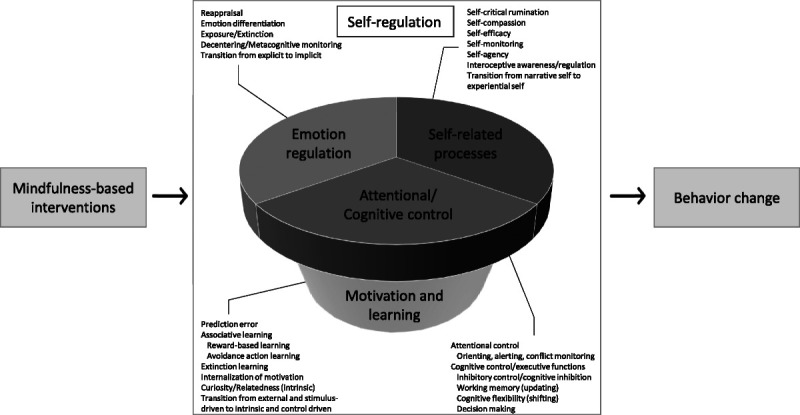
Initiating and maintaining behavior change is key to the prevention and treatment of most preventable chronic medical and psychiatric illnesses. The cultivation of mindfulness, involving acceptance and nonjudgment of present-moment experience, often results in transformative health behavior change. Neural systems involved in motivation and learning have an important role to play. A theoretical model of mindfulness that integrates these mechanisms with the cognitive, emotional, and self-related processes commonly described, while applying an integrated model to health behavior change, is needed. This integrative review (1) defines mindfulness and describes the mindfulness-based intervention movement, (2) synthesizes the neuroscience of mindfulness and integrates motivation and learning mechanisms within a mindful self-regulation model for understanding the complex effects of mindfulness on behavior change, and (3) synthesizes current clinical research evaluating the effects of mindfulness-based interventions targeting health behaviors relevant to psychiatric care. The review provides insight into the limitations of current research and proposes potential mechanisms to be tested in future research and targeted in clinical practice to enhance the impact of mindfulness on behavior change.
Overview
The claims and statistics of this paper haven’t been checked yet.
Free: it reads the open-access text and checks the first 5 claims that cite a source we can check. Create a free account to check every claim.
Integrity signals
Registry
Cites
Statistics
Figures
Verification
Claims the paper makes
The claims and statistics of this paper haven’t been checked yet.
Free: it reads the open-access text and checks the first 5 claims that cite a source we can check. Create a free account to check every claim.
Claims other papers make about this one
Each is checked against this paper’s own text: does it say what the citing paper says it does?
The source backs part of the claim, not all of it — or backs it for a different population, condition or comparison.
In the citing paper
“This study’s findings support and extend the existing literature regarding the impact and mechanisms of mindfulness on health, emotional wellness, relationships, and healthy behaviors.25–30”
From Mechanisms of mindfulness in patients with migraine: Results of a qualitative study. (2023) · cites this paper as [27]
Experimental — accuracy not yet measuredThe source backs part of the claim, not all of it — or backs it for a different population, condition or comparison.
In the citing paper
“Both the MTPC curriculum and Carina’s GLs were trauma-informed and conducive to integrating choice points, supporting individual autonomy, and developing skillful responses to trauma-related symptoms”
From Integrating choice points into mindfulness training for the dissociative subtype of PTSD: A case report (2024) · cites this paper as Schuman-Olivier et al., 2020
Experimental — accuracy not yet measuredThe source backs part of the claim, not all of it — or backs it for a different population, condition or comparison.
In the citing paper
“Contemplative practices including meditation and other mind-body techniques have been shown to yield a wide range of benefits on cardiopulmonary health, immune and physical functions, and mental health.38”
From Brief structured respiration practices enhance mood and reduce physiological arousal (2023) · cites this paper as [38]
Experimental — accuracy not yet measuredThe source backs part of the claim, not all of it — or backs it for a different population, condition or comparison.
In the citing paper
“All interventions included were group-based and utilised core mindfulness theory and practice including mindful meditation, focused thought attention, open monitoring of thoughts, and relaxation techniques (Schuman-Olivier et al., 2020).”
From Group-based mindfulness interventions in prisons: a selective critical review (2024) · cites this paper as Schuman-Olivier et al., 2020
Experimental — accuracy not yet measuredThe source backs part of the claim, not all of it — or backs it for a different population, condition or comparison.
In the citing paper
“For those with greater dysregulation, such as in chronic pain, it may be essential to achieve some measure of body-mind regulation as a beginning step for mindfulness practices and for finding cues of safety taught in PNE. 47”
From Remotely Delivered Psychologically Informed Mindful Movement Physical Therapy for Pain Care: A Framework for Operationalization (2023) · cites this paper as [47]
Experimental — accuracy not yet measured
5 more claims about this paper
Create a free account to see every claim other papers make about this one.
Self-check
Percentages, sums and reported differences re-computed from the paper’s own numbers.
The self-check needs the paper’s full text.
Citations
Cites
The theory of planned behavior
Ajzen, I. (1991) · Organizational Behavior and Human Decision Processes · doi:10.1016/0749-5978(91)90020-t · Cited by 134,657
Self-efficacy: Toward a unifying theory of behavioral change
Bandura, A. (1977) · Psychological Review · doi:10.1037/0033-295x.84.2.191 · Cited by 43,925
The "what" and "why" of goal pursuits: Human needs and the self-determination of behavior
Deci, E. L., & Ryan, R. M. (2000) · Psychological Inquiry · doi:10.1207/s15327965pli1104_01 · Cited by 34,210
Miyake, A., Friedman, N. P., Emerson, M. J., Witzki, A. H., Howerter, A., & Wager, T. D. (2000) · Cognitive Psychology · doi:10.1006/cogp.1999.0734 · Cited by 15,798
Social Cognitive Theory: An Agentic Perspective
Bandura, A. (2001) · Annual Review of Psychology · doi:10.1146/annurev.psych.52.1.1 · Cited by 15,510
The benefits of being present: Mindfulness and its role in psychological well-being
Brown, K. W., & Ryan, R. M. (2003) · Journal of Personality and Social Psychology · doi:10.1037/0022-3514.84.4.822 · Cited by 13,448
Diamond, A. (2013) · Annual Review of Psychology · doi:10.1146/annurev-psych-113011-143750 · Cited by 13,268
A default mode of brain function
Raichle, M. E., MacLeod, A. M., Snyder, A. Z., Powers, W. J., Gusnard, D. A., & Shulman, G. L. (2001) · Proceedings of the National Academy of Sciences · doi:10.1073/pnas.98.2.676 · Cited by 12,190
Gross, J. J., & John, O. P. (2003) · Journal of Personality and Social Psychology · doi:10.1037/0022-3514.85.2.348 · Cited by 11,929
Metacognition and cognitive monitoring: A new area of cognitive–developmental inquiry
Flavell, J. H. (1979) · American Psychologist · doi:10.1037/0003-066x.34.10.906 · Cited by 11,282
Self-efficacy: Toward a unifying theory of behavioral change
Bandura, A. (1978) · Advances in Behaviour Research and Therapy · doi:10.1016/0146-6402(78)90002-4 · Cited by 10,586
The emerging field of emotion regulation: an integrative review
Gross, J. J. (1998) · Review of General Psychology · doi:10.1037/1089-2680.2.3.271 · Cited by 9,916
The Brain's Default Network: Anatomy, Function, and Relevance to Disease
Buckner, R. L., Andrews‐Hanna, J. R., & Schacter, D. L. (2008) · Annals of the New York Academy of Sciences · doi:10.1196/annals.1440.011 · Cited by 9,761
Stages and processes of self-change of smoking: Toward an integrative model of change.
Prochaska, J. O., & DiClemente, C. C. (1983) · Journal of Consulting and Clinical Psychology · doi:10.1037/0022-006x.51.3.390 · Cited by 9,098
Mindfulness-based interventions in context: Past, present, and future
Kabat-Zinn, J. (2003) · Clinical Psychology: Science and Practice · doi:10.1093/clipsy.bpg016 · Cited by 8,615
Mindfulness-based interventions in context: Past, present, and future.
Kabat-Zinn, J. (2003) · Clinical Psychology: Science and Practice · doi:10.1093/clipsy/bpg016 · Cited by 8,612
The attention system of the human brain
Posner, M. I., & Petersen, S. E. (1990) · Annual Review of Neuroscience · doi:10.1146/annurev.ne.13.030190.000325 · Cited by 8,070
(2008) · Medical Entomology and Zoology · Cited by 7,477
Conflict monitoring and cognitive control
Botvinick, M. M., Braver, T. S., Barch, D. M., Carter, C. S., & Cohen, J. D. (2001) · Psychological Review · doi:10.1037/0033-295x.108.3.624 · Cited by 7,351
Mindfulness: A proposed operational definition.
Bishop, S. R., Lau, M., Shapiro, S., Carlson, L., Anderson, N. D., Carmody, J., Segal, Z. V., Abbey, S., Speca, M., Velting, D., et al. (2004) · Clinical Psychology: Science and Practice · doi:10.1093/clipsy.bph077 · Cited by 7,234
Self-discrepancy: A theory relating self and affect.
Higgins, E. T. (1987) · Psychological Review · doi:10.1037/0033-295x.94.3.319 · Cited by 7,219
Social cognitive theory of self-regulation
Bandura, A. (1991) · Organizational Behavior and Human Decision Processes · doi:10.1016/0749-5978(91)90022-l · Cited by 6,875
Anxiety and cognitive performance: Attentional control theory
Eysenck, M. W., Derakshan, N., Santos, R., & Calvo, M. G. (2007) · Emotion · doi:10.1037/1528-3542.7.2.336 · Cited by 5,289
Actual Causes of Death in the United States, 2000
Mokdad, A. H. (2004) · JAMA · doi:10.1001/jama.291.10.1238 · Cited by 5,211
Nolen-Hoeksema, S., Wisco, B. E., & Lyubomirsky, S. (2008) · Perspectives on Psychological Science · doi:10.1111/j.1745-6924.2008.00088.x · Cited by 5,172
Mindfulness training as a clinical intervention: a conceptual and empirical review
Baer, R. A. (2003) · Clinical Psychology: Science and Practice · doi:10.1093/clipsy.bpg015 · Cited by 4,577
Mindfulness training as a clinical intervention: A conceptual and empirical review.
Baer, R. A. (2003) · Clinical Psychology: Science and Practice · doi:10.1093/clipsy/bpg015 · Cited by 4,576
Responses to depression and their effects on the duration of depressive episodes
Nolen-Hoeksema, S. (1991) · Journal of Abnormal Psychology · doi:10.1037/0021-843x.100.4.569 · Cited by 4,529
The broaden–and–build theory of positive emotions
Fredrickson, B. L. (2004) · Philosophical Transactions of the Royal Society of London. Series B: Biological Sciences · doi:10.1098/rstb.2004.1512 · Cited by 4,214
What is the role of dopamine in reward: hedonic impact, reward learning, or incentive salience?
Berridge, K. C., & Robinson, T. E. (1998) · Brain Research Reviews · doi:10.1016/s0165-0173(98)00019-8 · Cited by 4,127
Shapiro, S. L., Carlson, L. E., Astin, J. A., & Freedman, B. (2006) · Journal of Clinical Psychology · doi:10.1002/jclp.20237 · Cited by 4,002
Self-schemata and processing information about the self.
Markus, H. R. (1977) · Journal of Personality and Social Psychology · doi:10.1037//0022-3514.35.2.63 · Cited by 3,907
The effect of mindfulness based therapy on anxiety and depression: A meta analytic review
Hofmann, S. G., Sawyer, A. T., Witt, A. A., & Oh, D. (2010) · Journal of Consulting and Clinical Psychology · doi:10.1037/a0018555 · Cited by 3,846
(2001) · Cited by 3,666
Mindfulness: Theoretical Foundations and Evidence for its Salutary Effects
Brown, K. W., Ryan, R. M., & Creswell, J. D. (2007) · Psychological Inquiry · doi:10.1080/10478400701598298 · Cited by 3,654
Conflict monitoring and anterior cingulate cortex: an update
Botvinick, M. M., Cohen, J. D., & Carter, C. S. (2004) · Trends in Cognitive Sciences · doi:10.1016/j.tics.2004.10.003 · Cited by 3,623
Patient Self-management of Chronic Disease in Primary Care
Bodenheimer, T. (2002) · JAMA · doi:10.1001/jama.288.19.2469 · Cited by 3,598
On the Self-Regulation of Behavior
Wright, B. R. E., Carver, C. S., & Scheier, M. F. (2000) · Contemporary Sociology · doi:10.2307/2654424 · Cited by 3,327
Prevention of relapse/recurrence in major depression by mindfulness-based cognitive therapy.
Teasdale, J. D., Segal, Z. V., Williams, J. M. G., Ridgeway, V. A., Soulsby, J. M., & Lau, M. A. (2000) · Journal of Consulting and Clinical Psychology · doi:10.1037/0022-006x.68.4.615 · Cited by 3,236
(2007) · Cited by 3,233
Psychological Stress and Disease
Cohen, S., Janicki-Deverts, D., & Miller, G. E. (2007) · JAMA · doi:10.1001/jama.298.14.1685 · Cited by 3,168
Blair, C., & Razza, R. P. (2007) · Child Development · doi:10.1111/j.1467-8624.2007.01019.x · Cited by 3,140
Hölzel, B. K., Lazar, S. W., Gard, T., Schuman-Olivier, Z., Vago, D. R., & Ott, U. (2011) · Perspectives on Psychological Science · doi:10.1177/1745691611419671 · Cited by 3,024
Self-citationAlterations in brain and immune function produced by mindfulness meditation
Davidson, R. J., Kabat-Zinn, J., Schumacher, J., Rosenkranz, M., Muller, D., Santorelli, S. F., Urbanowski, F., Harrington, A., Bonus, K., & Sheridan, J. F. (2003) · Psychosomatic Medicine · doi:10.1097/01.psy.0000077505.67574.e3 · Cited by 2,925
The Neuroscience of Mindfulness Meditation
Tang, Y.-Y., Hölzel, B. K., & Posner, M. I. (2015) · Nature reviews. Neuroscience · doi:10.1038/nrn3916 · Cited by 2,889
Philosophical conceptions of the self: implications for cognitive science.
Gallagher, S. (2000) · Trends in Cognitive Sciences · doi:10.1016/s1364-6613(99)01417-5 · Cited by 2,881
Danaei, G., Ding, E. L., Mozaffarian, D., Taylor, B., Rehm, J., Murray, C. J. L., & Ezzati, M. (2009) · PLoS Medicine · doi:10.1371/journal.pmed.1000058 · Cited by 2,860
Negative Self-Efficacy and Goal Effects Revisited
Bandura, A., & Locke, E. A. (2003) · Journal of Applied Psychology · doi:10.1037/0021-9010.88.1.87 · Cited by 2,813
Effects of mindfulness on psychological health: A review of empirical studies
Keng, S.-L., Smoski, M. J., & Robins, C. J. (2011) · Clinical Psychology Review · doi:10.1016/j.cpr.2011.04.006 · Cited by 2,687
Attention regulation and monitoring in meditation
Lutz, A., Slagter, H. A., Dunne, J. D., & Davidson, R. J. (2008) · Trends in Cognitive Sciences · doi:10.1016/j.tics.2008.01.005 · Cited by 2,659
Self-citationInteroception: the sense of the physiological condition of the body
(Bud) Craig, A. (2003) · Current Opinion in Neurobiology · doi:10.1016/s0959-4388(03)00090-4 · Cited by 2,556
Meditation Programs for Psychological Stress and Well-being: A Systematic Review and Meta-analysis
Goyal, M., Singh, S., Sibinga, E. M. S., Gould, N. F., Rowland-Seymour, A., Sharma, R., Berger, Z., Sleicher, D., Maron, D. D., Shihab, H. M., et al. (2014) · JAMA Internal Medicine · doi:10.1001/jamainternmed.2013.13018 · Cited by 2,380
Large-scale brain networks in cognition: emerging methods and principles
Bressler, S. L., & Menon, V. (2010) · Trends in Cognitive Sciences · doi:10.1016/j.tics.2010.04.004 · Cited by 2,348
Why People Use Health Services
ROSENSTOCK, I. M. (2005) · The Milbank Quarterly · doi:10.1111/j.1468-0009.2005.00425.x · Cited by 2,325
Benson, H., Beary, J. F., & Carol, M. P. (1974) · Psychiatry · doi:10.1080/00332747.1974.11023785 · Cited by 2,317
Why People Use Health Services
Rosenstock, I. M. (1966) · The Milbank Memorial Fund Quarterly · doi:10.2307/3348967 · Cited by 2,305
(2014) · Cited by 2,276
Self-regulation failure: an overview.
Baumeister, R. F., & Heatherton, T. F. (1996) · Psychological Inquiry · doi:10.1207/s15327965pli0701_1 · Cited by 2,266
A pilot study and randomized controlled trial of the mindful self-compassion program
Neff, K. D., & Germer, C. K. (2013) · Journal of Clinical Psychology · doi:10.1002/jclp.21923 · Cited by 2,253
Measuring experiential avoidance: A preliminary test of a working model
Hayes, S. C., Strosahl, K., Wilson, K. G., Bissett, R. T., Pistorello, J., Toarmino, D., Polusny, M. A., Dykstra, T. A., Batten, S. V., Bergan, J., et al. (2004) · The Psychological Record · doi:10.1007/bf03395492 · Cited by 2,140
The prefontral cortex and cognitive control
Miller, E. K. (2000) · Nature Reviews Neuroscience · doi:10.1038/35036228 · Cited by 2,016
Effectiveness of a meditation-based stress reduction program in the treatment of anxiety disorders
(1992) · American Journal of Psychiatry · doi:10.1176/ajp.149.7.936 · Cited by 1,941
Mindfulness practice leads to increases in regional brain gray matter density
Hölzel, B. K., Carmody, J., Vangel, M., Congleton, C., Yerramsetti, S. M., Gard, T., & Lazar, S. W. (2011) · Psychiatry Research: Neuroimaging · doi:10.1016/j.pscychresns.2010.08.006 · Cited by 1,914
Self-citationCarmody, J., & Baer, R. A. (2008) · Journal of Behavioral Medicine · doi:10.1007/s10865-007-9130-7 · Cited by 1,823
Gilbert, P., & Procter, S. (2006) · Clinical Psychology & Psychotherapy · doi:10.1002/cpp.507 · Cited by 1,822
The clinical use of mindfulness meditation for the self-regulation of chronic pain
Kabat-Zinn, J., Lipworth, L., & Burney, R. (1985) · Journal of Behavioral Medicine · doi:10.1007/bf00845519 · Cited by 1,745
Getting a life: The emergence of the life story in adolescence.
Habermas, T., & Bluck, S. (2000) · Psychological Bulletin · doi:10.1037/0033-2909.126.5.748 · Cited by 1,743
Meditation states and traits: EEG, ERP, and neuroimaging studies.
Cahn, B. R., & Polich, J. (2006) · Psychological Bulletin · doi:10.1037/0033-2909.132.2.180 · Cited by 1,734
Gu, J., Strauss, C., Bond, R., & Cavanagh, K. (2015) · Clinical Psychology Review · doi:10.1016/j.cpr.2015.01.006 · Cited by 1,712
Multi-task connectivity reveals flexible hubs for adaptive task control
Cole, M. W., Reynolds, J. R., Power, J. D., Repovs, G., Anticevic, A., & Braver, T. S. (2013) · Nature Neuroscience · doi:10.1038/nn.3470 · Cited by 1,704
Creswell, J. D. (2017) · Annual Review of Psychology · doi:10.1146/annurev-psych-042716-051139 · Cited by 1,702
George, S., Duran, N., & Norris, K. (2014) · American Journal of Public Health · doi:10.2105/ajph.2013.301706 · Cited by 1,603
Emotion regulation and mental health
Gross, J. J., & Muñoz, R. F. (1995) · Clinical Psychology: Science and Practice · doi:10.1111/j.1468-2850.1995.tb00036.x · Cited by 1,595
Mindfulness training modifies subsystems of attention
JHA, A. P., KROMPINGER, J., & BAIME, M. J. (2007) · Cognitive, Affective, & Behavioral Neuroscience · doi:10.3758/cabn.7.2.109 · Cited by 1,580
Van Dam, N. T., van Vugt, M. K., Vago, D. R., Schmalzl, L., Saron, C. D., Olendzki, A., Meissner, T., Lazar, S. W., Kerr, C. E., Gorchov, J., et al. (2018) · Perspectives on Psychological Science · doi:10.1177/1745691617709589 · Cited by 1,506
Self-citationFear Extinction as a Model for Translational Neuroscience: Ten Years of Progress
Milad, M. R., & Quirk, G. J. (2012) · Annual Review of Psychology · doi:10.1146/annurev.psych.121208.131631 · Cited by 1,466
The Toronto Mindfulness Scale: Development and validation
Lau, M. A., Bishop, S. R., Segal, Z. V., Buis, T., Anderson, N. D., Carlson, L., Shapiro, S., Carmody, J., Abbey, S., & Devins, G. (2006) · Journal of Clinical Psychology · doi:10.1002/jclp.20326 · Cited by 1,456
Interoception and Mental Health: A Roadmap.
Khalsa, S. S., Adolphs, R., Cameron, O. G., Critchley, H. D., Davenport, P. W., Feinstein, J. S., Feusner, J. D., Garfinkel, S. N., Lane, R. D., Mehling, W. E., et al. (2018) · Biological psychiatry. Cognitive neuroscience and neuroimaging · doi:10.1016/j.bpsc.2017.12.004 · Cited by 1,453
The theory of constructed emotion: an active inference account of interoception and categorization
Barrett, L. F. (2016) · Social Cognitive and Affective Neuroscience · doi:10.1093/scan/nsw154 · Cited by 1,426
Brewer, J. A., Worhunsky, P. D., Gray, J. R., Tang, Y.-Y., Weber, J., & Kober, H. (2011) · Proceedings of the National Academy of Sciences · doi:10.1073/pnas.1112029108 · Cited by 1,409
Self-citationTHEORY AT A GLANCE: A GUIDE FOR HEALTH PROMOTION PRACTICE
Croyle, R. T. (2005) · Cited by 1,396
Emotion Regulation in Adulthood: Timing Is Everything
Gross, J. J. (2001) · Current Directions in Psychological Science · doi:10.1111/1467-8721.00152 · Cited by 1,388
Mind-sets matter: A meta-analytic review of implicit theories and self-regulation.
Burnette, J. L., O'Boyle, E. H., VanEpps, E. M., Pollack, J. M., & Finkel, E. J. (2013) · Psychological Bulletin · doi:10.1037/a0029531 · Cited by 1,367
The maturing architecture of the brain's default network
Fair, D. A., Cohen, A. L., Dosenbach, N. U. F., Church, J. A., Miezin, F. M., Barch, D. M., Raichle, M. E., Petersen, S. E., & Schlaggar, B. L. (2008) · Proceedings of the National Academy of Sciences · doi:10.1073/pnas.0800376105 · Cited by 1,314
Vago, D. R., & Silbersweig, D. A. (2012) · Frontiers in Human Neuroscience · doi:10.3389/fnhum.2012.00296 · Cited by 1,310
Self-citationAttending to the present: mindfulness meditation reveals distinct neural modes of self-reference
Farb, N. A. S., Segal, Z. V., Mayberg, H., Bean, J., McKeon, D., Fatima, Z., & Anderson, A. K. (2007) · Social Cognitive and Affective Neuroscience · doi:10.1093/scan/nsm030 · Cited by 1,307
Myers, K. M., & Davis, M. (2007) · Molecular Psychiatry · doi:10.1038/sj.mp.4001939 · Cited by 1,277
The neural bases of emotion regulation
Etkin, A., Büchel, C., & Gross, J. J. (2015) · Nature Reviews Neuroscience · doi:10.1038/nrn4044 · Cited by 1,244
Mindfulness-based interventions for psychiatric disorders: A systematic review and meta-analysis
Goldberg, S. B., Tucker, R. P., Greene, P. A., Davidson, R. J., Wampold, B. E., Kearney, D. J., & Simpson, T. L. (2018) · Clinical Psychology Review · doi:10.1016/j.cpr.2017.10.011 · Cited by 1,145
The brain's default network and its adaptive role in internal mentation
Andrews-Hanna, J. R. (2012) · The Neuroscientist · doi:10.1177/1073858411403316 · Cited by 1,114
The cognitive control network: Integrated cortical regions with dissociable functions
Cole, M. W., & Schneider, W. (2007) · NeuroImage · doi:10.1016/j.neuroimage.2007.03.071 · Cited by 1,091
Barrett, L. F., Gross, J., Christensen, T. C., & Benvenuto, M. (2001) · Cognition & Emotion · doi:10.1080/02699930143000239 · Cited by 1,077
Allostasis: A model of predictive regulation
Sterling, P. (2012) · Physiology & Behavior · doi:10.1016/j.physbeh.2011.06.004 · Cited by 1,073
We can do better―improving the health of the American people
Schroeder, S. A. (2007) · New England Journal of Medicine · doi:10.1056/nejmsa073350 · Cited by 1,065
Dialectical behavior therapy for patients with borderline personality disorder and drug dependence
Linehan, M. M., Schmidt, H., Dimeff, L. A., Craft, J. C., Kanter, J., & Comtois, K. A. (1999) · The American Journal on Addictions · doi:10.1080/105504999305686 · Cited by 1,043
Hiser, J., & Koenigs, M. (2018) · Biological Psychiatry · doi:10.1016/j.biopsych.2017.10.030 · Cited by 972
Loving-Kindness and Compassion Meditation: Potential for Psychological Interventions
Hofmann, S. G., Grossman, P., & Hinton, D. E. (2011) · Clinical Psychology Review · doi:10.1016/j.cpr.2011.07.003 · Cited by 960
Understanding dopamine and reinforcement learning: the dopamine reward prediction error hypothesis
Glimcher, P. W. (2011) · Proceedings of the National Academy of Sciences · doi:10.1073/pnas.1014269108 · Cited by 955
Self-Management: A Comprehensive Approach to Management of Chronic Conditions
Grady, P. A., & Gough, L. L. (2014) · American Journal of Public Health · doi:10.2105/ajph.2014.302041 · Cited by 923
Motivation and cognitive control: from behavior to neural mechanism
Botvinick, M., & Braver, T. (2015) · Annual Review of Psychology · doi:10.1146/annurev-psych-010814-015044 · Cited by 909
(1999) · Cited by 881
Nummenmaa, L., Glerean, E., Hari, R., & Hietanen, J. K. (2014) · Proceedings of the National Academy of Sciences · doi:10.1073/pnas.1321664111 · Cited by 871
What defines mindfulness-based programs? The warp and the weft
Crane, R. S., Brewer, J., Feldman, C., Kabat-Zinn, J., Santorelli, S., Williams, J. M. G., & Kuyken, W. (2017) · Psychological Medicine · doi:10.1017/s0033291716003317 · Cited by 868
Self-citationSocial norms and the prevention of alcohol misuse in collegiate contexts.
Perkins, H. W. (2002) · Journal of Studies on Alcohol, Supplement · doi:10.15288/jsas.2002.s14.164 · Cited by 860
(1990) · Medical Entomology and Zoology · Cited by 842
Kabat-Zinn, J., Wheeler, E., Light, T., Skillings, A., Scharf, M. J., Cropley, T. G., Hosmer, D., & Bernhard, J. D. (1998) · Psychosomatic Medicine · doi:10.1097/00006842-199809000-00020 · Cited by 826
Loef, M., & Walach, H. (2012) · Preventive Medicine · doi:10.1016/j.ypmed.2012.06.017 · Cited by 822
How does mindfulness-based cognitive therapy work?
Kuyken, W., Watkins, E., Holden, E., White, K., Taylor, R. S., Byford, S., Evans, A., Radford, S., Teasdale, J. D., & Dalgleish, T. (2010) · Behaviour Research and Therapy · doi:10.1016/j.brat.2010.08.003 · Cited by 809
Experiential avoidance as a functional dimensional approach to psychopathology: An empirical review
Chawla, N., & Ostafin, B. (2007) · Journal of Clinical Psychology · doi:10.1002/jclp.20400 · Cited by 805
Fox, K. C. R., Nijeboer, S., Dixon, M. L., Floman, J. L., Ellamil, M., Rumak, S. P., Sedlmeier, P., & Christoff, K. (2014) · Neuroscience & Biobehavioral Reviews · doi:10.1016/j.neubiorev.2014.03.016 · Cited by 804
Some Reflections on the Origins of MBSR, Skillful Means, and the Trouble with Maps
Kabat-Zinn, J. (2011) · Contemporary Buddhism · doi:10.1080/14639947.2011.564844 · Cited by 800
Noar, S. M., & Zimmerman, R. S. (2005) · Health Education Research · doi:10.1093/her/cyg113 · Cited by 793
The Multidimensional Assessment of Interoceptive Awareness, Version 2 (MAIA-2)
Mehling, W. E., Acree, M., Stewart, A., Silas, J., & Jones, A. (2018) · PLOS ONE · doi:10.1371/journal.pone.0208034 · Cited by 793
Conceptual and methodological issues in research on mindfulness and meditation.
Davidson, R. J., & Kaszniak, A. W. (2015) · American Psychologist · doi:10.1037/a0039512 · Cited by 773
Self‐Compassion in Clinical Practice
Germer, C. K., & Neff, K. D. (2013) · Journal of Clinical Psychology · doi:10.1002/jclp.22021 · Cited by 764
Psychological adjustment to chronic disease
de Ridder, D., Geenen, R., Kuijer, R., & van Middendorp, H. (2008) · The Lancet · doi:10.1016/s0140-6736(08)61078-8 · Cited by 759
Mental Training Affects Distribution of Limited Brain Resources
Slagter, H. A., Lutz, A., Greischar, L. L., Francis, A. D., Nieuwenhuis, S., Davis, J. M., & Davidson, R. J. (2007) · PLoS Biology · doi:10.1371/journal.pbio.0050138 · Cited by 757
States of Curiosity Modulate Hippocampus-Dependent Learning via the Dopaminergic Circuit
Gruber, M. J., Gelman, B. D., & Ranganath, C. (2014) · Neuron · doi:10.1016/j.neuron.2014.08.060 · Cited by 734
Drug Addiction as a Pathology of Staged Neuroplasticity
Kalivas, P. W., & O'Brien, C. (2008) · Neuropsychopharmacology · doi:10.1038/sj.npp.1301564 · Cited by 733
Verheul, R., Van Den Bosch, L. M. C., Koeter, M. W. J., De Ridder, M. A. J., Stijnen, T., & Van Den Brink, W. (2003) · British Journal of Psychiatry · doi:10.1192/bjp.182.2.135 · Cited by 722
Bowen, S., Witkiewitz, K., Clifasefi, S. L., Grow, J., Chawla, N., Hsu, S. H., Carroll, H. A., Harrop, E., Collins, S. E., Lustyk, M. K., et al. (2014) · JAMA Psychiatry · doi:10.1001/jamapsychiatry.2013.4546 · Cited by 701
Central and autonomic nervous system interaction is altered by short-term meditation
Tang, Y.-Y., Ma, Y., Fan, Y., Feng, H., Wang, J., Feng, S., Lu, Q., Hu, B., Lin, Y., Li, J., et al. (2009) · Proceedings of the National Academy of Sciences · doi:10.1073/pnas.0904031106 · Cited by 680
Budge, S. L., Adelson, J. L., & Howard, K. A. S. (2013) · Journal of Consulting and Clinical Psychology · doi:10.1037/a0031774 · Cited by 673
(2001) · American Journal of Public Health · doi:10.2105/ajph.91.6.933 · Cited by 671
Too Much of a Good Thing: The Challenge and Opportunity of the Inverted U
Grant, A. M., & Schwartz, B. (2011) · Perspectives on Psychological Science · doi:10.1177/1745691610393523 · Cited by 668
Spreng, R. N., Sepulcre, J., Turner, G. R., Stevens, W. D., & Schacter, D. L. (2013) · Journal of Cognitive Neuroscience · doi:10.1162/jocn_a_00281 · Cited by 668
The vital link between chronic disease and depressive disorders.
Chapman, D. P., Perry, G. S., & Strine, T. W. (2005) · Preventing Chronic Disease · Cited by 660
Fox, K. C. R., Dixon, M. L., Nijeboer, S., Girn, M., Floman, J. L., Lifshitz, M., Ellamil, M., Sedlmeier, P., & Christoff, K. (2016) · Neuroscience & Biobehavioral Reviews · doi:10.1016/j.neubiorev.2016.03.021 · Cited by 656
Zhou, H.-X., Chen, X., Shen, Y.-Q., Li, L., Chen, N.-X., Zhu, Z.-C., Castellanos, F. X., & Yan, C.-G. (2020) · NeuroImage · doi:10.1016/j.neuroimage.2019.116287 · Cited by 656
Interoception, contemplative practice, and health
Farb, N., Daubenmier, J., Price, C. J., Gard, T., Kerr, C., Dunn, B. D., Klein, A. C., Paulus, M. P., & Mehling, W. E. (2015) · Frontiers in Psychology · doi:10.3389/fpsyg.2015.00763 · Cited by 650
Chiesa, A., & Serretti, A. (2011) · Psychiatry Research · doi:10.1016/j.psychres.2010.08.011 · Cited by 650
What Is the Sense of Agency and Why Does it Matter?
Moore, J. W. (2016) · Frontiers in Psychology · doi:10.3389/fpsyg.2016.01272 · Cited by 645
What does mindfulness really mean? A canonical perspective
Bodhi, B. (2011) · Contemporary Buddhism · doi:10.1080/14639947.2011.564813 · Cited by 626
Dixon, M. L., De La Vega, A., Mills, C., Andrews-Hanna, J., Spreng, R. N., Cole, M. W., & Christoff, K. (2018) · Proceedings of the National Academy of Sciences · doi:10.1073/pnas.1715766115 · Cited by 595
Kristeller, J. L., & Wolever, R. Q. (2010) · Eating Disorders · doi:10.1080/10640266.2011.533605 · Cited by 592
Van Dam, N. T., Sheppard, S. C., Forsyth, J. P., & Earleywine, M. (2011) · Journal of Anxiety Disorders · doi:10.1016/j.janxdis.2010.08.011 · Cited by 592
Scott, K. M., Lim, C., Al-Hamzawi, A., Alonso, J., Bruffaerts, R., Caldas-de-Almeida, J. M., Florescu, S., de Girolamo, G., Hu, C., de Jonge, P., et al. (2016) · JAMA Psychiatry · doi:10.1001/jamapsychiatry.2015.2688 · Cited by 592
Dependency and self-criticism: Psychological dimensions of depression
Blatt, S. J., Quinlan, D. M., Chevron, E. S., McDonald, C., & Zuroff, D. (1982) · Journal of Consulting and Clinical Psychology · doi:10.1037/0022-006x.50.1.113 · Cited by 589
Guendelman, S., Medeiros, S., & Rampes, H. (2017) · Frontiers in Psychology · doi:10.3389/fpsyg.2017.00220 · Cited by 577
Carmody, J., & Baer, R. A. (2009) · Journal of Clinical Psychology · doi:10.1002/jclp.20555 · Cited by 568
Mindfulness meditation training alters cortical representations of interoceptive attention
Farb, N. A. S., Segal, Z. V., & Anderson, A. K. (2013) · Social Cognitive and Affective Neuroscience · doi:10.1093/scan/nss066 · Cited by 566
From self-conceptions to self-worth: On the sources and structure of global self-esteem.
Pelham, B. W., & Swann, W. B. (1989) · Journal of Personality and Social Psychology · doi:10.1037/0022-3514.57.4.672 · Cited by 558
The use of theory in health behavior research from 2000 to 2005: a systematic review
Painter, J. E., Borba, C. P. C., Hynes, M., Mays, D., & Glanz, K. (2008) · Annals of Behavioral Medicine · doi:10.1007/s12160-008-9042-y · Cited by 556
An active inference theory of allostasis and interoception in depression
Barrett, L. F., Quigley, K. S., & Hamilton, P. (2016) · Philosophical Transactions of the Royal Society B: Biological Sciences · doi:10.1098/rstb.2016.0011 · Cited by 554
Mindfulness‐based interventions for obesity‐related eating behaviours: a literature review
O'Reilly, G. A., Cook, L., Spruijt‐Metz, D., & Black, D. S. (2014) · Obesity Reviews · doi:10.1111/obr.12156 · Cited by 547
Trends in Racial-Ethnic Disparities in Access to Mental Health Care, 2004–2012
Cook, B. L., Trinh, N.-H., Li, Z., Hou, S. S.-Y., & Progovac, A. M. (2017) · Psychiatric Services · doi:10.1176/appi.ps.201500453 · Cited by 546
Decentering and Related Constructs: A Critical Review and Metacognitive Processes Model
Bernstein, A., Hadash, Y., Lichtash, Y., Tanay, G., Shepherd, K., & Fresco, D. M. (2015) · Perspectives on Psychological Science · doi:10.1177/1745691615594577 · Cited by 539
Rumination and overgeneral memory in depression: Effects of self-focus and analytic thinking.
Watkins, E., & Teasdale, J. D. (2001) · Journal of Abnormal Psychology · doi:10.1037/0021-843x.110.2.333 · Cited by 536
Hölzel, B. K., Ott, U., Hempel, H., Hackl, A., Wolf, K., Stark, R., & Vaitl, D. (2007) · Neuroscience Letters · doi:10.1016/j.neulet.2007.04.074 · Cited by 535
Katterman, S. N., Kleinman, B. M., Hood, M. M., Nackers, L. M., & Corsica, J. A. (2014) · Eating Behaviors · doi:10.1016/j.eatbeh.2014.01.005 · Cited by 533
McCauley, E., Berk, M. S., Asarnow, J. R., Adrian, M., Cohen, J., Korslund, K., Avina, C., Hughes, J., Harned, M., Gallop, R., et al. (2018) · JAMA Psychiatry · doi:10.1001/jamapsychiatry.2018.1109 · Cited by 531
Williams, J. M. G., Teasdale, J. D., Segal, Z. V., & Soulsby, J. (2000) · Journal of Abnormal Psychology · doi:10.1037/0021-843x.109.1.150 · Cited by 516
The neurobiology and genetics of impulse control disorders: Relationships to drug addictions
Brewer, J. A., & Potenza, M. N. (2008) · Biochemical Pharmacology · doi:10.1016/j.bcp.2007.06.043 · Cited by 511
Self-citationDesbordes, G., Gard, T., Hoge, E. A., Hölzel, B. K., Kerr, C., Lazar, S. W., Olendzki, A., & Vago, D. R. (2015) · Mindfulness · doi:10.1007/s12671-013-0269-8 · Cited by 505
Self-citationMidbrain dopamine neurons encode decisions for future action
Morris, G., Nevet, A., Arkadir, D., Vaadia, E., & Bergman, H. (2006) · Nature Neuroscience · doi:10.1038/nn1743 · Cited by 503
Mindfulness meditation and substance use in an incarcerated population
Bowen, S., Witkiewitz, K., Dillworth, T. M., Chawla, N., Simpson, T. L., Ostafin, B. D., Larimer, M. E., Blume, A. W., Parks, G. A., & Marlatt, G. A. (2006) · Psychology of Addictive Behaviors · doi:10.1037/0893-164x.20.3.343 · Cited by 502
Kessler, R. C., DuPont, R. L., Berglund, P., & Wittchen, H.-U. (1999) · American Journal of Psychiatry · doi:10.1176/ajp.156.12.1915 · Cited by 486
(2013) · Cited by 481
Reconsolidation and Extinction of Conditioned Fear: Inhibition and Potentiation
Lee, J. L. C., Milton, A. L., & Everitt, B. J. (2006) · The Journal of Neuroscience · doi:10.1523/jneurosci.2466-06.2006 · Cited by 479
Lindahl, J. R., Fisher, N. E., Cooper, D. J., Rosen, R. K., & Britton, W. B. (2017) · PLOS ONE · doi:10.1371/journal.pone.0176239 · Cited by 476
Learning, reward, and decision making
O'Doherty, J. P., Cockburn, J., & Pauli, W. M. (2017) · Annual Review of Psychology · doi:10.1146/annurev-psych-010416-044216 · Cited by 475
Witkiewitz, K., & Bowen, S. (2010) · Journal of Consulting and Clinical Psychology · doi:10.1037/a0019172 · Cited by 453
Historical Trauma as Public Narrative: A Conceptual Review of How History Impacts Present-Day Health
Mohatt, N. V., Thompson, A. B., Thai, N. D., & Tebes, J. K. (2014) · Social Science & Medicine · doi:10.1016/j.socscimed.2014.01.043 · Cited by 447
Mindfulness treatment for substance misuse: A systematic review and meta-analysis
Li, W., Howard, M. O., Garland, E. L., McGovern, P., & Lazar, M. (2017) · Journal of Substance Abuse Treatment · doi:10.1016/j.jsat.2017.01.008 · Cited by 446
Nielsen, L., Riddle, M., King, J. W., Aklin, W. M., Chen, W., Clark, D., Collier, E., Czajkowski, S., Esposito, L., Ferrer, R., et al. (2018) · Behaviour Research and Therapy · doi:10.1016/j.brat.2017.07.002 · Cited by 446
Avery, J. A., Drevets, W. C., Moseman, S. E., Bodurka, J., Barcalow, J. C., & Simmons, W. K. (2014) · Biological Psychiatry · doi:10.1016/j.biopsych.2013.11.027 · Cited by 442
Dialectical behavior therapy is effective for the treatment of suicidal behavior: A meta-analysis
DeCou, C. R., Comtois, K. A., & Landes, S. J. (2019) · Behavior Therapy · doi:10.1016/j.beth.2018.03.009 · Cited by 439
Herbert, B. M., Herbert, C., & Pollatos, O. (2011) · Journal of Personality · doi:10.1111/j.1467-6494.2011.00717.x · Cited by 437
Warren, J. M., Smith, N., & Ashwell, M. (2017) · Nutrition Research Reviews · doi:10.1017/s0954422417000154 · Cited by 435
The neurobiology of interoception in health and disease
Quadt, L., Critchley, H. D., & Garfinkel, S. N. (2018) · Annals of the New York Academy of Sciences · doi:10.1111/nyas.13915 · Cited by 434
Proof of Concept Trial of Dronabinol in Obstructive Sleep Apnea
Prasad, B., Radulovacki, M. G., & Carley, D. W. (2013) · Frontiers in Psychiatry · doi:10.3389/fpsyt.2013.00001 · Cited by 423
Emotion regulation and anxiety disorders
Amstadter, A. (2008) · Journal of Anxiety Disorders · doi:10.1016/j.janxdis.2007.02.004 · Cited by 417
Fronto-parietal network: flexible hub of cognitive control
Zanto, T. P., & Gazzaley, A. (2013) · Trends in Cognitive Sciences · doi:10.1016/j.tics.2013.10.001 · Cited by 416
Mind-wandering, cognition, and performance: A theory-driven meta-analysis of attention regulation.
Randall, J. G., Oswald, F. L., & Beier, M. E. (2014) · Psychological Bulletin · doi:10.1037/a0037428 · Cited by 410
Twenty Years of Critical Race Theory: Looking Back to Move Forward
Crenshaw, K. W. (2011) · eYLS (Yale Law School) · Cited by 408
The Amygdala and Fear Conditioning: Has the Nut Been Cracked?
Maren, S., & Fanselow, M. S. (1996) · Neuron · doi:10.1016/s0896-6273(00)80041-0 · Cited by 407
Boyd, J. E., Lanius, R. A., & McKinnon, M. C. (2018) · Journal of Psychiatry and Neuroscience · doi:10.1503/jpn.170021 · Cited by 407
Mechanisms of mindfulness: a buddhist psychological model
Grabovac, A. D., Lau, M. A., & Willett, B. R. (2011) · Mindfulness · doi:10.1007/s12671-011-0054-5 · Cited by 402
Mindfulness-based cognitive therapy as a treatment for chronic depression: A preliminary study
Barnhofer, T., Crane, C., Hargus, E., Amarasinghe, M., Winder, R., & Williams, J. M. G. (2009) · Behaviour Research and Therapy · doi:10.1016/j.brat.2009.01.019 · Cited by 396
What is eating you? Stress and the drive to eat
Groesz, L. M., McCoy, S., Carl, J., Saslow, L., Stewart, J., Adler, N., Laraia, B., & Epel, E. (2012) · Appetite · doi:10.1016/j.appet.2011.11.028 · Cited by 391
Yoga as an Adjunctive Treatment for Posttraumatic Stress Disorder: A Randomized Controlled Trial
van der Kolk, B. A., Stone, L., West, J., Rhodes, A., Emerson, D., Suvak, M., & Spinazzola, J. (2014) · The Journal of Clinical Psychiatry · doi:10.4088/jcp.13m08561 · Cited by 389
Self-compassion, self-regulation, and health
Terry, M. L., & Leary, M. R. (2011) · Self and Identity · doi:10.1080/15298868.2011.558404 · Cited by 384
Mindfulness training for smoking cessation: Results from a randomized controlled trial
Brewer, J. A., Mallik, S., Babuscio, T. A., Nich, C., Johnson, H. E., Deleone, C. M., Minnix-Cotton, C. A., Byrne, S. A., Kober, H., Weinstein, A. J., et al. (2011) · Drug and Alcohol Dependence · doi:10.1016/j.drugalcdep.2011.05.027 · Cited by 383
Self-citationAlsubaie, M., Abbott, R., Dunn, B., Dickens, C., Keil, T. F., Henley, W., & Kuyken, W. (2017) · Clinical Psychology Review · doi:10.1016/j.cpr.2017.04.008 · Cited by 383
Mindfulness-Based Interventions: An Emerging Phenomenon
Cullen, M. (2011) · Mindfulness · doi:10.1007/s12671-011-0058-1 · Cited by 366
The potential effects of meditation on age-related cognitive decline: a systematic review.
Gard, T., Hölzel, B. K., & Lazar, S. W. (2014) · Annals of the New York Academy of Sciences · doi:10.1111/nyas.12348 · Cited by 363
Self-citationTaylor, V. A., Grant, J., Daneault, V., Scavone, G., Breton, E., Roffe-Vidal, S., Courtemanche, J., Lavarenne, A. S., & Beauregard, M. (2011) · NeuroImage · doi:10.1016/j.neuroimage.2011.06.001 · Cited by 362
Self-compassion, affect, and health-promoting behaviors.
Sirois, F. M., Kitner, R., & Hirsch, J. K. (2015) · Health Psychology · doi:10.1037/hea0000158 · Cited by 357
Bornemann, B., Herbert, B. M., Mehling, W. E., & Singer, T. (2015) · Frontiers in Psychology · doi:10.3389/fpsyg.2014.01504 · Cited by 349
Mindfulness meditation for substance use disorders: a systematic review
Zgierska, A., Rabago, D., Chawla, N., Kushner, K., Koehler, R., & Marlatt, A. (2009) · Substance Abuse · doi:10.1080/08897070903250019 · Cited by 348
The birth, death and resurrection of avoidance: a reconceptualization of a troubled paradigm
LeDoux, J. E., Moscarello, J., Sears, R., & Campese, V (2017) · Molecular Psychiatry · doi:10.1038/mp.2016.166 · Cited by 348
Mindfulness and emotion regulation—an fMRI study
Lutz, J., Herwig, U., Opialla, S., Hittmeyer, A., Jäncke, L., Rufer, M., Grosse Holtforth, M., & Brühl, A. B. (2014) · Social Cognitive and Affective Neuroscience · doi:10.1093/scan/nst043 · Cited by 342
The strength model of self-regulation: conclusions from the second decade of willpower research
Baumeister, R. F., Tice, D. M., & Vohs, K. D. (2018) · Perspectives on Psychological Science · doi:10.1177/1745691617716946 · Cited by 338
Luoma, J. B., Kohlenberg, B. S., Hayes, S. C., & Fletcher, L. (2012) · Journal of Consulting and Clinical Psychology · doi:10.1037/a0026070 · Cited by 336
Robins, C. J., Keng, S., Ekblad, A. G., & Brantley, J. G. (2012) · Journal of Clinical Psychology · doi:10.1002/jclp.20857 · Cited by 332
Kral, T. R. A., Schuyler, B. S., Mumford, J. A., Rosenkranz, M. A., Lutz, A., & Davidson, R. J. (2018) · NeuroImage · doi:10.1016/j.neuroimage.2018.07.013 · Cited by 326
(2010) · Cited by 323
Kerr, C. E., Sacchet, M. D., Lazar, S. W., Moore, C. I., & Jones, S. R. (2013) · Frontiers in Human Neuroscience · doi:10.3389/fnhum.2013.00012 · Cited by 321
Self-citationNeural systems of positive affect: relevance to understanding child and adolescent depression?
FORBES, E. E., & DAHL, R. E. (2005) · Development and Psychopathology · doi:10.1017/s095457940505039x · Cited by 318
Polusny, M. A., Erbes, C. R., Thuras, P., Moran, A., Lamberty, G. J., Collins, R. C., Rodman, J. L., & Lim, K. O. (2015) · JAMA · doi:10.1001/jama.2015.8361 · Cited by 315
Research works printed but not linked: 8
- Brewer JA Elwafi HM Davis JH Craving to quit: psychological models and neurobiological mechanisms of mindfulness training as treatment for addictions. Psychol Addict Behav 2013; 27: 366– 79. 22642859 PMC3434285 · DOI · Paper page
- Cannon WB The wisdom of the body. 2nd ed. Oxford: Norton, 1939.
- Farb N Daubenmier J Price CJ, Interoception, contemplative practice, and health. Front Psychol 2015; 6: 763. 26106345 PMC4460802
- Schultz P Ryan R The “why,” “what,” and “how” of healthy self-regulation: mindfulness and well-being from a self-determination theory perspective. In: Ostafin BD Robinson MD Meier BP, eds. Handbook of mindfulness and self-regulation. New York: Springer, 2015.
- Bowen S Witkiewitz K Clifasefi SL, Relative efficacy of mindfulness-based relapse prevention, standard relapse prevention, and treatment as usual for substance use disorders: a randomized clinical trial. JAMA Psychiatry 2014; 71: 547– 56. 24647726 PMC4489711
- Bowen S Witkiewitz K Dillworth TM Marlatt GA The role of thought suppression in the relationship between mindfulness meditation and alcohol use. Addict Behav 2007; 32: 2324– 8. 17300875 PMC1989113 · DOI · Paper page
- Geller S Cultivation of therapeutic presence: therapeutic drumming and mindfulness practices. Tijdschr Clientgerichte Psychother 2009; 47: 273– 87.
- Afifi T Asmundson G Sareen J Epidemiology of traumatic events and posttraumatic stress disorder. In: Nutt DJ Stein MB Zohar J, eds. Post traumatic stress disorder: diagnosis, management and treatment. Boca Raton, FL: Taylor & Francis, 2009.
Cited by
Brief structured respiration practices enhance mood and reduce physiological arousal
Balban, M. Y., Neri, E., Kogon, M. M., Weed, L., Nouriani, B., Jo, B., Holl, G., Zeitzer, J. M., Spiegel, D., & Huberman, A. D. (2023) · Cell Reports Medicine · doi:10.1016/j.xcrm.2022.100895 · Cited by 284
“Contemplative practices including meditation and other mindbody techniques have been shown to yield a wide range of benefits on cardiopulmonary health, immune and physical functions, and mental health.(38) While both meditative practice and controlled breathwork practices show similar benefits, our data reveal they se…”
BackgroundBueno, H., Deaton, C., Farrero, M., Forsyth, F., Braunschweig, F., Buccheri, S., Dragan, S., Gevaert, S., Held, C., Kurpas, D., et al. (2025) · European Heart Journal · doi:10.1093/eurheartj/ehaf191 · Cited by 178
Sustainable Consumption Research and the Role of Marketing: A Review of the Literature (1976–2021)
Haider, M., Shannon, R. M., & Moschis, G. P. (2022) · Sustainability · doi:10.3390/su14073999 · Cited by 229
“Mindfulness implies an awareness of [217] or an enhanced focus on experiences, feelings, and thoughts [218–220], to be a conscious part of everyday mundane activities [221] like eating food or interacting with family or friends [222].”
BackgroundEmotional Intelligence: The Development of Emotional Intelligence in Leadership
Almadani, N. A. (2024) · Advances in logistics, operations, and management science book series · doi:10.4018/979-8-3693-7372-9.ch004 · Cited by 113
The Importance of Emotional Regulation in Mental Health
Menefee, D. S., Ledoux, T. A., & Johnston, C. A. (2022) · American Journal of Lifestyle Medicine · doi:10.1177/15598276211049771 · Cited by 143
“Mindfulness is a cross-cutting technique of DBT and ACT, among other interventions, and is best described as the practice of intense focus and concentration on one’s immediate situation with curiosity and acceptance rather than judgment and avoidance.(17,18) It involves present-centered awareness of sensory sensations…”
Metadata
- Authors
- Schuman-Olivier, Z., Trombka, M., Lovas, D. A., Brewer, J. A., Vago, D. R., Gawande, R., Dunne, J. P., Lazar, S. W., Loucks, E. B., & Fulwiler, C.
- Affiliations
- Boston College (US)
- ORCID
- Venue
- Harvard Review of Psychiatry
- Published
- 2020-11
- Volume
- 28
- Issue
- 6
- Pages
- 371-394
- ISSN
- 1067-3229 (ISSN-L)
- 1465-7309
- PMC
- PMC7647439
- OpenAlex
- W3097790734
- Semantic Scholar
- 4d71817d634db36629fd23cbb5a31e9c6cde95e9
- Cited by
- 435
- References
- 466
- Citations by year
- 2026: 81 · 2025: 123 · 2024: 97 · 2023: 63 · 2022: 52 · 2021: 17 · 2020: 1
- FWCI
- 2.60
- Type
- journal article
- Language
- en
- Open access
- hybrid
- doi.org
- Licence
- Locations
- Harvard Review of Psychiatry (publishedVersion, cc-by-nc-nd)
- PubMed Central (publishedVersion, cc-by-nc-nd)
- PubMed (publishedVersion)
- eScholarship@UMassChan (submittedVersion, cc-by-nc-nd)
- Funders
- National Institute on Aging (R01AG048351)
- National Center for Complementary and Integrative Health (UH2AT009145, R33AT010125, UH3AT009145, R21AT010125, R01AT006344)
- Topics
- Social Sciences › Psychology › Clinical Psychology › Mindfulness and Compassion Interventions
- Social Sciences › Psychology › Applied Psychology › Behavioral Health and Interventions
- Social Sciences › Psychology › Developmental and Educational Psychology › Behavioral and Psychological Studies
- Keywords
- mindfulness, behavior change, mindfulness-based interventions, motivation, learning, self-regulation, health behavior change, psychiatric nursing, chronic disease prevention, mechanisms of change
- MeSH terms
- Self-Control, Self-Management, Mental Disorders, Humans, Motivation, Health Behavior, Mindfulness
About these checks
Registry, retraction, Cites and statistics results are computed, not judged, with one exception: a printed reference that no index lists is read once by a model before it counts as a citation error. Claims are extracted by a model and kept only when their quote appears verbatim in the text; each cited source is then checked, with a model’s help, for whether it says what the claim relies on. Those verdicts can be wrong — read the claim’s quote and the cited source before relying on one.
Statistics and arithmetic are recomputed, not judged.
Confidence bands are shown only for fields calibrated on our annotated test set. None is calibrated yet, so no band is shown.
What counts as a claim ›How we measure confidence ›How we check this ›
Are you an author, or do you see a problem with this page? Request a review
Data sources
Bibliographic data: Semantic Scholar, OpenAlex, Crossref.
Contains information from the Semantic Scholar Academic Graph Datasets, made available under the ODC Attribution License (ODC-BY 1.0).
Semantic Scholar’s data is described in: Kinney, R., et al. (2023). The Semantic Scholar Open Data Platform. arXiv:2301.10140.
